(The prompt for Day 7 of NaPoWriMo was to write a poem centered around luck or fortuitousness, such as finding something you didn’t know you’d lost.)
I found a lonely Lego head
That rolled out when I moved the bed,
A static smile on its face
And of his body not a trace.
What toys I’d played with in his stead—
He did not care, his smile said.
Where he was from, I could not say,
Nor what I’d used him for that day—
What worlds and exploits I’d created
Before he was decapitated,
Perhaps a knight as dragon prey
Or zombie falling to decay.
Though gone was every fellow piece,
His smile never seemed to cease.
Alone no more on outcast ground,
His hopes were met, and he was found.
His smile chides my lack of peace.
I wait, as well, for my release.
________________
MPAA rating: PG
When The Lego Movie burst on the scene in February of 2014, it’s safe to say that it surpassed expectations. Many smaller and lamer Lego animations had preceded it on television, and mediocrity seemed to be its destiny. Then lo and behold, the reviews came back positive, and directors Phil Lord and Christopher Miller, also behind Cloudy with a Chance of Meatballs, proved they could breathe hilarious life into the most unlikely subjects. I can’t wait to see what they do with the upcoming Han Solo spinoff.
The Lego Movie is hard to sum up because it’s a lot of things at once. At one level, it’s an ultra-fast-paced adventure about a normal nobody named Emmett (Chris Pratt), drawn into a larger world of Master Builders to thwart the evil plans of a tyrant (Will Ferrell). You know, typical hero journey stuff. Yet, at the same time, it’s an ironically self-aware multiverse of franchise crossovers, a stimulating commentary on specialness and self-invention, a critique of the extremes of both conformity and anarchy, a cornucopia of parody opportunities, and even a transcendently sweet example of the value of playtime. You know, not so typical animated stuff.
With its constantly frenetic pace designed for short attention spans, it’s not always easy to keep up, but there’s literally something for everyone to enjoy and laugh at. The characters are as diverse as they come: you’ve got instruction-following everyman Emmett, who discovers the Piece of Resistance and is suddenly labeled “the Special”; love interest Wyldstyle (Elizabeth Banks), who’s an obvious imitator of Trinity from The Matrix; Batman himself (Will Arnett), whose eccentricities are raised to jerk levels; the wizard Vitruvius (Morgan Freeman), whose prophecies are true because they rhyme; and ever-joyful Unikitty (Alison Brie) from Cloud Cuckooland, who for some reason is my favorite of the bunch. Not to mention the enormous supporting cast of foes and friends from franchises only a Lego movie could mash together.
Overall, The Lego Movie is a good amount of fun with some surprising depth for those looking past the vibrant colors and manic action. It’s not quite as funny as it tries to be or as sensational as its biggest fans treat it, but the sheer number of jokes and themes on display manage to hit more than they miss. The computer animation is unique in how it appears as stop motion, and this visual distinction heightens the sense of watching Lego creations that could actually be built if they moved with the imagination-directed smoothness of those microbots in Big Hero 6. The film’s hyperactivity would be harder to watch in larger doses (which is why my VC didn’t care for it), but the sharp social satire and brilliant cacophony of spoofs distinguish The Lego Movie as “special” among modern animated films.
Best line: (Emmett, upon being told of the villain and his evil corporation) “President Business is going to end the world? But he’s such a good guy! And Octan, they make good stuff: music, dairy products, coffee, TV shows, surveillance systems, all history books, voting machines… wait a minute!”
The land was grand when Arthur reigned,
The fields no longer scarlet-stained,
The crown no longer coveted
By lesser men who ruled the dead,
And all who saw their shining king
Would prize the sight till their deathbed.
The sword he wore pronounced him king,
Announcing it with every swing,
And even though it left his keep,
It waited till he woke from sleep.
Though Arthur’s glory now has waned,
His reputation yet runs deep.
___________________
MPAA rating: PG or R, depending on the version
For the last of my VC’s birthday picks, she chose a film very different from the others (all romances: The Lake House, The Goodbye Girl, and A Star Is Born), instead delving into the Arthurian legend brought to life in Excalibur. As is often the case, I didn’t care for this film at first but appreciated it far more upon a second viewing.
The story of King Arthur has been presented in countless different ways, from Disney’s kid-friendly The Sword in the Stone to Guy Ritchie’s action-packed King Arthur: Legend of the Sword, to be released later this year. Yet with all the partial retellings of this classic British myth, shouldn’t there always be one definitive version that others copy or draw from? Excalibur tries to be just that, and while it takes license with historical details (plate armor wasn’t used in the Dark Ages), it still comes off as the most faithful to the traditional source material, Sir Thomas Malory’s Le Morte d’Arthur and various other accounts. There’s obviously far too much for any two-hour movie to cover comprehensively, but all the most familiar elements are here: young Arthur (Nigel Terry) pulling the sword from the stone, his gathering of the Knights of the Round Table (which looks suspiciously like a giant DVD), his betrayal by Lancelot and Guenevere, and his family issues with his half-sister and their son Mordred (Robert Addie). Terry is an especially convincing Arthur, playing him both as a scrawny squire and an aging monarch, and Nicol Williamson’s Merlin brings some much-needed wit to the proceedings.
It may seem strange, but the film that Excalibur kept reminding me of was David Lynch’s Dune (another VC pick), mainly due to the serious quality of the acting and palpable adherence to source material. Plus, both served as prime outlets for many actors before they were famous: Patrick Stewart is in both films, but Excalibur also features a young Helen Mirren as Morgana Le Fay, Liam Neeson as Sir Gawain, Gabriel Byrne as Arthur’s father Uther Pendragon, and Ciarán Hinds as King Lot. In addition to the cavalcade of stars to be, Excalibur also boasts some exceptional cinematic moments, particularly when it employs the classical opera of Wagner and Orff; anytime I hear Orff’s “O Fortuna,” it brings me back to the gloried sight of Arthur and his knights riding out to battle.
For all its strengths, however, there’s a reason Excalibur didn’t appeal to me on my first watch. For one, the characters have all the depth of a children’s book of myths, and the actors play them with such Shakespearean solemnity that no one but Merlin actually has a personality. Another comparison to Dune might be warranted too, when the search for the Holy Grail verges into a Lynchian dream sequence, which manages to both be meaningful to the plot and make no sense. Not to mention, the latter half of the Arthur story is quite the downer, as Arthur degrades into a ruler not unlike King Théoden when we first meet him in The Two Towers. In addition, the R-rated cut doesn’t shy away from certain scenes of nudity and battlefield violence; the worst love/rape scene toward the beginning is made worse by the fact that the woman involved was the director’s own daughter.
Excalibur may be an inconsistent iteration of the tales of Merlin, King Arthur, and his knights, but for the most part, the lavish production design, shiny costumes, noble music, and mostly solid acting come together in grand fashion. It brings to life the glory of medieval myth and the destructive danger of men following lust and greed, and though it has its flaws, it’s the most definitive version of King Arthur I’ve seen so far.
Best line: (Merlin, upon Arthur’s final conquest as king) “Remember it well, then… this night, this great victory. So that in the years ahead, you can say, ‘I was there that night, with Arthur, the King!’ For it is the doom of men that they forget.”
VC’s best line: (Arthur) “Which is the greatest quality of knighthood? Courage? Compassion? Loyalty? Humility? What do you say, Merlin?”
(Merlin) “Hmm? Ah. Ah. Ah, the greatest. Uh, well, they blend, like the metals we mix to make a good sword.”
(Arthur) “No poetry. Just a straight answer. Which is it?”
(Merlin) “All right, then. Truth. That’s it. Yes. It must be truth above all. When a man lies, he murders some part of the world. You should know that.”
A house is not a home, it seems,
Until it houses someone’s dreams,
And even if its tenant leaves,
Some part remains beneath the eaves.
Although no new dreams now reside
Within a home unoccupied,
The traces of its owners past
Remain in spirit, left to last.
These ghosts, perhaps, I’d like to meet.
Perhaps I have upon the street.
We both have shared a home, almost,
And when I move, I’ll be the ghost.
__________________
MPAA rating: PG
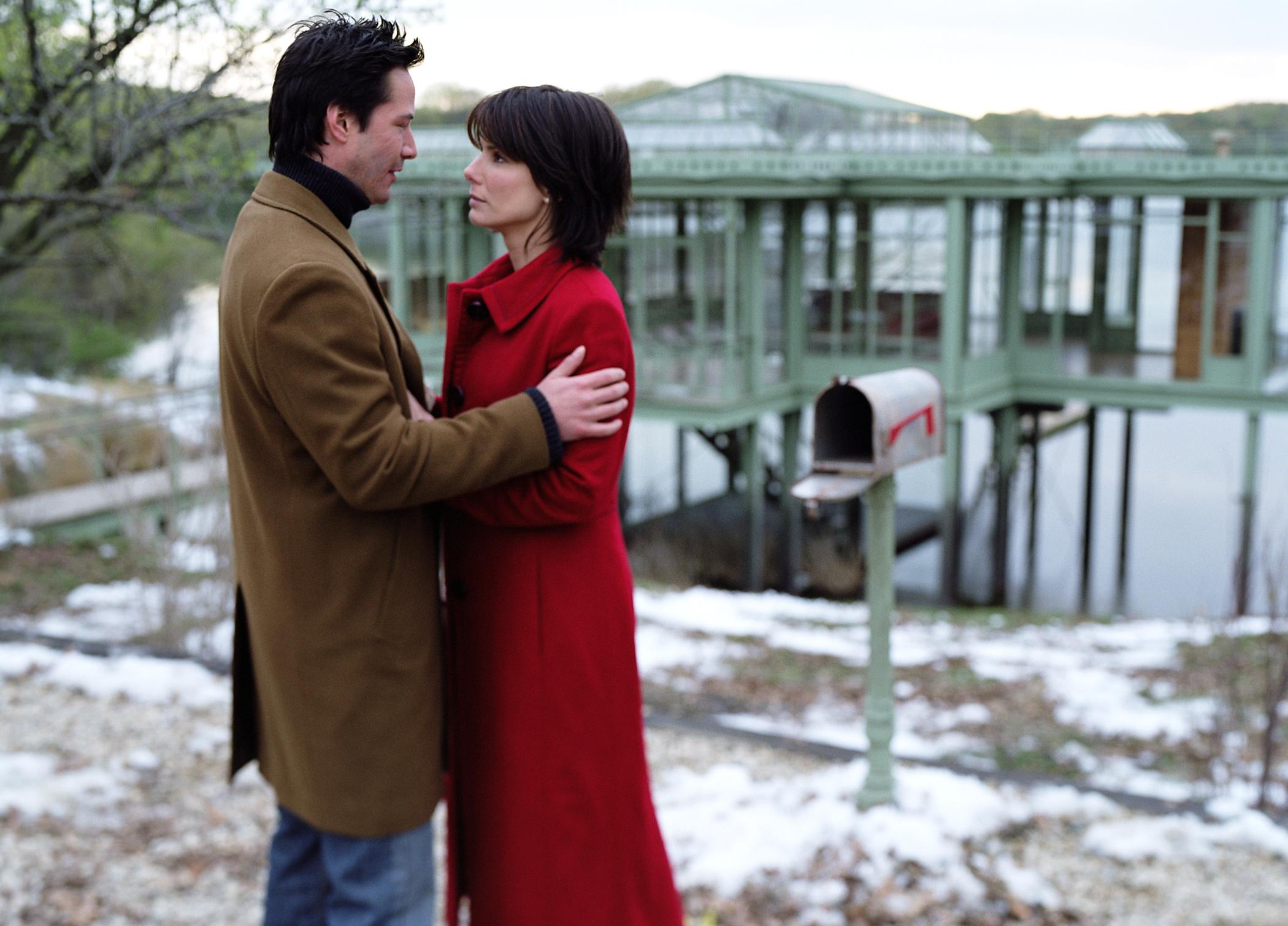
In honor of Valentine’s Day and her upcoming birthday, I’ll be reviewing a VC pick each week for the next month, and The Lake House is the first in her honor. As my VC well knows, I do love a good supernatural romance, especially when its otherworldly elements set it apart from the typical romantic clichés. I found The Lake House to be one of the better members of the genre, pairing Keanu Reeves and Sandra Bullock again twelve years after Speed.
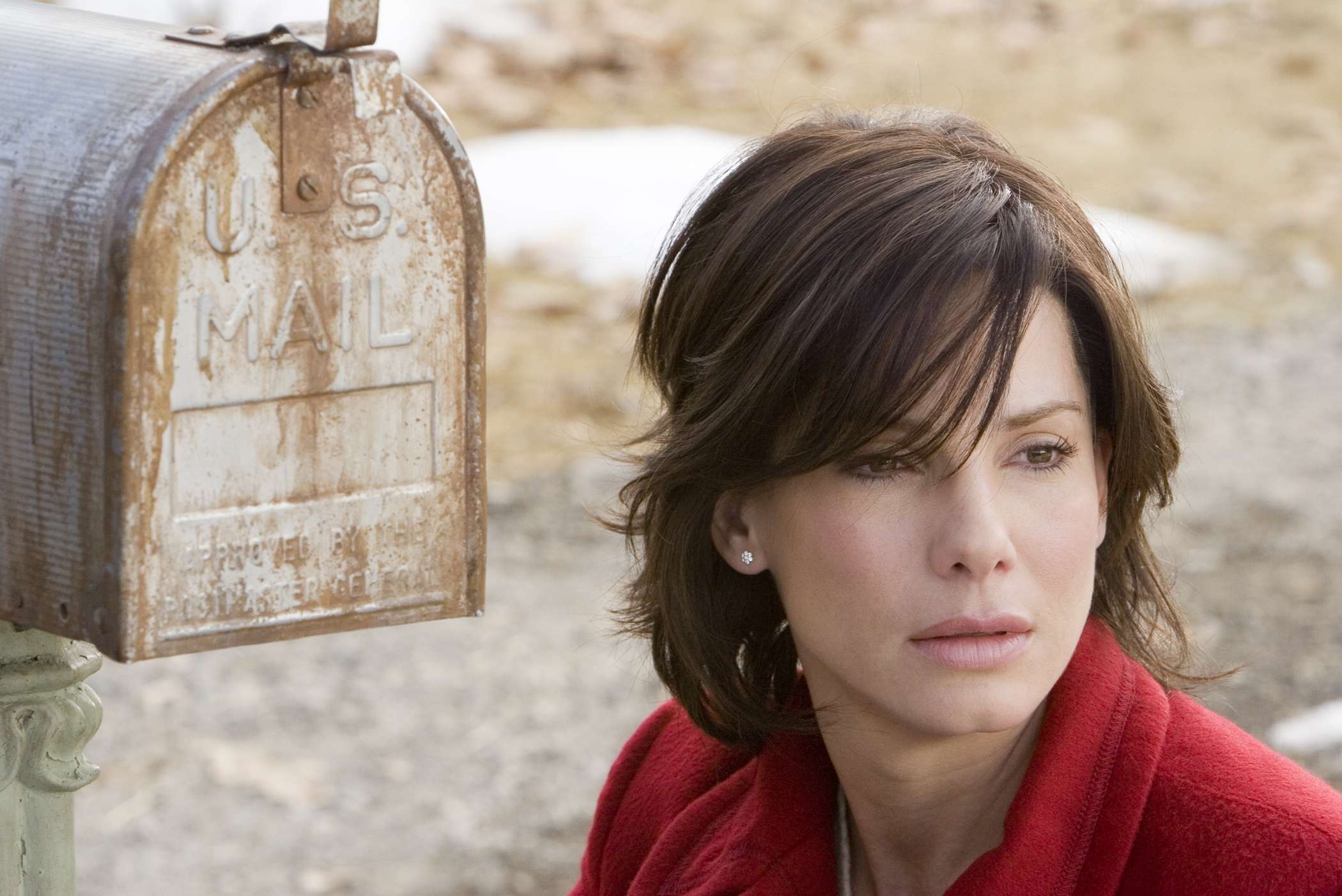
Based on the 2000 Korean film Il Mare, The Lake House follows Dr. Kate Forster (Bullock) and architect Alex Wyler (Reeves) as the former moves out of the titular glass home and the latter moves in. The hook is that they’re doing so two years apart, with Alex in 2004 and Kate in 2006. A mail-forwarding note that Kate leaves behind somehow ends up in Alex’s mailbox two years earlier, and the two discover that they can communicate with each other through their time-traveling letters. I personally love the idea of a pen-pal relationship spanning time itself, and even if the mailbox’s mysterious powers are never explained, the chemistry between Bullock and Reeves is just as evident here as it was in Speed, despite the fact they’re separated from each other much of the time. Also in fine form are Shohreh Aghdashloo as Kate’s doctor friend and Christopher Plummer as Alex’s father and architectural teacher who actually built the lake house.
Oddly enough, the film that kept coming to mind as I watched The Lake House was last year’s anime hit Your Name, another film where two likable characters are separated by time and tragedy and rarely get to meet face to face. Going into the similarities would require too many spoilers, but while Your Name was a better film overall, it’s worth noting the parallels to this earlier movie and the still earlier Il Mare.
While some might consider The Lake House maudlin, I thought its emotional scenes were highly effective, whether it be the inner longing of Alex’s visit to Kate before she knows of their relationship or the retrospective of Alex’s rocky bond with his father. As for the ending, I saw the “twist” coming a mile away, but the film kept me in doubt as to whether its separation romance would go the way of City of Angels (did NOT like) or Sleepless in Seattle(DID like). As my VC pointed out to me, the chemistry and anticipation of love between the two leads kept us invested in the outcome, and while it toyed with my expectations, the end at least provided the kind of old-fashioned satisfaction that too many modern romances try to avoid for some reason.
The only explanation I have that The Lake House isn’t List-Worthy stemmed from a review I read after seeing it, which pointed out the holes in its time-travel aspects. As much as I want to disregard them, I must admit it’s true; even the most basic laws of time travel are pretty much ignored. For instance, Alex plants a tree outside Kate’s apartment to surprise her, and in her time, it suddenly appears. While it’s a neat visual and a sweet gesture, that tree planted two years earlier should have always been there, such that Kate would never know it hadn’t been there before. Though my VC doesn’t mind, for reasons like this, The Lake House has gone down a tiny bit in my estimation, but it’s still a lovely and poignant romance, just one that shouldn’t really be thought of any deeper than a Shyamalan movie.
Best line: (Alex, of the lake house) “Dad knew how to build a house, not a home.”
VC’s best line: (Alex, after glimpsing Kate in 2004) “I don’t know if you remember, but we saw each other. That is, I saw you. You never told me… how beautiful you were.” (Kate) “Well, maybe you saw someone else. That was a bad hair year for me.”
Life is hard enough in order,
Each day in succession gone,
Until one day we look behind and see mistakes a plenty,
And all in twenty-twenty.
It might seem harder out of order,
Jumping years to days thought gone,
But might that give our stubborn minds a little new perspective
And make us more reflective?
Our destinies are ours to order,
Rampant chances till they’re gone,
And some forget fulfillment rests on what we each will do.
The question is, will you?
_________________
MPAA rating: PG-13
Since I’m new to this Blindspot series and a notorious procrastinator, of course I waited to the last day of the month to review my first Blindspot pick, but I surely did choose a good one to start with in Shuffle. I have my good friend MovieRob to thank for recommending this time travel puzzler after he became a big fan of independent director Kurt Kuenne. I see why, because Shuffle combines so much of what I love about the time travel genre with a unique and compelling story.
Shuffle is as lean a narrative as I’ve seen, diving right into the tale of a man displaced within his own lifetime with every scene adding something to the plot. From the first moments, Lovell Milo explains to a psychiatrist that every time he falls asleep (which is often), he awakens on a different day in his life, sometimes as an old man, sometimes as a child, or anywhere in between. It takes an exhausting toll on him, and he has no idea why it’s happening, explaining away potential plot holes with the mystery that he “just knows” certain facts about himself, such as his age at every jump in time. While he’s tempted to despair at this seemingly endless headache, different strangers at certain points urge him to “pay attention” because there’s something to learn from all this, and indeed there is.
There are a lot of touchstones or spiritual predecessors one could point to with Shuffle, and they’re a pantheon of great stories. The choppy editing and sudden shifts in place and time might recall Christopher Nolan’s Memento, though Shuffle is much easier to follow and much more rewarding. The theme of redemptive second chances brings to mind A Christmas Carol and It’s a Wonderful Life, and the time travel jumps echo the great sci-fi elements of Quantum Leap, The Time Traveler’s Wife, and the Star Trek: Voyager episode “Before and After,” where Kes periodically lives her life backwards. I also loved the fleeting moments of prayer, where Lovell pleads desperately with God for help, though in a general sense, like how Quantum Leap’s Sam Beckett recognizes that there must be a higher power directing his experiences.
One of the most impressive aspects of Shuffle is how well it was made on what was clearly a small budget. The production values are obviously limited, which is felt on occasion, but it’s often covered quite nicely. A behind-the-scenes featurette revealed that the same living room was used as an all-purpose set for most of the interior scenes, but I couldn’t tell at all. Unlike so many small-budget films, the acting and script are also above average, with special attention to revealing plot points gradually as Lovell learns of them and never getting lost amid the flurry of time leaps. The actors aren’t big-name stars (unless you watch the TV show Bones), but everyone involved provides good performances, even the child actors and especially T. J. Thyne as Lovell.
Again, a big thank-you to Rob for his recommendation; it being an under-the-radar film that had trouble getting noticed before becoming a festival hit, I doubt I’d ever have seen Shuffle otherwise. My VC loved it as well, proving this is a film that deserves far more recognition. There’s a lot to admire about this film, from its structure and subtle foreshadowing to individual emotional scenes that just might put a lump in your throat. Stylistic choices also add visual interest, such as the backlighting that often imparts a luminous quality to certain scenes, and the color brightness changes depending on the timeframe. The director’s cut is apparently all in black-and-white, but I preferred the usage of color, particularly in the final scene.
I’ve read that many people disliked the ending, thinking it veers into overly satisfying territory, but I thought the whole final act was beautiful, a couple creative choices notwithstanding. In its testament of hope, Shuffle still acknowledges that mistakes and heartache can’t always be undone, but how we react to them can make the difference between a life fulfilled and a life wasted.
Best line: (Lovell’s mother, when he’s a grown man) “It seems like just yesterday, he was eight.” (Lovell) “Actually, that was two days ago.”
It seems so very long ago
The journey started with “hello,”
And then despite my disapproving,
Ever onward we were moving
Through the high and through the low,
Through lands I never dreamed I’d go.
And now at last, it’s with a sigh,
I whisper out a strained goodbye.
Despite the pain I had in store,
I’m glad I stepped out my front door.
From comfort’s hearth to dragon’s den,
I’ll treasure there and back again.
___________________
MPAA rating: PG-13
I reviewed the first two Hobbit films long ago as part of my original year-long movie countdown in 2014, when the third installment wasn’t even released yet, and despite my grouping the trilogy together on my list, it’s odd that I haven’t gotten around to reviewing The Battle of the Five Armies until now. Perhaps it’s because this third chapter of Peter Jackson’s prequel trilogy to The Lord of the Rings is most clearly the weakest of the bunch, the main problem being the preponderance of apocryphal embellishments found nowhere in Tolkien’s children’s novel.
It certainly can’t be accused of false advertising: it’s called The Battle of the Five Armies, and that’s exactly what you get—a huge, Middle-earth epic battle between dwarves, elves, the men of Laketown, orcs, and eventually eagles. If all I want out of a movie is sword slashing galore and spectacular set pieces, The Battle of the Five Armies delivers, especially reminding us just how awesome Legolas is. But in stretching out what is only a few pages in The Hobbit book, it falls short of the higher aspirations of The Lord of the Rings, each part of which deserved its near three-hour runtime. What with the painfully forced comic relief of Alfrid (Ryan Gage) and the unsatisfying love triangle of she-elf Tauriel (Evangeline Lilly of Lost) and he-dwarf Kili (Aidan Turner), it’s obvious that Jackson’s trying to string out this bloated third of a story in a less than successful manner. It’s not bad; it’s just forced at times. And don’t get me started on those were-worms! What is this, Dune?
Yet Middle-earth is never without its joys. Jackson does manage to improve certain scenes from the book, most notably the death of the dragon Smaug, and the themes of greed and loyalty started in An Unexpected Journey are fulfilled in Thorin’s obsession with protecting his newly won hoard. As it was from the start, the casting is (mostly) impeccable, whether it be Martin Freeman as the younger Bilbo Baggins, Luke Evans as heroic Bard the Bowman, or returning familiar faces like Ian McKellen and Hugo Weaving. And by the end, it does feel like a worthwhile journey has been taken, especially with the end credits that recall those of The Return of the King, backed by Billy Boyd’s magnificent “The Last Goodbye.” (See my End Credits Song Hall of Fame.) The Hobbit trilogy is undoubtedly less than The Lord of the Rings, but it is unfortunate that the last one received only a single Oscar nomination for Sound Editing. Surely it could have competed in Makeup, Visual Effects, and Best Song, but the series’ general inferiority made that unlikely. Even so, Jackson’s achievement should not be overlooked; he completed two consecutive epic trilogies, a feat that is clearly harder than it seems if James Cameron’s troubles with the Avatar sequels are any indication.
I still can’t help but feel that an opportunity was missed in making The Hobbit a trilogy rather than a two-parter. Early on, I thought it was perhaps to humanize the thirteen dwarfs so that each character wasn’t just one of the thirteen, and while Jackson was more successful with some than others, most of the dwarves still seemed interchangeable, even for me, a hardcore Middle-earth fan. It’s a shame that Jackson couldn’t leave us Middle-earth lovers with more than a CGI free-for-all and a wistful farewell, but any visit to the land of hobbits, dragons, wizards, and rings is still one worth taking.
Best line: (Thorin) “If more people valued home above gold… this world would be a merrier place…”
Rank: List-Worthy (mainly due to the previous two and my own fondness for the franchise)
Do you value your life,
All you have, all you know?
And for what would you trade it,
I wonder?
Could you ever decide
To what lengths you would go?
Would you grieve when you’d paid it,
I wonder?
I would never regret,
Says the fool, feeling smart,
To confirm his conviction
Till later.
But regrets always come
When we think with our heart.
‘Tis our own contradiction
And traitor.
___________________
MPAA rating: All not rated (should be PG-13)
Don’t judge a book by its cover, or in this case, a show by its genre. I would think most people even mildly familiar with anime have heard of magical girl shows like Sailor Moon or Cardcaptors, where a group of girls typically gain powers from some adorable talking creature and become cutesy superheroines. Not to dis those shows, but it’s the kind of formula that works well for kids yet becomes insufferable to outsiders and even older former fans, like me. Yet about six years ago, Puella Magi Madoka Magica (that’s Latin, by the way, not Japanese) revolutionized the genre under the mature eye of writer Gen Urobuchi. In American terms, that’s like Christopher Nolan directing a Barbie movie and making it awesome.
Since I’ve been reviewing only films up to this point, I’ll point out that Puella Magi Madoka Magica (I’ll just call it Madoka Magica to save time) isn’t just a TV show; it had a film follow-up subtitled Rebellion, and before that was released, the 12-episode series was edited and retooled as two theatrical films, the first called Beginnings, the second Eternal. Thus, that makes Madoka Magica eligible for my top movie list and well worth reviewing, since it happens to be my third favorite anime series, after Cowboy Bebop and Steins;Gate.
The odd thing about Madoka Magica is that it was marketed like any number of similar shows, light and innocent, and since it was original and not based on a manga, viewers had no idea what to expect. The opening credits are overly bright and cheery and the first couple episodes are nothing out of the ordinary, with the typical banter and buoyancy of color-coordinated middle-school girls, but don’t let that fool you. This series goes to some very dark and very emotional places, and it confirms the unwritten rule of watching at least three episodes of a given series before you write it off.
After school one day, Madoka (the one with pink hair) and Sayaka (blue hair) are rescued from a dangerous witch by upperclassman Mami Tomoe (yellow hair), who became a magical girl by making a deal with the talking animal-thing Kyubey: magical powers and the duty of battling witches in exchange for a single wish. At first, they’re awed by the potential of such a pact, but neither can bring themselves to trade away their old lives. Meanwhile, a black-haired new student and magical girl named Homura seems to have a mysterious mission to keep Madoka from accepting Kyubey’s deal at all costs. The story may threaten to lose your interest at first, but then comes a moment in the third episode that changes the entire tone of the show, a scene so sudden and shocking that it has burned itself into my memory, even though I knew about it beforehand. From there, the story spirals into tragedy, heartache, and themes far deeper than one would expect going in.
The characters are still young and naïve, and they buckle under the weight of the hard, regrettable choices placed upon them. They expect frilly costumes and to help people, and while there’s some of that, before long they must deal with disillusionment, death, lies, time travel, and the laws of thermodynamics. (Told you this wasn’t a typical magical girl show.) The catalyst for all this is Kyubey, who seems like a cute sidekick at first but holds much darker intentions with his Faustian contract. Even with his passive demeanor, high-pitched voice, and blank stare that gets creepier with time, he’s such a manipulative, logical little bugger that, by the end, I hated the very sight of him. He’s also essentially unkillable, but it was satisfying whenever anyone tried. Homura’s story in particular overshadows everyone else’s, and while she’s a mystery for most of the series, her backstory is remarkably compelling.
Like the story, the art style is also distinctive and layered with atmosphere. The animation of the real world is evocative on its own, often setting the mood with stylized angles and amber-tinged sunsets, and the character’s eyes have a unique sketched quality to them. Things get bizarre, though, whenever a witch appears in its labyrinth, not as a pointy-hatted antagonist but as a collage of stop-motion cutouts that go deep into surreal territory. The combination of the traditional animation with this dreamlike setting is often nightmarish and complements the story’s descent into misfortune, while certain scenes in silhouette are both beautiful and disturbing, incorporating artistic details evoking similar themes to Faust and The Little Mermaid. The action scenes are also very well-done, often with spectacular explosions. Boy, this series has everything.
I feel like I’ve been reviewing Madoka Magica the show rather than the movies, but the first two films basically are the series, with the first eight episodes making up Beginnings and the final four forming Eternal. They actually translate quite well, skipping over some of the awkward moments at the beginning and keeping only what’s necessary to the story, while retaining important character moments, like Madoka’s insightful conversation with her mother. Eternal has one extra battle scene and some revised animation but unfortunately includes some cutesy montages that feel out of place since the story’s tone had already changed drastically from the beginning. However, it does follow the same plot to the same heart-tugging finale. The series is full of tragic events that make me want to tear up just seeing the characters, but despite some overwrought execution of the cosmic twist at the end, the conclusion is sublimely bittersweet.
And then… they had to ruin it with a third movie. Rebellion may be more cinematic than the first two, but it’s nowhere near as successful. It tries to replicate the bait-and-switch of the series, with a lighthearted beginning that gets darker as it goes, but it does so by presenting an alternate version of events with an explanation far too long in coming. I suppose it’s a little satisfying to see the characters in the carefree life they thought they’d have as magical girls, but it indulges for too long. Sure, the plot eventually makes sense, but it’s not good when even those familiar with the story are utterly confused for over a half hour.
It’s not all bad. Once the plot deepens, it gets more absorbing, and the eventual reveal of the mystery reconfirms Kyubey as the most hateful cat-bunny-thing imaginable. There’s also an epic gun battle between two popular characters that is jaw-droppingly awesome and may be the action high point of the series. If only the rest of the story could live up to it. One side character has little reason for existing; the surreal visuals are the rule rather than the exception now, as if the filmmakers took turns animating their most unsettling drug trips; and the final twist took Homura’s obsession with Madoka in a wholly unsatisfying direction. And then it ends, with a brand new conflict introduced and no resolution. No! There’s talk of a fourth film in development, and while that may improve things if they can end it right, it doesn’t make the disappointment of Rebellion any better right now. Sequel-makers constantly ignore this demand, but don’t continue a series unless you can end it just as well as it already had!
The final movie aside, Puella Magi Madoka Magica is a brilliant and memorable series, well-written, poignant, and impressively visualized. The music is haunting, the animation arresting, and the character motivations powerfully nuanced yet pitiful and open to interpretation. It’s the kind of psychological story that leaves me with a persistent melancholy long after it’s over. I’m including a fan-made music video down at the bottom (set to one of my favorite Florence and the Machine songs) that might give you an idea of its peculiar power. For anyone still reading this who may be hesitant to check out a magical girl series, I can only say one thing: Don’t judge a book by its cover. You’ll be glad you didn’t.
Best line: (Kyubey, the loathsome, logical little scumball) “Why is it that when humans regret a decision they made based on their own misunderstanding, they feel resentment toward the other party?”
Tied with his punch-worthy “If you ever feel like dying for the universe, call me. I’ll be waiting.”
Rank for Beginnings and Eternal: List-Worthy
Rank for Rebellion: Dishonorable Mention
Our lives seem like a universe,
And yet they’re but a dot,
An inch upon a larger road,
An integer within the code,
A minute of an episode,
One tangle in a knot,
A drop within a mighty sea,
A twist within a tapestry,
The start of a soliloquy
We’ve barely even thought.
For how much larger must it seem
To One who knows its end.
Perhaps we’ll know the more we dream
And someday comprehend.
____________________
MPAA rating: PG-13
I love Marvel movies, and as much as I want to agree with most other reviewers that Doctor Strange is one of the best Marvel origin stories, I can’t quite bring myself to say it. Based on the visuals alone, it’s a cinematic wonder that deserves to be seen on the biggest screen possible. Storywise, I find my feelings similar to how I felt about last year’s widely loved blockbuster, namely Star Wars: The Force Awakens: I liked it a lot, but…. While most people don’t seem to mind the but, it necessarily tempers my praise.
What Doctor Strange gets right from the very beginning is Strange himself. Benedict Cumberbatch is so ideal for the role that I honestly cannot see anyone else donning the red cape. Early on, he essentially brings the same selfish arrogance of his Sherlock Holmes persona to the MCU, somehow making the audience feel invested in a conceited jerk of a surgeon. At first, he’s at the top of his field, but like Tony Stark and Thor before him, his vanity backfires. He’s humbled by one of the worst examples of distracted driving imaginable, and desperate to find healing, he journeys to Kamar-Taj in Nepal and discovers a more supernatural answer than he was expecting.
I do not belittle the visual mastery on display here, which I can best compare to Inception on steroids. After an initial confrontation between Kamar-Taj’s Ancient One (Tilda Swinton) and rogue sorcerer Kaecilius, where an entire city block wraps up on itself, it seems like the visual effects team were holding back during Strange’s initiation, one or two psychedelic mind trips notwithstanding. Yet that was only so that they could go full-on bonkers when Kaecilius returns. Ignoring the fact that the actors are just waving their hands around in real life, it’s amazing how gravity, space, time, and perspective fluctuate with incredible ease, and it truly seems that images and actions are limited solely by the imagination. The time manipulation of the final battle is especially awe-inspiring, clever, and quite different from the typical explosive endings Marvel is known for.
What all these Oscar-deserving effects cover up, though, are some uninspired stock characters. I could see Tilda Swinton trying to make her Ancient One more engaging than a typical wise mentor type, but she only half succeeds, though her final scene does carry emotional weight. Chiwetel Ejiofor as Strange’s compatriot Mordo and Benedict Wong as a librarian named, uh, Wong barely made an impression on me since they too fell into the wise, solemn master stereotype, with not enough humor to escape it. Oddly, I’ve seen Rachel McAdams’s love interest getting most of the character criticism elsewhere, but I thought she filled her small supporting role quite nicely.
The script too falls a tad short, not only in the humor department that we’ve come to expect from Marvel, but in the preponderance of mystical mumbo-jumbo that I can only take half-seriously. I appreciate Christian director Scott Derrickson softening the main character’s occult roots (much like how Thor’s godhood was explained through extradimensional advancement), but a lot of the meaningful lines seem overly familiar, starting with the clichéd “Forget everything that you think you know.” My VC was vastly more negative than I, probably because the mumbo-jumbo caused her to tune out at times, since she couldn’t always keep up with all the names and spiritual terminology, not having any experience heretofore with Strange in the comics. I suspect watching Doctor Strange again with subtitles will improve her opinion and mine in time. (My MCU tastes are just different than most, I guess. My VC and I both immediately loved Ant-Man, but Guardians of the Galaxy took some warming up to. Give us time; we’ll love almost all of them eventually.)
Once again, this whole review feels like one big complaint, but I did indeed like Doctor Strange. I think it’s one of the weaker origin stories, but it has some excellent strengths going forward, especially Cumberbatch (who I really wish would meet Martin Freeman’s character from Civil War now that they’re both in the MCU). Also, despite disliking the weak or undeveloped reason behind one character’s falling out with Strange, I’m definitely excited for the possibilities that the two requisite after-credits scenes imply. Doctor Strange may not be among my favorite MCU chapters, but the groundwork that it lays gives me high hopes for the future.
Best line: (Kaecilius) “How long have you been in Kamar-Taj, Mister…?”
(Dr. Strange) “Doctor!”
(Kaecilius) “Mister Doctor?”
(Dr. Strange) “It’s Strange!”
(Kaecilius) “Maybe, who am I to judge?”
The forest stood for centuries,
In peace made permanent by trees
Whose roots sucked deep of earthen milk,
Whose branches guarded all.
And then came humans and their ilk
Who made the trees to fall.
/\/\/\/\/\/\/\/\/\/\/\/\/\/\/\/
Mankind pushed on for centuries
Through mountains, deserts, woods, and seas.
From cave to tent to town, they rose
With wonders underway.
Too often, nature did oppose
And kept progress at bay.
/\/\/\/\/\/\/\/\/\/\/\/\/\/\/\/
Both stories hold an equal truth.
Both man and nature from their youth
Have wished romantically for truce
That ended in conquest.
Cooperation or abuse—
We choose which path is best.
___________________
MPAA rating: PG-13
Hayao Miyazaki has a filmography full of films considered great cinema, and each of them seems to fit a particular target age group. While they are all beautifully drawn, the maturity level for his features could be generally ranked something like this: Ponyo (5 years old and up), My Neighbor Totoro (6 and up), Kiki’s Delivery Service (7 and up), Castle in the Sky(8 and up), Porco Rosso (9 and up), Spirited Away (10 and up), Howl’s Moving Castle (11 and up), Nausicaä of the Valley of the Wind(12 and up),The Castle of Cagliostro (13 and up), The Wind Rises (13 and up), and the one most clearly meant for adults, Princess Mononoke (14 and up).
Princess Mononoke is different from any other Studio Ghibli film, both in its narrative complexity and its level of violence, and when I discovered the Ghibli films and had myself an anime marathon, it caught me completely off-guard. I was shocked that heads and arms were being lopped off within the first fifteen minutes, and I turned it off then and there. It took me some time to give it another try and look past the savagery of certain scenes. Luckily, those scenes are the exception rather than the rule, and I found that Princess Mononoke was something few animated films can claim to be—an epic. From the sweeping landscapes and moving Joe Hisaishi score (he really is one of my favorite movie composers) to the huge cast of characters and nuanced themes, it’s a film so ambitious that I don’t know if there’s anything else to compare it to.
The story follows Prince Ashitaka (Billy Crudup in the English dub) in ancient tribal Japan, before forest gods and demons became mere legends. While defending his village from a demon boar, his arm is infected with a curse, and he must journey to a distant forest in the hopes of a spiritual cure. What he finds is an ongoing struggle between industry and nature, as the hardworking folk of the lakeside Irontown battle against the forest gods, led by the giant wolf Moro (Gillian Anderson) and her adopted human daughter San (Claire Danes).
Before Spirited Away came along, Princess Mononoke had every right to be called Miyazaki’s masterpiece, and while it’s far from my favorite of his films, I certainly see why it is deserving of that distinction, more so than Spirited Away, to be honest. Princess Mononoke is as expansive an experience as one can find in an anime film, with Ghibli’s ever-detailed artwork transporting viewers to another time and place full of action, beauty, and menace. It’s not a film I connected with personally, and certain things detract from it in my eyes: the aforementioned violence, the heavy pagan mythology, some grotesque imagery, an ending that doesn’t seem to punish the character most deserving of it. Yet there’s so much to impress that objections like these seem small by comparison.
The plot and characters are the most impressive ingredients on display. The conflict between humans and nature has resonances of Miyazaki’s Nausicaä of the Valley of the Wind, from the strong female characters right down to the final scene of both, but there are more than two sides to the dispute, and every side has its own distinct motivations that are far from black and white or simple good and evil. There’s Lady Eboshi (Minnie Driver) and her Irontown loyalists, who are embattled with San and the wolves, while a herd of vengeful boar also joins the fray, while a devious monk (Billy Bob Thornton) plots to steal the head of the Great Forest Spirit, while some iron-greedy samurai make war too. And in the middle of everything is Ashitaka, urging peace on all sides as he seeks to heal his cursed arm, which gives him super-strength but will eventually kill him. How all these various factions clash is key to the film’s epicness, yet Miyazaki’s knack for character is also on display. Lady Eboshi, for instance, isn’t a typical villain, trying to act in the best interest of her people and demonstrating concern for the lepers and women under her care. It’s unfortunate then that the multitude of characters proves too much to negotiate by the end, where the strife is wrapped up a bit too neatly, but the bulk of the film balances it all amazingly well.
The sheer length and scope of Princess Mononoke are enough to make it a landmark anime, even if it’s not for all ages. It played a role in bringing Studio Ghibli to greater attention in the West and, like Akira, showed audiences that anime could be intricate and mature and more than Saturday morning cartoon fare. Though I find several of his films more engaging than Princess Mononoke, if you want proof of Hayao Miyazaki’s talent as a filmmaker, this is it.
Best line: (Hii-sama, the wise woman of Ashitaka’s village) “You cannot change fate. However, you can rise to meet it, if you so choose.”
If I had all the years ahead,
My future stretching infinite,
I’d laugh at death and waste my breath
And take my time to start and quit
And eat more than I would admit.
No matter what the daily rut,
I’d rarely worry with my glut
Of days and decades in reserve,
For patience straightens every curve
And makes all roads a new shortcut.
Or so I think….
As days and decades further sink
Into the endless stream I cross,
Along with friends and love that ends,
This gift may be an albatross.
Who wants an eternity of loss?
________________
MPAA rating: PG-13 (could even be PG)
The Age of Adaline is the kind of film that I knew I would enjoy based solely on the trailer and the ingenious title with a double meaning. I love films that follow one character through decades of drama, and The Age of Adaline does so with a fantasy twist reminiscent of The Curious Case of Benjamin Button and Winter’s Tale. As the opening narration explains, Adaline Bowman lived a normal life in the early 1900s, full of the typical joys and sorrows, but an accident that should have killed her instead gave her inexplicable longevity. She never ages past her original 29 years, and while many women would consider that a blessing, it feels more and more like a curse as the decades pass, friends and family get older, the world changes, and she doesn’t.
Blake Lively was the perfect choice for Adaline, embodying both World War II-era and modern-day elegance and giving the audience an essential glimpse into her emotional state. A tear-jerking look-back at all the dogs she has owned over the decades was a brilliant way to help us understand her magnified grief. Flashbacks are used to good effect with the same purpose, clarifying why Adaline is always on the run from potential love interests and anyone who might catch on to her secret…that is, until she meets the charismatic Ellis (Michiel Huisman) and the familiar William (Harrison Ford).
The Age of Adaline fulfills its fantastical, romantic purpose with a sophisticated polish, both in the big picture and the details. (Anthony Ingruber as a young William was scarily good with his Harrison Ford impression. Look at him in the picture above; why isn’t he being considered for that Han Solo spinoff?) Unfortunately, the film does slip on occasion, specifically when Adaline’s “miracle” takes place, the narrator giving some hogwash about an undiscovered trait of DNA that freezes the aging process. Groundhog Day didn’t try to explain Bill Murray’s time loop, nor did Benjamin Button spell out Brad Pitt’s backwards aging. They didn’t have to, and The Age of Adaline’s attempt to explain the unexplainable falls flat, I’m afraid. In addition, the emotions at play aren’t as deeply wrought as in similar films, and I couldn’t help but feel that I’d seen the final scene of hopefulness somewhere else before.
My VC and I have similar tastes for this genre, and she enjoyed it too, sort of, saying afterward, “It was a great movie, except it’s ridiculous.” Blame the pseudo-science I mentioned earlier for that, but the “great movie” part still remains, thanks in large part to the outstanding performances across the board. Sometimes when a film is my kind of movie, I can forgive and even ignore its faults. The Age of Adaline fits that bill, and my expectations were met.
Best line: (Ellis) “You know they have a saying in Italy. ‘Anni, amori, e bicchieri di vino, no che contato mai.'”
(Adaline) “Years, lovers… wine cups?”
(Ellis) “Years, lovers, and glasses of wine. These are things that should never be counted.”
(Adaline) “You have no idea.”
If someday I should forget you
Or the moment that I met you,
I hope, easing your regret, you
Know, although you fade
In memory, your soul and mine
Are too attached to disentwine.
You are the one for whom I’ll pine
Till all the world’s unmade.
__________________
MPAA rating: Not rated yet (should be PG, maybe PG-13)
I’ve been awaiting Makoto Shinkai’s next feature film for some time now, and it seems that his latest movie has finally earned him acclaim and notice outside of anime fan circles. Kimi No Na Wa, or Your Name, is being heralded as proof of Shinkai coming into his own as “the new Hayao Miyazaki,” and this his fifth feature film has been hugely successful in Japan, where it is currently the seventh highest-grossing film ever.
Honestly, I’m just thrilled that I was able to see Your Name so soon after its release (as opposed to waiting perhaps a year for the DVD), but the fact that it is such a winner for writer/director Shinkai makes it even better. I’ve had a rocky regard for his past films, which are always visually beautiful and emotional but range from confusing (The Place Promised in Our Early Days) to depressing (5 Centimeters Per Second) to absolutely wondrous (Children Who Chase Lost Voices). I can’t say Your Name is the faultless masterpiece that many reviewers are making it out to be, but it’s an enchanting and praiseworthy fantasy drama that seems like the culmination of all that his less successful films tried to be.
On the surface, Your Name is a body-swap comedy between a city boy named Taki in Tokyo and a country girl named Mitsuha. Sick of her provincial surroundings and embarrassed by her feminine duties at her grandmother’s Shinto shrine, Mitsuha wishes she could be a handsome boy in Tokyo in her next life, a fancy that soon becomes reality. At random times, the two wake up in each other’s bodies and awkwardly try to live each other’s lives until they can get back to their own the next day. Their memories of the other-body experiences remain hazy afterward, like a dream, but the reactions of their friends and family make it clear that the switch is indeed real. Through notes, advice, and complaints left for each other, they get to know each other on a deeper level than most, while having a key element of any relationship—face-to-face contact—just out of reach.
Based on the trailers, one might think the body-swap humor was the main point of the film, but it actually makes up only the first third, with the rest of the film taking a far deeper and more meaningful course. Had the film remained like the first forty minutes, it would have been a somewhat fun and strange if unremarkable story, but as long as the tonal shift doesn’t bother viewers, it’s the final hour that explains Your Name’s popular acclaim, going off in unexpected and poignant directions. While publicity shots like the one below suggest that Taki and Mitsuha have greater contact, they’re separated by more than distance for the majority of the film. When they do have fleeting connections, it’s the stuff of cosmic, tragic romance, which brings people like me close to tears, even if I don’t quite get there.
Your Name does stumble on occasion, particularly when Shinkai indulges in repeated music video-like montages, like the one at the end of 5 Centimeters Per Second. The J-pop contributions of the band Radwimps actually complement the film well, but the montages sometimes give the film a rushed quality that could have been improved. The non-linear storyline also leaves the significance of some scenes in doubt, especially at the beginning… that is, until the importance of certain flashbacks becomes clearer. I would highly recommend seeing the film more than once, since the layers of its plot are better appreciated when viewed with the whole picture.
Other traces of Shinkai’s past work actually improve on his portfolio. Like The Place Promised in Our Early Days, there are a boy and girl’s sci-fi-ish separation and the threat of massive destruction, while the presence of a comet streaking across the sky brings to mind the space probe of 5 cm. One moment toward the end was even straight out of the unsatisfying conclusion of 5 Centimeters Per Second, prompting me to say “No, don’t you dare end it like that!” Luckily, it didn’t. I also appreciated a neat little cameo for a character from Shinkai’s previous film The Garden of Words.
Your Name is as beautifully animated a film as any I’ve seen in recent memory, with Shinkai’s usual attention to detail for light and shadow being exemplified. A sojourn to an expansive crater out in the countryside is especially memorable, with some gorgeous fall colors on display. Details abound, both in the scenery and the story, and attention is paid to fleshing out not only Taki and Mitsuha but also their friends and family members, making for a comprehensively touching film.
There’s so much to admire in Your Name, from the intricate but engaging plot to the moments of visual beauty, that few should mind its weaknesses, such as the quasi-spiritual “explanation” for the body swap itself. It has a good chance at snagging a Best Animated Feature nomination at the Oscars, which would make it the first non-Studio Ghibli anime film to do so, and even if I suspect Zootopia is the favored winner, Your Name would also be deserving. I still consider Children Who Chase Lost Voices to be Shinkai’s unsung masterpiece, but films like it and Your Name are what might make him a household name one of these days.
Best line: (Mitsuha’s grandmother, to Mitsuha/Taki) “Treasure the experience. Dreams fade away after you wake up.”





 Rhyme and Reason