• Home
  • About Me
  • The List
  • THE LIST (2016 Update)
  • THE LIST (2017 Update)
  • THE LIST (2018 Update)
  • THE LIST (2019 Update)
  • THE LIST (2020 Update)
  • THE LIST (2021 Update)
  • THE LIST (2022 Update)
  • Top Twelves and More
  • The End Credits Song Hall of Fame

Rhyme and Reason

~ Poetry Meets Film Reviews

Rhyme and Reason

Tag Archives: Family

Queen of Katwe (2016)

20 Thursday Apr 2017

Posted by sgliput in Movies, NaPoWriMo, Poetry, Reviews, Writing

≈ 2 Comments

Tags

Biopic, Drama, Family, Sports

Image result for queen of katwe film

(Today’s NaPoWriMo prompt was for a poem that incorporates the terminology of sports or games, and this film was the first to come to mind.)


Who showed the grandmasters to break and blockade?
Who taught the young hotshots before they were paid?
Somebody who saw that this amateur played
With potential to rival the greats.

No pro cut his teeth in the big leagues to start;
No novice knew every play tactic by heart.
The champions once were unversed in their art,
Like those whose achievement awaits.

To round the bases,
To win the races
Or marathon,
To queen the pawn,
To reach for fame upon your name,
To spike the ball,
Slam dunk them all,
To hit a home run,
To say you’ve won,
You first must dare to play the game.
_________________

MPAA rating: PG

This inspirational sports drama (yes, apparently chess can be considered a sport) didn’t make many waves when Disney quietly released it last September, but it’s a finely crafted member of a genre that often falls into feel-good clichés. In 2009, 10-year-old Phiona Mutesi (Madina Nalwanga) had little expectation for her life other than selling maize for her mother (Lupita Nyong’o) to prolong their dirt-floor subsistence living in Uganda, but the encouragement of sports coach Robert Katende (David Oyelowo) awakens in her not only a surprising talent for chess but a hope for a better life.

Image result for queen of katwe film

Queen of Katwe sidesteps the “white savior” accusations that similar films often bear (Finding Forrester, The Blind Side) by possessing an almost exclusively black cast, with Nyong’o and Oyelowo excelling as loving mentors who sometimes clash over how best to nurture Phiona’s potential. The film includes quite a bit that other underdog stories have, but it does it well, following the various stages of Phiona’s competitive development, from not believing herself worthy of attention to obsession and success to overconfidence to despair to rewarded effort. Again, whereas an American version of this true story might have stressed a racial divide between Phiona and the chess-playing elites, her struggle is instead against the class divide between her native slums of Katwe and the more educated and comfortable social status that seems out of reach for people like her.

Perhaps the film of which Queen of Katwe most reminded me was Akeelah and the Bee, another inspirational tale of an encouraging coach fostering in a young black girl an intellectual talent that might have gone unnoticed without his intervention. Akeelah and the Bee is a better and more entertaining film, in my opinion, but Queen of Katwe has the advantage of having real events and people behind its story, who we actually get to see during the obligatory where-are-they-now segment before the end credits. Plus, the presence of Christianity is refreshingly forthright in the faith of many characters with Katende’s coaching being a part of a Christian ministry, but it never becomes evangelistic or preachy. As admirable as Queen of Katwe is, it’s a bit too drawn-out and overlong in places; one sequence of Phiona’s mother buying paraffin for her late-night studying could have been cut down to half the number of scenes, for example. Even so, Phiona’s journey is worth rooting for, punctuated by some brilliant words of wisdom from her coach and a constant hope that dedication can lead to triumph and self-improvement.

Best line: (Robert Katende, to Phiona) “Sometimes the place you are used to is not the place where you belong.”


Rank:  List Runner-Up


© 2017 S.G. Liput
473 Followers and Counting


The Lego Movie (2014)

07 Friday Apr 2017

Posted by sgliput in Movies, NaPoWriMo, Poetry, Reviews, Writing

≈ 4 Comments

Tags

Animation, Comedy, Family, Fantasy

Image result for the lego movie

(The prompt for Day 7 of NaPoWriMo was to write a poem centered around luck or fortuitousness, such as finding something you didn’t know you’d lost.)


I found a lonely Lego head
That rolled out when I moved the bed,
A static smile on its face
And of his body not a trace.
What toys I’d played with in his stead—
He did not care, his smile said.

Where he was from, I could not say,
Nor what I’d used him for that day—
What worlds and exploits I’d created
Before he was decapitated,
Perhaps a knight as dragon prey
Or zombie falling to decay.

Though gone was every fellow piece,
His smile never seemed to cease.
Alone no more on outcast ground,
His hopes were met, and he was found.
His smile chides my lack of peace.
I wait, as well, for my release.
________________

MPAA rating: PG

When The Lego Movie burst on the scene in February of 2014, it’s safe to say that it surpassed expectations. Many smaller and lamer Lego animations had preceded it on television, and mediocrity seemed to be its destiny. Then lo and behold, the reviews came back positive, and directors Phil Lord and Christopher Miller, also behind Cloudy with a Chance of Meatballs, proved they could breathe hilarious life into the most unlikely subjects. I can’t wait to see what they do with the upcoming Han Solo spinoff.

Image result for the lego movie 2014 couch

The Lego Movie is hard to sum up because it’s a lot of things at once. At one level, it’s an ultra-fast-paced adventure about a normal nobody named Emmett (Chris Pratt), drawn into a larger world of Master Builders to thwart the evil plans of a tyrant (Will Ferrell). You know, typical hero journey stuff. Yet, at the same time, it’s an ironically self-aware multiverse of franchise crossovers, a stimulating commentary on specialness and self-invention, a critique of the extremes of both conformity and anarchy, a cornucopia of parody opportunities, and even a transcendently sweet example of the value of playtime. You know, not so typical animated stuff.

With its constantly frenetic pace designed for short attention spans, it’s not always easy to keep up, but there’s literally something for everyone to enjoy and laugh at. The characters are as diverse as they come: you’ve got instruction-following everyman Emmett, who discovers the Piece of Resistance and is suddenly labeled “the Special”; love interest Wyldstyle (Elizabeth Banks), who’s an obvious imitator of Trinity from The Matrix; Batman himself (Will Arnett), whose eccentricities are raised to jerk levels; the wizard Vitruvius (Morgan Freeman), whose prophecies are true because they rhyme; and ever-joyful Unikitty (Alison Brie) from Cloud Cuckooland, who for some reason is my favorite of the bunch. Not to mention the enormous supporting cast of foes and friends from franchises only a Lego movie could mash together.

Image result for the lego movie 2014 master builder meeting

Overall, The Lego Movie is a good amount of fun with some surprising depth for those looking past the vibrant colors and manic action. It’s not quite as funny as it tries to be or as sensational as its biggest fans treat it, but the sheer number of jokes and themes on display manage to hit more than they miss. The computer animation is unique in how it appears as stop motion, and this visual distinction heightens the sense of watching Lego creations that could actually be built if they moved with the imagination-directed smoothness of those microbots in Big Hero 6. The film’s hyperactivity would be harder to watch in larger doses (which is why my VC didn’t care for it), but the sharp social satire and brilliant cacophony of spoofs distinguish The Lego Movie as “special” among modern animated films.

Best line: (Emmett, upon being told of the villain and his evil corporation) “President Business is going to end the world? But he’s such a good guy! And Octan, they make good stuff: music, dairy products, coffee, TV shows, surveillance systems, all history books, voting machines… wait a minute!”


Rank: List Runner-Up


© 2017 S.G. Liput
464 Followers and Counting


Hidden Figures (2016)

13 Monday Feb 2017

Posted by sgliput in Movies, Poetry, Reviews, Writing

≈ 2 Comments

Tags

Biopic, Drama, Family, History

Image result for hidden figures film


The chronicles of history are filled with famous names,
Who’ve earned our generation’s praise or bear their age’s shames.
We think we know the few worthwhile players of the past,
And yet the world was shaped by more than names we learned in class.

Behind each role we’re tested on and public figure known
Were men and women, making crucial impacts of their own.
Perhaps they knew obscurity would be their likely end,
But history’s more hidden tales are those to recommend.
__________________

MPAA rating: PG

I’m honestly amazed that I did not already know the story of Katherine Johnson and her fellow black female compatriots at NASA. I remember noticing a theater display for Hidden Figures on my way out of watching Rogue One and thinking, “Oh, NASA—that might be interesting.” The same day I saw an episode of Timeless that featured Katherine Johnson as the historical figure of the week. That’s when I did some research and knew this was a film I had to see, which I finally did with my mom.

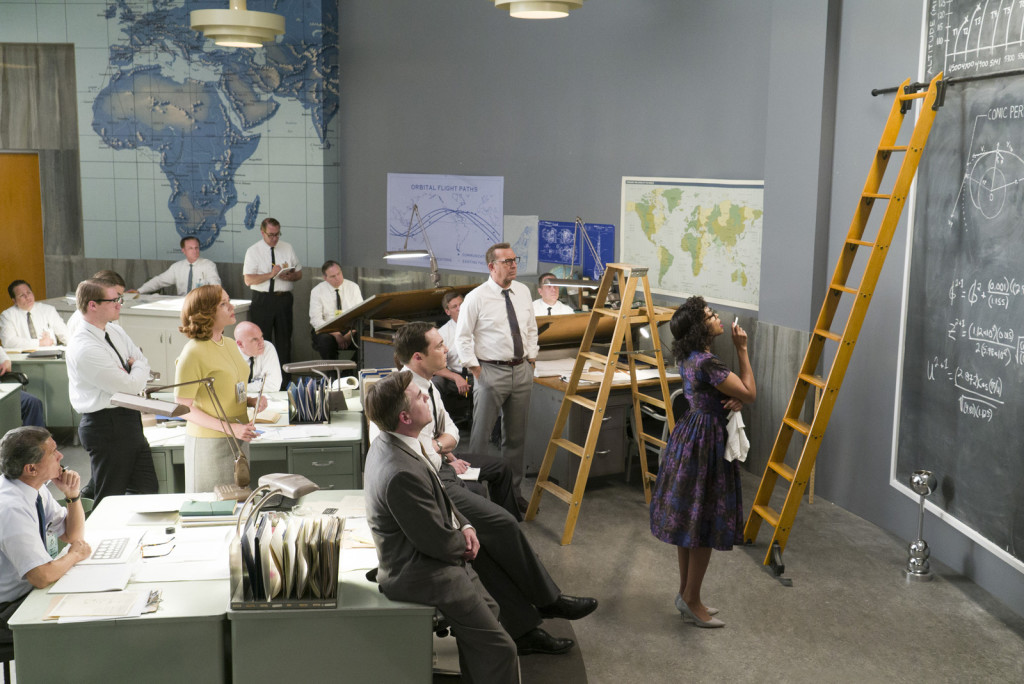
She used to work at Kennedy Space Center during the early Space Shuttle launches, and my grandfather was involved at a relatively high level in the Mercury, Gemini, Apollo, and Shuttle missions, so the space program means a lot to our family. Which makes it all the more astonishing that neither I nor my mom had ever heard of these “hidden figures,” who calculated trajectories and landing coordinates even better than their white, male coworkers. Taraji P. Henson plays Katherine Goble (eventually Johnson), whose knack for algebra earns her the role of “computer” for the Space Task Group, a thankless job of number-crunching with more than a little prejudice aimed her way. Also working at Virginia’s Langley Research Center are Mary Jackson (Janelle Monáe), who strives for the right to be an engineer, and Dorothy Vaughn (Oscar nominee Octavia Spencer), who seeks the elusive title of supervisor over her team of black female computers. In addition to the talented cast of African Americans, including Mahershala Ali as well, Kevin Costner delivers an excellent supporting role as Katherine’s no-nonsense boss who refuses to let bigotry impede the mission at hand. (I rather wish Costner had gotten a Supporting Actor nomination; Ed Harris did for Apollo 13, and there’s nothing Harris did that Costner doesn’t do just as well.)

Image result for hidden figures kevin costner film

I expected to love Hidden Figures going in, with its inspiring role models and old-fashioned enlightenment of unsung history, and I did, perhaps not quite as much as I expected but not in any disappointing way. I felt that the racism early on was a bit heavy-handed, with entire rooms of white men staring at Katherine as if she had two heads, yet I wouldn’t be surprised if that was indeed how it was. Likewise, there are many historical liberties taken for the sake of the story, whether it be composite characters created to get points across or details streamlined to simplify the story. For instance, Costner is made to look like he’s running Mission Control, but he’s at Langley, not Houston. Yet, for the most part, I didn’t mind the license taken, since it served the story to no historical detriment. (There are some interesting true-to-life details thrown in, though, such as the flooring material that snags Mary Jackson’s high heel; my mom can attest to that annoyance.) I also don’t agree with the few complaints I’ve heard about the film’s predictable underdog conventions; when it’s done right, it makes for a great movie, and it’s never been done with these characters and this particular slice of history. For the record, my mom absolutely loved it, except maybe for some of the semi-repetitive soundtrack from Pharrell Williams.

Hidden Figures is a film I believe all African Americans, all women, and everyone else for that matter ought to see. Beyond being an entertaining true story, it’s a film rife with positive messages, both obvious and subtle. Mary Jackson and Dorothy Vaughan may be bitter about their superiors’ scorn, but they don’t take it lying down. Dorothy herself tells Mary not to complain but to do something about it. It’s a court plea in Mary’s case, while Dorothy shows incredible foresight in noticing the incoming IBM meant to replace her human computers and becoming an expert in computer coding to make herself and her team valuable. Her visit to the library is backdropped by a street protest, and while the protest clearly got more attention at the time, it’s her attempts at personal betterment that are more laudable.

Image result for hidden figures film

While Hidden Figures may follow familiar story beats, it’s a marvelously acted feel-good film that ennobles intelligence and mathematics and casts a long overdue spotlight on the unrecognized heroines of NASA. Even if the initial reactions of their biased coworkers can be frustrating, the talent and intellect they displayed are undeniable, as is the satisfaction of seeing it vindicated. They served their nation well, and there was no color-coding to the worry and interest directed at sending Americans into space, evident from black and white families both anxiously watching John Glenn’s historic flight. At our present point in history, what could be more inspiring?

Best line: (Katherine, responding to being underestimated) “I will have you know, I was the first Negro female student at West Virginia University Graduate School. On any given day, I analyze the binomial levels of air displacement, friction, and velocity. And compute over ten thousand calculations by cosine, square root, and lately analytic geometry. By hand. There are twenty bright, highly capable Negro women in the West Computing Group, and we’re proud to be doing our part for the country. So yes, they let women do some things at NASA, Mr. Johnson. And it’s not because we wear skirts. It’s because we wear glasses. Have a good day.”


Rank: List-Worthy


© 2017 S.G. Liput
451 Followers and Counting


The Goonies (1985)

27 Friday Jan 2017

Posted by sgliput in Movies, Poetry, Reviews, Writing

≈ 4 Comments

Tags

Comedy, Family, Thriller

Image result for the goonies


The story of One-Eyed Willy’s hoard
Has haunted the dreams of the greedy and bored,
But, though men have suffered both peril and pain,
Their seeking and sneaking have all been in vain.

Until the momentous event heaven-sent
When a map was discovered by mere accident,
And a cluster of kids, their homes soon to be sold,
Endeavored to find Willy’s ill-gotten gold.

Through tunnels and traps only pirates would build,
The friends followed through, some alarmed and some thrilled.
While saving their home, all the Goonies, now grown,
Sought out golden legends and so wrote their own.
_________________

MPAA rating: PG (maybe PG-13)

The Goonies is a film I really wish I had seen when I was younger. I remember seeing it on the shelf at Blockbuster when I was a kid and never having enough interest to rent it, but I’ve been meaning to ever since. In fact, it probably would have been one of my Blindspot picks if I hadn’t caught it on TV at the end of 2016. Despite my late introduction to this beloved ‘80s flick, I still enjoyed it a lot, much in the way I enjoy YA books or cartoons that are clearly juvenile but still entertaining.

Of course, the biggest claim to fame that this Steven Spielberg/Chris Columbus story has is the talented cast of young stars-to-be, like The Outsiders, Stand By Me, or Red Dawn. Jonathan Ke Huy Quan may be otherwise known only as Short Round in Indiana Jones and the Temple of Doom, but it’s a little surreal to see so many other well-known actors at the start of their careers, from Joe Pantoliano and Josh Brolin to Corey Feldman and cute little Sean Astin as Mikey Walsh. Little did they know at the time….

Image result for the goonies mama fratelli

The film starts out in fun fashion as a jailbreak orchestrated by the criminal Fratelli family triggers a car chase across town, whizzing past the main characters and introducing us one by one to the club of young Goonies and their individual quirks. To their dismay, their neighborhood is soon to be destroyed by an encroaching country club, and no one wants to see it saved as much as Mikey. When they find a hidden map in his attic that may lead to a lost pirate treasure, he convinces his pals to follow him. Joined later by Mikey’s brother Brand (Brolin) and his female friends (Kerri Green and Martha Plimpton), they discover more adventure and danger than they imagined, both from booby traps along the way and from the Fratellis hot on their trail.

I can imagine everyone having a favorite Goonie. Maybe someone loves Data (Quan) and his anti-bully inventions or poor chubby Chunk (Jeff Cohen) and his klutzy anxiety. I thought Corey Feldman as Mouth stole his scenes, and I especially loved his hilarious “translations” to the Walsh’s Spanish-speaking maid. Astin makes for a wholly likable leader of the bunch, and despite their eccentricities, it was neat how each of them got a moment to shine by using their unique skills. The traps they encounter are actually quite inventive and nail-biting in a Scooby-Doo sort of way, and though I’m not the first to notice this, the family dynamic of the Fratelli family reminded me of the air pirates in Castle in the Sky, headed by a mean and cantankerous mother (although Mama Fratelli is much meaner than Dola).

It did seem that the filmmakers were aiming for different age demographics depending on the scene. In some cases, the language and menace seem a bit much for young kids, and until the end, the Fratellis are more threatening than the cartoonish villains I expected. Other times, the danger devolves into juvenile panic, possibly stretching one’s patience for kids screaming at each other. I wasn’t much of a fan of Sloth, the deformed and simple-minded Fratelli brother whose presence seems pointless until needed by the plot, and the final confrontation with the Fratellis seemed rather poorly planned. I mean, one minute, the kids are being forced to walk the plank as if it’s some great peril, and the next, everyone’s jumping off as if it’s no big deal. Even so, the very end was heartwarming, despite the fact that no one seems eager to recover what’s disappearing in the distance.

Image result for the goonies

All in all, I’m glad I finally got to enjoy The Goonies, even without the nostalgia goggles with which all those children of the ‘80s view it. I can certainly understand it being a childhood favorite, and I suspect it would have been for me too, had I chanced to rent it from Blockbuster all those years ago. (Boy, I’m making myself sound old.) The Goonies may be a bit puerile at times, but its lovable cast of youngsters and adventurous spirit still make it a classic.

Best line: (Andy, trying to play a piano booby trap) “I can’t tell… if it’s an A sharp or if it’s a B flat!”   (Mikey) “Heh, if you hit the wrong note, we’ll all ‘B flat!’”


Rank: List Runner-Up


© 2017 S.G. Liput
443 Followers and Counting


Kubo and the Two Strings (2016)

09 Wednesday Nov 2016

Posted by sgliput in Movies, Poetry, Reviews, Writing

≈ Leave a comment

Tags

Action, Animation, Family, Fantasy, Stop Motion

Image result for kubo and the two strings 2016


In ages long past, a boy dazzled his town
With music and magic and tales of renown,
With legends and stories he conjured and staged
As fierce paper battles and paper wars waged.

His paper-fold figures delighted the folk,
Who sang the boy’s praises before the spell broke,
But no one would guess that the sagas he spun
Held echoes of truth for this samurai’s son.

The rush of a rousing adventure well-told
Can wither as soon as the papers unfold,
But when real adventure emerges from lore,
The tales and their memories mean a bit more.
________________

MPAA rating: PG

I had the pleasure of seeing Kubo and the Two Strings as a sort-of double feature with Suicide Squad, and as the reviews of the latter would suggest, Kubo was easily the better film. In fact, I believe it has surpassed Chicken Run as my favorite stop-motion animated film, and mainly because it did something no other stop-motion movie has. The jerky movements or macabre aesthetic of past such films have defined the medium for years, but for the first time, Kubo made me forget I was watching stop motion. That makes it not only a visually incredible adventure with an imaginative story to boot, but a new high-point of achievement that Laika Entertainment can claim in their chosen field.

Kubo and the Two Strings is a heroic adventure influenced by ancient Japanese myth. Young Kubo (Art Parkinson) has been brought up in a seaside cave by his mother, who tells tales of how she saved him from her father, the Moon King, in an escape that cost Kubo one of his eyes and left her in a faltering mental state. Despite her warnings not to stay out after dark, one mistake leads to them being discovered by her menacing sisters (Rooney Mara), and, joined by a protective Monkey (Charlize Theron) and a dim-witted Beetle (Matthew McConaughey), Kubo is launched on a mystical quest to find his father’s lost armor, his only hope of survival.

Of course, the film’s most immediately remarkable trait is its animation. For once, Laika’s animation isn’t set on the creepy or grotesque, leaving such weirdness to only a few unnerving threats along Kubo’s journey (such as a preoccupation with eyes, also seen in Coraline). The freedom of the camera to capture all kinds of angles and both sweeping vistas and carefully crafted details sets the animation bar so high that only Laika will probably be able to outdo themselves in the future.

Image result for kubo and the two strings 2016

Despite the eerie effect that usually accompanies stop motion, Kubo and the Two Strings succeeds in balancing a variety of tones, from light and humorous during Beetle’s introduction to poignant during the mother’s backstory to absolutely wondrous when Kubo unleashes his magical shamisen (Japanese banjo) that controls origami puppets for his live performances. The plot may veer into some odd territory as it progresses, but Kubo and the Two Strings is aware of it, even encouraging viewers to hang with it in Kubo’s opening address. In doing so, the audience is taken on a dazzling ride with some darker-than-usual plot directions.

Alas, Kubo is not without some faults. Kubo admits to not being very good at ending his stories, and the filmmakers mirror that shortcoming to some extent. The final confrontation between Kubo and the Moon King is a bit randomly overblown with sentiment, and the resolution feels strange and manipulative, especially considering the importance the film places on memories. In a way, I see what the filmmakers were attempting, but they weren’t wholly successful. In addition, describing the Moon King as a celestial ruler of cold perfection might be seen as a criticism of God, but its basis in myth softens that objection, especially if compared with the cold “perfection” of other villains, like the Borg in Star Trek. Nevertheless, these complaints don’t ruin an otherwise outstanding film, and even if the ending could have been improved, I liked how the seemingly awkward title was given touching significance.

In an age of remakes and constant adaptations, Kubo stands out first and foremost as a work of pure originality. Animated films like The Secret Life of Pets are content to borrow other movies’ plot elements wholesale, but the folks at Laika have crafted something unique and presented audiences with sights they’ve never seen before. In a perfect world, that’s what a great film should do.

Best line: (Kubo, at the start of his stories) “If you must blink, do it now.”


Rank: List-Worthy


© 2016 S.G. Liput
418 Followers and Counting


Finding Dory (2016)

07 Wednesday Sep 2016

Posted by sgliput in Movies, Poetry, Reviews, Writing

≈ Leave a comment

Tags

Animation, Comedy, Family, Pixar

Image result for finding dory


Not knowing where you’re headed
Or even where you’re from
Can lead you to frontiers remote
And thrills to keep yourself afloat
And friends you never thought you’d meet,
And yet you still feel incomplete.
You may seem empty-headed,
But none should think you dumb.

With memories returning
And hopes you can’t subdue,
You may pursue the past one day
In hopes that what you lost will stay.
The blanker slate is worry-free,
But most would fill it happily.
The answer to your yearning
Is waiting there for you.
_____________________

MPAA rating: PG

Of all the studios churning out unnecessary sequels to films widely considered untouchable, I trust Pixar the most. Finding Nemo is one of my most beloved films, animated or not, and when a sequel is announced for one of your favorites, I think most people are torn between excitement and fear of disappointment. I wanted Finding Dory to be good, but how could it compare to the original? Luckily, as they’ve proven in every case but Cars 2, Pixar isn’t content to drop the ball for sequels and managed to create a worthwhile story dedicated to everyone’s favorite forgetful fish.

From the very beginning, as the adorable short film Piper segues to an equally adorable baby Dory, Finding Dory cleverly builds a film based entirely on a single line from the first film: Dory’s brief mention of family and the quickly forgotten question “Where are they?” It seemed like a throwaway gag at the time, but Dory is no throwaway character. We see in repeated flashbacks how her parents (Diane Keaton and Eugene Levy) struggled to train and encourage her to overcome her short-term memory loss, and the separation that follows highlights what a disability it is. As hilarious as Dory’s antics are, I never really considered how vulnerable and directionless her condition made her. It’s no wonder that Marlin’s mission filled such a void in her life, and now it’s his and Nemo’s turn to help Dory find her own family, which happens to lead them to the Marine Life Institute in California.

One thing that should be said of Finding Dory is that Pixar has not limited themselves for believability. A gleeful absurdity runs through many parts and particularly during the hilarious climax, not unlike the off-the-wall creativity in Inside Out. But whereas that was inside a girl’s head, this is ostensibly the real world, and a greater suspension of disbelief is required as fish jump between every body of water in sight, big or small. Most examples can be easily overlooked, but it is odd that the first film made an epic quest out of the distance between the Great Barrier Reef and Sydney, while this one transports the characters from Australia to California within minutes. I guess the destination is more important than the journey in this case. Other questions abound, like “Do whale sharks really speak whale (when they are actual sharks, not whales)?” and “Does underwater echolocation really work outside the water too?” But if you just roll with the filmmakers’ indulgences, none of these should affect one’s enjoyment.

The animation is just as spectacular as the first film’s and greater in many cases, especially a first-person slide-away that heightens the trauma of the moment. Seeing the diversely populated exhibits at the institute reminded me of the wonder I always relished whenever I’d visit an aquarium as a kid. That was always my favorite kind of field trip, and Finding Dory reminded me how much I miss those visits, though I have an entirely new view of those innocent little touch pools. The voice cast is also superb, between the return of Ellen DeGeneres as Dory and Albert Brooks as Marlin, and the addition of a host of supporting players, from barking sea lions (Idris Elba and Dominic West) to the grumpy octopus Hank (Ed O’Neill), whose lithe acrobatics facilitate most of the out-of-water experiences. My VC can’t stand the sight of octopi, and while she has yet to see Finding Dory, I’m hoping Hank will alleviate her dislike a bit. I would have liked a little more backstory for him (Could the next movie be Finding Hank?), but he’s a welcome addition, especially on a visual level.

Image result for finding dory

In a way, Finding Dory is like a much improved version of what Cars 2 attempted: giving a popular side character the spotlight to have an adventure of their own and affirm their worth. But whereas Cars 2 had little to say about Mater other than “he’s a lovable idiot so love him,” Dory’s situation has far more depth and empathy. Essentially a fish version of Leonard from Memento without the benefit of tattoos, she’s a constantly rebooting blank slate whose desire to remember is both heartbreaking and warmly resolute. Even if I don’t quite agree with her assertion that “the best things happen by chance,” Dory remains as endearing and sincere a presence as ever.

I won’t try to pretend that Finding Dory is as good as its predecessor, but I’ve seen Finding Nemo countless times. I remember crowing with laughter at Dory speaking whale, yet when you know a film practically by heart, sometimes it loses something and you wish you could see it again for the first time. Above all, Finding Dory let me laugh-out-loud with these characters again and many new ones besides. For example, I never expected Pixar to pull off such a hilarious parody of a scene from Alien and the unrelated casting of Sigourney Weaver just made it better. Finding Dory filled in gaps I didn’t think needed answering and brought me somewhat of that same feeling I had watching the first film as a ten-year-old. If a sequel had to be made, I’m glad it was this one.

Best line: (Dory) “Sigourney Weaver is going to help us!”


Rank: List-Worthy (joining Finding Nemo)


© 2016 S. G. Liput
405 Followers and Counting


The Peanuts Movie (2015)

31 Wednesday Aug 2016

Posted by sgliput in Movies, Poetry

≈ 2 Comments

Tags

Animation, Comedy, Family

Image result for the peanuts movie


Once upon a time there lived a boy named Charlie Brown,
Who everybody liked until he gave them cause to frown;
For Charlie Brown was quick to frown and sadly slow to smile,
And had the same effect on all his class’s rank and file.

Whenever his attempts at triumph went from bad to worse
And friends would laugh about his gaffe, he’d blame the universe.
Yet those who knew him well enough had faith in Charlie Brown
And knew that there would come a day he wouldn’t be let down.

Every foolish down-and-out and football-missing goof
Believes the talk of failure, thinking they are living proof.
Yet even then the heavy-hearted, unimpressive mourner
Should know that every failure still has Someone in his corner.
____________________

MPAA rating: G

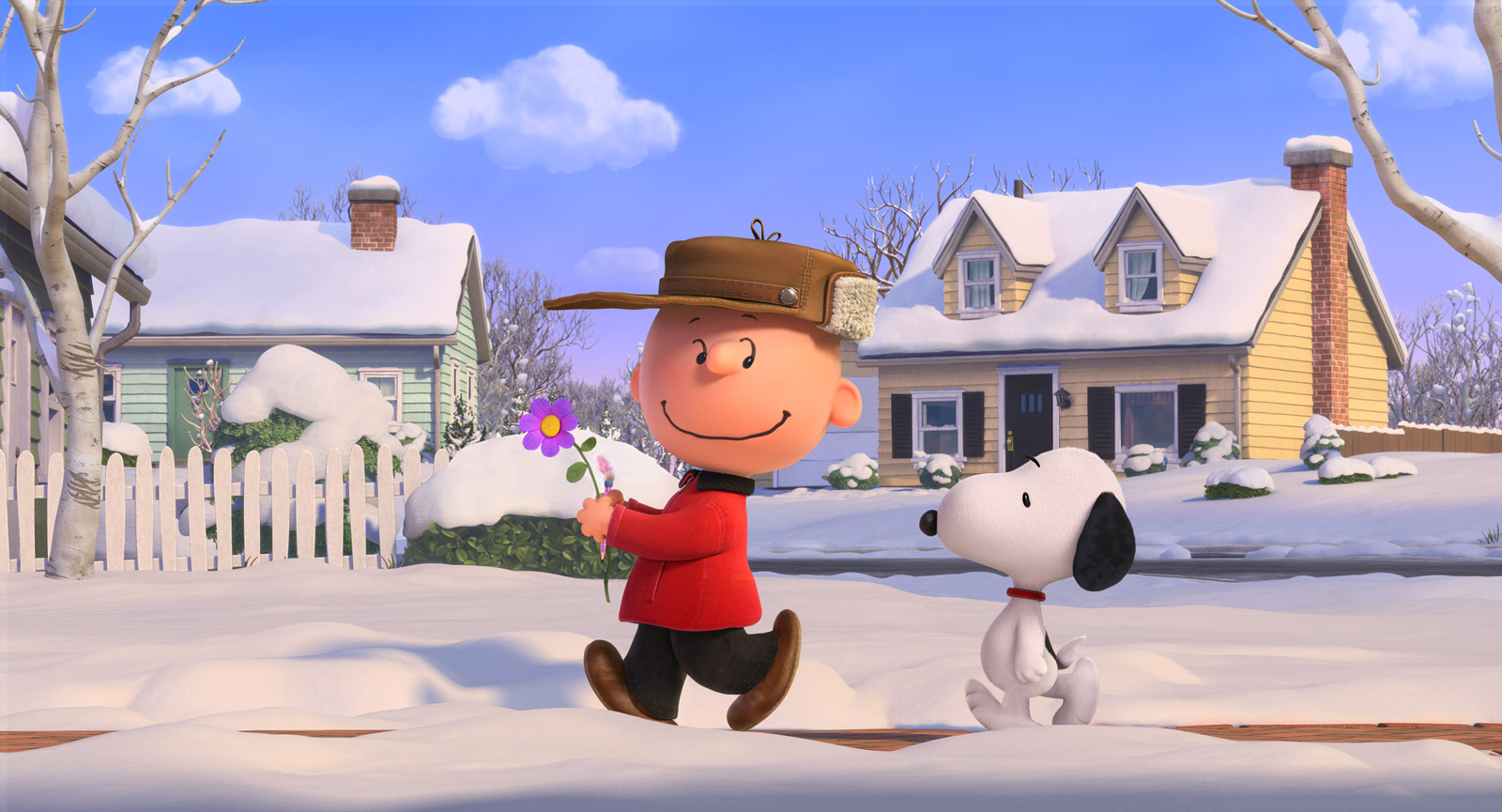
With so many old properties being revamped and rebooted in ways no one ever asked for or wanted, it’s easy to imagine a modern version of Charles Schulz’s Peanuts comic strip going off the rails. I shudder at the thought of some misguided writer combining Charlie Brown and Linus with smartphones and hip hop in a sad attempt at making them accessible to today’s youth. Yet, thankfully, someone thought better of it; that’s why The Peanuts Movie is such a wonder. Not only is it extremely faithful to its source material, but it effortlessly captures the charm of the classic cartoons. Like them, its appeal seems timeless, and there aren’t many animated films these days that fit that description.

Blue Sky Studios has found a nice balance between the original 2D and more recent 3D animation; it allows the same character appearances and comic-strip-style reaction lines while adding depth to their surroundings. The updated look is both vintage and current, working well for the everyday antics of the kids and bringing Snoopy’s WWI flying-ace dream sequences to a thrilling new level.

Luckily, though, the animation is really all that has been brought into the 21st century. There’s still the gentle pessimism of lovable Charlie Brown, the wise counsel of Linus, the goofy antics of Snoopy and Woodstock, the bossy hostility of Lucy, the distinct quirks of their various friends. While Linus’s religiosity has been dropped and the humor is more fast-paced, it all feels of a piece with the classic cartoons of the ‘60s and ‘70s, capturing their spirit better than the more recent 2D attempts on TV. Yet, as episodic as it seems at times, the filmmakers created a perfect connection among Charlie Brown’s misadventures: his attempts to impress the Little Red-Haired Girl in his class. I don’t remember the old Charlie Brown ever being as industrious (reading War and Peace in one weekend?!) or as kind as he is here (Snoopy too for that matter), but even with his classmates’ teasing, it’s clear what a role model the movie’s Charlie Brown is.

Throughout the film, I felt it was charming and likable, but it wasn’t until the end that I realized how much I truly admired The Peanuts Movie. Fans of the original specials will surely feel more of a connection with it, but it’s a film with all the earmarks of an instant classic, perhaps not a laugh-out-loud favorite, but a bit of warm nostalgia worth watching for years to come. It’s easily the best film Blue Sky has ever created and one I would feel proud to watch with kids of my own someday.

Best line: (Charlie Brown) “You’ve got to help me, Linus! I’m not sure I can handle being partners with the Little Red-Haired Girl! How will I support her? I can’t afford a mortgage! What if I’m put into escrow?”   (Linus) “Charlie Brown, you’re the only person I know who can turn a simple book report into a lifelong commitment.”


Rank: List-Worthy


© 2016 S. G. Liput
404 Followers and Counting


The Jungle Book (2016)

14 Sunday Aug 2016

Posted by sgliput in Movies, Poetry, Reviews, Writing

≈ Leave a comment

Tags

Disney, Drama, Family, Thriller

Image result for the jungle book 2016


While man has moved on from the jungle to cities, committees, and ease,
There’s something intriguing and lavish about the deep green of the trees.

We look back at creatures and corners too fierce and exotic to tame,
Caught up in an ancient attraction too dark and uncharted to name.

The beauty of virginal wilderness and wonders no eye has beheld
Still haunt we who harness the future yet still to the past are impelled.

We gladly embrace what is modern, by comfort’s convenience beguiled,
Yet even a civilized person can fall to the call of the wild.
__________________

MPAA rating: PG

I had considered reviewing Disney’s live-action version of The Jungle Book as a Cartoon Comparison, but since I’ve already covered the original 1967 feature, a separate review seemed better. Ever since Disney started in on translating their classic animated films into live-action retellings, I’ve been skeptical. Alice in Wonderland and Maleficent weren’t content to just translate the story but added in dark subtexts that ruined every shred of the original that they incorporated. I was never that fond of the animated Alice in Wonderland or even Sleeping Beauty so it was a lesser form of sacrilege to me, but I’ve always had a soft spot for The Jungle Book. How could Disney possibly do it justice? Well, I’m relieved to say they did, as almost every other reviewer seems to agree. In a world where we’ve seen CGI conjure almost everything imaginable, Disney and director Jon Favreau still managed to impress.

I’m shocked to say it, but this version might actually be better than the original because of how it fleshes out the story with material from Rudyard Kipling’s book. After we’re introduced to Mowgli (very young but good Neel Sethi), his wolf family, and the wolves’ rhyming creed plucked straight from the book, a drought causes the Peace Rock in the riverbed to be revealed, effecting a Water Truce during which predators must cooperate with prey for the sake of water. Such is the Law of the Jungle. This clever rule allows Mowgli to meet the murderous tiger Shere Khan up front, whereas the animated Mowgli isn’t as aware of Shere Khan’s threat until the end. Actually showing the restrained antagonism at the river also gives a more immediate reason for the wolves’ decision to send him back to the human village for his own safety.

The cartoon is far more episodic than many Disney films, bouncing from Kaa the python to the elephants to Baloo to King Louie to Kaa again to those Beatles-style vultures before the end. Favreau’s film follows almost the same chronology (minus the vultures and Kaa’s second appearance), but provides far better connections to create a more cohesive story. Scarlett Johansson’s Kaa, for example, isn’t just a random danger but elucidates some of Mowgli’s history during her brief scene. Christopher Walken as a more menacing Gigantopithecus King Louie instills the idea of fire’s power in Mowgli, and that fire plays a far more significant and complex role in the climax than simply appearing in a flash of lightning and scaring off Shere Khan. I don’t mind how the animated version was told, but the new filmmakers found the perfect way to tell essentially the same tale (albeit with a different ending) in a uniquely well-rounded way for modern moviegoers.

Easily the best things about the original Disney cartoon were the voicework and music. Every voice actor embodies that character, and I wasn’t sure that new voices could pull it off. One of my coworkers has an issue with talking animal movies like Babe or The Jungle Book, seeing them as an abomination of nature, and hearing recognizable voices coming out of the mouths of CGI animals did take some getting used to. At the first listen, Ben Kingsley as Bagheera and Bill Murray as Baloo don’t seem to quite suit their roles, but the more I heard them, the better they fit. Even Walken does well as a more mobster-like King Louie in the film’s biggest action scene. Probably the weakest voice casting was Johansson as the honey-voiced Kaa, but that could be due to how briefly she’s heard; plus, I’m sure Sterling Holloway seemed like an odd choice in 1967. Likewise, Idris Elba is a more fierce-sounding Shere Khan, but there’s something so sleekly villainous about George Sanders’s voice in the cartoon. Bill Murray’s Baloo managed to surprise me the most, offering the best comic relief, and even if he doesn’t quite compare with Phil Harris in the cartoon, I won’t mind future generations growing up with these revised characters. Unfortunately, the songs don’t translate as well, and while “The Bare Necessities” and “I Wan’na Be Like You” work well enough, they could have been omitted and left to the superior cartoon versions.

Image result for the jungle book 2016

Much has been said of the film’s visual quality, and the CGI animators truly outdid themselves. Like Life of Pi, the interactions between the boy and the simulated animals are seamless; CGI hasn’t quite reached the point that I can’t tell it’s still CGI, but it’s well on its way. Also, even though this is a far darker adaptation of the story, with more peril and death than the cartoon, the color pallet wasn’t limited for the sake of keeping it dark. The jungle is a lush wonder, like a live-action version of the greenery that made Disney’s Tarzan so stunning. The mood of the forest morphs depending on the tone of the scene, but it’s always a beauty.

Succeeding as both a faithful retelling and a thrilling reimagining, this latest Jungle Book does almost everything right for a remake, even making Mowgli more industrious and clever than his animated counterpart. The voices take some getting used to, but they don’t hamper the gorgeous visuals and the flow of the story. Disney doesn’t seem to be slowing down with its live-action remakes, and even if I’m still concerned about what they might do to Beauty and the Beast or The Lion King, The Jungle Book reinforced the hope that Maleficent almost destroyed.

Best line: (Mowgli) “But I’m helping Baloo get ready for hibernation.”
(Bagheera) “Bears don’t hibernate in the jungle.”
(Baloo) “Not full hibernation, but I nap a lot.”


Rank: List Runner-Up (on par with the original)


© 2016 S. G. Liput
404 Followers and Counting


I Am David (2003)

09 Tuesday Aug 2016

Posted by sgliput in Movies, Poetry, Reviews, Writing

≈ Leave a comment

Tags

Drama, Family, Meet 'em and Move on

Image result for i am david film


Many a time have I carelessly smiled
While others in tears are despised and exiled.
Many a time have I taken for granted
A thing that to some would seem rare and enchanted.

Many a time have I cursed my bad luck,
My vain trivialities running amok,
When many would beg for a life such as mine,
Where the greatest annoyance is no cause to whine.

I cannot know the pain others must bear,
Each has his own that he can’t always share.
Yet in the sharing, we gain a small taste
Of lives and laments that our brothers have faced.
_________________

MPAA rating: PG

I’m not entirely sure why I checked out I Am David from my local library, the diverse stock of which has provided me with an equal measure of gems and duds in recent months. There was nothing particularly intriguing about the DVD case, and its main featured actor was Jim Caviezel, who is typically good but not what I would consider A-list. Thus, I had the rare opportunity to experience a movie I’d never heard of with hardly any preconceptions, and it impressed me in a quiet, wholesome sort of way and made me now curious to read the 1963 Danish novel on which it is based.

The eleven-year-old David is played by Ben Tibber in his only film role, and the film begins with David’s escape from a Communist prison camp in Bulgaria, following the careful directions of an unseen voice. Bearing a sealed envelope, he is instructed to head for Italy and then north to Denmark, with the added caution to trust no one. David himself is a child devoid of joy. When a baker he meets asks him for a smile, he doesn’t seem to understand the concept, never having had any reason to smile back in the camp. He’s a profoundly serious boy, and Tibber plays him with earnest gravity as he encounters new people, places, and emotions along his route.

I Am David has received a good deal of criticism in addition to fond adulation. Both critics and my VC have commented on how unrealistic portions of David’s journey are; sometimes his passage seems too easy, while other times he’s met by stereotypes and dubious acting. I can’t completely argue with these points; I myself had some issue with the ending which seemed unexpectedly simple and rushed considering the slower rate of his previous travels.

Yet I Am David transcends most of these complaints by its unassuming nature. What it succeeds at is a look at the refugee experience through the eyes of an innocent. Everything that happens is through David’s eyes, eyes that have seen grief they cannot understand. Much of the dialogue is simple and straightforward, words David could easily understand. Likewise, I attributed the occasionally exaggerated acting to how David viewed things; one exchange with two friendly parents who push David when he refuses to tell them where he’s going leaves David cringing in fear, unable to comprehend any kind of discipline but cruelty. Disjointed flashbacks of David’s time in the camp and his last day with his friend Johannes (Caviezel) become more meaningful over time, as David’s guilt and fear of anyone in a uniform are both confirmed and relieved by his experiences on the outside. Despite the rushed ending, I appreciated how the connected threads of the flashbacks provided a fitting conclusion to an overall poignant film.

I was surprised to see after the fact that I Am David was the directorial debut of Paul Feig, who is much better known for directing comedies like Bridesmaids and the recent Ghostbusters remake; his beautifully-shot first feature shows a dramatic potential to which Feig is welcome to return. As I watched I Am David, I was also pleased to realize it fit into my favorite subgenre of Meet-‘em-and-Move-On movies, the type that follow a protagonist through the ups and downs of a journey and the varied acquaintances met along the way. These interactions range from a brief run-in with an ignorant American couple to an extended stay with a generous painter (Joan Plowright). Some of these meetings seem to validate David’s distrust of strangers; others challenge him to not view the world as he did in the camp. Treating its subject matter with subdued respect, I Am David seems like a perfect film to introduce young viewers to unpleasant subjects like refugees and forced labor camps, depicting their struggles but imbuing the end result with hope.

Best line: (Sophie, the painter) “David, most people are good. They have families and friends, and they just want to live their lives as happily as they can. Oh, there will always be bad people in this world, and you’ll usually know them when you meet them, or sometimes you won’t, but you can’t let that stop you from living your life fully and freely, and making friends, and seeing the goodness in people, because if you don’t do that, you’ll never find any happiness.”


Rank: List Runner-Up


© 2016 S. G. Liput
401 Followers and Counting


Monsters University (2013)

03 Wednesday Aug 2016

Posted by sgliput in Movies, Poetry, Reviews, Writing

≈ Leave a comment

Tags

Animation, Comedy, Family, Pixar

Image result for monsters university


“When I was in college,” the old monster said,
“We didn’t use laughter but screaming instead
To power our civilization, and so
Each monster who scared was a public hero.

“And where did they go hone their scaring art,
To learn how to quicken a young child’s heart,
To grasp the best method of siphoning screams
While working alone or together as teams?

“Where did they practice their skulking and creeping
And sneaking for when their young target is sleeping
So when the time’s right for the roaring and leaping,
They know that it’s just the right scream that they’re reaping?

“Where did they go? But of course, you all know.
The campus of MU, where scarers went pro.
Those were the days,” sighed the monster named Ed.
“Yeah, what he said,” said his own second head.
____________________

MPAA rating: G

After the disappointment of Cars 2, I was wary of any further Pixar sequels, or prequels in the case of Monsters University, a recounting of Mike and Sully’s wild college days and how they became friends. Even though I enjoy Monsters, Inc., I skipped its prequel at the theater, and the college concept didn’t give me much desire to see it. When I finally did, I was pleasantly surprised. Of course, it’s Pixar. Shame on me for doubting Pixar. It may not be their very best, but it’s a rare spinoff film that surprisingly holds its own with the original. My VC, who isn’t too fond of the original, actually loved Monsters University more.

Monsters, Inc. ended with a more or less satisfying conclusion so I see why they opted for a prequel. First, we go all the way back to an elementary field trip where little Mike gets to visit the scare floor from the first film, reinforcing his hero worship and attracting him to MU, Monsters University, the premier place for the next generation of scarers. When he finally arrives to the colorful campus, there’s a pleasant wink-wink of nostalgia with the arrival of Randall and Sully; we know that Randall will end up the bad guy and Sully the devoted friend, but seeing them in opposite roles that change over time is both intriguing and entertaining. Friendships aren’t always as straightforward as “Hi, let’s be friends” and neither are enemyships (yes, it’s a fake word), and Monsters University develops both in believably gradual fashion.

Mike and Sully are polar opposites, it seems. Mike is the underdog, forced to study hard to keep up with the more natural scarers, while Sully is the carefree frat boy content to coast on his family name and obvious talent. After a disastrous run-in with Dean Hardscrabble (Helen Mirren), the two are thrust together to reclaim their place at the school, which entails joining a loser fraternity called Oozma Kappa and competing in an intramural scaring competition.

Rarely does Pixar aim for the predictable, and this is no exception. Honestly, I highly doubt that the unexpected climax would have been the same had Dreamworks been in charge of production. All manner of animated and family films contain the message of believing in yourself and achieving your dreams with enough effort, and while Monsters University does too, there’s also the rare suggestion that not all dreams are feasible if your true talents lie elsewhere. In addition, it ignores the unspoken assumption that doing something good or impressive somehow washes away past transgressions; that’s a fairly common problem with many films (like how Captain Kirk from Star Trek has been in danger of court-martial more than once but always redeems himself with his heroics), and Monsters University doesn’t fall into it, making the result more realistic in the process.

I don’t know why I assumed Monsters University would be inferior. Perhaps the collegiate setting just didn’t interest me at the time, but it actually provided quite a bit of humor, from the various scaring studies to the madcap fraternity sports. Characters as lovable as Mike and Sully should only be revisited with a worthwhile story, and Pixar succeeded in that. It’s not a game-changer in animation like some of their best films, but it’s second-tier Pixar rather than third-tier. Compared with many of the animated movies out there, that’s certainly good enough for me.

Best line: (Art, mentioning his strengths) “I’ve got a third arm. Not with me, of course.”


Rank: List-Worthy (joining Monsters, Inc.)


© 2016 S. G. Liput
400 Followers and Counting


← Older posts
Newer posts →

Recent Posts

  • We Didn’t Start 2025 (Recap)
  • NaPoWriMo 2025 Recap (Finally)
  • Sonic the Hedgehog 3 (2024)
  • It Happened One Night (1934)
  • Spellbound (2024)

Recent Comments

associatesofshellymann's avatarassociatesofshellyma… on My Top Twelve La La La So…
Kit's avatarKit Nichols on Bonnie and Clyde (1967)
lifelessons's avatarlifelessons on Look Back (2024)
Carol Jackson's avatarCarol Jackson on The Thief of Bagdad (1940…
Stephen's avatarStephen on Love Story (1970)

Archives

  • January 2026
  • December 2025
  • May 2025
  • April 2025
  • March 2025
  • February 2025
  • January 2025
  • December 2024
  • May 2024
  • April 2024
  • March 2024
  • February 2024
  • January 2024
  • December 2023
  • November 2023
  • October 2023
  • September 2023
  • July 2023
  • June 2023
  • May 2023
  • April 2023
  • March 2023
  • February 2023
  • January 2023
  • December 2022
  • November 2022
  • October 2022
  • September 2022
  • August 2022
  • July 2022
  • June 2022
  • May 2022
  • April 2022
  • March 2022
  • February 2022
  • January 2022
  • December 2021
  • November 2021
  • October 2021
  • September 2021
  • August 2021
  • July 2021
  • June 2021
  • May 2021
  • April 2021
  • March 2021
  • February 2021
  • January 2021
  • December 2020
  • November 2020
  • October 2020
  • September 2020
  • August 2020
  • July 2020
  • June 2020
  • May 2020
  • April 2020
  • March 2020
  • February 2020
  • January 2020
  • December 2019
  • November 2019
  • October 2019
  • September 2019
  • August 2019
  • July 2019
  • June 2019
  • May 2019
  • April 2019
  • March 2019
  • February 2019
  • January 2019
  • December 2018
  • November 2018
  • October 2018
  • September 2018
  • August 2018
  • July 2018
  • June 2018
  • May 2018
  • April 2018
  • March 2018
  • February 2018
  • January 2018
  • December 2017
  • November 2017
  • October 2017
  • September 2017
  • August 2017
  • July 2017
  • June 2017
  • May 2017
  • April 2017
  • March 2017
  • February 2017
  • January 2017
  • December 2016
  • November 2016
  • October 2016
  • September 2016
  • August 2016
  • July 2016
  • June 2016
  • May 2016
  • April 2016
  • March 2016
  • February 2016
  • January 2016
  • December 2015
  • November 2015
  • October 2015
  • September 2015
  • August 2015
  • July 2015
  • June 2015
  • May 2015
  • April 2015
  • March 2015
  • February 2015
  • January 2015
  • December 2014
  • November 2014
  • October 2014
  • September 2014
  • August 2014
  • July 2014
  • June 2014
  • May 2014
  • April 2014
  • March 2014
  • February 2014
  • January 2014
  • December 2013

Categories

  • Blindspot
  • Blogathon
  • Christian
  • Movies
  • Music
  • NaPoWriMo
  • Poetry
  • Reviews
  • TV
  • Writing

Meta

  • Create account
  • Log in
  • Entries feed
  • Comments feed
  • WordPress.com

Recent Posts

  • We Didn’t Start 2025 (Recap)
  • NaPoWriMo 2025 Recap (Finally)
  • Sonic the Hedgehog 3 (2024)
  • It Happened One Night (1934)
  • Spellbound (2024)

Recent Comments

associatesofshellymann's avatarassociatesofshellyma… on My Top Twelve La La La So…
Kit's avatarKit Nichols on Bonnie and Clyde (1967)
lifelessons's avatarlifelessons on Look Back (2024)
Carol Jackson's avatarCarol Jackson on The Thief of Bagdad (1940…
Stephen's avatarStephen on Love Story (1970)

Archives

  • January 2026
  • December 2025
  • May 2025
  • April 2025
  • March 2025
  • February 2025
  • January 2025
  • December 2024
  • May 2024
  • April 2024
  • March 2024
  • February 2024
  • January 2024
  • December 2023
  • November 2023
  • October 2023
  • September 2023
  • July 2023
  • June 2023
  • May 2023
  • April 2023
  • March 2023
  • February 2023
  • January 2023
  • December 2022
  • November 2022
  • October 2022
  • September 2022
  • August 2022
  • July 2022
  • June 2022
  • May 2022
  • April 2022
  • March 2022
  • February 2022
  • January 2022
  • December 2021
  • November 2021
  • October 2021
  • September 2021
  • August 2021
  • July 2021
  • June 2021
  • May 2021
  • April 2021
  • March 2021
  • February 2021
  • January 2021
  • December 2020
  • November 2020
  • October 2020
  • September 2020
  • August 2020
  • July 2020
  • June 2020
  • May 2020
  • April 2020
  • March 2020
  • February 2020
  • January 2020
  • December 2019
  • November 2019
  • October 2019
  • September 2019
  • August 2019
  • July 2019
  • June 2019
  • May 2019
  • April 2019
  • March 2019
  • February 2019
  • January 2019
  • December 2018
  • November 2018
  • October 2018
  • September 2018
  • August 2018
  • July 2018
  • June 2018
  • May 2018
  • April 2018
  • March 2018
  • February 2018
  • January 2018
  • December 2017
  • November 2017
  • October 2017
  • September 2017
  • August 2017
  • July 2017
  • June 2017
  • May 2017
  • April 2017
  • March 2017
  • February 2017
  • January 2017
  • December 2016
  • November 2016
  • October 2016
  • September 2016
  • August 2016
  • July 2016
  • June 2016
  • May 2016
  • April 2016
  • March 2016
  • February 2016
  • January 2016
  • December 2015
  • November 2015
  • October 2015
  • September 2015
  • August 2015
  • July 2015
  • June 2015
  • May 2015
  • April 2015
  • March 2015
  • February 2015
  • January 2015
  • December 2014
  • November 2014
  • October 2014
  • September 2014
  • August 2014
  • July 2014
  • June 2014
  • May 2014
  • April 2014
  • March 2014
  • February 2014
  • January 2014
  • December 2013

Categories

  • Blindspot
  • Blogathon
  • Christian
  • Movies
  • Music
  • NaPoWriMo
  • Poetry
  • Reviews
  • TV
  • Writing

Meta

  • Create account
  • Log in
  • Entries feed
  • Comments feed
  • WordPress.com

Blog at WordPress.com.

  • Subscribe Subscribed
    • Rhyme and Reason
    • Join 814 other subscribers
    • Already have a WordPress.com account? Log in now.
    • Rhyme and Reason
    • Subscribe Subscribed
    • Sign up
    • Log in
    • Report this content
    • View site in Reader
    • Manage subscriptions
    • Collapse this bar