• Home
  • About Me
  • THE LIST Through the Years
  • Top Twelves and More
  • The End Credits Song Hall of Fame

Rhyme and Reason

~ Poetry Meets Film Reviews

Rhyme and Reason

Tag Archives: Family

Paddington (2014)

18 Saturday Apr 2020

Posted by sgliput in Movies, NaPoWriMo, Poetry, Reviews, Writing

≈ Leave a comment

Tags

Comedy, Family

See the source image

(Today’s NaPoWriMo prompt was to write about life’s small pleasures, which can include how we treat one another.)

It’s the little things, you know,
That make a day a joy,
The little interactions, like a smile, a wink, a wave,
The “please” or “Miss” or “Mister”
That a shrinking few deploy,
Reminding us some people still recall how to behave.

When hate’s on all horizons
And stress is in the air
And every morning seems less optimistic than the last,
A touch of common courtesy,
Less common but still there,
Can prove the world’s not too far gone, no matter the forecast.
________________________

MPA rating: PG

At last, I finally got to see why everyone loves Paddington so much. For some reason, I never got around to seeing this family film from 2014 until recently, perhaps because I never read the original classic British children’s books when I was young. Paddington has quickly become beloved by both critics and audiences, and it does indeed have a near-perfect blend of whimsy and humor.

See the source image

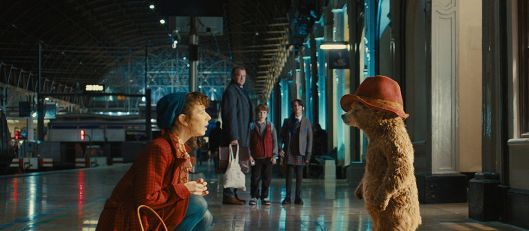
The film starts with a flashback about a British explorer discovering a pair of intelligent bears in Darkest Peru, teaching them about England and marmalade sandwiches before returning home. Decades later, those bears’ nephew (voiced by Ben Whishaw) journeys from the jungle to Paddington Station in London, where he is taken in by the kind Brown family (Hugh Bonneville, Sally Hawkins), who give him the name Paddington. He struggles, though, to find where he belongs, even as he’s targeted by a cruel taxidermist (Nicole Kidman).

It’s common for a family film to veer too far into puerile territory and be demoted to a “kid’s movie.” As a kid at heart, I can appreciate the vast majority of cartoons and such (as evidenced by yesterday’s review), but it’s clearly difficult for filmmakers to create something that can appeal to kids and adults without patronizing either. Pixar has mastered it, and so, it seems, has Paddington. There are, of course, jokes and burps and slapstick for easy laughs, but beyond that is an overwhelming abundance of charm. Paddington himself, rendered in bravura CGI, doesn’t have an unkind bone in his body, and his interactions with everyone are marked by a politeness and courtesy that is genuinely refreshing, due to how rare they’ve become in recent times. I’m sometimes irritated by characters who are defended for being clumsy and destructive, and there’s a little of that here, but the charm easily outweighs any negatives.

See the source image

More than anything, Paddington reminded me of another film about a polite CGI character trying to find his place in the world and being accepted into a nuclear family: 1999’s Stuart Little, which was a beloved movie for me growing up. My nostalgia makes me prefer the earlier film, but I like how Paddington has become the Stuart Little of a new generation. Paddington certainly is more critically lauded, and its inventive camerawork and set design only add to an overall delightful aesthetic. It’s a family film in the truest sense of the words.

Best line: (Mary Brown, giving a description of Paddington to a policeman) “He’s about three foot six, he’s got a bright red hat on, and a blue duffel coat… and he’s a bear.”
(Policeman) “It’s not much to go on.”
(Mary) “Really?”


Rank: List Runner-Up


© 2020 S.G. Liput
679 Followers and Counting


The Emoji Movie (2017)

17 Friday Apr 2020

Posted by sgliput in Movies, NaPoWriMo, Poetry, Reviews, Writing

≈ 2 Comments

Tags

Animation, Comedy, Family, Fantasy

See the source image

(Today’s NaPoWriMo prompt was for a poem about outdated technology, so I went a little into the future to see how generations yet to come might look back on a present-day craze.)


The primitive Egyptians had their hieroglyphic font,
A picture-style penmanship to decorate the wall.
And slightly less archaic humans later chose to flaunt
Another image language on the phones they used to call.

You see here all the tiny illustrations they would use
To message, manage, and react in digital discourse.
We’re not sure why developed people (for the time) would choose
To discard words in favor of these mini-metaphors.

From faces showing every mood to smiling excrement,
These symbols were exchanged among them by the gadget-full.
These hands betoken clapping, and this sobbing shows lament,
And no one’s really sure about this purple vegetable.

It took a while for mankind at last to move beyond
This graphical vocabulary sent through cyberspace.
Now who will raise your hand and tell us what replacement dawned?
What new communication took the poor emoji’s place?
______________________________

MPA rating: PG

I watched The Emoji Movie at the end of a terrible day, thinking that, if it was truly as terrible as everyone said, I would associate it with that day and never want to see it again. It’s been lambasted so many times that it’s practically a meme to hate on it. Yet despite all the loathing, four Razzies, and the 7% Rotten Tomatoes score, I must admit it’s not that bad.

See the source image

The premise is straight out of Inside Out or Wreck-It Ralph, but instead of emotions or video game characters, the cast consists of various emojis living within the digital city of Textopolis, inside the phone of a high schooler named Alex. Gene (T.J. Miller) is the son of two “meh” emojis, and although he is meant to personify indifference, he tends to “break character,” so to speak, and show emotions he shouldn’t, which eventually gets him in trouble and sends him on a dangerous journey through the phone and its many apps.

Would I characterize The Emoji Movie as good? No. It’s frequently dumb or crude humor is lackluster, and the climax, in which a single emoji somehow saves the day and causes an instant change in the direction of the plot, is socially myopic at best, not saying much good for the communication skills of the next generation. Yet, is that really enough reason to label it one of the worst films of the decade?

Other reviews I’ve read have insisted that this film has no redeeming qualities whatsoever, which is a pretty absolute statement for an adult to lob at a film aimed at kids. I thought the animation was colorfully fun and polished, and the world inside the phone, while obviously derivative, had some sparks of creativity, like visualizing Spotify as a series of literal “streams” of music to ride. Though some are grating, I didn’t mind the voice actors either (James Corden, Anna Faris, Maya Rudolph). I do cringe at Patrick Stewart voicing the poop emoji, but Steven Wright as Gene’s “meh” father was an inspired choice.

See the source image

So The Emoji Movie may be “meh” overall and is so tied to present-day technology that it’s sure to age poorly, but I don’t see what makes it worse than some similarly dumb blockbuster like Minions. There are many other films out there worth hating more.


Rank: Honorable Mention


© 2020 S.G. Liput
679 Followers and Counting

Sing (2016)

15 Wednesday Apr 2020

Posted by sgliput in Movies, NaPoWriMo, Poetry, Reviews, Writing

≈ Leave a comment

Tags

Animation, Comedy, Family, Musical

See the source image

(Today’s NaPoWriMo prompt was for a poem inspired by a favorite musical genre. So I wrote my own lyrics to the beautiful Leonard Cohen classic “Hallelujah,” which was used in this film, and it’s best sung to that tune.)

I heard there was a big contest
Where people sang to prove they’re the best,
But who would try when all the world sees through ya?
Yet trying is a practice sport,
It’s hard to start, easier to thwart,
But still I saw a chance for hallelujah!

I answered to the casting call;
I saw so many give their all,
But not too much or else they’d have to sue ya.
Then my turn came, and I stepped sincere;
I flung my lungs to the judges’ ear
And hoped to God I’d find my hallelujah.

The echoes waned, and I waited there,
And one leaned backward in his chair,
And said, “If I produced, I would pursue ya.
But this audition’s meant for dance,”
So clearly I did not advance,
But still I got a chance at hallelujah.
It is true-ya,
But who knew-ya?
My debut-ya,
My limelight, but not quite,
Hallelujah.
____________________

MPA rating: PG

At first glance, Sing looks very generic, especially with Illumination largely meh record (The Secret Life of Pets, Despicable Me). Anthropomorphic animals? Seen it, that same year actually with Zootopia. A singing competition? That’s only been done, oh, about 100 times. So what does Sing offer? Well, nothing new really, but it does present its familiar elements in a highly crowd-pleasing way with an all-star voice cast and bright animation to rival its competitors.

See the source image

A koala named Buster Moon (Matthew McConaughey) owns an old failing theater with great passion and nostalgia, and when the bank threatens to foreclose on it, he decides to hold a singing competition to revive the venue’s reputation, accidentally offering a cash prize he doesn’t have. A motley crew of animal characters then audition for the show with their eyes on the prize, and things go both very wrong and very right.

The most notable aspect of Sing is the sheer number of pop standards it includes, over 60, sometimes only for a few seconds, an expense that reportedly used up 15% of the film’s budget. From Taylor Swift and Frank Sinatra to Queen and Stevie Wonder, it’s a veritable auditory feast of well-produced popular music, which also offered me the surprise of realizing how well actors like Scarlett Johansson can sing, even as a porcupine. Plus, I have little doubt that Taron Egerton’s rendition of “I’m Still Standing” helped clinch his casting as Elton John in Rocketman.

The diverse characters and personalities – mice, porcupines, pigs, gorillas, elephants – all get basic but relatable character development, and I liked how every one of the contestants had a different reason for wanting to sing and win the money, whether for selfish needs, a chance to start over, or for more personal hopes and dreams. There was charm to spare in the voice cast, which also included Reese Witherspoon, Seth MacFarlane, Tori Kelly, John C. Reilly, and Peter Serafinowicz, and the animation was smooth and colorful, particularly an impressively rendered scene involving a flood.

See the source image

So ultimately, Sing is an enjoyable film built on a lackluster base. It’s easily criticized for its lack of originality, yet all the ingredients come together to make it surprisingly… likable, I guess is the word. It’s easily Illumination’s best film, in my book. Plus, I do love the original song “Faith,” sung by Stevie Wonder and Ariana Grande, which deserves a place in my End Credits Song Hall of Fame. Sing doesn’t step far out of any box, but it’s a thoroughly amusing and pleasant watch sure to get your toe tapping.

Best line: (Buster, showing Ash a garish costume) “Isn’t this a great color for you?”
(Ash) “I can’t tell. It’s melting my eyes.”


Rank: List Runner-Up


© 2020 S.G. Liput
679 Followers and Counting

Dora and the Lost City of Gold (2019)

13 Monday Apr 2020

Posted by sgliput in Movies, NaPoWriMo, Poetry, Reviews, Writing

≈ Leave a comment

Tags

Action, Comedy, Family, Fantasy

See the source image

(Today’s NaPoWriMo prompt was for a non-apology, so I wrote one to the ancient cultures that have been despoiled in modern times.)

I’d like to take a moment to say sorry, if I may,
To all the ancient cultures our museums now display.
You went to all that trouble, building monoliths of stone,
Turned now to tourist traps we like to think of as our own.

Apologies to Giza and the pharaohs mummified.
It’s just that, with your pyramids, you hardly tried to hide.
When something’s that conspicuous, what person could resist?
It’s honey to the fly that is the archaeologist.

And ancient Greece, I’m sorry for the snatching of your art;
It’s just that all your masterpieces seem so a la carte.
A marble here, a marble there, no price tag to be seen,
It’s not as if you’ll miss another naked figurine.

Regrets to Rome and China, the Aztecs and Babylon;
You should have left instructions for long after you were gone.
It’s just that one philosophy applies to tomb and shrine:
When something sits there long enough, it might as well be mine.
_______________________

MPA rating: PG

Never in a million years did I think I would have something positive to say about a Dora the Explorer movie, but here we are. I remember growing up when seven-year-old bilingual Dora was at her height of popularity on Nickelodeon, and I also remember how quickly I outgrew her repetitive talking to the camera and decided she had little to offer me. How could a live-action version be worthwhile? Well, it can because Dora and the Lost City of Gold is better than it has any right to be.

See the source image

Having voiced a character in a cartoon spin-off of the original show, Isabella Moner (now Merced) of Instant Family plays the young explorer, aged up to a teenager. She lives happily with her professor parents (Michael Pena, Eva Longoria) and her CGI monkey Boots in the South American jungle, but her parents reluctantly send her to school in California, hoping their sheltered daughter will socialize and make some friends. Her overly perky naivete makes her less than popular with most students, including her cousin Diego (Jeff Wahlberg), but when she and some classmates are kidnapped back to the jungle, she proves how handy it is to have an explorer as a friend.

Moner as Dora is the heart of the film, and she is a consistent ray of sunshine, earnest without coming off as saccharine. The writers leaned into her cartoon persona’s more ridiculous traits (“Can you say ‘extreme neurotoxicity?’”), and, while not every joke lands, they found some comedy gold with her fish-out-of-water antics. And I’m not sure what to make of a sequence animated like the old show, which offers nostalgia while suggesting that the whole thing was one massive drug trip. Despite that scene and a vaguely liberal bent, it’s a largely family-friendly adventure that can appeal to a much wider age range than the original cartoon did.

See the source image

The story also has some excitement once it reaches the jungle again, with Eugenio Derbez being a slapstick hoot when he joins the jungle-bound teens. The journeys of Dora’s jungle-marooned classmates may be predictable, but I thought the story found a good balance between adolescent growth and National Treasure-style escapades. From the unexpected guest voices of Benicio del Toro and Danny Trejo to the excellent musical number at the end, the whole thing is self-aware and far more entertaining than I had expected. Can you say “franchise potential?”

Best line: (Sammy, a classmate) “There’s nothing more dangerous than a wounded animal.” (Dora) “There are a lot of things more dangerous than a wounded animal. A healthy animal, for starters.”


Rank: List Runner-Up


© 2020 S.G. Liput
679 Followers and Counting

Little Women (1994)

11 Saturday Apr 2020

Posted by sgliput in Movies, NaPoWriMo, Poetry, Reviews, Writing

≈ 3 Comments

Tags

Classics, Drama, Family, Romance

See the source image

(Today’s NaPoWriMo prompt was for a poem about flowers taking on certain meanings, so I decided to compare flowers with the little women of this film.)

A family of daughters is like a bouquet
Of flowers, all different, that brighten the day.

The rose offers beauty and layers of grace,
With thorns to keep those who would pluck in their place.

The daisy seems simple, but as you look nearer,
Complexity waits for the few who revere her.

The lily looks shy with its petals locked tight
But opens up wide when it knows love and light.

And baby’s breath sighs with its placeholder status
Yet binds us all close in an elegant lattice.

From practical pansy to sumptuous mum,
Each woman and bloom are just right as they come.
_____________________

MPA rating: PG

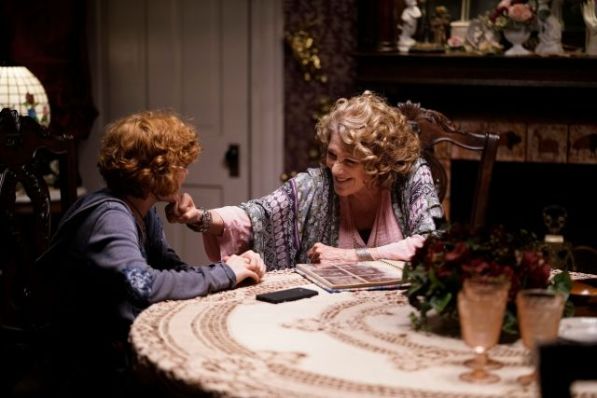
After thoroughly loving Greta Gerwig’s most recent adaptation of Louisa May Alcott’s novel, I had to check out 1994’s similarly acclaimed version from Gillian Armstrong. With such a classic story and relatable characters, it’s clearly hard to go wrong, since this also proved to be a wonderful rendition, even if it didn’t quite match its most recent sister.

The ensemble is full of stars in their prime in the ‘90s: Winona Ryder as Jo, Kirsten Dunst (and later Samantha Mathis) as Amy, Claire Danes as Beth, Trini Alvarado (of Paulie) as Meg, Susan Sarandon as Marmee, and Christian Bale as Laurie, not to mention Gabriel Byrne, Eric Stoltz, and Mary Wickes as well. Unlike Gerwig’s non-linear narrative, jumping back and forth across a four-year gap, this version plays its events in order, which is easier to follow as the March sisters grow up, finding love, heartache, and joy along the way.

See the source image

So how do the two versions compare? Over and over, I recognized scenes and interactions (which obviously means they came from the book), and I liked them here but couldn’t help preferring the more recent film’s take on them, which might have been reversed if I’d seen this version first. Much of the dialogue that I so loved in the 2019 film wasn’t the same here, a testament to Gerwig’s contribution, yet I still appreciated its simple, often humorous elegance. Individual characters were harder to decide on. Meryl Streep was certainly a more memorable Aunt March than Wickes was. Winona Ryder and Saorsie Ronan are evenly matched as Jo, considering I have a crush on both, but I thought Christian Bale made a more sympathetic Laurie than Timothée Chalamet. Likewise, Friedrich and Jo’s relationship felt slightly more natural and fleshed out here than in the remake.

I must admit one embarrassing thing. I kept being confused by certain differences I viewed as creative choices. Why did they keep giving Beth’s actions to Amy? Only halfway through did I realize I had Beth and Amy mixed up, thanks largely to the casting of the 2019 film. In that one, Florence Pugh plays both the younger and older Amy, but because she looks and is older than Eliza Scanlen as Beth, I thought Amy was the third eldest of the girls, which threw me off when 12-year-old Kirsten Dunst’s Amy was clearly the youngest in the 1994 film. It’s hard to say which is the better option, though. In this film, I thought that the replacement of Dunst with Mathis after the 4-year gap sapped some of the bond formed with Amy, so I can see why keeping the same actress might be desirable, if slightly confusing for people like me. I should really just read the novel.

See the source image

Ultimately, I loved both versions because they both bring this story to life in a brilliantly traditional way. So many 19th-century period pieces are centered in Victorian England or focus on some war or significant historical event, so it’s a rare treat to glimpse into the everyday lives of Americans from this time. I may be partial to Gerwig’s incarnation, but both films share a stellar cast and engaging wholesomeness that are equally refreshing.

Best line: (Jo, after Laurie proposes) “Neither of us can keep our temper…”
(Laurie) “I can, unless provoked.”
(Jo) “We’re both stupidly stubborn, especially you. We’d only quarrel!”
(Laurie) “I wouldn’t!”
(Jo) “You can’t even propose without quarreling.”


Rank: List-Worthy (I’ll tie it with the 2019 version)


© 2020 S.G. Liput
679 Followers and Counting

The Secret Life of Pets 2 (2019)

06 Monday Apr 2020

Posted by sgliput in Movies, NaPoWriMo, Poetry, Reviews, Writing

≈ Leave a comment

Tags

Animation, Comedy, Family

See the source image

(Today’s NaPoWriMo prompt was to write a poem from the viewpoint of a character or creature from Hieronymus Bosch’s The Garden of Earthly Delights, which is so full of bizarre imagery that he must have been high on something for the twenty years he painted it. After drawing an initial blank, I decided to write something from the viewpoint of the animals since Creation.)

I’m a pet, and you’re a pet,
But let us never once forget
That, when the world was new at birth,
We animals ruled all the earth.
The dogs and cats and tall giraffes,
The fish and lizards, foals and calfs
Held full dominion over all,
Utopia before the Fall!

And then the next day, God made man,
And nothing since has gone to plan.
________________________

MPA rating: PG

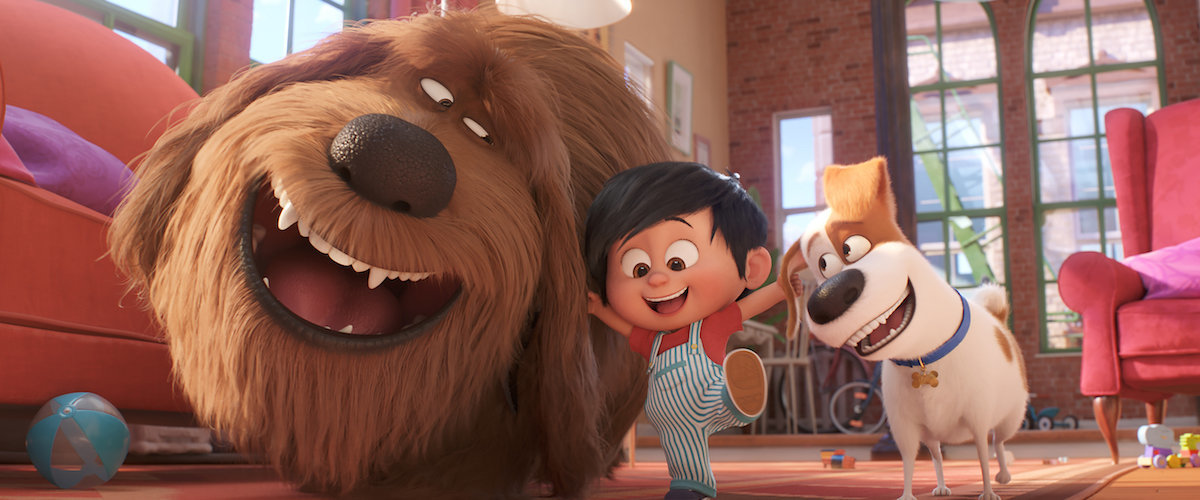
I wasn’t expecting much out of The Secret Life of Pets 2. It seems that, with any recent American animation that isn’t Disney or Pixar, it’s best to lower your expectations. Occasionally, you find a pleasant surprise like Klaus. More often, you get a cute movie that you’ll likely only ever watch again if you have kids. That’s The Secret Life of Pets 2.

See the source image

It’s not bad, just uninspired, but so was the first one too, with its mish-mash of Toy Story with pets. The obvious imitation of the Woody/Buzz conflict with dogs Max and Duke was resolved in the first film, so the second has a little more room to do its own thing with its charming cast of characters, such as little dog Max (Patton Oswalt, replacing Louis C.K. after the latter’s scandal) wanting to rediscover his fearless side during a weekend farm visit, or tough-guy bunny Snowball (Kevin Hart) trying to pass himself off as a superhero by saving a tiger.

New additions include Harrison Ford as a pleasantly grizzled farm dog and Tiffany Haddish as a Shih Tzu with attitude. As a cat lover, I especially got a kick out of Chloe’s (Lake Bell) teaching the way of the cat to Pomeranian Gidget (Jenny Slate), who is still the best thing about this franchise and gets the funniest scenes.

See the source image

It’s all cute and harmless with very little depth, but some clever comedic moments make it enjoyable and perhaps a bit better than the first film. Even when the plot tries to bring its many loose threads together at the end, it still feels like a bunch of potential TV episodes pasted into a feature film. This is clearly a franchise meant to appeal to the kids with little effort for their parents, but I can see those kids growing up with fond memories of it. Not every animated film has to break the mold, I suppose.

Best line: (Snowball) “I just freed a tiger. That’s not bragging; I’m just saying what happened. When you’re awesome, everything you say sounds like bragging.”


Rank: Honorable Mention


© 2020 S.G. Liput
676 Followers and Counting

Nancy Drew and the Hidden Staircase (2019)

02 Thursday Apr 2020

Posted by sgliput in Movies, NaPoWriMo, Poetry, Reviews, Writing

≈ Leave a comment

Tags

Family, Mystery

See the source image

(Today’s NaPoWriMo prompt was for a poem describing a place in detail. I didn’t quite do that, but I used the theme of details to versify a mystery climax.)

The floorboards near the bookcase creaked,
And everyone’s concern was piqued
As, slow and calm, the expert sleuth
Prepared to publicize the truth.
She said, “I know who did the deed”
And eyed all three suspects to read
The guilt or panic on their faces,
Gathered near two fireplaces.

“Mr. Jones, you’re known as mean,
And as the gardener, less than clean,
But you are guiltless thanks to dirt
That’s caked upon your shoes and shirt.
The night in question, I could see
The room was spotless as could be,
And so your dirt is now defense
To soundly prove your innocence.

“And Mrs. Garber, you could well
Have been the culprit, but for smell.
Your strong perfume is hard to miss,
But as I think and reminisce,
The air was mildewy that day
And not at all like your bouquet.
So that leaves you, Miss Jefferson.”
Upon her heel, the Sherlock spun.

“You had the chance, the time, the aim,
Yet you are also not to blame.
The crime scene held a scrap of robe
Too rough and plain for your wardrobe.
Your taste is clear from how you’re clad,
(You really do look good in plaid),
And so I know you too are clean.”
The three, confused, looked round the scene.

“The culprit, though, is present still,
Too curious about my skill
To not be here tonight and see
If I could solve the mystery.”
She stepped two paces to the right
And huffed and heaved with all her might
To push the bookcase from the wall
And show the man behind it all.

He stood in shock, his pant leg torn,
For still he wore the clothes he’d worn
That fateful night, and as police
Led him away, he needed peace
And asked the sleuth, “How did you know?”
She donned a smirk and faced her foe.
“To notice things is my technique.
I heard the bookcase floorboards creak.”
____________________

MPA rating: PG

My VC has recently become enamored of mysteries and true crime stories, but the origin of that interest probably originated in her early love of the Nancy Drew books. I was curious to see what she’d think of a modern interpretation, and Nancy Drew and the Hidden Staircase, based on the second book in the series, was a fairly decent adaptation.

See the source image

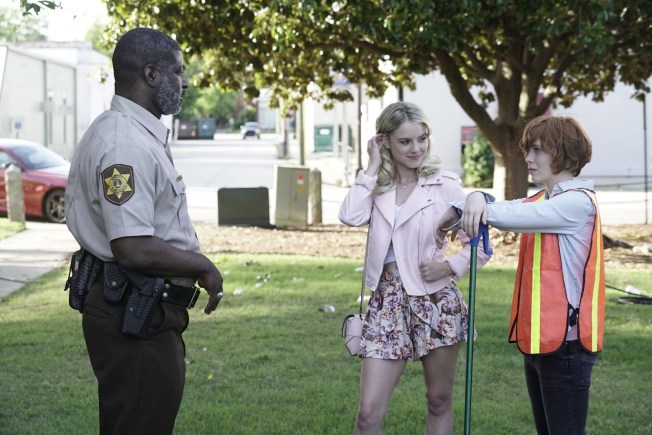
Sophia Lillis of It fame plays the titular teenage sleuth (is it all right to call her the It girl?) and gives her some likable spunk and humor as she must deal with a catty rival (Laura Slade Wiggins, who looked a little older than a teenager) and a haunted house. The production values are on the level of a Hallmark TV movie, but the mystery tries to keep you guessing, even as it’s kept at a tween-friendly level. I suppose the best part was its moral development; Nancy pulls a cruel prank on a bully early on, and it was nice to see her slowly recognize her own faults and choose to be better.

With the fond memory of reading the Nancy Drew series when she was little, my VC wasn’t particularly impressed with this film version, which she said was greatly changed from the source material, but it still felt like a more faithful attempt than the new CW series trying to be edgy like Riverdale. There are plenty of better mysteries out there, but Nancy Drew and the Hidden Staircase has a pleasant innocence to it that works well for the younger would-be sleuths.

See the source image


Rank: Honorable Mention


© 2020 S.G. Liput
671 Followers and Counting

A Beautiful Day in the Neighborhood (2019)

05 Thursday Mar 2020

Posted by sgliput in Movies, Poetry, Reviews, Writing

≈ 1 Comment

Tags

Biopic, Drama, Family

See the source image

We’re told that, if one can’t be kind,
It’s best if one not speak their mind,
But in our minds, we also need
More gentleness to intercede,
That we may speak them free of shame
And help the world to do the same.
________________

MPA rating: PG

I vaguely recall watching Mr. Rogers’ Neighborhood when I was a kid. I remember the puppet king and the camera zooming in on the educational videos playing on Picture Picture. I think I even read a children’s biography of Fred Rogers for a book report. As I grew older, I thought his style was too tailor-made for kids to appeal to me anymore, yet I still viewed him as an admirable figure. My mom, however, remembers the years when he was practically a laughingstock among cynical adults, so it warms both our hearts that he’s finally getting his due, at least in the movies.

See the source image

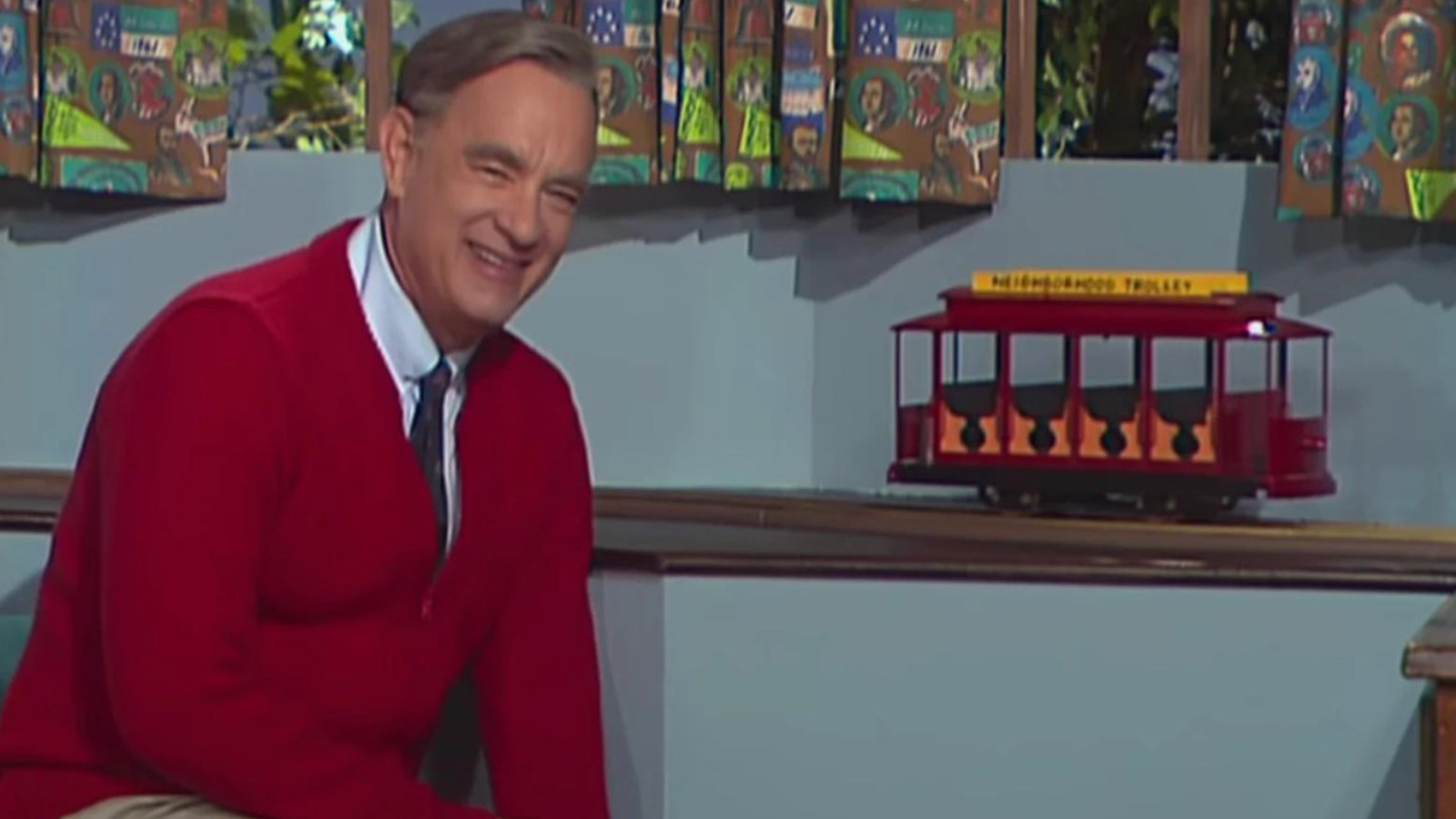
Tom Hanks has made a living playing America’s most trustworthy figures, from Walt Disney to Captain Sully. In both cases, and with Mr. Rogers here, he doesn’t entirely disappear. He still looks like Tom Hanks, yet he manages to wield the audience’s good will so well that it doesn’t matter. He can practically be two people at once. He manages to adopt Fred Rogers’ soft-spoken manner and genteel politeness so well, that it’s no wonder cynical reporter Lloyd Vogel (Matthew Rhys) finds him hard to believe when Vogel is told to profile Rogers for an article about heroes.

A Beautiful Day in the Neighborhood isn’t quite what is advertised, its greater focus being on Lloyd and his troubled relationship with his father (Chris Cooper) rather than Mr. Rogers. Well, there’s a reason Hanks was nominated for Best Supporting Actor. Yet, Lloyd’s story (loosely based on Tom Junod, who also profiled Mr. Rogers in the 1990s) is still meaningful, with Rogers acting as sort of a homespun shoulder angel for him, urging him to rediscover his priorities and even the value of silence. I was surprised at how much I identified with elements of Lloyd’s story, particularly his father’s terminal illness, and it touched me more than I was expecting. I also liked the visual style borrowed from Mr. Rogers’ show, with most outdoor scenes presented as a miniature diorama, though one dream sequence of Lloyd’s threatened to get too silly at times.

See the source image

I think the reason Mr. Rogers is so beloved now is his unsullied brand of kindness, regardless of the person or whatever they’ve done. In a world where nastiness seems to be rewarded all too often, we as a society have begun to crave what once was viewed as quaint and puerile, and he was the paragon of a gentleness we’ve largely lost. A Beautiful Day in the Neighborhood is a lovely tribute to a lovely man, not some subversive exposé but a confirmation that Rogers’ public persona was him. If it makes even one person choose kindness over the alternative, then it will have lived up to the example of Fred Rogers.

Best line: (Mr. Rogers) “There is no normal life that is free from pain.”


Rank: List Runner-Up


© 2020 S.G. Liput
665 Followers and Counting


Little Women (2019)

09 Sunday Feb 2020

Posted by sgliput in Movies, Poetry, Reviews, Writing

≈ Leave a comment

Tags

Drama, Family, Romance

See the source image

(I may not have been able to review all the Best Picture nominees before the Oscars ceremony tonight, but I assure you they’re all coming down the pipeline.)

Men have always dominated
History and stories told.
In the meantime, women waited
For the day, ordained and fated,
That the whole world could behold
The stories they illuminated.

A new perspective, underrated,
Now has found its own foothold,
Different, same, and liberated,
Making man, a bit belated,
Wonder why he’d undersold
The tales that females had created.
___________________

MPA rating: PG

Confession time: I’ve never seen any of the seven film versions of Little Women, and I’ve only ever read an abridged version. Thus, I had little investment in Greta Gerwig’s latest adaptation of the famed Louisa May Alcott novel, no preconceptions or overly high expectations, and I must say that I found it an absolute delight. Greta Gerwig has cemented herself as one of the foremost female directors working today, and she brings the potentially dated material of a 151-year-old novel to invigorating life.

See the source image

The little women of the title are, of course, the March sisters, Jo (Saoirse Ronan), Amy (Florence Pugh), Meg (Emma Watson), and Beth (Eliza Scanlan), who gradually mature into womanhood over the span of seven years. Through familial joys and trials, petty disagreements, romantic pursuits, and the chasing of dreams, their stories carry something that everyone can relate to and never lose the sense of semi-autobiographical genuineness. (I always identify with struggling writer characters, so Jo was my favorite of the family.) Gerwig reinvents the plot with nonlinear flashbacks, jumping back and forth and making it sometimes unclear what’s happening when, but it is used effectively in contrasting the story’s happiest moment with its saddest.

In many ways, Little Women feels like the kind of movie Hollywood doesn’t make anymore. As the first PG-rated Best Picture nominee since Hidden Figures in 2016, it was refreshing to watch a completely clean entry in the Oscar race that deserves its place. (Why it was largely snubbed by the Golden Globes, I don’t know.) Its period detail and costumes are impeccable, and every actress is at the top of her game, Ronan especially. The difference of seven years isn’t always convincing, particularly with Watson and Scanlan who always looked the same to me, but Pugh manages to make her maturation the most convincing as her bratty behavior evolves with time.

See the source image

While I wish I had something to compare it to, it’s hard to imagine another version of Little Women surpassing this one in my eyes. It’s made me want to read the book (a measure of success for any novel adaptation), if only to see how much of the wonderful and insightful dialogue was from the book, or else embellished by Gerwig. The film manages to give voice to more modern feminist sentiments while remaining faithful and old-fashioned in the best way. By the end, it offered a sense of humor, joy, fullness, and satisfaction that few films engender these days. Little Women made me glad that such wholesome films can still be made today, without subversion or dark revisionism, and even if it has been overshadowed by the competition, it deserves every bit of praise.

Best lines: (Meg, to Jo) “Just because my dreams are not the same as yours doesn’t mean they’re unimportant.”

And

(Marmee) “But do you love him?”
(Jo, tearing up) “I know that I care more to be loved. I want to be loved.”
(Marmee) “That is not the same as loving.”


Rank: List-Worthy


© 2020 S.G. Liput
659 Followers and Counting
 

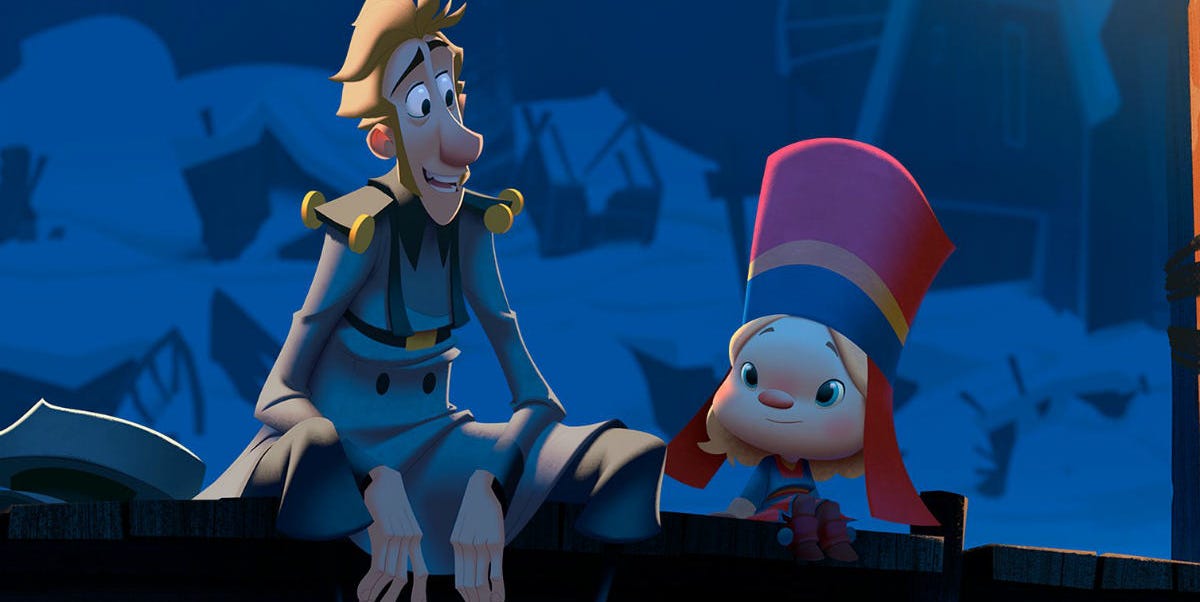
Klaus (2019)

18 Saturday Jan 2020

Posted by sgliput in Movies, Poetry, Reviews, Writing

≈ 10 Comments

Tags

Animation, Christmas, Comedy, Family, Netflix

See the source image

The world’s getting louder and meaner and prouder,
Content to be less than the best it can be.
Our good angels shrivel when others aren’t civil,
And we follow suit with acute savagery.

The worst in a person can come out and worsen,
And wrong leads to wrong for as long as we let it.
Yet kindness courageous is also contagious.
The bar is as low or high, though, as we set it.

What good can be started by all the kindhearted
Can spread just as quickly as wickedness can.
Right actions and choices speak more than raised voices,
For goodness expressed frees the best part of man.
____________________

MPAA rating: PG

It might be too late for Christmas, but Netflix’s Klaus isn’t just a great Christmas movie; it’s a great movie. I wasn’t expecting much from Netflix’s first original animated film, but good word-of-mouth convinced me to give it a look-see, and now I’m happy to contribute to its positive buzz. Being nominated for a Best Animated Feature Oscar doesn’t hurt either.

Does anyone else recall a 2000 animated film called The Life and Adventures of Santa Claus? I remember it nostalgically as a sweet origin story for Santa, and Klaus is similar in that regard. Whereas the other film featured extensive magical elements, Klaus is far more down-to-earth, gradually developing the myths and trappings surrounding Santa in a way that could feasibly happen, albeit still with some cartoonish absurdity and a dark undercurrent.

See the source image

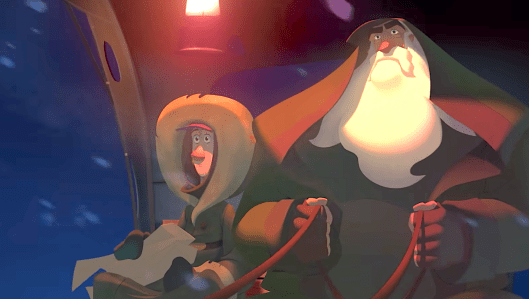
However, the titular Klaus is not the main character. Instead, it is the vain and spoiled Jesper (Jason Schwartzman), whose father, exasperated by his son’s laziness, makes him the postman for the remote and desolate island village of Smeerensburg, where a family feud has raged for generations. In a town where no one is eager to send letters to each other, Jesper concocts a plan to get the children to send letters for toys, a plan that might eventually get him transferred back to his well-to-do life. Essential to the plan is Klaus (J.K. Simmons), a mysterious woodsman with a wealth of toys, and, while Jesper’s goals begin as self-serving, he eventually starts to see the good that can come from an act of kindness.

The most noteworthy aspect of Klaus is its unique animation. In an age where most of the 2D hand-drawn animation around originates in Japan, director Sergio Pablos (creator of the Despicable Me franchise and character designer for several Disney Renaissance films) and other former Disney animators wanted to show how 2D animation might have evolved if it hadn’t been abandoned by the industry in the West. The result is gorgeously rendered and looks somewhere in between 2D and 3D, thanks to meticulous attention to shadow and shading.

See the source image

If Klaus had come out twenty years ago, I know it would have become a classic annual watch in my home, and I’d like to think it will be for this generation as well, despite its exclusivity to Netflix. The last decade has seen 2D animation flourish on the small screen, and Klaus gives me hope that it’s not dead for feature-length films as well. Despite some predictable elements, it’s filled with humor, sweetness, and a stellar voice cast (also including Rashida Jones, Norm MacDonald, and Joan Cusack) and carries the perfect heartwarming Christmas spirit that reminds us how much better it is when kindness guides our choices.

Best line: (Klaus) “A true selfless act always sparks another.”


Rank: List-Worthy


© 2019 S.G. Liput
659 Followers and Counting
 

← Older posts
Newer posts →

Recent Posts

  • You Can See Everything (2026)
  • Colony (2026)
  • Dust Bunny (2025)
  • Don’t Breathe (2016)
  • The Sheep Detectives (2026)

Recent Comments

You Can See Everythi… on 2018 Blindspot Pick #8: Dear Z…
Colony (2026) | Rhym… on Peninsula (2020)
Colony (2026) | Rhym… on Cartoon Comparison: Train to B…
The Sheep Detectives… on Wildwood (2026)
The Sheep Detectives… on #40: Babe (1995)…

Archives

  • November 2026
  • September 2026
  • June 2026
  • May 2026
  • January 2026
  • December 2025
  • May 2025
  • April 2025
  • March 2025
  • February 2025
  • January 2025
  • December 2024
  • May 2024
  • April 2024
  • March 2024
  • February 2024
  • January 2024
  • December 2023
  • November 2023
  • October 2023
  • September 2023
  • July 2023
  • June 2023
  • May 2023
  • April 2023
  • March 2023
  • February 2023
  • January 2023
  • December 2022
  • November 2022
  • October 2022
  • September 2022
  • August 2022
  • July 2022
  • June 2022
  • May 2022
  • April 2022
  • March 2022
  • February 2022
  • January 2022
  • December 2021
  • November 2021
  • October 2021
  • September 2021
  • August 2021
  • July 2021
  • June 2021
  • May 2021
  • April 2021
  • March 2021
  • February 2021
  • January 2021
  • December 2020
  • November 2020
  • October 2020
  • September 2020
  • August 2020
  • July 2020
  • June 2020
  • May 2020
  • April 2020
  • March 2020
  • February 2020
  • January 2020
  • December 2019
  • November 2019
  • October 2019
  • September 2019
  • August 2019
  • July 2019
  • June 2019
  • May 2019
  • April 2019
  • March 2019
  • February 2019
  • January 2019
  • December 2018
  • November 2018
  • October 2018
  • September 2018
  • August 2018
  • July 2018
  • June 2018
  • May 2018
  • April 2018
  • March 2018
  • February 2018
  • January 2018
  • December 2017
  • November 2017
  • October 2017
  • September 2017
  • August 2017
  • July 2017
  • June 2017
  • May 2017
  • April 2017
  • March 2017
  • February 2017
  • January 2017
  • December 2016
  • November 2016
  • October 2016
  • September 2016
  • August 2016
  • July 2016
  • June 2016
  • May 2016
  • April 2016
  • March 2016
  • February 2016
  • January 2016
  • December 2015
  • November 2015
  • October 2015
  • September 2015
  • August 2015
  • July 2015
  • June 2015
  • May 2015
  • April 2015
  • March 2015
  • February 2015
  • January 2015
  • December 2014
  • November 2014
  • October 2014
  • September 2014
  • August 2014
  • July 2014
  • June 2014
  • May 2014
  • April 2014
  • March 2014
  • February 2014
  • January 2014
  • December 2013

Categories

  • Blindspot
  • Blogathon
  • Christian
  • Movies
  • Music
  • NaPoWriMo
  • Poetry
  • Reviews
  • TV
  • Writing

Meta

  • Create account
  • Log in
  • Entries feed
  • Comments feed
  • WordPress.com

Blog at WordPress.com.

  • Subscribe Subscribed
    Rhyme and Reason
    Join 799 other subscribers

    Have a WordPress.com account? Log in now.

  • Rhyme and Reason
    View site in Reader
    Manage subscriptionsSign upLog in
    Report this content
    Collapse this bar