(For Day 3 of NaPoWriMo, the prompt was for a poem that explains why I am a poet and not something else, like, say, a lawyer for example.)
I am a poet, though the world may not know it, And I am content in my chosen art. Though lawyers deflower big bucks by the hour, What I write is not rote and still carries some heart.
I’d much rather goad out a lyrical ode Than deal with the labyrinthine legal code.
I’d much rather dwell on a shrewd villanelle Than look for a loophole that’s hidden in hell.
I’d rather spend time masterminding some rhymes, Than living off custody battles and crimes.
I’d much rather stick with a nice limerick Than share the repute of a leech or a tick.
I’d rather arraign an offending quatrain Than claim an objection I hope they sustain.
I’d sooner do sonnets or write a rondeau Than need to know Latin to sound like a pro.
I’d rather debate with a versatile verse Than argue in prose with a need to rehearse.
A lawyer exerts to secure just desserts, And more power to them; such skill’s beyond me. For me, life is sweeter when measured by meter, Which doesn’t require a fancy degree. ______________________
MPA rating: PG
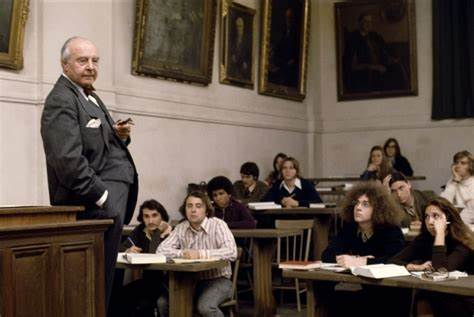
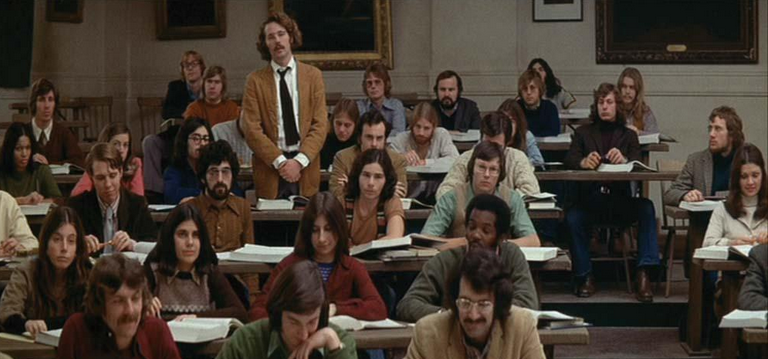
In the lead-up to the most recent Oscars ceremony, Turner Classic Movies had their annual 31 Days of Oscar event, playing a variety of Oscar-nominated films, many of which I only knew by name or reputation. One such movie was 1973’s The Paper Chase, following a first-year student at Harvard Law School named James Hart (Timothy Bottoms) who endures the stern tutelage of Professor Charles Kingsfield (John Houseman) while also wooing his daughter (Lindsay Wagner).
The film boasts an accessible erudition that feels like an honest depiction of law school, an ever-demanding taskmaster personified by Houseman’s no-nonsense professor, the kind that makes students desperate to prove they can measure up, even when they can’t. The scenes with Hart in class and bouncing off his high-strung study group are quite engaging, while the romance elements fall rather flat, partly because of a distinct lack of chemistry between Bottoms and Wagner’s characters. The final scene also left me a bit frustrated, fitting in a poetic sense but practically annoying like Rose’s last action in Titanic.
A long-time producer and acting teacher before becoming more widely known here, Houseman is considered the film’s main strength, having won the Oscar for Best Supporting Actor and going on to play the same role in the TV spin-off also called The Paper Chase. And though he is quite good, his stone-faced character never really wowed me as award-worthy, while I thought Bottoms, who wasn’t even nominated, deserved more attention for his portrayal of a harried law student. One thing is for certain, though: I’m glad I never tried to become a lawyer.
Best line: (Kingsfield, to Hart) “Mr. Hart, here’s a dime. Call your mother and tell her there is serious doubt about you becoming a lawyer.” (Hart, pausing on his way out) “You… are a son of a bitch, Kingsfield!” (Kingsfield) “Mr. Hart! That is the most intelligent thing you’ve said today. You may take your seat.”
(For Day 1 of NaPoWriMo, the prompt was to use a new-to-me music or art term, so I opted for the film-appropriate term chroma – “the intensity of a given color.”)
I wonder sometimes what I can see That nobody else can. How would I know? How would you know? Isn’t it normal for such to be so? Isn’t it true we rely on our eyes To fill in the gaps that are left by the wise? What differs is mystery.
I wonder sometimes what I can hear That nobody else can. Could I be wrong? Is that a song? And is there someone who might sing along? If I can only hit half of the notes, Who hears the other half, voice in our throats? Maybe they’ll lend me an ear.
I wonder sometimes what I can try That nobody else can. What can I play? What can I say That’s more than a fact we agree on today? I have a private monopoly on The unwritten song, the image undrawn, And the chroma of my sky. _________________________________
MPA rating: PG
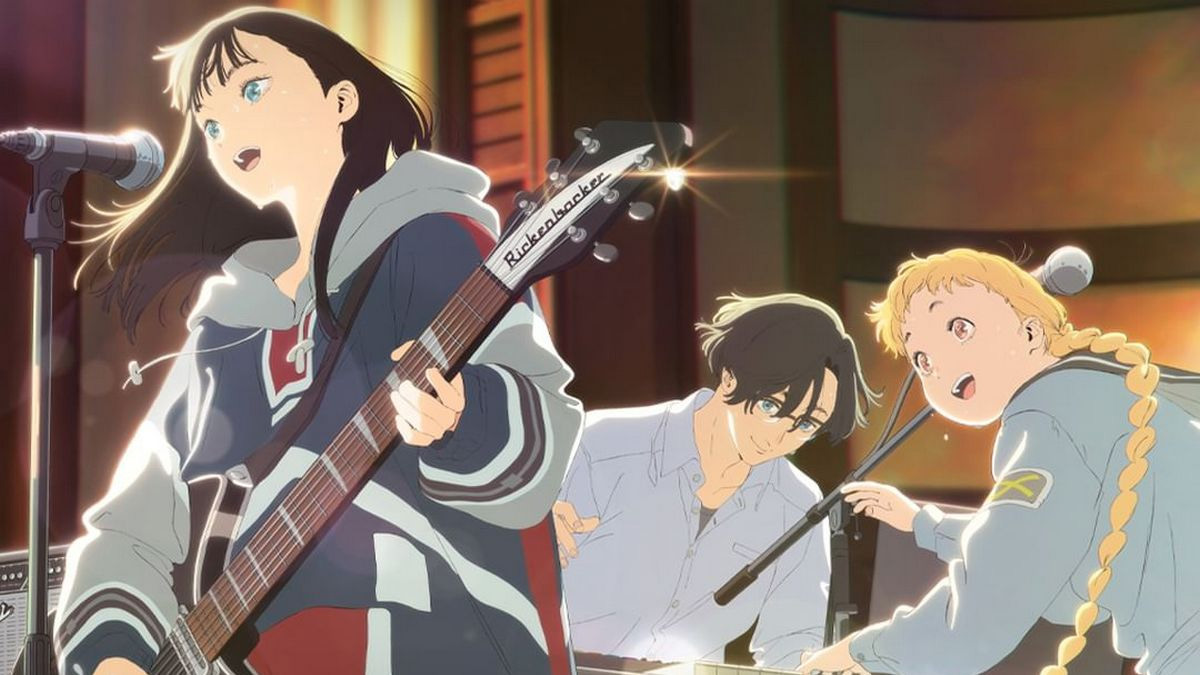
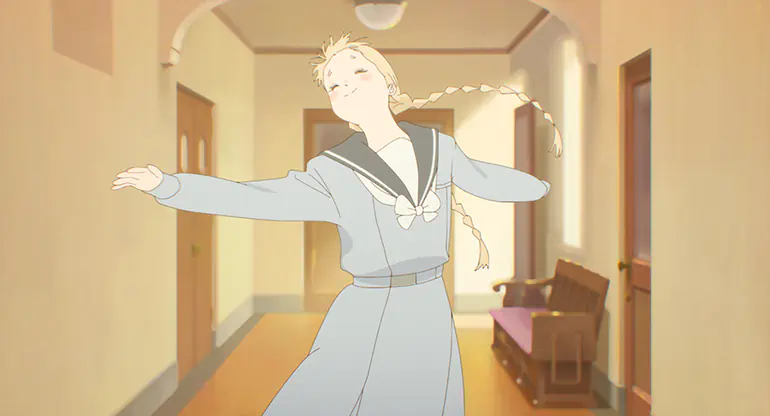
Considering how long we had to wait and catch up on anime films sometimes years after their release, it’s a special modern treat for fans like me to be able to see them in American theaters only months after their Japanese premiere, complete with a choice of English dub or subs. I caught the English dub of The Colors Within back in January, comparatively soon after its August 2024 release in Japan, and it did not disappoint. Directed by Naoko Yamada of A Silent Voice fame, this low-key high school drama is a gentle-hearted tribute to music’s power to foster friendship and self-discovery.
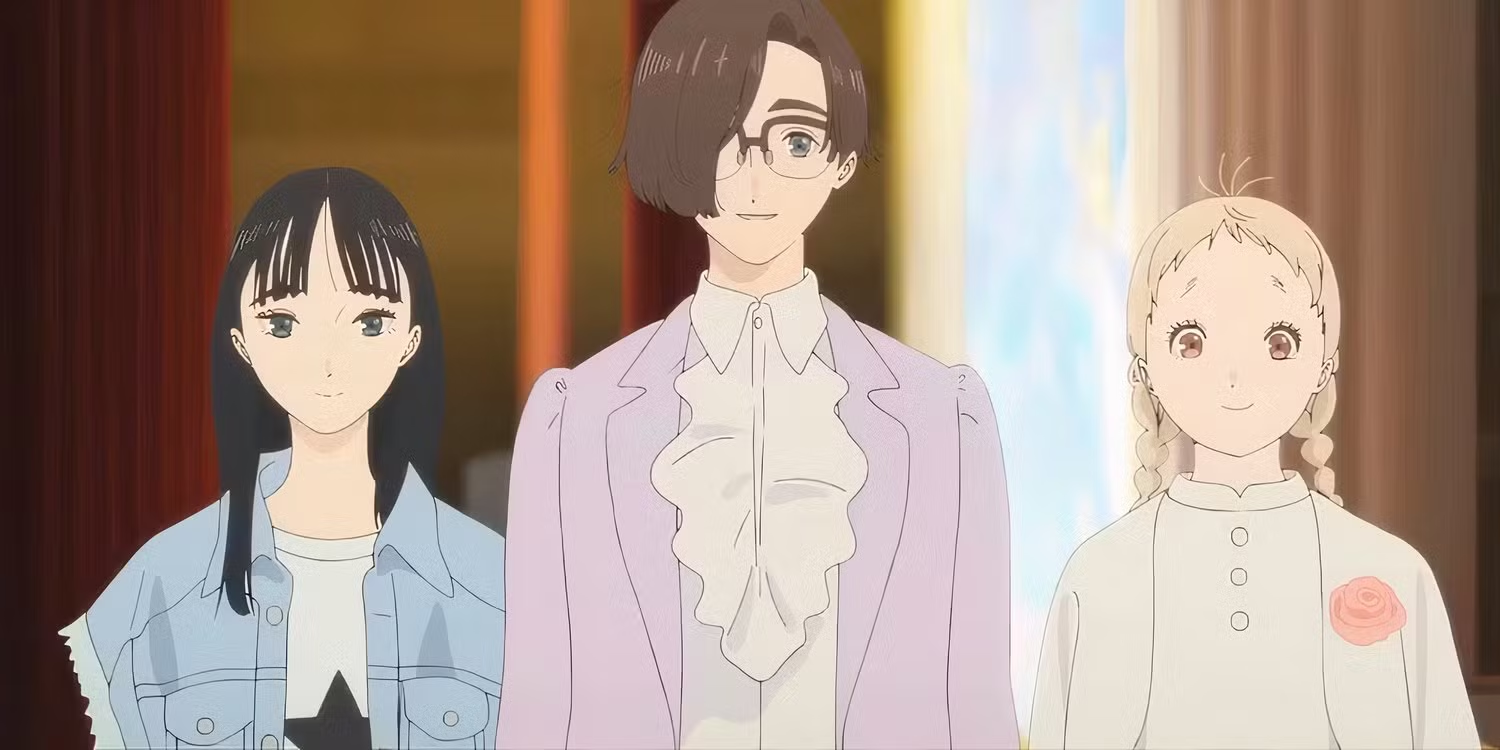
Set in a Catholic girls boarding school, the film follows ingenuous student Totsuko Higarashi, who experiences a visual synesthesia where she sees people in specific colors, often awestruck by an invisible beauty that no one else can appreciate. Drawn to an especially stunning blue coming from fellow student Kimi, Totsuko’s interest in her leads to the two stumbling into forming a band with a local boy and instrument collector named Rui. As the trio practice in secret and write their own songs, they endeavor to work through their individual personal and family struggles.
The Colors Within is a thoroughly sweet film, where the conflict stays at the level of contending with school rules and familial expectations, and there’s a special delight to be found in the creative joy the three teens derive from their simple musical ambitions. Totsuko’s wide-eyed experimentation with lyrics and notes and the collaboration of the three as they bond are enough to spark anyone’s curiosity to maybe start a band of their own (if only it was that easy). And the result of their teamwork is three outstanding songs, courtesy of musician Kensuke Ushio, two of them catchy pop tunes and one peaceful and ethereal. Going above and beyond, the excellent dub even translated the songs into English, with Kimi’s voice actor Kylie McNeill showcasing the singing chops she also brought to 2021’s Belle.
One unique element to The Colors Within is its earnest portrayal of Catholicism. Totsuko prays frequently and worries about going to confession after lying, Rui plays a moving rendition of the “Tantum ergo” on a theremin, and the nuns teaching at the girls’ school are largely presented as affectionate and supportive rather than strict caricatures. While not really a plot focus, it’s nice to see Christianity shown in a positive light as simply a part of the characters’ lives, even informing Totsuko’s song lyrics performed near the end.
As for the animation, director Yamada has traded in her prior collaborations with Kyoto Animation for the equally acclaimed studio Science Saru, known for highly dynamic animations like Ride Your Wave or last year’s hit series Dandadan. Compared with those, The Colors Within is far more grounded, full of pastel softness and painterly details, highlighted at times by the more abstract colors that Totsuko is able to see on those around her.
All in all, The Colors Within is a coming-of-age charmer. Totsuko’s fascination with Kimi could be read as a budding girl crush, but considering the setting and air of innocence, I thought it was more of a wholesome friendship. As someone working on song lyrics and basic tunes of my own for my musical, I related to the band members gradually developing their style, and the climactic performance of the end product was a joy of sight and sound. Totsuko’s character development may be ultimately on the thin side, but the colors on display here are beautiful.
When I held your hand on the long walk home, In the white twilight of a snowglobe’s gloam, It warmed me through with the glow of you, And I thrilled at the thought the world hadn’t a clue Of the prize I held and the eyes I knew. You tightened your grip; I tightened mine too, Lest this moment should end.
When I held your hand as our vows were said, I meant every word from the day we wed. A promise once made some are prone to let fade, But the sight of my bride is a terrible trade, And your arm in my own as the rice was thrown Had me feeling somehow young yet grown. Alas that that moment should end!
When I held your hand after work that day, Both our eyes had bags that were there to stay. For richer or poorer, a bitch or a snorer, A job that was either a bore or a horror, Your grip reassured that the day was endured For someone worth holding with barely a word, Lest even this moment should end.
When I held your hand in the hospital bed, I fondled your fingers from pallor to red. You squeezed as a bluff to insist you were tough, As I thought I had not held your hand near enough. Why had I always let go first before? You loosened your grip, but I tightened mine more, Lest all of our moments should end. ________________________
MPA rating: PG (more like a PG-13)
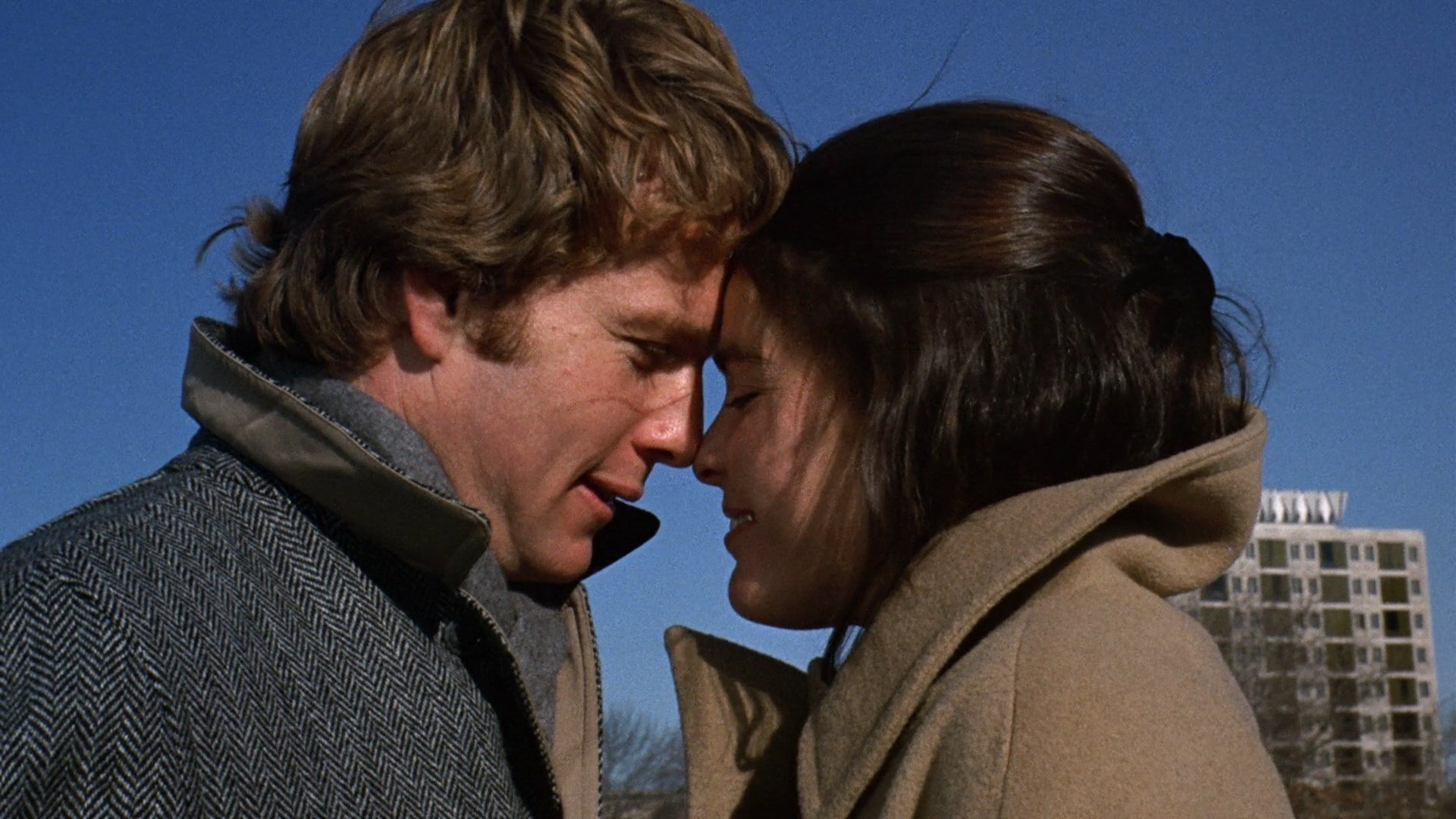
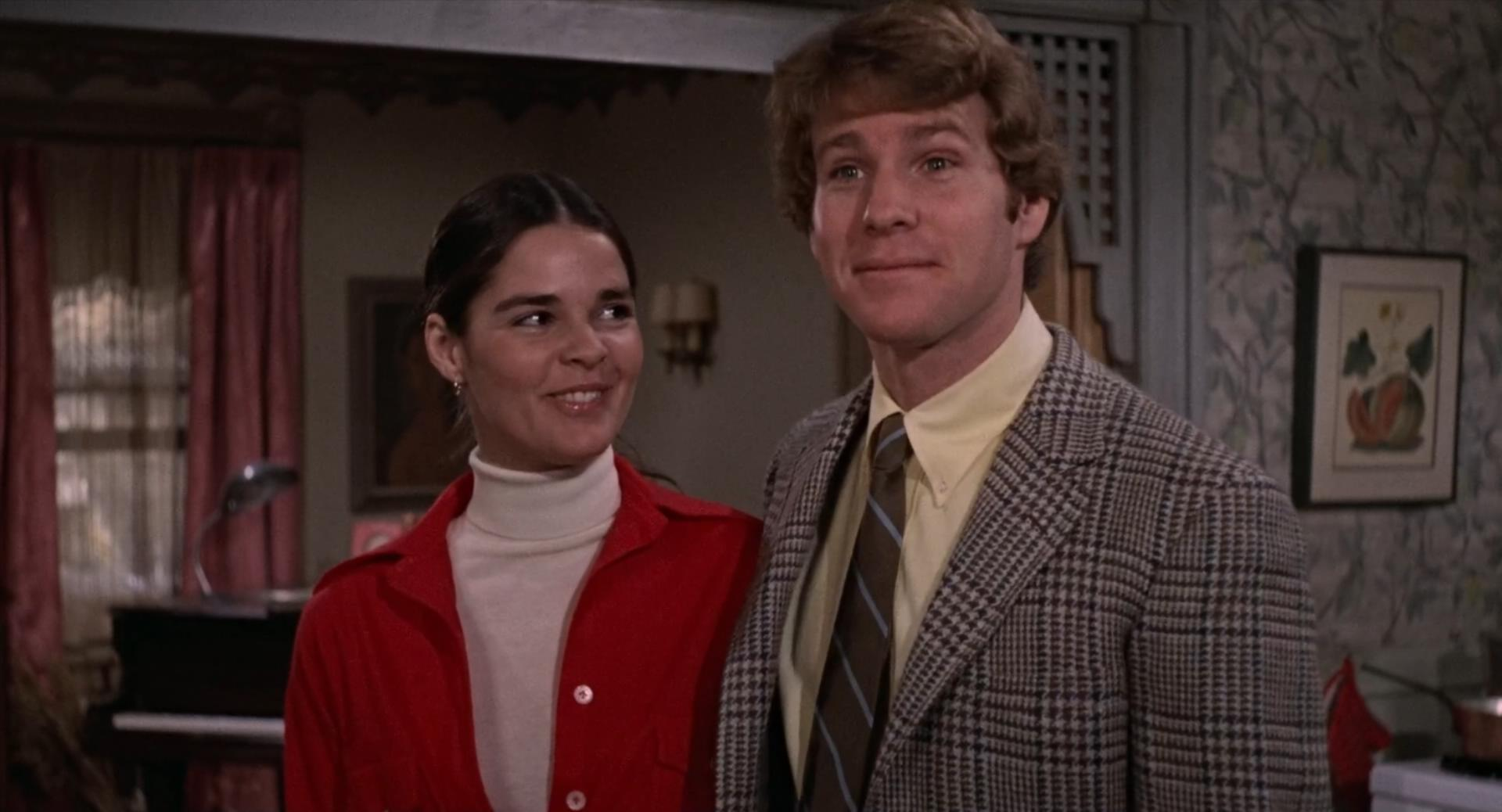
There are romances, and then there are romantic tragedies, and Love Story has a strong claim as the epitome of the latter. Written by Erich Segal, who also penned a bestselling novel based on his screenplay ten months before the film’s release (the book was published on Valentine’s Day no less), Love Story is a film I only knew from reputation. I still chuckle at the reference to its most famous line in What’s Up, Doc? when Ryan O’Neal’s character replies to “Love means never having to say you’re sorry” with “That’s the dumbest thing I ever heard.” Yet, regardless of the quality of its quotable relationship advice, I was pleasantly surprised at how engrossing this iconic melodrama is.
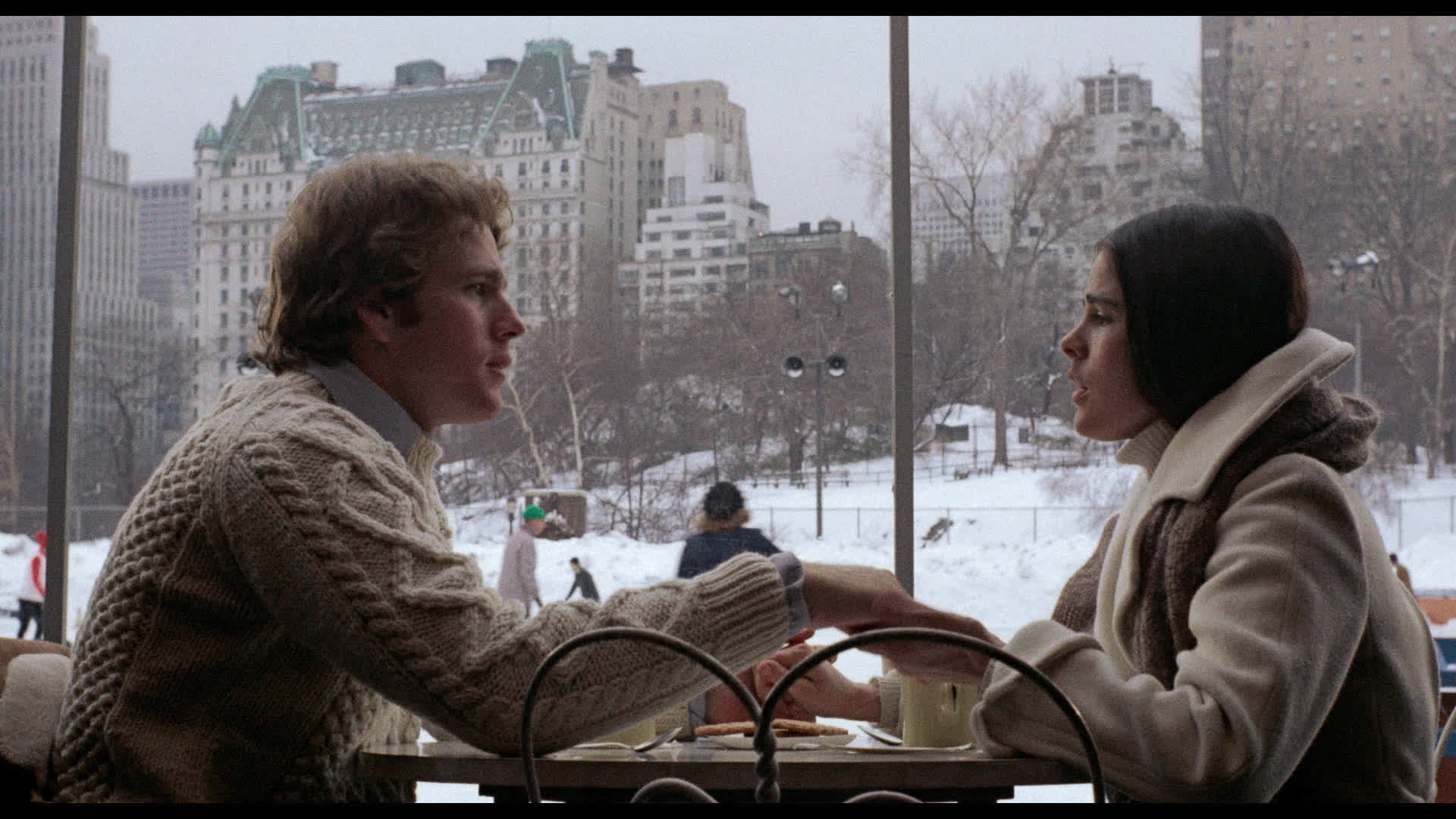
O’Neal plays wealthy Harvard student Oliver Barrett IV, who starts a relationship with the working-class Radcliffe student Jenny Cavilleri (Ali MacGraw), after a meet-cute born out of mutual antagonism. Despite the contrasts between them and the open disapproval of Oliver’s imperious father (Ray Milland), the two dive headlong into love and marriage, only for disease to sunder what no man could.
With the known melodrama in mind, I wasn’t expecting to especially like Love Story, and Ali MacGraw’s casually scornful Jenny didn’t seem like the kind of character to change my mind. But when paired with O’Neal, her abrasive qualities are matched by his stubborn charm, not-quite-opposites whose attraction is palpable. Even if I’m not a fan of their spurning of religion, to the humorous distress of Jenny’s Catholic father, the pair is easy to root for, making the eventual tragedy hit all the harder. Much has been said of the unrealistic beauty of Jenny even as she’s supposedly on her deathbed, but I wouldn’t say it took me out of the movie too much. While not above some deserved mockery at times, Love Story managed to live up to its genre-defining name, paving the way for the likes of The Fault in Our Stars and We Live in Time and jerking tears and jeers with the best of them.
Best line: (Oliver’s opening voiceover) “What can you say about a twenty-five-year-old girl who died? That she was beautiful and brilliant? That she loved Mozart and Bach, the Beatles, and me?”
Long time, no see, eh? I wish I had a better reason for dropping completely out of the blogosphere since May. I have been working on my musical still, and I had a wonderful trip to Europe in the meantime, but the absence simply boiled down to my not having the drive and interest to write about movies, even though I’ve still seen quite a few. With the new year approaching, I would like to change that and return to a somewhat more regular posting schedule, especially since I have a backlog of films to cover. So sorry for the long disappearance, but I’m back and with a movie musical no less! _________________________
Wicked is as wicked does as wicked is perceived. The good, by virtue of their virtue, always are believed. And no one stops to question if there’s something to be grieved When wicked people get what they deserve.
They surely had a childhood, a life before their fall, A point of view, a friend or two, a favorite book or doll, But something changed in them or us, though what I can’t recall, To slide them down a steep and shameful curve.
The public judge, of course they do, a jury of our peers, And when the executioner is playing on their fears, They’ll brand a person “wicked” to a hundred thousand cheers If only they will get what they deserve. And surely we all know what they deserve…. _________________________
MPA rating: PG
Despite my love of musical theater, I’m actually a comparative newcomer to the fandom of Wicked. I knew very little about it until a TV special celebrating the show’s 15th anniversary in 2018 (which featured Ariana Grande). I didn’t actually get to see a touring production of the show until earlier this year, so I feel like the timing of my interest in Wicked was far more convenient than for the ardent fans who have been waiting twenty-one years for this movie’s release. Even so, it’s finally here (Part 1 at least), and it’s a hit!
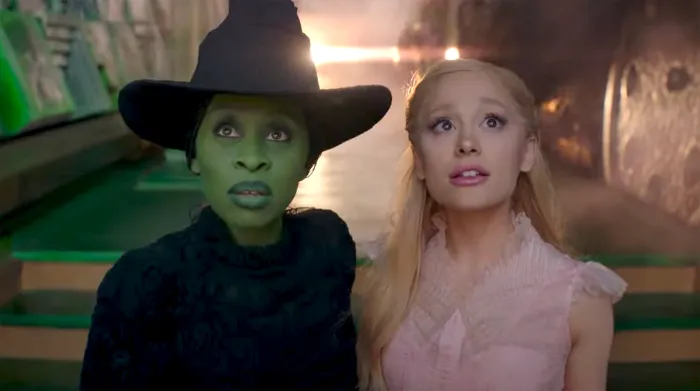
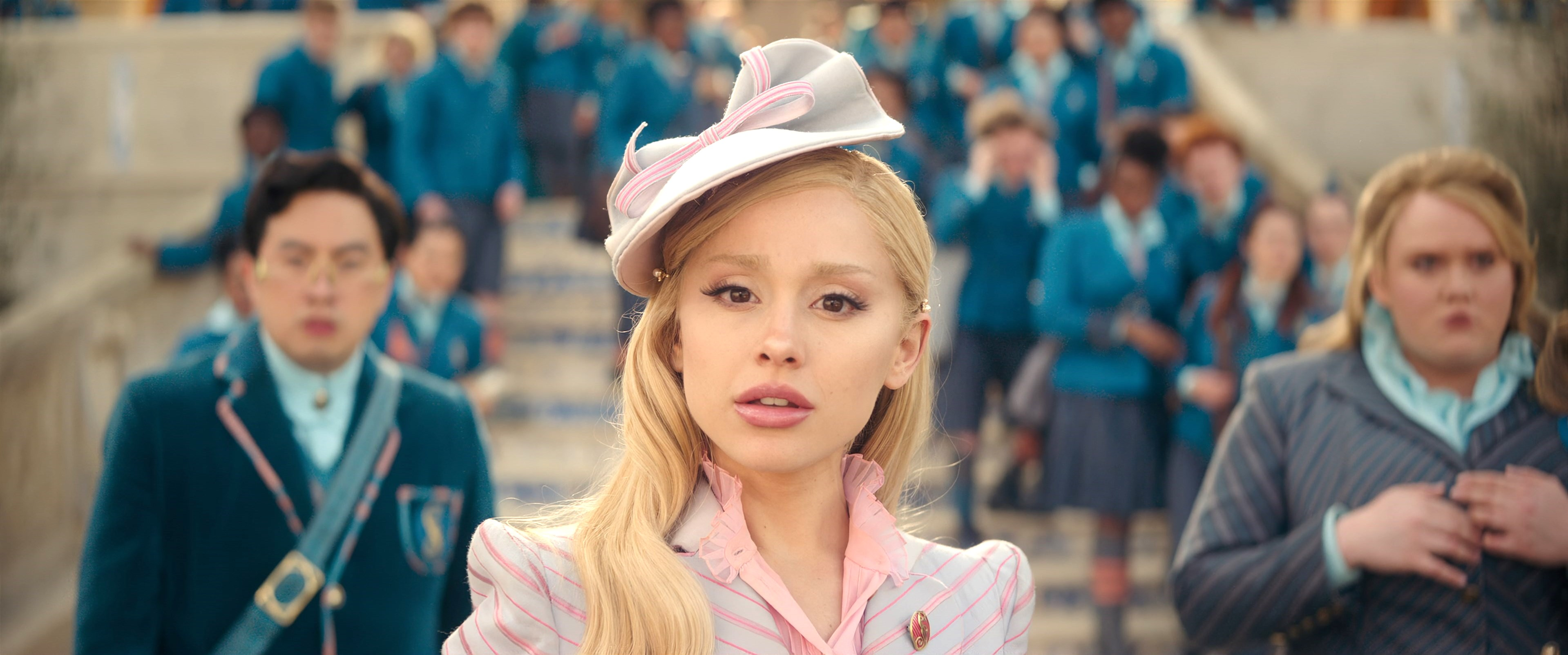
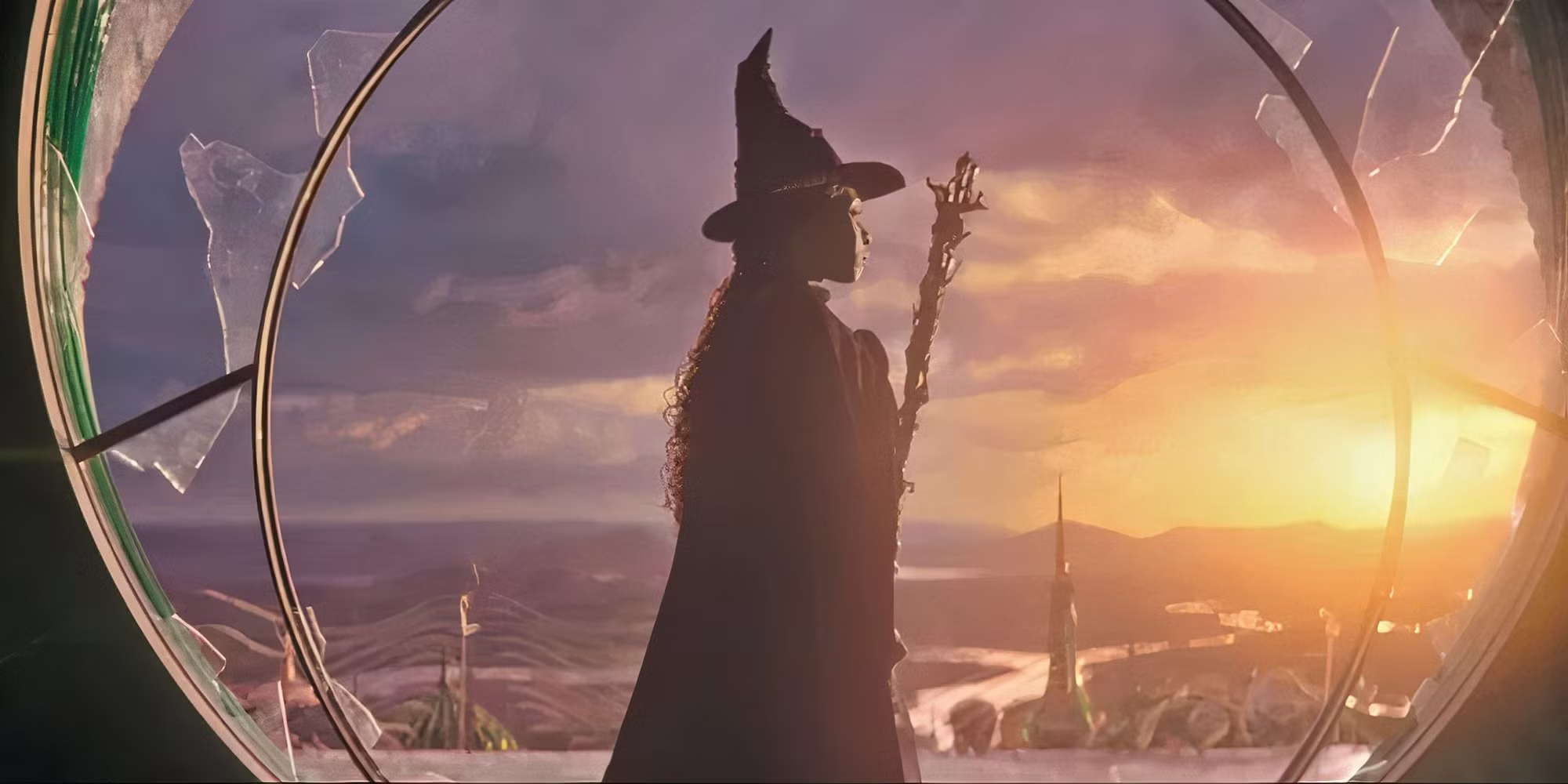
For those who still don’t know, Stephen Schwartz’s Broadway musical Wicked is based on the 1995 novel by Gregory Maguire, a then-innovative twisting of the classic Wizard of Oz storyline to make the Wicked Witch of the West, the green-skinned Elphaba, a more sympathetic main character. While I haven’t read the book myself, I’ve heard the musical and movie are a lighter PG version of the tale that nonetheless touches on themes of acceptance, persecution, and the perils of public perception, all amid a host of now-iconic showtunes. Here in Part 1, covering the first half of the stage show, Elphaba (Cynthia Erivo) is a new student at Oz’s prestigious Shiz University, unpopular but skilled with magic, alongside the more fashionable Galinda (Ariana Grande-Butera). Both dream of meeting the famous Wizard and making their mark on the world, and, though their initial interactions are strained, a friendship eventually blossoms, a bond to be tested by the different directions their ambitions take them.
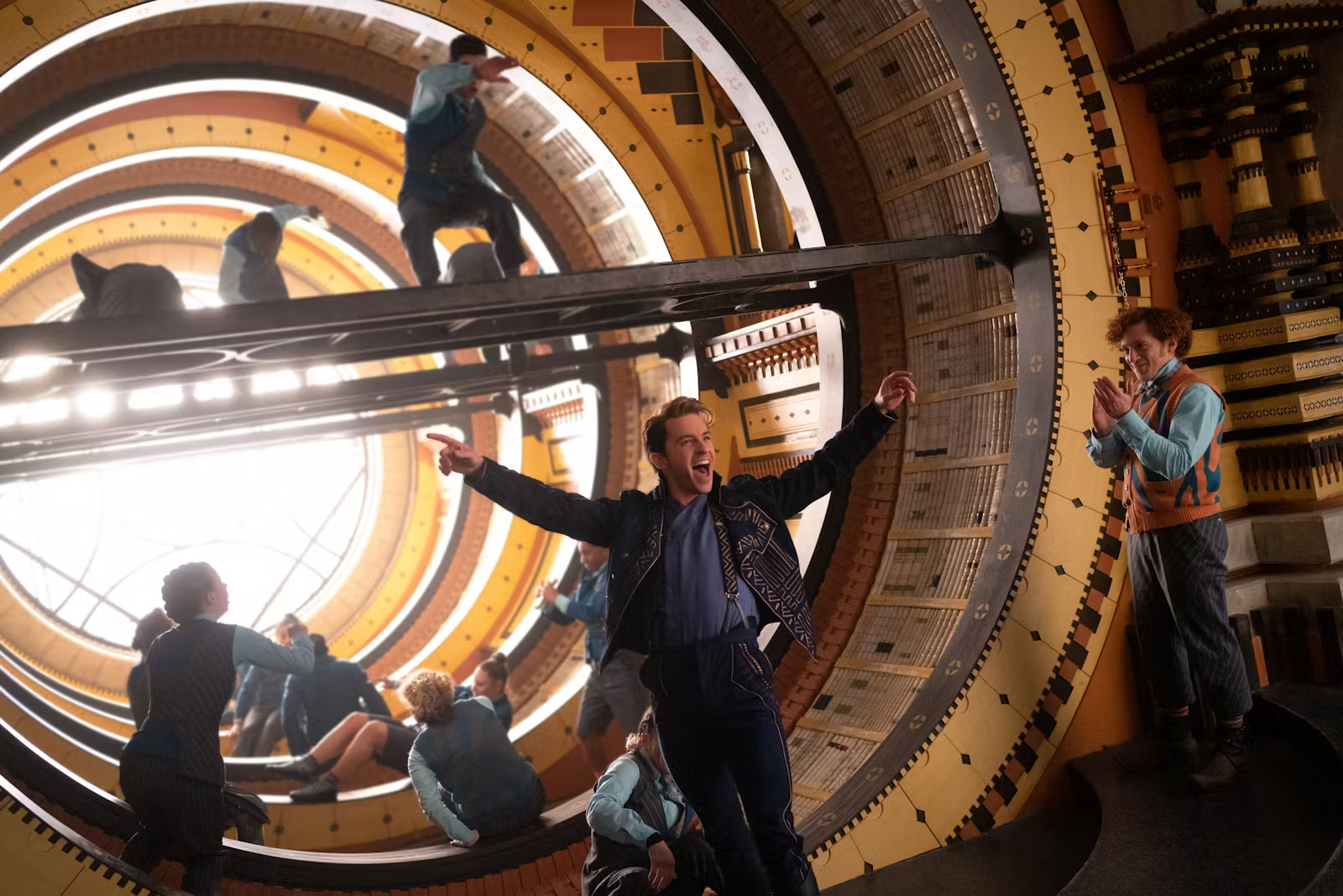
While it didn’t gain mainstream success, I was a big fan of Jon M. Chu’s previous musical adaptation In the Heights, and Wicked further cements Chu as the premier director for movie musicals. The energy and choreography of the dance scenes are especially thrilling on a big screen, particularly “Dancing Through Life,” the carefree anthem of Fiyero (Jonathan Bailey), the girls’ dreamy Winkie love interest. Much has been said of the decision to split Wicked into two films, but I think it was a smart move. A common complaint of musical adaptations is that fans’ favorite songs or moments end up on the cutting room floor (ahem, Dear Evan Hansen), but Wicked is almost obsessively faithful to its source material, with every song accounted for and many in-between scenes expanded. Does that make its two-hour-and-forty-minute runtime a bit overlong, considering this first half is nearly as long as the whole stage show? Well, yes, but with few exceptions, I appreciate the extended runtime, which lets the relationships grow more naturally and gives the non-musical scenes some breathing room.
I may have had some reservations about the casting when the lead roles were first announced, but Erivo and Grande more than deliver, both of them ardent fans of the show who have publicly championed their commitment to Elphaba and Glinda. Erivo is an outstanding actress and singer and reliable as ever in the lead role, while Grande is more of a surprise. Considering her early acting role as the ditzy Cat Valentine on Nickelodeon, I doubted that she was a serious enough actress for Glinda, even if she was a superfan (and had already contributed to this Mika song that samples and remixes “Popular”). But she brings surprising depth to a character who could easily be written off as a vain blonde but whose connection to Elphaba feels genuine and sweet. It helps too that both lead actresses have amazing voices, with Erivo’s “The Wizard and I” and “Defying Gravity” and Grande’s “Popular” as auditory standouts. There are instances of the movie interrupting a song with some pause or vocal trick that didn’t need to be there, but that’s a minor critique.
Funnily enough, it seems that Wicked fans are the ones poking the most holes in the movie, whether it be a supposedly lackluster color palette or the overly indulgent superhero-style awakening of Elphaba’s witch persona at the end. Yet I as a casual fan found a lot to love and very little I would change. I thought one musicless dance scene was overly awkward and long, but I’ve seen others praise it as an emotional high point, so to each their own. I especially loved some pitch-perfect cameos in the Emerald City sequence, and I certainly think the practical sets and elaborate costumes deserve some Oscar love.
Now, with only a year to wait before part two (subtitled For Good) comes out, I am thrilled with what we have so far and hesitant for what is to come. The second half of Wicked is darker, has fewer memorable songs, and has a lot of stuff happening offstage that is easier to accept in a stage format. With the work they’ve done on extra characterization here, such as with Fiyero and Ethan Slater’s Boq, I do wonder how they’ll handle all that as a movie. But for now, its chill-inducing showstoppers still fresh in my mind, Wicked is a triumph and a treat for musical fans, already outgrossing all other Broadway adaptations, and one I hope to see again soon.
Best line: (the Wizard, played by the fitting Jeff Goldblum) “The best way to bring folks together is to give them a real good enemy.”
(For the final day of NaPoWriMo, the prompt was for a poem in which the speaker is identified with a mythological figure. It may be on the nose, but I had to go with the “American Prometheus” himself.)
American Prometheus, they name me, The man who stole the fire from the gods, Never returned. Shall I justify my actions As the fairest of the factions That ignited chain reactions And left everybody burned? I was spurned. For no good deed goes unpunished While the bad are not admonished, And you’d frankly be astonished At how in-between deeds fare. I was there, Leading teams so complex, Daring dreams of what is next, All for loyal intellects, Intent to see the fire burst. What is worse, That I built this capability Employed to end hostility Or shirked responsibility For everything it cost? I am lost In my chains, writ in ink, Where the eagles barely blink, As I think and I drink And I offer up my liver to atone For what I’ve sown. _____________________________
MPA rating: R (for language and nudity)
This review certainly feels overdue! While everyone was hopping on the Barbenheimer bandwagon last year, I stuck with the more serious half of that mash-up, Christopher Nolan’s ambitious biopic of the “father of the atomic bomb.” Based on the biography American Prometheus, this film would have been very different in more conventional hands. I can envision a version of it that follows the chronological events of J. Robert Oppenheimer’s life and climaxes with the dropping of the bombs on Hiroshima and Nagasaki, perhaps followed by a final scene where he grieves his role in the war and a footnote about how he was effectively disowned by the government. That might have been a great movie on its own, but it’s too pedestrian for Nolan, who instead created a non-linear epic to view Oppenheimer’s life and work from as many angles as possible.
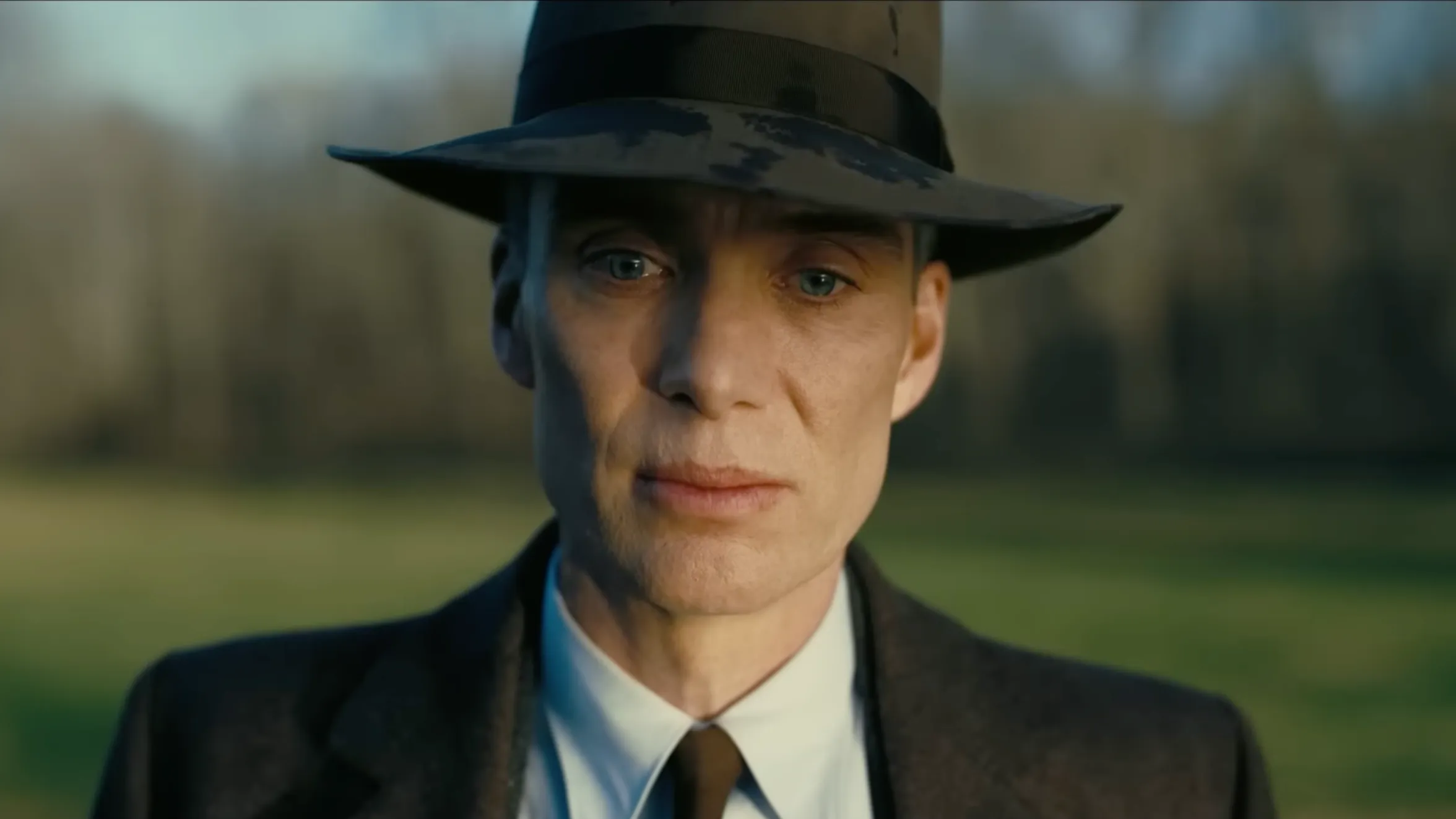
In the role for which he will likely most be remembered, Oscar winner Cillian Murphy epitomizes J. Robert Oppenheimer in all his genius, hubris, and folly. From his time as a physics student admiring Niels Bohr (Kenneth Branagh) to his romantic rendezvous with Communist connections (Florence Pugh, Emily Blunt) to his being approached by General Leslie Groves (Matt Damon) to lead the Manhattan Project and beat the Germans to the atomic bomb, the film presents Oppenheimer as level-headed yet prone to bad choices, aware of his own limitations yet confident in his expertise. By itself, this is the film that Oppenheimer could have been, and Murphy still would have excelled in it.
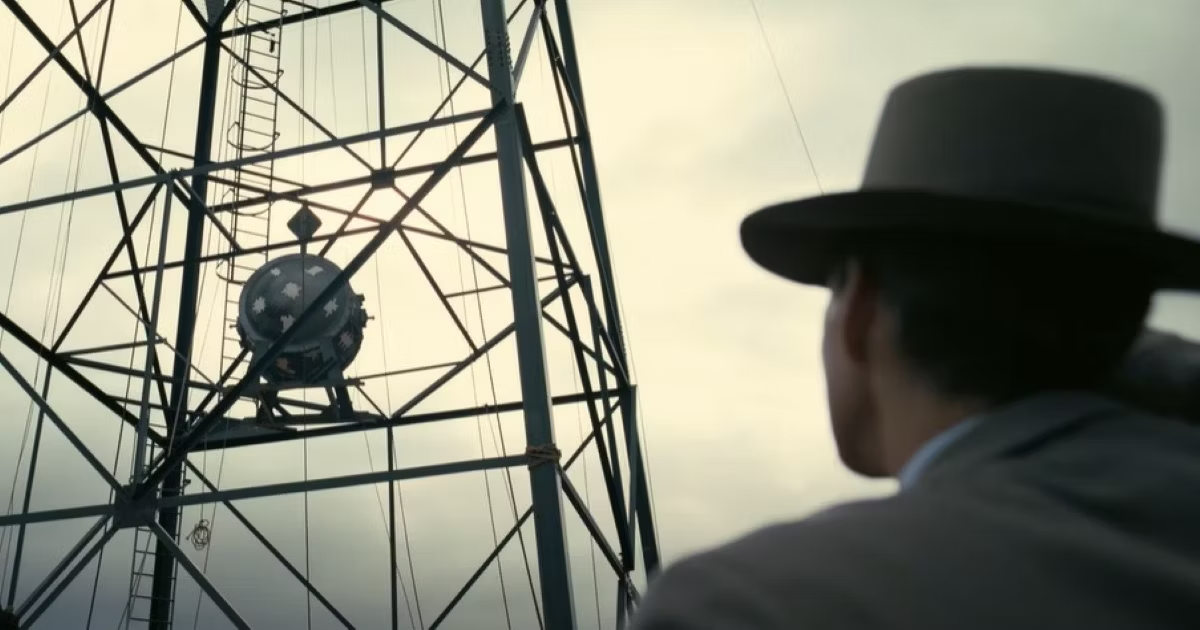
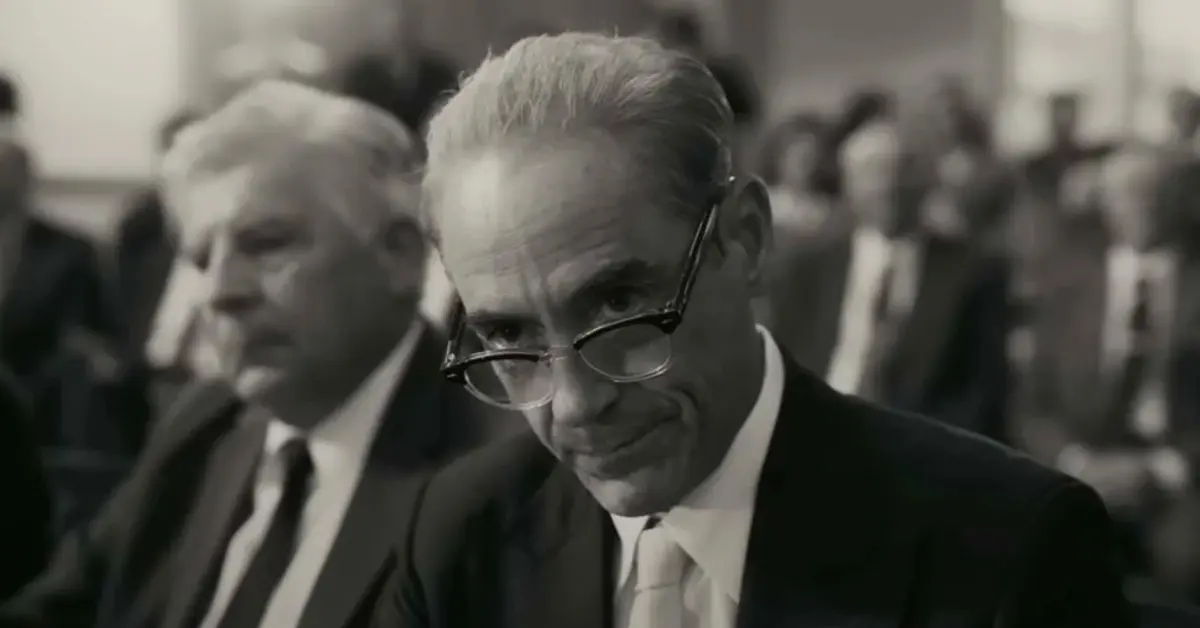
But interspersed with the scientist’s road to fame are scenes of later bureaucratic proceedings, including Oppenheimer’s security clearance hearing in 1954 and the Senate confirmation hearing of former Admiral Lewis Strauss (Oscar-winning Robert Downey, Jr.) for Secretary of Commerce in 1959. Though these parts can threaten to be dry, they offer a wealth of clues pertaining to Oppenheimer’s work and beliefs, how others viewed him, and the underhanded tactics used to besmirch suspected Communist sympathizers at the time. After years of struggling and building an impromptu town at Los Alamos, the testing of the first atom bomb in the New Mexico desert would understandably be the high point of the film, and indeed it made a friend of mine tear up in the theater with the grandeur of the historic explosion (made more impressive by not using CGI, according to Nolan). Yet this moment oddly serves as a false climax around two-thirds into the three-hour runtime, and Nolan instead manages to make those bureaucratic sessions into a riveting culmination of all that’s come before. It still may feel anticlimactic to some, but Nolan pulls it off better than anyone else could.
It’s hard to believe that Christopher Nolan had never won an Oscar before this film, considering his reputation for smart blockbusters. As much as I loved The Holdovers, I celebrated Oppenheimer’s seven Oscar wins last month, including Best Picture, Best Actor, Best Score, Best Cinematography, and especially Best Supporting Actor. (Like Brendan Fraser the year before, I’m so glad Robert Downey, Jr., has proven his talent beyond his action movie days.) If the Academy had gotten around to adding the Best Casting category this year, I’m sure that Oppenheimer would have won that too, since its huge cast is full of recognizable stars, even in mere cameos, including Rami Malek, Casey Affleck, Jason Clarke, Alden Ehrenreich, Josh Hartnett, and Gary Oldman.
With its convoluted method of presenting Oppenheimer’s story, the film is perhaps not the most accessible or entertaining of biopics, and I could have done without a few unnecessary nude scenes trying to justify its R rating. Its presentation of President Truman and the women in Oppenheimer’s life is far from flattering, and some complaints are also valid about how it omits Japanese perspectives of the bombings or the Native Americans and downwinders living around the bomb testing site. Yet any single movie can only present so much, and it’s hard to imagine a biographical film that is more comprehensive in its exploration of one man’s life and impact. Inception remains my favorite Christopher Nolan film, but Oppenheimer is a masterful history lesson and a well-deserved peak for his career as a filmmaker, one that I hope he can continue to top in future efforts.
Best line: (Kitty Oppenheimer, in a context different from the bomb’s development but no less applicable) “You don’t get to commit sin and then ask all of us to feel sorry for you when there are consequences.”
(For Day 29 of NaPoWriMo, the prompt was for a poem inspired by one of the ten vocabulary words compiled by Merriam-Webster from various Taylor Swift songs, including incandescent, clandestine, Machiavellian, cardigan, elegy, altruism, self-effacing, albatross, antithetical, and mercurial. With more time, I might have liked to tackle using all ten, but I settled on the word clandestine for now.)
Their agents are clandestine So normal folk can rest in The peace that comes from ignorance and bliss. Not knowing we need saving, We carry on behaving. Don’t tell the targets just how near the miss.
The villains and the heroes, The neutral ones and zeroes, They trade their blows for country, cash, or crown. I doubt the average person Will mind if conflicts worsen As long as they will simply… keep it down! __________________________
MPA rating: PG-13
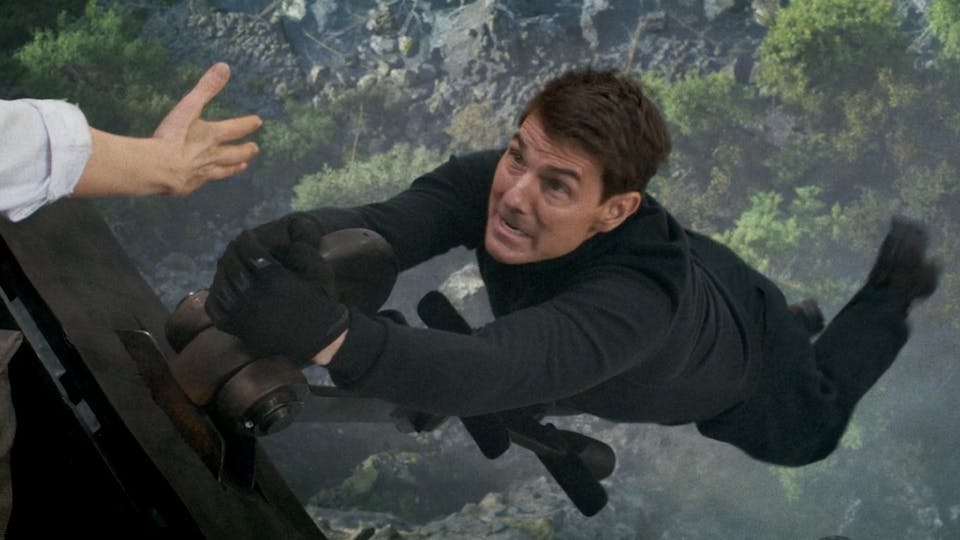
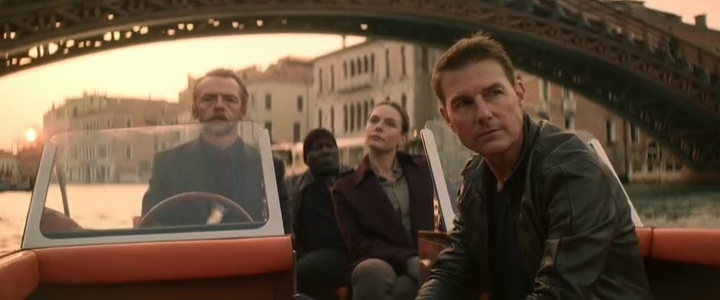
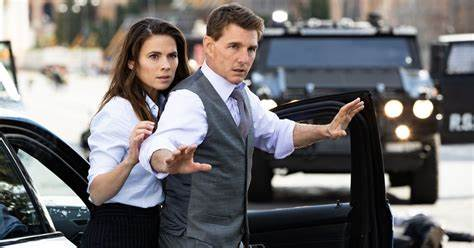
I’ve been behind the curve when it comes to the Mission: Impossible franchise, only realizing how good it was in recent years. Thus, this seventh installment in the Tom Cruise juggernaut is the first one that I was lucky enough to see in theaters. And as is the case ever since the third movie found the franchise’s stride, Dead Reckoning Part One is another winning spy thriller making full use of Cruise’s willingness for death-defying stunts.
After a Russian submarine is sunk by its own torpedo, world leaders are informed of a rogue A.I. known as the Entity, capable of manipulating any computer system. The Entity would be a game changer for whatever government procures the two-part key that can control it, so Ethan Hunt (Cruise) and his friends Luther (Ving Rhames), Benji (Simon Pegg), and the now fugitive Ilsa Faust (Rebecca Ferguson) take it upon themselves to ensure it is destroyed to preserve the global balance of power. With its predictive capabilities, the A.I. is always a step ahead of them as they contend with a self-serving thief (Hayley Atwell) and Ethan’s old nemesis (Esai Morales).
Ethan Hunt is no stranger to “going rogue,” but it’s an interesting change for him to willingly defy his government’s agenda to obtain the Entity because he doesn’t trust it in anyone’s hands, as opposed to the myriad times he’s been set up by a villain. It’s becoming cliché for A.I. to be made scary as it runs amok, and it’s perhaps unrealistic how the Entity pulls strings, seeming omniscient but not infallible, yet it works well as a change of pace from the typical terrorist or corrupt IMF agent that usually battles Hunt’s team, though Morales’ Gabriel still provides that too.
(Non-specific spoilers here) While I liked how characters from previous films were brought back, a part of me is disappointed with how the film handles a particular character, apparently having little idea what to do with them except sacrifice them for the sake of drama. And it’s clear that Hayley Atwell is meant to be the new blood for the team. While that narrative intent is unmistakable, I can’t be too mad because Atwell is a breath of fresh air, a great female foil to Ethan as they match wits until she is drawn deeper into this world of espionage than she expected. Considering Ethan let Michelle Monaghan slip through his fingers already, I think the two of them make an excellent pair.
And we mustn’t forget the action. Whether it’s a car chase through Rome or a free-for-all aboard the Orient Express, the stunts and skirmishes never disappoint, including Cruise’s well-documented motorcycle jump off of an Alpine cliff, though the train climax that follows is even better, in my opinion. It’s unfortunate that the Mission: Impossible hype has waned, leaving this Part One of a two-part story a box-office disappointment, but I sincerely hope it can bounce back even stronger (perhaps with a tighter runtime) because Cruise and this series clearly still have gas in the tank.
Best line: (Ethan, to Gabriel) “If anything happens to them, there’s no place on Earth where you or your God [the Entity] will be safe from me. There’s no place where I won’t go to kill you. THAT is written.”
Rank: List-Worthy (joining the rest of the series)
(For Day 28 of NaPoWriMo, the prompt was for a sijo, a Korean form similar to the haiku but with longer lines of 14 to 16 syllables, for a total of 44 to 46 syllables. It seems like a tricky form to get right, but I tried my best with the six-line format, ending up with 45 syllables. And of course, I had to pair it with a Korean film.)
For the dead, we spare no thought, Heedless without a gutted grave. The shells we humans wear Serve us well before our final molt. What remains is not you, not me; May it never crave your fear. ____________________________
MPA rating: Not Rated (a light R seems about right)
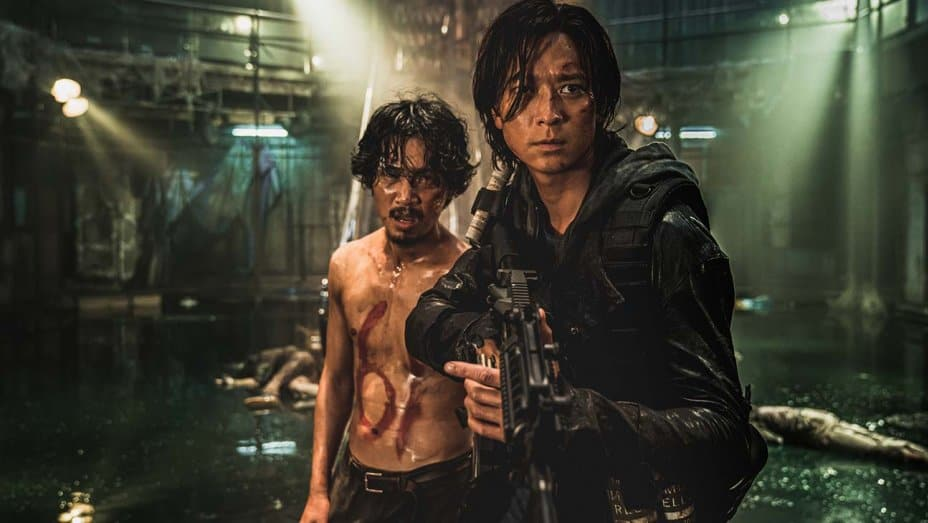
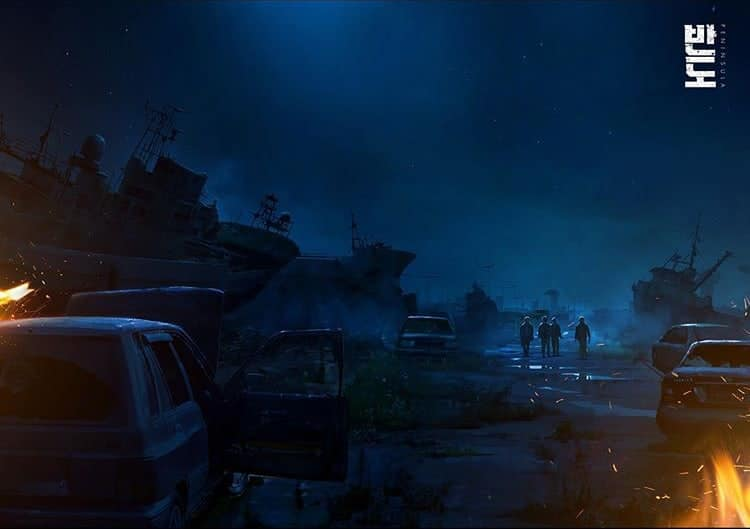
Train to Busan was an anomaly for me, a Korean zombie film that I genuinely loved as it showcased character growth and action over gross-out horror so common to the genre. The animated prequel Seoul Station only reinforced its predecessor’s uniqueness, since that was merely another exercise in apocalyptic nihilism. So I was cautious in approaching Peninsula, the standalone sequel set in the same zombie-infested South Korea as Train to Busan. While it feels more like the zombie dystopias I tend to avoid, Peninsula proved to be a pleasant surprise.
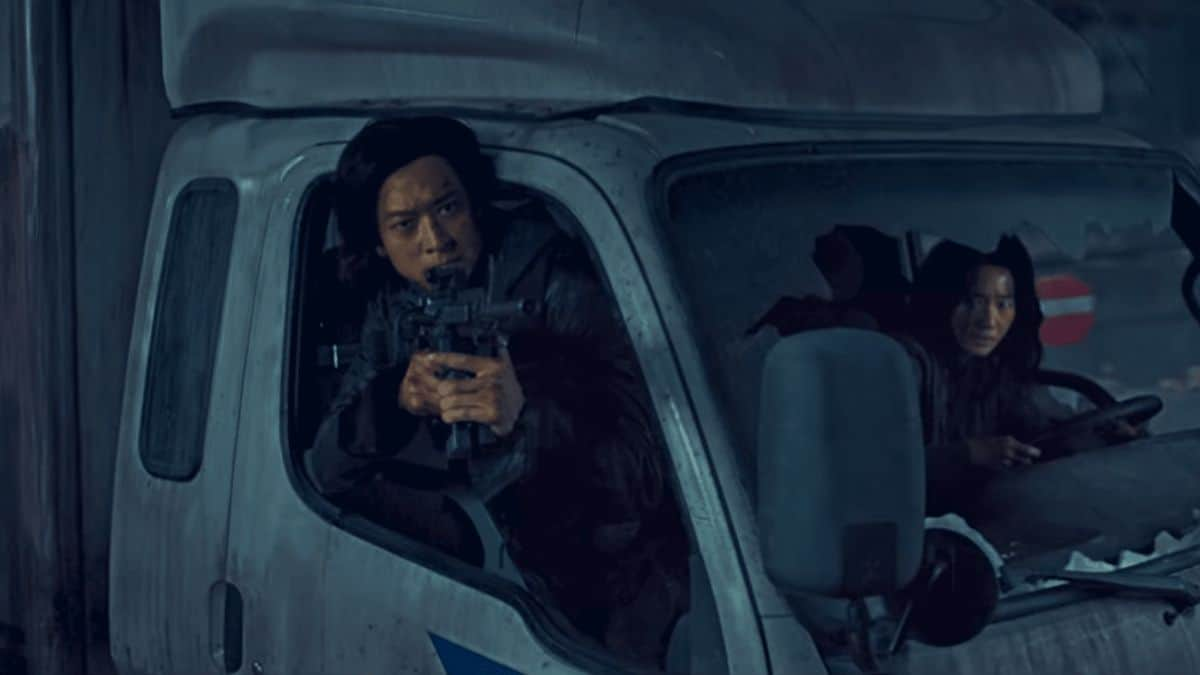
Four years after South Korea was overrun by fast-moving zombies and sealed off from the rest of the world, former Marine officer Jung-seok (Gang Dong-won) is haunted by the day his world fell apart, losing his sister and nephew in the undead chaos. When he and his bitter brother-in-law (Kim Do-yoon) are approached by mobsters to return to Korea, they sneak back into the desolated Incheon to retrieve a truck with $20 million, only to be confronted by both zombie hordes and a violent rogue military unit that has taken control of the wasteland. With a handful of resourceful survivors (Lee Jung-hyun, Lee Re), Jung-seok must outmaneuver both living and dead to find a way off the peninsula.
At first glance, Peninsula has many of the familiar trappings of the zombie movie: swarming hordes, abandoned cityscapes, evil humans acting worse than the zombies. One thing I liked about Train to Busan was that it was comparatively less violent than others of its genre, owing to the fact that the characters didn’t have access to bloodletting weapons like guns or swords. In contrast, Peninsula has no shortage of guns, making it more of a conventional shoot-em-up actioner, though it at least doesn’t turn into a full-on gorefest.
So, as many middling reviews have pointed out, this sequel doesn’t match the original for creativity or emotional payoff, but it comes closer than I would have expected. While Jung-seok doesn’t have quite the selfless character arc of Seok-woo in the first film, the way his guilt motivates him to do better still becomes poignant by the end, and the story presents a satisfying karma of evil or selfish characters getting their due. Plus, despite the “conventional actioner” complaint earlier, the action is thrilling throughout, particularly a fantastic, Mad Max-level car chase toward the end.
Though Peninsula is more violent and less inspired than its forerunner, I was glad to find that it is not a complete departure from what made Train to Busan so good. Zombie movies are such a well-worn format by now that there needs to be something to set new installments apart, and I can certainly get behind car chases, heist thriller elements, and an emotional core.
(For Day 26 of NaPoWriMo, the prompt was for a poem showcasing alliteration, consonance, and assonance, some of my favorite poetic devices.)
The cats are out, the cats are out, So stow your salmon, hide your trout. They’ve come to call and cull the crowd And find the one whom fate endowed.
Heading from their humans’ homes, Crawling in the catacombs, Fleeing from the fountain sprays, Dallying in the alleyways, Gamboling upon the ledge, Reveling the razor’s edge, Clawing at the curtain rods, Ravaging like greedy gods, Gobbling their food in mobs While passing off as polished snobs, Swinging at the hanging string, Confident in claws that cling, Swishing their capricious tails, Romping on the risky rails, Sniffing, licking, and nitpicking, Quick to treats as well as tricking, Now they come in coats of fur, Here a hiss and there a purr.
In case there still is any doubt, The cats are out, the cats are out. __________________________
MPA rating: PG
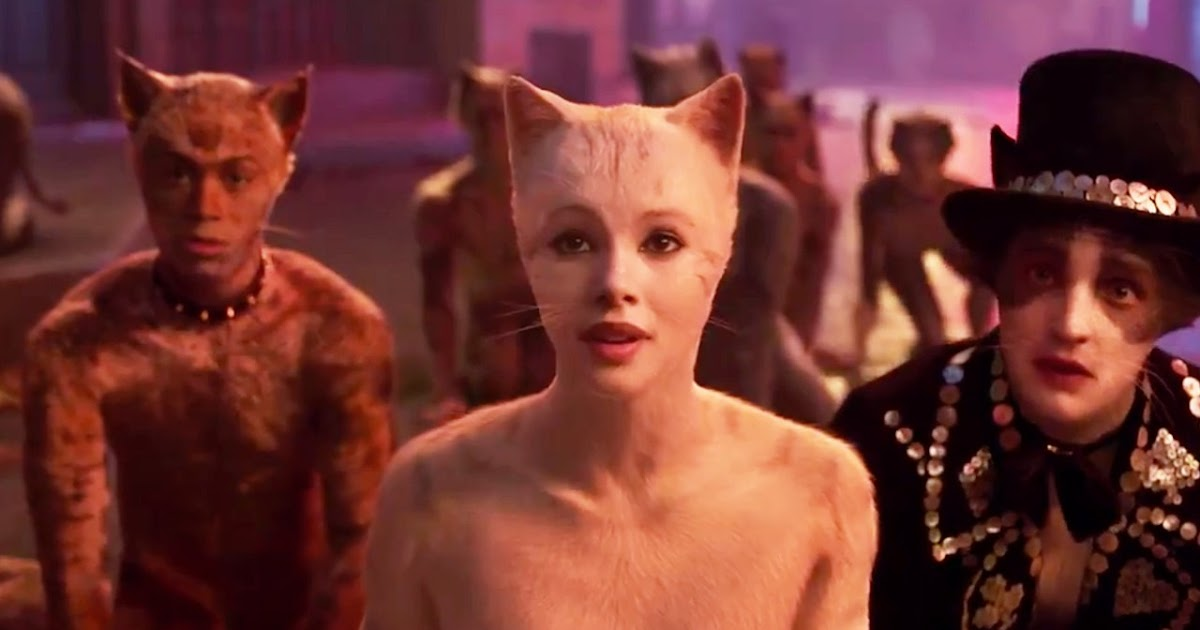
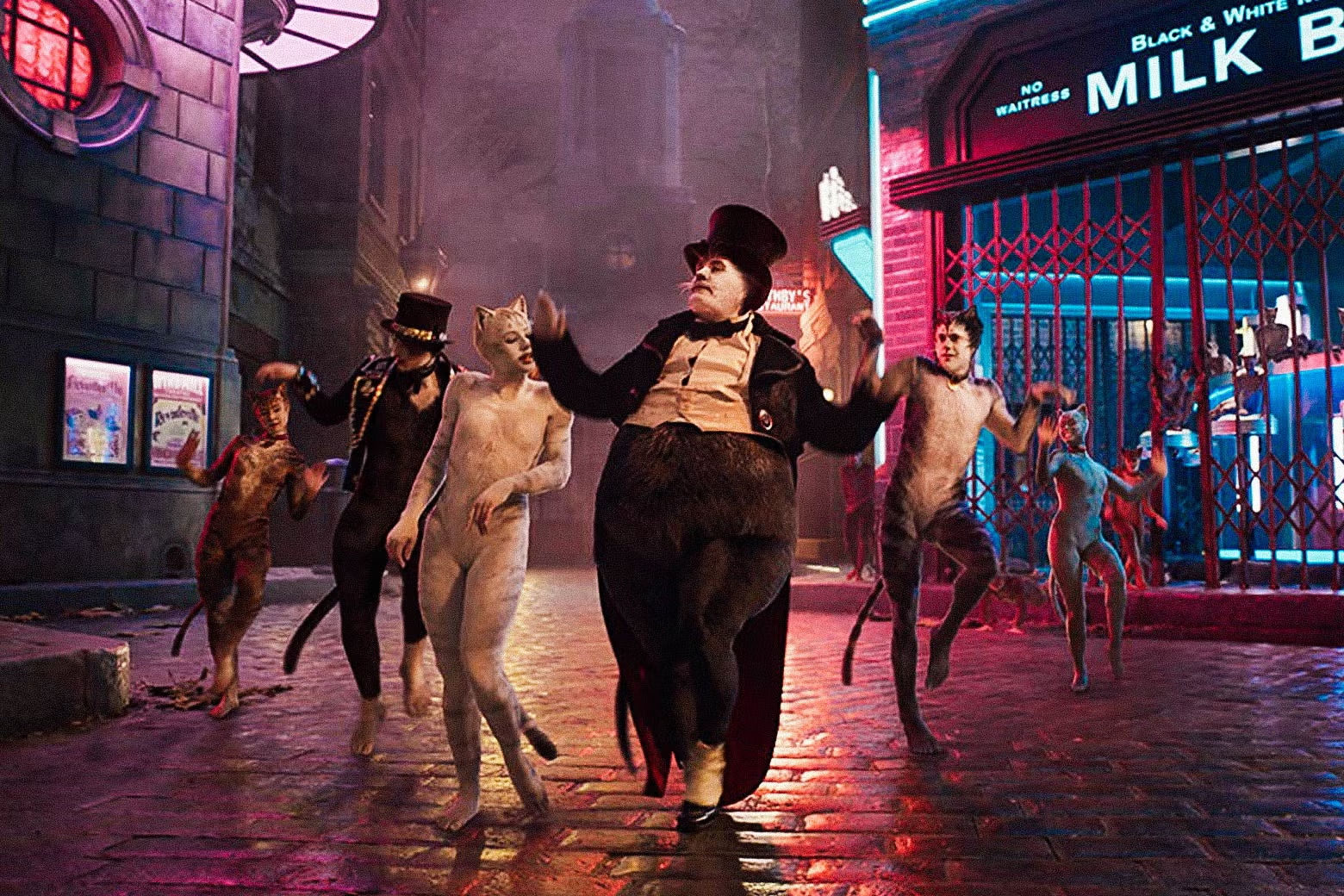
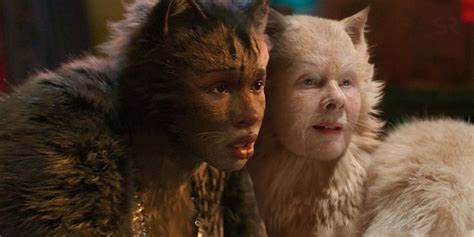
As many know, I am an ardent fan of movie musicals, so a part of me felt that 2019’s film adaptation of the Andrew Lloyd Webber show Cats couldn’t really be as bad as everyone said. Surely it was just some Internet haters latching onto some detail, like the eyes complaint from Alita: Battle Angel, which never bothered me. Yet as much as I wanted to find redeeming value in Cats, there’s not much that even I could extract. Truth be told, it really is as awful as people say.
I’ll preface this by saying I was never a big fan of the original stage version of Cats either. I applaud Webber’s talents, as well as the risk of adapting T.S. Eliot’s Old Possum’s Book of Practical Cats, full of many a charming and lyrical poem. Yet the result of that adaptation was a near-plotless story of various cats preening their particular talents in the hopes of earning reincarnation. It relies heavily on dance, and only ever touches the emotions with the iconic song “Memory,” sung by the outcast Grizabella (played here by Jennifer Hudson), leaving the rest of the songs to be intermittently fun or clever but rarely involving.
So the stage show had its own issues that make me wonder how it managed to stay on Broadway for eighteen years. The film does nothing to remedy those issues and instead adds even more, from strange scaling of the set and props to disturbing CG creations (I didn’t mind the human-cat hybrids themselves, but the human-mice and human-cockroaches were a step too far) to bafflingly poor casting and humor, particularly James Corden and Rebel Wilson (who even eats some of the aforementioned human-cockroaches). It’s especially astounding how many talented performers are featured here, including Hudson, Judi Dench, Ian McKellen, Idris Elba, and even Taylor Swift, all performing songs that range from decent to cringe-inducing and making me wonder at what point did they realize this was a bad idea.
So yes, Cats the movie is an utter mess, though I will grant it is not without some bright spots. A few songs are quite fun, like “Skimbleshanks: The Railway Cat” with Steven McRae, while the new song for the movie, “Beautiful Ghosts,” was rather pretty. And I honestly feel sorry for Francesca Hayward in the lead role of Victoria, since she likely thought this could be her big break and could have done better with better material. Surprisingly, my VC disagreed with me and largely enjoyed the film, so perhaps there’s room for non-ironic fans out there. There are far better Webber musicals out there, so I’ll just watch Evitaand pet my own cat instead.
(For Day 25 of NaPoWriMo, the prompt was for a poem inspired by the Proust Questionnaire, so often incorporated into interviews. I latched onto the question “What is your greatest regret?” which ties in nicely with this film.)
Who am I? I’ve had many years To answer that question that rings in our ears. I’ve grown used to moving, to not sitting still, Though I’m not sure if that’s merely habit or skill. I’ve learned a new language; I write in it well, But still love yukgaejang and savor the smell. I met someone kind, and the two of us… fit, Despite once agreeing we hate to commit. I’ve settled, but not like the second-best good, Like dust that’s done flying and lands where it should. Yet still I remember how close we once were, Before parting ways for our lives to occur. Who would you be to me, staying nearby In that time before I answered Who am I? ____________________________
MPA rating: PG-13
Although it won no major awards during this past Oscar season, I noticed a general sentiment among cinephiles that Past Lives was one of the best films of 2023, often ranked above the heavy hitters like Oppenheimer. It’s a small and tender drama that eschews bombast, and while it didn’t appeal to me as much as some, it certainly deserves praise all the same.
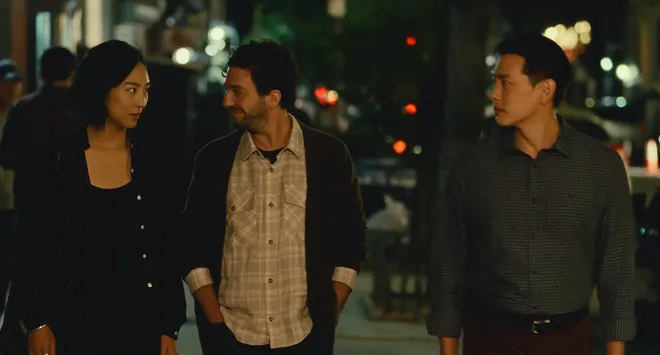
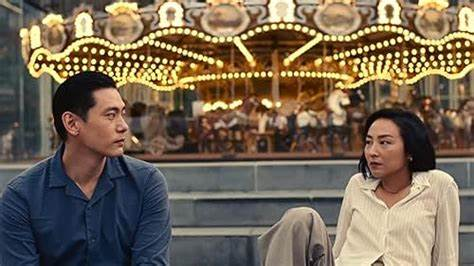
The directorial debut of Celine Song, who based it partially on her own experiences, Past Lives follows Na Young and Hae Sung from their time as childhood friends in Korea to their falling away when Na Young moves to the United States, eventually reuniting years later. During their time apart, Na Young, going by the Americanized name Nora (Greta Lee), meets and marries a fellow writer named Arthur (John Magaro). With the visit of Hae Sung (Teo Yoo), Nora finds herself torn between the life she has embraced and the life that might have been.
The greatest strength of Past Lives is its realism. The way the two childhood friends lose touch and periodically reconnect has an authentic quality, reflecting how much distance can affect the course of our relationships. There is surely an alternate-universe version of this movie full of melodramatic tension between Nora’s white husband and Korean beau, perhaps a torrid affair and a showy following of her heart. But that’s not this film.
Arthur is actually surprisingly cordial toward Hae Sung, even when being excluded as the other two speak in Korean, and Nora herself acknowledges how much she has in New York – home, career, husband – to hold her there. Yet in their frank conversations touching on time lost and the differences between East and West, there is a clear chemistry between them, a spark that Nora would surely like to follow if not for that all-important realism. Past Lives is a lovely snapshot of people already beyond their crossroads but willing to glance behind, potentially slow and boring for the uninterested yet insightful and elegant in its minimalistic love story.
Best line: (Nora’s mom) “It’s true that, if you leave, you lose things, but you also gain things too.”
(For Day 24 of NaPoWriMo, the prompt was to borrow a line from an existing poem and take it in a different direction. Since this film has a direct connection to the poem “Lucy Gray” by William Wordsworth, I decided to start with the same opening line and use the same form.)
Oft I had heard of Lucy Gray: Her story nearly myth. We had few tales to light our day Or dreams to bargain with.
Dear Lucy Gray endured the Games, That much is widely known, But as to any other claims, They’re whispered when alone.
I’ve heard details that she was friend To Coriolanus Snow, The man who every year will end Our children as a show.
It makes me worry how a man Could dull his very heart. Was Lucy Gray part of his plan? And did it fall apart?
I cannot say, but still I hear Of rumors in the night, That Lucy Gray just may appear And offer us a light.
I wonder who awaits that more, The tyrant or the slave. We all have things we’re waiting for Along the road we pave.
Such stories make me want to pray For nigh unlikely things, To hail another Lucy Gray And see what change she brings. ________________________
MPA rating: PG-13
While The Maze Runner and Divergent struggled to match its success, there’s something about the world of The Hunger Games that stands out among young adult dystopia franchises. The concept of children being forced to kill each other for entertainment is not without precedent (ahem, Battle Royale), but the journey of Katniss Everdeen from tribute to freedom fighter is a special blend of sci-fi action and frighteningly plausible barbarism, with just the right amount of hope. It’s a testament to Suzanne Collins’s book series and their film adaptations that the world they create is able to sustain a prequel without it feeling like a cheap cash grab. Let’s just be glad it’s not a whole new trilogy.
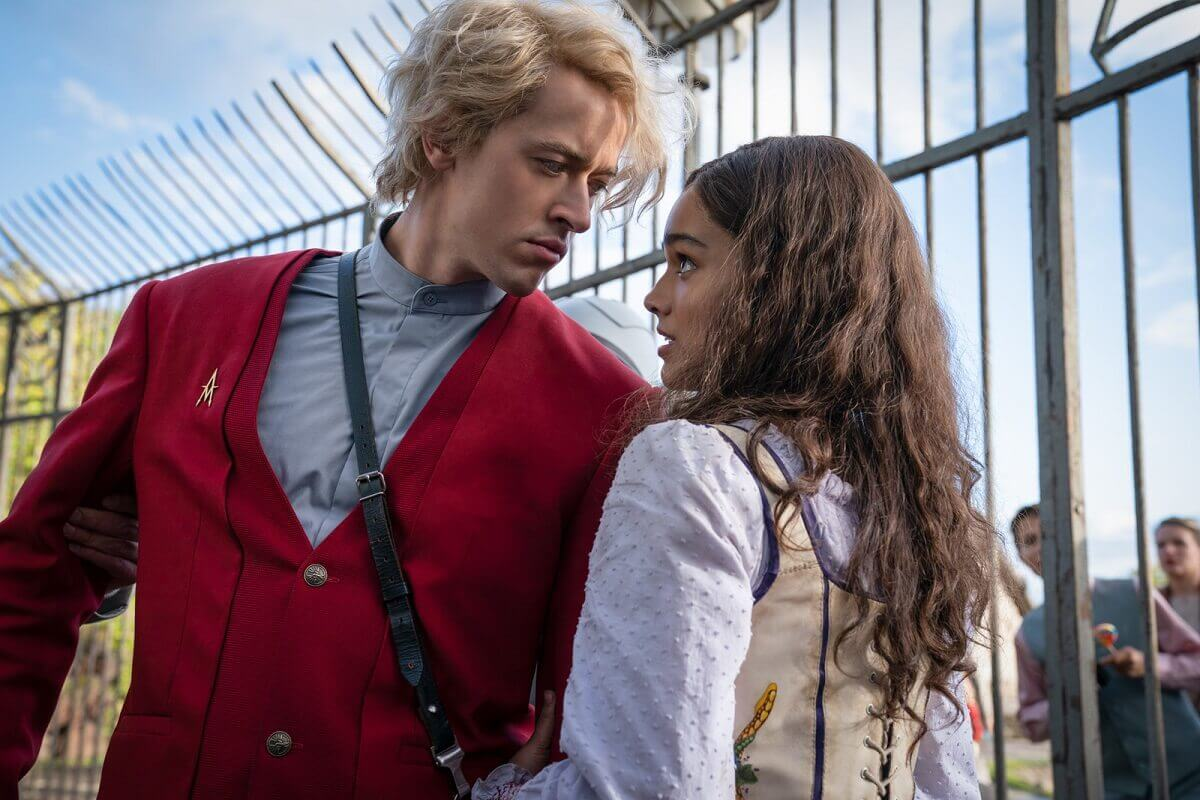
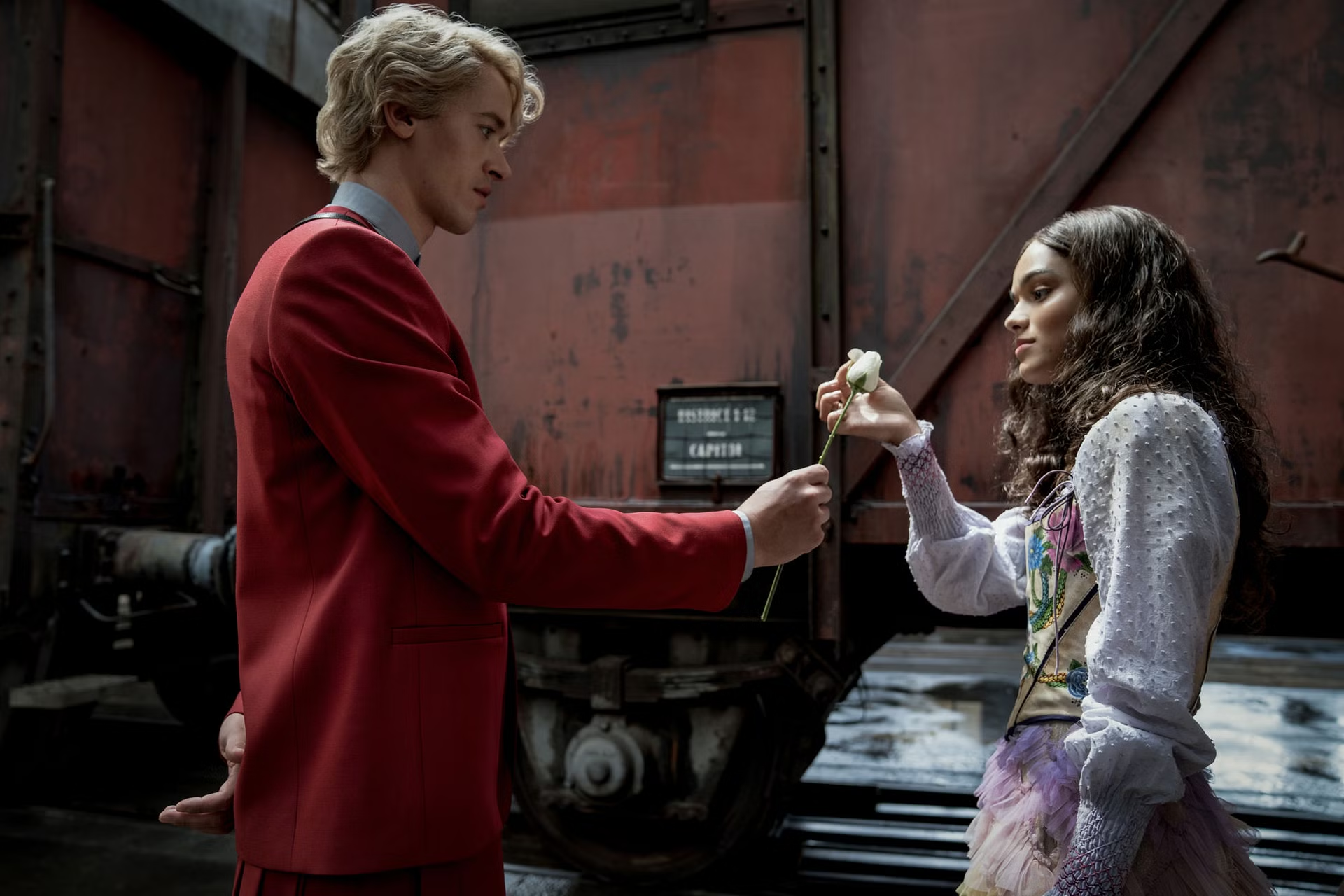
As advertised, The Ballad of Songbirds & Snakes is the origin story of Coriolanus Snow, the tyrannical villain played by Donald Sutherland in the original series. Proving that even dictators were young and hot once, “Coryo” is played here by Tom Blyth, who gives the future despot a fitting ambiguity between his tender side with his remaining family (Hunter Schafer, Fionnula Flanagan) and his growing ambition to rise above his peers. At the behest of the inventor of the Hunger Games (Peter Dinklage), the Capitol’s Academy class must serve as mentors for the upcoming Games, with Snow paired with District 12 musician Lucy Gray Baird (Rachel Zegler, never quite as compelling as Jennifer Lawrence). Eager to prove himself to the ruthless Head Gamemaker (Viola Davis), Snow conspires to keep Lucy Gray alive for both their sakes.
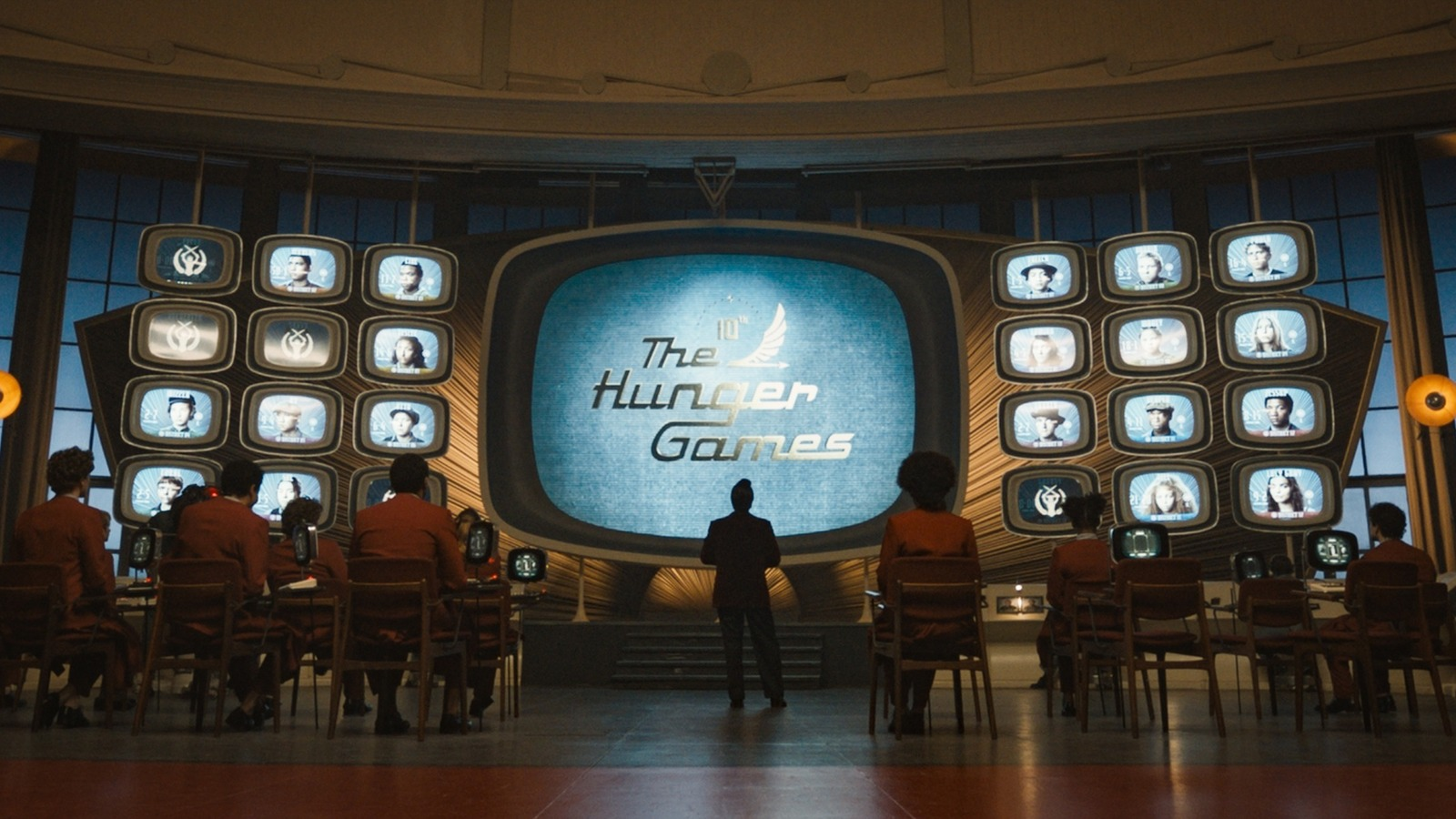
The first Hunger Games featured the 74th annual contest, so the pipeline of reaping children and training them into gladiator combat had been efficiently honed over decades by that point. In the prequel, it’s only the 10th Hunger Games, with the devastating war that prompted their creation still seared into most people’s memories. I found it fascinating to see the process Katniss experienced still in its infancy, with less refined technology and growing pains like defective drones for delivering resources to the arena. Being a tribute was not always glitz and glamor before the fighting began, and there were even vocal critics of the Games’ brutality, such as Snow’s close friend Sejanus (Josh Andrés Rivera).
The plot is broken up into three sections, and it does feel odd that the always thrilling Games make up more of a middle climax, kind of like the bomb testing in Oppenheimer, leaving the rest of the film to be potentially dull by comparison. Thus, it depends how interesting you find subtle treachery and questionable loyalties whether the latter third holds up without the action. I for one did still enjoy Snow’s gradual slide into Machiavellian deceit, as well as the little fan-service references to the other films. As for the ending, I don’t blame anyone for feeling unsatisfied by its open-ended lack of resolution, but the connection to Wordsworth’s “Lucy Gray” helped me appreciate its poetic mystique.
I mulled over how I would rank all the films with this new addition, and it would probably come in fourth, ahead of only Mockingjay – Part 1. (I loved how that film’s great “Hanging Tree” song found its origin in this film too.) That ranking speaks more to the strength of the other three movies since The Ballad of Songbirds & Snakes has plenty of merits, including a strong tragic character arc, great actors adding to the story’s gravitas, and welcome development of the history and lore of Panem. It’s certainly the most musical of the series, with Rachel Zegler flexing her singing chops perhaps too often, but I didn’t mind that. It’s hard to say how well the film works for uninitiated audiences, but this ballad is an insightful expansion for franchise fans like me.
Best line: (Lucy Gray Baird, to her captors) “Nothing you can take from me was ever worth keeping.”
Rank: List-Worthy (joining the rest of the series)

 Rhyme and Reason