
• Home
  • About Me
  • The List
  • THE LIST (2016 Update)
  • THE LIST (2017 Update)
  • THE LIST (2018 Update)
  • THE LIST (2019 Update)
  • THE LIST (2020 Update)
  • THE LIST (2021 Update)
  • THE LIST (2022 Update)
  • Top Twelves and More
  • The End Credits Song Hall of Fame

Rhyme and Reason

~ Poetry Meets Film Reviews

Rhyme and Reason

Tag Archives: Biopic

The Greatest Showman (2017)

01 Sunday Apr 2018

Posted by sgliput in Movies, NaPoWriMo, Poetry, Reviews, Writing

≈ 9 Comments

Tags

Biopic, Drama, Family, History, Musical, Romance

See the source image

(Today’s NaPoWriMo prompt was for a poem about a secret shame or secret pleasure, and this recent film’s subject seemed to fit the bill perfectly.)

 
I know I shouldn’t like it. It’s offensive and uncouth,
So say the few who rule opinion rather than the truth.
It’s liable to rock the boat that should be left alone
And make me think the world has wider interests than my own.

It’s odd and loud and so lowbrow that it will never be
Completely free of grievances and animosity,
And those who claim approval for a thing condemned so far
Will lose esteem as others deem them equally bizarre.

I know I shouldn’t like it, based on cruel analysis,
The kind that glares and does not care how personal joy is.
But if I say I like it, surely I won’t be alone;
There’s always some who won’t succumb to sanctions set in stone.
__________________

MPAA rating: PG

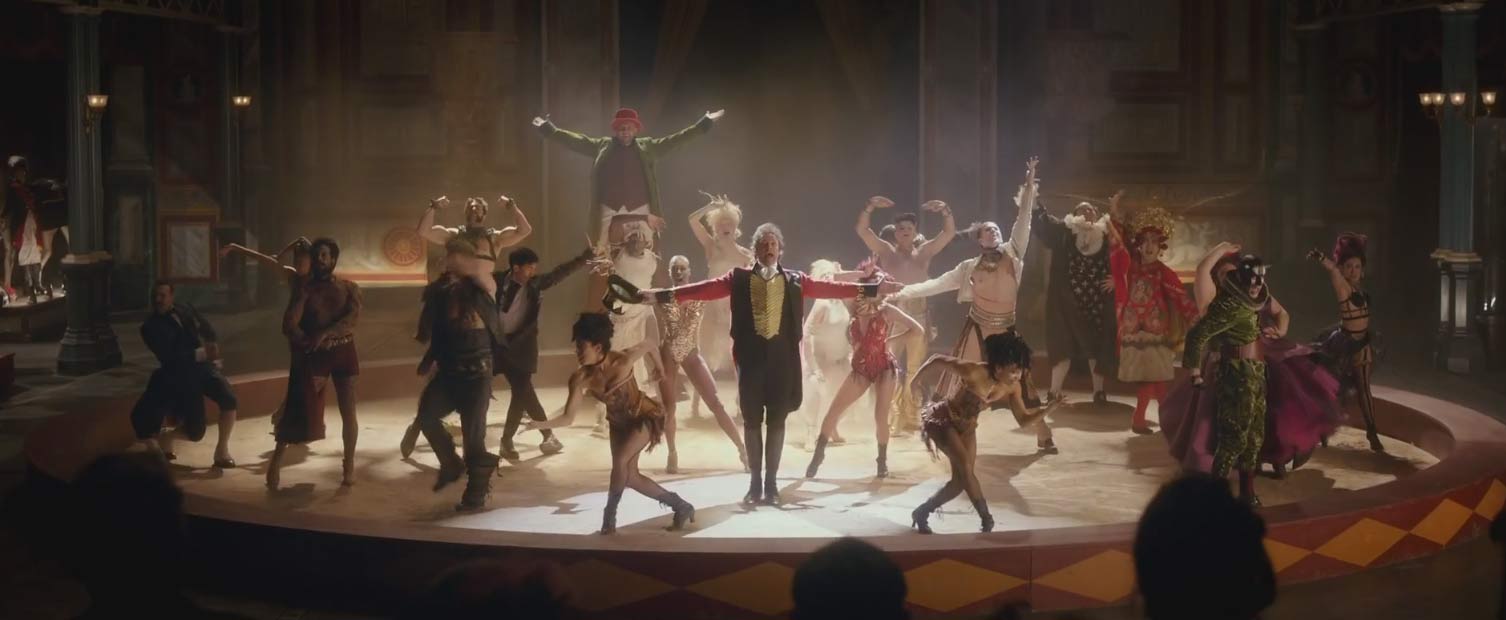
I love musicals, and I don’t really understand people who don’t. When catchy music, a compelling story, and strong performances combine, it’s sheer magic, and even one or two out of the three can still be darn entertaining. I had high hopes for The Greatest Showman, and this is one of those rare cases where a movie met and exceeded my expectations.

See the source image

The film tells the fictionalized story of P.T. Barnum (Jackman), from his humble beginnings as a tailor’s son to his romance with the well-to-do Charity Hallett (Michelle Williams) to his risky efforts to open a museum of the odd and unusual. Barnum’s ploys draw the ire of savage critics, and he endeavors to appeal to both the common man with his circus and the judgmental elite with a new right-hand man (Zac Efron) and a European opera star (Rebecca Ferguson).

I have no idea how true-to-life the film’s events are, and my guess would be probably not very. I’ve always thought of Barnum as an unabashed huckster taking advantage of people’s willingness to be fooled, and that’s certainly part of Jackman’s character. Yet he’s also depicted here as a devoted family man, and his profiting off of his circus of “freaks” also resulted in a newfound confidence and home for those who society had rejected. Jackman’s Barnum strikes a good balance between user and empowerer, and the film is wholly supportive of him and his sideshow, so engagingly in fact that its historical accuracy (or lack thereof) doesn’t detract one bit from the entertainment value.

See the source image

Having loved both Les Miserables and High School Musical, it was wonderful seeing Jackman and Efron back in musical mode, joined by Williams and Efron’s fellow Disney Channel alum Zendaya as their respective love interests. Yet as good as its stars are, The Greatest Showman soars on the strength of its music, courtesy of Broadway duo Pasek and Paul, who just won an Oscar last year for La La Land’s lyrics and a Grammy and Tony for the show Dear Evan Hansen. I’d already heard the biggest numbers “The Greatest Show” and “This Is Me” (Golden Globe winner and Oscar nominee for Best Song), but I wanted to experience the rest of the soundtrack firsthand as part of the movie. Those two are wonderful with “The Greatest Show” (uninterrupted) probably being my favorite, but the whole soundtrack is electric. I was dancing in my seat during “Come Alive” and “From Now On,” and the exuberant choreography only added to the infectious joy. I could recognize first-time director Michael Gracey’s experience with music videos, since even a barroom conversation between Jackman and Efron is given rare visual flair, though the reliance on CGI at times does crack the illusion a little.

It seems strangely fitting that The Greatest Showman’s real-life success mirrors its subject. Many critics have complained about inspirational fakery, and it currently has an inexplicable 55% on Rotten Tomatoes. Audiences, on the other hand, know a good thing when they see it, and as Barnum himself says, they don’t care if they’re being fooled when they’re happy. It’s easy to criticize something as shallow, but does it really matter if you genuinely enjoyed it? There’s such a thing as a guilty pleasure, but I feel no guilt for loving The Greatest Showman in all its inspirational, misfit-embracing, crowd-pleasing glory. It’s a wholesome spectacle I can’t wait to see again and, after the acclaim of last year’s La La Land, hopefully a sign that original movie musicals are becoming popular again. (Can someone please adapt Wicked or Hamilton now?)

See the source image

Best line: (Barnum) “Hyperbole isn’t the worst crime. Men suffer more from imagining too little than too much.”


Rank: Top 100-Worthy


© 2018 S.G. Liput
547 Followers and Counting

A very Happy Easter to everyone!


Testament of Youth (2014)

17 Wednesday Jan 2018

Posted by sgliput in Movies, Poetry, Reviews, Writing

≈ Leave a comment

Tags

Biopic, Drama, History, Romance, War

See the source image

How keenly and eagerly do wars begin,
When winners and losers have yet to be picked,
Before its true horror and hardship set in
And man is reminded how great is its sin!
The world returns ever, a careless addict,
To battle and blood, as the wise can predict.

Each new generation discovers firsthand
The truth only mastered when foolishness dies.
It cannot be scheduled; it cannot be planned;
It comes only when the naïve understand
That war is a futile and grave exercise.
Then do the innocent fools become wise.
___________________

MPAA rating: PG-13

Alicia Vikander broke onto most people’s radars with 2015’s Ex Machina and her Oscar-winning role in The Danish Girl, but Testament of Youth not long before them should not be forgotten. Based on the same-titled World War I memoir by Vera Brittain, Testament of Youth features the kind of lead performance that makes one wonder why it didn’t get more awards attention. As Brittain herself, Vikander plays an early feminist whose academic dreams are dashed by the onset of war and its unforeseen tragedies.

See the source image

I’d never heard of Vera Brittain or her apparently famous memoir before this movie, but that’s why I love well-done adaptations that introduce me to new and worthwhile stories. Early on, Brittain is a relatively carefree girl whose greatest challenge is convincing her father to let her go to Oxford. Thanks to the intervention of her brother Edward (Taron Edgerton in one of his first roles) and a sympathetic professor (Anna Chancellor), she is able to attend her dream school, right as she’s also finding love with one of Edward’s friends, Roland (Kit Harington of Game of Thrones fame). Before long, though, the Great War begins, and when all her male friends enlist, Vera’s priorities shift as well, compelling her to join the war effort as a nurse, first on the home front and later in France.

Testament of Youth may seem like your typical beautifully mounted British period piece, and if you don’t like beautifully mounted British period pieces, you might find it boring. Yet the cinematography is sumptuous and the acting of everyone involved stellar, with Vikander in particular embodying the wartime transformation of the nation as she develops from a naïve schoolgirl who advocates her brother joining the military to a war-weary mourner reeling from all that was lost. There are times when it seems to be treading familiar ground, such as a shot lifted straight from Gone with the Wind, but a scene where Vera declares to a vengeful crowd the best way to respond to the defeated Germans is especially powerful. While the end could have been depressing as heck, there are glimmers of hope as she discovers how to move beyond misfortune.

See the source image

As far as style, the closest thing I can compare Testament of Youth to is the John Keats biopic Bright Star, which also imbues a tragic true romance with a poignant beauty and literary passion. The anti-war themes center on loss and empathy, which is strongly endorsed through Brittain’s nurse experiences, as when she cares for both British and German soldiers as if they were her own brother or fiancé. Whether you’ve heard of it or not, Testament of Youth is a prime choice the next time you’re in the mood for a beautifully mounted British period piece.

Best line: (Vera’s college partner Winifred Holtby) “All of us are surrounded by ghosts. Now we need to learn how to live with them.”


Rank: List Runner-Up


© 2018 S.G. Liput
530 Followers and Counting


The Diving Bell and the Butterfly (2007)

26 Sunday Nov 2017

Posted by sgliput in Movies, Poetry, Reviews, Writing

≈ 2 Comments

Tags

Biopic, Drama, Foreign

See the source image

To watch the world outside a shell,
One window in a tiny cell—
Is this mere pain or is this hell?

‘Tis hell if I but make it so.
While others pity, I must know
That self alone brings spirits low.

From out my shell, my soul must fly
Through fancy, passion, mind, and eye
Before my body dares to die.

I’d view the lives of others crossed
By tragedy and tempest-tossed,
And value things they have not lost.

The world is cruel, yet majesty
Is found in places hard to see,
And both extremes have staggered me.
__________________

MPAA rating: PG-13 (for two brief scenes with topless women)

There are some movies that remind you how blessed you are and how grateful you ought to be. Films like Cast Away and Room show us people deprived of life as usual, and things once taken for granted gain far greater value when they are reclaimed. The Diving Bell and the Butterfly may lack such recovery of normal life, yet the story of Jean-Dominique Bauby made me value everything he lost so suddenly.

See the source image

Formerly the editor of Elle magazine, Bauby (Mathieu Amalric) suffered a sudden stroke in 1995, awakening after a twenty-day coma to discover that his entire body was paralyzed except for his left eye, a rare condition called “locked-in syndrome.” The film begins as he wakes up, and the camera’s first-person view lets the audience hear Bauby’s thoughts and see what he sees. It reminded me a lot of the season 7 M*A*S*H episode “Point of View,” where the audience sees the typical M*A*S*H operations through the eyes of a wounded soldier. As in that episode, doctors and visitors speak directly to the camera, delivering bad news and hollow encouragement alike. Although flashbacks and third-person views are more prevalent later on, a good chunk of the film is furnished through Bauby’s perspective, which is uncannily effective, such as when the screen blinks to portray Bauby’s only means of communication or when his right eyelid is unnervingly sewn shut to prevent infection.

I can envision a present-day version of this story turning into a pro-euthanasia tale bemoaning his pitiful quality of life, but The Diving Bell and the Butterfly is thankfully instead a reminder of the humanity hidden behind Bauby’s withered form. Amalric does a fine job, both in the pre-stroke sequences and his rigid paralysis afterward, managing to convey emotion with just one eye, even more minimalist acting than Eddie Redmayne in The Theory of Everything. Hearing his thoughts reminds us that there is still an active mind behind the expressionless face, one able to think, compose, regret, gripe, and even laugh at himself now and then. At one point, Bauby does wish for death, only to have his nurse scold him for even considering it, urging him to remember everyone who still cares about him. Plus, despite being called a vegetable, he shows the initiative of writing the memoir on which the film is based, dictated a letter at a time by blinking with a special alphabet method and a very patient nurse. Although he points out the ineffectiveness of prayers offered for him by his children and various religious groups, even Bauby ends up acknowledging the reality of miracles.

See the source image

The other actors playing friends, loved ones, and nurses are also phenomenal, from Emmanuelle Seigner as the still-devoted mother of Bauby’s children (whom he regrets not marrying) to Anne Consigny and Marie-Josée Croze as his faithful nurses/therapists. Moving comparisons are made between Bauby’s situation and that of a friend who was imprisoned by terrorists, as well as of his apartment-bound father (Max von Sydow), and an indirect phone call between Bauby and his father is particularly emotional.

I’m typically not a fan of films like this with artsy editing and high-minded metaphors, but it doesn’t come off as pretentious here. There’s plenty of symbolic imagery, like collapsing ice-shelves or the diving suit and butterfly of the title, which seem to represent Bauby’s confinement and the freedom of his imagination, respectively. The Oscar-nominated cinematography is luminous and frequently out of focus when seen through Bauby’s vision, and the first-person views really exhibit the talents of the cast. Bauby’s dream sequences and flashbacks serve more of a purpose than escaping his affliction; they manifest the simple things he once took for granted: a sumptuous meal, a passionate kiss, a mere drive through the countryside, things we forget to value until they’re gone.

See the source image

Deservingly nominated for four Oscars, The Diving Bell and the Butterfly is a paean to life and empathy, to the selflessness of nurses and caretakers, to the bright side of a wretched situation. Despite the sadness of it, the film’s end fosters a unique sense of inspiration, reinforced by the rewound images played over the credits to the song “Ramshackle Day Parade” (worthy of my End Credits Song Hall of Fame). One wonders why such a terrible thing would happen to someone, but the way Bauby’s story ends, I can’t help but wonder if it was simply to supply the world with a much-needed tale of encouragement amid adversity.

Best line: (Roussin) “Hold fast to the human inside of you, and you’ll survive.”


Rank: List-Worthy


© 2017 S.G. Liput
517 Followers and Counting


The Zookeeper’s Wife (2017)

17 Friday Nov 2017

Posted by sgliput in Movies, Poetry, Reviews, Writing

≈ Leave a comment

Tags

Biopic, Drama, History

Image result for the zookeeper's wife

Animals hold no ill will
Like we humans when we kill.
Animals cannot relate
To we who brand and scorn and hate.

Life is simple in their eyes,
Where we confuse and compromise,
Yet, when all the world grows cruel,
Survival is our common rule.

Man can treat his fellow man
Far worse than other creatures can.
Likewise, mankind stands apart
In sharing greater depths of heart.
______________________

MPAA rating: PG-13

There are some movies that, no matter how well made they are, just tend to fall into the second tier of their genre. The Zookeeper’s Wife is one such film, yet another historical drama based on true events of endangered Europeans dealing with the Nazi occupation and risking all to help Jews during the Holocaust. Such films are guaranteed to be emotional and impactful as they strive to emulate Schindler’s List, but although I haven’t been able to bring myself to watch Schindler’s List for comparison, I can tell that The Zookeeper’s Wife likely won’t win any Oscars, if its March release date wasn’t already a hint.

Image result for the zookeeper's wife

Jessica Chastain as Antonina Żabiński is the titular wife to Johan Heldenbergh’s zookeeper Jan Żabiński, both of whom happily run the Warsaw Zoo in the days leading up to the German invasion. As someone who has always enjoyed visits to the zoo, I enjoyed the scenes with the diverse animals, which are charmingly natural, as if it’s perfectly normal in this family to cuddle with a white lion cub. Of course, those scenes are quickly upended by Nazi bombers who decimate the city and many of the exhibits, leaving released camels and big cats to add to the chaos. These scenes and the deaths that result can be distressing for animal lovers, but the film doesn’t dwell on the animals themselves for long, as the zoo is promptly emptied by Hitler’s chief zoologist Lutz Heck (Daniel Bruhl). Without a zoo to care for, the Żabińskis turn their attention to the impounded Jews of the Warsaw Ghetto, choosing to take part in an Underground Railroad to help them to safety and hide them in the zoo.

All three of the main actors do excellent work here, particularly Chastain, fake accent and all. While his character is far more actively involved in the resistance movement, smuggling Jews from the ghetto in a garbage truck, Heldenbergh is oddly sidelined at times, hence why the film isn’t called The Zookeeper. Having played a Nazi before in Inglourious Basterds, Bruhl is respectably menacing in his romantic advances toward Antonina, which she humors for the sake of keeping him off the scent of her hidden friends. When he does catch on, his jilted fury is frighteningly unpredictable during a heart-in-the-throat scene toward the end. While some details are given at the end, I do wish there was a little more information about what became of the Żabińskis afterward.

Image result for the zookeeper's wife

There’s little negative to say about The Zookeeper’s Wife. My VC read the book and found this to be an admirable adaptation, despite certain changes. The music, the locations, the moments of shocking inhumanity and heartening empathy are all commendably effective, but not quite as involving as they would seem on paper. It’s ultimately more encouraging than some of its devastating cousins, perhaps owing to the restraint afforded by its PG-13 rating. There is no shortage of Holocaust movies, and considering how easily mankind forgets, even today, there need to be many more, so The Zookeeper’s Wife deserves to be seen, even if it’s not one of the stand-outs of the group.

Best line: (Antonina) “You can never tell who your enemies are or who to trust. Maybe that’s why I love animals so much. You look in their eyes, and you know exactly what’s in their hearts. They’re not like people.”


Rank: List Runner-Up


© 2017 S.G. Liput
517 Followers and Counting


The Inn of the Sixth Happiness (1958)

08 Sunday Oct 2017

Posted by sgliput in Movies, Poetry, Reviews, Writing

≈ Leave a comment

Tags

Biopic, Classics, Drama, History, Romance

Image result for the inn of the sixth happiness

Some may wish five happinesses
On both traveler and friend:
The hope for wealth from their successes,
And a long life ere the end.

Third, may good health cause increase,
And virtue fortify your soul,
And lastly, may you die in peace,
Having met your every goal.

Though five would fill most purposes,
A sixth and final happiness
I wish to all, but what it is
Is up to each of us to guess.
____________________

MPAA rating: PG

Ingrid Bergman is one movie star who hasn’t been much on my classic film radar, aside from Casablanca and Gaslight (which are great). To remedy that, I decided to check out one of her later roles in the semi-epic The Inn of the Sixth Happiness, in which she plays Gladys Aylward, a real-life missionary to China who rose to fame with her humanitarian efforts during the Sino-Japanese War of the 1930s.

I call it a semi-epic because, though it doesn’t quite boast the sweeping storytelling of Ben-Hur or Doctor Zhivago, there’s enough of it in Aylward’s decades-long mission that the magnitude of her story rises above others of its day. At the beginning, Aylward displays an indomitable passion for China, feeling it is where God has called her for His purposes, and at her own expense and peril, she journeys there to join an already established missionary (Athene Seyler). There in Yang Cheng, they open an inn for travelers, whose hunger for stories they plan to meet with the Bible, but many difficulties stand in the way, from uncooperative leaders to the obvious language barrier. And even when she earns the trust and love of the people, Aylward’s commitment to China also puts her in harm’s way when the Japanese invade in the years leading up to World War II, and she takes it upon herself to lead a hundred orphans to safety.

Image result for the inn of the sixth happiness

While The Inn of the Sixth Happiness doesn’t quite make my List, it’s the kind of film that might have if I’d seen it long ago and built it up in my head as a classic. (That is how it works sometimes.) There’s much to love about it, not least of all is Bergman’s performance as Aylward. Even if she looks and sounds nothing like the woman she’s playing (just one of the film’s many historical liberties), she certainly captures her commitment and love for the Chinese people. Like Mother Teresa, she goes to serve as both servant and example rather than force conversion on the people. She doesn’t merely go to China for a couple years to fulfill a duty; instead, she immerses herself in the land and culture, even becoming a Chinese citizen, and dedicates her entire life to her mission of love and social reform. It is this kind of Christian commitment that is most persuasive, and when she does find success and respect in the eyes of both the Chinese and her fellow missionaries, it’s immensely satisfying and touching. I’ve even heard reports that playing such a godly woman led Ingrid Bergman to become a Christian.

Strong supporting roles are filled by Curt Jurgens as a half-Chinese colonel and love interest and Robert Donat (his last film role before his death) as the local mandarin of Yang Cheng. Of course, neither actor is Chinese, leading to retroactive criticisms of the film for whitewashing, but they both are excellent still, especially Donat, and they’re not at all insulting like Mickey Rooney’s caricature in Breakfast at Tiffany’s. Plus, the vast majority of the cast are still played by Chinese actors, including many children from a Chinese community in Liverpool. Especially affecting is the commitment of Aylward’s two Chinese helpers who assist her along the way, as well as an emotional scene between Aylward and one of her adopted Chinese daughters.

Image result for the inn of the sixth happiness

It’s not without its flaws, from an overlong runtime to some loose ends that are left unresolved by the end. Plus, it’s up to each viewer how much the historical changes bother you; Aylward herself wasn’t a fan of the film’s depiction of her or Curt Jurgens’ character. Yet the mountainous setting adds a good deal of authenticity to Aylward’s travails, aided by terrific cinematography, and even if director Mark Robson was the only member of the production to earn an Oscar nomination, the quality of the performances and overall film seem deserving of far more. The Inn of the Sixth Happiness isn’t strongly evangelical, still being a Hollywood production, but the faith of its subject is unmistakable and inspiring.

Best line: (Aylward) “You have to interfere with what you feel is wrong, if you hope to make it right.”


Rank: List Runner-Up


© 2017 S.G. Liput
514 Followers and Counting


The Letters (2014)

05 Tuesday Sep 2017

Posted by sgliput in Christian, Movies, Poetry, Reviews, Writing

≈ Leave a comment

Tags

Biopic, Drama, History

Image result for the letters film

Blessed are the selfless, though hidden they may be.
Blessed are the quiet; their thoughts the Lord will see.
Blessed are the pious, who do not seek renown.
Blessed are the few who suffer thorns their earthly crown.
Blessed are the holy ones, who rarer get each year,
For even in the darkest world, their light we will revere.
____________________

MPAA rating: PG

After watching The Letters last night, I figured it couldn’t be a coincidence that I happened to watch a movie about Mother Teresa on the one-year anniversary of her canonization as a saint. That’s why I hurried to write a review for today, the anniversary of her death, known in the Catholic Church as her Feast Day. A passion project of director William Riead, The Letters is one of the better faith-based films of recent years, a tribute to a woman of unparalleled holiness.

The Letters takes its inspiration and name from the many letters Mother Teresa wrote to her spiritual confidante Father Celeste Van Exem (Max von Sydow), who describes her story to Rutger Hauer as an investigator into Teresa’s cause for canonization. English actress Juliet Stevenson does a marvelous job (and feigns a convincing accent) as Mother Teresa herself, whose compassion for the poor outside her convent’s gates led her to petition for permission to leave the cloister and serve the unwashed masses of Calcutta, India. Over the years, despite her well-publicized sanctity, she also endured feelings of abandonment by God that have been called a “dark night of the soul,” a cross other saints have carried as well.

Image result for the letters  mother teresa film

The Letters has received mostly negative critical reviews, but I don’t find that surprising, considering how Christian films tend to be more appreciated by their target audience than by secular viewers. Yet The Letters doesn’t seem concerned with proselytizing, just as Mother Teresa didn’t approach the Indian communities to win converts. It’s a testimony of her commitment to God and to helping others, and while some have tried to cast aspersions on her motivations and methods, I find nothing wrong with a wholly positive view of a woman who dedicated her life to serving the poor. Perhaps some people wanted a darker, more challenging view instead of a shiny biopic of a saint at work. After all, most would probably prefer to watch the latest gruesome death on Game of Thrones than the inspiring rescue efforts to aid the Hurricane Harvey victims. Yet positivity and holiness deserve their day, and a movie like The Letters presents them as truly admirable.

That’s not to say that The Letters is perfect. It does have better acting and production values than some Christian films, but the beginning jumps about in time and place a bit confusingly. Plus, the initial confrontations with Indian Muslims urging Teresa to leave seemed rather half-hearted, rarely making it feel that she was actually in danger. Even with these caveats, The Letters is pure inspiration, revealing Mother Teresa’s spiritual turmoil that has only increased Christians’ veneration of her. With so much wrong in the world, sometimes just watching a selfless hero in action, an example to aspire to, is enough to stir the soul and make us want to serve where we can more faithfully.


Rank: List Runner-Up


© 2017 S.G. Liput
506 Followers and Counting


The Glenn Miller Story (1954)

20 Sunday Aug 2017

Posted by sgliput in Movies, Poetry, Reviews, Writing

≈ Leave a comment

Tags

Biopic, Classics, Drama, Musical, Romance

Image result for the glenn miller story

(Best sung to “Little Brown Jug”)

Music once was full of brass;
Dance halls dripped with the sound of class.
Rock and roll had yet to grow,
But folks all knew Glenn Miller, though.

Ha, ha, ha, what a sound,
The kind to make Miller’s band renowned!
Ha, ha, ha, songs that stay,
The kind today’s elevators play!
__________________

MPAA rating: G

My mom has been urging me to check out more Jimmy Stewart movies lately, which I don’t mind since he’s one of my favorite actors, with a natural likability rivaling Tom Hanks. My latest exploration of his filmography is The Glenn Miller Story, which I hadn’t thought to see before because I didn’t know who Glenn Miller was. I’m sorry for my youthful ignorance now because it’s really an excellent role for Stewart and focuses on a style of music I rarely consider.

Image result for the glenn miller story

For those like me who may recognize Glenn Miller’s name but don’t know who he was, he was a big band leader in the 1930s and ‘40s whose band’s famous recordings include “Moonlight Serenade,” “In the Mood,” and “Pennsylvania 6-5000.” I was familiar with almost all of these songs, especially “Little Brown Jug,” which I learned to play on piano as a kid, but because most of them don’t have lyrics, they’re typically relegated to background music, making them recognizable but not necessarily known. Yet before rock and roll got off the ground in the ‘50s, this jazzy orchestra music ruled the dance halls of America, and like Stewart’s Lindbergh biopic The Spirit of St. Louis, it was made at a time when people still remembered these pre-war events.

The film recounts Glenn’s early struggles, such as repeatedly pawning his trombone in between shows, and his eventual rise to stardom, always in search of “the sound” that would set his band apart. It also focuses on his romance with Helen Burger (June Allyson), whose initial wariness of Glenn’s rootless vocation melts into wholehearted support of his dream. Stewart is his usual lovable self, letting his charm overshadow his character’s frequent inconsiderate treatment of others, which is more out of preoccupation than malice. He also does a fine job pretending to play the trombone. Allyson, though, almost outshines him, bringing considerable warmth to the usual encouraging spouse role and making me like her as an actress even more than I already did from Good News. I was also surprised to see a young Harry Morgan of M*A*S*H fame, and an abundance of famous musicians who knew Miller cameo and perform, though due to that youthful ignorance I mentioned, I only recognized Louis Armstrong.

Image result for the glenn miller story

What I especially liked about The Glenn Miller Story is that it didn’t fall into the problem I usually have with musical biopics. Most biographical films like this (think Ray, for instance) typically leave me with a more negative impression of its subject than I had before, exposing marital infidelity and drug use that taint their public image. It may be true, but it’s sad. Glenn Miller doesn’t do that, probably due to when it was made, instead depicting the music and romance of its title character without aiming to blemish his legacy. If I had a greater love for the big band style, this movie would easily make my list, but even if it just misses the cut, I greatly enjoyed its story and lead performances. My mom likes it even more, since she grew up with her parents listening to this kind of music, and it always puts a big, nostalgic smile on her face to hear it again. I feel bad now for putting off seeing it and not knowing of the talented Glenn Miller.

Best line: (Helen, several times) “Honestly!”  (I’ll think of this movie now every time I hear that.)


Rank: List Runner-Up (a very high one)


© 2017 S.G. Liput
506 Followers and Counting


The Founder (2016)

17 Thursday Aug 2017

Posted by sgliput in Movies, Poetry, Reviews, Writing

≈ 4 Comments

Tags

Biopic, Drama, History

Image result for the founder film

The founders and dreamers and takers of risk
Are known for success
And their tirelessness
And refusal to heed the world’s stubborn “tsk, tsk.”

Yet no success came without stumbles and loss,
And when a dream bleeds,
It plants cynical seeds
Just waiting to sprout when the dreamer is boss.

When dreams do pay off and the struggle is won,
The dreamer may find,
As he glances behind,
Regret hanging over the great deeds he’s done.
___________________

MPAA rating:  PG-13 (for brief language, could otherwise be PG)

Based on its December release and strong central performance, The Founder was clearly aiming to be Oscar material, but even if that didn’t happen, it’s still a well-wrought peek into the history of an icon. McDonald’s is such a mainstay of American culture that it’s hard to imagine a time without those “Golden Arches” on every other corner, which is appropriately what Ray Kroc envisioned when he had the idea to revolutionize the food industry. Then again, did he revolutionize it or simply spread the change and reap the glory? The movie itself can’t quite decide on a definitive answer.

From the very beginning, it’s easy to sympathize with Kroc (Michael Keaton, in fine form), a washed-up milkshake machine salesman whose past attempts at scoring the next big thing have been nothing but fiascoes. After enduring the drawbacks of the drive-in (which I didn’t even know had such negatives back then), a visit to San Bernardino, California, introduces him to the very first McDonald’s, the immensely popular brainchild of Mac and Dick McDonald. It was strange watching Ray see fast-food conveniences that are commonplace today for the very first time, things like eating out of paper or receiving your order within minutes. It’s a reminder of just how game-changing the McDonald brothers’ idea was, and Ray recognizes its potential immediately and dives head first into his new goal of franchising the heck out of it.

Image result for the founder film

Because the title is The Founder and not The Founders, Ray’s eventual takeover of the company should come as no surprise. Yet, watching it with my VC, I was struck by how objectively the film presents Ray’s machinations and how differently my VC and I viewed his actions. We both empathized with Kroc’s early business failings and aspirations, especially when he convinces Dick and Mac to franchise and employs other down-and-out everymen like himself, giving them a chance that didn’t come as easily for him. It’s also hard to argue with his success, sprouting new McDonald’s locations throughout the Midwest, albeit with some bumps along the way.

Yet at some point, a line is crossed between admirable enterprise and predatory ambition, and it’s an ambiguous boundary that could be different for each viewer. I thought he was pushing a bit too far when he started going around Dick and Mac’s orders, frustrated at their constant negativity toward his big ideas. My VC, on the other hand, sympathized with Ray far longer and thought that the McDonalds were a little too naïve and standing in the way of expansion and profit, especially since they weren’t taking the risk Ray was. I can’t say she’s wrong since it comes down to how hard-hearted each of us thinks the world of business should be, though we both agree there’s still a point when Kroc’s cutthroat philosophy goes too far, even extending into his marriage and personal life. This dichotomy of runaway creative success and regrettable corporate backstabbing reminded me a lot of The Social Network, especially with its dubious but visionary real-life subject.

Image result for the founder filmDirected by The Blind Side’s John Lee Hancock, The Founder is an entertaining look at how a pioneering burger joint became an institution, made more unique by its moral ambivalence. Keaton excels as Kroc, with just the right amount of car salesman charisma to make him relatable and explain his marketing success, and the rest of the actors offer commendable support, especially Nick Offerman and John Carroll Lynch as Dick and Mac, respectively. It does make me wonder how the current McDonald’s Corporation felt about the film, since it doesn’t steer away from the ruthlessness of its self-proclaimed founder. The Founder is both a success story and a tale of loss, one that charted a new course for the restaurant industry and properly records what was lost along the way.

Best line: (Ray, quoting a motivational recording he listened to) “Nothing in this world can take the place of good old persistence. Talent won’t. Nothing’s more common than unsuccessful men with talent. Genius won’t. Unrecognized genius is practically a cliché. Education won’t. Why, the world is full of educated fools. Persistence and determination alone are all-powerful.”


Rank: List Runner-Up


© 2017 S.G. Liput
505 Followers and Counting


Eddie the Eagle (2016)

05 Monday Jun 2017

Posted by sgliput in Movies, Poetry, Reviews, Writing

≈ 2 Comments

Tags

Biopic, Drama, History, Sports

Image result for eddie the eagle film

From way up here, my view is clear,
And all the world extends below.
They wait to see if this wannabe
Deserves this chance and vertigo.

Yet no one thought this soaring spot
Could be achieved by such as me.
They patronized and minimized
My every try and cut me free.

But not this time, this chance sublime,
Unmarred by how they’ve criticized;
I’m flying higher than critics desire
And won’t the scolders be surprised!

I don’t compare in skill or flair
With medalists, but I aspire.
That goal sincere has brought me here.
Now just to land, and I’ll retire.
___________________

MPAA rating: PG-13 (could almost be PG)

One of the most pleasant surprises from last year was how the story of an apparent goofball from the 1988 Winter Olympics exceeded its by-the-numbers genre to become one of the most uplifting films of the year. Inspirational sports dramas are a dime-a-dozen, but I wouldn’t hesitate to call Eddie the Eagle the best underdog story since the 1993 classic Rudy.

That comparison extends to the plucky protagonist whose dogged refusal to give up overshadows his relative lack of athletic ability. Eddie Edwards (Taron Egerton) has dreamed since childhood of going to the Olympics, despite the repeated failures of his clumsy practice runs. All the familiar ingredients are here: a father (Keith Allen) who thinks Eddie’s dreams are a waste of time, an authority figure (Tim McInnerny) who disparages Eddie and does all he can to block the irrepressible upstart,  an embittered coach (Hugh Jackman) who grudgingly agrees to mentor the young dreamer. It’s all so potentially cliché, and yet it’s all done so well, thanks in large part to the unironic exuberance of Egerton as Eddie himself.

Image result for eddie the eagle film

Eddie’s journey is a constant struggle that never seems to faze him, or at least doesn’t keep him down for long. In many ways, he glides along on unrealistic goals and loopholes, choosing to compete as an Olympic ski jumper when he discovers that Great Britain hasn’t had one since the 1920s. If it gets him to the Olympics, it doesn’t matter if he’s completely inexperienced. Yet it’s his unabashed spirit that earns some much-needed sympathy along his way and convinces disgraced former competitor Bronson Peary to coach and support him. Ordinarily, the coach would be the one encouraging his protégé, but Eddie needs no outside encouragement and instead lightens the drunken cynicism of his trainer.

It’s an important development toward the end that Eddie recognizes that his jubilation in the face of apparent failure can be seen as the antics of a fool and addresses those concerns head-on. Ultimately, as the film and a quote from the founder of the Olympics state, it doesn’t matter that Eddie’s best efforts still come up short, just as it didn’t matter that Rudy’s moment of truth was only a single touchdown: the very act of participating and doing one’s best is admirable, and it’s no wonder that Eddie’s tenacious joy and determination captured the hearts of spectators.

Image result for eddie the eagle film

It helps too that the film is designed to be as crowd-pleasing as possible, with a good deal of humor and a deliciously ‘80s soundtrack with well-placed song staples from the time, like Van Halen’s “Jump.” Egerton and Jackman imbue their familiar character types with likable personalities, Egerton lovably nerdy and Jackman ruggedly cool, and are easy to root for. By the film’s breath-holding climax (which surely looks ridiculous to those not in the moment), I was cheering alongside the characters with the biggest smile a movie has given me in some time. Plus, except for some brief sexual dialogue, the film is refreshingly family-friendly and free of profanity.

It’s true that the core story of Eddie the Eagle is far from original and ends on Eddie’s most positive moment with no mention of the fact that his next three attempts to reach the Olympics failed due to eligibility changes. Thus, its inspirational bias may seem contrived to some, but when a film is this uplifting and joyous, who cares? Eddie the Eagle takes its genre and flies high with it.

Best line: (quoting Pierre de Coubertin, the founder of the Olympics) “The most important thing is not the victory but the struggle.”


Rank: List-Worthy


© 2017 S.G. Liput
487 Followers and Counting


VC Pick: Funny Lady (1975)

19 Friday May 2017

Posted by sgliput in Movies, Poetry, Reviews, Writing

≈ Leave a comment

Tags

Biopic, Comedy, Drama, Romance

Image result for funny lady film

It’s easy being funny
When you’re wallowing in money
With your sweet and faithful honey
Waiting lovingly at hand,
But when assets aren’t as runny
And the outlook’s less than sunny,
Not as much is fun or funny,
As the jokers understand.

Though life enjoys unveiling
Every foible, flaw, and failing,
Making efforts unavailing,
One’s good humor perseveres,
So while waiting, maybe wailing,
For a way to smoother sailing,
It’s important and unfailing
To keep laughing through the tears.
____________________

MPAA rating: PG (PG-13 is better due to language)

When I first saw Barbra Streisand’s Oscar-winning performance in Funny Girl, I wasn’t aware she had reprised the role of Fanny Brice in Funny Lady seven years later. It took my VC to suggest seeing this less prestigious follow-up, and honestly it proves that Hollywood’s fondness for unnecessary and unsatisfying sequels is nothing new.

Following the sad conclusion of Funny Girl, where Brice’s marriage to Nicky Arnstein (Omar Sharif) broke up amid financial tension and scandal, Funny Lady sees Brice solid in her stardom but struggling for work like everyone else due to the Great Depression. Enter James Caan as smooth-talking songwriter and showman Billy Rose, whose ego dwarfs Fanny’s diva mentality to the point that he advertises her as part of his new show without even asking her first. Annoyed but somehow charmed, she agrees, and their working relationship gradually turns to romance.

I can’t say that Streisand and Caan aren’t good in their roles, but they had hardly any chemistry, in sharp contrast to Sharif’s allure in the first film. Fanny’s songful suggestion that her second relationship is better thus feels hollow when their bond seems founded on the fact that they can simply yell at each other without either taking it personally.

Image result for funny lady film

I suppose Funny Girl’s tragic romance had more impact because it was preventable, torn apart by Nicky’s pride opposite Fanny’s success; here, Billy Rose’s huckster personality seemed inevitably fated for marital friction and infidelity, and it’s no surprise when things fall apart again. Worsening matters is Fanny’s confrontation with her first husband (Sharif returns), where she confesses to starry-eyed naiveté in the face of his selfishness. It may be true, but it’s not empowering as she intends it to be; instead, it’s sad that all of her romances were doomed from the start, robbing her of even the memory of a happy love life.

Aside from Streisand’s intermittent comedic skits, what makes Funny Lady watchable is the musical numbers, though there are far fewer show-stopping numbers than the first film, and none are as memorable as “People” or “Don’t Rain on My Parade.” In fact, it’s ironic that the best number goes not to Streisand, but to Ben Vereen as one of Fanny’s vaudeville cohorts, an exuberant rendition of “Clap Hands! Here Comes Charley!” that made me wish the rest of Vereen’s performance hadn’t been cut out before release. I’m actually rather surprised the film earned five Oscar nominations, including Cinematography, Score, and Original Song. If you enjoyed Funny Girl or are a fan of Streisand or Caan, Funny Lady may be worth your time, but don’t expect a feel-good classic.


Rank: Honorable Mention


© 2017 S.G. Liput
482 Followers and Counting


← Older posts
Newer posts →

Recent Posts

  • We Didn’t Start 2025 (Recap)
  • NaPoWriMo 2025 Recap (Finally)
  • Sonic the Hedgehog 3 (2024)
  • It Happened One Night (1934)
  • Spellbound (2024)

Recent Comments

associatesofshellymann's avatarassociatesofshellyma… on My Top Twelve La La La So…
Kit's avatarKit Nichols on Bonnie and Clyde (1967)
lifelessons's avatarlifelessons on Look Back (2024)
Carol Jackson's avatarCarol Jackson on The Thief of Bagdad (1940…
Stephen's avatarStephen on Love Story (1970)

Archives

  • January 2026
  • December 2025
  • May 2025
  • April 2025
  • March 2025
  • February 2025
  • January 2025
  • December 2024
  • May 2024
  • April 2024
  • March 2024
  • February 2024
  • January 2024
  • December 2023
  • November 2023
  • October 2023
  • September 2023
  • July 2023
  • June 2023
  • May 2023
  • April 2023
  • March 2023
  • February 2023
  • January 2023
  • December 2022
  • November 2022
  • October 2022
  • September 2022
  • August 2022
  • July 2022
  • June 2022
  • May 2022
  • April 2022
  • March 2022
  • February 2022
  • January 2022
  • December 2021
  • November 2021
  • October 2021
  • September 2021
  • August 2021
  • July 2021
  • June 2021
  • May 2021
  • April 2021
  • March 2021
  • February 2021
  • January 2021
  • December 2020
  • November 2020
  • October 2020
  • September 2020
  • August 2020
  • July 2020
  • June 2020
  • May 2020
  • April 2020
  • March 2020
  • February 2020
  • January 2020
  • December 2019
  • November 2019
  • October 2019
  • September 2019
  • August 2019
  • July 2019
  • June 2019
  • May 2019
  • April 2019
  • March 2019
  • February 2019
  • January 2019
  • December 2018
  • November 2018
  • October 2018
  • September 2018
  • August 2018
  • July 2018
  • June 2018
  • May 2018
  • April 2018
  • March 2018
  • February 2018
  • January 2018
  • December 2017
  • November 2017
  • October 2017
  • September 2017
  • August 2017
  • July 2017
  • June 2017
  • May 2017
  • April 2017
  • March 2017
  • February 2017
  • January 2017
  • December 2016
  • November 2016
  • October 2016
  • September 2016
  • August 2016
  • July 2016
  • June 2016
  • May 2016
  • April 2016
  • March 2016
  • February 2016
  • January 2016
  • December 2015
  • November 2015
  • October 2015
  • September 2015
  • August 2015
  • July 2015
  • June 2015
  • May 2015
  • April 2015
  • March 2015
  • February 2015
  • January 2015
  • December 2014
  • November 2014
  • October 2014
  • September 2014
  • August 2014
  • July 2014
  • June 2014
  • May 2014
  • April 2014
  • March 2014
  • February 2014
  • January 2014
  • December 2013

Categories

  • Blindspot
  • Blogathon
  • Christian
  • Movies
  • Music
  • NaPoWriMo
  • Poetry
  • Reviews
  • TV
  • Writing

Meta

  • Create account
  • Log in
  • Entries feed
  • Comments feed
  • WordPress.com

Recent Posts

  • We Didn’t Start 2025 (Recap)
  • NaPoWriMo 2025 Recap (Finally)
  • Sonic the Hedgehog 3 (2024)
  • It Happened One Night (1934)
  • Spellbound (2024)

Recent Comments

associatesofshellymann's avatarassociatesofshellyma… on My Top Twelve La La La So…
Kit's avatarKit Nichols on Bonnie and Clyde (1967)
lifelessons's avatarlifelessons on Look Back (2024)
Carol Jackson's avatarCarol Jackson on The Thief of Bagdad (1940…
Stephen's avatarStephen on Love Story (1970)

Archives

  • January 2026
  • December 2025
  • May 2025
  • April 2025
  • March 2025
  • February 2025
  • January 2025
  • December 2024
  • May 2024
  • April 2024
  • March 2024
  • February 2024
  • January 2024
  • December 2023
  • November 2023
  • October 2023
  • September 2023
  • July 2023
  • June 2023
  • May 2023
  • April 2023
  • March 2023
  • February 2023
  • January 2023
  • December 2022
  • November 2022
  • October 2022
  • September 2022
  • August 2022
  • July 2022
  • June 2022
  • May 2022
  • April 2022
  • March 2022
  • February 2022
  • January 2022
  • December 2021
  • November 2021
  • October 2021
  • September 2021
  • August 2021
  • July 2021
  • June 2021
  • May 2021
  • April 2021
  • March 2021
  • February 2021
  • January 2021
  • December 2020
  • November 2020
  • October 2020
  • September 2020
  • August 2020
  • July 2020
  • June 2020
  • May 2020
  • April 2020
  • March 2020
  • February 2020
  • January 2020
  • December 2019
  • November 2019
  • October 2019
  • September 2019
  • August 2019
  • July 2019
  • June 2019
  • May 2019
  • April 2019
  • March 2019
  • February 2019
  • January 2019
  • December 2018
  • November 2018
  • October 2018
  • September 2018
  • August 2018
  • July 2018
  • June 2018
  • May 2018
  • April 2018
  • March 2018
  • February 2018
  • January 2018
  • December 2017
  • November 2017
  • October 2017
  • September 2017
  • August 2017
  • July 2017
  • June 2017
  • May 2017
  • April 2017
  • March 2017
  • February 2017
  • January 2017
  • December 2016
  • November 2016
  • October 2016
  • September 2016
  • August 2016
  • July 2016
  • June 2016
  • May 2016
  • April 2016
  • March 2016
  • February 2016
  • January 2016
  • December 2015
  • November 2015
  • October 2015
  • September 2015
  • August 2015
  • July 2015
  • June 2015
  • May 2015
  • April 2015
  • March 2015
  • February 2015
  • January 2015
  • December 2014
  • November 2014
  • October 2014
  • September 2014
  • August 2014
  • July 2014
  • June 2014
  • May 2014
  • April 2014
  • March 2014
  • February 2014
  • January 2014
  • December 2013

Categories

  • Blindspot
  • Blogathon
  • Christian
  • Movies
  • Music
  • NaPoWriMo
  • Poetry
  • Reviews
  • TV
  • Writing

Meta

  • Create account
  • Log in
  • Entries feed
  • Comments feed
  • WordPress.com

Blog at WordPress.com.

Is this your new site? Log in to activate admin features and dismiss this message
Log In
  • Subscribe Subscribed
    • Rhyme and Reason
    • Join 814 other subscribers
    • Already have a WordPress.com account? Log in now.
    • Rhyme and Reason
    • Subscribe Subscribed
    • Sign up
    • Log in
    • Report this content
    • View site in Reader
    • Manage subscriptions
    • Collapse this bar