• Home
  • About Me
  • The List
  • THE LIST (2016 Update)
  • THE LIST (2017 Update)
  • THE LIST (2018 Update)
  • THE LIST (2019 Update)
  • THE LIST (2020 Update)
  • THE LIST (2021 Update)
  • THE LIST (2022 Update)
  • Top Twelves and More
  • The End Credits Song Hall of Fame

Rhyme and Reason

~ Poetry Meets Film Reviews

Rhyme and Reason

Tag Archives: Biopic

Queen of Katwe (2016)

20 Thursday Apr 2017

Posted by sgliput in Movies, NaPoWriMo, Poetry, Reviews, Writing

≈ 2 Comments

Tags

Biopic, Drama, Family, Sports

Image result for queen of katwe film

(Today’s NaPoWriMo prompt was for a poem that incorporates the terminology of sports or games, and this film was the first to come to mind.)


Who showed the grandmasters to break and blockade?
Who taught the young hotshots before they were paid?
Somebody who saw that this amateur played
With potential to rival the greats.

No pro cut his teeth in the big leagues to start;
No novice knew every play tactic by heart.
The champions once were unversed in their art,
Like those whose achievement awaits.

To round the bases,
To win the races
Or marathon,
To queen the pawn,
To reach for fame upon your name,
To spike the ball,
Slam dunk them all,
To hit a home run,
To say you’ve won,
You first must dare to play the game.
_________________

MPAA rating: PG

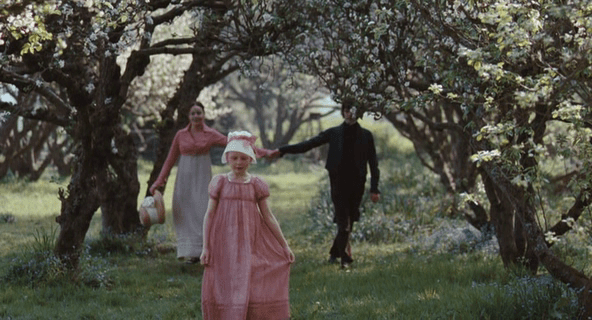
This inspirational sports drama (yes, apparently chess can be considered a sport) didn’t make many waves when Disney quietly released it last September, but it’s a finely crafted member of a genre that often falls into feel-good clichés. In 2009, 10-year-old Phiona Mutesi (Madina Nalwanga) had little expectation for her life other than selling maize for her mother (Lupita Nyong’o) to prolong their dirt-floor subsistence living in Uganda, but the encouragement of sports coach Robert Katende (David Oyelowo) awakens in her not only a surprising talent for chess but a hope for a better life.

Image result for queen of katwe film

Queen of Katwe sidesteps the “white savior” accusations that similar films often bear (Finding Forrester, The Blind Side) by possessing an almost exclusively black cast, with Nyong’o and Oyelowo excelling as loving mentors who sometimes clash over how best to nurture Phiona’s potential. The film includes quite a bit that other underdog stories have, but it does it well, following the various stages of Phiona’s competitive development, from not believing herself worthy of attention to obsession and success to overconfidence to despair to rewarded effort. Again, whereas an American version of this true story might have stressed a racial divide between Phiona and the chess-playing elites, her struggle is instead against the class divide between her native slums of Katwe and the more educated and comfortable social status that seems out of reach for people like her.

Perhaps the film of which Queen of Katwe most reminded me was Akeelah and the Bee, another inspirational tale of an encouraging coach fostering in a young black girl an intellectual talent that might have gone unnoticed without his intervention. Akeelah and the Bee is a better and more entertaining film, in my opinion, but Queen of Katwe has the advantage of having real events and people behind its story, who we actually get to see during the obligatory where-are-they-now segment before the end credits. Plus, the presence of Christianity is refreshingly forthright in the faith of many characters with Katende’s coaching being a part of a Christian ministry, but it never becomes evangelistic or preachy. As admirable as Queen of Katwe is, it’s a bit too drawn-out and overlong in places; one sequence of Phiona’s mother buying paraffin for her late-night studying could have been cut down to half the number of scenes, for example. Even so, Phiona’s journey is worth rooting for, punctuated by some brilliant words of wisdom from her coach and a constant hope that dedication can lead to triumph and self-improvement.

Best line: (Robert Katende, to Phiona) “Sometimes the place you are used to is not the place where you belong.”


Rank:  List Runner-Up


© 2017 S.G. Liput
473 Followers and Counting
 

Bright Star (2009)

17 Monday Apr 2017

Posted by sgliput in Movies, NaPoWriMo, Poetry, Reviews, Writing

≈ Leave a comment

Tags

Biopic, Drama, History, Romance

Image result for bright star 2009

(Today’s NaPoWriMo prompt was for a nocturne, a poem inspired by the nighttime, which I applied to the elegiac notes of a film about the poet John Keats.)


Do you see the stars in their scattered arrays,
Content to fluoresce and to wait between days?
Do you hear the leaves when they flap in the wind,
In summer so teeming, in harvest-time thinned?
Do you feel the stillness of worlds at their rest,
Of closed morning glories and birds in their nest?

I witness these wonders you once wrote about,
Before disease meddled to snuff your light out.
Distractions of day help my memories melt,
But when night becalms them, your absence is felt.
I’ll dream of you here, and though Heaven is light,
I hope you still cherish the joys of the night.
__________________

MPAA rating: PG

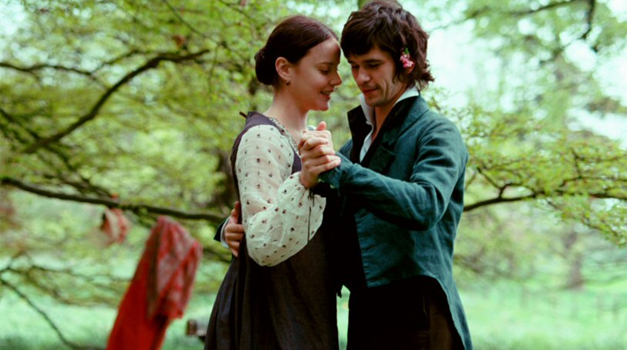
I thought it was about time I reviewed the film that placed #4 on my Top 12 Poems in Movies list. Bright Star is a film for poets and about poets, one that translates tender word to screen in the form of an intimate period piece. John Keats has never been among my favorite poets, but this film makes him more than a mere authorial name, chronicling his romance with Fanny Brawne during the final years of his short life.

Image result for bright star 2009 keats and brawne

Director and writer Jane Campion of The Piano fame was blessed with two outstanding leads in Abbie Cornish and Ben Whishaw, known as the latest Q in the James Bond franchise and as the voice of Paddington Bear. Cornish plays Brawne with some early traces of women’s lib in her attitude, proud of her fashion creations and her ability to earn a living from them. On the opposite side of the self-sufficiency spectrum is Whishaw’s Keats, whose chosen profession as a poet is decidedly unprofitable, especially when his published poem Endymion flops. The two aren’t sure that their harmless flirting should continue any further, especially when Keats’s roommate and fellow poet Charles Brown (Paul Schneider) competes with Brawne for his friend’s attention. Soon, however, their romance begins in earnest, with swooningly passionate and eventually tragic results.

The early 19th-century costumes and details are elegantly faithful to the period and somewhat reminiscent of films based on the works of Keats’s contemporary Jane Austen.  Another point of comparison might be 1998’s Shakespeare in Love, also based on a literary figure and his love affair, but whereas that film was mostly fictitious and overrated, Bright Star has a greater biographical basis and instills passion into the mundane. No sex scenes are needed to accentuate Keats’s and Brawne’s relationship; it’s in their woodland walks and love letters that their fervent affection is felt. I especially loved one symbolic part that became a microcosm of doomed romance itself, as Brawne fills her bedroom with butterflies while exulting at every letter from Keats only for disenchantment to set in as the butterflies inevitably die.

Image result for bright star 2009 keats and brawne

Bright Star holds much poetic appeal, not only by quoting many of Keats’s works but by voicing his and Brown’s opinions on the nature of poetry and the writing process. “It ought to come like leaves to a tree, or it better not come at all,” says Keats at one point. The quiet tone may be too slow and melancholy for some, but Bright Star makes the most of its poignant themes, graceful cinematography, and brilliant cast, with Cornish and Schneider especially nailing the most emotional moments. It’s not quite among my favorite films ever, but it’s an underrated gem that I’ll always be fond of and one all fans of poetry ought to see.

Best line: (John Keats) “A poem needs understanding through the senses. The point of diving into a lake is not immediately to swim to the shore but to be in the lake, to luxuriate in the sensation of water. You do not work the lake out; it is an experience beyond thought. Poetry soothes and emboldens the soul to accept the mystery.”  (Fanny Brawne) “I love mystery.”


Rank: List Runner-Up


© 2017 S.G. Liput
471 Followers and Counting


Big Eyes (2014)

12 Wednesday Apr 2017

Posted by sgliput in Movies, NaPoWriMo, Poetry, Reviews, Writing

≈ Leave a comment

Tags

Biopic, Drama, History

(Today’s NaPoWriMo prompt was for a poem featuring alliteration, one of my favorite poetic tools, which I employed with abandon.)

“She stares her sadness through my soul,”
The mother in the market said.
“This youth is yearning to be whole,”
The art collector commented.

“This portrait proves the painter’s skill,”
The masses mused with untrained eye.
“This artless amateur’s a shill,”
The critics coughed to clarify.

Like Mona Lisa’s murky mien,
Those sightly saucers still entreat,
With varied views from clerk or queen,
Depending on the eyes they meet.
________________

MPAA rating: PG-13

I’m not the biggest fan of Tim Burton and his penchant for macabre weirdness. In fact, James and the Giant Peach and Charlie and the Chocolate Factory are the only films of his that I can say I really like, and even then with reservations (Big Fish and Batman were all right too). He’s still a talented enough director that a step away from his comfort zone of weirdness could produce something to my liking, and Big Eyes is just that. It’s a Tim Burton film that proves that his style need not be synonymous with grotesque.

While they’re not as prevalent nowadays, most people have probably seen those paintings of big-eyed waifs staring mournfully ahead, but I wasn’t aware of the story of fraud behind them. Amy Adams plays Margaret Keane, who after divorcing and moving to San Francisco with her daughter, meets the incredibly charismatic Walter Keane (Christoph Waltz). After bonding a bit on their mutual love for painting, they marry, only for Walter’s promotion of Margaret’s work to reveal his looseness with the truth. While the idea of him technically “stealing” her work and claiming to be the artist seems hard to believe, it happens gradually and credibly, the result of Walter’s charm and Margaret’s timidity. It’s a lie that quickly grows out of control, with Margaret churning out new works from a secret studio and Walter becoming ever more passionate in protecting the lie. The way it plays out in the end is a testament to the truth always coming to light, and how it does is made more satisfying by the fact that it actually happened that way.

While Big Eyes is unlikely to be counted among the best films “based on a true story,” it’s solid all the way around, particularly in the casting of its two leads. Amy Adams excels in the role of a diffident artist struggling to work up her nerve, while Waltz brings the same gregarious magnetism that won him two Oscars, making Walter an amiable if unctuous fellow from the start who gets nastier with time. The mix of their two personalities makes the tale believable, and the film does give credit to Walter for his brilliant marketing strategies in disseminating the paintings. Burton presents it all in a pleasantly eccentric but straightforward style, only veering into odd territory a couple times with a hallucination had by an over-stressed Margaret. Burton obviously prefers his beloved macabre subjects, but for those like me who view them with more appreciation than enjoyment, a film like Big Eyes is a welcome change.

Best line: (Ruben, an art dealer) “Why are their eyes so big?”  (Walter) “Eyes are the windows to the soul!”


Rank: List Runner-Up


© 2017 S.G. Liput
467 Followers and Counting

Love and Mercy (2014)

10 Monday Apr 2017

Posted by sgliput in Movies, NaPoWriMo, Poetry, Reviews, Writing

≈ 2 Comments

Tags

Biopic, Drama, History, Romance

Image result for love and mercy film

(Today’s NaPoWriMo prompt was for a personal portrait of someone special, like someone who is a picture of unselfish love.)


Some people are draining and take what they can
Till you’re not sure how your acquaintance began,
But some, if you’re lucky, replace what you’ve lost
And give and love further, not counting the cost.

She’s one of those people, those angels on earth,
Who don’t get the credit or gold that they’re worth.
Where others step back in repulsion or fear,
She’ll take two steps forward, concerned and sincere.

When I was convinced I was flawed to my core,
She gave me the hope that I still could be more.
When I came to learn happiness can’t be bought,
She showed me that lonely need not be my lot.

Such lessons are simple, but we the unwise,
With no one to teach us, are quick to trust lies.
If all were like her, by such love overrun,
The clouds of this world could be scattered to sun.
__________________

MPAA rating: PG-13

It’s become something of a cliché for musical biopics to portray the rise and fall of their subjects, often lessening our opinions of them in the process, but Love and Mercy is just as concerned about its star rising again as it is about the initial fall. Brian Wilson of the Beach Boys is played by two different actors, Paul Dano as Wilson in the mid-1960s and John Cusack as his older 1980s self. Instead of depicting the two time periods one after the other, they alternate in advancing their stories of a man whose talent and success weren’t enough to conquer his demons on his own.

Both actors and storylines have their strengths. Dano does an outstanding job at representing Wilson at his most creative, tired of his usual surf music and eager to experiment on his personal pet project, which becomes 1966’s Pet Sounds. Here we get a rare look at a musician’s creative process that goes beyond just thinking up lyrics; the laborious spontaneity of the recording studio and a personal piano brainstorm of “Good Vibrations” capture the spirit of Wilson’s musical genius, which was challenged by his family and sadly marred by drugs and a wrongly diagnosed mental disorder.

Image result for love and mercy film

Beyond the artistic insights of Dano’s parts, the film’s emotional core lies in the relationship between Cusack’s older Wilson and Melinda Ledbetter (Elizabeth Banks), who meet while Wilson is under the controlling care of Dr. Eugene Landy (domineering Paul Giamatti). My VC had trouble understanding why Melinda would have any interest in Wilson, who is presented as acting strange and unstable from Landy’s overmedication. Yet that is what makes Banks and the real-life Melinda so admirable: she wasn’t a gold-digger or an opportunist like Landy. She had every reason and right to leave Wilson to his fate, but she instead became his way out and transformed his life for the better through her love and perseverance, laudably brought to life by Banks. She’s the kind of patient, positive influence that we wish for all troubled souls to find, even if they rarely do. Taking a line from Wilson himself, God only knows what he’d be without her.

Love and Mercy is marred somewhat by the psychedelic miasma of the drug scenes, which is compounded at times by the nonlinear storyline and both Brians’ odd behavior. It isn’t how I’d want all biopics to be told, but for something unique in an all-too-familiar genre, Love and Mercy harnesses the talents of its subject and its actors for an ultimately inspiring tale of professional and personal salvation.

Best line: (1980s Brian, to Melinda) “I want you to leave, but I don’t want you to leave me.”


Rank: List Runner-Up


© 2017 S.G. Liput
466 Followers and Counting


The Imitation Game (2014)

04 Tuesday Apr 2017

Posted by sgliput in Movies, NaPoWriMo, Poetry, Reviews, Writing

≈ Leave a comment

Tags

Biopic, Drama, History

Image result for the imitation game film

(Today’s NaPoWriMo prompt was to incorporate an “enigma” or something hidden into the poem, so I thought a movie about solving Enigma would be perfect. For my own secret message, try stringing together the underlined letters.)

The German Codes in safety rode
Upon the winds of radio,
And passed with ease their strategies
To Mystify the Allied foe.

Bright minds were scratched and Egos matched,
The Riddle daily taxing Brains
Who knew their best At this math Test
Could still Harm lives and Squander gains.

Unraveling this Risky thing
Was not for one man to Explain.
What Cracked And tamed the Numbers game?
A mind Combined To break the chain.
________________

MPAA rating: PG-13

Benedict Cumberbatch seems most comfortable playing the smartest guy in the room, even if he only thinks he’s the smartest guy in the room. Sherlock, Doctor Strange, etc. exemplify this, and The Imitation Game allowed him to apply that proven characterization to a real-life figure, Alan Turing, a mathematical computer pioneer who helped crack the German Enigma code during World War II.

Cumberbatch is the film’s strongest asset, channeling the same troubled-genius mentality as Russell Crowe in A Beautiful Mind, not so much in the mental health aspects as in his blinding self-confidence and difficulty working with others. His acting, as always, is beyond reproach and distinguishes Turing as a man of vision frustrated by the inflexibility of his superior (Charles Dance) but too single-minded himself to recognize the need for collaboration with the rest of his team of genius mathematicians. Keira Knightley’s Joan Clarke serves as an attractive reminder that a talent for numbers is not Turing’s alone, and it’s an insightful pleasure watching Cumberbatch engage with her and his fellow teammates to perfect his decoding machine. The espionage angle involving a major general from MI6 (Mark Strong) is also peppered with intrigue.

Image result for the imitation game film

The performances, Alexandre Desplat’s score, and the period-piece re-creations are top-notch, but the film’s historical accuracy leaves much to be desired. Many “based-on-a-true-story” movies take artistic license, but learning after the fact that most of the events of the film occurred completely differently is rather disappointing. Likewise, the film’s ultimate transition from code breaking and war strategies to a social tragedy centered on the treatment of Turing’s homosexuality lost my interest. This aspect of Turing’s life was clearly important and lamentable, but it felt tacked on and even a tad manipulative when paired with the historical liberties. The Imitation Game is handsome and well-acted and even consummate in its first half, but the dual intentions of the filmmakers to merge two kinds of stories, one about war decoders and one about social injustice, feel like a forced fit that doesn’t live up to its early promise.

Best line: (Turing’s childhood friend Christopher, and later Joan) “Sometimes it’s the very people who no one imagines anything of who do the things no one can imagine.”


Rank: Honorable Mention


© 2017 S.G. Liput
461 Followers and Counting


Catch Me If You Can (2002)

01 Saturday Apr 2017

Posted by sgliput in Movies, NaPoWriMo, Poetry, Reviews, Writing

≈ 6 Comments

Tags

Biopic, Comedy, Drama

Image result for catch me if you can 2002

(For Day 1 of NaPoWriMo, the prompt was to write a poem in the style of former U.S. Poet Laureate Kay Ryan, which might be summed up as short lines, tight rhymes, and deep thoughts.)


The urge to run,
To risk and dare
With the nerve to splurge
Is a powerful one.
Why stay put
With an itchy foot
When fun is
To be had out there?
A still life is fine,
Nothing bad, no offense,
But I swear
Between me
And life checked by design,
The difference
Is the same
Between watching a film
And a frame.
___________________

MPAA rating: PG-13

Back when Leonardo DiCaprio still had his Jack Dawson boyishness about him, he starred in Catch Me If You Can, Steven Spielberg’s con artist lark based on real life forger Frank Abagnale. This story of a man who impersonated an airline pilot, a doctor, and a lawyer and stole millions of dollars back in the 1960s isn’t nearly as heavy as the actual consequences of those actions, but Spielberg hits a good mix of tone and style.

Image result for catch me if you can 2002 walken

The trickiest part of this kind of story was making Frank likable enough for the audience to sympathize with him, despite the wanton fraud he commits, and it’s done rather effortlessly by DiCaprio’s natural appeal and a look into his childhood. Following the example of his cajoling father (Christopher Walken), Frank enjoys misrepresenting himself and pushes to see how far his fibs can go, especially after his family is torn apart by financial trouble and divorce. Once he runs away, he becomes a master of forging checks and bluffing his way through any obstruction; his schemes soon catch the notice of FBI agent Carl Hanratty (Tom Hanks, less likable than usual), and the chase is on.

Catch Me If You Can presents its subject with some subtle skill. On the one hand, there’s the risky romance of Frank pushing every boundary he can, fueled by the thrill of the chase and an unwillingness to give up. Plus, it’s just fascinating to watch feats of duplicity from the ‘60s that I doubt anyone could get away with nowadays. Yet at the same time, Frank is something of a tragic figure as well, deprived of a normal family or love life. His early failed fraud attempts show he’s a fallible kid who simply got better with practice, and at the end of the day, he can’t escape the loneliness of his rootless impostor existence, especially when the only person you have to call on Christmas Eve is the FBI agent hunting you.

As well as it handles its subject matter, the film can’t quite escape the fact that its protagonist is a criminal, an objection that is probably personal on my part since I’ve never been a fan of heist films. It’s entertaining to watch his devil-may-care adventures, but it’s still wrong, especially how he dumps a would-be fiancée (very young Amy Adams) for the sake of escape, an offense the film never revisits. Thankfully, the final ten minutes or so vastly improve and redeem the true-crime narrative by utilizing Frank’s experience and attention to detail and bringing some constructive good out of it all.

Image result for catch me if you can 2002

Spielberg’s version of events apparently changes some aspects of the history, but the real Abagnale didn’t mind the embellishments (which isn’t surprising) and approved of the finished film. Catch Me If You Can serves as an entertaining outlet for Spielberg, Hanks, and especially DiCaprio and Walken, and while it proves crime can pay in the end, the life of a fraud can be deeper than it looks.

Best line: (Frank, finally telling the truth) “Brenda, I don’t want to lie to you anymore. All right? I’m not a doctor. I never went to medical school. I’m not a lawyer, or a Harvard graduate, or a Lutheran. Brenda, I ran away from home a year and a half ago when I was 16.”   (Brenda) “Frank? Frank? You’re not a Lutheran?”


Rank: List Runner-Up


© 2017 S.G. Liput
460 Followers and Counting


Lion (2016)

15 Wednesday Mar 2017

Posted by sgliput in Movies, Poetry, Reviews, Writing

≈ Leave a comment

Tags

Biopic, Drama, Meet 'em and Move on

I saw a young boy among beggars,
A large metal spoon in his fist.
He’d found it somewhere
In a state of despair,
Too terribly lost to be missed.

I sipped at my soup in the window,
Entranced by his curious stare.
With a ravenous look,
Every mouthful I took
He mimicked and sipped at the air.

I could have just smiled and left then,
Averted my eyes toward the door,
But I gazed at this boy
With a spoon for a toy
As if he’d never used one before.

While others passed by the poor beggars,
I crossed the street, frenzied and thronged.
Soon at the boy’s side
At the turn of his tide,
I helped him find where he belonged.
__________________

MPAA rating: PG-13

So this is why one of the first things my parents taught me to memorize was our home address! Lion may have been overshadowed by the more prestigious Best Picture nominees, but it’s an outstanding film and one likely to leave viewers reaching for the tissues by the end. Directed by debuting director Garth Davis, it is based on the true-life story of Saroo Brierley, following him from a lost boy in India to his adoptive home in Australia and back.

Young Sunny Pawar portrays Saroo as a five-year-old, who resides in a small town in India, where his mother, sister, and elder brother Guddu (Abhishek Bharate) eke out a poor but happy life. When Guddu unwisely brings Saroo along for a job near a train station, Saroo accidentally ends up trapped on a train, hurtling away from home for miles before arriving at a foreign place where he can’t even speak the local dialect. It’s utterly upsetting for the boy and similarly disorienting for the audience as Saroo calls pitifully for help that never comes. From then on, his life becomes a series of rude awakenings; every time he falls asleep, he awakes to some new danger or peculiarity, and only the kindness of strangers leads him to a chance at happiness with the Brierleys (Nicole Kidman and David Wenham) in Australia.

Once Saroo grows up into Oscar nominee Dev Patel, the film loses some steam, focusing on his self-destructive relationship with his girlfriend (Rooney Mara) and his online pursuit of his original family. It’s hard to make a Google Earth search compelling, but the film does its best, and the end result of Saroo’s quest is undoubtedly worth it. As good as Patel is, the brightest point of the second half, aside from the ending, is Nicole Kidman as his adoptive mother Sue, the kind of patient and loving parent every lost child deserves. It’s understandable that Saroo initially feels guilty about searching for his first home, afraid to seem ungrateful for Sue’s affections, but their scenes together capture the sensitive and unconstrained bond between mother and son.

There’s more than just the acting to praise, though. For example, the score by Dustin O’Halloran and Hauschka is gorgeous and perfectly enhances the emotion of the film. The artistry also extends to the cinematography, which is lush and vivid, especially the overhead landscape shots that show off the natural beauty of both India and Australia.

While I did get a bit misty-eyed, the end didn’t quite bring me to tears, though that’s more on me than the film since I heard a few sniffles in the theater. My VC hasn’t seen it yet, but I suspect she’ll have a stronger reaction than I, especially since she always bawls at the end of tearjerkers like The Color Purple. Perhaps one reason I particularly enjoyed Lion is that it fits into my beloved, self-titled genre of the “Meet-‘Em-and-Move-On movie,” which follows a character through various acquaintances and ends with a reunion. (For further clarification, I compiled a list of my favorites.) It’s this kind of film that packs the strongest emotional punch for me, and it’s been a while since such a film was made to Oscar caliber. The source of its title may not be apparent at first, but Lion is a tribute to the transformative power of adoption and a poignant journey of a film not to be overlooked.

Best line: (Sue Brierley, to Saroo) “Because we both felt as if… the world has enough people in it. Have a child, couldn’t guarantee it will make anything better. But to take a child that’s suffering like you boys were. Give you a chance in the world. That’s something.”

Rank: List-Worthy

© 2017 S.G. Liput
453 Followers and Counting
Hidden Figures (2016)

13 Monday Feb 2017

Posted by sgliput in Movies, Poetry, Reviews, Writing

≈ 2 Comments

Tags

Biopic, Drama, Family, History

Image result for hidden figures film


The chronicles of history are filled with famous names,
Who’ve earned our generation’s praise or bear their age’s shames.
We think we know the few worthwhile players of the past,
And yet the world was shaped by more than names we learned in class.

Behind each role we’re tested on and public figure known
Were men and women, making crucial impacts of their own.
Perhaps they knew obscurity would be their likely end,
But history’s more hidden tales are those to recommend.
__________________

MPAA rating: PG

I’m honestly amazed that I did not already know the story of Katherine Johnson and her fellow black female compatriots at NASA. I remember noticing a theater display for Hidden Figures on my way out of watching Rogue One and thinking, “Oh, NASA—that might be interesting.” The same day I saw an episode of Timeless that featured Katherine Johnson as the historical figure of the week. That’s when I did some research and knew this was a film I had to see, which I finally did with my mom.

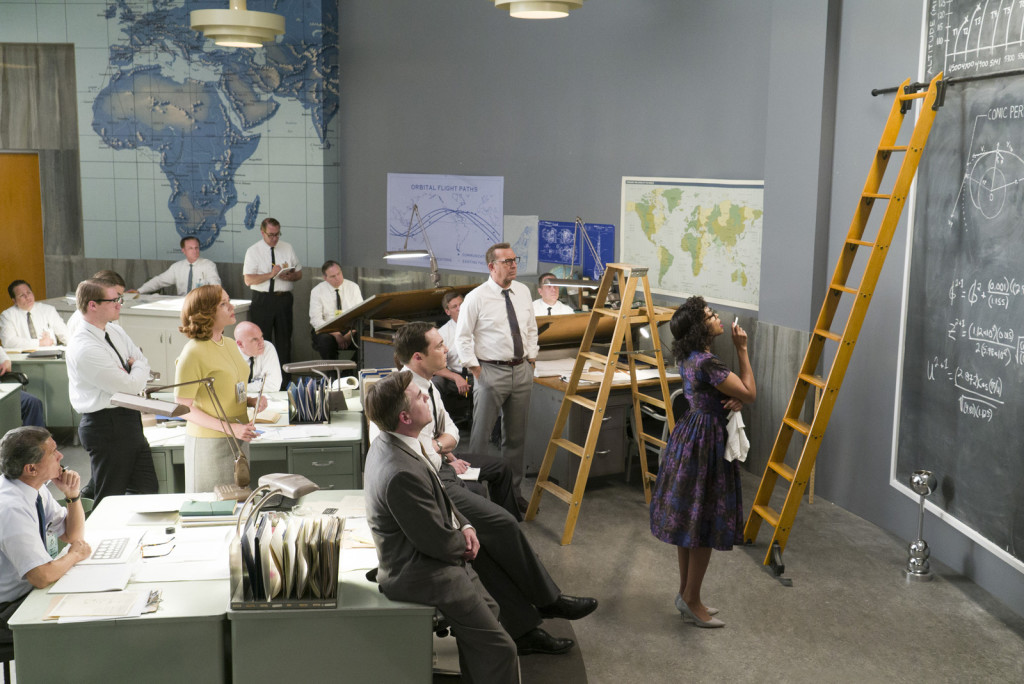
She used to work at Kennedy Space Center during the early Space Shuttle launches, and my grandfather was involved at a relatively high level in the Mercury, Gemini, Apollo, and Shuttle missions, so the space program means a lot to our family. Which makes it all the more astonishing that neither I nor my mom had ever heard of these “hidden figures,” who calculated trajectories and landing coordinates even better than their white, male coworkers. Taraji P. Henson plays Katherine Goble (eventually Johnson), whose knack for algebra earns her the role of “computer” for the Space Task Group, a thankless job of number-crunching with more than a little prejudice aimed her way. Also working at Virginia’s Langley Research Center are Mary Jackson (Janelle Monáe), who strives for the right to be an engineer, and Dorothy Vaughn (Oscar nominee Octavia Spencer), who seeks the elusive title of supervisor over her team of black female computers. In addition to the talented cast of African Americans, including Mahershala Ali as well, Kevin Costner delivers an excellent supporting role as Katherine’s no-nonsense boss who refuses to let bigotry impede the mission at hand. (I rather wish Costner had gotten a Supporting Actor nomination; Ed Harris did for Apollo 13, and there’s nothing Harris did that Costner doesn’t do just as well.)

Image result for hidden figures kevin costner film

I expected to love Hidden Figures going in, with its inspiring role models and old-fashioned enlightenment of unsung history, and I did, perhaps not quite as much as I expected but not in any disappointing way. I felt that the racism early on was a bit heavy-handed, with entire rooms of white men staring at Katherine as if she had two heads, yet I wouldn’t be surprised if that was indeed how it was. Likewise, there are many historical liberties taken for the sake of the story, whether it be composite characters created to get points across or details streamlined to simplify the story. For instance, Costner is made to look like he’s running Mission Control, but he’s at Langley, not Houston. Yet, for the most part, I didn’t mind the license taken, since it served the story to no historical detriment. (There are some interesting true-to-life details thrown in, though, such as the flooring material that snags Mary Jackson’s high heel; my mom can attest to that annoyance.) I also don’t agree with the few complaints I’ve heard about the film’s predictable underdog conventions; when it’s done right, it makes for a great movie, and it’s never been done with these characters and this particular slice of history. For the record, my mom absolutely loved it, except maybe for some of the semi-repetitive soundtrack from Pharrell Williams.

Hidden Figures is a film I believe all African Americans, all women, and everyone else for that matter ought to see. Beyond being an entertaining true story, it’s a film rife with positive messages, both obvious and subtle. Mary Jackson and Dorothy Vaughan may be bitter about their superiors’ scorn, but they don’t take it lying down. Dorothy herself tells Mary not to complain but to do something about it. It’s a court plea in Mary’s case, while Dorothy shows incredible foresight in noticing the incoming IBM meant to replace her human computers and becoming an expert in computer coding to make herself and her team valuable. Her visit to the library is backdropped by a street protest, and while the protest clearly got more attention at the time, it’s her attempts at personal betterment that are more laudable.

Image result for hidden figures film

While Hidden Figures may follow familiar story beats, it’s a marvelously acted feel-good film that ennobles intelligence and mathematics and casts a long overdue spotlight on the unrecognized heroines of NASA. Even if the initial reactions of their biased coworkers can be frustrating, the talent and intellect they displayed are undeniable, as is the satisfaction of seeing it vindicated. They served their nation well, and there was no color-coding to the worry and interest directed at sending Americans into space, evident from black and white families both anxiously watching John Glenn’s historic flight. At our present point in history, what could be more inspiring?

Best line: (Katherine, responding to being underestimated) “I will have you know, I was the first Negro female student at West Virginia University Graduate School. On any given day, I analyze the binomial levels of air displacement, friction, and velocity. And compute over ten thousand calculations by cosine, square root, and lately analytic geometry. By hand. There are twenty bright, highly capable Negro women in the West Computing Group, and we’re proud to be doing our part for the country. So yes, they let women do some things at NASA, Mr. Johnson. And it’s not because we wear skirts. It’s because we wear glasses. Have a good day.”


Rank: List-Worthy


© 2017 S.G. Liput
451 Followers and Counting


My Name Is Bill W. (1989)

21 Wednesday Dec 2016

Posted by sgliput in Movies, Poetry, Reviews, TV, Writing

≈ Leave a comment

Tags

Biopic, Drama, History

Image result for my name is bill w. 1989


Although I sit in the cabinet,
I shall not stay for long.
My contents undeniably tempts
My owner with its song.
Its call is far too strong.

Though some can sip with a managed lip,
A few can’t get enough.
No need to think when an amber drink
Can smooth life when it’s rough.
One swig, and “That’s the stuff!”

I’ve been his friend for years on end;
He’s rarely missed a day.
This latest trick, I hope, won’t stick,
Or I may fade away.
I’m lonely since A.A.
____________________

MPAA rating: TV movie (should be PG)

Back in 1986, James Woods and James Garner starred in a Hallmark Hall of Fame movie called Promise, a tale of an older brother (Garner) who must come to terms with caring for his schizophrenic sibling (Woods). While the acting is phenomenal and it remains one of the most celebrated TV movies ever with Emmys, Golden Globes, and a Peabody to its name, it fell short of greatness for me thanks to a downer of an ending. Three years later, Woods and Garner teamed up again in this other Hallmark Hall of Fame member titled My Name Is Bill W., and what was apparently intended as a reunion turned out to be even better than their original collaboration.

My Name Is Bill W. is the story of the founders of Alcoholics Anonymous, particularly Bill Wilson (Woods), who begins as a happy husband with great business aspirations in the stock market. Over the years after World War I, he schmoozes investors and stock opportunities to work his way up the ladder of success, all with drink in hand. The habit of a few drinks to loosen lips and pocketbooks quickly becomes a lifestyle for him, much to the dismay of his faithful wife (JoBeth Williams), and he soon starts to spiral into alcoholism. It’s difficult to watch a man willingly destroy his life, but at least we have the promise of a revelation, one which unites Wilson and fellow drunk Bob Smith (Garner) into a dynamic duo dedicated to supporting alcoholics everywhere in need of hope.


Image result for my name is bill w. film

Both main actors are in top form, with JoBeth Williams being an extra surprising standout as Wilson’s long-suffering wife, and other strong roles go to Gary Sinise and George Coe. With the inebriated mistakes and desperation he pulls off so convincingly, it’s no wonder that Woods won an Emmy, just as he did for Promise three years earlier, though it’s sad that Garner didn’t win for either.

Above all, the film warns against the dangers of overdrinking, not by demonizing alcohol itself but reminding us that some people simply lack the self-control of others, whether it be “a disease” as one doctor states in the film or a psychological addiction. It’s clear from Bill Wilson’s life that oftentimes a desperate man can only pick himself up after hitting his lowest point, but his story serves as a caution for anyone who refuses to listen to the love and advice of their friends and family. What might have been a tragedy thankfully turned out to be an inspiration because, for Bill Wilson, a man whose life was ruled by alcohol both in its excess and its absence, success didn’t simply involve dragging himself out of the gutter, but helping others to do the same.

Best line: (Bill) “It’s like any journey, Fred. It begins with the first step.”


Rank: List-Worthy


© 2016 S.G. Liput
437 Followers and Counting

 

Newer posts →

Recent Posts

  • We Didn’t Start 2025 (Recap)
  • NaPoWriMo 2025 Recap (Finally)
  • Sonic the Hedgehog 3 (2024)
  • It Happened One Night (1934)
  • Spellbound (2024)

Recent Comments

associatesofshellymann's avatarassociatesofshellyma… on My Top Twelve La La La So…
Kit's avatarKit Nichols on Bonnie and Clyde (1967)
lifelessons's avatarlifelessons on Look Back (2024)
Carol Jackson's avatarCarol Jackson on The Thief of Bagdad (1940…
Stephen's avatarStephen on Love Story (1970)

Archives

  • January 2026
  • December 2025
  • May 2025
  • April 2025
  • March 2025
  • February 2025
  • January 2025
  • December 2024
  • May 2024
  • April 2024
  • March 2024
  • February 2024
  • January 2024
  • December 2023
  • November 2023
  • October 2023
  • September 2023
  • July 2023
  • June 2023
  • May 2023
  • April 2023
  • March 2023
  • February 2023
  • January 2023
  • December 2022
  • November 2022
  • October 2022
  • September 2022
  • August 2022
  • July 2022
  • June 2022
  • May 2022
  • April 2022
  • March 2022
  • February 2022
  • January 2022
  • December 2021
  • November 2021
  • October 2021
  • September 2021
  • August 2021
  • July 2021
  • June 2021
  • May 2021
  • April 2021
  • March 2021
  • February 2021
  • January 2021
  • December 2020
  • November 2020
  • October 2020
  • September 2020
  • August 2020
  • July 2020
  • June 2020
  • May 2020
  • April 2020
  • March 2020
  • February 2020
  • January 2020
  • December 2019
  • November 2019
  • October 2019
  • September 2019
  • August 2019
  • July 2019
  • June 2019
  • May 2019
  • April 2019
  • March 2019
  • February 2019
  • January 2019
  • December 2018
  • November 2018
  • October 2018
  • September 2018
  • August 2018
  • July 2018
  • June 2018
  • May 2018
  • April 2018
  • March 2018
  • February 2018
  • January 2018
  • December 2017
  • November 2017
  • October 2017
  • September 2017
  • August 2017
  • July 2017
  • June 2017
  • May 2017
  • April 2017
  • March 2017
  • February 2017
  • January 2017
  • December 2016
  • November 2016
  • October 2016
  • September 2016
  • August 2016
  • July 2016
  • June 2016
  • May 2016
  • April 2016
  • March 2016
  • February 2016
  • January 2016
  • December 2015
  • November 2015
  • October 2015
  • September 2015
  • August 2015
  • July 2015
  • June 2015
  • May 2015
  • April 2015
  • March 2015
  • February 2015
  • January 2015
  • December 2014
  • November 2014
  • October 2014
  • September 2014
  • August 2014
  • July 2014
  • June 2014
  • May 2014
  • April 2014
  • March 2014
  • February 2014
  • January 2014
  • December 2013

Categories

  • Blindspot
  • Blogathon
  • Christian
  • Movies
  • Music
  • NaPoWriMo
  • Poetry
  • Reviews
  • TV
  • Writing

Meta

  • Create account
  • Log in
  • Entries feed
  • Comments feed
  • WordPress.com

Recent Posts

  • We Didn’t Start 2025 (Recap)
  • NaPoWriMo 2025 Recap (Finally)
  • Sonic the Hedgehog 3 (2024)
  • It Happened One Night (1934)
  • Spellbound (2024)

Recent Comments

associatesofshellymann's avatarassociatesofshellyma… on My Top Twelve La La La So…
Kit's avatarKit Nichols on Bonnie and Clyde (1967)
lifelessons's avatarlifelessons on Look Back (2024)
Carol Jackson's avatarCarol Jackson on The Thief of Bagdad (1940…
Stephen's avatarStephen on Love Story (1970)

Archives

  • January 2026
  • December 2025
  • May 2025
  • April 2025
  • March 2025
  • February 2025
  • January 2025
  • December 2024
  • May 2024
  • April 2024
  • March 2024
  • February 2024
  • January 2024
  • December 2023
  • November 2023
  • October 2023
  • September 2023
  • July 2023
  • June 2023
  • May 2023
  • April 2023
  • March 2023
  • February 2023
  • January 2023
  • December 2022
  • November 2022
  • October 2022
  • September 2022
  • August 2022
  • July 2022
  • June 2022
  • May 2022
  • April 2022
  • March 2022
  • February 2022
  • January 2022
  • December 2021
  • November 2021
  • October 2021
  • September 2021
  • August 2021
  • July 2021
  • June 2021
  • May 2021
  • April 2021
  • March 2021
  • February 2021
  • January 2021
  • December 2020
  • November 2020
  • October 2020
  • September 2020
  • August 2020
  • July 2020
  • June 2020
  • May 2020
  • April 2020
  • March 2020
  • February 2020
  • January 2020
  • December 2019
  • November 2019
  • October 2019
  • September 2019
  • August 2019
  • July 2019
  • June 2019
  • May 2019
  • April 2019
  • March 2019
  • February 2019
  • January 2019
  • December 2018
  • November 2018
  • October 2018
  • September 2018
  • August 2018
  • July 2018
  • June 2018
  • May 2018
  • April 2018
  • March 2018
  • February 2018
  • January 2018
  • December 2017
  • November 2017
  • October 2017
  • September 2017
  • August 2017
  • July 2017
  • June 2017
  • May 2017
  • April 2017
  • March 2017
  • February 2017
  • January 2017
  • December 2016
  • November 2016
  • October 2016
  • September 2016
  • August 2016
  • July 2016
  • June 2016
  • May 2016
  • April 2016
  • March 2016
  • February 2016
  • January 2016
  • December 2015
  • November 2015
  • October 2015
  • September 2015
  • August 2015
  • July 2015
  • June 2015
  • May 2015
  • April 2015
  • March 2015
  • February 2015
  • January 2015
  • December 2014
  • November 2014
  • October 2014
  • September 2014
  • August 2014
  • July 2014
  • June 2014
  • May 2014
  • April 2014
  • March 2014
  • February 2014
  • January 2014
  • December 2013

Categories

  • Blindspot
  • Blogathon
  • Christian
  • Movies
  • Music
  • NaPoWriMo
  • Poetry
  • Reviews
  • TV
  • Writing

Meta

  • Create account
  • Log in
  • Entries feed
  • Comments feed
  • WordPress.com

Blog at WordPress.com.

Is this your new site? Log in to activate admin features and dismiss this message
Log In
  • Subscribe Subscribed
    • Rhyme and Reason
    • Join 814 other subscribers
    • Already have a WordPress.com account? Log in now.
    • Rhyme and Reason
    • Subscribe Subscribed
    • Sign up
    • Log in
    • Report this content
    • View site in Reader
    • Manage subscriptions
    • Collapse this bar