• Home
  • About Me
  • The List
  • THE LIST (2016 Update)
  • THE LIST (2017 Update)
  • THE LIST (2018 Update)
  • THE LIST (2019 Update)
  • THE LIST (2020 Update)
  • THE LIST (2021 Update)
  • THE LIST (2022 Update)
  • Top Twelves and More
  • The End Credits Song Hall of Fame

Rhyme and Reason

~ Poetry Meets Film Reviews

Rhyme and Reason

Tag Archives: Animation

Ralph Breaks the Internet (2018)

27 Saturday Apr 2019

Posted by sgliput in Movies, NaPoWriMo, Poetry, Reviews, Writing

≈ Leave a comment

Tags

Animation, Comedy, Disney, Family, Fantasy

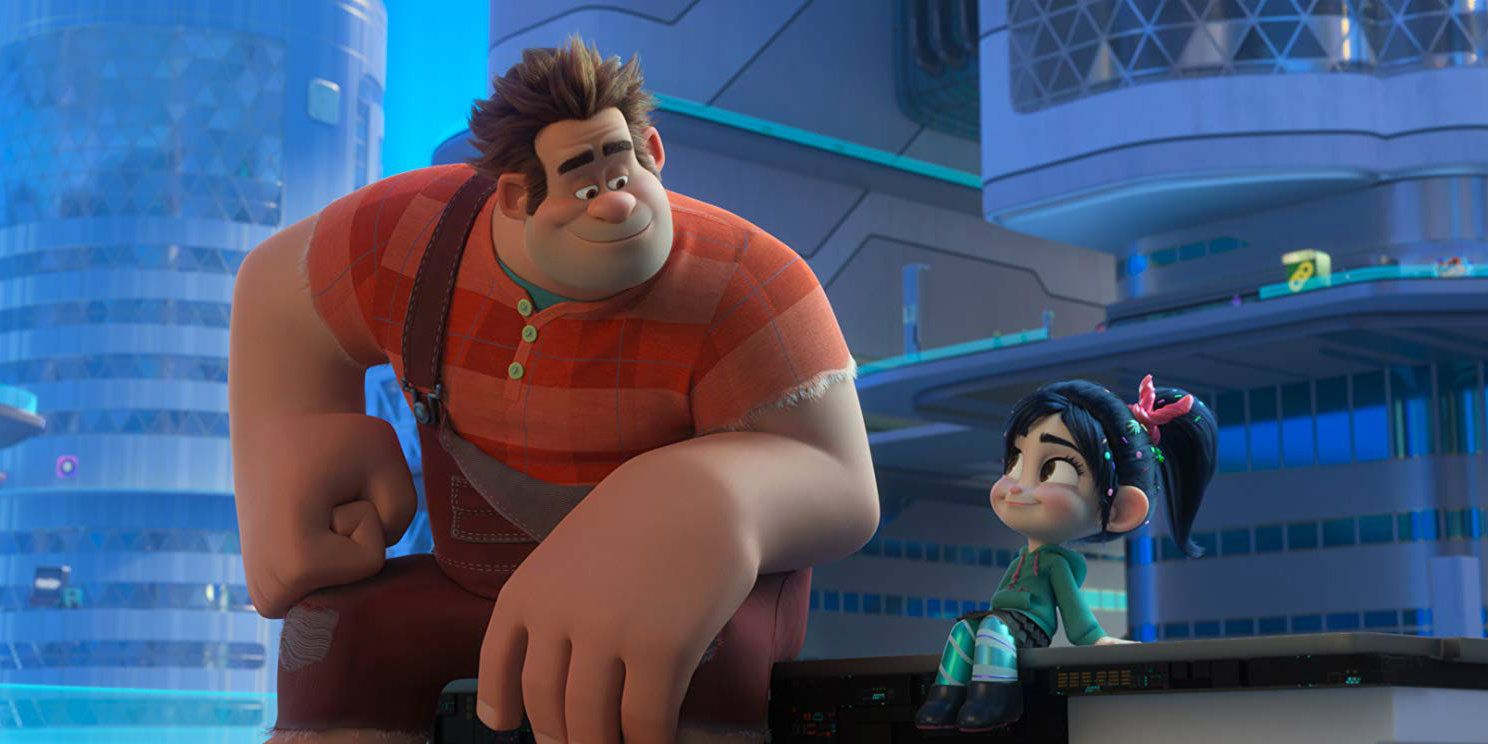
(Today’s NaPoWriMo prompt was for a remix of a Shakespearean sonnet, so I took some inspiration from the theme and first line of Sonnet 141, mixed in to fit a friendship theme of this film.)
See the source image

In faith, I do not love you with my eyes;
You’re not the most appealing sight, you know.
Your voice can grate; you’re anything but wise;
And every chance you get, you tend to blow.
I’m not your friend for mere appearance’ sake;
If so, I would have bolted long ago.
And yet you’re first in mind when I awake
And last to fade beneath my sleep’s shadow.
It’s true to most our pairing seems bizarre,
So different by the judgment of the crowd,
Yet you as friend are dearer still by far
Than what the world approves or not out loud.
I dread the day you tire of our bond,
For I can see no life for me beyond.
___________________

MPAA rating:  PG

It’s hard to believe that Disney has resisted sequelizing its own animated films for so long. Sure, they’ve churned out plenty of substandard sequels through their separate animation subsidiaries, but Ralph Breaks the Internet is the first sequel since Rescuers Down Under to be included among Disney Animation’s official canon. Of course, this year’s Frozen 2 suggests a continuation of the sequel trend, but I was glad to find that Ralph Breaks the Internet was a funny and worthwhile continuation of the first film.
See the source image

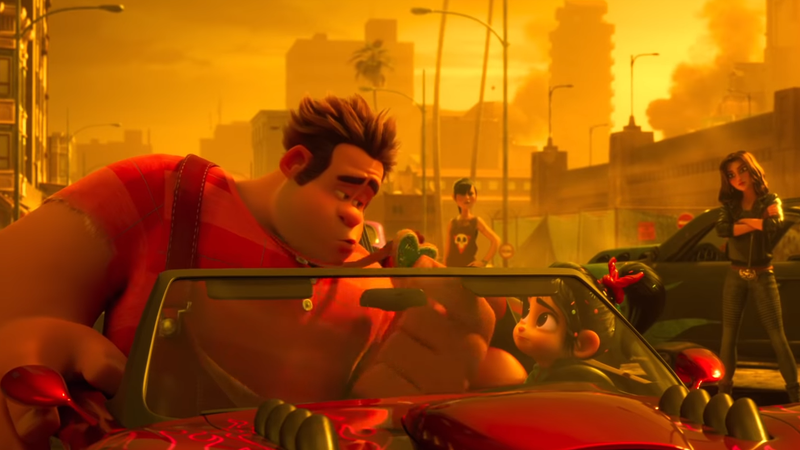
Some have called it a Toy Story rip-off, but I still think 2012’s Wreck-It Ralph had one of the most imaginative premises of any Disney film. Ralph’s quest to be a hero may have been basic motivation, but the inventiveness of the visuals and world-building was delightful. Not surprisingly, Ralph Breaks the Internet continues that visual innovation, taking Ralph (John C. Reilly) and his best friend, the semi-annoying cart-racing princess Vanellope (Sarah Silverman), outside their arcade home and into the wide and wondrous world of the Internet, visualized as a bustling cityscape of possibilities. The same voice actors thankfully return to deepen their character’s bonds, along with the welcome new voices of Gal Gadot, Bill Hader, and Taraji P. Henson.

While Wreck-It Ralph was certainly successful, it did have some detractors who didn’t entirely buy into the story, my VC among them. Yet one thing I noticed from some critical and blogger reviews was that those who didn’t care for the first film somehow liked the second one better. Sure enough, my VC enjoyed herself with it, and I’m still trying to puzzle out why this one and not the other. I suppose it’s partially that she has never been into gaming, while her familiarity with the Internet helped her understand and enjoy the sequel’s many jokes aimed at online culture, from the intrusion of pop-up ads to the absurd allure of YouTube stardom (or BuzzTube in the film). Oh, and let’s not forget the brilliant cameos of other Disney properties, most notably the Disney Princess lineup, all but three voiced by their original actresses. Sure, it smacks of Disney showing off everything they own, but it left me with a nerdy grin in the same way Ready Player One’s mashup of pop culture did.

Beyond the jokes and setting, Ralph Breaks the Internet is different from most other animated flicks of recent years, in that its conflict is much more internal and emotional than your basic defeat-the-villain climax. Ralph’s friendship with Vanellope is first and foremost, and his own insecurity provides fuel for the finale. It’s hard to say the resolution is subtle, when it’s taken to massive, ridiculously metaphorical heights, but it’s uniquely relatable to anyone who’s been reluctant to lose a friend.

See the source image

It’s hard to say how Ralph Breaks the Internet will age, with so many of its meme-y jokes and sub-themes based in current Internet culture, which seems to change on a weekly basis. Future generations may roll their eyes at its potential datedness, but for me here and now, it was a whimsical, stunningly animated delight just like the first film. I would have liked a bit more of Fix-It Felix and Calhoun, who are basically cameos, but Ralph and Vanellope provide a sweeter conclusion than I would have guessed from a film about video game characters. (By the way, it has possibly my favorite post-credits scene ever. I guess I’m a sucker for certain memes.)


Rank: List-Worthy (joining the first film)


© 2019 S.G. Liput
627 Followers and Counting


Isle of Dogs (2018)

14 Sunday Apr 2019

Posted by sgliput in Movies, NaPoWriMo, Poetry, Reviews, Writing

≈ 3 Comments

Tags

Animation, Comedy, Sci-fi

(Today’s NaPoWriMo prompt was for a poem using homonyms or the confusion common to the English language, so, taking my cue from cleverly homophonic film title, I tried to apply it instead to the language of dogs.)

See the source image

The language of dogs is a curious tongue.
It cannot be written and cannot be sung.

A “ruff” isn’t “rough” or the variant “roof”;
It’s “Give me a biscuit! I’m not hunger-proof.”

A “bark” isn’t something that grows from a tree.
It’s “Take me outside or else give me a key.”

A “whine” isn’t alcohol people can pour;
It’s “Don’t look at me; it’s that cat from next door.”

A “yelp” doesn’t reference a restaurant review.
It’s “Help! I’ve run out of apparel to chew.”

And woof, yap, and yip have no clear homonym.
So when your dog says them, you’ll have to ask him.
____________________

MPAA rating: PG-13

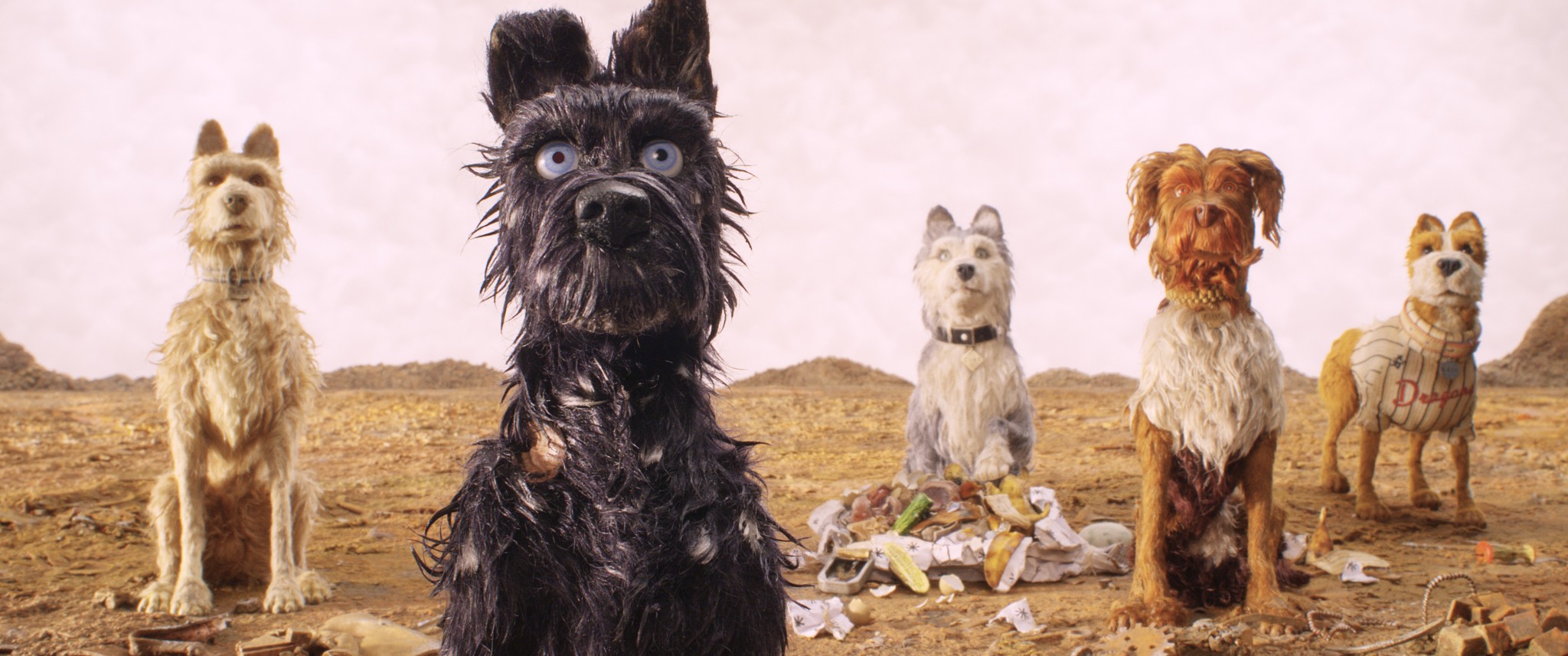
A Wes Anderson expert I am not, but I could tell from the two films of his that I’d seen in full (Rushmore and Fantastic Mr. Fox) that he’s an acquired taste I wasn’t sure I cared to acquire. It’s hard to compare the works of this king of quirk with more traditional cinematic style, but Isle of Dogs has an enjoyably straightforward plot couched among Anderson’s typical flashbacks, symmetrical designs, and camera-facing monologues.

First of all, I love the play on words with Isle of Dogs sounding like “I love dogs” (by the way, that’s the name of an actual district in London), and indeed a love of dogs plays a big part in the movie. In a near-future Japan, an outbreak of disease has led to all dogs of Megasaki City being quarantined on a nearby island. A young boy named Atari, the ward of the dog-hating mayor, goes there in search of his own dog and journeys with a colorful band of alpha dogs, with nation-changing results.

See the source image

One thing I can definitely say for Isle of Dogs and all of Anderson’s films is that they’re clearly labors of love. Stop-motion animation takes unparalleled patience and attention to detail, and the animation quality and fluidity rival that of Laika (the gold standard studio for stop-motion, see Kubo and the Two Strings, Coraline, etc.), with set design made even more laudable by its miniature size. On top of that, the storyline, broken into chapters like a storybook, is buoyed by the bond between Atari and man’s best friend, finding surprising sweetness alongside the not-too-distracting idiosyncrasies.

Something my VC didn’t care for was how the dogs speak English but the language of the Japanese characters is not rendered in English, though it often is translated through electronic or human means. I took it as simply a creative choice, which worked best with Atari’s interactions with the dogs, since we never know how much dogs actually understand our words. Because of this, the dogs get the bulk of the dialogue, and Anderson collected an outstanding voice cast, including Bill Murray, Bryan Cranston, Jeff Goldblum, Edward Norton, Scarlett Johansson, Liev Schreiber, and even a cameo from Yoko Ono.

See the source image

Isle of Dogs is a little more mature than most animated films these days, with some darker-than-expected story elements, some of which are relieved by the droll humor and a clever twist or two. But for older kids, dog lovers, and fans of stop-motion, Isle of Dogs is an unconventional treat and certainly the best Wes Anderson film I’ve seen. Maybe next he’ll do a Christmas spin-off called Yule of Dogs.

Best line: (Nutmeg) “Will you help him, the little pilot?”
(Chief) “Why should I?”
(Nutmeg) “Because he’s a twelve-year-old boy. Dogs love those.”


Rank: List Runner-Up


© 2019 S.G. Liput
625 Followers and Counting


Mary and the Witch’s Flower (2017)

21 Thursday Feb 2019

Posted by sgliput in Movies, Poetry, Reviews, Writing

≈ Leave a comment

Tags

Animation, Anime, Family, Fantasy

See the source image

In the deep glades of the forest
Where we humans rarely dare
Grows a flower raised on rumor
No one really thinks is there.

In this flower dwells a power,
Magic purely legend-born,
Waiting for some wanderer
To chance upon this plant forlorn.

When this power leaves its petals,
Gift for better or for worse,
Its new owner must decide
If it’s a blessing or a curse.
__________________

MPAA rating: PG

I know I was not the only person to be bitterly disappointed when Studio Ghibli announced its hiatus, which has since been reversed with Hayao Miyazaki again coming out of retirement for one more film. Even if that last film really is their last, though, there is hope yet that its imaginative spirit will live on in Studio Ponoc, a new animation studio founded by former members of Ghibli. Carrying on the legacy, Hiromasa Yonebayashi, previously director of Ghibli’s The Secret World of Arrietty and When Marnie Was There, brings much of the old Miyazaki-style magic to Studio Ponoc’s first feature, Mary and the Witch’s Flower.

See the source image

Based off a 1971 children’s book called The Little Broomstick by Mary Stewart, Mary and the Witch’s Flower follows a young British girl who discovers a mysterious flower in the woods, which grants her temporary magical powers and allows her to visit the prestigious Endor College for witches, where the magical faculty are up to no good. Beyond the very similar art style, the film draws enormous inspiration from the catalog of Studio Ghibli, as any fan of Kiki’s Delivery Service, Castle in the Sky, Spirited Away, or Howl’s Moving Castle will easily tell. It’s not just the plucky young heroine either; individual scenes are clearly echoed as well, from broomstick-riding with a black cat to climbing up the roots of a giant tree. Yet for everything it borrows, Mary and the Witch’s Flower also feels of a piece with those classics, like a respectful grandchild.

Speaking of which, there’s something refreshing about the difference between this kind of Ghibli fare and western animation. Whereas most western cartoons paint adults as either jerks or fools, the Japanese esteem for elders shines through in the respect Mary shows her grandmother. This reflects the overall gentleness of the story, again another Ghibli trait. Despite an adventurous plot involving high-flying brooms and animal experimentation, Mary lacks depth and sometimes comes off a tad too genteel, in a way with which not all adults will connect.

See the source image

Gorgeously animated, Mary and the Witch’s Flower is too derivative to compare with Ghibli at its best, but it’s a lovely film nonetheless, with enough affectionate detail and colorful whimsy to satisfy fans of the films it emulates. No doubt kids who grow up watching this movie will feel the same way about it years from now that many feel about Kiki or Arrietty. It’s certainly a sign of promise for Studio Ponoc’s future.


Rank: List Runner-Up


© 2019 S.G. Liput
607 Followers and Counting


Spider-Man: Into the Spider-Verse (2018)

11 Friday Jan 2019

Posted by sgliput in Movies, Poetry, Reviews, Writing

≈ 2 Comments

Tags

Action, Animation, Comedy, Family, Superhero

See the source image

The universe is vast and grand
And larger than we can explore,
Yet what if there were more than one
With possibilities galore.

In one dimension, you might be
Reclining underneath a tree.
In one, you’re driving;
One, in bed;
In one, surviving;
One, you’re dead.
In one, you may be ten feet tall
Or climbing up a building wall.
In one, your hair is blond or red;
Another, you have none at all.

You might be human or a fish
Or living in a Petri dish,
Or made of metal, made of wood;
You might be evil, might be good;
You might be famous or obscure,
Or wearing tentacles or fur.

Who knows what new alternative
Beyond dimension walls might live?
____________________

MPAA rating:  PG (probably the most family-friendly big-screen version of Spider-Man to date)

Many out there who are experiencing superhero fatigue might roll their eyes at the prospect of yet another Spider-Man movie. After all, they’ve already covered this Marvel character with an excellent trilogy with Tobey McGuire, two lesser reboot films with Andrew Garfield, and an MCU incarnation with Tom Holland, so how else could another film retread the same material? A better question after actually watching Into the Spider-Verse is “How can a film with so much prior history turn out to be possibly the most original and innovative movie of the year?”

I remembered the Spider-Man cartoon from the ‘90s had multiple versions of Peter Parker teaming up at times, but I never expected that kind of universe-spanning storyline to make it to the big screen, considering that the spider-mantle keeps getting handed off every few years. Animation was clearly the best medium for it, especially with the involvement of producers Christopher Miller and Phil Lord (Cloudy with a Chance of Meatballs, The Lego Movie), the latter of whom also co-wrote the screenplay.

See the source image

The story is quite simply everything we know and love about Spider-Man mixed, mutated, and amalgamated in ways I never thought I’d see. By diving into the multiverse, full of different incarnations of the wall-crawler, it combines the familiar with the new to create something fun and unexpected. For one thing, there are at least seven spider-people total, along with alternate versions of Spider-Man’s rogues gallery, and while the story focuses on Miles Morales (Shameik Moore), a black teen bitten by a universe-hopping spider, there is so much going on in Into the Spider-Verse that I won’t even try describing it all, which is best anyway since I don’t do outright spoilers anymore.

Miles himself is an authentic and relatable kid, street-savvy but smart, who is pulled in way over his head when the hulking Kingpin (Liev Schreiber) opens up a portal to other dimensions, summoning varied Spider-people, from a spider-powered Gwen Stacy (Hailee Steinfeld) to an over-the-hill Peter Parker (Jake Johnson) to a talking pig from a universe of funny animals (John Mulaney). While it gets as crazy as it sounds, the characters are marvelously written, each one with their own in-jokes, histories, and personal arcs, most notably the older version of Peter Parker, who is forced to mentor Miles in order to get back to his own universe.

See the source image

The character dynamics are great, yet I feel like I’ve barely scratched everything to love about this movie. I never knew much about Miles Morales’ origin story in the comics, but it’s hard to imagine it being better than this film version. There are touchstones to the familiar Spider-Man origin, but it plays out with clever and unique differences, which, along with the multitude of jokes and gags, especially reward the geeky knowledge of fan nerds like me. I don’t usually like familiar characters being reimagined for the sake of diversity, as Hollywood so often does, but the multiverse concept is the perfect way to handle it, introducing new versions of characters, whether it be a black Spider-Man or an anime-style girl and robot team, while leaving the familiar intact.

And let’s not forget the animation; it’s quite literally unlike anything we’ve seen before, a mixture of 2D and 3D with images that feel ripped from the panels of a comic book while also boasting amazingly fluid action scenes. Somehow, the mixing of animation styles (anime, exaggerated cartoon) merges with the main style seamlessly, which fascinates me to no end. Comics are an unmistakable visual influence, such as the dotted background texture of many scenes, and I liked how thought bubbles and such became more pronounced when Miles began experiencing the heightened senses of his spider-powers.

See the source image

Speaking of heightened senses, the animation in Into the Spider-Verse is likely to yield sensory overload, not unlike Lord and Miller’s earlier film The Lego Movie. The pace and visuals are similarly frenetic, though more sophisticated and not as hard to follow, especially during the eye-popping, reality-warping finale, which might be as close as I ever get to an LSD trip. Every scene is full of such life and detail that I honestly cannot wait to see it again.

While I loved everything –characters, animation, action, story, the touching Stan Lee cameo/tribute—I will say one thing didn’t thrill me, namely the soundtrack. Befitting the urban setting of Miles’ world, it’s largely hip hop and rap, the value of which still eludes me. (Seriously, what’s catchy about someone talking to a beat?) Post Malone’s “Sunflower” was the only song I halfway liked, but that’s likely a personal gripe, since I’ve heard other people laud the soundtrack. One brief scene featured a great little snippet of John Parr’s “St. Elmo’s Fire (Man in Motion),” which only made me wish the soundtrack had less rap and more ‘80s rock.

See the source image

My VC enjoyed the movie overall and agreed the visuals were amazing and Oscar-worthy, yet, though she recognized the trippy style as something outstanding, it simply wasn’t for her. Then again, she also tends to discount the value of animation, viewing it generally as lesser than live-action, to which I quote the talking pig: “You got a problem with cartoons?” I certainly don’t. This film just keeps getting better in my head the more I think about it, and I’m actually looking forward to the inevitable spin-offs and sequels it will spawn. If you have any fondness for the character of Spider-Man, I suspect there is something or many things you will love about this movie. Spider-Man may be a well-worn franchise by now, but Into the Spider-Verse just reinvented it in a way no one saw coming.

Best line:  (Miles, buying a Spider-Man costume) “Can I return it if it doesn’t fit?”  (Stan Lee) “It always fits, eventually.”


Rank: List-Worthy


© 2018 S.G. Liput
600 Followers and Counting!


Maquia: When the Promised Flower Blooms (2018)

28 Friday Dec 2018

Posted by sgliput in Movies, Poetry, Reviews, Writing

≈ 2 Comments

Tags

Animation, Anime, Drama, Fantasy

See the source image

Mother of mine,
What a trial you bore
When I, in my infancy, cried more and more!

Mother of mine,
How obliviously
Did I take for granted your keeping of me!

Mother of mine,
What a fool you held near,
No thought for a thank you, no room to revere!

Mother of mine,
How ungrateful was I
When I was at last old enough to defy!

Mother of mine,
What regret I now feel
For waiting so long for my thanks to be real,
That love all too often I tried to conceal,
That raising me had to be such an ordeal.

Mother of mine,
How I wish you to know
The love that I should have returned long ago!
_____________________

MPAA rating: Not Rated (should be PG-13 for some violence and mature themes, though nothing too explicit)

From early in 2018, I thought that Mirai would surely be the anime film of the year, but no, it’s not. That title goes to Maquia: When the Promised Flower Blooms, a film I had no idea had already come out until I heard about it from Rachel of Reviewing All 56 Disney Animated Films and More! The description alone had me desperate to see it: a high fantasy tale of an immortal girl adopting a human baby. I tried to avoid spoilers at all cost, but everything I read about this cross between Lord of the Rings and The Age of Adaline, including its growing reputation as an all-out tearjerker, only heightened my excitement. With its 100% on Rotten Tomatoes, it looked like a film I was destined to love.

See the source image

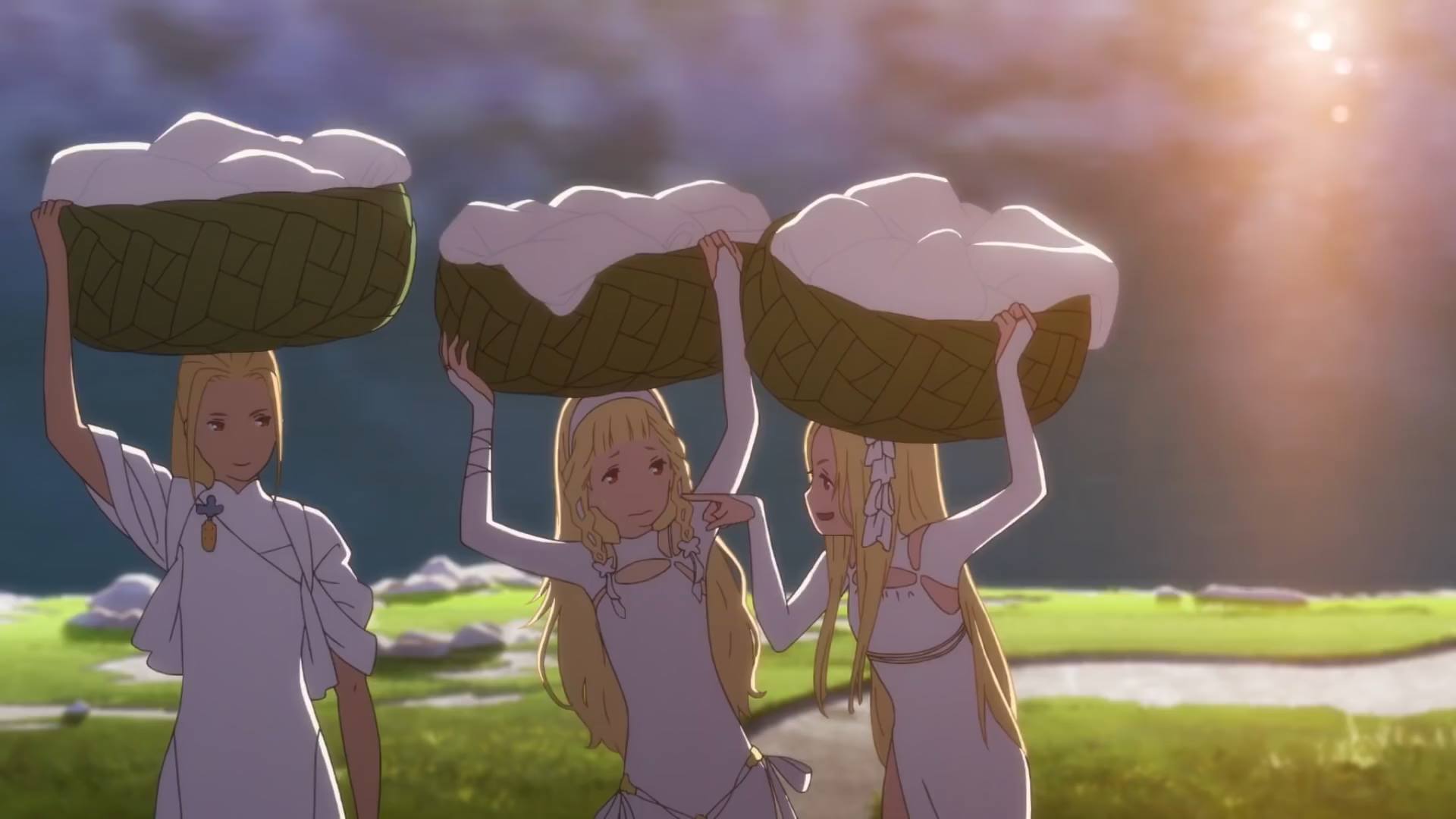
Finally, I got to see it, and though my expectations were high, Maquia met them. This may be writer/director Mari Okada’s debut film, but her first movie is a humdinger in both its emotional impact and its fantasy world-building. The titular Maquia is an orphan of the lorph clan, a small race of people who live for centuries with no aging and record their lives and histories by weaving cloth called Hibiol. A neighboring kingdom invades, taking most of the lorph captive, but Maquia escapes in despair, only to stumble upon an orphaned baby boy she names Ariel. Although she is alone, knows nothing of motherhood, and was expressly warned never to love a mortal lest she endure true loneliness, Maquia raises the child as her own, and…sniff… you’ll just have to watch it for yourself.

Anime has some amazing mothers to its credit, from Hana in Wolf Children to the mom in the tenth episode of Violet Evergarden (another tearjerker of 2018), but there’s something special about Maquia. She shares no blood or background with Ariel, not even fully understanding the physical realities of motherhood, and yet in her efforts to be a good mother, she shines as few parents do in any medium. She struggles with the task, especially as Ariel grows older while she remains the same, becoming a constant reminder that he was adopted, but she takes to heart the lessons taught by others that moms will do anything for their children and that “moms don’t cry.”

See the source image

As much as I wish I could call it a faultless film, Maquia is not without some weaknesses. There’s an extended subplot concerning two of Maquia’s lorph friends, whose paths in life are far more oppressive than hers; enduring rape and imprisonment, they serve as a contrast to the love that Maquia finds, and while their struggles remained interesting and sympathetic, I wouldn’t say they were resolved in an entirely satisfying way. Plus, one jump in time left me unsure what was going on, dropping some uncomfortable implications and keeping its full context vague.

Despite these gripes, Maquia is a beautiful film on multiple levels, from its tender moments to its exceptional animation to its affecting soundtrack. Its rich fantasy world of warring nations and dying dragons offers several striking settings reminiscent of Middle-Earth, and its themes of love and parenthood go straight to the heart, demonstrating how children can have just as much of an impact on their parents as the other way around. Plus, there’s hardly any of the stylistic exaggeration typical of anime, making it a film that fantasy lovers who may not be into anime should be able to enjoy as well.

See the source image

I don’t cry easily these days. Only two anime have left me sobbing before, and Maquia makes it three. I’ve mentioned that some sad films like The Wind Rises seem to almost pull back from full-on tearjerker mode for whatever reason; Maquia does not. I wept bitterly, though for different reasons than something like Grave of the Fireflies. There’s a scene at the end that mercilessly kicks your heartstrings while kissing them tenderly, and it still haunts me. I said yesterday that Mirai made me want to hug my mom; Maquia did the same times eleven. That’s why, for me, this is the anime of the year. The film itself represents its theme of pain being an integral part of love, a bitterness made sweet by all that came before.


Rank: List-Worthy


© 2018 S.G. Liput
600 Followers and Counting!


Mirai (2018)

27 Thursday Dec 2018

Posted by sgliput in Movies, Poetry, Reviews, Writing

≈ Leave a comment

Tags

Animation, Anime, Drama, Family, Fantasy


See the source image

When a child asks, quizzically,
“Where did I come from?”
Who knows what the most fitting answer may be?
The truth of it, physically,
May create someone,
But ‘tis but a branch of the whole family tree.

For what you’re aware of,
Your path and your parents,
Are products of precursors we’ll never know,
Dependent on their love,
Their choice and forbearance,
The roots they put down that their children may grow.
_____________________

MPAA rating:  PG

Back when I reviewed Netflix’s Flavors of Youth, I mentioned there were two new anime films I was dying to see before the end of the year, and now that I have, I also wanted to squeeze in a review for each of them. Thus, I’ll do one today and one tomorrow, starting with the one I’ve been expecting longer.

I’ve enjoyed the works of anime director Mamoru Hosoda for years (The Girl Who Leapt through Time and Wolf Children are still in my top 365 Movie List), and Mirai was one of my most anticipated movies this year. With every new feature, Hosoda has carved out a niche for animation fans, putting his own stamp on imaginative half-Ghibli-like fantasies mixed with real-world drama. In Mirai, his latest acclaimed feature, he does the same with a highly minimalist plot and a younger-than-normal protagonist.

See the source image

At its core, Mirai’s story is deceptively simple, that of a four-year-old boy named Kun accepting the presence of his newborn sister Mirai (which also means “future”). Yet the lessons he learns about jealousy, relationships, and family have surprising depth and are often taught through extended visual metaphors. I was a little surprised that any explanation for the time travel aspect was basically an afterthought. Thanks to the dad, the family’s house is an architectural curiosity with three levels, one of which is roofless with an interior yard, and anytime Kun passes the family tree, it’s as if his imagination conjures up another realm.

Sometimes, it’s the family dog transformed into a grouchy human, or his teenage sister arriving from the future, or his great-grandfather showing him how to ride a bike, and certain moments of the fantastical affecting the real world make you wonder whether it’s all in Kun’s head or not. These elements are a tad random and he sometimes tends to relearn the same lesson over again (be more patient with your parents/sister, for instance), but there’s an ingenious visual nuance to how Kun learns about his family and factoring his new role as a big brother into his identity.

See the source image

I said earlier that Hosoda excels at mixing the magical with the mundane, but it doesn’t work quite as well here as it did with, say, Wolf Children. Some of the transitions between real life and fantasy were rather weird for my taste, and I would have liked a definitive answer of what was actually going on beyond “it’s a visual metaphor.” To be honest, I found myself more interested in the day-to-day activities and struggles of Kun and Mirai’s parents. Let’s face it: Whiny kids can be annoying, especially kids in anime, so I felt more of a connection with the harried father and the long-suffering mother than with the often bratty Kun.

There’s a lot to love about Mirai, not least of which is the beautiful hand-drawn animation. (One scene in a train station is breathtaking in the amount of detail and motion on display.) Plus, it’s funny and relatable on multiple levels. I especially admired how many of the individual stories were brought together near the end to show Kun how a complex web of lives and choices combined to give him the life he had. It was profound and visually striking and helped make up for some of the plot’s earlier weaknesses.

See the source image

It’s worth noting that Mirai surprisingly received a nomination for Best Animated Feature at the Golden Globes this year, making it the first anime to be nominated. It’s certainly worthy and a sign of improvement in what gets recognized, but it irks me that they didn’t give that honor to even more deserving contenders in the past, like Your Name, Wolf Children, or A Silent Voice. But I digress…. Mirai may not be Hosoda’s best work, but it’s another laudable credit to his name. And it made me appreciate my parents a little more, so that I just had to give my mom a hug. Any film that gives me another reason to do that deserves praise.


Rank: List Runner-Up


© 2018 S.G. Liput
600 Followers and Counting!


2018 Blindspot Pick #10: Into the Forest of Fireflies’ Light (2011)

20 Tuesday Nov 2018

Posted by sgliput in Blindspot, Movies, Poetry, Reviews, Writing

≈ 2 Comments

Tags

Animation, Anime, Drama, Fantasy, Romance

See the source image

When the forest’s green carpet was dappled with light,
The trees standing stolid in blithe oversight,
I cried, a mere child, alone on my knees,
And lost with no help from the untroubled trees.

I don’t know how long I stayed, venting vain tears,
For he found me, as when a rainbow appears,
And though I perhaps should have harbored unease,
I beamed at the man, standing masked among trees.

I tried to embrace him, but he dodged the act
And said he would vanish from human contact,
For spirits like him are too fragile to squeeze,
And so we stood separate, surrounded by trees.

I doubted his words, yet I welcomed his care,
As he led us back homeward, a curious pair.
And though he said not to, tomorrow the breeze
Will lead me back to him, a ghost among trees.
______________________

MPAA rating: Not Rated (easily a G as far as content)

Blindspot picks are supposed to be films that one has been meaning to see for a long time and hasn’t gotten around to it. Into the Forest of Fireflies’ Light (or Hotarubi no Mori e) certainly fits that definition for me. It has long been included in other people’s lists of favorite anime, typically alongside Studio Ghibli films, and I couldn’t put it off anymore. I was even proud that I had been able to avoid spoiling the ending, and now that I’ve seen it… I don’t want to say I’m disappointed, just that I thought there would be more to it.

See the source image

I should have known not to expect too much, based on positive reviews noting its simplicity, and indeed that simplicity is one of its key strengths. The story follows the relationship of a girl named Hotaru who, while lost in a forest at six years old, meets a young man in a mask. Though he insists that no human should touch him, lest he disappear forever, she continues to visit him, and the two become close friends. Despite the invisible barrier of physical contact, they even begin to love each other, as the girl grows older, returning to the spirit forest year after year.

That’s as much as I knew going in, and while there’s a bittersweet payoff that admittedly does hit the emotions hard, that’s pretty much the whole story. There aren’t any subplots and not many extra characters, and frankly the tale didn’t need them. As seen in Makoto Shinkai’s works, such as The Garden of Words, anime films don’t necessarily have to be of feature length to realize their intended effect, and 44 minutes was just right for this one.

See the source image

I will say that it could have been very easy for the story to come off as creepy by nature. After all, a lost little girl meets a masked man in the woods, who hits her with a stick (when she tries to touch him). It might have been a hard sell just describing the plot like that, but instead it’s a sweet friendship/romance that might leave many a viewer brushing away tears. Perhaps its length kept it from hitting me hard enough for that, or perhaps I was just expecting too much, but Into the Forest of Fireflies’ Light still worked well as a mini-tearjerker with some lovely animation from the studio Brain’s Base, albeit nothing exceptional. With a few traces of Ghibli-esque whimsy, it’s a touching little fantasy for those looking for a tug on the ol’ heartstrings.

Best line: (Hotaru) “Time might separate us some day. But, even still, until then, let’s stay together.”


Rank: Honorable Mention


© 2018 S.G. Liput
594 Followers and Counting


Next Gen (2018)

16 Tuesday Oct 2018

Posted by sgliput in Movies, Poetry, Reviews, TV, Writing

≈ Leave a comment

Tags

Action, Animation, Comedy, Family, Sci-fi


See the source image

The world’s an easy place to hate,
For it hates all too frequently.
And anger tends to escalate
The more it’s met with enmity.

One pain of heart
Can sow and start
A seed of hate
To germinate
And grow until
There’s no goodwill
For world or friend.
They all offend!
Life’s all about
The lashing out,
For no one cares
Or answers prayers;
Of that, they do not have a doubt.

But wait…
And hesitate to hate,
Just long enough to listen clear.
The world itself is quite the weight,
But others bearing it stand near
To show you how to persevere.
___________________

MPAA rating:  PG

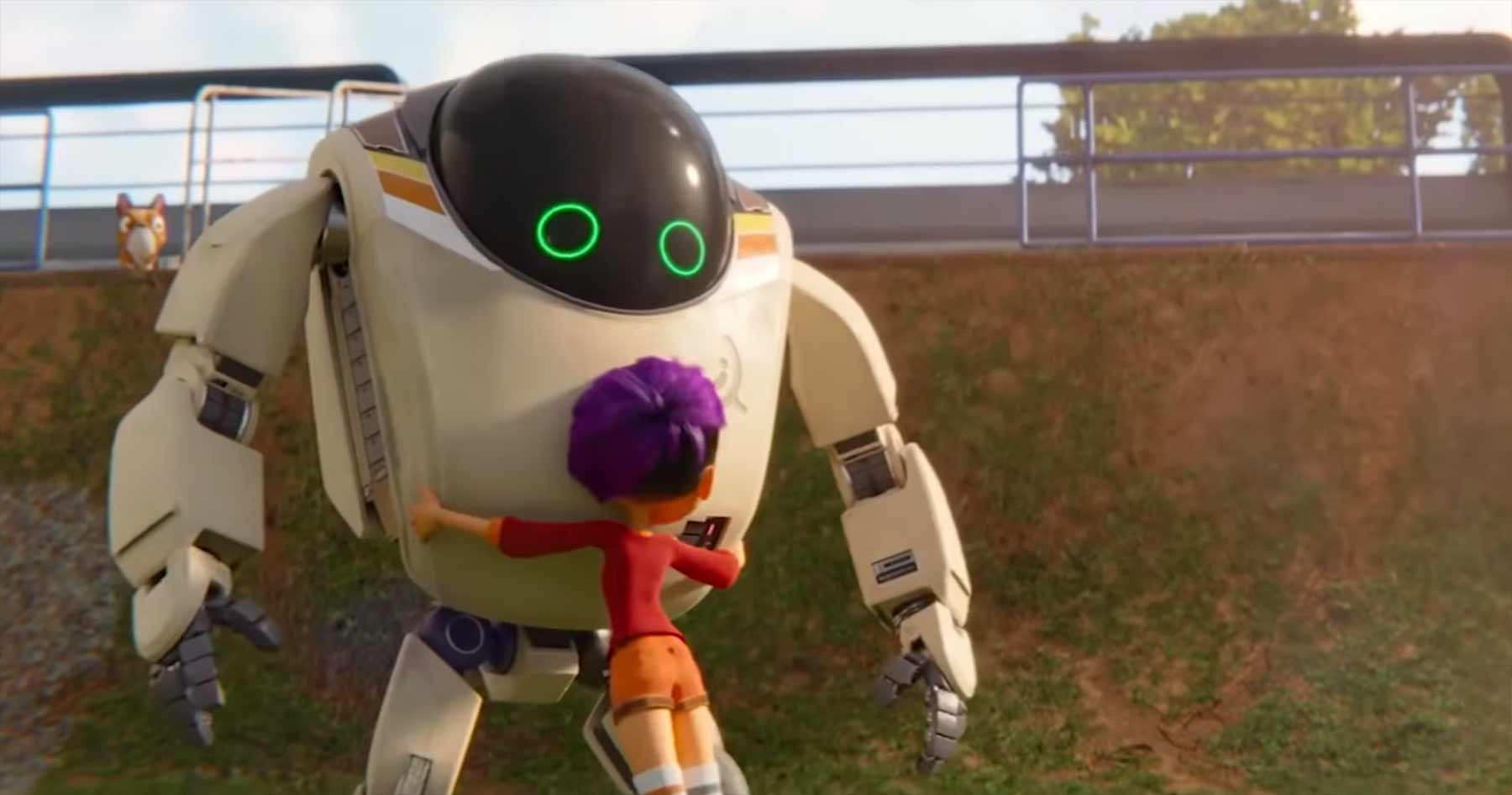
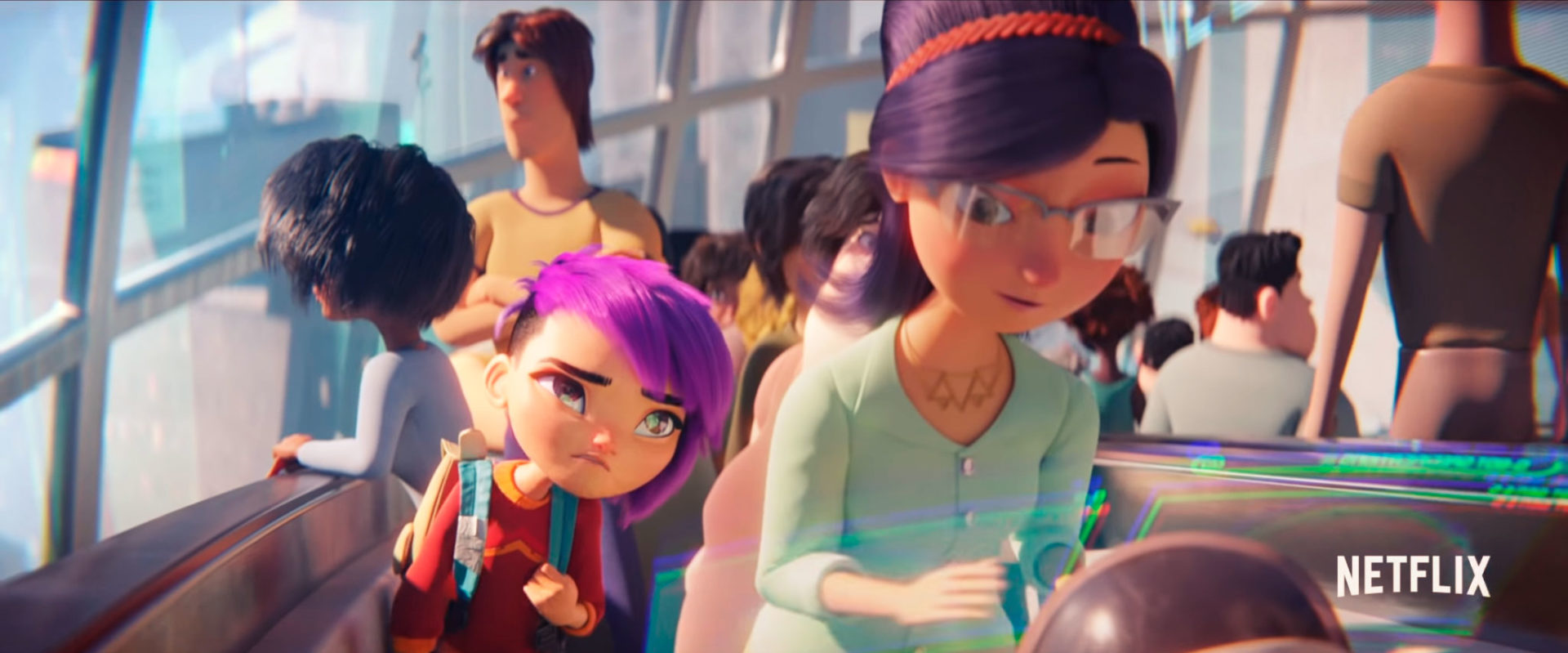
It might be easy to write off a film that borrows plot elements from other stories as freely as Next Gen does, but this Chinese-American cartoon based on a graphic novel and delivered by Netflix manages to be more than the sum of its parts. Set in a futuristic world where personable robots are a ubiquitous household accessory, young robot-hating loner Mai (Charlyne Yi) becomes unlikely friends with an experimental droid called 7723 (John Krasinski) that might be able to save both her from herself and the world from a robot takeover. That description alone will probably conjure memories of The Iron Giant, Big Hero 6, and I, Robot, and Next Gen wears those similarities on its sleeve. Yet there’s more to appreciate beyond the familiar “boy and his robot” storyline (or “girl and her robot,” in this case).

See the source image

As I said, Next Gen’s biggest touchstone would have to be Big Hero 6, not only with its big friendly robot mascot but also its urban setting of Asian-Western fusion, with Chinese characters instead of Japanese. But this Netflix film has some intriguing differences as well. One of them is the extent of robot normalization, which goes beyond that of I, Robot. Almost every device in this world is semi-sentient, and while a lot of potential questions surrounding that aren’t even broached, it’s an intriguing setup. Mai’s mother (Constance Wu) is obsessed with her Q-Bot companions and their developer, the Steve Jobs-esque Justin Pin (Jason Sudeikis), and it’s not a coincidence that the robot fascination mirrors the distraction of smartphone use. It’s also worth noting that Isaac Asimov’s three laws of robotics apparently don’t apply, specifically the one about robots not harming humans, since a group of bullies order their robots to beat up on Mai for them.

Beyond the setting, there are some deeper than normal themes at play as well. Mai is resentful of her father’s abandonment of her and the way her mother uses robots to cope, and when she meets 7723, it’s only his weapons and the destruction they create that catch her interest. She’s quite angry and cynical for a cartoon protagonist, and interestingly, it’s 7723 that has to remind her to not lose her humanity when lashing out at the world.  7723 also has a struggle of his own; he values every minute spent with Mai, yet his memory cache is limited, forcing him to choose which memory files and systems to delete and make room for more. It’s not every cartoon that tackles existential questions reminiscent of Eternal Sunshine of the Spotless Mind, so Next Gen’s themes are definitely a step above the usual “follow your heart” storyline we’ve seen all too often.

See the source image

On top of that, it’s a quality production, with fluid animation and some pretty awesome action sequences. One explosive scene in particular is one continuous tracking shot with no cuts. I already love those kinds of scenes in live-action, and, although it probably doesn’t require quite as much effort to pull off, I like that the technique is being used more and more in animation. (I could also cite the opening scene of The Secret Life of Pets or Diamond’s big fight scene in the anime Land of the Lustrous.)

As self-aware as it often is, it’s a shame that Next Gen feels obligated to conform to a few clichés, like the bully inevitably deciding “Hey, sorry I beat you up. Let’s be friends.” Likewise, Mai’s mother is pushed into a “you were right, I was wrong” confession that is so fast, it felt like the screenwriter checking off a plot requirement.

I will also say that Next Gen is probably better for older kids, and not just because of its deeper themes or a sudden death scene. There’s a funny running joke where 7723 can translate the barks of Mai’s excitable dog (Michael Pena), bleeping out his more profane words. I guess it’s on the level of any number of reality shows these days, but I don’t exactly welcome it when a kids’ cartoon features even the mouthing of the F-bomb.

See the source image

Next Gen isn’t perfect, but it comes closer to Big Hero 6 than I would have thought possible from a Chinese production company I’d never heard of. There’s a lot to love about it and how it addresses moving beyond tragedy and anger while remaining a fun and sweet adventure, and I certainly hope that this and other animation houses outside the mainstream can continue the high quality displayed here.


Rank: List Runner-Up


© 2018 S.G. Liput
590 Followers and Counting
 

Flavors of Youth (2018)

20 Monday Aug 2018

Posted by sgliput in Movies, Poetry, Reviews, TV, Writing

≈ 1 Comment

Tags

Animation, Anime, Drama, Romance

See the source image

I’ve had the chance to learn and grow
From where I was ten years ago,
And though time’s neither fast nor slow,
It’s galloped past me even so.

I know,
I know,
I’m not that old.
Not old enough to be consoled
For past regrets and words untold
When still on destiny’s threshold.

Yet worry knows no age or race.
It’s but a trace time can’t erase,
Not even at its breakneck pace.
And such are truths we all must face
As past and future we embrace.
_____________________

Rating: TV-PG (nothing objectionable, just themes best appreciated by adults)

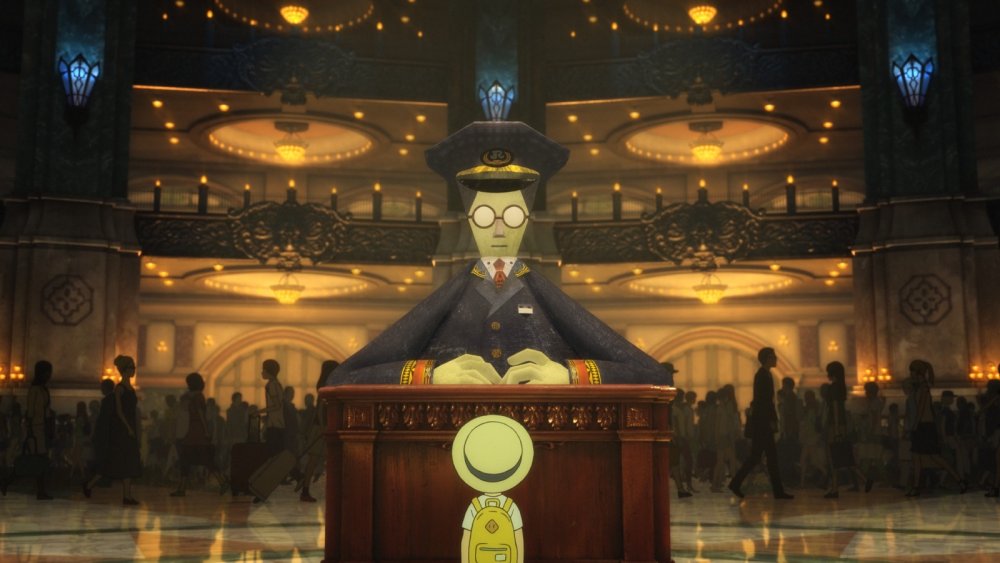
For those who loved Makoto Shinkai’s Your Name, it’s naturally a grueling wait for his next anticipated feature, but in the meantime, CoMix Wave Films, the production studio for Shinkai’s movies, has filled the gap nicely by teaming with the Chinese animation house Haoliners. In place of Shinkai, Flavors of Youth has three different directors, each delivering a dramatic entry for this Netflix anthology film. Surprisingly, the result is a satisfying substitute that boasts both visual beauty and honest emotion in equal measure (as well as a solid English dub).

See the source image

While the names and settings are clearly Chinese rather than Japanese, Flavors of Youth has all the aesthetic quality of a well-crafted anime film, and while Japanese animation can so often be associated with explosive battles and yelling, this belongs to the more introspective and relatable side of anime. The first of the three short stories revolves around a young man’s memories of the San Xian noodles he ate while growing up, which may seem overly simple, but the true-to-life details and poetic narration by narrator extraordinaire Crispin Freeman (of Haruhi Suzumiya fame) added to its impact. The second film was a bit less engaging for me, focusing on two sisters in the fashion world, but the story ended nicely and didn’t detract from the film overall. The third, though, entitled “Shanghai Love Story,” is especially affecting with its likable characters and sad irony, and any fan of Shinkai is bound to admire it.

While the themes are far from niche, I felt that the individual stories were aimed precisely at people like me, twenty-somethings uncertain about the future and nostalgic for good ol’ days which weren’t all that long ago yet seem to be fading before our eyes. The first story best encapsulated these sentiments and the way that memories and regrets always outlive their source. Cherished businesses close, loved ones die, and modern replacements never quite reach the glory of our recollections and hopes.

See the source image

Yet unlike some other films I could name (I’m looking at you, 5 Centimeters Per Second), Flavors of Youth doesn’t settle with being depressing and finds hope in the promise that comes with building off those precious memories. This anthology may fall that little bit short of greatness, but those who enjoyed Shinkai’s work, such as The Garden of Words, should not miss it; just don’t expect another Your Name, and certainly nothing supernatural. I feel like I’ve grown fonder of this film since first seeing it, thanks especially to an after-credits scene that barely tied the stories together, and it’s a gratifying sign that Shinkai’s influence is clearly spreading. There are several anime films I’m dying to see this year, especially Maquia and Mirai of the Future, so I’m grateful that Netflix supplied this wistful little film while I wait.


Rank: List Runner-Up


© 2018 S.G. Liput
589 Followers and Counting


The Incredibles 2 (2018)

08 Sunday Jul 2018

Posted by sgliput in Movies, Poetry, Reviews, Writing

≈ 4 Comments

Tags

Action, Animation, Comedy, Family, Pixar, Sci-fi, Superhero

See the source image

Incredible is a subjective term,
As critics and colleges can confirm.
One man’s amazing and top-of-the-class
Is another’s mundane because people, alas,
See things either clearly or through rosy glass.

Incredible is a desirable word,
So rarely deserved yet so commonly heard.
At times, there’s consensus for some shining star,
But mostly we just must agree on the bar
And how we compare them decides what they are.
___________________

MPAA rating: PG

Of all the studios churning out long-awaited sequels, Pixar has arguably the best track record. Whether it’s Monsters University, Finding Dory, or Toy Story 3 (I mean 4), the decade-waiting sequelization of their canon is well underway and, with the exception of Cars 2, has turned out surprisingly well. (They’re all weaker than the originals, but they’re by no means bad, except Cars 2.) Yet strangely, Pixar has made fans wait longest for the follow-up to the one film in their oeuvre that was actively crying out for a sequel, namely The Incredibles. Perhaps due to the influx of superhero franchises since 2003, director Brad Bird finally delivered, and I’d say the fourteen-year wait was worth it.

See the source image

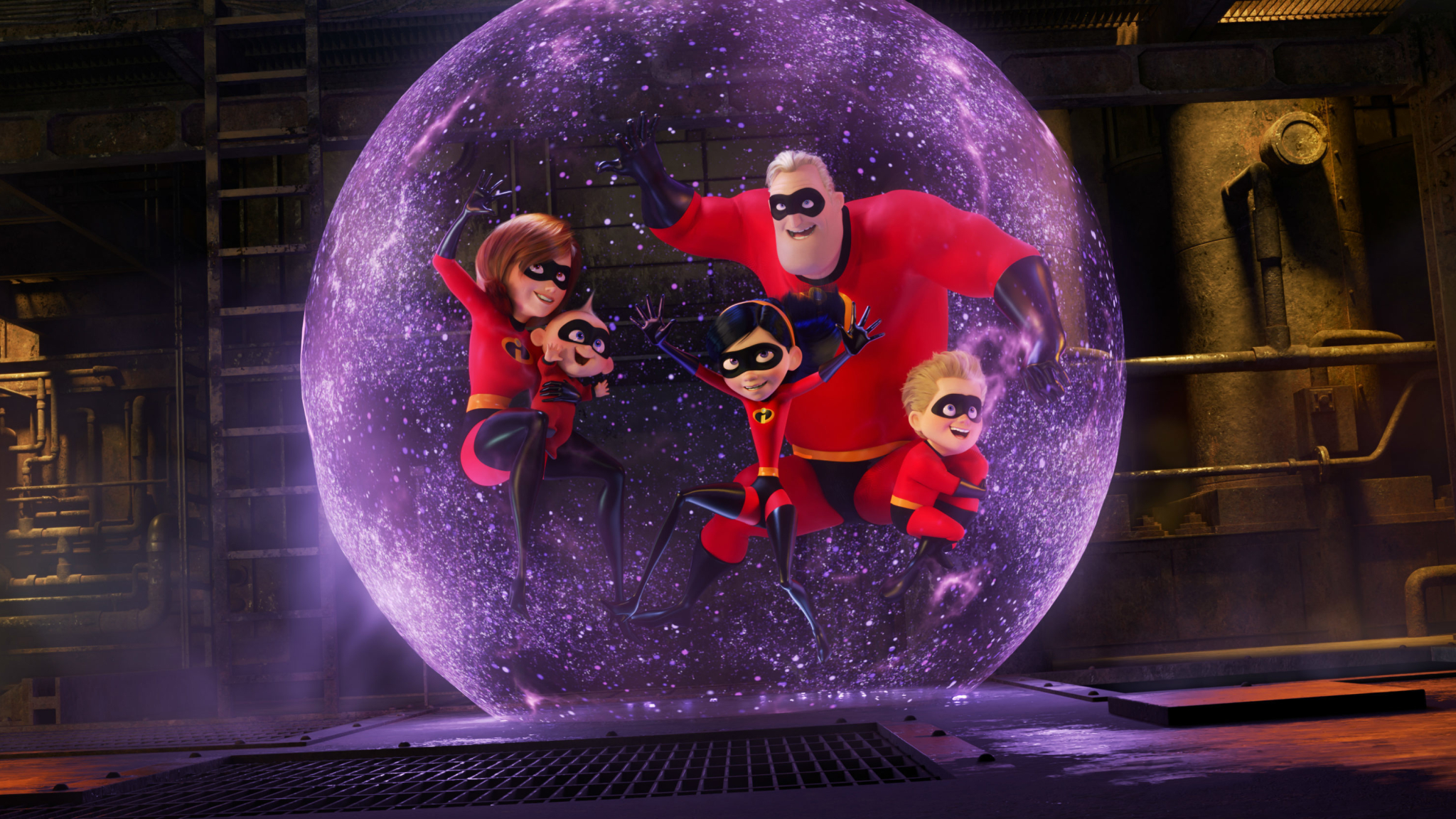
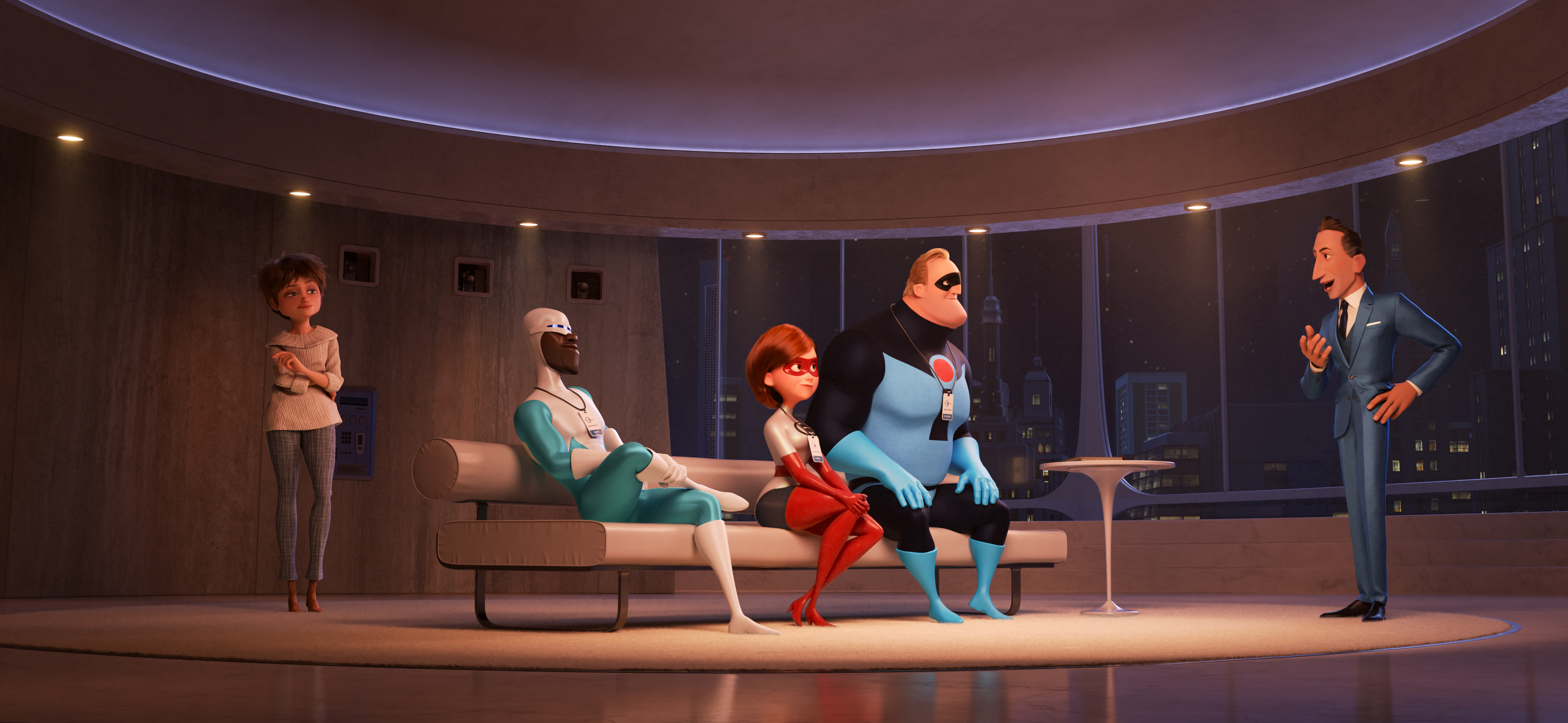
Picking up immediately where the first film left off, The Incredibles 2 reminds us that, even after saving the world from Syndrome, the Parr family still have to deal with the fact that superheroing is illegal. After their battle with the Underminer goes south, Mr. and Mrs. Incredible (Craig T. Nelson and Holly Hunter) and Frozone (Samuel L. Jackson) are approached by millionaire entrepreneurs Winston (Bob Odenkirk) and Evelyn Deavor (Catherine Keener), a brother and sister team who are actively trying to bring supers back into the spotlight. Due to her less destructive abilities, Elastigirl is the new face of their law-bending campaign, and while Bob deals with the headaches of parenting at home, Helen faces off with a mind-controlling villain called the Screenslaver.

There are certain elements borrowed from the previous film, such as the family disagreements on how to handle hiding their powers, and if you suspect their new benefactors aren’t entirely on the up-and-up, you’d be somewhat right. Yet The Incredibles 2 does an excellent job at differentiating itself from the first and from other superhero films in general. Chief among the differences is the inclusion of other supers joining the crusade for superhero legality, and their presence allows for added creativity in the battles and actual super-vs.-super fights rather than the repeated super-vs.-robot fight of the first. Anyone who wanted more Elastigirl and Frozone shouldn’t be disappointed, and while Bob seemed sidelined by suppressed egotism and Mr. Mom franticness, it wasn’t as bad as the trailers implied. Ultimately, even with some mature themes being broached, this is still a film for and about families, with Bob’s first-hand struggles with superpowered child-rearing offering a nice counterpoint to the more action-packed beats with his wife.

See the source image

One thing that seemed like a retroactive change is that the Parrs apparently didn’t see baby Jack-Jack use his powers at the end of the first film, allowing for all of them to be surprised again by his multifaceted abilities. Jack-Jack even steals the show at times, whether he’s paired with an ornery raccoon or fashionista Edna Mode (Brad Bird). Likewise, Violet (Sarah Vowell) and Dash (Huck Milner, seamlessly replacing Spencer Fox) get their fair share of screen time, especially after the villain is revealed. Speaking of which, the Screenslaver may not have as compelling a backstory as Syndrome, but the philosophy spouted by the shadowy figure has a point in denouncing people’s reliance on computer/TV screens and lack of responsibility. It’s the kind of motivation that works well for a supervillain, bearing a kernel of truth but taken to a malevolent extreme, which actually offers a legitimate threat against the supers.

I’ll be honest: I intentionally had very low expectations for The Incredibles 2. Others I know have said they had enormous hopes for it, but when you’re dealing with a film as awesome as the first Incredibles, it’s going to be hard to match. Perhaps that’s why I enjoyed it so much compared with one of my disappointed coworkers, who likely had too many preconceived notions of what the perfect sequel should be, not unlike Star Wars fans of late. Yes, The Incredibles 2 doesn’t quite reach the heights of its predecessor: It lacks the meaningful character arcs of the first film, its villain mystery is semi-predictable, and it raises more thematic questions about right, wrong, and responsibility than it even tries to answer. Yet it was so enjoyable to spend time with these characters again that I didn’t mind, and it still stands head-and-shoulders above the majority of animated films nowadays.

See the source image

I think I’d go so far as to call it the best Pixar sequel since Toy Story 2, at least in recapturing the spirit of the original. The action scenes are as cool and polished as anything in the MCU, and Michael Giacchino’s bombastic score is still the perfect complement to its comic book world. It’s not above some complaints, but if you compare The Incredibles 2 to Cars 2 rather than the first Incredibles, I think you’ll agree it’s an “incredible” sequel. Pixar does it again!

Best line: (Edna) “Done properly, parenting is a heroic act. [Glares at Bob’s exhaustion] “Done properly.”


Rank: List-Worthy (joining the first film)


© 2018 S.G. Liput
585 Followers and Counting


← Older posts
Newer posts →

Recent Posts

  • We Didn’t Start 2025 (Recap)
  • NaPoWriMo 2025 Recap (Finally)
  • Sonic the Hedgehog 3 (2024)
  • It Happened One Night (1934)
  • Spellbound (2024)

Recent Comments

associatesofshellymann's avatarassociatesofshellyma… on My Top Twelve La La La So…
Kit's avatarKit Nichols on Bonnie and Clyde (1967)
lifelessons's avatarlifelessons on Look Back (2024)
Carol Jackson's avatarCarol Jackson on The Thief of Bagdad (1940…
Stephen's avatarStephen on Love Story (1970)

Archives

  • January 2026
  • December 2025
  • May 2025
  • April 2025
  • March 2025
  • February 2025
  • January 2025
  • December 2024
  • May 2024
  • April 2024
  • March 2024
  • February 2024
  • January 2024
  • December 2023
  • November 2023
  • October 2023
  • September 2023
  • July 2023
  • June 2023
  • May 2023
  • April 2023
  • March 2023
  • February 2023
  • January 2023
  • December 2022
  • November 2022
  • October 2022
  • September 2022
  • August 2022
  • July 2022
  • June 2022
  • May 2022
  • April 2022
  • March 2022
  • February 2022
  • January 2022
  • December 2021
  • November 2021
  • October 2021
  • September 2021
  • August 2021
  • July 2021
  • June 2021
  • May 2021
  • April 2021
  • March 2021
  • February 2021
  • January 2021
  • December 2020
  • November 2020
  • October 2020
  • September 2020
  • August 2020
  • July 2020
  • June 2020
  • May 2020
  • April 2020
  • March 2020
  • February 2020
  • January 2020
  • December 2019
  • November 2019
  • October 2019
  • September 2019
  • August 2019
  • July 2019
  • June 2019
  • May 2019
  • April 2019
  • March 2019
  • February 2019
  • January 2019
  • December 2018
  • November 2018
  • October 2018
  • September 2018
  • August 2018
  • July 2018
  • June 2018
  • May 2018
  • April 2018
  • March 2018
  • February 2018
  • January 2018
  • December 2017
  • November 2017
  • October 2017
  • September 2017
  • August 2017
  • July 2017
  • June 2017
  • May 2017
  • April 2017
  • March 2017
  • February 2017
  • January 2017
  • December 2016
  • November 2016
  • October 2016
  • September 2016
  • August 2016
  • July 2016
  • June 2016
  • May 2016
  • April 2016
  • March 2016
  • February 2016
  • January 2016
  • December 2015
  • November 2015
  • October 2015
  • September 2015
  • August 2015
  • July 2015
  • June 2015
  • May 2015
  • April 2015
  • March 2015
  • February 2015
  • January 2015
  • December 2014
  • November 2014
  • October 2014
  • September 2014
  • August 2014
  • July 2014
  • June 2014
  • May 2014
  • April 2014
  • March 2014
  • February 2014
  • January 2014
  • December 2013

Categories

  • Blindspot
  • Blogathon
  • Christian
  • Movies
  • Music
  • NaPoWriMo
  • Poetry
  • Reviews
  • TV
  • Writing

Meta

  • Create account
  • Log in
  • Entries feed
  • Comments feed
  • WordPress.com

Recent Posts

  • We Didn’t Start 2025 (Recap)
  • NaPoWriMo 2025 Recap (Finally)
  • Sonic the Hedgehog 3 (2024)
  • It Happened One Night (1934)
  • Spellbound (2024)

Recent Comments

associatesofshellymann's avatarassociatesofshellyma… on My Top Twelve La La La So…
Kit's avatarKit Nichols on Bonnie and Clyde (1967)
lifelessons's avatarlifelessons on Look Back (2024)
Carol Jackson's avatarCarol Jackson on The Thief of Bagdad (1940…
Stephen's avatarStephen on Love Story (1970)

Archives

  • January 2026
  • December 2025
  • May 2025
  • April 2025
  • March 2025
  • February 2025
  • January 2025
  • December 2024
  • May 2024
  • April 2024
  • March 2024
  • February 2024
  • January 2024
  • December 2023
  • November 2023
  • October 2023
  • September 2023
  • July 2023
  • June 2023
  • May 2023
  • April 2023
  • March 2023
  • February 2023
  • January 2023
  • December 2022
  • November 2022
  • October 2022
  • September 2022
  • August 2022
  • July 2022
  • June 2022
  • May 2022
  • April 2022
  • March 2022
  • February 2022
  • January 2022
  • December 2021
  • November 2021
  • October 2021
  • September 2021
  • August 2021
  • July 2021
  • June 2021
  • May 2021
  • April 2021
  • March 2021
  • February 2021
  • January 2021
  • December 2020
  • November 2020
  • October 2020
  • September 2020
  • August 2020
  • July 2020
  • June 2020
  • May 2020
  • April 2020
  • March 2020
  • February 2020
  • January 2020
  • December 2019
  • November 2019
  • October 2019
  • September 2019
  • August 2019
  • July 2019
  • June 2019
  • May 2019
  • April 2019
  • March 2019
  • February 2019
  • January 2019
  • December 2018
  • November 2018
  • October 2018
  • September 2018
  • August 2018
  • July 2018
  • June 2018
  • May 2018
  • April 2018
  • March 2018
  • February 2018
  • January 2018
  • December 2017
  • November 2017
  • October 2017
  • September 2017
  • August 2017
  • July 2017
  • June 2017
  • May 2017
  • April 2017
  • March 2017
  • February 2017
  • January 2017
  • December 2016
  • November 2016
  • October 2016
  • September 2016
  • August 2016
  • July 2016
  • June 2016
  • May 2016
  • April 2016
  • March 2016
  • February 2016
  • January 2016
  • December 2015
  • November 2015
  • October 2015
  • September 2015
  • August 2015
  • July 2015
  • June 2015
  • May 2015
  • April 2015
  • March 2015
  • February 2015
  • January 2015
  • December 2014
  • November 2014
  • October 2014
  • September 2014
  • August 2014
  • July 2014
  • June 2014
  • May 2014
  • April 2014
  • March 2014
  • February 2014
  • January 2014
  • December 2013

Categories

  • Blindspot
  • Blogathon
  • Christian
  • Movies
  • Music
  • NaPoWriMo
  • Poetry
  • Reviews
  • TV
  • Writing

Meta

  • Create account
  • Log in
  • Entries feed
  • Comments feed
  • WordPress.com

Blog at WordPress.com.

Is this your new site? Log in to activate admin features and dismiss this message
Log In
  • Subscribe Subscribed
    • Rhyme and Reason
    • Join 814 other subscribers
    • Already have a WordPress.com account? Log in now.
    • Rhyme and Reason
    • Subscribe Subscribed
    • Sign up
    • Log in
    • Report this content
    • View site in Reader
    • Manage subscriptions
    • Collapse this bar