• Home
  • About Me
  • The List
  • THE LIST (2016 Update)
  • THE LIST (2017 Update)
  • THE LIST (2018 Update)
  • THE LIST (2019 Update)
  • THE LIST (2020 Update)
  • THE LIST (2021 Update)
  • THE LIST (2022 Update)
  • Top Twelves and More
  • The End Credits Song Hall of Fame

Rhyme and Reason

~ Poetry Meets Film Reviews

Rhyme and Reason

Category Archives: Writing

Passengers (2016)

23 Sunday Apr 2017

Posted by sgliput in Movies, NaPoWriMo, Poetry, Reviews, Writing

≈ 6 Comments

Tags

Drama, Romance, Sci-fi, Thriller

Image result for passengers 2016

(Today’s NaPoWriMo prompt was for a double elevenie, a pair of five-line, eleven-word poems with a particular form.)


Loneliness
Becomes bearable
When in pairs.
There’s no need for
Crowds.

Togetherness
Becomes suspect
When trust dissolves.
Love’s no place for
Doubts.
___________________

MPAA rating: PG-13

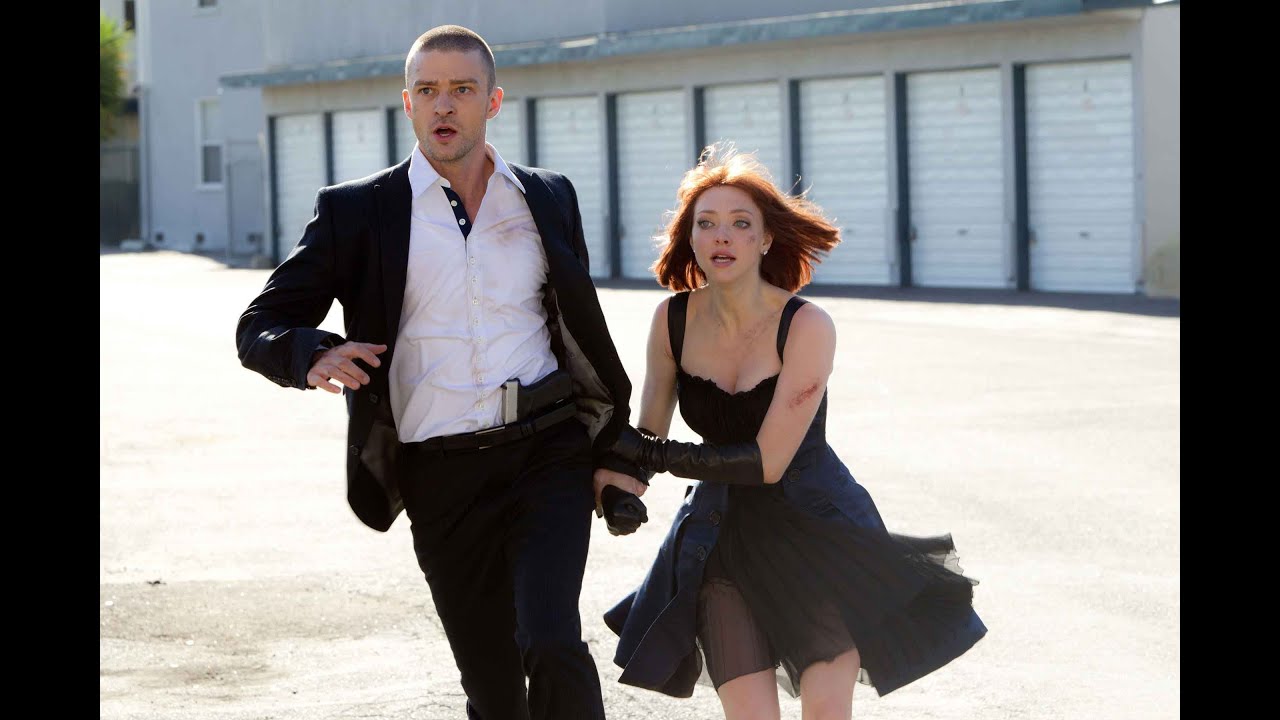
I must be more forgiving than most when it comes to science fiction (or more critical, considering I hate 2001), but Passengers seems to have gotten an unfair amount of criticism, even if the complaints aren’t necessarily wrong. It’s simply a case where one flaw is considered by many to ruin the film as a whole, when there are really far more positives than negatives.

While hurtling through space on a 120-year journey to a distant colony, Jim Preston (Chris Pratt) is awakened from hibernation by a malfunction and is understandably distraught when he learns that there are 90 years ahead of him. After a year of loneliness with only an android bartender (Michael Sheen), his nightmare becomes an Adam-and-Eve dream come true when Aurora (Jennifer Lawrence) is also awakened to keep him company. The pairing of Chris Pratt and Jennifer Lawrence was a main selling point for the film, and their chemistry doesn’t disappoint, pooling the natural appeal that both actors have earned from their past roles. Also laudable are the futuristic set design and magnificent space-faring effects, which may bring to mind Interstellar or Gravity but are no less impressive. Add in an Oscar-nominated score from Thomas Newman (who still has never won, for some reason), and there’s an eye-popping sci-fi romance worth enjoying.

Image result for passengers 2016

But wait…there’s something wrong here, and I suppose I should issue a SPOILER WARNING to discuss it further. It’s surprising that Aurora never suspects this on her own, but Jim in his desperation woke her from stasis himself! It doesn’t matter how conflicted he was about it or how understandable his hopelessness was; to her mind and to many a viewer’s, what he did was tantamount to murder, condemning Aurora to an unfulfilled life, which she’s not quick to forgive.

My VC went so far as to not understand why Aurora stayed so angry, thinking that a life alone with Chris Pratt wouldn’t be so bad, right? As for me, I don’t deny the gravity of Jim’s crime, but I didn’t have a problem with how it was resolved. He’s punished and shunned for what he did, but did anyone think that two lonely people could stay mad for ninety years? The eventual forgiveness seems inevitable, but I’m sorry that some found that to be manipulative on the filmmakers’ part. The reconciliation would have surely been more gradual and painful if things had stayed as they were after Aurora discovered the truth, but the way things play out stresses just how much the two need each other, reigniting the romance that had thankfully already been established before the reveal.

Image result for passengers 2016

I understand and even somewhat share the objections I’ve heard from others about the potentially creepy implications of Jim’s actions, but they don’t ruin the film for me. I actually took more issue with the rather prosaic and unproductive way it ends than with anything that came before. As a fan of science fiction and of Pratt and Lawrence, I found this combination of the three to be an engaging genre romance, flaws and all.

Best line: (Aurora) “You can’t get so hung up on where you’d rather be, that you forget to make the most of where you are.”


Rank: List Runner-Up


© 2017 S.G. Liput
473 Followers and Counting


The Good Dinosaur (2015)

22 Saturday Apr 2017

Posted by sgliput in Movies, NaPoWriMo, Poetry, Reviews, Writing

≈ 3 Comments

Tags

Animation, Comedy, Drama, Family, Pixar

Image result for the good dinosaur 2015

(Today’s NaPoWriMo prompt was for a georgic, which I may have confused with a pastoral, but both have to do with agriculture or country life. It may have only a thin connection to the film reviewed, but this is what came to mind.)


It’s easy to forget the joy
Of life dependent on my touch,
Of plants that never would have grown,
Sprouts that might have bent to stone,
Animals safe in their zone,
Pride in lifetimes all my own,
Though they don’t know it much.

So many want adventurous
And thrilling lives at large,
For every sight to be unseen,
Nothing staid or too serene,
Changed before it feels routine,
Nothing but a glowing screen
To be within my charge.

Adventure, danger have their place,
But when the thrill is gone,
They too will wish for their homestead,
Fruitful loam and flower bed,
Trust in what yet lies ahead,
Smaller lives now comforted
By one to rely upon.
________________

MPAA rating: PG

The Good Dinosaur is quite the mixed bag for Pixar. If DreamWorks or Blue Sky had made it, I might rank it among their best work, but for Pixar, it’s a weak entry in a filmography full of instant classics. There’s nothing especially wrong with this story of a timid young Apatosaurus named Arlo who is separated from his mountain farm and forced to survive and eventually bond with a human “pet” he names Spot, but like Brave, it’s Pixar at its most unoriginal. The plot borrows heavily from the likes of The Land Before Time, The Lion King, and Ice Age, and yet it still has moments of wonder, pathos, and heartwarmth (that’s a word now) that are staples of Pixar’s brand of storytelling.

I suppose my biggest beef with the film is the creative choices of its animators. On the one hand, the scenery clearly modeled off Wyoming’s Grand Tetons and Yellowstone is absolutely stunning, perhaps some of the most gorgeous animated landscapes ever; and on the other, the dinosaurs themselves are as cartoonish and unrealistic as possible. Nothing’s wrong with the animation quality, and a closer look at the dinos reveals more detail than is seen at first glance; but their general design looks like Play-Doh next to the realism of the backgrounds. It looked suspect in the trailers, and as good as Pixar’s animation is, I feel it was just a bad creative decision, making me miss the realism of Disney’s Dinosaur.

Image result for the good dinosaur 2015

On top of that, The Good Dinosaur really is a missed opportunity. The stated premise is that the meteor never wiped out the dinosaurs, so millions of years later, it’s dinos that have risen to the point of an agrarian/herding society. I suppose their presence is meant to explain why humans never got past the caveman stage, but is that really the best that the creative minds at Pixar could come up with? Based on the description, I was imagining a modern-day world with humans and dinosaurs living side by side in some kind of fusion civilization, but there’s nothing here that couldn’t have feasibly happened millions of years ago. I feel like the “millions of years later” aspect was included just so that Pixar could put a dinosaur and a human together without drawing the ire of evolutionist date critics. A movie can suspend the disbelief of a dinosaur family farming, so isn’t the human-dinosaur pairing within the realm of credibility for a cartoon? For the world to be like this millions of years later is kind of a letdown.

Wow, two whole paragraphs of gripes might make you think I hated this movie, but I did enjoy it. The overall story may be simple and unoriginal, but Arlo’s journey to gain courage fosters a familiar kind of inspiration. The comedy is hit-and-miss, but there are a few dramatic moments that resoundingly hit home, whether it be the beyond-words stick-figure bonding between Arlo and Spot or the ghostly dream Arlo has at a crucial juncture. I also loved some magical scenes with fireflies and Sam Elliott’s role as a T. Rex cowboy, even if the dynamics of this dino-world remain underdeveloped. By the end, The Good Dinosaur may be disappointing by Pixar’s standards, but by anyone else’s, it’s a decent animated coming-of-age story that, like Arlo, proves stronger than its failings.

Best line: (Poppa) “Sometimes you got to get through your fear to see the beauty on the other side.”


Rank: List Runner-Up


© 2017 S.G. Liput
473 Followers and Counting
 

2017 Blindspot Pick #4: The Help (2011)

21 Friday Apr 2017

Posted by sgliput in Blindspot, Movies, NaPoWriMo, Poetry, Reviews, Writing

≈ 6 Comments

Tags

Drama

Image result for the help 2011

(Today’s NaPoWriMo prompt was for a poem based on overheard speech, such as the hearsay that servers are likely to notice.)


“The pie’s not sweet enough today.”
“It’s all her fault, you know.”
“They can’t expect us all to stay
With riffraff like them, though.”

I overhear the gossipers,
Who prattle and complain,
That such-and-such was never hers
Or   blank   was such a pain.

They talk as if I am not here,
Invisibly at hand,
A ghost to serve and disappear
But not to understand.

I’m not to chafe or take offense,
When they discuss my worth
Or tease and joke at my expense
To all the listening earth.

But I’ve a mouth, as well as ears,
I will not undersell.
A ghost who disappears but hears
Has many tales to tell.
__________________

MPAA rating: PG-13

Films like The Help are the highest form of chick flick. All the important characters are women, but instead of focusing on romantic exploits (though there’s a little of that), this adaptation of Kathryn Stockett’s hit novel raises its sights higher to matters of race, prejudice, and personal courage, all with an entertainingly light touch.

It starts out in rather uncomfortable territory, as the women of Jackson, Mississippi, gossip and gab as Southern 1960s housewives apparently did, while treating their hired black maids as second-class citizens. Social bigwig Hilly Holbrook (Bryce Dallas Howard) extols the merits of “separate but equal” in full view of the women’s maids, including Aibileen (Viola Davis) and Minny (Octavia Spencer), even going so far as to start an initiative for separate home bathrooms for the help. It’s a prime portrait of racist whites at their most passive-aggressive and a frustrating one at that for two different reasons: (1) the irritation that such treatment was once commonplace and (2) the fact that this is how all white southerners of that era will be remembered, which wasn’t necessarily true for all. (My grandmother, for instance, surely had some prejudice natural to the time and place, but it never extended to treating black people with such condescension.) Only Emma Stone’s “Skeeter” Phelan has any compunction about the rampant contempt on display and has the inclination to do something about it, namely writing a book from the perspective of “the help.”

Image result for the help 2011

It’s in the second half that all the characters and their relationships come full circle, from Hilly getting some mortifying retribution to Skeeter earning the trust and cooperation of the maids, who overcome their justified fears to provide their untold two cents. The book becomes not only a potential meal ticket for Skeeter’s aspirations but a pressure valve for her interviewees, who for the first time are able to talk about their memories and grievances openly. While people like Hilly give the maid-ma’am relationship a bad name, the film often presents the positive connections between the help and the helped with a sweet intimacy: Skeeter found confidence and encouragement in her mother’s housemaid (Cicely Tyson); Minny offers cooking instruction and an open heart and ear to a supposedly trashy outcast in need of help (Jessica Chastain); and Aibileen’s bond with her mistress’s toddler is a stronger mother/daughter attachment than the child’s real one.

The Help features a surprising balance between comedy and drama, sometimes laden with tearjerking emotion, other times giving the audience every reason to whoop with scandalous satisfaction. It swings freely from reminders of the tumultuous racial situation of the time to inspiring maxims and chuckle-worthy pranks. What grounds this wide range of material is the universally superb cast. Every performance excels, with Octavia Spencer’s tenacity and surplus of attitude earning her a Best Supporting Actor Oscar, for which Jessica Chastain was also nominated. Though Viola Davis didn’t win her Best Actress nomination, she’s easily the best actress here and brings the same master-class acting that proves her win for Fences was long overdue. While the black actresses steal the show, Alison Janney is another standout as Skeeter’s overbearing but conflicted mother, and as the one unbiased white character, Emma Stone continues to make me an ever bigger fan of hers.

Image result for the help 2011

Now that I’ve seen The Help, I absolutely consider it among the best films of 2011 and deserving of its Best Picture nomination, but it doesn’t quite cross that little line in my head to qualify as one of my favorites overall. I don’t think it’s the woman-centric narrative or white guilt or anything like that; it’s simply a film I respect and enjoyed but only to a point. The depiction of the racism of Southern communities is perhaps too easy a stereotype, reflecting modern sensibilities toward villainous, backward-thinking whites of the period, even if it has some basis in truth. Aside from this, though, The Help is an expertly acted testimonial for untold stories and the courage to tell them.

Best line: (Skeeter’s maid Constantine) “Every day you’re not dead in the ground, when you wake up in the morning, you’re gonna have to make some decisions. Got to ask yourself this question: ‘Am I gonna believe all them bad things them fools say about me today?’ You hear me? … All right? As for your mama, she didn’t pick her life. It picked her. But you, you’re gonna do something big with yours. You wait and see.”

VC’s best line: (Skeeter’s mom Charlotte) “Courage sometimes skips a generation. Thank you for bringing it back to our family.”


Rank: List Runner-Up


© 2017 S.G. Liput
473 Followers and Counting
 

Queen of Katwe (2016)

20 Thursday Apr 2017

Posted by sgliput in Movies, NaPoWriMo, Poetry, Reviews, Writing

≈ 2 Comments

Tags

Biopic, Drama, Family, Sports

Image result for queen of katwe film

(Today’s NaPoWriMo prompt was for a poem that incorporates the terminology of sports or games, and this film was the first to come to mind.)


Who showed the grandmasters to break and blockade?
Who taught the young hotshots before they were paid?
Somebody who saw that this amateur played
With potential to rival the greats.

No pro cut his teeth in the big leagues to start;
No novice knew every play tactic by heart.
The champions once were unversed in their art,
Like those whose achievement awaits.

To round the bases,
To win the races
Or marathon,
To queen the pawn,
To reach for fame upon your name,
To spike the ball,
Slam dunk them all,
To hit a home run,
To say you’ve won,
You first must dare to play the game.
_________________

MPAA rating: PG

This inspirational sports drama (yes, apparently chess can be considered a sport) didn’t make many waves when Disney quietly released it last September, but it’s a finely crafted member of a genre that often falls into feel-good clichés. In 2009, 10-year-old Phiona Mutesi (Madina Nalwanga) had little expectation for her life other than selling maize for her mother (Lupita Nyong’o) to prolong their dirt-floor subsistence living in Uganda, but the encouragement of sports coach Robert Katende (David Oyelowo) awakens in her not only a surprising talent for chess but a hope for a better life.

Image result for queen of katwe film

Queen of Katwe sidesteps the “white savior” accusations that similar films often bear (Finding Forrester, The Blind Side) by possessing an almost exclusively black cast, with Nyong’o and Oyelowo excelling as loving mentors who sometimes clash over how best to nurture Phiona’s potential. The film includes quite a bit that other underdog stories have, but it does it well, following the various stages of Phiona’s competitive development, from not believing herself worthy of attention to obsession and success to overconfidence to despair to rewarded effort. Again, whereas an American version of this true story might have stressed a racial divide between Phiona and the chess-playing elites, her struggle is instead against the class divide between her native slums of Katwe and the more educated and comfortable social status that seems out of reach for people like her.

Perhaps the film of which Queen of Katwe most reminded me was Akeelah and the Bee, another inspirational tale of an encouraging coach fostering in a young black girl an intellectual talent that might have gone unnoticed without his intervention. Akeelah and the Bee is a better and more entertaining film, in my opinion, but Queen of Katwe has the advantage of having real events and people behind its story, who we actually get to see during the obligatory where-are-they-now segment before the end credits. Plus, the presence of Christianity is refreshingly forthright in the faith of many characters with Katende’s coaching being a part of a Christian ministry, but it never becomes evangelistic or preachy. As admirable as Queen of Katwe is, it’s a bit too drawn-out and overlong in places; one sequence of Phiona’s mother buying paraffin for her late-night studying could have been cut down to half the number of scenes, for example. Even so, Phiona’s journey is worth rooting for, punctuated by some brilliant words of wisdom from her coach and a constant hope that dedication can lead to triumph and self-improvement.

Best line: (Robert Katende, to Phiona) “Sometimes the place you are used to is not the place where you belong.”


Rank:  List Runner-Up


© 2017 S.G. Liput
473 Followers and Counting


They Live (1988)

19 Wednesday Apr 2017

Posted by sgliput in Movies, NaPoWriMo, Poetry, Reviews, Writing

≈ 2 Comments

Tags

Action, Horror, Sci-fi, Thriller

Image result for they live 1988

(Today’s NaPoWriMo prompt was for a creation myth, like maybe a sci-fi explanation for the way things are.)


When Earth and its people were young,
From out of the cosmos far-flung,
An alien race
With a butt-ugly face
Found humans worth living among.

They hid their exterior well
To blend in, so no one could tell,
And here they resided
Until they decided
Mankind didn’t raise enough hell.

Whenever they noticed a sign
Of man’s selfishness in decline,
They swayed and brainwashed
And summarily squashed
Good will by their evil design.

On magazines, screens, world affairs,
We see messages unawares.
What we do, they direct,
And as you may suspect,
The Internet’s probably theirs.

That’s how the world got to this place,
So high on hate, lacking in grace.
Although I can’t prove it,
You cannot disprove it,
So who is the real mental case?
__________________

MPAA rating: R (mainly for language and brief nudity)

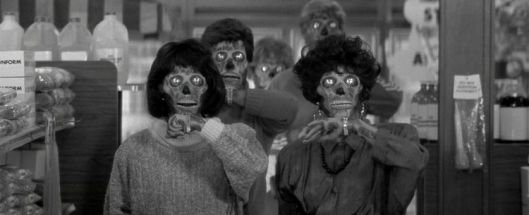
John Carpenter seemed to direct films designed to be cult classics, films that it’s hard to call good cinema on the surface but which end up finding admirers anyway. Escape from New York and Starman are just two favorites that strike a unique balance between sci-fi depth and imaginative cheese, and They Live fits right into that mold. The film centers on a drifter known as John Nada (famed wrestler Roddy Piper), whose discovery of a secret resistance movement and some special sunglasses reveals an alien mind-controlling conspiracy that can only be taken out by a shotgun and a classic one-liner.

Image result for they live 1988

As is typical with the other Carpenter films I’ve seen, it takes a while for the story to get going, as Nada meets a fellow construction worker (Keith David) and slowly notes a few nearby oddities at a church. Piper isn’t exactly a world-class actor either, so the only reason to sit through the beginning is for the promise of action to come. When it does, though, it’s pretty darn fun as Nada goes from gawking at a black-and-white world decorated with words like “Conform” and “Consume” to blasting every skull-faced alien in sight. The most famous sequence has to be the five-minute-plus smackdown between Piper and David over convincing the latter to wear the sunglasses, a fist fight that becomes laughable simply by how many times they both get up to keep on slugging each other.

I’ll admit that, after the slow start, They Live is very watchable, but it does seem weak in several areas, and not just the so-so acting or occasionally fake effects. There’s a pointed critique of commercialism at its core, summed up by the invisible message “THIS IS YOUR GOD” printed on all dollar bills, and the film points fingers at the elite as collaborators with the alien overlords. Yet the satire doesn’t seem to develop far enough to have much depth beyond the obvious hidden words, and it’s never clear exactly why the aliens are doing this or what they get out of keeping mankind petty. It’s like the beginning of a great idea that’s only half-fulfilled. Even so, Carpenter’s cult classics don’t always lend themselves to the same kind of criticism as mainstream films, and the final scene of this one sort of encapsulates what it is: weird, a bit indecent, strangely funny, and keen on eliciting a reaction.

Best line: (Nada) “I have come here to chew bubblegum and kick a**… and I’m all out of bubblegum.”


Rank:  Honorable Mention


© 2017 S.G. Liput
471 Followers and Counting
 

Blast from the Past (1999)

18 Tuesday Apr 2017

Posted by sgliput in Movies, NaPoWriMo, Poetry, Reviews, Writing

≈ 2 Comments

Tags

Comedy, Romance

Image result for blast from the past film

(Today’s NaPoWriMo prompt was for a poem featuring neologisms, or made-up words, many of which I tried inventing for whimsical effect.)


The heretoformer days of yore
Were full of quagdaries,
Of warnage, gorenage, carnivornage,
One or all of these,
And outsurvivors just assumed
They’d die from some disease.

They had no Twitterbook or texts
Or cell addictophones,
Or paramiscellania
Composed of silicones,
And no one knew of superstuds
Or Indiana Jones.

But if, from previosity,
By tempochronic means,
One telebeamed to present day
With us and all our screens,
They’d probably scramaddle back
To centuries with teens!
_________________

MPAA rating: PG-13

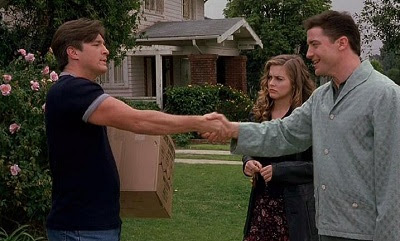
At the height of Brendan Fraser’s golly-gee persona fostered by the likes of George of the Jungle and Dudley Do-Right, he put that image to good use in the thoroughly amusing Blast from the Past. When overly paranoid genius Dr. Calvin Webber (Christopher Walken) builds a super-stocked bunker at the height of the Cuban Missile Crisis, a freak accident makes him and his wife (Sissy Spacek) believe that nuclear war has broken out, and they wait through the fallout for, oh, about 35 years. Of course, life goes on above them, and when they venture out into the depraved new world, their 35-year-old homeschooled son Adam (Brendan Fraser) gets to see the world for the first time.

Granted, it’s a silly concept and treats themes like cabin fever and social change with a decidedly blithe mood, but if you can accept the overlooked-for-decades bunker idea, the comedy never becomes too absurd or unbelievable. Perhaps the best aspect of this fish-out-of-water generational satire is that it doesn’t portray the Webbers and their early ‘60s values as backwards or outdated (like Pleasantville, for example), not even their Christian faith and righteous indignation toward profanity. Instead, most of the humor comes from the contrast between their wholesome naiveté and the big, bad modern world of 1999, like when Calvin’s first encounter with a street walker makes him think the earth is overrun by mutants.

Image result for blast from the past sissy spacek
Fraser plays Adam with happy-go-lucky gusto, finding a much-desired girlfriend in Alicia Silverstone’s cynical Eve. The film’s respect toward nostalgia for the good-old days is plain in Eve’s gradual transition from thinking Adam’s crazy to admiring his sense of chivalry and innocence. As a whole, the film entertains by finding the humor in how things change over the years without mocking the past or present too harshly. I was also thunderstruck by the sudden appearance of a very young Nathan Fillion, three years before Firefly, making me wish for a less under-played showdown between Mal Reynolds and Rick O’Connell. While a sheltered boy locked in a room for years has dramatic potential (as in Room), Blast from the Past makes the situation consistently funny; it’s a refreshing and clever trifle of a comedy, one that made me miss the good-old days of Brendan Fraser’s heyday.

Best line: (Eve’s friend Troy, of Adam) “You know, I asked him about that. He said, good manners are just a way of showing other people we have respect for them. See, I didn’t know that. I thought it was just a way of acting all superior. Oh, and you know what else he told me?”
(Eve) “What?”
(Troy) “He thinks I’m a gentleman and you’re a lady.”
(Eve) “Well, consider the source! I don’t even know what a lady is.”
(Troy) “I know, I mean I thought a “gentleman” was somebody that owned horses. But it turns out, his short and simple definition of a lady or a gentleman is someone who always tries to make sure the people around him or her are as comfortable as possible.”
(Eve) “Where do you think he got all that information?”
(Troy) “From the oddest place: his parents. I mean, I don’t think I got that memo from mine.”


Rank:  List Runner-Up


© 2017 S.G. Liput
471 Followers and Counting


Bright Star (2009)

17 Monday Apr 2017

Posted by sgliput in Movies, NaPoWriMo, Poetry, Reviews, Writing

≈ Leave a comment

Tags

Biopic, Drama, History, Romance

Image result for bright star 2009

(Today’s NaPoWriMo prompt was for a nocturne, a poem inspired by the nighttime, which I applied to the elegiac notes of a film about the poet John Keats.)


Do you see the stars in their scattered arrays,
Content to fluoresce and to wait between days?
Do you hear the leaves when they flap in the wind,
In summer so teeming, in harvest-time thinned?
Do you feel the stillness of worlds at their rest,
Of closed morning glories and birds in their nest?

I witness these wonders you once wrote about,
Before disease meddled to snuff your light out.
Distractions of day help my memories melt,
But when night becalms them, your absence is felt.
I’ll dream of you here, and though Heaven is light,
I hope you still cherish the joys of the night.
__________________

MPAA rating: PG

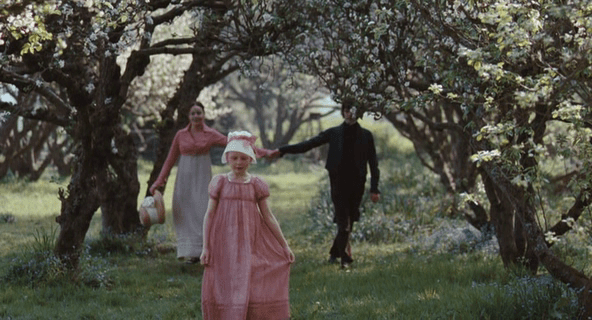
I thought it was about time I reviewed the film that placed #4 on my Top 12 Poems in Movies list. Bright Star is a film for poets and about poets, one that translates tender word to screen in the form of an intimate period piece. John Keats has never been among my favorite poets, but this film makes him more than a mere authorial name, chronicling his romance with Fanny Brawne during the final years of his short life.

Image result for bright star 2009 keats and brawne

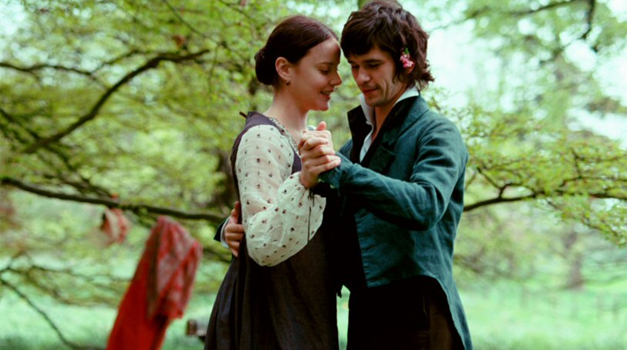
Director and writer Jane Campion of The Piano fame was blessed with two outstanding leads in Abbie Cornish and Ben Whishaw, known as the latest Q in the James Bond franchise and as the voice of Paddington Bear. Cornish plays Brawne with some early traces of women’s lib in her attitude, proud of her fashion creations and her ability to earn a living from them. On the opposite side of the self-sufficiency spectrum is Whishaw’s Keats, whose chosen profession as a poet is decidedly unprofitable, especially when his published poem Endymion flops. The two aren’t sure that their harmless flirting should continue any further, especially when Keats’s roommate and fellow poet Charles Brown (Paul Schneider) competes with Brawne for his friend’s attention. Soon, however, their romance begins in earnest, with swooningly passionate and eventually tragic results.

The early 19th-century costumes and details are elegantly faithful to the period and somewhat reminiscent of films based on the works of Keats’s contemporary Jane Austen.  Another point of comparison might be 1998’s Shakespeare in Love, also based on a literary figure and his love affair, but whereas that film was mostly fictitious and overrated, Bright Star has a greater biographical basis and instills passion into the mundane. No sex scenes are needed to accentuate Keats’s and Brawne’s relationship; it’s in their woodland walks and love letters that their fervent affection is felt. I especially loved one symbolic part that became a microcosm of doomed romance itself, as Brawne fills her bedroom with butterflies while exulting at every letter from Keats only for disenchantment to set in as the butterflies inevitably die.

Image result for bright star 2009 keats and brawne

Bright Star holds much poetic appeal, not only by quoting many of Keats’s works but by voicing his and Brown’s opinions on the nature of poetry and the writing process. “It ought to come like leaves to a tree, or it better not come at all,” says Keats at one point. The quiet tone may be too slow and melancholy for some, but Bright Star makes the most of its poignant themes, graceful cinematography, and brilliant cast, with Cornish and Schneider especially nailing the most emotional moments. It’s not quite among my favorite films ever, but it’s an underrated gem that I’ll always be fond of and one all fans of poetry ought to see.

Best line: (John Keats) “A poem needs understanding through the senses. The point of diving into a lake is not immediately to swim to the shore but to be in the lake, to luxuriate in the sensation of water. You do not work the lake out; it is an experience beyond thought. Poetry soothes and emboldens the soul to accept the mystery.”  (Fanny Brawne) “I love mystery.”


Rank: List Runner-Up


© 2017 S.G. Liput
471 Followers and Counting
 

Risen (2016)

16 Sunday Apr 2017

Posted by sgliput in Christian, Movies, NaPoWriMo, Poetry, Reviews, Writing

≈ Leave a comment

Tags

Biblical, Drama, History, Mystery

Image result for risen 2016 film

(Happy Easter to all! Today’s NaPoWriMo prompt was for a poem inspired by letter-writing, so I rhymed up a letter that the main character of this movie might have written by the end.)


Dear Lucius, please forgive
My sudden absence. I yet live,
But returning to my former life I simply cannot do.
I was Tribune, son of Mars,
And have weathered many scars,
But such were merely physical and all I ever knew.

I’ve seen many crucifixions;
I had no need for predictions.
Every broken, bloody body had its final resting place,
Till one random victim slain
The chosen grave could not contain.
I’ve never seen a man whom even death could not erase.

I doubted, how I doubted,
And was adamant about it;
I have seen and known too much to trust the supernatural.
I don’t expect you to believe,
For true faith I’ve yet to achieve,
But life can never be the same when it has known a miracle.

-Clavius
_________________

MPAA rating: PG-13

While all the other posts for NaPoWriMo have been decided mostly by the prompt, I knew there was no other recently seen film to review on Easter than Risen, the most prominent of the three Jesus movies from 2016 (the others being The Young Messiah and Last Days in the Desert). Risen was considered a spiritual sequel to The Passion of the Christ, picking up essentially where Mel Gibson’s film left off and focusing on the events of Jesus’ resurrection. Instead of merely showing the Biblical story as many previous films have, Risen differentiates itself for the better by applying an outsider’s view, specifically in the fictional character of Tribune Clavius (Joseph Fiennes).

Image result for risen 2016 film

Somewhat like 1953’s The Robe, the crucifixion is seen through the eyes of a Roman when Pontius Pilate sends Clavius to keep the crowds in check at Jesus’ execution. Clavius has never even heard of this man, and he absorbs all the reports and promises of his supernatural return with the mind of a pagan skeptic, putting his faith in Mars, the god of war. When the body of Jesus disappears, he is commissioned by Pilate to track it down and put all the rumors and worries to rest. Clavius’ investigations may not be strictly Biblical, but it makes sense that the authorities’ first response would be to disprove the resurrection with physical evidence, a search that is made surprisingly gripping by the urgency of the mission. The interviews Clavius conducts with the likes of Joseph of Arimathea and Bartholomew give him an idea of what Jesus’ followers are like, steadfast and often giddy with hope, and some of the side characters provide some excellent acting. The account of one of the unnerved guards from the tomb is especially well-delivered.

While Risen strives to be a cut above other faith-based films, it falls into the familiar mold by the end. Its similarities to The Passion of the Christ mainly consist in the use of the Hebrew name Yeshua for Jesus, and it does reimagine certain details with gritty zeal, but it doesn’t really follow The Passion’s sterling example of “show, don’t tell.” The film’s depiction of the resurrected Jesus (Cliff Curtis) felt rather insubstantial, quick to vanish without explanation, and the events following the resurrection are compressed to the point that the disciples seem to have barely a day with their Lord, much less forty. The ending is also ambiguously wrought and not in any satisfying way.

Image result for risen 2016 film

I liked Risen quite a bit, from its impressive re-creation of Roman warfare to its admirable performances, and it’s a film I would gladly watch again to celebrate the Easter season. It is let down by a weak second half, but it’s not as preachy or trite as some faith-based efforts, and unlike similar films, the script employs dialogue befitting the ancient world. Even if it doesn’t match the emotional impact of The Passion, Risen is a worthwhile story that stresses the life-changing significance of the Resurrection.

Best line: (Clavius) “I cannot reconcile all this with the world I know.”   (Yeshua) “With your own eyes you’ve seen, yet still you doubt. Imagine the doubt of those who have never seen. That’s what they face.”


Rank: List Runner-Up


© 2017 S.G. Liput
470 Followers and Counting


Empire of the Sun (1987)

15 Saturday Apr 2017

Posted by sgliput in Movies, NaPoWriMo, Poetry, Reviews, Writing

≈ 2 Comments

Tags

Drama, History, War

Image result for empire of the sun film

(Today’s NaPoWriMo prompt was for a poem about the middle of something, so I applied that theme to another film about sudden and distressing circumstances.)


The peace we always took for granted vanishes, no warning paid,
And thoughts and fears and new frontiers take precedence as comforts fade.
This change of fortunes must be fleeting, say the victims who pretend.

Keep the faith, a little longer, don’t give up, our angels cheer;
Those who dare say, “Halfway there,” but that just means to persevere,
For how are we to know the middle when we cannot see the end?

Some are born to dream in darkness; some are born to bear its weight;
Some are born, it seems, to mourn with equal chance to hope or hate.
They all survive on how they face experiences no one should.

The start of hardship can unsettle, and its end can overwhelm,
What one endures between assures the rest of us who’s at the helm.
The middle of a tragedy reveals the evil and the good.
__________________

MPAA rating: PG (should be PG-13)

Empire of the Sun has never had the same reputation as Steven Spielberg’s other films. No one I know quotes famous lines or references famous scenes from it, but even Spielberg’s less prominent films confirm him as a consummate filmmaker, whether he’s directing fun actioners or serious historical narratives like this one. Little attention is usually paid to China during World War II, much less the foreigners living there at the time, but Empire of the Sun takes inspiration from J.G. Ballard’s semi-autobiographical novel, tracing one British boy’s survival story through the hardships of war.

Image result for empire of the sun film

While the cinematography, score, and direction are awe-inspiring in their epic scope, this film belongs to Christian Bale, whose first major performance as the teenage Jamie Graham has to rank among the finest child actor performances ever. He runs the full gamut of emotions, from his spoiled brat ways as a well-to-do schoolboy in Shanghai to his ever more desperate attempts at clinging to normalcy in the wake of being separated from his parents and forced to survive in an uncaring land. He nails the euphoria and admiration of a boy obsessed with the glory of war planes (“Cadillac of the sky!”), as well as the shock and sorrow of witnessing the loss of everything he held dear. A lesser performance couldn’t have supported such a long movie, but Bale distinguished himself early as a strong and versatile performer.

The always great John Malkovich also pops up intermittently as Basie, an American whose experience and leadership cause Jamie to latch onto him as an anchor amidst the chaos, even if he doesn’t recognize Basie’s repeated selfishness. Joe Pantoliano, Nigel Havers, and Miranda Richardson also do good work in supporting roles along Jamie’s journey, and apparently Ben Stiller was in it too, though I don’t remember seeing him.

Spielberg provides sharp contrast between Jamie’s privileged upbringing and the native squalor surrounding it—an early scene has a convoy of Britishers headed to a costume party besieged by the destitute masses—and the fall from status of Jamie and his fellow moneyed class is hard-felt as they are soon reduced to fighting over a potato or else starving to death. Jamie, or Jim as Basie calls him, displays surprising adaptability in the face of all the desperation, but the casualties of war eventually overcome him in tragic fashion, claiming his innocence as one of their number. In many ways, it reminded me of Grave of the Fireflies from the following year by putting a struggling boy through a wartime hell no child should have to endure.

Image result for empire of the sun film

Empire of the Sun is an epic with a pitying eye on the civilian cost of war and boasts a singular star performance to deliver both the hope and the heartbreak of its story. Its 2½-hour length is a bit of a bear at times, accentuating the duration of Jamie’s trials but testing the audience’s patience as well. It’s really the only fault I can point to to justify it not being List-Worthy, and it’s hard to believe it wasn’t nominated for Best Picture or Director that year. It’s not as watchable as most of Spielberg’s filmography, but it’s one of his grander, more illustrious works.

Best line: (Basie, in the Japanese internment camp) “It’s at the beginning and end of war that we have to watch out. In between, it’s like a country club.”


Rank: List Runner-Up


2017 S.G. Liput
470 Followers and Counting


12 Years a Slave (2013)

14 Friday Apr 2017

Posted by sgliput in Movies, NaPoWriMo, Poetry, Reviews, Writing

≈ 2 Comments

Tags

Drama, History

Image result for 12 years a slave film

(Today’s NaPoWriMo prompt was for a humorous four-line clerihew about a famous person, but in light of today being Good Friday, I went more of a serious route and reviewed a film with suffering as a major theme.)


Solomon Northup
Would not give his worth up.
At dignity’s theft,
He survived with what was left.
_______________

MPAA rating: R

When 12 Years a Slave won Best Picture back in 2013, I was struck by one critic’s statement that it was the first major film focusing on American slavery. I found that hard to believe, but the more I tried to think of a previous example, the more I realized he was right. Roots opened the eyes of television audiences back in 1977, but cinematic slavery seems always to have been in the background (Gone with the Wind, for example), centering more on white characters. There have been so many films about the struggles of African Americans during Reconstruction and the Civil Rights Era that their pre-Civil War history has surprisingly been overlooked, at least in the movies.

Image result for 12 years a slave film

Directed by Steve McQueen (the director, not the actor), 12 Years a Slave is all the more potent due to its historical source, the real-life memoir of Solomon Northup (Chiwetel Ejiofor), a free black man from New York who was kidnapped and sold into slavery in 1841. Overnight, Solomon goes from a respected member of the community to a piece of property labeled “Platt,” and his agonizing journey represents a comprehensive survey of the slave experience, ranging from the humiliation of the auction house to plantation masters both kind and cruel. His first master William Ford (Benedict Cumberbatch) treats his slaves fairly yet does not recognize the moral dissonance between his Christian beliefs and slave-dependent lifestyle, epitomized by the delivery of his Sunday sermon competing with the wails of a grieving mother. Still, Ford is a saint next to Solomon’s next owner, Edwin Epps (Michael Fassbender), a hard-hearted brute who takes pleasure in raping his favorite and most productive slave Patsey (Lupita Nyong’o, who deservingly won a Best Supporting Actress Oscar).

For years, films have grieved hearts and minds with Civil Rights-Era racism, behavior that is still seen as a holdover from the days of slavery, but it’s even more shocking to see the real thing, the undiluted cruelty and unrestricted control over human lives that were an unquestioned institution in the South before the Civil War. Multiple scenes are carefully crafted gut-punches that intentionally drag on to heighten their inhumanity: as punishment for fighting back on one occasion, Solomon is trussed up by the neck with his feet barely touching the ground, while his fellow slaves filter outside, too fearful to help him. In one astounding and brutal shot filmed without cuts, Epps forces him to repeatedly whip Patsey over a mere bar of soap. Through all this, Ejiofor delivers the performance of a lifetime, and even if the timing of what happens when during the twelve years is not documented, the years are felt in Solomon’s troubled gazes of ever-increasing despair and desperation.

Image result for 12 years a slave film

For me, 12 Years a Slave is somewhat similar to The Passion of the Christ, mainly in its depiction of heartless savagery (including a prominent whipping) that makes it a film to appreciate as significant but by no means something to enjoy watching. All the performances are outstanding, though I would have thought Ejiofor deserved an Oscar even more than Nyong’o (who would have believed he’d lose to Matthew McConaughey?), and Fassbender’s wholly detestable role as Epps nearly threatened to destroy my personal regard for the actor. (It was cool, as well, to see Ejiofor alongside Cumberbatch three years before their pairing in Doctor Strange.) While some scenes are reminiscent of Roots, 12 Years a Slave is more mature and intense in its depiction of violence and rape, and the sense of misery and loss is constant, even after the emotional release toward the end. The portrayal of Christianity is also less than positive, illustrating how it was often used to justify slavery, but such representations are somewhat mitigated by the more sympathetic faith of a visiting abolitionist (Brad Pitt). While I’m not entirely convinced that all the powerfully poignant scenes add up to a masterpiece, 12 Years a Slave is an important piece of historical cinema and a long overdue look at a subject many might want to forget.

Best line:  (Epps, debating with the abolitionist) “I bought ’em. I paid for ’em.”
(Bass) “Well, of course you did, and the law says you have the right to hold a n*****. But begging the law’s pardon, it lies. Suppose they pass a law taking away your liberty, making you a slave. Suppose.”
(Epps) “That ain’t a supposable case.”
(Bass) “Laws change, Epps. Universal truths are constant. It is a fact, a plain and simple fact, that what is true and right is true and right for all. White and black alike.”


Rank: List Runner-Up


2017 S.G. Liput
469 Followers and Counting


← Older posts
Newer posts →

Recent Posts

  • We Didn’t Start 2025 (Recap)
  • NaPoWriMo 2025 Recap (Finally)
  • Sonic the Hedgehog 3 (2024)
  • It Happened One Night (1934)
  • Spellbound (2024)

Recent Comments

associatesofshellymann's avatarassociatesofshellyma… on My Top Twelve La La La So…
Kit's avatarKit Nichols on Bonnie and Clyde (1967)
lifelessons's avatarlifelessons on Look Back (2024)
Carol Jackson's avatarCarol Jackson on The Thief of Bagdad (1940…
Stephen's avatarStephen on Love Story (1970)

Archives

  • January 2026
  • December 2025
  • May 2025
  • April 2025
  • March 2025
  • February 2025
  • January 2025
  • December 2024
  • May 2024
  • April 2024
  • March 2024
  • February 2024
  • January 2024
  • December 2023
  • November 2023
  • October 2023
  • September 2023
  • July 2023
  • June 2023
  • May 2023
  • April 2023
  • March 2023
  • February 2023
  • January 2023
  • December 2022
  • November 2022
  • October 2022
  • September 2022
  • August 2022
  • July 2022
  • June 2022
  • May 2022
  • April 2022
  • March 2022
  • February 2022
  • January 2022
  • December 2021
  • November 2021
  • October 2021
  • September 2021
  • August 2021
  • July 2021
  • June 2021
  • May 2021
  • April 2021
  • March 2021
  • February 2021
  • January 2021
  • December 2020
  • November 2020
  • October 2020
  • September 2020
  • August 2020
  • July 2020
  • June 2020
  • May 2020
  • April 2020
  • March 2020
  • February 2020
  • January 2020
  • December 2019
  • November 2019
  • October 2019
  • September 2019
  • August 2019
  • July 2019
  • June 2019
  • May 2019
  • April 2019
  • March 2019
  • February 2019
  • January 2019
  • December 2018
  • November 2018
  • October 2018
  • September 2018
  • August 2018
  • July 2018
  • June 2018
  • May 2018
  • April 2018
  • March 2018
  • February 2018
  • January 2018
  • December 2017
  • November 2017
  • October 2017
  • September 2017
  • August 2017
  • July 2017
  • June 2017
  • May 2017
  • April 2017
  • March 2017
  • February 2017
  • January 2017
  • December 2016
  • November 2016
  • October 2016
  • September 2016
  • August 2016
  • July 2016
  • June 2016
  • May 2016
  • April 2016
  • March 2016
  • February 2016
  • January 2016
  • December 2015
  • November 2015
  • October 2015
  • September 2015
  • August 2015
  • July 2015
  • June 2015
  • May 2015
  • April 2015
  • March 2015
  • February 2015
  • January 2015
  • December 2014
  • November 2014
  • October 2014
  • September 2014
  • August 2014
  • July 2014
  • June 2014
  • May 2014
  • April 2014
  • March 2014
  • February 2014
  • January 2014
  • December 2013

Categories

  • Blindspot
  • Blogathon
  • Christian
  • Movies
  • Music
  • NaPoWriMo
  • Poetry
  • Reviews
  • TV
  • Writing

Meta

  • Create account
  • Log in
  • Entries feed
  • Comments feed
  • WordPress.com

Recent Posts

  • We Didn’t Start 2025 (Recap)
  • NaPoWriMo 2025 Recap (Finally)
  • Sonic the Hedgehog 3 (2024)
  • It Happened One Night (1934)
  • Spellbound (2024)

Recent Comments

associatesofshellymann's avatarassociatesofshellyma… on My Top Twelve La La La So…
Kit's avatarKit Nichols on Bonnie and Clyde (1967)
lifelessons's avatarlifelessons on Look Back (2024)
Carol Jackson's avatarCarol Jackson on The Thief of Bagdad (1940…
Stephen's avatarStephen on Love Story (1970)

Archives

  • January 2026
  • December 2025
  • May 2025
  • April 2025
  • March 2025
  • February 2025
  • January 2025
  • December 2024
  • May 2024
  • April 2024
  • March 2024
  • February 2024
  • January 2024
  • December 2023
  • November 2023
  • October 2023
  • September 2023
  • July 2023
  • June 2023
  • May 2023
  • April 2023
  • March 2023
  • February 2023
  • January 2023
  • December 2022
  • November 2022
  • October 2022
  • September 2022
  • August 2022
  • July 2022
  • June 2022
  • May 2022
  • April 2022
  • March 2022
  • February 2022
  • January 2022
  • December 2021
  • November 2021
  • October 2021
  • September 2021
  • August 2021
  • July 2021
  • June 2021
  • May 2021
  • April 2021
  • March 2021
  • February 2021
  • January 2021
  • December 2020
  • November 2020
  • October 2020
  • September 2020
  • August 2020
  • July 2020
  • June 2020
  • May 2020
  • April 2020
  • March 2020
  • February 2020
  • January 2020
  • December 2019
  • November 2019
  • October 2019
  • September 2019
  • August 2019
  • July 2019
  • June 2019
  • May 2019
  • April 2019
  • March 2019
  • February 2019
  • January 2019
  • December 2018
  • November 2018
  • October 2018
  • September 2018
  • August 2018
  • July 2018
  • June 2018
  • May 2018
  • April 2018
  • March 2018
  • February 2018
  • January 2018
  • December 2017
  • November 2017
  • October 2017
  • September 2017
  • August 2017
  • July 2017
  • June 2017
  • May 2017
  • April 2017
  • March 2017
  • February 2017
  • January 2017
  • December 2016
  • November 2016
  • October 2016
  • September 2016
  • August 2016
  • July 2016
  • June 2016
  • May 2016
  • April 2016
  • March 2016
  • February 2016
  • January 2016
  • December 2015
  • November 2015
  • October 2015
  • September 2015
  • August 2015
  • July 2015
  • June 2015
  • May 2015
  • April 2015
  • March 2015
  • February 2015
  • January 2015
  • December 2014
  • November 2014
  • October 2014
  • September 2014
  • August 2014
  • July 2014
  • June 2014
  • May 2014
  • April 2014
  • March 2014
  • February 2014
  • January 2014
  • December 2013

Categories

  • Blindspot
  • Blogathon
  • Christian
  • Movies
  • Music
  • NaPoWriMo
  • Poetry
  • Reviews
  • TV
  • Writing

Meta

  • Create account
  • Log in
  • Entries feed
  • Comments feed
  • WordPress.com

Blog at WordPress.com.

  • Subscribe Subscribed
    • Rhyme and Reason
    • Join 814 other subscribers
    • Already have a WordPress.com account? Log in now.
    • Rhyme and Reason
    • Subscribe Subscribed
    • Sign up
    • Log in
    • Report this content
    • View site in Reader
    • Manage subscriptions
    • Collapse this bar