When the dust of the town seems to tremble with dread
As it blows and remembers becoming blood red
The last time that many a cowardly head
Ducked down as a bully drew near,
When fingers are itchy and tempers are short,
When fight makes you foolish and flight makes you sport,
And no one is willing, in street or in court,
To hazard their life and career,
When violence is common and wounds are left raw,
And only a few have the courage to draw,
It’s they who must lay down an unbending law
And clear the frontier of its fear.
_______________________
MPAA rating: PG-13
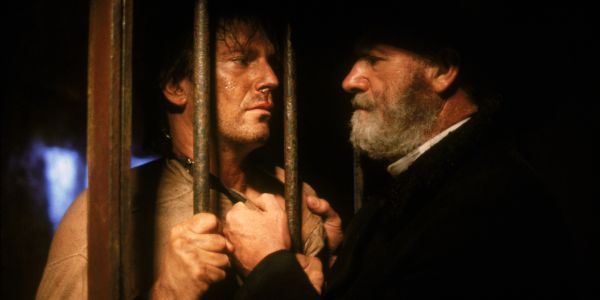
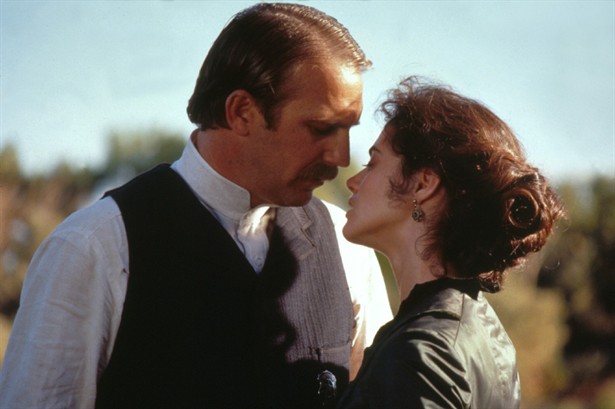
It’s been far too long since I gave my dear Viewing Companion (VC) a chance to pick a movie, and after her choice of Tombstone several months ago, she wanted to compare it to Kevin Costner’s competitor Wyatt Earp. Released just a year after Tombstone, which centered solely on the events surrounding the famous gunfight at the O.K. Corral, Wyatt Earp sought to differentiate itself by painting a much broader picture of Wyatt’s entire life, from his childhood to his later years.
For anyone wondering up front, Tombstone is easily the better film (albeit more violent), as the Rotten Tomatoes scores of both will attest. Whereas Wyatt Earp is expansive and rambling, with the O.K. Corral as just another event among many in Earp’s life, the limited scope of Tombstone makes it much more focused, as well as an hour shorter than Wyatt Earp’s exorbitant three-hour-plus runtime. (Honestly, it might have worked better as the miniseries it was originally planned to be.)
But all that’s not to say that Wyatt Earp doesn’t have its merits. My VC called it “an admirable attempt” at presenting Earp’s full story, and it did give more insight into what formed him into the cold and fearless lawman he became. Story elements like his tragic first marriage or how his father (Gene Hackman) saved him from a particularly low period in his life certainly add to his character, with details Tombstone didn’t have the time or inclination to include. Plus, the performances are solid throughout with an all-star cast to rival that of Tombstone. I must mention the Lost alert for Jeff Fahey as Ike Clanton, but many will also recognize Mark Harmon, Jim Caviezel, Bill Pullman, JoBeth Williams, Isabella Rossellini, Catherine O’Hara, Tom Sizemore, Adam Baldwin, and Tea Leoni. And I mustn’t forget Dennis Quaid as the TB-ridden Doc Holliday, with Quaid’s commitment evident in how gaunt and sickly-looking he became for the role.
Everyone does a fine job in the acting department, but again they rarely compare with their Tombstone counterparts. As well as Quaid does, he’s no match for Val Kilmer’s career-best role as Holliday, just as Kurt Russell overshadows Costner, though I can see Costner’s darker interpretation being more true to history. The friendship between the two of Earp and Holliday is definitely better defined and presented in Tombstone.
Yet it’s mainly in the comparison that Wyatt Earp falls short; on its own, it’s still a good film with more than a few strong moments exemplifying Earp’s tough-as-nails persona. James Newton Howard’s sweeping score also elevates it as a western. If you can get Tombstone out of the back of your mind, Wyatt Earp proves to be a comprehensive and well-produced history lesson, with plenty of creative license that acknowledges how history becomes legend.
Best line: (Doc Holliday) “Dave Rutabaugh is an ignorant scoundrel! I disapprove of his very existence. I considered ending it myself on several occasions, but self-control got the better of me.”
Down the street, there marched a throng,
Arm in arm to right the wrong
Of rights unequal for so long.
Their very presence was a cause
Of hate for some, for some applause,
But hate had hold upon the laws.
These laws to justice were opposed,
And so they marched and re-exposed
The rights the Founders first proposed.
Change is born from word and deed,
From marching feet and wounds that bleed,
And truth we may not want but need.
____________________________
MPAA rating: PG-13 (for street violence and language)
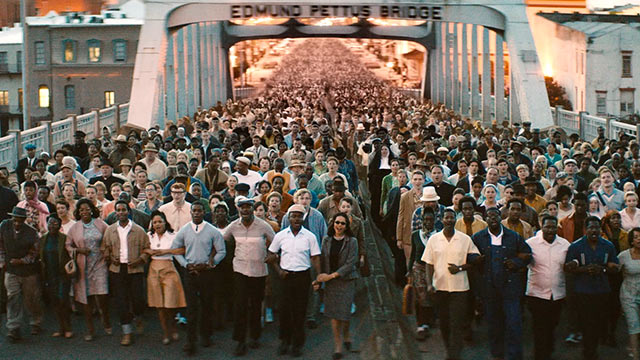
I had wanted to review Selma in February in honor of Black History Month, but as usual this year, I’m a little late. At least now I’m on track with the whole one-Blindspot-per-month schedule. As I expected when I chose it as a Blindspot, Selma turned out to be an ideal choice for Black History Month, covering an important period of the civil rights movement and offering a compelling portrayal of the man behind so much of it, Dr. Martin Luther King, Jr.
David Oyelowo plays Dr. King, and I’m still shocked that he wasn’t even nominated for a Best Actor Oscar that year. It’s a career-defining performance that reminded me of Gary Oldman’s turn as Winston Churchill in Darkest Hour, in that it presented a great man and what made him great while depicting his low moments and acknowledging his imperfections. Oyelowo especially excels in the reenactments of King’s impassioned and eloquent speeches, and the supporting cast is equally stellar, from Carmen Ejogo as his long-suffering wife to Tom Wilkinson as a grudgingly helpful President Johnson. The whole ensemble contributes to an engagingly personal history lesson, from established actors like Tim Roth and Oprah to then-newcomers who have become more well-known in the years since, such as Lakeith Stanfield and Tessa Thompson.
My VC thought Selma had the slight feel of a TV movie, and some critics have nitpicked its historical accuracy, but more often than not, Selma felt to me like watching real, immediate history, which is the best compliment that can be offered to a historical drama. It presents uncomfortable truths tastefully, such as the doubts surrounding King’s potential adultery, and shows the horrors of hate and prejudice in ways that are powerful but not graphic. While King certainly preaches, the film doesn’t too much, letting its story develop its themes, such as non-violence; for example, King’s assertions that their efforts need to be noticed by white America are fulfilled when the Selma march is joined by white religious leaders and supporters from across the country, lending greater numbers and prominence to the event.
I don’t know why it took so long for me to watch Selma, but I’m glad I did, even if I’m left annoyed that it didn’t get more Oscar love that year. (It did win Best Original Song for “Glory,” which ironically was the one thing I didn’t care for, not being a fan of rap.) The only criticism I have is that it might be hard to keep track of all the characters if you’re unfamiliar with the history. Nevertheless, this feels like an essential film for not just black history but American history. With its laudable lead performance and rousing conclusion, Selma deserves to be ranked among the greatest historical films.
Best line: (Dr. King) “Our lives are not fully lived if we’re not willing to die for those we love, for what we believe.”
King Arthur and his band of knights
Were questing for the Holy Grail.
(We only know the big highlights
Or else ‘twould be a boring tale.)
Their names in legend often show,
Like Galahad and Lancelot,
Though some had names we’ll never know
Because they liked to dance a lot.
They fought with dragons, rabbits, lust,
And knights called green ere green was cool.
So yes, they quested, as discussed,
Don’t read it; watch the film, you fool!
_____________________
MPAA rating: PG (should definitely be PG-13)
Well, I’ve gotten 2019 off to a slow start as far as this blog. I’m already behind on my Blindspots, but it’s time to get started.
So why did I select Monty Python and the Holy Grail as a Blindspot pick this year? I thought it was about time that I see the source of lines like “It’s only a flesh wound,” which has creeped into the everyday speech of even those of us who haven’t seen this classic comedy. Honestly, there are so many well-known scenes from this irreverent British farce that I just wanted to see whatever connected them. (Note that the Killer Rabbit of Caerbannog made it onto my Top Twelve Rabbits in Movies even before I’d watched the full movie.) Plus, I came to realize, although I’ve seen the likes of John Cleese and Michael Palin, I’ve never seen the whole Monty Python troupe together as they are in their first film, each of them playing multiple varied roles.
While I was a little disappointed that there wasn’t much connective tissue between the individual memorable scenes apart from King Arthur’s quest for the Grail, there were plenty of chuckles to go around. Sometimes it was random meta moments like escaping from an animated creature because the animator keeled over or even more random gags that became funnier with repetition. Some of the jokes do go on too long, losing their humor in the process, but even this weakness often becomes another chance for the film to poke fun at itself. (“Get on with it!”) I also got to recognize moments that have been borrowed in other media, like the way the Knights’ Trojan Rabbit is heard being constructed in the woods.
The hilarity wasn’t constant, but Monty Python and the Holy Grail certainly made me laugh with its rye British absurdity, even right from the start with the opening credits about moose and llamas. (It reminded me of the equally hilarious end credits of a weird little film called Roller Town. Seriously, why don’t more movies use their credits as part of the jokes?) The ending was a bit of a letdown, abrupt in a way that reminded me of An American Werewolf in London, but I can see why Holy Grail has become such a lauded and influential comedy, even if it’s not among my personal favorites. I did like those French insults, though, and will be looking for chances to use them myself. 😉
Best line: (French soldier/heckler) “I don’t want to talk to you no more, you empty-headed animal food trough wiper! I fart in your general direction! Your mother was a hamster, and your father smelt of elderberries!”
In the deep glades of the forest
Where we humans rarely dare
Grows a flower raised on rumor
No one really thinks is there.
In this flower dwells a power,
Magic purely legend-born,
Waiting for some wanderer
To chance upon this plant forlorn.
When this power leaves its petals,
Gift for better or for worse,
Its new owner must decide
If it’s a blessing or a curse.
__________________
MPAA rating: PG
I know I was not the only person to be bitterly disappointed when Studio Ghibli announced its hiatus, which has since been reversed with Hayao Miyazaki again coming out of retirement for one more film. Even if that last film really is their last, though, there is hope yet that its imaginative spirit will live on in Studio Ponoc, a new animation studio founded by former members of Ghibli. Carrying on the legacy, Hiromasa Yonebayashi, previously director of Ghibli’s The Secret World of Arrietty and When Marnie Was There, brings much of the old Miyazaki-style magic to Studio Ponoc’s first feature, Mary and the Witch’s Flower.
Based off a 1971 children’s book called The Little Broomstick by Mary Stewart, Mary and the Witch’s Flower follows a young British girl who discovers a mysterious flower in the woods, which grants her temporary magical powers and allows her to visit the prestigious Endor College for witches, where the magical faculty are up to no good. Beyond the very similar art style, the film draws enormous inspiration from the catalog of Studio Ghibli, as any fan of Kiki’s Delivery Service, Castle in the Sky, Spirited Away, or Howl’s Moving Castle will easily tell. It’s not just the plucky young heroine either; individual scenes are clearly echoed as well, from broomstick-riding with a black cat to climbing up the roots of a giant tree. Yet for everything it borrows, Mary and the Witch’s Flower also feels of a piece with those classics, like a respectful grandchild.
Speaking of which, there’s something refreshing about the difference between this kind of Ghibli fare and western animation. Whereas most western cartoons paint adults as either jerks or fools, the Japanese esteem for elders shines through in the respect Mary shows her grandmother. This reflects the overall gentleness of the story, again another Ghibli trait. Despite an adventurous plot involving high-flying brooms and animal experimentation, Mary lacks depth and sometimes comes off a tad too genteel, in a way with which not all adults will connect.
Gorgeously animated, Mary and the Witch’s Flower is too derivative to compare with Ghibli at its best, but it’s a lovely film nonetheless, with enough affectionate detail and colorful whimsy to satisfy fans of the films it emulates. No doubt kids who grow up watching this movie will feel the same way about it years from now that many feel about Kiki or Arrietty. It’s certainly a sign of promise for Studio Ponoc’s future.
Like, share, post, delete,
Play, search, hide, repeat—
On the screen, our lives connect,
While off the screen, they show neglect,
Not knowing how we each affect
Each other in ways indirect.
Liars, lovers, fathers, friends
Dwell online, but each depends
On flesh and blood that can’t suppress
The need to fill its loneliness.
_____________________
MPAA rating: PG-13
Hollywood is all too often invaded by gimmicks. The found-footage style, the zombie craze, the Alien-style plotline (come to think of it, most of them are horror gimmicks) – there’s more than enough copycats to go around, but there’s always that one that did it best and usually first, like Alien or Night of the Living Dead. Using only a computer screen for a movie may have been done before, as in the Unfriended films, but it’s hard to imagine it will ever be done better than in last year’s Searching.
John Cho plays David Kim, a California father whose daughter goes missing, sending him on a frantic search through her online life and uncovering just how little he knew about her. The computer screen “gimmick” is at its best in the opening scenes, which play out in a way reminiscent of the beginning of Up yet exemplify how the computer has become a partner and observer to so many aspects of our lives. I could easily see this beginning as a standalone short film, as it was originally intended, but instead, it simply sets the stage and grounds the story in characters we care about from the start.
My VC was a little tired of the gimmick by the end, but I admire the variety of methods the filmmakers employed to restrict the story to a computer screen while not letting it become dull or overly repetitive. It often depends on David not closing his FaceTime camera window even after a phone call ends, but the story also unfolds through news footage, live recordings, home videos, file searches, and real-time texting. (I couldn’t help but wonder if the texting was at all inspired by the anime Durarara, which also used texts to depict long-distance conversations.) The way it does much of this without spoken words is like a new kind of silent film and is executed brilliantly to suggest emotions we aren’t actually seeing on someone’s face.
Beyond existing for itself, the innovation serves the mystery, a great one full of twists and turns that may not be prediction-proof but offer no shortage of red herrings to keep you guessing. And even once you know the film’s secrets, there’s still more to appreciate; one of the DVD’s bonus features revealed the level of extreme detail that went into creating every web page from scratch, many of which are full of in-jokes, foreshadowing, side plots, and M. Night Shyamalan references. (Even when David’s daughter and an anonymous friend share their favorite Pokémon with each other, those in the know will recognize deeper meaning behind their choices.)
Considering how profitable Searching became, earning back several dozen times its limited budget, there’s no doubt that other films will aspire to emulate its style, but I feel that Searching might be cinematic lightning in a way. I doubt it will hit twice, with any unoriginal copycats likely to overstay their welcome. It’s an outstanding debut from director and former Google employee Aneesh Chaganty, one that uses its gimmick in the best way possible.
The world can be cruel and compromising,
Goodness crumbling, evil rising.
Such a fact isn’t at all surprising;
Simply look around to see.
But harder to view is where the fantastic,
Magic subtle and not bombastic,
Turns the desolate and the drastic
Into beauty’s final fee.
And when the fee is finally paid,
The horrors that happen when humans degrade
Are quickly forgotten, and when they fade,
We welcome sweet reality.
______________________
MPAA rating: R (mainly for violence)
Sorry for the longer-than-expected hiatus lately. I’ve been in the midst of the busiest time of my class project, and just graduated from the program, so now I’m job hunting but also have a little more extra time to post again. I hate that my 2018 Blindspots have run so late into 2019, but I just have this one last review to finish off what I began a year ago! So before I announce the Blindspots for 2019, it’s time to cover Pan’s Labyrinth, Guillermo del Toro’s acclaimed Spanish fantasy.
I didn’t realize when I picked them, but my 2018 Blindspots have introduced me to some directors that I only knew by reputation. I’d never seen a Charlie Kaufman-written movie before Eternal Sunshine of the Spotless Mind, and I’d only seen one other Billy Wilder film before Some Like It Hot. Surprisingly, I’d also never seen a Guillermo del Toro-directed movie either, so Pan’s Labyrinth was like a fresh initiation into the Oscar-winning director’s style. And what a style! Pan’s Labyrinth is as skillfully directed a film as I’ve ever seen, and it’s mind-boggling to me that del Toro wasn’t nominated for a directing Oscar that year, though it did win deservingly for Cinematography, Production Design, and Makeup. The movements of the camera, often changing scenes as it passes behind an object, lends the film a lucid fairy tale quality, despite the contrast of its more true-to-life content.
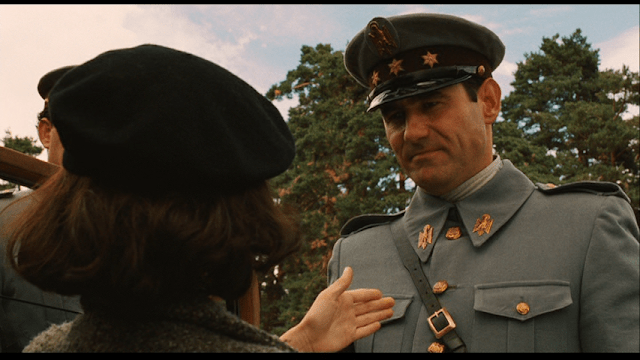
The storyline is also engaging, split between the realistic and the magical. Young Ofelia (Ivana Baquero) is taken by her pregnant mother (Ariadna Gil) to a military base in the woods in 1944 Francoist Spain. There, Ofelia’s merciless new stepfather, Captain Vidal (Sergi López) is hunting down armed rebels and eagerly waiting like Henry VIII for his wife to bear him a son. Meanwhile, Ofelia discovers a mysterious faun (Doug Jones) in a nearby labyrinth, who gives her three tasks in order to supposedly claim her rightful place as princess of the underworld.
At times, the juxtaposition of truth and myth don’t quite mix. When rebels are fighting and dying on the battlefield, it’s a bit hard to care about Ofelia’s forays into fantasy, which may or may not be real themselves. Yet these fantasy sections remain the most memorable, offering the film’s most lasting creature creations, and even these flights of imagination remain somewhat grounded in life-and-death stakes, harkening back to the grimness of the original fairy tales. You know it’s a fantasy when there are giant toads and transforming fairies; you know it’s a dark fantasy when a monster with eyes on its hands bites the heads off those fairies!
Personally, I thought the film as a whole was much more graphic than it needed to be, whether it be some unflinchingly brutal battlefield violence or a firsthand look at how the Joker got his scars. Even so, Pan’s Labyrinth has craft to spare, particularly in its enchanting score and the ornate production design and makeup work of its fantasy elements, laudably brought to life with a bare minimum of CGI. The ending is especially moving, combining the climax of its real-life and fantasy stories into a bittersweet conclusion that artfully leaves its interpretation up to the viewer. It left me haunted in a way great cinema should, and even if not everything melded perfectly, Pan’s Labyrinth proved to be a very worthwhile Blindspot pick.
Best line: (Captain Vidal) “You could have obeyed me!” (Doctor) “But Captain, to obey – just like that – for obedience’s sake… without questioning… That’s something only people like you do.”
The universe is vast and grand
And larger than we can explore,
Yet what if there were more than one
With possibilities galore.
In one dimension, you might be
Reclining underneath a tree.
In one, you’re driving;
One, in bed;
In one, surviving;
One, you’re dead.
In one, you may be ten feet tall
Or climbing up a building wall.
In one, your hair is blond or red;
Another, you have none at all.
You might be human or a fish
Or living in a Petri dish,
Or made of metal, made of wood;
You might be evil, might be good;
You might be famous or obscure,
Or wearing tentacles or fur.
Who knows what new alternative
Beyond dimension walls might live?
____________________
MPAA rating: PG (probably the most family-friendly big-screen version of Spider-Man to date)
Many out there who are experiencing superhero fatigue might roll their eyes at the prospect of yet another Spider-Man movie. After all, they’ve already covered this Marvel character with an excellent trilogy with Tobey McGuire, two lesser reboot films with Andrew Garfield, and an MCU incarnation with Tom Holland, so how else could another film retread the same material? A better question after actually watching Into the Spider-Verse is “How can a film with so much prior history turn out to be possibly the most original and innovative movie of the year?”
I remembered the Spider-Man cartoon from the ‘90s had multiple versions of Peter Parker teaming up at times, but I never expected that kind of universe-spanning storyline to make it to the big screen, considering that the spider-mantle keeps getting handed off every few years. Animation was clearly the best medium for it, especially with the involvement of producers Christopher Miller and Phil Lord (Cloudy with a Chance of Meatballs, The Lego Movie), the latter of whom also co-wrote the screenplay.
The story is quite simply everything we know and love about Spider-Man mixed, mutated, and amalgamated in ways I never thought I’d see. By diving into the multiverse, full of different incarnations of the wall-crawler, it combines the familiar with the new to create something fun and unexpected. For one thing, there are at least seven spider-people total, along with alternate versions of Spider-Man’s rogues gallery, and while the story focuses on Miles Morales (Shameik Moore), a black teen bitten by a universe-hopping spider, there is so much going on in Into the Spider-Verse that I won’t even try describing it all, which is best anyway since I don’t do outright spoilers anymore.
Miles himself is an authentic and relatable kid, street-savvy but smart, who is pulled in way over his head when the hulking Kingpin (Liev Schreiber) opens up a portal to other dimensions, summoning varied Spider-people, from a spider-powered Gwen Stacy (Hailee Steinfeld) to an over-the-hill Peter Parker (Jake Johnson) to a talking pig from a universe of funny animals (John Mulaney). While it gets as crazy as it sounds, the characters are marvelously written, each one with their own in-jokes, histories, and personal arcs, most notably the older version of Peter Parker, who is forced to mentor Miles in order to get back to his own universe.
The character dynamics are great, yet I feel like I’ve barely scratched everything to love about this movie. I never knew much about Miles Morales’ origin story in the comics, but it’s hard to imagine it being better than this film version. There are touchstones to the familiar Spider-Man origin, but it plays out with clever and unique differences, which, along with the multitude of jokes and gags, especially reward the geeky knowledge of fan nerds like me. I don’t usually like familiar characters being reimagined for the sake of diversity, as Hollywood so often does, but the multiverse concept is the perfect way to handle it, introducing new versions of characters, whether it be a black Spider-Man or an anime-style girl and robot team, while leaving the familiar intact.
And let’s not forget the animation; it’s quite literally unlike anything we’ve seen before, a mixture of 2D and 3D with images that feel ripped from the panels of a comic book while also boasting amazingly fluid action scenes. Somehow, the mixing of animation styles (anime, exaggerated cartoon) merges with the main style seamlessly, which fascinates me to no end. Comics are an unmistakable visual influence, such as the dotted background texture of many scenes, and I liked how thought bubbles and such became more pronounced when Miles began experiencing the heightened senses of his spider-powers.
Speaking of heightened senses, the animation in Into the Spider-Verse is likely to yield sensory overload, not unlike Lord and Miller’s earlier film The Lego Movie. The pace and visuals are similarly frenetic, though more sophisticated and not as hard to follow, especially during the eye-popping, reality-warping finale, which might be as close as I ever get to an LSD trip. Every scene is full of such life and detail that I honestly cannot wait to see it again.
While I loved everything –characters, animation, action, story, the touching Stan Lee cameo/tribute—I will say one thing didn’t thrill me, namely the soundtrack. Befitting the urban setting of Miles’ world, it’s largely hip hop and rap, the value of which still eludes me. (Seriously, what’s catchy about someone talking to a beat?) Post Malone’s “Sunflower” was the only song I halfway liked, but that’s likely a personal gripe, since I’ve heard other people laud the soundtrack. One brief scene featured a great little snippet of John Parr’s “St. Elmo’s Fire (Man in Motion),” which only made me wish the soundtrack had less rap and more ‘80s rock.
My VC enjoyed the movie overall and agreed the visuals were amazing and Oscar-worthy, yet, though she recognized the trippy style as something outstanding, it simply wasn’t for her. Then again, she also tends to discount the value of animation, viewing it generally as lesser than live-action, to which I quote the talking pig: “You got a problem with cartoons?” I certainly don’t. This film just keeps getting better in my head the more I think about it, and I’m actually looking forward to the inevitable spin-offs and sequels it will spawn. If you have any fondness for the character of Spider-Man, I suspect there is something or many things you will love about this movie. Spider-Man may be a well-worn franchise by now, but Into the Spider-Verse just reinvented it in a way no one saw coming.
Best line: (Miles, buying a Spider-Man costume) “Can I return it if it doesn’t fit?” (Stan Lee) “It always fits, eventually.”
Danger after danger,
And mission after mission,
Facing constant opposition,
Can exact a taxing toll
On the few who fight for strangers
Who know nothing of their role.
Mission after mission
Must depend on these defenders
Who know nothing of surrenders.
They are safety’s heart and soul,
Keeping evil in remission
And the world under control.
_____________________
MPAA rating: PG-13
Well, it took a little longer than I was expecting, but here at last is the final installment of my Mission: Impossible marathon, a chance to catch up with this franchise that started way back in August. I had intended to see Fallout at a second-run theater after watching Rogue Nation, but sadly I missed it and had to wait for the DVD. Hearing all the praise for this latest film only raised my hopes that it would match its predecessors, and, at least in the action department, it didn’t disappoint.
One thing I’ve enjoyed about M:I films since J.J. Abrams got involved back with Mission: Impossible III is the greater focus on continuity. They each had their own storylines and their own characters that were mysteriously never seen again, but there were carryovers beyond Tom Cruise/Ethan Hunt alone. Ving Rhames is still around since the first film, and Fallout sees the welcome return of other characters too, like Simon Pegg’s Benji Dunn, Alec Baldwin’s IMF Secretary, Michelle Monaghan as Hunt’s wife Julia, Rebecca Ferguson’s British agent Ilsa Faust, and Sean Harris’s hissable villain Solomon Lane from Rogue Nation. As the only villain to not be outright killed by movie’s end, it made sense to bring Lane back for another round, though I really wish they could have gotten Jeremy Renner back again. While the constant action depends on the characterization established in past films, the IMF crew have their team dynamic down to a science, and they bounce off each other splendidly, with Ferguson fitting in well in her second outing as Hunt’s female equivalent.
Of course, there are new faces too, most notably Henry Cavill’s FBI agent ordered to accompany the IMF team on their latest mission to recover three nuclear cores they neglectfully lost before a group of terrorists can use them. Honestly, Cavill is a passable Superman, but his muscles and deep voice are better served in this kind of role (plus, he’s got a beard and mustache, much to my VC’s delight), and his stoic delivery leaves his loyalties in doubt from the start. Yet it’s still the familiar faces that make M:I better than your typical action movie, particularly Cruise, whose character is faced with several moral tests along the way, making him question the value of one life over many.
So what about the claims that Fallout is the best film of the franchise and even one of the best action films of all time? I’d say that’s debatable, the former assertion more than the latter. I would agree that this is the most action-packed movie of the series, culminating in one of the most intense climaxes of them all. Cruise continues to dazzle with his absurdly ambitious stunts (watching him break his leg during the shoot is still painful), and the chases and fistfights are as good as they’ve ever been. There’s a one-take skydive that is particularly awe-inspiring and nail-biting. As far as action, it delivers in spades, but the plot takes a little while to settle in. This series is known for its twists, but the story gets a little muddled changing directions in the first half before we get to the villain goals and what must be done to stop them. At one point, there are three double-crosses in quick succession so it takes some effort to keep up.
As far as rankings, I just can’t quite decide. I’ve said before that I like M:I:iii, Ghost Protocol, and Rogue Nation about equally, but for different reasons. M:I:iii has the most personal stakes and best ending, while Ghost Protocol has the best plot and team dynamic, and Rogue Nation has the best script and mixture of everything the series does well. I have no problem adding Fallout to the grouping, since it has the best climax, though I was a bit disappointed with how it backtracked on the happy ending of the third film. Fallout is once again a credit to the series and could act as a good conclusion if they decide to stop here. I don’t know if Cruise and company will continue churning out these action hits, but if they do, I’m game for whatever comes next.
Best line: (Walker, frustrated with the lack of a plan) “Hope is not a strategy.” (Ilsa) “Oh, you’re new!”
Rank: List-Worthy (joining the last three sequels)
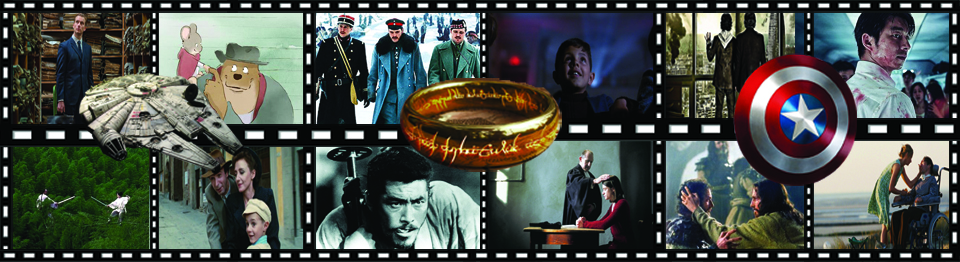
It’s hard to believe, but a whole other year has passed, and I find myself once again celebrating a Blogiversary. Has it really been five years since I started my original top 365 movie countdown?! It doesn’t feel like that long, but perhaps that just means I’m having fun. That must be it, because 2018 has been an especially good year for movie-watching, and as with every blogiversary before, it’s time to recap all the high points of the past year with (what else?) a Top Twelve List of the movies worthy of joining my Top 365 List!
Yet, while last year’s 35 additions were mainly in the latter half of the list, this year’s favorites climb a little higher. I, of course, liked my Top Twelve from last year, but this year’s additions have some new films I truly loved. As usual, several of them are from me playing catch-up on 2017’s releases, but even more are from 2018, and I couldn’t help but notice that none of the additions are from the 20th century. Hmm, I’ve got to fix that next year and see more older films.
As always, this is my personal opinion, and everyone is free to agree or disagree. I welcome any comments or recommendations, and I look forward to finding more movies worth loving next year.
Anyhoo, let’s get to the list itself and reminisce on the cinematic rollercoaster that was 2018.
As much as I enjoyed this second Ant-Man movie, I’m surprised it ended up as low as #12. After Infinity War’s epic doom and gloom, the MCU needed a little levity, and Ant-Man and the Wasp delivered an all-around fun thrill ride with one of the more satisfying endings in the franchise, at least until the after-credits scene. Luis saying “Whazzup!” still cracks me up.
This is only the first awesome animated film you’ll see on this list. Animation lovers mainly get their jollies from American or Japanese properties, so it’s nice to be reminded that Europe’s got game too. A steampunk adventure out of France that would make Miyazaki proud, April and the Extraordinary World offers an exciting blend of genres that feels fresher than the vast majority of recent animated fare.
Pixar hit it out of the park yet again with Coco, a fantasy tale of a Mexican boy visiting the Land of the Dead on Dia de Muertos. Boasting astounding new heights of CGI detail and a surprising amount of heart, Coco is proof that Pixar’s storytellers still know what they’re doing.
Last year, I caught up on the excellent Planet of the Apes remakes and this year decided to again tackle a series I’ve been unconsciously avoiding, the increasingly acclaimed Mission: Impossible franchise. To my surprise, they were even better than anticipated, and all of them from the third on (after J.J. Abrams got involved) are outstanding actioners. I think M:i:III is still my favorite for having the most personal stakes and the most satisfying ending.
Ah, the tearjerker makes its way onto the stage. As a fan of both fantasy and anime, as well as movies that earn the viewer’s tears, I was bound to love this film, and indeed its ending hit me harder than expected. Easily the most poignant film I saw all year.
Spider-Man: Into the Spider-Verse (2018)
I may have seen this animated Spider-Man extravaganza for the first time only a couple days ago, but it keeps getting better in my head. The rap music wasn’t my favorite, but everything else about this trippy cross-over adventure was so well-done that I can’t wait to see it again.
Darkest Hour isn’t great just for having one of the most transformative performances on film, courtesy of Oscar winner Gary Oldman. It’s also among the best biopics I’ve seen, giving a well-rounded view of Winston Churchill, sometimes as a demanding bully but more often as a persevering patriot, as well as a vulnerable human being in his most dire period. Especially as a companion piece to Dunkirk, it’s a fascinating piece of history eloquently told.
This year, Pixar once again pulled off the unlikely, offering a worthy sequel to one of their best films. Continuing the story of the Parr/Incredible family as they try to make superheroes legal again and face a mind-controlling threat, this is a great family film and ranks among Pixar’s best sequels.
This dystopian virtual-reality pop-culture treasure hunt was #1 on my list of films I hoped would be good at the beginning of 2018, and, thanks to Steven Spielberg and company, it was. True, it doesn’t quite measure up to the book, but the changes made sense as it offered up one geeky thrill after another.
If you had told me a year ago that I would be putting a zombie film on my list, I would never have believed it. I am by no means a typical fan of the genre, but no film kept me on the edge of my seat like this South Korean thriller. It’s an adrenaline-pumping fight for survival where things repeatedly go from bad to worse, but it’s paired with an affecting tale of a father trying to live up to his daughter’s expectations while saving her life.
I love musicals, and I insist that we need more original ones like The Greatest Showman. Not subtle or historically accurate enough perhaps to be considered Oscar material, it’s nonetheless a joyous film from start to finish, full of misfit empowerment, spectacular show tunes, and an undercurrent of family values. It leaves me smiling every time.
Well, Marvel pulled it off, the crowning glory of the MCU thus far. Infinity War is staggering in its ambition, juggling so many characters that it so easily could have turned into a jumbled mess in less skilled hands (ahem, DC), yet I’ve little doubt that the Russos surpassed everyone’s expectations. The ending still stings, and my continued appreciation of this movie will likely depend on how well Endgame completes it in the coming year, but for now Infinity War still amazes. I’ve heard it called this generation’s Empire Strikes Back, and I don’t disagree.
So that’s the Top Twelve, but here are the other films that made it onto my Top 365 Movie List this time around. Keep in mind that I do group most franchises together, which is the only reason I made Pirates of the Caribbean: Dead Men Tell No Tales List-Worthy, since it continued the original trilogy. I also group certain similar films together, so Sky Captain and the World of Tomorrow will be paired with April and the Extraordinary World, while A Quiet Place will pair with Hidden.
And last comes the difficult part, figuring out which entries on my current List will have to be displaced by these new additions. This always hurts since I still love all these movies, but it’s a necessary evil for me as a list nerd. The following are the (still great) films that sadly bit the dust:
I’ll be posting the updated List tomorrow. Again, I wish to thank everyone who has taken the time to read my poetry or film ramblings and leave a like, follow, or comment in the past year (and especially anyone who is still reading this long post)! I can’t wait to see what the year ahead holds. A very Happy New Year to all!
P.S. And here’s a little montage video I found to sum up 2018 in film:
Mother of mine,
What a trial you bore
When I, in my infancy, cried more and more!
Mother of mine,
How obliviously
Did I take for granted your keeping of me!
Mother of mine,
What a fool you held near,
No thought for a thank you, no room to revere!
Mother of mine,
How ungrateful was I
When I was at last old enough to defy!
Mother of mine,
What regret I now feel
For waiting so long for my thanks to be real,
That love all too often I tried to conceal,
That raising me had to be such an ordeal.
Mother of mine,
How I wish you to know
The love that I should have returned long ago!
_____________________
MPAA rating: Not Rated (should be PG-13 for some violence and mature themes, though nothing too explicit)
From early in 2018, I thought that Mirai would surely be the anime film of the year, but no, it’s not. That title goes to Maquia: When the Promised Flower Blooms, a film I had no idea had already come out until I heard about it from Rachel of Reviewing All 56 Disney Animated Films and More! The description alone had me desperate to see it: a high fantasy tale of an immortal girl adopting a human baby. I tried to avoid spoilers at all cost, but everything I read about this cross between Lord of the Rings and The Age of Adaline, including its growing reputation as an all-out tearjerker, only heightened my excitement. With its 100% on Rotten Tomatoes, it looked like a film I was destined to love.
Finally, I got to see it, and though my expectations were high, Maquia met them. This may be writer/director Mari Okada’s debut film, but her first movie is a humdinger in both its emotional impact and its fantasy world-building. The titular Maquia is an orphan of the lorph clan, a small race of people who live for centuries with no aging and record their lives and histories by weaving cloth called Hibiol. A neighboring kingdom invades, taking most of the lorph captive, but Maquia escapes in despair, only to stumble upon an orphaned baby boy she names Ariel. Although she is alone, knows nothing of motherhood, and was expressly warned never to love a mortal lest she endure true loneliness, Maquia raises the child as her own, and…sniff… you’ll just have to watch it for yourself.
Anime has some amazing mothers to its credit, from Hana in Wolf Children to the mom in the tenth episode of Violet Evergarden (another tearjerker of 2018), but there’s something special about Maquia. She shares no blood or background with Ariel, not even fully understanding the physical realities of motherhood, and yet in her efforts to be a good mother, she shines as few parents do in any medium. She struggles with the task, especially as Ariel grows older while she remains the same, becoming a constant reminder that he was adopted, but she takes to heart the lessons taught by others that moms will do anything for their children and that “moms don’t cry.”
As much as I wish I could call it a faultless film, Maquia is not without some weaknesses. There’s an extended subplot concerning two of Maquia’s lorph friends, whose paths in life are far more oppressive than hers; enduring rape and imprisonment, they serve as a contrast to the love that Maquia finds, and while their struggles remained interesting and sympathetic, I wouldn’t say they were resolved in an entirely satisfying way. Plus, one jump in time left me unsure what was going on, dropping some uncomfortable implications and keeping its full context vague.
Despite these gripes, Maquia is a beautiful film on multiple levels, from its tender moments to its exceptional animation to its affecting soundtrack. Its rich fantasy world of warring nations and dying dragons offers several striking settings reminiscent of Middle-Earth, and its themes of love and parenthood go straight to the heart, demonstrating how children can have just as much of an impact on their parents as the other way around. Plus, there’s hardly any of the stylistic exaggeration typical of anime, making it a film that fantasy lovers who may not be into anime should be able to enjoy as well.
I don’t cry easily these days. Only two anime have left me sobbing before, and Maquia makes it three. I’ve mentioned that some sad films like The Wind Rises seem to almost pull back from full-on tearjerker mode for whatever reason; Maquia does not. I wept bitterly, though for different reasons than something like Grave of the Fireflies. There’s a scene at the end that mercilessly kicks your heartstrings while kissing them tenderly, and it still haunts me. I said yesterday that Mirai made me want to hug my mom; Maquia did the same times eleven. That’s why, for me, this is the anime of the year. The film itself represents its theme of pain being an integral part of love, a bitterness made sweet by all that came before.