Youth are fools in their prime,
Adept at wasting time.
‘Tis not till age upsets,
They find time for regrets.
If grief will have its day
With innocence’ decay,
May fools find green and gold
Before they grow too old.
_______________
MPAA rating: PG-13
Francis Ford Coppola took a break from epics like The Godfather and Apocalypse Now with his far smaller and more personal adaptation of S.E. Hinton’s The Outsiders. This tragic tale of rival gangs in Tulsa, Oklahoma, is a prime example of a film that I can recognize as good without actually enjoying it. Gang movies have never been my cup of tea; I can appreciate parts of them, like the music in West Side Story, but it’s the kind of youth lifestyle I just can’t relate to in the slightest.
The best thing going for The Outsiders is the cast, a veritable who’s who of ‘80s rising stars. As friends Ponyboy Curtis and Johnny Cade, C. Thomas Howell and Ralph Macchio are two likable kids, Greasers who follow Dallas (Matt Dillon) around as the older boy hits on the prettiest girl at the drive-in (Diane Lane). Patrick Swayze and Rob Lowe join in too as Ponyboy’s elder brothers, while Emilio Estevez and even a snaggletoothed Tom Cruise show up for a few scenes. Howell, Macchio, and Dillon are the only ones to stand out, but seeing all these stars-to-be together was the film’s main pleasure.
After a lethal run-in with members of the well-to-do rival gang called the Socs (pronounced “Soashes”), Ponyboy and Johnny must hide out in an old abandoned church until tensions die down. Despite the relative lack of activity, it is this waiting that forms the high point of the film. The boys bond and read Gone with the Wind, and in a scene I included in my top twelve list of poems in movies, Ponyboy recites Robert Frost’s “Nothing Gold Can Stay,” applying its meaning to his own wish for permanence as the sunset recalls similarly staged scenes in Gone with the Wind. That grand scene is sadly fleeting as the boys must soon deal with sacrifice and gang pressures.
The rivalry between the Greasers and Socs is comparable to any gang rivalry, hinging on class warfare and revenge, but it just seems so pointless. I’m an easy-going, let’s-all-get-along kind of guy who just can’t understand the cyclical vengeance of gangs. I know that most conflicts are not easily resolved, but the small-scale scuffles on display here are the product of attitude and peer pressure and “getting even.” That’s what makes Ponyboy and Johnny so sympathetic; they’re tired of all the strife too, and though some descriptions I’ve read imply the gangs themselves are “the outsiders” of society, it’s really the two friends who stand apart from the petty rivalries into which they were more or less born and aspire to something more, something selfless.
There are glimmers of hope in The Outsiders, from the poem recitation to a scene of understanding between Ponyboy and one of the Socs, but the sad gang mentality remains. While one tragedy is given the respect it’s due, another seems like a total waste that could have been better reproved. I felt for Ponyboy and Johnny, but everyone else seemed to bring friction and violence on themselves, which is hardly something I enjoy watching.
Best line: (Johnny) “Stay gold, Ponyboy. Stay gold.”
A pie on a plate is worth two in the sky,
So if your life’s sucking your happiness dry
With an unloving spouse
Or a big lonely house
Or the latest annoyance you greet with a sigh,
Don’t run off and have a clandestine affair,
Not even with someone with Mal Reynolds’ hair.
Just sit yourself down
And flip over that frown
With a big piece of pie to suspend your despair.
‘Tis the good kind of guilt when you pick from the shelf
A pie (if you want; I’m a cake man myself).
__________________
MPAA rating: PG-13
After seeing Waitress recently for the first time, my VC liked it enough that she insisted I review it as one of her picks. Directed, written, and co-starring the late Adrienne Shelly and recently adapted into a Broadway musical, Waitress might have had one main draw at first glance, my VC’s beloved Nathan Fillion, but as we watched it (two nights in a row actually), its overall appeal became more apparent. It’s an unconventional love story full of wry small-town charm and a craveable passion for pie. Seriously, there’s a lot of delicious pies on display, though they make them look far easier to prepare than in reality.
Keri Russell plays Jenna, whose waitress job at a Southern pie diner is one of the only things her cloddish husband Earl (Jeremy Sisto) will let her do. He’s so needy and controlling that Jenna feels positively smothered and eager to leave him, even dreaming up pies named in his dishonor, and thus she’s none too thrilled when she discovers she’s pregnant. On her first prenatal visit to the gynecologist, in comes Nathan Fillion as Dr. Pomatter, certainly no Mal Reynolds (his character from Firefly) but a likably nervous sort, and one can see his awkward chemistry with Jenna a mile away. In a predictable version of this story, there would probably be an affair with passionate smooching and a confrontation between the men and maybe a breakup before a final tearjerking declaration of love, but Waitress only borrows a few such aspects, clinging to cynical honesty before yielding to surprising sweetness. My VC was glad they kept the passionate smooching with Fillion, though.
Films aiming for quirk don’t always come off as realistic. I love the provincial antics in Doc Hollywood, for instance, but it’s full of movie characters rather than people I might expect to find in a real Southern town. Waitress has some of the same earnest loopiness but toned down to believable levels. (Okay, that may not apply to the ridiculously love-struck date of one of Jenna’s coworkers, but hey, it’s still a comedy.) The dialogue often reaches gentle amusement rather than big laughs, not only because of the dramatic side of Jenna’s depressing life but because real life isn’t always full of zingers. Sometimes, eloquence is found in frank simplicity, such as an unexpectedly straight answer about life from Jenna’s surly boss.
Aside from the underplayed pro-life aspect of Jenna respecting her baby’s “right to thrive” despite not really wanting it, I admired how the characters were gradually developed. Most come off rather unlikable at first, whether it be Jenna’s demanding boss or the diner’s schadenfreude-prone owner Joe (Andy Griffith). Only over time are their more sympathetic facets revealed without undercutting their prickly exteriors. Even Earl with all of his loathsome clinginess shows a few glimpses of affection that could have once convinced Jenna to marry him. In addition, an important scene toward the end speaks to the immediacy of meeting someone face to face. Jenna sees two previously unseen characters for the first time, completely changing her opinions of them and the direction of her life. While what follows isn’t the fairy tale ending that one might hope or expect, it’s sweetly realistic and mature on Jenna’s part.
By the end of Waitress, my VC and I weren’t quite sure how to feel about it, but after thought, a rewatch, and some craving for pie, we both agreed in the simplest of terms: we liked it. (Did I mention, though, that she loved watching Nathan Fillion? Women.)
Best line: (Dawn, played by Shelly, speaking of her awkward beau) “They are poems that just occur to him on the spot. Last night, he said to me, ‘Dawn, your face is a brilliant moon in my empty room. Your love is like a beating drum. Ba bum ba bum ba bum ba bum.’”
VC’s best line: (Jenna, writing to her unborn baby) “Dear Baby, I hope someday somebody wants to hold you for twenty minutes straight, and that’s all they do. They don’t pull away. They don’t look at your face. They don’t try to kiss you. All they do is wrap you up in their arms and hold on tight, without an ounce of selfishness to it.”
To stay in good graces,
Most stay in their places,
Their happy, expected, and preordained spaces
Among their preferred and familiarized faces.
It’s fine, and it’s true,
But in some special cases,
We aren’t just contented
With life as presented
But strive to be more and to live reinvented.
Such paths can be ridiculed, feared, or resented
But that’s nothing new
When you’re unprecedented.
_________________
MPAA rating: PG
Disney has certainly been on a roll lately. Rising from the lameness of Chicken Little and The Wild, it’s been delivering consistently original CGI gems, films like Tangled, Wreck-It Ralph,Big Hero 6, and now Zootopia (also called Zootropolis in Europe, supposedly to avoid confusion with an actual zoo over there). A box-office hit on par with Frozen’s success, Zootopia takes the idea of a world of anthropomorphic mammals and fills it with a winning blend of colorful characters, outstanding animation, and a universal moral message, three prime ingredients at which Disney excels.
Judy Hopps (chipper Ginnifer Goodwin) dares to be the first bunny cop, against her family’s worry and conventional wisdom, since most police officers are rhinos or elephants or something big enough to combat crime. When she actually realizes that dream and joins the force in the multi-species metropolis of Zootopia, her naïve idealism clashes with her chief (Idris Elba) and with the con artist fox Nick Wilde (smug Jason Bateman). Soon, Judy and Nick must form an uneasy alliance to solve a slew of missing mammal cases with unseen repercussions.
Right from the start, as Judy sees the city for the first time through a train’s observation deck, there’s enough visual detail and creative imagination to rival the world-building of Pixar. There are boroughs designed as habitats, from the lush rain forest to the frigid tundra, and a plethora of animalized modern conveniences: hamster-tunnel hallways, drink elevators for giraffes, sloths at the DMV (okay, that’s an inconvenience). So many scenes are full of varied pedestrians and fast-paced activity that the backgrounds alone are worth watching. Luckily, the script never lets its humorous potential go to waste, making Zootopia the funniest Disney movie in recent memory. I especially love how Alan Tudyk has become the John Ratzenberger of Disney, to the point that he’s now getting his own gags in reference to past roles (specifically, the Duke of Weselton in Frozen).
Aside from the vibrant animation and consistent jokes, there’s a layered message to Zootopia, a familiar one of tolerance and embracing differences over prejudice, in this case between prey and predator. Some may consider it preachy or heavy-handed, and I can understand why; one misunderstanding in particular seemed overly sensitive, like many perceived offenses nowadays that aren’t really that bad when you think about it. After all, unintended “insults” are often less offensive than people’s reactions to them. Despite this, Zootopia takes its lesson seriously. The finger isn’t just wagged at insensitivity; it’s also aimed at anyone stuck in complacency or those seeking to create problems where there were none. It isn’t all negative either; Judy herself is a wholly admirable female role model, not content to live under others’ expectations but rising to her dream and urging others to do the same. Now that’s a message worth lauding!
All in all, Zootopia is a fun buddy-cop mystery that plays to Disney’s non-musical strengths, even with a few weaknesses. I could have done without an awkward scene at a nudist spa, and it’s still a bit unusual to see modernized animated animals playing with cell phone apps. There are also a few unanswered questions, such as what exactly do predators eat if they’ve evolved past their carnivorous tendencies. Ice cream? I also couldn’t help wondering where all the non-mammals were, fish, birds, reptiles, and such. “Try Everything,” the catchy theme song sung by Shakira, even mentions birds but I never saw any. Have they not become sentient, or are they perhaps enslaved by their mammal overlords? My VC says I’m overthinking this, and I hope so. (She loved the movie too, as did my parents.)
Regardless, ever since John Lasseter was put in charge, Disney Animation continues to impress and entertain with a consistency only Pixar has shown thus far. Talking animals are nothing new, but Zootopia gives them a fresh spin that hits its intended message without ever forgetting to stay amusing. Like Big Hero 6, it’s also a film for which I can easily envision sequels, and based on the talent that created this original, my hopes are high.
Best line: (Judy, calculating Nick’s income to blackmail him) “Two hundred dollars a day, three hundred sixty-five days a year since you were twelve; that’s two decades, so times twenty which is… one million four hundred sixty thousand – I think, I mean I am just a dumb bunny, but we are good at multiplying.”
A man’s secure within his plans,
Within his mind and strength of hands.
The world he’s in, though, makes demands
That cast his hopes in doubt,
That turn his rock to shifting sands,
His promised lands to drought.
A plan is never set in stone,
And though the future is unknown,
Both good and ill are all our own,
As it has always been.
When sown and grown and maybe blown,
New plans must then begin.
________________
MPAA rating of 1992 version: PG-13
MPAA rating of 1939 version: Approved (should be PG)
I’m one of the few people for whom John Steinbeck’s Of Mice and Men was not required reading in high school. Thus, even though I had a vague notion of the plot due to its general fame, I was able to watch Gary Sinise’s 1992 adaptation without knowing how the story would actually play out. Only after that did I also investigate the original adaptation with Burgess Meredith and Lon Chaney, Jr., one of the famous 1939 classics. In order to review both with one stone, this will be the first of a new feature called Version Variations, where I’ll be contrasting two versions of the same story. (Of course, if one happens to be animated, that will still fall under Cartoon Comparisons. Can you tell I like alliteration?)
I’ll start with the remake, the personal passion project of Gary Sinise, who directed and starred as George, the Depression-era migrant worker who travels with the large but simpleminded Lenny Small (John Malkovich). George watches out for Lenny, shielding him from trouble when possible and encouraging him with promises of a ranch of their own, complete with rabbits to pet and feed. While they both work hard and make progress toward their goals, most people probably know theirs is a tragic story; circumstances are the real enemy, and sometimes the slightest of mistakes can send things spiraling out of control.
Sinise is just as talented a director as he is an actor, displaying a steady hand for the gut-wrenching moments and an eye for detail during the lovingly recreated harvesting scenes. As well as Sinise translates the novella to the screen, most of the credit goes to Steinbeck. As works like Lifeboat and Cannery Row illustrate, he was a master at creating distinct and sympathetic characters, like the dog-loving old man Candy (Ray Walston, aka Boothby from Star Trek: The Next Generation) and the bitter black cripple Crooks (Joe Morton). In addition to swiftly developed characters, the structure of the story is perfection, with poignant foreshadowing that only becomes clear by the end. And of course, at the heart of the film are Sinise and Malkovich, giving some of the best performances of their careers, with Malkovich in particular nailing the childlike innocence that makes Lenny all the more pitiful.
As for the 1939 adaptation, which included Steinbeck’s personal involvement and approval, it’s almost identical, testifying to the faithfulness of both versions to the book. Directed by Lewis Milestone and scored by Aaron Copland, this black-and-white version features Burgess Meredith as George and the hulking Lon Chaney, Jr., of Wolf Man fame as Lenny. One thing I liked from the outset was a clear reference to the title’s source, since “of mice and men” comes from the Robert Burns poem “To a Mouse.” Much of the characterization and dialogue are the same, with one difference being the slightly altered countenance of the only female character Mae (Betty Field in the original, Sherilyn Fenn in the remake), the bored and rebellious wife of the boss’s arrogant son Curley. The 1939 Mae is more vocal and antagonistic than the 1992 version of the character, who is known only as Curley’s wife as in the book. In addition, the 1939 film lacks the frequent profanity that Sinise included, though due to the book’s reputation for censorship I suspect Sinise was a bit more faithful in that regard.
The quality of the performances is certainly admirable, though some of the acting feels dated and overplayed. While Chaney can’t compare with Malkovich, Meredith and Sinise are equally excellent as gruff but caring George. The one role that I found even better in the original was that of Candy (Roman Bohnen), the old farmhand urged to kill his aging dog. As good as Ray Walston is in the remake, Bohnen steals his scenes with tearjerking effect, making me wonder why he wasn’t even nominated for Best Supporting Actor.
Both versions are powerful examples of adapting a classic book. Both have their strengths, yet Sinise’s version sidesteps the original’s weaknesses and wins my preference, despite the needless profanity. Perhaps it was simply because I saw the 1992 adaptation first, but it had a much greater emotional impact for me, aided by how the eventual climax wasn’t given away as quickly as in the 1939 version. Still, the original has enough dramatic power and artistry to recommend it too, such as a scene that slowly zooms backward as George walks across the barn toward the end. Neither earned any Oscars, though the 1939 version was nominated for Best Picture, Sound Recording, Musical Scoring, and Original Score. I may or may not ever read Steinbeck’s novel, but these two adaptations do his work proud.
Best line (same in both versions): (Slim, speaking of Lenny) “A guy don’t need no sense to be a nice fella.”
Rank for 1992 version: List-Worthy
Rank for 1939 version: List Runner-Up
Here’s my second review for MovieRob’s June Genre Grandeur of Derivative movies, this time the zombie romance Warm Bodies. I’m sure Shakespeare never saw this coming when he wrote Romeo and Juliet.
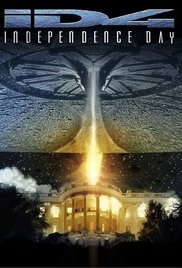
In honor of Independence Day (both the holiday and the movie), be sure to vote for your favorite alien-related film in Round 13 of Opinion Battles. I picked James Cameron’s Aliens, but there’s a fair number of great choices this round.
Over the years we have had so many films revolving aliens, be it them invading Earth, visiting or just whacky space sagas. The alien characters have become iconic in cinema because of the mystery surrounding outer space so today we are going to look at our favourite film with alien(s) as the main part of the film. We are selecting this to celebrate the release of Independence Day: Resurgence.
If you want to enter the next round of Opinion Battles we will be looking at our favourite Leonardo DiCaprio roles, if you want to enter send your choice to moviereviews101@yahoo.co.ukwith closing date being Sunday the 10th July 2016.
Darren – Movie Reviews 101
Independence Day
I have chosen Independence Day because it is easily the film I have seen the most, the idea that aliens have come to destroy the…
Rain – the soothing sound that lulls us to sleep or the raging downpour that frightens cats and children. Except for the desert, rain is a world-washing constant everywhere, especially England and Seattle, and thus makes for popular movie weather. It can be a symbol of rebirth, a mere annoyance, a passionate setting for a wet kiss, or a dramatic backdrop for a climactic fight. With so many examples of precipitation to choose from and because it’s rained a lot lately where I live, I’ve made up my own list of twelve favorite moments caught in the rain.
(These are only for movies I’ve actually seen all the way through, so apologies to anyone missing famous scenes from Road to Perdition, Say Anything, Magnolia, Garden State, Unforgiven, and Blade Runner. Feel free to suggest any others I missed.) Here goes….
Have you ever felt like there’s a rain cloud hovering over your head, raining only on you? Probably not as literally as Truman Burbank (Jim Carrey), who experiences such a technical malfunction in his reality show life.
The waterworks don’t just come from the sky when Chuck Noland (Tom Hanks) finally escapes his island and finds his girlfriend (Helen Hunt) remarried. They reunite in the driving rain, yet both know that the past is as unchangeable as the weather.
For all the flak that the Star Wars prequels get, they do boast some of the best action sequences around. For instance, when Obi-Wan Kenobi (Ewan McGregor) visits a water-covered storm planet in search of a certain bounty hunter, he finds the perp as well as a thrilling scuffle on the landing platform.
The Garden of Words (2013)
Rain plays a prominent role in Makoto Shinkai’s slow but exquisitely animated The Garden of Words. A high school student and an older woman meet by chance during rainy mornings, and since both are lonely and in need of support, they begin hoping for rain to again bring them together.
Spoiler warning, I suppose. After being sent to Camp Green Lake, “a magical place where it never rains,” Stanley (Shia LaBeouf) endures manual labor and uncovers his own past and that of the lake, leading to a climactic curse reversal.
How many times have you seen someone eaten off a toilet in the rain? At least once, I’d bet. Our first introduction to the T. Rex is made all the more memorable by the pouring rain that makes its entrance even scarier. Not to mention, the Dilophosaurus attack on Wayne Knight happens in the same rainstorm.
Akira Kurosawa definitely loved rain in his movies. There’s the beginning and end of Rashomon, for instance, and it’s never just a shower but a full-on atmospheric assault. Speaking of assault, the final battle between his seven samurai and the attacking bandits occurs in a raging storm, distinguishing it as an even more impressive feat of classic cinematic warfare.
The Notebook (2004)
Sure, Nicholas Sparks movies tend to be sappy and formulaic, but romance is romance. The Notebook is certainly a flawed story, but that passionate kiss in the rain is among the most iconic scenes of modern romance.
Speaking of iconic passionate kisses in the rain, Peter Parker and Mary Jane Watson share a uniquely inverted smooch after he saves her from some thugs. I’ve heard Tobey Macguire could hardly breath while filming, but the end result was worth it (says this uninvolved viewer). The Andrew Garfield movies never had anything this good.
Of all the battles in the rain (and there are many), none is as awesomely epic as the siege of Helm’s Deep in the second Lord of the Rings movie. With their trapped forces hopelessly outnumbered by the approaching Uruk-hai, Aragorn and the men of Rohan just can’t catch a break, and it starts raining even without someone saying “It can’t get any worse, can it?” It pours through the entire night, a wet and messy melee of good against evil.
After crawling through a sewage pipe to escape Shawshank Prison, Andy Dufresne (Tim Robbins) could use a good shower, and the rain that aided his escape acts as a symbolic cleansing from all the dirty deeds he did and saw behind bars. Such a powerful scene!
When it comes to famous scenes in the rain, nothing can compare with Gene Kelly’s marvelous musical number to the title song. Even though he was sick with a fever at the time, Kelly joyously splashes through puddles and revels in the sheer joy of wet contentment. Who needs an umbrella when you have love, right?
Runners-Up (as you can see, it was tough narrowing the list to twelve):
A Bug’s Life – The rainy season can be a big problem when you’re as small as an insect.
Aliens – It’s pouring when Ripley and the Marines land on LV-426.
Back to the Future Part II – It’s pouring when Marty gets a 70-year-old telegram from Doc and actually tries to read it as it gets soaked.
Bee Movie – Rain and insects again – you get the picture.
Breakfast at Tiffany’s – It’s pouring during the touching final scene. Animal cruelty is rarely this romantic.
Beauty and the Beast – It’s pouring during Gaston’s confrontation with the Beast.
The Day after Tomorrow – It’s pouring (and I mean pouring!) when New York is swallowed by a massive tidal wave.
Forrest Gump – “One day, it started raining, and it didn’t quit for four months. We been through every kind of rain there is. Little bitty stingin’ rain… and big ol’ fat rain. Rain that flew in sideways. And sometimes rain even seemed to come straight up from underneath. Shoot, it even rained at night.”
The Goodbye Girl – It’s pouring when Richard Dreyfuss is in the phone booth.
The Hunger Games – It’s pouring when Peeta throws some bread to a starving Katniss.
Inception – It’s pouring when Cobb and his team first enter Fischer’s dream world.
Jumanji– It’s pouring even inside houses, thanks to that board game.
Les Miserables (2012) – It’s pouring at the beginning when Valjean and the other prisoners are hauling in a ship.
The Matrix Revolutions – It’s pouring during Neo’s climactic fight with Smith.
Midnight in Paris – Gil prefers women who don’t mind getting wet since after all, “Paris is the most beautiful in the rain.”
My Neighbor Totoro – Not the biggest fan of this movie, but I do love certain scenes, like the picture at the top.
Noah – Forty days and forty nights – that’s a lot of rain.
The Outsiders – It’s pouring when the Greasers and the Socs have their big rumble.
Here’s my first review for MovieRob’s June Genre Grandeur of Derivative movies based on some other source: Robinson Crusoe on Mars, a surprisingly good piece of classic science fiction.
Spanning the gap between each tower,
Not a trap, but source of power,
Hangs a cord you pray is taut,
In which is stored your only shot.
Your heart is racing, mind is bracing for the danger you’re embracing,
It’s, you know, a dream worth chasing.
You stand so high upon the brink,
The edge of sky, the towers’ link.
The world must fade, the thought of loss
Or accolade, to walk across
The peril you yourself have set
For public view and public fret.
You must not fear; you must not stumble.
Wisdom here will keep you humble.
Take a breath and tread with care;
Think not of death when in the air.
Dreams unskilled can get you killed,
Yet all are thrilled when they’re fulfilled.
________________________
MPAA rating: PG
Except for those who remember the headlines back in 1974, most were probably first introduced to Philippe Petit’s daring tightrope walk between the Twin Towers by 2008’s Oscar-winning documentary Man on Wire. I, however, did what anyone would do who isn’t well-versed in documentaries; I waited until Hollywood made a “real” movie about it. Luckily, Robert Zemeckis took up the project and created a film that is not only entertaining as a fact-based drama but actually makes me curious to see the “real real” story in Man on Wire.
Joseph Gordon-Levitt effortlessly adopts a French accent to play Petit from the beginning of his tightrope career to his greatest achievement. In many ways, he’s the definition of a misunderstood artist, bearing the weight of a dream that most people consider foolhardy, even his own father. We watch as he “learns the ropes” from high wire master Papa Rudy (Ben Kingsley), gains a few supporters like the lovely Annie (Charlotte Le Bon from The Hundred-Foot Journey), and draws ever closer to his ultimate dream of traversing the space between the towers of the World Trade Center, which was still under construction at the time.
Since his exploit is clearly illegal, involving much trespassing and personal risk, the lighthearted dream morphs into something of a heist, as Petit scopes out his target, meets accomplices, and memorizes careful plans that could easily go wrong. The climactic walk itself is a marvel of invisible effects work (alas, no Oscar nomination), placing Gordon-Levitt in what appears to be the most dangerous place imaginable. I happened to watch The Walk with my mom and dad on either side of me, neither of whom knew how Petit’s dream would end, and I got a huge kick out of watching their reactions. I, of course, did know and was able to watch much more calmly and chuckle as they practically went into anxious convulsions with more unrelieved tension than Petit’s tightrope. Suffice to say, the protracted finale is not for anyone even mildly afraid of heights.
The Walk is a highly enjoyable biopic that lets Petit’s dream come to fruition with pleasant fluidity, making him someone worth celebrating while acknowledging his mysterious obsession with his goal. Why does he want to walk between the towers when it’s so dangerous? To prove he can? To be the first to try? Because they can’t resist? Even though this question is asked right from the start, it’s never fully explained, but I suppose the answer isn’t far from why mountaineers climb Everest. It doesn’t make sense to us mundane folk, but the thrill and the satisfaction of accomplishment are everything to them. In recreating the Twin Towers and one man’s fascination with them, The Walk also takes on a bittersweet note in the final scene. The World Trade Center towers may no longer stand, but Petit’s dream at least lets them live on in our memory as more than just the site of tragedy.
Best line: (Barry, who works in the WTC after being told of Petit’s plans) “It’s something only a twisted, antisocial, anarchistic, pissed-off malcontent would have anything to do with…. You have your inside man!”
Bishop to knight and rook to queen,
As pawns patrol the ranks and files.
Spectators gawk as masters preen
And intellects complete their trials.
Obsession is a healthy thing
While meditating o’er a board,
But once you’ve captured every king,
You’ll find the game of life ignored.
______________
MPAA rating: PG-13
There are plenty of movies about unique contests: spelling bees, dancing competitions, even ice sculpting, and in the case of The Luzhin Defense, a chess competition. Based off a book by Vladimir Nabokov, the film shows how unexpectedly intense a seemingly “boring” game like chess can be. John Turturro plays Aleksandr Luzhin, a chess prodigy with clear mental issues. He’s a strategic genius, but years of pressure to prove his brilliance have left him fragile and antisocial. At one fateful contest in Italy, Luzhin encounters his greatest fear in his manipulative former mentor (Stuart Wilson), as well as his greatest love in Natalia Katkov (Emily Watson).
Turturro is quite good as the troubled mastermind, though his personal eccentricities and obsessive tendencies make one wonder what Watson’s character sees in him. Years before her stern motherly roles in War Horse and The Book Thief, Watson manages to outshine Turturro’s attention-grabbing oddness with a performance that sells the unlikely attraction between them and makes it that much more bittersweet. While good overall, The Luzhin Defense is ultimately a less inspiring version of A Beautiful Mind, which was to follow the next year, and I’d rather see Russell Crowe’s troubled genius any day.
Best line: (Luzhin, preparing to play his rival) “As Pushkin’s doomed duelist said, ‘Let’s start if you’re willing.’”