
(Today’s NaPoWriMo prompt was for a hay(na)ku, a haiku variant with three lines, one word in the first, two in the second, and three in the third. In this case, I connected several, and since the word hay(na)ku sounds rather Celtic, even if it probably isn’t, I wrote them for last year’s Song of the Sea.)
Just as The Secret of Kells came out of nowhere when it was nominated for Best Animated Feature in 2009, director Tomm Moore’s second film Song of the Sea was released with little fanfare (at least here in the U.S.) but luckily received another Oscar nod to lend it some added exposure. I very much enjoyed Kells, but this follow-up is even better, with deeper themes and more relatable characters. Like its predecessor, Song of the Sea boasts meticulously hand-drawn animation designed to resemble medieval Celtic art, a haunting Gaelic-infused lullaby sung by a magical child, and an intriguing mix of Christian motifs and Irish mythology. Five years in the making, the animation truly is a wonder; every frame has a beauty and balance, replete with gentle curves, jagged spikes, serene curlicues, and other geometric phenomena. Like Kells, nearly every scene could be a work of art, but here the animation connecting them is smoother and the plot more involving. Even modern sights absent from Kells are opportunities for entrancing symmetry, such as roundabouts and power lines. The character designs are more appealing as well, particularly little Saoirse, one of the cutest animated children since Boo in Monsters, Inc. (It also provides a reliable pronunciation for the Irish word for “freedom,” [SEER-sha]. Who hasn’t wondered how to say it ever since they first saw Saoirse Ronan’s name?)
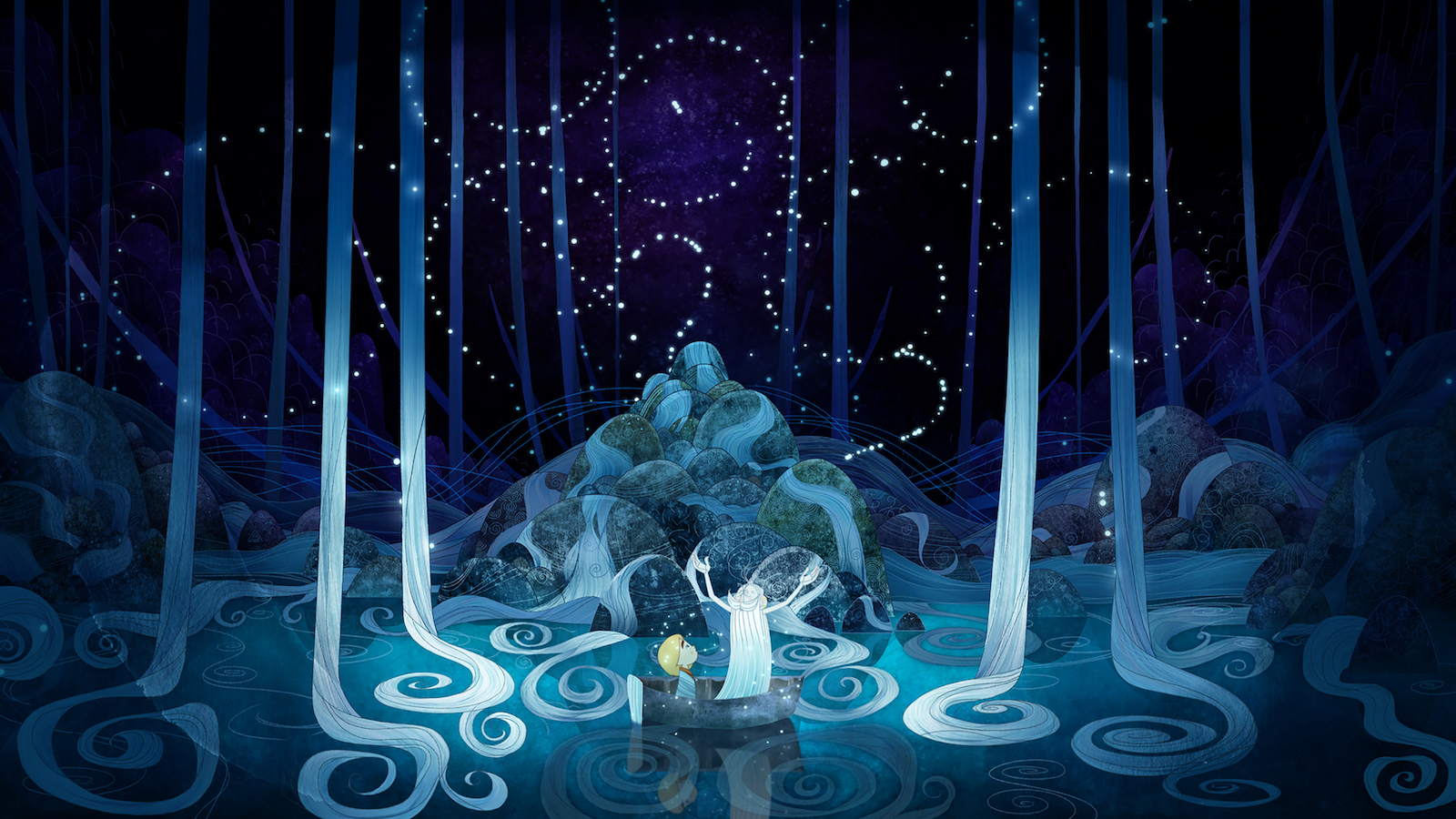
After the loss of their mother, Ben is bitter toward his mute little sister, who discovers her mystical roots as a selkie, the seal equivalent of a mermaid. When their grief-stricken father (Brendan Gleeson, who was also in The Secret of Kells) finally agrees to send them to the city with their grandmother (Lost alert: Fionnula Flannigan), the children journey cross-country to reunite Saoirse with her selkie coat, encountering various members of the Deenashee, or faerie folk, along the way. This main plot could have been enough for the typical filmmaker, but Moore invests special symbolism in the mythological backstory of the giant Mac Lir, who suffered a great tragedy, and Macha the Owl Witch, his mother who turned him to stone. The story can be taken at face value, but it carries certain parallels to Ben’s family (made explicit in the voice acting) to provide unexpected depth for those looking for it.
Both of Moore’s films have attracted comparisons with the works of Hayao Miyazaki, with their relaxed pacing and earnest natural beauty. Ben’s efforts to reverse the transformative curse of a large-headed witch may remind some of Spirited Away, but Song of the Sea is a far more emotional journey than most of Miyazaki’s films. Through magical intervention, Ben becomes more responsible and aware of his brotherly role, and a maternal moment toward the end could either confuse or extract a few tears. For me, it almost did the latter. The accents and the music clearly mark the film as a product of Ireland, and it fits in well with my personal attraction to everything Celtic (including the actual “Song of the Sea,” which wins a spot in my End Credits Song Hall of Fame). It’s the very definition of an animated gem, the kind of lovingly crafted project that may never attract a vast audience but certainly deserves one.
Best line: (Bronach, the selkie/mother) “My son, remember me in your stories and in your songs. Know that I will always love you, always.”
Rank: List-Worthy© 2015 S. G. Liput
302 Followers and Counting!



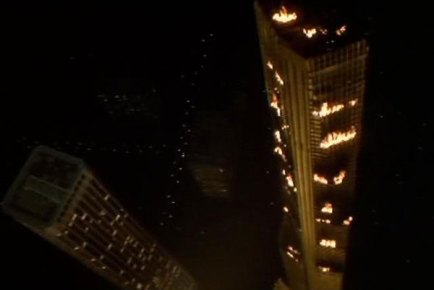 I am the fire that burns out of sight,
Starting my rampage as merely a wisp.
Celebrate victory into the night;
I will burn you and your spire to a crisp.
Why do they build these skyscrapers so high,
Making it simpler with every floor
For me to cut off and trap in the sky
Everyone over my fiery roar?
Look at the people who panic and flee,
Visitors boasting illustrious names.
Look at the firemen battling me,
Feeble to fight in the face of my flames.
I am inferno, the new height of heat,
No other bastion of bragging is hotter.
Top of the world, Ma! None can defeat
Me or my mayhem, except—oh no—water!
________________
I am the fire that burns out of sight,
Starting my rampage as merely a wisp.
Celebrate victory into the night;
I will burn you and your spire to a crisp.
Why do they build these skyscrapers so high,
Making it simpler with every floor
For me to cut off and trap in the sky
Everyone over my fiery roar?
Look at the people who panic and flee,
Visitors boasting illustrious names.
Look at the firemen battling me,
Feeble to fight in the face of my flames.
I am inferno, the new height of heat,
No other bastion of bragging is hotter.
Top of the world, Ma! None can defeat
Me or my mayhem, except—oh no—water!
________________
 Dark, be not proud, though some have cause
To fear when you fall, for you’re not that bad.
For those with blind eyes, you’re vexing a tad,
But not so much when all live by your laws.
You’re at your worst when men barge in because
They want some drugs that they can’t seem to find.
It’s hard to tell their truthfulness of mind
When I can’t see their flimsily-veiled flaws.
Thou art slave to caves, blinds, clouds, and Audrey Hepburn
And dost with broken lights and switchblades dwell,
But lighters and fridge doors can your shadow quell,
And thwart your hopeful fortunes, which (yep) turn.
One long night past, with you and deadly men,
And I won’t dare unlock the door again.
__________________
Dark, be not proud, though some have cause
To fear when you fall, for you’re not that bad.
For those with blind eyes, you’re vexing a tad,
But not so much when all live by your laws.
You’re at your worst when men barge in because
They want some drugs that they can’t seem to find.
It’s hard to tell their truthfulness of mind
When I can’t see their flimsily-veiled flaws.
Thou art slave to caves, blinds, clouds, and Audrey Hepburn
And dost with broken lights and switchblades dwell,
But lighters and fridge doors can your shadow quell,
And thwart your hopeful fortunes, which (yep) turn.
One long night past, with you and deadly men,
And I won’t dare unlock the door again.
__________________
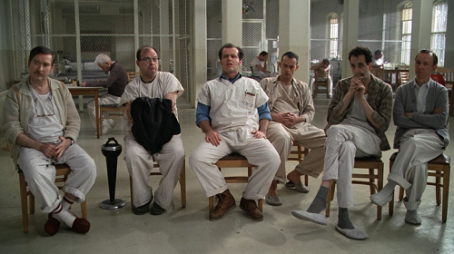 When R.P. McMurphy gets bored,
He’s sent to a hospital board
To see if he’s nuts
Or just faking with guts
To reach the relaxed mental ward.
He starts to make unstable friends
And bucks what the nurse recommends.
Nurse Ratched cruelly
Won’t let him watch TV,
But Mac sees how far a rule bends.
Before ol’ Mac busts out, the bum
Carouses with each crazy chum.
When in comes the nurse,
Words and actions are terse,
But one inmate will not succumb.
___________________
When R.P. McMurphy gets bored,
He’s sent to a hospital board
To see if he’s nuts
Or just faking with guts
To reach the relaxed mental ward.
He starts to make unstable friends
And bucks what the nurse recommends.
Nurse Ratched cruelly
Won’t let him watch TV,
But Mac sees how far a rule bends.
Before ol’ Mac busts out, the bum
Carouses with each crazy chum.
When in comes the nurse,
Words and actions are terse,
But one inmate will not succumb.
___________________
 Cities are a dying breed,
Though those who live in them know not.
They’re full of people, noise, and need,
Yet lack the treasures man forgot,
The joys of wind and sprouting seed
And peace of mind that can’t be bought.
Here in Cross Creek, my writing wakes,
Surrounded by the Spanish moss,
By sylvan streams that link the lakes
And tiny boats to get across.
I moved here for the silence’ sakes;
The lack of clamor is no loss.
My neighbors are a different folk;
Like me, they tend to stay apart,
To work beneath the ancient oak
And never reckon to depart.
We hear the frogs in chorus croak
And know the creatures’ songs by heart.
Cities are a dying breed,
Though some say nature will go first.
Yet renters ever will secede
To find the home for which they thirst.
Cross Creek and peace will thrive indeed
When all the cities have dispersed.
__________________
Cities are a dying breed,
Though those who live in them know not.
They’re full of people, noise, and need,
Yet lack the treasures man forgot,
The joys of wind and sprouting seed
And peace of mind that can’t be bought.
Here in Cross Creek, my writing wakes,
Surrounded by the Spanish moss,
By sylvan streams that link the lakes
And tiny boats to get across.
I moved here for the silence’ sakes;
The lack of clamor is no loss.
My neighbors are a different folk;
Like me, they tend to stay apart,
To work beneath the ancient oak
And never reckon to depart.
We hear the frogs in chorus croak
And know the creatures’ songs by heart.
Cities are a dying breed,
Though some say nature will go first.
Yet renters ever will secede
To find the home for which they thirst.
Cross Creek and peace will thrive indeed
When all the cities have dispersed.
__________________
 Rebecca is dead, but her room is the same.
The servants still miss her and whisper her name.
Her husband is grieving, and tries to move on,
But Mrs. de Winter is not fully gone.
Her secrets remain, as do Mr. de Winter’s,
Secrets that torture him daily like splinters.
His new wife is innocent, nervous, and shy;
She shouldn’t learn them, nor understand why.
But secrets have habits of being found out,
Casting suspicion and panic and doubt.
Rebecca is dead, Mrs. Danvers knows well,
And yet Manderley is still under her spell.
________________
Rebecca is dead, but her room is the same.
The servants still miss her and whisper her name.
Her husband is grieving, and tries to move on,
But Mrs. de Winter is not fully gone.
Her secrets remain, as do Mr. de Winter’s,
Secrets that torture him daily like splinters.
His new wife is innocent, nervous, and shy;
She shouldn’t learn them, nor understand why.
But secrets have habits of being found out,
Casting suspicion and panic and doubt.
Rebecca is dead, Mrs. Danvers knows well,
And yet Manderley is still under her spell.
________________
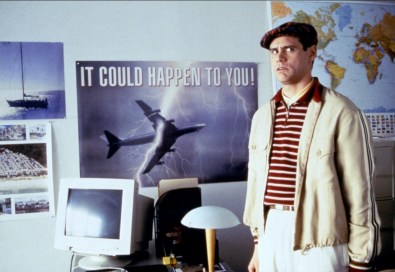 Did you ever feel that you were being watched,
That someone saw each time you won or botched?
No one’s watching; don’t despair
(At least as far as I’m aware),
Yet Truman Burbank’s on TV,
Living life for all to see,
Quite contented in his dome,
Which he doesn’t know is home.
He has fans around the world who watch him daily
As he greets Seahaven every morning gaily.
No reality show’s greater,
Thanks to Christoff, its creator.
Due to Christoff’s shrewd promotion,
Truman’s frightened of the ocean,
So he never leaves his isle,
Though he’s tempted for a while.
Truman’s been content with blinders since his youth,
But he starts to have an inkling of the truth.
From a star that might be fake
To a radio mistake
To endorsements from his wife,
Things revolve around his life,
Such that he begins to wonder
What conspiracy he’s under.
He attempts to leave his quaint, idyllic course
But is urged to linger, even if by force.
When at last he gets away,
Sailing off across the bay,
Christoff tries to be his guide
From the unknown world outside.
Truman doesn’t want ideal;
He would rather have what’s real.
________________
Did you ever feel that you were being watched,
That someone saw each time you won or botched?
No one’s watching; don’t despair
(At least as far as I’m aware),
Yet Truman Burbank’s on TV,
Living life for all to see,
Quite contented in his dome,
Which he doesn’t know is home.
He has fans around the world who watch him daily
As he greets Seahaven every morning gaily.
No reality show’s greater,
Thanks to Christoff, its creator.
Due to Christoff’s shrewd promotion,
Truman’s frightened of the ocean,
So he never leaves his isle,
Though he’s tempted for a while.
Truman’s been content with blinders since his youth,
But he starts to have an inkling of the truth.
From a star that might be fake
To a radio mistake
To endorsements from his wife,
Things revolve around his life,
Such that he begins to wonder
What conspiracy he’s under.
He attempts to leave his quaint, idyllic course
But is urged to linger, even if by force.
When at last he gets away,
Sailing off across the bay,
Christoff tries to be his guide
From the unknown world outside.
Truman doesn’t want ideal;
He would rather have what’s real.
________________
 A man is sadly at his least wise
When he prefers work above his own loveliest prize.
Wisdom can spring from pain or the past;
How you and I choose is our generation’s contrast.
Journals and annals have much to tell:
Listen and look to find in them what lessons may dwell.
Dreams are perhaps best when advertised:
Speaking them may render them more potent when realized.
Regret grows when foolish sleepers wake;
Contentment grows from dodging someone else’s mistake.
___________________
A man is sadly at his least wise
When he prefers work above his own loveliest prize.
Wisdom can spring from pain or the past;
How you and I choose is our generation’s contrast.
Journals and annals have much to tell:
Listen and look to find in them what lessons may dwell.
Dreams are perhaps best when advertised:
Speaking them may render them more potent when realized.
Regret grows when foolish sleepers wake;
Contentment grows from dodging someone else’s mistake.
___________________

