Don’t forget to vote for Round 3 of this year’s Opinion Battles, this time for Favorite Ryan Reynolds Role. He’s had plenty of “meh” movies over the years, but there are surely some great diamonds in the rough to choose from!
Deadpool has hits the cinema this week and it is now time to look at the leading actor Ryan Reynolds, he has been in some of the biggest box office bombs most critically slammed films but has also been in a large number low budget films. Deadpool has had everyone talking about it finally being his time for big box office film and only time will tell on that. We have just under 60 performances to pick from so what will be the winner?
If you would like to join in next round of Opinion Battles we are going to be picking our Least Favourite Oscar Winner Best Picture. Email your choice to moviereviews101@yahoo.co.uk by 21st February 2016.
Movie Reviews 101
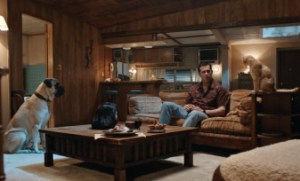
Jerry and Voices of Mr Whiskers and Bosco – The Voices
Jerry is one of my favourite characters in comedy of recent years, he…
Bless all brothers near and far,
The sensitive and callous ones,
The playmates prone to jealousy
Yet somehow fond of family,
The boys who tease and rib and spar
Yet love their parents’ other sons.
Maybe brothers don’t realize
The privilege that I never had,
A friend you maybe did not want,
A buddy quicker to confront,
Yet one whose love your name implies,
Who shares more than a mom and dad.
______________
MPAA rating: PG-13
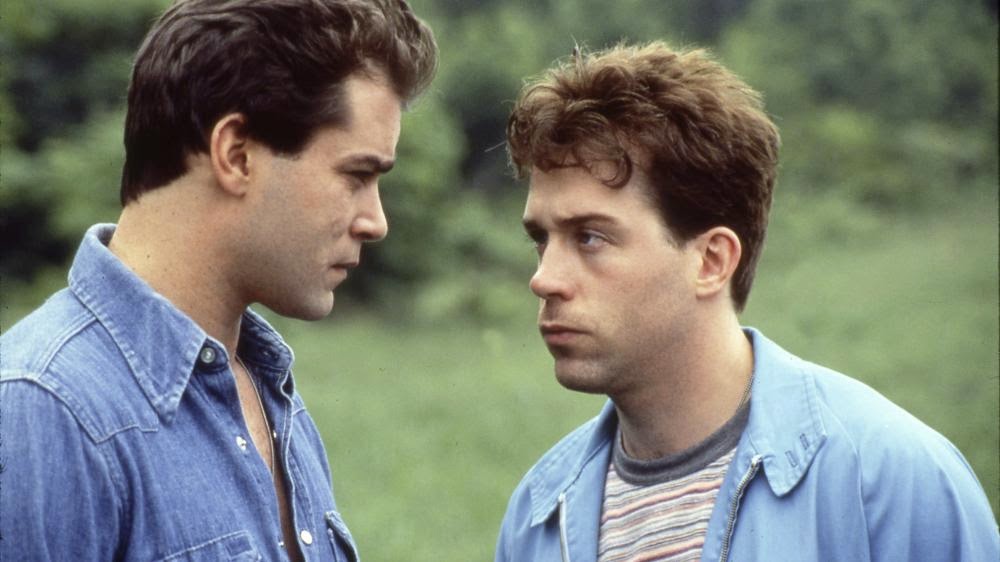
I recently found a local movie channel that shows more obscure films, and checking out one such sleeper just for the heck of it, I discovered this underrated drama. Dominick and Eugene seems like a prime award magnet. It features a nuanced fraternal relationship, a superb performance from an Oscar nominee (Tom Hulce), strong supporting roles for Ray Liotta and Jamie Lee Curtis, and a 100% rating on Rotten Tomatoes. Yet I’d never heard of it, and the most it received in 1988 was a Golden Globe nom for Hulce before fading away into the sea of forgotten ‘80s movies. Maybe its title was too generic, but this is a shame.
The titular duo are twins living together in Pittsburgh. Liotta is Eugene, a doctor-to-be who tries to start a relationship with a colleague (Curtis) and further his career while dealing with his mentally challenged brother. Hulce as Dominick is the star here. He is child-like, earnest, and hopelessly gullible, often falling for the tricks or suggestions of his coworker Larry and the local hoodlums, and when an idea gets in his head, he doesn’t let it go easily. Despite his disability, though, Nicky is the breadwinner, and his job as a garbage man serves to fund his brother’s education. Eugene is both protective of and frustrated by his brother, for reasons not clear at first, and life, love, and tragedy get in the way of their close relationship.
Dominick and Eugene could have drawn comparisons to the other drama about brotherly bonds and mental illness from that same year Rain Man, which did earn Best Picture and Best Actor Oscars and had far more advertising and better known stars. Hulce can’t quite compare with Dustin Hoffman’s role there (few can), but his fragile and earnest performance surely deserved more attention. One scene in particular stood out to me, as the camera centers on Hulce’s first-person view and reaction to a shocking act and a personal realization. The relationship between the two brothers is both strained yet unbreakable and more believable than in Rain Man, helping Dominick and Eugene to succeed as a subtle and touching affirmation of family ties.
Best line: (Dominick, who is a Christian but discouraged, looking at a crucifix) “If I was God, I wouldn’t let that happen to my boy.”
Cancer—I have seen your pitiless work,
The way you so silently grow from within.
The experts have learned how you burgeon and lurk,
A game meant to study but never to win.
So many have felt your pale fingers intrude;
So many have borne the despair in your wake;
So many have prayed that you might be subdued;
So many have suffered and cursed for your sake.
Physicians give odds with no true guarantee,
Less interest in me than my cunning disease.
They can’t cure themselves, and they cannot cure me;
They fight off the chorus, then wait for reprise.
Oh, cancer, your name is a tyrant for now,
But after your reign, we will nevermore bow.
________________
MPAA rating: PG-13 (for themes and brief nudity and language)
I’ve seen a lot of great movies lately, yet none have touched me as profoundly as Wit, such a simple title for such a powerful film. In fact, I think everyone ought to see this underrated HBO film, especially those fond of poetry or having any experience with medicine and hospitals. Directed by Mike Nichols, Wit is based on the play by Margaret Edson, which very deservedly won the 1999 Pulitzer Prize for Drama.
The always wonderful Emma Thompson gives one of her finest performances as Professor Vivian Bearing, a renowned scholar of metaphysical poetry. When diagnosed with advanced metastatic ovarian cancer, she has little choice but to submit to a rigorous experimental treatment prescribed by her Dr. Kelekian (a surprisingly straight-laced Christopher Lloyd). What she at first approached with cool confidence quickly becomes a constant hardship, and the treatment becomes more traumatic than the disease. While Bearing interacts with doctors and her sympathetic nurse (Audra McDonald), much of the film is her speaking directly to the camera, describing her passion for poetry, the trials of her chemotherapy, and her internal musings and doubts. When scenes of hospital room waiting start to drag, she makes note of the tedium and points out that as boring as these few scenes are for us, just consider how they feel for her. Thompson shaved her head for this role, and while Judy Davis stole Emmy and Golden Globe wins for the biopic Life with Judy Garland: Me and My Shadows and was indeed excellent, I think Thompson should have won something for her phenomenal performance here.
Bearing has spent her life dedicated to the work of John Donne, the master of 17th-century metaphysical poetry, full of conceits and metaphors so deep that lifetimes are spent unraveling their full meaning. I remember reading his poem “The Compass” (which is quoted in the film) in my literature class and being at first confused and then blown away by the depth of meaning, the kind of depth that appeals to English professors like Bearing and made Helene Hanff “dizzy for Donne” in 84 Charing Cross Road. One of the amazing things about Wit is that it is almost a cinematic version of a Donne poem, much more understandable on the surface but boasting ever more profound layers of wisdom the further one goes.
So many concepts are touched on with earnest emotion: her doctors’ cold scrutiny of her as “research” rather than a human being; the disconnect between studying the concept of death and confronting it in reality; the inconveniences and ineptitude of health care, which anyone who has endured a hospital stay has experienced to some extent; and the universal desire for pity, even when one has denied it to others. Of all the ideas discussed, empathy is perhaps the most prominent. McDonald plays the best kind of nurse, possessing a firm hand while demonstrating genuine concern for her patients, even in the details, in marked contrast to the ambitious but indifferent young doctor Jason (Jonathan M. Woodward, from the Firefly episode “The Message”). While the doctors are able to view Bearing’s degenerating condition with clinical dispassion, she admits that her life has reached the point of corny sentiment, when the most desired by someone in pain is the touch of human kindness.
Despite a sweet flashback with her father, Bearing is sadly bereft of friends and loved ones. Throughout her ordeal, she gets only one visitor, whose tenderness offers one of the most tear-jerking scenes in recent memory and places Bearing’s life and life in general within a subtle religious context. It’s also a reminder that, after a life dedicated to mature wisdom and the quest for knowledge and meaning, even the simplest of acts and themes can mean more. Wit is a masterpiece of insight and emotion, which as Bearing’s own professor states about Donne’s poetry, is not merely concerned with wit but truth.
Best line: (Vivian Bearing, near the end) “It came so quickly after taking so long.”
VC’s best line: (Dr. Jason) “What do you do for exercise?” (Bearing) “Pace.”
While I like quite a few bands, from recent groups like The Band Perry and Walk the Moon to classic acts like the Beatles, Genesis, and U2, I’d have to say that my favorite is Coldplay, made up of lead singer Chris Martin, guitarist Jonny Buckland, bassist Guy Berryman, and drummer Will Champion. This quartet has produced some of the most memorable alternative rock of the last two decades, and while I’d heard some of their songs before, I was truly introduced to their music ironically by a top ten list I found online.
Since they’ll be headlining Super Bowl 50 this Sunday, February 7, I thought it appropriate that things come full circle and I count down my own list of favorites. I normally just watch the Super Bowl for the commercials (or if there’s a favored team playing), but this is one of the few halftime shows I’m actually looking forward to. Here, therefore, are my all-time favorite songs by Coldplay.
“Atlas” from The Hunger Games: Catching Fire – Original Motion Picture Soundtrack (2013)
I like to make some movie connection even on my non-movie lists, and the end credits song for Catching Fire earned Grammy and Golden Globe nominations for Coldplay. Right on the heels of bad news for District 12 and that smoldering look from Katniss, this atmospheric number slowly builds with beauty and depth.
“Speed of Sound” from X&Y (2005)
This is one song that I keep noticing as background music in restaurants and such, and when I recognized it on that other top ten list, I said, “Oh, that’s who does that song!” It’s a good representation of Coldplay’s style, with some high notes and airy blend of piano, guitar, and drums; it just doesn’t quite stand out as much as their best songs.
“Life in Technicolor ii” from Prospekt’s March (2008)
Starting off with a tinny dulcimer called a yangqin (yes, I looked that up), the Grammy-nominated “Life in Technicolor ii” gradually adds layers of rock instrumentation to this base, which sort of parallels the music video. It’s just one of Coldplay’s many unique videos, with a small puppet show that jumps from Punch and Judy to pyrotechnics and helicopters. I should point out that the yangqin part was used at the end of Night at the Museum 2.
“A Sky Full of Stars” from Ghost Stories (2014)
A dreamy beginning yields to club-style headbanging in this hit, again nominated for a Grammy. It’s one of the few Coldplay songs still common on my local pop station, though it is more clubby than their usual style.
“The Scientist” from A Rush of Blood to the Head (2002)
Boasting probably their most fascinating music video, “The Scientist” is a simple but beautiful song from beginning to end. Repetitive but heartfelt, this song was also featured in the end credits of The Judge, performed by Willie Nelson of all people. Coldplay’s version is much better.
“Talk” from X&Y (2005)
Plagiarism is always a danger for artists, but isn’t it nice when a band actually gets permission to incorporate someone else’s work and expand on it? Kraftwerk’s “Computer Love” is an okay ‘80s techno song, but Coldplay’s “Talk” blows it away with its own melody. “Talk” also builds to an awesome rock crescendo that could get a giant robot’s attention.
“Violet Hill” from Viva la Vida or Death and All His Friends (2008)
With a bitter anti-war theme clearly felt in the lyrics, double-Grammy nominee “Violet Hill” rages as a brilliant rock ballad yet ends in sullen peace.
“Paradise” from Mylo Xyloto (2011)
How could anyone not love this song? While the music video seems to be trying to make a meme out of elephant costumes, “Paradise” is about a girl with dreams of an elusive home, and the wistful lyrics are among the band’s best. I’m always touched by the metaphor of “Life goes on; it gets so heavy. The wheel breaks the butterfly.”
“Every Teardrop Is a Waterfall” from Mylo Xyloto (2011)
Coldplay’s U2 influences are most felt in this phenomenal single with a breakneck Irish flavor that builds to a headbanging finale. Unfortunately, that drum solo at the end wraps up too soon. The video is also one of my favorites, with blended time-lapse images keeping time with the beat.
“Viva La Vida” from Viva la Vida or Death and All His Friends (2008)
This was the #1 song on that first list I discovered and with good reason. With an orchestral focus on strings and a medley of Biblical allusions, double-Grammy winner “Viva La Vida” is unlike anything else in Coldplay’s discography or in mainstream pop music. They played it during the closing ceremonies of the London Olympics, and Chris Martin once referred to it as “our best song.” It’s beautiful and bittersweet and utterly catchy.
“Clocks” from A Rush of Blood to the Head (2002)
One of the quintessential Coldplay tracks, Grammy winner “Clocks” is easily my VC’s favorite, and I’ve gotten into the habit of playing it for her whenever she’s stressed – I won’t say just how often that is. It’s a refreshing breeze of a song with an iconic piano melody. We both love everything about it, from the nonsensical yet deep and passionate lyrics to the way it builds and balances between relaxing and headbanging. It’s mesmerizing, layered, and perfect. “Home, home, where I wanted to go.”
“Charlie Brown” from Mylo Xyloto (2011)
It may be the unconventional choice, but “Charlie Brown” is my favorite Coldplay song. It begins with a celestial meowing that I’ve always thought of as the sound of midichlorians and then segues into a rocking riff just as iconic as that of “Clocks.” Even if the song itself has hardly any connection to its title, the upbeat buoyancy of this track is just infectious, the kind meant to get stuck in your head in the best way.
Runners-Up (in alphabetical order with links):
“Adventure of a Lifetime” – From their most recent album A Head Full of Dreams, this jammer has a great beat and a unique music video – Planet of the Apes: The Musical!
“Birds” (A Head Full of Dreams) – This ‘80s-ish track is brisk and immersive.
“Everglow” (A Head Full of Dreams) – A beautiful song sadly overshadowed by their catchier tunes.
“Fix You” (X&Y) – Slower than my favorites, but a beautiful crowd pleaser.
“Gravity” (B-side of “Talk”) – This more obscure song written for the band Embrace is slow but lovely and has a poignant unofficial video with animated ballet.
“The Hardest Part” (X&Y) – Like “Speed of Sound,” this is a solid track that just doesn’t stand out as much as it could.
“In My Place” (A Rush of Blood to the Head) – An excellent middle-of-the-road song that won a Grammy.
“Lost!” (Viva la Vida or Death and All His Friends) – Another great beat from the masters.
“Lovers in Japan” (Viva la Vida or Death and All His Friends) – This one starts out with a fantastic tempo that the rest of the song doesn’t quite live up to.
“Magic” (Ghost Stories) – Another good example of a strong central beat wonderfully and slowly building.
“Major Minus” (Mylo Xyloto) – Energetic and hard-edged, this song doesn’t get enough attention.
“Midnight” (Ghost Stories) – Atmospheric and haunting in a different way than Coldplay’s usual.
“Miracles” (Unbroken soundtrack) – Written for the end credits of 2014’s Unbroken, this song may be more inspiring than the movie itself.
“Strawberry Swing” (Viva la Vida or Death and All His Friends) – A light and breezy song with one of the most incredibly animated videos I’ve ever seen.
I stand here and smile on the gallery wall,
Watching the patrons who stare and pass on,
And sometimes the curator comes in to call
To boast of my grace and my era long gone.
I’m used to the gaze of dispassionate eyes,
But I once adorned a more intimate wall
When I was a gift, not a national prize,
A visage of somebody few now recall.
Not many remember my former abode,
But my memory, like my smile, never dies,
Corrupt men and hatred marked that episode
That stole me away as mere rare merchandise.
Suppose me content with my grace and my smile
After what I have seen on my difficult road?
I won’t be content until we reconcile.
I wait for my family; to them I am owed.
______________
MPAA rating: PG-13
Woman in Gold may be the most underrated drama of 2015. Reviews were mixed, and its two award-worthy performances have been pretty much ignored by any of the awards, aside from a single SAG nomination for Helen Mirren. While everyone has their own personal grumble about the Academy’s choices, this one is mine. Woman in Gold deserves so much better.
The film’s greatest assets are its two appealing leads, played by Helen Mirren and Ryan Reynolds. Mirren is Maria Altman, an elegant grandmother who fled Nazi Germany as a young newlywed and now wishes to reclaim a painting she left behind, Gustave Klimt’s Portrait of Adele Bloch-Bauer I, otherwise known as The Woman in Gold. The problem is that, while Maria sees it as a fond portrait of her late aunt, the nation of Austria guards it as a national treasure, their own Mona Lisa. That’s where Reynolds’ Randy Schoenberg comes in, a less-than-successful lawyer whose familial connections trump the fact that he knows nothing of art restitution cases. Together, the old lady and the bookish attorney make an unlikely team against Austria and the injustice of the past.
Many films have touched upon the Nazis’ forced appropriation of great artwork, from 1964’s The Train to 2014’s The Monuments Men, but rarely do these films present the personal cost of those crimes. They weren’t just stealing valuables, but precious antiques and family heirlooms. Art isn’t exactly my favorite subject, and Woman in Gold could have come off as just some stuffy lady wanting back what’s hers; instead, flashbacks to Maria’s life in Vienna elucidate just how much these treasures meant to her, not merely because of their monetary value but because of their memory and affection that only she can fully understand. It’s personal, and the film translates that fact effectively.
Mirren is a brilliant Maria with her grandmotherly concerns and dry wit, but when the long road to restitution takes its toll, Reynolds’ Randy steps up to keep the crusade going. Randy lives in the shadow of his judge father and famous composer grandfather, and when pushed to look into Maria’s case, he decides to give it his all, right up to the overwhelming challenge of the Supreme Court. As the case moves forward, it’s clear that it’s personal for Randy too, and visits to Vienna reinforce the importance of his Jewish-German heritage.
Woman in Gold also features welcome smaller roles from Daniel Bruhl, Frances Farmer, and Jonathan Pryce and a witty, at times tense screenplay that bounces nicely between past and present. With all these positives, why then has the film been snubbed? Perhaps because the pacing lags at times or because it isn’t entirely historically accurate. Neither of these faults bothered me, and the historical deviations don’t seem to bother the real Randy Schoenberg, who was interviewed for the film’s bonus features. Woman in Gold turns a legal battle over art into a personal underdog story, and by the Titanic-style ending, my VC was in tears and I wasn’t far behind.
Best line: (ignorant court house employee) “I want to go to Austria sometime with my daughter. She loves kangaroos!”
Now that Year 2 of Opinion Battles is off and running at Movie Reviews 101, be sure to check out the latest round: Favorite Best Picture Oscar Winners! For me, nothing can top The Lord of the Rings, but there are lots of great choices to vote for.
We are about to hit Oscar season and what better than to pick our favourite Oscar Winning Best Picture because let’s face it we do love some more than others.
If you want to take part in the next round which is Favourite Ryan Reynolds Role to celebrate the release of Deadpool, if you want to take part end your pick to moviereviews101@yahoo.co.uk by Sunday the 7th February 2016.
Darren – Movie Reviews 101
Silence of the Lambs
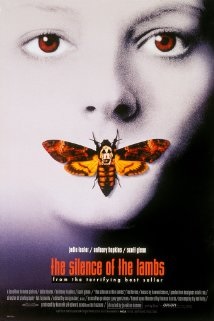
Silence of the Lambs brings us one of the greatest horror villains we have ever seen in Hannibal Lector we get one of the strongest leading female performance from Jodie Foster. This is the sort of film I could watch over and over because I love the investigation storyline but placing serial killer as support when it comes to solving a new serial killer. Buffalo Bill is arguable one of the…
Life is full of love and song
For those with both within their hearts;
But why must death and sleep be different
From their former counterparts?
Grief will mark a soul’s departure
Here on earth where all lives cease;
But from grief comes celebration
In another life of peace.
__________________
MPAA rating: PG
While Pixar has been rumored to be working on a project called Coco about the Mexican Day of the Dead (supposedly for a 2017 release), Reel FX and 20th Century Fox Animation beat them to the punch with 2014’s The Book of Life. This inventively animated romance starts out with a frame story reminiscent of The Princess Bride, with a confident museum guide recounting a story to a collection of rowdy schoolkids, who interject their occasional thoughts and worries as the tale progresses.
While these kids have a more typical cartoon human appearance, the characters in the tale being told are intentionally modeled as wooden puppets, with visible joints but no strings. This aesthetic combines with the off-kilter animation to give the CGI film a stop-motion aspect, not unlike The Lego Movie. The story itself follows three childhood friends, Manolo Sanchez (Diego Luna), Maria (Zoe Saldana), and Joaquin (Channing Tatum), who are destined to grow up into a love triangle. Just as viewers often debate who will get the girl in any number of series, the trio attract the attention of the two rulers of the afterlife, the lovely La Muerte of the Land of the Remembered and the bitter Xibalba of the Land of the Forgotten. Ron Perlman as Xibalba seems knowingly reminiscent of Hades in Hercules as he makes a game-changing bet with his counterpart as to which boy will marry Maria.
The Book of Life has a lot of positives. The animation is frequently enchanting and the characters surprisingly personable. While the characterization sometimes falters, I liked how one suitor was clearly meant as Maria’s soul mate, but the other was still given a chance to be heroic rather than being turned into a villain. The film also offers a uniquely positive view of death, treating it not as the end but as a second stage to reunite with loved ones and join in one big fiesta.
On the other hand, these same themes of death strike me as problematic. The depiction of the afterlife rings with Mexican culture but is entirely irreligious, as is the notion that our departed loved ones live on in happiness only as long as we remember them. The film’s conflict makes a point of noting that, without anyone to remember them, the dead will pass into the hellish Land of the Forgotten, which makes me wonder why no one is bothered by the fact that this will happen anyway within a few generations. I don’t remember my great-great-great grandfather; that doesn’t mean he’s not in Heaven. This idea of the afterlife is meant as a secular comfort but not a lasting one.
The Book of Life is also marred by tired clichés about being oneself against an overbearing parent; some awkwardly out-of-left-field pop songs, as if it’s trying to emulate Shrek; and oddly by the same animation I praised earlier. When I first saw the animation style, it reminded me of the Nickelodeon show El Tigre: The Adventures of Manny Rivera (picture below), and sure enough, director Jorge Gutierrez was also that show’s creator and apparently just translated the animation from 2D to 3D. While it works most of the time, certain scenes look strangely cheap with elaborate mustaches and protuberant noses that aren’t even trying for realism.
Here I go again, sounding all critical as if I dislike anything with flaws. Not so. The Book of Life rises as a delightful, energetic, and uniquely cultural change of pace from the usual stylings of Disney and DreamWorks while not coming off as low quality. Its themes of family and life and telling our own stories are commendable, and I enjoyed it, as I think most fans of animation will.
Best line: (one of the distraught schoolkids) “What is it with Mexicans and death?!”
“What have we learned?” they knowingly say.
“Life has evolved to show us the way.
Dangerous creatures and habits have filled
The past, and on them the near-future will build.”
“What have we learned?” they foolishly ask.
“Our forerunners clearly weren’t up to the task.
What they could not do we will better complete.
Mistakes of the past we will never repeat.”
“What have we learned?” they say, sure of their touch.
Those who see clearly say “Clearly, not much.”
________________
MPAA rating: PG-13
In many ways, 2015 was the year of the unexpected sequel/reboot. I’d bet that not too many people wanted or expected Hollywood to resurrect franchises like Jurassic Park, Mad Max, The Terminator, or Fantastic Four. (Lots of fans wanted another Star Wars so that doesn’t count.) Some of those turned out better than others, but the mammoth hit of the summer was Jurassic World.
The film starts out with two brothers, older punk Gray and younger whiz kid Zach, as their parents send them off to a theme park on none other than Isla Nublar. The audience’s nostalgia is tapped early on as we enter the famous giant gates and behold Jurassic World in all its glory. There’s a baby dinosaur petting zoo and a big glass hamster ball for safaris and a SeaWorld-style splash show with something a little bigger than a killer whale. Tourists and merchandise are everywhere, and there’s a certain satisfaction to seeing John Hammond’s dream so triumphantly realized.
By the looks of things, the creators of the park seem to have worked out all the bugs, with financing from owner Simon Masrani (Irrfan Khan) and scientific guidance from Dr. Henry Wu (B. D. Wong, the only returning cast member from the original film). But as Ian Malcolm said in The Lost World, they’re not making the same mistakes twice, they’re “making all new ones.” Just as the whole frog DNA idea backfired for Hammond, the park runners do a little too much genetic manipulation to create an uber-dinosaur, the Indominus Rex. As the park’s operational manager, Zach and Gray’s Aunt Claire (Bryce Dallas Howard) seems coldly confident that there’s nothing wrong with toying with nature. You can guess what happens next.
Like Star Wars: The Force Awakens, Jurassic World seems to directly parallel the original film in order to balance the new with the familiar. There’s the gate entrance, a hands-on scene involving a sick/dying dinosaur, an intense glass scene that lets kids in danger look directly into a predator’s maw, a flare scene involving a T. Rex, and a vehicle being chased by a rogue dino. While I like The Force Awakens more, I have to admit that Jurassic World better differentiates those scenes from their original counterparts. It also nails the most important element of an effects-driven movie like this, the dinosaurs. Some creatures may be more obviously CGI than others, but the life-and-death action and dino duels are exhilarating to behold, if rather vicious in their body count.
Jurassic World is quite an improvement over the last two Jurassic Park sequels, but it’s a Procompsognathus next to Spielberg’s original. Its greatest weakness is its characters, who lack the appealing personalities of the first gang of ill-fated visitors. After Guardians of the Galaxy, Chris Pratt was the hot actor and the obvious choice for the hero in the latest addition to the Jurassic Park series. His role as Owen Grady is the most persuasive, acting as the practical conscience for the shocked park leaders and the personable trainer for the park’s four semi-trained Velociraptors. Pratt can’t carry the whole movie, though, and everyone else is rather interchangeable. Howard is your typical half-empowered damsel; the kids are your typical kids in danger, with a troubled home life that is left unresolved; and Vincent D’Onofrio is your typical dense, single-minded fool of a villain, who is convinced that the raptors can be used as weapons even after that very plan blows up in his face.
By the end, the human characters become almost irrelevant during a big dino brawl, dumbly running parallel to the fight and trying to just stay out of the way. The end almost reminded me of 2014’s Godzilla, in transforming a former monster into something of a hero who battles whatever rival to its superiority but leaves man alone since he’s too trivial to matter much. These last two paragraphs sound perhaps more critical than I mean to be. Jurassic World is an entertaining summer movie that revitalized the franchise; I just don’t know why it nearly became the highest grossing film of the year. Hopefully, the next installment will put a little more focus on the characters. I love a good dino flick; it just helps when I connect more to the people in danger.
Best line: (Masrani) “You created a monster!” (Dr. Wu) “Monster is a relative term. To a canary, a cat is a monster. We’re just used to being the cat.”














 Rhyme and Reason