(Today’s NaPoWriMo prompt was a seemingly basic theme, a poem about something large, so the massive ocean made perfect sense.)
The ocean was a barrier mere centuries ago, Immovable, impassable, impossible to overthrow. It mocked our human efforts with indifferent distances, Its furthest reaches only myths that man could never hope to know.
But even once we “conquered” it and put its edge to page, It hardly made a dent upon its unpremeditated rage. We may know where to sail and hark to what the compass says, But none can quite predict this beast of overwhelming size and age.
The ships that are our power and our glory navally Can do their best against the test that dwarfs the land’s reality. They ply the waves that murder without hate or prejudice, A tiny line of ants that crawl across the quicksand of the sea. ________________________________
MPA rating: PG-13
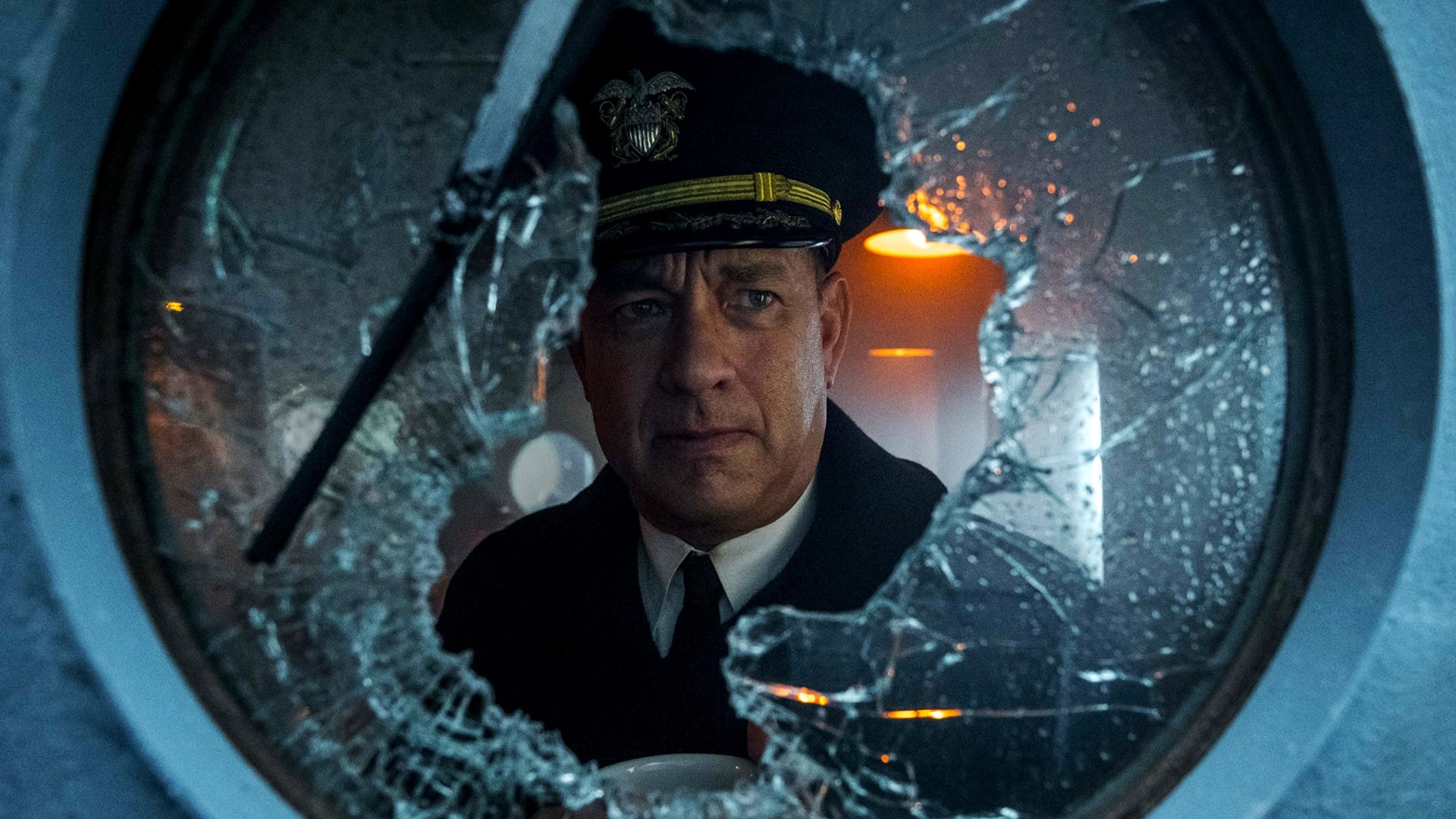
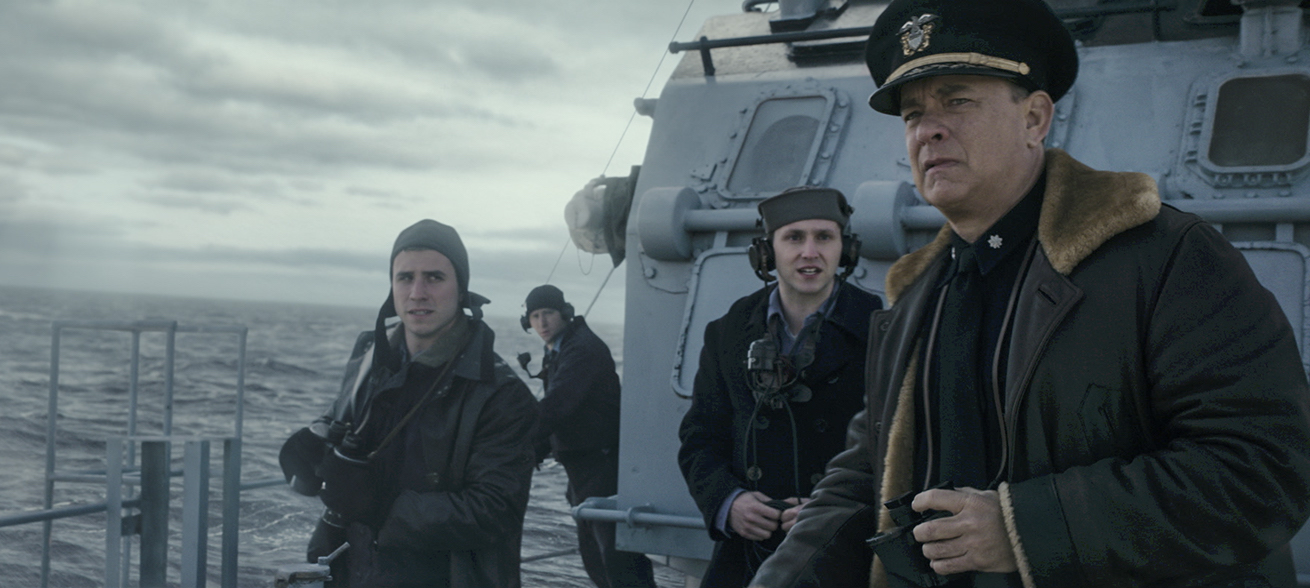
Like Finch, Greyhound was the other Apple TV+ film with Tom Hanks to convince me to subscribe to yet another streaming service. Based on C.S. Forester’s 1955 novel The Good Shepherd, the film is an intense journey across the Atlantic Ocean at the height of World War II, when German U-boats terrorized the ships trying to bring troops and supplies from the United States to beleaguered Europe. Hanks plays Captain Ernest Krause of the USS Keeling (a.k.a. Greyhound) and its supply convoy, and but for a brief flashback with his assumed wife (Elisabeth Shue), the whole action of the film takes place upon the storm-tossed seas with the constant threat of enemy torpedoes.
While the film earns high marks for realism with its authentic naval terminology, the weak script and characterization are rather thin. It’s a good thing then that Hanks is so committed to the role, forgoing the pirates of Captain Phillips in favor of Nazi wolf packs who taunt him over the radio as they pick off the ships he’s been tasked with protecting. Every loss is reflected in his weary but determined eyes, and the captain’s commitment is reflected in how he refuses to rest while the danger persists or celebrate death too much.
After all the waiting and worrying, it’s a cheer-worthy moment when the ships are able to land a blow on the submarines stalking them, and the film certainly highlights how the journey across the Atlantic was just as dangerous as what awaited soldiers on the other side. A taut and streamlined historical thriller, Greyhound owes much to Hanks, whose mixture of grit and religiosity in the role once more proves why we love him so.
Best line: (Cole, the executive officer, to Captain Krause) “What you did yesterday got us to today.”
(Day 10 of NaPoWriMo provided a straightforward prompt asking for a love poem. With this film in mind, I couldn’t help a little tongue in cheek regarding the boasts made by the lovestruck.)
Dear love, I know we’ve been apart too many days to count, But I can still remember every contour of your face. If it meant seeing you again, I’d climb the highest mount Or cross the deepest river or such similar clichés.
But mounts and rivers had their day; new dangers have emerged, And I would brave them all as well to be back by your side. I’d vanquish vicious Spuzzards by the dozens if you urged, And butcher every Chumbler that attempts humanicide.
Sand gobblers are nothing, whether colony or queen, For I could take on hundreds with the thought of where you are. One day I’ll make the trek and brave these threats that stand between; Till then, within my bunker, I will love you from afar. ______________________________
MPA rating: PG-13
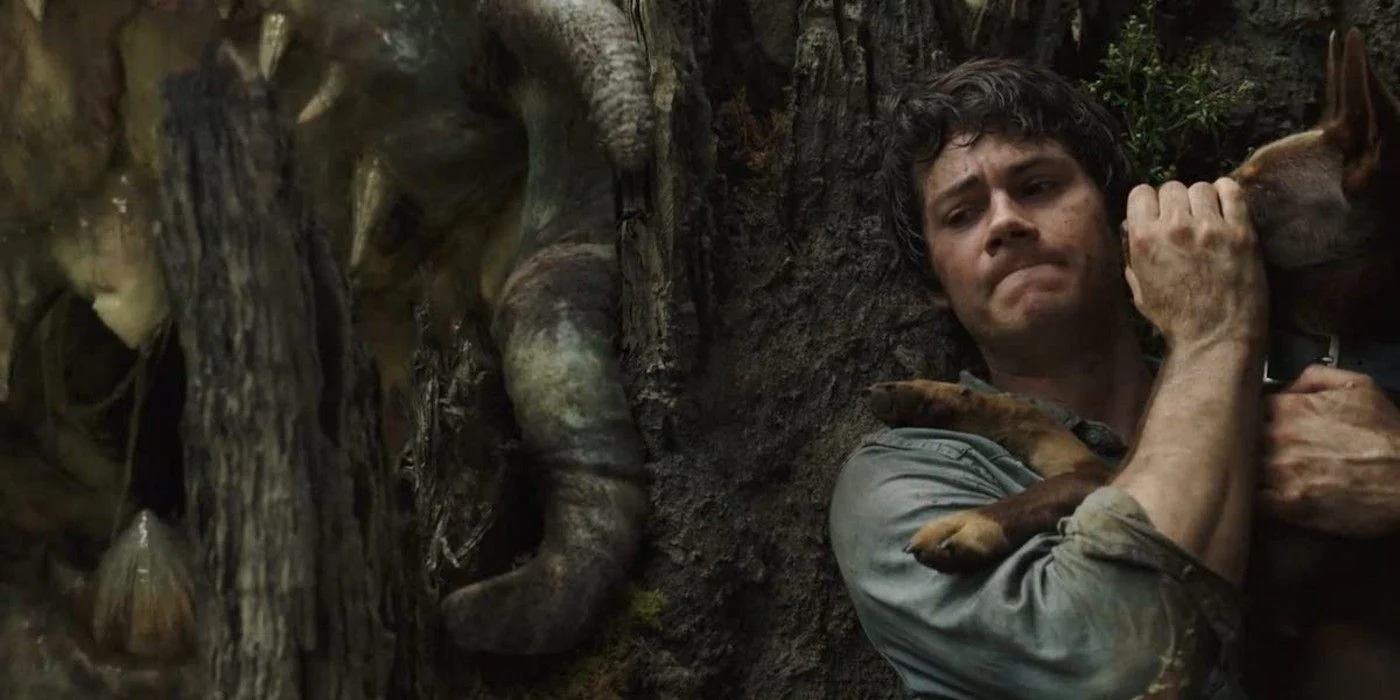
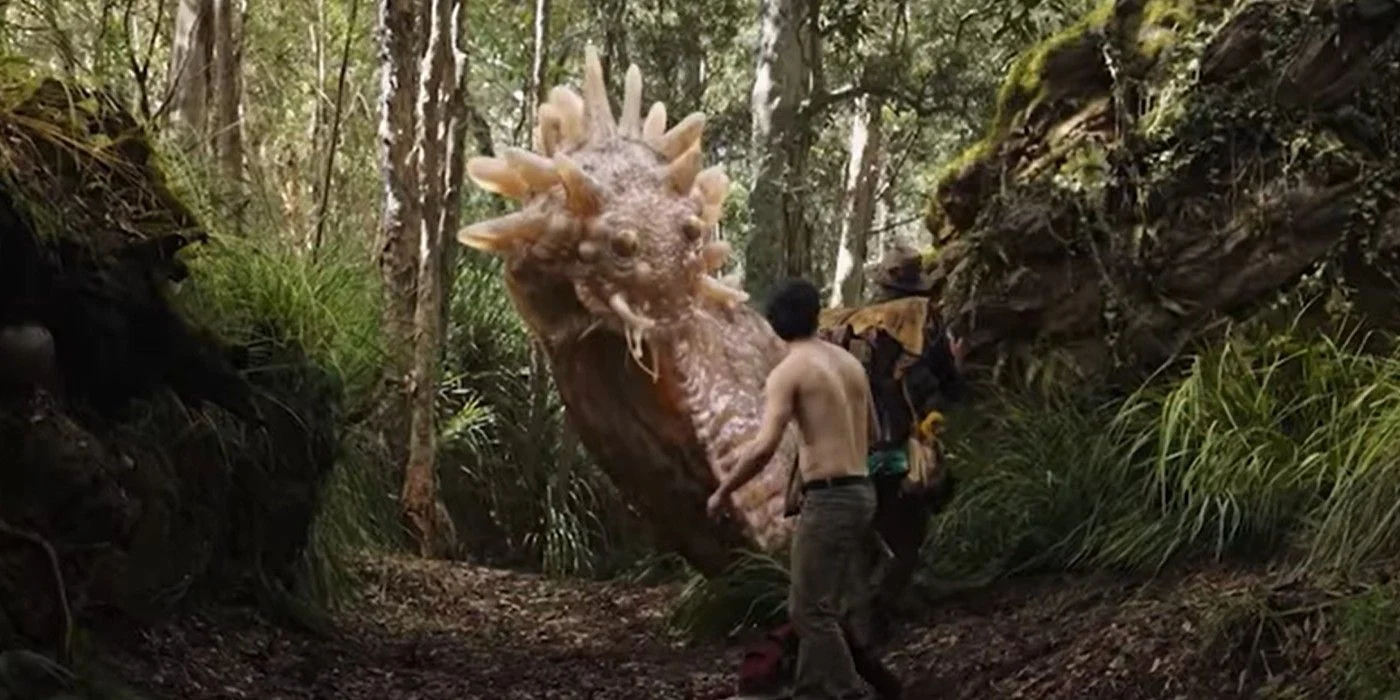
A good film doesn’t always have to revolutionize its genre or blow away expectations; sometimes it’s enough to just be entertaining and live up to its name, which Love and Monsters certainly does. Set in a near future where an attempt to destroy an asteroid (perhaps some alternate plot for Don’t Look Up) resulted in all coldblooded creatures mutating into giant monsters, the film follows Joel Dawson (Dylan O’Brien) on his journey to reunite with his girlfriend Aimee (Jessica Henwick). After seven years living in separate survivor colonies, connecting only via radio conversations, Joel decides to brave the 85-mile, monster-ridden hike to his love, despite his clear lack of survival experience.
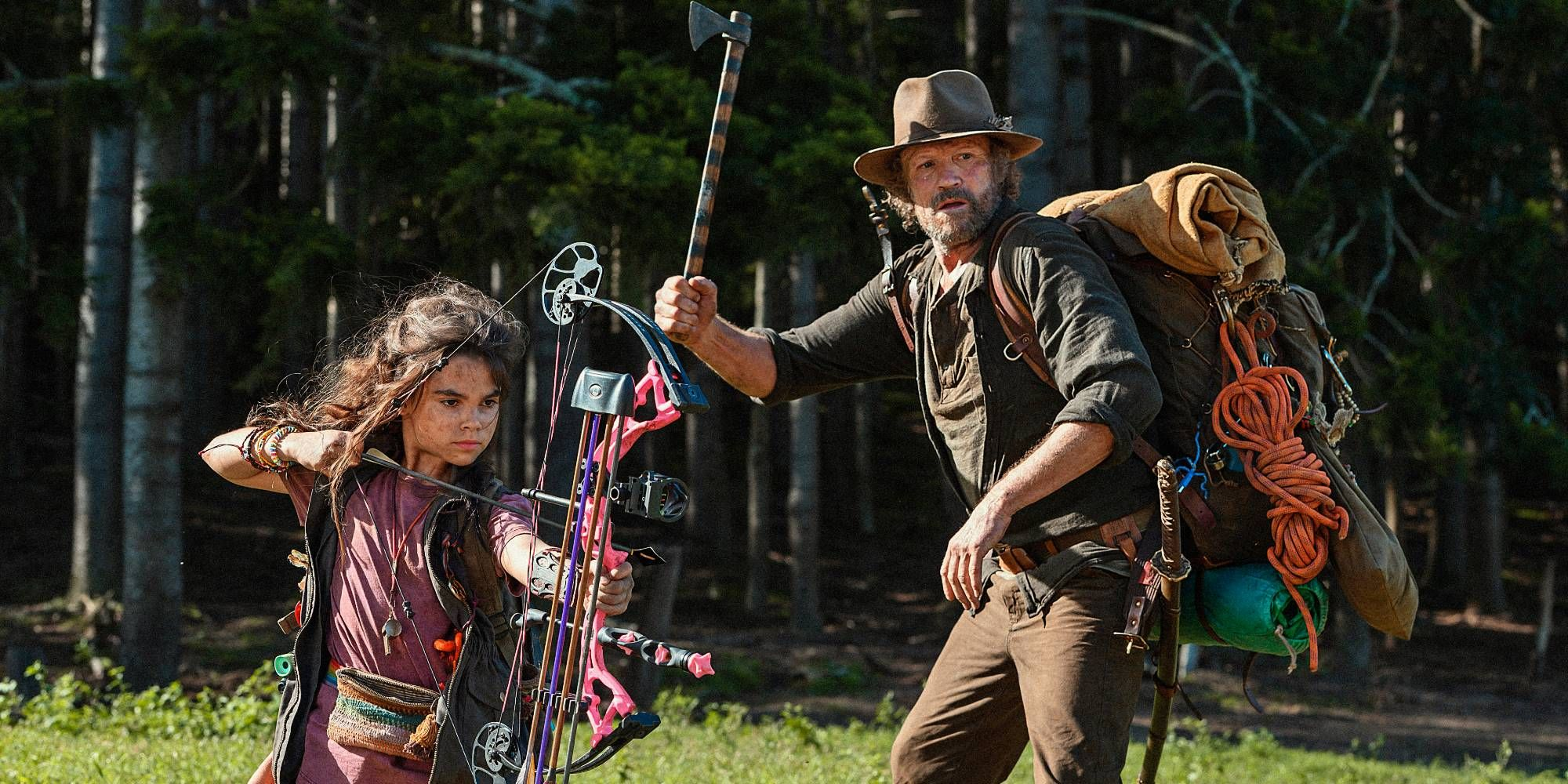
Love and Monsters fits snugly beside other post-apocalyptic survival films while keeping the horrific monster-vs-human action at bay with a largely fun tone and (thankfully) PG-13-level violence. While the monsters are obvious, thanks to Oscar-nominated visual effects, O’Brien provides the love in the title, his memories of Aimee fueling his drive to reunite. His relatable voiceover makes him a likable guide to this dangerous new world, joined at times by a dog named Boy and some other survivors like the pair of Michael Rooker and Ariana Greenblatt, who give him a crash course on how to get by in a world where nearly everything wants to eat you.
The film does somewhat step out of its expected mold by the end, subverting Joel’s expectations about love and found family. Despite its familiar elements, it’s nice to see an original adventure film that delivers exactly what it means to and that managed to win over critics and audiences despite the pandemic forcing it from theaters to a digital on-demand release. No matter how hard life might have gotten in the last few years, this film proves it could be much, much worse, and even that can be survived.
Best line: (Joel, addressing other survivors) “If I can survive out here, anybody can. It’s like a good friend once told me: Good instincts are earned by making mistakes. If you’re lucky enough to survive a few mistakes, you’re gonna do all right out here.”
(Today’s NaPoWriMo prompt was for a poem detailing an alter ego, so a superhero seemed like a prime subject.)
My alter ego you may know; His fame surpasses mine, And yet for all our differences, Our points of view align. Where I avoid hostility, My shadow boasts a spine.
Where I will yield at pressure’s grip, He clings to his ideals. The fear that dogs me in the day, The night for him conceals. And those who propagate that fear, He follows on their heels.
The scars that scare the rest away, My counterpart will earn. And what he does for you and me It’s best that we don’t learn. Since bad for bad is good for good, A blind eye I will turn. _________________________
MPA rating: PG-13 (though R for the director’s cut I saw)
I went into Daredevil fully expecting it to be bad since it has gained a reputation as one of the several lame Marvel adaptations that floundered before the MCU found its stride. I wasn’t aware that the director’s cut had a better reputation than the original, so it was just luck that I opted to see the more complete version of the story, before thirty minutes were unwisely cut for theaters. And I was pleasantly surprised by a comic book tale that may be imperfect but not nearly as dismal as I’d heard.
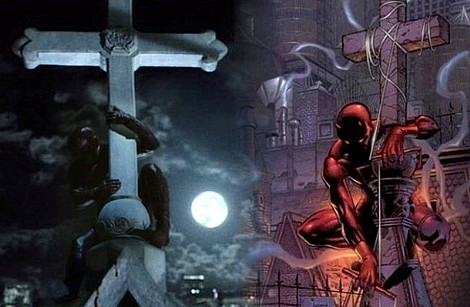
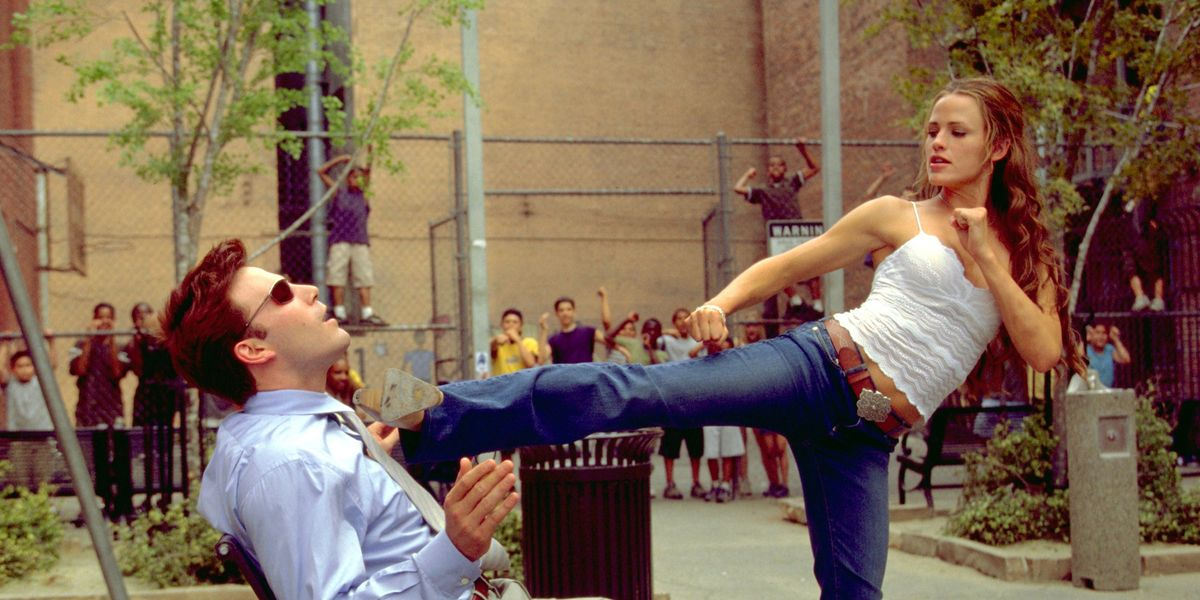
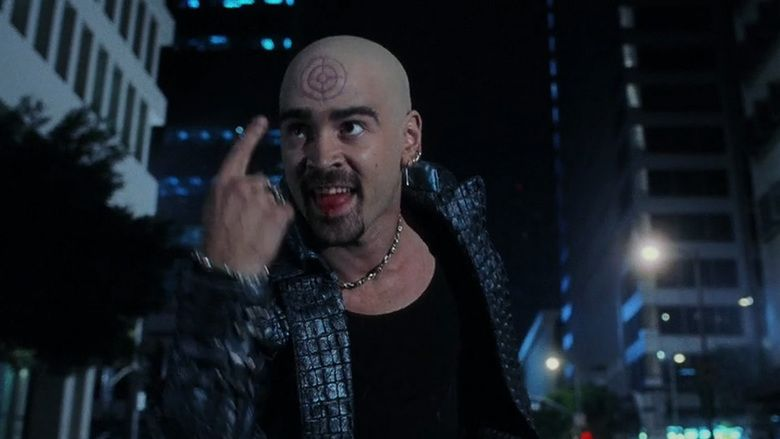
None of the actors are at the top of their game, but it’s still an impressive cast, including a pre-Batman Ben Affleck as “the man without fear” Matt Murdock, a pre-Happy Jon Favreau as his lawyer friend, and a pre-Penguin Colin Farrell as the ruthless assassin Bullseye. Jennifer Garner is decent as love interest and fellow fighter Elektra, while Michael Clarke Duncan steals every scene as the hulking Kingpin, putting his massive height and strength to good use as the imposing criminal mastermind. There are clear echoes of Daredevil’s comic book origins, such as the opening scene of the blind vigilante clinging to a church’s rooftop cross, and even though it plays itself straight with a dark and brooding tone to rival Batman (and minus the aversion to killing), there’s also definite cheesiness on display, with Farrell the worst offender, taking every opportunity to show how irredeemably evil he is.
With its obvious CGI moments and choppy fight editing, Daredevil doesn’t have the special effects polish we’ve come to expect of modern superhero films, so it’s a product of its time, when the first Spider-Man was the best template for a comic book film but was hard to replicate right. I was also surprised to hear the Grammy-winning “Bring Me to Life” by Evanescence, which was part of the soundtrack before the song had even been released. There are genuinely good elements in the mix, from Murdock’s movingly tragic childhood to the Catholic subtext to the brutal face-off between Daredevil and Kingpin. So Daredevil may have been a misfire at the time, but it simply paved the way for other Marvel films to be better. (I really ought to see the Netflix series now that the character seems to be entering the MCU in earnest.)
Best line: (Father Everett, to Matt as Daredevil) “Look, a man without fear is a man without hope. May God have mercy on you for your sins and grant you Everlasting Life, Amen. …I’m not too crazy about the outfit, either.”
(Today’s NaPoWriMo prompt was for a challenge or rebuttal to a famous saying, and “Nice guys finish last” is one that’s always annoyed me.)
“Nice guys finish last,” you say? I take offense at that. For I take pride in being nice. It’s never fallen flat. Good attitudes are rare enough to be of note these days, To brighten someone else’s life, however brief the blaze. The cruel may get ahead but likely not to paradise; The hares can scoff and hasten off, but tortoises play nice.
I’ve never once lamented being nice to someone yet, For what’s the opposite except immediate regret? I’d rather be the person who can dry another’s tears With just a smile or open door or pair of open ears. The bad boys roll their eyes and think they’ll never pay a price. Well, bless their hearts right off the charts, ‘cause dang it, I am nice! _________________________________
MPA rating: R (for language and violence)
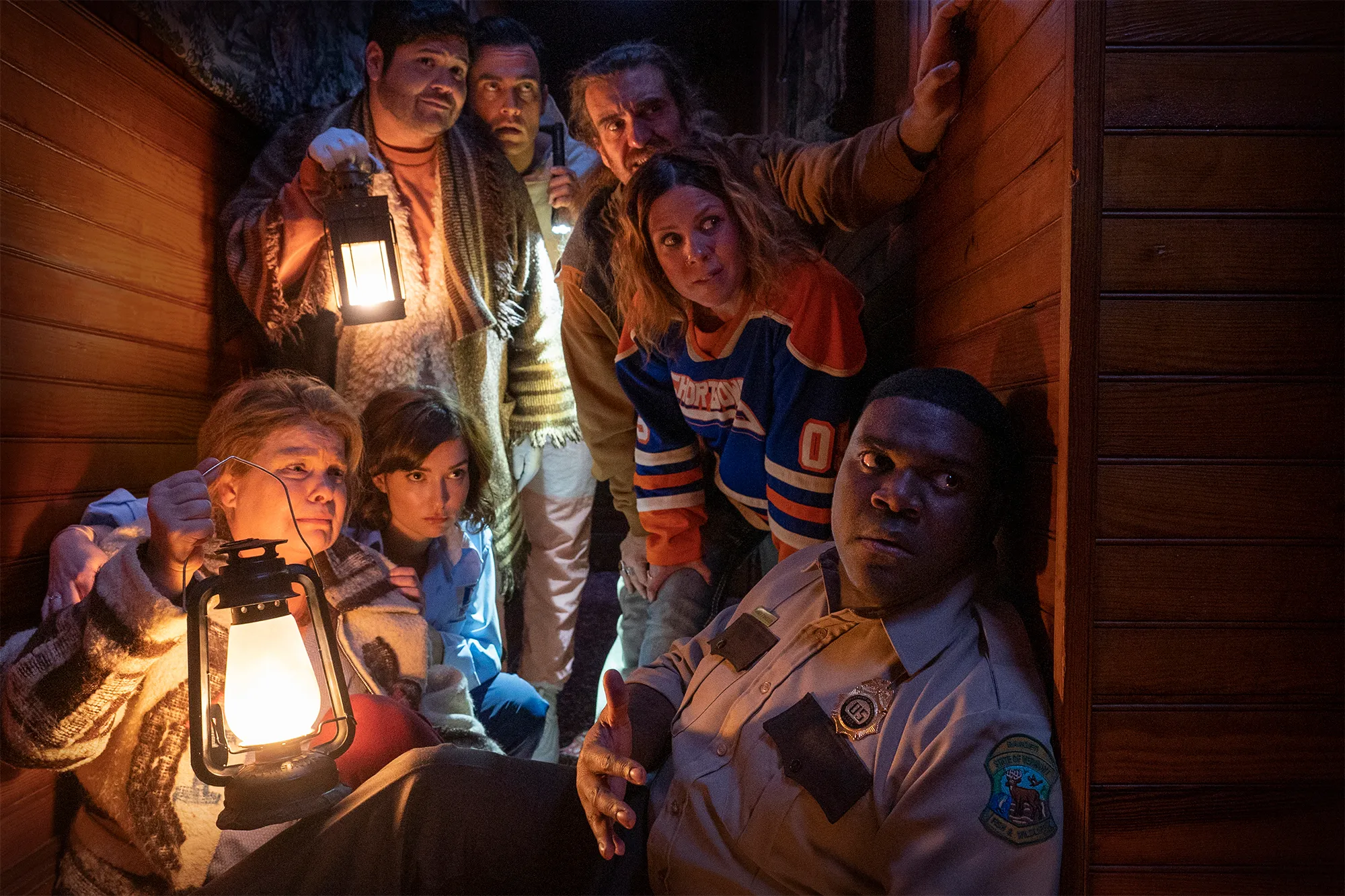
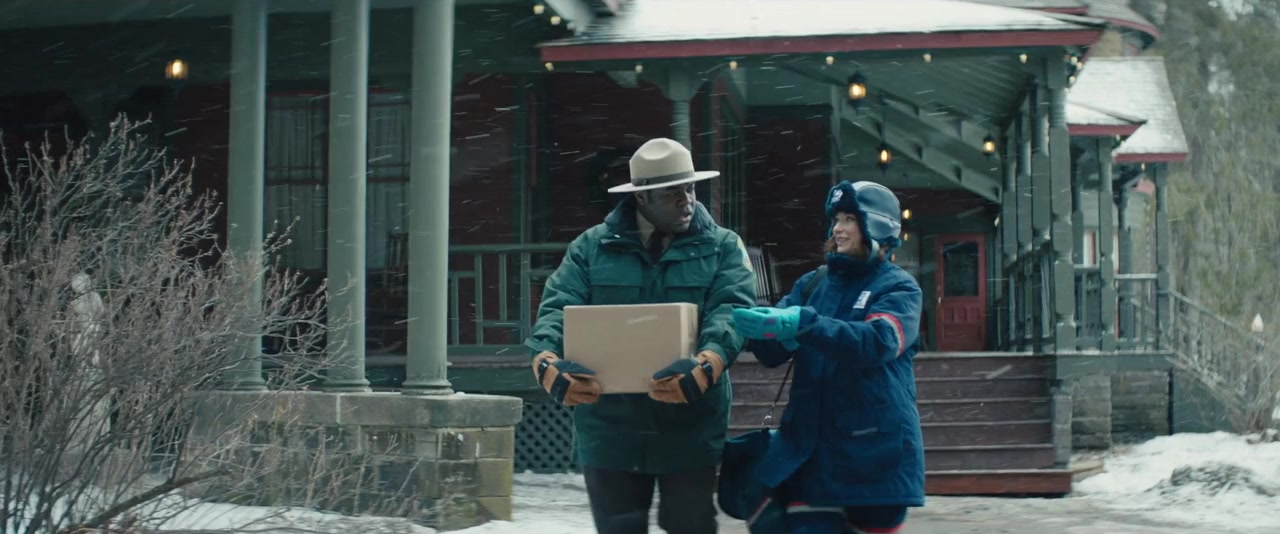
While some like Ghostbusters are exceptions, horror comedy has never been a genre of interest to me since it so often relies on gore for comedic effect, finding humor in shock value, which isn’t my cup of tea. Yet the premise of Werewolves Within caught my attention, since I love the “one-of-us-does-not-belong” style of mystery, even if I’ve never played the video game on which the film is very loosely based. (On Rotten Tomatoes, it’s now the highest-rated film based on a video game.) Set in the notoriously quirky mountains of Vermont, the film features an array of colorful characters, including jovial new forest ranger Finn (Sam Richardson), likable mail carrier Cecily (Milana Vayntrub, a.k.a. Lily from the AT&T commercials), environmentalist Dr. Ellis (Rebecca Henderson), and many more, all snowed in together as a murderer seems to be picking them off one by one.
From the visiting oil man trying to lay a pipeline to the wealthy gay couple to the unstable woman obsessed with her lap dog, there is no shortage of suspects, some of which could have used more character development beyond their quirks, and no one can be entirely dismissed as the culprit when a dead body is discovered. Despite the title, there’s even lasting doubt about whether the werewolf is a possibility at all. Through it all, Sam Richardson’s Finn is especially a joy, displaying and advocating for a folksy niceness that even makes him reluctant to swear while the rest of the cast are in panic mode. He and Vayntrub are an endearing pair amid all the doubt and chaos, even though they remain suspects as well. Werewolves Within has the feel of an instant cult classic, sort of the werewolf counterpart to The Lost Boys, managing decently campy scares alongside endearingly eccentric humor. Despite some R-rated content, it was one horror comedy I enjoyed immensely.
Best line: (Finn Wheeler) “Well, we’re having a good old-fashioned sleepover.” (Marcus) “With guns, though.” (Finn) “With guns, yes.”
(For Day 6 of NaPoWriMo, the prompt was to write an acrostic poem, not spelling out something with the first letter of each line but using the first word of each line to form some phrase or quote, so I chose a classic line of Walter Scott poetry that sums up so many dark stories.)
Oh, I know What you desire, A listening ear to stem your fear, Tangled up and dire. Web of anger, web of grief – either one We fall into – Weave around us When they’ve found us, First a lie, then gravely true. We wish to believe, and we Practice that creed, if only To try to Deceive our own greed. _____________________
MPA rating: R (mainly for language and scattered but graphic violence)
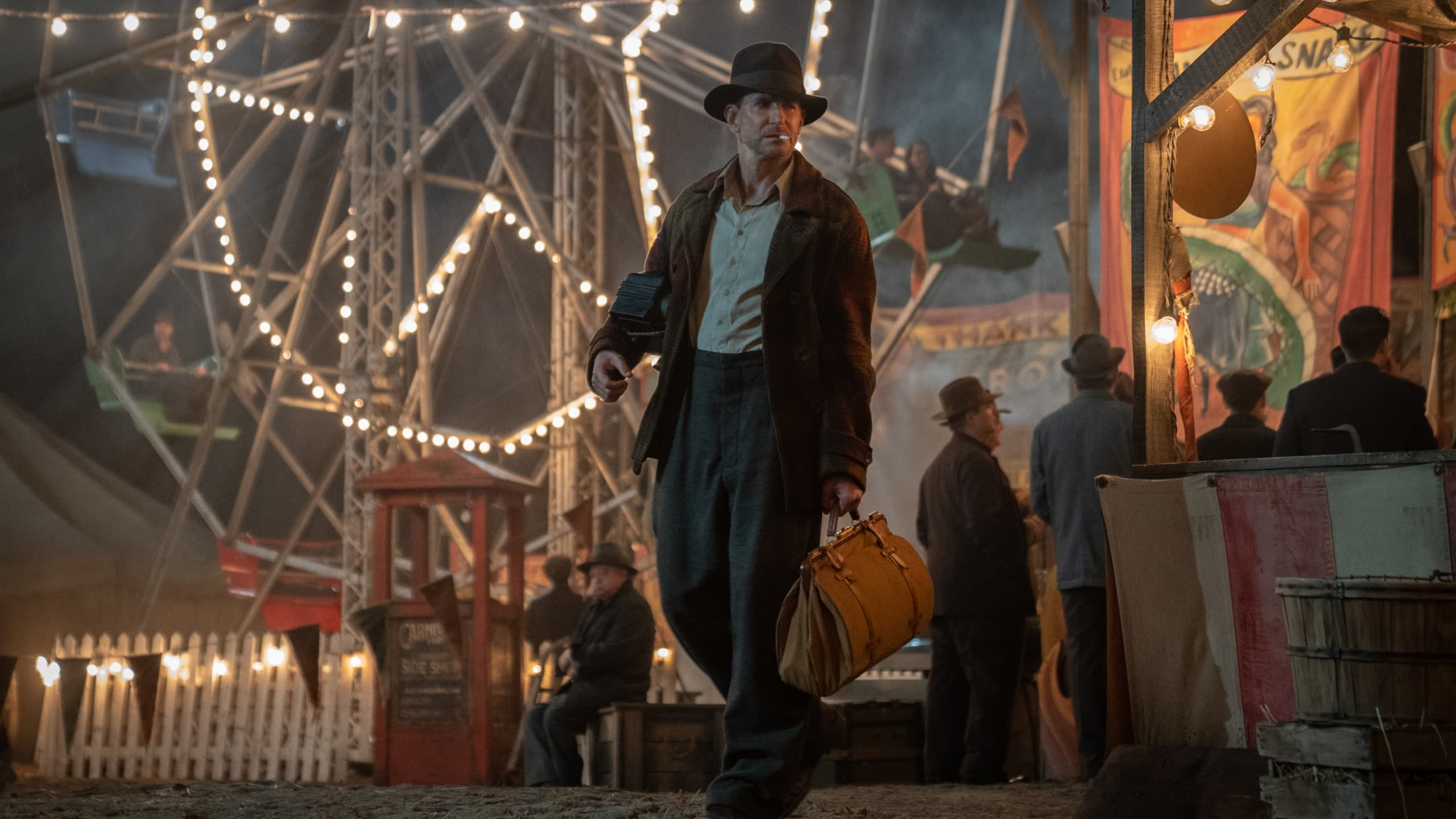
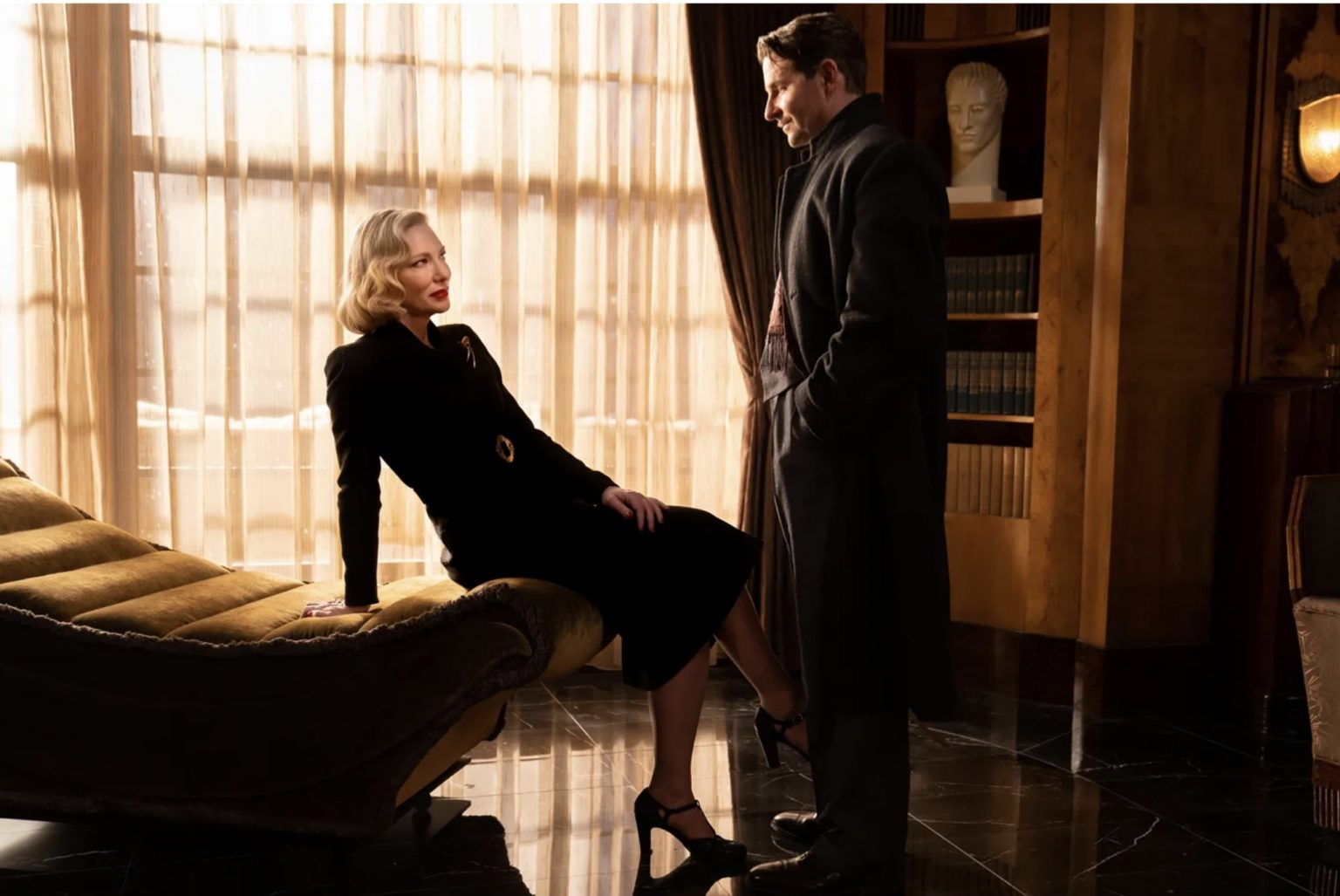
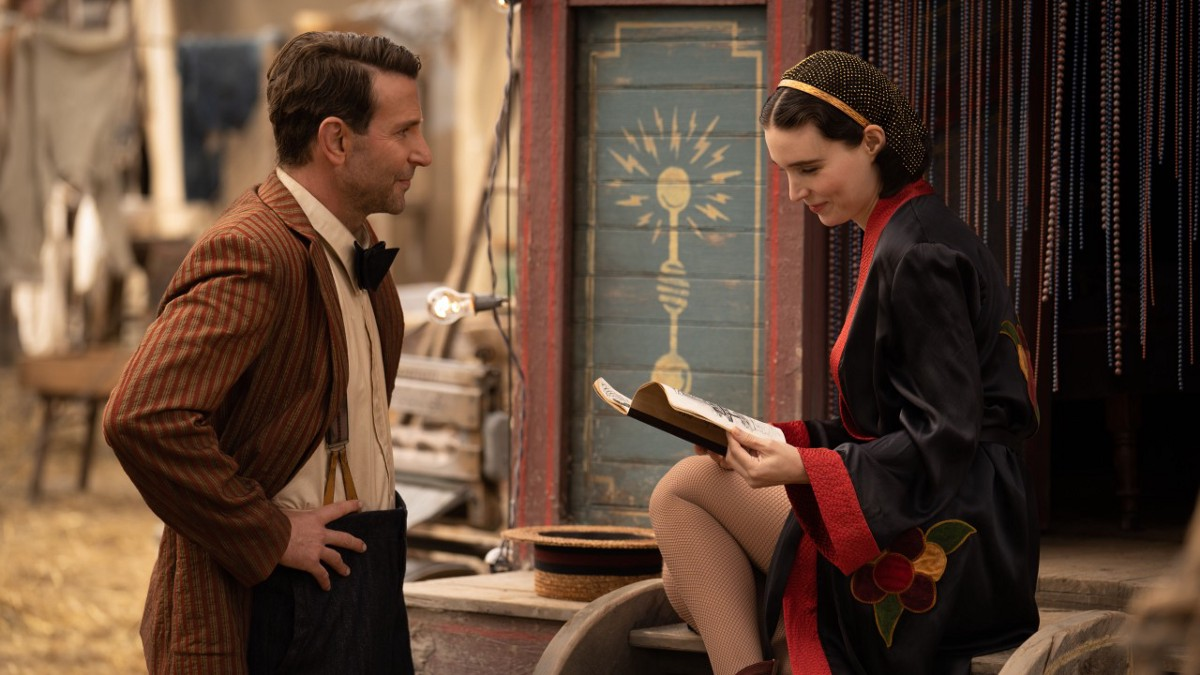
Every few years, there comes along a Best Picture nominee that dwells on the sordid saga of someone’s lies taken to an extreme, prompting me to sum up the theme with the Walter Scott quote from my acrostic poem above. The last was Parasite, and while Nightmare Alley didn’t achieve the same awards love of that film, it’s still a chillingly effective and handsomely-made period piece. Based on a 1946 film by William Lindsay Gresham, which already had a film adaptation in 1947, Nightmare Alley follows Stan Carlisle (Bradley Cooper) from an apparent murder scene to a Depression-era carnival, where he learns the ropes of mentalism and carny hokum from a pair of faux psychics (Toni Collette, David Strathairn). After wooing an assistant (Rooney Mara) and taking his own mentalist show on the road, he becomes entangled with aloof psychologist Dr. Lilith Ritter (Cate Blanchett) as they seek to pull off bigger and more dangerous cons.
I haven’t seen many of director Guillermo del Toro’s other films, but, comparing this one to Pan’s Labyrinth, Nightmare Alley is unique in its lack of supernatural elements but also shares some of his favorite excesses, like the dark and slick aesthetic and moments of bloody violence that could have been toned down. The noir production design is especially laudable, from the shadowy grotesquerie of the carnival to the art deco elegance of Dr. Ritter’s office, and it could have earned an Oscar or two if Dune hadn’t swept the technical categories.
I was dissatisfied at first with Cooper’s portrayal of Carlisle, who seemed rather wooden, like too much of a blank page, at the beginning. Yet as the film wore on through its overlong two and a half hours, I realized that was intentional, as Carlisle absorbed the carny wiles of his friends in the first half, gradually becoming more and more confident in himself and his powers of persuasion until his house of cards falls. And boy, does it fall hard! I was surprised that Cooper didn’t warrant a Best Actor nomination for the range of emotions his character undergoes, but all of the actors did an excellent job across the board.
Nightmare Alley is certainly a dark drama, with cold people doing cruel things as they weave that tangled web, but I found it surprisingly riveting (minus the violence). It’s hard to say whether a moral can be gleaned from the story beyond “trust no one,” but based on advice from Willem Dafoe’s seasoned carnival barker, one of the themes seems to be how people can know exactly the ruin where their path is leading and still fail to turn from it, first noticed in Carlisle’s growing alcoholism. I’m curious now to see how the original 1946 film compares, since I assume it’s largely the same story without the R rating. Ultimately, Nightmare Alley just couldn’t stand out enough in its crowded field, but it is an awards-caliber film nonetheless.
Best line: (Carlisle) “Sometimes you don’t see the line until you cross it.”
(Today’s NaPoWriMo prompt was for a Spanish glosa, which is a form that takes a quatrain from an existing poem and answers or explains it, using each line in the quatrain as the final line in each of the new poem’s four stanzas. I ignored the form’s usual ten-line stanza in favor of imitating the original poem; in my case, I used the third stanza from “Richard Cory” by Edwin Arlington Robinson, which has a short tale of crushing expectation that went well with this film.)
We praised a man geneticists had blessed, His silver spoon from birth still carrying. His wealth was how he outshone all the rest, And he was rich—yes, richer than a king—
His skin was flawless, health beyond compare, With only confidence upon his face. He seemed at home and happy anywhere And admirably schooled in every grace:
He had been bred to evermore excel, In sport and science, art and book and string. He barely seemed to try, and he did well; In fine, we thought that he was everything.
But then the fateful day arrived to shock: Our hero came in second in a race! How had we fools allowed this laughingstock To make us wish that we were in his place? ________________________
MPA rating: PG-13
Science fiction is so often associated with massive spaceships, alien invaders, time travelers, and robot dystopias that it can be easy to overlook the more understated entries in the genre. Gattaca, the debut feature of Andrew Niccol, is a prime example of speculative fiction, presenting a believable vision of a world that’s taken some societal vice or virtue to an extreme. In this case, the search for perfection has led to unbridled eugenics, allowing mankind to literally breed its flaws away, for the privileged anyway.
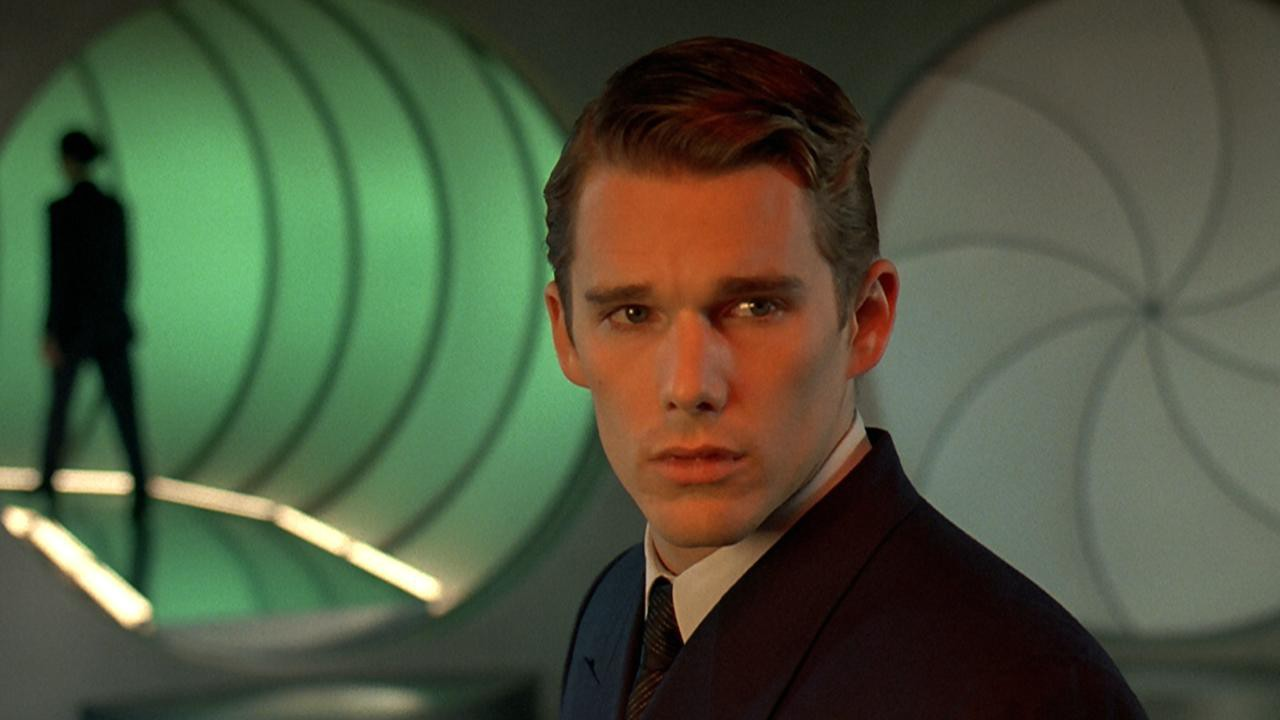
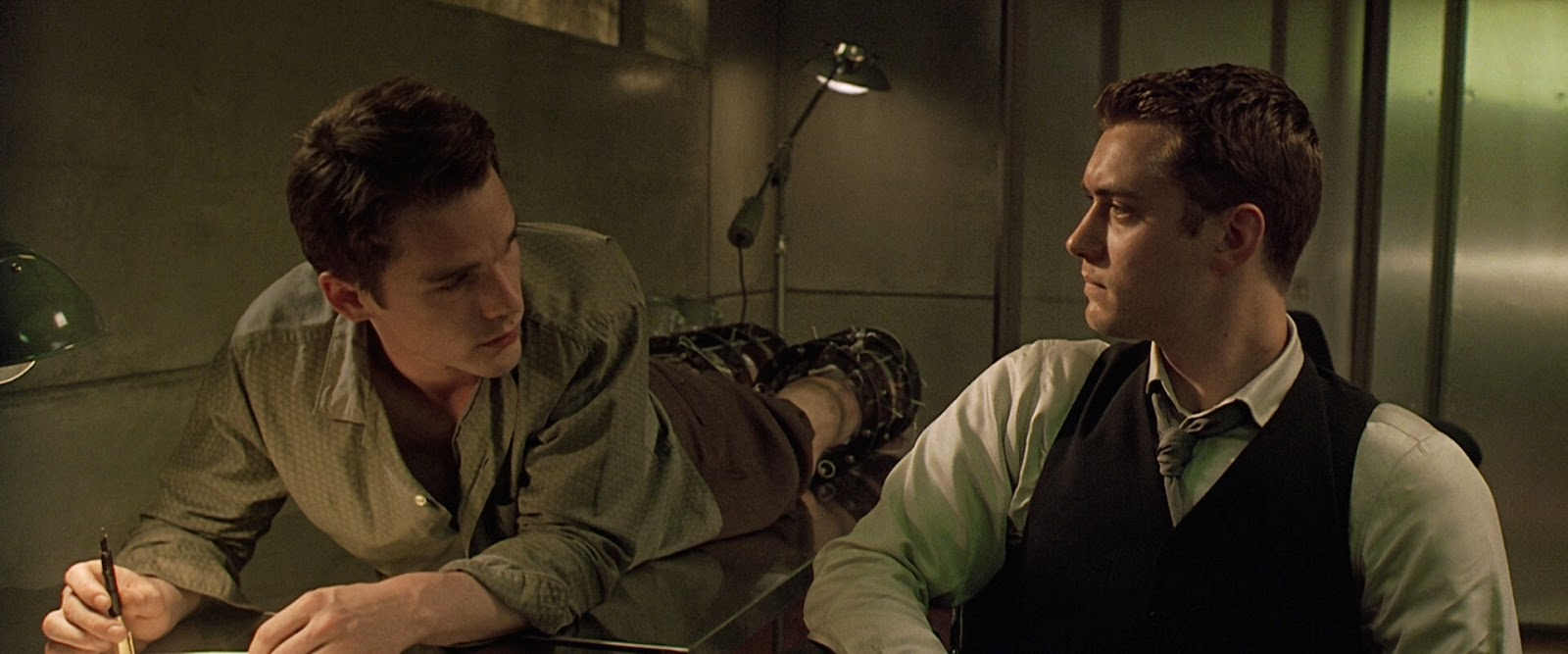
A young Ethan Hawke plays Vincent Freeman, the product of a natural birth or “In-Valid” whose projected probability of heart failure and mental problems immediately labeled him a failure from the delivery room. Dreaming of going to space despite never being able to physically qualify for such a high-value career, Vincent is connected with Jerome Morrow (Jude Law), a Valid whose near-perfect genetics do him little good since he’s in a wheelchair. Taking on Jerome’s identity via borrowed blood, urine, and DNA samples, Vincent fakes his way into the space program of Gattaca and seems poised to make his dream a reality until a murder on the premises results in his former identity becoming the prime suspect.
Niccol’s other work like The Truman Show and In Time (a film I enjoyed more than most) prove how skilled he is at setting determined protagonists against a system stacked against them, and Gattaca falls into that same mold. While it glosses over the rampant abortion necessary for this eugenics dystopia, there are a host of themes at play as Vincent rebels against his assigned potential: the limitations of science in determining a person’s worth without regard for effort, the pressure on those who have every reason to excel and somehow still fall short, the risks of taking screening procedures and only-the-best scrutiny too far, the quiet desperation of those who don’t approve of a system but feel too powerless to change it.
All of these themes play out while also keeping the murder mystery intriguing as two detectives (Loren Dean, Alan Arkin) rely on advanced DNA testing to track down the killer. Vincent’s clever efforts to conceal his true identity add to the tension, and his camaraderie with the real Jerome grows deeper with time as Jerome adopts Vincent’s dream as his own to an extent, even encouraging him to keep going when continuing their shared fraud gets riskier. Uma Thurman as Vincent’s love interest doesn’t have much to do, but she illustrates her own burdens of self-consciousness.
Gattaca is one of those films that deserves the clichéd accolades about “the triumph of the human spirit.” Michael Nyman’s score is subtly majestic and lump-inducing at key moments, and Vincent’s journey becomes a well-earned inspiration by the end. Despite warm reviews, it’s one more sci-fi winner that failed at the box office and deserves so much more attention than it got. Still, the film has already made an impact on the public perception of the potential prejudices of genetic engineering. From the advent of technologies like CRISPR to the danger of “common-sense” biases, its themes continue to be relevant twenty-five years later.
Best line: (Vincent) “They have got you looking so hard for any flaw that after a while that’s all that you see.”
(Today’s NaPoWriMo prompt was to write a poem inspired by a tweet from Haggard Hawks, an account that posts obscure English vocabulary. I liked this post on déjà vu and its variants, like déjà entendu (“the feeling you’ve heard something before”), so I used it for Hollywood’s incessant habit of churning out remakes and reboots.)
An alien far out in space was lounging in his ship, Content to intercept the many signals from the earth. He loved the so-called “movies” on his decades-spanning trip, And though the words were Greek to him, he theorized their worth.
The stories held his fancy, stoking joy and shock and awe, For nothing from his planet was original like these. But gradually he noticed creativity withdraw, With déjà vu and entendu in cyclical reprise.
“Now wait a zeptosecond,” he protested to his screen. “The earthlings may be different, but I’ve seen this tale before. That killer in the mask is one I’ve definitely seen. That RoboCop got two at least; that star who’s born got four.
“That ship that’s flipped and upside down, that planet full of apes, That ‘alien’ that made me laugh at how wrong humans are, And all these superheroes with their uniforms and capes; That spider guy especially must be quite popular.
“I fear that human beings must have reached their mental limit If they’ve taken to recycling what dazzled in the past. For any globe, there’s only so much innovation in it. Perhaps I’ll find some younger planet’s budding telecast.” ______________________________
MPA rating: PG-13
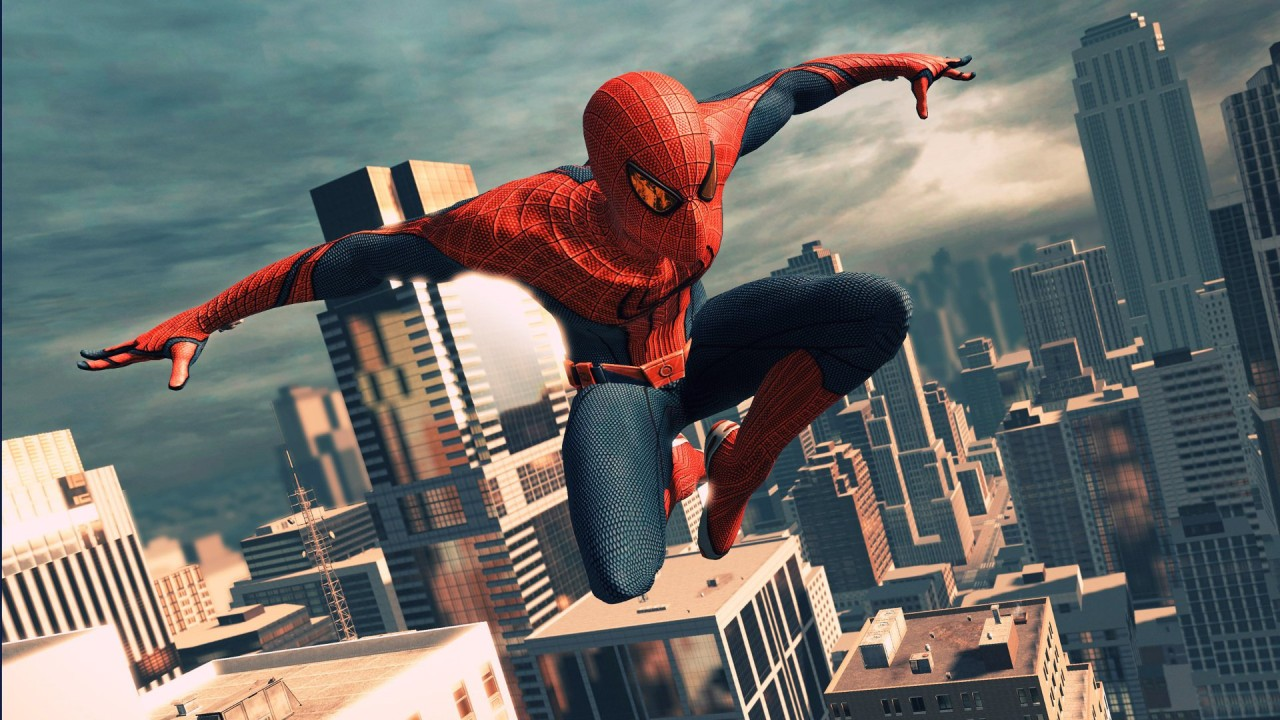
It’s difficult to appraise Sony’s Amazing Spider-Man films in retrospect the same as when they first came out. Five years after Spider-Man 3 seemed too soon for a reboot (never mind that Tom Holland’s Spidey would come just two years after Andrew Garfield’s second film), and Andrew Garfield was a largely unknown actor inevitably compared with the beloved Tobey Maguire. (All three Maguire films are beloved in my house anyway.) Now that No Way Home has been able to play on our short-term nostalgia for Garfield’s films, it’s hard to look at them the same way, but I’ll try to appraise them fairly since I did rewatch them in preparation for No Way Home.
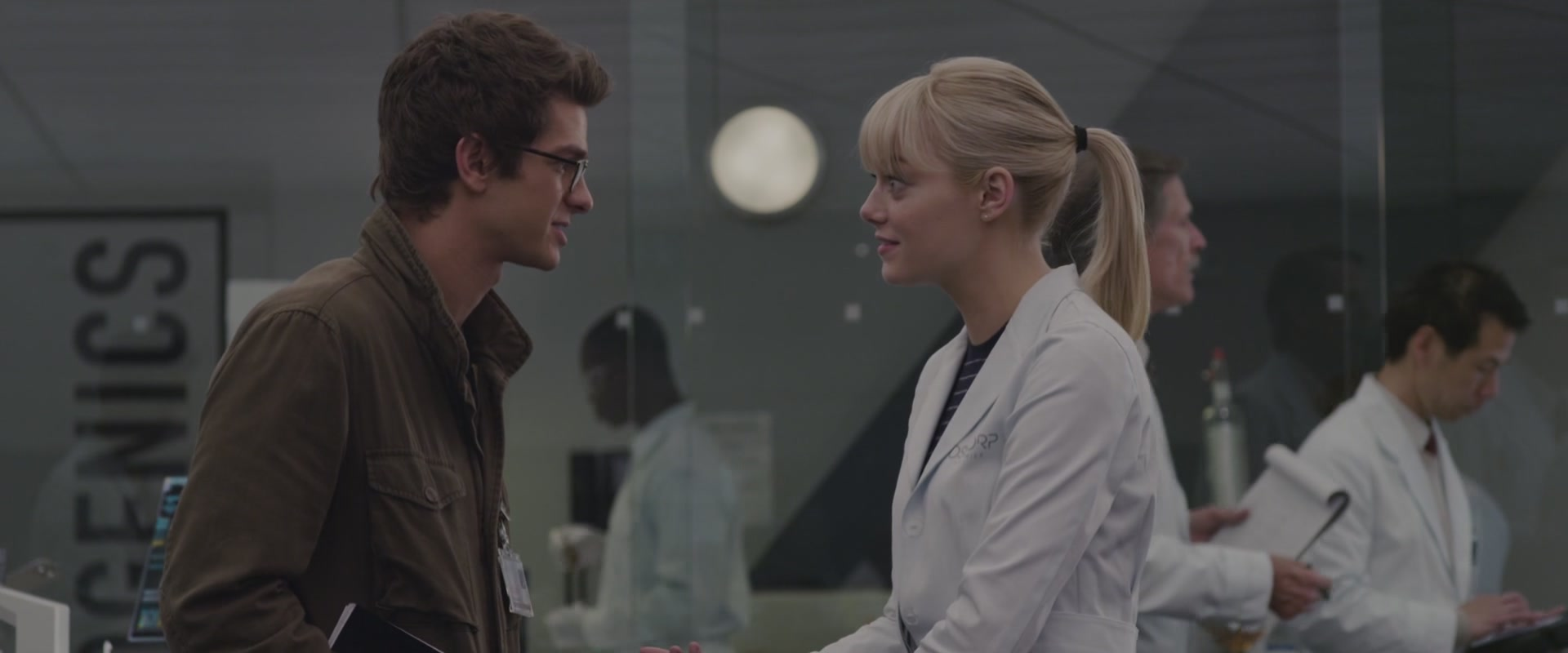
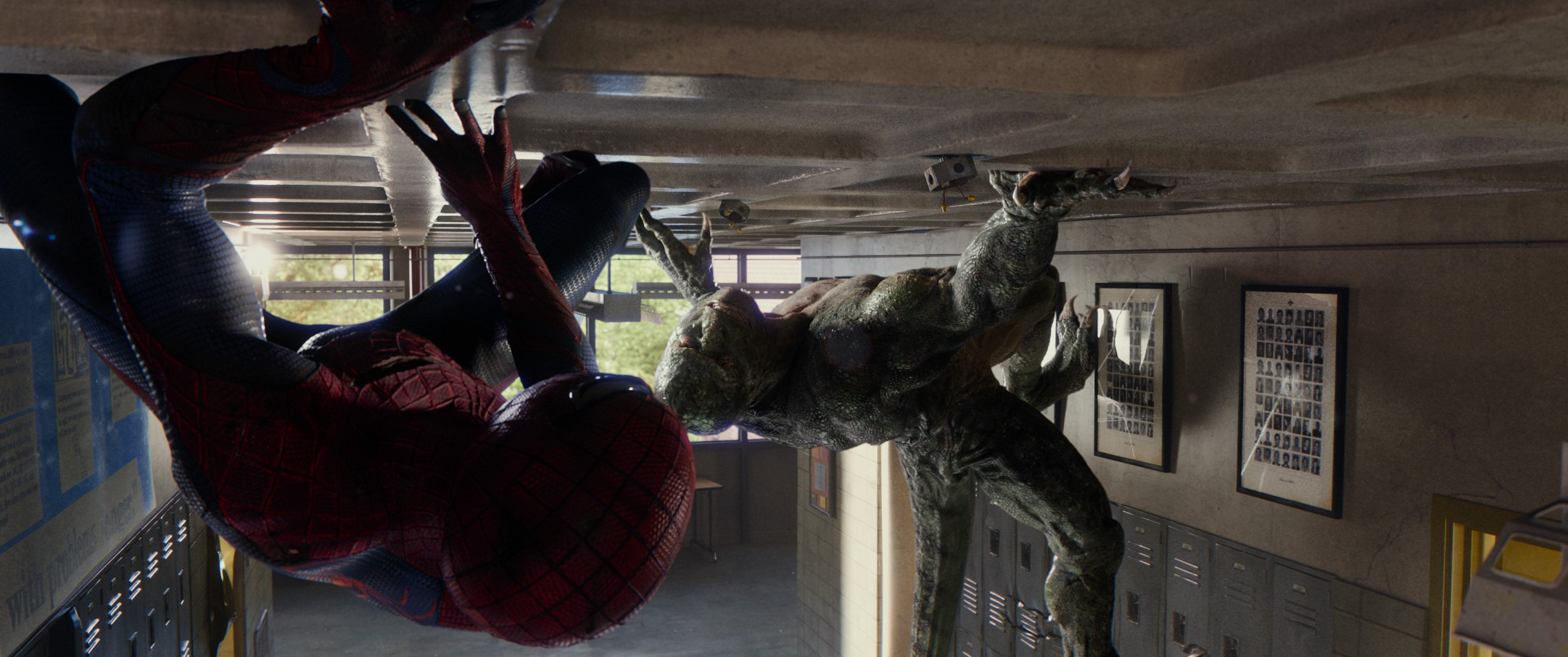
The first Amazing Spider-Man is not a bad film, just a largely forgettable one that treads some of the same ground that the original Spider-Man did better. (It’s no wonder Holland’s films decided to forgo the origin setup entirely.) Garfield’s Peter Parker is a loner geek who still displays a backbone, pining for high school overachiever Gwen Stacy (the always lovely Emma Stone) and bristling at the guidance of his Uncle Ben (Martin Sheen) and Aunt May (Sally Field). I still wish that a fourth Maguire Spider-Man film could have turned the old Dr. Curt Connors (Dylan Baker) into the villainous Lizard since there would have been more history with his character, but Rhys Ifans is serviceable in the role here, sort of a generic alpha predator bent on “curing” humanity.
The Amazing Spider-Man feels like a film that’s desperately trying to set itself apart from its predecessor, including a more realistic tone and lots of peripheral subplots around the all-too-familiar ingredients of the Spider-Man origin story. What happened with Peter’s disappearing parents? What’s up with the unseen Norman Osborne supposedly on his deathbed? Who’s that man in the shadows? It all feels like it should be more interesting, but it comes off as rather prosaic and extraneous. In lieu of an MJ, perhaps the best new addition is Peter and Gwen’s budding romance in the shadow of her stern policeman father (Denis Leary), who proves to Peter how dangerous the hero gig is for those around him. The couple’s awkward banter feels realistic for a pair of high-school students, though it also highlights that the script is generally rather weak on dialogue.
As I said before, The Amazing Spider-Man is a decent superhero film with good performances, an excellent James Horner score, an instantly classic Stan Lee cameo, and the expected impressive, high-flying visuals; it simply pales in comparison with Sam Raimi’s films, as well as the MCU ones. I hate to label Garfield as third-best Spider-Man when his future outings have improved his character and I’ve come to really like him as an actor. This first film simply shows that he and Emma Stone had a bright career ahead of them, considering they were both nominated for Oscars just a few years later. Every Spidey has to start somewhere.
Best line: (Uncle Ben’s voicemail) “If anyone’s destined for greatness, it’s you, son. You owe the world your gifts. You just have to figure out how to use them and know that wherever they take you, we’ll always be here. So, come on home, Peter. You’re my hero… and I love you!”
When the world is opaque, Every day within walls, With nothing worthwhile behind or ahead, There’s just the dull ache In your heart’s empty halls To prove to your mind you’re not already dead.
In times such as these, We require a pillar, An anchoring star we can navigate by. One person, one dream Can make life more than filler And topple the walls that obstructed the sky. _______________________
MPA rating: R (mainly for a couple scenes that seemed more violent than the previous films)
It wasn’t that long ago that the idea of a fourth Matrix film seemed utterly unlikely and rumors of a new entry going into production were the stuff of excited gossip among my friends. It’s certainly a case of hype overshadowing the final product, since I have yet to meet anyone who has embraced The Matrix Resurrections without heavy reservations. Disdain is the more common reaction (including among my friends), but I’ve found myself defending the film’s good aspects among the waves of contempt. It almost goes without saying that a Matrix sequel will end up flawed, but one’s personal mindset can heighten those flaws to make them worse than they are.
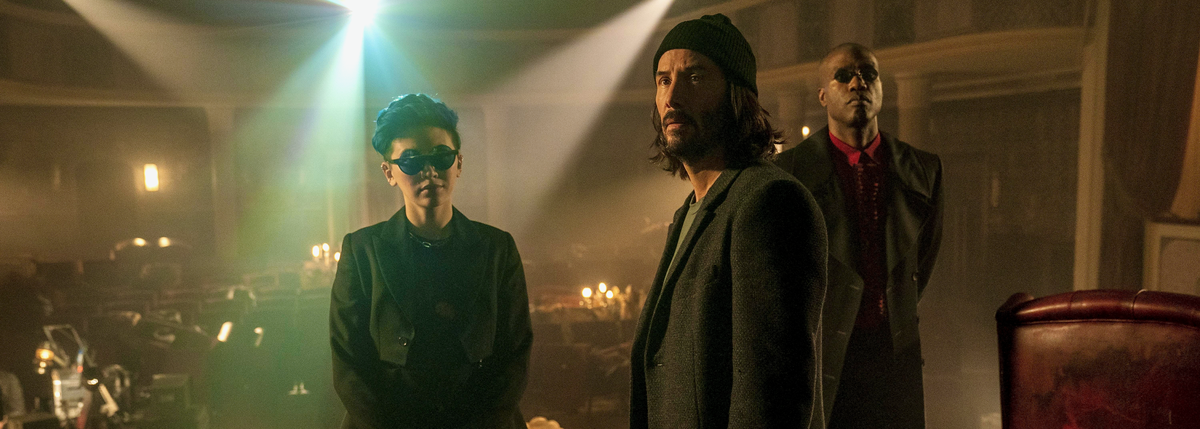
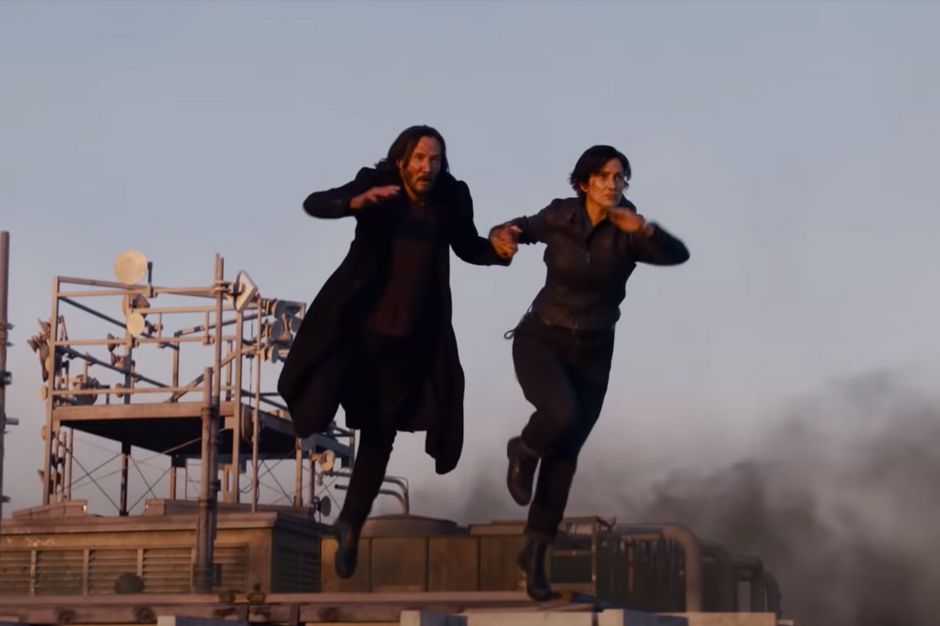
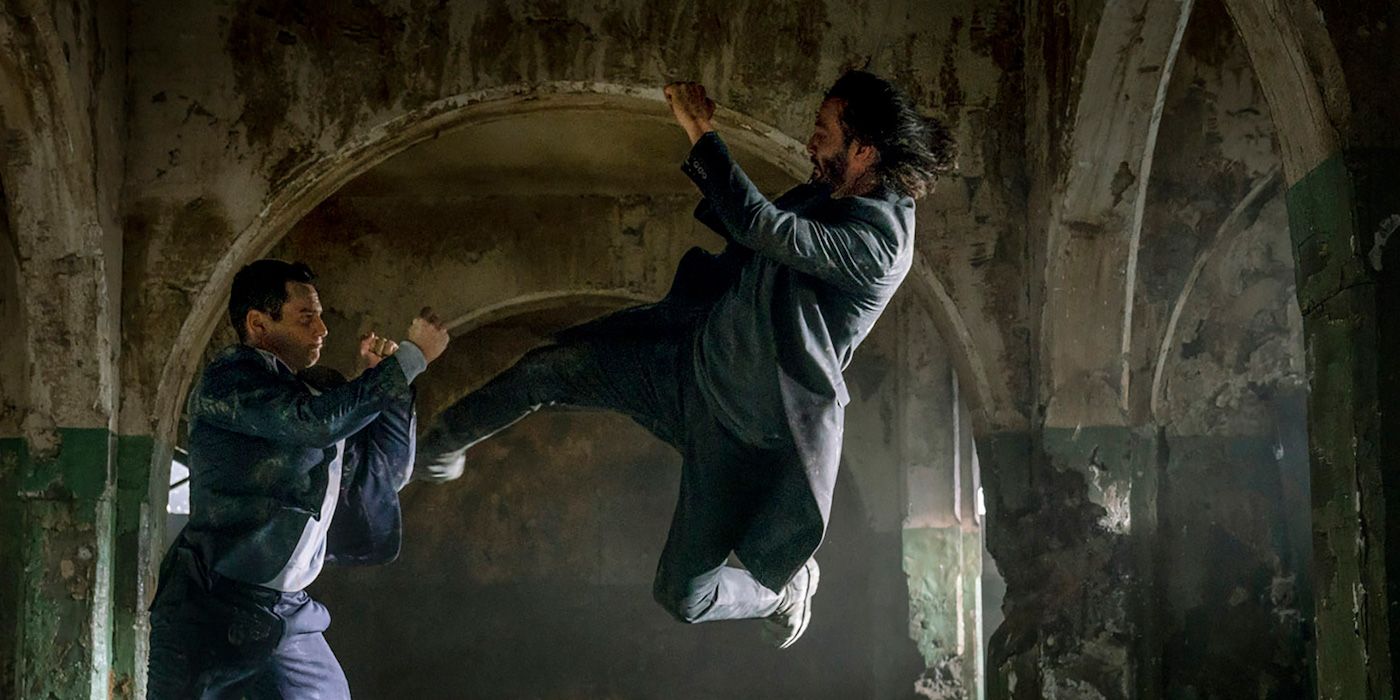
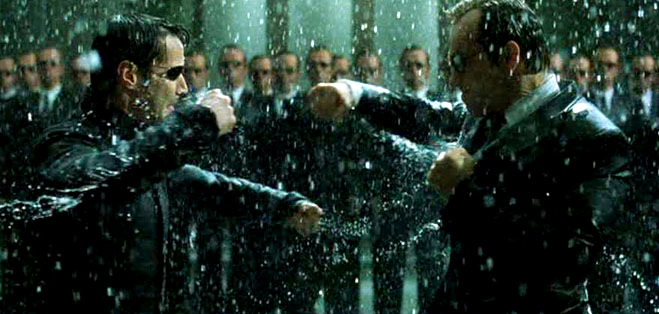
This may be a spoiler (no one should watch this who hasn’t seen the original trilogy), but the original Matrix trilogy ended on a rather downbeat note, with both Neo and Trinity giving their lives to bring peace to both the Matrix and the real world. So how could returning director/co-writer Lana Wachowski, going solo this time, resurrect both of them, fulfilling Neo’s Christological parallels even further, for a new entry of the cyber-dystopian series? That mystery fuels the first half, as Neo (Keanu Reeves) is now famous game developer Thomas Anderson, who achieved acclaim for his hit video game series called… The Matrix. While Neo is clearly blue-pilled into believing this illusory life, thanks to his smarmy therapist (Neil Patrick Harris), the film has great meta fun referencing its own franchise, poking fun at what The Matrix is as a series amid plenty of Easter eggs and callbacks to the previous films. After being freed by young captain Bugs (Jessica Henwick) and some version of Morpheus (Yahya Abdul-Mateen II), Neo learns that much has changed since his climactic sacrifice, and he might need to make another to save Trinity (Carrie-Anne Moss).
Early on in the film’s meta phase, an alternate version of Smith (now played by Jonathan Groff) tells game developer Neo that Warner Brothers wants to develop another sequel to The Matrix with or without him, and it’s hard to fight the feeling that this film is the result of the same kind of ultimatum aimed at the Wachowskis. With only one of them deciding it was worth revisiting the franchise, we can only wonder whether that was the right move or if some other director/writer might have added a bit more freshness to a fourth entry. Yet I think there’s something to be said for the original director having a say in where their story goes, even if not every fan is pleased, and I can’t help but feel like much of the negativity surrounding The Matrix Resurrections is the result of overly high or predetermined expectations from uber-fans, not unlike the flurry of opinion surrounding every Star Wars sequel.
It’s true that Resurrections is downright messy in a lot of what it attempts, shoehorning in new versions of characters that probably would have been better off left out. I liked the self-awareness, but others have found it smug or overdone while also complaining that Neo’s superpowers have laughably devolved into a mere force field. The convoluted plot often adheres too closely to that of the first film, and a climactic heist strangely skates by on the fact that the machines apparently don’t have any cameras guarding their hostage.
So yes, it’s messy as all get-out, but there are still entertaining action and good, if underdeveloped, ideas to enjoy. For one, the humans after the end of the Machine War have developed a new society with surprising cooperation from some programs, allies against the control of the Matrix, and I found the method for these programs to manifest in the real world very cool. And, even as the philosophizing about choice and control remains constant, this new version of the Matrix has some intriguingly different rules, such as dispensing with Agents in favor of mobs of undercover programs posing as humans that can be activated at any moment, which leads to one of the franchise’s nastier action set pieces. Plus, it was nice seeing familiar faces again, with Reeves and Moss easily stepping into their old roles despite the nearly twenty-year gap and turning their love story into the driving force of the movie (a decision one of my friends didn’t like either, but I think still works well). While the absence of Laurence Fishburne and Hugo Weaving is unmistakable, the new players like Bugs are solid additions, and some other character cameos were quite welcome, as were visits to the hall of doors from Reloaded and whole scenes from the first film.
I can understand dissatisfaction with The Matrix Resurrections, especially if you’ve spent the last eighteen years fantasizing about what a new Matrix story could be, since it is almost certainly not what you might have hoped. But I can’t bring myself to outright hate it like others have, though that’s true of most films; indifference or a desire to look for the good among the bad is far more common for me than hate. I just remember being dissatisfied with the ending of Revolutions, and the ending of Resurrections is a far happier conclusion than the original trilogy. Like the other sequels, it still can’t hope to compare with the game-changing original, but it’s a film that seems fine with basking in the strength of what came before and having a bit of fun with it. That may not be enough for some fans, but it was for me.
Best line: (Smith) “I know you said the story was over for you, but that’s the thing about stories… they never really end, do they? We’re still telling the same stories we’ve always told, just with different names… faces… and… I have to say I’m kind of excited.”
One rule do franchises live by: What makes a profit must not die. If it did well the first time round, Then more will make it more renowned. If it filled seats, there’s clearly steam To push through sequels, it would seem, And even decades afterward, Do not discount a loyal nerd. If it should fumble with a bomb, We must not panic, must stay calm. What makes a profit can rebound; We’ll just do better next time round. _______________________
MPA rating for both: R
With the recent new installment in the Matrix series, it seemed like a good time to revisit the two parts of the initial trilogy that I never reviewed. There’s a reason that the first Matrix is the only one on my Top 365 movie list (currently #125 to be exact). The Matrix Reloaded and Revolutions, both released within months of each other in 2003, were an ambitious follow-up to the huge success of the original, and I certainly credit the Wachowskis for expanding their universe so imaginatively. Yet both films are also hopelessly flawed when explaining their own mythology, even as they both remain entertaining in their own way.
The first film stands on its own well and could have done without a sequel, but it’s also easy to see why the story of Neo (Keanu Reeves), Trinity (Carrie Anne Moss), and Morpheus (Laurence Fishburne) warranted a continuation, with details about the machines left vague and the human stronghold of Zion only mentioned. With The Matrix Reloaded, we finally get to see Zion, and although it’s an engineering marvel with its gritty steampunk design, it becomes rather laughable when a stirring speech from Morpheus about humanity’s resilience is followed up by a giant orgiastic rave in a cave. Likewise, between the Oracle’s circular counseling and the Merovingian’s smug pontificating about choice, the dialogue ranges from intriguing to insufferable depending on one’s capacity for philosophy.
However, when people stop talking and start fighting, Reloaded proves to be an action thrill ride, upping the ante of the first film with wilder stunts and cleverly imagined powers, the freeway chase being the heart-pounding high point. Although the first film established Neo’s supremacy over the Matrix, Reloaded manages to create worthy threats to his Superman-like status. With the machines closing in on Zion, Neo is told by the Oracle to seek out the Source of the Matrix, with plenty of agents, self-serving programs, and clones of rogue Agent Smith (still excellent Hugo Weaving) in his way. As for the cast, some of the supporting players stand out more than others, like Lambert Wilson’s Merovingian or Randall Duk Kim’s Keymaker, and it was nice to see a pre-Lost Harold Perrineau stepping in for the absent Tank as the new Operator for Morpheus’ ship.
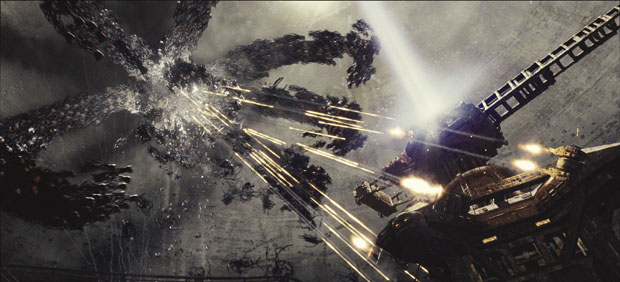
While Reloaded has its flaws, including an expository info dump toward the end that I doubt most people fully understood on the first viewing, it set the stage for what promised to be a potentially amazing finale, only for that potential to peter out in Revolutions. I don’t hate Revolutions the way some people decry the Star Wars prequels, but it does rank as one of the most disappointing threequels out there. For one thing, the padding is unmistakable, with Neo trapped for a while in a limbo train station for no plot-relevant reason. Yet I still must give Revolutions major props for its action; the defense of Zion remains one of the biggest, most epic battle scenes of all time, up there with Lord of the Rings and Avatar, while the final fight between Neo and Smith basically goes full Dragon Ball Z. By the end, though, it’s hard to look at this end of the trilogy as anything but a bummer; in one sense, Neo lives up to the many Christ-like parallels of his status as the One, but the intended bittersweetness is more bitter than sweet.
You could say The Matrix Reloaded and The Matrix Revolutions were ahead of their time. It wasn’t yet common for sequels to be filmed back-to-back, and CGI was still in its development stage. One astounding sequence from Reloaded with Neo being overrun by a growing horde of Agent Smith clones is audacious and exciting, yet it’s easy to spot the point when the real actors are replaced with video-game-quality doubles. Likewise, one just has to take in stride details like the absence of Tank (Marcus Chong) or the recasting of the Oracle (the late Gloria Foster reprising her original role for Reloaded, then replaced by Mary Alice in Revolutions).
How hard is it to forgive ambition falling short? I must find it rather easy, considering I love the Star Wars prequels, but I can see why others might have more objections. The Wachowskis didn’t need to give the world more Matrix films, with their convoluted storyline, excess of supporting characters, and philosophical pretention, but what they delivered is still pretty impressive in what it does well. Even a little more so when you factor in supplementary works like The Animatrix. They’re certainly not without merit; it’s just unavoidable for Reloaded and Revolutions that any Matrix follow-up is flawed compared with the original film’s now-classic reputation.
Best line from Reloaded: (Commander Lock) “Not everyone believes what you believe.” (Morpheus) “My beliefs do not require them to.”
Best line from Revolutions: (the Merovingian) “It is remarkable how similar the pattern of love is to the pattern of insanity.”
Two worlds diverged in a multiverse, And neither could know a single choice Had split their fates to so disperse, One to grieve, the other rejoice, But which was better, which was worse?
The first was practical and straight, Made sense for me and claimed its spoils. My life it did not complicate But ruined others’ mortal coils, Which one could easily blame on fate.
The second took a rougher course, With heartache sighing “them’s the breaks.” Others prospered, while remorse Reminded me of those mistakes That all accept but none endorse.
If I could see the consequence From some perspective few attain, The world that thrived at my expense Is the only choice I’d entertain, If I could make all the difference. _________________________________
MPA rating: PG-13
I think it’s safe to say that Spider-Man: No Way Home is the biggest movie since Avengers: Endgame, in both box office totals and audience enthusiasm. After months of speculation and leaks (which I did my best to avoid), the third entry in Tom Holland’s MCU trilogy promised the franchise’s first real exploration of the multiverse and its infinite possibilities, and it thankfully delivered on the Christmas hopes and dreams of countless fans, me included.
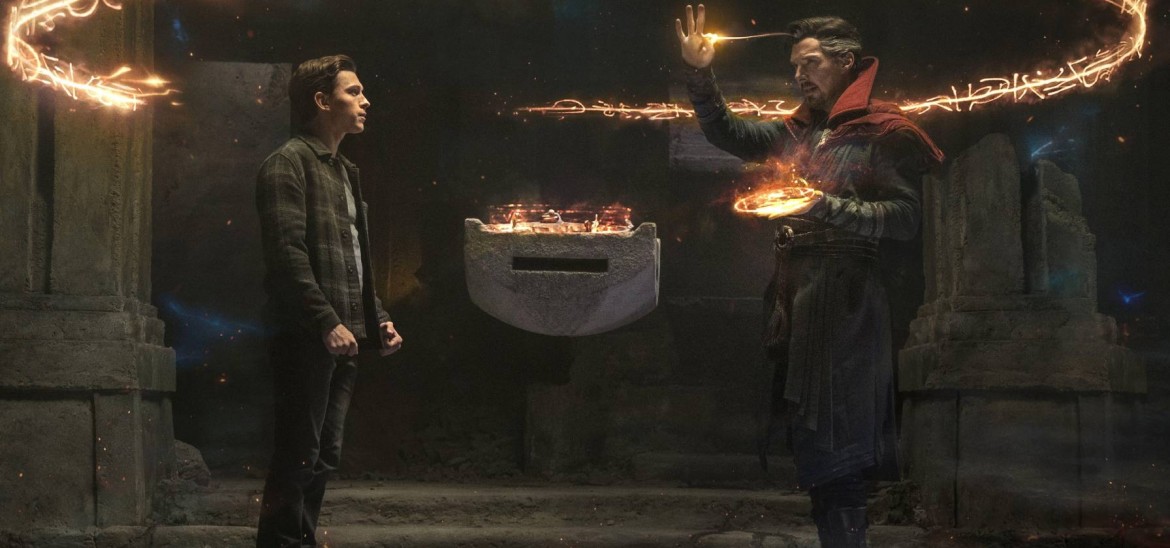
Picking up right where Far from Home left off, with Mysterio posthumously revealing Spider-Man’s true identity, Peter Parker’s life is turned upside down with haters, fans, and consequences ruining his and his friends’ chances at a normal future. When he seeks the help of Dr. Strange (Benedict Cumberbatch), their attempt to overwrite the collective memory of Spider-Man’s identity instead tears a hole in the multiverse, allowing in familiar characters from past Spider-Man films. It becomes apparent to Peter that the interloping baddies, including Doc Ock (Alfred Molina), Green Goblin (Willem Dafoe), and Electro (Jamie Foxx) among others, are equally in need of saving as the people they threaten, and he must make some hard decisions to help everyone he can.
With the walls of the multiverse being punched through, Spider-Man: No Way Home is also the biggest all-out geek-fest since Endgame while also being similarly engrossing but easier to absorb than the multiversal mashup of Into the Spider-Verse. I’ve read critical complaints over the rowdiness of audience members, but I thoroughly enjoyed my theater experience, with fanboys periodically whooping or cheering when awaited characters appeared or knowing references were dropped. Huge credit is due to the cast members returning from past movies, particularly Molina and Dafoe, who effortlessly channel their villainous personas as if it hasn’t been over fifteen years. And while I won’t outright spoil what is perhaps Hollywood’s best-kept open secret, I’ll just say that the film manages to grant closure to the two prior Spider-Man series in a satisfying way that only made me want even more.
One thing that No Way Home has in common with its Spider-predecessors is how its superhero must grapple with the weight of his own mistakes, and this film easily has the biggest stakes of Holland’s solo tenure in the MCU. Over the years, Spider-Man has had his fair share of tragedy, and I feel like the way he responds to it is a key part of what makes him such a universally appealing character. Here, Holland proves his selflessness in trying to assist villains who seemed beyond help in their prior appearances, his belief in second chances being tested to its limit. And through it all, Holland continues to be a wholly endearing Peter Parker with Zendaya’s MJ and Jacob Batalon’s Ned forming a tight group that I hope to see again in future movies. And anyone who wanted to see a Spider-Man/Dr. Strange fight will undoubtedly be satisfied.
If I had to come up with a negative or two, I suppose my expectations were so high that I perhaps wish there had been even more multiverse-enabled cameos, like a glimpse into the aftermath of the other universes. Plus, as much as the film is concerned with handing out happy endings, it was a shame that one character ended up with the short end of the stick, for now at least. Even so, Spider-Man: No Way Home is a comic book movie nerd’s fantasy-come-true. It clearly depends on knowledge of the previous five Spider-Man films for full appreciation (and the mid-credits scene feels a bit shoehorned in), but No Way Home ranks among the best installments of the Marvel Cinematic Universe, an enjoyable ride twenty years in the making.
Best line: (classic in every way) “With great power, there must also come great responsibility.”
Rank: List-Worthy (joining the previous Holland Spidey films)