• Home
  • About Me
  • The List
  • THE LIST (2016 Update)
  • THE LIST (2017 Update)
  • THE LIST (2018 Update)
  • THE LIST (2019 Update)
  • THE LIST (2020 Update)
  • THE LIST (2021 Update)
  • THE LIST (2022 Update)
  • Top Twelves and More
  • The End Credits Song Hall of Fame

Rhyme and Reason

~ Poetry Meets Film Reviews

Rhyme and Reason

Tag Archives: Thriller

Mojin: The Lost Legend (2015)

27 Friday Apr 2018

Posted by sgliput in Movies, NaPoWriMo, Poetry, Reviews, Writing

≈ 3 Comments

Tags

Action, Comedy, Drama, Fantasy, Foreign, Horror, Mystery, Thriller

See the source image

(Today’s NaPoWriMo prompt was for a poem inspired by our choice of tarot cards, whether the image on it or the symbolism behind it. I went with the Moon, which has some personification and mentions imagination, light, and the unknown.)


Where we’ve wandered, none can trace,
For none now live who knew this place.
The darkness creeps from stone to stone
And makes us feel we’re not alone.
Then, from above, the moon appears,
Perhaps to soothe our growing fears.

She peers below through open cave
At we who thought ourselves so brave
And lends us light to glance about
In search of some departure route.
Yet what she shows us haunts our dreams,
And only she can hear our screams.
____________________

MPAA rating: Not Rated (PG-13 content, though the profanity in the subtitles can get strong)

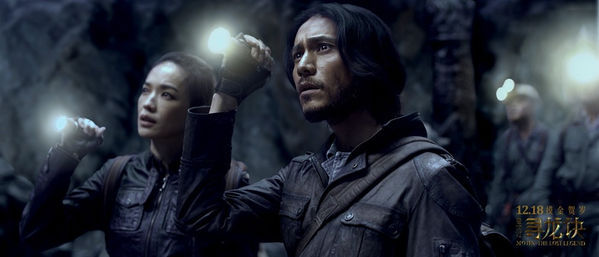
At least one good thing came out of my watching the utter waste of time that was The Assassin: I saw a trailer for Mojin: The Lost Legend and was intrigued enough to seek out this rather fun Chinese adventure movie. Apparently based on a Chinese book series, this tale of three grave robbers may have its weaknesses, but it’s also evidence of the blockbuster action and visual merit that Chinese cinema has to offer.

See the source image

Hu Bayi (Chen Kun), his temperamental girlfriend Shirley (Shu Qi), and his reckless longtime friend Wang (Huang Bo) were all once Mojin, official treasure seekers and tomb raiders (Lara wasn’t available), but have since fallen into disgrace. Fed up with their washed-up lives in America, Wang is approached by a wealthy patron to locate an ancient Mongolian tomb. Compelled by a personal connection from his past, Wang accepts, dragging Hu Bayi and Shirley back into the dangerous business of booby traps, double-crossing villains, and supernatural(?) threats.

While the acting is all serviceable and sometimes quite good (the heroes are better than the villains), Mojin: The Lost Legend is most interesting as an example of how the Chinese do an Indiana Jones-style adventure. It takes a little while to get into tomb-raiding mode, but once it does, the pace stays brisk, and the set designs are impressive and elaborate, like the Moria of the Orient mixed with the Temple of Doom.  Anyone who enjoyed The Mummy or National Treasure should also find much to enjoy, from the playful banter to the horror elements of a particularly thrilling flashback to the way Chinese history and myth are used as clues and solutions along the way, not that I understood all of it.

See the source image

While it does mix a lot of aspects of adventure films I love, it is hard not to view those ingredients as copied or borrowed, even if there’s originality in how they are combined. Likewise, the special effects are one of the film’s strengths, yet there are moments that overuse slow motion and CGI to the point of being overblown and almost laughable, especially during the climax. Plus, the whole thing is a little too long for its own good. Yet it’s still a highly visual treasure hunt that even manages to work in some deeper emotions and themes of letting go of past tragedy. Flawed but fun, Mojin: The Lost Legend is an entertaining ride for those curious to see China’s take on their own National Treasure.


Rank: Honorable Mention


© 2018 S.G. Liput
565 Followers and Counting


Pirates of the Caribbean: Dead Men Tell No Tales (2017)

25 Wednesday Apr 2018

Posted by sgliput in Movies, NaPoWriMo, Poetry, Reviews, Writing

≈ 1 Comment

Tags

Action, Fantasy, Romance, Thriller

See the source image

(Today’s NaPoWriMo prompt was for a human warning label, so instead of one for myself, I wrote one for Captain Jack Sparrow.)


Caution:
Exposure to this individual
May well endanger your health.
Symptoms include a desire to say “Arrgh”
And insatiable cravings for wealth,
As well as impulses to slap and/or kill
And maybe a seafaring curse,
Which can cause vendettas and lusting for vengeance,
Resulting in death or much worse.

Alert your witch doctor if death should occur
Or unbridled hating of guts.
Always use “Captain” preceding his name.

Warning: May contain nuts.
___________________

MPAA rating: PG-13

Perhaps people didn’t expect much from what is now the fifth installment in the Pirates of the Caribbean franchise, since the series was already showing signs of fatigue with the fourth. On Stranger Tides remains my least favorite of the bunch because it lacks the three-way dynamic between Jack Sparrow, Will Turner, and Elizabeth Swann that made the original trilogy so enjoyable. Sure, Penelope Cruz adds some sexual tension with Jack, but it feels more like a spinoff than a genuine part of the series. Dead Men Tell No Tales, on the other hand, is thankfully a truer continuation; granted, it’s a paler, less original version of its predecessors but close enough still to feel of a piece with them.

See the source image

Orlando Bloom and Keira Knightley aren’t exactly back in action here, both instead offering cameos that must have been the easiest paychecks imaginable, but they’re still part of the story, with Will and Elizabeth’s son Henry (Brenton Thwaites) taking Will’s place as the earnest adventurer searching to free his father from the curse of the Flying Dutchman. In Elizabeth’s role, we get Kaya Scodelario as Carina Smyth, an educated woman (gasp!) whose smarts get her constantly accused of being a witch, which never seemed to be a problem for Elizabeth, but oh well. They’re at least better than Sam Claflin and his mermaid girlfriend(?).

And of course, Johnny Depp returns as Captain Jack Sparrow, whom most people seem to think is past his prime as a character. I could see why at first, since Depp does seem to sleepwalk through the first half, but, keeping in mind that Jack was largely hung over for that half, he grows back into the role and is back to his old self by the end. It’s Geoffrey Rush that offers especially strong support, with Barbossa actually getting a worthwhile character arc rather than being shoehorned in like with On Stranger Tides. As the latest antagonist with a grudge against Jack, Javier Bardem’s Captain Salazar may not have the best backstory (he hates pirates and was outsmarted by Jack; oh, and he’s cursed as a ghost…for some reason), but he still has great screen presence between Bardem’s intensity and some impressive floaty ghost effects. It’s never made clear why his curse was linked to Jack’s compass, though.

See the source image

I’ve seen quite a lot of negative reviews for Dead Men Tell No Tales, and indeed I haven’t been exactly glowing with this review either. It’s not nearly as good as the first three, and even the impressive effects aren’t quite as seamless as the past films, which is a little weird. Yet it still has all the ingredients that made the original films so much fun, in particular the visually awesome action and occasional cleverness, and even rights some of the more dubious creative choices of past movies, like bottling the Black Pearl in On Stranger Tides. Plus, Paul McCartney’s got a great unrecognizable cameo! And even with all the copycat characters and less-than-inspired plot points, it has a perfectly fitting end to the story begun fifteen years earlier. At least until the eyebrow-raising after-credits scene segues into a sixth movie. Yep, it’s gonna happen apparently, and I’ll be there once again to be entertained while hoping they don’t mess it up.

Best line: (Carina) “I’m not looking for trouble!”   (Captain Jack Sparrow) “What a horrible way to live.”


Rank: List-Worthy? (it’s really Runner-Up material, but it does continue the trilogy’s story and I usually group such series together)


© 2018 S.G. Liput
565 Followers and Counting


Ready Player One (2018)

21 Saturday Apr 2018

Posted by sgliput in Movies, NaPoWriMo, Poetry, Reviews, Writing

≈ 2 Comments

Tags

Action, Drama, Mystery, Romance, Sci-fi, Thriller

See the source image

(Today’s NaPoWriMo prompt was for a poem inspired by the myth of Narcissus, who loved his reflection so much that he turned into a flower. Ah, those crazy Greeks…. This is an example of what I love about NaPoWriMo, because an ordinary poem of mine for this movie would have been quite different.)


I am the mirror that captured Narcissus,
A pool that reduced him to frailty and pride.
I am the mirror that heard the queen’s hisses
When told that Snow White was the more glorified.

I am the mirror no longer a mirror,
Tranformed over time to expand my appeal.
The more I’m admired by people, the dearer
I am to their lives, making all else unreal.

A whole generation and those in their wake
I’ve snared in a world they create to comply,
A mirror to show the world them for their sake,
Allured and immured by the power of “i”.

I’m praised for convenience, for freedom, for fun,
A magnet for eyes lest their view be too wide.
It’s up to the viewer what evil I’ve done;
I’m merely the mirror for frailty and pride.
___________________

MPAA rating: PG-13

There have been four movies I’ve seen so far in 2018 that I’ve genuinely loved, which, since it’s only April, is one a month (not bad). And it thrills me to no end that one of them is the film I declared my #1 movie that I hoped would be good. Steven Spielberg’s adaptation of Ready Player One didn’t blow my expectations away, like Train to Busan or The Greatest Showman, but I went in wanting to love it and found plenty of reasons to do just that.

See the source image


As someone who enjoyed Ernest Cline’s novel immensely, I can confirm that the film diverges quite a bit from its source material. Yet, unlike other decent but disappointing adaptations (Eragon, Inkheart), Ready Player One the film still adheres to the spirit of its source, and the fact that Cline himself cowrote the screenplay assuages my concerns about the many plot aberrations. Even so, the core story is intact: a massive multiplayer scavenger hunt through the virtual world known as the OASIS, a world and hunt created by dead eccentric James Halliday (Mark Rylance, who plays his social anxiety a bit too wooden). The entire world is in search of Halliday’s hidden Easter egg, which grants ownership of the OASIS to the winner, but no progress is made until Halliday fan Wade Watts (Tye Sheridan) earns the first of three keys, making him a target for the evil, power-hungry IOI corporation (led by an accent-less Ben Mendelsohn).

All that is straight out of the book, but in the leap from page to screen, changes are inevitable. If you’ve read the book, your enjoyment of the movie just might depend on how much such changes bother you. My VC, for example, enjoyed the film but harbored reservations about the rampant alterations of its second half. (She said, if she hadn’t read it first, she’d outright love the movie.) Yet, I think many of the changes work in the film’s favor. True, the book is better, but there are many parts of it that wouldn’t transfer well to the screen, such as the months that go by between breakthroughs or the important plot advances that consist of beating literal arcade games. Turning one of these challenges into a demolition derby race, for example, makes it far more exciting cinematically, while changing Halliday’s much-studied journals into a gallery of virtual records makes Wade’s research more visual. Also, the replacement of certain pop culture references with others is likely the result of copyright compromises and the filmmakers’ desire to play with particular “toys.”

See the source image

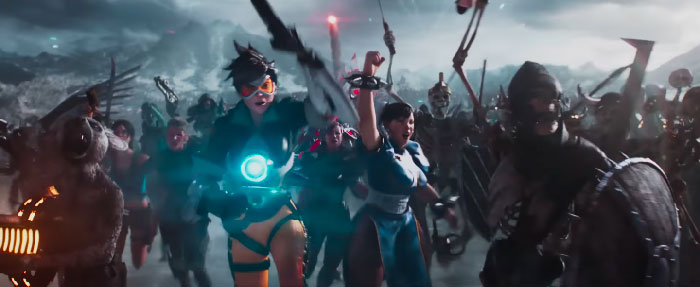
And boy, do they lay on the pop culture references, 90% of which swirl by far too quickly to fully appreciate. Yet the recognition that comes in those moments is an unparalleled thrill for nerds like me. Where else are you going to see the time-traveling DeLorean race the bike from Akira or Overwatch’s Tracer charging into battle with the Iron Giant? The cameos also vary depending on the viewer’s personal tastes; a friend of mine recognized a Lancer weapon from Gears of War, I geeked out at the site of the roulette wheel space station from Cowboy Bebop, while my VC chuckled at an incantation from Excalibur, all references that one of us “got” and the others didn’t. Thanks to the CGI mastery on display, there were several (likely entirely animated) sequences where I just sat there with a goofy grin on my face in a little place called geek heaven.

Except for the idea of not liking any changes in general, I can understand many of the complaints I’ve heard about what is essentially an alternate version of the Ready Player One story readers knew. Some of the rules of the OASIS are glossed over, potentially leaving questions for unfamiliar viewers. The characters aren’t nearly as developed as their counterparts on paper, lacking defined character arcs, and there’s little attention paid to the problems of this dystopian world outside its virtual refuge. The romance might be too rushed and convenient, the avatar of Wade’s friend Aech looks nothing like I imagined from the book, the very long runtime is felt by the end, and they should have included WarGames, dang it! It’s true; Ready Player One is not a perfect film, but I’ve rarely been better entertained in true Spielberg blockbuster fashion.

See the source image

It’s really quite simple: I am Ready Player One’s target audience. I’m the nerd who revels in shared geekery, while appreciating half-realized lessons about the value of a life outside of technological obsession. I think that, drawing its inspiration from a great book, this Ready Player One is a great movie, boasting a visual awesomeness that puts most movie spectacles to shame.

Best line:  (Halliday, echoing Groucho Marx) “I created the OASIS because I never felt at home in the real world. I just didn’t know how to connect with people there. I was afraid for all my life, right up until the day I knew my life was ending. And that was when I realized that as terrifying and painful as reality can be, it’s also… the only place that you can get a decent meal. Because, reality… is real.”


Rank: List-Worthy


© 2018 S.G. Liput
563 Followers and Counting


The Darkest Hour (2011)

18 Wednesday Apr 2018

Posted by sgliput in Movies, NaPoWriMo, Poetry, Reviews, Writing

≈ 4 Comments

Tags

Horror, Sci-fi, Thriller

See the source image

(Today’s NaPoWriMo prompt was to write a poem in reverse based on another, but, going out of town today, I’m afraid I don’t have enough time to do that idea justice, so here’s an off-prompt one.)


We hope we’re alone in the universe,
We hope that, in case we are wrong,
The aliens out there are friendly
And might want to just get along.

But if it turns out we’re mistaken
And they have designs on the earth,
The way we respond may determine
How much we believe it is worth.
___________________

MPAA rating: PG-13

Were you expecting last year’s Oscar-winning biopic about Winston Churchill? Psych! That would be Darkest Hour, while this post is for The Darkest Hour. Big difference. The Darkest Hour is instead an alien invasion flick from 2011, the kind of reasonably decent sci-fi you might find in the bargain bin of the supermarket, which is where I found it.

At its core, The Darkest Hour isn’t much different from War of the Worlds, but the trappings and circumstances are different enough that it doesn’t feel like a total copy. Instead of the usual American setting, we see the worldwide invasion from Moscow, where two American software developers (Emile Hirsch, Max Minghella) are stranded when aliens float down from the sky, wipe out all electronics, and start disintegrating every human in sight. Accompanied by another pair of American tourists (Olivia Thirlby, Rachael Taylor) and a Swedish jerk (Joel Kinnaman), they make their way through the city in search of a way out and a way to fight back.

See the source image

There’s really no depth whatsoever to the characters; they’re all simply thrown together during this apocalypse, trying to find the balance between survival and panic. Except for Kinnaman, though, the actors are all likable enough, even if the aliens are the real reason to watch. Owing to its limited budget, the aliens are invisible most of the time, which usually adds to the tension and allows for some clever hints to their presence, since they activate nearby light bulbs and electronics. Their effects for dispatching humans are also striking (though reminiscent of Jean Grey’s Phoenix powers in X-Men: The Last Stand), and the way they shred their victims is both shocking and bloodless for that PG-13 rating.

I don’t know: The Darkest Hour isn’t an especially good or unique film, yet I find it oddly watchable, like the kind of movie you can just leave on in the background and let your attention wander back and forth from it. It also managed to surprise me with who makes it and who doesn’t, since I guess I assumed all four of the main characters would make it. Maybe I just wasn’t thinking the first time, since it actually is a little obvious in retrospect. Either way, The Darkest Hour isn’t a complete waste of time and has some strong moments for those who love the alien invasion genre.

Best line: (Sean, in a bar) “No civilization is without religion or alcohol.”   (Ben) “That’s why I drink religiously.”


Rank: Honorable Mention


© 2018 S.G. Liput
559 Followers and Counting


The Last Days (2013)

17 Tuesday Apr 2018

Posted by sgliput in Movies, NaPoWriMo, Poetry, Reviews, Writing

≈ 3 Comments

Tags

Disaster, Drama, Foreign, Sci-fi, Thriller

See the source image

(Today’s NaPoWriMo prompt was for a memorable family anecdote. Instead of some specific story, I incorporated a few into a societal critique.)

There’s so much that we used to do
When we would go outside.

The sun would bake us at the beach
And leave us peeling for a week,
And kites would soar far out of reach
Until we practiced our technique.
We’d grumble as we walked the dog
And stumbled through the morning fog.
There’s so much we would take in stride
When we would go outside.

The mountain trails would call our name
And leave us awed and insect-bitten.
At the park, we’d choose our game,
Get stuck in trees we thought we’d fit in,
Find we’re lost beyond belief,
Then find our way with sighed relief.
There’s so much that we dared and tried
When we would go outside.

Interiors are now default,
The “Great Outdoors” a memory,
And from our comfort-ridden vault,
A screen eclipses earth and sea.
Although we know without a doubt,
We’re on the inside looking out.
There’s so much that we are denied
When we won’t go outside.
_____________________

MPAA rating: Unrated (should be R due to profanity in the subtitles, maybe PG-13 without that, though there’s still some brief violence and nudity)

When you see deserted city streets littered with abandoned cars and roaming animals, what explanation comes to mind first? These days, it’s probably a zombie apocalypse or maybe an alien invasion, right? The Last Days suggests a much simpler kind of apocalypse, though, one where people don’t dare go outside, but not because of some creature lurking out there; they simply die if they leave shelter.

See the source image

A Spanish thriller perhaps influenced by the surrealist film The Exterminating Angel, The Last Days (or Los Últimos Días) triggers its apocalypse gradually, with people suddenly contracting severe agoraphobia or fear of open spaces. Walking outside provokes a deadly seizure, so people end up stranded in whatever building they happen to be in at the time. Some viewers may have trouble taking such an epidemic seriously, but it’s revealed gradually through flashbacks and treated with dead seriousness and great realism. In the case of Marc (Quim Gutiérrez), he was at work when it hit and has spent the last three months trapped inside his Barcelona office building, taking turns with his coworkers to dig a tunnel to the subway. When they finally reach this chance to travel to other parts of the city, he sets out in search of his girlfriend Julia (Marta Etura), grudgingly aided by corporate firing specialist Enrique (José Coronado).

The Last Days works well on several levels: as a slow but compelling journey through end-of-the-world encounters, as a grim but endearing buddy movie, and as an outlet for subtle social themes. Of course, the apocalyptic settings are the biggest focus, but it felt unique to have the danger come not from some monster but from other people, some of whom band together to support each other while others compete violently for limited resources. The relationship between Marc and Enrique is an unlikely pairing based on where they started before the disaster, but I liked the way they both relate to each other’s goals and fears, helping each other along the way. The social message I mentioned may come off as obvious in some ways, with people’s fear of leaving their homes taken to an extreme, but there are other understated themes broached, such as the concern of bringing children into a world of doubt and uncertainty.

See the source image

I entertained ranking The Last Days as a List Runner-Up, but the ending really put it over the top. For a film with so much depressing atmosphere and tragedy, it ends on a surprisingly uplifting note that in some ways felt like the kind of ending Passengers should have had if it had tried harder. I was also impressed by the quality acting and production values and particularly by one long tracking shot through a scene of chaos. (Have I mentioned I love those kinds of scenes?) Don’t expect a lot of action, but if you can buy into its uniquely subdued form of disaster, The Last Days has much good to offer.


Rank: List-Worthy


© 2018 S.G. Liput
559 Followers and Counting


Jumanji: Welcome to the Jungle (2017)

16 Monday Apr 2018

Posted by sgliput in Movies, NaPoWriMo, Poetry, Reviews, Writing

≈ 2 Comments

Tags

Action, Comedy, Fantasy, Thriller

See the source image

(Today’s NaPoWriMo prompt was for a poem concerning play or a game, so a movie about a game seemed like a no-brainer, especially since I worked in a bit of rhyme from the film itself. It’s from the perspective of the game.)

Ha, ha! Here they come!
Someone’s found me at last!
I’m as bored as they look
And in need of a blast.
They pause at this chance
To play like in years past.

But though they may believe me lame,
An old, archaic parlor game,
They always play me all the same.

Ha, ha! Here they go!
Fun is not a hard sell.
Well, my fun at least,
Though they’ll have some as well.
It’s time now to play
And perhaps to raise hell.

So when you’re bored, keep me in mind,
“A game for those who seek to find
A way to leave their world behind.”
_______________________

MPAA rating: PG-13

When I first heard that there would be a sequel to Jumanji, a beloved childhood classic for me, I declared it sacrilege. When I saw the trailer for Welcome to the Jungle, I was suspicious but open to this new version of the cinematic game. And now that I’ve seen it, I’m actually surprised at how well it turned out. This is a rare example of a sequel/reboot done right, in that it doesn’t try to live up to its 22-year-old predecessor, instead charting a creative and modern course with the barest homage to the original.

See the source image

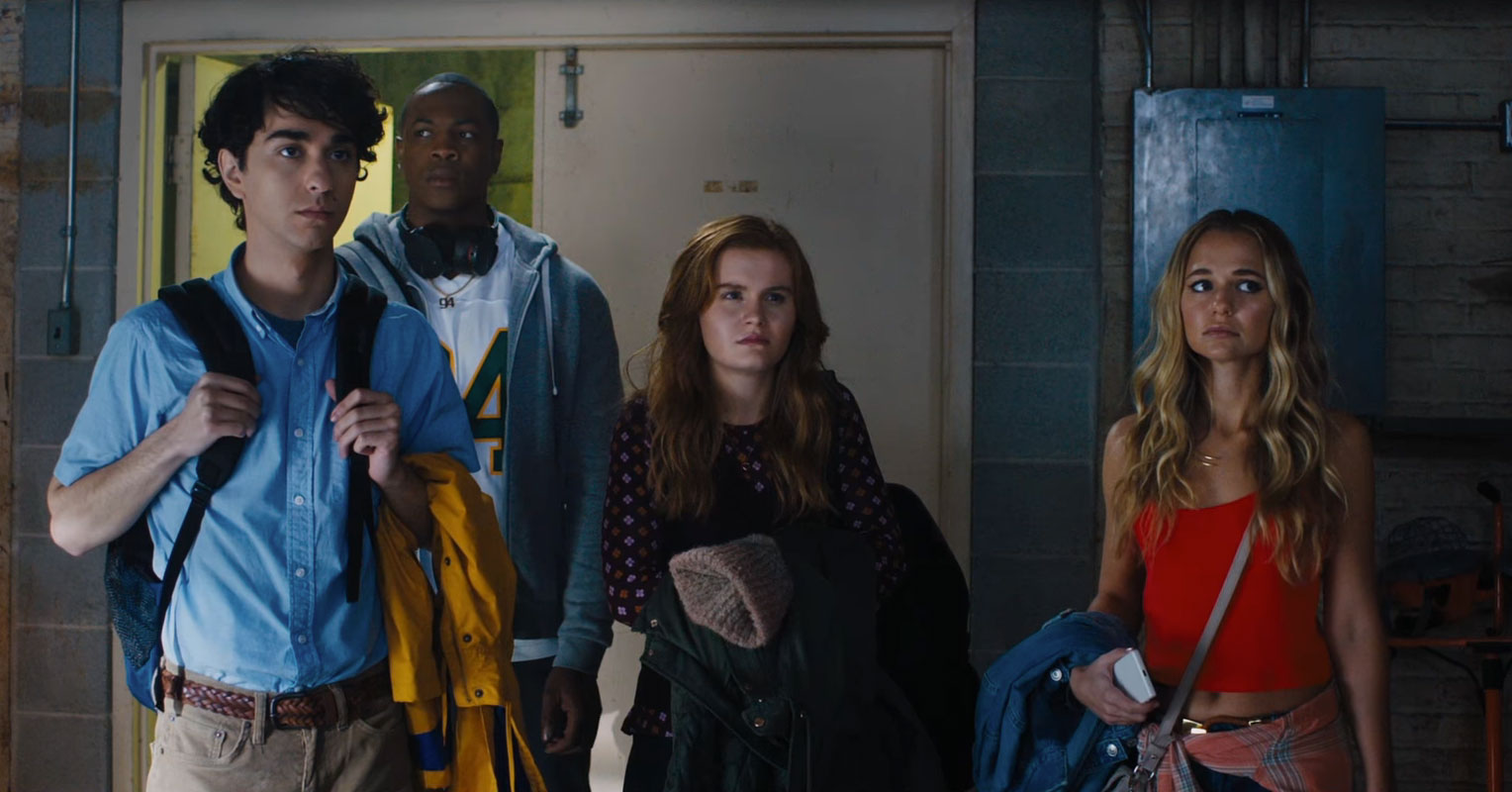
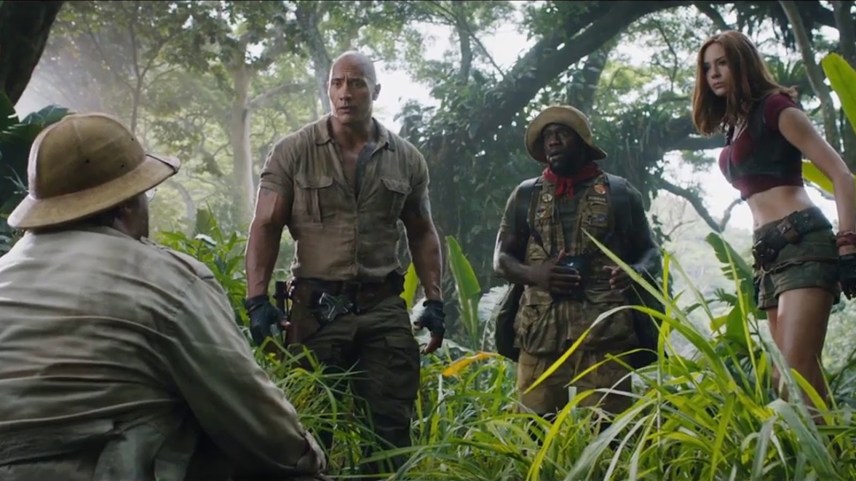
After doing who-knows-what to those French kids at the end of the first movie, the Jumanji game somehow ends up back in New Hampshire, but when faced with the competition of console video games, it transforms itself into a video game. It is later found by a quartet of high schoolers in detention, who are sucked into an actual jungle environment and transformed into highly contrasting avatar bodies: nerdy kid Spencer (Alex Wolff) into a hunky archaeologist (Dwayne Johnson), football player Fridge (Ser’Darius Blain) as a diminutive lackey (Kevin Hart), shy misfit Martha (Morgan Turner) into a butt-kicking heroine (Karen Gillan), and self-absorbed brat Bethany (Madison Iseman) into a fat man (Jack Black).

It sounds complicated when you describe it in detail, but the premise is fairly straightforward as the no-longer-teenagers navigate the dangerous levels of the game in an effort to escape. Turning Jumanji itself into a video game was actually a brilliant idea, keeping it different from the original and updating the concept to our more virtual world. Plus, it allows for a great many jokes as it incorporates the conventions of video games into the very fabric of the plot, such as multiple lives and various abilities and weaknesses.

The main draw for humor, though, is the cast of charismatic stars playing against type…well, except Kevin Hart. He’s his usual rowdy self, but it’s great fun watching the Rock realize his own strength or Jack Black impersonate a teenage girl. Karen Gillan’s attempts to gain more confidence and learn the ways of flirting are particularly funny, and aside from some admittedly amusing penis jokes from Black, the PG-13 rating keeps things both tame and entertaining, even working in a bit of genuine emotion by the end.

See the source image

As much as I enjoyed the video game reworking of Jumanji, it couldn’t hope to match my fondness for the original, even if it’s infinitely better than I had expected a year ago. I’m glad too that they didn’t try to replace Robin Williams or anything like that, instead offering a subtle reference to confirm this as a respectable sequel. It now makes me wonder if this Jumanji will have the same sense of nostalgia around it twenty-two years from now.

Best line: (Spencer/Bravestone) “It’s a lot easier to be brave when you’ve got lives to spare. It’s a lot harder when you only have one life.”   (Fridge/Moose) “We always only have one life, man. That’s how it is.”


Rank: List Runner-Up


© 2018 S.G. Liput
559 Followers and Counting


Trollhunter (2010)

03 Tuesday Apr 2018

Posted by sgliput in Movies, NaPoWriMo, Poetry, Reviews, Writing

≈ 3 Comments

Tags

Fantasy, Foreign, Horror, Thriller

See the source image

(Today’s NaPoWriMo prompt was for a list poem based in made-up names, so I invented a few species of troll to populate this bit of creepy nonsense.)


When trees are swimming deep in fog
And stars are dull as old eggnog,
The trolls come out to hunt and roam
Where humans dare not make their home.

The stankenlops and flicklepines
Emerge from their abandoned mines
And greet the trarterstumps and groyts
Embarking on their own exploits.

The nibblelungers beat their chests,
And grindlefangers make conquests,
And no one knows what skleeblers do
Since even trolls think it taboo.

No sheep or goat or man is safe
When hunted by a narberwafe,
And blattercrones’ deep moans are known
To chill a grown man to the bone.

The night is theirs but does not last,
And soon each lerpt and pincherclast
Will shrink back to their darkened pits
To wait till when the night permits.
____________________

MPAA rating: PG-13

The found-footage style gets a bad rap because of its gimmicky nature and its overuse in often poor quality horror movies since The Blair Witch Project. Yet it does have its bright spots, like the mind-bending “documentary” Lunopolis and the 2010 Norwegian import Trollhunter. Of all the monsters to chase with a camera, trolls don’t seem like an obvious choice, but Trollhunter strikes a unique blend of giant monster thrills and occasional dark comedy that gives the big-nosed brutes an outlet other than Middle-Earth.

See the source image

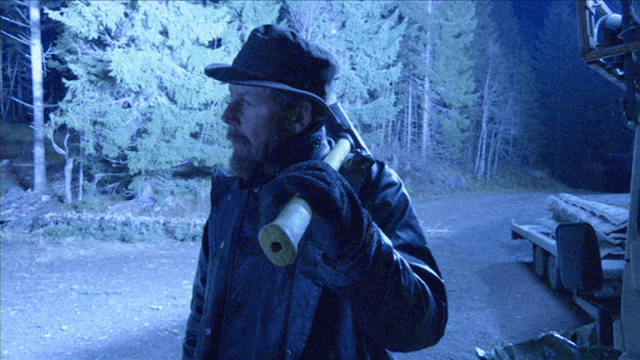
The “filmmakers” in this case are three students from Volda University College, who think they’re investigating a bear poacher only to stumble upon the rough-hewn Hans (Otto Jespersen, who’s apparently a comedian) and his secret government-sanctioned job of hunting trolls. Tired of toiling in obscurity, Hans lets the trio follow him around on his troll control missions and explains the details purposely kept from the public, like the various species of troll, how power lines are really electric fences to keep them in, or the fact that trolls can smell the blood of a Christian man. (In that case, remind me not to move to Norway because I wouldn’t last long.)

The found-footage aspect is fairly standard as far as the shaky camera and often insufficient lighting, though there are some stand-out moments, such as the use of night vision to get a glimpse of the dangerous creatures. The biggest asset is Jespersen as Hans, who goes about his dirty fantasy job with weary competence, seemingly unfazed by the fact he gets paid to flash lights at three-headed giants. The special effects are also quite effective. While the trolls are often clearly CGI, their grotesque appearance somehow makes it look realistic too, and the finale with a mountain-sized troll is an awesome edge-of-your-seat sequence.

See the source image

Trollhunter follows a lot of the usual found-footage tropes, but it does them well, managing to find a balance between absurdity and realism, like how a veterinarian explains the “scientific” reason that trolls turn to stone or explode when exposed to sunlight. Already something of a cult classic, the abundance of Norwegian culture and impressive scenery makes it an entertaining option for exploring Scandinavian cinema, though I doubt the prospect of trolls has helped tourism.

Best line: (the Norwegian Prime Minister, with a slip of the tongue at a press conference) “Few people find power grids attractive. I certainly don’t. Norwegians are pro-electricity, but against power lines. That won’t work in the long run. Norway has trolls, so more power lines are needed. That’s just the way it is.”


Rank: List Runner-Up


© 2018 S.G. Liput
549 Followers and Counting


Death Note (2017)

18 Sunday Mar 2018

Posted by sgliput in Movies, Poetry, Reviews, Writing

≈ Leave a comment

Tags

Anime, Drama, Fantasy, Horror, Thriller

See the source image


I sit here with my pen prepared
To dish out justice undeclared,
And when I write, no one is spared,
For who’s more right than I?
Most secret of dictatorships
With death upon my fingertips,
I munch upon potato chips
And choose who’s next to die.

They’ll fear the killer none can see
And puzzle at the mystery,
Not knowing it was always me
Who hands out just rewards.
Repaying vengeance now is mine;
The world will bend by my design.
How wise the man who wrote the line
That pens kill more than swords!
___________________

MPAA rating: R (for brief graphic violence and frequent language)

I’ve been nervous about checking out Netflix’s live-action Death Note movie, especially based on the reviews I’d read. Movie adaptations of anime have about the same track record as those based on video games, yet I really hoped that Netflix’s Death Note movie would be the one to break the mold. (I know it was originally a manga, but I mainly know the anime.) Its story has all the ingredients of a great psychological thriller, a battle of wills between a megalomaniacal teen with a killer notebook and a genius detective intent on bringing him to justice. I was never that invested in Ghost in the Shell or Dragonball and thus didn’t much care when their American versions flopped, but I am a definite fan of the Death Note anime. That’s why the recent American adaptation was such a disappointment, even as I saw traces of the good movie it almost was.

I suppose I’ll address the casting controversy first, allegations of whitewashing that I honestly don’t get. An American version has every right to be set in America, and moving the story from Japan to Seattle makes casting white actors perfectly reasonable. Japan does the same thing, even when it goes against the source material; just look at the all-Japanese casts of Attack on Titan or Fullmetal Alchemist, both of which are supposed to have European settings and characters, for the most part. Casting good actors should take precedence, which is why I also don’t mind Keith Stanfield as a black version of L, since he at least acts closer to the original character than the other actors.

See the source image

As that last statement implies, Death Note misses the mark most, not as a film in general, but as an adaptation. It may seem like a strange comparison, but it’s a lot like last year’s live-action Beauty and the Beast; they both could be reasonably fine movies if they weren’t entirely overshadowed by exceptionally better animated originals. The basics are there. Formerly named Light Yagami, Light Turner (Nat Wolff) is a gifted but resentful high school student who finds the mysterious Death Note, which claims to kill anyone whose name is written in it, usually by an unexplained heart attack unless a different method is specified. Goaded by a demonic death god named Ryuk (Willem Dafoe) and believing he can right all the wrongs of the world and become godlike, Light sets out to rid the world of criminals as the killer called Kira but runs into conflict with the eccentric detective known only as L.

Those are the basics, and the film follows them and asks similar moral questions of how one might use power over life and death. Yet there’s so much changed as well, from minor details to entire character arcs, and the changes are generally for the worse. Light and L start off close to their animated counterparts but end up with vastly different goals and mindsets. As I said Stanfield is appropriately weird and intense as L, though he’s shaken (by events that didn’t happen in the anime) to act with uncharacteristic rage at one point. Likewise, Wolff has a good sense of normalcy about him, making him unlikely to be suspected as Kira, but he also overacts on occasion, like the epic meltdown he has upon meeting Ryuk for the first time. He comes off as intelligent and crafty but hardly the self-assured genius from the anime; that Light went to painstaking lengths to avoid detection by anyone, while this Light brings the Death Note to school and uses it to show off to a girl named Mia (Margaret Qualley). This Mia (formerly Misa in the source material) is the biggest change of all; instead of being an airheaded Kira groupie with a Death Note of her own, she becomes a driving force for Light’s crimes and even tries to outsmart him, which is actually a more interesting direction for her character. The best direct translation to live-action is oddly enough the CGI one; Dafoe is perfectly cast as the sinister Ryuk, employing his Green Goblin voice with relish.

See the source image

In addition to all the character changes, the plot spins along trying to carve its own path while muddling its story. The Death Note in the anime did have a lot of rules as to its various uses, but the film loads on more to confusing effect and even seems to break a few. For example, people whose names are written in the note can be controlled for two days prior to their death, and Light tries to use this detail by writing someone with a single-word name, which I always assumed was fake. If he can do that, why not do it with L? The ending is actually pretty thrilling and finally reveals the depths of Light’s Sherlockian foresight and cleverness, but it also exaggerates the note’s abilities to the point of seemingly predicting the future rather than just controlling people.

As one last complaint, I also was disappointed that it had to be R-rated, likely thanks to director Adam Winguard’s reputation for horror. I enjoyed the anime because it gradually developed as a dark and compelling narrative, and did so without a single F-word or graphic decapitation. It was proof that you can explore dark material without going to extremes for extreme’s sake, something I wish Hollywood and Netflix would have learned. Oh, and what was with the soundtrack? Some of the songs were complementary, but others clashed really strangely, like playing Air Supply over the ending scenes.

See the source image

By the end, it seems open for a sequel, yet certain characters know things they shouldn’t and there’s no easy way to see how the story could continue in any direction that remotely resembles the original. There are traces of brilliance in the climax and in the confrontations between Light and L, yet I would much sooner recommend the anime over this misguided adaptation. Actually, I wish Netflix would take a real chance and make a movie out of Death Note: The Musical, courtesy of composer Frank Wildhorn, who is apparently popular enough in Japan that he was asked to musicalize Death Note. It’s actually quite good, and you can find it on YouTube, like here. I’ll just have to wait a little longer for that really good live-action anime adaptation (Your Name maybe) because sadly this isn’t it.

Best line: (L, to Light) “You’re the one who flew into the sun; I’m just here to make sure you burn!”


Rank: Dishonorable Mention


© 2018 S.G. Liput

540 Followers and Counting


For those familiar with Death Note, here’s a little parody video combining it with The Fairly OddParents that cracked me up, since they changed Light’s last name to Turner.
 

Black Panther (2018)

09 Friday Mar 2018

Posted by sgliput in Movies, Poetry, Reviews, Writing

≈ Leave a comment

Tags

Action, Drama, Sci-fi, Superhero, Thriller

See the source image

Our forefathers and ancestors we honor decades hence,
Their contributions critical, their heritage immense,
Yet generations prior had no guarantee of sense.

They faced headaches and made mistakes with little recompense
And bore their blunders as we do, and often more intense,
And sometimes leaving faults to fester at their kids’ expense.

Although we honor them and should, their good points as defense,
They’re no more perfect than we are who live in present tense.
To learn from them is wiser still than harboring offense.
____________________

MPAA rating: PG-13

When I heard Black Panther was scheduled just two months before Avengers: Infinity War, I had to recognize the wisdom of it. After all, Black Panther would probably be one of the smaller stand-alone entries in the MCU, right? And placing it so close before a hype machine like Infinity War seemed like a good way to ensure its success. Little did I know what a juggernaut Black Panther would become, breaking records and earning rave reviews left and right, which only compounds the wisdom of Marvel’s schedule. But I suppose I shouldn’t be surprised; it is after all the first stand-alone feature for a black superhero, and a lot of effort clearly went into it to make it worth the wait.

See the source image

Another clever point is how three separate characters were all previously introduced, Andy Serkis’s vibranium smuggler Ulysses Klaue in Avengers: Age of Ultron, Martin Freeman’s CIA agent Everett Ross in Captain America: Civil War, and of course Chadwick Boseman’s Prince T’Challa/Black Panther, also from Civil War. Having grown beyond his revenge arc in that movie, T’Challa returns home to deal with the fallout from his father’s death, namely fighting any challengers to his claim on the throne of Wakanda, a fictional country that hides an advanced African utopia behind the guise of a third world country. Yet an unexpected ghost from his family’s past returns in the form of Michael B. Jordan’s Erik Stevens, who gets the evocative villain name “Killmonger” and doesn’t get as much screen time as he deserves.

Many have noted the film’s biggest strength is its characters, and not just Boseman’s regal hero or Jordan’s complex villain. Compared with other Marvel outings, there’s a strong supporting cast here, especially the three women in T’Challa’s life: his not-quite-ex Nakia (Lupita N’yongo), the general of Wakanda’s all-female special forces unit Okoye (Danai Gurira), and his little sister Shuri (Letitia Wright). There’s a reason Wright seems to be everyone’s favorite; as T’Challa’s over-eager sister, she’s both a hilarious tease and a Q-style genius, providing him with gadgets and specializing in the many uses of vibranium technology, advances that would make Tony Stark jealous. There’s also Angela Bassett as T’Challa’s queen mother, and Daniel Kaluuya of Get Out is clearly having a good year, between his Best Actor nomination and a chance to ride a war rhino. And then there’s the two token white people in Freeman and Serkis, both refugees from Middle Earth who must have enjoyed working together again.

See the source image

I’ve been rewatching Marvel’s movies leading up to Infinity War and noticed how much more serious earlier films like Iron Man were, compared with the flippant comedy of 2017’s offerings. Black Panther is a return to that more straight-faced comic book style (albeit still with some laughs) and actually has pretty deep conflicting themes at its heart. I agree with one review I heard comparing T’Challa and Killmonger to Martin Luther King, Jr., and Malcolm X, both intending to help their people yet disagreeing fundamentally on how to do it. Killmonger is all about force and revenge, while T’Challa prefers the isolationism that has preserved Wakanda from the history of colonialism. T’Challa’s clearly the good guy, but it’s interesting how his position still changes in the light of past mistakes. To complement the thematic complexity, writer/director Ryan Coogler also displays his skill behind the camera, including a couple of those extended action tracking shots that elevated Creed as well.

I’ve read plenty of reviews saying things like “Is it as good as everyone says? Heck, yes and better!” I wanted to be the same way, but, as has been common with some of Marvel’s recent installments, I must be a bit more restrained in my praise. I liked it and have liked it more upon reflection, but it’s not among my favorite MCU movies. I suppose the main reason is all the African mysticism; while some of it is significant to the story and adds to the culture building, I’ve never particularly liked that kind of strange tradition and ritual, whether it’s African, Far Eastern, or something alien from Star Trek. Sorry if that sounds not multicultural enough, but it just doesn’t connect with me. Parts of it also seem to undercut how advanced Wakanda otherwise is, like deciding its leadership with a fight to the death.

See the source image

I can’t help but wonder, based on its historic place in comic book movie history, whether I’m racially obligated to love Black Panther, and no, I don’t think anyone should be. It is a good movie, exploring a hitherto unexplored corner of the MCU, but I personally don’t see it as top-three-Marvel-movie material. I enjoyed it overall, particularly the characters and the action, and the entire big battle at the end was absolutely awesome. I do think I’ll appreciate it more upon a rewatch, especially getting to see it again with subtitles. (I’m terrible with deciphering accents, and almost everyone had one, so I’m sure there’s stuff I missed.)

Like I said before, I shouldn’t be surprised at Black Panther’s success. I remember an episode of the cartoon Static Shock (itself a great superhero show with a black protagonist), where the main character was awestruck at meeting a professional hero from Africa, even though he himself had superpowers. There’s a lot to be said for being able to look up to a hero who looks like you. Turning out in droves, the black community deserves to see themselves in this noble and heroic character. Marvel, Coogler, Boseman, and everyone involved have much to be proud of, and even if certain elements will appeal more to others than to me, I’m glad Black Panther has found such success on the big screen.

See the source image

Best line: (T’Challa, with a very timely message) “Now, more than ever, the illusions of division threaten our very existence. We all know the truth: more connects us than separates us. But in times of crisis, the wise build bridges, while the foolish build barriers. We must find a way to look after one another, as if we were one single tribe.”


Rank: List Runner-Up


© 2018 S.G. Liput
537 Followers and Counting
 

Cartoon Comparison: Train to Busan (2016) / Seoul Station (2016)

07 Wednesday Feb 2018

Posted by sgliput in Movies, Poetry, Reviews, Writing

≈ 2 Comments

Tags

Action, Animation, Anime, Cartoon Comparisons, Drama, Foreign, Horror, Thriller

See the source image

See the source image

When certain death surrounds you,
You’d be foolish not to fear,
To run and hide and save yourself
And those few you hold dear.

Yet in the face of jeopardy,
What will you sacrifice?
Your conscience and humanity?
For those too have a price.

For some, to care for more than self,
The risk may be too high,
But ask yourself how proud you’ll be
Both if and when you die.
________________________

MPAA rating for Train to Busan: Not Rated (I guess R but it’s not as bad as some)
MPAA rating for Seoul Station: Not Rated (should be R)

If someone had told me last year that the first movie I’d love in 2018 was a South Korean zombie flick, I’d never have believed it. I only half-believed all the positive buzz around Train to Busan because hey, it’s a zombie movie, and I don’t watch zombie movies. I’ve never seen Dawn of the Dead or The Walking Dead and have only really liked a precious few of that genre (World War Z, Warm Bodies). The living dead concept is intriguing, but usually it seems like an excuse for excessive gore and end-of-the-world futility. But for some reason I checked out Train to Busan, which I can now say is my favorite of the genre and honestly one of my favorite horror films period, mainly because it goes beyond its horror limitations to deliver exceptional thrills and emotional stakes worth caring about too. Since I loved Train to Busan then, I had to check out its animated prequel, if only for comparison’s sake, a prequel that reminded me exactly why I don’t typically enjoy zombie movies.

See the source image

First, let’s focus on the good one. Train to Busan seems like such a simple idea: zombies on a train. It could easily have been the concept of a B-grade cheesefest, but the filmmakers went above and beyond to make it gripping. A big part of that is giving us worthwhile characters, particularly Seok-woo (Gong Yoo), a disengaged father who decides to accompany his young daughter Soo-an (Kim Su-an) as she returns to his ex-wife in Busan. There are various other passengers that quickly stand out as “survivor characters”: a man and his pregnant wife, a traumatized tramp, two high school students, and a self-serving businessman, among others. Things seem to start normally as the train sets out, but an abundance of warning signs builds the tension as a zombie outbreak engulfs the nation and the train itself. From there, it’s an all-out flight of survival with a few much-needed moments to catch one’s breath (even a disarming chuckle or two), but the suspense is ever-present. I don’t think I’ve been this tense during a movie since Dunkirk.

What’s impressive about Train to Busan is that it delivers the scares and shocks alongside an insightful character arc without sacrificing either. Seok-woo starts out as an apparent coward, fearfully closing a door in the face of someone fleeing the zombie onslaught, yet his self-first philosophy is called out in the criticisms of his daughter, while also playing out to an extreme in the uncaring actions of other passengers. The contrast between these mindsets imparts to the action some deeper themes behind it. There are sacrifices aplenty, some meaningful, some pointless, but the film seems to affirm the importance of helping others in the face of desperation rather than just oneself. To that end, the conclusion is surprisingly emotional as well, right up to the film’s anxious final moments.See the source imageSince I’ve said I don’t like the gory side of zombie movies, I should address that part of it. There is blood, but Train to Busan is still greatly restrained compared with a lot of others out there. Heck, some of the commercials for Walking Dead are worse than anything in Train to Busan. A big part of that is the absence of knives and guns, which draw maximum blood while also dehumanizing the still human-like zombies. (Sorry, but all the head-shots and such bother me.) Here, baseball bats are as bad as it gets, and most of the blood comes from the initial outbreak of zombies biting people’s necks. The fact that the victims quickly “turn” also does away with the whole flesh-eating element while also making the ever-growing horde even scarier. So I was thankful that the film didn’t rely on violence for its scares. In fact, after the initial outbreak, it’s really more of a fast-paced thriller than a horror. The zombies are the running type also seen in World War Z, and there are several moments that had me going “oh my gosh” as things devolve from bad to worse, often making great use of the visual effects.

How then does Seoul Station, from the same director Yeon Sang-ho, compare? It’s not exactly anime since it’s Korean rather than Japanese, but it has a similar visual style. I think it purports to be a prequel showing the origin of the zombie apocalypse, but it doesn’t really give any further details about the actual cause. A wounded homeless man is apparently patient zero, and while he slowly “turns,” we meet a runaway girl named Hye-sun who has a falling out with her cash-strapped and selfish boyfriend. The boyfriend is soon confronted by her father, and the two of them go in search for Hye-sun right as the city starts spiraling into zombie-infested chaos.See the source imageSeoul Station has some merit to it, mainly in the strictly horror department. There are some moments of genuine terror, particularly a white-knuckle encounter with a crazy woman, so if you enjoy zombie movies for the situational tension alone, you might like it. I, however, found plenty to dislike. For one, the animation, while mostly good, has the stilted look that 3-D-ish anime hasn’t gotten past, such as the way the characters walk. In addition, the gore and foul language (subtitled) are more pronounced here than in Train to Busan, and the characters are dumber compared to the rather clever survival techniques in its live-action counterpart. For one thing, everyone seems very slow to grasp the idea of a zombie outbreak, as if they’ve never heard of a zombie before, whereas Train to Busan showed that “zombies” were exactly where people’s minds went.

Still, I could look past most of that if the ending were worthwhile, but this is one case where the ending completely ruined it for me. The film pulls out a dark twist that pounds in the whole end-of-the-world futility I mentioned earlier I didn’t like. The characters are far less sympathetic, and the end only amplifies that. I didn’t hate the movie as I was watching it, but by the end, I did. Seoul Station tries harder to focus on its themes of class warfare, which were much more subtle in Train to Busan, yet it comes off as a cheaper offshoot of a much better original.See the source imageI’ve said before that I have very particular tastes when it comes to horror movies, but seeing two ostensibly similar zombie films side by side made me consider why exactly I loved one and hated the other. I can say I prefer genuine creepiness and atmosphere over gore, but in this case, I think it comes down to this (spoiler warning): I don’t like stories whose main purpose is killing off its characters. If there’s no survivor by the end, then everything that came before was pointless. If I actually care about the characters who live and die, then the end product becomes even better. That’s why Train to Busan exceeded my expectations. Clearly, I’m not about to become a fan of zombie movies in general, but I’m glad to have found one member of the genre that truly impressed me.

Best line (from Train to Busan): (Soo-an, pricking her father’s conscience) “Dad, you only care about yourself. That’s why mommy left.”


Rank for Train to Busan : List-Worthy
Rank for Seoul Station: Dishonorable Mention


© 2018 S.G. Liput
536 Followers and Counting


← Older posts
Newer posts →

Recent Posts

  • We Didn’t Start 2025 (Recap)
  • NaPoWriMo 2025 Recap (Finally)
  • Sonic the Hedgehog 3 (2024)
  • It Happened One Night (1934)
  • Spellbound (2024)

Recent Comments

associatesofshellymann's avatarassociatesofshellyma… on My Top Twelve La La La So…
Kit's avatarKit Nichols on Bonnie and Clyde (1967)
lifelessons's avatarlifelessons on Look Back (2024)
Carol Jackson's avatarCarol Jackson on The Thief of Bagdad (1940…
Stephen's avatarStephen on Love Story (1970)

Archives

  • January 2026
  • December 2025
  • May 2025
  • April 2025
  • March 2025
  • February 2025
  • January 2025
  • December 2024
  • May 2024
  • April 2024
  • March 2024
  • February 2024
  • January 2024
  • December 2023
  • November 2023
  • October 2023
  • September 2023
  • July 2023
  • June 2023
  • May 2023
  • April 2023
  • March 2023
  • February 2023
  • January 2023
  • December 2022
  • November 2022
  • October 2022
  • September 2022
  • August 2022
  • July 2022
  • June 2022
  • May 2022
  • April 2022
  • March 2022
  • February 2022
  • January 2022
  • December 2021
  • November 2021
  • October 2021
  • September 2021
  • August 2021
  • July 2021
  • June 2021
  • May 2021
  • April 2021
  • March 2021
  • February 2021
  • January 2021
  • December 2020
  • November 2020
  • October 2020
  • September 2020
  • August 2020
  • July 2020
  • June 2020
  • May 2020
  • April 2020
  • March 2020
  • February 2020
  • January 2020
  • December 2019
  • November 2019
  • October 2019
  • September 2019
  • August 2019
  • July 2019
  • June 2019
  • May 2019
  • April 2019
  • March 2019
  • February 2019
  • January 2019
  • December 2018
  • November 2018
  • October 2018
  • September 2018
  • August 2018
  • July 2018
  • June 2018
  • May 2018
  • April 2018
  • March 2018
  • February 2018
  • January 2018
  • December 2017
  • November 2017
  • October 2017
  • September 2017
  • August 2017
  • July 2017
  • June 2017
  • May 2017
  • April 2017
  • March 2017
  • February 2017
  • January 2017
  • December 2016
  • November 2016
  • October 2016
  • September 2016
  • August 2016
  • July 2016
  • June 2016
  • May 2016
  • April 2016
  • March 2016
  • February 2016
  • January 2016
  • December 2015
  • November 2015
  • October 2015
  • September 2015
  • August 2015
  • July 2015
  • June 2015
  • May 2015
  • April 2015
  • March 2015
  • February 2015
  • January 2015
  • December 2014
  • November 2014
  • October 2014
  • September 2014
  • August 2014
  • July 2014
  • June 2014
  • May 2014
  • April 2014
  • March 2014
  • February 2014
  • January 2014
  • December 2013

Categories

  • Blindspot
  • Blogathon
  • Christian
  • Movies
  • Music
  • NaPoWriMo
  • Poetry
  • Reviews
  • TV
  • Writing

Meta

  • Create account
  • Log in
  • Entries feed
  • Comments feed
  • WordPress.com

Recent Posts

  • We Didn’t Start 2025 (Recap)
  • NaPoWriMo 2025 Recap (Finally)
  • Sonic the Hedgehog 3 (2024)
  • It Happened One Night (1934)
  • Spellbound (2024)

Recent Comments

associatesofshellymann's avatarassociatesofshellyma… on My Top Twelve La La La So…
Kit's avatarKit Nichols on Bonnie and Clyde (1967)
lifelessons's avatarlifelessons on Look Back (2024)
Carol Jackson's avatarCarol Jackson on The Thief of Bagdad (1940…
Stephen's avatarStephen on Love Story (1970)

Archives

  • January 2026
  • December 2025
  • May 2025
  • April 2025
  • March 2025
  • February 2025
  • January 2025
  • December 2024
  • May 2024
  • April 2024
  • March 2024
  • February 2024
  • January 2024
  • December 2023
  • November 2023
  • October 2023
  • September 2023
  • July 2023
  • June 2023
  • May 2023
  • April 2023
  • March 2023
  • February 2023
  • January 2023
  • December 2022
  • November 2022
  • October 2022
  • September 2022
  • August 2022
  • July 2022
  • June 2022
  • May 2022
  • April 2022
  • March 2022
  • February 2022
  • January 2022
  • December 2021
  • November 2021
  • October 2021
  • September 2021
  • August 2021
  • July 2021
  • June 2021
  • May 2021
  • April 2021
  • March 2021
  • February 2021
  • January 2021
  • December 2020
  • November 2020
  • October 2020
  • September 2020
  • August 2020
  • July 2020
  • June 2020
  • May 2020
  • April 2020
  • March 2020
  • February 2020
  • January 2020
  • December 2019
  • November 2019
  • October 2019
  • September 2019
  • August 2019
  • July 2019
  • June 2019
  • May 2019
  • April 2019
  • March 2019
  • February 2019
  • January 2019
  • December 2018
  • November 2018
  • October 2018
  • September 2018
  • August 2018
  • July 2018
  • June 2018
  • May 2018
  • April 2018
  • March 2018
  • February 2018
  • January 2018
  • December 2017
  • November 2017
  • October 2017
  • September 2017
  • August 2017
  • July 2017
  • June 2017
  • May 2017
  • April 2017
  • March 2017
  • February 2017
  • January 2017
  • December 2016
  • November 2016
  • October 2016
  • September 2016
  • August 2016
  • July 2016
  • June 2016
  • May 2016
  • April 2016
  • March 2016
  • February 2016
  • January 2016
  • December 2015
  • November 2015
  • October 2015
  • September 2015
  • August 2015
  • July 2015
  • June 2015
  • May 2015
  • April 2015
  • March 2015
  • February 2015
  • January 2015
  • December 2014
  • November 2014
  • October 2014
  • September 2014
  • August 2014
  • July 2014
  • June 2014
  • May 2014
  • April 2014
  • March 2014
  • February 2014
  • January 2014
  • December 2013

Categories

  • Blindspot
  • Blogathon
  • Christian
  • Movies
  • Music
  • NaPoWriMo
  • Poetry
  • Reviews
  • TV
  • Writing

Meta

  • Create account
  • Log in
  • Entries feed
  • Comments feed
  • WordPress.com

Blog at WordPress.com.

  • Subscribe Subscribed
    • Rhyme and Reason
    • Join 814 other subscribers
    • Already have a WordPress.com account? Log in now.
    • Rhyme and Reason
    • Subscribe Subscribed
    • Sign up
    • Log in
    • Report this content
    • View site in Reader
    • Manage subscriptions
    • Collapse this bar