(For Day 19 of NaPoWriMo, the prompt was for a poem about what haunts us, or rather what hunts us.)
The eyes that hide in broad daylight, Assured that none will spot them…. The lips that curl just out of sight, At ease since no one’s caught them… The mind that’s sick and quick to spite A people that forgot them…
The hands that crave a heedless neck And wait for chances hidden… The fiends of windowsill and deck Who disappear unbidden… That one fool time I fail to check, To watch my back but didn’t…
The hate that hunts and takes in trade Our frail serenity… Disquiet’s grip that doesn’t fade When I’m alone and free… The things that make me most afraid Are things I cannot see. ________________________
MPA rating: R (mainly for violence)
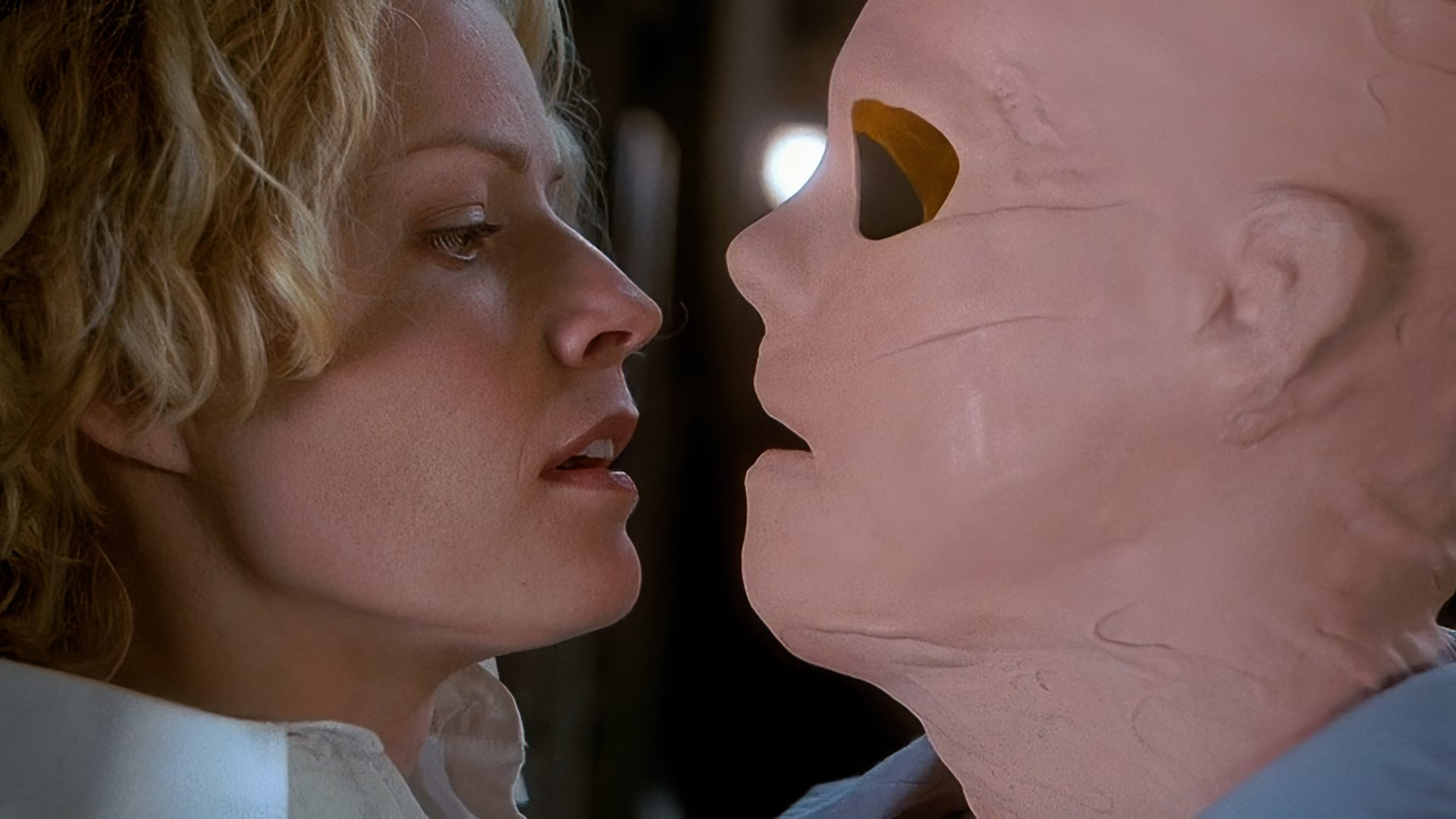
Before 2020’s The Invisible Man reminded audiences what a nightmare an invisible menace would be, Hollow Man gave us a more conventional thriller version of such a story. Kevin Bacon plays Dr. Sebastian Caine, an egotistical scientist working on a secret military project for invisibility, and, after dozens of animal tests, he takes the unauthorized risk to try it on himself. When the attempt to make him visible again fails, he finds a disturbing freedom from morality in being able to do whatever he wants unseen, worrying his ex-girlfriend (Elizabeth Shue) and her colleague/lover (Josh Brolin).
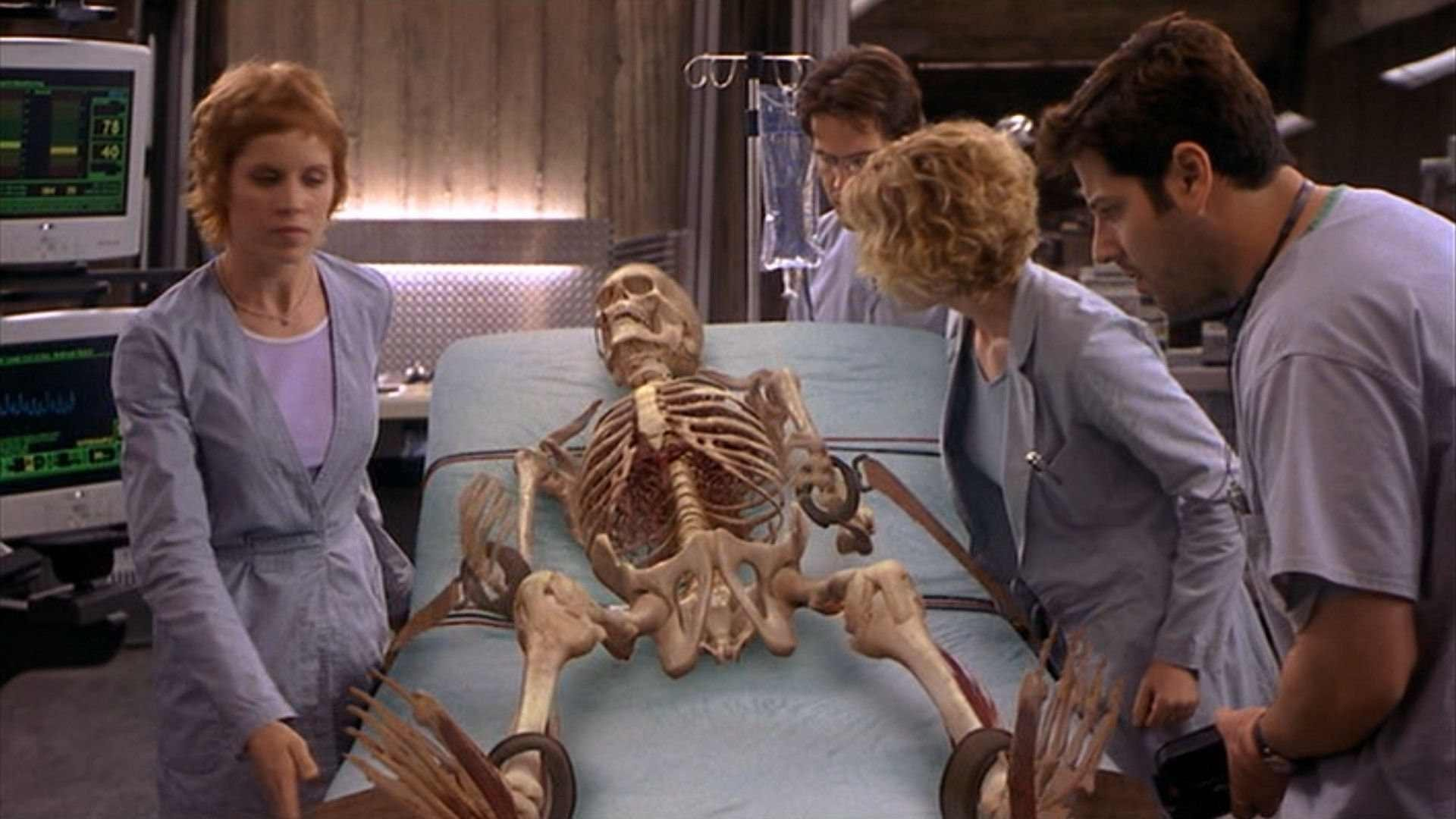
Owing much of its science-run-amok plot to The Fly, Hollow Man fell in that turn-of-the-millennium period when CGI was still a wonder even when it would be considered unpolished by today’s standards. The scenes of Bacon and a gorilla gradually shifting their transparency one organ at a time is still rather impressive and feels like a leap in visual effects around which the rest of the film was built. The acting is merely serviceable, but director Paul Verhoeven, aiming to make a more palatable mainstream movie, pulls off some effective chills and thrills once Sebastian goes into predictable slasher mode. It’s entertaining, but it can’t quite escape its innate cheesiness, especially when compared to the 2020 Invisible Man.
Best line: (Sebastian) “It’s amazing what you can do… when you don’t have to look at yourself in the mirror anymore.”
(For Day 11 of NaPoWriMo, the prompt was for a monostich, or one-line poem, which often relies on its title for full context. I figured this laconic form could lend itself to some creepiness.)
Ignorance Is Bliss
I try not to think that, wherever I am, somebody has died there.
_________________________
MPA rating: R (for language, sex, and bloody violence, more of a medium-level R)
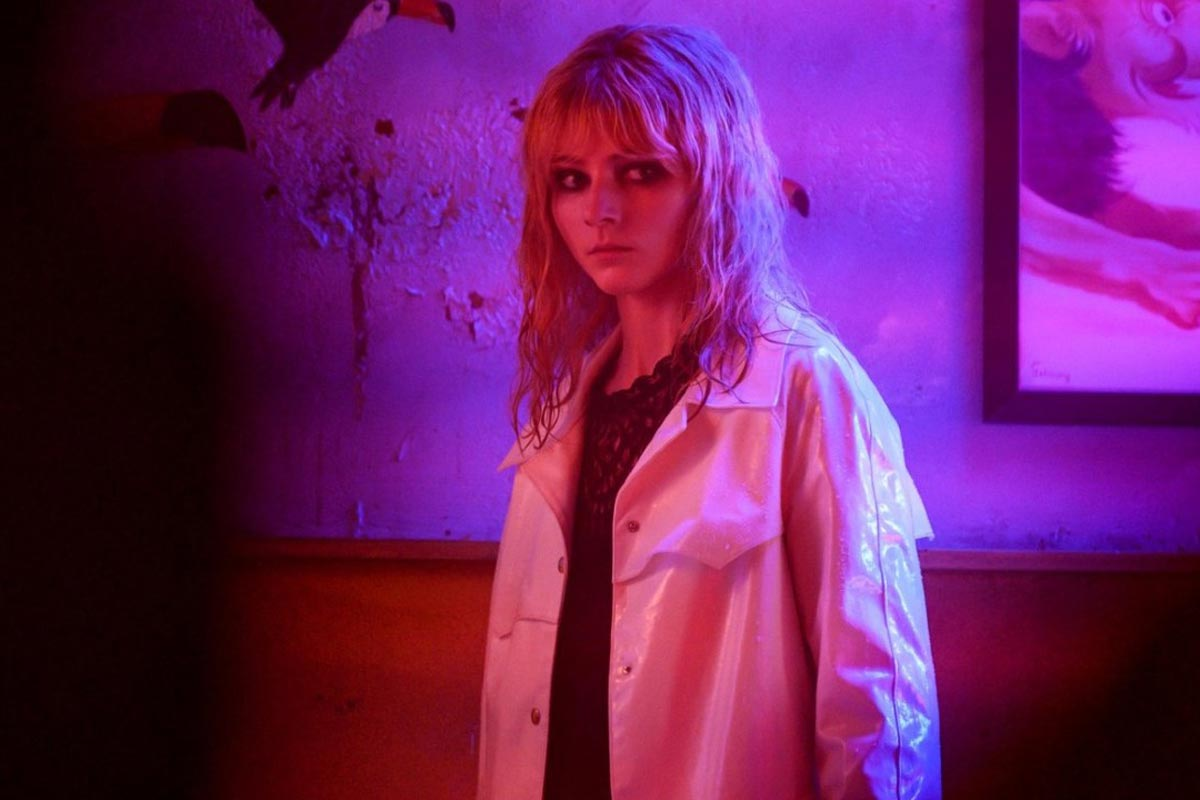
I consider myself picky when it comes to the horror genre, and the hackneyed slashers or gorefests have little interest for me. But every now and then a scary movie stands out by breaking the mold with its superior quality. Last Night in Soho may have been a disappointment at the box office, thanks mainly to COVID, but Edgar Wright’s psychological timebender has a special blend of cast and craft that deserved far better.
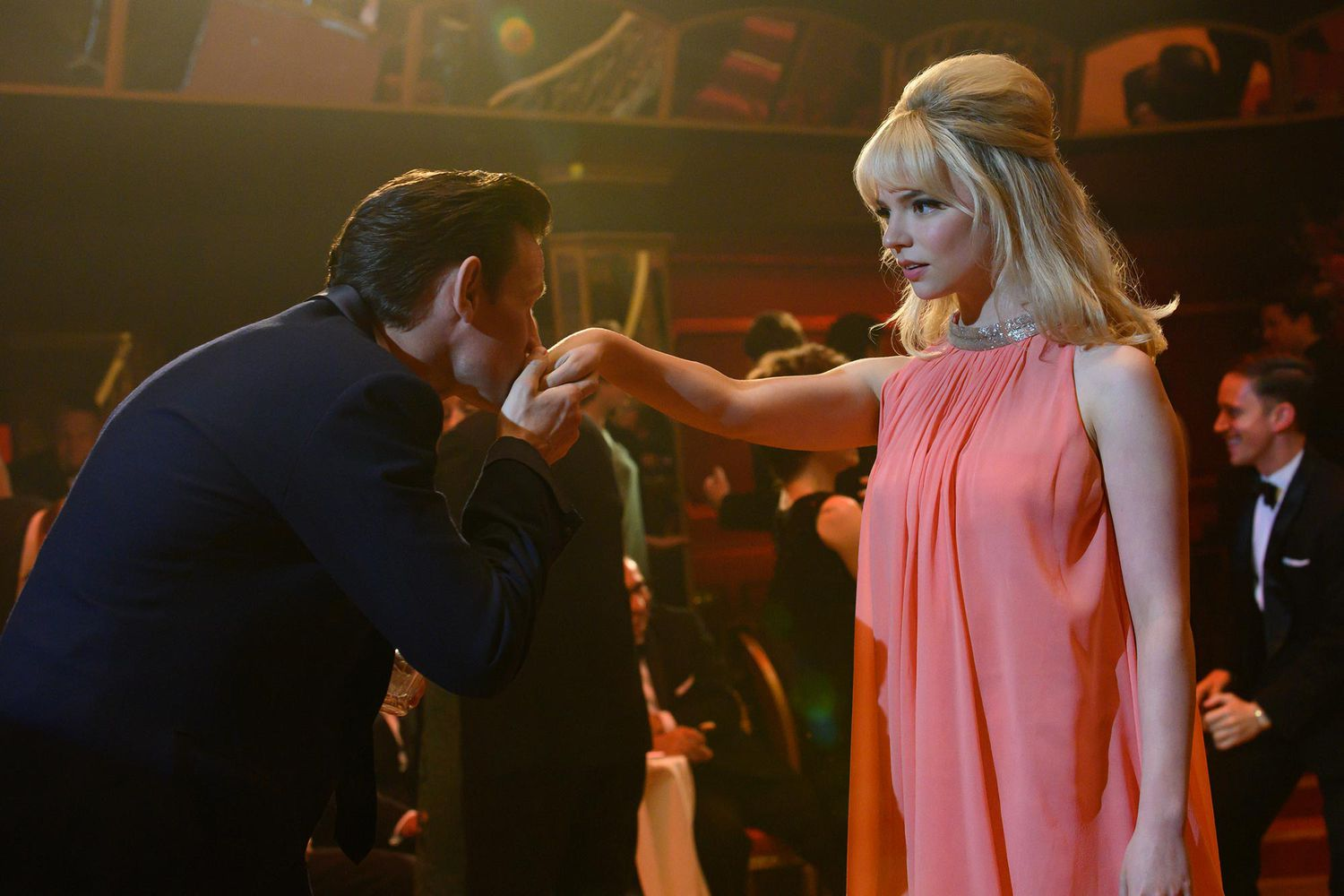
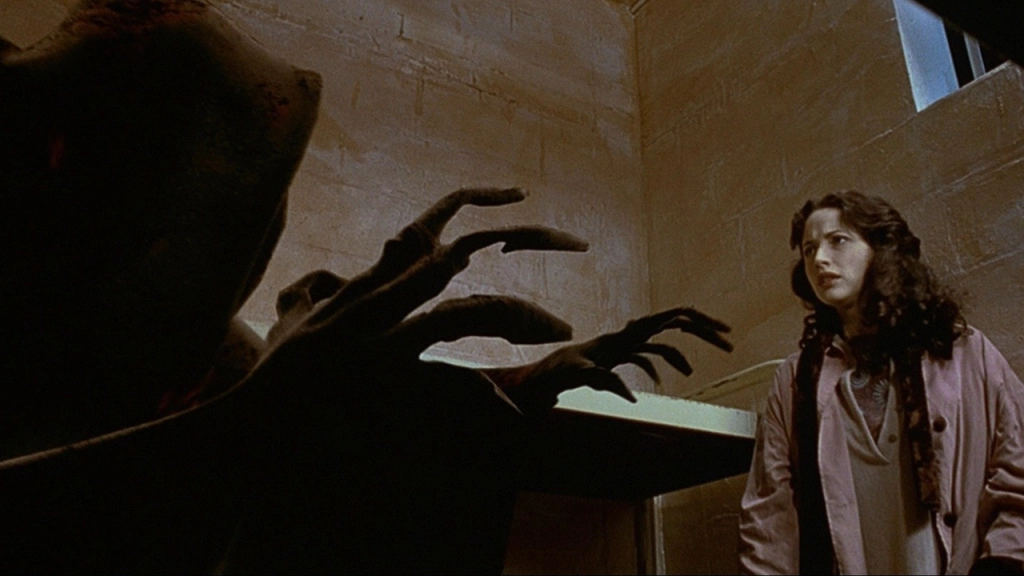
Aspiring fashion designer and lover of 1960s culture Eloise (Thomasin McKenzie) moves from her grandmother’s rural home to the bustling metropolis of London, and, after having enough of college dorm life, she opts to rent a room near campus. While sleeping, Ellie finds herself seemingly transported back to the ‘60s and living the glamorous life of Sandie (Anya Taylor-Joy), a singer who is wooed by her would-be manager Jack (Matt Smith). It’s literally a dream come true, yet the more Ellie delves into this vicarious other life, the more she becomes haunted by frightening visions from the past.
First off, Last Night in Soho looks fantastic, conjuring the neon-lit enchantment of 1966, and as with Wright’s previous film Baby Driver, his butter-smooth camerawork is a joy to watch. The soundtrack is likewise perfectly chosen, replete with the best of Cilla Black, James Ray, and the Kinks, immersing Ellie and the audience further into the Swinging Sixties. It’s a crying shame that the film got zero Oscar attention when its cinematography, sound, and production design could easily have stood with the best that year.
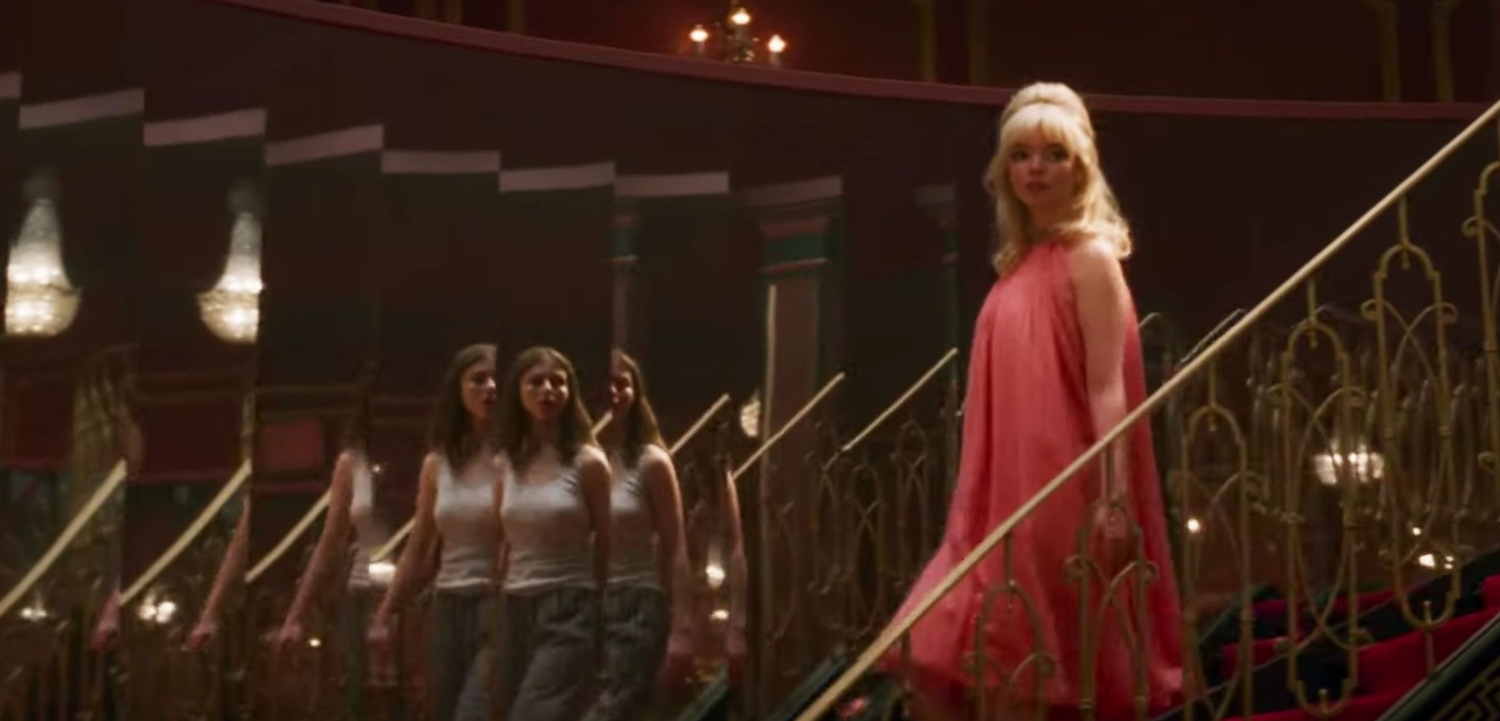
As for the story, the film is a masterclass in gradual genre shifting, as it starts out as a fantasy with wide-eyed Eloise marveling at her chance to see a decade that has fascinated her with its fashion and music. McKenzie is a perfect ingenue, further proving her talent after Leave No Trace and Jojo Rabbit, while Taylor-Joy excels as her yesteryear counterpart, also proving her singing chops by contributing to the soundtrack. The way mirrors were employed to juxtapose the two was fascinating, and I loved a dance sequence where they seamlessly trade places. Eventually, though, the scares kick in as the dream falls apart. While some of them could be trimmed, Wright nails those disturbing moments as well, putting a nightmarish filter on misogyny and abuse. And though some consider the end to fall apart, I thought it made for a unique subversion of expectation, forcing the audience to question their own sympathies.
Last Night in Soho has its brutal and uncomfortable moments, but it’s a cut above the typical scarefest, boasting more visual flair and originality than any number of slasher sequels. With its rising-star actresses and confidently elegant direction from Wright, it’s the kind of film that I hope will only grow in reputation with time.
Best line: (Ellie) “Has a woman ever died in my room?” (Ms. Collins) “This is London. Someone has died in every room in every building and on every street corner in the city.”
Do you feel a chill that warns “Beware”? Are you not alone when no one’s there? To be a human is to err, So surely I am wrong.
Do things just move all on their own? Is every creak a new doubt sown? It’s obvious that I’m alone, So surely I am wrong.
Are muscles tightened like a spring? Do you detect some unseen thing? But no one else is noticing, So surely I am wrong.
But there it is again, you hear? The subtle sound of someone near. I’m waiting like a staring deer For someone, something to appear. The eye will lie, but trust the ear; It knows it when the coast’s not clear. Am I unstable if I fear What no one else confirms is here? Am I to trust the ones who jeer And say that I’m a fool to fear? I’m not a fool! I know it’s near, So what if you are wrong?! ___________________________
MPA rating: R (for language and violence)
I’m a little disgusted with myself for having four different scary movies lined up for October and then not getting to review any of them before Halloween. But “better late than never” has become the new mantra for this blog. I had heard good things about The Invisible Man, a February 2020 release that managed to make a decent splash before COVID shut down Hollywood releases. The concept of invisibility has never had quite the punch of monsters like vampires and werewolves, but this film proves how nightmarish it can be in the wrong hands.
This latest incarnation of The Invisible Man makes some clever changes to the typical H.G. Wells story of a mad scientist creating an invisibility serum, instead focusing on one of his victims before he ever acquired such a power. Elizabeth Moss gives an outstanding and honestly Oscar-worthy performance as Cecilia Cass, the battered girlfriend of possessive optics genius Adrian Griffin (Oliver Jackson-Cohen). When she flees his clutches and goes into hiding, Cecilia is startled to learn of his apparent death, only to then be haunted by an increasingly violent invisible force that makes everyone around her question her sanity.
The voyeuristic nature of invisibility has precedents, such as in 2000’s Hollow Man, but this film puts Cecilia’s relationship trauma and the stalker-ish behavior of a vengeful lover front and center. The concept of gaslighting has become more prominent (and misused) in our Internet age of misinformation and manipulation, but its use here mirrors the origin of the word, the 1944 film Gaslight where a cruel husband psychologically torments his wife to make her go insane. Luckily, Elizabeth Moss is an expert at acting crazy and more than delivers in her arc from battered victim to helpless prey to empowered avenger. Aldis Hodge as Cecilia’s supportive friend and Michael Dorman as Adrian’s smarmy brother fill their roles well, but this is Moss’s film through and through. To match her, the villain is brilliantly depicted as a faceless aggressor before his “death,” only for that faceless aggression to take a new unseen form that threatens to make its presence known through violence at any moment. Not knowing where he is remains key to the film’s ever-present tension, making the moments when we do know stand out even more.
Between expert performances and Leigh Whannell’s stylish direction, The Invisible Man is an instant horror classic and possibly the best use of invisibility in the genre. That said, the villain’s choices start to break down near the end, and it does get a bit overlong, continuing beyond the expected climax to try gaslighting Cecilia, as well as the audience, even more. The actual ending still works, just taking a more uncomfortably personal turn than an action scuffle and leaving open a window for theorizing and sequel potential. In contrast to the gorefests I try to avoid (though this film does have its brutal moments), I subscribe to the horror principle that what you don’t see is often scarier than what you do, and The Invisible Man uses that rule to its advantage while applying it to an all-too-realistic scenario.
(For Day 19 of NaPoWriMo, the prompt was to write about a childhood scare, like a monster. While a lion is not a personal boogeyman for me, this creature feature seemed to fit the bill.)
It’s lurking where you cannot see, Blocking where you cannot flee, Looming in the liminal of known and too afraid to know. Do not breathe and do not stir. That’s a growl and not a purr, Growing louder by the second, growing sick of lying low. Save your scream; it knows you’re there, Not a dream and no nightmare. Something hungry this way comes, and you have nowhere else to go. ____________________________
MPA rating: R (nothing overly gruesome that I recall)
Idris Elba is good in just about anything. Whether he’s playing an immortal djinn in a bathrobe or an Asgardian gatekeeper, his natural gravitas just enhances every role he takes on. That goes for the more pedestrian efforts as well. Beast can be summed up pretty easily: man vs. lion. Elba plays Dr. Nate Samuels, who takes his daughters on a South Africa safari to reconnect after the death of their mother but is forced to defend them against a rogue lion on a killing spree.
As a survival thriller, Beast is a solid entry, elevated by Elba’s lead performance and Baltasar Kormákur’s rather artsy direction, such as some outstanding tracking shots that I love so much. Yet the occasionally dumb plot is cookie-cutter standard for the genre and unlikely to surprise anyone. The plot armor of the climax even becomes a little laughable when Elba fights the beast barehanded and lasts far longer than other characters it killed within seconds. Beast is all too familiar, doing for lions what Jaws did for sharks, but its African setting and intimidating feline make it unique enough to be worth a casual watch.
(For Day 13 of NaPoWriMo, the prompt was for a short poem “that follows the beats of a classic joke,” though mine is less of a joke and more of a taunt in need of countering.)
It used to be If men were meant to fly, They would have been born with wings.
It used to be If women were meant to fly, They wouldn’t need men for things.
Maybe let them try Before saying who can fly. _______________________
MPA rating: R (for frequent language and some bloody violence)
What do you get when you cross Memphis Belle, “Nightmare at 20,000 Feet,” and a gonzo female empowerment fantasy? You get Shadow in the Cloud, a high-flying action-horror-drama starring Chloe Grace Moretz as RAF Officer Maude Garrett, who boards a plane flying out of New Zealand in the midst of World War II. Insisting on the safety of a mysterious package she carries, Maude bristles at the sexist comments of the all-male flight crew and spends the first half of the film stowed in the gun turret on the plane’s underside. Yet a dangerous gremlin-like creature threatens the plane and her package, spurring her to prove just how tenacious a “hysterical” woman can be.
Shadow in the Cloud is an over-the-top treat in many regards. After an opening scene in which Maude briefly meets the surly airmen of the Fool’s Errand, the first half of the movie has a clever claustrophobia to it, trapping her in the cramped gunner’s bubble with no easy escape. Everything is from her perspective, with the personalities of the rest of the crew conveyed solely by dialogue over the radio, from racist horndogs to stubborn pilots. It’s unfortunate that, with one exception, every male character is a condescending, foul-mouthed jerk to varying degrees, but I suppose such grating scorn must have been common enough in real life to be considered such a stereotype. Here, of course, it’s the kind of extreme disrespect engineered for movie heroines to prove wrong.
Beyond the human conflict, rife with mistrust as Maude herself becomes a source of suspicion, the film takes a hard turn into creature feature action and doesn’t let up. The feats Maude pulls off in the second half, facing off against a bat-like gremlin that taunts her as it sabotages the plane, are absurd yet thrilling, and a whole dogfight sequence was ridiculous movie adrenaline in the best way. Moretz is a lovely and talented actress, and she perfectly balances the intense emotions at play. Plus, the music is right up my alley, with a synth-heavy score that ranges from ominous to frenetic and ending with Kate Bush’s “Hounds of Love” (a worthy addition to the End Credits Song Hall of Fame). Highly entertaining and bombastic even as it teeters into B-movie camp, Shadow in the Cloud strikes a strange balance between well-acted gender conflict and intense monster revenge action, while also giving a nod to the real-life women who served in the air forces during World War II. It’s an odd mix but one worth the ride.
Best line: (Maude, after asking for permission to fire at an enemy aircraft) “I was being polite!” [fires at will]
(For Day 12 of NaPoWriMo, the prompt was to write a poem that addresses itself, so I drew a comparison between my own writing deadlines and the more life-threatening deadlines of this film’s protagonist, perhaps like a spell that might help him.)
Lines of mine, lines of mine, Tell me why you take your time. You know the deadline’s coming fast, And they’re expecting something good.
Stubborn words, on my nerves, Tell me what this poem deserves. Can’t you feel the restless readers Breathing down my livelihood?
I beseech the powers of speech; Bring the verse within my reach. Page and ink, don’t you think I’d write less tritely if I could?
Rhymes of fire, climb, inspire, Share the lyrics I require. Don’t you care the curse will come If we don’t feed them like we should? ______________________
MPA rating: PG (due to some rather intense scares for a kids movie)
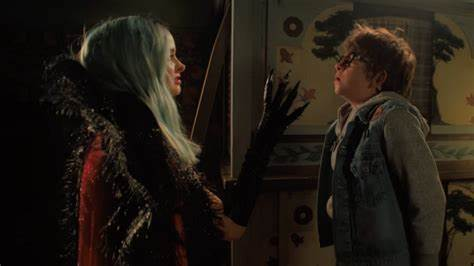
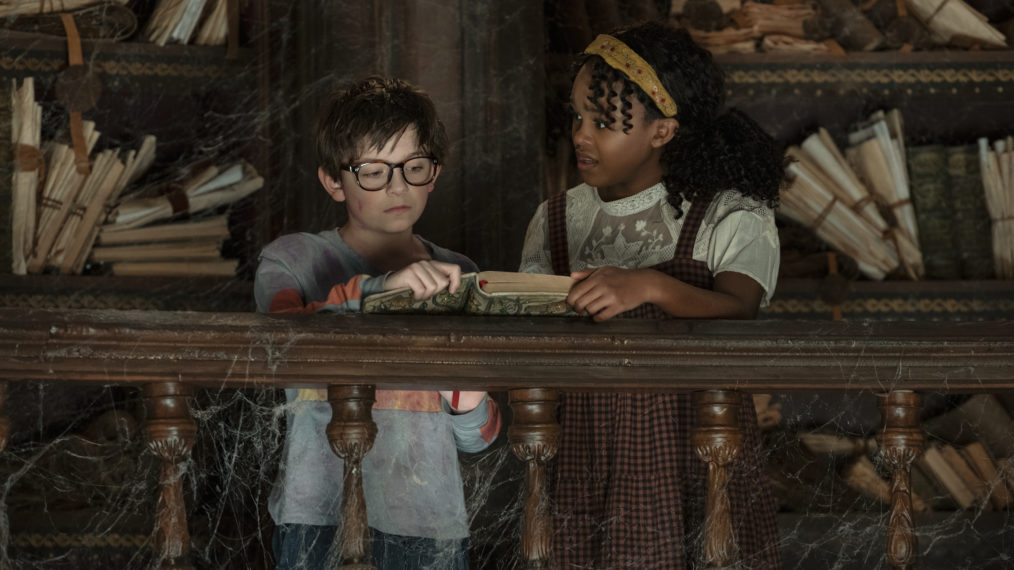
While I acknowledge the likes of Coraline, Gremlins, and Goosebumps, it does feel like kid-friendly horror movies are few and far between, so I appreciate when a new one comes along. Based on a J. A. White book, Nightbooks makes writer’s block more of a nightmare than it already is. After fleeing his home one night, young horror enthusiast Alex Mosher (Winslow Fegley) is lured inside a magical apartment building controlled by the heartless witch Natacha (Krysten Ritter), who insists he read her a new scary story every night. Trapped within this enchanted prison, Alex and his fellow hostage Yasmin (Lidya Jewett) must find a way to outsmart their captor and escape.
Nightbooks has a great Scheherazade-style setup, with a would-be horror writer being forced to come up with new stories or face dire consequences. Krysten Ritter as the witch is a perfect adversary for this kind of movie. She’s capricious and hammy with her persona but can quickly become sadistic and threatening if displeased, and her magical unpredictability adds a lot to the sense of dread even when she’s not on screen. Fegley and Jewett are further proof that child actors are no longer the stuff of automatic mockery, and Fegley’s Alex will especially appeal to kids who struggle to embrace their niche interests.
With its fairy tale qualities hearkening back to witch stories like Hansel and Gretel, Nightbooks has a good chance at becoming a Halloween staple for those who seek it out on Netflix. The individual creepy tales Alex reads to Natacha are the stuff of cheesy campfire frights, but the scares can actually get rather intense at times, like during a side quest with skull-faced, blade-wielding insects that attack Natacha’s garden. And it doesn’t hurt that the film and Alex have a fondness for The Lost Boys, even ending with a fantastic cover of “Cry Little Sister” by CHVRCHES. For aspiring young writers especially, Nightbooks is an ideal spooky watch.
Best line: (Yasmin) “Weird? Who called you that? Well, they’re right. You are weird. I mean, look at you. The thing that makes you weird makes them ordinary, and nobody likes to be ordinary because ordinary sucks. So ordinary people are going to try and take that away from you by calling you names like… try-hard or…” (Alex) “Or creepshow.”
(For Day 4 of NaPoWriMo, the prompt was for a triolet, an eight-line poem with a particular rhyme scheme and pattern of repeated lines. Honestly, these are my favorite prompts, trying out forms that I don’t normally think of on my own.)
Your age is just a number, friend, But numbers have been known to kill. Like currency you have to spend, Your age is just a number, friend, A short-term loan you can’t extend, And everybody foots the bill. Your age is just a number, friend, But numbers have been known to kill. _________________________
MPA rating: PG-13
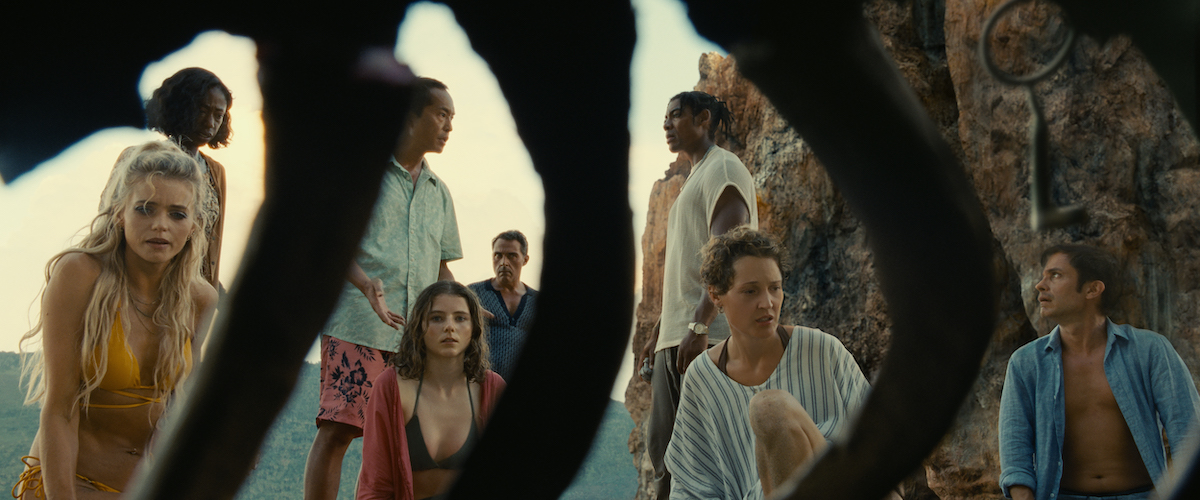
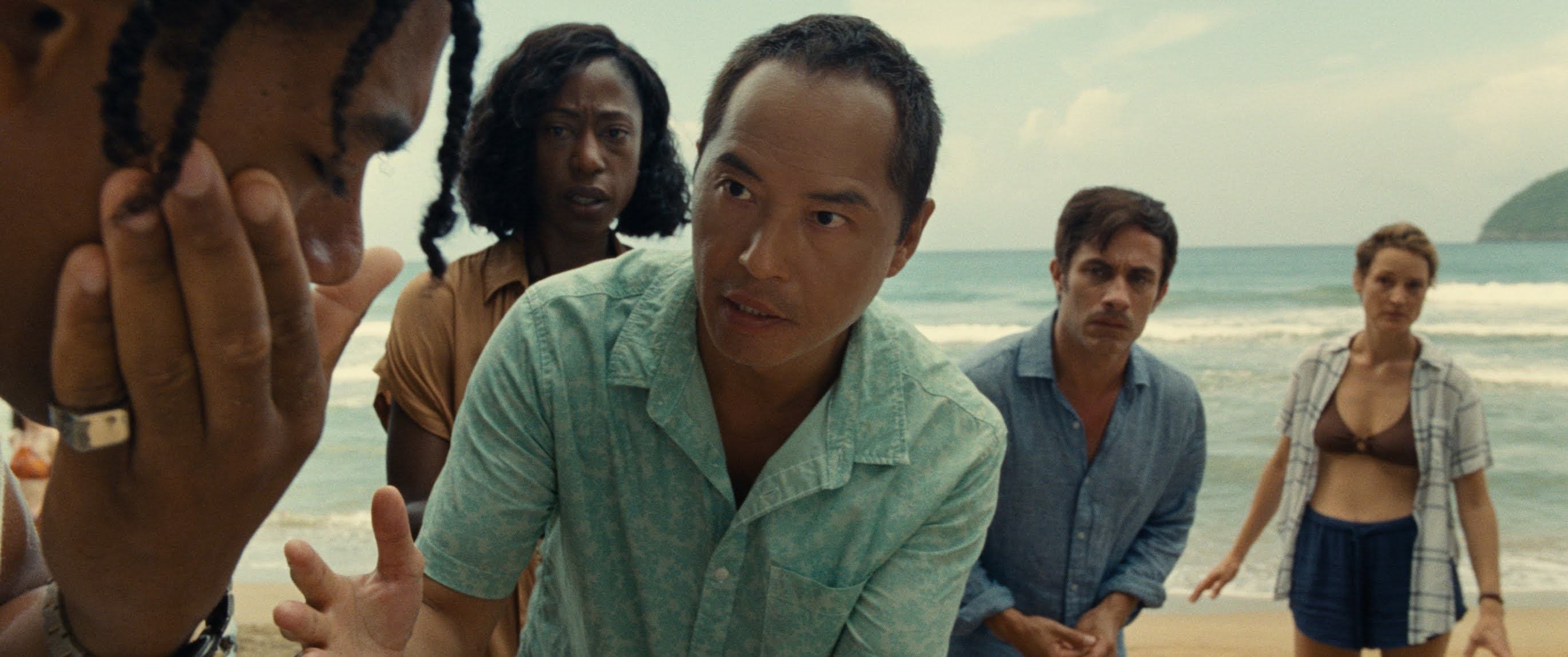
M. Night Shyamalan doesn’t exactly have the best track record when it comes to his movies, but every new project deserves a fair chance, regardless of past failures. And even if his films often don’t stand up to scrutiny, they are still typically well-made and excel at conjuring an atmosphere of low-key suspense. Old very much fits that mold. Based on a French-Swiss graphic novel called Sandcastle, the film mainly focuses on the Cappa family, made up of father Guy (Gael García Bernal), mother Prisca (Vicky Krieps), and children Trent and Maddox, whose recuperative vacation takes a dark turn as they and other tourists (Rufus Sewell, Ken Leung, Abbey Lee, and others) become trapped on a beach which ages them quickly.
As with most Shyamalan productions, the less you know going in, the better. Age itself may not seem like that much of a boogeyman, but the anxiety of watching years waste away in a matter of hours is rather effective, especially as health issues become more pronounced in this accelerated timeframe. (One scene involving bones breaking repeatedly is especially nightmarish.) And the seemingly peaceful beach is a lovely and unsettling locale, like a passive observer of the ordeal playing out on its white sands.
But of course, the story, despite its detail-oriented execution, has that Shyamalan fragility, with an explanation for the larger narrative that makes enough sense while watching to earn an “ahhh” but then falls apart when you consider all the logistical issues that apparently never bothered the writer-director. The script also takes some bewildering turns, often doesn’t follow its own logic, and doesn’t develop most of the characters beyond superficial hopes and fears. Old isn’t an outright bad film, but it’s a brittle one and further proof that Shyamalan’s talents could benefit from a good co-writer.
Best line: (Prisca, to her son, offering the theme of the film) “Stop wishing away this moment.”
If ghosts are really dead and well And haunting us instead of hell Or heaven, then it’s fair to ponder What they’re up to when they wander.
Could it be their lifeless heads Are in our bathrooms, in our beds, Next to us when we’re alone To judge us and what’s on our phone?
Could it be they find their fun In terrifying everyone? Just float a chair or whisper “boo,” And while you scream, they laugh at you.
Or maybe they just do their schtick Because the dead resent the quick And all the things they can’t enjoy And so endeavor to annoy?
Or maybe phantoms leave a trail Of fear to flout the coffin nail, To prove to us as well as them That they exist by their mayhem.
It must be hard to be a ghoul. To be invisible is cruel. So next time you are all alone, Turn to the ghost you might have known And dare to share a friendly word, Perhaps their first since being interred. And if they don’t scare you away, Just know you might have made their day. _______________________
MPA rating: R (for violence, mostly PG-13-level except for one scene)
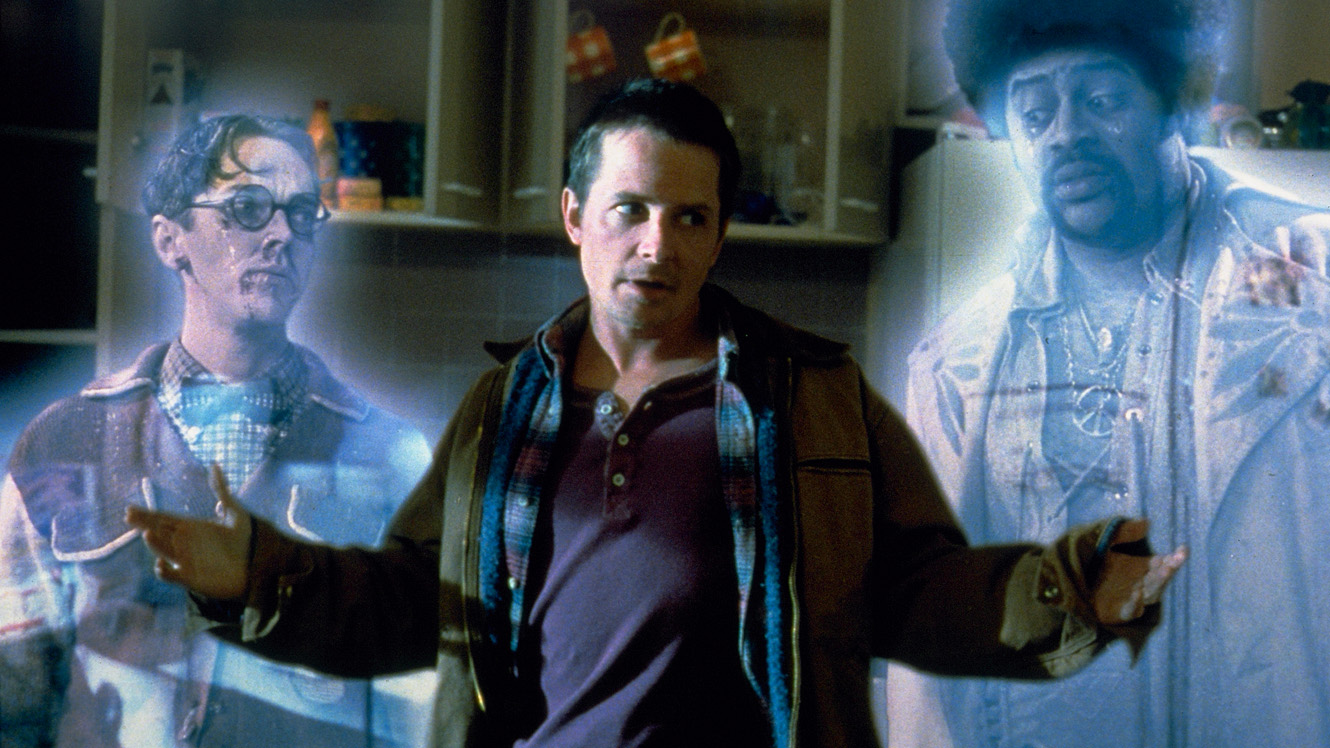
Yep, I’m still here catching up on my 2022 Blindspots, but I have officially seen them all! So now it’s just getting the reviews out. Though I had intended it for last Halloween, next up is a little horror film with some unlikely bedfellows in director Peter Jackson before he hit the big time with Lord of the Rings and Michael J. Fox in his last starring role, shortly before announcing his Parkinson’s diagnosis. Between Jackson’s penchant for horror comedy (much toned down here) and Fox’s natural charisma, the two proved to be a good mix, finding both humor and pathos in a tale of a con artist who can see dead people and must battle a murderous phantom only he can see.
Fox plays Frank Bannister, a self-proclaimed banisher of ghosts, who gets help in faking the hauntings in a small American town (actually Jackson’s native New Zealand) from his spectral collaborators (Chi McBride, Jim Fyfe, and John Astin). He alone can see ghosts ever since a near-death experience, and after a run-in with a boorish jock (Peter Dobson) and his kinder wife (Trini Alvarado), Frank endeavors to stop a series of sudden random deaths that seem to be caused by the Grim Reaper.
After he’d earned a name through several strictly Kiwi projects of varying taste, The Frighteners was Jackson’s first Hollywood movie, and its mishmash of genres adds to it feeling like a turning-point film, the work of someone still perfecting their talent for mainstream audiences. Despite the twisty plot and colorful performances, it seemed to me that the real intended star was the special effects provided by Weta Digital (now Weta FX) to bring the ghosts to life, particularly the villain whose shape is often seen moving underneath solid surfaces like walls. By today’s standards, those all-CGI moments now have an inescapably dated and unreal look to them, but I can imagine they were a wonder in the mid-1990s.
While Fox’s natural likeability overshadows that of his character, he nails the dramatic moments and the interactions with characters that are not actually there, since all the ghost scenes were shot twice, with and without the ghosts present. As for the antagonists, while the shadowy reaper is a formidable threat, Jeffrey Combs is a scene-stealer as Miles Dammers, the intense FBI agent trying to tie Frank to the killings. Combs was clearly channeling a neurotic Jim Carrey and is a primary source of the film’s humor, which can be hit-and-miss.
Most of the film’s mixed reviews seem to consider it “tonally uneven,” which is true, never going for full-on belly laughs or deep-seated horror. The ending especially forgoes any of the light-hearted campiness in order to make events feel as hopeless as possible for the heroes while also overdoing explanatory flashbacks. Other issues include the rather shallow romance and the fact that the harrowing opening scene doesn’t make much sense in retrospect.
I don’t mean to sound overly negative; I very much enjoyed The Frighteners and actually watched it twice. It’s not high art nor an outright dud, so it’s hard to figure out in which bucket of appreciation to place it. But it’s an entertaining amalgam of influences that deserves its cult following, and I’m grateful that it served as a stepping stone for Jackson and Weta toward The Lord of the Rings trilogy. Besides, you can’t go wrong ending a movie with “(Don’t Fear) the Reaper.”
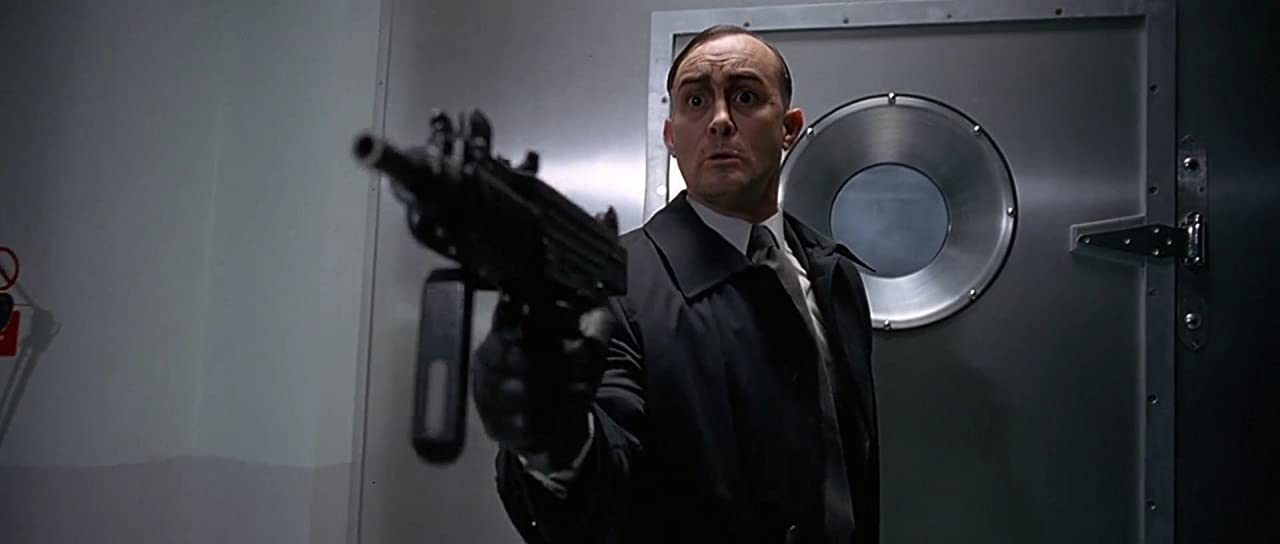
Best line: (Frank) “You are SUCH an a**hole.” (Dammers, unhinged) “Yes, I am. I’m an a**hole… with an Uzi.”
There once was a castle perverse. Its owner was evil and worse, He’d break into song While his friends sang along Without any time to rehearse.
All visitors finding his lair Were likely to join the nightmare, And goody-two-shoes Who had morals to lose Would leave, having had an affair.
Beware then the castle debased, If you’d choose being chaste over chased, Unless you’re the type Who exults in the hype Of intentional absence of taste. __________________________
MPA rating: R
I know this review is a little late for Halloween (and for only my fourth Blindspot), but I’ve been struggling to figure out how to review The Rocky Horror Picture Show. When a film is this iconic in its cult status, is it basically above criticism? To be clear, I did not enjoy this sex-crazed salute to campy horror, but I can see why others might. It’s the kind of over-the-top cheesefest that knows exactly what it wants to be and is so committed to it that it doesn’t matter whether I like it or not. It is what it is, and I guess it proves that a film can be both classic and atrocious at the same time.
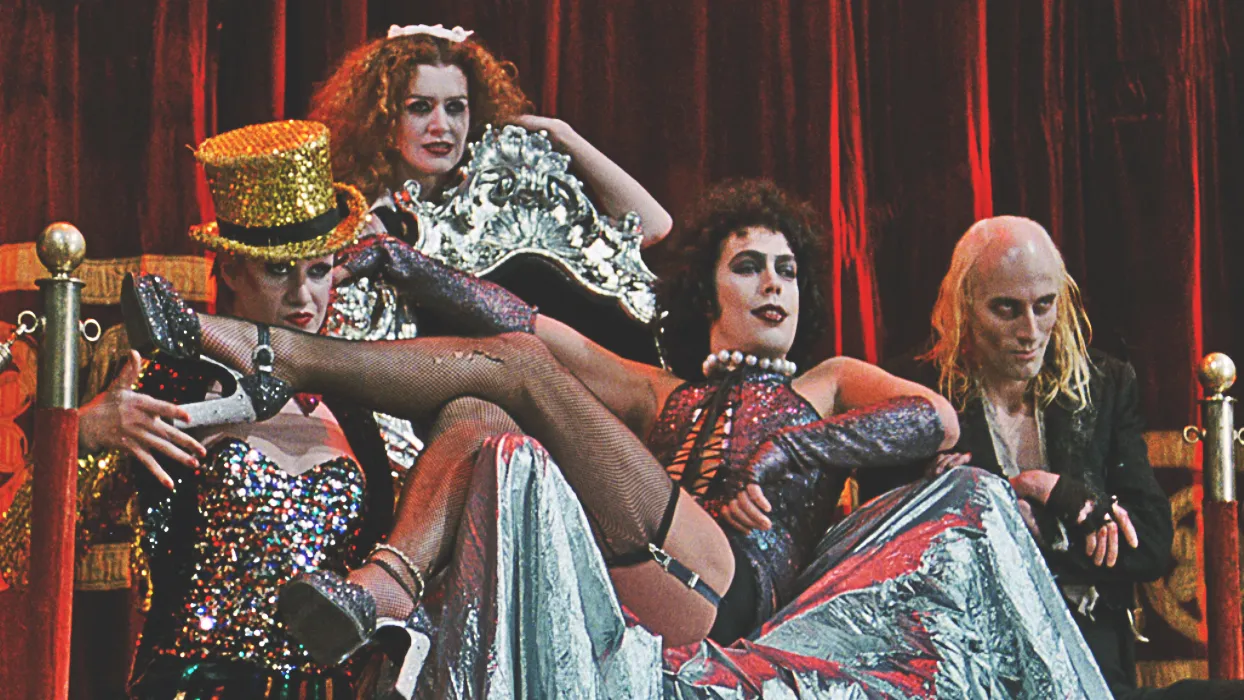
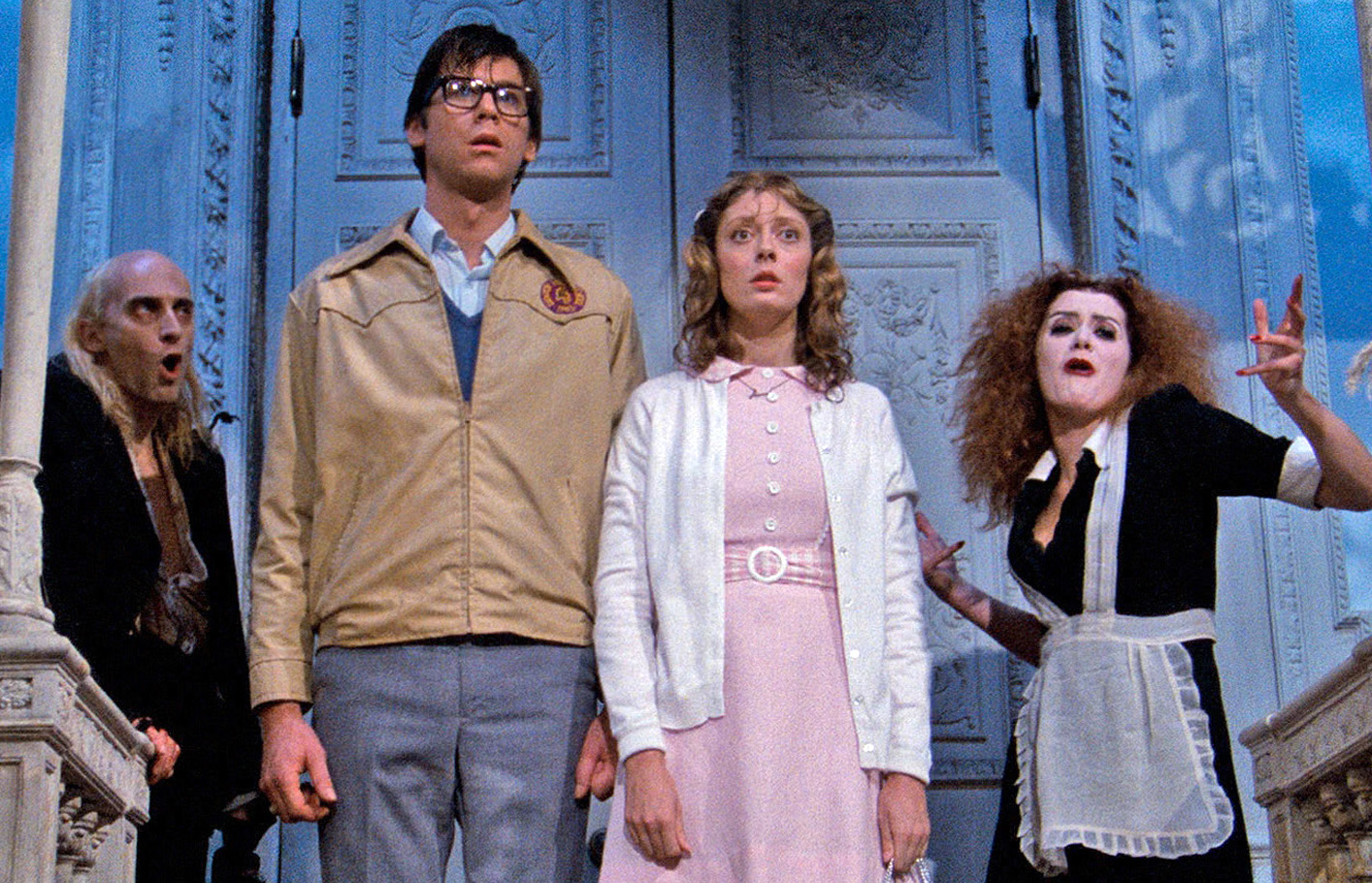
The paper-thin story, narrated periodically by a genteel criminologist (Charles Gray), sees newly engaged couple Brad (Barry Bostwick) and Janet (Susan Sarandon) being stranded when their car breaks down on a dark and stormy night, leading them to the castle of the eccentric transvestite Dr. Frank-N-Furter (a scenery-chewing Tim Curry). The straight-laced couple are soon drawn into a free-for-all of seduction, murder, and musical numbers, complete with a creepy butler named Riff Raff (Richard O’Brian, who also wrote the film and the original stage show), a newly created muscle man named Rocky (Peter Hinwood), and a machine that turns people into statues.
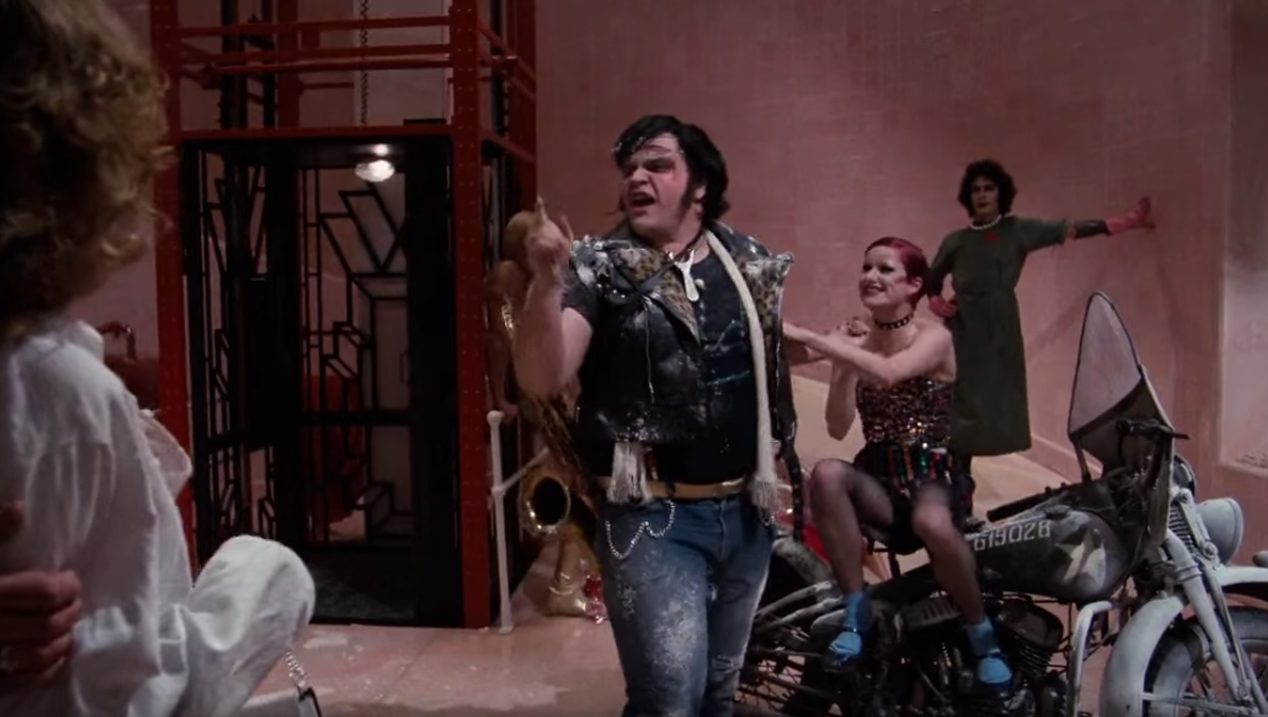
Objectively, The Rocky Horror Picture Show is a mess, as reflected by its poor reception by critics upon initial release. Characters come and go randomly, notably Meatloaf as a half-brained motorcyclist who shows up for one chaotic song and is abruptly killed for no reason. And a big stage number near the end is a fever dream of trashy costume glitz that makes zero sense, followed by a swimming pool championing wish fulfillment. In short, once Brad and Janet entered the castle, I just alternated between appreciating the music, feeling uncomfortable, and wondering what the heck I was watching, which I suspect was the intent of the filmmakers all along.
Speaking of the music, the movie does have some catchy songs to its credit (all written by O’Brien), energetic bops like “The Time Warp” and “Hot Patootie – Bless My Soul” to match its tongue-in-cheek silliness. I generally love musicals, and, while I would consider this one of the exceptions, I will grant that the music is pretty much the only thing that makes it watchable, some chuckle-worthy jokes notwithstanding. Perhaps I’d buy into the film’s bizarre brand of fun more if I attended one of the midnight showings known for audience participation, and I’m tempted to. If only I had a better baseline opinion of it….
I’m well aware that The Rocky Horror Picture Show isn’t my kind of movie. I’m not a fan of watching two clean-cut kids be corrupted by an alien missionary of the sexual revolution and his motley array of perversions, even if it’s someone as charismatic as Tim Curry. I suppose that makes me a prude, but so be it; I prefer my musicals less hypersexualized. I do find it funny that my first exposure to both Curry and O’Brien was in kid-friendly cartoons where they played likable dads: Curry in The Wild Thornberrys and O’Brien in Phineas and Ferb, which were a far cry from their raucous younger days. I’m glad I’ve seen The Rocky Horror Picture Show at least once, if only to understand its iconic cult reputation, but it’s a cult I’d prefer to avoid.
Best line: (Dr. Frank-N-Furter) “It’s not easy having a good time.”
Would a sane human being Be intrigued by ever seeing Odd phenomena beyond the knowledge of us mortal men, Like a chair moved by air Or a voice that bids beware Or strange forces eating horses as first courses now and then?
Blood that drips down walls Or peculiar moving dolls – Who would choose to chase the clues of deadly mysteries and such? We ought to run away, But we’re curious and stay. Curiosity, insanity – the difference isn’t much. ______________________
MPA rating: R (mainly for language)
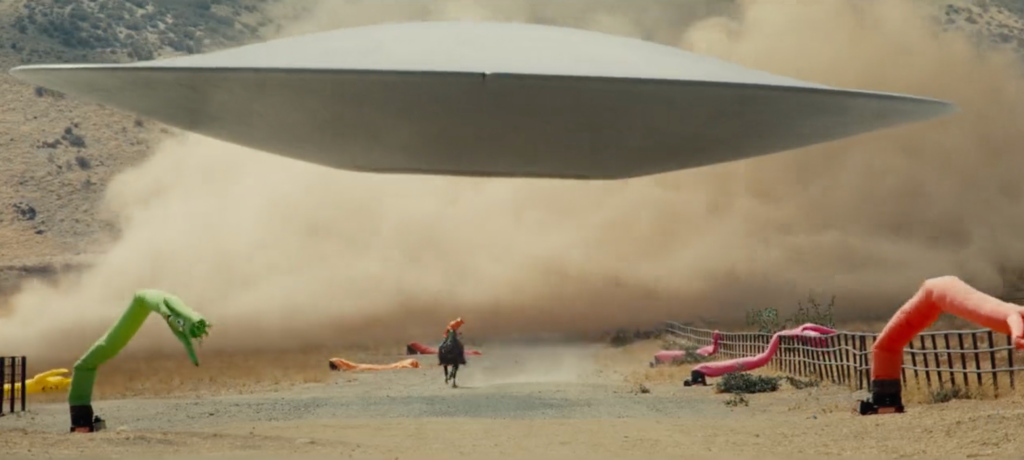
If there was any doubt about Jordan Peele’s skill as a horror director (or director in general), Nope should dispel it. Get Out was an electrifying debut with its potent social commentary, and Us boasted highly impactful scares, even if its underlying mythology made zero sense. Yet I think I prefer Nope over either of them, an entertaining genre mish-mash that recalls Close Encounters of the Third Kind, if the UFOs were not secretly friendly. From the enigmatic trailers, it seemed that Peele wanted to make aliens scary again, and he did, while also subverting a few expectations to great effect.
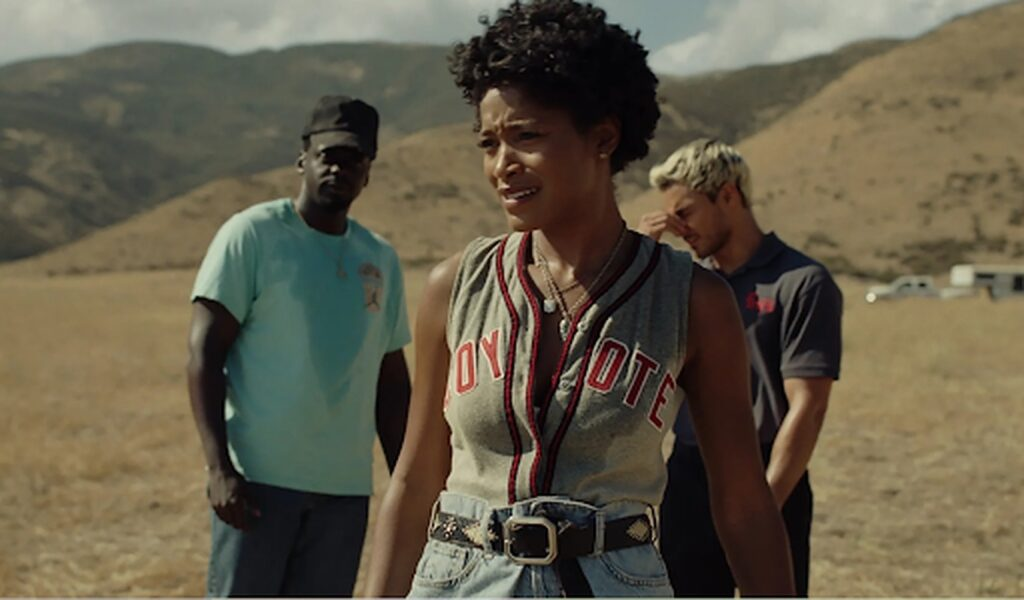
Reteaming with Peele after Get Out, Daniel Kaluuya plays O.J. Haywood, a horse trainer for film projects, who struggles to maintain his family’s historic business after the bizarre death of his father (Keith David). His sister Em (Keke Palmer) is more interested in schmoozing talent seekers than saving the ranch, but they are both disturbed by the behavior and disappearance of their horses, eventually realizing something in the sky is preying on them. Soon the siblings are collaborating to get certified photographic proof of the dangerous UFO, which is easier said than done, even with the help of jaded electronics employee Angel (Brandon Perea) and grizzled filmmaker Antlers Holst (Michael Wincott).
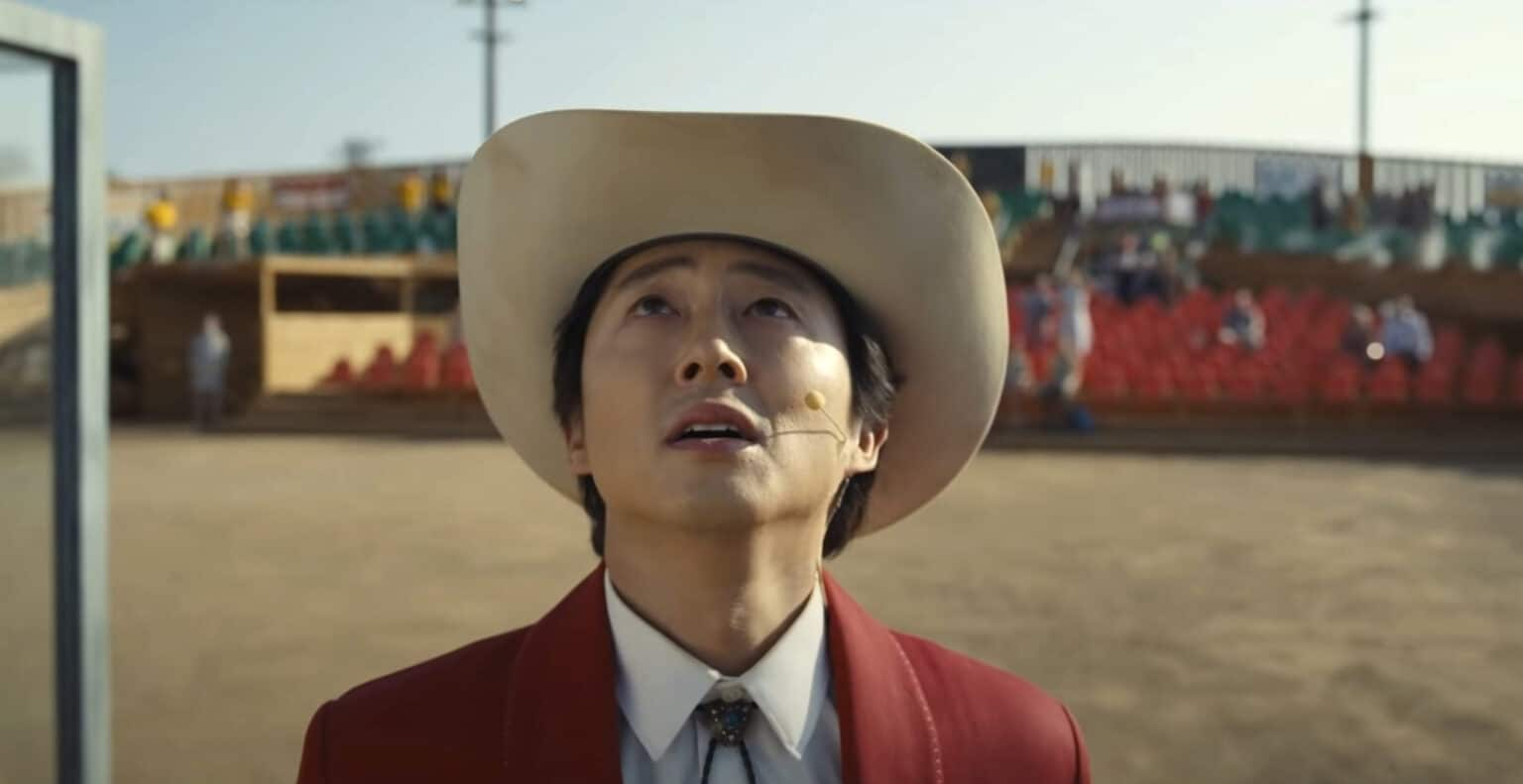
Nope continues Peele’s winning blend of understated comedy and legit horror, injecting doses of humor among the growing anxiety, most notably the title response when situations are too risky to engage. Unlike so many horror films, the characters largely respond realistically to the strange events they face, though it’s notable that some of them lose that sense of self-preservation in pursuit of fame, strengthening the film’s theme of destructive celebrity. Considering how straight-faced and quiet he is throughout, Kaluuya once more proves his acting talent and is never wooden, while Palmer’s surplus of personality makes her a great familial foil for him. Both Steven Yeun as Jupe Park, the owner of a nearby Western theme park, and Perea as an everyman techie are also standouts, while Wincott’s character adds gravitas but also ends up a little underdeveloped.
Through most of the film, I couldn’t help but feel like the subplot with Yeun seemed out of place, a story of him as a child actor witnessing a violent episode involving a crazed chimp. Indeed, it doesn’t have much to do with the main UFO narrative. In retrospect, it does complement the motifs of spectacle and animal danger, and, going beyond survivor guilt, the idea of survivor confidence explains Park’s unwise actions later on. It’s ultimately another sign that Peele puts a good deal of thought into his film’s themes, down to the final scene, and that he’s interested in more than cheap scares. Of course, there are some expert moments of tension and shock as well (I especially liked how the flying saucer is kept out of view at first, darting between clouds and deadening electronics with the distant menace of the fin in Jaws), but it felt unique that the climax happens in broad daylight.
While Us showed that Peele is not above story missteps, Nope is an ambitious step forward that I look forward to watching again. It’s a creature feature that knows how to balance its looming terror with human foibles and a crowd-pleasing climax, complete with an Akira reference. Us was scarier and Get Out had more to say, but Nope is easily the most entertaining entry in Peele’s filmography so far.
Best line: (Holst) “This dream you’re chasing, where you end up at the top of the mountain, all eyes on you… it’s the dream you never wake up from.”