• Home
  • About Me
  • The List
  • THE LIST (2016 Update)
  • THE LIST (2017 Update)
  • THE LIST (2018 Update)
  • THE LIST (2019 Update)
  • THE LIST (2020 Update)
  • THE LIST (2021 Update)
  • THE LIST (2022 Update)
  • Top Twelves and More
  • The End Credits Song Hall of Fame

Rhyme and Reason

~ Poetry Meets Film Reviews

Rhyme and Reason

Tag Archives: Disney

My Top Twelve Disney Animated Films

27 Sunday Nov 2016

Posted by sgliput in Movies, Reviews, Writing

≈ 6 Comments

Tags

Animation, Disney, Lists

Image result for pinocchio disney blue fairy


With the release of Moana, which I still have yet to see, I thought it would be a good idea to revisit my favorite animated features from the House of Mouse. Disney has had its ups and downs over the years, from the dark ages of the ‘70s (which still put out some pretty good films, like Robin Hood) to the 21st-century slump during Pixar’s heyday. Then again, few can rival Disney when their filmmakers are on their games, whether it be the Golden Era classics that Walt Disney himself directed or the Renaissance of the ‘90s that catered to my childhood. Lately, Disney is back on their game with CGI classics rivaling Pixar, and I can only hope they’ll keep up the consistent quality entertainment of recent years.

One thing I notice about my personal favorites is that some of them are among the less regarded films in Disney’s canon, but Disney films are so varied and appeal to us all so early in our lives that everyone probably has preferences all their own, depending on what they grew up watching. Thus, here are my top beloved Disney cartoons thus far. Do you agree? What are your favorites? Feel free to let me know in the comments and geek out about your favorites too.


  1. Zootopia (2016)

Image result for zootopia film

It may seem premature to rank such a recent film this highly, but I’ve seen Zootopia twice and loved it both times, a couple quibbles notwithstanding. Strong likable characters, a well-realized and Pixar-esque world, stunningly detailed animation, and some thought-provoking themes about being who you want to be rather than how others see you make this the most likely candidate for Best Animated Feature this year, in my book anyway.


  1. Tangled (2010)

Image result for tangled film

I wasn’t too impressed with The Princess and the Frog a year before, but Tangled proved that Disney could still pull off the princess format that made them so successful. After Bolt, it also confirmed that they could be just as at home with CGI animation as the hand-drawn style of the past, and the radiant animation and Alan Menken songs (his last for a Disney cartoon, as of this writing) are pure delight.


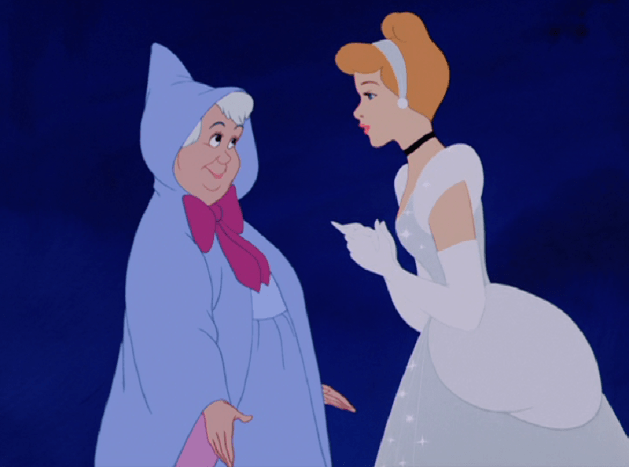
  1. Cinderella (1950)

Image result for cinderella 1950 film

My favorite of Walt’s original fairy tale adaptations, Cinderella is as charming today as it was in 1950. Not quite as saccharine as Snow White, it is the definitive version of the Cinderella story in my house and was a particular favorite of my mom’s when she was a kid. Heredity?


  1. The Little Mermaid (1989)

Image result for the little mermaid film

As the beginning of the Disney Renaissance, The Little Mermaid revolutionized the House of Mouse with Broadway quality tunes and a new high point in animation quality. The colorful marine setting and catchy Menken/Ashman tunes breathed new life into the animation studio and made princess fairy tales all the rage again.


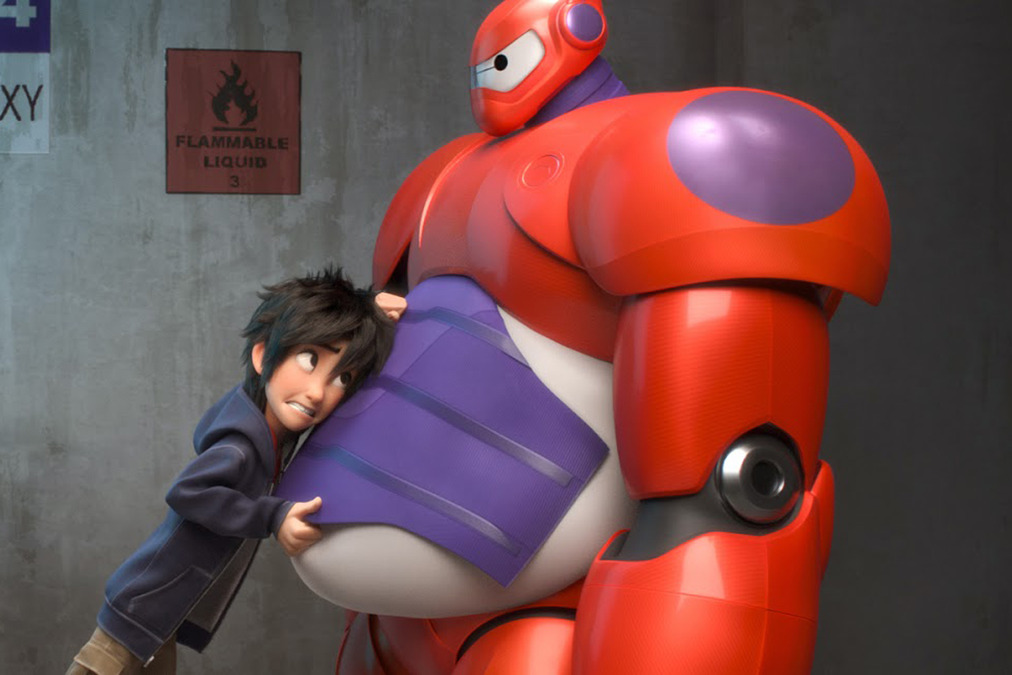
  1. Big Hero 6 (2014)

Image result for big hero 6 film

While we all know Disney is pulling the strings of the Marvel Cinematic Universe, it was nice to see them incorporate some superhero magic into their animation department. As with The Incredibles and Batman: Under the Red Hood, it’s always a thrill to see a great superhero cartoon. Poignant, action-packed, and all-around awesome, the origin story of Big Hero 6 is my favorite of Disney’s current CGI era.


  1. Brother Bear (2003)

Image result for brother bear film

I really don’t understand all the hate for Brother Bear. Released during the waning years of the Disney Renaissance, it’s still a funny and heartbreaking journey with a beautifully drawn Arctic setting and some great background songs. I remember crying as a 10-year-old in the theater, and any film that brings me to tears holds a special place in my heart.


  1. Fantasia (1940)

Image result for fantasia 1940 film

As entertaining as the vast majority of Disney films are, Fantasia is something different, a true work of art, blending classical music with animation at its most imaginative. It’s a shame that its poor commercial showing made Walt Disney initially regret making it because it has since become one of his most highly regarded classics. Yes, it’s a perfect film to fall asleep to, but that has more to do with the sometimes soothing music than what’s on the screen.


  1. Aladdin (1992)

Image result for aladdin film

Buoyed by the brilliantly frenetic voice performance of Robin Williams as the Genie, Aladdin may be the funniest member of the Disney canon. This adaptation of the 1001 Nights continued the winning animation and music that made the Renaissance so special.


  1. The Hunchback of Notre Dame (1996)

Image result for the hunchback of notre dame disney film

I’m a much bigger fan of Hunchback than most, viewing its darker storyline and lack of a typical happy ending as a risk for Disney that paid off in magnificent fashion. Without a doubt, this is Alan Menken’s masterpiece score, not just catchy and hummable but truly, goosebumpily glorious.


  1. The Lion King (1994)

Image result for the lion king film

Speaking of goosebumps, the beginning of The Lion King is Fantasia-level art, while the rest is an entertaining piece of Shakespeare lite, complete with one of the saddest Disney deaths and one of the best Disney villains. From the thrilling wildebeest stampede to the carefree song “Hakuna Matata,” The Lion King has something for everyone.


  1. Tarzan (1999)

Image result for tarzan disney film

Another favorite I find hugely underrated is Tarzan, with its lushly gorgeous jungle setting and outstanding Phil Collins soundtrack. Not only is it my VC’s favorite Disney cartoon, it’s one of the first films I actually remember watching in the theater (and yes, I cried at the end), and I recall playing “Trashing the Camp” with my cousin over and over and over on video. Good times….


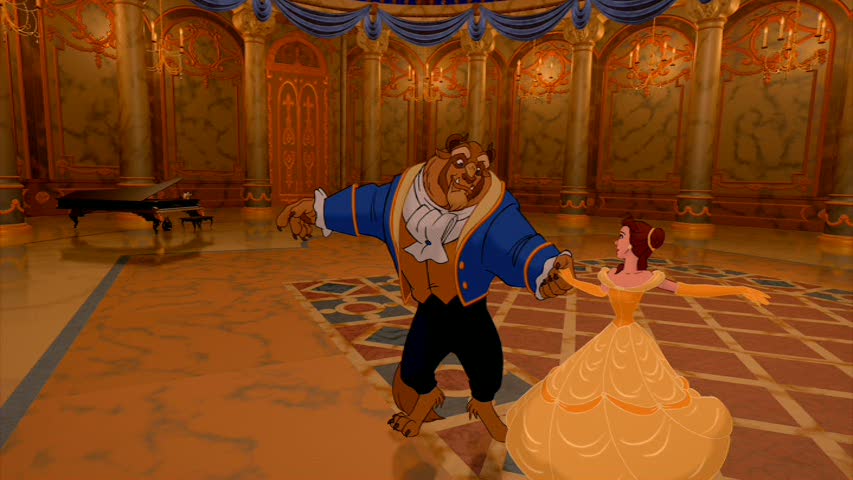
  1. Beauty and the Beast (1991)

Image result for beauty and the beast disney ballroom

I personally consider Beauty and the Beast the most perfect fairy tale adaptation in all of Disney’s canon. It’s funny, tragic, enchanting, melodious, elegant, and all-around entertaining. It’s everything that Disney does best and thus feels timeless. I have my doubts about the live-action version next year, but at least we’ll always have the immortal original.

________________

With the exception of Chicken Little and Home on the Range (the only one I haven’t actually seen), I enjoy all Disney movies to some extent, so I thought I’d continue my ranking below with the rest of the animated features on my Top 365 list (not including mixed animations like Enchanted or those only released by Disney, like the Studio Ghibli films). What would your ranking look like?


  1. Wreck-It Ralph (2012)
  2. Pocahontas (1995)
  3. Mulan (1998)
  4. Treasure Planet (2002)
  5. Frozen (2013)
  6. Peter Pan (1953)
  7. Pinocchio (1940)
  8. Lady and the Tramp (1955)
  9. The Great Mouse Detective (1986)
  10. Hercules (1997)
  11. Atlantis: The Lost Empire (2001)
  12. Bambi (1942)
  13. The Emperor’s New Groove (2000)
  14. Meet the Robinsons (2007)
  15. The Jungle Book (1967)
  16. Dinosaur (2000)
  17. One Hundred and One Dalmatians (1961)
  18. The Sword in the Stone (1963)

Image result for treasure planet

The Jungle Book (2016)

14 Sunday Aug 2016

Posted by sgliput in Movies, Poetry, Reviews, Writing

≈ Leave a comment

Tags

Disney, Drama, Family, Thriller

Image result for the jungle book 2016


While man has moved on from the jungle to cities, committees, and ease,
There’s something intriguing and lavish about the deep green of the trees.

We look back at creatures and corners too fierce and exotic to tame,
Caught up in an ancient attraction too dark and uncharted to name.

The beauty of virginal wilderness and wonders no eye has beheld
Still haunt we who harness the future yet still to the past are impelled.

We gladly embrace what is modern, by comfort’s convenience beguiled,
Yet even a civilized person can fall to the call of the wild.
__________________

MPAA rating: PG

I had considered reviewing Disney’s live-action version of The Jungle Book as a Cartoon Comparison, but since I’ve already covered the original 1967 feature, a separate review seemed better. Ever since Disney started in on translating their classic animated films into live-action retellings, I’ve been skeptical. Alice in Wonderland and Maleficent weren’t content to just translate the story but added in dark subtexts that ruined every shred of the original that they incorporated. I was never that fond of the animated Alice in Wonderland or even Sleeping Beauty so it was a lesser form of sacrilege to me, but I’ve always had a soft spot for The Jungle Book. How could Disney possibly do it justice? Well, I’m relieved to say they did, as almost every other reviewer seems to agree. In a world where we’ve seen CGI conjure almost everything imaginable, Disney and director Jon Favreau still managed to impress.

I’m shocked to say it, but this version might actually be better than the original because of how it fleshes out the story with material from Rudyard Kipling’s book. After we’re introduced to Mowgli (very young but good Neel Sethi), his wolf family, and the wolves’ rhyming creed plucked straight from the book, a drought causes the Peace Rock in the riverbed to be revealed, effecting a Water Truce during which predators must cooperate with prey for the sake of water. Such is the Law of the Jungle. This clever rule allows Mowgli to meet the murderous tiger Shere Khan up front, whereas the animated Mowgli isn’t as aware of Shere Khan’s threat until the end. Actually showing the restrained antagonism at the river also gives a more immediate reason for the wolves’ decision to send him back to the human village for his own safety.

The cartoon is far more episodic than many Disney films, bouncing from Kaa the python to the elephants to Baloo to King Louie to Kaa again to those Beatles-style vultures before the end. Favreau’s film follows almost the same chronology (minus the vultures and Kaa’s second appearance), but provides far better connections to create a more cohesive story. Scarlett Johansson’s Kaa, for example, isn’t just a random danger but elucidates some of Mowgli’s history during her brief scene. Christopher Walken as a more menacing Gigantopithecus King Louie instills the idea of fire’s power in Mowgli, and that fire plays a far more significant and complex role in the climax than simply appearing in a flash of lightning and scaring off Shere Khan. I don’t mind how the animated version was told, but the new filmmakers found the perfect way to tell essentially the same tale (albeit with a different ending) in a uniquely well-rounded way for modern moviegoers.

Easily the best things about the original Disney cartoon were the voicework and music. Every voice actor embodies that character, and I wasn’t sure that new voices could pull it off. One of my coworkers has an issue with talking animal movies like Babe or The Jungle Book, seeing them as an abomination of nature, and hearing recognizable voices coming out of the mouths of CGI animals did take some getting used to. At the first listen, Ben Kingsley as Bagheera and Bill Murray as Baloo don’t seem to quite suit their roles, but the more I heard them, the better they fit. Even Walken does well as a more mobster-like King Louie in the film’s biggest action scene. Probably the weakest voice casting was Johansson as the honey-voiced Kaa, but that could be due to how briefly she’s heard; plus, I’m sure Sterling Holloway seemed like an odd choice in 1967. Likewise, Idris Elba is a more fierce-sounding Shere Khan, but there’s something so sleekly villainous about George Sanders’s voice in the cartoon. Bill Murray’s Baloo managed to surprise me the most, offering the best comic relief, and even if he doesn’t quite compare with Phil Harris in the cartoon, I won’t mind future generations growing up with these revised characters. Unfortunately, the songs don’t translate as well, and while “The Bare Necessities” and “I Wan’na Be Like You” work well enough, they could have been omitted and left to the superior cartoon versions.

Image result for the jungle book 2016

Much has been said of the film’s visual quality, and the CGI animators truly outdid themselves. Like Life of Pi, the interactions between the boy and the simulated animals are seamless; CGI hasn’t quite reached the point that I can’t tell it’s still CGI, but it’s well on its way. Also, even though this is a far darker adaptation of the story, with more peril and death than the cartoon, the color pallet wasn’t limited for the sake of keeping it dark. The jungle is a lush wonder, like a live-action version of the greenery that made Disney’s Tarzan so stunning. The mood of the forest morphs depending on the tone of the scene, but it’s always a beauty.

Succeeding as both a faithful retelling and a thrilling reimagining, this latest Jungle Book does almost everything right for a remake, even making Mowgli more industrious and clever than his animated counterpart. The voices take some getting used to, but they don’t hamper the gorgeous visuals and the flow of the story. Disney doesn’t seem to be slowing down with its live-action remakes, and even if I’m still concerned about what they might do to Beauty and the Beast or The Lion King, The Jungle Book reinforced the hope that Maleficent almost destroyed.

Best line: (Mowgli) “But I’m helping Baloo get ready for hibernation.”
(Bagheera) “Bears don’t hibernate in the jungle.”
(Baloo) “Not full hibernation, but I nap a lot.”


Rank: List Runner-Up (on par with the original)


© 2016 S. G. Liput
404 Followers and Counting


Version Variations: Adventures in Babysitting (1987, 2016)

27 Wednesday Jul 2016

Posted by sgliput in Movies, Poetry, Reviews, TV, Writing

≈ Leave a comment

Tags

Comedy, Disney

Image result for adventures in babysitting

Image result for adventures in babysitting


A night on the town can be thrilling or fun,
When you know what you’re doing and not on the run,
But if you’re unprepared for the city at night,
I’d highly advise that you do as I write.

Don’t chitchat with strangers or pull someone’s leg,
Unless you need money, in which case just beg.
Do not leave your car, unless you have no choice;
Don’t take a stage unless you have a good voice.

Don’t steal magazines or pet cats you can’t see
And try to avoid any known felony.
And whatever you do in your probable mess,
Don’t bring kids along, unless you like stress.
__________________________

MPAA rating for 1987 version: PG-13
Rating for 2016 version: G

Adventures in Babysitting is one of those movies that could have well been on my original list, but it took a more recent viewing to remind me of this fun ’80s classic and convince me to add it to my list, which I updated all the way back at the beginning of the year. I do want to review all the films I added last year, and the recent Disney Channel remake gave me the perfect opportunity to revisit this one as a Version Variation.

Released by Disney’s Touchstone label, the original Adventures in Babysitting from 1987 was the first lead role for Elizabeth Shue, who plays Chris the babysitter, and I dare say it wasn’t just Keith Coogan’s Brad who had a crush on her. Singing along to “Then He Kissed Me” in the opening credits, she’s the ideal girl next door, soon thrust into extraordinary circumstances when her friend Brenda (Penelope Ann Miller) begs for rescue from an ill-conceived attempt at running away. Forced to bring Brad, his sister Sara (Maia Brewton), and his friend Daryl (Anthony Rapp) along for the ride, Chris holds herself and her under-age entourage together surprisingly well as they ramble from one Chicago danger to the next.

A coworker of mine told me she doesn’t see what makes Adventures in Babysitting a classic, but while it isn’t on the level of Ferris Bueller’s Day Off, it’s a film in which individual moments outshine the whole. There’s the scary hook story and its unexpected punchline, the gang confrontation on the L train, the tense climax high on a skyscraper, and the disarming payoff for Sara’s obsession with Thor, long before anyone thought Marvel would give him his own movie. (It’s still hard to believe that hunky mechanic was Vincent D’Onofrio, you know, the scuzzy bad guy in both Men in Black and Jurassic World. No wonder he’s known as a chameleon.) And of course, the film’s high point is its impromptu musical number where Chris and the kids sing their own babysitting blues on stage. Even if you don’t see the film as a classic, that scene certainly is. Through all their risky ordeals, the easily likable main characters ensure Adventures in Babysitting is likewise easy to enjoy.

Image result for adventures in babysitting

As for the remake…. Perhaps to capitalize on the boom in ’80s nostalgia and to give its 100th Disney Channel Original Movie some name recognition, Disney decided to give Adventures in Babysitting a kiddie makeover this year, and the results were mixed to say the least. The film features Disney Channel stars such as Sabrina Carpenter from Girl Meets World, Sofia Carson from Descendants, and Kevin Quinn from Bunk’d, and like their shows, it’s a juvenile mix of humor and heart that will appeal far more to tweens than to anyone much older. I used to watch and enjoy Disney Channel Original Movies while growing up (I still love the High School Musical series), but having drifted away from DCOMs and now watching this one, my older self can’t help but wonder if the quality has gone down or my perceptions have simply matured. Maybe both.

Either way, this new Adventures in Babysitting comes up way short of the original even as it seemingly tries to outdo it. Instead of one babysitter, we get two, one a deeply responsible good girl (Carpenter) and the other an unreliable sitter-impersonator (Carson). Instead of three kids, we get five from two different families, ranging from an aspiring chef to a would-be fashionista. Instead of a car-stealing ring with genuine danger implied, we get a couple of bumbling smugglers doing something illegal with a spray-painted ferret.

Yet for all its changes, it’s still recognizably the same general story, hitting the same beats and notable scenes, yet mirroring my main complaint about Maleficent, every scene from the original that they try to recreate is consistently worse. Most atrocious of all is the “musical number,” which has morphed from a blues anthem to a rap battle with dreadful lyrics like “we ain’t no quitters; we’re the babysitters.” It’s enough to make me gag.

Image result for adventures in babysitting 2016

Yet even with all the ways the newer version of Adventures in Babysitting falls short of the original, it’s hard to totally disparage. It’s likely far more engaging to its target age group than to me and, for them, probably captures some of the same fun that ’80s kids felt in 1987. For the most part, it’s decent; perhaps someone someday might consider it a classic, but I doubt it. The most the remake has going for it is its kid-friendliness (i.e., “Don’t mess with the babysitter!” as opposed to the original version), since the original was more intended for teens and up with its occasional language and talk of Playboy. If it has to exist, I suppose the latest version of Adventures in Babysitting can act as an introduction to younger audiences before they see the far better original. Now enough already with the lackluster remakes!

Best line (from the original): (Brad) “Where we gonna get 50 bucks?”   (Sarah) “We could sell Daryl. You think?”


Rank for 1987 version: List-Worthy
Rank for 2016 version: Dishonorable Mention


© 2016 S. G. Liput
399 Followers and Counting


Zootopia (2016)

10 Sunday Jul 2016

Posted by sgliput in Movies, Poetry, Reviews, Writing

≈ 1 Comment

Tags

Animation, Comedy, Disney, Family

Image result for zootopia film


To stay in good graces,
Most stay in their places,
Their happy, expected, and preordained spaces
Among their preferred and familiarized faces.
It’s fine, and it’s true,
But in some special cases,

We aren’t just contented
With life as presented
But strive to be more and to live reinvented.
Such paths can be ridiculed, feared, or resented
But that’s nothing new
When you’re unprecedented.
_________________

MPAA rating: PG
Disney has certainly been on a roll lately. Rising from the lameness of Chicken Little and The Wild, it’s been delivering consistently original CGI gems, films like Tangled, Wreck-It Ralph, Big Hero 6, and now Zootopia (also called Zootropolis in Europe, supposedly to avoid confusion with an actual zoo over there). A box-office hit on par with Frozen’s success, Zootopia takes the idea of a world of anthropomorphic mammals and fills it with a winning blend of colorful characters, outstanding animation, and a universal moral message, three prime ingredients at which Disney excels.

Judy Hopps (chipper Ginnifer Goodwin) dares to be the first bunny cop, against her family’s worry and conventional wisdom, since most police officers are rhinos or elephants or something big enough to combat crime. When she actually realizes that dream and joins the force in the multi-species metropolis of Zootopia, her naïve idealism clashes with her chief (Idris Elba) and with the con artist fox Nick Wilde (smug Jason Bateman). Soon, Judy and Nick must form an uneasy alliance to solve a slew of missing mammal cases with unseen repercussions.

Right from the start, as Judy sees the city for the first time through a train’s observation deck, there’s enough visual detail and creative imagination to rival the world-building of Pixar. There are boroughs designed as habitats, from the lush rain forest to the frigid tundra, and a plethora of animalized modern conveniences: hamster-tunnel hallways, drink elevators for giraffes, sloths at the DMV (okay, that’s an inconvenience). So many scenes are full of varied pedestrians and fast-paced activity that the backgrounds alone are worth watching. Luckily, the script never lets its humorous potential go to waste, making Zootopia the funniest Disney movie in recent memory. I especially love how Alan Tudyk has become the John Ratzenberger of Disney, to the point that he’s now getting his own gags in reference to past roles (specifically, the Duke of Weselton in Frozen).

Aside from the vibrant animation and consistent jokes, there’s a layered message to Zootopia, a familiar one of tolerance and embracing differences over prejudice, in this case between prey and predator. Some may consider it preachy or heavy-handed, and I can understand why; one misunderstanding in particular seemed overly sensitive, like many perceived offenses nowadays that aren’t really that bad when you think about it. After all, unintended “insults” are often less offensive than people’s reactions to them. Despite this, Zootopia takes its lesson seriously. The finger isn’t just wagged at insensitivity; it’s also aimed at anyone stuck in complacency or those seeking to create problems where there were none. It isn’t all negative either; Judy herself is a wholly admirable female role model, not content to live under others’ expectations but rising to her dream and urging others to do the same. Now that’s a message worth lauding!

All in all, Zootopia is a fun buddy-cop mystery that plays to Disney’s non-musical strengths, even with a few weaknesses. I could have done without an awkward scene at a nudist spa, and it’s still a bit unusual to see modernized animated animals playing with cell phone apps. There are also a few unanswered questions, such as what exactly do predators eat if they’ve evolved past their carnivorous tendencies. Ice cream? I also couldn’t help wondering where all the non-mammals were, fish, birds, reptiles, and such. “Try Everything,” the catchy theme song sung by Shakira, even mentions birds but I never saw any. Have they not become sentient, or are they perhaps enslaved by their mammal overlords? My VC says I’m overthinking this, and I hope so. (She loved the movie too, as did my parents.)

Regardless, ever since John Lasseter was put in charge, Disney Animation continues to impress and entertain with a consistency only Pixar has shown thus far. Talking animals are nothing new, but Zootopia gives them a fresh spin that hits its intended message without ever forgetting to stay amusing. Like Big Hero 6, it’s also a film for which I can easily envision sequels, and based on the talent that created this original, my hopes are high.

Best line: (Judy, calculating Nick’s income to blackmail him) “Two hundred dollars a day, three hundred sixty-five days a year since you were twelve; that’s two decades, so times twenty which is… one million four hundred sixty thousand – I think, I mean I am just a dumb bunny, but we are good at multiplying.”


Rank: List-Worthy


© 2016 S. G. Liput
393 Followers and Counting


Cartoon Comparisons: Sleeping Beauty (1959) / Maleficent (2014)

19 Sunday Jun 2016

Posted by sgliput in Movies, Poetry, Reviews, Writing

≈ 6 Comments

Tags

Animation, Disney, Family, Fantasy, Musical


There she lies, fair Sleeping Beauty,
Cursed to slumber and to wait.
Those who kiss for wealth or duty
Cannot change her dreamless fate.

Only true love can awaken
And unlock her heavy eyes.
Fear not that she is forsaken.
Love will find her where she lies;
He will come, and she will rise.
________________


MPAA rating for Sleeping Beauty: G
MPAA rating for Maleficent: PG


Now that my cable has been restored after a bad storm knocked it out for a few days, it’s time once again for a Cartoon Comparison, this time between Disney’s classic Sleeping Beauty and its subversive live-action counterpart Maleficent. Sleeping Beauty was the last cinematic fairy tale of Walt Disney’s lifetime and really the last traditional fairy tale until The Little Mermaid thirty years later. Since it’s widely considered one of Disney’s best, modern Disney executives decided to use it (and Alice in Wonderland) to kick off their crusade to translate the entire canon to CGI-filled live-action. So how do these two compare?

I’ll be honest: Despite its reputation, Sleeping Beauty has never been among my favorite Disney films, which is why I haven’t reviewed it until now. Even compared with Disney’s classics, I’ve always leaned more toward Cinderella and Fantasia, simply because I grew up watching them more. I probably saw Sleeping Beauty once or twice as a kid and not since, and I was pleasantly surprised when this latest viewing reminded me of why it truly is a Disney classic. At first, some of the opening animation appears simple and angular, like an illustration from the Middle Ages, but as it continues, backgrounds become increasingly detailed. Close-ups of stone walls and tree trunks border on photo-realistic, and the layering of the forest adds beautiful depth as trees stretch away into the distance. As much as I love Disney’s follow-ups like One Hundred and One Dalmatians or The Jungle Book, the animation quality clearly started declining after this, making Sleeping Beauty, in a sense, the height of early Disney animation.

Not so much, though, when it comes to the story. One thing I always associated with Sleeping Beauty was its namesake being rather boring, and indeed Aurora herself is basically a placeholder, a damsel in distress who doesn’t do things as much as things happen to her. What I forgot was how enjoyable the fairies are. The three colorful fairy godmothers Flora, Fauna, and Merryweather are the true protagonists here, first blessing baby Aurora, then hiding her away from the evil Maleficent, raising her, and playing a key role in the famous climax. Their likable bickering over method and favorite color adds humor to scenes that otherwise might be dull. Likewise, Maleficent is a memorably evil villainess (voiced by Eleanor Audley, who also voiced Lady Tremaine in Cinderella), whose dragon transformation is the most thrilling scene of the movie.

While the film and the story it’s based on are undoubtedly classics, Sleeping Beauty does have more than its fair share of flawed fairy tale logic. For instance, why does King Stefan ban spinning wheels and force his kingdom into sixteen years without thread when Aurora is hidden anyway? Why do the fairies bring Aurora back to the castle the day of the curse rather than the day after, just to be safe, and then promptly give her some risky “alone time?” Why do the fairies put everyone to sleep when, for all they know, Aurora’s true love could be right there and unable to awaken her if he’s asleep too? Regardless of little plot holes like these, Sleeping Beauty has that timeless Disney touch that still captures imaginations, especially during the forest dance between Aurora and Prince Philip as they waltz to Tchaikovsky.

And then, fifty-five years after Sleeping Beauty, someone at Disney had a grand thought and asked, “Why is Maleficent so evil? She just wants to curse this baby out of spite for not being invited to her christening? Traditionally, evil villains are so old-fashioned, so why don’t we turn her into a good guy?” Thus, borrowing a page from Wicked minus the musical numbers, what should have been dismissed then as a foolish idea became 2014’s Maleficent, a film I fully intended to dislike. I’m not wholly against these live-action remakes, but Disney should be trying to honor and flesh out its classics, not transform them into their opposites.

As I watched Maleficent, I began to accept that it’s honestly not a bad film nor a bad fairy tale. It’s just not Sleeping Beauty, and unfortunately the comparison does make it a bad film. Gone is the line about Maleficent using “all the powers of hell”; instead, she’s just a cute little girl fairy who happens to have big devil horns and eagle wings and a name implying harm and destruction. She starts out good, the guardian of a magical realm called the Moors, whose one meaningful relationship with a human ends in betrayal, pain, and bitterness. As far as villain backstories go, I can actually accept this; the writers do a decent job in providing a reason for Maleficent’s hatred. Once the baby Aurora is born, though, and we get a re-creation of Sleeping Beauty’s opening scene, the sorry consequences of these story changes play out.

Eventually, Maleficent’s rage dwindles to annoyance as she watches Aurora from afar, repeatedly saving her from the thoughtlessness of the three “good” fairies, renamed Knotgrass, Flittle, and Thistlewit, whose bickering loses all its likability when it becomes clear what morons they are. Over the course of sixteen years, Maleficent and her shapeshifting raven Diaval (not Diablo as in the cartoon) are Aurora’s real caretakers, and by the time the curse is to be fulfilled, Maleficent tries first to cancel it and then to break it. Something just doesn’t feel right about giving all these laudable duties to the villain; in making Maleficent good at heart, every other character suffers. The three fairies, or pixies, are negligent fools; Aurora’s father King Stefan is the real villain, an obsessive monster who cares more about killing Maleficent than about his own wife and is nothing like his cartoon counterpart singing “Skumps!”; even Prince Phillip is deprived of everything that made him an appealing character in the original. By the time “true love’s kiss” rolls around, the story borrows a page from Frozen, reminding us that true love doesn’t have to be romantic in nature. That worked in Frozen because it was original; don’t mess with something that is supposed to be romantic!

Basically, everything worthwhile about Maleficent is original. Every time it thinks for itself, it entertains (the magical Moors, the battle scenes, Diaval’s transformations). Every time it tries to borrow from Sleeping Beauty, it pales in comparison (the fairies and their gifts, Aurora and Phillip’s unmemorably unmusical meeting, Phillip’s ineffectual kiss). Perhaps fans of Angelina Jolie could look past all this, but I’m not one of them, and nothing in her turn as Maleficent changed that. I did rather like Elle Fanning as the buoyant Aurora, but most of the cast was intentionally unpleasant, with the girl power message effectively ruining every male character. It’s not just I as a man who felt that way too; my VC felt the same distaste.

Maleficent is a prime example of where Disney should have left well enough alone, letting its past animations speak for themselves. It might have worked better as an original story, but when a voiceover tries to convince us that this live-action subversion with the cool visuals is the real story, it loses credibility. Please, I know the real story, and it’s from 1959.

Best line from Sleeping Beauty: (Merryweather, as Flora uses her as a dummy to make Aurora’s dress) “It looks awful.”   (Flora) “That’s because it’s on you, dear.”

Best line from Maleficent: (Aurora, practicing to tell her aunties) “You’ve been very good to me…well, except that time you fed me spiders.”


Rank for Sleeping Beauty: List Runner-Up
Rank for Maleficent: Dishonorable Mention


© 2016 S. G. Liput
388 Followers and Counting


Newsies (1992)

26 Tuesday Apr 2016

Posted by sgliput in Movies, NaPoWriMo, Poetry, Reviews, Writing

≈ 4 Comments

Tags

Disney, Drama, Family, Musical


(Today’s NaPoWriMo prompt was to write a call-and-response poem, with a repeated refrain or chorus. I applied such a refrain to a news crier like those in a certain musical.)


Read all about it: the latest taboos!
-I’ll buy a paper; I do love the news.

Read all about it: new victims accuse!
-I’ll buy a paper; I do love the news.

Read all about it: strike workers refuse!
-I’ll buy a paper; I do love the news.

Read all about it: new game with horseshoes!
-I’ll buy a paper; I do love the news.

Read all about it: the war was a ruse!
-I’ll buy a paper: I do love the news.

Read all about it: your favorite teams lose!
-I’ll buy a paper: I do love the news.

Read all about it: erased interviews!
-I’ll buy a paper: I do love the news.

Read all about it: a new witness sues!
-I’ll buy a paper: I do love the news.

Read all about it: a brave few refuse
To stand by and watch those in power abuse
Their privilege and threaten the rights and the views
Of people whose justice nobody pursues!
-. . . Where’s the Enquirer? I want real news.
___________________________

MPAA rating: PG

Despite all the bad reviews and Razzie nominations it garnered upon release, I watched Newsies expecting and hoping to like it, both because I enjoy musicals and because it was the directorial debut of Kenny Ortega, who helmed my beloved teenage High School Musical films. Unfortunately, Newsies did not live up to my hopes, but neither was it as awful as the 39% Rotten Tomatoes score indicates. It was trying to be a grand, heartwarming musical but didn’t succeed, and I can’t even put my finger on why.

Set in 1890s New York, Newsies fictionalizes the real-life story of the newsboys who began their own strike when Joseph Pulitzer (an overwrought Robert Duvall) increased the cost of the papers that provided their meager income. Leading the charge against Pulitzer is a very young Christian Bale as Jack “Cowboy” Kelly, whose Brooklyn accent covers up Bale’s British accent with panache. Accompanied by new friend David (David Moscow, the young Josh Baskin in Big) and a single ally from a rival newspaper (Bill Pullman), Kelly unites the newsies of New York while trying to stay ahead of the corrupt orphanage keeper (Lost alert for Kevin Tighe, who does play a good meanie).

Newsies is at its best when the limber cast are belting out Alan Menken’s songs and performing Ortega’s remarkable choreography. The opening anthem “Carrying the Banner” and the now semi-classic “King of New York” are the high points, but Bale also gets a solo in the wishful “Santa Fe,” and none of the songs are what I would call bad. Sadly, there’s not enough of them, and long stretches of unengaging drama in between the musical numbers made much of the film unfortunately boring. I could tell that both the writers and the young actors were trying to create something potentially classic, but the necessary level of interest just wasn’t there. Not to mention, the strike scenes included some of the aspects that bug me about unions, such as the persecution of “scabs” who can’t afford not to do their job.

While it might be considered a misfire for Disney, I do admire Newsies for being one of the few non-animated musicals to be entirely original without being based on an earlier Broadway play. In fact, more songs were added to a stage production in 2011, and it later became a hugely popular, Tony-winning Broadway musical. That musical has its roots in this film, so I believe everyone involved in it can still be proud. Newsies does have something of a cult following, and I wonder now whether I would enjoy it more if it had been a mainstay of my childhood. Plenty of people hate the High School Musical films, but my nostalgia helps me forgive whatever they criticize. Perhaps if I’d seen Newsies at a much younger age, I would have enjoyed it more.

Best line: (Crutchy, one of the boys) “It’s this brain of mine; it’s always makin’ mistakes. It’s got a mind of its own.”


Rank: Honorable Mention


© 2016 S. G. Liput

384 Followers and Counting


#12: Beauty and the Beast (1991)

27 Tuesday Jan 2015

Posted by sgliput in Movies, Poetry, Reviews, Writing

≈ 1 Comment

Tags

Animation, Comedy, Disney, Drama, Family, Fantasy, Musical, Romance

(Best sung to “The Mob Song”)
 
In the countryside of France,
Where the bakers say “Bonjour,”
Lives a lovely mademoiselle who’s always reading books galore.
Belle just doesn’t quite fit in,
But still that doesn’t stop Gaston
From insisting that she marry him for his conceited brawn.
 
Through the mist, through the woods,
When Belle’s father tries to travel,
He ends up inside a castle dark and grim.
Belle protests and suggests
That the castle’s beastly owner
Make her stay his prisoner instead of him.
 
She’s afraid of her host and his temper,
And alarmed but then charmed and impressed
By the servants and shows
And a spellbinding rose,
Till the beast makes her flee,
Too oppressed.
 
While en route, though, the brute
Saves her life, and so from then on,
Their relationship begins to slowly grow.
When the Beast comes to love
And Belle sees her father needs her,
Her detainer has the heart to let her go.
 
But Gaston has a plan to coerce her
To be his, but she will not be played.
When she speaks of the Beast,
Gaston’s rage is increased,
And he rallies best and least
To invade.
 
Servants fight and defend;
As the raiders are assaulted,
Bold Gaston will not be halted from his prey.
Both engage, and both fall,
But true love will conquer all,
And thus without a curse’s thrall,
Love will stay.
_____________________
 

Beauty and the Beast is the epitome of a Disney fairy tale musical, complete with magic mirror, enchanted castle, magical rose, bleak curse, stunning animation, and Oscar-winning music of the highest order. Though preceded by The Little Mermaid, this was the undeniable sign that the Disney Renaissance was well under way and that animated musicals could be taken seriously, even nominated for Best Picture.

First off, the animation is gorgeous, a combination of traditionally animated characters and certain CGI backgrounds that allow for some astoundingly beautiful moments, like the famous ballroom dance beneath the chandelier. While Hunchback and Tarzan had similarly striking visuals, Beauty and the Beast was one of the first Disney films to possess a smoothness of line and motion unseen in strictly hand-drawn features thanks to a new CAPS technology (technically, The Rescuers Down Under was the first).

The beauty of the animation is matched only by the music, which garnered two of Alan Menken’s well-deserved Oscars for Best Score and Best Song. From the very first musical number incorporating Belle, Gaston, and the entire village, my VC could tell that this was not a typical cartoon with tunes, but a new breed of Broadway-quality musical that was sure to be adapted to the stage, which it was. Her favorite song, though, is Gaston’s clever tavern chantey, one of the few villain songs to not be or even sound villainous. Though “Be Our Guest” and the Oscar-winning title song are more well-known, I’ve always preferred the dark, rhythmic “Mob Song” right before the castle siege.

The film is also notable for its moral themes. For once, the heroine is not a rebellious girl eager to disobey silly rules, but a noble daughter sacrificing herself for her father. The lesson of “beauty lies within” is established from the initial prologue, but rather than being a generic villain, Gaston illustrates the opposite, that evil can also lie within even with outward beauty. The romance between Belle and the Beast is not rushed, and even though its growth is depicted through the typical musical montage, the sudden sacrifice preceding it allowed a solid starting point for the Beast’s sudden change of heart and manner.

Beauty and the Beast is the purest example of a fairy tale adaptation I can imagine, created when they could be light-hearted or dark on their own terms without the grim revisionism of nowadays. Disney hit its stride with this musical masterpiece, a film in which music, characters, and animation seem to converge effortlessly into enjoyable entertainment for kids and adults alike.

Best line: (Gaston’s admirers, during his song) “For there’s no one as burly or brawny/ [Gaston] As you see, I’ve got biceps to spare,/ [Lefou] “Not a bit of him scraggly or scrawny,/ [Gaston] That’s right, and every last inch of me’s covered with hair!” and (Gaston) “I use antlers in all of my decorating!”

 
Rank: 60 out of 60
 

© 2015 S. G. Liput

283 Followers and Counting

#23: Pirates of the Caribbean (2003, 2006, 2007)

13 Tuesday Jan 2015

Posted by sgliput in Movies, Poetry, Reviews, Writing

≈ 3 Comments

Tags

Action, Disney, Drama, Fantasy, Romance

(Spoilers ahoy!)
 
Elizabeth Swann was a girl when there came
A boy from the ocean, Will Turner by name.
She feared him a pirate and took a gold coin
And hid it for years to protect him from shame.
When both are now grown with a love they won’t share,
The Commodore Norrington tries to declare
An offer of marriage she’s not quick to join,
Till Captain Jack Sparrow arrives debonair.
 
Locked up for his crimes, he’s surprised at the sight
Of his former ship, the Black Pearl, in the night.
Attracted by gold, the fiends capture Miss Swann,
Who lies to convince them to shove off forthright.
The Captain Barbossa abducts the lass too,
Revealing the curse on himself and his crew.
As they sail away, Will is adamant on
Releasing Jack Sparrow to hotly pursue.
 
Collecting a crew in Tortuga, Jack sails
For Isla de Muerta, where lies and betrayals
Come out and succeed in imprisoning Will,
While Jack and Miss Swann are marooned by details.
With Norrington’s aid, they return to save Will,
And swordfights galore offer many a thrill.
Barbossa is slain, and true love they fulfill,
While Jack takes the Black Pearl to roam the seas still.
_______________
 
When Lord Cutler Beckett, for whom business reigns,
Desires Jack’s compass, he goes to great pains,
Convincing first Will, then Elizabeth too,
To find Jack or else be committed to chains.
While Jack’s being Jack, he is shocked at a guest,
Old Bootstrap Bill Turner, Will’s father oppressed,
Who says Jack must pay up the debt that is due;
For now Davy Jones wants his soul on request.
 
Jack flees to an island, which Will also finds,
Where cannibals threaten with changeable minds.
Escaping the danger, they take a detour,
And witch Tia Dalma lends help of all kinds.
Jack haggles with Jones for the sake of his soul
And buys three more days at a difficult toll.
Tortuga yields souls, since they needn’t be pure,
While Will gives his father a promise and goal.
 
Jack finds Norrington and Elizabeth Swann,
Both desperate but willing to quickly move on,
For Jones’s live heart beats within a locked chest,
And he who should find it could make him a pawn.
The chest is discovered, but fighting begins
‘Twixt Norrington, Jack, and Will, none of whom wins.
As Jones’s own crew arrives at his behest,
The heart’s snatched to make up for Norrington’s sins.
 
As Jack tries to run, Jones awakens his pet,
The Kraken, to finally settle the debt.
His crew fleeing, Jack has no choice but to stay;
His unwilling sacrifice might end the threat.
With Jack and the Black Pearl devoured away,
The heart is Lord Beckett’s, to Jones’s dismay.
A plan to bring Jack back is soon underway,
With help from an old foe, whom death could not stay.
_________________
 
As Beckett is wiping out all buccaneers,
Assisted by Jones and his heart-involved fears,
Barbossa and friends are in far Singapore
In search of a map to the final frontiers.
With help from Sao Feng, one of nine pirate lords,
They head for the edge, after drawing their swords.
In Davy Jones’ Locker, they find Jack ashore,
Where he is kept company by crabby hordes.
 
So, one green flash later, there’re lies and betrayal
With Sao Feng and Beckett and all who set sail.
They learn that Calypso was Davy Jones’ lover,
A sea god imprisoned with flesh as her jail;
Barbossa will free her to aid in their plight.
Elizabeth’s made pirate lord in the night.
To Shipwreck Cove, all of the pirates take cover,
Debating on whether to lie low or fight.
 
Elizabeth’s named as the new Pirate King,
Deciding their one hope is swashbuckling.
They set free Calypso, who’s in a bad mood,
For Jones once betrayed her, a deep-seated sting.
The Pearl and the Dutchman engage in a storm,
A gift from Calypso, now back in true form.
Jack goes for the heart, that the fight may conclude,
Though he who kills Jones must his duties perform.
 
The maelstrom keeps raging amid the bloodshed.
While fighting, both Will and Elizabeth wed.
Though Jack had intended to finish the heart,
Another has more need for Davy Jones dead.
The tables are turned as the cannons restart,
And Lord Cutler Beckett’s own plans fall apart.
While true love endures, Sparrow’s shipmates depart,
But Jack’s well-prepared for a new course to chart.
____________________
 

With all the uninspired movies reading “based on a video game,” who could have foreseen that a series of swashbuckling greatness could be derived from a theme park ride? Pirates of the Caribbean was certainly a surprise when The Curse of the Black Pearl came out over a decade ago, but subsequent viewings have only raised my opinion of this action-packed, often convoluted franchise. Don’t bother with On Stranger Tides, though; it’s just not the same.

The Curse of the Black Pearl is the one that started it all, one of the few modern films to effectively introduce an instantly iconic character, Captain Jack Sparrow. Johnny Depp has always been drawn to the weird and eccentric, and his career has fluctuated wildly because of it; but here he hit his ideal stride and earned a Best Actor nomination for it. Sparrow is dashing, cunning, a bit creepy and disgusting, yet strangely alluring in a grimy sort of way, usually one step ahead of the rest, full of comic bravado and a latent good heart. He steals every scene while complementing all the other actors, like Orlando Bloom’s Will Turner and Keira Knightley’s Elizabeth Swann, semi-iconic characters in their own right. Their love story has its predictable ups and downs but also possesses that epic romantic quality that eludes many other films. A good villain always improves a film, and Geoffrey Rush is one heck of a pirate. His sneering negotiations and ruthlessness make him a memorable antagonist, and the creepy but incredible skeleton curse just augments the menace of him and his crew. Add in some powdered wigs, wondrous sword fights, clever dialogue, Oscar-nominated special effects, and one of the greatest scores of all time by Klaus Badelt (seriously, no other score captures and enhances the spirit of the film itself as this rip-roaring soundtrack, taken over by Hans Zimmer for the sequels), and Disney had a winner on their hands.

I don’t know how the filmmakers did it, but Dead Man’s Chest ups the ante in every way and remains the only Pirates film to win an Oscar, for Best Visual Effects. It introduces yet another historic villain in the form of Bill Nighy’s squid-faced Davy Jones and, to a lesser extent, Tom Hollander’s Godfather-like Lord Cutler Beckett with his obsession with “business.” This second film is the king of set pieces, varied, outlandish, and absolutely awesome! From the swinging cages on Pelegosto to the Kraken’s attacks to the astonishing three-way water-wheel duel, Dead Man’s Chest is replete with some of the best action sequences I’ve seen. As pure entertainment, it’s a twisting, crowd-pleasing thrill ride with a jaw-dropping surprise ending that left everyone in the theater clamoring for more.

When they finally got more, some may not have been entirely satisfied. Shot back-to-back with its predecessor, At World’s End has much of what made the first two great (the characterizations, breathtaking action on an even larger scale) but mixed with an unfortunate bloatedness. Even after several viewings, the film can seem like an overstuffed mess, with loads of conflicting motivations, changing allegiances, mythic plot devices, and ship-hopping. It all evens out by the finale, but the middle of the film is unnecessarily confusing. Plus, Jack’s eccentricities are morphed into full-fledged bizarreness, with strange visions of the afterlife adding nothing to the plot and scenes of multiple Jack Sparrows thrown in seemingly just for the sake of spending the film’s colossal budget. In addition, the expansion of Tia Dalma’s role brought out the fact that her Jamaican accent is incomprehensible at times; as with Yoda in The Empire Strikes Back, my VC couldn’t understand her the first time out. All that being said, ongoing viewings have increased my overall opinion of the film, including its bittersweet ending. The most impressive scene is easily the long final battle amidst a raging whirlpool that would put Charybdis to shame. As a stand-alone film, At World’s End is rather weak, but as an epic conclusion to the trilogy, it’s better than it seemed at first.

Though Pirates of the Caribbean: Dead Men Tell No Tales is being shot now for a 2017 release, I doubt that Jerry Bruckheimer’s lightning will strike again, as it did with the original films, especially the first and second. Rarely have action, characters, music, and romance been combined into such an entertaining package. This year’s Tomorrowland seems to be Disney’s next shot at adapting one of their attractions, but it’s unlikely to compare to one of Disney’s most surprisingly successful franchises.

Best line from The Curse of the Black Pearl: (Captain Barbossa) “You best start believing in ghost stories, Miss Turner.  You’re in one!”

Best line from Dead Man’s Chest: (Elizabeth) “There will come a time when you have a chance to do the right thing.”  (Jack) “I love those moments. I like to wave at them as they pass by.”

Best line from At World’s End: (Barbossa) “Aye… we’re good and lost now.”   (Elizabeth) “Lost?”   (Barbossa) “For sure, you have to be lost to find a place that can’t be found, elseways everyone would know where it was.”

 
Rank: 59 out of 60
 

© 2015 S. G. Liput

281 Followers and Counting

#24: Tarzan (1999)

10 Saturday Jan 2015

Posted by sgliput in Movies, Poetry, Reviews, Writing

≈ 1 Comment

Tags

Action, Animation, Disney, Drama, Family, Musical, Romance

(Best sung to “Son of Man”)
 
To the jungle, humans come
And are challenged to survive;
Soon only a babe is left alive.
 
Then adopted by gorillas,
He is raised stalwart and strong,
Strong to face the jungle’s killers
And labor to belong.
 
Son of man and of primate,
Tarzan is amazed to see
Strangers like him who await
Sightings of gorillas roaming free.
 
When one is soon in danger,
He swoops in and rescues Jane,
Who’s enamored of this stranger,
This lord of his domain.
 
Tarzan is forbidden to
Put his family in harm’s way,
But he learns so much that’s new
That he sneaks away to Jane each day.
 
In trying to delight her,
The gorillas he reveals,
And wicked Clayton follows on their heels.
 
Though he thought to leave his homeland,
Tarzan returns to fight
And defend his friends and withstand
The poachers in the night.
 
Son of man and of primate,
Tarzan then is joined by Jane;
Ruler of the jungle great,
Tarzan will remain to yell and reign.
__________________
 

Sometimes cited as the last great film of the Disney Renaissance, Tarzan is indeed one of the most beautifully created animated films I’ve seen. It came out right when I was getting old enough to enjoy movies as more than just a juvenile distraction and was one of the first Disney films I fully understood. Oh, and it made me cry at the end. That’s always list-worthy.

Adapted from the character created by Edgar Rice Burroughs, Tarzan puts the Disney spin on its source material, with funny animal sidekicks and musical accompaniment, but it doesn’t feel as potentially incongruous as The Hunchback of Notre Dame. Rosie O’Donnell and Wayne Knight are ideal comic reliefs as Terk and Tantor, while the resonant voice of Brian Blessed adds an ingratiating menace to Clayton, who meets an unusually horrific end. (Then again, this is the studio that has smashed, dropped, disintegrated, eaten, shattered, dragged to hell, and shish-kebobed their other villains, so perhaps it’s not unusual.) Tony Goldwyn is rather average as Tarzan, aside from an outstanding yell, but Minnie Driver’s voice fits Jane perfectly, bookish and British. Not to mention, there’s Lance Henriksen as stern Kerchak and Glenn Close as Kala, who provides a touching example of adoption and maternal love.

No other Disney film matches the lush imagery of the African jungle, created with a pioneering and award-winning animation technology called Deep Canvas. As Tarzan swoops effortlessly through the trees, the bright foliage provides an incomparable living environment, put to good use in the often spectacular action scenes. Even the water has a uniquely fluid appearance.

Of course, I must mention Phil Collins’ remarkable soundtrack, one of my favorites of any Disney film. Though The Lion King had a couple songs performed by background singers, Tarzan stepped out of the box in having most of the music not sung by the characters. Phil Collins provides the vocals for the brisk and memorable montages, such as “Two Worlds,” “Son of Man,” and “Strangers Like Me.” The tender lullaby “You’ll Be in My Heart” won the Oscar for Best Original Song, and I was once temporarily obsessed with the percussion-filled “Trashin’ the Camp.” As kids, my cousin and I would play it over and over and over, just jamming and rewinding with glee.

Tarzan relies heavily on montages, but they are among its finest moments, allowing for much humor, heart, and character development in a short time. Unlike Atlantis: The Lost Empire, the language barrier is not simply written away but gradually lowered over time, and the believable romance between Jane and Tarzan is handled with particular skill and beauty. I know that Burroughs’ book is substantially different, but this adaptation carries all the emotion and grandeur of Disney’s best, including a bittersweet happy ending.

Best line: (Tantor, finally standing up to Terk) “That’s it! I’ve had it with you and your emotional constipation! Tarzan needs us, and we’re gonna help him! You got that? Now pipe down, and hang on tight! We’ve got a boat to catch.”

  
Rank: 59 out of 60
 

© 2015 S. G. Liput

279 Followers and Counting

#49: The Lion King (1994)

06 Saturday Dec 2014

Posted by sgliput in Movies, Poetry, Reviews, Writing

≈ 1 Comment

Tags

Animation, Comedy, Disney, Drama, Family, Musical

(Best sung to “Be Prepared”)
 
The pridelands rejoiced at the showing
Of Simba, the new lion prince.
His father Mufasa was glowing,
But Scar has been sour ever since.
While Simba is learning and dreaming
Of when he’ll be king fully grown,
Mufasa’s own brother is scheming
To murder his way to the throne.
 
He employs his hyena companions
To dispose of the cub and his dad,
A sudden stampeding
Of wildebeest speeding
Puts Simba in peril,
And Scar, ever feral,
Dispatches Mufasa,
And yet for this loss, a
Despicable Scar tells the lad,
That Simba is sadly to blame.
What a shame!
 
The cub runs away in dejection
And would have soon died, but for friends.
Hakuna Matata’s protection
Lets Simba ignore what offends.
His past, nonetheless, comes a-knocking
To urge him return for what’s his,
But not until storm clouds start talking
Does Simba accept who he is.
 
He returns to the land Scar has ruined;
He returns final justice to bring.
The truth is then spoken;
Scar’s cover is broken.
In Pride Rock’s arena,
Scar and each hyena
Are fought and defeated,
And Simba is treated
At last as the genuine king.
The Circle of Life, tried and true,
Starts anew.
_____________
 

Often considered the zenith of the Disney Renaissance, The Lion King is indeed one of Disney’s greatest features, a step away from the princess mold in favor of Shakespearean drama, though still with the perfect blending of humor and show tunes. Officially the third highest-grossing animated film (after Frozen and Toy Story 3), it was a joy to watch as a child and is still just as delightful.

The beginning could be compared to that of Up, a moving collection of beautifully crafted scenes that mark the high point of the entire film, though sparking a sense of grandeur and goose bumps rather than tears. The rest of the film doesn’t quite reach the same level as the first glorious song, though it tries and comes very close, particularly during the wildebeest stampede through the canyon. That scene, accompanied by Hans Zimmer’s ever-ideal score, carries the tension and terror of a childhood trauma, further deepened by Mufasa’s death. Usually, it’s the mother that gets it in Disney films, but their foray into explicit fratricide is even more heartrending than most parental losses. After all, Bambi never found his mother’s lifeless body.

Despite the occasionally weighty material, the filmmakers peppered the film with plenty of jokes and memorable characters that captivated kids and parents alike. Boasting some of the best casting of any Disney film, The Lion King featured some big names that truly owned their characters: James Earl Jones as deep-throated Mufasa, Jonathan Taylor Thomas as young Simba, Nathan Lane as nasally meerkat Timon, Ernie Sabella as swinish Pumbaa, Robert Guillaume as sagacious mandrill Rafiki, Rowan Atkinson as nagging hornbill Zazu, and Cheech Marin and Whoopi Goldberg as two hilarious hyenas. Though Matthew Broderick doesn’t exactly fit my idea of a lion’s voice, Oscar winner Jeremy Irons lends gravity and sneering treachery to Scar, one of Disney’s best villains.

However, the film’s greatest strength is its music, which was a gamble, since unlike previous Renaissance efforts, it lacked Alan Menken’s involvement. Yet Elton John and Tim Rice fashioned one of the most popular of Disney soundtracks, from the carefree jubilance of “I Just Can’t Wait to Be King” and “Hakuna Matata” to the building menace of “Be Prepared” to the sultry romance of “Can You Feel the Love Tonight?” Elton John’s cover of that last love ballad deserves a place in my End Credits Song Hall of Fame. (Trivia note: I didn’t realize until recently that Jeremy Irons only sang most of “Be Prepared”; after straining his voice on the line “You won’t get a sniff without me,” the song was finished by Jim Cummings, who provided the hysterical laughter of the hyena Ed. Now that I’m listening for it, I can hear Cummings’s voice, but it’s a credit to his voice talent that he could sound so similar to Irons.)

The film and its music were also adapted into the hugely successful Broadway play, and the film and play have supposedly made The Lion King the highest grossing title in stage-and-screen history. While I do like other Disney films better, The Lion King’s enthralling animation and music and prudent life lessons make it a Renaissance classic to be cherished for years to come.

Best line: (an emerging gopher, again played by Cummings, to Zazu) “Sir, news from the underground.” (That just cracks me up every time!)

 
Rank: 57 out of 60
 

© 2014 S. G. Liput

264 Followers and Counting

← Older posts
Newer posts →

Recent Posts

  • We Didn’t Start 2025 (Recap)
  • NaPoWriMo 2025 Recap (Finally)
  • Sonic the Hedgehog 3 (2024)
  • It Happened One Night (1934)
  • Spellbound (2024)

Recent Comments

associatesofshellymann's avatarassociatesofshellyma… on My Top Twelve La La La So…
Kit's avatarKit Nichols on Bonnie and Clyde (1967)
lifelessons's avatarlifelessons on Look Back (2024)
Carol Jackson's avatarCarol Jackson on The Thief of Bagdad (1940…
Stephen's avatarStephen on Love Story (1970)

Archives

  • January 2026
  • December 2025
  • May 2025
  • April 2025
  • March 2025
  • February 2025
  • January 2025
  • December 2024
  • May 2024
  • April 2024
  • March 2024
  • February 2024
  • January 2024
  • December 2023
  • November 2023
  • October 2023
  • September 2023
  • July 2023
  • June 2023
  • May 2023
  • April 2023
  • March 2023
  • February 2023
  • January 2023
  • December 2022
  • November 2022
  • October 2022
  • September 2022
  • August 2022
  • July 2022
  • June 2022
  • May 2022
  • April 2022
  • March 2022
  • February 2022
  • January 2022
  • December 2021
  • November 2021
  • October 2021
  • September 2021
  • August 2021
  • July 2021
  • June 2021
  • May 2021
  • April 2021
  • March 2021
  • February 2021
  • January 2021
  • December 2020
  • November 2020
  • October 2020
  • September 2020
  • August 2020
  • July 2020
  • June 2020
  • May 2020
  • April 2020
  • March 2020
  • February 2020
  • January 2020
  • December 2019
  • November 2019
  • October 2019
  • September 2019
  • August 2019
  • July 2019
  • June 2019
  • May 2019
  • April 2019
  • March 2019
  • February 2019
  • January 2019
  • December 2018
  • November 2018
  • October 2018
  • September 2018
  • August 2018
  • July 2018
  • June 2018
  • May 2018
  • April 2018
  • March 2018
  • February 2018
  • January 2018
  • December 2017
  • November 2017
  • October 2017
  • September 2017
  • August 2017
  • July 2017
  • June 2017
  • May 2017
  • April 2017
  • March 2017
  • February 2017
  • January 2017
  • December 2016
  • November 2016
  • October 2016
  • September 2016
  • August 2016
  • July 2016
  • June 2016
  • May 2016
  • April 2016
  • March 2016
  • February 2016
  • January 2016
  • December 2015
  • November 2015
  • October 2015
  • September 2015
  • August 2015
  • July 2015
  • June 2015
  • May 2015
  • April 2015
  • March 2015
  • February 2015
  • January 2015
  • December 2014
  • November 2014
  • October 2014
  • September 2014
  • August 2014
  • July 2014
  • June 2014
  • May 2014
  • April 2014
  • March 2014
  • February 2014
  • January 2014
  • December 2013

Categories

  • Blindspot
  • Blogathon
  • Christian
  • Movies
  • Music
  • NaPoWriMo
  • Poetry
  • Reviews
  • TV
  • Writing

Meta

  • Create account
  • Log in
  • Entries feed
  • Comments feed
  • WordPress.com

Recent Posts

  • We Didn’t Start 2025 (Recap)
  • NaPoWriMo 2025 Recap (Finally)
  • Sonic the Hedgehog 3 (2024)
  • It Happened One Night (1934)
  • Spellbound (2024)

Recent Comments

associatesofshellymann's avatarassociatesofshellyma… on My Top Twelve La La La So…
Kit's avatarKit Nichols on Bonnie and Clyde (1967)
lifelessons's avatarlifelessons on Look Back (2024)
Carol Jackson's avatarCarol Jackson on The Thief of Bagdad (1940…
Stephen's avatarStephen on Love Story (1970)

Archives

  • January 2026
  • December 2025
  • May 2025
  • April 2025
  • March 2025
  • February 2025
  • January 2025
  • December 2024
  • May 2024
  • April 2024
  • March 2024
  • February 2024
  • January 2024
  • December 2023
  • November 2023
  • October 2023
  • September 2023
  • July 2023
  • June 2023
  • May 2023
  • April 2023
  • March 2023
  • February 2023
  • January 2023
  • December 2022
  • November 2022
  • October 2022
  • September 2022
  • August 2022
  • July 2022
  • June 2022
  • May 2022
  • April 2022
  • March 2022
  • February 2022
  • January 2022
  • December 2021
  • November 2021
  • October 2021
  • September 2021
  • August 2021
  • July 2021
  • June 2021
  • May 2021
  • April 2021
  • March 2021
  • February 2021
  • January 2021
  • December 2020
  • November 2020
  • October 2020
  • September 2020
  • August 2020
  • July 2020
  • June 2020
  • May 2020
  • April 2020
  • March 2020
  • February 2020
  • January 2020
  • December 2019
  • November 2019
  • October 2019
  • September 2019
  • August 2019
  • July 2019
  • June 2019
  • May 2019
  • April 2019
  • March 2019
  • February 2019
  • January 2019
  • December 2018
  • November 2018
  • October 2018
  • September 2018
  • August 2018
  • July 2018
  • June 2018
  • May 2018
  • April 2018
  • March 2018
  • February 2018
  • January 2018
  • December 2017
  • November 2017
  • October 2017
  • September 2017
  • August 2017
  • July 2017
  • June 2017
  • May 2017
  • April 2017
  • March 2017
  • February 2017
  • January 2017
  • December 2016
  • November 2016
  • October 2016
  • September 2016
  • August 2016
  • July 2016
  • June 2016
  • May 2016
  • April 2016
  • March 2016
  • February 2016
  • January 2016
  • December 2015
  • November 2015
  • October 2015
  • September 2015
  • August 2015
  • July 2015
  • June 2015
  • May 2015
  • April 2015
  • March 2015
  • February 2015
  • January 2015
  • December 2014
  • November 2014
  • October 2014
  • September 2014
  • August 2014
  • July 2014
  • June 2014
  • May 2014
  • April 2014
  • March 2014
  • February 2014
  • January 2014
  • December 2013

Categories

  • Blindspot
  • Blogathon
  • Christian
  • Movies
  • Music
  • NaPoWriMo
  • Poetry
  • Reviews
  • TV
  • Writing

Meta

  • Create account
  • Log in
  • Entries feed
  • Comments feed
  • WordPress.com

Blog at WordPress.com.

Is this your new site? Log in to activate admin features and dismiss this message
Log In
  • Subscribe Subscribed
    • Rhyme and Reason
    • Join 814 other subscribers
    • Already have a WordPress.com account? Log in now.
    • Rhyme and Reason
    • Subscribe Subscribed
    • Sign up
    • Log in
    • Report this content
    • View site in Reader
    • Manage subscriptions
    • Collapse this bar