• Home
  • About Me
  • The List
  • THE LIST (2016 Update)
  • THE LIST (2017 Update)
  • THE LIST (2018 Update)
  • THE LIST (2019 Update)
  • THE LIST (2020 Update)
  • THE LIST (2021 Update)
  • THE LIST (2022 Update)
  • Top Twelves and More
  • The End Credits Song Hall of Fame

Rhyme and Reason

~ Poetry Meets Film Reviews

Rhyme and Reason

Tag Archives: Classics

2019 Blindspot Pick #9: Vertigo (1958)

13 Sunday Oct 2019

Posted by sgliput in Blindspot, Movies, Poetry, Reviews, Writing

≈ Leave a comment

Tags

Classics, Drama, Hitchcock, Mystery, Romance, Thriller

See the source image

The birds in flight
May love their height
And laugh at bounded, grounded man,
But gravity
Can guarantee
That staying low’s a better plan.

Some love the thrill,
The view, the will
To see a limit and defy,
Yet none deny
That when you’re high,
It’s so much easier to die.
_____________________

MPAA rating: PG

Vertigo has to be the most critically lauded among my Blindspots this year, and I was quite curious to see whether it would match its reputation, since so many Hitchcock movies have fallen short, for me at least. Vertigo lands somewhere in the middle, confirming my opinion that Hitchcock mostly excelled in creating tension in individual scenes rather than whole movies.
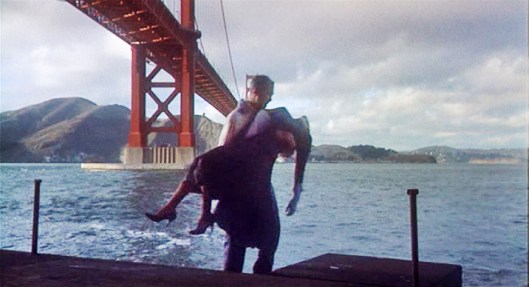
See the source image

The fourth and last collaboration between Hitchcock and star Jimmy Stewart, Vertigo is a tale of obsession that toys with the possibility of the supernatural. Stewart plays John “Scottie” Ferguson, a cop who retired after a deadly experience with heights but is commissioned by wealthy friend Gavin Elster (Tom Helmore) to investigate Elster’s wife Madeleine (Kim Novak) and her sudden strange behavior. As he learns more about her connection to a suicidal ancestor and develops a relationship with her, he encounters secrets and mysteries that shake him to his core.

As a fan of film, I can say that I am definitively glad to have finally seen this classic of cinema, an oversight that represents exactly what this Blindspot series is meant to solve. Yet it doesn’t hold the same fascination for me that it apparently does for so many. Perhaps it’s because the film’s intrigue was such a rollercoaster. It starts out interesting enough with Stewart as his ever-likable self, but the story really drags during his investigation, which consists of far too much of him wordlessly following Madeleine by car. Maybe it’s just me, but the picture below doesn’t do much for me in the way of tension.

See the source image

Then comes a famous scene in a bell tower, which is indeed one of Hitchcock’s best for buildup and shock value. Not too much longer, and the reveal of the mystery left my brain working overtime, surprised at the unanticipated twist and giving me a new appreciation for the storyline. Yet what follows becomes a somewhat uncomfortable exercise in obsessive grief (including a weirdly unnecessary psychedelic dream), played out through what would be a deeply unhealthy relationship if not for the audience’s knowledge of its psychological underpinnings. How it ends, while effective, is also anything but satisfying, so abrupt that it made me recall how much I despise the final scenes in North by Northwest and An American Werewolf in London. I know Hitchcock knew how to end a movie, but I wouldn’t know it based on this one.

I certainly can’t fault the actors. Stewart is always good, always, and Kim Novak might be one of my favorites of Hitchcock’s blonde leading ladies. Barbara Bel Geddes is also great as Scottie’s casual friend/former crush, who is short-changed by the ending’s lack of closure. I also liked a cameo by Ellen Corby, who also appeared with Stewart briefly in It’s a Wonderful Life (“Could I have $17.50?”) Likewise, Bernard Herrmann’s hypnotic score is an outstanding accompaniment, and, like the score of Psycho, adds so much to the film’s atmosphere.

See the source image

All in all, Vertigo is the second best one-word Hitchcock film that ends with an O, as well as the second best Hitchcock film that begins with an injured Jimmy Stewart. Sorry if that doesn’t sound like high praise, though I do appreciate its cinematic contribution of that vertigo effect above. I can see why film enthusiasts like it and why its filming locations around San Francisco have become iconic, and I have half a mind to see it again just to pick up on the hints to the twist that I might have missed the first time. Yet, considering it’s been ranked both 1st and 9th on lists of the best films ever made, I feel like its reputation is somewhat overblown. Psycho is still Hitchcock’s masterpiece as far as I’m concerned.

Best line: (Madeleine) “Only one is a wanderer; two together are always going somewhere. ”

Rank: Honorable Mention

© 2019 S.G. Liput
649 Followers and Counting

2019 Blindspot Pick #8: How Green Was My Valley (1941)

30 Monday Sep 2019

Posted by sgliput in Blindspot, Movies, Poetry, Reviews, Writing

≈ Leave a comment

Tags

Classics, Drama

See the source image

How green was my valley
So many years back!
No paychecks to tally,
No perils to track,
When people seemed good
And the future seemed bright,
Before my childhood
Had receded from sight.

How green was my valley,
How grand the coal mine,
How buoyant my sally
Beneath the sun’s shine!
Now I view the same scene,
As every man does,
Wishing it were as green
As I know it once was.
___________________

MPAA rating:  G

Time again for one of my Blindspots, this time going back to the Best Picture of 1941, which I chose in all honesty because Alex Trebek has said several times on Jeopardy! that it’s his favorite film. Based off a popular book at the time, How Green Was My Valley has never been on my radar for some reason, despite its status as an all-time classic and the fact that it beat Citizen Kane for Best Picture that year. And despite a somewhat excessive length, it’s a moving opus that deserves its accolades.

See the source image

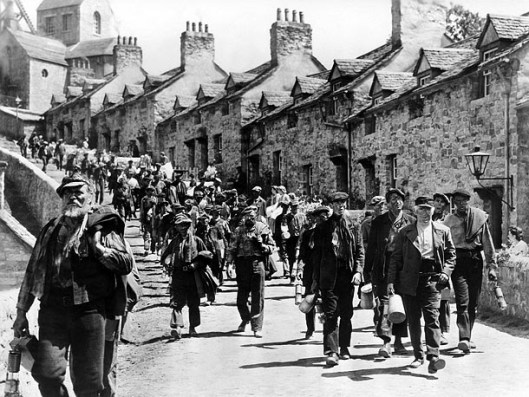
What How Green Was My Valley most reminded me of was The Waltons, the classic ‘70s show about a Depression-era family in Virginia. Just as The Waltons had periodic narration detailing the poetic remembrances of Earl Hamner, Jr., the narrator of this film (voiced by Irving Pichel) fondly recalls his large family and town life in a 19th-century Welsh mining village. That narrator is Huw Morgan (played by a very young Roddy McDowall), who as a child watches the changes in his town: the labor strike when the miners rebel against lowered wages, much to the chagrin of his traditional father Gwilym (Donald Crisp); the romantic yearnings of his sister Angharad (Maureen O’Hara) and the new preacher (Walter Pidgeon); the dangers of mining accidents and the unforgiving elements; the religious hymns sung as the miners return home; and the indelible memories and scars all these events leave.

While melodramatic at times and honest about the unsatisfying turns life can take, How Green Was My Valley has an undeniable sweetness to it, both from the familial love among the Morgans and the frequent camaraderie of the townspeople. Individual vignettes stand out, such as a local boxer flippantly defending Huw against a cruel schoolteacher or the village rallying at the recovery of one of their sick members. Of course, there is also small-minded meanness to contend with, suitably denounced by a brilliant speech by Pidgeon’s Mr. Gruffudd, but what remains beyond the heartache are the sweet moments, made bittersweet by the film’s end.

See the source image

I’m glad to check this film off of my Blindspot list, another classic I probably should have seen long ago. While John Ford’s composition and the cinematography (both Oscar-winning) is stunning, my VC and I agreed that we really wished it had been shot in color (you know, so we could see how green was the valley), especially a scene with a daffodil field, but shooting in black-and-white was a logistical sacrifice since World War II prevented actually shooting in Wales. California works as a colorless substitute, though, and it certainly feels authentic otherwise; oddly enough, the village itself reminded me of the one in Hayao Miyazaki’s Laputa: Castle in the Sky, which isn’t too surprising since the animators based its architecture off of a Welsh mining town. While I think I appreciate Citizen Kane a touch more, How Green Was My Valley deserved its win too.  I’ve heard that, whereas Citizen Kane represented the head, this film represented the cinematic heart of that year. I like that comparison and might have been persuaded to vote the same way back in 1941; classic is classic, after all.

Best line: (Mr. Gruffudd, pre-dating the similar sentiment of Spider-Man’s Uncle Ben) “But remember, with strength goes responsibility, to others and to yourselves. For you cannot conquer injustice with more injustice, only with justice and the help of God.”


Rank:  List Runner-Up


© 2019 S.G. Liput
648 Followers and Counting


Version Variations: Goodbye, Mr. Chips (1939, 1969)

16 Monday Sep 2019

Posted by sgliput in Movies, Poetry, Reviews, Writing

≈ Leave a comment

Tags

Classics, Drama, Meet 'em and Move on, Musical, Romance, Version Variations

See the source imageSee the source image

A young boy’s mind is a fallow field
With unknown promise yet to yield,
And every word their minds import
Of criticism or support,
Of firm reproof or merely sport,
Contributes to the man revealed
At last when boyhood is cut short.

To nobly tend this field with care,
Since parents can’t be always there,
Requires a person resolute,
Profuse with passion, temper mute,
With love of learning absolute.
Such people tasting praise is rare,
But they produce the finest fruit.
_____________________

MPAA rating of 1939 version:  Not Rated (should be G)
MPAA rating of 1969 version:  G

Those who’ve seen my Top 365 movie list might know that I love Mr. Holland’s Opus.  I’ve just always been drawn to the story of an unassuming teacher finding worth in the service of his students.  I’ve always vaguely known that 1939’s Goodbye, Mr. Chips, based on a 1934 novella, was the original version of such a story, but I’d never gotten around to seeing it. When I then learned it had been remade as a musical in 1969, I figured it would be a prime chance to compare the two in one of my overdue Version Variation posts.

See the source image

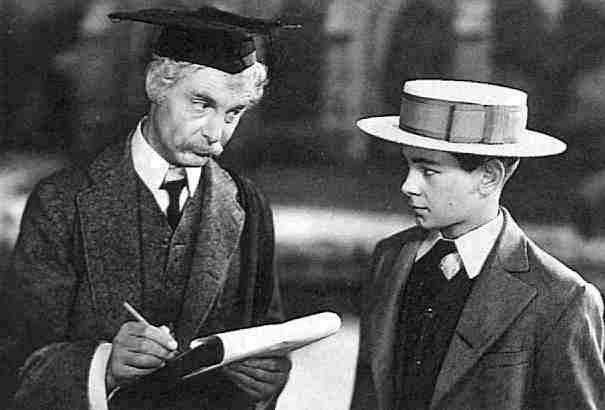
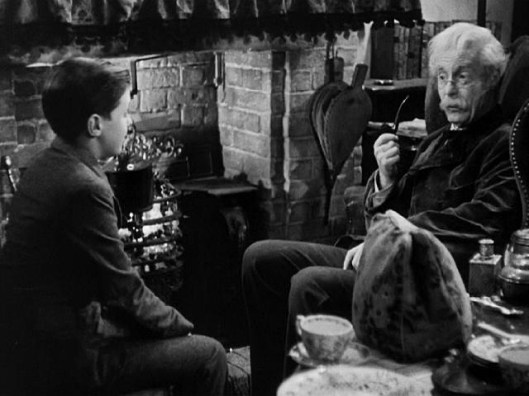
The first Goodbye, Mr. Chips is known as one of the members of the great movie year of 1939, managing to win Robert Donat the Best Actor Oscar over some stiff competition, including Clark Gable in Gone with the Wind. Having seen the winning performance, I can now see why Donat edged out the rest, letting his range of sometimes inscrutable emotions play out with great subtlety as he ages from a fresh-faced new Latin teacher in 1870 to a celebrated educator in 1933, weighed down with all the joys and sorrows of a lifetime. (My VC enjoyed the film a lot, but as a huge Rhett Butler fan, her loyalties still lie with Gable.) Like Mr. Holland, the respect Mr. Chipping ends up with is hard-won, but much of it stems from his marriage to the lovely Kathy Ellis (Greer Garson), whom he meets on a European holiday. I would have loved for Garson’s role to have been longer, but, even with limited screen time, her warm presence successfully brings the prosaic Chipping out of his shell, improving his reputation at the school.

In many ways, Goodbye, Mr. Chips is exactly the kind of movie I like, a film spanning decades wherein one character meets various people and experiences alongside the ebb and flow of time, fostering a sense of fond nostalgia. I particularly liked his run-ins with successive generations of the Colley family, showing how static his life at school is while his students go on to have lives of their own. Mr. Holland’s Opus had some similarities, but whereas that film allowed time for characters to be eventually remembered, the turnaround in Goodbye, Mr. Chips is sometimes too fast, introducing a character only for us to learn what happened to them years later in a few minutes’ time. Ultimately, Goodbye, Mr. Chips is well-deserving of its classic status, and while there’s no danger of it supplanting my preference for Mr. Holland’s Opus, it was wonderful seeing a forerunner of a story I’ve come to love.

See the source image

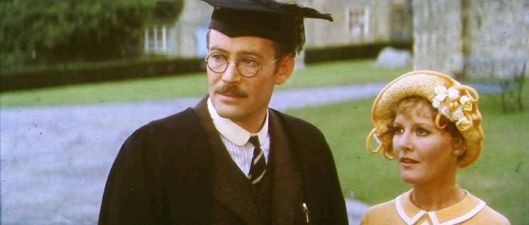
And then there’s the 1969 remake with Peter O’Toole and Petula Clark, which fits into the not-so-modern sentiment that remakes hardly ever match the original. There’s nothing wrong with making it a musical, allowing the songs to mainly serve as interior monologues, but the songs are largely forgettable, except for a couple clever lyrics, and O’Toole just isn’t much of a singer, trying out the Rex Harrison method of talk-singing but less successfully.

See the source image

The plot has the same basic elements: Chipping is a somewhat unpopular Latin teacher at a boys’ school who meets and marries a girl named Katherine (Clark) and eventually becomes a mainstay of the institution. There are still the lines of boys sounding off their attendance and a very similar ending, but the filmmakers made significant plot changes elsewhere. For one, the time period is moved up, no longer starting in the 1800s but in the 1920s with Chipping already an established teacher; thus, the war he experiences is World War II rather than World War I.

The worst change, though, is that Katherine is no longer a cycling suffragette Chips meets on a mountain but a music hall singer with an unsavory past, and their formerly brief courtship takes up the entire first half of the film, which also features an intermission to pad out its greater length. There’s pushback against their marriage where there was none before, along with Roaring ’20s parties and O’Toole’s wife-at-the-time Siân Phillips as an annoying socialite. I know I said that I wished Chipping’s wife was in the original more, but I was referring to Greer Garson’s version; the writers of the remake essentially rewrote her whole character, and while Petula Clark was great in the role, it was such a weirdly unnecessary change from the original.

Even so, the latter half (or really third) of the film is much more similar to the first film and is better for it. O’Toole and Clark do well with their roles (O’Toole even got an Oscar nomination and won a Golden Globe), although O’Toole’s Chipping is slightly more stiff and crotchety, even in scenes supposed to be romantic. The film overall was solid enough, but, as with so many remakes, it just doesn’t compare with the original.

See the source image

I guess films about long-suffering teachers who touch the lives of their students just naturally appeal to me, and Goodbye, Mr. Chips, whatever the incarnation, fits that mold. The original is clearly the better of the two, though, and certainly the one I’d recommend first. While the scene wasn’t in the 1939 movie, I couldn’t help but recall Mr. Holland’s Opus when the second film’s Kathy organizes a school musical with the students, which made me wonder how much either version of Goodbye, Mr. Chips really inspired the 1995 film. They’re so different in setting and character, and yet so similar in theme, particularly in their final heartwarming sentiments (see below). I suppose that’s what speaks to me most of all.

Best line (from 1939 film but something similar in both): (Mr. “Chips”) “I thought I heard you saying it was a pity… pity I never had any children. But you’re wrong. I have… thousands of them, thousands of them… and all boys.”


Rank of 1939 version:  List Runner-Up

Rank of 1969 version:  Honorable Mention


© 2019 S.G. Liput
646 Followers and Counting


2019 Blindspot Pick #4: The Longest Day (1962)

06 Thursday Jun 2019

Posted by sgliput in Blindspot, Movies, Poetry, Reviews, Writing

≈ 4 Comments

Tags

Action, Classics, Drama, History, War


See the source image

“Damn the torpedoes.” “Remember the Maine!”
“Remember the Alamo!” was the refrain
Of the boys and the men
Who fought time and again,
Who offered their country their blood and their pain.

And on June the sixth of 1944,
Such men charged the beaches of Normandy’s shore.
They leaped from the sky
Knowing well they could die,
And waded through carnage that had been their corps.

The weather unfriendly, the Germans less so,
The struggle brought many a foe and friend low.
The Allies that day
Put their grit on display,
And paid a debt we who are living still owe.
_____________________

MPAA rating: G (should be at least PG)

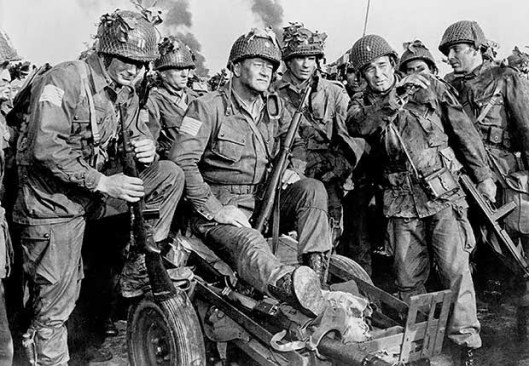
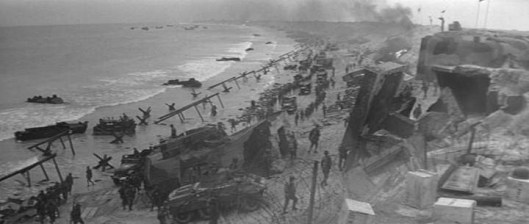
About two years ago, I reviewed Saving Private Ryan, one of that year’s Blindspots, so it seemed only fitting to review another Blindspot pick about D-Day on June 6, the day the world was saved by the Allied forces. The Longest Day may be an older film, but its re-creation of the struggle on the beaches of Normandy is more expansive than Spielberg’s and well worthy of being ranked among the great war movies of all time.

While Saving Private Ryan had a focused plot with developed characters, The Longest Day is much more concerned with the broader history of the D-Day landings: the cautious planning, the German belief that no invasion would come that June, the watching of weather reports, the confusion of battle, and the plethora of individual stories, most of which have a basis in truth. At nearly three hours long, it might have been called The Longest Movie, yet it’s rarely boring. It may take two thirds of its runtime to reach the point that Saving Private Ryan begins, but it offers much more insight into the strategy and planning that went into the assault and the various efforts of the Americans, British, French, paratroopers, and French civilians, as well as the German side, all presented realistically with dialogue in their native tongue.

See the source image

Saving Private Ryan may be known for its battle scenes, but The Longest Day is no slouch either, depicting the invasion on an impressively epic scale. After the ships hit the beaches, there are a number of jaw-dropping aerial tracking shots that offer an incredible view of the battlefield, and without CGI, I can only imagine the work that went into creating such carefully orchestrated scenes. The fact that many of the cast and crew actually saw action on D-Day and contributed their first-hand accounts, along with many of those who are actually depicted in the film, only adds to the authenticity of the production, something no film in the future could hope to match.

The one thing The Longest Day doesn’t have is clearly defined characters, despite a cast jam-packed with stars of the day. It may have won deserving Oscars for its cinematography and special effects, but there’s a reason it didn’t get any acting nominations, simply because there’s not enough for any one actor to do.  John Wayne, Henry Fonda, and Robert Mitchum are probably the biggest stars, but you’ll likely recognize the names or faces of Red Buttons, Jeffrey Hunter, Roddy McDowall, Rod Steiger, Richard Burton, Sean Connery, and Peter Lawford, to name only a few. With such a who’s who of talent, it was just a tad disappointing that we spend so little time with any of them, sometimes only a single scene, and don’t always find out what became of them. Yet this is a film about the events rather than the people (the name and rank labels are more for context than for actually keeping track of the characters), and there’s nothing wrong with that, especially with so many triumphant, sad, or ironic episodes throughout that are worth telling but don’t necessarily warrant a movie of their own.

See the source image

My own grandfather was among the men who stormed the beaches of Normandy, and films like Saving Private Ryan and The Longest Day really help me as a detached viewer to appreciate the sacrifices of what was truly the Greatest Generation. As for which film is better, I’m torn. Saving Private Ryan held much more visceral emotion but largely through extreme violence I usually steer clear of; for normal viewing, I think I prefer The Longest Day’s presentation of bloodless action that still denotes the grand and hellish reality of war. Both have their place, one raw and poignant, the other detailed and comprehensive, and I’m grateful to have finally seen both through this Blindspot series. One ship commander tells his men, “You remember it. Remember every bit of it, ’cause we are on the eve of a day that people are going to talk about long after we are dead and gone.” Thanks in part to films like this, he’s absolutely right.

Best line: (said by both an American and a German, an insightful contrast) “Sometimes I wonder which side God is on.”


Rank: List-Worthy (tied with Saving Private Ryan)


© 2019 S.G. Liput
633 Followers and Counting


VC Pick: Patton (1970)

27 Monday May 2019

Posted by sgliput in Movies, Poetry, Reviews, Writing

≈ Leave a comment

Tags

Biopic, Classics, Drama, History, VC Pick, War

See the source image

What wins wars?
It’s a question hard to answer
That no army can refuse.
For if every side could answer it,
No side would ever lose.

What wins wars?
Some would say that it’s commitment
Or resolve to reach the goal.
But commitment breeds fanaticism
If it lacks control.

What wins wars?
Some would point to their resources,
Which are squandered easily.
Some would point to perseverance
Or to strength or bravery.

What wins wars?
All of these are necessary,
But they’re not the final trade.
There’s a risk to every battle;
There’s a price that must be paid.

What wins wars?
‘Tis the soldiers wielding courage
And the strength to persevere,
Those committed to their country,
Without whom we’d not be here.
__________________

MPAA rating:  GP/PG (more of a PG-13 for language)

My VC has been urging me to review Patton for some time now, and I figured Memorial Day was the perfect time for this World War II biopic. Patton benefits from an Oscar-winning performance from George C. Scott and the Oscar-winning screenplay from none other than Francis Ford Coppola, who interestingly credits this film’s success with his being allowed to direct The Godfather.

See the source image

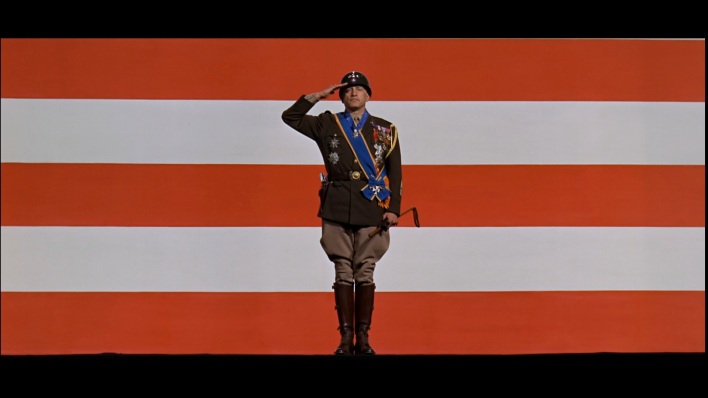
While other actors are good, including Karl Malden as General Omar Bradley, this movie lives and dies by the effectiveness of Scott in the title role, and from the first iconic speech he delivers in the film’s opening, speaking to the troops in front of an enormous American flag, he embodies General George S. Patton’s patriotic resolve and uncompromising will. The score is similarly iconic, providing perfect accompaniment to Patton’s military ambitions, and certain scenes are distinctly memorable, like Patton’s slapping of a shell-shocked soldier or his shoot-off with a swooping enemy plane.

All that said, war movies from the ‘70s aren’t what they are today. While I’m grateful for the lack of extreme content, there’s not much action, with the focus instead on Patton as a character. That’s hardly a bad thing, but at nearly three hours, the plot loses steam at times and didn’t need to be that long. I also found it odd that the film stopped short of Patton’s unexpected death in a car accident, not even mentioning it in an ending footnote.

See the source image

As a fan of history, though, I found Patton a great character study of one of America’s greatest generals, providing insight into his lesser known activities as well, such as his passive role in the D-Day invasion and his many difficulties with censoring himself in interviews. He was a monstrous warmonger to some and a nationalist hero to others, a dichotomy of characterizations that the film embraces in equal measure. Considering its balanced treatment and biographical importance, I can see why it won Best Picture that year, in addition to Best Director, Original Screenplay, Film Editing, Sound, Art Direction, and Actor (which Scott famously refused). It also reminded me that Patton himself was a poet, so I ought to add this film to my list of poems used in movies. It’s a bit too long and slow to watch often, but it definitely ranks among the greatest war biopics.

Best line: (Patton) “Now I want you to remember that no bastard ever won a war by dying for his country. He won it by making the other poor dumb bastard die for his country.”


Rank: List Runner-Up


© 2019 S.G. Liput
632 Followers and Counting
 

Version Variations: The Magnificent Seven (1960, 2016)

22 Monday Apr 2019

Posted by sgliput in Movies, NaPoWriMo, Poetry, Reviews, Writing

≈ Leave a comment

Tags

Action, Classics, Drama, Thriller, Version Variations, Western

(Today’s NaPoWriMo prompt was for a poem dedicated to some other form of art, so I opted for the film Seven Samurai and its many incarnations.)

See the source imageSee the source image

In the land of Japan, after warring was done,
An epic and classic of film was begun
By one Kurosawa, director renowned,
Who left cinematic impressions profound.

This film Seven Samurai dazzled the critics
(And still holds a high spot in film analytics)
So Hollywood said, after only six years,
“We’ll do that in English for our Western ears.

“And speaking of western, we’ll re-set the plot
With cowboys and Mexicans. Now that’s a thought!”
So that’s what they did, and it turned out a winner
With quite the ensemble headlined by Yul Brynner.

They didn’t stop there; three more sequels ensued,
But even those westerns were just a prelude.
A Corman sci-fi set the story in space,
Hong Kong made a version with China the place,

And Italy even confused the translators
By making the samurai brave gladiators.
A Bug’s Life was Pixar’s cartoonish conversion,
Then back to Japan for an anime version.

And Hollywood remade the remake it made,
The most recent role that this formula’s played.
Imitation is flattery’s form at its highest,
But would Kurosawa, I wonder, be biased?
_________________________

MPAA rating for the 1960 version:  Approved (basically PG)
MPAA rating for the 2016 version:  PG-13 (pretty strong on the violence)

I haven’t done one of these Version Variation posts in a while, mainly because I haven’t watched an abundance of remakes lately. Yet I stumbled upon the 2016 remake of The Magnificent Seven, and finding it to be an above average western, had to see how it compared to the more celebrated original (not to mention how it compared to the original original, 1954’s Seven Samurai).

See the source image

Of course, Akira Kurosawa started it all with Seven Samurai, the tale of seven disparate but skilled misfits recruited by desperate villagers to fend off invading bandits. The Magnificent Seven is very much the same tale, simply transplanted from feudal Japan to the mythic American West. Certain scenes and plot elements are common to every version, such as the duel that introduces the most deadly of the bunch or the number of the seven who are killed by the end (though which characters die seems to differ).

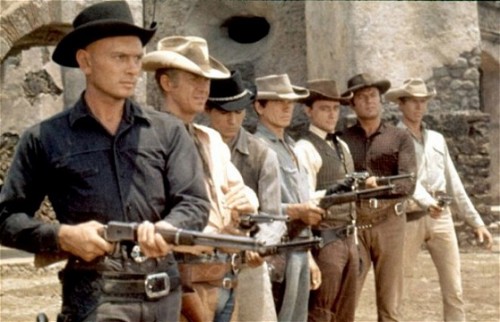
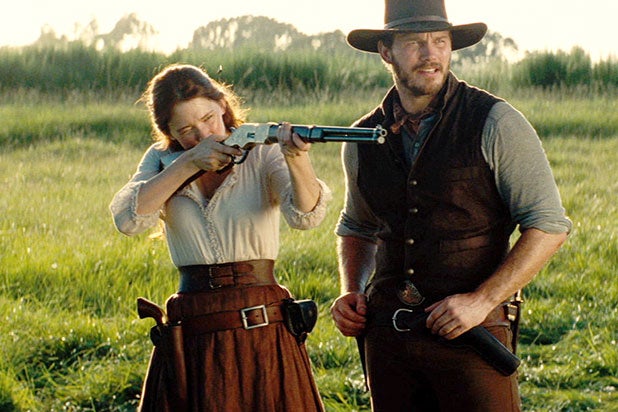
All three also feature extremely talented ensembles, led by an established movie star. In the case of The Magnificent Seven, that would be Yul Brynner (1960) and Denzel Washington (2016), both dressed all in black and oozing enough self-confidence to recruit six others with minimal effort. Watching the different versions, it was interesting to pick out the parallels between the other characters. Horst Buchholz (who went on to appear in Life Is Beautiful) plays a scrappy upstart in the 1960 version, clearly modeled after Toshiro Mifune in Seven Samurai, but there’s not really an equivalent character in the 2016 film. As the second recruit, Chris Pratt seems comparable to Steve McQueen’s drifter, while James Coburn’s knife-thrower is unmistakably akin to Lee Byung-hun in the remake. Other comparisons are a little harder, such as Ethan Hawke’s war-haunted Cajun in the remake having elements of both Robert Vaughn and Brad Dexter’s characters in the original.

See the source image

See the source image

One thing that is self-evident about the 2016 remake is its effort to be more inclusive in its representation. While all of the original seven were white, the new seven include three whites, one black, one Mexican, one Native American, and one South Korean (who I guess is supposed to represent the Chinese? I didn’t know there were Korean immigrants in the Old West).  Another difference is that the characters in the remake are given far more colorful names; after all, aren’t “Goodnight” Robicheaux and Billy Rocks cooler sobriquets than Britt or Chris or Lee?

While it makes the character comparisons a little harder, the racial changes aren’t unwelcome and don’t make much difference storywise, aside from a clash between the Native American member of the Seven (Martin Sensmeier) and his counterpart on the bad guy’s side (Jonathan Joss, who surprisingly also played Chief Hotate on Parks and Recreation). Speaking of bad guys, that’s another major change; whereas the original’s Eli Wallach played the leader of a Mexican outlaw band, the remake’s Peter Sarsgaard plays a ruthless businessman aiming to buy out the townsfolk for the nearby gold mine (which is notably not in the original, much to Brad Dexter’s chagrin).

See the source image

Perhaps it might have been different if I had watched the 1960 version first, as most cinephiles did, but I think I actually prefer the 2016 version. The 1960 film is a classic, no doubt about that, with Yul Brynner’s man in black standing up as one of the quintessential western heroes. Yet even though that film has its fair share of gunfights, the 2016 film plays out much more like an action movie, tossing out the love subplot and apparent defeat of the original in favor of bigger and more explosive battles. The body count is higher, but the thrills don’t disappoint, in contrast to the original film’s excessive length and occasional boring parts.

That being said, cheating though it may be, I don’t have any problem grouping the two together for ranking purposes, or even grouping both with Seven Samurai. Seven Samurai may be the most artistic and the 2016 film the most entertaining, but all three are worthwhile. (I’ll draw the line, though, at grouping them with A Bug’s Life, which is also basically the same story. I did like how Charles Bronson’s bond with some local kids was recycled for Francis the lady bug in Pixar’s film.) Many may scoff at the mere idea of remakes, often rightfully, but, like A Star Is Born, this is one story that has endured the test of time and excelled in multiple incarnations.

See the source image

Best line from the 1960 version: (Vin/Steve McQueen) “It’s like a fellow I once knew in El Paso. One day, he just took all his clothes off and jumped in a mess of cactus. I asked him that same question, ‘Why?’”   (Calvera/bad guy) “And?”   (Vin) “He said, ‘It seemed to be a good idea at the time.’”

Best line from the 2016 version: (Sam Chisholm/Denzel Washington) “What we lost in the fire, we’ll find in the ashes.”


Rank: List-Worthy (both grouped with Seven Samurai)


© 2019 S.G. Liput
627 Followers and Counting


2019 Blindspot Pick #1: Monty Python and the Holy Grail (1974)

27 Wednesday Feb 2019

Posted by sgliput in Blindspot, Movies, Poetry, Reviews, Writing

≈ Leave a comment

Tags

Classics, Comedy


See the source image

King Arthur and his band of knights
Were questing for the Holy Grail.
(We only know the big highlights
Or else ‘twould be a boring tale.)

Their names in legend often show,
Like Galahad and Lancelot,
Though some had names we’ll never know
Because they liked to dance a lot.

They fought with dragons, rabbits, lust,
And knights called green ere green was cool.
So yes, they quested, as discussed,
Don’t read it; watch the film, you fool!
_____________________

MPAA rating: PG (should definitely be PG-13)

Well, I’ve gotten 2019 off to a slow start as far as this blog. I’m already behind on my Blindspots, but it’s time to get started.

See the source image

So why did I select Monty Python and the Holy Grail as a Blindspot pick this year? I thought it was about time that I see the source of lines like “It’s only a flesh wound,” which has creeped into the everyday speech of even those of us who haven’t seen this classic comedy. Honestly, there are so many well-known scenes from this irreverent British farce that I just wanted to see whatever connected them. (Note that the Killer Rabbit of Caerbannog made it onto my Top Twelve Rabbits in Movies even before I’d watched the full movie.) Plus, I came to realize, although I’ve seen the likes of John Cleese and Michael Palin, I’ve never seen the whole Monty Python troupe together as they are in their first film, each of them playing multiple varied roles.

While I was a little disappointed that there wasn’t much connective tissue between the individual memorable scenes apart from King Arthur’s quest for the Grail, there were plenty of chuckles to go around. Sometimes it was random meta moments like escaping from an animated creature because the animator keeled over or even more random gags that became funnier with repetition. Some of the jokes do go on too long, losing their humor in the process, but even this weakness often becomes another chance for the film to poke fun at itself. (“Get on with it!”) I also got to recognize moments that have been borrowed in other media, like the way the Knights’ Trojan Rabbit is heard being constructed in the woods.

See the source image

The hilarity wasn’t constant, but Monty Python and the Holy Grail certainly made me laugh with its rye British absurdity, even right from the start with the opening credits about moose and llamas. (It reminded me of the equally hilarious end credits of a weird little film called Roller Town. Seriously, why don’t more movies use their credits as part of the jokes?) The ending was a bit of a letdown, abrupt in a way that reminded me of An American Werewolf in London, but I can see why Holy Grail has become such a lauded and influential comedy, even if it’s not among my personal favorites. I did like those French insults, though, and will be looking for chances to use them myself. 😉

Best line:  (French soldier/heckler) “I don’t want to talk to you no more, you empty-headed animal food trough wiper! I fart in your general direction! Your mother was a hamster, and your father smelt of elderberries!”


Rank: List Runner-Up


© 2019 S.G. Liput
607 Followers and Counting
 

2018 Blindspot Pick #6: Some Like It Hot (1959)

06 Friday Jul 2018

Posted by sgliput in Blindspot, Movies, Poetry, Reviews, Writing

≈ 2 Comments

Tags

Classics, Comedy, Romance

See the source image

What do soup and summer days
And bedtime milk and big buffets
Have in common with your tea
And pie and wind and panini
And thoughts about celebrities
And temps for different types of skis?

Have you thought of it or not?
Yes, that’s right! Some like them hot.
Some also like them cold, and so
Which one are you, I’d like to know?
_______________________

MPAA rating: PG

Well, I’m still trying to catch up on my Blindspots, and since it’s been hot as blazes outside lately, Some Like It Hot seemed like a good choice for my next review. (For the record, I do not like it hot. I can’t wait for fall.) This is one of those classics among classics that it just seemed more and more wrong that I, as a movie lover, hadn’t seen it yet, which is exactly what this Blindspot series is for anyway. Now that I’ve seen it, I can recognize its special place in the pantheon of comedy, but there have been plenty of funnier movies since.

See the source image

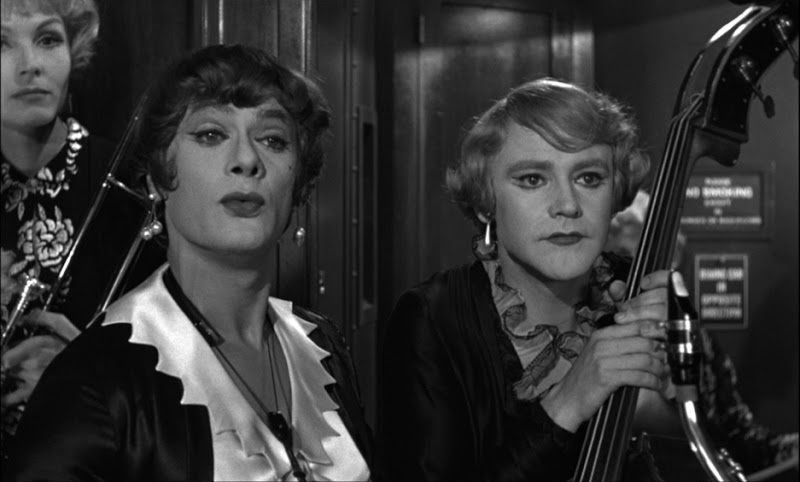
I don’t mean to badmouth a classic, since that is what Some Like It Hot is. Starting out more like a gangster movie than a comedy, the film follows the misadventures of two musicians Joe (Tony Curtis) and Jerry (Jack Lemmon), who keep finding themselves at the wrong place at the wrong time. When they happen to witness a mob massacre by the vengeful “Spats” Colombo (George Raft), they escape Chicago by dressing as women, calling themselves Josephine and Daphne, and joining an all-girl band on their way to Miami. Of course, things get inevitably complicated when Joe becomes attracted to fellow bandmate Sugar (Marilyn Monroe) and a millionaire (Joe E. Brown) improbably falls for Jerry.

I guess crossdressing is just inherently funny, at least in the movies. That’s what the AFI seems to think, placing Some Like It Hot at #1 on their list of top 100 comedies, with Tootsie right behind at #2. (Incidentally, Mrs. Doubtfire is at #67, and I love that one more than either of the others.) While Some Like It Hot had me consistently amused, especially once Curtis and Lemmon donned their feminine alter egos, I find it laughable that this would be considered the best comedy ever made, much less one of the greatest films overall.

See the source image

Certainly, there are elements I can tell have influenced comedies since, such as Joe’s rush to change between his male and female clothes, much as Robin Williams did 34 years later. However, Joe does this in order to fool Sugar into believing he’s her wealthy dream man, which begs the question of how he thought he could get away with such a ploy in any lasting way, and his dishonesty not only makes the runtime a bit too long but is also blithely ignored when the truth comes to light, in contrast to the collective shock at the end of Tootsie or Mrs. Doubtfire. Lemmon, on the other hand, gets the best comedic scenes, sometimes struggling with his “femininity,” while other times losing himself in character.

As shameful as it is for a cinephile to admit, this is actually the first comedy I’ve seen of director Billy Wilder (I’ve at least watched his The Spirit of St. Louis) and the first film starring Marilyn Monroe. Wilder’s direction is beyond reproach, and he includes a few clever cinematic touches, like the repeated shots of “Spats” Colombo’s shoes to portend the approach of danger. Monroe had a greater challenge, though, since I had always associated her with her short-breathed, dumb blonde persona (which my VC can’t stand, for the record), but I was pleasantly surprised by her and her musical moments. Despite being a gold digger, her portrayal of Sugar was hardly one-note, even expressing weariness at her own “dumb blonde” proclivities, and I’m now much more interested than before in exploring her other iconic roles.

See the source image

While I wouldn’t call Some Like It Hot the amazing movie it is commonly considered, it was still a good one and worthy to be called a classic. I finally got to understand the context for many familiar clips, such as the famous last line and that grating “poo poo pee doo” song parodied so perfectly by Ginger on Gilligan’s Island. So, complaints aside, I’d call this a successful and long overdue Blindspot pick. By the way, did you know it’s based off a 1935 French film called Fanfare of Love? I guess that’s another film I’ll have to check out for comparison’s sake some day.

Best line: (Sugar) “Water polo? Isn’t that terribly dangerous?”   (Joe, pretending to be rich) “I’ll say. I had two ponies drowned under me.”


Rank: List Runner-Up


© 2018 S.G. Liput
584 Followers and Counting


Midway (1976)

04 Wednesday Jul 2018

Posted by sgliput in Movies, Poetry, Reviews, Writing

≈ Leave a comment

Tags

Classics, Drama, History, War

See the source image

History tells us when battles were fought
And whether they meant more than others or not,
But those who once knew them
And had to live through them
Experienced more than the lessons now taught.

A few passive words on a page about war,
Discussing the facts of who died and what for,
Are hardly precise
To recount sacrifice
Or the bloody-badged heroes on some foreign shore.

It’s hell, they say; so, we imagine the worst
From comfortable couches, no terror, no thirst,
So free to be blind
That we must be reminded
That freedom must be paid in sacrifice first.
________________________

MPAA rating: PG (PG-13 would be better due to frequent profanity)

I couldn’t let July 4th pass without reviewing a patriotic war movie, and since I’d seen it once a long time ago, Midway seemed ripe for a rewatch. One of the last big war films of yesteryear, Midway distinguishes itself less in the story department than in its in-depth overview of the battle and its sprawling cast of famous faces.

See the source image

If you’re looking for some gritty war story with non-stop explosions, this isn’t the film for you. Midway is far more interested in the build-up and strategy of the battle and spends most of its 132-minute runtime on the set-up. Certainly by the end, there are scout planes being sacrificed and battleships defending themselves with barrages of skyward gunfire, but we also get to see how the Americans deciphered Midway as the coded Japanese target, how unexpected illnesses and bad luck brought certain players to the fore, and how each side endeavored to figure out the others’ movements before it was too late. All the background information isn’t exactly boring, but it can get a bit dry…yeah, that’s the word. Yet what it lacks in dynamic entertainment, it makes up for in the sense of getting a comprehensive reenactment of how events played out at a time when the American forces were still on the defensive and sorely in need of a victory.

Midway’s greatest strength is its multitude of familiar actors. Just reading the cast list is a who’s who of both big-name stars of the time and some stars to be: Charlton Heston as Captain Garth and the de facto main character, Henry Fonda as Admiral Nimitz, Robert Mitchum as Vice Admiral Halsey, Hal Holbrook, James Coburn, Glenn Ford, Cliff Robertson, Glenn Corbett, Robert Wagner, Erik Estrada, Tom Selleck, and Dabney Coleman (five years before starring with Henry Fonda again in On Golden Pond). That’s not to say all of them get much time to shine in their cameos; I’m not sure Robert Wagner even spoke at all, but it’s always fun to try and pick out someone you might recognize. Of course, not being as familiar with TV of the ‘60s and ‘70s as my mom or grandfather (who loved this movie), I’m no doubt missing out on the full “look-it’s-so-and-so” experience.

See the source image

In addition to all the western actors is a collection of pretty much every actor of Japanese descent known to American audiences back then (except Mako; where the heck was Mako?), most notably Toshiro Mifune of Rashomon and Seven Samurai fame as Admiral Yamamoto, whose voice was oddly dubbed by Paul Frees. There’s also James Shigeta of Die Hard, Pat Morita of The Karate Kid, Robert Ito of Quincy, M.E., and quite a few others I’m sure I’ve seen on M*A*S*H before. Unlike modern war movie trends, all the Japanese characters speak convenient English, but there’s no effort to demonize them beyond some references to Pearl Harbor. They are simply the opposing side in this life-and-death game of Battleship. Questions of prejudice are raised with the romance of Edward Albert as Heston’s son who falls in love with a Japanese girl (Christina Kokubo), but that story doesn’t get much closure by the end and is present simply to add some human interest to the film.

It’s interesting to note that, despite being a box office hit, Midway is something of a black sheep among war classics, largely because it borrowed many scenes from other films, perhaps to save money on a budget that likely went to casting its prestigious stars. The graininess of certain shots clearly marks them as actual footage, but many of the actual battle scenes are from films like Tora! Tora! Tora!, Away All Boats, and Battle for Britain (at least according to Wikipedia), which now makes me curious to see all those films and spot what was borrowed. Even if its parts were cobbled together to some extent, Midway thrives on its star power and paints both a broad and detailed picture of a decisive World War II battle.

See the source image

On this 4th of July, whether you celebrate it or not, I want to wish all my readers, both foreign and domestic, a Happy Independence Day! Let freedom ring!

Best line: (Admiral Nimitz, after the battle) “It doesn’t make any sense; Admiral Yamamoto had everything going for him: power, experience, confidence. Were we better than the Japanese or just luckier?”


Rank: List Runner-Up


© 2018 S.G. Liput
584 Followers and Counting


The Best Years of Our Lives (1946)

13 Friday Apr 2018

Posted by sgliput in Movies, NaPoWriMo, Poetry, Reviews, Writing

≈ 2 Comments

Tags

Classics, Drama, Romance, War

See the source image

(Today’s NaPoWriMo prompt was to write a poem based on the reverse of a well-known phrase or saying, so I picked “home is where the heart is.”)


The mind is rarely where the home is,
Always drawn back here, back there,
To sites of sorrows, times of traumas,
Every missed or broken promise,
Every frightened, whispered prayer,
And doubts that dwarf the likes of Thomas.

Although it wishes peace to find,
The night is haunted by the day,
And progress can be undermined
By ghosts we thought we’d left behind.
The battlefields still hold their sway
When hearts go home without the mind.
_________________

MPAA rating: Not Rated (should be PG)

This post is by request of MovieRob, who gave the most correct answers to my new banner challenge and so earned the right to have me review a film of his choice. It’s also a chance to review something not from the last couple years, which seems to be all I’ve been reviewing lately. I knew The Best Years of Our Lives was one of his all-time favorites, and it is a film that still packs an emotional wallop even 72 years later, offering an authentic glimpse of how World War II veterans readjusted to civilian life.

See the source image

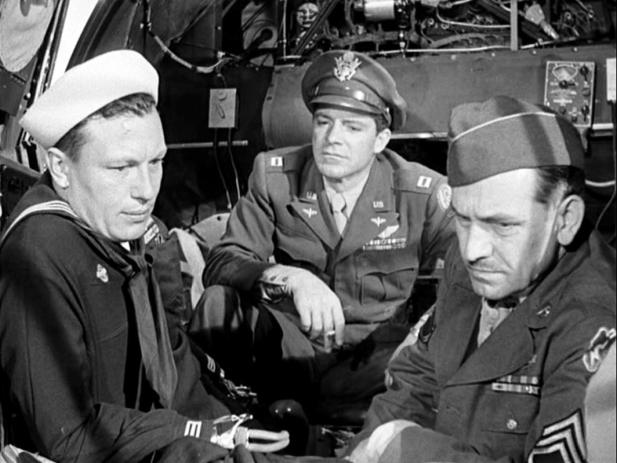
Perfectly timed when it came out the year after the war ended, The Best Years of Our Lives follows three ex-servicemen returning to their fictional hometown of Boone City: an older sergeant and banker named Al Stephenson (Fredric March), a newly married captain named Fred Derry (Dana Andrews), and an amputee from the Navy named Homer Parrish (real amputee Harold Russell), who lost both hands and now uses a pair of hook prosthetics. Although all are eager to return home, they quickly experience difficulties in adjusting to their new civilian roles, such as Fred’s lack of experience in anything but the bombing for which he was trained or Homer’s insecurity over how his family and sweetheart will react to his hooks.

The performances are excellent across the board, rarely falling into dated overacting, with Russell especially standing out as Homer, well deserving his Best Supporting Actor Oscar despite not being a professional actor. (He’s also the only actor to win two Oscars for the same role, one an honorary award, and the only one to auction his Oscar years later.) March also won an Oscar, though I personally thought he was better in 1937’s A Star Is Born, and the film received five other Academy Awards too, including Best Picture. Above all, the story feels genuine, as if these were real stories that actually played out in the post-war period, even including how businesses and conspiracists viewed the war and the shaken people it sent back home.

See the source image

Despite being a significant film and one of the best in its genre, I do feel The Best Years of Our Lives, at 170 minutes, runs about twenty minutes too long, and not all three of its stories carry the same weight. Homer’s is easily the best with a profoundly lump-inducing conclusion, while Fred’s love triangle with his shallow wife (Virginia Mayo) and Al’s daughter Peggy (lovely Teresa Wright) has its moments. So does Al’s homecoming, but his drunkenness drags on a bit with little resolution, even if I’m sure it’s a true depiction of the way many veterans tried to cope.

The Best Years of Our Lives may run long, but it’s a moving portrait of post-war America and the problems that plagued her veterans, which still ring true due to the permanence of war. One image near the end seems to capture the potential hopelessness of their situation, as Fred sits in the nose of a scrapped plane with no engines, grounded and heading nowhere. Yet it subtly says even more that right afterward, he learns the scrapyard will be recycled into new housing, a symbol of the renewal capable for men as well.

See the source image

Best line: (Fred) “I dreamed I was gonna have my own home. Just a nice little house for my wife and me out in the country… in the suburbs anyway. That’s the cock-eyed kind of dream you have when you’re overseas.”   (Peggy) “You don’t have to be overseas to have dreams like that.”   (Fred) “Yeah. You can get crazy ideas right here at home.”


Rank: List Runner-Up


© 2018 S.G. Liput
554 Followers and Counting


← Older posts
Newer posts →

Recent Posts

  • We Didn’t Start 2025 (Recap)
  • NaPoWriMo 2025 Recap (Finally)
  • Sonic the Hedgehog 3 (2024)
  • It Happened One Night (1934)
  • Spellbound (2024)

Recent Comments

associatesofshellymann's avatarassociatesofshellyma… on My Top Twelve La La La So…
Kit's avatarKit Nichols on Bonnie and Clyde (1967)
lifelessons's avatarlifelessons on Look Back (2024)
Carol Jackson's avatarCarol Jackson on The Thief of Bagdad (1940…
Stephen's avatarStephen on Love Story (1970)

Archives

  • January 2026
  • December 2025
  • May 2025
  • April 2025
  • March 2025
  • February 2025
  • January 2025
  • December 2024
  • May 2024
  • April 2024
  • March 2024
  • February 2024
  • January 2024
  • December 2023
  • November 2023
  • October 2023
  • September 2023
  • July 2023
  • June 2023
  • May 2023
  • April 2023
  • March 2023
  • February 2023
  • January 2023
  • December 2022
  • November 2022
  • October 2022
  • September 2022
  • August 2022
  • July 2022
  • June 2022
  • May 2022
  • April 2022
  • March 2022
  • February 2022
  • January 2022
  • December 2021
  • November 2021
  • October 2021
  • September 2021
  • August 2021
  • July 2021
  • June 2021
  • May 2021
  • April 2021
  • March 2021
  • February 2021
  • January 2021
  • December 2020
  • November 2020
  • October 2020
  • September 2020
  • August 2020
  • July 2020
  • June 2020
  • May 2020
  • April 2020
  • March 2020
  • February 2020
  • January 2020
  • December 2019
  • November 2019
  • October 2019
  • September 2019
  • August 2019
  • July 2019
  • June 2019
  • May 2019
  • April 2019
  • March 2019
  • February 2019
  • January 2019
  • December 2018
  • November 2018
  • October 2018
  • September 2018
  • August 2018
  • July 2018
  • June 2018
  • May 2018
  • April 2018
  • March 2018
  • February 2018
  • January 2018
  • December 2017
  • November 2017
  • October 2017
  • September 2017
  • August 2017
  • July 2017
  • June 2017
  • May 2017
  • April 2017
  • March 2017
  • February 2017
  • January 2017
  • December 2016
  • November 2016
  • October 2016
  • September 2016
  • August 2016
  • July 2016
  • June 2016
  • May 2016
  • April 2016
  • March 2016
  • February 2016
  • January 2016
  • December 2015
  • November 2015
  • October 2015
  • September 2015
  • August 2015
  • July 2015
  • June 2015
  • May 2015
  • April 2015
  • March 2015
  • February 2015
  • January 2015
  • December 2014
  • November 2014
  • October 2014
  • September 2014
  • August 2014
  • July 2014
  • June 2014
  • May 2014
  • April 2014
  • March 2014
  • February 2014
  • January 2014
  • December 2013

Categories

  • Blindspot
  • Blogathon
  • Christian
  • Movies
  • Music
  • NaPoWriMo
  • Poetry
  • Reviews
  • TV
  • Writing

Meta

  • Create account
  • Log in
  • Entries feed
  • Comments feed
  • WordPress.com

Recent Posts

  • We Didn’t Start 2025 (Recap)
  • NaPoWriMo 2025 Recap (Finally)
  • Sonic the Hedgehog 3 (2024)
  • It Happened One Night (1934)
  • Spellbound (2024)

Recent Comments

associatesofshellymann's avatarassociatesofshellyma… on My Top Twelve La La La So…
Kit's avatarKit Nichols on Bonnie and Clyde (1967)
lifelessons's avatarlifelessons on Look Back (2024)
Carol Jackson's avatarCarol Jackson on The Thief of Bagdad (1940…
Stephen's avatarStephen on Love Story (1970)

Archives

  • January 2026
  • December 2025
  • May 2025
  • April 2025
  • March 2025
  • February 2025
  • January 2025
  • December 2024
  • May 2024
  • April 2024
  • March 2024
  • February 2024
  • January 2024
  • December 2023
  • November 2023
  • October 2023
  • September 2023
  • July 2023
  • June 2023
  • May 2023
  • April 2023
  • March 2023
  • February 2023
  • January 2023
  • December 2022
  • November 2022
  • October 2022
  • September 2022
  • August 2022
  • July 2022
  • June 2022
  • May 2022
  • April 2022
  • March 2022
  • February 2022
  • January 2022
  • December 2021
  • November 2021
  • October 2021
  • September 2021
  • August 2021
  • July 2021
  • June 2021
  • May 2021
  • April 2021
  • March 2021
  • February 2021
  • January 2021
  • December 2020
  • November 2020
  • October 2020
  • September 2020
  • August 2020
  • July 2020
  • June 2020
  • May 2020
  • April 2020
  • March 2020
  • February 2020
  • January 2020
  • December 2019
  • November 2019
  • October 2019
  • September 2019
  • August 2019
  • July 2019
  • June 2019
  • May 2019
  • April 2019
  • March 2019
  • February 2019
  • January 2019
  • December 2018
  • November 2018
  • October 2018
  • September 2018
  • August 2018
  • July 2018
  • June 2018
  • May 2018
  • April 2018
  • March 2018
  • February 2018
  • January 2018
  • December 2017
  • November 2017
  • October 2017
  • September 2017
  • August 2017
  • July 2017
  • June 2017
  • May 2017
  • April 2017
  • March 2017
  • February 2017
  • January 2017
  • December 2016
  • November 2016
  • October 2016
  • September 2016
  • August 2016
  • July 2016
  • June 2016
  • May 2016
  • April 2016
  • March 2016
  • February 2016
  • January 2016
  • December 2015
  • November 2015
  • October 2015
  • September 2015
  • August 2015
  • July 2015
  • June 2015
  • May 2015
  • April 2015
  • March 2015
  • February 2015
  • January 2015
  • December 2014
  • November 2014
  • October 2014
  • September 2014
  • August 2014
  • July 2014
  • June 2014
  • May 2014
  • April 2014
  • March 2014
  • February 2014
  • January 2014
  • December 2013

Categories

  • Blindspot
  • Blogathon
  • Christian
  • Movies
  • Music
  • NaPoWriMo
  • Poetry
  • Reviews
  • TV
  • Writing

Meta

  • Create account
  • Log in
  • Entries feed
  • Comments feed
  • WordPress.com

Blog at WordPress.com.

Is this your new site? Log in to activate admin features and dismiss this message
Log In
  • Subscribe Subscribed
    • Rhyme and Reason
    • Join 814 other subscribers
    • Already have a WordPress.com account? Log in now.
    • Rhyme and Reason
    • Subscribe Subscribed
    • Sign up
    • Log in
    • Report this content
    • View site in Reader
    • Manage subscriptions
    • Collapse this bar