VC Pick: Cannery Row (1982)

Tags

, , ,

Some funny folk know
Where to go,
Even though
There aren’t any canners on Cannery Row.

‘Tis not a disgrace
To embrace
Such a place.
You’ll see when you meet these new friends face to face.

In this blithe domain,
It is vain
To be sane.
Just mix with the locals, and they’ll entertain.
____________
Rating: PG (would probably be PG-13 nowadays, due to profanity)

My VC has often mentioned how much she enjoys this film and how she likes it more with every viewing, but somehow I had never gotten around to seeing it for myself…until now. Adapted from John Steinbeck’s book Cannery Row and (to a greater extent) its sequel Sweet Thursday, this Depression-era charmer has all the quirk of a cult classic, though it isn’t one to my knowledge. The actual storyline, set on the California coastline, is rather thin, and instead the film relies on humorous vignettes, establishing its cast of lovably screwed-up characters and letting them interact as only amiable neighbors can.

There’s Doc (Nick Nolte in one of the few roles I’ve seen of his before his “grizzled old man” makeover), the benevolent marine biologist who has special plans for some captured octopi. There’s Mack (M. Emmet Walsh), the leader of a quintet of goodhearted bums, and Hazel (Frank McRae), the anxious dimwit fated to become President of the United States but who may be wiser than even he knows. There’s Joseph and Mary, owner of the local grocery who happens to accept frogs as currency (and yes, that’s the name of one man). There’s Fauna, proprietress of Cannery Row’s friendly neighborhood brothel, and the Seer, a homeless codger who has visions and plays his trumpet to the rising sun. And then there’s Suzy (Debra Winger, possibly at her prettiest), the newcomer in need of a roof, a job, and maybe a little love.

All these colorful personalities bounce off each other perfectly, aided by the droll narration of John Huston himself (known to me as Gandalf in the Rankin/Bass version of The Hobbit) Thus, they do have quite a bit of waggish fun: party fiascoes, unprecedented frog hunts, dance challenges, beer milkshakes, rattlesnake conversations, and so on. Where else are you going to hear a line like “A man sentenced to be President of the United States could not go to a party as a dwarf”? In addition, Cannery Row itself happens to be an ideal backdrop for these amusing misadventures, a huge set (which is clearly a set) of dirty inlets beneath salt-encrusted boardwalks and nocturnal serenades of bluesy jazz, although there’s a good deal of classical and swing music too.

By the end, the jocularity gives way to some buried guilt and dark possibilities, yet the story’s irresistible charm still wins out. Both my VC and I were left smiling as the credits rolled, satisfied that this endearing microcosm of friendliness and romance had found its “greased grooves.”

Best line: (Hazel) “I love Doc! He was a character witness for me, and I ain’t got no character.”

VC’s best line: (Suzy, to Doc) “Look, every time I talk to you, I get more confused. I like you just fine when you’re not around.”

Rank: List-Worthy

© 2015 S. G. Liput

327 Followers and Counting

The Son (2003)

Tags

Grief can make it hard to live,
And even harder to forgive,
And when we see someone to blame,
It’s easy to despise the same.

Yet kindness can bear added weight
When aimed at someone we could hate.
We might be able to start living
If we first attempt forgiving.
_______________

Rating: Unsure (Nothing objectionable I recall)

The Son (or Le Fils in French) is a critic’s movie; that is to say, it’s the kind of film that critics swoon over while ordinary movie watchers scratch their heads asking, “Is this great filmmaking?” Granted, I’ve never seen anything else by the French Dardenne brothers, but I had only heard good things and was expecting much more from these Cannes favorites.

The plot itself is extremely simple, the kind of story that could have been just as (or more) effective with a half-hour running time. I agree that Cannes Best Actor Olivier Gourmet is quietly persuasive as Olivier, a teacher of carpentry at a vocational school. In the beginning, there’s a drawn-out mystery when a new student named Francis applies, causing Olivier to stalk and leer and act almost creepy as he allows the boy into his class. Disclosing the secret taxed my patience, but its eventual revelation is shrewd and gradual. Let’s just say that Olivier has reason to not be so kind to Francis, and Olivier is well aware of it, even subconsciously. A perceptive example is when he calls all his students by name but refers to Francis as “you.” This standoffish benevolence puzzles Olivier himself, his ex-wife, the boy, the audience, and (according to the Dardennes) even the filmmakers themselves, yet I consider this up-to-interpretation uncertainty more of a weakness than a strength. There’s a subtle and admirable theme of forgiveness versus revenge, one that was lauded by critics for its naturalism, but in this case, the abrupt ending might have benefited from some additional dialogue, since even the words “I’m sorry” don’t make an appearance.

This somewhat stilted “naturalism” carries over to the camera work too. Olivier Gourmet is a good actor; it’s a shame that I mainly saw the back of his head. For the majority of the film, it is as if we are looking over his shoulder, as he walks down corridors, runs, drives, carries beams, and performs various other mundane activities. It reminded me of the beginning of Captain Phillips, but whereas that film only employed this technique for the opening car ride, The Son gets tiresome with its overuse. I will admit that certain scenes utilize this method strongly, such as when Olivier looks straight into the camera when backing up his car, but these are few and far between.

Perhaps when I see more from the Dardennes, I’ll see that this approach is simply their preferred style. Perhaps I just didn’t “get” it like all the real critics did. Perhaps further exploring their filmography will give me a greater appreciation for their artistry. Or perhaps I’ll simply watch something far more appealing, like Inside Out.

Rank: Dishonorable Mention

© 2015 S. G. Liput

327 Followers and Counting

Opinion Battles Round 6 Best Spoof/Parody

Here’s Round 6 of Opinion Battles over at Movie Reviews 101! I love a good parody film, and there are quite a few excellent choices to select this round. While Airplane, Naked Gun, and Galaxy Quest are all favorites of mine, I went with Young Frankenstein. Be sure to vote for your favorite spoof!

Unknown's avatarMovie Reviews 101

opinion battles

Parody or Spoof Films

This round we are looking at parodies and spoof films, I have been quite loss with the rules here because I think a lot of films can do that without being when of the dreadful attempts at comedy.

We will be opening entries for the ext round which will be Sport Movies, if you would like to enter email moviereviews101@yahoo.co.uk by 26th July 2015.

Darren – Movie Review 101

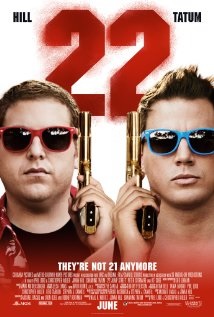
22 Jump Street (2014)22 jump

When it comes to parodies most people instantly look at Airplane!, Naked Gun or Scary Movie but I like to look a little more into a film. I have picked 22 Jump Street because the whole opening 15 minutes pokes full blown fun at how popular the first film is as well as how many times sequels just use the same ideas again. It makes a clear point that they will be…

View original post 1,699 more words

My Top 50 Movie Scores — Part 6

Tags

Once more, it seems that my list of top 50 film scores tends to opt for the less acclaimed favorites, though there’s still an Oscar winner in the mix too. Again, these are original soundtracks that excel as background music for their films and for writing, exercising, working, driving, and any other mundane activity in need of inspiration. There’s nothing quite like movie music, and it just gets better from here. Enjoy!

_______________


#25:  National Treasure/National Treasure: Book of Secrets (2004/2007), no nominations – Trevor Rabin

It’s no secret that I love these movies, but the scores for both really are phenomenal, thanks to the lead singer of British band Yes, Trevor Rabin (also known for Armageddon and Remember the Titans). At times, the music is straight adventure movie fare, often conveying a sense of urgency and/or mystery, but often it builds to this historically-themed magnificence that perfectly captures the appeal of the films themselves. Of the two, I probably prefer the score for Book of Secrets a tad more, but I couldn’t separate them. Here’s hoping Disney will make this a trilogy one of these days!


#24:  Elizabethtown (2005), no nomination – Nancy Wilson

It’s also no secret that I adore this film, a hilarious, heart-tugging, romantic, endlessly quotable reflection on love and death. It also possesses one of the few scores I actually own. Nancy Wilson of Heart (who was married to director Cameron Crowe at the time) provided the perfect bluegrass-inflected guitar music to accompany Orlando Bloom’s visit to his dead father’s hometown in Kentucky. Not many films have both a memorable score and an outstanding rock music soundtrack, and whenever I hear either one, I’m instantly in the mood to watch the movie again.  The links below show a song of each.


#23: Chariots of Fire (1981), Oscar winner – Vangelis

The sight of a flock of Olympic runners jogging along a beach was made truly iconic by this classic synthesizer-laden score. Capturing the simple majesty of running (in slow-motion), this music is even better than the movie itself, which is saying a lot. Beautiful on every level.


#22: Dinosaur (2000), no nomination – James Newton Howard

Leave it to James Newton Howard to write a magnificent score for a poorly reviewed Disney film. I personally like the film, and probably everyone else would if it consistently carried the same prehistoric glory as its soundtrack. Filled with power and awe, the music from the breathtaking opening scene (reminiscent of Moses) is enough alone to earn this a spot on my list.


#21:  Jane Eyre (1970), no nomination – John Williams

While not his most well-known work, there’s a haunting beauty to Williams’ music for the 1970 version of Jane Eyre, starring Susannah York and George C. Scott. Evoking Gothic mystery and sweeping romance, the delicate score cemented this film as my favorite rendering of Emily Brontë’s story. And like Wuthering Heights the same year, it does a weepy number on my VC. Those Brontë sisters surely knew how to write bittersweet yarns from the moor, which seem to bring out the best in composers.


Roman Holiday (1953)

Tags

, ,

For visiting tourists, there’s no place like Rome;
For young Princess Ann, it’s too much like home
And all of the cities in which she’s a slave,
Condemned to repeat boring answers and wave.

Escaping outside for a chance to be free,
She’s found by a grudging reporter, and he
Will grant all her wishes for leisure and fun,
As long as an interview comes, one on one.

But Rome is a place where romances pervade,
And many big plans yield to memories made.
___________________

Rating: Not Rated (might as well be G)

One of those acclaimed older movies I’ve never seen before now, Roman Holiday is a renowned classic, and unlike The Philadelphia Story, it deserves that hallowed status. Audrey Hepburn’s original Oscar-winning role, at only about 24 years old, impressed Gregory Peck enough to earn her top billing, even though she was just being introduced. While she deserved it, Peck’s actions also indicate his generosity, and watching two earnest, utterly likable actors of Hollywood’s Golden Age remains a treat, thanks also to a shrewdly written screenplay.

It’s a plot that has been reused many times over in TV shows since: a discontented royal sneaks away for a day of fun and escape. Hepburn looks as regal as the reformed Eliza Doolittle, thanks to her natural beauty and the Oscar-winning costume design, and she performs certain scenes of immaturity splendidly, scenes that could have been ridiculous with a less talented Princess Ann. How she meets reporter Joe Bradley (Peck) is far from ideal, but it sets up quite a few laughs. Once the two of them start touring Rome, though, accompanied by photographer Irving (chuckle-worthy Eddie Albert), the on-location film becomes cinematic sightseeing at its best, despite being in black and white. Piazzas and landmarks like the Spanish Steps and the Mouth of Truth serve as a romantic backdrop for the trio’s jaunt; the famed Mouth of Truth scene made me feel rather ignorant, since I had no idea where its central gag originated (I only knew it from National Treasure: Book of Secrets).

(Some spoilers ahead.) While Bradley’s motivations in escorting Ann around town seem selfish at first, his plans evolve imperceptibly over the course of the day. I kept waiting for him to broach the subject of his demanding an interview, but by the time that opportunity passes, we’re left to wonder what it was that changed his mind. For Bradley and the princess, duty and affection take opposite paths, but loyalty remains their common bond and a common separation. As a romantic comedy, Roman Holiday elicits plenty of smiles but chooses the less predictably rosey path, a bittersweet sendoff that chooses nostalgia over love.

Best line: (Princess Ann) “What do you sell?”   (Joe, the newspaper writer) “Er, fertilizer.”

Rank: List-Worthy

© 2015 S. G. Liput
327 Followers and Counting

Silver Linings Playbook (2012)

Tags

, ,

When the dark is at its worst,
Some people may despair,
But some, refusing to be cursed,
See silver linings there.

Those linings may be hard to hold,
But promise they contain,
And when life’s strains are uncontrolled,
Think not they are in vain.

In bearing aches of head and heart,
Nobody is alone,
And silver linings may impart
New chances never known.
_________________

Rating: R

What do you get when you combine a talented writer/director with a uniformly Oscar-worthy cast of actors? Most of the time, you get a hit, and most of the time, that’s what David O. Russell’s Silver Linings Playbook is. As the first film since Reds to earn all four acting nominations at the Academy Awards, it features four excellent actors who know what they’re doing, even if it’s more the stuff of Oscar nominations rather than wins, though Jennifer Lawrence still won Best Actress.

This is the kind of romantic comedy that makes you feel better about yourself, because at least your life (hopefully) isn’t as messed-up as these people’s. Bipolar Pat Solitano, Jr. (Bradley Cooper), is lucky to have two loving and understanding parents like Robert De Niro and Jacki Weaver, who allow him to stay with them after his release from a psychiatric hospital. While he hopes to pick up with his wife, whose cheating caused his initial mental breakdown, he meets grieving widow Tiffany (Jennifer Lawrence), who’s also lucky to have two loving and understanding parents. At first glance, they might seem perfect for each other, two mentally unstable people who might be able to support each other, but between Pat’s obsession with his unfaithful wife and their tendency to pity the other, things are as complicated as real life or more so. (I admire Pat’s commitment to his wife, but it’s one-sided and delusional.) Throw in a dance competition, financial risks, and a Stevie Wonder phobia, and who knows if new love may bloom?

The relatable drama balances the headaches of mental illness with comedic touches that seem like ideas drawn from real life rather than spawned in a writer’s head. I’ve personally felt Pat’s dissatisfaction with an unhappy ending, though I wouldn’t go as far as he does, except in the blogosphere. While not everyone approved of the depiction of mental illness, the Oscar-nominated screenplay by Russell fosters this sense of realism in being unafraid to allow the “sloppy and dirty,” imperfections and natural flaws in both the characters and their actions. Nothing is idealized, not even the climactic dance number, but it’s all good enough to be satisfying and win over an audience.

My one complaint would have to be the crudity of the language. I know it doesn’t bother most people, but why must F-bombs be thrown around so casually in “great” movies? I’m not one to condemn a film only for foul language, but it just seems so unnecessary, making it less watchable for those sensitive to it. Robert De Niro, in particular, has an upset scene in which every other word begins with F. I suppose that’s realistic too, and I know this film is far from the worst offender, but without the language, you’d still have the outstanding performances and direction and miss nothing. Maybe it’s just me….

Nevertheless, Silver Linings Playbook is one of the better modern romantic dramedies, urging everyone to find their silver lining and illustrating love as a complex mix of empathy, madness, chance, and bribery. And it makes me want to try some “crabby snacks and homemades.”

Best line: (Tiffany) “You let me lie to you for a week?”   (Pat) “I was trying to be romantic.”

Rank: List Runner-Up
© 2015 S. G. Liput
325 Followers and Counting

My Top 50 Movie Scores — Part 5

Tags

Whereas last week’s installment of my Top 50 film scores had some Academy-recognized entries, this week’s choices return to some less appreciated favorites. Once more, this doesn’t apply to soundtrack compilations but rather original film scores, that modern classical that can make poor films listenable and good films great. Enjoy!

____________

#30:  Driving Miss Daisy (1989), no Oscar nomination — Hans Zimmer

Hans Zimmer can certainly do more than dark, swelling music for Christopher Nolan. His fully-synthesized score for 1989’s Driving Miss Daisy has just the right amount of Southern perkiness, enhanced for the humorous scenes and slowed for the dramatic ones. The old-timey sound evokes the mid-20th century setting and always brings to mind Morgan Freeman as he drives a sour-faced Jessica Tandy around. It never fails to put a smile on my face or get my foot tapping.


#29:  The Incredibles (2004), no nomination – Michael Giacchino

When a fantastic family film and a sweet superhero saga are one and the same, that achievement deserves a super score. Full of brassy bombast and intrigue, Michael Giacchino’s score for Pixar’s The Incredibles made it an even more awesome film. Certain parts also have a perfect James Bond quality to elevate the classy ‘60s super-spy vibe. This was also the start of an ongoing collaboration between Pixar and Giacchino, who provided the music for Ratatouille, Up, and Inside Out (not to mention Lost, the greatest TV show of all time. Oh yeah, in my opinion).


#28:  The Mummy Returns (2001), no nomination — Alan Silvestri

While not the most critically acclaimed of actioners, I’ve always enjoyed Brendan Fraser’s Mummy franchise, and Alan Silvestri’s score for the second film is an underrated gem. I never really notice how much I like it until I hear it during the end credits. With its decidedly Middle Eastern tone, the music complements the action during the film and recreates that same sense of adventure when heard alone.  Like many of these choices, I’ve found it’s excellent writing music.


#27:  The Avengers (2012), no nomination – Alan Silvestri

Without a doubt, my favorite superhero score has to go to arguably the best superhero achievement of them all, Marvel’s The Avengers. The music has such a grand, heroic tone that you can practically see Thor or Iron Man strutting in your mind’s eye. By itself, it’s downright awesome; when paired with the assembling team of superhero stars, it doesn’t get much more epic.


#26:  Treasure Planet (2002), no nomination – James Newton Howard

Treasure Planet may not be Disney’s most popular outing, but it boasts one of their best standalone scores. Inspiring and adventurous, sometimes wistful and folksy, the music is just one memorable element of this underrated sci-fi tale. The merging of traditional Celtic rhythms and a rock-Celtic style helps to propel the whole idea of combining the 18th-century setting of Stevenson’s novel with the film’s space-faring environment.


Cool Hand Luke (1967)

Tags

,

Welcome to the chain gang, Luke,
Where slightest back talk earns rebuke.
Forget your crime was just a fluke.
You’re here to pay your debt.

You’ll learn the rules at any rate,
For you will quickly learn your fate
If “failure to communicate”
Remains a running threat.
_________________

Rating: PG

Most of the films I’ve seen were released since the 1970s, and while I love classics like Gone with the Wind and Miracle on 34th Street, there are still quite a few “classic” films that I have yet to see. One of these movies that critics and the AFI love to laud is Cool Hand Luke, a film that, before now, was only a name and a famous quote to me. Now I have my own opinion.

Seeing this star-making role for Paul Newman was fascinating in many ways, particularly in how this chain gang tale influenced other prison films like The Shawshank Redemption (betting on new arrivals, escape attempts), Holes (prison buddy nicknames, escape attempts), and even Toy Story 3 (the famous box speech). A scene involving paving a road brought to mind Bessie from Cars and made me wonder if that’s why Pixar cast Paul Newman in that film. The story of Luke Jackson’s imprisonment is a worth-while one, featuring all the Oscar-worthy acting and tenacious style that attracts critical praise and a 100% score on Rotten Tomatoes. Newman, in particular, has some moments of phenomenal acting, and I thought he deserved an Oscar more than George Kennedy (who won Best Supporting Actor) as his rival-turned-friend Dragline. The work camp includes quite a few recognizable faces as well, including Strother Martin (the horse dealer in True Grit), Ralph Waite (Pa from The Waltons), Wayne Rogers (TV’s M*A*S*H), Harry Dean Stanton (the first victim in Alien), and Dennis Hopper (Speed, Hoosiers). It’s a well-made film, but as with One Flew over the Cuckoo’s Nest, I take issue with the way its message is conveyed.

Basically, what Cool Hand Luke reminds me of is a less uplifting version of The Shawshank Redemption, but fused with the anti-establishment theme of Cuckoo’s Nest. Luke himself is an anti-hero who’s tamer than R. P. McMurphy but still problematic. Instead of being rebellious for the sake of fun or feeling free, he’s ultimately rather shallow and just seems to be masochistic and stupid. A drunken mistake lands him in prison, and a boxing match with later friend Dragline proves Luke’s capacity for his own suffering, with no clear motivation. Later on, that suffering is far less willing, but Luke still brings it on himself. Who but an idiot would try to escape with less than a year of his sentence to go, knowing it would add on more? And it isn’t as if Luke’s time there was insufferable. Everyone could still smoke and drink and gamble (unrealistic for jail time), and aside from an early power play, the guards aren’t too cruel until Luke gives them reason to be. Thus, the impetus for Luke’s rebellion just doesn’t make sense.

On top of that, there are several instances of religious symbolism drawing a comparison between Luke and Jesus, though their only similarity is that both their punishments were overly severe. I like, even admire, character parallels to Christ, but when they include no sign of sacrifice, they fall flat, as in this case. To his fellow inmates, he becomes a hero, but only because he’s willing to do things they don’t have the backbone for or, better put, things they have the common sense not to do. He talks to God but not with any reverence, more like Robert Green Ingersoll challenging the “old man” to prove He’s there. The Christian comparison is sometimes rather explicit, but serves no purpose due to Luke being nothing like Jesus: Luke doesn’t help his fellow prisoners in any way (aside from winning Dragline a bet), he isn’t innocent, and his mother (Jo Van Fleet) ain’t no Virgin Mary. Therefore, why make the comparison?

Again, I must point to Shawshank as the shining example of how to do this anti-establishment freedom theme right. It’s always best when the good guy is innocent and the bad guy is undoubtedly evil. (POW films usually succeed too, since the roles of good and bad typically conform to who won or lost the war.) I realize not every film can have this setup, but those that don’t just don’t work, at least for me. As I said, this is a good film, one worth watching and preserving, but other films have built on its themes far more persuasively. Critics can praise the character of Luke, but when an iconic role is dominated by nothing more than a “because I can” attitude, I’m unsure why its faults aren’t more recognized.

Best line: (both the Captain and Luke) “What we’ve got here is failure to communicate.”

Rank: Honorable Mention

© 2015 S. G. Liput

324 Followers and Counting

Inside Out (2015)

Tags

, , , ,

Every girl and every boy
Has Sadness, Anger, Fear, and Joy
(Disgust as well) within their minds
To guide them through their days.
They form and file memories,
And inside Riley, all of these
Are touched by Joy, who always finds
The silver lining’s rays.

Though Joy insists on keeping her
As happy as they always were,
A touch of Sadness now in spots
May not be such a shame.
When Riley moves against her will,
And Sadness starts her off downhill,
The world of Riley’s inner thoughts
Will never be the same.
_____________________
While other people have been eagerly awaiting adult fare like Jurassic World, Mad Max: Fury Road, and Batman vs. Superman, I’ve been looking forward to Inside Out, hoping that it would be a return to the Pixar excellence to which moviegoers had become accustomed. I’m happy to say, it is. I’m trying to not let other critics’ positive reviews color my opinion, but I really am thrilled that Pixar has bounced back from the good-not-great status of Brave and the disappointment of Cars 2.

A movie about personified emotions in the control center of the mind—as original as it sounds, there have been similar concepts before, like the nearly forgotten ‘90s sitcom Herman’s Head, but whereas such ideas are usually reserved for comedy, Inside Out delves deeper, putting the emotion in emotional. Within the head of 12-year-old Riley Anderson, all her emotions work together most of the time—Joy (Amy Poehler), Sadness (Phyllis Smith), Anger (Lewis Black), Disgust (Mindy Kaling), and Fear (Bill Hader, in full Flint Lockwood mode)—and everyone but Sadness has a clearly defined role to play in guiding Riley’s actions. While this cast could have been one-note, epitomizing singular, often negative feelings, they all contribute to Riley’s personality and work well as characters due to their concern for her overall well-being (despite some poor decisions), not to mention the wisely chosen voice cast (many of which hail from Saturday Night Live or The Office).

While Riley’s external world involves a tempestuous move from Minnesota to San Francisco, her inner world endures even more distressing changes, worsened by the separation of leader Joy and downer Sadness from their psychological Headquarters. Having included too many spoilers in my past reviews, I want to tread lightly with this one and leave the film’s full impact for the fresh viewer. Suffice to say, Inside Out is a journey through the psyche that casual viewers can enjoy on the surface and analysts can pick apart to find ever more engaging layers of nuance and symbolism underneath.

When I first heard the film’s concept, I was a bit perplexed by the choice of five emotions because not every experience or feeling is so clear-cut. Yet children’s emotions are far simpler and more distinct than those of adults; the filmmakers know this well and use this very fact as the driving conflict in the film (there is no villain), since Riley is in the formative years of young adulthood. What is the cause of children suddenly needing “alone time” or deriving more frustration than enjoyment from past pleasures? How would mood swings, depression, dreams, or sarcasm be visualized in this uniquely Pixar mindscape? The film’s explanations for questions like these are eye-opening, as is the role of multiple emotions in shaping our deepest memories and impressions, yet much of it is metaphorical, implicit, and never heavy-handed in its interpretation. Here’s an example of one of the many questions prompted by the film’s themes: While certain crises seem cataclysmic at the time, perhaps these tragedies are merely an inevitable step toward maturity, though they’re no less regrettable. You’ll understand when you see it.

Compared with Pixar’s other classics, Inside Out can hold its ground with favorites like Ratatouille, Up, and Monsters, Inc. (the latter two also directed by Pete Docter), and even if the film doesn’t quite reach the heights of The Incredibles or Finding Nemo, it has the potential to grow in stature with further viewing. I already love it more now than right after I saw it. The animation is a modern marvel, such as the energy-infused substance of the emotions’ bodies and the orb-filled labyrinth of Long-Term Memory. One random danger in particular seemed like an excuse for the animators to indulge in some visual fun, despite the fact that no kid will understand its cerebral implications. (I’m not sure I do.) Inside Out may not be Pixar’s funniest adventure, but there are still quite a few laugh-out-loud moments and imaginative silliness, such as a few unexpected movie references and the way that seemingly random gags come together ingeniously during the climax. It’s a stunning balance of humor, head, and heart.

As many critics have stated, there’s also a good deal of poignancy, particularly for parents recalling their children’s childhoods. While I don’t fit that category, I admire the presence of a close nuclear family and was still touched deeply by a certain selfless act toward the end. I have a long and storied history of crying at animated movies, from Tarzan to Brother Bear, but few films can extract a tear from me anymore. Inside Out did, and that made it a special experience for me. After watching the film, I was left with the pensive, bittersweet glow of a film worth seeing many more times. My Joy and Sadness must have been holding hands. Thank you, Pixar. It’s good to have you back in force.

Best line: (Fear) “We didn’t die today; I call that an unqualified success!”

Rank: List-Worthy

© 2015 S. G. Liput
323 Followers and Counting

Genre Grandeur – Footloose (1984) – Rhyme and Reason

Here’s my second review for MovieRob’s Genre Grandeur–Teen Romance, this time the ’80s classic Footloose. Thanks again, Rob!

movierob's avatarMovieRob

high-school-romanceFor this month’s next review for Genre Grandeur – High School/Teen Romance Movies, here’s a review of Footloose (1984) by S.G. of Rhyme and Reason

Thanks again to Kim of Tranquil Dreams for choosing this month’s genre.

Next month’s Genre has been chosen by Reut of Sweet Archives.  We will be reviewing our favorite dark comedies. Please get me your submissions by the 25th of July by sending them to darkcom@movierob.net  Try to think out of the box! Great choice Reut!

Let’s see what S.G. thought of this movie:

______________________________

Footloose (1984)13

______________

Rock ‘n’ roll is banned,

And dancing they won’t stand

In Bomont and in many places fearing for their kids.

But Ren McCormack’s new,

And though it is taboo,

He wants the biased town to now embrace what it forbids.

Though some can barely dance,

His friends jump at the chance,

But Ren must try convincing…

View original post 704 more words