Cool Hand Luke (1967)

Tags

,

Welcome to the chain gang, Luke,
Where slightest back talk earns rebuke.
Forget your crime was just a fluke.
You’re here to pay your debt.

You’ll learn the rules at any rate,
For you will quickly learn your fate
If “failure to communicate”
Remains a running threat.
_________________

Rating: PG

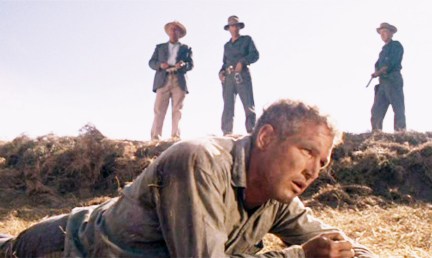
Most of the films I’ve seen were released since the 1970s, and while I love classics like Gone with the Wind and Miracle on 34th Street, there are still quite a few “classic” films that I have yet to see. One of these movies that critics and the AFI love to laud is Cool Hand Luke, a film that, before now, was only a name and a famous quote to me. Now I have my own opinion.

Seeing this star-making role for Paul Newman was fascinating in many ways, particularly in how this chain gang tale influenced other prison films like The Shawshank Redemption (betting on new arrivals, escape attempts), Holes (prison buddy nicknames, escape attempts), and even Toy Story 3 (the famous box speech). A scene involving paving a road brought to mind Bessie from Cars and made me wonder if that’s why Pixar cast Paul Newman in that film. The story of Luke Jackson’s imprisonment is a worth-while one, featuring all the Oscar-worthy acting and tenacious style that attracts critical praise and a 100% score on Rotten Tomatoes. Newman, in particular, has some moments of phenomenal acting, and I thought he deserved an Oscar more than George Kennedy (who won Best Supporting Actor) as his rival-turned-friend Dragline. The work camp includes quite a few recognizable faces as well, including Strother Martin (the horse dealer in True Grit), Ralph Waite (Pa from The Waltons), Wayne Rogers (TV’s M*A*S*H), Harry Dean Stanton (the first victim in Alien), and Dennis Hopper (Speed, Hoosiers). It’s a well-made film, but as with One Flew over the Cuckoo’s Nest, I take issue with the way its message is conveyed.

Basically, what Cool Hand Luke reminds me of is a less uplifting version of The Shawshank Redemption, but fused with the anti-establishment theme of Cuckoo’s Nest. Luke himself is an anti-hero who’s tamer than R. P. McMurphy but still problematic. Instead of being rebellious for the sake of fun or feeling free, he’s ultimately rather shallow and just seems to be masochistic and stupid. A drunken mistake lands him in prison, and a boxing match with later friend Dragline proves Luke’s capacity for his own suffering, with no clear motivation. Later on, that suffering is far less willing, but Luke still brings it on himself. Who but an idiot would try to escape with less than a year of his sentence to go, knowing it would add on more? And it isn’t as if Luke’s time there was insufferable. Everyone could still smoke and drink and gamble (unrealistic for jail time), and aside from an early power play, the guards aren’t too cruel until Luke gives them reason to be. Thus, the impetus for Luke’s rebellion just doesn’t make sense.

On top of that, there are several instances of religious symbolism drawing a comparison between Luke and Jesus, though their only similarity is that both their punishments were overly severe. I like, even admire, character parallels to Christ, but when they include no sign of sacrifice, they fall flat, as in this case. To his fellow inmates, he becomes a hero, but only because he’s willing to do things they don’t have the backbone for or, better put, things they have the common sense not to do. He talks to God but not with any reverence, more like Robert Green Ingersoll challenging the “old man” to prove He’s there. The Christian comparison is sometimes rather explicit, but serves no purpose due to Luke being nothing like Jesus: Luke doesn’t help his fellow prisoners in any way (aside from winning Dragline a bet), he isn’t innocent, and his mother (Jo Van Fleet) ain’t no Virgin Mary. Therefore, why make the comparison?

Again, I must point to Shawshank as the shining example of how to do this anti-establishment freedom theme right. It’s always best when the good guy is innocent and the bad guy is undoubtedly evil. (POW films usually succeed too, since the roles of good and bad typically conform to who won or lost the war.) I realize not every film can have this setup, but those that don’t just don’t work, at least for me. As I said, this is a good film, one worth watching and preserving, but other films have built on its themes far more persuasively. Critics can praise the character of Luke, but when an iconic role is dominated by nothing more than a “because I can” attitude, I’m unsure why its faults aren’t more recognized.

Best line: (both the Captain and Luke) “What we’ve got here is failure to communicate.”

Rank: Honorable Mention

© 2015 S. G. Liput

324 Followers and Counting

Inside Out (2015)

Tags

, , , ,

Every girl and every boy
Has Sadness, Anger, Fear, and Joy
(Disgust as well) within their minds
To guide them through their days.
They form and file memories,
And inside Riley, all of these
Are touched by Joy, who always finds
The silver lining’s rays.

Though Joy insists on keeping her
As happy as they always were,
A touch of Sadness now in spots
May not be such a shame.
When Riley moves against her will,
And Sadness starts her off downhill,
The world of Riley’s inner thoughts
Will never be the same.
_____________________
While other people have been eagerly awaiting adult fare like Jurassic World, Mad Max: Fury Road, and Batman vs. Superman, I’ve been looking forward to Inside Out, hoping that it would be a return to the Pixar excellence to which moviegoers had become accustomed. I’m happy to say, it is. I’m trying to not let other critics’ positive reviews color my opinion, but I really am thrilled that Pixar has bounced back from the good-not-great status of Brave and the disappointment of Cars 2.

A movie about personified emotions in the control center of the mind—as original as it sounds, there have been similar concepts before, like the nearly forgotten ‘90s sitcom Herman’s Head, but whereas such ideas are usually reserved for comedy, Inside Out delves deeper, putting the emotion in emotional. Within the head of 12-year-old Riley Anderson, all her emotions work together most of the time—Joy (Amy Poehler), Sadness (Phyllis Smith), Anger (Lewis Black), Disgust (Mindy Kaling), and Fear (Bill Hader, in full Flint Lockwood mode)—and everyone but Sadness has a clearly defined role to play in guiding Riley’s actions. While this cast could have been one-note, epitomizing singular, often negative feelings, they all contribute to Riley’s personality and work well as characters due to their concern for her overall well-being (despite some poor decisions), not to mention the wisely chosen voice cast (many of which hail from Saturday Night Live or The Office).

While Riley’s external world involves a tempestuous move from Minnesota to San Francisco, her inner world endures even more distressing changes, worsened by the separation of leader Joy and downer Sadness from their psychological Headquarters. Having included too many spoilers in my past reviews, I want to tread lightly with this one and leave the film’s full impact for the fresh viewer. Suffice to say, Inside Out is a journey through the psyche that casual viewers can enjoy on the surface and analysts can pick apart to find ever more engaging layers of nuance and symbolism underneath.

When I first heard the film’s concept, I was a bit perplexed by the choice of five emotions because not every experience or feeling is so clear-cut. Yet children’s emotions are far simpler and more distinct than those of adults; the filmmakers know this well and use this very fact as the driving conflict in the film (there is no villain), since Riley is in the formative years of young adulthood. What is the cause of children suddenly needing “alone time” or deriving more frustration than enjoyment from past pleasures? How would mood swings, depression, dreams, or sarcasm be visualized in this uniquely Pixar mindscape? The film’s explanations for questions like these are eye-opening, as is the role of multiple emotions in shaping our deepest memories and impressions, yet much of it is metaphorical, implicit, and never heavy-handed in its interpretation. Here’s an example of one of the many questions prompted by the film’s themes: While certain crises seem cataclysmic at the time, perhaps these tragedies are merely an inevitable step toward maturity, though they’re no less regrettable. You’ll understand when you see it.

Compared with Pixar’s other classics, Inside Out can hold its ground with favorites like Ratatouille, Up, and Monsters, Inc. (the latter two also directed by Pete Docter), and even if the film doesn’t quite reach the heights of The Incredibles or Finding Nemo, it has the potential to grow in stature with further viewing. I already love it more now than right after I saw it. The animation is a modern marvel, such as the energy-infused substance of the emotions’ bodies and the orb-filled labyrinth of Long-Term Memory. One random danger in particular seemed like an excuse for the animators to indulge in some visual fun, despite the fact that no kid will understand its cerebral implications. (I’m not sure I do.) Inside Out may not be Pixar’s funniest adventure, but there are still quite a few laugh-out-loud moments and imaginative silliness, such as a few unexpected movie references and the way that seemingly random gags come together ingeniously during the climax. It’s a stunning balance of humor, head, and heart.

As many critics have stated, there’s also a good deal of poignancy, particularly for parents recalling their children’s childhoods. While I don’t fit that category, I admire the presence of a close nuclear family and was still touched deeply by a certain selfless act toward the end. I have a long and storied history of crying at animated movies, from Tarzan to Brother Bear, but few films can extract a tear from me anymore. Inside Out did, and that made it a special experience for me. After watching the film, I was left with the pensive, bittersweet glow of a film worth seeing many more times. My Joy and Sadness must have been holding hands. Thank you, Pixar. It’s good to have you back in force.

Best line: (Fear) “We didn’t die today; I call that an unqualified success!”

Rank: List-Worthy

© 2015 S. G. Liput
323 Followers and Counting

Genre Grandeur – Footloose (1984) – Rhyme and Reason

Here’s my second review for MovieRob’s Genre Grandeur–Teen Romance, this time the ’80s classic Footloose. Thanks again, Rob!

movierob's avatarMovieRob

high-school-romanceFor this month’s next review for Genre Grandeur – High School/Teen Romance Movies, here’s a review of Footloose (1984) by S.G. of Rhyme and Reason

Thanks again to Kim of Tranquil Dreams for choosing this month’s genre.

Next month’s Genre has been chosen by Reut of Sweet Archives.  We will be reviewing our favorite dark comedies. Please get me your submissions by the 25th of July by sending them to darkcom@movierob.net  Try to think out of the box! Great choice Reut!

Let’s see what S.G. thought of this movie:

______________________________

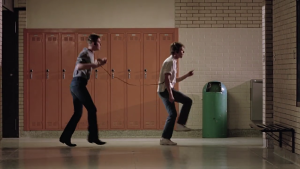
Footloose (1984)13

______________

Rock ‘n’ roll is banned,

And dancing they won’t stand

In Bomont and in many places fearing for their kids.

But Ren McCormack’s new,

And though it is taboo,

He wants the biased town to now embrace what it forbids.

Though some can barely dance,

His friends jump at the chance,

But Ren must try convincing…

View original post 704 more words

Opinions Battles Round 5 – Non Disney/Pixar Animated Movie

Take a look at Round 5 of Opinion Battles over at Movie Reviews 101. Excellent films abound, but I picked DreamWorks’ The Prince of Egypt. Vote for your favorite and may the best cartoon win!

Unknown's avatarMovie Reviews 101

opinion battles

Non Disney/Pixar Animated films

This weekend we have just had ‘Minions’ come out so what better subject to look at than Non Disney/Pixar animated film. We have also chosen to avoid animé as we will look at them later in the year too. We all have a place in us that like to watch animated films but just which is our best choice.

Our next subject with be parodies/spoof (comedies that make light of a serious idea) films, if you would like to join in email moviereviews101@yahoo.co.uk by the end 12th July 2015.

Darren – Movie Reviews 101

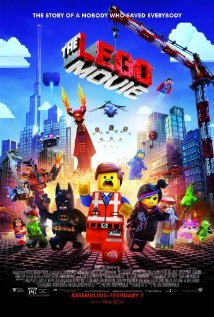
The Lego Movie (2014)ego

When I look for the best animated films I always look for one that I can pick up and watch from any point of the film. I enjoy watching this one because it has so many clever references, characters you will know in supporting roles but most…

View original post 1,868 more words

Genre Grandeur – From Up on Poppy Hill (2011) – Rhyme and Reason

Here’s my first entry for MovieRob’s latest Genre Grandeur of Teen Romance: From Up on Poppy Hill, an underseen drama from Studio Ghibli. Thanks for letting me take part again, Rob!

movierob's avatarMovieRob

high-school-romanceFor this month’s next review for Genre Grandeur – High School/Teen Romance Movies, here’s a review of From Up on Poppy Hill (2011) by S.G. of Rhyme and Reason

Thanks again to Kim of Tranquil Dreams for choosing this month’s genre.

Next month’s Genre has been chosen by Reut of Sweet Archives.  We will be reviewing our favorite dark comedies. Please get me your submissions by the 25th of July by sending them to darkcom@movierob.net  Try to think out of the box! Great choice Reut!

Let’s see what SG thought of this movie:

______________________________

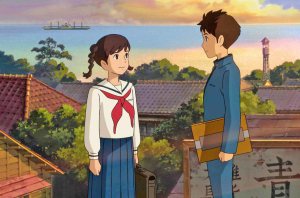
From Up on Poppy Hill (2011)

12

____________

She sails sea flags by the seashore;

He’s devoted to his cause,

Rescuing the high school clubhouse

From Japan’s progressive laws.

When she joins his club’s endeavors

And a romance seems to start,

New unfortunate connections

Loom to keep the pair apart.

As the fight to save the clubhouse

View original post 499 more words

My Top 50 Movie Scores — Part 4

Tags

Continuing with my Top 50 film score countdown, the next five jump from the 1970s to the 2010s. Again, these are scores (not collected soundtracks) that both complement their respective films and make for some superb listening music. I love to just put these on in the background and write away. Exciting, inspiring, heart-breaking, gorgeous—movie music has some of the greatest diversity of any genre (at least, I consider it a genre). Enjoy!

_______________


#35:  Superman (1978), Oscar nominee – John Williams

One of those bombastic themes that is instantly connected with its source film, the score for Richard Donner’s Superman wears its heroism on its sleeve, as well as a giant S on the chest. S for sensational, symphonic, stately, stunning, soaring, strong as steel, and, oh yeah, hope (see Man of Steel). Those blaring trumpets always bring the “real” man of steel to mind, spiraling through the earth’s atmosphere. As iconic as it is, I do feel I should give a shout-out to the theme for the animated TV series, which is surprisingly heroic and awesome in its own right, though obviously much shorter than the film’s score.


#34:  Wuthering Heights (1970), no nomination – Michel Legrand

Listen to this score, and you will see the stark moors and wind-swept heather so prominent in Wuthering Heights. This 1970 version with Timothy Dalton and Anna Calder-Marshall may not be the most famous adaptation of Emily Brontë’s gothic novel, but it’s the one that always leaves my VC a blubbering mess, thanks in large part to its haunting melodic backdrop. Beautiful with or without the film, the eerily romantic score tends to linger in the mind, making this my favorite version of the story.


#33:  The Crimson Wing: Mystery of the Flamingos (2008), no nomination – The Cinematic Orchestra

I feel a little stupid since I was originally going to place The Theory of Everything here, because I was blown away by the hypnotically flowing melody of the ending music. What I didn’t know until recently was that this song, called “Arrival of the Birds,” was not originally from the Steven Hawking biopic, but rather this Disneynature flamingo documentary. I haven’t seen it, but with music like this, I now want to; from what I’ve listened to, the remaining score is equally lovely. (For the record, I do enjoy the rest of the Oscar-nominated music in Theory of Everything too, but this really spoke to me.) The Cinematic Orchestra’s work has apparently been borrowed by many different TV shows and films, and I’m now very interested in this group as well. Those violins are glorious, whether they’re for a handicapped genius or a flock of pink waterfowl.


#32:  The Hobbit trilogy (2012, 2013, 2014), no nominations – Howard Shore

I don’t think anyone can claim that Peter Jackson’s Hobbit trilogy is better than The Lord of the Rings, but if there’s any area that it comes close, it’s Howard Shore’s score. Like the rest of The Hobbit movies, the music doesn’t compare with its predecessor, but it still carries the splendor of epic fantasy. It builds on the first trilogy’s scores with several evocative themes worthy of Middle Earth, like “Misty Mountains” and the medieval march of Laketown. Perhaps it might have stood out more, were it not compared with LotR, but The Hobbit’s score is still a grand achievement for Shore.


#31:  Inception (2010), Oscar nominee – Hans Zimmer

As I said in my review, Christopher Nolan’s Inception remains the only film that completely and utterly blew me away, and its music played a large part in its impact. The building grandeur of the music bears suspicious similarity to Zimmer’s score for The Thin Red Line, but boy, does it pack an emotional punch! Electronic with some violins, trumpets, and electric guitar thrown in for good measure, the majestic yet tender climax alone is enough to make it on this list.

Mild spoiler warning:


Tribute to James Horner

Tags

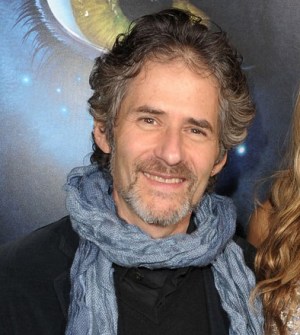
The world of movie music lost a great composer on Monday, June 22 when 61-year-old Oscar winner James Horner became the lone victim of a California plane crash. Since I’ve been listening to a lot of film scores lately, his death came as quite a shock to me. His music touched so many movies and their viewers, and he will be greatly missed. Rest in peace, Mr. Horner, as well as other recent cinematic losses, including Sir Christopher Lee, Dick Van Patten, Ron Moody, and Patrick Macnee.
____________________

Your compositions made the movies grander than they were before.
We cried and smiled; all the while, you were present keeping score.
Your music was a character, invisible but always heard,
And moved the hearts of audiences, oft without a single word.

With Kirk and Spock, you battled Khan, and then with Ripley battled worse.
You helped to build a baseball field and make the Grinch’s heart reverse.
You launched to space, and sought a trace of missing children tucked away,
Survived a magical board game, if not a nuclear delay.
You marched to battle with Daikinis and the valiant 54th,
With Trojans, Navajos, Cristeros, and the Scots to England’s north.
With Russian mice, you emigrated; with a jet pack, saved the nation;
Found cocoons, and shrunk the kids, and morphed into an illustration.
You joined with hackers and Jack Ryan, fishermen and dinosaurs,
With androids, Fix-Its, apes, and Zorro, Ludlows, and Pandora’s wars,
With ghosts and faeries, housing feuds, and schizophrenic geniuses,
And grand Titanic’s tragic voyage. These adventures too were his.
Hearts will go on, like your music, every listener a mourner
And a witness to the talent of the late, great Mr. Horner.

_______________

(For those who don’t recognize all of the above references, they include many of the best-known films he scored: Star Trek II: The Wrath of Khan; Aliens; Field of Dreams; How the Grinch Stole Christmas; Apollo 13; both The Forgotten and Flightplan; Jumanji; Testament; Willow; Glory; Troy; Windtalkers; Cristiada/For Greater Glory; Braveheart; An American Tail; The Rocketeer; Cocoon (and its sequel); Honey, I Shrunk the Kids; The Pagemaster; Sneakers; both Patriot Games and Clear and Present Danger; The Perfect Storm; both The Land Before Time and We’re Back! A Dinosaur’s Story; Bicentennial Man; *batteries not included; both Project X and Mighty Joe Young; both The Mask of Zorro and The Legend of Zorro; Legends of the Fall; Avatar; Casper; The Spiderwick Chronicles; House of Sand and Fog; A Beautiful Mind; and, of course, Titanic, which won him his two Oscars for Best Original Score and Best Original Song.)

My Top 50 Movie Scores — Part 3

Tags

The next five film scores on my Top 50 countdown were all in a three-year period, except one from the 1980s. Ranging from depressing to inspiring, these beautiful scores complement their respective movies and are equally enjoyable as easy listening. Again, these are background scores composed for each film, not collected soundtracks of individual songs. That’s another list and shall be told another time. Enjoy!

________________

#40:  Backdraft (1991), no nomination – Hans Zimmer

To accompany Ron Howard’s action film about heroic firemen, Hans Zimmer delivered a score that just screams heroism. With military-ish background drums and an occasional soothing choir, the music for Backdraft might have been equally at home in a war movie. Here it was another early step on Zimmer’s rise to film music stardom. Even the cooking competition Iron Chef recognized the score’s noble presence and appropriated its theme for the Japanese show.


#39:  Schindler’s List (1993), Oscar winner – John Williams

I’ll be honest here: I haven’t yet been able to bring myself to watch Schindler’s List. My VC saw the first part of it and couldn’t continue because she found it too disturbing, which is exactly what the Holocaust was. John Williams’ score, though, has a heartrending power whether you’ve seen it or not. Itzhak Perlman’s violin is as stark as a raw nerve, drawing praising adjectives like “haunting,” “sublime,” and above all profoundly “sad.” Even without the film’s images, that violin makes me want to cry.

Warning for some violence and disturbing images (not the worst of it, though):


#38:  The Terminator (1984), no nomination – Brad Fiedel

Foreboding yet subtly action-oriented, Brad Fiedel’s synthesized score really sets the tone for this classic sci-fi thriller. It’s a repetitive, slowly swelling score akin to John Carpenter’s music, and it’s hard to imagine the Terminator films without it. Evoking both the desolation of the future and the mechanical danger of the present, the first film’s soundtrack is simple but hard to top, so good luck to Lorne Balfe, who will be scoring next month’s Terminator Genisys.

Warning for one bloody slide:


#37:  Rudy (1993), no nomination – Jerry Goldsmith

After succeeding with the Oscar-nominated score for Hoosiers, Jerry Goldsmith re-teamed with the same director and writer for Rudy, one of the greatest and most satisfying underdog stories ever, whether you like football or not. While this one didn’t get a nomination, the music became another favorite for movie trailers. Ebullient as Rudy’s gridiron aspirations, this score is as uplifting as they come. Yes, hobbits can play football too.


#36:  The Last of the Mohicans (1992), no nomination – Trevor Jones/Randy Edelman

While I can’t say I enjoyed the overall film, the music for this adaptation of James Fenimore Cooper’s most famous work is surprisingly exceptional, considering the headaches that apparently plagued the score’s production. “Promontory” is my favorite track, even though it accompanies the most tragic scene. Properly grand and intrepid, this Celtic-infused musical beauty might have won an Oscar, but its dual composers supposedly made it ineligible. Those darn Academy rules!


Big Hero 6 (2014)

Tags

, , , , , ,

Though Hiro Hamada has bots on the brain
And uses his genius for fun and for gain,
His brother impresses
That cooler successes
Result from hard work to assist those in pain.

The huggable Baymax, Tadashi’s creation,
Is there for young Hiro through grief and temptation.
When evil arises,
His crew improvises,
Inventing a tech-fitted team transformation.

Revenge and respect struggle in good and bad,
And heroes are born from the hopes of a lad.
To overcome grief
And a merciless thief,
New bonds must be forged to replace what he had.
_______________

Rating: PG

After so-so CGI attempts like Bolt and The Wild and vastly improved near-classics like Tangled and Wreck-It Ralph, it’s now safe to say that Disney animation has found its stride. As an animated superhero film, Big Hero 6 doesn’t just copy The Incredibles but succeeds as a unique and entertaining fusion, of Disney storytelling and Marvel action, of Californian and Japanese culture, of soft-bellied caretakers and hard-edged vigilantes.

Too often lately, animated films give so little away in the trailers that it’s hard to get excited about a film we know little about. Thus, while I was tempted to see Big Hero 6 in the theater, I opted to wait for the DVD, a decision I now regret. It has everything you could want in an animated superhero tale. The animation is crisp and detailed, and the characterization of Hiro and his friends is smooth and effortless, elements that serve to heighten the tension and appeal of the action sequences. It’s rare nowadays, but I found it refreshing that every character (aside from the villain) was smart and likable, with the stand-out being the film’s mascot Baymax, that marshmallow man whose endearing innocence and literalness manage to keep the superhero team grounded. Again, I was pleased at how fond I became of this lovable sidekick, sort of like how I was surprised that Olaf was one of the best aspects of Frozen. The character designs and voice acting are perfect, especially for Hiro, Go Go, and hilarious Aunt Cass, and once the fully powered team assembles, the action occasionally approaches an Avengers level of awesomeness, offering new angles and even the unwritten rules of car chases. In addition, the film passed my personal test for animated films, in that I immediately wanted to see it again.

With mind-controlled microbots, experimental wormholes, and unexplained kite turbine things floating above the city (seriously, what were those things? Wind power?), this is obviously not the real world, if the culture-clash of San Fransokyo wasn’t a clear enough hint. Yet the film’s moral speaks to very real emotions of grief, anger, bitterness, and letting go. Hiro’s relationship with his brother Tadashi defines his goals for the future, and despite the holes in his heart, it is encouraging and touching how Baymax manages to fill them. While the film overall is refreshingly original, the core bond between Hiro and Baymax has recognizable resonances with The Iron Giant, and anyone who enjoyed one will most likely love the other. (At one point, I almost expected to hear “You go; I stay,” but that would have been too obvious a connection.) Big Hero 6 also completes an unexpected trilogy of films in which James Cromwell plays the father of some great advancement in robotics, the other two being I, Robot and Surrogates.

While the film’s science is clearly comic-bookishly advanced, certain up-and-coming real-world technologies were included as goals to strive for, such as the idea of a soft care robot or the 3D printer that Hiro uses to create everything from robot parts to costumes. It’s been said that the “geeks” and “nerds” are the ones who change the world, and this film is part of a growing trend to put animated nerds in the heroic spotlight (like Hiccup’s reading in How to Train Your Dragon or Flint’s inventing in Cloudy with a Chance of Meatballs). Big Hero 6 is a home-run for Disney animation, which has now firmly planted itself above DreamWorks and just short of Pixar. From the funny and sweet short film Feast before it to the unexpected after-credits scene that cements this as a Marvel movie, Big Hero 6 is a super hit from start to finish and deserved its Oscar win.

Best line: (Aunt Cass, having prepared hot wings) “All right, get ready to have your face melted! We are gonna feel these things tomorrow, you know what I’m saying?”

VC’s best line: (Baymax, referring to the cat) “Hairy baby, hairy baaaby!”


Rank: List-Worthy

© 2015 S. G. Liput

319 Followers and Counting

VC Pick: Soapdish (1991)

Tags


The Sun Also Sets
has the drama we crave,
The soap with the stars that all smile and wave,
But drama onscreen isn’t nearly as juicy
As backstage commotions the cast and the crew see.

The overwrought diva, the starving new star,
The beau with a grudge who is sick of the bar,
The boss who wants ratings, the nag who wants fame,
The desperate producer in need of a dame—
With all these nutcases who ravish and rage,
Forget the soap opera; just peek at backstage.
_______________

Rating: PG-13

My VC wants me to review some films from the ‘90s so she insisted upon this star-studded comedy, and while I had seen it before, I forgot just how funny it is. As a send-up of the histrionics of soap operas, Soapdish pokes fun at all the right places: back-room machinations, intentional overacting, absurd plot points, desperate stars, praise-needy stars, guilt-ridden stars, has-been stars, stars who climb on rocks.

The film also brings together some considerable star power, led by three extremely watchable actors—Sally Field, Kevin Kline, and the lovely Elizabeth Shue—and a host of supporting characters played by Whoopi Goldberg, Cathy Moriarty, Robert Downey, Jr., Kathy Najimy, and other pleasant surprises, whose lives imitate art imitating life. While no one involved delivers their best work, everyone involved has at least one chuckle-worthy moment, and often several laugh-out-loud ones. Field, in particular, is manic, catty, and generally amusing as Celeste Talbert, reminding everyone that she can handle comedy just as well as drama.

While the majority of the film is entertaining, with plots to get rid of Celeste, pointed squabbles between Field and Kline, and ludicrous family drama, the climax is easily the best part. Similar to the end of Tootsie, an impromptu live broadcast puts everyone on their worst behavior, and their improvised antics are comedy gold (“a rare case of brake fluid?!”). Soapdish may not rank among the best comedies, but it certainly has its moments of witty fun.

Best line: (Montana Moorhead, playing Nurse Nan) “Sudden speech, the last sign of brain fever. She could blow at any moment!”
Rank: List-Worthy

© 2015 S. G. Liput

319 Followers and Counting