• Home
  • About Me
  • The List
  • THE LIST (2016 Update)
  • THE LIST (2017 Update)
  • THE LIST (2018 Update)
  • THE LIST (2019 Update)
  • THE LIST (2020 Update)
  • THE LIST (2021 Update)
  • THE LIST (2022 Update)
  • Top Twelves and More
  • The End Credits Song Hall of Fame

Rhyme and Reason

~ Poetry Meets Film Reviews

Rhyme and Reason

Category Archives: Poetry

Me Before You (2016)

20 Friday Jan 2017

Posted by sgliput in Movies, Poetry, Reviews, Writing

≈ 4 Comments

Tags

Drama, Romance

Image result for me before you film


If I were trapped within a chair,
My body useless, simply there,
I think I’d grieve in my despair,
And call my lot in life unfair,
And lift up many a desperate prayer,
And doubt in ways I’d never share,
My life too broken to repair.

And what I’d do once rage had waned
Cannot be sure or preordained,
But I believe my life restrained
Could still hold joy since life remained,
Not merely to be entertained,
But be fulfilled. Though life be pained,
Does that mean it should be disdained?
__________________

MPAA rating: PG-13

Me Before You has all the potential you could want for a summer romance flick—a touching and emotional story, two appealing leads with chemistry, a difficult and tragic subtext. But there are two ways that a film like this can go, and sadly this one takes the worst possible route. Just a warning: spoilers are unavoidable in discussing the film’s great stumble so I won’t be dancing around it.

I suppose I should say up front that I really enjoyed most of Me Before You. The first two thirds of it make for a highly engaging romance, one that develops where neither lover would have expected. After losing her job, young Brit Louisa Clark (Emilia Clarke) ends up applying as a home caregiver for wealthy quadriplegic Will Traynor (Sam Claflin), who is confined to wheelchair and bed at all times. His bitterness keeps her at a distance at first as someone his mother hired against his will, but Louisa’s natural charm and hesitant spunk slowly win him over, as well as some bonding over movies (including the excellent French film Of Gods and Men). I kind of fell in love with Emilia Clarke in this movie; she wears her awkward emotions on her sleeve with the mere expression of her eyebrows, and she’s such a winsome lead that it’s no surprise that Will falls for her too.

Image result for me before you film emilia clarke

But then Me Before You delves into the controversial area of doctor-assisted suicide, a subject too complex for a teary romance to address properly. Jojo Moyes, the author of the book on which it is based, wrote it after hearing of a paralyzed athlete choosing suicide at a Swiss clinic, so with that as her inspiration, both Will and the film march to that inevitably unsatisfying conclusion with grim resolve.

There’s so much wrong with how it is handled, it’s hard to know where to begin. For one, there’s the fact that it didn’t have to be this way. After learning of Will’s suicide plans, Louisa tries to give him every reason she can muster to want to live and expects to change his mind until he proves her hopes to be in vain. If she had been successful, the story could have been a lovely and life-affirming tale, but that’s not what the storyteller intended at all.

In addition, Will’s response to Louisa spoils the most basic of romantic rules, loving the other more. By gently rebuffing Louisa’s efforts, Will is essentially saying, “You’re not good enough to live for.” Is it any wonder that Louisa reacts with anger and grief? It’s as if Will is given someone to make his life worth living, and he rejects her, supposedly for her own good. Because of the film’s predestined goal, it’s all about Louisa loving Will enough to accept his choice rather than Will loving her enough to stay. Then again, doesn’t the title Me Before You suggest that? I thought it had a strangely selfish ring to it, and now I see why. Not that Will sees it as selfishness; he believes he’s freeing Louisa and his family from his burden, but he ignores their pleas and the fact that it’s not as if they’re struggling financially.  The film does try to bring other points of view in, such as Will’s mother’s objections and Louisa’s mother declaring his choice to be “no better than murder,” but again, the end result was decided from the beginning.

Image result for me before you film emilia clarke

I don’t pretend to understand the agony that many with quadriplegia or other debilitating conditions endure, but I have to believe that life is better than death. Will comments that he loved his life before his accident and that it could never be the same. While that’s true, just because his life is not the same doesn’t mean it isn’t worth living. Success stories like Helen Keller, Stephen Hawking, and Joni Eareckson Tada have proven that life need not be made void by handicaps, and many happy lives have risen from considerations of suicide, considerations that might have killed them early had they had access to the means, as Will does by the end. It’s a matter of hope and life, not dignity, and Will’s final words of encouragement to Louisa to “just live” are hollow next to his actions.

Me Before You could have been a lovely romance, and most of it is, with delightful early performances from Clarke and Claflin that are more crowd-pleasing than Oscar-winning. Yet the film’s stab at bittersweet euthanasia as an ending just ruins everything that came before, revealing its sympathy for the culture of death in a wholly unsatisfying way.

Best line: (Louisa, with the kind of touching line that is sadly ignored by Will) “You make me happy, even when you’re awful. I would rather be with you—even the you that you seem to think is diminished—than with anyone else in the world.”


Rank: Dishonorable Mention


© 2017 S.G. Liput
441 Followers and Counting


Wayne’s World (1992)

18 Wednesday Jan 2017

Posted by sgliput in Movies, Poetry, Reviews, Writing

≈ Leave a comment

Tags

Comedy

Image result for wayne's world film


When people get nostalgic for their young and stupid days,
I cannot help but wonder just how stupid was that phase.
Were they taking risks they’d now oppose
And banging heads to radios
And hosting public access shows
That talked about God-only-knows?

If so, I see the reason for the fondness for their prime,
Though most, I think, now wonder where their brain was at the time.
I think I skipped, for good or ill,
My foolish phase of chill and thrill,
But maybe years from now, I will
Admit that I am in it still.
________________

MPAA rating: PG-13

For years now, I’ve known of Wayne’s World and its main characters’ similarity to the other dim-witted best friends in Bill and Ted’s Excellent Adventure, but I’d only seen the time travel tale of Bill and Ted and just got to see the hijinks of Wayne and Garth for the first time recently. I’m not sure which came first, since even though Wayne’s World the movie came out after Bill and Ted, the characters of Wayne and Garth originated as a Saturday Night Live skit the same year Bill and Ted was released. Regardless of who first proclaimed the immortal interjection “Excellent!”, the appeal of both is about the same. I went into Wayne’s World expecting entertaining stupidity, and that’s what it delivered in spades.

Since Wayne’s World was a series of SNL skits, it’s not surprising that the movie is like a series of hilarious moments strung together with the loosest of plots. Early on, we’re introduced to the public access show that metal-loving best friends Wayne (Mike Myers) and Garth (Dana Carvey) host from Wayne’s basement, but they both make time for their preferred habits of hanging out at the local donut shop and rocking out in the car or the nearest party with a decent metal band. When a smarmy TV producer (Rob Lowe) offers them a chance at a wider network audience, they jump at the financial incentive, but will it change who Wayne and Garth are? Not!

Image result for wayne's world film

As moronic as they are, Wayne and Garth are still relatable in their nerdy sincerity, particularly for me since I actually have a friend who reminded me a lot of a combination of the two dudes (in their idiosyncrasies, not their stupidity). Honestly, though, the actual plot that places stress on Wayne and Garth’s friendship is secondary to individual scenes that just stick out with random geeky joy, exemplified in the early car scene that illustrates how “Bohemian Rhapsody” gave a generation brain damage. There are too many hilarious scenes to list; for instance, there’s the fourth-wall breaking, or the repeated love-song halos that Wayne and Garth see around their crushes, or the ridiculous subtitles when Wayne speaks Chinese with his girlfriend Cassandra (beautiful Tia Carrere), or some truly random moments of intelligence coming from unexpected places. (Alice Cooper’s cameo has to be one of the best I’ve seen.) In addition, the soundtrack is rich with classic rock, much of it actually sung with screaming gusto by Tia Carrere, not least of which is her awesome performance of The Sweet’s “Ballroom Blitz.”

By the end, even the movie itself knowingly ignores plot conventions for the sake of the humor, letting the audience choose what kind of ending we’d prefer. Like Bill and Ted, it’s strange to say, but this kind of highly quotable dumb humor is somehow brilliant in its idiocy, which I’ve come to appreciate more with time. I still prefer Bill and Ted for its wilder plot, but Wayne’s World is its own kind of “excellent.”

Best lines: (ex-girlfriend Stacy) “Well, don’t you want to open your present?”   (Wayne) “If it’s a severed head, I’m going to be very upset.”

(Wayne) “I once thought I had mono for an entire year. It turned out I was just really bored.”

(Wayne) “Good call. It’s like [Benjamin] wants us to be liked by everyone. I mean, Led Zeppelin didn’t write tunes everybody liked. They left that to the Bee Gees.”


Rank: List-Worthy


© 2017 S.G. Liput
439 Followers and Counting


Midnight Special (2016)

13 Friday Jan 2017

Posted by sgliput in Movies, Poetry, Reviews, Writing

≈ 2 Comments

Tags

Drama, Sci-fi, Thriller

Image result for midnight special film


The glaring lights of other cars assault the driver’s eyes,
A father’s eyes that have not slept a wink.
His son is sleeping in the back or reasonably tries,
As far behind, the passing headlights shrink.

Their own light slices through the dark to blindly find the road,
Its end concealed by more than just the night.
Throughout their drive, the father’s pace has hardly ever slowed,
Lest thoughts of past or future cloud his sight.

The worries of a father’s love cannot be put to rest,
No matter where the son may chance to go.
Not even when they reach the destination of their quest
Will bonds of son and father cease to glow.
___________________

MPAA rating: PG-13

I haven’t seen any other films from director Jeff Nichols, but based on his reputation and the high expectations for his foray into science fiction, I anticipated something special, especially since Midnight Special was meant as a homage to classic ‘80s sci-fi. In fact, it has more than a passing resemblance to one of my favorite ‘80s sci-fi films, John Carpenter’s Starman, sharing a road trip to an important destination, a hunted protagonist with mysterious powers, and government agents hot on his trail.

In place of the romantic angle of Starman is a devoted father-son dynamic between Roy Tomlin (Michael Shannon) and his son Alton (Jaeden Lieberher), who has strange seizures during which his eyes glow and he picks up radio signals. There’s little set-up as we immediately join Roy’s odyssey, having already rescued Alton, with the help of his friend Lucas (Joel Edgerton), from a Texas cult that views the boy as a messianic savior. Alarmed to learn that the cult learned sensitive information through Alton, the government is eager to find him, as are the enforcers sent by the cult to retrieve him.

Image result for midnight special film

As much as I was looking forward to Midnight Special, this is one case where the description sounds better than the finished product. It’s certainly not a bad film, but much of the runtime seemed to hover on the edge of being dull. After the initial curiosity of what’s going on wears off, the tension and wonder are only felt in short bursts that aren’t always as compelling as they try to be. One stylistic choice that annoyed me with its frequency was how the characters are sometimes plunged into darkness where it’s hard to see what’s happening; naturally, these scenes are meant to accentuate the light that eventually appears, such as during a momentous sunrise, but the technique got old quickly.

What often kept the film from tipping into boredom was the performances, which are excellent across the board. Michael Shannon is a conflicted protagonist as he seeks the best for his son while never knowing where that may lead, and the extent of his ruthlessness is cleverly kept in doubt. Edgerton also excels in the role of a hesitant believer, as do Kirsten Dunst as Alton’s mother and Adam Driver as the NSA agent who ends up sympathizing with the boy’s quest (not unlike Charles Martin Smith in Starman). It’s the performances that save Midnight Special, along with some spurts of action that are exceptionally well-timed.

Image result for midnight special film

Midnight Special had plenty of potential from the start, but by the end, it’s hard not to feel that something is missing. It’s not that I need my sci-fi to be non-stop action; heck, I’ve heard people complain that Starman is boring. Yet whereas Starman wasn’t afraid to have a bit of fun with its hammy concept, Midnight Special is almost one-note in its seriousness and might have benefited from a less sober tone and a less ambiguous resolution. It undoubtedly has moments of brilliance, but such moments can only help a film so much.

Best line: (Alton) “You don’t have to worry about me.”
(Roy) “I like worrying about you.”
(Alton) “You don’t have to anymore.”
(Roy) “I’ll always worry about you, Alton. That’s the deal.”


Rank: Honorable Mention


© 2017 S.G. Liput
438 Followers and Counting


That’s Entertainment! (1974) and That’s Entertainment, Part II (1976)

10 Tuesday Jan 2017

Posted by sgliput in Movies, Music, Poetry, Reviews, Writing

≈ 2 Comments

Tags

Documentary, History, Musical

Image result for that's entertainment 1974 film


For centuries, great entertainers
Wowed the crowds and made them cheer,
With song and dance, speech, and romance,
Their famous names known far and near.

Yet soon they died, their plays and songs
Preserved in libraries and hearts;
We saved the page, but those on stage
Were soon forgotten from the arts.

Not till the novelty of film
Could actors prove their artistry
And ply their skill to awe and thrill
With hope of immortality.
_______________

MPAA rating for both: G

It’s hard enough trying to keep up with all the new releases that pass through the cinemas week after week, but what about the plethora of old classics stretching back to the 1920s? What about the hundreds of musicals that MGM churned out back in the days when contracted actors were assigned roles rather than offered them? Where does one start? Well, That’s Entertainment! is an excellent reference point, a star-studded documentary that also serves as a highlight reel of old musicals, famous and obscure.

Older musicals often seem to have just a thin plot meant solely to string together spectacular song-and-dance numbers, and That’s Entertainment! gets rid of the connective tissue to provide a musical tour of MGM’s forgotten pageantry. The early days of 1929’s The Broadway Melody may not be all that impressive, but within a few years, MGM had the musical extravaganzas down to a science. I’m well familiar with favorites like Singin’ in the Rain and The Wizard of Oz or famous scenes from On the Town (the three sailors singing “New York! New York!”) and Royal Wedding (Fred Astaire dancing on the ceiling), but there are boatloads more that I’d never even heard of, such as the series of suspiciously similar small-town romances starring Mickey Rooney and Judy Garland. Most of the clips are worth watching just as highlights, but a few have made me curious to check out the films themselves, such as the navy grandeur of Hit the Deck (1955) or the High School Musical forerunner Good News (1947).

Image result for royal wedding fred astaire

Sprinkled throughout the singing and dancing are introductions filmed by a variety of stars in 1974 as they wander the decaying MGM backlot where these musicals were filmed decades earlier. (The sets were torn down shortly after filming.) The star power is incredible, including Frank Sinatra, Gene Kelly, Elizabeth Taylor, Jimmy Stewart, Fred Astaire, Mickey Rooney, and the late Debbie Reynolds. Each screen legend introduces the work of one of their friends and costars, passing the baton as the film progresses. Old film buffs are sure to recognize the less widely known stars from the old film clips more than casual viewers like myself, but seeing some of these stars in action helped me appreciate the talents of performers whose reputations have waned over the decades. I wasn’t familiar with the incredible tap dancing of Ann Miller, the water-fountain displays of Esther Williams, or the impressive voice of Kathryn Grayson, but I’m glad I am now.

The film also features a few familiar faces in unexpected musical roles. Mainstream musicals may be anomalies these days, but back in the day, they were everywhere, and stars didn’t always have a choice of whether to sing or not. I never thought to see Jimmy Stewart trying to carry a tune, much less Clark Gable dancing to “Puttin’ on the Ritz” in 1939’s Idiot’s Delight. Let’s just say, there’s a reason they eventually left the dancing to Gene Kelly and Fred Astaire.

Speaking of Kelly and Astaire, they actually teamed up to host That’s Entertainment, Part II, proving that there was far too much material in MGM’s vault to fill only one documentary. (There’s also a Part III from 1994, but I didn’t get to see that one.) While it features the same retrospective montage of film clips, Part II feels even less like a documentary, thanks to the more sensational production values and the entertaining interludes of Kelly and Astaire as the sole hosts. In the first That’s Entertainment, Astaire admitted that his favorite dance partner was actually Gene Kelly, whom he had danced with only once in 1946’s Ziegfeld Follies. In Part II, the two reunite to dance together again, which was actually Astaire’s last dance on film, and they reportedly did so just to prove that they hadn’t lost their mojo, even in their sixties and seventies.

Image result for that's entertainment part II

As with the first film, the musical moments are plentiful and dazzling, again with a few stunning dance numbers that are undoubtedly the centerpieces of their films. I won’t soon forget the operatic rebellion of New Moon, the athleticism of Kiss Me, Kate, or the amazing extended shot of a young Bobby Van literally hopping across town in Small Town Girl. Plus, the almost disturbing sight of Fred Astaire, Nanette Fabray, and Jack Buchanan singing on their knees dressed as babies in The Band Wagon. Plus, I did get to recognize a few familiar scenes, including one for Cabin in the Sky, an all-black older musical I happened to randomly watch last year. In addition, there are more than just musical scenes. Part II also has tributes to screen greats like Spencer Tracy and Katherine Hepburn and comedians like the Marx Brothers, including the famous packed stateroom scene from A Night at the Opera.

That’s Entertainment! and its sequel reveal just how much fabulous musical cinema is on the verge of being forgotten, and I’m quite glad that MGM kindly boiled down its heyday into these affectionately repackaged collections. I only knew of these films from my mom, who talks about how they opened her eyes to the Golden Age of Hollywood musicals, and in some ways, it did the same for me. The tunes are both new and familiar (I had no idea that the music to “Make ‘Em Laugh” predated Singin’ in the Rain and was used in The Pirate), the choreography and star power are staggering, and the whole package is, well, entertaining. I doubt I’ll ever get around to seeing all the films featured, but at least I know I’ve seen all the best parts.

Image result for good news 1947

Best line: (Liza Minnelli) “Thank God for film. It can capture a performance and hold it right there forever. And if anyone says to you, ‘Who was he?’ or ‘Who was she?’ or ‘What made them so good?’ I think a piece of film answers that question better than any words I know of.”


Since documentaries are ineligible for my List, it’s the return of the five-star system.
Rank for both: Five Stars out of Five


© 2017 S.G. Liput
437 Followers and Counting


Rogue One: A Star Wars Story (2016)

28 Wednesday Dec 2016

Posted by sgliput in Movies, Poetry, Reviews, Writing

≈ 2 Comments

Tags

Action, Drama, Sci-fi

Image result for rogue one film


While Luke was still on Tatooine,
Before his escapades were seen,
The rebels fought
With secret plot
For every desperate, daring shot.
Some fled, some died, and some were caught,
For freedom’s never cheaply bought.

Before the rebels found success,
They found a chance that none would guess,
A chance that few
Would dare pursue
But those who hopes were overdue.
The groundwork of the tried and true
Was laid by names we never knew.
__________________

MPAA rating: PG-13

I’ve been a little disconcerted at Rogue One’s mixed reception, with half the people loving it and the other half accepting it halfheartedly. I know how the latter group feels since that’s how I reacted to The Force Awakens last year, but not this year, not with Rogue One. I enjoyed it a lot, probably more than The Force Awakens, mainly because The Force Awakens will always have the shadow of Han Solo’s death hanging over it. No matter how many times I see it, it will always be “the one where they killed Han Solo.” I remember gloomily walking out of the theater in shock last year, but I left Rogue One as one should leave a Star Wars movie, exhilarated and satisfied, even if the film is meant for a more bittersweet kind of appreciation. I wanted to love it, and there was nothing that kept me from loving it.

What many find iffy about Rogue One is that it doesn’t quite feel like a Star Wars movie. There’s no in-your-face opening crawl and no Jedi; the overall tone is darker and grittier than the other films, and the rebellion is depicted in a more ruthless and morally ambiguous light. All this is true, yet the settings and sci-fi trappings feel enough like Star Wars that it seems more like an unexplored region of the franchise than an entirely separate affair. And of course, since Rogue One is set between the fall of the Jedi and the beginning of A New Hope, there are clear connections to both trilogies, most notably in the return of Darth Vader and another character whose very presence brings the magic of CGI to new heights.

Image result for rogue one a star wars story

Yet unlike The Force Awakens and its unoriginal blow-up-yet-another-Death-Star climax, Rogue One has no lack of originality. It does take its time getting started, establishing the various rebels and their motivations, particularly Jyn Erso (Felicity Jones), the daughter of the scientist (Mads Mikkelsen) forced to build the Death Star, and Cassian Andor (Diego Luna), a rebel fighter committed to following orders no matter what. The ragtag band that collects around them is especially highlighted with some humor by the blind kicker-of-butt Chirrut Îmwe (Donnie Yen) and the tall droid K-2SO (Alan Tudyk), who combines the snarkiness of R2 and the grumbling of C-3PO.

None of these characters are particularly deep or destined to be fan favorites, but as they band together to find Jyn’s father and the plans for the Death Star, most of them have some moment of truth or coolness that makes them memorable, like the machine-gun blaster of Chirrut’s friend Baze Malbus (Jiang Wen). I can’t say I had that much more connection with the new characters of Force Awakens after one viewing, but at least they have the benefit of further sequels. Rogue One is clearly a stand-alone film with characters that could be viewed as disposable, but by the time sacrifices were made, I cared enough about the characters that they were clearly more than cardboard cutouts. It’s a good balance, one that kept me invested without being overcome by grief like last year.

Image result for rogue one a star wars story chirrut imwe

Even in the most mocked of the prequels, George Lucas always proved his skill at action sequences, and director Gareth Edwards does the same here. The film breaks out of that slow start with some highly entertaining thrills, ranging from ground combat to close escapes, and the big battle at the end had several “whoa” moments to bring out my inner Star Wars geek. Michael Giacchino’s score also complemented every scene, deftly incorporating the original John Williams music where apt. I also liked how the film provided an explanation for the Death Star’s glaring design flaw, which Luke so famously took advantage of. You know, one shot and the whole thing blows up—who thought that up? Well, someone did, and there’s actually a good reason.

Riding high after leaving the theater yesterday, I was brought down a bit by the sad news of Carrie Fisher’s death. Considering how Rogue One ends, it seemed strangely fitting that I picked that day to visit the movies. Now, of course, the film and its final scene will have  a touch of bittersweet to it, even more than it already had, but at least I got to see it the first time without the sad connection. Rest in peace, Leia.

Image result for rogue one k-2so

Rogue One may not be a perfect Star Wars film. Perhaps the characters are a bit thin; perhaps the effect used in the final scene is a little imperfect; perhaps the tone is a bit different from the familiar stories we grew up with. Forest Whitaker as extremist rebel Saw Gerrera isn’t as important as he seems at first, and he’s probably the reason some of the early scenes felt off. Likewise, I might have liked a little more screen time for known characters like Vader. Yet Rogue One isn’t about the movers and shakers of that galaxy far, far away; it’s about the rough-and-ready rebels on the front lines, the previously unknown players who made the heroics of Luke and Leia possible, and in that it’s a more than worthy addition to the Star Wars universe.

Best line: (Jyn and Cassian) “Rebellions are built on hope.”


Rank: Top-100-Worthy


© 2016 S.G. Liput
437 Followers and Counting
 

The Young Messiah (2016)

24 Saturday Dec 2016

Posted by sgliput in Movies, Poetry, Reviews, Writing

≈ Leave a comment

Tags

Biblical, Drama

Image result for the young messiah film


[Today’s the final day of my Pre-Christmas Marathon, and for my final review, I chose a religious film as a reminder of my faith at Christmas. A very Merry Christmas to all!]


When Jesus was born in a stable in Bethlehem,
What did He know in His heart?
Was he a child, a blank slate like all of them,
Or was He wise from the start?

How would it be for His mother and Joseph
To know that their Son was the Lord?
Would His divinity capture much notice,
Or would it be veiled and ignored?

What questions and theories must Mary have pondered
While holding her Lord in His youth!
For centuries since, the same matters we’ve wondered,
And still only God knows the truth.
_________________

MPAA rating: PG-13

It’s no secret that faith-based films usually play to a niche market of believers, yet even as a Christian myself, I still must admit that few of them transcend the usual preaching-to-the-choir lessons that are reassuring but rarely challenging. Bible-based stories are particularly predictable since I and most viewers know these stories like the back of our hands and have probably seen multiple versions of the same tales. I don’t mean to dis Biblical films because I think more quality adaptations should be made, as they were back in Hollywood’s Golden Age, but The Young Messiah stands separate of most of its cousins because it focuses on Jesus’ childhood, a time that is barely mentioned in the Bible.

Based on Anne Rice’s novel Christ the Lord: Out of Egypt, the film follows Jesus (curly-haired Adam Greaves-Neal) as a seven-year-old as His family leaves Egypt to return to Nazareth and visit Jerusalem. A key question that apologists have surely debated for centuries is that, if Jesus was God, when did He know? Did He shift from a naïve child to a Messiah knowledgeable of God’s will when He reached a certain age? The Young Messiah posits such questions earnestly as Jesus himself wonders what is so special about Him, and Mary (Sara Lazzaro) and Joseph (Vincent Walsh) debate whether they should reveal the miraculous story of His birth or wait. As Joseph tells his adopted son, “your questions are the questions of a child, but the answers are the answers for a man.” Such discussion could have been boring (and perhaps to uninvolved viewers, it is), but it’s treated as an important question for a warm and close-knit family. Said family is also kept personable by the jovial presence of Jesus’ uncle Cleopas (Christian McKay) and the relationships of Jesus and his cousins, one of whom admits he is jealous of Jesus’ specialness.

Image result for the young messiah film

None of this is in the Bible, a fact that has derailed many a speculative story in the past. It didn’t actually happen this way, but it could have. My VC refused to watch The Young Messiah because of its non-Biblical basis, but unlike revisionist accounts that question the roots of faith, The Young Messiah approaches its material with a key belief as part of its foundation: Jesus is God. In all its discussions of what that meant for a young Jesus, it never questions that tenet of Christianity and ultimately affirms it. I don’t consider it wrong that the filmmakers have turned a debate over Jesus’ early days into a feature film because the respect they feel toward the subject is obvious and its connections to actual Bible events anything but sacrilege. Certain aspects are even kept greatly conservative, such as making Jesus’ “brother” James his cousin, a detail held more closely by Catholics than Protestants.

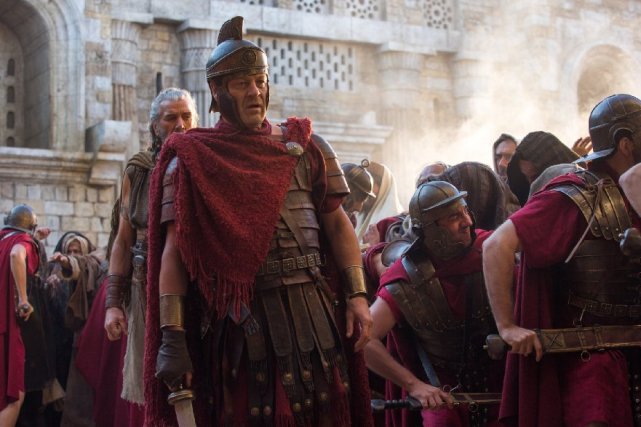
A good example of the film’s taking a credible idea and running with it is depicting Herod’s son Antipas as a paranoid weirdo who has inherited his father’s fear of being overthrown by the promised Messiah. Since that fear made his father murder the infants of Bethlehem, Antipas continues the thirst for blood by hiring a Roman centurion (Sean Bean) to hunt Him down. Since we know the Biblical account, we know what will not happen, but the film’s narrative remains interesting and sometimes tense because, unlike most Biblical films, we don’t know exactly how its embellishments will play out. Likewise, another threat is kept present as Jesus is shadowed by a demon (Rory Keenan) who whispers into others’ ears of who Jesus might be; it makes sense that Satan knew about the young Jesus, but any involvement he might have had before their confrontation in the desert must be left to the realms of speculation.

Image result for the young messiah sean bean

It helps too that The Young Messiah is of a respectable quality, fitting in nicely with other Biblical films of artistic merit, such as The Nativity Story and The Passion of the Christ. The cinematography is consistently handsome, especially as Jesus’ family journeys across the Judean countryside. There is a bit of an overreliance on slow-motion when certain scenes are meant to have spiritual significance, and perhaps letting the profound moments speak for themselves could have made them stronger.

Yet The Young Messiah does what few faith-based films do in depicting a story that’s never been told while keeping its basis in the Gospels. Even in Jesus’ final monologue, the simple fictional lines hold an insightful truth: beyond coming to die, Jesus became man to live, both as a child and as an adult, so He could relate to His creations in all things but sin. The Young Messiah may appeal mainly to Christian audiences, but it has more food for thought than most Christian films try to deliver.

Best line: (Joseph) “I know you have many questions, but you need to let them sleep in your heart for now. Why? Because your questions are the questions of a child, but the answers are the answers for a man. That is one bridge I cannot build. I don’t know how. But God can, and we must trust Him.”


Rank: List Runner-Up


© 2016 S.G. Liput
437 Followers and Counting
 

Cloud Atlas (2012)

23 Friday Dec 2016

Posted by sgliput in Movies, Poetry, Reviews, Writing

≈ 3 Comments

Tags

Action, Drama, Sci-fi, Thriller

Image result for cloud atlas film

The centuries are full of tales,
Not all of which are told for sales.
Some barely dent; some tip the scales,
And those who lived them rarely knew
If theirs for others would ring true.

The choices made for centuries
By king and kid and star and sleaze,
By massive and minute degrees
Affect, destroy, create, and bless
More fates than anyone could guess.
____________________

MPAA rating: R

Remember that feeling of being blown away that I mentioned back when I reviewed Inception and King of Thorn? Well, it’s back with a vengeance. After the credits of Cloud Atlas began rolling, I was left speechless and strangely satisfied. As Tom Hanks said in one of the DVD featurettes, upon reading the script, “I didn’t have any questions.” When the interviewer then asked, “So you understood it?” he replied with an unabashed “No.” Cloud Atlas is such a huge, epic, multi-layered piece of work that it’s no surprise that the most common descriptor from both admirers and detractors has been “ambitious.” It’s one of those rare films that found its way onto the best-of and worst-of lists of different critics, and I can easily understand both opinions. I feel I should recommend it to everyone, yet I can guarantee not everyone will like it. But I did.

I’m having trouble even coming up with a succinct way to describe Cloud Atlas, if there is one. Based on David Mitchell’s novel and adapted by Tom Tykwer and the Wachowskis of Matrix fame, it’s six separate stories in one, all linked by the continuity of souls and the bonds of literature, love, faith, music, kindness, and loss. The first tale is a 19th-century seafaring voyage of a dying lawyer (Jim Sturgess) and a runaway slave (David Gyasi). The lawyer’s journal is later read by a gay composer (Ben Whishaw), whose dealings with a famous maestro (Jim Broadbent) are like The Imitation Game with sheet music. The former’s letters are later read by Luisa Rey (Halle Berry), a journalist whose investigations play out like Silkwood meets Coma and inspire a mystery novel read later by Timothy Cavendish (Broadbent) as he plots against his Cuckoo’s Nest-style incarceration. Then, there’s the distant future, where a submissive clone named Sonmi-451 (Doona Bae) is saved by a resistance fighter (Sturgess) in Neo-Seoul, plus an even further post-apocalyptic future where Zachry (Tom Hanks) and a technologically advanced stranger (Berry) journey to potentially save what is left of mankind. How’s that for succinct?

Image result for cloud atlas film

With so much sheer plot to cover, it’s no surprise that the film stretches for close to three hours and could easily have been lengthened into a mini-series event. One of the most divisive aspects of Cloud Atlas is how it was edited, not with each story being told individually (as is the case in the novel, I’ve heard), but with every other scene jumping randomly to another time period to continue one of the other plotlines. One minute, we’re watching Tom Hanks as an apocalyptic goat herder, the next he’s playing a murderous author in 2012. I don’t know how the editing team kept track of everything, and it so easily could have turned into a confusing mess, but as odd as it seems, this unorthodox strategy works. It’s not every film that begins by explaining that, if the audience “can extend [their] patience for just a moment, you will find that there is a method to this tale of madness.” Each story is straightforward enough that I was able to follow it, especially with the settings and costumes differentiating them from each other. The method works too to drive home certain similarities between the timelines, in one instance someone walking along a precarious perch, in another a villain being knocked out from behind just before killing someone.

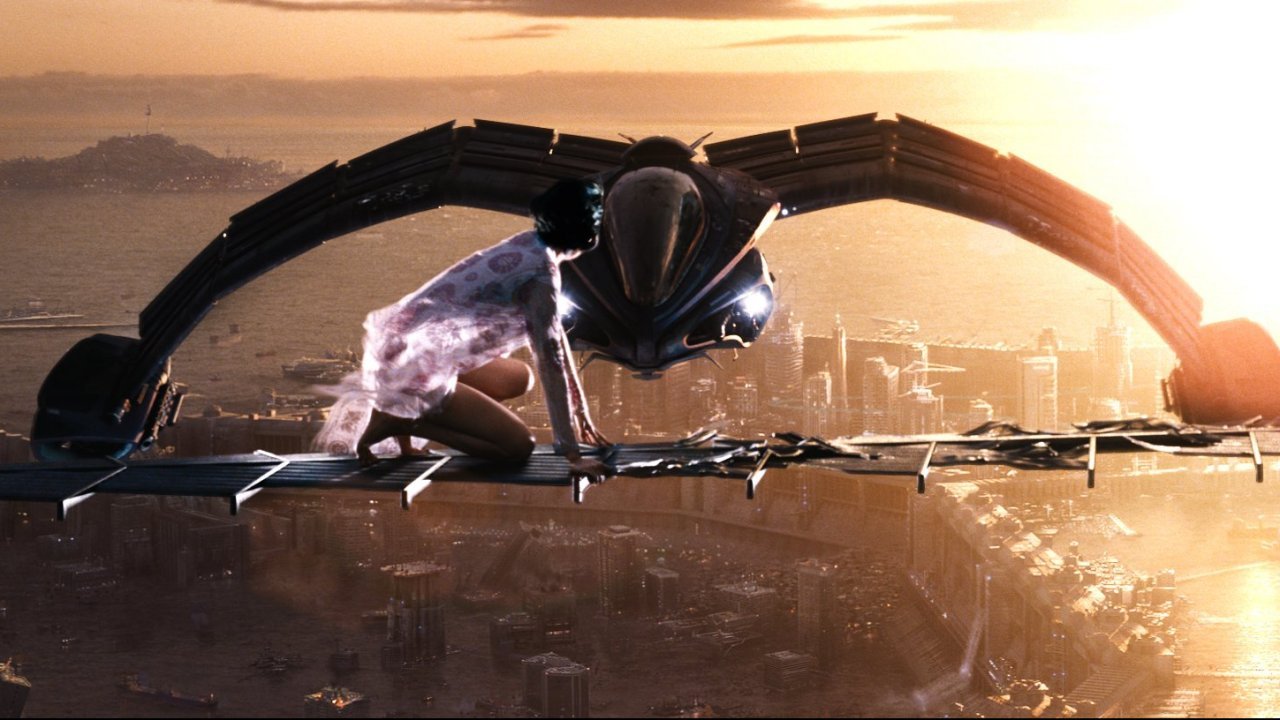
Each story seems to have its own genre too, whether it be the corporate espionage of the 1970s plot or the British comedy of the Cavendish tale. Probably the most entertaining are the futuristic Neo-Seoul segments, which also have the coolest visuals. Watching how these stories are connected in ways big and small, with questions raised early and answered late, is a journey which requires patience but which I found rewarding as some of the stories end tragically but some with great satisfaction. I also recognized quite a few little influences from other films, ranging from Silkwood, Soylent Green, and Mad Max to Logan’s Run, Wrinkles, and The Fellowship of the Ring.

Image result for cloud atlas film hugo weaving

As I alluded to earlier, the extensive cast make cameos of varying importance in the six stories, often playing such wildly deviating roles that I can imagine the actors viewing this film as a special treat and challenge for their abilities. Luckily, the entire cast rises to the occasion to make every character distinct, sometimes even playing roles of different gender and ethnicity. It’s practically a game trying to spot every recognizable face. Hanks, Berry, Broadbent, and Sturgess are the most significant presences throughout the film, but also making important impacts on the story are Susan Sarandon, Hugh Grant, Keith David, James D’Arcy, and Hugo Weaving. Weaving may be inescapably recognizable in every role, but he’s certainly diverse as a villain, playing a Nurse Ratched wannabe, a Korean board member, and a specter of the devil called Old Georgie. The care taken to hiding the actors in plain sight is incredible, and not to invalidate that Tom Hanks quote from earlier, but my main question afterward was where they incorporated everyone, even in unrecognizable cameos.

Image result for cloud atlas film

I suppose I should answer why Cloud Atlas appealed to me, when it clearly turns off so many others. I remember seeing the monumental 5+-minute trailer back in 2012, honestly the best trailer I think I’ve ever seen (see the bottom), and I’ve had a burning curiosity about it ever since, which has been delayed by reports of its confusing and objectionable narrative. And yet, I had to see it. I guess I’m simply an enormous appreciator of continuity, the idea that a storyteller knows where he’s going from the start and mixes the myriad ingredients and characters of his tale in subtle but memorable ways. That’s why I love Lost; all the little flashbacks converge at times, with characters bumping into each other long before they meet in earnest, hinting at a larger story and hand at work. I’m a sucker for this concept of cosmic connections which Cloud Atlas manages to capture across centuries; when the tapestry threads of the story come together and the music swells, I…I just can’t help but get goosebumps.

Yet I must admit that it’s not done in a particularly Christian way. Aside from the frequent language and occasional sex and violence, the plot hinges on the idea of reincarnation and the continuity of souls, things in which I do not believe. In fact, I usually roll my eyes at this kind of New Age metaphysical mumbo-jumbo, yet I can accept it as a movie concept for the sake of appreciating the bigger picture it paints, if only in a three-hour movie. Similarly, the long runtime and jarring changes of place and tone can be a bear to sit through, but it’s worth it once you get over the hump in the middle. Oh, and by the way, watch with subtitles; the furthest future segment has a crazily stylized pigeon-English that is admirable in a cultural sense but hard to understand without reading along.

Image result for cloud atlas film hugo weaving

Love it or hate it, Cloud Atlas is a film hard to forget, a piece of crazy cinematic art that is as bizarre and challenging as it is beautiful and daring. If its methods were a bit more mainstream, I could see it as a Best Picture nominee, but it’s a crime that it didn’t receive one Oscar nomination, not even for the effects or the universally lauded score. (It should have effortlessly won Makeup and Hairstyling, at least.) The cinematography and talented cast clearly mark it as a noble effort, and I suppose it’s up to each individual viewer to decide whether it’s a masterpiece or a train wreck. It’s a monument of a film, one full of ideas and themes I do not endorse or believe in and others that are simply universal. This is not a film to watch casually, but it is undoubtedly worth watching.

Best line: (Haskell Moore, played by Weaving) “There is a natural order to this world, and those who try to upend it do not fare well. This movement will never survive; if you join them, you and your entire family will be shunned. At best, you will exist a pariah to be spat at and beaten; at worst, to be lynched or crucified. And for what? For what? No matter what you do, it will never amount to anything more than a single drop in a limitless ocean.”   (Adam Ewing, played by Sturgess) “What is an ocean but a multitude of drops?”

Rank: List-Worthy

© 2016 S.G. Liput
437 Followers and Counting

Here’s that trailer that so captivated me. It’s a perfect little encapsulation of how the film made me feel too.

My Name Is Bill W. (1989)

21 Wednesday Dec 2016

Posted by sgliput in Movies, Poetry, Reviews, TV, Writing

≈ Leave a comment

Tags

Biopic, Drama, History

Image result for my name is bill w. 1989


Although I sit in the cabinet,
I shall not stay for long.
My contents undeniably tempts
My owner with its song.
Its call is far too strong.

Though some can sip with a managed lip,
A few can’t get enough.
No need to think when an amber drink
Can smooth life when it’s rough.
One swig, and “That’s the stuff!”

I’ve been his friend for years on end;
He’s rarely missed a day.
This latest trick, I hope, won’t stick,
Or I may fade away.
I’m lonely since A.A.
____________________

MPAA rating: TV movie (should be PG)

Back in 1986, James Woods and James Garner starred in a Hallmark Hall of Fame movie called Promise, a tale of an older brother (Garner) who must come to terms with caring for his schizophrenic sibling (Woods). While the acting is phenomenal and it remains one of the most celebrated TV movies ever with Emmys, Golden Globes, and a Peabody to its name, it fell short of greatness for me thanks to a downer of an ending. Three years later, Woods and Garner teamed up again in this other Hallmark Hall of Fame member titled My Name Is Bill W., and what was apparently intended as a reunion turned out to be even better than their original collaboration.

My Name Is Bill W. is the story of the founders of Alcoholics Anonymous, particularly Bill Wilson (Woods), who begins as a happy husband with great business aspirations in the stock market. Over the years after World War I, he schmoozes investors and stock opportunities to work his way up the ladder of success, all with drink in hand. The habit of a few drinks to loosen lips and pocketbooks quickly becomes a lifestyle for him, much to the dismay of his faithful wife (JoBeth Williams), and he soon starts to spiral into alcoholism. It’s difficult to watch a man willingly destroy his life, but at least we have the promise of a revelation, one which unites Wilson and fellow drunk Bob Smith (Garner) into a dynamic duo dedicated to supporting alcoholics everywhere in need of hope.


Image result for my name is bill w. film

Both main actors are in top form, with JoBeth Williams being an extra surprising standout as Wilson’s long-suffering wife, and other strong roles go to Gary Sinise and George Coe. With the inebriated mistakes and desperation he pulls off so convincingly, it’s no wonder that Woods won an Emmy, just as he did for Promise three years earlier, though it’s sad that Garner didn’t win for either.

Above all, the film warns against the dangers of overdrinking, not by demonizing alcohol itself but reminding us that some people simply lack the self-control of others, whether it be “a disease” as one doctor states in the film or a psychological addiction. It’s clear from Bill Wilson’s life that oftentimes a desperate man can only pick himself up after hitting his lowest point, but his story serves as a caution for anyone who refuses to listen to the love and advice of their friends and family. What might have been a tragedy thankfully turned out to be an inspiration because, for Bill Wilson, a man whose life was ruled by alcohol both in its excess and its absence, success didn’t simply involve dragging himself out of the gutter, but helping others to do the same.

Best line: (Bill) “It’s like any journey, Fred. It begins with the first step.”


Rank: List-Worthy


© 2016 S.G. Liput
437 Followers and Counting


VC Pick: Dune (1984)

20 Tuesday Dec 2016

Posted by sgliput in Movies, Poetry, Reviews, Writing

≈ Leave a comment

Tags

Drama, Sci-fi

Image result for dune film worm


Far, far away, both in distance and year,
On a planet of sand known as Dune,
Spice was the word they all wanted to hear,
Its wealth their desire, its dearth their worst fear,
But the devious monarchs would learn all too soon
That they would not easily conquer this sphere.

Though long ago, a great prophecy stood
Of a savior to liberate Dune.
Though rivals and emperors did what they could
To see that he never would reach adulthood,
His destiny rose like the taciturn moon
To rescue this coveted planet for good.
____________________

MPAA rating: PG-13

Since I mentioned Dune in my post yesterday, guess what movie my VC wanted me to review next? While some of her picks end up being pleasant surprises for me, I’ve seen Dune enough times (thanks to her) that I knew this latest viewing wasn’t about to change my opinion. She loves it; I don’t, and neither of us are alone. David Lynch’s long, tiresome adaptation of Frank Herbert’s celebrated sci-fi novel was savaged by critics at the time, but over the years, it’s gained more appreciation, even a cult following. I can understand why it warrants a cult following, but the simple truth remains, it’s not a very good movie.

Image result for dune film

Perhaps the hardest challenge facing Lynch as director and screenwriter was somehow compressing Herbert’s enormous otherworldly tale into a feature-length film. The story has so many characters, foreign names and gadgets, and plot-specific terminology that it’s no wonder casual viewers were thoroughly lost. Luckily, my VC has read the book, which I’m sure helps her, and I’ve seen the film enough times that I can follow what’s going on well enough. However, it’s hard to ignore the fact that the first 20 or 30 minutes is spent with different characters taking turns to spout exposition. Before the story even begins in earnest, we have to learn about the four key planets and their rulers, and the drug-like Spice that enables space travel and is only found on Arrakis/Dune, and the subterfuge of the emperor (José Ferrer) in pitting the houses of Atreides and Harkonnen against each other, and the telepathic Bene Gesserit sisterhood that has breeding rules broken by Duke Leto Atreides’ concubine (Francesca Annis) in order to give her love a son named Paul (Kyle MacLachlan), who may have a dangerous messianic destiny. You got all that? Well, I guarantee that it’s easier reading it than listening to it all in one go, which is probably why Herbert’s book was so much more popular than Lynch’s film.

The 137-minute film is so packed with plot that there’s literally no time for character building. Every character is formed solely by how they’re explained to us and what they do to further the plot. When Paul meets a lovely Fremen girl (Sean Young) after he’s been banished to the desert, you know they’ll end up together, not because of their chemistry or anything, but because Paul had visions of her and it makes sense for the plot. There are smaller quibbles too, whether it be the constant internal monologuing, the bizarre intentions of a traitor in the Atreides house, or the casting of an important character from the books only to kill him off in a trice, not to mention the strange and disgusting Harkonnen villains and the sudden ending.

Image result for dune film

Wow, sometimes I convince myself to like a film more by writing about all its strengths, but I think the opposite has happened here. I don’t hate Dune by any means, nor am I sorry to have seen it since it is not without some redeeming factors. True, most of the actors are in “serious sci-fi mode,” but it was enjoyable to see so many familiar faces before their more recognizable roles, which were often still in the realm of science fiction. There are Patrick Stewart (Star Trek: The Next Generation), Dean Stockwell (Quantum Leap), Brad Dourif (Voyager and Lord of the Rings), Jürgen Prochnow (Air Force One), Max von Sydow (Dreamscape, Flash Gordon), and even Sting (yes, the singer), among many others. Plus, I must commend Lynch and his set design team for bringing these extraterrestrial deserts and palaces to life. Even if some of the effects are still dated, the giant worms are admittedly impressive too, especially when backed by the symphonic rock score supplied by the band Toto.

As much as I wish I could count Dune among my favorites, its negatives are just too conspicuous to overlook. Even I will concede, though, that it was a valiant effort for all those involved, one which my VC and other fans clearly appreciate more than most.

Best line: (Duke Leto Atreides) “I’ll miss the sea, but a person needs new experiences. They jar something deep inside, allowing him to grow. Without change, something sleeps inside us and seldom awakens. The sleeper must awaken.”


Rank: Dishonorable Mention


© 2016 S.G. Liput
437 Followers and Counting


The Hobbit: The Battle of the Five Armies (2014)

19 Monday Dec 2016

Posted by sgliput in Movies, Poetry, Reviews, Writing

≈ 2 Comments

Tags

Action, Drama, Fantasy, War

Image result for the hobbit the battle of five armies


It seems so very long ago
The journey started with “hello,”
And then despite my disapproving,
Ever onward we were moving
Through the high and through the low,
Through lands I never dreamed I’d go.

And now at last, it’s with a sigh,
I whisper out a strained goodbye.
Despite the pain I had in store,
I’m glad I stepped out my front door.
From comfort’s hearth to dragon’s den,
I’ll treasure there and back again.
___________________

MPAA rating: PG-13

I reviewed the first two Hobbit films long ago as part of my original year-long movie countdown in 2014, when the third installment wasn’t even released yet, and despite my grouping the trilogy together on my list, it’s odd that I haven’t gotten around to reviewing The Battle of the Five Armies until now. Perhaps it’s because this third chapter of Peter Jackson’s prequel trilogy to The Lord of the Rings is most clearly the weakest of the bunch, the main problem being the preponderance of apocryphal embellishments found nowhere in Tolkien’s children’s novel.

It certainly can’t be accused of false advertising: it’s called The Battle of the Five Armies, and that’s exactly what you get—a huge, Middle-earth epic battle between dwarves, elves, the men of Laketown, orcs, and eventually eagles. If all I want out of a movie is sword slashing galore and spectacular set pieces, The Battle of the Five Armies delivers, especially reminding us just how awesome Legolas is. But in stretching out what is only a few pages in The Hobbit book, it falls short of the higher aspirations of The Lord of the Rings, each part of which deserved its near three-hour runtime. What with the painfully forced comic relief of Alfrid (Ryan Gage) and the unsatisfying love triangle of she-elf Tauriel (Evangeline Lilly of Lost) and he-dwarf Kili (Aidan Turner), it’s obvious that Jackson’s trying to string out this bloated third of a story in a less than successful manner. It’s not bad; it’s just forced at times. And don’t get me started on those were-worms! What is this, Dune?

Image result for the hobbit the battle of five armies bilbo

Yet Middle-earth is never without its joys. Jackson does manage to improve certain scenes from the book, most notably the death of the dragon Smaug, and the themes of greed and loyalty started in An Unexpected Journey are fulfilled in Thorin’s obsession with protecting his newly won hoard. As it was from the start, the casting is (mostly) impeccable, whether it be Martin Freeman as the younger Bilbo Baggins, Luke Evans as heroic Bard the Bowman, or returning familiar faces like Ian McKellen and Hugo Weaving. And by the end, it does feel like a worthwhile journey has been taken, especially with the end credits that recall those of The Return of the King, backed by Billy Boyd’s magnificent “The Last Goodbye.” (See my End Credits Song Hall of Fame.) The Hobbit trilogy is undoubtedly less than The Lord of the Rings, but it is unfortunate that the last one received only a single Oscar nomination for Sound Editing. Surely it could have competed in Makeup, Visual Effects, and Best Song, but the series’ general inferiority made that unlikely. Even so, Jackson’s achievement should not be overlooked; he completed two consecutive epic trilogies, a feat that is clearly harder than it seems if James Cameron’s troubles with the Avatar sequels are any indication.

I still can’t help but feel that an opportunity was missed in making The Hobbit a trilogy rather than a two-parter. Early on, I thought it was perhaps to humanize the thirteen dwarfs so that each character wasn’t just one of the thirteen, and while Jackson was more successful with some than others, most of the dwarves still seemed interchangeable, even for me, a hardcore Middle-earth fan. It’s a shame that Jackson couldn’t leave us Middle-earth lovers with more than a CGI free-for-all and a wistful farewell, but any visit to the land of hobbits, dragons, wizards, and rings is still one worth taking.

Best line: (Thorin) “If more people valued home above gold… this world would be a merrier place…”


Rank: List-Worthy (mainly due to the previous two and my own fondness for the franchise)


© 2016 S.G. Liput
437 Followers and Counting


← Older posts
Newer posts →

Recent Posts

  • We Didn’t Start 2025 (Recap)
  • NaPoWriMo 2025 Recap (Finally)
  • Sonic the Hedgehog 3 (2024)
  • It Happened One Night (1934)
  • Spellbound (2024)

Recent Comments

associatesofshellymann's avatarassociatesofshellyma… on My Top Twelve La La La So…
Kit's avatarKit Nichols on Bonnie and Clyde (1967)
lifelessons's avatarlifelessons on Look Back (2024)
Carol Jackson's avatarCarol Jackson on The Thief of Bagdad (1940…
Stephen's avatarStephen on Love Story (1970)

Archives

  • January 2026
  • December 2025
  • May 2025
  • April 2025
  • March 2025
  • February 2025
  • January 2025
  • December 2024
  • May 2024
  • April 2024
  • March 2024
  • February 2024
  • January 2024
  • December 2023
  • November 2023
  • October 2023
  • September 2023
  • July 2023
  • June 2023
  • May 2023
  • April 2023
  • March 2023
  • February 2023
  • January 2023
  • December 2022
  • November 2022
  • October 2022
  • September 2022
  • August 2022
  • July 2022
  • June 2022
  • May 2022
  • April 2022
  • March 2022
  • February 2022
  • January 2022
  • December 2021
  • November 2021
  • October 2021
  • September 2021
  • August 2021
  • July 2021
  • June 2021
  • May 2021
  • April 2021
  • March 2021
  • February 2021
  • January 2021
  • December 2020
  • November 2020
  • October 2020
  • September 2020
  • August 2020
  • July 2020
  • June 2020
  • May 2020
  • April 2020
  • March 2020
  • February 2020
  • January 2020
  • December 2019
  • November 2019
  • October 2019
  • September 2019
  • August 2019
  • July 2019
  • June 2019
  • May 2019
  • April 2019
  • March 2019
  • February 2019
  • January 2019
  • December 2018
  • November 2018
  • October 2018
  • September 2018
  • August 2018
  • July 2018
  • June 2018
  • May 2018
  • April 2018
  • March 2018
  • February 2018
  • January 2018
  • December 2017
  • November 2017
  • October 2017
  • September 2017
  • August 2017
  • July 2017
  • June 2017
  • May 2017
  • April 2017
  • March 2017
  • February 2017
  • January 2017
  • December 2016
  • November 2016
  • October 2016
  • September 2016
  • August 2016
  • July 2016
  • June 2016
  • May 2016
  • April 2016
  • March 2016
  • February 2016
  • January 2016
  • December 2015
  • November 2015
  • October 2015
  • September 2015
  • August 2015
  • July 2015
  • June 2015
  • May 2015
  • April 2015
  • March 2015
  • February 2015
  • January 2015
  • December 2014
  • November 2014
  • October 2014
  • September 2014
  • August 2014
  • July 2014
  • June 2014
  • May 2014
  • April 2014
  • March 2014
  • February 2014
  • January 2014
  • December 2013

Categories

  • Blindspot
  • Blogathon
  • Christian
  • Movies
  • Music
  • NaPoWriMo
  • Poetry
  • Reviews
  • TV
  • Writing

Meta

  • Create account
  • Log in
  • Entries feed
  • Comments feed
  • WordPress.com

Recent Posts

  • We Didn’t Start 2025 (Recap)
  • NaPoWriMo 2025 Recap (Finally)
  • Sonic the Hedgehog 3 (2024)
  • It Happened One Night (1934)
  • Spellbound (2024)

Recent Comments

associatesofshellymann's avatarassociatesofshellyma… on My Top Twelve La La La So…
Kit's avatarKit Nichols on Bonnie and Clyde (1967)
lifelessons's avatarlifelessons on Look Back (2024)
Carol Jackson's avatarCarol Jackson on The Thief of Bagdad (1940…
Stephen's avatarStephen on Love Story (1970)

Archives

  • January 2026
  • December 2025
  • May 2025
  • April 2025
  • March 2025
  • February 2025
  • January 2025
  • December 2024
  • May 2024
  • April 2024
  • March 2024
  • February 2024
  • January 2024
  • December 2023
  • November 2023
  • October 2023
  • September 2023
  • July 2023
  • June 2023
  • May 2023
  • April 2023
  • March 2023
  • February 2023
  • January 2023
  • December 2022
  • November 2022
  • October 2022
  • September 2022
  • August 2022
  • July 2022
  • June 2022
  • May 2022
  • April 2022
  • March 2022
  • February 2022
  • January 2022
  • December 2021
  • November 2021
  • October 2021
  • September 2021
  • August 2021
  • July 2021
  • June 2021
  • May 2021
  • April 2021
  • March 2021
  • February 2021
  • January 2021
  • December 2020
  • November 2020
  • October 2020
  • September 2020
  • August 2020
  • July 2020
  • June 2020
  • May 2020
  • April 2020
  • March 2020
  • February 2020
  • January 2020
  • December 2019
  • November 2019
  • October 2019
  • September 2019
  • August 2019
  • July 2019
  • June 2019
  • May 2019
  • April 2019
  • March 2019
  • February 2019
  • January 2019
  • December 2018
  • November 2018
  • October 2018
  • September 2018
  • August 2018
  • July 2018
  • June 2018
  • May 2018
  • April 2018
  • March 2018
  • February 2018
  • January 2018
  • December 2017
  • November 2017
  • October 2017
  • September 2017
  • August 2017
  • July 2017
  • June 2017
  • May 2017
  • April 2017
  • March 2017
  • February 2017
  • January 2017
  • December 2016
  • November 2016
  • October 2016
  • September 2016
  • August 2016
  • July 2016
  • June 2016
  • May 2016
  • April 2016
  • March 2016
  • February 2016
  • January 2016
  • December 2015
  • November 2015
  • October 2015
  • September 2015
  • August 2015
  • July 2015
  • June 2015
  • May 2015
  • April 2015
  • March 2015
  • February 2015
  • January 2015
  • December 2014
  • November 2014
  • October 2014
  • September 2014
  • August 2014
  • July 2014
  • June 2014
  • May 2014
  • April 2014
  • March 2014
  • February 2014
  • January 2014
  • December 2013

Categories

  • Blindspot
  • Blogathon
  • Christian
  • Movies
  • Music
  • NaPoWriMo
  • Poetry
  • Reviews
  • TV
  • Writing

Meta

  • Create account
  • Log in
  • Entries feed
  • Comments feed
  • WordPress.com

Blog at WordPress.com.

  • Subscribe Subscribed
    • Rhyme and Reason
    • Join 814 other subscribers
    • Already have a WordPress.com account? Log in now.
    • Rhyme and Reason
    • Subscribe Subscribed
    • Sign up
    • Log in
    • Report this content
    • View site in Reader
    • Manage subscriptions
    • Collapse this bar