The thrills of poetry once felt
By readers of past centuries,
The psalms at which the faithful knelt,
The ballads by the masters dealt,
The words that made romantics melt
Are now but dusty elegies
That men ignore and children tease.
Yet in the texts we only read
When college credit is attached
Are hymns of prisoned passion freed
And rhythmic rhymes still fun indeed
And lessons we will never heed
If we decide to stay detached
From lyric surfaces unscratched.
From Flanders Fields to Innisfree,
From Reading Gaol to Paul Revere,
No world is wide as poetry.
When hip diversions are debris
And dust of the next century,
I trust that poems will persevere,
To still inspire, haunt, and cheer.
__________________
MPAA rating: PG
For a guy with a poetry/movie blog, it boggles my mind that I did not see this movie sooner. It has “poet” in the title! Its screenplay won an Oscar! It has Robin Williams in dramatic mode! What’s wrong with me? The only thing I had to go on was a comment from my VC, who recalled seeing five minutes of it and decided it was boring. It may have slow moments, but now I know better (and so does she).
Peter Weir’s Dead Poets Society takes place at the prestigious Welton Academy, where its founding principles of tradition, honor, discipline, and excellence are hailed early on by its headmaster (Norman Lloyd, or Dr. Auschlander from St. Elsewhere). A collection of teenage prep students quickly befriend each other in the dorms, and though I found it difficult to tell the boys apart at times, their characters are defined over time: the shy one (Ethan Hawke), the one with constant pressure from his strict father, the one with glasses, the tall one, the rebellious one, and the one with a crush on a girl at another school. Hawke, who plays Todd Anderson, has gone on to the most success, but all of the young actors excel. Despite its 1950s setting, I was reminded at times of another movie I ought to review, 1985’s The Breakfast Club; the relationships aren’t nearly as detailed or antagonistic, but moments of bonding strike a similar chord, especially when issues of parental and peer pressure come to the fore.
Of course, what these boys have that The Breakfast Club didn’t is a sympathetic teacher in John Keating (Williams), who remembers his own attendance at Welton well enough to understand his students better than the set-in-their-ways administrators. His unconventional methods take the students out of the classroom and challenge them to stand out, set their own pace, rip out fallacies, and “seize the day,” even encouraging them to re-form the titular Dead Poets Society. The club and the boys’ exploits carry the film well enough, but Williams becomes the star every time he’s on-screen. This, Good Will Hunting, and Awakenings just make me wish he’d done even more dramatic roles.
In following the story and its authoritarian critique to the bitter end, the film sadly doesn’t end on the most positive of notes. The final scene is inspiring and even more touching since Williams’ death, but the lives of the characters are left depressingly open. As much as I would have preferred a happier conclusion, Dead Poets Society is a testament to poetry, friendship, and the influence of a passionate teacher. It shines most in individual moments, like a brilliantly written vignette involving a desk set, and like Keating, dares us all to “live deep and suck out all the marrow of life,” to “contribute a verse” to the “powerful play” of life.
Best line: (Keating) “Boys, you must strive to find your own voice. Because the longer you wait to begin, the less likely you are to find it at all.”
What’s right,
Worth a fight
And the height of loyalty?
What’s wrong
Won’t last long
If right’s champions agree.
Surely all with decency
On seeking justice would agree,
And yet on how we seek and why
So many don’t see eye to eye.
Won, lost,
Wars have cost;
Lines are crossed and drawn once more.
Wrong, right,
And the fight
Never make a simple war.
________________
MPAA rating: PG-13
Marvel has at last reached its Phase 3, and despite being the thirteenth film in the Marvel Cinematic Universe, the reigning lords of summer blockbusters show no sign of stopping. In fact, Phase 3 might be the best era of the MCU, if Civil War is any indication. Captain America’s third film is a thrilling continuation of both the Bucky fiasco of The Winter Soldier and the Sokovian destruction of Age of Ultron, stressing the emotional damage that such disastrous circumstances can wreak on individuals and relationships.
Unlike other single-character-focused entries up to this point, Civil War doesn’t have just a few cameos from other MCU stars. It has nearly every Marvel hero introduced thus far — Cap (of course), Bucky, Iron Man, War Machine, Black Widow, Falcon, Hawkeye, Ant-Man, Vision, Scarlet Witch, and the newest additions of Black Panther (Chadwick Boseman) and a non-Sony Spider-Man (Tom Holland) — all being forced to choose between two equally defensible sides concerning how much freedom the Avengers should have to do their danger-prone duty. Even the notable absence of Thor and the Hulk is used to support the argument that ultra-powerful people should not be left unaccountable.
Most reviews of Civil War, including the initial reaction of my VC, have proclaimed it as the best Marvel movie yet. (I think the first Avengers edges it out, IMO.) However, I do know at least one naysayer, a DC fan, who considers the “Civil War” a mere petty squabble amid the big picture leading up to Infinity War. I’ll grant that much of the fighting between the heroes is not a life-and-death struggle, and it isn’t meant to be. For most of the film, the battles are meant for defense or damage control (not that they’re any less awesome), but the clash of ideologies is genuine. The seeds of it have been well-established, from the distrust of authority that The Winter Soldier instilled in Steve to the understandable guilt felt by Tony, who knows that, unlike most threats, Ultron really was his fault. Considering how much damage has been wrought by the MCU’s various baddies and heroes alike, it’s not surprising that the world’s governments would seek to reaffirm their authority. The other Avengers choose their sides based on loyalties or believable reasoning, with the exception of Hawkeye, who chooses Cap over his pal Black Widow for no other reason than to keep the fight six against six.
Considering how much ideological and character terrain is covered, it’s amazing how entertaining Civil War is. (The worst thing I can say about it is that the globe-hopping location titles are a little too HUGE.) Even if it seems odd now to introduce Spider-Man and Black Panther long before their respective stand-alone movies, both Boseman and Holland offer game interpretations of their characters that somehow manage to stand out among the crowd of heroes. Black Panther is the more mysterious of the two, reserved and stately outside his vibranium suit and vicious for revenge within it, while Holland as the youngest Spider-Man yet manages to top Andrew Garfield’s version with only a fraction of the screen time, even if his gee-whiz astonishment gets a little old. (I’m still partial to Tobey Maguire for now.) Despite their rushed introduction in Age of Ultron, Scarlet Witch and Vision also get some needed clarifying character moments. I was thrilled too to see Martin Freeman in a small governmental role, and I can’t wait to see if he’ll ever run into his Sherlock co-star as Dr. Strange. The semi-climactic battle between the twelve heroes at a German airport is really the crowning moment of the film and the franchise thus far and manages to surprise, poke fun, grieve, and impress with all the cleverness and enjoyment Marvel delivers so well. Casual viewers not up-to-date on the MCU may be lost at times, but for long-time fans like my VC and me, this is geek heaven. Stan Lee also gets one of his funniest cameo moments to date.
The advertisements for Civil War have urged audiences to “choose a side,” a choice which actually isn’t as clear-cut as the typical good-vs-evil battle. Tony has good reasons for his actions in trying to make amends for his mistakes, while Cap is trying to help his friend Bucky and remain unfettered by bureaucratic agendas. Considering his name is in the title, Cap seems like the obvious choice, and Bucky’s story is tragic enough to make him naturally sympathetic; but even the American hero can’t stop regrettable casualties. The costs of revenge become more real over time, and by the end, sympathies change back and forth until it’s hard to say where one’s allegiance lies. That’s what makes a brilliant conflict, the kind of built-up feud that can’t be done the same with one movie (ahem, Batman v Superman). It’s what sets Marvel and Civil War above the competition.
Best line: (Sharon Carter, speaking of Peggy Carter) “And she said, ‘Compromise where you can. Where you can’t, don’t. Even if everyone is telling you that something wrong is something right. Even if the whole world is telling you to move, it is your duty to plant yourself like a tree, look them in the eye, and say, “No, you move”.’”
Idealists are few, and unflinching ones rare.
Too many are loath to commit.
More often, agendas too secret to share
Give heroes good reason to quit.
Yet, sometimes a principled stalwart of right
Is wise to not trust quite so much,
So when the agendas collapse in a fight,
There’s something still solid to clutch.
___________________
MPAA rating: PG-13
Before I review Cap’s third awesome outing in Civil War, I thought I should cover the only major Marvel movie I haven’t reviewed yet. (I’ll get to Thor 2 eventually.) The First Avengerwas a pitch-perfect origin story for Captain America while The Avengers paired the patriotic hero with his super-powered team, but it was The Winter Soldier that brought the 1940s Steve Rogers into the modern world.
After adapting to his new century, Steve Rogers butts heads with Nick Fury (Samuel L. Jackson, who gets to do more in this movie than in most of his cameos), only to uncover a conspiracy within S.H.I.E.L.D. itself, going right up to its president Alexander Pierce (Robert Redford in rare villain mode). With help from Scarlett Johansson’s ever-resourceful Black Widow and new ally Sam Wilson/Falcon (Anthony Mackie), Cap faces off against the mysterious Winter Soldier and tries to contain the damage of the inevitable coup. Oh, and a gut-punch twist reminds everyone that no one but villains really die in these comic book movies.
Though The Winter Soldier has a reputation for being better than its predecessor, I do prefer the nostalgic action of The First Avenger more. Nevertheless, the second Cap film features one of the most significant plots of any Marvel film with some of the deepest ripples through the MCU. Not only is Nick Fury “killed” and HYDRA resurrected but S.H.I.E.L.D. is effectively toppled as well, and the film builds on the first film with its revelation of the Winter Soldier’s tragic identity (which I knew going in since it reflects the comics, but it was a genuine surprise for my VC). Being a fan of Marvel’s Agents of S.H.I.E.L.D., I find it amazing how the events of the film were incorporated into the TV show’s concurrent first season (such as the appearance of Agent Sitwell), and the entire second season continued to incorporate elements (like the face-changing mask) and dealt with the fallout and the need to rebuild S.H.I.E.L.D.
There’s really very little negative that I can say about The Winter Soldier. The action and special effects are as spectacular as Marvel’s best films, especially in the slightly numbing final battle. Every actor is on point, and it was an odd pleasure seeing Johansson’s confrontation with Redford, considering he gave her one of her first major roles when they co-starred in The Horse Whisperer. The only bad thing I can say about The Winter Soldier is that its overall product feels rather generic (car chases, fist fights, etc.) compared with Marvel’s more inventive or colorful adventures, like Guardians of the Galaxy or even The First Avenger. It’s nonetheless an essential installment of Marvel’s canon and a highly entertaining one at that.
Best line: (the end of Cap’s speech to S.H.I.E.L.D.) “I know I’m asking a lot, but the price of freedom is high. It always has been. And it’s a price I’m willing to pay. And if I’m the only one, then so be it. But I’m willing to bet I’m not.”
Michael Dorsey is a he,
But he pretends that he’s a she
To play a woman on TV,
So they don’t know that she’s a he
Because he does it secretly.
When, as a she, he finds a she
Who bonds with him as Dorothy,
He wishes he could tell Julie
That he’s a he and not a she,
But he’s a better she than he.
His role gains popularity,
So how can he admit that he
Is not indeed a mighty she
But really just a lying he?
Of course you know – hilariously!
__________________
MPAA rating: PG (probably PG-13 nowadays)
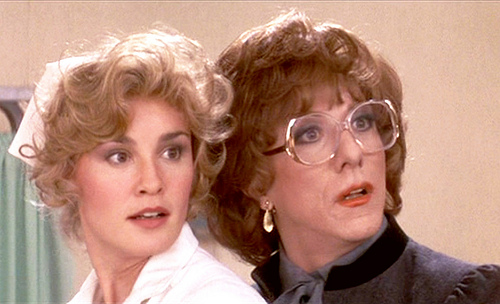
This post has been long in coming, since my VC has been urging me to review one of her favorite comedies while I’ve been in no rush. Tootsie is considered one of the great comedies of the ‘80s and of all time, ranking at #2 on AFI’s list of top 100 laughs. Whenever we watch it, my VC relates how hard she laughed the first time she saw it and how entertaining (and timely) it still is over three decades after its original release.
I acknowledge that Tootsie is quite a good film with a giggle-prone screenplay and a sensational performance from Dustin Hoffman, who embodies his soft-spoken but headstrong female alter ego with thorough commitment. Many scenes are hysterical, especially when all the misunderstandings pile up toward the end. Jessica Lange as Julie earned the film’s one Oscar win (out of ten nominations), but the best scenes and lines go to Michael’s friends, played by Teri Garr and Bill Murray.
Yet for all of its strengths, Tootsie just isn’t one of my favorites, and I can’t really put my finger on why. I suppose the main reason is that I don’t find crossdressing inherently funny. That AFI list I mentioned earlier placed crossdressing comedies in both its #2 and #1 spot (Some Like It Hot being #1), so clearly a man in women’s clothes just tickles many people’s funny bones. I find it amusing here and thankfully tasteful for the most part, but it does not a comedy masterpiece make, even if individual moments do rise into hilarity.
I don’t mean to sound negative. This is just one of many films that my VC loves and I merely like. Hoffman is the star attraction, but for a gender-bending comedy, I always go back to Robin Williams’ Mrs. Doubtfire, perhaps because I prefer the reasoning for his actions (wanting to be with his kids rather than just seeking a job). However, both have a good mix of laughs and drama aimed at a fine actor getting in touch with his feminine side.
Best line: Probably a tie between Bill Murray’s “You slut!” and “That is one nutty hospital.”
Be sure to vote for your favorite character from the Marvel Cinematic Universe in Round 9 of Opinion Battles! With his third film now out, I picked the patriotic shield-bearer Captain America, but there are plenty of great choices.
The Marvel universe has taken over the world with all of the Avengers movies and to celebrate the release Captain America Civil War we are picking our favourite characters from the Marvel Universe.
If you want to take part in the next round, we are going to be picking our favourite X-Men character, if you want enter email moviereviews101@yahoo.co.uk by the 15th May 2016.
Darren – Movie Reviews 101
Thor
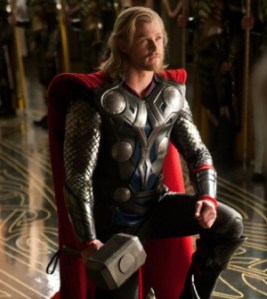
Thor is my favourite Marvel Universe character, I enjoy the comic tone in his naivety about being part of Earth. His world gave us the only good villain in the Marvel world with Loki and you add in the mythology behind the character which is something that always fascinates me personally. And yes I am aware it isn’t the most accurate but still attempts to take us into the world. I do pick him over the…
Mothers are angels, by parenthood wrought,
And unsung saints, whether they know it or not.
Their job is to lead through each giggle and tear
And make angels too of the rascals they rear.
They’re makers of breakfast and takers of guff
And mentors who know when enough is enough.
They’re huggers or kissers, though all aren’t the same,
Who take it in stride when kids think it a shame.
When needed the most, they’re a wide-open door,
The builders of life starting at the ground floor.
All this mothers are, or should be by design,
All worthy of honor, and why I love mine.
__________________
MPAA rating: PG
Happy Mother’s Day to all! I have no idea why it’s taken me this long to review the film that placed #6 on my Top 12 Anime List, but Mother’s Day seemed like the perfect opportunity to review this affectionate tribute to a mother’s love. After strong films like The Girl Who Leapt through Time and Summer Wars, I think Mamoru Hosoda clinched his growing reputation as the next Hayao Miyazaki with Wolf Children, a favorite of many anime fans.
As a college student, Hana meets and gradually falls in love with a young man she meets in class, a strong, silent type with a kind heart. Her love for this unnamed man is not diminished when he reveals that he is part wolf, able to transform at will but choosing to live as a human. What follows is a warmhearted montage of domestic bliss to rival the beginning of Up, along with an equally tragic end when Hana is left alone to care for their two wolf children Yuki and Ame.
While an early scene implies the uncomfortable idea of interspecies romance, almost everything else about this film is sweet and tender in the most appealing way. The usual stresses of raising children are given a unique spin with the werewolf aspect (should she take them to a pediatrician or a vet?). Hana knows nothing about raising kids on her own, let alone the half-wolf variety, but she learns and loves through every sleepless night, cranky tantrum, and potential emergency. While she keeps Ame and Yuki away from the world for the most part to protect them, she is a superlative example of the hard-working, underappreciated single mother.
When the two kids begin to outgrow their small apartment, she decides to move to the distant countryside, where they will have the freedom to choose whether to be wolves or humans. The move to a large dilapidated home (reminiscent of the beginning of My Neighbor Totoro) only means more work for Hana and more opportunities for both fun and danger for assertive Yuki and timid Ame. Hana’s tenacity is tested and affirmed, as is the good will of her charitable neighbors. The lush, hilly setting offers some gorgeous scenery, which captivates one of the children more than the other. In particular, two scenes of natural splendor are the epitome of animated beauty, and the family’s frolic through the snow is accompanied by a winsomely elegant score that always gives me chills.
The unfortunate drawback to Wolf Children’s appeal is a semi-unsatisfying ending. With time to consider both perspectives, I’ve come to forgive the bittersweet climax, which is like the reverse of The Jungle Book’s ending, if that makes sense. Even so, everything Hana did for her children is worthy of the deepest love and appreciation, and the end smacks of adolescent ingratitude. Despite that caveat for the climax, Wolf Children, for me, is not a film to simply like or dislike but to be fond of. My fondness for this film runs deep, and it will forever rank among my favorite depictions of maternal love.
After a full month of poetry, it’s about time for another list. Doors are among the simplest components of a building or room, but they offer many different functions: an entrance, an exit, an obstacle, a trap, a measure to keep something in or out. Naturally, movies have incorporated doors and all their uses and created some memorable door scenes over the years. Of course, almost every film has some kind of door, whether it be big, small, round, square, wood, or metal, but these are my favorite from film, not to forget great TV doors like the Get Smart intro or various doors in Star Trek (like the Guardian of Forever or that revolving door spinning on its own). Without further ado, here are my top 12 door scenes in movies.
Ships and submarines often have doors that close in the event of a flood. While Titanic had some close-call scenes with such doors, The Abyss outdid them years before. After angrily throwing his wedding ring in the toilet and grudgingly retrieving it, Ed Harris’s Bud is very glad he reclaimed it. He almost gets trapped behind an automatic flood door, and only his wedding ring jams it long enough to save his life.
What does the inside of a door look like? Well, newly deceased Sam (Patrick Swayze) finds out when his first experiment with intangibility involves slowly phasing through a door. Plus, there’s the famous penny scene, where he convinces Molly by dragging a coin up the same door.
These two films don’t have much in common, but both feature a visually significant door to a new world, one at the beginning and one at the end. Dorothy’s transition from black-and-white Kansas to the Technicolor Oz will always be one of the most magical moments in cinema, while Truman’s farewell to his life as a reality show ends The Truman Show with a perfect wink.
A magical castle would understandably possess a magical door, and while Howl’s moving castle stays safely in the mountains, its front door can lead to any of four locations depending on a knob and a color wheel. I’d love a door like that!
The Matrix Reloaded (2003)
The Matrix sequels were definitely flawed, but they still incorporated cool concepts. The second movie added a lot of lore to its digital world, including hidden corridors lined with doors and the character of the Keymaker, whose keys can make a door lead anywhere. Warning for some language and violence in this video:
The Brain That Wouldn’t Die (1962)
Originally titled The Black Door, The Brain That Wouldn’t Die is the kind of laughably cheesy disembodied-head B-movie that Mystery Science Theater 3000 thrived on. It’s mainly known to me as the film that traumatized my mom, who at a young age saw the scene where someone’s arm is torn off by a mad scientist’s monster hidden behind a locked door. That same door is ripped off its hinges when the creature finally attacks the mad scientist.
Both of these atmospheric horrors are filled with doors: closing doors, opening doors, doors that play with knocks. In The Others, Nicole Kidman’s protective mother insists on keeping curtains and doors closed to protect her photosensitive children, while The Conjuring’s restless spirits have a field day with their haunted house’s doors. Both films also have a drawn-out scene involving a door slamming shut unexpectedly.
This placement mainly goes to Jurassic Park, in which too-intelligent raptors learn how to open doors. There’s also the giant main gate (echoed in Jurassic World too) that leads into the park, which is very similar to the gate in the original King Kong (I thought I’d heard they were the same), and of course Ian Malcolm had to make a reference.
The Adjustment Bureau (2011)
It seems like the most intriguing doors are those that open to someplace unexpected. When Matt Damon’s romance with Emily Blunt is not approved by the fate-enforcing Adjustment Bureau, he uses their supernatural hats to teleport through doors and escape.
Don’t you hate it when you close a door on yourself? That might happen more often if you could stretch across a room like Elastigirl, like in this awesome scene from everyone’s favorite animated superhero movie.
Pixar claims the top spot with a film chock full of doors! The only safe way for monsters to enter the human world and reap the fuel of screams is to sneak through children’s closet doors and scare them. Those doors are all kept in an industrial-size vault, the setting for one of Pixar’s most imaginative action sequences. No movie has as many doors as Monsters, Inc.
Runners-Up
2001: A Space Odyssey (1968) – “Open the pod bay doors, HAL.”
A Christmas Carol – Scrooge’s first hint of ghosts afoot is when Marley appears as his door knocker.
Alice in Wonderland (1951) – Alice drinks the shrinking potion to get through that little talking door.
Alien(1979) / Aliens (1986) – Both films qualify if an airlock can be considered a door, but Aliens also has that reveal scene where Paul Reiser gets it.
Beetlejuice (1988) – How to reach the afterlife waiting room: draw a door in chalk and don’t forget the doorknob.
The Breakfast Club (1985) – The vice principal just couldn’t keep that door open, not with a screw missing.
Coraline (2009) – Don’t crawl through every spooky little door you find in your house.
Elizabethtown (2005) – Drew’s boss is obsessed with the number two, so of course he had to have two Tunisian doors imported for $762,000…each.
Fantastic Four (2005) – Mr. Fantastic’s first test of his powers involves stretching underneath a door.
Forbidden Planet (1956) – No door can stop a “monster from the id.”
Funny Farm (1988) – Those country doors that split in the middle are slapstick gold.
Get Smart (2008) – The original series’ famous opening showed Maxwell Smart walking through a series of perfectly timed doors, which the movie had to use for homage and parody (see below).
The Godfather (1972) – The final scene illustrates that a door has closed on Michael Corleone’s old life.
Godzilla (2014) – Early on, Bryan Cranston makes a hard decision with a radiation door.
The Lord of the Rings (2001-3) – From the round doors of Hobbiton to the besieged gates of Minas Tirith, Middle Earth loves its doors (see above).
The Maze Runner (2014) – Doors are often ripe for squeezing through at the last second.
Monster House (2006) – I never thought of a door as a house’s mouth until this movie.
Pan’s Labyrinth (2006) – A door drawn in chalk; where have I seen that before?
Prince Caspian (2008) – I liked how the exit from Narnia was changed from a simple door frame in the book to a door within a tree in the film.
The Prince of Egypt (1998) – Any account of the Exodus includes the Biblical blood on the doorposts during the first Passover.
Room (2015) – “It can’t really be Room if Door’s open.”
Signs (2002) – Don’t get too close to a door when an alien’s trapped on the other side.
The Sixth Sense (1999) – The big red church doors and the red handle of the cellar door served as early clues to the supernatural.
Stuart Little (1999) – For some reason, I’ve always remembered the doors in the Little household because they’re strangely covered in wallpaper and blend into the wall when closed.
Twister (1996) – That first scene proves that holding the cellar door in a tornado doesn’t do much good.
What’s Up, Doc? (1972) – All the people going back and forth between a hotel hall’s doors is just one of the great elements of this screwball comedy, perhaps reminiscent of the door hopping during those Scooby Doo cartoon chases.
The shadows all deepen,
While silhouettes creep in,
And light gives its nightly allowance to dark.
Most men surely worry
Of menaces blurry,
Of dangers and strangers too hazy to mark.
But when the sun’s gleaming
Is more home to screaming,
The shadows will rapidly lose their unease.
If dark once forbidden
Keeps us safe and hidden,
The risks of the light are our new enemies.
___________________
MPAA rating: R (could maybe be PG-13)
I have no idea what possessed me to watch an R-rated horror thriller sight unseen, without the complete knowledge of what to expect that I usually obtain before venturing into the genre. I hadn’t really read many reviews of this under-the-radar film from last year, but this is one instance where I’m glad that I didn’t.
Hidden is not just one of the best horror films I’ve seen of late, but really two films in one: first, a post-apocalyptic drama about a family locked within an underground bunker, and second, a heart-thumping “they’re-out-there” thriller with a shrewdly concealed twist. While my VC felt the setup was a bit too long, it was the family part that won me over. Alexander Skarsgård as Ray plays one of the most endearing father figures I can recall, encouraging his young daughter Zoe (Emily Alyn Lind of Won’t Back Down) with good humor, tender comfort, and imaginary trips to the world before whatever disaster hit. Rounding out the trio, Andrea Riseborough is the anxious mother, intent on enforcing her four Mom rules: 1. Don’t be loud; 2. Never lose control; 3. Never open the door; and 4. Never talk about the Breathers, who lurk outside in search of the family.
Despite the R rating, Hidden is fairly subdued for a horror, with hardly any language and the violence brief and often off-screen. Like The Conjuring, I tend to think the R is for its general intensity, though it’s nowhere near as chilling as that film. I think most horror connoisseurs will find it rather tame, but it’s an ideal nail-biter for wimps like me who prefer tension over gore. There were moments where my hand instinctively covered my mouth (especially when I noticed a spider dangling not far from my face at one point. I hate when that happens!). My VC felt that certain motivations didn’t entirely make sense to her, but I liked how everything was from the family’s point of view.
I don’t want to spoil Hidden. It’s best seen with no expectations. Perhaps the best way I can describe it is like a Twilight Zone episode directed by M. Night Shyamalan on one of his good days. The twist and the overall tension might be main selling points, but the marvelous acting by all three stars, especially Lind, is its greatest strength. The best horror films make you care about the characters before throwing them into alarming circumstances, and Hidden does it exceptionally well.
Best line: (Ray, encouraging Zoe on their 301st day in the bunker) “301. Now we shouldn’t have been around for any one of those days, but when we needed it, we found this shelter, and it’s given us food, a home, a life. And for all we know we could be the only ones left, the only ones still alive. So every one of those marks is really a miracle.”
(Zoe) “A miracle?”
(Ray) “That’s right, a miracle. This food is going to allow you to live another day, and that means another hash can be drawn, right?”
(Zoe) “Yeah, I guess so.”
(Ray) “So you see, those nasty, cold, mushy beans on your plate, they’re really their own kind of miracle too.”
So ends April, and with it National/Global Poetry Writing Month. This was my second year participating, and it’s been both challenging and fun. The prompts from NaPoWriMo.net have fostered more creativity for the poetry, and the consistency of a poem (and review) a day has helped me get through quite a few diverse movies I might not have reviewed otherwise, from ‘80s comedies and old black-and-whites to unique animations and recent Oscar winners. Thank you to all who have read and liked and followed and commented over the last month, encouraging me to keep going.
Here’s the full list of the last month’s poems/reviews, if anyone missed a day:
The month’s been a bit exhausting so I’ll be returning to a more relaxed blogging schedule, probably back to two posts a week. School’s about over, but I’ve got other projects in the works. So onward into May, where you have your choice of National Smile Month, Better Hearing and Speech Month, or International Mediterranean Diet Month!
(Today’s final NaPoWriMo/GloPoWriMo prompt was to write a translated poem, so I tried to write something homophonically similar to “The Half-Finished Heaven” by Swedish poet Tomas Transtromer. Doing that, I could have ended up with something as inscrutable as some of Gerard Manley Hopkins’ work, so instead I simply began each line of the poem below with the same letter as the original poem and chose a Scandinavian film to review.)
Mid-look was my life cut short,
Aghast at the proven report.
Goodbye to my daughter and son;
Dear father will never see port.
A brave man was I, no mistake.
Oh, Vikings would never forsake.
Vigor was rife in our bones,
Alas, till they littered the lake.
Veiled are we here in our sleep,
Veiled in the dangerous deep.
Still does our conqueror live,
Drowsing upon our corpse heap.
Valiant and foolish to tarry
Is he who finds our cemetery.
______________
MPAA rating: PG-13
Ragnarok may be the first Norwegian film I’ve seen, in a way the Norwegian equivalent of a late-summer blockbuster. Perhaps the closest thing I can compare it to is 2008’s Journey to the Center of the Earth with Brendan Fraser, loaded as both are with clichés and genuinely thrilling moments. Both films start out much the same; like Fraser’s volcanologist, archaeologist Sigurd Swenson (good Scandinavian name!) is desperate for funding, and when an enigmatic clue arises, he brings along his two kids Ragnhild and Brage and a couple colleagues on an ill-advised search for answers that doesn’t go as planned. In lieu of a Jules Verne novel as inspiration, Norse mythology stands in with the story of Ragnarok, a.k.a. the end of the world.
The expedition walks into danger when they raft across a remote, far-north lake to a central island where both Vikings and Russians once visited, never to leave again. It’s an effective build-up to what is ultimately a creature feature. The monster hidden below the surface and the foolish decisions of the humans will bring to mind films like Jaws, Eragon, and Jurassic Park III, but this Norwegian equivalent of those movies usually manages to make the material its own. A few set pieces involving a zip line and a bunker are edge-of-your-seat highs, and my VC was far more terrified than I at one prolonged suspense scene.
It may not be entirely original, but Ragnarok is an entertaining action adventure with some tense thrills that never become un-family friendly. The special effects are usually as good as most American productions, and the isolated Arctic scenery makes for a stunningly rich setting. I will be interested to see how Marvel’s Thor: Ragnarok compares. For a first accessible foray into Norwegian cinema, I’d recommend Ragnarok, though don’t watch the English dub. Most dubs don’t bother me, but when children are screaming and some English voiceover dully says “Help me,” it kinda ruins the moment.