• Home
  • About Me
  • The List
  • THE LIST (2016 Update)
  • THE LIST (2017 Update)
  • THE LIST (2018 Update)
  • THE LIST (2019 Update)
  • THE LIST (2020 Update)
  • THE LIST (2021 Update)
  • THE LIST (2022 Update)
  • Top Twelves and More
  • The End Credits Song Hall of Fame

Rhyme and Reason

~ Poetry Meets Film Reviews

Rhyme and Reason

Category Archives: Movies

VC Pick: Murder on the Orient Express (2017)

26 Friday Apr 2019

Posted by sgliput in Movies, NaPoWriMo, Poetry, Reviews, Writing

≈ Leave a comment

Tags

Drama, Mystery, Thriller, VC Pick

(Today’s NaPoWriMo prompt was for a poem featuring repetition, so I took inspiration from a form called the pantoum, wherein the second and fourth lines are reused as the first and third in the following stanza. I don’t think I’ve written one before, so it was fun trying it out.)

See the source image


There’s death at our feet now and guilt in the air.
We wince at the wrong the once righteous have done.
The taking of life is a fearful affair,
Not easily halted once it has begun.

We wince at the wrong the once righteous have done,
But justice is fast on the heels of the crime,
Not easily halted once it has begun
And knowing that truth is a matter of time.

Yes, justice is fast on the heels of the crime
And eager that evil be dragged from its lair.
We know that the truth is a matter of time.
There’s death at our feet now and guilt in the air.
__________________

MPAA rating:  PG-13

My VC has recently become enamored of all things murder mystery. She’s gobbled up mystery novels by the series, and is currently making her way through innocuous but likable Hallmark mysteries. So of course, we had to check out one of the most famous mysteries of them all, Mystery on the Orient Express, specifically Kenneth Branagh’s rendition of the acclaimed Agatha Christie novel.

I’ll admit up front that I did actually know whodunit (it’s a famous story, after all), but my VC didn’t. And even though I knew the ultimate answer to the mystery, I couldn’t recall all the details and motivations. This is also the only film version I’ve seen, and it delivered its eloquent twists admirably, with a stunningly crafted setting against a snowy mountainside.

Branagh is an excellent Hercule Poirot, even if his handlebar mustache and OCD tendencies are a bit over the top, and he’s joined by a laudable collection of worthy actors/suspects, including Michelle Pfeiffer, Willem Dafoe, Penélope Cruz, Daisy Ridley, Josh Gad, Lucy Boynton, Derek Jacobi, Leslie Odom Jr. (of Hamilton fame), and Johnny Depp as the disreputable victim discovered murdered on the fateful 1930s train ride. I was also amused at the “coincidental” casting of Judi Dench alongside Olivia Colman, both of whom have Oscars for playing British queens, with Colman’s obviously coming after this movie.

See the source image

Beyond the who’s who of talent, the film is also sumptuously shot, merging the feel of a classic with the polished cinematography and inventive camerawork of a modern auteur. Its ultimate resolution doesn’t really lend itself to a satisfying end (at least my VC thought not), but it’s true to what I recall about the original story, with its final open-ended theme meant to leave the audience pondering right and wrong. While it’s not the Oscar contender I thought it might be before its release (though still much better than its 59% Rotten Tomatoes score indicates), Mystery on the Orient Express is well-mounted and well-acted enough to please most fans of a good murder mystery. I’m looking forward to its sequel based on Death on the Nile, which incidentally I know nothing about and plan to keep it that way until 2020.

Best line: (Poirot) “I am of an age where I know what I like and what I do not like. What I like, I enjoy enormously. What I dislike, I cannot abide.”


Rank:  List Runner-Up


© 2019 S.G. Liput
627 Followers and Counting


Smokey and the Bandit (1977)

25 Thursday Apr 2019

Posted by sgliput in Movies, NaPoWriMo, Poetry, Reviews, Writing

≈ 1 Comment

Tags

Action, Comedy, Romance

(Today’s NaPoWriMo prompt was for a poem about a season, senses, and a rhetorical question, so I tackled the thrill of a summer drive.)

See the source image

How far would you drive in the summer?
How far would the summer drive you?
Every mile, every town,
Every window rolled down
Would herald the motored newcomer,
Before he then passed out of view.

You’re old enough not to be reckless,
But young enough not to pay heed.
So let the wind howl,
Let the slower folk scowl
While you hug the road’s skin like a necklace
And dazzle them all with your speed.

No Internet vies for your vision,
No buzz in your pocket distracts.
The only machine
That you currently preen
Is the engine defined by precision,
The one that leaves all in your tracks.

The smell of the asphalt is heady,
The heat of the sun is your charge,
The wind’s jaunty taste
Bids your wild side make haste.
The world may or may not be ready.
There’s a foolhardy driver at large!
_____________________

MPAA rating: PG (should definitely be PG-13 by today’s standards, for language)

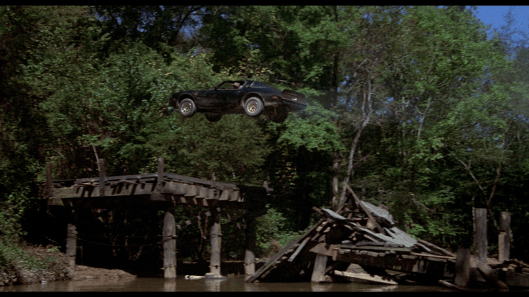
In the wake of Burt Reynolds’ death, it seemed only right to check out the film that really solidified his popularity and brilliantly utilized his natural charisma. Smokey and the Bandit is lightweight and undemanding, but I doubt it could be any more entertaining.

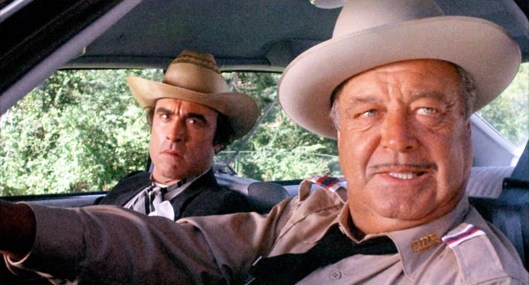
As the titular “Bandit,” Reynolds is a mustachioed force to be reckoned with, cruising along Southern highways and backways in a now iconic Pontiac Trans Am. His Bo Darville accepts the offer of two deep-pocketed Texans (Pat McCormick and Paul Williams) to ferry a truckload of illegal Coors beer from Texarkana to Atlanta in 28 hours. Helped along by his friend “Snowman” (Jerry Reed, who also sings the awesome theme song “East Bound and Down”), Bandit takes on a passenger in a runaway bride (Sally Field) and makes an instant enemy out of tenacious, belligerent Sheriff Buford T. Justice, aka “Smokey” (Jackie Gleason in rare form).

See the source image

Smokey and the Bandit is undoubtedly a product of its time, released at the height of the CB radio craze, and it seems bizarre to me that Coors would be illegal east of Texas even decades after Prohibition. It apparently wasn’t sold in the East due to its lack of preservatives, but I’ve read that the illegality comes more from the amount (400 cases) being shipped illegally over state lines, rather than the brand. I remember my mom mentioning what a big deal it was when Coors was finally available on the east coast, only to discover she thought it tasted terrible.

Even so, the beer fuels the chase of the film, as Bandit uses every rubber-burning trick in his arsenal to elude the cops and keep Snowman off their radar. The film might have benefited from a better method of keeping track of the deadline, since there are moments when the tension of the time limit doesn’t seem all that important, yet it’s still a blast. Gleason, in particular, is a hoot as the quintessential exasperated lawman, made more memorable by his dimwitted son/deputy, a repeatedly mutilated car, and a colorful vocabulary.

See the source image

Smokey and the Bandit is largely unrealistic, and its script is an engaging mix of the clever and lowbrow, but it vrooms along under the sheer likability of Reynolds and Field. While I feel like it owes its classic status more to age/nostalgia than to anything else, it’s a truly fun and easily watchable summer blockbuster that only the ‘70s could have produced.

Best lines: (Big Enos) “You see, son, old legends never die. They just lose weight.”
and
(Sheriff Justice) “What we’re dealing with here is a complete lack of respect for the law.”


Rank: List Runner-Up


© 2019 S.G. Liput
627 Followers and Counting


I Am Somebody’s Child: The Regina Louise Story (2019)

24 Wednesday Apr 2019

Posted by sgliput in Movies, NaPoWriMo, Poetry, Reviews, TV, Writing

≈ 1 Comment

Tags

Biopic, Drama

(Today’s NaPoWriMo prompt was to take inspiration from some random pages of the dictionary, so I landed in the M’s and tried out a Japanese tanka, which is like an extended haiku.)

See the source image

Misfortune had made
A mahogany maiden
Misery’s magnet,
But one maternal mercy
Made flagging hope manifest.
__________________

Rating:  TV-14

Hallmark and Lifetime seem to be the most prolific producers of made-for-TV films, and I suppose I’ve always been under the impression that they focused more on quantity rather than quality. Surely, a worthy TV film will come from HBO, not Lifetime.  Yet that supposition was proved wrong by I’m Somebody’s Child: The Regina Louise Story, a film I wish would get some Emmy or Golden Globe love come awards season.

Set in the 1970s and based on a true memoir, Regina Louise’s story could have ended in obscure tragedy but for the intervention of one woman. A thirteen-year-old black girl (played by Angela Fairley) abandoned by her preoccupied parents, she finds solace at a children’s shelter, where counselor Jeanne Kerr (Ginnifer Goodwin of Zootopia) offers her the love and support she’s always craved but never known. Yet the system separates them by force, partly to preserve Regina’s black identity from a white adoptive mother, and the antisocial girl must depend on what she learned from Miss Kerr to escape a downward spiral.

See the source image

I’ll go so far as to name I’m Somebody’s Child as one of my new favorite TV movies. It’s a film that will break your heart and warm it in equal measure. I can only imagine how many foster kids are out there dreaming for the kind of bond that Regina forms with Miss Kerr, and, as well-meaning powers that be spoil it, the plot’s turn into One Flew over the Cuckoo’s Nest territory only highlights how broken the system is, unable to recognize what an individual child really needs and deserves, namely love regardless of color.

Luckily, Regina Louise’s story is not the tragedy it could have been, ultimately redeemed to teary-eyed sweetness. It’s a beautifully acted true story, a testament to the power of adoption and the difference one person can make in the life of their unlikely someone.

Best line: (Miss Kerr) “I’m not the right race, but I am the right mother for her.”


Rank: List Runner-Up


© 2019 S.G. Liput
627 Followers and Counting


Pitch Black (2000)

23 Tuesday Apr 2019

Posted by sgliput in Movies, NaPoWriMo, Poetry, Reviews, Writing

≈ Leave a comment

Tags

Action, Horror, Sci-fi, Thriller

(Today’s NaPoWriMo prompt was for a poem about animals, so I tried to be less literal and wrote of how man is the most dangerous animal of all.)

See the source image

Animals, animals!
What an insult
For mankind to level at one of his own!
An absence of conscience,
Deeds unprincipled –
For these, as an animal you will be known!

But animals do not
Take life for mere fun,
Nor yet do they harbor a conscience to lose.
No, those are unique
To the broken human,
The one so-called animal known to abuse.

It’s man that can foster the good and the just
Or evil that leaves animals in the dust.
_____________________

MPAA rating:  R

Science fiction has always been one of my favorite genres, so it was only a matter of time for me to catch up on Vin Diesel’s cult-classic Riddick series, which all started with Pitch Black. Oddly enough, Pitch Black is the highest rated of the trilogy on Rotten Tomatoes, yet still bears a 59% Rotten rating. Yet most films don’t garner a trilogy without doing something right, and Pitch Black does more right than wrong.

See the source image

You know what I considered Pitch Black both before I saw it and while I was watching it? A more R-rated version of Aliens. While its plot is undoubtedly inspired by Aliens, I didn’t realize till afterward that Aliens has more profanity and comparable violence. I guess I’m just so used to seeing it cut when it comes on TV that such things stood out more in Pitch Black. Regardless, though, I love Aliens, and I enjoyed Pitch Black for many of the same reasons.

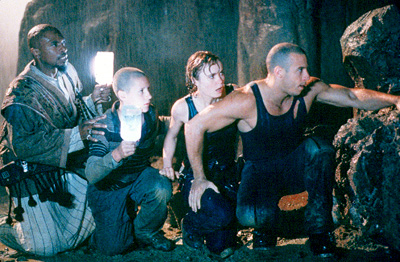
It doesn’t start out as a monster movie. A shipful of passengers in cryostasis are rudely awakened by disaster (not unlike Alien: Covenant) and stranded on a planet of perpetual daylight. Among them is the now-famous Richard B. Riddick (Diesel), a dangerous and shiny-eyed prisoner freed in mid-transport. As the survivors seek a way off the planet, they learn that they’ve arrived just in time for a long eclipse and that deadly swarms of darkness-loving creatures live underground and will soon be free to hunt above it. Good thing Riddick can see in the dark, right?

See the source image

Like Aliens, Pitch Black thrives on the thrill of man vs. alien, with the aliens being either slithery, hammer-headed beasts or smaller pterodactyl-like swarms. Aside from Diesel’s hard-boiled convict, the human characters aren’t as memorable as some in this genre, but they fill their roles well, especially in how they are forced to balance survival with their general distrust of Riddick and the bounty hunter (Cole Hauser) gunning for him. Radha Mitchell even has a stirring character arc concerning the weighing of lives, and Keith David plays a travelling imam, highlighting how unusually diverse it is to see a Muslim in science fiction.

The creatures and visual effects work surprisingly well, considering they’re not as polished as most Hollywood features; in fact, the way writer-director David Twohy shot it sometimes gives scenes an odd TV movie quality. This belies its modest budget yet somehow works to the film’s advantage, keeping some of the more violent parts blurry and contributing to its cult classic status.

See the source image

In many respects, Pitch Black feels like someone wanted to give their own spin to the Aliens formula, but it has enough plot twists and unique action sequences to set it apart as more than a lazy copycat. There are still moments where characters act stupidly and don’t seem to realize that darkness = bad, but it’s also memorably tense, particularly a death scene involving a lighter that ought to be more famous simply for its chilling visual impact. Pitch Black may not rival Aliens for sci-fi horror and doesn’t exactly end as I would have liked, but it’s quite an entertaining member of the genre with perhaps the best antihero I’ve come across, one worthy of a cult classic status.

Best line: (Johns, the bounty hunter) “Battlefield doctors decide who lives and dies. It’s called ‘triage’.”   (Riddick) “They kept calling it ‘murder’ when I did it.”


Rank: List Runner-Up


© 2019 S.G. Liput
627 Followers and Counting


Version Variations: The Magnificent Seven (1960, 2016)

22 Monday Apr 2019

Posted by sgliput in Movies, NaPoWriMo, Poetry, Reviews, Writing

≈ Leave a comment

Tags

Action, Classics, Drama, Thriller, Version Variations, Western

(Today’s NaPoWriMo prompt was for a poem dedicated to some other form of art, so I opted for the film Seven Samurai and its many incarnations.)
See the source imageSee the source image

In the land of Japan, after warring was done,
An epic and classic of film was begun
By one Kurosawa, director renowned,
Who left cinematic impressions profound.

This film Seven Samurai dazzled the critics
(And still holds a high spot in film analytics)
So Hollywood said, after only six years,
“We’ll do that in English for our Western ears.

“And speaking of western, we’ll re-set the plot
With cowboys and Mexicans. Now that’s a thought!”
So that’s what they did, and it turned out a winner
With quite the ensemble headlined by Yul Brynner.

They didn’t stop there; three more sequels ensued,
But even those westerns were just a prelude.
A Corman sci-fi set the story in space,
Hong Kong made a version with China the place,

And Italy even confused the translators
By making the samurai brave gladiators.
A Bug’s Life was Pixar’s cartoonish conversion,
Then back to Japan for an anime version.

And Hollywood remade the remake it made,
The most recent role that this formula’s played.
Imitation is flattery’s form at its highest,
But would Kurosawa, I wonder, be biased?
_________________________

MPAA rating for the 1960 version:  Approved (basically PG)
MPAA rating for the 2016 version:  PG-13 (pretty strong on the violence)

I haven’t done one of these Version Variation posts in a while, mainly because I haven’t watched an abundance of remakes lately. Yet I stumbled upon the 2016 remake of The Magnificent Seven, and finding it to be an above average western, had to see how it compared to the more celebrated original (not to mention how it compared to the original original, 1954’s Seven Samurai).

See the source image

Of course, Akira Kurosawa started it all with Seven Samurai, the tale of seven disparate but skilled misfits recruited by desperate villagers to fend off invading bandits. The Magnificent Seven is very much the same tale, simply transplanted from feudal Japan to the mythic American West. Certain scenes and plot elements are common to every version, such as the duel that introduces the most deadly of the bunch or the number of the seven who are killed by the end (though which characters die seems to differ).

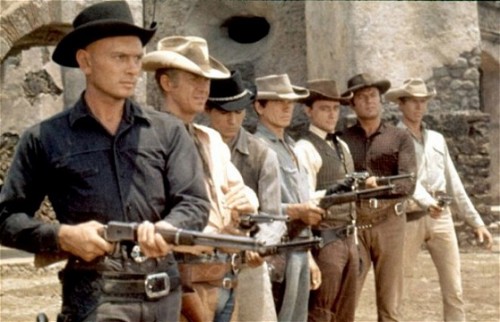
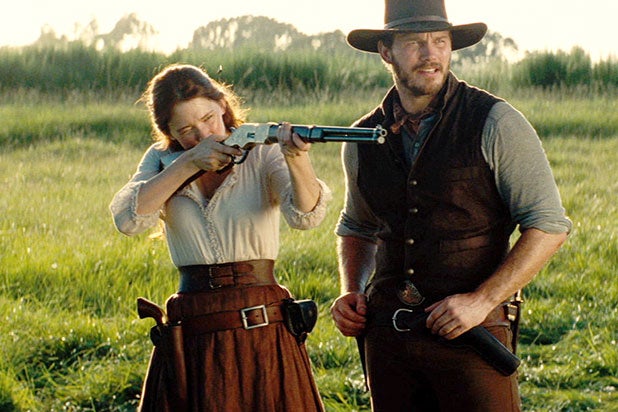
All three also feature extremely talented ensembles, led by an established movie star. In the case of The Magnificent Seven, that would be Yul Brynner (1960) and Denzel Washington (2016), both dressed all in black and oozing enough self-confidence to recruit six others with minimal effort. Watching the different versions, it was interesting to pick out the parallels between the other characters. Horst Buchholz (who went on to appear in Life Is Beautiful) plays a scrappy upstart in the 1960 version, clearly modeled after Toshiro Mifune in Seven Samurai, but there’s not really an equivalent character in the 2016 film. As the second recruit, Chris Pratt seems comparable to Steve McQueen’s drifter, while James Coburn’s knife-thrower is unmistakably akin to Lee Byung-hun in the remake. Other comparisons are a little harder, such as Ethan Hawke’s war-haunted Cajun in the remake having elements of both Robert Vaughn and Brad Dexter’s characters in the original.

See the source image

See the source image

One thing that is self-evident about the 2016 remake is its effort to be more inclusive in its representation. While all of the original seven were white, the new seven include three whites, one black, one Mexican, one Native American, and one South Korean (who I guess is supposed to represent the Chinese? I didn’t know there were Korean immigrants in the Old West).  Another difference is that the characters in the remake are given far more colorful names; after all, aren’t “Goodnight” Robicheaux and Billy Rocks cooler sobriquets than Britt or Chris or Lee?

While it makes the character comparisons a little harder, the racial changes aren’t unwelcome and don’t make much difference storywise, aside from a clash between the Native American member of the Seven (Martin Sensmeier) and his counterpart on the bad guy’s side (Jonathan Joss, who surprisingly also played Chief Hotate on Parks and Recreation). Speaking of bad guys, that’s another major change; whereas the original’s Eli Wallach played the leader of a Mexican outlaw band, the remake’s Peter Sarsgaard plays a ruthless businessman aiming to buy out the townsfolk for the nearby gold mine (which is notably not in the original, much to Brad Dexter’s chagrin).

See the source image

Perhaps it might have been different if I had watched the 1960 version first, as most cinephiles did, but I think I actually prefer the 2016 version. The 1960 film is a classic, no doubt about that, with Yul Brynner’s man in black standing up as one of the quintessential western heroes. Yet even though that film has its fair share of gunfights, the 2016 film plays out much more like an action movie, tossing out the love subplot and apparent defeat of the original in favor of bigger and more explosive battles. The body count is higher, but the thrills don’t disappoint, in contrast to the original film’s excessive length and occasional boring parts.

That being said, cheating though it may be, I don’t have any problem grouping the two together for ranking purposes, or even grouping both with Seven Samurai. Seven Samurai may be the most artistic and the 2016 film the most entertaining, but all three are worthwhile. (I’ll draw the line, though, at grouping them with A Bug’s Life, which is also basically the same story. I did like how Charles Bronson’s bond with some local kids was recycled for Francis the lady bug in Pixar’s film.) Many may scoff at the mere idea of remakes, often rightfully, but, like A Star Is Born, this is one story that has endured the test of time and excelled in multiple incarnations.
See the source image

Best line from the 1960 version: (Vin/Steve McQueen) “It’s like a fellow I once knew in El Paso. One day, he just took all his clothes off and jumped in a mess of cactus. I asked him that same question, ‘Why?’”   (Calvera/bad guy) “And?”   (Vin) “He said, ‘It seemed to be a good idea at the time.’”

Best line from the 2016 version: (Sam Chisholm/Denzel Washington) “What we lost in the fire, we’ll find in the ashes.”


Rank: List-Worthy (both grouped with Seven Samurai)


© 2019 S.G. Liput
627 Followers and Counting

 

Unplanned (2019)

21 Sunday Apr 2019

Posted by sgliput in Christian, Movies, NaPoWriMo, Poetry, Reviews, Writing

≈ 1 Comment

Tags

Biopic, Drama

(Happy Easter to all! I decided to skip today’s NaPoWriMo prompt suggesting something weird and dreamlike, and instead tried tackling a more meaningful theme and an unpopular but timely issue.)

See the source image

At all of the periods known for their slaughter,
When man’s own injustice ran wild and unchecked,
There always were those who remained on the sidelines,
Discrete but complicit in every respect.

The neighbors of Nazis, Confederate kin –
We look back and wonder how foolish were they,
To live on ignoring how lives were deprived,
While humans were thought of as inhuman prey.

Each generation has evils like these.
Condemning the past has no sway on the present.
What biased offenses have we disregarded
Because owning them would be far too unpleasant?
_______________________

MPAA rating:  R (for a few disturbing scenes)

I wasn’t sure what to review for Easter, but Unplanned is the only faith-based film I’ve seen recently, so it made sense. Faith-based films are hard to get right; for every movingly authentic one like All Saints, there’s ten more like God’s Not Dead, which wasn’t terrible but was so aimed at preaching to the choir that it came off as overly self-righteous. It’s hard to say where Unplanned fits in; it’s certainly better than the vast majority of Christian films, both in production quality and execution, but its subject matter lends itself to an immediate taking of sides, depending on your political affiliation. Yet it’s a film I feel everyone should see, and certainly anyone with an opinion about abortion.

Unplanned is based on the same-titled memoir of Abby Johnson (played well by Ashley Bratcher) and tracks her path from being a nominally pro-life college student deciding to volunteer at Planned Parenthood to becoming the director of the same Texas Planned Parenthood branch. Despite undergoing two traumatic abortions of her own, she persuades herself under the banner of women’s reproductive rights, believing that she can help make abortion safe, legal, and rare in the process. It isn’t until she witnesses an abortion firsthand that her opinions are truly challenged.

See the source image

As you might have guessed, I am pro-life. I believe that abortion is the legalized murder of innocents, and I pray fervently for the day it is finally banned. I will not condemn those on the other side of this issue, nor those who have had abortions; indeed, I personally know women who have undergone this procedure, who have told me they will regret it to their dying day. I simply and firmly believe that the pro-life movement will one day be on the right side of history. So surely I’m just promoting this film because it reinforces my own views, right? Perhaps, that’s true.

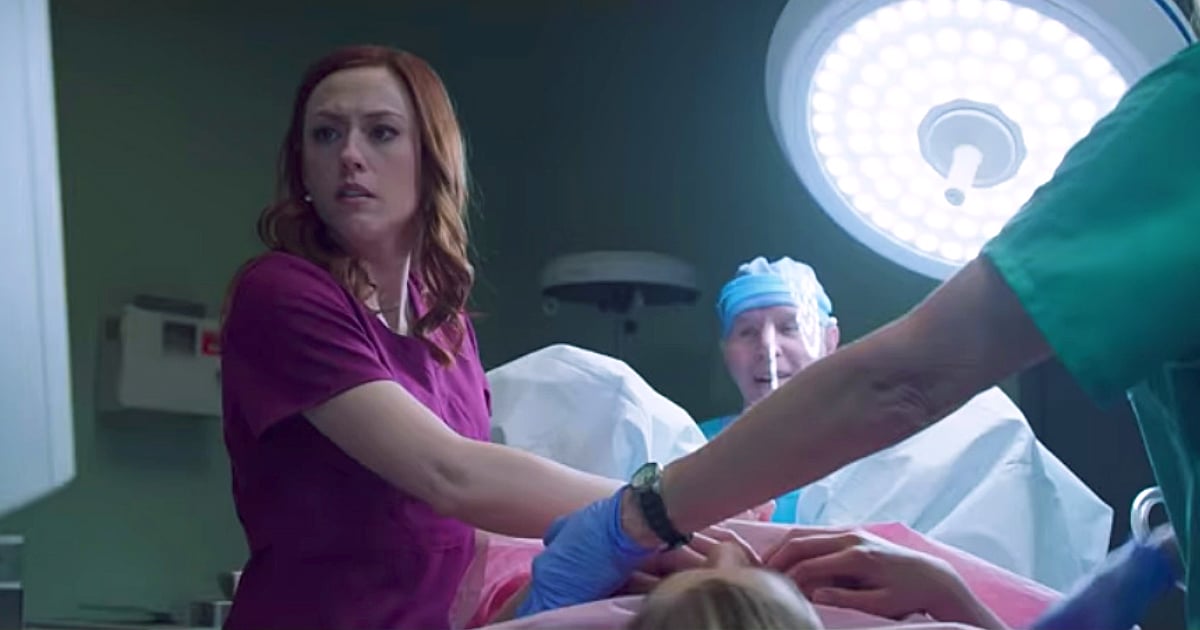
But it’s those who don’t share those views who I feel ought to see it, if only for that one early abortion scene. It’s not gruesome in a horror movie kind of way, but it is deeply disturbing, especially because it is realistic, representing what happens regularly every day in abortion clinics across the country and world. The doctor in the scene itself is played by an actual former abortionist, and whether the rest of the film convinces people or not, that one painfully true scene presents an appallingly inconvenient truth.

See the source image

Unplanned has become notable for how little exposure it’s received from mainstream media sources; the vast majority of TV and radio stations refused to air ads, and the few publications that deigned to review the film wrote it off as propaganda. The MPAA board even gave it an R rating, implicitly acknowledging the inherent violence of abortion. Except for a few harrowing scenes, though, it’s got to be one of the cleanest R-rated films out there, and I was pleased to hear its rating did little to affect its surprisingly large box-office draw, thanks to its Christian audience.

So back to my main question: is Unplanned just preaching to the choir or something others can appreciate? I think every viewer will have to decide that for themselves. It sometimes has that overly earnest Christian-movie kitsch, including a largely unnecessary voiceover, but more often it’s quite believable and even entertaining, especially when Kaiser Johnson shows up as a smooth-talking lawyer. Sometimes, it makes a point of portraying Abby’s coworkers at Planned Parenthood sympathetically, yet it also villainizes her Planned Parenthood superior Cheryl (Robia Scott) as shamelessly devious (though based on certain leaked videos, I’ve no doubt that such deceit really exists in the organization). The film is at least self-aware enough to call out the negative side of the pro-life movement too, asserting that compassion and empathy are far more effective than shouting and shaming.

See the source image

Unplanned didn’t just reaffirm my position; it clarified the horror of abortion and made me consider how little I’ve done to oppose it. Those who read this may think abortion is perfectly fine and roll their eyes at another Christian movie trying to promote its agenda, but I think too many people talk about abortion in abstract terms without knowing what it really looks like. It’s why abortion clinics discourage ultrasounds and putting a baby’s face on this issue. At the very least, this film offers a persuasive pro-life message for those whose opinions aren’t too inflexible, one that teenagers especially should see; whether people take it or leave it is up to them, but no controversial opinion should be formed based on one side alone. I wish Unplanned focused more on the alternative, namely adoption, but it’s an ultimately powerful testament to what can happen when the truth of abortion finally sinks in.


Rank: List Runner-Up


© 2019 S.G. Liput
627 Followers and Counting
 

Bill and Ted’s Bogus Journey (1991)

20 Saturday Apr 2019

Posted by sgliput in Movies, NaPoWriMo, Poetry, Reviews, Writing

≈ Leave a comment

Tags

Comedy, Fantasy, Sci-fi

(Today’s NaPoWriMo prompt was for a poem based on the way people normally talk, so I poked fun at the devolution of the English language. Best read with a valley girl/guy accent.)

See the source image

Have you ever, like, noticed how people, like, talk,
Contracting their verbs into mush?
It’s, you know, “I wanna,” “I’m gonna,” and stuff
That’d make Noah Webster, like, blush.

I don’t know how English, like, got to this point,
But I follow it to the letter.
It’s, you know, like, likely you like how you talk,
But other folks shoulda learned better.
_______________

MPAA rating: PG

It may have only taken two years for Bill and Ted’s Excellent Adventure to get a sequel, but it took me at least a decade to finally catch up with their Bogus Journey. There’s something about the first film that’s so absurdly entertaining, so I wanted to believe that that creative lightning would strike again with the sequel.

See the source image

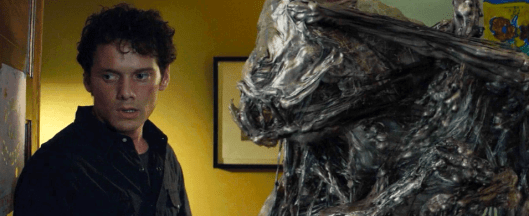
The first film had a goal specified early on, gathering historical figures so Bill (Alex Winter) and Ted (Keanu Reeves) don’t flunk history and ruin the future in the process. In this one, the plot rambles even more, as an ambitious baddie in the future (Joss Ackland) sends evil Bill and Ted robots back in time to kill the good Bill and Ted and pave the way for their master’s reign. I’ll just ignore how absurd the plan is and how the bad guy doesn’t seem to understand how altering the past works. The film’s original title was Bill and Ted Go to Hell, a fitting option as the plot veers away from sci-fi and pits the dimwitted duo against the Grim Reaper (white-faced William Sadler, unrecognizable compared with his roles in Shawshank or The Green Mile).

Of course, it was fun revisiting Bill and Ted and their valley-guy nomenclature, with even a cameo from George Carlin, and Winter and Reeves fit these roles like two chuckleheaded gloves. I did get a kick out of the film’s reference to Ingmar Bergman’s The Seventh Seal and its game against Death (as well as the realization that this film surely inspired the cartoon series The Grim Adventures of Billy and Mandy). Yet for all its humor, I didn’t laugh very often, and the rampant silliness just didn’t quite match the “educated stupidity,” as I call it, of the first film.

See the source image

It’s telling when one film has “Excellent” in the title and the next one has “Bogus.” This sequel isn’t bad and even quite amusing with some quotable gems, but perhaps I need to see it a few more times before I can embrace its cult classic status. With the announcement of a long-awaited third film entitled Bill and Ted Face the Music, I’m hoping the next one will be better.

Best line: (Bill, after seeing hell) “We got totally lied to by our album covers, man.”


Rank: Honorable Mention


© 2019 S.G. Liput
627 Followers and Counting


The Ballad of Buster Scruggs (2018)

19 Friday Apr 2019

Posted by sgliput in Movies, NaPoWriMo, Poetry, Reviews, TV, Writing

≈ Leave a comment

Tags

Drama, Western

(Today’s NaPoWriMo prompt was for an abecedarian poem, where each line starts with a different letter of the alphabet. I took it one step further and increased the number of syllables with each successive line; the first as one syllable, and the last has twenty-six. I wish I could have made it rhyme more, but it was a fun exercise.)

See the source image

A
Better
Case of cruel
Death and dream-fueled
Effort you’ll rarely
Find than the flourishing,
God-led western growth from miles
Hence to the hard-fought backyards of
Impatient, heedless Americans.
Joy at the progress through storm and disease;
Key victories that confirmed our destinies
Like blood-sprayed signs pointing home that we only would
Make the effort to clean off once we had arrived there;
New frontiers made bitter with tears as roads were paved with loss;
Once-famed pathfinders and desperadoes yielding their roles to
Pioneers that now populate our history books or else lived
Quietly, blazed their trails, and fed the good earth in anonymity;
Royals and natives losing what they believed was theirs forevermore; and
Stubborn, sweet, semi-sane civilians of fortune and sacrificial service ―
These all made the struggle west what it was and the world what it would one day become.
Underneath the present-day complaints of destructive white expansion or the rosy
Visions of mythical men taming the wild as few Americans today ever could,
We must acknowledge that they were as human as we, as prone to sin and improbable grace,
Experiencing a world unknown, a battle against oceans, forests, mountains, prairies, and selves.
You may judge them as you may someday be judged; they lived for themselves, not for history books or for the
Zealous people who write them. Legends and monsters were once mere humans before hindsight made them less or more.
_____________________

MPAA rating: R (solely for violence)

The Coen brothers certainly know how to make a western. After pulling off the unlikely feat of a worthy remake of True Grit, they brought to life a diverse collection of short stories in this Netflix anthology film (which was apparently meant to be a series at first). Whether it be wagon-training on the Oregon Trail or discussing human nature in a potentially symbolic stagecoach, the Old West has rarely been so mythologized as it is here, painting a broad canvas of cheery gunfights, dark satire, and quiet desperation.

See the source image

Each of the six tales is unique and presented as installments of a short story collection; they feel authentic in that short story way, and indeed two of the segments are based off stories by Jack London and Stewart Edward White. Tim Blake Nelson is probably the most memorable character as the titular Buster Scruggs, who revels in his gun-slinging superiority while crooning tunes and conversing with the audience. The lightness of this first story is deceiving, though, and the film isn’t afraid to be downright depressing. In fact, of the six yarns, only one has what could be considered a happy ending, but even the film’s sadder moments are punctuated by insightful and poignant themes, such as the selfishness of man or the rugged unfairness of this place called the Old West.

Not all of the stories are equal, of course, the weakest being James Franco’s laconic bank robber tale, which seemed to exist solely for the sake of some last-minute, literal gallows humor. Everyone I’ve read seems to agree that the title of best (as well as longest) belongs to “The Girl Who Got Rattled,” an achingly realistic segment in which Zoe Kazan steps out of her usual roles and proves her skill as an actress.

See the source image

What I loved most about The Ballad of Buster Scruggs was its script. The dialogue, antiquated, eloquent, and clean, was a joy to listen to, and it’s proof positive that you just don’t need strong profanity for an Oscar-worthy script. (Sadly, its screenplay was only nominated, along with Costume Design and the song “When a Cowboy Trades His Spurs for Wings.”) Unfortunately, it still earns its R-rating for the sometimes jarring gun violence (Buster Scruggs himself is the worst offender), but it’s still an uncommonly good member of a recently uncommon genre, full of gorgeous cinematography and seasoned thesps in all-too-brief roles, such as Nelson, Franco, Liam Neeson, Tom Waits, Brendan Gleeson, Tyne Daly, and Saul Rubinek. It’s a sign that the western genre is ripe for resurrection and that the Coens are perfect for the job.

Best lines: (Buster Scruggs) “There’s just gotta be a place up ahead where men ain’t low-down and poker’s played fair. If there weren’t, what are all the songs about? I’ll see y’all there. And we can sing together and shake our heads over all the meanness in the used-to-be.”

and

(The Englishman) “You know the story, but people can’t get enough of them, like little children. Because, well, they connect the stories to themselves, I suppose, and we all love hearing about ourselves, so long as the people in the stories are us, but not us. Not us in the end, especially.”


Rank: List Runner-Up


© 2019 S.G. Liput
627 Followers and Counting


Chicken with Plums (2011)

18 Thursday Apr 2019

Posted by sgliput in Movies, NaPoWriMo, Poetry, Reviews, Writing

≈ 4 Comments

Tags

Drama, Fantasy, Foreign, Romance

(Today’s NaPoWriMo prompt was for a mournful elegy about the physical rather than the abstract. Thus, I focused on the everyday grief that doesn’t always make itself visible.)

See the source image

I grieve every day but don’t show it.
None see it, of course, but I do.
No moistened eyelashes,
No sackcloth and ashes,
It’s deeper and yet no less true.

I grieve in the taste of the chicken
That never tastes quite like it did
When Mother would heighten
My senses and brighten
My day with the lift of a lid.

I grieve at the sound of the classics,
The ones that my father proclaimed
Were better by far
Than the modern songs are,
To which I agreed or was shamed.

I grieve at the touch of an afghan,
Hand-knitted with love in each thread.
Its knots and defects
Made the knitter perplexed,
But now they are precious instead.

I grieve where the world in its hurry
Has left things of value behind.
Don’t doubt I’m sincere
If I don’t shed a tear;
They moisten my heart and my mind.
___________________

MPAA rating: PG-13

It was three years ago this very month that I reviewed Marjane Satrapi’s animated drama Persepolis as part of NaPoWriMo. That film was such a refreshingly unique experience that I knew I had to check out her next film, which, like Persepolis, was also based off her own graphic novel. Chicken with Plums may not be animated, but its similarity of style is equally praiseworthy, just on a far less consistent level than its predecessor.

See the source image

Told in French and set in 1950s Iran, Chicken with Plums is the story of a man who decides to die. After his critical wife (Maria de Medeiros) smashes his beloved violin, the famed concert pianist Nasser-Ali (Mathieu Amalric) loses his will to live, lying in bed awaiting death and dreaming of the past and future. The narrative is far from linear, interspersed with subjective thoughts of how his children will grow up, memories of his success, and bizarre fantasies (hugging a giant pair of breasts, for example). It’s a weird mix as the tone swings wildly from obnoxious slapstick to pensive reminiscences, and not all of it works.

However, what does work is outstanding, at least on a visual level. The settings and overall aesthetic have the dated, magical aura of yesteryear, with a carefully crafted artistry that I could compare to that of Wes Anderson if he had half the idiosyncrasies. Satrapi’s vision of 1950s Iran oddly has the look and feel of Europe, reminding us how western-leaning the nation was before the Revolution, as detailed in Persepolis. And the acting is certainly on point, with Amalric of The Diving Bell and the Butterfly fame once more proving his thespian skill.

See the source image

I wasn’t quite sure what to make of Chicken with Plums up until the ending, where the story takes a sublimely bittersweet turn that is crushing in its emotional resonance. It’s a rare and beautiful melancholy replete with the story’s themes of music, heartache, and loss; it may not quite fit with many parts of the film but still ended it on a high note of poignancy.

Best line:  (Nasser-Ali’s music teacher, speaking of his initial music) “Sounds come out. But it is empty. It is barren. It is nothing. Life is a breath; life is a sigh. It is this sigh that you must seize.”


Rank: Honorable Mention


© 2019 S.G. Liput
626 Followers and Counting


I Am Dragon (2015)

17 Wednesday Apr 2019

Posted by sgliput in Movies, NaPoWriMo, Poetry, Reviews, Writing

≈ Leave a comment

Tags

Drama, Fantasy, Foreign, Romance

(Today’s NaPoWriMo prompt was to present “a scene from an unusual point of view.” Thus, I took the fairy tale terror of a dragon carrying off a young maiden and provided the dragon’s angle.)

See the source image

I am the dragon, the lizard of lore,
So hated and feared by mankind.
From the sky do I hunt,
And I take what I want
From the men who wince under my roar.
From the day that I hatched,
I’ve had power unmatched,
A monster by nature designed.

Now in my talons, I carry a girl,
Flown higher than humans would dare.
I made my attack
With the thought of a snack
And escaped with my prize in a whirl.
Her kin now must mourn,
For their cold-blooded thorn
Has taken her back to his lair.

Gladly, I’d deem her my prey to devour,
As dragons by nature must do,
And yet in her face
Is a vestige, a trace
Of a feeling confronting my power.
No man is my match,
But this woman I catch
Offers something I cannot subdue.
_______________________

MPAA rating: Not Rated (could be PG, maybe more PG-13)

It’s rare that a film feels like a fairy tale, not just a Hollywood version of one but an original fairy tale with its roots firmly planted in romance and the fantasy culture of a nation. In the case of I Am Dragon (or He’s a Dragon), that nation is Russia. Based on the Russian novel The Ritual, the result is a film that tows the line between epic and sappy but is beautifully mounted and appealingly dignified compared with what I imagine a Hollywood version might look like.

See the source image

A prologue explains how a dragon once terrorized a medieval village, carrying away the innocent maidens offered to him as sacrifices until the day a hero slew the beast. Fast forward then to the arranged wedding of free-spirited Princess Miroslava (Maria Poezzhaeva), or Mira, who is none too thrilled with her appointed husband. In a case of unwise history-rebranding, someone thought it would be a good idea to use the old dragon-summoning song during the ceremony, and everyone is shocked when the dragon reappears to carry Mira away. Mira soon awakens on the dragon’s remote island lair, where a handsome young man she names Arman (Matvey Lykov) proves to be a charming but conflicted host.

I won’t say any “spoilers” outright, but as you can probably surmise from my description, this is like a Russian version of Beauty and the Beast, with some very clear echoes to the Disney version of events. However, with a dragon taking the place of the Beast and an almost Game of Thrones-style aesthetic, it’s a successful variation of the familiar tale, which is also leagues better than Disney’s cringe-worthy live-action version.

See the source image

As for the romance, there’s certainly chemistry between Mira and Arman, the former headstrong and adventurous, the latter self-loathing and in need of love. The island setting, though, along with Arman’s perpetually shirtless self does make the romantic scenes feel like something out of a Harlequin novel, albeit one with surprisingly grand production values, atmospheric music, and impressive CGI. (I even included the above image from this film in the top right picture of my fantasy banner.)

It really depends on your capacity for potentially mawkish love stories, but for me, I Am Dragon had enough high fantasy to outweigh the few corny moments, and the romance was still engaging and carried weight while thankfully keeping things PG for the most part. I’m glad to have stumbled upon this admirable fantasy, which makes me think that little-known Russian cinema can hold its own against Hollywood’s more publicized output.


Rank: List Runner-Up


© 2019 S.G. Liput
626 Followers and Counting
 

← Older posts
Newer posts →

Recent Posts

  • We Didn’t Start 2025 (Recap)
  • NaPoWriMo 2025 Recap (Finally)
  • Sonic the Hedgehog 3 (2024)
  • It Happened One Night (1934)
  • Spellbound (2024)

Recent Comments

associatesofshellymann's avatarassociatesofshellyma… on My Top Twelve La La La So…
Kit's avatarKit Nichols on Bonnie and Clyde (1967)
lifelessons's avatarlifelessons on Look Back (2024)
Carol Jackson's avatarCarol Jackson on The Thief of Bagdad (1940…
Stephen's avatarStephen on Love Story (1970)

Archives

  • January 2026
  • December 2025
  • May 2025
  • April 2025
  • March 2025
  • February 2025
  • January 2025
  • December 2024
  • May 2024
  • April 2024
  • March 2024
  • February 2024
  • January 2024
  • December 2023
  • November 2023
  • October 2023
  • September 2023
  • July 2023
  • June 2023
  • May 2023
  • April 2023
  • March 2023
  • February 2023
  • January 2023
  • December 2022
  • November 2022
  • October 2022
  • September 2022
  • August 2022
  • July 2022
  • June 2022
  • May 2022
  • April 2022
  • March 2022
  • February 2022
  • January 2022
  • December 2021
  • November 2021
  • October 2021
  • September 2021
  • August 2021
  • July 2021
  • June 2021
  • May 2021
  • April 2021
  • March 2021
  • February 2021
  • January 2021
  • December 2020
  • November 2020
  • October 2020
  • September 2020
  • August 2020
  • July 2020
  • June 2020
  • May 2020
  • April 2020
  • March 2020
  • February 2020
  • January 2020
  • December 2019
  • November 2019
  • October 2019
  • September 2019
  • August 2019
  • July 2019
  • June 2019
  • May 2019
  • April 2019
  • March 2019
  • February 2019
  • January 2019
  • December 2018
  • November 2018
  • October 2018
  • September 2018
  • August 2018
  • July 2018
  • June 2018
  • May 2018
  • April 2018
  • March 2018
  • February 2018
  • January 2018
  • December 2017
  • November 2017
  • October 2017
  • September 2017
  • August 2017
  • July 2017
  • June 2017
  • May 2017
  • April 2017
  • March 2017
  • February 2017
  • January 2017
  • December 2016
  • November 2016
  • October 2016
  • September 2016
  • August 2016
  • July 2016
  • June 2016
  • May 2016
  • April 2016
  • March 2016
  • February 2016
  • January 2016
  • December 2015
  • November 2015
  • October 2015
  • September 2015
  • August 2015
  • July 2015
  • June 2015
  • May 2015
  • April 2015
  • March 2015
  • February 2015
  • January 2015
  • December 2014
  • November 2014
  • October 2014
  • September 2014
  • August 2014
  • July 2014
  • June 2014
  • May 2014
  • April 2014
  • March 2014
  • February 2014
  • January 2014
  • December 2013

Categories

  • Blindspot
  • Blogathon
  • Christian
  • Movies
  • Music
  • NaPoWriMo
  • Poetry
  • Reviews
  • TV
  • Writing

Meta

  • Create account
  • Log in
  • Entries feed
  • Comments feed
  • WordPress.com

Recent Posts

  • We Didn’t Start 2025 (Recap)
  • NaPoWriMo 2025 Recap (Finally)
  • Sonic the Hedgehog 3 (2024)
  • It Happened One Night (1934)
  • Spellbound (2024)

Recent Comments

associatesofshellymann's avatarassociatesofshellyma… on My Top Twelve La La La So…
Kit's avatarKit Nichols on Bonnie and Clyde (1967)
lifelessons's avatarlifelessons on Look Back (2024)
Carol Jackson's avatarCarol Jackson on The Thief of Bagdad (1940…
Stephen's avatarStephen on Love Story (1970)

Archives

  • January 2026
  • December 2025
  • May 2025
  • April 2025
  • March 2025
  • February 2025
  • January 2025
  • December 2024
  • May 2024
  • April 2024
  • March 2024
  • February 2024
  • January 2024
  • December 2023
  • November 2023
  • October 2023
  • September 2023
  • July 2023
  • June 2023
  • May 2023
  • April 2023
  • March 2023
  • February 2023
  • January 2023
  • December 2022
  • November 2022
  • October 2022
  • September 2022
  • August 2022
  • July 2022
  • June 2022
  • May 2022
  • April 2022
  • March 2022
  • February 2022
  • January 2022
  • December 2021
  • November 2021
  • October 2021
  • September 2021
  • August 2021
  • July 2021
  • June 2021
  • May 2021
  • April 2021
  • March 2021
  • February 2021
  • January 2021
  • December 2020
  • November 2020
  • October 2020
  • September 2020
  • August 2020
  • July 2020
  • June 2020
  • May 2020
  • April 2020
  • March 2020
  • February 2020
  • January 2020
  • December 2019
  • November 2019
  • October 2019
  • September 2019
  • August 2019
  • July 2019
  • June 2019
  • May 2019
  • April 2019
  • March 2019
  • February 2019
  • January 2019
  • December 2018
  • November 2018
  • October 2018
  • September 2018
  • August 2018
  • July 2018
  • June 2018
  • May 2018
  • April 2018
  • March 2018
  • February 2018
  • January 2018
  • December 2017
  • November 2017
  • October 2017
  • September 2017
  • August 2017
  • July 2017
  • June 2017
  • May 2017
  • April 2017
  • March 2017
  • February 2017
  • January 2017
  • December 2016
  • November 2016
  • October 2016
  • September 2016
  • August 2016
  • July 2016
  • June 2016
  • May 2016
  • April 2016
  • March 2016
  • February 2016
  • January 2016
  • December 2015
  • November 2015
  • October 2015
  • September 2015
  • August 2015
  • July 2015
  • June 2015
  • May 2015
  • April 2015
  • March 2015
  • February 2015
  • January 2015
  • December 2014
  • November 2014
  • October 2014
  • September 2014
  • August 2014
  • July 2014
  • June 2014
  • May 2014
  • April 2014
  • March 2014
  • February 2014
  • January 2014
  • December 2013

Categories

  • Blindspot
  • Blogathon
  • Christian
  • Movies
  • Music
  • NaPoWriMo
  • Poetry
  • Reviews
  • TV
  • Writing

Meta

  • Create account
  • Log in
  • Entries feed
  • Comments feed
  • WordPress.com

Blog at WordPress.com.

  • Subscribe Subscribed
    • Rhyme and Reason
    • Join 814 other subscribers
    • Already have a WordPress.com account? Log in now.
    • Rhyme and Reason
    • Subscribe Subscribed
    • Sign up
    • Log in
    • Report this content
    • View site in Reader
    • Manage subscriptions
    • Collapse this bar