• Home
  • About Me
  • The List
  • THE LIST (2016 Update)
  • THE LIST (2017 Update)
  • THE LIST (2018 Update)
  • THE LIST (2019 Update)
  • THE LIST (2020 Update)
  • THE LIST (2021 Update)
  • THE LIST (2022 Update)
  • Top Twelves and More
  • The End Credits Song Hall of Fame

Rhyme and Reason

~ Poetry Meets Film Reviews

Rhyme and Reason

Monthly Archives: April 2016

Room (2015)

20 Wednesday Apr 2016

Posted by sgliput in Movies, NaPoWriMo, Poetry, Reviews, Writing

≈ 2 Comments

Tags

Drama


(Today’s NaPoWriMo prompt was to incorporate kennings, or colorful indirect descriptions of something, like calling the sea a “whale road.” That something, in this case, was the main setting of one of last year’s best films.)


Surrounding me always, you indigent cube,
You keep me from life as I knew.
I’ve watered your walls with my unheeded tears,
Yet nothing but misery grew.

The walls have no ears, but no lack of blind eyes,
Blank slates too hard-hearted to shatter.
They’re vertical wastelands combined to confine
And convince me we no longer matter.

Yet you, my dear son, see a whole different Room,
A pocket of space minus time,
Where you are not bound but contently surrounded
By vertical playgrounds to climb.

I yearn to be free from these monolith graves,
For if you see joy in their gray,
I wait for the day that your rose-colored eye
May witness the world kept at bay.
__________________

MPAA rating: R (for language and the very situation)

A small but widely admired film, Room is an emotionally compressed powerhouse. Much of the film is set in a Room, a small shed where Joy Newsome (Brie Larson) has been held for seven years as little more than a sex slave. The one bright spot of her captive life is her son Jack (Jacob Tremblay), who was born in Room and knows nothing of the outside world. When Jack turns five, Joy recruits him in a risky escape attempt.

In light of horrific news stories like the Ariel Castro kidnappings in Cleveland, the setup is both unthinkable and sadly believable. What Joy endures is disturbing on multiple levels, but I appreciated the filmmakers’ restraint. Some Oscar contenders don’t hold back on the objectionable content, but the rapes and nudity are out of view of both the audience and Jack, whose mother protects him with a passion. We see most events through Jack’s innocent, naïve perspective, and Tremblay does a marvelous job playing a credible five-year-old, with all the devotion, defiance, and curiosity that age entails. From the beginning, we see how Joy has endeavored to make Room a fun semblance of home for Jack, even as he remains oblivious to what he is missing and just how depressed she is.

I don’t want to include any spoilers, but Room seems to evoke different emotions in different people. Many reviewers have noted how there’s an exciting sense of wonder as Jack experiences new things and the unavoidable sensory overload. My VC, who liked the film less than I, came away depressed and somber. I was left with a sense of gratitude. The line that jumped out at me was when Joy tells Jack of her childhood friends, and when asked what happened to them, she bitterly replies that they merely lived their lives with nothing happening. How easy it is for us to take the very normalcy of our lives for granted! There are people enslaved to this day, whether in physical or sexual bondage, and next to them, my problems seem small. Seeing all the things of which Jack and Joy were deprived only made me more thankful that I had a stocked fridge and available health care and an open door.

While Tremblay is excellent, Brie Larson undoubtedly deserved her Best Actress Oscar. Her gazes of weariness are deeply felt, and her bond with and dependence on Jack is definite and heart-tugging. Though the acting is beyond reproach, the pacing does lag at times trying to emphasize the tedium of being trapped, and there are really no explanations until a half hour in. Thus, patience is required but rewarded. Room ends in a perfect echo of its beginning, and hope mixes beautifully with grief.

Best line: (Jack, in true five-year-old fashion) “When I was small, I only knew small things. But now I’m five, I know everything!”


Rank: List-Worthy


© 2016 S. G. Liput

383 Followers and Counting


How to Make an American Quilt (1995)

19 Tuesday Apr 2016

Posted by sgliput in Movies, NaPoWriMo, Poetry, Reviews, Writing

≈ 7 Comments

Tags

Drama, Romance


(Today’s NaPoWriMo prompt was for a didactic “how to” poem, and I just so happened to have the perfect film in mind.)

How does one make an American quilt?
How is a life or a good marriage built?
Not from one cloth but from many combined:
It’s fashioned from stories, gold thread of mankind,
From tales and details
And the blazing of trails,
From losses and crosses
And dead albatrosses
And windmills at which many tilt.

Gather the patches that everyone gives,
The plugs for the holes in our memories’ sieves,
And just as our fortunes are linked to our neighbors’,
Sew up the loose swatches of everyone’s labors.
Recall passion’s thrall,
Both its rise and its fall.
Every weakness or peak
Of which few live to speak.
Love, guilt and tears spilt
Make a worthwhile quilt
That warns us and warms us and lives.
__________________

MPAA rating: PG-13

Marriage is a tough business. Not that I have personal experience with it, but there are enough soured romances in books, films, and personal accounts that it’s clearly not easy. Falling in love is simple; it’s what comes after that’s hard. Such is the main lesson of How to Make an American Quilt, a female ensemble about an engaged woman named Finn (Winona Ryder) who has second thoughts about marriage after hearing the various stories of the women in her grandmother’s quilting bee.

This is undoubtedly a chick flick, with everything coming from the women’s perspective. The accounts of their past loves are rather varied, ranging from one-night stands, impulsive affairs, disappointing married lives, and unfulfilled dreams, most of which casts marriage and particularly husbands in an unavoidably depressing light. Finn has trouble with commitment in her academic life, and hearing all these tales of woe is the last thing she should be doing on the eve of marriage. It’s no surprise then that her engagement is endangered.

It’s not all bad. The acting is consistently good, particularly from old pros like Anne Bancroft, Ellen Burstyn, Jean Simmons, and Alfre Woodard, and I was surprised at some small roles for Jared Leto, Claire Danes, and Mykelti Williamson. While their individual stories are full of repeated disillusionment, little details become more significant as these stories do indeed weave themselves into a tapestry or quilt of life, from which different meanings may be drawn. Thus, How to Make an American Quilt seems to endorse hope and a willingness to try for success, even though the idea of marriage itself doesn’t quite recover from all the disillusionment that came before.

P.S. To be honest, the main reason I found this worth watching was Winona Ryder. I never realized just how gorgeous she was, based on the roles I’ve seen of hers, like Beetlejuice. Here, she’s like a cross between Kate Winslet in Titanic and Shailene Woodley in The Fault in Our Stars. I can’t help but feel I have a new screen crush.

Best line: (Finn) “Young lovers seek perfection. Old lovers learn the art of sewing shreds together and of seeing beauty in a multiplicity of patches.”


Rank: List Runner-Up


© 2016 S. G. Liput

382 Followers and Counting


Fried Green Tomatoes (1991)

18 Monday Apr 2016

Posted by sgliput in Movies, NaPoWriMo, Poetry, Reviews, Writing

≈ 3 Comments

Tags

Comedy, Drama

(Today’s NaPoWriMo prompt was a challenge to capture “the sound of home,” which in my family would be the South. Since my Floridian background isn’t nearly as colorful, I found inspiration and dialect in my mom’s memories of Alabama, which tied in nicely with this film.)


Well, honey, God’s given me plenty o’ years,
And plenty o’ troubles I’ve faced.
I reckon those years have had laughter and tears,
But not one o’ them was a waste.

Oh, bless her heart, Mama was wringing her hands
And said when my kids earned a lick,
I’d learn the stuff only a mom understands
Faster than you slap a tick.

When I was knee-deep in a whole heap o’ trouble,
I sure do remember each friend
Who offered a solace or busted my bubble
When phonier folk would pretend.

When I lie awake, doin’ poorly or well,
I listen with stubborn persistence,
Like when I was young, for the comforting swell
Of a train whistle off in the distance.

I even remember that whole murder mess,
But I don’t mean to ramble, my dear.
If you fancy to hear an old girl reminisce,
Y’all come on back now, ya hear?
____________________

MPAA rating: PG-13

Based on Fannie Flagg’s novel, Fried Green Tomatoes could be considered another VC pick, because my VC sincerely likes it and I…can’t quite bring myself to do the same. Well, that’s not exactly right. I enjoy almost all of it, but it’s a rare example of a film that is almost completely undermined by one key plot point which turned me utterly against it.

First, I’ll focus on the good, most notably the actors. The casting is perfection, both in the 1980s present day and the Depression-era flashbacks, and both pairs of actresses have stellar chemistry. Kathy Bates as depressed housewife Evelyn draws confidence from the engaging stories of Jessica Tandy’s elderly Ninny (and utters one of the most empowering lines for middle-aged women everywhere). The subjects of those stories are equally appealing, with Mary Stuart Masterson playing the loyal tomboy Idgie to Mary-Louise Parker’s abused Ruth. A mystery plot involving the murder of Ruth’s brutish husband is competently strung along amidst both real and potential tragedy, a good deal of Southern charm and fond reminiscences, and the winsome establishment of Ruth and Idgie’s Whistle Stop Café. (I’m pretty sure there are several, but I’ve actually visited a Whistle Stop Café in Kentucky and sampled their fried green tomatoes while surrounded by memorabilia from the movie.)

With all this to appreciate, why then can I not quite embrace Fried Green Tomatoes? It all comes down to a climactic revelation in the murder mystery, which I won’t spoil, but no matter how much my VC has tried to justify the characters’ decision, it sickens me. Is it supposed to be empowering to women, as so many other parts of the film did so much better, like Bates’s priceless, hormone-fueled tirade against male injustice? Regardless, the-twist-that-shall-not-be-named comes late enough in the film that it left a bad taste in my mouth, even after the sweet ambiguity of the final scenes. I can usually look past a movie’s negative aspects, but this is one error in narrative judgment that sadly dampens an otherwise affable film.

Best line: (two obnoxious girls who steal a parking space) “Face it, lady, we’re younger and faster!” (Evelyn, after declaring the battle cry “Towanda!” and crashing into their car) “Face it girls, I’m older, and I have more insurance.”

VC’s best line: (Evelyn, caught up in her empowerment) “Towanda! Righter of Wrongs, Queen Beyond Compare!”   (Ninny) “How many of them hormones you takin’, honey?”


Rank: Semi-Dishonorable List Runner-Up


© 2016 S. G. Liput

382 Followers and Counting


VC Pick: The Ghost and Mrs. Muir (1947)

17 Sunday Apr 2016

Posted by sgliput in Movies, NaPoWriMo, Poetry, Reviews, Writing

≈ 14 Comments

Tags

Classics, Drama, Fantasy, Romance


(Today’s NaPoWriMo prompt suggested using at least ten words from a specialty dictionary. In honor of Rex Harrison’s ghostly captain, I chose nautical terms, many of which were used in the film.)


A seaman in the truest sense is ne’er content on land,
And I have lived a life of which a captain may be proud:
Kept my ship in Bristol fashion,
Kept my crew content with rations,
Kept alert for mares’ tails warning tempests to withstand.
Yet now I wish, my beard more ashen,
That I’d found a second passion,
Plucking me a darling from the vast landlubber crowd.

I don’t mean some brief harbor love, although I’ve had a few;
I mean the kind worth waiting for through months before the mast.
I’d hoist the anchor eagerly
To reunite with such as she
And boast from stern to scuttlebutt to share a love so true.
The ship may list from weather to lee
And on her beam ends she may be,
But I’d have stronger cause to live and hold the tiller fast.

A lover in the truest sense is ne’er content at sea
But charts and stays the swiftest course from ocean unto wife.
When in the offing I appeared,
She’d stand upon a headland, cheered
And counting seconds till we both could reach the nearest quay.
I wish in such a course I’d steered
Before grey crept into my beard,
But maybe love can find a seaman even after life.
________________

MPAA rating: Not Rated (might as well be G)

It’s been a while since my trusty Viewing Companion (a.k.a. VC) got to choose a movie, and The Ghost and Mrs. Muir is one of her favorite romances. I’ve seen it a few times before, and for some reason, its full appeal never hit me until this latest viewing.

Gene Tierney plays the widowed Mrs. Lucy Muir, who moves with her daughter (Natalie Wood) and maid (Edna Best) to a large house by the English seaside, which she comes to realize is haunted by the deceased Captain Gregg (Rex Harrison). After a halfhearted attempt to scare her off, Gregg admires her spunk enough to let her stay, and the two of them allow their testily heartfelt conversations to bloom into unadmitted love. The captain’s blustery manner complements Mrs. Muir’s obstinance, and while she cares for the house they both love, he acts as her friend, security system, and inspiration to write a money-making memoir. Of course, romance can be strained between flesh and blood and spirit, and their relationship is soon threatened by the suavely courting Miles Fairley (George Sanders, known as the deep voice of Shere Khan in 1967’s The Jungle Book), who might be more seductive if he didn’t have a creepy disregard for personal space.

Both Tierney and Harrison are at the top of their games here, with Harrison in particular exceeding all but his My Fair Lady role in bringing to life the gruffly affectionate captain (whose coarse sailor language never extends beyond “blasted”). One scene in which he remains invisible to Lucy’s unwelcome in-laws seems to anticipate the similar dynamic between Sam and the holographic Al in Quantum Leap, while the tear-jerking final scenes match the best romantic endings. I also find it interesting to note that The Ghost and Mrs. Muir was turned into a 1968 sitcom, in which the ghost was played by Edward Mulhare, who also took over Harrison’s role of Professor Henry Higgins in My Fair Lady on Broadway.

Sometimes it takes several viewings to help one fully appreciate a film, and The Ghost and Mrs. Muir deserves such appreciation and its 100% Rotten Tomatoes score. It’s a well-scripted, non-physical romance of the best kind, managing to be mildly spooky, delightfully charming, or tenderly bittersweet when it needs to be. It may not make my VC cry anymore, but it arouses the same emotions (minus the tears) in both of us.

Best line: (Lucy Muir) “You can be much more alone with other people than you are by yourself, even if it’s people you love.”


Rank: List-Worthy


© 2016 S. G. Liput

381 Followers and Counting


Persepolis (2007)

16 Saturday Apr 2016

Posted by sgliput in Movies, NaPoWriMo, Poetry, Reviews, Writing

≈ 6 Comments

Tags

Animation, Drama, History


(Today’s NaPoWriMo prompt involved writing a poem based off of answers to an almanac questionnaire. In this case, question subjects like “Childhood dream,” “lover,” “hometown memory,” and “today’s news headline” brought to mind this animated drama.)


A culture builds a person
In a way they cannot hide.
By fine degrees, their memories
Instill a private pride.

I’m proud of where I come from,
And I love the U.S.A.,
But others feel an equal zeal
For countries far away.

I hear news full of chaos,
And my sense of pity grows,
For other nations have frustrations
Worse than Western woes.

Yet, being sympathetic,
I must not presume their shame:
Despite the vultures, other cultures
In the midst of flame
Have dignity and pride to be
Both different and the same.
________________

MPAA rating: PG-13

I’ve stated before that I love animation that can tackle mature themes without wallowing in mature content. This is why I’m often drawn to anime and why I admire 2007’s Persepolis, which lost the Best Animated Feature Oscar (barely but deservedly) to Pixar’s Ratatouille.

The Iranian Revolution isn’t the first topic I’d think of for a cartoon, but Iranian expatriate Marjane Satrapi translated her personal experiences first into a French comic/graphic novel and then into this feature film. She did so not only with insight and honesty but with the perfect reason for siding with animation over live-action: that animated characters are far more universal in appeal and connection, allowing audiences worldwide to relate to something that is not inherently “foreign.” She succeeded. Her childhood home in Tehran seems like any number of world cities, and her personal tastes in movies and music (Bruce Lee, Iron Maiden, etc.) remind us that pre-Revolution Iran wasn’t entirely different from the West. (I liked how the young Marji enjoyed ABBA until her friends guilted her into considering them uncool. My mom has mentioned that it was much the same with her in 1970s America.)

Thus, when the actual revolution takes place, bringing Islamic fundamentalists to power, the sudden forced changes to the culture are understandably jarring, as women are compelled to wear head scarves while alcohol and all things Western are banned. While my knowledge of the politics of the time is limited, I was intrigued by how Marjane’s opinions were formed by her parents and dissident uncle, who opposed the Shah but were also persecuted by the new government. The sequence of events reminded me of the Russian revolution in Doctor Zhivago, particularly when Marji’s mother comments, “Well, whatever the outcome is, it can’t be worse than the Shah.” The shortsightedness of revolutions is still an issue today and just one of the many thought-provoking facets of Persepolis.

Marjane’s rebellious spirit eventually forces her to move to Europe, where she grows into a wayward young woman. Her activities range from communing with thoughtless anarchists to unsuccessful love affairs, and while much of it is rather depressing, the storytelling manages to incorporate a smart mix of profundity (such as the wisdom of Marji’s grandmother, a sterling example of an honorable elder) and amusement (such as Marjane’s post-breakup rant against her ex, which resembles and predates a similar scene in (500) Days of Summer).

Satrapi has insisted her graphic novel should be called a comic book, and though it’s more mature than many animations, in several ways Persepolis is a cartoon. The black-and-white simplicity of the flashbacks (which is the majority of the film) is usually realistic, but sometimes reactions are exaggerated, dreams become surreal, or certain scenes are hyperbolized as only animation can. Other times, serious moments are reduced to silhouettes, like a deadly flight from police across rooftops.

While the ending is both fitting and disappointingly melancholy, what comes before is not without its shortcomings. The depiction of the Islamic government is clearly negative, but the overall political message remains muddled from varied character opinions and a dream sequence associating Karl Marx with God. Though not too profane, some of the language is also a tad harsh, and the PG-13 rating is deserved. (There’s also an odd preoccupation with Marjane’s grandmother’s breasts, which are discussed three separate times, perhaps because of a distinct memory she had.) Persepolis is a wholly unique animation, a coming-of-age tale that views a tumultuous time through the eyes of both a child and a young woman, whose subsequent real-life success makes it that much more praiseworthy.

Best line: (Marjane) “We were so eager for happiness, we forgot we weren’t free.”


Rank: List Runner-Up


© 2016 S. G. Liput

380 Followers and Counting


Maze Runner: The Scorch Trials (2015)

15 Friday Apr 2016

Posted by sgliput in Movies, NaPoWriMo, Poetry, Reviews, Writing

≈ 2 Comments

Tags

Action, Drama, Sci-fi, Thriller


(Today’s NaPoWriMo prompt, inspired by this month’s halfway point, is to write a poem incorporating doubles. Thus, I chose to write in couplets and picked a sequel to review.)


Run, run, run, through glade and through maze;
Run and trust not this new world set ablaze.

Run from the torchbearers firm in their cause,
So sure of its virtues, no thought for its flaws.

Run from the dangers that line every path;
The world is less suited to kindness than wrath.

Run from the greedy, who serve themselves first,
And those who do wrong, by good reasons coerced.

Run till you realize your flight is in vain;
When all the world’s crazy, you stand and be sane.
____________________

MPAA rating: PG-13

I very much enjoyed the first Maze Runner film and was looking forward to continuing the intriguing mystery set before the characters. It was a darker installment in the YA dystopian genre and a bit more intense than others of its ilk. The Scorch Trials both strengthens and weakens the series, which is to say it both entertained and disappointed me, which is to say it’s good but could have been better, which is to say . . . oh, I’ll just explain.

After escaping from the maze, Thomas and his Glade buddies are whisked away to a locked-down compound where they find other rescued inhabitants from other mazes and a great many secrets. One common complaint about the first film is the lack of answers, and The Scorch Trials does supply some, such as why the young people are so important and why Thomas joined the Gladers. We still don’t know what exactly the Maze was for, but there’s still another film yet to come. While the first film was almost completely confined, this one has a much wider scope as Thomas and the gang are introduced to the scorched wasteland and a zombie-like plague that has caused a breakdown in society.

I wasn’t expecting this to turn into a zombie apocalypse movie since we’ve had even more of those than YA dystopias, but it works quite well. In lieu of the first film’s Grievers, those infected with the Flare virus offer the same awesome, edge-of-your-seat action and lots and lots of running. A key part of zombie scenarios is how people deal with them, and the film includes a believable variety of responses, from ruthless science to mercenary self-interest. One reason I avoid zombie movies is my aversion to gore, and I did appreciate this film’s restraint, proving (like World War Z) that it can be done effectively.

Sadly, with so much eventfulness, the characters are little more than placeholders. Thomas (Dylan O’Brien) is the leader making things up as he goes along, and he connects with a couple new characters, but everyone from the first film is just following along. This film so relies on the first one to establish its “main” characters that my VC didn’t even remember one of the expendables along for the ride.

Another gripe is that The Maze Runner was fascinatingly original while this one seems content to borrow plot elements and even specific scenes from other sources. Watching the film, I kept pointing out what such-and-such reminded me of. The zombie setup and search for a cure brought to mind I Am Legend and World War Z. Zombies in a mall seemed like a Dawn of the Dead reference. Oh, that scene is like the beginning of Mad Max: Fury Road. Oh, that’s like Coma, and Aliens, and The Way Back, and Fallout, and The Lost World: Jurassic Park. When a film constantly brings other franchises to mind, more than its originality suffers.

Thus, The Scorch Trials furthers the plot and little else, but that’s luckily still enough to keep me interested and entertained. The stage is set for the final chapter, and I’m glad the characters have something to run toward instead of always away. Time will tell if this trilogy can end on the high note with which it began.

Best line: (Thomas, at a pivotal scene) “I’m tired of running.”


Rank: List-Worthy (joining the first film)


© 2016 S. G. Liput

380 Followers and Counting


The 33 (2015)

14 Thursday Apr 2016

Posted by sgliput in Movies, NaPoWriMo, Poetry, Reviews, Writing

≈ 5 Comments

Tags

Disaster, Drama, History


(Today’s NaPoWriMo prompt was for a san san, in which three words or ideas are repeated three times each in a eight-line rhyme scheme of a-b-c-a-b-d-c-d. Since san san is Chinese for “three three,” I thought the perfect film for this was last year’s The 33 about the Chilean miners.)


The sun was swapped for stone, above our heads and in our hearts.
With patience, we awaited news from those who thought us dead.
We lived within our hollow grave, refusing to be still.
How many lack the patience that a hollow grave imparts,
No choice but to bemoan in hope the stone above our heads?
Anticipating sky again, we found our patience heaven-sent
And looked beyond the stone above our heads, as doomed men will.
Arising from a hollow grave is not without its precedent.
__________________

MPAA rating: PG-13

I’m sure most recall the rollercoaster of emotions that accompanied news of the Chilean miners who were trapped by a cave-in for 69 days in the San Jose mine. The international rescue effort and the strong faith of the miners turned the 2010 mining accident into one of the most inspirational true-life stories in years, and as soon as the last miner reached the surface, I knew it was only a matter of time before a movie dramatized the incident.

Honestly, I thought it would be much sooner than five years, but here we have the based-on-a-true-story film for which we’ve been waiting. I expected it to be great, but I’m content that it’s good. The filmmakers succeed in presenting a comprehensive account of what happened before, during, and after the accident, and it’s hard to fault their efforts. The beginning introduces the most notable of the thirty-three miners: Mario Sepúlveda (Antonio Banderas), who acted as the leader of the buried miners; Luis Urzúa (Lou Diamond Phillips), the danger-conscious foreman; Álex (Mario Casas), the family man with a baby on the way; Darío, who is estranged from his sister (Juliette Binoche); Yonni (Oscar Nunez), whose extramarital affair comes to a head during the crisis; and numerous others who aren’t given enough screen time to make an impression. It’s easy to confuse the characters at first, but time and some earnest character moments help to distinguish the most important.

Above ground, the drilling plans are spearheaded by both professionals (James Brolin; Gabriel Byrne, who I never would have considered for a Hispanic role) and politicians (Bob Gunton, also pretending to be Latino; and Brazilian actor Rodrigo Santoro, known to me as the much-maligned Paulo on Lost). After the search effort turns into a rescue effort, the details of the operation are prudently depicted through real-life news reports.

I suppose the worst thing I can say about The 33 is that it feels inconsistent. The actual accident is spectacular, if a bit hard to see in the dark, but then the emotions and tensions of the subsequent waiting and anticipating come in fits and starts depending on which miners are on-screen. One potentially powerful final meal strikingly captures the men’s hopes and fears, but the tone oddly drifts between heavy and light.

Despite the inconsistencies, The 33 triumphs where it matters most, that climactic rescue that had people around the world wiping tears from their eyes. The ending will come as no surprise to those who know the story, but the film manages to give its audience further understanding of how the miners and their families felt and represents the solidarity both below and aboveground. It may not be the Oscar-worthy powerhouse I feel it could have been, but the pre-credits depiction of all thirty-three real-life miners ends the film on the highest note possible.

Best line: (one of the miners, answering why he doesn’t hate an outcast) “Hate is for children.”


Rank: List Runner-Up


© 2016 S. G. Liput

380 Followers and Counting


Opinion Battles Round 7 – Worst Remake

14 Thursday Apr 2016

Posted by sgliput in Movies

≈ Leave a comment

Don’t forget to vote for the latest Opinion Battle at Movie Reviews 101, this time the Worst Remake. With so many awful ones to choose from, I went with Tim Burton’s Alice in Wonderland, which took something silly and colorful and tried to make it disturbing. Ugh!

Unknown's avatarMovie Reviews 101

Opinion Battles Round 7

Worst Remake

Every year we seem to get remakes, we do get a couple of good ones but we also get some of the worst films in modern times, this upcoming week we have just got a remake of Martyrs which nobody wanted to see but what do we think is the Worst Remake.

If you want to take part in the next Opinion Battles we are picking our Favourite Disney Animated (Non Pixar) film, to enter email moviereviews101@yahoo.co.uk by 17th April 2016.

Darren – Movie Reviews 101

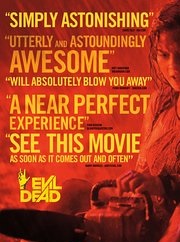
Evil Deadevil dead

Evil Dead to me is the worst remake because to me what the original Evil Dead did was show how much you can make with such a limited budget, we also got to meet one of the most iconic characters in horror history in Ash Williams. With the remake we see a film with a…

View original post 2,158 more words

The Curse of the Jade Scorpion (2001)

13 Wednesday Apr 2016

Posted by sgliput in Movies, NaPoWriMo, Poetry, Reviews, Writing

≈ 6 Comments

Tags

Comedy, Mystery, Romance


(Today’s NaPoWriMo prompt was to draw inspiration from a fortune cookie. The best fortune I’ve seen was, “Sorry, wrong cookie.” Instead, though, I chose my movie and poem based on one that said, “Don’t expect romantic attachments to be strictly logical or rational!”.)


That woman they just hired
Makes me wish I could get fired,
And what’s worse she has authority to do it.
Whatever hospital conferred her
On this world so ripe for murder,
I’ve a mind to find the big behind and sue it.

Her sarcasm is offending,
And she’s always condescending
And expects me to stay silent as a mime.
She’s an ever-present itch;
Her heart and soul are black as pitch;
And she’s other unattractive words that rhyme.

She’s conceited; she’s annoying,
And I know that she’s enjoying
Every day that brings me close to suicide.
But to see if I can win her,
I’ll be taking her to dinner
In the hopes that I can put all that aside.
__________________

MPAA rating: PG-13

I don’t have much experience with Woody Allen’s films. I’ve only seen Midnight in Paris, which I rather liked, and Hannah and Her Sisters, which I really don’t remember, but those whose opinions I trust often write him off as a sex-obsessed dirty old man. Of course, even sex-obsessed dirty old men can make good movies, and The Curse of the Jade Scorpion is a good example.

Allen plays C.W., a 1940s investigator for an insurance company who butts heads with the new efficiency expert Betty Ann (Helen Hunt), secretly in the middle of an affair with their boss (Dan Aykroyd). The two of them have a textbook case of anti-chemistry: everything about each of them gets under the other’s skin, and they both revel in colorful insults and behind-the-back complaints. Their coworkers love the irony when C.W. and Betty Ann are hypnotized by a magician into believing they are in love, but when that same magician (David Ogden Stiers) uses their trances to turn them into thieves, how can anyone discover the truth?

Allen himself considers this one of his worst films, but except for one key aspect, I can’t see why. The insults and innuendo are sharp and clever without ever crossing the line into distasteful, and the mystery is consistently amusing. The one less-than-ideal element is Allen as the lead, with which the director was himself dissatisfied. A younger and more appealing actor as C.W. would have been more likable and would have made the development of C.W. and Betty Ann’s relationship a bit more believable.

Toward the end, the film threatens to go in a manipulative direction, but rights itself with romantic aplomb, showing that Allen knew what he was doing as the screenwriter. As it is, The Curse of the Jade Scorpion still succeeds on the strength of its dialogue and warmly nostalgic period setting, but I’d love to have seen Tom Hanks in the lead. (A Cast Away reunion with Hunt! I can see it.)

Best line: (C.W.) “The house is messy. If I knew you were coming, I’d have rearranged the dirt.”

Other best line: (Laura Kensington, a socialite) “You have a fresh mouth. I don’t think I like it.”   (C.W.) “I tend to grow on people. We could meet later, and I could grow on you.”


Rank: List Runner-Up


© 2016 S. G. Liput

380 Followers and Counting


Mr. Holmes (2015)

12 Tuesday Apr 2016

Posted by sgliput in Movies, NaPoWriMo, Poetry, Reviews, Writing

≈ 1 Comment

Tags

Drama, Mystery


(Today’s NaPoWriMo prompt was for an index poem made up of unconnected snippets of words. Since this experimental idea typically results in a “poem” that defies interpretation, I chose a more traditional form instead.)


When I am in the twilight of my years,
And memories are brittle as each bone,
I wonder if my life will be worth tears
Or only a gravestone.

By then, I will have little need to fret,
But ere my mortal body’s fully worn,
I feel I’ll leave this world with less regret
If someone’s left to mourn.

I could go through this life with blinded eye
Toward anyone whose worth I overlook,
But fools are those who do not verify
The cover of a book.

I could live life content in solitude,
With intellect my only confidante,
But when my mind and body come unglued,
A friend is all I’ll want.
____________________

MPAA rating: PG

With so many adaptations of Sherlock Holmes stories, including Young Sherlock Holmes, it was only a matter of time before a film focused on the detective in retirement, as in last year’s Mr. Holmes (which might well have been titled Old Sherlock Holmes). Ian McKellen fills the title role superbly, though he emphasizes the 93-year-old Holmes’s fragility by showing his own obvious age. (He’s currently 76.) The understated but tremendous acting also extends to Laura Linney and Milo Parker, who play the mother and son who care for the aging Holmes. I should also note (Lost alert!) that Hiroyuki Sanada, who portrayed Dogen in Lost’s final season, plays Mr. Umezaki, an embittered reader who invites Holmes to Japan in search of a plant to aid his failing memory.

Despite the illustrious thespianism on display, the pacing of this unhurried mystery is positively glacial, making it a film to be best watched and appreciated when fully awake. Sherlock Holmes productions are known for foreshadowing and weaving together varied threads to the mystery, and though elements like Holmes’s beekeeping habits and his final case involving a glass armonica and a glove don’t necessarily influence each other, Holmes himself is the touchstone of these several aspects. His current retirement and friendship with young Roger (Parker) serve as a foundation from which Holmes struggles to remember his guilt-ridden past.

One key ingredient of Holmes’s character that so many adaptations have incorporated is his unequivocal bluntness, which often borders on insulting. While not obvious, the personal toll of this habit is finally detailed here. The failure of Holmes’s final case is owed to his self-satisfied assertion of the facts without fully understanding the emotions behind them, and his admirer Roger seems to follow in his footsteps in correcting and humiliating his mother with impertinent disregard for her feelings. So many Sherlock Holmeses, from Benedict Cumberbatch to Robert Downey, Jr., never seem to fully grasp their insensitivity, and seeing an older Holmes express his regret at alienating others is a believable development for the character.

Although Mr. Holmes may threaten one’s consciousness, its muted, handsomely mounted drama is a somber but fulfilling conclusion to the famed detective’s career. It’s also a sterling example of an aging actor proving he’s still got it.

Best line: (Holmes) “And thus concludes the true story of a woman who died before her time, and a man who, until recently, was certain he had outlived his.”


Rank: List Runner-Up


© 2016 S. G. Liput

379 Followers and Counting


← Older posts
Newer posts →

Recent Posts

  • We Didn’t Start 2025 (Recap)
  • NaPoWriMo 2025 Recap (Finally)
  • Sonic the Hedgehog 3 (2024)
  • It Happened One Night (1934)
  • Spellbound (2024)

Recent Comments

associatesofshellymann's avatarassociatesofshellyma… on My Top Twelve La La La So…
Kit's avatarKit Nichols on Bonnie and Clyde (1967)
lifelessons's avatarlifelessons on Look Back (2024)
Carol Jackson's avatarCarol Jackson on The Thief of Bagdad (1940…
Stephen's avatarStephen on Love Story (1970)

Archives

  • January 2026
  • December 2025
  • May 2025
  • April 2025
  • March 2025
  • February 2025
  • January 2025
  • December 2024
  • May 2024
  • April 2024
  • March 2024
  • February 2024
  • January 2024
  • December 2023
  • November 2023
  • October 2023
  • September 2023
  • July 2023
  • June 2023
  • May 2023
  • April 2023
  • March 2023
  • February 2023
  • January 2023
  • December 2022
  • November 2022
  • October 2022
  • September 2022
  • August 2022
  • July 2022
  • June 2022
  • May 2022
  • April 2022
  • March 2022
  • February 2022
  • January 2022
  • December 2021
  • November 2021
  • October 2021
  • September 2021
  • August 2021
  • July 2021
  • June 2021
  • May 2021
  • April 2021
  • March 2021
  • February 2021
  • January 2021
  • December 2020
  • November 2020
  • October 2020
  • September 2020
  • August 2020
  • July 2020
  • June 2020
  • May 2020
  • April 2020
  • March 2020
  • February 2020
  • January 2020
  • December 2019
  • November 2019
  • October 2019
  • September 2019
  • August 2019
  • July 2019
  • June 2019
  • May 2019
  • April 2019
  • March 2019
  • February 2019
  • January 2019
  • December 2018
  • November 2018
  • October 2018
  • September 2018
  • August 2018
  • July 2018
  • June 2018
  • May 2018
  • April 2018
  • March 2018
  • February 2018
  • January 2018
  • December 2017
  • November 2017
  • October 2017
  • September 2017
  • August 2017
  • July 2017
  • June 2017
  • May 2017
  • April 2017
  • March 2017
  • February 2017
  • January 2017
  • December 2016
  • November 2016
  • October 2016
  • September 2016
  • August 2016
  • July 2016
  • June 2016
  • May 2016
  • April 2016
  • March 2016
  • February 2016
  • January 2016
  • December 2015
  • November 2015
  • October 2015
  • September 2015
  • August 2015
  • July 2015
  • June 2015
  • May 2015
  • April 2015
  • March 2015
  • February 2015
  • January 2015
  • December 2014
  • November 2014
  • October 2014
  • September 2014
  • August 2014
  • July 2014
  • June 2014
  • May 2014
  • April 2014
  • March 2014
  • February 2014
  • January 2014
  • December 2013

Categories

  • Blindspot
  • Blogathon
  • Christian
  • Movies
  • Music
  • NaPoWriMo
  • Poetry
  • Reviews
  • TV
  • Writing

Meta

  • Create account
  • Log in
  • Entries feed
  • Comments feed
  • WordPress.com

Recent Posts

  • We Didn’t Start 2025 (Recap)
  • NaPoWriMo 2025 Recap (Finally)
  • Sonic the Hedgehog 3 (2024)
  • It Happened One Night (1934)
  • Spellbound (2024)

Recent Comments

associatesofshellymann's avatarassociatesofshellyma… on My Top Twelve La La La So…
Kit's avatarKit Nichols on Bonnie and Clyde (1967)
lifelessons's avatarlifelessons on Look Back (2024)
Carol Jackson's avatarCarol Jackson on The Thief of Bagdad (1940…
Stephen's avatarStephen on Love Story (1970)

Archives

  • January 2026
  • December 2025
  • May 2025
  • April 2025
  • March 2025
  • February 2025
  • January 2025
  • December 2024
  • May 2024
  • April 2024
  • March 2024
  • February 2024
  • January 2024
  • December 2023
  • November 2023
  • October 2023
  • September 2023
  • July 2023
  • June 2023
  • May 2023
  • April 2023
  • March 2023
  • February 2023
  • January 2023
  • December 2022
  • November 2022
  • October 2022
  • September 2022
  • August 2022
  • July 2022
  • June 2022
  • May 2022
  • April 2022
  • March 2022
  • February 2022
  • January 2022
  • December 2021
  • November 2021
  • October 2021
  • September 2021
  • August 2021
  • July 2021
  • June 2021
  • May 2021
  • April 2021
  • March 2021
  • February 2021
  • January 2021
  • December 2020
  • November 2020
  • October 2020
  • September 2020
  • August 2020
  • July 2020
  • June 2020
  • May 2020
  • April 2020
  • March 2020
  • February 2020
  • January 2020
  • December 2019
  • November 2019
  • October 2019
  • September 2019
  • August 2019
  • July 2019
  • June 2019
  • May 2019
  • April 2019
  • March 2019
  • February 2019
  • January 2019
  • December 2018
  • November 2018
  • October 2018
  • September 2018
  • August 2018
  • July 2018
  • June 2018
  • May 2018
  • April 2018
  • March 2018
  • February 2018
  • January 2018
  • December 2017
  • November 2017
  • October 2017
  • September 2017
  • August 2017
  • July 2017
  • June 2017
  • May 2017
  • April 2017
  • March 2017
  • February 2017
  • January 2017
  • December 2016
  • November 2016
  • October 2016
  • September 2016
  • August 2016
  • July 2016
  • June 2016
  • May 2016
  • April 2016
  • March 2016
  • February 2016
  • January 2016
  • December 2015
  • November 2015
  • October 2015
  • September 2015
  • August 2015
  • July 2015
  • June 2015
  • May 2015
  • April 2015
  • March 2015
  • February 2015
  • January 2015
  • December 2014
  • November 2014
  • October 2014
  • September 2014
  • August 2014
  • July 2014
  • June 2014
  • May 2014
  • April 2014
  • March 2014
  • February 2014
  • January 2014
  • December 2013

Categories

  • Blindspot
  • Blogathon
  • Christian
  • Movies
  • Music
  • NaPoWriMo
  • Poetry
  • Reviews
  • TV
  • Writing

Meta

  • Create account
  • Log in
  • Entries feed
  • Comments feed
  • WordPress.com

Blog at WordPress.com.

Is this your new site? Log in to activate admin features and dismiss this message
Log In
  • Subscribe Subscribed
    • Rhyme and Reason
    • Join 814 other subscribers
    • Already have a WordPress.com account? Log in now.
    • Rhyme and Reason
    • Subscribe Subscribed
    • Sign up
    • Log in
    • Report this content
    • View site in Reader
    • Manage subscriptions
    • Collapse this bar