• Home
  • About Me
  • The List
  • THE LIST (2016 Update)
  • THE LIST (2017 Update)
  • THE LIST (2018 Update)
  • THE LIST (2019 Update)
  • THE LIST (2020 Update)
  • THE LIST (2021 Update)
  • THE LIST (2022 Update)
  • Top Twelves and More
  • The End Credits Song Hall of Fame

Rhyme and Reason

~ Poetry Meets Film Reviews

Rhyme and Reason

Tag Archives: Romance

Silver Linings Playbook (2012)

08 Wednesday Jul 2015

Posted by sgliput in Movies, Poetry, Reviews, Writing

≈ 7 Comments

Tags

Comedy, Drama, Romance

When the dark is at its worst,
Some people may despair,
But some, refusing to be cursed,
See silver linings there.

Those linings may be hard to hold,
But promise they contain,
And when life’s strains are uncontrolled,
Think not they are in vain.

In bearing aches of head and heart,
Nobody is alone,
And silver linings may impart
New chances never known.
_________________

Rating: R

What do you get when you combine a talented writer/director with a uniformly Oscar-worthy cast of actors? Most of the time, you get a hit, and most of the time, that’s what David O. Russell’s Silver Linings Playbook is. As the first film since Reds to earn all four acting nominations at the Academy Awards, it features four excellent actors who know what they’re doing, even if it’s more the stuff of Oscar nominations rather than wins, though Jennifer Lawrence still won Best Actress.

This is the kind of romantic comedy that makes you feel better about yourself, because at least your life (hopefully) isn’t as messed-up as these people’s. Bipolar Pat Solitano, Jr. (Bradley Cooper), is lucky to have two loving and understanding parents like Robert De Niro and Jacki Weaver, who allow him to stay with them after his release from a psychiatric hospital. While he hopes to pick up with his wife, whose cheating caused his initial mental breakdown, he meets grieving widow Tiffany (Jennifer Lawrence), who’s also lucky to have two loving and understanding parents. At first glance, they might seem perfect for each other, two mentally unstable people who might be able to support each other, but between Pat’s obsession with his unfaithful wife and their tendency to pity the other, things are as complicated as real life or more so. (I admire Pat’s commitment to his wife, but it’s one-sided and delusional.) Throw in a dance competition, financial risks, and a Stevie Wonder phobia, and who knows if new love may bloom?

The relatable drama balances the headaches of mental illness with comedic touches that seem like ideas drawn from real life rather than spawned in a writer’s head. I’ve personally felt Pat’s dissatisfaction with an unhappy ending, though I wouldn’t go as far as he does, except in the blogosphere. While not everyone approved of the depiction of mental illness, the Oscar-nominated screenplay by Russell fosters this sense of realism in being unafraid to allow the “sloppy and dirty,” imperfections and natural flaws in both the characters and their actions. Nothing is idealized, not even the climactic dance number, but it’s all good enough to be satisfying and win over an audience.

My one complaint would have to be the crudity of the language. I know it doesn’t bother most people, but why must F-bombs be thrown around so casually in “great” movies? I’m not one to condemn a film only for foul language, but it just seems so unnecessary, making it less watchable for those sensitive to it. Robert De Niro, in particular, has an upset scene in which every other word begins with F. I suppose that’s realistic too, and I know this film is far from the worst offender, but without the language, you’d still have the outstanding performances and direction and miss nothing. Maybe it’s just me….

Nevertheless, Silver Linings Playbook is one of the better modern romantic dramedies, urging everyone to find their silver lining and illustrating love as a complex mix of empathy, madness, chance, and bribery. And it makes me want to try some “crabby snacks and homemades.”

Best line: (Tiffany) “You let me lie to you for a week?”   (Pat) “I was trying to be romantic.”

Rank: List Runner-Up
© 2015 S. G. Liput
325 Followers and Counting

Ruby Sparks (2012)

12 Friday Jun 2015

Posted by sgliput in Movies, Poetry, Reviews, Writing

≈ 2 Comments

Tags

Comedy, Drama, Fantasy, Romance

A genius brought a dream to life
And dared to call her all his own,
But dreams aren’t what they seem in life
And oft grow past where they are sown.

Attempts to keep a dream confined
Will leave both love and lover stale,
For dreams cannot be hid behind
Possessive fears that they may fail.
____________________
After someone at work mentioned that I bore a resemblance to Paul Dano in Ruby Sparks, I knew I had to see this movie. (Incidentally, I don’t see the similarity.) The brainchild of star Zoe Kazan, who wrote the lead roles with herself and boyfriend Dano in mind, Ruby Sparks begins with a great idea and, despite some stumbles along the way, ultimately fulfills its potential. Paul Dano is much like a young Woody Allen as the rather neurotic young novelist Calvin Weir-Fields, who finds himself unable to match his early success. He’s a loner, whose past relationships haven’t ended well and whose friends include only his dog Scotty and his brother and sister-in-law. It’s not until his shrink suggests a writing exercise that he feels inspired and spits out a description of a girl he’s seen in his dreams. When Ruby actually appears as his very real girlfriend, drama, humor, romance, conflict, and hard relationship lessons ensue.

While the idea may feel a bit similar to The Odd Life of Timothy Green (released just a month later), and other films like Inkheart and Stranger than Fiction have toyed with the concept of writing becoming reality, the moral elements help to set Ruby Sparks apart. Though Calvin discovers that he can change Ruby with a few words on his typewriter, he resolves never to take advantage of this authorial privilege, but he reconsiders when his girlfriend deviates from his expectations. As Kazan has stated, Ruby isn’t just a “manic pixie dream girl,” eager to please Calvin with no faults whatsoever. Though he balks at the title of genius, Calvin’s too good a writer to create some one-dimensional character; whatever her origins, she ends up being a human being, wild and eccentric at times, but also moody and much more outgoing than her beau. He finds that he’s in love with the idea of her rather than the real McCoy. The nuances and challenges of love are sadly lost on Calvin, since after all, why must he change when Ruby is so changeable? I tend to sympathize with him since, being more of an introvert, I’d rather read a book at home than smoke weed with a free-spirited sort-of relative (a surprising Antonio Banderas), but Calvin’s still clearly in a rut he’s unwilling to escape.

While the potential was there for Ruby Sparks to become a rom-com classic, it aims a bit too wide of that mark. A few too many F-bombs and loose morals are thrown in (plus a brief but rather shocking scene from some zombie Z movie), perhaps to give it a more respectable(?) rating of R, and these elements only drag it down for me. Even so, I enjoy movies about writing, and Kazan’s often witty dialogue is one of the film’s strengths, along with stellar acting from all involved, including Elliott Gould, Annette Bening, and Chris Messina.

While Calvin’s changes to Ruby are sometimes hilarious, the fact that he’s exploiting the dignity of his “brainchild” is never lost and comes to a head in a bizarre climax that threatens to rob him of all sympathy. Nevertheless, considering everything before, what follows might be considered one of the most perfect endings I’ve seen in some time, allowing everyone the change and growth they need. On top of that, the film’s score by Nick Urata grabbed my attention and has become a new favorite of mine to listen to while I write. Despite its flaws, Ruby Sparks left me with a positive impression; with work like this, I’d say Kazan and Dano have bright futures ahead of them.

Best line: (movie producer, interested in adapting Calvin’s first novel into a film) “Now, Adam and Mandi come in with a wealth of experience from documentary films. Everything they touch is authentic. They make it real.”
(Adam) “Grounded in reality and—”
(Mandi) “We treat narrative the exact same way.”
(producer) “You saw the baby documentary they did.”
(Calvin’s publicist) “Yes. Made me want to have a kid.”

Rank: Honorable Mention

© 2015 S. G. Liput

315 Followers and Counting

A Beautiful Mind (2001)

03 Wednesday Jun 2015

Posted by sgliput in Movies, Poetry, Reviews, Writing

≈ 3 Comments

Tags

Drama, Romance


Brilliance lies within John Nash,
Whose confidence avoids a crash
With economic innovation,
Just the thing to make a splash.
 
As he savors acclimation,
Mathematics his vocation,
Two new ventures enter in,
Demanding love and dedication.
 
Undercover jobs begin;
A woman’s heart he learns to win,
But when the two get too entwined,
His sanity is spread too thin.
 
Some parts of life, he’s shocked to find,
Are only in his gifted mind.
Within his mind, the struggles start
Before he’s forced to be confined.
 
Discernment’s more than being smart,
And though the phantoms won’t depart,
The measure of a brilliant man
Lies in the constant of the heart.
_______________
 

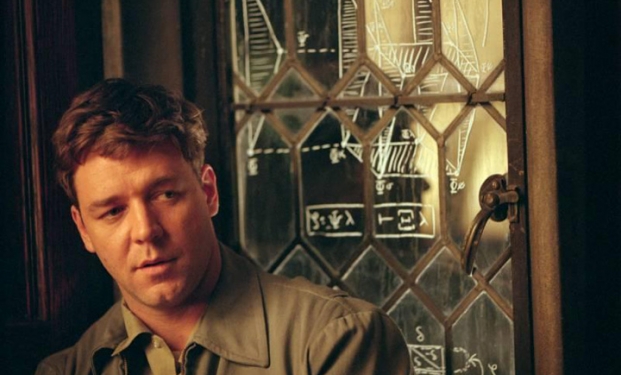
I meant to review A Beautiful Mind some time ago, but like many things, it got away from me. Now, though, seems like a suitable time, in light of the recent deaths of John Nash and his wife Alicia, who were killed in a taxi accident on May 23rd, the latest victims of not wearing life-saving seat belts.

The film itself is a fitting tribute to his life and achievements, as well as an absorbing glimpse into the uncertainties of mental illness. It won both Best Picture and Best Director for Ron Howard and ranks among his best films. Russell Crowe brings Nash to life, and while he at first may seem like a collection of tics and eccentricities, his conversations with his college buddies display both his insecurities and his intellectual prowess.

While the film starts off as a character study of collegiate genius, confidence, and social awkwardness, Nash is soon drawn into government conspiracies and incessant paranoia. Then the film suddenly takes a Shyamalan-style turn back to reality that is jarring for both Nash and the audience, not to mention his supportive wife Alicia (an Oscar-winning Jennifer Connolly). The twist also makes it somewhat of a puzzle film deserving of repeat viewing. The rest of the film is spent with Nash attempting to maintain his sanity, a hard-fought daily struggle that affirms the touching devotion of his wife and friends and, for all his flaws, cements him as an admirable figure.

The film’s greatest strength is its acting. Crowe is really at his best here, and I will forever hold that he should have won for this instead of the previous year’s Gladiator; that way, Tom Hanks could have won for Cast Away. Oh, well. Jennifer Connolly is also heart-tuggingly persuasive in the way she endures and overlooks Nash’s problem areas to see the man worth loving underneath. Excellent smaller roles are filled by Ed Harris, Christopher Plummer, and the Vision—I mean, Dustfinger—I mean, Paul Bettany.

The film has long been criticized for the liberties taken with Nash’s life, such as the fact that his mental issues were apparently heard rather than seen. Plus, many important details were left out, such as the out-of-wedlock child he rejected and his divorce from Alicia in 1963. Nevertheless, the film’s power doesn’t lie in its adherence to the true history but in the character of Nash himself and his relationships, which I believe are visualized quite successfully. Nash’s surface unlikability is certainly made clear in various ways, but as the character says himself, he is “an acquired taste.” Nash and his wife did reconcile and remarried in 2001 (the year the film was released), so the film’s smoothing out of their romance is simply for the sake of story simplicity. Also, scenes that never happened, like the pens ceremony and Nash’s speech at winning the Nobel Prize (evidently, economics winners don’t give acceptance speeches), serve to heighten the emotion of his accomplishments and aren’t glaring in their embellishment, at least not for the casual moviegoer.

A Beautiful Mind may have its moments of disorientation, but it’s an Oscar winner with dramatic potency to spare, an artistically effective look at mental illness and faithful love, aided by a moving, if repetitive, James Horner score. (The score is incorporated into the Hall of Fame-worthy song during the end credits, “All Love Can Be.”) The final scenes are even more poignant now that John Nash’s life and career have ended, and his final line to his wife (“Come with me, young lady. I have a car outside. Interested in a ride?”) is almost prophetic, considering how they both died. Despite all the problems in his life, the film serves as a moving tribute to a mad genius.

Best line (not the most emotional but my favorite): (Charles, interrupting John’s mental groove) “When did you last eat? You know, food.”
(John Nash) “You have no respect for cognitive reverie, you know that?”
(Charles) “Yes. But pizza—now, pizza I have enormous respect for. And, of course, beer.”
 
 
Rank: List-Worthy
 

© 2015 S. G. Liput

313 Followers and Counting

VC Pick: Same Time, Next Year (1978)

27 Wednesday May 2015

Posted by sgliput in Movies, Poetry, Reviews, Writing

≈ 9 Comments

Tags

Comedy, Drama, Romance


Love begins across a room
With eyes that lock and smiles that bloom
But will not leave the stricken pair
When time to end the brief affair,
 
For love endures a year apart,
And patient is the waiting heart.
They love their spouses too in spite
Of seeking yearly to unite.
 
For love endures for decades too,
The changes they must suffer through,
And even when it nears its end,
It will not leave a lifelong friend.
_________________
 

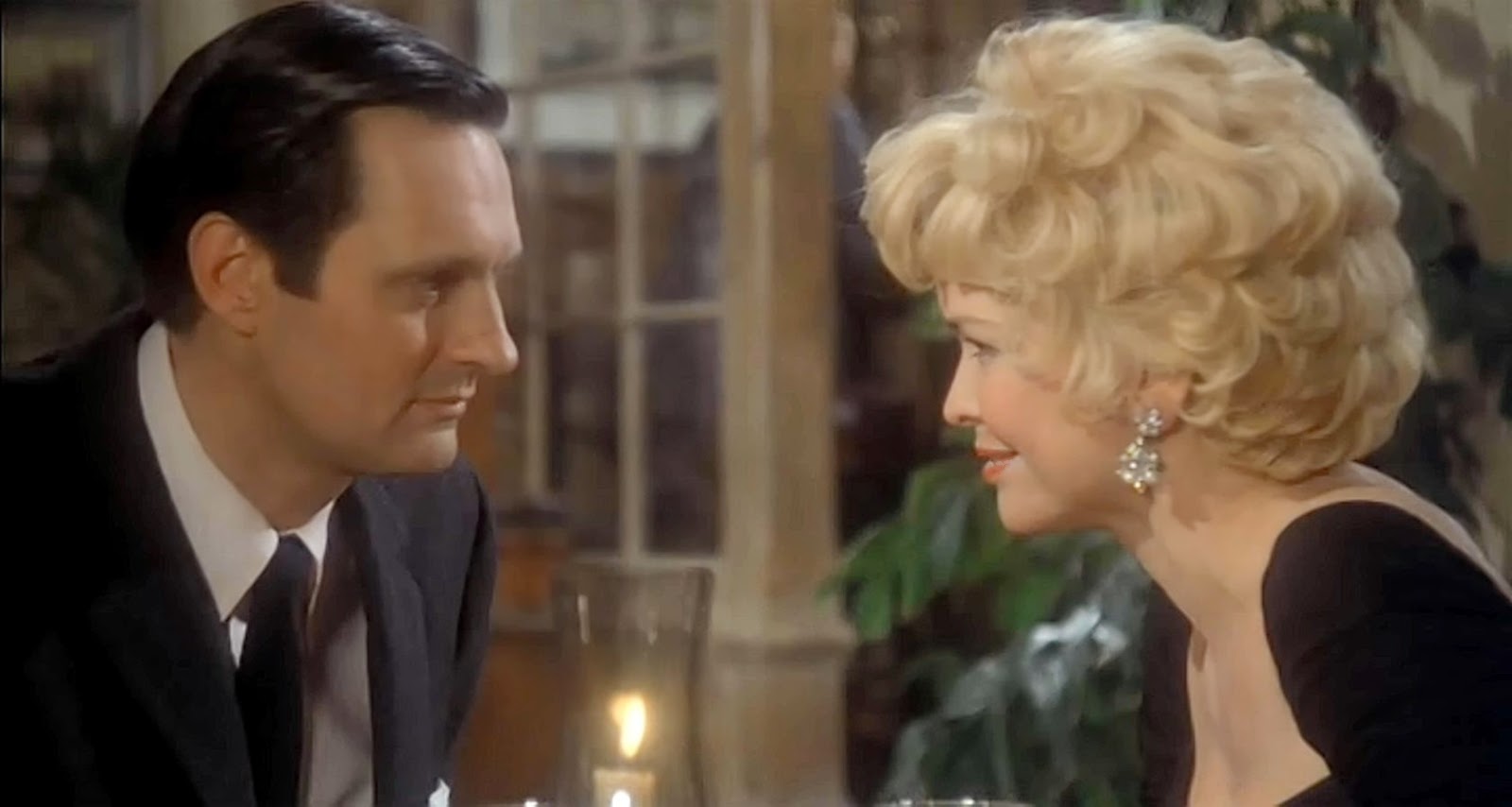
Released at the height of Alan Alda’s M*A*S*H fame, Same Time, Next Year brought to life both Bernard Slade’s 1975 play and a romance for the ages. As she’s a big fan of Alan Alda’s charm and humor, it’s no surprise that my VC loves this film so much and insisted on my reviewing it.

George (Alda) and Doris (Ellen Burstyn) happen to meet at a seaside hotel in 1951 while on solo retreats and immediately fall for each other, with the romantic mood set perfectly by the Oscar-nominated song “The Last Time I Felt Like This” (the kind of lovey-dovey theme that gets my VC tearing up with just the first few notes; it also concludes the film to earn a place in my End Credits Song Hall of Fame). After falling into bed as well, the two can’t abide never seeing each other again and, since their respective retreats coincide at the same time every year, they plan to meet annually, with the audience checking in every five years or so. The set-up and plot are simple and potentially corny, but Same Time, Next Year is a good example of a film that is elevated by some outstanding performances and dialogue.

Burstyn played Doris on stage as well opposite Charles Grodin, winning a Tony (she also garnered an Oscar nomination), and feels perfectly at ease with the role, even as she metamorphoses over the years from naïve housewife to hippie to confident businesswoman. Conversely, Alda changes in much more subtle ways, yet both remain recognizable and endearingly flawed through the decades. (It’s interesting to note that Alda’s M*A*S*H co-star Loretta Swit also played Doris on Broadway; that would have been a reunion of a different type.) They chat about their lives and families and children and politics, about George’s accountant quirks and Doris’s uncle with a metal plate in his head. As they continue to meet, it becomes clear that much can happen in a year’s time, and their relationship must grow and adapt to the sometimes painful changes they aren’t together to face. And of course, with Alda on hand, there’s a good deal of humor in the conversations too, such as George’s insistence on absolute openness despite habitually lying.

I do endorse this film with reservations, though, since one’s enjoyment from it depends on how well they can suspend their morality. I, for one, believe in faithfulness and monogamy, ideas that may seem foreign in a film about a decades-long affair. Yet as much as George and Doris love each other, they both love their own spouses too and speak affectionately of Helen and Harry. It isn’t all about sex; while most affairs aren’t like this, there is a degree of faithfulness to all the relationships, bonds that are clearly much deeper than a broken marriage or a one-night stand. Whether this is enough to justify the breach of trust is left to the audience, but it’s not enough to spoil my enjoyment of the film.

While my VC’s affection for Same Time, Next Year far surpasses mine, it’s still a romantic dramedy to remember. She claims that the viewer gets to know these characters, even those only mentioned like Harry and Helen, better than almost any other film. While I wouldn’t go that far, George and Doris are indeed the likable sort that I wouldn’t mind reuniting with, maybe, around this time next year.

Best line: (George, often enough for it to almost be his catchphrase) “All right, I didn’t think it through.”

VC’s best line: (George, recounting when they first met) “We had instant rapport. Did you notice that too?   (Doris) “No. But I know we really hit it off.”


Rank: List Runner-Up
 

© 2015 S. G. Liput

312 Followers and Counting

Bottom-Dweller: Urban Cowboy (1980)

22 Friday May 2015

Posted by sgliput in Movies, Poetry, Reviews, Writing

≈ 6 Comments

Tags

Bottom-Dweller, Drama, Romance, Western


(Can be sung to “The Devil Went Down to Georgia”)
 
Travolta went down to Houston,
He was lookin’ for a job to take.
He was young and dumb, just a country bum,
And he was waiting for his big break,
 
When he came across this young girl
Dancin’ round in a honky-tonk,
A promised land of beer and band
With a metal bull or bronc.
 
When the misfit pair were married,
Things at first were going well,
But some stubbornness made a jealous mess
And the marriage quickly fell.
 
While the two just boozed and pined away
And rode that bucking bull,
I began to think that this movie stinks
And was near unbearable.
__________________
 

This is it, the original bottom-dweller. This is the first movie I sat through and immediately hated, or, to coin Roger Ebert’s quote from his review of North, I “hated hated hated hated hated this movie.” Urban Cowboy was yet another star vehicle for John Travolta, but with films like this, it’s a wonder he became a star at all. I don’t usually subject myself to terrible films, but never before have I asked “Is it over yet?” so many times.

It starts out with some promise: small-town wannabe cowboy heads to the big city to find his fortune, meets girl, marries girl. That storyline alone might have been worth seeing, but the relationship between Bud and Sissy is hardly one for the ages. They meet each other in the famous Gilley’s Club, a multi-acre theme park of booze and cowboy paraphernalia, and Sissy (Debra Winger) has to practically twist Bud’s arm to convince him to dance with her. After some dancing and an argument and a roll in the mud, they’re suddenly walking down the aisle. Did either of them really think a marriage starting like that would last? As it turns out, barely a week passes before Bud’s pride is hurt, and both go their separate ways to make the other jealous, with increasingly depressing results.

One of my biggest problems with Urban Cowboy is the character of Bud. Travolta isn’t appealing in the slightest; he’s a juvenile man-child so unconfident in his masculinity that the slightest hint that someone may be better than he throws him into a blind rage, especially if it’s his own wife. In addition, he’s the kind of bumpkin that gives country music a bad name, content to work (sometimes) during the day and wile away his nights at the bar, picking fights and slapping his wife when she disagrees too much (but not too hard, of course). Plus, he’s supposedly in Houston to work and save up enough money to buy land and become prosperous, yet never seems to realize that he’s pouring his paycheck down the drain every night on beer and bets and pointless mechanical bull rides. Oh, and let’s not forget that he doesn’t just pretend to cheat on Sissy to make her jealous; he freely sleeps around, too stubborn to actually care for the girl he uses (Madolyn Smith) and too dense to realize why Sissy isn’t running back to him with open arms. What exactly am I supposed to like about this guy?

A series of misunderstandings keeps the couple apart, and Sissy ends up with “real cowboy” Wes Hightower, played by a leery Scott Glenn, who’s just a slightly harsher version of Bud, hitting a little too hard and stealing what he can’t earn. If Bud and Wes are “real cowboys”, they’re the worst kind, selfish he-men just trying to prove their own toughness to girls they only moderately care about. By the end, Bud trains Rocky-style for a mechanical bull showdown, and he seems to think that winning it will win Sissy back. How so? A silly championship is not going to repair a relationship; all his training is pointless, since all he really needed to do was go and apologize for his own pigheadedness. While he ends up doing exactly this, it’s as if he can’t muster the effort until he’s once again proven his alpha male status. Of course, it all works out for a happy ending, where assault turns into just desserts and a whirlwind romance rekindles into a whirlwind reconciliation. And then, thank God!, it was over!

This just might be my most hated bottom-dweller, with hardly any redeeming value. The only bright point is the classic country music soundtrack, particularly Charlie Daniels’ “The Devil Went Down to Georgia.” For reasons beyond my comprehension, my VC and many other critics actually liked the film itself, looking past its unlikable characters and petty squabbling. She tells me that she finds the movie “interesting for its dysfunctional lifestyle” and as compelling to watch as a car accident, while I’d prefer just to not look at all. I don’t plan to ever see Urban Cowboy again; I have much better things to do than watch white trash with superficial, totally screwed-up priorities cheating on each other.

Best line: (Bud) “All cowboys ain’t dumb. Some of ’em got smarts real good, like me.”

VC’s best line:  (Bud’s Uncle Bob) “You know, Bud, sometimes even a cowboy’s gotta swallow his pride to hold on to somebody he loves.”  (Bud) “What do you mean?”   (Uncle Bob) “Hell, I know I pretty near lost Corrine and the kids a couple of times just ’cause of pride. You know, you think that ol’ pride’s gonna choke you going down, but I tell you what, ain’t a night goes by I don’t thank the Boss up there for giving me a big enough throat.”

 
Rank: BOTTOM-DWELLER!
 

© 2015 S. G. Liput

311 Followers and Counting

Bottom-Dweller: 5 Centimeters Per Second (2007)

29 Wednesday Apr 2015

Posted by sgliput in Movies, NaPoWriMo, Poetry, Reviews, Writing

≈ 3 Comments

Tags

Animation, Anime, Bottom-Dweller, Drama, Romance


(Today’s NaPoWriMo prompt was for a poem written in the form of a review. Perfect for a poet/movie reviewer, right? In this case, I combined my usual poem and review into the single rant below.)

For those who might think I like all animation,
I’ll simply refer to this dreadful creation.
I’ve mentioned before that I cherish the art
And story of Ghibli’s Whisper of the Heart,
And after I saw it, I searched on my own
For anime like it that might be well-known
For a similar quiet and intimate tone.
 
I read some good things about this little flick
From Makoto Shinkai and hoped it would click.
I watched it, this 5 Centimeters Per Second,
And found it was not at all what I had reckoned.
This Japanese drama with praise was anointed.
Did no critic see how delayed and disjointed
This tearjerker is? Was just I disappointed?
 
The film’s broken up into three distinct parts,
With each saying more of the breaking of hearts.
It starts off with promise; two thirteen-year-olds
Are both separated as each life unfolds.
By train, the boy Tono then travels through white,
Through blizzard and blockages to reunite
With distant Akari who waits through the night.
 
This first part alone could have stayed on its own
And is rather sweet, though it’s tedium-prone,
But Parts 2 and 3 are unduly depressing,
With one girl downcast by love she’s not professing,
And then we see Tono grown up, while Akari
Has moved on without him, with both feeling sorry
And gazing at petals and skies dark and starry.
 
The film lasts an hour, with a pace so not vital
It seems twice as long, with less speed than the title,
Which fondly refers to the unhurried crawl
At which cherry blossoms supposedly fall.
When all’s said and done, out of nowhere appears
A strange music video meant to draw tears
To recap this great waste of time for the ears.
 
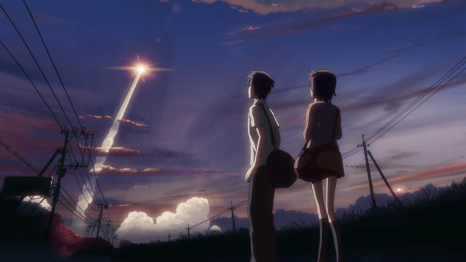
The film’s greatest strength is the beautiful art,
A treat for the eyes if not quite for the heart.
The landscapes are lovely, replete with details,
But that’s not enough, for the story still fails.
There’s much symbolism with petals and birds,
With launches of space probes and unspoken words,
And some of it’s poignant, though broken in thirds.
 
The imagery may be the film’s biggest draw,
But how it’s employed is a signature flaw.
Most anime’s mingled with peaceful transitions,
A still or an object, like small intermissions,
But actions in this film are drawn out and laced
With tons of these images, ploddingly paced,
Which may bear some beauty but aren’t to my taste.
 
Yet what do I draw from these touching vignettes,
That love sure can stink when it’s full of regrets?
A drama needs more than some symbols about
The fact that some romances just don’t work out.
There aren’t even reasons implied to explain
Why two former lovebirds broke up in such pain.
I grieved by the end, for my hour spent in vain.
 
 
Rank: Bottom-Dweller
 

© 2015 S. G. Liput

302 Followers and Counting

Becoming Jane (2007) (Full Version)

28 Tuesday Apr 2015

Posted by sgliput in Movies, NaPoWriMo, Poetry, Reviews, Writing

≈ 2 Comments

Tags

Drama, History, Romance


The author Jane Austen
Refused to get lost in
Romance of her own,
Though for that she’s well-known.
__________________
 

(Here’s the full review for the poem I wrote a couple days ago. Since I already have my NaPoWriMo poem for today with X-Men: Days of Future Past, I thought today would be a good day to finish this one.)

Becoming Jane follows in the footsteps of biopics like Cross Creek and Shakespeare in Love in asking, “Why remake an author’s work when you can depict the supposed events in their life that inspired that work?” Anne Hathaway is a lovely Jane Austen, and James McAvoy is a debonair Tom LeFroy, the brief acquaintance from Austen’s life whom the film expands into a full-on would-be love interest. Even if their romance isn’t entirely true to history, Hathaway and McAvoy have all the chemistry they need to make for a heart-throbbing Janeite passion.

It’s a film that seems to have everything going for it: an evocative score, ravishing costumes and production design, compelling cinematography with vivid views of nature and framed scenes shot through corridors, and a cast of renowned thespians, such as James Cromwell, Julie Walters, and Maggie Smith. Its dialogue even bears the eloquent wit and civilized sauciness of Austen’s work, and therein lies an issue for me. As elegant as Austen’s writing is (“accomplished” as McAvoy’s LeFroy judges), its flowery language isn’t as appealing to a modern audience as it once was. Certainly there are plenty of Janeites out there who still swoon over her sophisticated style, and it isn’t as pretentious as The Philadelphia Story, but it takes more effort than usual sometimes to decipher the meaning behind her carefully constructed prose. Perhaps that’s the fault of me, too low-brow to keep up with her urbane language, but I doubt I’m the only one. I keep thinking of Tom Hanks in You’ve Got Mail, rolling his eyes as he slogs through Pride and Prejudice.

Like that film, Becoming Jane borrows the initial setup of her most famous novel, with Jane becoming instantly prejudiced against LeFroy’s arrogance toward her. Scenes involving Jane’s disagreeing parents and a country dance in which she and LeFroy trade polished barbs will certainly remind viewers of past productions of Pride and Prejudice. Yet since Austen is known to have never married, it’s clear that any attraction between the two is doomed to failure; herein lies the film’s uniqueness among Austen-like works. While all of her novels conclude basically with happy endings, such marital felicity was not to be hers, and the film’s final moments highlight the bittersweet sentiments of what-might-have-been. My VC agrees with me about the ornate dialogue but was still brought to tears by the denouement. It’s not necessarily a tragedy, since female independence has its last word over societal convention even if it can’t defy it, but Becoming Jane has its foundation in the real world, a world of desirable affection and indispensable money, a world meant to be perfected by a sadder but wiser novelist.

Best line: (Mrs. Austen, when Jane starts writing instead of attending to a suitor) “Jane!”
(Lady Gresham) “What is she doing?”
(Mr. Wisley, the suitor) “Writing.”
(Lady Gresham) “Can anything be done about it?”
 
 
Rank: List Runner-Up
 

© 2015 S. G. Liput

302 Followers and Counting

Becoming Jane (2007) (Short Version)

25 Saturday Apr 2015

Posted by sgliput in Movies, NaPoWriMo, Poetry, Reviews, Writing

≈ 2 Comments

Tags

Drama, History, Romance

The author Jane Austen
Refused to get lost in
Romance of her own,
Though for that she’s well-known.
 ___________________
 

In keeping with NaPoWriMo’s prompt for the day, I wanted to do a Clerihew, an eponymous quatrain poking fun at another person. Since I didn’t have much time today, though, I’m just posting the poem and will have to write the review for Becoming Jane later. Until then….

Cross Creek (1983)

22 Wednesday Apr 2015

Posted by sgliput in Movies, NaPoWriMo, Poetry, Reviews, Writing

≈ 2 Comments

Tags

Drama, Romance


Cities are a dying breed,
Though those who live in them know not.
They’re full of people, noise, and need,
Yet lack the treasures man forgot,
The joys of wind and sprouting seed
And peace of mind that can’t be bought.
 
Here in Cross Creek, my writing wakes,
Surrounded by the Spanish moss,
By sylvan streams that link the lakes
And tiny boats to get across.
I moved here for the silence’ sakes;
The lack of clamor is no loss.
 
My neighbors are a different folk;
Like me, they tend to stay apart,
To work beneath the ancient oak
And never reckon to depart.
We hear the frogs in chorus croak
And know the creatures’ songs by heart.
 
Cities are a dying breed,
Though some say nature will go first.
Yet renters ever will secede
To find the home for which they thirst.
Cross Creek and peace will thrive indeed
When all the cities have dispersed.
__________________
 

(In honor of Earth Day, today’s NaPoWriMo prompt, and Marjorie Kinnan Rawlings’ distaste for cities, the poem today is a pastoral, focusing on nature and a bucolic setting, of which Cross Creek has no shortage.)

Cross Creek could be considered a VC Pick, since she loves this film dearly, but I’ve come to enjoy it nearly as much. It should have made my original list, but I couldn’t remember it well enough at the time. Based on the memoir of Marjorie Kinnan Rawlings, it stars Mary Steenburgen as the strong-willed but reclusive author who in 1928 bought a dilapidated house and orange grove in the Florida boondocks. Having lived in central Florida myself, I recognize the film as a tribute to the Florida “cracker” lifestyle, the rural frontiersmen who made a home out of the balmy wilderness. (I even remember taking field trips to Cracker Country, a living history museum that promotes knowledge of their early culture.) Rawlings comes to Cross Creek in search of silence to write but finds inspiration and love (with Peter Coyote!) in this unexpectedly homey landscape.

Watching the film again, it reminded me of another film about a famous divorced female writer who moves to a steamy countryside, falls in love with one of the first people she meets there, grows a tropical crop, bonds with the natives, and finds the inspiration for her best-known work, that film being 1985’s Out of Africa. Yet Cross Creek was released two years earlier and is less epic and more folksy than the later film. Instead of being a remake of Rawlings’ The Yearling, it offers a different yet recognizable sideplot involving the relationship of a child (a girl instead of the boy in the book) and a fawn (one of the most adorable things on four legs).

Made with the assistance of Rawlings’ husband Norton Baskin (who has a cameo toward the beginning), Cross Creek is charming and cozy, peaceful but tragic, and very well-acted. Rip Torn as Rawlings’ backwoods neighbor and Alfre Woodard as her devoted maid both received Oscar nominations, as did the costume design and the score (which is also slightly reminiscent of Out of Africa). Despite these honors, it’s a film that seems to have been forgotten for the most part, which is a shame. It’s most pertinent message for me as a writer is to write what you know, what you’re passionate about, rather than what is simply popular. Despite some awkward scenes and a conclusion that could have been strengthened by some added information, Cross Creek is a river well worth traveling down.

Best line: (Marjorie Rawlings, after a drunken night) “That is just the way I am. I go along quietly for a while and then out of the clear blue sky, I don’t know what happens to me, I just pick up a gun, and I shoot whatever makes me angry. I’m so afraid one day it just might be a person.”

 
Rank: List-Worthy
 

© 2015 S. G. Liput

297 Followers and Counting

Rebecca (1940)

21 Tuesday Apr 2015

Posted by sgliput in Movies, NaPoWriMo, Poetry, Reviews, Writing

≈ 2 Comments

Tags

Drama, Hitchcock, Romance


Rebecca is dead, but her room is the same.
The servants still miss her and whisper her name.
Her husband is grieving, and tries to move on,
But Mrs. de Winter is not fully gone.
 
Her secrets remain, as do Mr. de Winter’s,
Secrets that torture him daily like splinters.
His new wife is innocent, nervous, and shy;
She shouldn’t learn them, nor understand why.
 
But secrets have habits of being found out,
Casting suspicion and panic and doubt.
Rebecca is dead, Mrs. Danvers knows well,
And yet Manderley is still under her spell.
________________
 

After seeing Hitchcock’s last great film based off a Daphne du Maurier story (The Birds), I thought I’d see his first great American film based off a Daphne du Maurier story, Rebecca. A Gothic tale with distinct similarities to Jane Eyre, Rebecca won the 1940 Academy Award for Best Picture and was indeed far better than a certain disliked competitor (ahem, The Philadelphia Story.)

Laurence Olivier is both dashing and brusque as Maxim de Winter, a widower haunted by the loss of his first wife Rebecca. When he runs into the lovely Joan Fontaine, her naiveté and complete contrast to Rebecca attract him, and a somewhat comedic whirlwind romance makes the unnamed heroine the second Mrs. de Winter. When they return to de Winter’s sprawling estate of Manderley, his new bride begins to feel more and more uncomfortable as semi-famous villain Mrs. Danvers psychologically torments her with unfortunate comparisons. By the end, the narrative takes some unexpected twists that either improve or destroy certain characters.

In contrast to many old Gothic films (like Merle Oberon’s laughable scenes in 1939’s Wuthering Heights), Rebecca avoids old-fashioned histrionics and provides some genuinely great performances from Olivier, Fontaine, and Dame Judith Anderson as Mrs. Danvers, the black-clothed matron with an unhealthy fascination with her late employer. (My VC became frustrated with Fontaine’s constant timidity, but I thought it was handled well, considering her age and limited experience. Her apprehensions are much like a child’s, like when she accidentally breaks a statue and hides it, only to feel and look foolish when the truth comes out.) The film transitions thrice, first from an unexpected romance to a dark psychological mystery and then to a whodunit in which the audience actually hopes the investigation is unsuccessful. That’s no mean feat, and Hitchcock’s direction creates just the right aura of intrigue, meant to fascinate and frighten both the protagonist and the audience. While it owes much to past classics of the genre and the ending is a bit abrupt, Rebecca promised that America could expect some great things from Alfred Hitchcock.

Best line: (Mrs. Van Hopper, the heroine’s employer) “Most girls would give their eyes for the chance to see Monte [Carlo]!”   (Maxim de Winter) “Wouldn’t that rather defeat the purpose?”

 
Rank: List Runner-Up
 

© 2015 S. G. Liput

297 Followers and Counting

← Older posts
Newer posts →

Recent Posts

  • We Didn’t Start 2025 (Recap)
  • NaPoWriMo 2025 Recap (Finally)
  • Sonic the Hedgehog 3 (2024)
  • It Happened One Night (1934)
  • Spellbound (2024)

Recent Comments

associatesofshellymann's avatarassociatesofshellyma… on My Top Twelve La La La So…
Kit's avatarKit Nichols on Bonnie and Clyde (1967)
lifelessons's avatarlifelessons on Look Back (2024)
Carol Jackson's avatarCarol Jackson on The Thief of Bagdad (1940…
Stephen's avatarStephen on Love Story (1970)

Archives

  • January 2026
  • December 2025
  • May 2025
  • April 2025
  • March 2025
  • February 2025
  • January 2025
  • December 2024
  • May 2024
  • April 2024
  • March 2024
  • February 2024
  • January 2024
  • December 2023
  • November 2023
  • October 2023
  • September 2023
  • July 2023
  • June 2023
  • May 2023
  • April 2023
  • March 2023
  • February 2023
  • January 2023
  • December 2022
  • November 2022
  • October 2022
  • September 2022
  • August 2022
  • July 2022
  • June 2022
  • May 2022
  • April 2022
  • March 2022
  • February 2022
  • January 2022
  • December 2021
  • November 2021
  • October 2021
  • September 2021
  • August 2021
  • July 2021
  • June 2021
  • May 2021
  • April 2021
  • March 2021
  • February 2021
  • January 2021
  • December 2020
  • November 2020
  • October 2020
  • September 2020
  • August 2020
  • July 2020
  • June 2020
  • May 2020
  • April 2020
  • March 2020
  • February 2020
  • January 2020
  • December 2019
  • November 2019
  • October 2019
  • September 2019
  • August 2019
  • July 2019
  • June 2019
  • May 2019
  • April 2019
  • March 2019
  • February 2019
  • January 2019
  • December 2018
  • November 2018
  • October 2018
  • September 2018
  • August 2018
  • July 2018
  • June 2018
  • May 2018
  • April 2018
  • March 2018
  • February 2018
  • January 2018
  • December 2017
  • November 2017
  • October 2017
  • September 2017
  • August 2017
  • July 2017
  • June 2017
  • May 2017
  • April 2017
  • March 2017
  • February 2017
  • January 2017
  • December 2016
  • November 2016
  • October 2016
  • September 2016
  • August 2016
  • July 2016
  • June 2016
  • May 2016
  • April 2016
  • March 2016
  • February 2016
  • January 2016
  • December 2015
  • November 2015
  • October 2015
  • September 2015
  • August 2015
  • July 2015
  • June 2015
  • May 2015
  • April 2015
  • March 2015
  • February 2015
  • January 2015
  • December 2014
  • November 2014
  • October 2014
  • September 2014
  • August 2014
  • July 2014
  • June 2014
  • May 2014
  • April 2014
  • March 2014
  • February 2014
  • January 2014
  • December 2013

Categories

  • Blindspot
  • Blogathon
  • Christian
  • Movies
  • Music
  • NaPoWriMo
  • Poetry
  • Reviews
  • TV
  • Writing

Meta

  • Create account
  • Log in
  • Entries feed
  • Comments feed
  • WordPress.com

Recent Posts

  • We Didn’t Start 2025 (Recap)
  • NaPoWriMo 2025 Recap (Finally)
  • Sonic the Hedgehog 3 (2024)
  • It Happened One Night (1934)
  • Spellbound (2024)

Recent Comments

associatesofshellymann's avatarassociatesofshellyma… on My Top Twelve La La La So…
Kit's avatarKit Nichols on Bonnie and Clyde (1967)
lifelessons's avatarlifelessons on Look Back (2024)
Carol Jackson's avatarCarol Jackson on The Thief of Bagdad (1940…
Stephen's avatarStephen on Love Story (1970)

Archives

  • January 2026
  • December 2025
  • May 2025
  • April 2025
  • March 2025
  • February 2025
  • January 2025
  • December 2024
  • May 2024
  • April 2024
  • March 2024
  • February 2024
  • January 2024
  • December 2023
  • November 2023
  • October 2023
  • September 2023
  • July 2023
  • June 2023
  • May 2023
  • April 2023
  • March 2023
  • February 2023
  • January 2023
  • December 2022
  • November 2022
  • October 2022
  • September 2022
  • August 2022
  • July 2022
  • June 2022
  • May 2022
  • April 2022
  • March 2022
  • February 2022
  • January 2022
  • December 2021
  • November 2021
  • October 2021
  • September 2021
  • August 2021
  • July 2021
  • June 2021
  • May 2021
  • April 2021
  • March 2021
  • February 2021
  • January 2021
  • December 2020
  • November 2020
  • October 2020
  • September 2020
  • August 2020
  • July 2020
  • June 2020
  • May 2020
  • April 2020
  • March 2020
  • February 2020
  • January 2020
  • December 2019
  • November 2019
  • October 2019
  • September 2019
  • August 2019
  • July 2019
  • June 2019
  • May 2019
  • April 2019
  • March 2019
  • February 2019
  • January 2019
  • December 2018
  • November 2018
  • October 2018
  • September 2018
  • August 2018
  • July 2018
  • June 2018
  • May 2018
  • April 2018
  • March 2018
  • February 2018
  • January 2018
  • December 2017
  • November 2017
  • October 2017
  • September 2017
  • August 2017
  • July 2017
  • June 2017
  • May 2017
  • April 2017
  • March 2017
  • February 2017
  • January 2017
  • December 2016
  • November 2016
  • October 2016
  • September 2016
  • August 2016
  • July 2016
  • June 2016
  • May 2016
  • April 2016
  • March 2016
  • February 2016
  • January 2016
  • December 2015
  • November 2015
  • October 2015
  • September 2015
  • August 2015
  • July 2015
  • June 2015
  • May 2015
  • April 2015
  • March 2015
  • February 2015
  • January 2015
  • December 2014
  • November 2014
  • October 2014
  • September 2014
  • August 2014
  • July 2014
  • June 2014
  • May 2014
  • April 2014
  • March 2014
  • February 2014
  • January 2014
  • December 2013

Categories

  • Blindspot
  • Blogathon
  • Christian
  • Movies
  • Music
  • NaPoWriMo
  • Poetry
  • Reviews
  • TV
  • Writing

Meta

  • Create account
  • Log in
  • Entries feed
  • Comments feed
  • WordPress.com

Blog at WordPress.com.

  • Subscribe Subscribed
    • Rhyme and Reason
    • Join 814 other subscribers
    • Already have a WordPress.com account? Log in now.
    • Rhyme and Reason
    • Subscribe Subscribed
    • Sign up
    • Log in
    • Report this content
    • View site in Reader
    • Manage subscriptions
    • Collapse this bar