• Home
  • About Me
  • The List
  • THE LIST (2016 Update)
  • THE LIST (2017 Update)
  • THE LIST (2018 Update)
  • THE LIST (2019 Update)
  • THE LIST (2020 Update)
  • THE LIST (2021 Update)
  • THE LIST (2022 Update)
  • Top Twelves and More
  • The End Credits Song Hall of Fame

Rhyme and Reason

~ Poetry Meets Film Reviews

Rhyme and Reason

Tag Archives: Horror

Death Note (2017)

18 Sunday Mar 2018

Posted by sgliput in Movies, Poetry, Reviews, Writing

≈ Leave a comment

Tags

Anime, Drama, Fantasy, Horror, Thriller

See the source image


I sit here with my pen prepared
To dish out justice undeclared,
And when I write, no one is spared,
For who’s more right than I?
Most secret of dictatorships
With death upon my fingertips,
I munch upon potato chips
And choose who’s next to die.

They’ll fear the killer none can see
And puzzle at the mystery,
Not knowing it was always me
Who hands out just rewards.
Repaying vengeance now is mine;
The world will bend by my design.
How wise the man who wrote the line
That pens kill more than swords!
___________________

MPAA rating: R (for brief graphic violence and frequent language)

I’ve been nervous about checking out Netflix’s live-action Death Note movie, especially based on the reviews I’d read. Movie adaptations of anime have about the same track record as those based on video games, yet I really hoped that Netflix’s Death Note movie would be the one to break the mold. (I know it was originally a manga, but I mainly know the anime.) Its story has all the ingredients of a great psychological thriller, a battle of wills between a megalomaniacal teen with a killer notebook and a genius detective intent on bringing him to justice. I was never that invested in Ghost in the Shell or Dragonball and thus didn’t much care when their American versions flopped, but I am a definite fan of the Death Note anime. That’s why the recent American adaptation was such a disappointment, even as I saw traces of the good movie it almost was.

I suppose I’ll address the casting controversy first, allegations of whitewashing that I honestly don’t get. An American version has every right to be set in America, and moving the story from Japan to Seattle makes casting white actors perfectly reasonable. Japan does the same thing, even when it goes against the source material; just look at the all-Japanese casts of Attack on Titan or Fullmetal Alchemist, both of which are supposed to have European settings and characters, for the most part. Casting good actors should take precedence, which is why I also don’t mind Keith Stanfield as a black version of L, since he at least acts closer to the original character than the other actors.

See the source image

As that last statement implies, Death Note misses the mark most, not as a film in general, but as an adaptation. It may seem like a strange comparison, but it’s a lot like last year’s live-action Beauty and the Beast; they both could be reasonably fine movies if they weren’t entirely overshadowed by exceptionally better animated originals. The basics are there. Formerly named Light Yagami, Light Turner (Nat Wolff) is a gifted but resentful high school student who finds the mysterious Death Note, which claims to kill anyone whose name is written in it, usually by an unexplained heart attack unless a different method is specified. Goaded by a demonic death god named Ryuk (Willem Dafoe) and believing he can right all the wrongs of the world and become godlike, Light sets out to rid the world of criminals as the killer called Kira but runs into conflict with the eccentric detective known only as L.

Those are the basics, and the film follows them and asks similar moral questions of how one might use power over life and death. Yet there’s so much changed as well, from minor details to entire character arcs, and the changes are generally for the worse. Light and L start off close to their animated counterparts but end up with vastly different goals and mindsets. As I said Stanfield is appropriately weird and intense as L, though he’s shaken (by events that didn’t happen in the anime) to act with uncharacteristic rage at one point. Likewise, Wolff has a good sense of normalcy about him, making him unlikely to be suspected as Kira, but he also overacts on occasion, like the epic meltdown he has upon meeting Ryuk for the first time. He comes off as intelligent and crafty but hardly the self-assured genius from the anime; that Light went to painstaking lengths to avoid detection by anyone, while this Light brings the Death Note to school and uses it to show off to a girl named Mia (Margaret Qualley). This Mia (formerly Misa in the source material) is the biggest change of all; instead of being an airheaded Kira groupie with a Death Note of her own, she becomes a driving force for Light’s crimes and even tries to outsmart him, which is actually a more interesting direction for her character. The best direct translation to live-action is oddly enough the CGI one; Dafoe is perfectly cast as the sinister Ryuk, employing his Green Goblin voice with relish.

See the source image

In addition to all the character changes, the plot spins along trying to carve its own path while muddling its story. The Death Note in the anime did have a lot of rules as to its various uses, but the film loads on more to confusing effect and even seems to break a few. For example, people whose names are written in the note can be controlled for two days prior to their death, and Light tries to use this detail by writing someone with a single-word name, which I always assumed was fake. If he can do that, why not do it with L? The ending is actually pretty thrilling and finally reveals the depths of Light’s Sherlockian foresight and cleverness, but it also exaggerates the note’s abilities to the point of seemingly predicting the future rather than just controlling people.

As one last complaint, I also was disappointed that it had to be R-rated, likely thanks to director Adam Winguard’s reputation for horror. I enjoyed the anime because it gradually developed as a dark and compelling narrative, and did so without a single F-word or graphic decapitation. It was proof that you can explore dark material without going to extremes for extreme’s sake, something I wish Hollywood and Netflix would have learned. Oh, and what was with the soundtrack? Some of the songs were complementary, but others clashed really strangely, like playing Air Supply over the ending scenes.

See the source image

By the end, it seems open for a sequel, yet certain characters know things they shouldn’t and there’s no easy way to see how the story could continue in any direction that remotely resembles the original. There are traces of brilliance in the climax and in the confrontations between Light and L, yet I would much sooner recommend the anime over this misguided adaptation. Actually, I wish Netflix would take a real chance and make a movie out of Death Note: The Musical, courtesy of composer Frank Wildhorn, who is apparently popular enough in Japan that he was asked to musicalize Death Note. It’s actually quite good, and you can find it on YouTube, like here. I’ll just have to wait a little longer for that really good live-action anime adaptation (Your Name maybe) because sadly this isn’t it.

Best line: (L, to Light) “You’re the one who flew into the sun; I’m just here to make sure you burn!”


Rank: Dishonorable Mention


© 2018 S.G. Liput

540 Followers and Counting


For those familiar with Death Note, here’s a little parody video combining it with The Fairly OddParents that cracked me up, since they changed Light’s last name to Turner.
 

Cartoon Comparison: Train to Busan (2016) / Seoul Station (2016)

07 Wednesday Feb 2018

Posted by sgliput in Movies, Poetry, Reviews, Writing

≈ 2 Comments

Tags

Action, Animation, Anime, Cartoon Comparisons, Drama, Foreign, Horror, Thriller

See the source image

See the source image

When certain death surrounds you,
You’d be foolish not to fear,
To run and hide and save yourself
And those few you hold dear.

Yet in the face of jeopardy,
What will you sacrifice?
Your conscience and humanity?
For those too have a price.

For some, to care for more than self,
The risk may be too high,
But ask yourself how proud you’ll be
Both if and when you die.
________________________

MPAA rating for Train to Busan: Not Rated (I guess R but it’s not as bad as some)
MPAA rating for Seoul Station: Not Rated (should be R)

If someone had told me last year that the first movie I’d love in 2018 was a South Korean zombie flick, I’d never have believed it. I only half-believed all the positive buzz around Train to Busan because hey, it’s a zombie movie, and I don’t watch zombie movies. I’ve never seen Dawn of the Dead or The Walking Dead and have only really liked a precious few of that genre (World War Z, Warm Bodies). The living dead concept is intriguing, but usually it seems like an excuse for excessive gore and end-of-the-world futility. But for some reason I checked out Train to Busan, which I can now say is my favorite of the genre and honestly one of my favorite horror films period, mainly because it goes beyond its horror limitations to deliver exceptional thrills and emotional stakes worth caring about too. Since I loved Train to Busan then, I had to check out its animated prequel, if only for comparison’s sake, a prequel that reminded me exactly why I don’t typically enjoy zombie movies.

See the source image

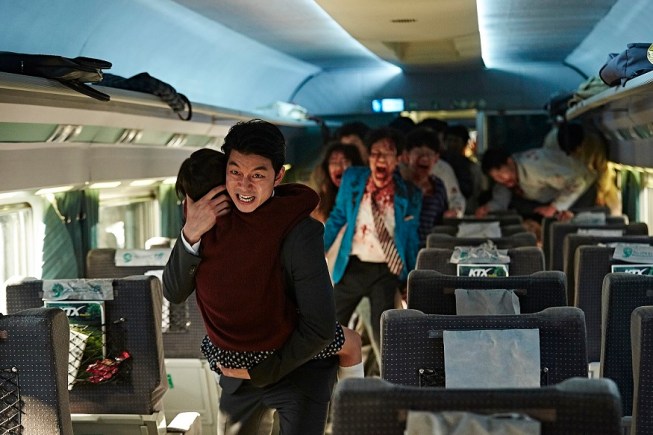
First, let’s focus on the good one. Train to Busan seems like such a simple idea: zombies on a train. It could easily have been the concept of a B-grade cheesefest, but the filmmakers went above and beyond to make it gripping. A big part of that is giving us worthwhile characters, particularly Seok-woo (Gong Yoo), a disengaged father who decides to accompany his young daughter Soo-an (Kim Su-an) as she returns to his ex-wife in Busan. There are various other passengers that quickly stand out as “survivor characters”: a man and his pregnant wife, a traumatized tramp, two high school students, and a self-serving businessman, among others. Things seem to start normally as the train sets out, but an abundance of warning signs builds the tension as a zombie outbreak engulfs the nation and the train itself. From there, it’s an all-out flight of survival with a few much-needed moments to catch one’s breath (even a disarming chuckle or two), but the suspense is ever-present. I don’t think I’ve been this tense during a movie since Dunkirk.

What’s impressive about Train to Busan is that it delivers the scares and shocks alongside an insightful character arc without sacrificing either. Seok-woo starts out as an apparent coward, fearfully closing a door in the face of someone fleeing the zombie onslaught, yet his self-first philosophy is called out in the criticisms of his daughter, while also playing out to an extreme in the uncaring actions of other passengers. The contrast between these mindsets imparts to the action some deeper themes behind it. There are sacrifices aplenty, some meaningful, some pointless, but the film seems to affirm the importance of helping others in the face of desperation rather than just oneself. To that end, the conclusion is surprisingly emotional as well, right up to the film’s anxious final moments.See the source imageSince I’ve said I don’t like the gory side of zombie movies, I should address that part of it. There is blood, but Train to Busan is still greatly restrained compared with a lot of others out there. Heck, some of the commercials for Walking Dead are worse than anything in Train to Busan. A big part of that is the absence of knives and guns, which draw maximum blood while also dehumanizing the still human-like zombies. (Sorry, but all the head-shots and such bother me.) Here, baseball bats are as bad as it gets, and most of the blood comes from the initial outbreak of zombies biting people’s necks. The fact that the victims quickly “turn” also does away with the whole flesh-eating element while also making the ever-growing horde even scarier. So I was thankful that the film didn’t rely on violence for its scares. In fact, after the initial outbreak, it’s really more of a fast-paced thriller than a horror. The zombies are the running type also seen in World War Z, and there are several moments that had me going “oh my gosh” as things devolve from bad to worse, often making great use of the visual effects.

How then does Seoul Station, from the same director Yeon Sang-ho, compare? It’s not exactly anime since it’s Korean rather than Japanese, but it has a similar visual style. I think it purports to be a prequel showing the origin of the zombie apocalypse, but it doesn’t really give any further details about the actual cause. A wounded homeless man is apparently patient zero, and while he slowly “turns,” we meet a runaway girl named Hye-sun who has a falling out with her cash-strapped and selfish boyfriend. The boyfriend is soon confronted by her father, and the two of them go in search for Hye-sun right as the city starts spiraling into zombie-infested chaos.See the source imageSeoul Station has some merit to it, mainly in the strictly horror department. There are some moments of genuine terror, particularly a white-knuckle encounter with a crazy woman, so if you enjoy zombie movies for the situational tension alone, you might like it. I, however, found plenty to dislike. For one, the animation, while mostly good, has the stilted look that 3-D-ish anime hasn’t gotten past, such as the way the characters walk. In addition, the gore and foul language (subtitled) are more pronounced here than in Train to Busan, and the characters are dumber compared to the rather clever survival techniques in its live-action counterpart. For one thing, everyone seems very slow to grasp the idea of a zombie outbreak, as if they’ve never heard of a zombie before, whereas Train to Busan showed that “zombies” were exactly where people’s minds went.

Still, I could look past most of that if the ending were worthwhile, but this is one case where the ending completely ruined it for me. The film pulls out a dark twist that pounds in the whole end-of-the-world futility I mentioned earlier I didn’t like. The characters are far less sympathetic, and the end only amplifies that. I didn’t hate the movie as I was watching it, but by the end, I did. Seoul Station tries harder to focus on its themes of class warfare, which were much more subtle in Train to Busan, yet it comes off as a cheaper offshoot of a much better original.See the source imageI’ve said before that I have very particular tastes when it comes to horror movies, but seeing two ostensibly similar zombie films side by side made me consider why exactly I loved one and hated the other. I can say I prefer genuine creepiness and atmosphere over gore, but in this case, I think it comes down to this (spoiler warning): I don’t like stories whose main purpose is killing off its characters. If there’s no survivor by the end, then everything that came before was pointless. If I actually care about the characters who live and die, then the end product becomes even better. That’s why Train to Busan exceeded my expectations. Clearly, I’m not about to become a fan of zombie movies in general, but I’m glad to have found one member of the genre that truly impressed me.

Best line (from Train to Busan): (Soo-an, pricking her father’s conscience) “Dad, you only care about yourself. That’s why mommy left.”


Rank for Train to Busan : List-Worthy
Rank for Seoul Station: Dishonorable Mention


© 2018 S.G. Liput
536 Followers and Counting


Get Out (2017)

26 Friday Jan 2018

Posted by sgliput in Movies, Poetry, Reviews, Writing

≈ 2 Comments

Tags

Drama, Horror, Mystery, Thriller

See the source image

“Get out! Get out!” said common sense,
“You know that something’s wrong.
You linger at your own expense,
But shan’t do so for long.
You feel your muscles growing tense,
Your nerves a warning gong.
Would safety ever cause suspense?”
Yet still you play along.

When signs of danger first commence,
You’ll surely waver on the fence,
But when the strangeness of events
Grows ever more and more intense,
You’ll quickly wish you’d scorned pretense
And listened to your common sense
And all the warning signs about
The fact you should have gotten out!
_____________________

MPAA rating: R (for frequent language and some violence)

Not being a big fan of horror, I tend to only watch those that have a significant amount of positive buzz, and Get Out is about as positively buzzy as any movie of 2017, especially now that it’s received several Oscar nominations. Despite his reputation as a comedian, director Jordan Peele crafted a narrative that clearly tapped into America’s social consciousness more than anyone expected, and now that I’ve watched it, I can see why.

Get Out definitely has influences from other films, notably The Stepford Wives, but it’s really more of a dark twist on Guess Who’s Coming to Dinner, another ripple-causing film about race. When black photographer Chris (Daniel Kaluuya) goes with his white girlfriend Rose (Allison Williams) to meet her family, he’s hesitant about how he’ll be received, but her parents (Bradley Whitford and Caroline Keener) seem generous and warm to him, perhaps a bit too warm. More troubling is the odd behavior of the black servants and visitors on their wealthy estate, who seem bizarrely genteel and, well, don’t act like black people, one telling contradiction being when a fist bump from Chris is met with an oblivious handshake. The horror!

See the source image

Despite its loose categorization as a horror-comedy (the comedy is relegated to one side character), Get Out does seem to hearken back to an older class of horror movie, the kind where a large chunk of the movie is kept tame and spent noticing strange causes for unease before coming to a crazy head near the end. For an apparently low budget production, though, Peele makes it look excellent, creating that uneasy mood with disquieting music and some evocative visuals. Plus, it starts with one of those extended one-shot scenes I so admire. The acting is also good across the board, though I don’t think Kaluuya’s performance warranted a Best Actor nomination, despite a few strong dramatic moments.

Of course, the quality of the movie is beside the point since everyone seems much more interested in its social satire, and the fact that wealthy liberals are the target did come as a surprise. Rose’s parents are textbook white liberal elites, as are their wealthy friends at a dinner party, all of whom fawn over Chris to an uncomfortable degree. “Black is in fashion,” as one guest states. It’s a cogent example of passive racism. Get Out shows that the way progressives often highlight racial differences, even in an apparently supportive or positive manner, can still make minorities uncomfortable. Shouldn’t the goal be for such differences to not matter at all? While there were still a few moments that annoyed me (why are cops always implied to be racist?), the social themes help Get Out aspire to a higher class of horror, reminding me of how The Silence of the Lambs (another February release) also stayed relevant throughout a whole year and transcended its genre at the Oscars.

See the source image

As strong a film as Get Out is overall, I still wouldn’t have foreseen its Best Picture nomination, but I can understand it. As much as I suspect that its many nominations were an easy way for the Academy to avoid the whole #OscarsSoWhite controversy, its timeliness does deserve recognition. That said, with its 99% Rotten Tomatoes score, it does veer into the overhyped category, for me at least. Plus, there’s something about the ending that makes me feel it missed a chance for an ideal final moment. I won’t say it for spoilers’ sake, but one extra line at the end would have been a perfect closer, so I can’t help but feel a tiny bit disappointed when I think a film squandered an opportunity, however small it may be. It’s still a better ending than the alternate one I’ve heard about, though. Get Out has exceeded more than a few expectations, and even if it’s not as faultless as many say, the fact that it’s still being talked about a year later means it did something right.

Best line: (Chris, with a good reminder of how minorities can feel) “All I know is sometimes, when there’s too many white people, I get nervous, you know?”

Rank: List Runner-Up

© 2018 S.G. Liput
535 Followers and Counting


Kong: Skull Island (2017)

10 Sunday Dec 2017

Posted by sgliput in Movies, Poetry, Reviews, Writing

≈ 2 Comments

Tags

Action, Fantasy, Horror, Thriller

See the source image

We laud and admire explorers who dare
To venture to regions unknown,
Who journey to jungles with risk in the air
Where most men would heed all the signs to beware,
But not they who roam to the eye of nowhere
And cherish each uncharted zone.

Yet one thing to note of these men who beseech
The thrill of what’s hidden ahead:
Although they may find every mountain and beach
And give all the teachers more titles to teach
And seek out the truths that lie just out of reach,
Most of them do end up dead.
______________________

MPAA rating: PG-13 (some of the violence is rather strong, though)

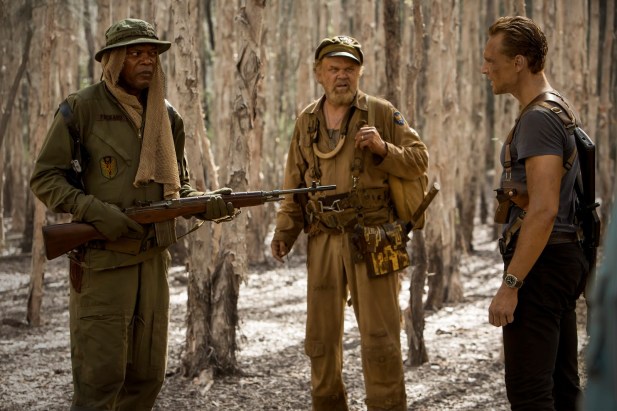
If you thought the world didn’t need another remake of King Kong, you’d be right, but that’s not about to stop Hollywood. Following 2014’s Godzilla and paving the way for 2020’s Godzilla vs. Kong prize fight of the so-called MonsterVerse, Kong: Skull Island isn’t the same story in past films featuring the giant ape. There’s no film crew, no screaming damsel in distress, no Empire State Building, so it might seem that Kong: Skull Island simply features a different (and much larger) version of the character and isn’t an actual remake. But it is, just a remake of the first half of the original King Kong tale, that being the story of ill-fated visitors to Kong’s home of giant critters. As much as the film tries to make a whole out of this half-story, it doesn’t quite work.

Those ill-fated visitors include a team of surveyors, a military escort fresh from Vietnam, and a few scientists from Monarch (the secret monster-studying organization from Godzilla), all led by the shady desire of Bill Randa (John Goodman) to explore the newly discovered Skull Island. There are plenty of big names here, from Goodman to Tom Hiddleston’s manly tracker to Brie Larson’s intrepid photojournalist to Samuel L. Jackson’s overly devoted army commander, boasting plenty of Jacksonian intensity. In addition, the Vietnam War-era setting warrants a great soundtrack of 1970s rock staples that make the team assembly of the first half quite enjoyable and promising. And when we actually see Kong himself, skyscraper-sized and none too happy about the unwanted guests and their explosives, it’s an action-packed debut that reminds us how frightening a giant gorilla can be.

See the source image

Yet as the film wears on, and the dangers of Skull Island make themselves known, it becomes clear that this is less of an adventure movie and more of a CGI-laden horror film. Oversized creatures take out redshirt after redshirt, often in gruesome ways, until the only source of mystery is who’s going to be on the menu next. By the time one unsuspecting fellow was carried off by lizard birds and torn apart in silhouette, my VC had had enough of the carnage and didn’t want to keep watching. It might help if the characters had some meat to them (literal or otherwise), but they’re really only there as potential beast fodder, even Hiddleston and Larson whose roles are clearly main character material yet don’t really go anywhere. It was also annoying that the military immediately makes the stupid decision in these films of “shoot the giant monster” instead of retreating, like any sensible person would in that situation.

There are bright spots. John C. Reilly livens up the cast significantly as a castaway stranded on the island since World War II, offering some good heart and humor and exposition for the island’s inhabitants, including a tribe of natives much more sympathetically depicted than in past versions. The big battles with Kong are also CGI wonders, perhaps not on par with Peter Jackson’s triple T. Rex fight but still marvelous to watch.

See the source image

Despite the relatively positive reviews for both Godzilla and Kong: Skull Island, I’m still not sold on this MonsterVerse franchise. The monsters created are well visualized with properly awesome action, but the human characters are thin as paper. It’s not a good sign when the scene played during the end credits has more human interest than the whole rest of the film. And I have other questions, like “How are Kong and Godzilla supposed to battle when Godzilla is still much bigger?” or “Will it turn out the same as the 1962 Japanese version of King Kong vs. Godzilla?” or “Will none of the surviving characters from Skull Island return, considering they will have aged between the ‘70s and the modern-day time frame of Godzilla?” Basically, Kong: Skull Island is about a bunch of people who go to an island, and a lot of them die. There has to be more than that for me to care.

Best (and most ironic) line: (Randa, as hippies in D.C. protest the war) “Mark my words. There’ll never be a more screwed up time in Washington.”


Rank: Honorable Mention


© 2017 S.G. Liput
518 Followers and Counting


Lights Out (2016)

31 Tuesday Oct 2017

Posted by sgliput in Movies, Poetry, Reviews, Writing

≈ 2 Comments

Tags

Drama, Horror, Thriller

When the lights go out,
I see it standing there.
When the lights turn on,
It’s gone yet still I stare.

When the lights go out,
It’s back again, I swear.
When the lights turn on,
It isn’t anywhere.

As the lights stay on,
I waver and beware.
When the lights go out,
It’s next to me to scare.
_______________________

MPAA rating: PG-13

For my final Halloween-themed review for the big day itself, I went with a recent horror offering that I could tell from the trailers alone would be of the dread-and-atmosphere type that I prefer, not unlike yesterday’s The Ring. At the same time, Lights Out does what I like about horror a bit too well, preying on one of the most primal fears, the fear of darkness, and giving me something far scarier than all the vampires and monsters I know aren’t real. It’s based on director David Sandberg‘s short film, which encapsulated the concept in less than three minutes, three minutes that will haunt me and keep me looking over my shoulder for years to come. Thanks for that, David.

Sandberg cleverly expands his simple idea of a creature that only appears in darkness and can be seen by silhouette alone, connecting the frightful bogeywoman to a story of a family strained by mental illness. Teresa Palmer plays Rebecca, the loner daughter of clinically depressed Sophie (Maria Bello), who isn’t happy when Rebecca steps in to care for her young brother Martin (Gabriel Bateman). Martin’s having trouble sleeping, which is no surprise when his mother talks to a menacing, long-fingered phantom as if they’re old friends. This phantom seems to thrive on Sophie’s disturbed mental state and begins targeting the kids where darkness allows.

I was one of those kids who always slept with a nightlight or hall light on, so darkness has always been a source of unease for me. I remember even being scared stiff just from a description I heard at camp of some movie called Darkness Falls, and I’m still too nervous to check if it’s as terrifying as I envisioned. Lights Out has a similar concept for its villain Diana, keeping her always out of sight, a creature of darkness banished by light yet always there when it goes out. Maybe those calloused by countless horror films won’t find it all that scary, but Lights Out and its vicious shade scared me more than anything since The Babadook.

I also appreciated the effort put into providing a relatable family story alongside the scares, balancing Rebecca’s resentment of her mother with the acknowledgment that no one in distress should be abandoned. Everyone remains sympathetic, particularly Rebecca’s devoted boyfriend (Alexander DiPersia). I especially liked how the finale employed some inventive light sources to ward the specter away, sort of reminding me of the end of Wait until Dark. While she has a separate spooky origin, Diana is like an embodiment of the mother’s mental disorder, lashing out in an effort to keep her from getting better, which is a great metaphor for her struggle but also disconcerting in how it’s ultimately resolved.

Lights Out is a great example of the minimalist, bloodless frights that I think are harder to pull off than cheap gore, but its plentiful jump scares spooked me a bit more than I typically like. Heck, the three-minute short film is even more terrifying. You can watch it here, but I warn you: it’s concentrated nightmare fuel. (It’s also cool that Lotta Losten, the woman in the short film, reprised her role as the first person to see Diana.) Vampires and werewolves and zombies may populate more movies, but Lights Out proves that darkness itself is far scarier because its disquiet hits much closer to home.

Happy Halloween to everyone out there!

Rank: List Runner-Up


© 2017 S.G. Liput
517 Followers and Counting


The Ring (2002)

30 Monday Oct 2017

Posted by sgliput in Movies, Poetry, Reviews, Writing

≈ Leave a comment

Tags

Drama, Horror, Mystery, Thriller

You were warned, were you not?
You were warned, and yet you thought,
“What harm could come from silly things
Like some old tape?”  The phone then rings,
And on the other end, you hear
A voice that whispers low and clear,
“Seven days.”
You look about
And start perhaps to have some doubt,
Unsure if you were dumb or brave
To laugh at legends, shrug and cave,
And possibly dig your own grave.
__________________

MPAA rating: PG-13

Urban legends are perfect subjects for horror because there’s always that one rumor or curse or half-serious tale of a crazed murderer that happens to be true, if only the protagonist can figure it out before they bite the dust. The Ring fits that mold well while adhering to the style of haunting, suggestive horror that I enjoy most.

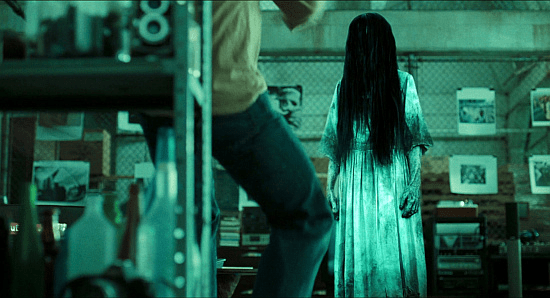
Based on the Japanese book and film Ringu, The Ring is about a cursed video tape that kills its viewers seven days later, as illustrated by the familiar but tense opening with two teenage girls at home alone. When one dies, journalist Rachel Keller (Naomi Watts) decides to investigate the mysterious circumstances and watches the cursed tape herself, unwittingly exposing herself and her son Aidan (David Dorfman) to the evil unleashed by the bizarre images onscreen.

As I said, The Ring is “my kind of horror,” in that there’s far more effort on creating dread and atmosphere than on blood and guts, which I suppose is ironic considering it was directed by Gore Verbinski of Pirates of the Caribbean fame. Although it’s taken me this long to actually see it, its mop-headed villain girl (named Samara here, Sadako in the Japanese original) has become rather iconic, and I already knew of the film’s most famous scenes, such as the phone call whisper of “seven days” or the memorable television scene toward the end. (I guess there are several television scenes, but you probably know which one I mean.) Going in with such knowledge perhaps dampened the effectiveness of the scares, but I still appreciated the occasionally misleading tension and the gradually uncovered mystery.

It does fit my preferred style of horror, as did The Others and The Babadook, but there was something lacking in The Ring. Naomi Watts’ performance is fairly strong alongside costars Dorfman and Martin Henderson as her skeptical ex-husband, but there wasn’t as much of an emotional core to the story as there was in the other two films I mentioned. Plus, as the layers of the mystery were peeled back, it became a bit too convoluted, with too many puzzling twists that could only be explained by the argument that “there’s something supernatural afoot.”

The Ring didn’t quite have the dramatic oomph or shocking twist (it does try for both) that would elevate it to join my favorites, but it’s a potent horror flick nonetheless, with several evocative potential meanings for its title. The video tape plot device will immediately date it in years to come, but that isn’t automatically a negative since it doesn’t diminish the scares. I haven’t heard many good things about its two sequels, the most recent being Rings from this past year, so I think I’ll stick with this original for now, or if I’m feeling bold, maybe I’ll try the Japanese original original. One thing’s for sure, though: I definitely won’t be sitting anywhere near the screen!

Best line: (Richard Morgan, Samara’s father, to Rachel) “What is it with reporters? You take one person’s tragedy and force the world to experience it… spread it like sickness.”


Rank: List Runner-Up


© 2017 S.G. Liput
517 Followers and Counting


An American Werewolf in London (1981)

29 Sunday Oct 2017

Posted by sgliput in Movies, Poetry, Reviews, Writing

≈ 3 Comments

Tags

Comedy, Horror, Thriller

It’s tough to be a werewolf.
It quickly does get old.
It’s sore and strange
To feel the change
And watch your bones all rearrange
And you’re more apt to catch the mange,
Although you’re rarely cold.

It’s tough to be a werewolf.
The lupine life is lone.
If you have friends,
It all depends,
But likely they’ll meet grisly ends
And then it’s tough to make amends,
For corpses tend to groan.

So when you hear “Stay off the moors,
Keep to the roads, don’t take detours,”
Pay heed to those who stay indoors,
Or you will see when on all fours,
It’s tough to be a werewolf.
_____________________

MPAA rating: R

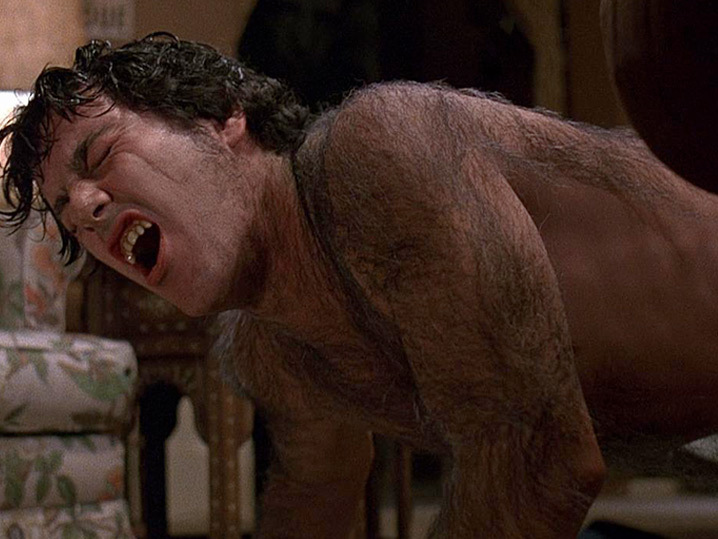
After yesterday’s vampires, for my second Halloween-themed review, I watched the cult classic An American Werewolf in London, which is mainly known for winning the very first Academy Award for Best Makeup for Rick Baker’s werewolf effects. I’ll just say up front that this film had all the things I usually try to avoid in horror and movies in general—bloody violence, sex and nudity, profanity—but I will try to put that aside and appraise the film itself.

The set-up is a classic one: two unwise American visitors to the English countryside wander where they shouldn’t and are attacked by a vicious creature. Jack (Griffin Dunne) is killed by the beast, but David (David Naughton, who lost his Dr. Pepper deal after this movie) survives, only to be told by Jack’s ghost that David is now a werewolf. Obviously, no one would believe the decaying apparition of a dead friend, so David ignores him and goes home with a lovely nurse (Jenny Agutter). But wait! He’s changing…he is a werewolf! And now he will prowl London in search of helpless escalator-riding victims.

Okay, maybe that was too dramatic, but to be honest, I expected a little bit more from what is billed as a horror-comedy. True, there’s some humor to Jack and David’s early banter, the wry moon-related soundtrack, and particularly in Jack’s undead suicide advice, but this isn’t quite what I would consider a comedy. It’s like the opposite of Ghostbusters: I consider that a comedy with some horror while this is a horror with some comedic lines, but neither quite fits the horror-comedy label. The horror elements are fairly straightforward (creepy locals, foolish victims, full moon; check, check, check), but director John Landis fills the werewolf attacks with looming terror, especially with first-person views as David chases a man through the London subway.

It was a decent horror film overall, but ultimately it’s really memorable for two things, one good, one bad. The good is that Rick Baker absolutely deserved that Oscar, since David’s transformation, anomalously set to Sam Cooke’s version of “Blue Moon,” still holds up as an impressive feat of makeup effects, one that predated everything computers could do today. It’s interesting to note that wolf men seem to attract makeup awards, since 2010’s The Wolfman also won the Best Makeup Oscar. As for the bad, what was with that ending? Perhaps the abruptness of the final scene was also intended for comedy, but for me, it was a bit too jarring a conclusion, though I’m sure it gets a chuckle from cult fans on their hundredth rewatch. For a true horror comedy, though, I’ll side with the vampires and stick with The Lost Boys. At least the ending doesn’t suck.

Best line: (a boy at the zoo) “A naked American man stole my balloons.”


Rank: Honorable Mention


© 2017 S.G. Liput
517 Followers and Counting


Salem’s Lot (1979)

28 Saturday Oct 2017

Posted by sgliput in Movies, Poetry, Reviews, TV, Writing

≈ 3 Comments

Tags

Fantasy, Horror, Thriller

Image result for salem's lot 1979

Sometimes old houses are just empty shells,
Still mourning their past occupier’s farewells,
But sometimes you feel something sinister dwells
In ramshackle relics and haunted hotels.
The dust and mistrust of these dark citadels
We try to ignore, but their menace compels.
Who knows what nightmares and nefarious spells
Can lurk in old homes with their own private hells?
__________________

MPAA rating: PG

Halloween is almost upon us yet again, and since I don’t really celebrate it (except with more candy than usual), I haven’t done much this month in honor of everyone’s favorite scary holiday. However, I think I’ll change that and do what I did last year, four horror reviews in a row leading up to the big day, when I will no doubt contribute to the great November candy shortage of 2017. As with last year (when I reviewed Abbott and Costello Meet Frankenstein, The House That Dripped Blood, Poltergeist, and The Babadook), each of my picks will fit roughly into a different era of horror and will try to buck my wussy aversion to the genre.

Image result for salem's lot 1979 james mason

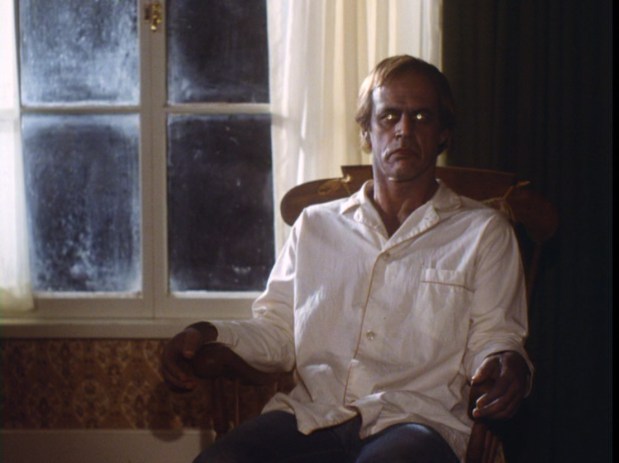
First off is the 1979 television adaptation of Stephen King’s Salem’s Lot, something my VC urged me not to see because she recalls it with such terror (probably like me and that clown scene in Poltergeist). I still did, of course, and found it to be quite the credible frightfest, although in a dated way. There are scenes that I could see causing nightmares, but compared with modern horrors like The Babadook, I don’t expect Salem’s Lot to keep me up at night. Still, as far as vampire flicks go, this one hits all the right beats, and I could see how it has influenced the genre since, particularly the glowing eyes and the antler scene in The Lost Boys.

Salem’s Lot is set in Maine and the main character Ben Mears (David Soul) is a writer, which is so unlike Stephen King’s work that I don’t know where to begin! In all seriousness, though, Salem’s Lot is very King-y, from those trademarks of his I mentioned to the idea of a dark evil lurking in a sleepy small town. In fact, it’s very much like It, with Pennywise being replaced by incoming vampires as the protagonists wise up to what’s going on and set out to stop it.

Image result for salem's lot 1979

Directed by Tobe Hooper of Poltergeist and The Texas Chain Saw Massacre, the three-hour miniseries does a fine job at establishing its large cast of suckable characters: the visiting writer who used to live in Salem’s Lot, the girl who falls for him after one date (Bonnie Bedelia), her doctor father (Ed Flanders), the sinister old man who just bought the local mansion of evil (James Mason), the realtor (Fred Willard), his mistress (Julie Cobb), her jealous husband (George Dzundza), the boy who loves scary stuff (Lance Kerwin), the cemetery keeper (Geoffrey Lewis), and quite a few more besides. It was rather fun playing “Spot the Familiar Face” as I watched, such as recognizing the constable as Kenneth McMillan, who played the gross Harkonnen villain in Dune. It was also good to see Ed Flanders from St. Elsewhere, and his co-star Bonnie Bartlett playing his wife, though she was William Daniels’ wife on the show. James Mason is particularly well-cast as Straker, the forboding newcomer to Salem’s Lot, who you just know has a vampire tucked away somewhere, like maybe in that moving box.

As I said, the horror is a bit dated but still effective, pervaded by a nicely creepy atmosphere and punctuated by periodic jump scares. As with horror in general, it also has its fair share of supernatural foolishness, like allowing inside a fanged loved one floating outside your window or waiting till late afternoon to storm a vampire’s fortress. I thought too that there would be more to Mears’ backstory and his distrust of the Marston house, but that’s never elucidated. There were also a few lapses in the storytelling, or at least questions. Some excellent early tension is wrung from the cheating realtor’s subplot, but when one character is killed, the other two just drop out of the story entirely. The fates of several other characters are left vague as well, as are the circumstances behind the love story’s “resolution.” I’m sure these details are probably better explained in the book, but the miniseries could have clarified them better. I also don’t think it should have started with a flash-forward because that immediately let me know which characters would survive.

Image result for salem's lot 1979

Even so, Salem’s Lot is a compelling King story that may not have a lot of story surprises but still spooks with its vampire mythos and general creepiness. The appearance of the main vampire is particularly menacing, clearly inspired by Nosferatu, though I understand that’s a departure from King’s book. I’m by no means an expert on Stephen King adaptations, but Salem’s Lot seemed to do him justice.

Best line:  (Straker) “You’ll enjoy Mr. Barlow. And he’ll enjoy you.”


Rank: List Runner-Up


© 2017 S.G. Liput
517 Followers and Counting


The Conjuring 2 (2016)

06 Sunday Aug 2017

Posted by sgliput in Movies, Poetry, Reviews, Writing

≈ Leave a comment

Tags

Drama, Horror, Thriller

Image result for the conjuring 2

The rooms where we sleep
Or attempt to count sheep
Were once home to others whose presence runs deep.
The bodies they wore
May not breathe anymore,
But tormented souls may demand an encore.

These lingerers, led
By the master of dread,
Can pester our peace and plant fears in our head.
May we not forget
He Who makes demons sweat
Is on our side, giving them reason to fret.
___________________

MPAA rating: R

Anyone who’s read my few horror reviews knows that I’m picky about the genre, with a low tolerance for gore and high admiration for developed characters, tension, and atmosphere. The Conjuring fit my tastes perfectly, with an exceptionally creepy story highlighted by strong performances and a positive religious message. The 2016 sequel, also directed by James Wan, may be more of the same, but that’s not a bad thing when it upholds what made the original great.

While the frightening opening involves the infamous Amityville house namedropped at the end of the first film, The Conjuring 2 focuses on the less-known (at least in America) Enfield Poltergeist. The Hodgsons, headed by single mother of four Peggy (Frances O’Connor), seem like a perfectly normal, if struggling, family, and there’s little unusual about their London home, again explored with one of those skillful tracking shots Wan employed to introduce the first film’s haunted house. Before long, though, eleven-year-old Janet (Madison Wolfe) becomes the central target of many otherworldly events, including instances of possession, and paranormal investigators Ed and Lorraine Warren (Patrick Wilson and Vera Farmiga) are asked by the Catholic Church to look into it, at their own peril.

Image result for the conjuring 2

As with its predecessor, I suspect the R rating is for sheer intensity because the film relies on mood and suspense far more than violence. A child’s zoetrope about the Crooked Man becomes the haunted object of the week, taking the place of the first film’s music box, and even if it’s not clear who or what the Crooked Man is a manifestation of, he’s an effective boogeyman for a few scenes. A demonic nun is also an unnerving presence throughout, though I’m not a fan of that kind of blasphemous imagery, even if it is explained.

The haunting of the Hodgson home is full of dark tension and jump scares, all well-executed, but it’s not the encroaching evil that sets The Conjuring films apart. As with the first movie, the Warrens are the best thing about this series. In the midst of demonic terror, they are a testament to the conquering power of God and their mutual love, plus a spirit of joy epitomized in a musical scene that becomes an island of light amid the darkness. When Ed converses with an old man’s ghost who speaks through Janet, he refuses to be cowed and sends the ghost shrinking away by confidently extending a crucifix. From their separate conversations with Janet, the Warrens’ devotion to each other is unmistakable, and after the nail-biting finale, this horror movie almost changes genre to end on a rare feel-good romantic note, at Christmastime no less.

Image result for the conjuring 2 shadow

With the Hodgsons as the sympathetic victims and the Warrens as the godly defenders, The Conjuring 2 again places its horror movie tropes into the context of spiritual warfare, and as strong as the demons seem, it’s still satisfying to see them banished to hell by the name of Jesus. It’s not surprising that the film takes rampant liberties with the actual story, but I liked how they incorporated some doubt about the authenticity of the haunting, since many skeptics claim that the girls faked the paranormal phenomena. The Conjuring 2 may seem like old hat to horror aficionados, but for me, it’s an example of a trend of spiritually and emotionally mindful horror that Hollywood should keep following.

Best line: (skeptic Anita Gregory) “Last year I was conned by a Welsh family pretending to be possessed by demons. And honestly, I don’t know what was worse: the demons or the people who prey on our willingness to believe in them.”   (Lorraine) “The demons… are worse.”


Rank: List-Worthy (joining the first film)


© 2017 S.G. Liput
501 Followers and Counting!


Split (2017)

24 Monday Jul 2017

Posted by sgliput in Movies, Poetry, Reviews, Writing

≈ Leave a comment

Tags

Drama, Horror, Thriller

Image result for split film

Here I sit and calmly wait
As others take the stage for now,
The normal ones who dominate
And cast their glares of fear and hate
Because they know my time will come,
No matter what they may allow.

Within our host, I wait my turn,
For others must prepare my way.
I’m just a rumor, no concern,
Until too late, the normals learn
That darkness kept beneath their thumb
Will be set free, and they will pay.
______________

MPAA rating: PG-13

After reaching an atrocious low with The Last Airbender, it seems M. Night Shyamalan has enacted a comeback, a return to the well-crafted psychological thrillers that first made him a household name. Found-footage horror The Visit was an improvement, wringing tension from a low budget, even if the story had holes and strange parts to criticize. And now, Split is another step in the right direction, boasting elements that are deserving of genuine praise, even if it’s not at the same level as Shyamalan’s early work, like Unbreakable.

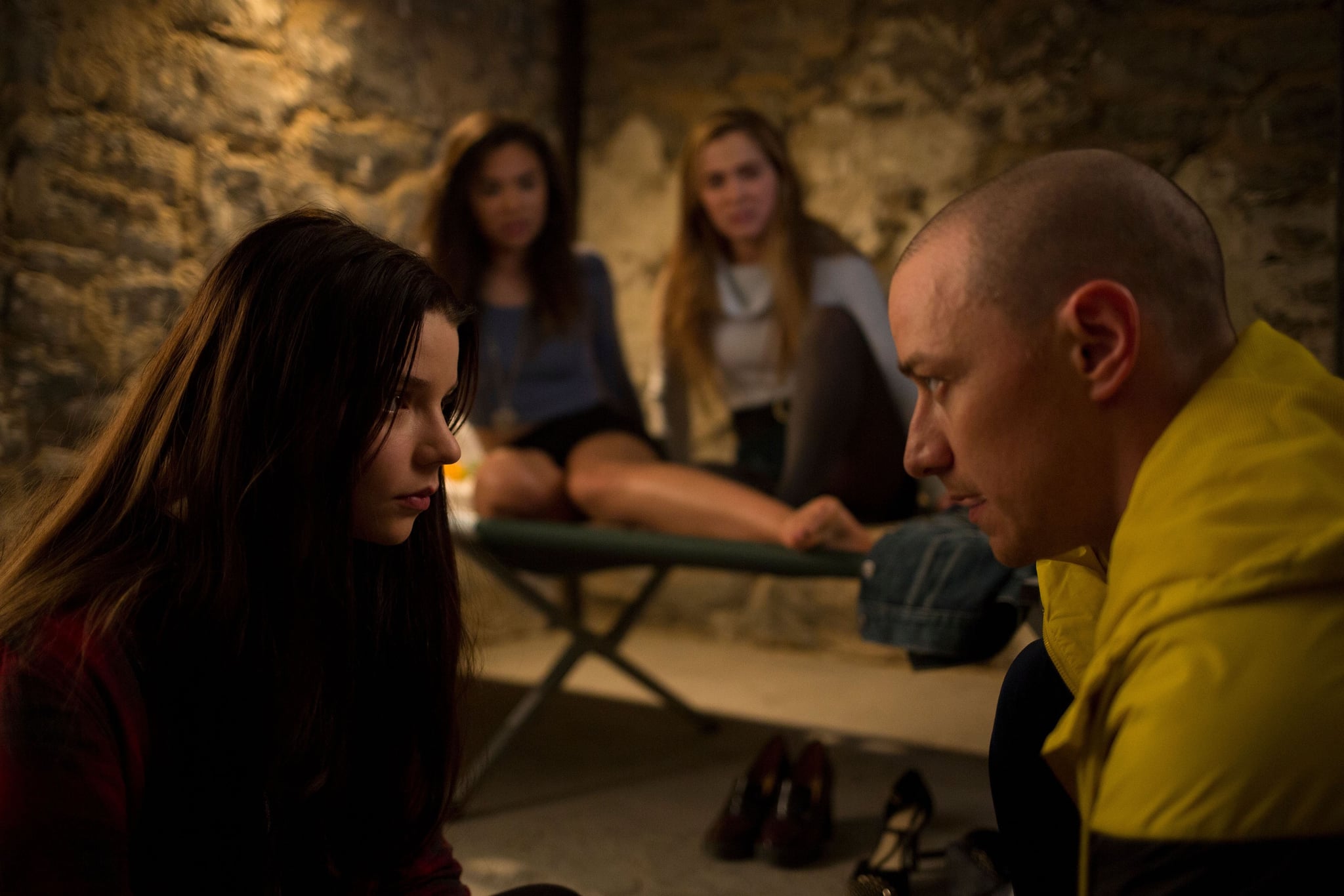
The captivity thriller seems to be a popular subgenre of late, including 10 Cloverfield Lane, Pet, Berlin Syndrome, and of course, Split (or, as I call it, Sybil meets Psycho). Right from the start, outcast highschooler Casey (Anya Taylor-Joy) is abducted with two of her more popular classmates, Claire (Haley Lu Richardson) and Marcia (Jessica Sula), and they awake in a small locked room. Their kidnapper Kevin Crumb (James McAvoy) acts like different people whenever he interacts with them, and sessions with his understanding psychologist (Betty Buckley) reveal that he actually has 23 separate identities. We only get to see eight at the most, but three in particular have taken control of Kevin and, by kidnapping the girls, are preparing for the arrival of a much more dangerous personality called the Beast.

Image result for split film

The best thing about Split is James McAvoy simply because, without his phenomenal acting, the film could collapse under a weaker performance. Whether he’s an OCD-ridden pervert, a threateningly proper matron, or a mischievous little boy named Hedwig, his acting, accent, and body language really sell Kevin’s divided character. He even manages to act as one personality pretending to be another personality. Betty Buckley and Anya Taylor-Joy do fine work as well, with the former convincingly laying out exposition and the latter capturing the fear of trying to keep her wits about her.

Unfortunately, Split’s sad and disturbing narrative makes it a film I’m not likely to see often. Aside from the claustrophobic captivity aspect and tension, which were also well-done in 10 Cloverfield Lane, there were moments that could have benefited from a rewrite or better editing, like the protracted kidnapping scene, which had me thinking “Why doesn’t she dart out the door?” rather than holding me on the edge of my seat. One bizarre dance scene with the Hedwig personality reminded me that, as with The Visit, I don’t think Shyamalan’s attempts at comic relief work as he intends; it’s just a very strange scene, even if it were done by the 9-year-old boy Kevin thinks he is.

My biggest complaint comes toward the end, where the already disturbing storyline turns murderous and goes a bit too far for me and my VC, even if there’s restraint in what is actually shown. I appreciated the semi-twist that made sense for the traumas shared by Kevin and Casey, but the ending doesn’t provide much closure to anyone’s story. Perhaps I’ll appreciate Split more with the arrival of the announced sequel it’s clearly leading into, and I’ll admit I’m more excited for that follow-up than I was about Split.

Image result for split film patricia

Even with my objections, Split is a definite step up for Shyamalan, well-acted and taut, and promises even more intriguing things to come. It’s perhaps best thought of as the birth of a supervillain, and while it succeeds in creating a dangerous and conflicted character, I’m more interested in the hero he’ll oppose.

Best line: (9-year-old Hedwig, after awkwardly kissing Casey) “You might be pregnant now.”


Rank: Honorable Mention


© 2017 S.G. Liput
497 Followers and Counting


← Older posts
Newer posts →

Recent Posts

  • We Didn’t Start 2025 (Recap)
  • NaPoWriMo 2025 Recap (Finally)
  • Sonic the Hedgehog 3 (2024)
  • It Happened One Night (1934)
  • Spellbound (2024)

Recent Comments

associatesofshellymann's avatarassociatesofshellyma… on My Top Twelve La La La So…
Kit's avatarKit Nichols on Bonnie and Clyde (1967)
lifelessons's avatarlifelessons on Look Back (2024)
Carol Jackson's avatarCarol Jackson on The Thief of Bagdad (1940…
Stephen's avatarStephen on Love Story (1970)

Archives

  • January 2026
  • December 2025
  • May 2025
  • April 2025
  • March 2025
  • February 2025
  • January 2025
  • December 2024
  • May 2024
  • April 2024
  • March 2024
  • February 2024
  • January 2024
  • December 2023
  • November 2023
  • October 2023
  • September 2023
  • July 2023
  • June 2023
  • May 2023
  • April 2023
  • March 2023
  • February 2023
  • January 2023
  • December 2022
  • November 2022
  • October 2022
  • September 2022
  • August 2022
  • July 2022
  • June 2022
  • May 2022
  • April 2022
  • March 2022
  • February 2022
  • January 2022
  • December 2021
  • November 2021
  • October 2021
  • September 2021
  • August 2021
  • July 2021
  • June 2021
  • May 2021
  • April 2021
  • March 2021
  • February 2021
  • January 2021
  • December 2020
  • November 2020
  • October 2020
  • September 2020
  • August 2020
  • July 2020
  • June 2020
  • May 2020
  • April 2020
  • March 2020
  • February 2020
  • January 2020
  • December 2019
  • November 2019
  • October 2019
  • September 2019
  • August 2019
  • July 2019
  • June 2019
  • May 2019
  • April 2019
  • March 2019
  • February 2019
  • January 2019
  • December 2018
  • November 2018
  • October 2018
  • September 2018
  • August 2018
  • July 2018
  • June 2018
  • May 2018
  • April 2018
  • March 2018
  • February 2018
  • January 2018
  • December 2017
  • November 2017
  • October 2017
  • September 2017
  • August 2017
  • July 2017
  • June 2017
  • May 2017
  • April 2017
  • March 2017
  • February 2017
  • January 2017
  • December 2016
  • November 2016
  • October 2016
  • September 2016
  • August 2016
  • July 2016
  • June 2016
  • May 2016
  • April 2016
  • March 2016
  • February 2016
  • January 2016
  • December 2015
  • November 2015
  • October 2015
  • September 2015
  • August 2015
  • July 2015
  • June 2015
  • May 2015
  • April 2015
  • March 2015
  • February 2015
  • January 2015
  • December 2014
  • November 2014
  • October 2014
  • September 2014
  • August 2014
  • July 2014
  • June 2014
  • May 2014
  • April 2014
  • March 2014
  • February 2014
  • January 2014
  • December 2013

Categories

  • Blindspot
  • Blogathon
  • Christian
  • Movies
  • Music
  • NaPoWriMo
  • Poetry
  • Reviews
  • TV
  • Writing

Meta

  • Create account
  • Log in
  • Entries feed
  • Comments feed
  • WordPress.com

Recent Posts

  • We Didn’t Start 2025 (Recap)
  • NaPoWriMo 2025 Recap (Finally)
  • Sonic the Hedgehog 3 (2024)
  • It Happened One Night (1934)
  • Spellbound (2024)

Recent Comments

associatesofshellymann's avatarassociatesofshellyma… on My Top Twelve La La La So…
Kit's avatarKit Nichols on Bonnie and Clyde (1967)
lifelessons's avatarlifelessons on Look Back (2024)
Carol Jackson's avatarCarol Jackson on The Thief of Bagdad (1940…
Stephen's avatarStephen on Love Story (1970)

Archives

  • January 2026
  • December 2025
  • May 2025
  • April 2025
  • March 2025
  • February 2025
  • January 2025
  • December 2024
  • May 2024
  • April 2024
  • March 2024
  • February 2024
  • January 2024
  • December 2023
  • November 2023
  • October 2023
  • September 2023
  • July 2023
  • June 2023
  • May 2023
  • April 2023
  • March 2023
  • February 2023
  • January 2023
  • December 2022
  • November 2022
  • October 2022
  • September 2022
  • August 2022
  • July 2022
  • June 2022
  • May 2022
  • April 2022
  • March 2022
  • February 2022
  • January 2022
  • December 2021
  • November 2021
  • October 2021
  • September 2021
  • August 2021
  • July 2021
  • June 2021
  • May 2021
  • April 2021
  • March 2021
  • February 2021
  • January 2021
  • December 2020
  • November 2020
  • October 2020
  • September 2020
  • August 2020
  • July 2020
  • June 2020
  • May 2020
  • April 2020
  • March 2020
  • February 2020
  • January 2020
  • December 2019
  • November 2019
  • October 2019
  • September 2019
  • August 2019
  • July 2019
  • June 2019
  • May 2019
  • April 2019
  • March 2019
  • February 2019
  • January 2019
  • December 2018
  • November 2018
  • October 2018
  • September 2018
  • August 2018
  • July 2018
  • June 2018
  • May 2018
  • April 2018
  • March 2018
  • February 2018
  • January 2018
  • December 2017
  • November 2017
  • October 2017
  • September 2017
  • August 2017
  • July 2017
  • June 2017
  • May 2017
  • April 2017
  • March 2017
  • February 2017
  • January 2017
  • December 2016
  • November 2016
  • October 2016
  • September 2016
  • August 2016
  • July 2016
  • June 2016
  • May 2016
  • April 2016
  • March 2016
  • February 2016
  • January 2016
  • December 2015
  • November 2015
  • October 2015
  • September 2015
  • August 2015
  • July 2015
  • June 2015
  • May 2015
  • April 2015
  • March 2015
  • February 2015
  • January 2015
  • December 2014
  • November 2014
  • October 2014
  • September 2014
  • August 2014
  • July 2014
  • June 2014
  • May 2014
  • April 2014
  • March 2014
  • February 2014
  • January 2014
  • December 2013

Categories

  • Blindspot
  • Blogathon
  • Christian
  • Movies
  • Music
  • NaPoWriMo
  • Poetry
  • Reviews
  • TV
  • Writing

Meta

  • Create account
  • Log in
  • Entries feed
  • Comments feed
  • WordPress.com

Blog at WordPress.com.

  • Subscribe Subscribed
    • Rhyme and Reason
    • Join 814 other subscribers
    • Already have a WordPress.com account? Log in now.
    • Rhyme and Reason
    • Subscribe Subscribed
    • Sign up
    • Log in
    • Report this content
    • View site in Reader
    • Manage subscriptions
    • Collapse this bar