• Home
  • About Me
  • The List
  • THE LIST (2016 Update)
  • THE LIST (2017 Update)
  • THE LIST (2018 Update)
  • THE LIST (2019 Update)
  • THE LIST (2020 Update)
  • THE LIST (2021 Update)
  • THE LIST (2022 Update)
  • Top Twelves and More
  • The End Credits Song Hall of Fame

Rhyme and Reason

~ Poetry Meets Film Reviews

Rhyme and Reason

Tag Archives: History

Henry V (1989)

10 Friday Jul 2020

Posted by sgliput in Movies, Poetry, Reviews, Writing

≈ Leave a comment

Tags

Drama, History, War

See the source image

It seems the English language is intent on, over time,
Discarding excess letters, which are just an uphill climb.
In Milton’s and in Shakespeare’s era, words were often longer,
So literarians believe their eloquence was stronger.
Yet, slowly we have shed the eths and ests that ended verbs
And kicked the gifts of diction to their metaphoric curbs.
Not “dost” but “do,” not “thou” but “you,” not “wherefore,” no, but “why,”
And going back in time to read can make you want to die.

Yet, even now the language still is mutating in place,
With idioms and acronyms it can’t help but embrace.
The letter-shedding carries on with “YOLO”, “app,” and “ref”
And “LOL, JK, IDK WTF.”
Abbreviations have their place; archaic words as well;
For me, too much of either one is glossolalic hell.
So savor language while you can, for generations hence
May not know what the heck we’re saying when it’s in past tense.
________________________

MPA rating: PG-13 (for battlefield violence)

Since it’s been hard fitting this blog into my busy schedule of work and college, I’ve decided to try to shorten my reviews so I don’t end up posting only twice a month. Let’s start the compressed reviews with Shakespeare, shall we? I am not a fan of William Shakespeare. I’ve read Julius Caesar, Macbeth, and a few sonnets, and that’s quite enough for me. Even so, I feel I need to be familiar with his work, if only to be prepared for when I some day get on Jeopardy. So surely watching Henry V is better than reading it, right? I think so, at least, especially when brought to life by the accomplished Kenneth Branagh, who both directed this 1989 epic and played the title character.

See the source image

Knowing nothing of the original play, I was intrigued by the framing device of a one-man Chorus (Derek Jacobi) providing an introduction and occasional commentary throughout. Branagh is intense and committed as the young King Henry, who sets out on a supposedly justified war to claim kingship of France, and he delivers the big speeches with enough stirring authority that you can believe the patriotism he inspires in his men. I recognize that Shakespeare’s poetry-flecked prose is eloquence epitomized, but the simple fact is that it was a constant effort to understand what was being said, which would have been even harder without captions. The action on-screen made it clearer at least, so perhaps it would be easier to read the play now that I know what happens. Plus, the presence of seasoned thespians elevated the production even more, such as Brian Blessed, Ian Holm, Paul Scofield, and even early roles for Christian Bale and Emma Thompson (who married Branagh the same year).

Henry V might well be one of the finest faithful Shakespeare adaptations; I just haven’t seen many others to give it due comparison. Branagh’s treatment, though, is certainly praiseworthy, and one climactic tracking shot after the Battle of Agincourt was awe-inspiring to behold. You can’t do that on any stage, after all. With its nearly three-hour runtime, I was tempted to give up, but I typically try to finish any movie I start, and I’m glad I did. (Still not a Shakespeare fan, though.)

See the source image

Best line: (Henry, addressing the troops) “And Crispin Crispian shall ne’er go by from this day until the ending of the world but we in it shall be remembered. We few, we happy few, we band of brothers, for he today who sheds his blood with me shall be my brother. Be he ne’er so vile, this day shall gentle his condition, and gentlemen in England now abed shall think themselves acursed they were not here, and hold their manhoods cheap whilst any speaks, that fought with us upon St. Crispin’s day!”


Rank: Honorable Mention


© 2020 S.G. Liput
697 Followers and Counting
Harriet (2019)

19 Tuesday May 2020

Posted by sgliput in Movies, Poetry, Reviews, Writing

≈ Leave a comment

Tags

Drama, History

See the source image

Harriet, oh Harriet,
What daring feats you managed!
Your life was like a chariot
To bear the disadvantaged.

You fled the yoke of slavery
To Northern sanctuary,
And yet displayed your bravery
By seeking more to carry.

You earned the trade name “Moses” and
Freed slaves without the pleading.
You knew what God opposes and
Agreed to do the leading.

Harriet, oh Harriet,
What lives you liberated!
The weight, you knew to carry it,
And free whom God created.
_____________________

MPA rating: PG-13

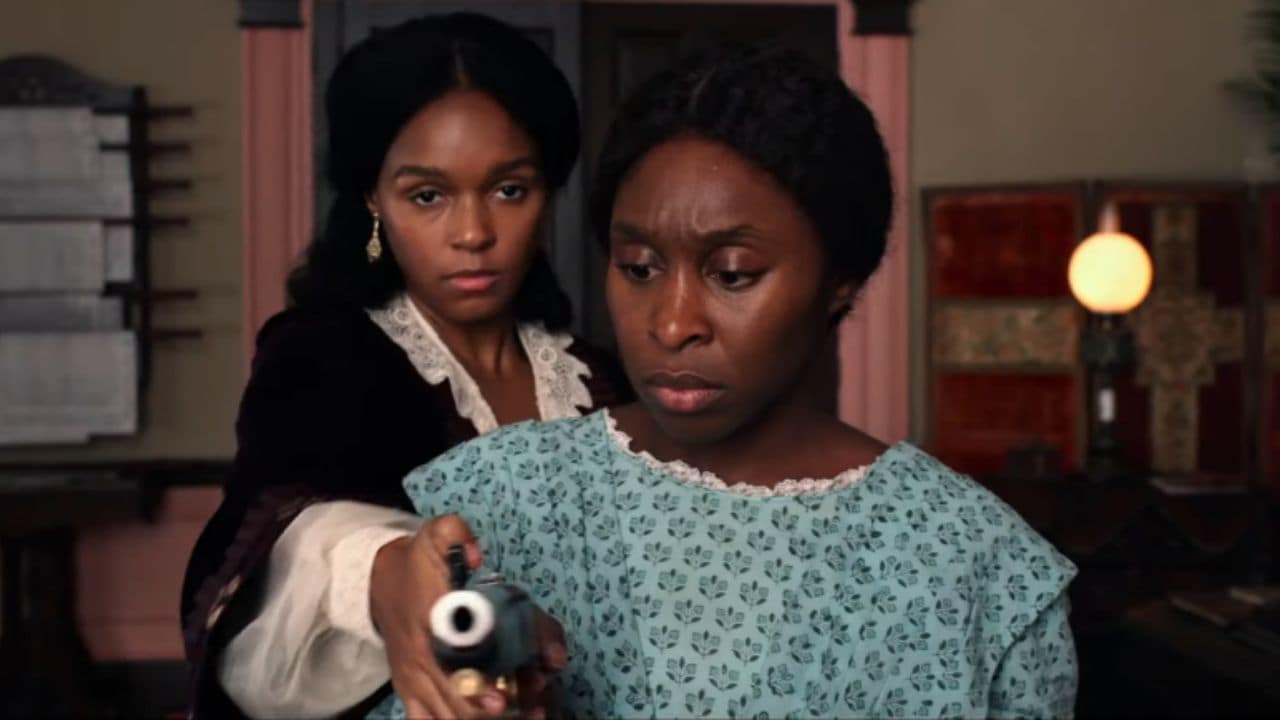
My apologies for the long delay. After getting through NaPoWriMo, I didn’t anticipate taking a two-week break, but school, work, and adopting a new cat kept me busy. Anyway, it’s time to get back into movie mode, starting with a wonderful biopic from last year. The story of famed abolitionist and Underground Railroad conductor Harriet Tubman has been long overdue for the big-screen treatment, and Harriet does her tale justice.

See the source image

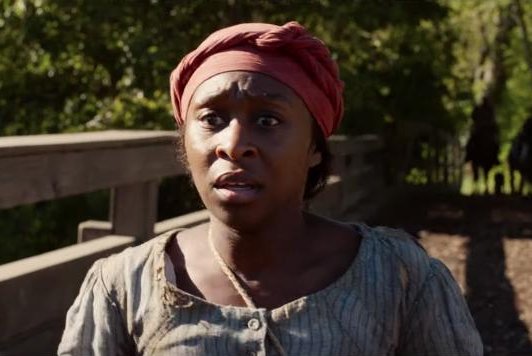
Making a name for herself on the stage, including the Broadway production of The Color Purple, Cynthia Erivo may only have three films to her name, but this (her third) is undoubtedly a star-making role. The film follows Harriet’s life from her time as a Maryland slave named Minty, captive to the Ross family, to her daring escape northward to her repeated journeys back to help other fugitive slaves reach freedom. Harriet’s indomitable courage and faith in God carried her through heartache and danger, and although she suffers from fainting spells, they turn out to be visions from God. She manages both the ferocity of the big moments, like a face-off with her former master (Joe Alwyn), and the sensitivity of small ones, as when she hops over the Pennsylvania border into sunlit freedom.

Harriet is notable for me because, for the first time, I actually know someone who was an extra in it, and I was able to spot her on a few occasions after she described which scenes she was in. It might not be like knowing a movie star, but it certainly felt cool to me being able to point at the screen and say “I know her!” Beyond the title role and the extras, the secondary cast does good work as well, including Leslie Odom Jr. of Hamilton and Janelle Monáe of Hidden Figures. And while the horrors of slavery could have warranted an R rating, like 12 Years a Slave, Harriet manages enough restraint to be more accessible as a history lesson suitable for older kids as well.

See the source image

Common complaints I’ve read include that Harriet is too formulaic or that it treats her fainting spells as a superpower, granting her warnings and visions from God. The latter has a basis in history, and as for the former, I don’t mind a “predictable” story if it’s well told. Not being familiar with all the details of Tubman’s life, there were still moments that surprised me and kept me invested. It was also fascinating to watch elements of history I hadn’t thought of, such as how the Fugitive Slave Act of 1850 affected the efforts of Tubman and the Underground Railroad.

Although I’m not black, the story of the Underground Railroad, freeing souls in bondage, resonates strongly with me; it’s why I think Operation Underground Railroad today is such a laudable charity, since slavery is still very much alive today. So many biopics leave me with a lowered opinion of a figure I’d thought I liked (The Theory of Everything, Ray), but Harriet made me admire her even more as an American hero. From the period detail to the stirring Oscar-nominated credits song “Stand Up” (partly written and sung by Erivo herself), Harriet is exactly the kind of biopic I most enjoy.

Best line: (Harriet, to her former master) “God don’t mean people to own people, Gideon! Our time is near!”


Rank: List-Worthy


© 2020 S.G. Liput
685 Followers and Counting

The Aeronauts (2019)

27 Monday Apr 2020

Posted by sgliput in Movies, NaPoWriMo, Poetry, Reviews, TV, Writing

≈ Leave a comment

Tags

Drama, History, Thriller

See the source image

(Today’s NaPoWriMo prompt was to review something not usually reviewed, so I decided to provide some thoughts on gravity – the force, not the movie.)

Dear readers, I had overheard the stories about gravity
Long before I put myself at risk to feel it fully.
I didn’t think it quite deserved the talk of its depravity,
But now I can confirm that it’s a mean and selfish bully.

Of all four fundamental forces, gravity’s the only type
That visibly affects mankind and all that it attracts.
It strikes with every trip and fall and when the fruits of trees are ripe,
And tortures people on the scales with inconvenient facts.

It’s true it keeps us on the ground instead of floating into space,
But never has it once allowed a flexible exception.
It’s so obsessed with physics’ laws that when we climb above our place,
It tugs and tells the ground to give a less-than-soft reception.

Though gravity will have its way, its power is not absolute;
A bit of caution and respect can keep its pull at bay.
Few acts of nature are as quick to prophesy and persecute,
But gravity’s control will fade the more we disobey.
____________________

MPA rating: PG-13

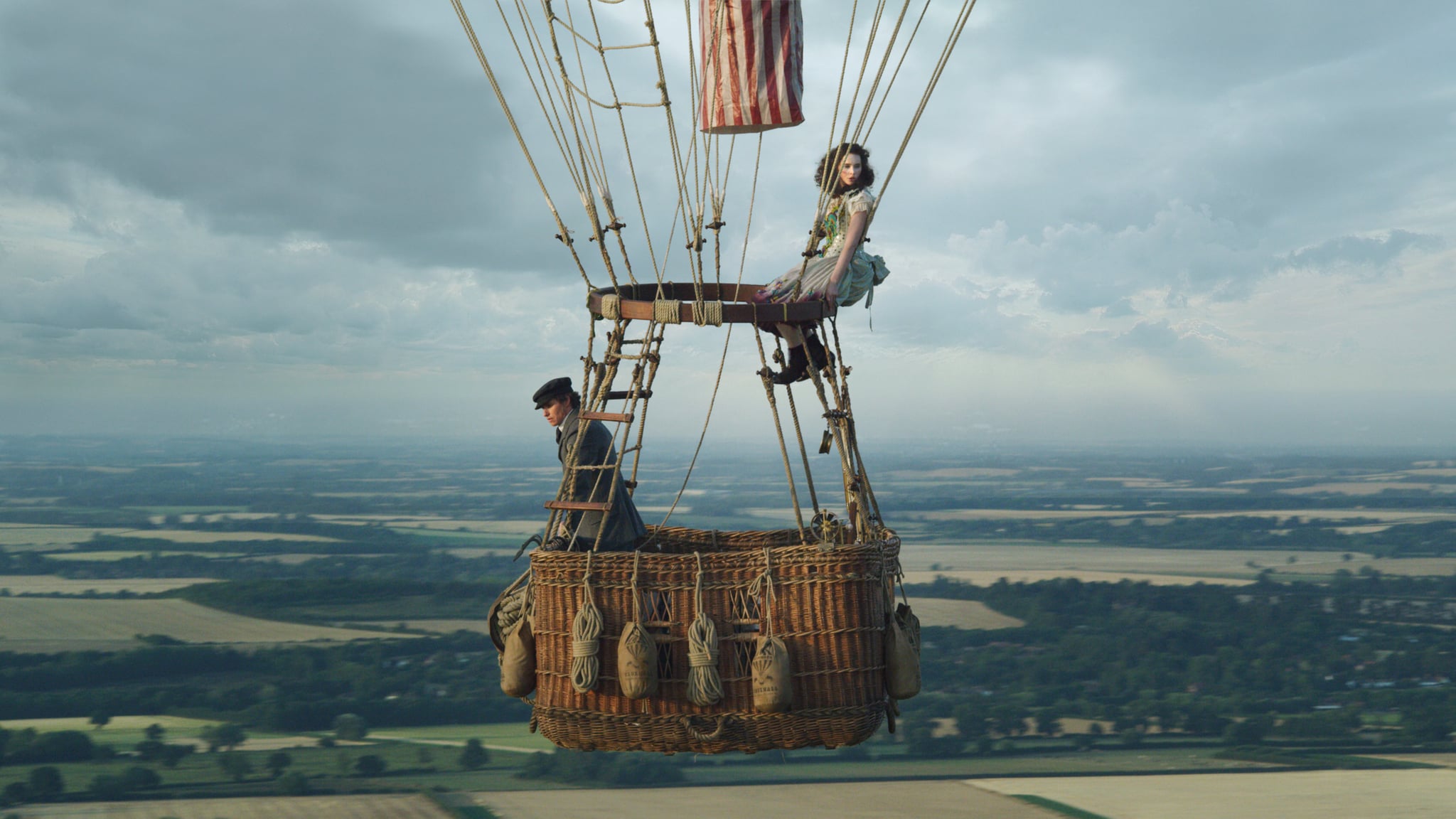
I love a good historical adventure drama, and The Aeronauts on Amazon Prime had my attention right from its first trailer. Eddie Redmayne plays James Glaisher, a scientist intent on proving his hypothesis that studying the atmosphere can allow the weather to be predicted, but as with so many 19th-century visionaries in film, his theories are ridiculed by the Royal Society of London. (Seriously, Hollywood apparently thinks the Royal Society was so narrow-minded, it’s a wonder that anything was discovered at all. I’m sure such disbelief did happen, but I’m noticing it so frequently in these kinds of movies that the villainizing for villainizing’s sake is starting to annoy me.) To prove his ideas, he enlists the aid of the only aeronaut willing to risk such a venture high into the atmosphere, a woman named Amelia (Felicity Jones), whose balloon takes them on a dangerous upward journey.

See the source image

There’s a lot to like about The Aeronauts, not least of which are the visual wonders the pair encounter, from swarms of butterflies fluttering along air currents to the rainbows backed by mountainous clouds. As they get higher, the danger sets in as Glaisher especially struggles with the rarefied air and extreme cold. The high-altitude thrills keep the adventure from boredom, and regular flashbacks provide steady doses of character development along the way. Both actors do a fine job as well, reuniting without the romance five years after their pairing in The Theory of Everything, and it was nice to see Himesh Patel from Yesterday as a scientist friend of James’.

Yet for all its quality, The Aeronauts feels somehow lacking. Perhaps it’s because of its tenuous claim to being based off a true story. James Glaisher indeed made a historic balloon flight, but it was with a man named Henry Coxwell, making Amelia a composite character of other female balloonists who, while a laudable figure, feels shoehorned into the story. Certain elements do strain believability and historical accuracy, but The Aeronauts still does its best to build a grand scientific adventure on its half-fabricated foundation. It entertains doing just that, which is good enough for me.

See the source image

Best line: (Amelia Wren) “You don’t change the world simply by looking at it, you change it through the way you choose to live in it.”


Rank: List Runner-Up


© 2020 S.G. Liput
684 Followers and Counting

The Irishman (2019)

19 Thursday Mar 2020

Posted by sgliput in Movies, Poetry, Reviews, Writing

≈ 2 Comments

Tags

Drama, History, Netflix

See the source image

Some people rebel for as long as they can;
They buck every trend and defy every plan.
But others are quiet and willing and pleased
To do as they’re told, keep the masters appeased,
And these are the ones you must watch and beware,
The don’t-rock-the-boat-ers, who heed but don’t care,
For with the right orders behind such as they,
The renegades pale next to those who obey.
_____________________

MPAA rating: R

After over a week of delay, I’m finally getting to the last of 2019’s Best Picture nominees, which just so happens to be the last one I saw and the least good, in my opinion. I’ll freely admit that I have little love for the gangster genre or for Martin Scorsese’s films (honestly, Hugo is the only one I’ve cared to see), and The Irishman did nothing to remedy that opinion. There’s a fine film somewhere in it, but you’ll likely fall asleep before you get to it.

See the source image

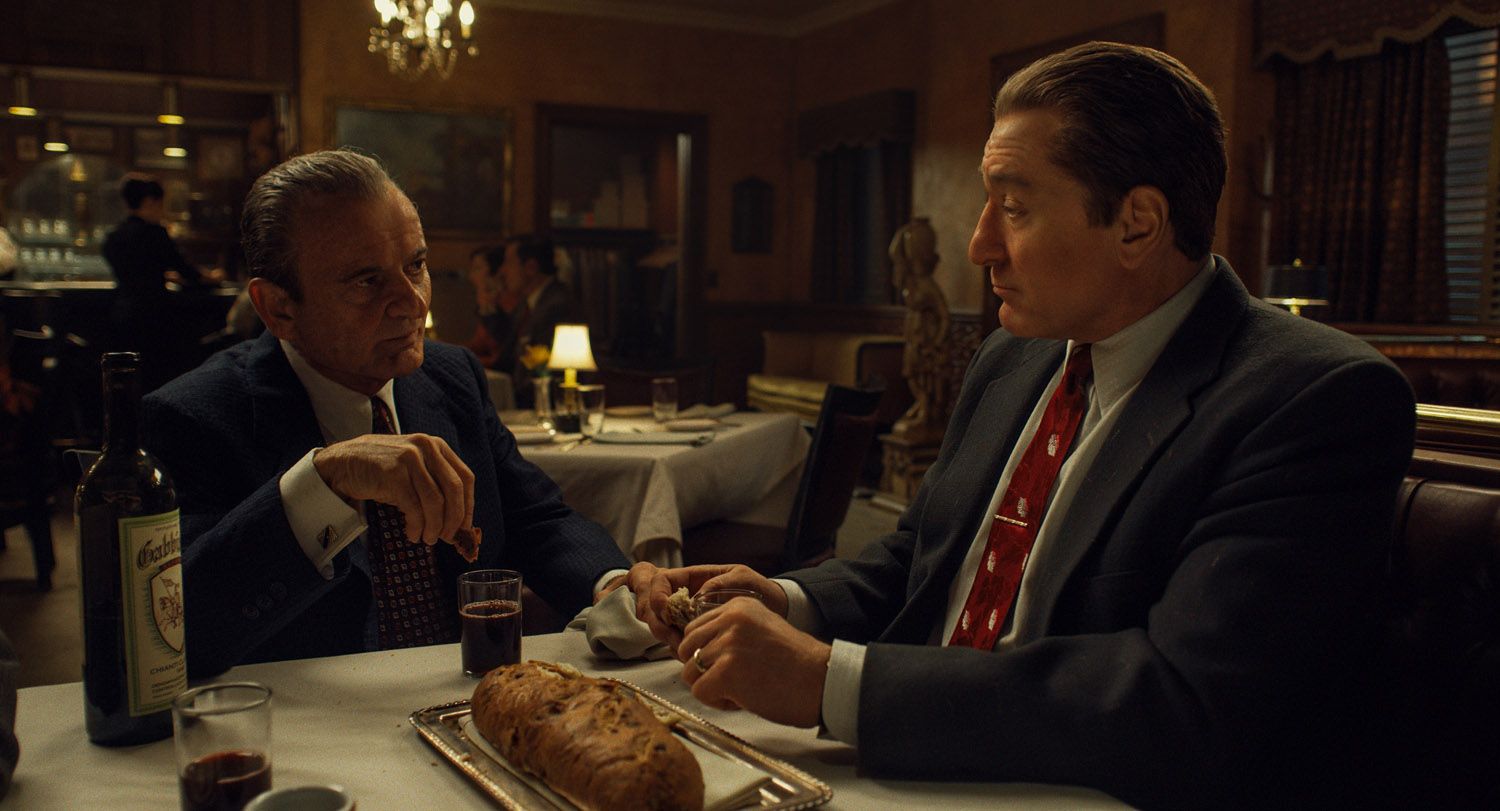
The three-and-a-half-hour plot plays out as a mob epic, spanning decades and following the life of ex-GI Frank Sheeran (Robert De Niro), an Irish meat delivery driver, who happens to meet Russell Bufalino (Joe Pesci) and from there becomes gradually introduced to the shady but profitable world of organized crime. Settling into a job of “painting houses” or murder for hire, Frank proves to be a talented hitman and eventually becomes the body guard and right-hand man of Teamster leader Jimmy Hoffa (Al Pacino). Yet, as Hoffa’s interests begin to stray from those of the mob families, Frank feels his loyalties torn and must figure out how to live with his decision.

Based on the nonfiction book I Heard You Paint Houses, The Irishman feels detailed and comprehensive in its depiction of the Philadelphia underworld and certainly believable in showing how a nobody like Frank could rise through the ranks. The Oscar-nominated effects used to de-age the three main characters are also highly convincing, an illusion broken only by the knowledge of what they actually look like right now. And of course, it certainly has star power, further aided by the presence of Ray Romano, Harvey Keitel, and Bobby Cannavale, who all fit their unscrupulous characters to a T. It’s not quite as violent as I feared from Scorsese, but it feels like he’s definitely in his comfort zone.

See the source image

Yet, for all of its seemingly lofty ambition, The Irishman, put simply, drags. Even watching on Netflix from home, you’d have to be truly fascinated by the gangster genre (or just feel obligated to get through it, in my case) to watch the whole thing in one sitting, and I can’t help but think it would have been better served as a miniseries. Just like with Peter Jackson and The Hobbit trilogy, there comes a time when a director becomes so enamored with his subject matter that he can’t bear to edit it properly. It’s a quality production from beginning to end; there’s just too much in between them.

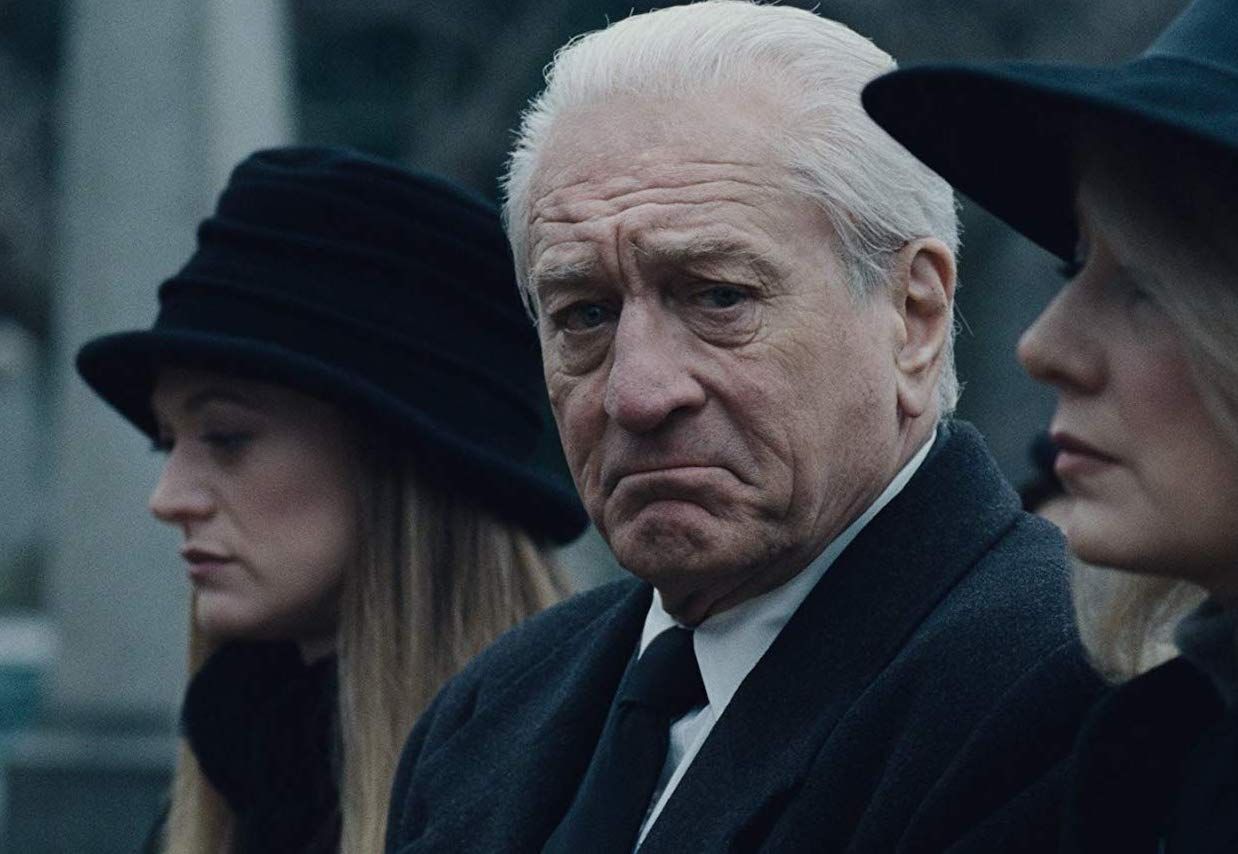
In addition, while the acting was good overall and both Pacino and Pesci snagged Supporting Actor nominations, I can see why De Niro was not similarly honored. Beyond the oddness of an Italian actor playing an Irishman surrounded by Italians, the role of Frank Sheeran is fairly one-note until the very end, always doing what’s expected of him and letting himself be controlled by his bosses and his temper. De Niro gives a solid performance but doesn’t give Frank enough depth, just as The Irishman is a decent gangster movie but fails to distinguish itself among the rest of the genre. I liked aspects of the production, such as Frank’s narration and the labels thrown up to introduce certain characters and the usually violent ways they died, which strengthened the theme of the gangster life being ultimately hollow, but there’s little reason that I would watch The Irishman again, at least not all at once.

See the source image

Best line: (Whispers DiTullio) “To tell you the truth, I’m a little concerned.”
(Frank Sheeran, narrating) “Whenever anybody says they’re a little concerned, they’re very concerned.”
(Whispers) “As a matter of fact, I’m really more than a little concerned. “
(Frank, narrating) “And when they say they’re more than a little concerned, they’re desperate.”


Rank: Dishonorable Mention


© 2020 S.G. Liput
669 Followers and Counting


Ford v Ferrari (2019)

22 Saturday Feb 2020

Posted by sgliput in Movies, Poetry, Reviews, Writing

≈ Leave a comment

Tags

Drama, History, Sports

See the source image

The engines start,
The motors roar;
They tear apart
Their brief rapport.
Upon their tails
And on all sides,
The cause of fails
In patience rides.
The bends are aced,
And straightaways
See dust and haste
And sing their praise.
And time slows down
While speed ticks up,
The goal no crown,
Award, or cup.
Instead, the flag,
The finish line,
The right to brag,
The chance to shine,
And here it comes
The dream ahead,
As straight now as an arrowhead,
The end of a road of adrenaline dread,
To which all the hopes of a lifetime have led,
Victory, the alpha’s zed!
___________________________________-

MPA ranking: PG-13 (for language)

I have a confession to make: I have very close to zero interest in cars and racing, which seems like it would be a prerequisite to enjoy a movie about said topics. Yet Ford v Ferrari comes closer than I’d expected in making such subjects interesting to someone like me, who never even knew Ford and Ferrari had a rivalry.

See the source image

The story focuses on the efforts of two racing legends working toward creating a Ford that can compete with Ferrari and win the 24-hour race of Le Mans. (Another name for the film in Europe is Le Mans ’66.) Matt Damon plays Carroll Shelby, the first American to win Le Mans, whose racing days are behind him but who is recruited by Ford’s Lee Iacocca (Jon Bernthal) to redesign the GT40. His first choice for a driver is Ken Miles (Christian Bale), whose volatile passion and lack of tact put him at odds with the Ford Motor Company’s executives.

Ford v Ferrari is an easy movie to like and has been called a destined favorite for many Father’s Days to come. Luckily, while racing itself is the climax, there’s a lot more going on than just racing. In particular, the engineering efforts by Shelby’s crew recall the problem-solving tone of Hidden Figures, and Shelby’s conflicts with Ford executives make a case for trusting the doers over the corporate meddlers. Then there’s the illuminating of a lesser-known slice of history regarding Ford’s attempted buyout of Ferrari, as well as the heartwarming bond between Miles and his son (Noah Jupe of A Quiet Place). All in all, it comes together quite nicely, and even non-racing fans like me had plenty to cheer for during the big race.

See the source image

I liked Ford v Ferrari more than I expected, but it’s still a film for which I don’t feel much passion. Its 2½-hour length could have benefited from editing, and the ultimate ending is more downbeat than the rest. It strikes me as a good film that probably wouldn’t have gotten a Best Picture nomination if the Academy had the old rules keeping it to five nominees, but there’s nothing wrong with that. Damon and especially Bale (getting to use his British accent) deliver excellent performances and standout scenes, especially when Shelby explains to Henry Ford II (Tracy Letts) why he should let him continue on the project after an initial failure. The plot offers dream-chasing uplift and an easygoing sense of fun that made me forget I don’t care for racing movies. That, to me, makes it the best kind of racing movie.

Best line: (Shelby) “When I was 10 years old, my Pops said, ‘Son, it’s a truly lucky man who knows what he wants to do in this world. ‘Cause that man will never work a day in his life.’”


Rank: List Runner-Up


© 2020 S.G. Liput
661 Followers and Counting


Once Upon a Time in Hollywood (2019)

13 Thursday Feb 2020

Posted by sgliput in Movies, Poetry, Reviews, Writing

≈ Leave a comment

Tags

Comedy, Drama, History, Thriller

See the source image

A fairy tale, as you’re aware,
Can happen almost anywhere,
In magic kingdoms, foreign strands,
Or city streets in local lands.

It may be grim and end in tears,
To make more prudent those with ears,
But too much dark and dire can be
Too kindred to reality.

Imagination is the rule
For fairy tales, carefree or cruel,
And I, for one, prefer the kind
That plants a smile in my mind.
_____________________

MPA rating: R

I’ve never had much interest in Quentin Tarantino’s films. When a director is known for violence and cursing, I tend to steer clear, and if it weren’t for Regal Theatres’ deal for all the Best Picture nominees, I probably wouldn’t have bothered with Once upon a Time in Hollywood. In the case of Pulp Fiction, the only other Tarantino film I’ve seen, I came to the conclusion that I liked how he presented the content but not the content itself, and his latest film fits that description, though to a lesser degree. Pulp Fiction at least felt daring and inventive; Once upon a Time in Hollywood buries its lack of substance under charisma and polish, which just isn’t enough.

See the source image

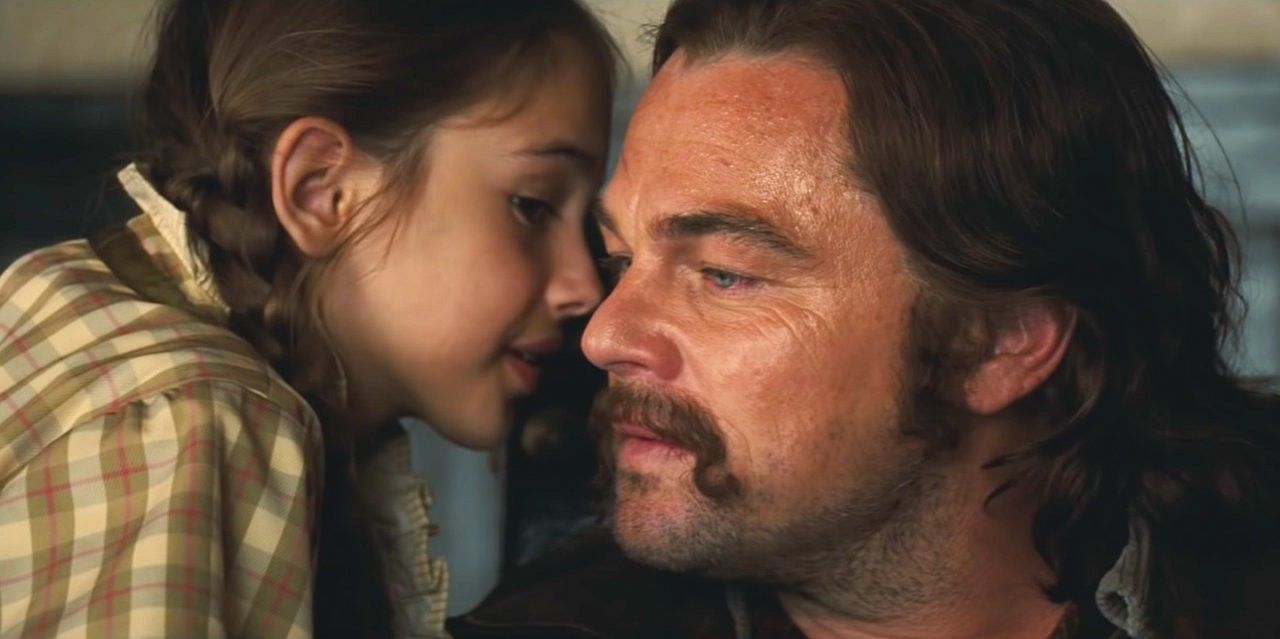
Leonardo DiCaprio stars as Rick Dalton, a washed-up TV actor whose big Western role in the show Bounty Law is behind him, leaving him in fear of a lackluster future of guest spots and Spaghetti Westerns. Brad Pitt is Cliff Booth, his easygoing friend/driver/stunt double who may or may not have killed his wife. (He’s the most likable character, so I guess we’re not supposed to care about the answer?) In 1969, Dalton lives next door to successful director Roman Polanski (Rafal Zawierucha) and his wife Sharon Tate (a radiant Margot Robbie), while the Manson Family cult bides its time at nearby Spahn Ranch.

All of that information is simply the set-up, but the bulk of the film is made up of rambling vignettes that could have been episodes in a mini-series. Dalton puts his full effort into an important guest role, Booth makes an unnerving visit to Spahn Ranch, Tate enjoys her success as an actress, and much of it is good-natured and entertaining. I especially liked a few scenes between Dalton and a precocious young co-star who gives him the encouragement he needs, and the Oscar-winning production design certainly looks great, capturing the hippie presence and Hollywood glamour of L.A. in the 1960s. All the actors seem to comfortably fit their characters to a T, particularly Pitt, though I’m not sure what was so worthy of a Best Supporting Actor Oscar.

See the source image

Yet for all its attention to capturing the period, the plot is annoyingly hollow. Tarantino rarely holds back on the profanity, but his trademark violence is thankfully restrained for most of the film. However, the “grand” finale, offering a what-if scenario of the Manson murders, is so over-the-top (flamethrower, anyone?) that I lost respect for much of what came before. By the end, nothing is resolved with Rick and Cliff’s relationship and the “What now?” feeling that preceded the climax, and the “happy” ending just felt weird, making me wonder what the point of all this was, except for an indulgent walk down memory lane.

As I said, I’m no Tarantino expert, but his historically based films seem to thrive on redirected violence. In the case of this film, the Manson Family were such horrible human beings that we’re supposed to get satisfaction at their own violence being perpetrated back at them, which is a morally repugnant idea. Glorifying others’ suffering, however deserved it may be, isn’t something to enjoy, and the film’s climax is a jarring set piece that ruined its entertainment value for me. I suspect that Tarantino is simply not for me, even if I can recognize the cinematic skill on display, though even his famed talent for dialogue seems uninspired for the most part. Once Upon a Time in Hollywood is the kind of film that has a few great scenes but is far from a great whole.

See the source image

Best line: (Narrator) “When you come to the end of the line, with a buddy who is more than a brother and a little less than a wife, getting blind drunk together is really the only way to say farewell.”


Rank: Dishonorable Mention


© 2020 S.G. Liput
660 Followers and Counting

Tolkien (2019)

18 Sunday Aug 2019

Posted by sgliput in Movies, Poetry, Reviews, Writing

≈ Leave a comment

Tags

Biopic, Drama, History, War

See the source image

A story’s source is not alone
The man who put his pen to page,
But every seed his life had sown
Within that man at every age,
His greatest fear, his cruelest pain,
His deepest love, his darkest stain:
These seeds were sown into his brain,
His heart and soul until they bore
A fruit we’d never seen before.
And so, in turn, that story’s sown
More seeds that yet remain unknown.
______________________

MPAA rating: PG-13

As a devoted fan of The Lord of the Rings, I was eagerly awaiting this biopic of J.R.R. Tolkien (played earnestly by Nicholas Hoult), hoping that it would provide some insight into the source of one of fiction’s greatest stories (and my favorite movie of all time). The acting is on point, the period setting is splendidly polished, the emotions are effectively conveyed, and yet Tolkien doesn’t do more than the minimum of what I expected.

There’s nothing particularly wrong with how Tolkien’s early life is recounted, and it actually enlightened me to quite a bit of his history. It covers his courtship of Edith Bratt (Lily Collins), his long-standing love of languages, and his friendships with three other boys who together formed the T.C.B.S., or Tea Club and Barrovian Society, a creative fraternity that clearly echoes the “Seize the day” mentality of Dead Poets Society. The film goes back and forth between these early years and his horrific time during the Battle of the Somme, where he suffers from trench fever and hallucinates fantasy figures on the battlefield.

See the source image

It’s all a solid, respectable attempt at providing background for Tolkien the great author, but it also feels manufactured in how it tries to provide context for Tolkien’s works. Early scenes of his youth in bucolic Birmingham do well to remind viewers of the Shire without making it overly clear, but other references aren’t as subtle. (Though I agree with the statement from one of his friends about Wagner’s Ring Cycle that it shouldn’t take six hours to tell a story about a magic ring; it actually takes 9+ hours.) It’s only a matter of time before the T.C.B.S. is referred to as a “fellowship,” and the surreal hallucinations Tolkien has amidst the horrors of World War I serve no discernible purpose but as references to his fantasy and excuses to include some special effects. It also stumbles at times in the presentation of events, such as when Tolkien’s mother suddenly dies with no explanation at all.

I also would have liked more references to Tolkien’s Catholic faith and how it shaped his work, something which director Dome Karukoski supposedly filmed but removed due to test audience feedback. There are welcome touches, such as the inclusion of a crucifix in Tolkien’s battlefield visions, but the film definitely prefers its romantic side, as when Tolkien is told by his friend and guardian Father Francis (Colm Meaney) to stop seeing Edith until he was 21. This is true, but the film’s Tolkien later insists it was a mistake, while the real-life Tolkien said he didn’t regret the decision.

See the source image

In its elegant presentation and clear fondness for its subject, Tolkien is a respectable, well-acted biopic that does most of what it sets out to do. Considering the exceptional man and story of its inspiration, though, one would hope it could have been a little more than that.

Best line: (Edith, on Tolkien’s regard for languages) “Things aren’t beautiful because of how they sound. They’re beautiful because of what they mean.”


Rank: List Runner-Up


© 2019 S.G. Liput
644 Followers and Counting


2019 Blindspot Pick #6: Amadeus (1984)

31 Wednesday Jul 2019

Posted by sgliput in Blindspot, Movies, Poetry, Reviews, Writing

≈ Leave a comment

Tags

Biopic, Drama, History, Musical

See the source image

How must it be to be a genius,
Masterpieces to be mined
In the mind,
Unrefined,
And so gradually defined
In an act of new creation
Not unlike how God designed?

Oh, to birth such instant classics,
Such a rare, eternal prize!
Oh, what highs
In human eyes,
We crave as we mythologize,
And what despair we suffer when
Our limits cut us down to size.

Comparisons are no avail
If we’re defined by how we fail.
______________________

MPAA rating: PG for the original, R for the Director’s Cut, due to brief language and nudity

For me, Amadeus is the perfect candidate for a Blindspot pick. I’ve been putting it off for far too long, even getting it from the library a while ago and letting it sit around until I had to return it. On top of that, I kept being reminded of it; the recent anime Steins;Gate 0 had an AI called Amadeus and explicitly referenced the rivalry between Mozart and Salieri, and I also just rediscovered the classic ‘80s tune “Rock Me Amadeus” by Falco, inspired by this film. I even got a recent Final Jeopardy question wrong because I didn’t realize Amadeus was based on a play, making it perfect for MovieRob’s Genre Grandeur this month as well. Thus, at long last, it seemed only right to watch the Best Picture of 1984, since I was clearly being pointed toward it.

See the source image

Winner of eight Oscars, Amadeus is a powerhouse for both acting and music. For his role of Salieri, F. Murray Abraham deservingly won the Oscar for Best Actor, ironically defeating Tom Hulce as his unwitting rival Mozart. Salieri is a tortured soul, deranged and aged far past his prime when the film opens in 1823, and tells a priest of how his classical musical career was overshadowed by the flippant but undeniable talent of Wolfgang Amadeus Mozart. Hulce portrays Mozart as a frivolous man-child, a “creature” as Salieri refers to him, whose high-pitched laugh grows increasingly annoying, yet the elder composer recognizes Mozart’s gift and blames God for leaving Salieri so comparatively untalented. Both performances are brilliantly nuanced, especially by the tragic end, but the Academy chose right that year.

Yet the music is just as much a character as the dueling composers. As Salieri points out early on, everyone recognizes Mozart’s best work, and his best work is put on full display, with even extended stage performances from opera like The Magic Flute and Don Giovanni. (I watched Milos Forman’s Director’s Cut.) Lovers of classical music will revel in the score, but even non-fans will likely appreciate watching the inception of masterpieces that have stood the test of time.

While I recognize the film as a magnum opus for everyone involved, there’s something that bugs me and keeps it from ranking among my favorites. It may seem shallow or unsympathetic, but as I watched Salieri spiral into a tortured wretch of envy, cursing God for giving Mozart the talent he craved for himself, I just wanted to slap him and say “Get over it!” It’s drama, and I know such unbridled jealousy does happen, but I hate when people compare themselves to others because no matter how good you are at anything, there will always be someone better. Salieri had a high-profile position, money, and respect, and instead of viewing Mozart as a colleague, however vulgar he may have been, he made him the source of an inferiority complex, ultimately contributing to his ruin, for which Salieri received nothing but guilt. He may have blamed God, but the fault was his own. It’s a marvelously complicated portrayal of destructive envy that nonetheless frustrated me almost as much as Mozart’s laugh.

See the source image

Looking back, 1984 was undoubtedly one of the big movie years in history, and it says a lot that Amadeus was able to sweep the Oscars that year, winning Best Picture, Actor, Director, Adapted Screenplay, Art Direction, Costume Design, Makeup, and Sound. Impeccably mounted in its 18th/19th-century setting, it’s an overly long but outstanding period piece conveying a historic rivalry that, while fictionalized, still resonates.

Best line: (Salieri) “All I wanted was to sing to God. He gave me that longing… and then made me mute. Why? Tell me that. If He didn’t want me to praise Him with music, why implant the desire, like a lust in my body, and then deny me the talent?”


Rank:  List Runner-Up


© 2019 S.G. Liput
642 Followers and Counting


Apollo 11 (2019) / For All Mankind (1989)

20 Saturday Jul 2019

Posted by sgliput in Movies, Poetry, Reviews, Writing

≈ 1 Comment

Tags

Documentary, History


See the source image

A lonely halo is the moon,
A muse for which romantics croon,
And nobody is quite immune
From such a storied, distant sphere.

Upon its face, mankind has walked,
From which the moon no doubt was shocked,
For how could men have flown and docked
Upon this pioneering pier?

And now, alone again, the moon
Has only space for its commune
And wonders if we’ll come back soon
To face and further its frontier.
_____________________

MPAA rating for Apollo 11:  G
MPAA rating for For All Mankind:  Not Rated (G is fine)

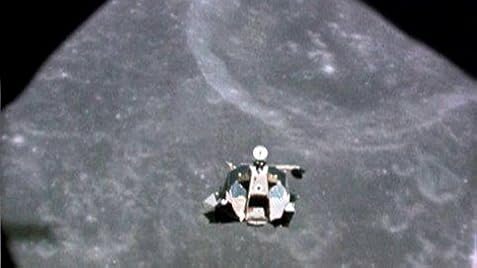
It’s hard to believe that it’s been 50 years to the day since man first landed on the moon. Those familiar with this blog probably already know that my family has a personal connection to the space program, my grandfather having worked for NASA from 1955 to 1973 and my mother working for NASA contractors during the space shuttle program. That personal connection heightens even more my appreciation for the spectacular feat of engineering and cooperation that was the Apollo 11 mission, a mission depicted in several documentaries, two of which seemed perfect to review today.

See the source image

Both documentaries were released as anniversary retrospectives, 1989’s For All Mankind on the 20th anniversary of the first moon landing, and this year’s Apollo 11 for the 50th anniversary. Both films are entirely archival, made up of actual footage from the Apollo program, though For All Mankind also features voiceovers from interviews with the astronauts. While they both follow the same structure and even share a few of the same shots, both are exceptional in different ways.

Apollo 11 has been making the rounds on TV and theaters, raking in acclaim along the way. It’s an excellent account of the mission, from the monumental launch of the Saturn V rocket as crowds of onlookers marveled from a distance to the tense landing sequence plagued by false alarms. Its best aspect is the visual restoration of the footage, which now lacks any trace of the age inherent to film from 50 years ago. As with Peter Jackson’s They Will Not Grow Old, the footage looks fresh and recent, making every moment feel immediate and much more real than some ancient faded images.

The only drawback for me was how strictly archival the film was, without any narration or sound other than what was filmed. This made several extended scenes of space borderline boring; while the spacecraft’s staggering speeds and dwindling fuel gauge were added for the sake of context and danger (with far-too-small captions), interest definitely depends on how mentally engaged the viewer is, since there isn’t always much happening visually.

See the source image

Interestingly, after taking 10 years for its assembly and release, For All Mankind had the same issue, originally compiled from old NASA footage without voiceover, only for director Al Reinert to add in interviews based on audience feedback. I thought these interviews added a lot to the film, providing insight directly from those who lived these missions, including Jim Lovell, Michael Collins, and Jack Swigert. You might have noticed that not all of them were on the Apollo 11 mission; that’s because For All Mankind, despite being edited to look like one mission from start to finish, is actually a compilation of all the Apollo moon missions, with a little Gemini thrown in.

The footage may not have the crispness of Apollo 11, but I found that For All Mankind offered far more unique and memorable scenes that I had never seen before: an astronaut making a sandwich in zero gravity, a montage of astronauts playing and repeatedly falling over on the moon, David Scott of Apollo 15 dropping a feather and a hammer to prove Galileo’s theory of gravity correct. I only wish there were some captions or on-screen notes saying which mission each clip was from and which interviewee was speaking during the voiceovers. For All Mankind may not be as detailed as Apollo 11 (the Apollo 13 disaster is glossed over in a matter of minutes), but I thought it offered a more engaging history lesson than the more recent film, ending with a touching tribute to the space program’s casualties, both American and Russian. It’s up there with the best documentaries I’ve seen.

See the source image

Now fifty from that historic day, it’s equally hard to believe that we haven’t been back to the moon in over 46 years since then. I realize some may view space exploration as an impractical pursuit, but Apollo 11 was an amazing moment in human history, and I sincerely hope that the spirit of dreaming and daring that made it possible will again yield fruit and prove what mankind is capable of accomplishing. In the meantime, we at least have some great documentaries (which I recommend far more than last year’s First Man) to remind us of our past achievements and perhaps renew that same spirit.

Best line, not counting the really famous quotes: (from For All Mankind, summing up how all this was possible) “We are all in this together as a team effort. We’re gonna make it work, and I don’t know how to make it work; I don’t know how to do most of this mission, but I do know that I can assure you that my piece of it is gonna work, and it won’t fail because of me.”

Rank (using thumbs for documentaries):

Apollo 11 – One thumb up, one thumb down
For All Mankind – Two thumbs up


© 2019 S.G. Liput
636 Followers and Counting


Green Book (2018)

01 Monday Jul 2019

Posted by sgliput in Movies, Poetry, Reviews, Writing

≈ Leave a comment

Tags

Biopic, Comedy, Drama, History

See the source image

Road trips are an odd affair,
The constant movement far from home,
A different bed come every night,
The landscape shifting out of sight
As cars continuously roam
On quests their occupants must share.

Friends may think they have rapport,
Until the road bares every irk
In ways that cannot be ignored,
And likewise those with no accord
May find that under quarrels lurk
A bond they never knew before.
_________________

MPAA rating:  PG-13

Who doesn’t love a movie about unlikely friendships? From Lethal Weapon to Driving Miss Daisy, there’s something universally appealing about two very different people overcoming those differences in favor of mutual respect, and, as with those two examples and this film, race is often one of those separators. Green Book is the latest crowd-pleasing member of the genre that also dives into that racial divide, and while some have accused it of not diving deeply enough, it hit an amusing and poignant balance that I enjoyed enormously.

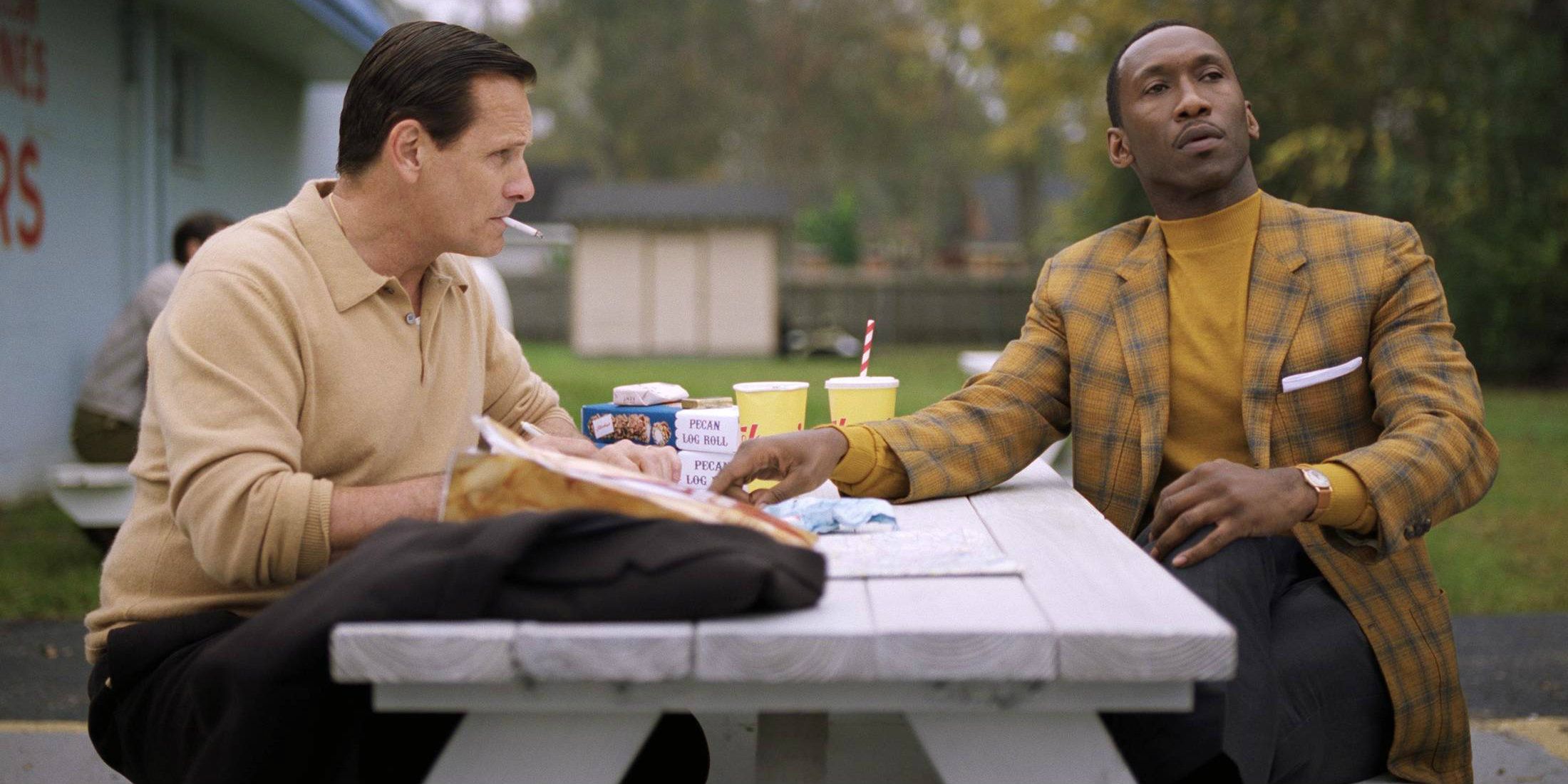
It’s hard to believe that Viggo Mortenson is Danish, much less that he once played Aragorn in Lord of the Rings, considering how perfectly he inhabits the role of an overweight Italian-American bouncer named Tony Vallelonga, a.k.a. Tony Lip. Despite some latent racism, he grudgingly accepts a job as a driver for famed black pianist Dr. Don Shirley (Mahershala Ali), who needs transportation and protection during a two-month concert tour of the South in 1962. Even beyond race, they couldn’t be more different, Tony crude and confrontational, Dr. Shirley sophisticated and haughty; hence, the unlikely friendship. It’s a role reversal of expected stereotypes of the era, and the two actors embrace the dichotomy while forming unexpected bonds through food, music, language, and the recognition of right and wrong.

See the source image

Many have called Green Book a reversal of Driving Miss Daisy, and while the point is not unfounded, Green Book has a more socially conscious goal in mind. It may not dive as deeply as some people may have wanted, but its view of race relations still feels honest and ultimately hopeful. (Incidentally, “some people” also say that Driving Miss Daisy and this film were unworthy Best Picture winners, but, in my opinion, “some people” are wrong.)

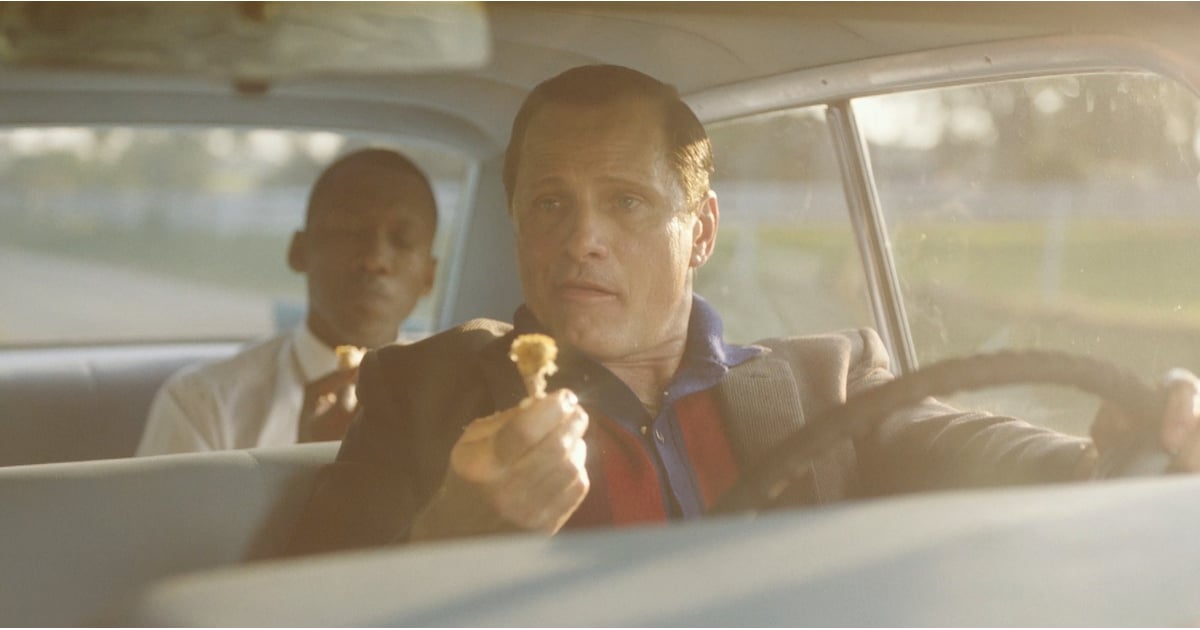
I really don’t get a lot of the backlash toward this movie, like the supposedly tone-deaf scene where Tony teaches Dr. Shirley how to eat fried chicken. It’s like critics are trying to filter it through every potential-racism, social justice lens they have at their disposal, while I don’t see it as anything but an example of the different worlds to which these two characters have been exposed. They each share pieces of those worlds with each other during their journey, whether it be Shirley’s eloquence in composing Tony’s letters home for him or Tony’s unwillingness to accept any insult. And while there are shades of the dreaded “white savior” tropes that critics make far too much of, I’d argue that Tony gets more from Dr. Shirley than the other way around, particularly a changed perspective on his former prejudice.

Contrary to the assertions of writer/producer (and Tony’s son) Nick Vallelonga, some of Dr. Shirley’s family have denounced Green Book as untruthful, claiming that his and Tony’s relationship was nothing more than that of employer and employee, while other sources have come out with evidence that they were in fact friends. Either way, Green Book takes its historical inspiration and creates a wholly satisfying road-trip movie, especially for those who don’t try to psychoanalyze its themes too deeply.

See the source image

Though it could have focused more on The Negro Motorist Green Book of its title, I, for one, am glad for its Oscar success, including Best Picture, Best Original Screenplay, and Best Supporting Actor for Ali. The performances and script are full of charm, humor, and empathy, and Green Book fits comfortably among the great unlikely friendship road movies, with an ending that even directly recalls the last scene of Planes, Trains, and Automobiles. Race is a touchy subject these days, and while many may disagree, this movie serves as a welcome reminder that mutual understanding can seem unlikely but is always within reach.

Best lines:  (Tony Lip) “The world’s full of lonely people afraid to make the first move.”

and

(Dr. Shirley, channeling MLK) “You never win with violence. You only win when you maintain your dignity.”


Rank:  List-Worthy


© 2019 S.G. Liput
636 Followers and Counting


← Older posts
Newer posts →

Recent Posts

  • We Didn’t Start 2025 (Recap)
  • NaPoWriMo 2025 Recap (Finally)
  • Sonic the Hedgehog 3 (2024)
  • It Happened One Night (1934)
  • Spellbound (2024)

Recent Comments

associatesofshellymann's avatarassociatesofshellyma… on My Top Twelve La La La So…
Kit's avatarKit Nichols on Bonnie and Clyde (1967)
lifelessons's avatarlifelessons on Look Back (2024)
Carol Jackson's avatarCarol Jackson on The Thief of Bagdad (1940…
Stephen's avatarStephen on Love Story (1970)

Archives

  • January 2026
  • December 2025
  • May 2025
  • April 2025
  • March 2025
  • February 2025
  • January 2025
  • December 2024
  • May 2024
  • April 2024
  • March 2024
  • February 2024
  • January 2024
  • December 2023
  • November 2023
  • October 2023
  • September 2023
  • July 2023
  • June 2023
  • May 2023
  • April 2023
  • March 2023
  • February 2023
  • January 2023
  • December 2022
  • November 2022
  • October 2022
  • September 2022
  • August 2022
  • July 2022
  • June 2022
  • May 2022
  • April 2022
  • March 2022
  • February 2022
  • January 2022
  • December 2021
  • November 2021
  • October 2021
  • September 2021
  • August 2021
  • July 2021
  • June 2021
  • May 2021
  • April 2021
  • March 2021
  • February 2021
  • January 2021
  • December 2020
  • November 2020
  • October 2020
  • September 2020
  • August 2020
  • July 2020
  • June 2020
  • May 2020
  • April 2020
  • March 2020
  • February 2020
  • January 2020
  • December 2019
  • November 2019
  • October 2019
  • September 2019
  • August 2019
  • July 2019
  • June 2019
  • May 2019
  • April 2019
  • March 2019
  • February 2019
  • January 2019
  • December 2018
  • November 2018
  • October 2018
  • September 2018
  • August 2018
  • July 2018
  • June 2018
  • May 2018
  • April 2018
  • March 2018
  • February 2018
  • January 2018
  • December 2017
  • November 2017
  • October 2017
  • September 2017
  • August 2017
  • July 2017
  • June 2017
  • May 2017
  • April 2017
  • March 2017
  • February 2017
  • January 2017
  • December 2016
  • November 2016
  • October 2016
  • September 2016
  • August 2016
  • July 2016
  • June 2016
  • May 2016
  • April 2016
  • March 2016
  • February 2016
  • January 2016
  • December 2015
  • November 2015
  • October 2015
  • September 2015
  • August 2015
  • July 2015
  • June 2015
  • May 2015
  • April 2015
  • March 2015
  • February 2015
  • January 2015
  • December 2014
  • November 2014
  • October 2014
  • September 2014
  • August 2014
  • July 2014
  • June 2014
  • May 2014
  • April 2014
  • March 2014
  • February 2014
  • January 2014
  • December 2013

Categories

  • Blindspot
  • Blogathon
  • Christian
  • Movies
  • Music
  • NaPoWriMo
  • Poetry
  • Reviews
  • TV
  • Writing

Meta

  • Create account
  • Log in
  • Entries feed
  • Comments feed
  • WordPress.com

Recent Posts

  • We Didn’t Start 2025 (Recap)
  • NaPoWriMo 2025 Recap (Finally)
  • Sonic the Hedgehog 3 (2024)
  • It Happened One Night (1934)
  • Spellbound (2024)

Recent Comments

associatesofshellymann's avatarassociatesofshellyma… on My Top Twelve La La La So…
Kit's avatarKit Nichols on Bonnie and Clyde (1967)
lifelessons's avatarlifelessons on Look Back (2024)
Carol Jackson's avatarCarol Jackson on The Thief of Bagdad (1940…
Stephen's avatarStephen on Love Story (1970)

Archives

  • January 2026
  • December 2025
  • May 2025
  • April 2025
  • March 2025
  • February 2025
  • January 2025
  • December 2024
  • May 2024
  • April 2024
  • March 2024
  • February 2024
  • January 2024
  • December 2023
  • November 2023
  • October 2023
  • September 2023
  • July 2023
  • June 2023
  • May 2023
  • April 2023
  • March 2023
  • February 2023
  • January 2023
  • December 2022
  • November 2022
  • October 2022
  • September 2022
  • August 2022
  • July 2022
  • June 2022
  • May 2022
  • April 2022
  • March 2022
  • February 2022
  • January 2022
  • December 2021
  • November 2021
  • October 2021
  • September 2021
  • August 2021
  • July 2021
  • June 2021
  • May 2021
  • April 2021
  • March 2021
  • February 2021
  • January 2021
  • December 2020
  • November 2020
  • October 2020
  • September 2020
  • August 2020
  • July 2020
  • June 2020
  • May 2020
  • April 2020
  • March 2020
  • February 2020
  • January 2020
  • December 2019
  • November 2019
  • October 2019
  • September 2019
  • August 2019
  • July 2019
  • June 2019
  • May 2019
  • April 2019
  • March 2019
  • February 2019
  • January 2019
  • December 2018
  • November 2018
  • October 2018
  • September 2018
  • August 2018
  • July 2018
  • June 2018
  • May 2018
  • April 2018
  • March 2018
  • February 2018
  • January 2018
  • December 2017
  • November 2017
  • October 2017
  • September 2017
  • August 2017
  • July 2017
  • June 2017
  • May 2017
  • April 2017
  • March 2017
  • February 2017
  • January 2017
  • December 2016
  • November 2016
  • October 2016
  • September 2016
  • August 2016
  • July 2016
  • June 2016
  • May 2016
  • April 2016
  • March 2016
  • February 2016
  • January 2016
  • December 2015
  • November 2015
  • October 2015
  • September 2015
  • August 2015
  • July 2015
  • June 2015
  • May 2015
  • April 2015
  • March 2015
  • February 2015
  • January 2015
  • December 2014
  • November 2014
  • October 2014
  • September 2014
  • August 2014
  • July 2014
  • June 2014
  • May 2014
  • April 2014
  • March 2014
  • February 2014
  • January 2014
  • December 2013

Categories

  • Blindspot
  • Blogathon
  • Christian
  • Movies
  • Music
  • NaPoWriMo
  • Poetry
  • Reviews
  • TV
  • Writing

Meta

  • Create account
  • Log in
  • Entries feed
  • Comments feed
  • WordPress.com

Blog at WordPress.com.

  • Subscribe Subscribed
    • Rhyme and Reason
    • Join 814 other subscribers
    • Already have a WordPress.com account? Log in now.
    • Rhyme and Reason
    • Subscribe Subscribed
    • Sign up
    • Log in
    • Report this content
    • View site in Reader
    • Manage subscriptions
    • Collapse this bar