• Home
  • About Me
  • THE LIST Through the Years
  • Top Twelves and More
  • The End Credits Song Hall of Fame

Rhyme and Reason

~ Poetry Meets Film Reviews

Rhyme and Reason

Tag Archives: Fantasy

How to Train Your Dragon (2010)

18 Friday Jul 2014

Posted by sgliput in Movies, Poetry, Reviews, Writing

≈ Leave a comment

Tags

Action, Animation, Dreamworks, Fantasy

Hiccup is a Viking lad
Upon the isle of Berk.
He cannot seem to please his dad
With his inventive work.
 
His father Stoick only cares
For hunting dragon pests,
But Hiccup is the worst of heirs,
As everyone attests.
 
He shoots a dragon from the sky,
A Night Fury, the worst,
But when he tries to watch it die,
His feelings are reversed.
 
He lets it live; it follows suit,
And cautious friendship grows.
He names the beast Toothless to boot,
And learns what no one knows.
 
Since half the dragon’s tail was torn,
It cannot fly away,
But Hiccup crafts prosthetics worn
Around its tail each day.
 
As he is trained with fellow teens
To fight each flying creature,
Astride his pet Hiccup careens,
With practice as his teacher.
 
With inside knowledge of the brutes,
He handles them with skill
And wows his dad and the recruits
And earns the right to kill.
 
A girl named Astrid follows him
And threatens to reveal,
But Toothless scares her on a whim
Yet proves he has appeal.
 
They find the hidden dragon nest,
Ruled by a giant beast,
And Hiccup sees they act the pest
Or else become its feast.
 
So Hiccup tries to prove his point
In front of his whole town,
But Hiccup’s efforts disappoint,
And Toothless is brought down.
 
His father stubbornly insists
To find the dragon nest,
And Toothless grudgingly assists
With Stoick’s killing quest.
 
Since Hiccup knows they cannot fight
That dragon monster thing,
He and his Viking friends take flight
On dragons they’re keeping.
 
The monstrous dragon is released,
And Stoick saves Toothless.
They all engage the mammoth beast,
And Hiccup’s acts impress.
 
He taunts the beast, astride his friend,
And brings it down with flair,
But very nearly meets his end
If not for Toothless there.
 
Though injured, Hiccup quickly mends,
And witnesses with glee
Dragons and Vikings can be friends
And live in harmony.
__________________
 

After the Madagascar movies, I began to not expect much from DreamWorks. Their focus on parody made them pale in comparison to the originality of Pixar, but How to Train Your Dragon was a welcome surprise. Boasting a 98% on Rotten Tomatoes, it’s awesome in both concept and execution. Based off of Cressida Cowell’s book series, the film combines rowdy Scottish-accented Vikings with various species of the legendary flying reptiles to create something exciting, touching, and just plain cool.

Jay Baruchel brings a geeky likability to Hiccup, and Gerard Butler deepens his voice and accent to give heft to Stoick the Vast. Other roles are filled decently by America Ferrera, Jonah Hill, Craig Ferguson, etc. The character I especially admire is Toothless, the Night Fury. I love how his behavior is often cat-like, and his scenes of flight are so exhilarating and beautiful that I wish I had one of my own.

As far as the story, there are some clichés, such as the overbearing, disappointed parent who doesn’t understand the more open-minded child (sounds like The Little Mermaid). The various teen stereotypes aren’t all that memorable, but their interactions in the entertaining training scenes are. There’s even the familiar he’s-dead-no-wait-never-mind cliché, though unlike other movies, Hiccup doesn’t escape completely unscathed, giving the loss more weight. Even with its action-oriented story, the film also extols inventiveness and the value of reading and, yes, open-mindedness.

John Powell’s fantastic Celtic-influenced score heightens the excitement and the fun; it’s probably my favorite score of all of DreamWorks’ animated films. My VC doesn’t much care for the film, considering the dragons to appear too cartoonish, but I think How to Train Your Dragon is DreamWorks Animation’s best film in years. I hope to see the sequel soon.

Best line: (Gobber, to Hiccup about his father) “Now, you’re thinkin’ about this all wrong. It’s not so much what you look like, it’s what’s inside that he can’t stand.”

 
Artistry: 6
Characters/Actors: 7
Entertainment: 9
Visual Effects: 9
Originality: 6
Watchability: 8
 
TOTAL: 45 out of 60
 

Next: #174 – Mulan

© 2014 S. G. Liput

158 Followers and Counting


The Hobbit: An Unexpected Journey (2012) and The Desolation of Smaug (2013)

14 Monday Jul 2014

Posted by sgliput in Movies, Poetry, Reviews, Writing

≈ Leave a comment

Tags

Action, Drama, Fantasy

(This poem is more detailed than others; spoiler alert.)
 
Erebor was a mighty kingdom, built by dwarves with gems and gold;
Men of Dale and forest Elves bowed down before their kings of old,
But the dragon Smaug arrived to claim their treasures and their throne,
And the dwarves were scattered, dreaming of their vengeance and their home.
 
Bilbo Baggins is a Hobbit, living in his cozy hole,
Happy to avoid adventures other than a Sunday stroll.
Smoking on his doorstep one day, Bilbo has a sudden meeting
With the roaming wizard Gandalf, who discusses Bilbo’s greeting.
Bilbo soon retreats inside Bag End, not knowing what’s in store;
Soon there is a fateful knock upon the hobbit’s rounded door.
 
There upon his threshold is a large and pushy dwarf named Dwalin;
Once he shows himself inside, he’s followed by his brother Balin;
Then come Fili, brother Kili, and more dwarves, in all thirteen.
Gandalf then explains he brought them with the promise of cuisine.
Lastly, Thorin Oakenshield arrives to finalize the band;
Bilbo is displeased at this reunion, sudden and unplanned.
 
After feasting on his food, the dwarves discuss why they are there;
They plan taking back their homeland, though they’re cautioned to beware.
Gandalf promised them a burglar, and he chose Bilbo as such,
But the hobbit’s overwhelmed and not pleased with adventures much.
Bilbo claims he cannot go, so they depart to start their quest,
But he soon decides to leave and join with Thorin and the rest.
 
Not far into their adventure, they run into three large trolls
And are caught before Bilbo outsmarts their culinary goals.
Gandalf saves the company, but Radagast, a wizard brown,
Then arrives reporting there’s an evil of bygone renown.
He has been to Dol Guldur, where ancient wickedness yet grows.
Who this reborn foe could be is too disturbing to suppose.
 
Orcs attack astride their wargs, and Thorin’s band is forced to flee
To Rivendell at Gandalf’s urge, though Thorin does so grudgingly.
Lord Elrond still welcomes them and offers food to every chap
And reads the hidden moon-lit letters on a valued Dwarvish map.
This provides a deadline to attain the Lonely Mountain’s height.
Gandalf meets with fellow leaders to discuss things in the night.
 
After Thorin leaves the Elven city, lest their fortunes change,
Thirteen dwarves and one small hobbit climb the Misty Mountain range.
Thunders rumble, mountains crumble, as stone giants fight and toss,
Yet the team locates a cave without a single member’s loss.
Bilbo then is tempted to return back home, for he’s no aid,
But then goblins catch the party, threatening their escapade.
Bilbo manages to flee but falls into a cavern, where
He perceives a golden ring, as well as Gollum’s lightless lair.
With his glowing dagger, Bilbo is too deadly to be harmed;
Therefore, Gollum plays a game of riddles with the hobbit armed.
After teasers back and forth, the hobbit meets with sly success
When he gives his twisted foe a question Gollum cannot guess.
 
In the meantime, Thorin’s being taunted by the goblin king,
Who intends to seal their doom, most likely with much suffering.
Gandalf suddenly appears to free them all and find a route;
Massive combat then ensues as they all battle their way out.
Bilbo finds the ring makes him invisible, but mercy shines
When he spares poor Gollum’s life and joins the dwarves outside the mines.
 
He explains why he came back because he’ll help howe’er he can,
But then they are chased into some cliff-side trees without a plan.
Thorin’s foe, a large pale orc called Azog, wants his blood at last,
And he nearly claims his life till Bilbo saves the dwarf outcast.
Gandalf calls the eagles for a rescue in the nick of time,
Thorin thanks the hobbit for his stand against the goblin slime,
And a distant dragon waits to guard his hoarded gold sublime.
___________________________
 
Trekking through the wilderness are Thorin, Bilbo, and the rest,
Fleeing from that ugly orc, who’s proving to be quite the pest.
Gandalf leads them to a house as they are hunted by a bear,
Which protects them from the goblins after giving them a scare.
Waking up, they meet their host, who was the bear, the sequent morn
And get some wary new assistance from the skin-changer Beorn.
 
Next, it’s further on to Mirkwood, site of dark affairs of late.
Gandalf says that he must leave and bids them walk the path, not straight.
As they journey through the forest, it exerts a strange effect,
And they act as if they’re drugged and soon are lost through their neglect.
After Bilbo climbs a tree and sees the Lonely Mountain near,
Giant spiders capture them and wrap them in a web of fear.
 
Bilbo frees himself in time and saves his allies with his ring,
And his dagger proves its sharpness and is christened by him Sting.
As the spiders close around them, elves appear and slay them all,
Taking all the dwarves as prisoners back to their King Thranduil’s hall.
Legolas then cages them since Thorin does not bargain well;
Kili, though, can’t help but flirt with lovely wood-elf Tauriel.
 
Bilbo, still invisible, discovers how to get them out,
Freeing them and placing them in barrels, though they have some doubt.
Soon they’re floating down a river, but before the elves step in,
They’re attacked by hordes of orcs, led by that one with pale skin.
Legolas and Tauriel assist in slaughtering a lot
As the dwarves escape through carnage, but young Kili still is shot.
 
After landing near the lake, the group encounter bargeman Bard,
Who agrees to smuggle them to Laketown for a price that’s hard.
He is less than popular among the village government,
Who consider him a rebel, sowing protest and dissent.
Though he helps the dwarves inside, their need for weapons makes them rash,
And they raid the armory but are arrested in a flash.
 
Thorin then reveals his name and earns the village’s support;
Bard, however, fears the dragon his ancestor could not thwart.
No one listens to his doubts but revel in the king’s return,
And they see the questers off without the tiniest concern.
Bofur, Oin, and Fili stay to care for Kili’s injury
And are ambushed in Bard’s house by orcs that just won’t let them be.
 
Bilbo finds the hidden keyhole in the rocky mountainside
And must go within alone to find the jewel of Erebor’s pride:
Burglaring the Arkenstone is why they brought him on this quest,
So he wanders through the giant halls, an uninvited guest.
Smaug, the great and powerful, can smell him, even with the Ring,
And speaks to him in mocking tones to learn why he is visiting.
 
Back in Laketown, Tauriel and Legolas arrive to save
Everybody from the orcs, as well as Kili from his grave.
Gandalf, meanwhile, has been busy, looking into Dol Guldur,
Where he now suspects an evil so severe he must be sure.
He stands up to Azog’s orcs but is brought low by one dark lord:
Sauron has returned in force and with a massive goblin horde.
 
In the mountain, Smaug decides to burn the burglar, guaranteed,
And though Bilbo tries the exit, he is stopped by Thorin’s greed.
All the dwarves then scatter through the lofty vaults of their king’s house,
And the dragon chases them in one huge game of cat-and-mouse.
Thorin will not die like this and chooses to have vengeance still.
Thus the dwarves light up the forge, for they’ve a dragon yet to kill.
 
After many close escapes, they fill a giant, ancient mold,
Using Smaug’s own dragon fire to produce their molten gold.
With no time for it to set, the statue that the crafters make
Melts away to gild the dragon, all (they think) for vengeance sake.
Yet this only angers Smaug, and he flies off to show his ire.
He will take revenge on Laketown, and his visit will be dire.
Bilbo watches as the dragon plans to scorch the town with fire.
_____________________
 

The Hobbit is admittedly an overblown story, at least as told by Peter Jackson. Tolkien’s story is so much simpler than The Lord of the Rings, but Jackson ratcheted up the epicness of the classic children’s story to spread over another trilogy. This is both a benefit and a liability.

On the plus side, Martin Freeman wonderfully steps into the role of Bilbo Baggins, originally played by British thespian Ian Holm. His awkward mannerisms are perfect for the role, and his moment of mercy toward Gollum rang true, something that will end up saving the world by the time of Return of the King.He is a laudable hero to follow through the adventure. Ian McKellan reprises his lovable role as Gandalf, and it is certainly enjoyable to reunite with the lovely tranquility of Hobbiton and with characters like Elrond and Galadriel, even if some have no place in this story. The action scenes are also the highlights of the films. In the first film An Unexpected Journey, there’s the gargantuan stone giant battle, the over-the-top goblin free-for-all, and the harrowing domino-tree escape, and The Desolation of Smaug has the cringe-worthy spider scene, the amusement-ride-style barrel chase, and the slam-bang confrontation with Smaug himself. These scenes exceed those in the Lord of the Rings for bombacity but sometimes threaten to take over the films.

On the negative side are mainly the characters. When I first heard that The Hobbit would be a twosome and then a trilogy, I thought Peter Jackson would use that extra time to build on each of the dwarves, get to know them, and make the audience care for them since some don’t survive the end (I’m purposefully not reminding myself who). Yet with only one more film to go, I’d say he’s failed at that. I like the handsome Fili and Kili for their bravery and daring, kindly old Balin for his prudence and affection for Bilbo, and Bofur for his comic side and for the fact I recognize James Nesbitt. Indeed, these four get the bulk of the dialogue and screen time. The others are just along for the ride, tagging along, distinguished more by the styling of their hair and beards than anything else. Heck, Bombur hasn’t spoken once through two long movies; he’s just the fat one. Repeat viewings have allowed me to notice little details and nuances that help define each character, but those do not a personality make. Also, the fact that I know everyone survives until the last movie saps the action scenes of much of their danger. As for Richard Armitage as Thorin Oakenshield, he fills the character with grim determination, but Thorin is too serious and ultimately greedy to be truly likable. (Nonetheless, (major Lost alert!) Evangeline Lilly seems well-suited to play the wood-elf Tauriel after playing main heroine Kate on my favorite show. The love triangle is another point that’s weak, I’m afraid.)

The film also suffers from its over-packed plot. It’s almost as if Peter Jackson forgot how to edit unnecessary scenes, for there are several. The entire Council of Rivendell slows things down too much and adds hardly anything to the plot. Other little scenes, like moments with Radagast the Brown or Legolas’s overly eager orc slaughtering, could easily have been snipped down.

Still, the visual effects are outstanding, as are the sweeping views of the New Zealand countryside. While the goblins in the first film had a strange look to them that made them more cartoonish and less real, the other creature effects are seamless, most especially Smaug, the great wyrm of the Lonely Mountain. Benedict Cumberbatch’s voice makes him so immensely menacing to match the awesome CGI, creating perhaps the best dragon on film to date. I also very much like Howard Shore’s score, and the songs from the ends of both films (Neil Finn’s “Song of the Lonely Mountain” and Ed Sheeran’s “I See Fire”) are both in my End Credits Song Hall of Fame.

The Hobbit films as a whole are a mixed bag with moments of brilliance recalling The Lord of the Rings and over-indulgent sequences of mayhem with underdeveloped dwarves. I’m glad that Jackson made The Hobbit, even if most fans of the book are not, but I do wish he had made them more streamlined and character-driven. Either way, I eagerly await The Hobbit: The Battle of the Five Armies later this year.

Best lines: (An Unexpected Journey; Gandalf, to Galadriel) “Saruman believes it is only great power that can hold evil in check, but that is not what I have found. I’ve found it is the small everyday deeds of ordinary folk that keep the darkness at bay… small acts of kindness and love. Why Bilbo Baggins? Perhaps it is because I am afraid… and he gives me courage.”

(The Desolation of Smaug; Tauriel, to Legolas) “Are we not part of this world? Tell me, Mellon, when did we let evil become stronger than us?”

 
Artistry: 7
Characters/Actors: 7
Entertainment: 9
Visual Effects: 10
Originality: 7
Watchability: 8
Other (violence): -4
 
TOTAL: 44 out of 60
 

Next: #178 – The Terminal

© 2014 S. G. Liput

155 Followers and Counting
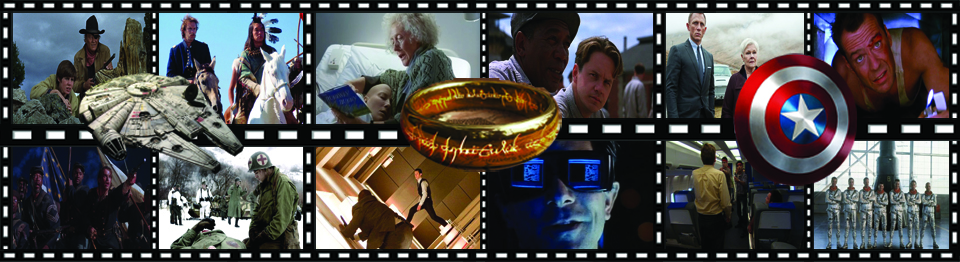
 

#180: The Curious Case of Benjamin Button (2008)

13 Sunday Jul 2014

Posted by sgliput in Movies, Poetry, Reviews, Writing

≈ Leave a comment

Tags

Drama, Fantasy, Meet 'em and Move on, Romance

As Hurricane Katrina is nearing New Orleans,
An old woman lies in her hospital bed.
This Daisy requests that her daughter named Caroline
Read her a journal she never has read.
It tells of a man known as Benjamin Button,
Who didn’t grow old, but grew younger instead.
 
His mom died in childbirth, and his own father
Abandoned him due to his aged condition.
A black girl named Queenie, a nursing home lady,
Decided to care for God’s latest addition.
He grew, an old man among older old people,
And felt right at home with his gray disposition.
 
He met lots of people, an African pygmy
Who urged him to follow and showed him the town;
A woman who taught him to play the piano;
An old man whom seven times lightning struck down,
A young girl named Daisy whom Benjamin liked;
And even his father, of Button renown.
 
He found his first job on a tugboat in port
With Captain Mike Clark, an artiste of tattoos.
Clark showed him the world (and a few other things),
And Benjamin loved all the sailing and booze.
He once met a woman and had an affair,
Short-lived, for the captain received some war news.
 
He worked on the boat in the Second World War,
And lost many shipmates amid a brief fight.
Returning back home, he met Daisy again,
A spry ballerina with passions forthright.
He loved her but she had a life of her own,
Till a car accident in the City of Light.
 
Her injury left her unable to dance,
And she didn’t want any pity from Ben.
In time, she came back to New Orleans and him,
And they lived together with joy once again.
When Daisy got pregnant, they welcomed the child,
But though “now” was fine, Button worried of “then.”
 
While growing still younger, he knew he could not
Be father when he was a child as well,
So Benjamin left, leaving Daisy his money
For young Caroline, whom he just could not tell.
He came back but once several years after that,
And Daisy and he paired up at a hotel.
 
The next time she found him, he looked very young,
And Daisy took care of him as he regressed.
He died as a baby within her old arms,
After 84 years as this backward world’s guest.
Katrina moves in as Miss Daisy joins him,
Having told Caroline of the man she loved best.
____________________


The Curious Case of Benjamin Button is the first film on my list that fits into one of my favorite unofficial sub-genres of film, what I call a “meet ‘em and move on” movie. Such a film follows a single character through life (or a microcosm of it) as they interact with and learn from several different interesting people over time, usually ending with a satisfying wrap-up that may or may not include a recap of the various acquaintances encountered. They can be fanciful and weird like Big Fish or down-to-earth and slow like The Straight Story. I’ve included several such films higher on my list because they tend to touch me deeply (the two mentioned above are exceptions). This film has a number of the things I love about such movies: a unique way of framing the tale, a number of colorful characters made likable by quirks and familiarity, and a touching relationship at the heart of the film.

Benjamin Button is only #180 because it is a blend of elements I love and others I don’t. I was pulled in by the opening vignette about the clockmaker and young/old Benjamin’s adoption by the religious Queenie; then I was turned off by his introduction to a brothel. I enjoyed the listing of his shipmates at sea, not so much Daisy’s talk about her dance troupe “trusting” each other through sex. On the one hand, I loved Cate Blanchett’s performance, as well as Brad Pitt’s, but on the other, the truth is that Benjamin Button as a character is rather underdeveloped and flat. I admire several insightful lines and scenes, such as the build-up to Daisy’s accident. Yet Pitt doesn’t show much of a range of emotions, and my VC felt that Benjamin’s choice to leave Daisy and his daughter was selfish and unnecessary.

Many critics pointed out a number of similarities to another “meet ‘em and move on,” Forrest Gump.I suppose a main reason I like Forrest Gump as a character so much more than Benjamin Button is that Forrest is a better role model. Forrest loved Jenny unconditionally and stayed pure for her, even as she delved into depravity. Benjamin, meanwhile, was nonchalant about sex and had an affair with a married woman, as well as a number of one-night stands, never even marrying Daisy. Even his foster mother Queenie had nightly rendezvous with a close man, though Mrs. Gump wasn’t perfect in that regard either. Forrest took in everything that happened in his life with innocence and naiveté, while Benjamin accepted it all with dull worldliness.

Despite all these detractions and some profanity, the ending of the film is one of the best among “meet ‘em and move on” films. Nothing else in the movie even brought me close to tears, but seeing all the people he met one after another was such a great pay-off that ended the film in the best way possible. Overall, The Curious Case of Benjamin Button is an unusual love story that excels more in its details than in the big picture.

Best line: (Benjamin Button) “Our lives are defined by opportunities, even the ones we miss.”

 
Artistry: 10
Characters/Actors: 8
Entertainment: 7
Visual Effects: 10
Originality: 6
Watchability: 8
Other (language and aforementioned issues): -5
 
TOTAL: 44 out of 60
 

Next: #179 – The Hobbit

© 2014 S. G. Liput

155 Followers and Counting


Frozen (2013)

06 Sunday Jul 2014

Posted by sgliput in Movies, Poetry, Reviews, Writing

≈ Leave a comment

Tags

Animation, Disney, Family, Fantasy, Musical

The kingdom of Arendelle has two princesses,
Elsa and Anna. The former distresses
Her parents with powers she cannot control,
Which conjure up ice from the depths of her soul.
When Elsa hurts Anna, they visit a troll.
 
The lead troll heals Anna but fools with her mind
To leave memories of ice powers behind.
The monarchs shut Elsa up, locking each door
And don’t give her access to sis anymore,
While Anna’s confused why things aren’t as before.
 
The two girls grow up, and the king and queen die,
Leaving Elsa alone to conceal her cold lie.
The day when Queen Elsa is due to be crowned,
A whole flood of royals and guests is inbound.
Unlike Elsa, Anna is thrilled they’re around.
 
When she meets Prince Hans, it is love at first sight.
No, literally, they seek marriage that night,
But Elsa is skeptical and won’t permit
A marriage so rushed; Anna’s flustered a bit.
In front of a crowd, she makes Elsa lose it.
 
Her powers revealed, Elsa heads for the hills,
Building castles and singing a song that gives chills.
The people are fearful for snow’s falling fast…
In summer and who knows how long it will last?
So Anna rides off through the wintry blast.
 
She meets smelly Kristoff, a man who sells ice.
He becomes Anna’s guide, though she has to ask twice.
Encountering wolves and a living snowman
Named Olaf, who craves summer days and a tan,
They head up the mount with not much of a plan.
 
When Anna begs Elsa to stop the storm now,
Her sister freaks out, for she doesn’t know how.
By accident, Anna is struck in the heart,
So Elsa, still fearful, makes Anna depart.
In Anna, Kristoff sees a chilly change start.
 
They go to the trolls, who raised Kristoff with pride.
They say Anna’s heart will soon freeze from inside.
She needs some true love, which means Hans (so they think);
She just needs a kiss to come back from the brink,
But Hans then comes out as a liar and fink.
 
Although he brought Elsa back home in a chain,
He wants them both dead so that he can now reign.
Leaving Anna to die, Hans tries killing her sister,
But Anna steps in, knowing Kristoff’s her mister,
And freezes rock solid since nobody kissed her.
 
Her own sacrificial love brings Anna back
And helps Elsa see love is what she may lack.
This aids her control so that people don’t fear,
And Anna loves Kristoff, who’s rough but sincere.
The doors are now open, and skies are all clear.
____________________
 

Last year’s Frozen was an unforeseen megahit that eventually surpassed Toy Story 3 as the highest grossing animated film, and it just recently dropped out of the global box office top 10. A welcome return to the musical princess genre for which Disney is famous, Frozen perhaps fed the hunger that family audiences had for new but familiar quality. It’s certainly a great fairy tale with gorgeous animation, catchy music, and (mostly) likable characters.

All that being said, I can’t help but point out some issues that detract from it and make its gargantuan success a tad puzzling. The actual storyline is innovative in its inclusion of two princesses, but Anna is a much better realized character than Elsa. I can sympathize with Elsa’s fear of herself, but that’s about it. All the characterization is given to Anna, while Elsa seems pretty directionless. What was she doing in that castle she constructed, just wringing her hands in worry? And the ultimate resolution is too rushed: just “love” and boom, she has perfect control over the powers she spent a lifetime repressing.

I also take issue with the character of Hans. The filmmakers tried so hard to make him seem like a nice guy that his sudden reversal was too out-of-nowhere. I mean, if he wanted to kill Elsa anyway, why didn’t he just let the Duke’s guards shoot her instead of valiantly rescuing her for no reason? I like the story, but I was expecting some different directions. Perhaps Hans could have been left as a good guy and paired with Elsa. I would have preferred that kind of reversal. I liked Anna’s sacrifice at the end, but it did remind me somewhat of the finale of Pokémon: The First Movie. I also thought that Anna may have hidden warming powers to offset Elsa’s, but no. Oh, well, maybe in the sequel.

After the previous two paragraphs, it might sound as if I dislike the film overall, but that’s not true. It’s a flawed tale but one I still very much enjoy viewing. Anna and Kristoff make a good pair, and though I was prepared to be annoyed by Olaf the snowman, I actually liked him more than I’d expected. The CGI animation is absolutely gorgeous, setting a new high for non-Pixar films.

Plus, the music is first-rate, even if it’s not from Alan Menken. The first song about ice is rather forgettable, but “Love Is an Open Door” and “For the First Time in Forever” are both excellent starting numbers. When I first heard the Oscar-winning song “Let It Go” on YouTube, I knew I had to see this movie. It’s Disney’s best song in years, and I’m sure most have seen at least one of the hundreds of parody videos out there for it. My VC also very much liked the “Fixer Upper” song by the trolls, even if they seem like an afterthought as characters.

Frozen may not be up there with Disney’s Renaissance classics of the ‘90s, but it’s not the worst (The Princess and the Frog didn’t make my list). It’s memorable, quality family entertainment. Let’s hope Disney will take the hint and not let the princess genre die.

Best line: (Olaf, singing) “Winter’s a good time to stay in and cuddle / But put me in summer and I’ll be a… [pauses in front of a puddle] …happy snowman!”

 
Artistry: 7
Characters/Actors: 7
Entertainment: 9
Visual Effects: 10
Originality: 6
Watchability: 8
Other (aforementioned issues): -4
 
TOTAL: 43 out of 60
 

Next: #186 – The Way

© 2014 S. G. Liput

148 Followers and Counting


Indiana Jones and the Temple of Doom (1984)

01 Tuesday Jul 2014

Posted by sgliput in Movies, Poetry, Reviews, Writing

≈ Leave a comment

Tags

Action, Drama, Fantasy, Thriller

Indiana Jones is back! Within a Chinese bar,
A deal involving artifacts is going well so far,
But soon he drinks a poison, and sheer chaos then ensues
As he retrieves the antidote, since he’s too good to lose.
 
By accident, he grabs a girl named Willie, who can sing,
And young Short Round drives them away, with bad guys following.
They think they’ve flown to safety, but events change in a flash
As villains parachute away and leave their plane to crash.
 
Among the Himalayas, our three heroes have one hope:
They use a blown-up raft to then toboggan down a slope.
They soon locate a village with no children and no joy,
And Indy swears to find some stones and every girl and boy.
 
Marching through the jungle, Willie constantly complains,
But something else scares off their guides till not a one remains.
They find an ancient palace of a quite young Indian prince,
And everyone seems civilized, though dinner makes them wince.
 
But when night falls, a man jumps Indiana from behind,
And they discover passageways they were not meant to find.
Once done with bugs and booby traps, they see the head adult
Perform a violent ritual to serve the Thugee cult.
 
They see the stolen sacred stones and plan to take them back,
But all of them are captured in a sudden sneak attack.
While Shorty is imprisoned with the other captured youth,
Our hero’s forced to drink some blood that makes him act uncouth.
 
He helps prepare poor Willie for the coming sacrifice,
Behaving like he is bewitched and just no longer nice,
But Shorty knocks him out of it, and Indy saves the day,
Then freeing Willie and the kids, who quickly run away.
 
The trio’s chased in mining carts as all the tunnels flood,
But Mola Ram, the evil priest, still has a taste for blood.
Emerging on a canyon wall, they cross a rope bridge, where
The three are cornered by the priest, his thugs, and evil glare.
 
When Indiana takes a risk to cut the bridge in two,
He takes out most of Mola’s minions, leaving just a few.
While climbing up the broken bridge, the priest opposes Jones,
Who feeds him to the crocodiles but keeps one of the stones.
 
The British come a little late but save them from the cult,
And long-lost kids return back home, where parents all exult.
The elders thank our hero for their stone with magic strong,
And Jones and Willie share a kiss (but it won’t last for long).
______________________
 

Here we have the second Indiana Jones, both the second one released and the second one on my list. Temple of Doom is one of those films that is a strange mix of ingenious inspiration and unfortunate creative choices. On the one hand, there are sequences of sheer brilliance, such as the opening scene with the gong, the mine cart chase, the spiked-ceiling booby trap, and the rope bridge standoff, all scenes that blow away most action movies and have been frequently imitated.

On the other hand, Lucas and Spielberg threw in many violent and annoying elements that detract from the film’s overall watchability. Did anyone want to see a guy get impaled by a flaming shish kebab or someone’s heart be ripped out? Is that inflatable raft scene really plausible? Kate Capshaw is lovely (Spielberg thought so too), but she’s helpless and irritating with all her whining and I-broke-a-nail prissiness. The bugs Willie must endure are a bit much but nothing compared with that bizarre dinner table. Chilled monkey brains, anyone?

Thus, it has much to criticize, while retaining much of the entertainment value of Raiders. Harrison Ford remains the quintessential action hero, yet he’s even turned into a villain, caging Willie and striking Short Round, although he is being mind-controlled at the time. Young Jonathan Ke Huy Quan is surprisingly likable as Short Round, much more so than other eager young sidekicks, like, ahem, Francis in Swiss Family Robinson. It makes me wonder what happened to his character since he never appears elsewhere, as well as Willie for that matter. Oh, that’s right, she married Spielberg instead.

Overall, Temple of Doom is an unnecessarily violent film (it helped establish the PG-13 rating) that is still quite worthy of the Indiana Jones name. Until Kingdom of the Crystal Skull, it was considered the worst of the Jones films, but it has enough merits to still exceed many lesser adventure movies. It may be a bit bumpy, but it’s one heck of a ride.

Best lines (during the booby trap scene): (Willie, after seeing two corpses) “There are two dead people in here!” (Indy, in the shrinking room) “There’s gonna be two dead people in here! Hurry!” (and Indy, a little later) “Willie, we are going to DIE!” (the way he says it is priceless)

 
Artistry: 5
Characters/Actors: 7
Entertainment: 9
Visual effects: 9
Originality: 8
Watchability: 8
Other (violence, language): -4
 
TOTAL: 42 out of 60
 

Next: #191 – Joyeux Noel

© 2014 S. G. Liput

146 Followers and Counting


Peter Pan (1953)

19 Thursday Jun 2014

Posted by sgliput in Movies, Poetry, Reviews, Writing

≈ Leave a comment

Tags

Animation, Disney, Family, Fantasy, Musical

(This one is best sung to the tune of “You Can Fly”)
 
Wendy and Michael and John
Like to listen, play, and fawn
Over tales of Peter Pan,
Who won’t grow into a man
But always stay a boy
With his youth as the source of his joy.
 
Their father can’t stand the thought
Of these silly games they’ve got.
Since she is no more a pup,
He insists his girl grow up.
But when parents go out,
Peter and Tinker Bell sneak about.
 
Once Peter’s shadow is caught,
Wendy starts to talk a lot.
When she mentions loving mothers,
Pan wants her for him and others
Back in Neverland
And she won’t have to grow up, as planned.
 
Tinker Bell’s envy is plain,
But her protests are in vain.
With some faith, and trust as well,
And some dust from Tinker Bell,
The kids are soaring high.
They can fly! They can fly! They can fly!
 
Soon they arrive there and—Look!
It’s the pirate Captain Hook,
Who feared throughout the isle,
But he fears a crocodile.
Hook despises Pan,
For the lad once cut off Hook’s left hand.
 
After a couple close calls
From falls and Hook’s cannonballs,
Wendy goes to see mermaids;
John and Michael lead parades,
But soon the boys are caught
By the Indians; happy they’re not.
 
Wendy and Peter behold
Hook’s next evil plan unfold:
He has nabbed the chief’s own daughter,
Placing her in rising water,
But Pan does outsmart
Hook and Smee, and the croc plays its part.
 
After the Lost Boys and Pan
Revel with the Indian clan,
Wendy quickly feels ignored,
But her value is restored
When she decides to sing
Of the joys that a mother can bring.
 
Hook uses Tinker Bell’s spite
Against Wendy to, one night,
Learn of Peter’s whereabouts
And to kidnap all his scouts,
While leaving a surprise
To ensure that his enemy dies.
 
Tinker Bell saves Peter Pan,
Who flies off to stop Hook’s plan.
First, he frees his captured friends,
And the company defends
Against the pirate crew;
Pan and Hook have a duel overdue.
 
Once Pan has bested the crook
And replaced ol’ Captain Hook,
Back to London they’ve a trip
On a flying pirate ship,
And Wendy’s parents see
Being young’s not a bad thing to be.
________________
 

Walt Disney had hoped Peter Pan would be his second animated film after Snow White, but, though he had to wait about fifteen years due to legal issues and World War II, his animation and storytelling had merely improved over that time to make Peter Pan yet another children’s classic (and incidentally Michael Jackson’s favorite film). There are plenty of small details that make it timeless, from Hans Conreid’s distinctive voice as both Hook and Mr. Darling to memorable scenes like the children landing on the face of Big Ben.

Like Pinocchio, I don’t always think of Peter Pan as a musical, but its melodies are certainly distinctive. While “The Second Star to the Right” and “You Can Fly” are the most memorable, little elements of the score are instantly recognizable, including the crocodile’s tick-tocking theme to the low tune heard when the Indians are introduced. It’s true that the portrayal of the Indians in the film is outdated, stereotypical, and potentially offensive, but, for good or bad, the deep-voiced “How!” remains an enduring line from the film.

There are a number of changes from J. M. Barrie’s original stage play, such as deleting the clap-if-you-believe-in-fairies audience participation in favor of a bomb left by Hook and foiled by Tinker Bell. Still, it’s one of the best of Disney’s original lineup. Peter Pan is a nostalgic visit to Neverland that never gets old.

Best line: (Peter Pan; classic as they come) “Second star to the right and straight on till morning.”

 
Artistry: 5
Characters/Actors: 8
Entertainment: 8
Visual Effects: 8
Originality: 6
Watchability: 6
 
TOTAL: 41 out of 60
 

Next: #203 – The Iron Lady

© 2014 S. G. Liput

135 Followers and Counting


Anastasia (1997)

11 Wednesday Jun 2014

Posted by sgliput in Movies, Poetry, Reviews, Writing

≈ Leave a comment

Tags

Animation, Family, Fantasy, Musical

Anastasia is the daughter of the final Russian czar,
Happy and carefree until there came an evil man bizarre.
For Rasputin sold his soul to see the Romanovs destroyed;
Though his curse was carried out, he fell into an icy void.
 
Anastasia and her grandma were to safety kindly led.
While Grandmother got away, the girl was lost and hit her head.
Now, a decade later, Anya can’t recall her royal caste.
She departs her orphanage to find her future and her past.
 
Guided by her grandma’s necklace and a cute and helpful mutt,
She walks to St. Petersburg, intent on reaching Paris, but
So are two deceptive cons, Dimitri and his comrade Vlad,
Who want one fake Anastasia for reward cash to be had.
 
They convince her she could be the missing princess found at last,
And they journey off to France, where Anya hopes to find her past.
Yet the realization that one Romanov is living still
Wakes Rasputin, now a zombie, to enact his wicked will.
 
Anya, Vlad, and gruff Dimitri barely jump and make a dash
When Rasputin’s glowing minions cause the trio’s train to crash.
Anya then is trained and coached to fit the royal princess mold,
And Dimitri falls in love, although their friendship started cold.
 
As their boat is Paris-bound, Rasputin spoils Anya’s dream,
And she very nearly drowns because of his unholy scheme.
Still in Paris, her grandmother sees too many greedy fakes,
Passing as her Anastasia for one million rubles’ sakes.
 
When Dimitri tries to get the two of them at last to meet,
Her grandmother doesn’t want to, just assuming his deceit.
But Dimitri now is sure that Anya is the real princess.
He succeeds in reuniting both of them through stubbornness.
 
Anastasia finally is home and where she’s meant to be,
And Rasputin has decided he will kill her personally.
He attacks and nearly has her, but Dimitri comes to aid,
Which helps her destroy a relic, breaking that dark deal he made.
 
With Rasputin gone forever, Romanovs are safe at last.
Anastasia and Dimitri then elope extremely fast,
And the once-lost Russian princess has her future and her past.
___________________
 

Anastasia is the only film on my list made by maverick animator Don Bluth because it is the one that comes closest not only to being a Disney movie but also to being of Broadway play quality. I can appreciate The Secret of NIMH, All Dogs Go to Heaven, and The Land Before Time, but they frequently waver between being too childish to too dark for their own good. An American Tail came closest to earning a spot on my list, mainly for its music, though I do also fondly remember The Pebble and the Penguin from my childhood.

Anastasia does have the Don Bluth touch, mainly in the way it presents some dark elements. Rasputin’s selling his soul (assumedly to the devil) and his demonic minions is as troubling as Dr. Facilier’s voodoo conjuring in The Princess and the Frog, and my mom was understandably uncomfortable in letting me see the end at such a young age. Anastasia is one of a group of very different films that stick out in my mind as sharing a traumatic climax in which the villain is graphically evaporated. Quest for Camelot and The Black Cauldron didn’t make it to my list either, but Anastasia has many other factors that make it list-worthy, even though its villain death is perhaps the worst.

The animation is gorgeous. While Bluth’s films don’t always excel at certain aspects, like the fluidity of human faces, the character designs and backgrounds are excellently rendered. The scenes of the royal palace are particularly impressive, as is the exciting train crash sequence. The music is also marvelous and quite underrated, I’d say. It starts off with an initial city-spanning showstopper akin to “Belle” from Beauty and the Beast; later is Rasputin’s surprisingly malevolent but catchy villain song “In the Dark of the Night,” reminiscent of Scar’s “Be Prepared”; and the best of them all is the haunting “Once upon a December,” which has the immersive, spellbinding melody of something from The Hunchback of Notre Dame. All in all, it excels as a musical, and the songs by Lynn Ahrens and Stephen Flaherty (Seussical) match even Alan Menken’s output.

The voices are also extensive and well-cast, featuring Meg Ryan as Anastasia, John Cusack as Dimitri, Kelsey Grammer as Vlad, Christopher Lloyd as Rasputin, Hank Azaria as Bartok the bat (whose voice makes everything he says funny), and Angela Lansbury as the Empress/Grandmama. Anastasia herself is a great character who I think deserves inclusion among the popular animated princesses.

I don’t care for some of Bluth’s darker inclusions, such as the sometimes nasty instances of Rasputin’s body parts falling off, but this is still the closest he came to a Disney-style movie. Anastasia is a fine film that remains as good as I remember it as a child.

Best line: (Anya, after waking up suddenly and hitting Dimitri) “Oh, sorry. I thought you were someone else—oh, it’s you. Well, that’s okay, then.”

 
Artistry: 7
Characters/Actors: 7
Entertainment: 8
Visual Effects: 9
Originality: 6
Watchability: 8
Other (dark elements): -5
 
TOTAL: 40 out of 60


Next: #212 – The Elephant Man

© 2014 S. G. Liput

126 Followers and Counting


Spy Kids 2: The Island of Lost Dreams (2002)

07 Saturday Jun 2014

Posted by sgliput in Movies, Poetry, Reviews, Writing

≈ Leave a comment

Tags

Action, Comedy, Family, Fantasy

Both Carmen and Juni are now superspies,
Esteemed for their expertise and their small size.
They’re called in to rescue the President’s daughter
When she gets in danger so her dad will spot her,
But Gary and Gerti, the Giggles, step in
And steal all the spotlight, to Juni’s chagrin.
 
A formal spy banquet gives cause for concern
When Donnagon Giggles, who’s crooked we’ll learn,
Is named the new head of the whole OSS,
When really it should have been Mr. Cortez.
Some magnetic henchmen who do not play nice
Attack and obtain the Transmooker device.
 
Though Juni is blamed for the prized gadget’s loss,
His sister, through hacking, just sidesteps their boss.
They send the two Giggles on some dirty mission
While they take a coveted new expedition.
They’re sent to an island that doesn’t exist,
But when their sub shuts down, it cannot be missed.
 
Their gadgets are useless upon this strange isle,
And after exploring and falling awhile,
They locate Romero, a scientist who
Made hybridized creatures to fill his own zoo.
These beasts run amok while their maker yet hides,
But he proves of use with the news he provides.
 
He built the Transmooker, which hides this whole isle,
And tells how to find it through many a trial.
Once they have fought skeletons, monsters, and Gary,
They get the Transmooker; it’s dangerous, very.
Meanwhile, their parents and grandparents track
Their whereabouts so they can bring the kids back.
 
At last, there’s a standoff between the two sides,
Cortezes and Giggles (Romero besides).
Though Donnagon’s winning, his daughter won’t let
Her father take over the world as a threat.
The villain is fired as OSS head,
And Mr. Cortez gets that honor instead.
Romero connects with his creatures at last,
And all the Cortezes, a team unsurpassed,
Go back home together. (The credits go fast.)
______________________
 

After the initial success of the first Spy Kids, it certainly had the potential to grow into a “keeper” of a franchise, and this sequel just confirmed that. Most people probably like the first one better, but I like Spy Kids 2 more because it ramps up the sheer coolness to new heights and leaves out the loopy weirdness of Floop for the most part in favor of more awesome weirdness.

In many ways, this film feels like Robert Rodriguez’s melting pot, in which he threw so many seemingly random elements that somehow still came together into a coherent and entertaining adventure. There are impressive gadgets, crazy theme park rides, magnet-heads, robot bugs, sea monsters, bottomless volcanoes, a mad scientist, flying pigs, Harryhausen-esque skeletons, miniature crossbreeds, giant crossbreeds, a flying wheelchair, girl power, and even Antonio Banderas’s mustache. The part with the skeletons and mind-reading does feel rather out of place, but any movie that can manage all that so successfully is quite an achievement.

Alexa Vega and Daryl Sabara do just as well here as in the first film, and Steve Buscemi balances silliness and sincerity as Romero. It’s a shame that the villainous Donnagon (Mike Judge), as well as “Uncle” Felix (Cheech Marin), show so little gratitude for the fact that the Cortezes saved them from life as Fooglies in the first film. Yet Donnagon’s two children Gary and Gertie are welcome additions to the Spy Kids lineup, as are Holland Taylor and Ricardo Montalban as Ingrid Cortez’s parents. Plus, Bill Paxton looked like he was having fun in the opening scene at the amusement park.

With so much added to the franchise with this film, it’s a real shame that it degraded so quickly to Spy Kids 3-D. Journey to the Center of the Earth has many scenes clearly meant for 3-D, but it didn’t distract from the film too much. It was nice that Ricardo Montalban got more screen time, but Spy Kids 3-D was so obviously gimmicky and flimsy that its visuals and large cast could not save it from being a big disappointment for a franchise that had seemed to be getting better and better.

Even so, Spy Kids 2 stands out as another fun adventure, once again celebrating family ties. The special effects aren’t perfect but have a unique look that is sometimes reminiscent of Jason and the Argonauts. Plus, that concert at the end in which Alexa Vega sings “Isle of Dreams” is energetic, funny, and deserving of a spot in my End Credits Song Hall of Fame. Good stuff.

Best line: (Gary, and later Juni) “An agent is only as good as his gadgets.” (which is subtly disproved later on)

 
Artistry: 5
Characters/Actors: 7
Entertainment: 8
Visual Effects: 7
Originality: 6
Watchability: 7
 
TOTAL: 40 out of 60
 

Next: #215 – Dances with Wolves

© 2014 S. G. Liput

125 Followers and Counting


#220: Pinocchio (1940)

04 Wednesday Jun 2014

Posted by sgliput in Movies, Poetry, Reviews, Writing

≈ Leave a comment

Tags

Animation, Disney, Family, Fantasy, Musical

When you wish upon a star,
It can kindle things bizarre.
Like a puppet made of wood
Becoming real.
When Geppetto, cheerful yet,
Made his youthful marionette,
He pronounced his puppet good
And played with zeal.
 
When he wished he had a boy,
To delight in and enjoy,
One Blue Fairy came that night
And filled his wish.
Jiminy Cricket is assigned
So Pinocchio will mind;
He will teach the boy what’s right
And what’s wrong-ish.
 
On his first day out to school,
Young Pinocchio’s a fool;
He’s tricked by a fox and cat
To take the stage.
He performs to quite the crowd,
But to leave is not allowed.
He’ll make his boss rich and fat,
But in a cage.
 
That Blue Fairy, kind and wise,
Comes to him, but he just lies.
Though his nose extends and grows,
She helps him out.
When the puppet’s free to roam,
He is stopped while running home.
Fox and cat again impose
To change his route.
 
He instead wastes time a while,
Acting bad on Pleasure Isle,
But he’s shocked to learn the cause
Of where friends go.
When boys act their worst, alas,
Each becomes a poor jackass.
Though Pinocchio withdraws,
He’s filled with woe.
 
Back at home, Geppetto’s gone;
He is hungry, cold, and wan
Inside Monstro, a great whale
Who causes fright.
In the sea, Pinocchio
Is devoured by Monstro.
Puppet and creator hail
And reunite.
 
Though they both are in a scrape,
That small puppet plans escape.
On Geppetto’s raft, he makes
The beast lose its meal.
On a beach, the group is spilled,
But Pinocchio is killed.
Yet he offered what it takes
To now be real.
_________________
 

Pinocchio is a true classic and is widely considered to be Disney’s greatest masterpiece. You’ll find that not all of Disney’s older films are on my list, notably Snow White and the Seven Dwarfs. Snow White was chosen as the best American animated film by AFI and is lauded by critics today as well as when it was released, but it’s just not my cup of tea. I have no issue with fairy tale movies, the scenes with the dwarves, or the exciting end, but Snow White herself is entirely too bland, the voice acting is often grating, and the film drips sugar. I think it’s gained most of its accolades solely because it was the first full-length animated film.

In contrast, Disney’s next film Pinocchio offers some saccharine moments but is a vast step forward in character development, entertainment, and animation quality. Pinocchio himself has an actual character arc, and the villains he meets are all colorful and frightening in different ways. The beginning is overtly child-centric (which isn’t necessarily a bad thing), but the end is impressively thrilling, and everything that comes between succeeds in confirming to all bad little boys that they should listen to their parents and consciences. Considering this was only the second animated film released, Disney’s animators pulled off some beautiful pictures and amazingly fluid scenes, from the opener with all the cuckoo clocks to Pinocchio’s walk through the underwater world of Monstro.

I don’t usually think of Pinocchio as a musical, but it does have some charming ditties, including “Give a Little Whistle” and the ever-classic “When You Wish upon a Star.” I especially enjoy Pinocchio’s performance of “I’ve Got No Strings,” which predates The Sound of Music’s puppeteering version of “The Lonely Goatherd” by over twenty years. The songs aren’t on the level of Alan Menken or the Sherman brothers, but they’re memorable nonetheless.

Disney put his indelible stamp on the project and certainly “Disney-fied” the material, leaving out some darker elements from Collodi’s book, such as Pinocchio and Lampwick being tormented to death as donkeys or Pinocchio’s killing of a certain talking cricket. Though, there’s still a good amount of smoking, including by children, that wouldn’t fly nowadays. One interesting thing my VC pointed out was the film’s frequent focus on the posterior as the “butt” of several jokes. It’s certainly tame, but I wonder if back then that was perhaps the only way to “push the boundaries,” so to speak. Either way, it’s something I had never noticed before.

For all the praise I’m heaping on this film, it may seem odd that it is as low as it is on my list. It’s an undisputed classic, but I simply enjoy watching other films more. I can applaud a movie for its artistry and trailblazing, but this list is ultimately based on how I like films overall. It probably deserves better, but regardless, I admire Pinocchio as a milestone in animation that is quite watchable and enjoyable.

Best line: (the Blue Fairy) “Now, remember, Pinocchio: be a good boy. And always let your conscience be your guide.”

 
Artistry: 9
Characters/Actors: 9
Entertainment: 6
Visual Effects: 10
Originality: 7
Watchability: 5
Other (I just like other films more): -6
 
TOTAL: 40 out of 60
 

Next: #219 – Journey to the Center of the Earth

© 2014 S. G. Liput

119 Followers and Counting


Scrooged (1988)

29 Thursday May 2014

Posted by sgliput in Movies, Poetry, Reviews, Writing

≈ Leave a comment

Tags

Christmas, Comedy, Fantasy

If Francis Cross, a TV boss,
Were dead, no one would mourn the loss.
He’s cruel and mean, at times obscene,
Controlling every TV screen.
At Christmas time, the selfish slime
Promotes his live Scrooge on prime time.
He quickly bags the slightest nags,
Like Eliot, who’s sunk to rags.
 
Then Frank one night is shown a fright;
His old dead boss appears in sight.
He tells Frank he indeed will be
Soon visited by spirits three.
While Frank at first believes the worst,
His fears of spirits are dispersed.
He talks with Claire, who’s quick to care
But left him long before his scare.
 
Frank still freaks out when there’s no doubt;
The Ghost of Christmas Past’s about.
He smokes and drives; soon Frank arrives
In his past, watching former lives:
His own childhood misunderstood
And how his job trumped Claire for good.
When this Ghost ends, Frank tries amends
With Claire, who cares for homeless friends.
 
Frank’s selfishness still causes stress,
And his alarm creates a mess.
The Present’s Ghost is Frank’s next host
And loves to pummel Frank the most.
His secretary, poor but merry,
Is shown by the ghostly fairy.
Frank then sees his bro at ease
And some poor man who chose to freeze.
 
The future next leaves Frank most vexed;
It’s even worse than he expects.
It scares him straight; he soon can’t wait
To do good and avert this fate.
Though Eliot had just had it
And tried to shoot Frank in a fit,
Frank gladly hires the man he fired
And has him help his plan inspired.
 
While on the air, Frank does declare
His love for Christmas and for Claire.
He steals the show and tells folks go
Outside and smell the mistletoe.
Claire comes that night, despite stage fright,
And on TV they reunite.
The joyful throng then sings a song
In one big merry sing-along.
____________________
 

Scrooged is a comedic merging of Dickens’s classic A Christmas Carol with the macabre humor of Beetlejuice, and Bill Murray as the Scroogish Frank Cross pours his talented unlikability into the role. Far more nasty than he was at the start of Groundhog Day, Murray succeeds in making the audience hate him just as much as many characters do, thus making his ghostly punishment and his turnaround at the end utterly satisfying. The film has plenty of humor, though it’s not nearly as quotable or laugh-out-loud funny as his earlier Ghostbusters, and there’s a healthy dose of weirdness thrown into the mix, such as Carol Kane’s bizarre yet strangely gratifying penchant for walloping Frank as the Ghost of Christmas Present. At least he deserved it since he was a self-proclaimed “schmuck.” (By the way, I take issue with that word since I had a teacher named Mrs. Schmuck and she was very nice.)

Karen Allen plays his winsome lost love, who is given more of a role than Scrooge’s Belle, and Bobcat Goldthwait goes hilariously nuts as Frank’s luckless ex-employee Eliot Loudermilk. Robert Mitchum, John Forsythe, and Alfre Woodard round out the main cast. Aside from these principal roles, the film has more random ‘80s cameos than a Muppet movie, tossing in Buddy Hackett, Jamie Farr, Lee Majors, Robert Goulet, John Houseman, and Mary Lou Retton just for the heck of it.

The somewhat dated Scrooged may lack the religious overtones of the original story and throws in some unfortunate language and sexual dialogue, but by the end, one cannot help but smile as Murray talks to the TV camera, thus breaking the fourth wall as he addresses the movie audience as well. The final rendition of “Put a Little Love in Your Heart” is downright classic and deserves a place in my End Credits Song Hall of Fame. As they say in the film, “Yule love it!”

Best line: (Frank, during the broadcast at the end) “It’s Christmas Eve! It’s… it’s the one night of the year when we all act a little nicer, we… we… we smile a little easier, we… w-w-we… we… we cheer a little more. For a couple of hours out of the whole year, we are the people that we always hoped we would be!”

 
Artistry: 6
Characters/Actors: 7
Entertainment: 8
Visual Effects: 6
Originality: 8
Watchability: 7
Other (language, sexual dialogue): -3
 
TOTAL: 39 out of 60
 

Next: #224 – Remember the Titans

© 2014 S. G. Liput

116 Followers and Counting


← Older posts
Newer posts →

Recent Posts

  • Colony (2026)
  • Dust Bunny (2025)
  • Don’t Breathe (2016)
  • The Sheep Detectives (2026)
  • The Black Phone (2021)

Recent Comments

Colony (2026) | Rhym… on Peninsula (2020)
Colony (2026) | Rhym… on Cartoon Comparison: Train to B…
The Sheep Detectives… on Wildwood (2026)
The Sheep Detectives… on #40: Babe (1995)…
The Black Phone (202… on Halloween Kingathon – Mi…

Archives

  • November 2026
  • September 2026
  • June 2026
  • May 2026
  • January 2026
  • December 2025
  • May 2025
  • April 2025
  • March 2025
  • February 2025
  • January 2025
  • December 2024
  • May 2024
  • April 2024
  • March 2024
  • February 2024
  • January 2024
  • December 2023
  • November 2023
  • October 2023
  • September 2023
  • July 2023
  • June 2023
  • May 2023
  • April 2023
  • March 2023
  • February 2023
  • January 2023
  • December 2022
  • November 2022
  • October 2022
  • September 2022
  • August 2022
  • July 2022
  • June 2022
  • May 2022
  • April 2022
  • March 2022
  • February 2022
  • January 2022
  • December 2021
  • November 2021
  • October 2021
  • September 2021
  • August 2021
  • July 2021
  • June 2021
  • May 2021
  • April 2021
  • March 2021
  • February 2021
  • January 2021
  • December 2020
  • November 2020
  • October 2020
  • September 2020
  • August 2020
  • July 2020
  • June 2020
  • May 2020
  • April 2020
  • March 2020
  • February 2020
  • January 2020
  • December 2019
  • November 2019
  • October 2019
  • September 2019
  • August 2019
  • July 2019
  • June 2019
  • May 2019
  • April 2019
  • March 2019
  • February 2019
  • January 2019
  • December 2018
  • November 2018
  • October 2018
  • September 2018
  • August 2018
  • July 2018
  • June 2018
  • May 2018
  • April 2018
  • March 2018
  • February 2018
  • January 2018
  • December 2017
  • November 2017
  • October 2017
  • September 2017
  • August 2017
  • July 2017
  • June 2017
  • May 2017
  • April 2017
  • March 2017
  • February 2017
  • January 2017
  • December 2016
  • November 2016
  • October 2016
  • September 2016
  • August 2016
  • July 2016
  • June 2016
  • May 2016
  • April 2016
  • March 2016
  • February 2016
  • January 2016
  • December 2015
  • November 2015
  • October 2015
  • September 2015
  • August 2015
  • July 2015
  • June 2015
  • May 2015
  • April 2015
  • March 2015
  • February 2015
  • January 2015
  • December 2014
  • November 2014
  • October 2014
  • September 2014
  • August 2014
  • July 2014
  • June 2014
  • May 2014
  • April 2014
  • March 2014
  • February 2014
  • January 2014
  • December 2013

Categories

  • Blindspot
  • Blogathon
  • Christian
  • Movies
  • Music
  • NaPoWriMo
  • Poetry
  • Reviews
  • TV
  • Writing

Meta

  • Create account
  • Log in
  • Entries feed
  • Comments feed
  • WordPress.com

Blog at WordPress.com.

  • Subscribe Subscribed
    Rhyme and Reason
    Join 799 other subscribers

    Have a WordPress.com account? Log in now.

  • Rhyme and Reason
    View site in Reader
    Manage subscriptionsSign upLog in
    Report this content
    Collapse this bar