• Home
  • About Me
  • The List
  • THE LIST (2016 Update)
  • THE LIST (2017 Update)
  • THE LIST (2018 Update)
  • THE LIST (2019 Update)
  • THE LIST (2020 Update)
  • THE LIST (2021 Update)
  • THE LIST (2022 Update)
  • Top Twelves and More
  • The End Credits Song Hall of Fame

Rhyme and Reason

~ Poetry Meets Film Reviews

Rhyme and Reason

Tag Archives: Family

VC Pick: The Christmas Card (2006)

24 Thursday Dec 2015

Posted by sgliput in Movies, Poetry, Reviews, Writing

≈ Leave a comment

Tags

Christmas, Drama, Family, Romance


You speak a word or you write a card,
And think perhaps that they have no effect,
The same clichés by triteness marred
That lead to an “Aww,” then most likely neglect.

But none can know where their kindness ends
And where a larger design can begin,
Where welcomed strangers grow into friends
And holiday spirit makes room at the inn.

You might send a hundred clichés someone’s way.
A heartfelt word may brighten more than their day.
____________________

MPAA rating: Not Rated (definitely G)


I’m sorry I’m getting into the Christmas spirit a little late this year. I thought about compiling a top Christmas movie list, but it would be the same old popular favorites for the most part (A Christmas Story, Home Alone, etc.). Instead, I decided to turn over the holiday reins to my VC, who is fond of this little Hallmark movie that I gave her as a Christmas gift a couple years back.

While it’s perfect for the holidays, The Christmas Card is far from the best Hallmark has to offer. It starts out in Afghanistan, where Sgt. Cody Cullen (John Newton) receives an encouraging Christmas card from a woman out west. When a comrade is killed in action and Cody visits his widow on leave, it turns out that she lives conveniently in the same town as the woman who sent him the card. That would be Faith Spelman (Alice Evans), who conveniently has the same tastes as he does and attends the same church he visits. Conveniently, she has a father (Ed Asner) who takes an instant liking to the handsome soldier and would like nothing more than to fix him up with his daughter. Then, of course, there’s her jealous fiancé and split affections and, well, you see where this is going. While the plot is wholly predictable romantic novel stuff, it’s still rather sweet and enjoyable, though that’s largely due to the scenery.

The Christmas Card always fills my VC with drooling envy, thanks to its setting. The Spelmans live in the quaint mountain town of Nevada City, California, a beautiful hamlet brimming with holiday spirit and warm small-town hospitality. Not only is it the kind of town that could lure my earthquake-phobic VC to California, but the Spelman’s home looks like an HGTV dream house, a palatial but cozy log cabin with a roaring fireplace and a Christmas tree that stands above the rafters. Just looking at this snug residence is enough to put us in the Christmas spirit, perhaps to wrap in a blanket and sip hot chocolate. While the environment keeps my VC’s attention, Alice Evans keeps mine, with her sweatered loveliness and charm holding the affections of two jealous men, though I’m surprised half the town isn’t after her. It’s also cool to recognize her as the younger Eloise Hawking on Lost.

The Christmas Card is nothing deep. John Newton is particularly wooden as the stoic veteran, and neither the acting nor the script is great, though Ed Asner did get an Emmy nomination for his role as the buoyant matchmaker father. While its technical merit is low, it nevertheless rings with Christmas warmth and generosity and brings attention to the soldiers who are away from their families during the holidays. There are better Christmas movies out there, but we keep coming back to The Christmas Card. Merry Christmas to all!

Best line: (Cody, upon meeting Faith’s father Luke) “It’s a real honor to meet you, sir.”   (Luke Spelman) “Honor? I guess you haven’t caught wind of my reputation.”


Rank: List Runner-Up


© 2015 S. G. Liput

352 Followers and Counting


The Hundred-Foot Journey (2014)

08 Sunday Nov 2015

Posted by sgliput in Movies, Poetry, Reviews, Writing

≈ 5 Comments

Tags

Comedy, Drama, Family

One hundred feet can be a wall if those on either side of it
Insist the other is a foe too slow or stubborn to submit.

One hundred feet can be a window hewn by wisdom through the wall,
To let the foes perhaps perceive a new perspective to it all.

One hundred feet can be a door where friends once foes come face to face,
Where worlds combine to mix and dine, and fresh potential finds a place.

One hundred feet can be a line between suspicion and respect;
One hundred feet can separate or help two cultures to connect.
_________________

Rating: PG

There aren’t too many food-centric movies that get special advertising on the Food Network (Julie and Julia was the last I can recall), but The Hundred-Foot Journey warranted it. Produced by Steven Spielberg and Oprah Winfrey, this story of Indian restaurateurs immigrating to the world of French cuisine hits all the right flavor notes of a cinematic feast, more low-key than some blockbuster or awards contender but no less satisfying.

Not unlike Life of Pi, the film starts in India, where a food-loving family is forced to flee from civil unrest, and instead of cruising to Canada, they voyage to the lovely French highlands. Led by the unflappable Papa Kadam (Om Puri), they renovate and open their own Indian restaurant, just one hundred feet from an esteemed haute cuisine establishment with a coveted Michelin star. The transplants are immediately seen as a threat by the French restaurant’s owner Madame Mallory (Golden Globe nominee Helen Mirren), and a series of sneaky skirmishes between her and Kadam make them seemingly permanent enemies. Yet when racism rears its ugly head and Kadam’s cook son Hassan (Manish Dayal) displays his culinary talent, both Kadam and Mallory reconsider their biases for the sake of this budding star, food, and friendship.

Hassan’s development in French cuisine brought to mind Remy’s parallel journey in Pixar’s Ratatouille, another story of a culinary superstar “from the gutter,” as it were, who achieves success despite the antagonism between French cooking and his hesitant family. Like Ratatouille, the food is gorgeously rendered and treated as a silent character, whether it be the Indian dishes with curry and garam masala, the petite and elegant portions of Mallory’s Le Saule Pleureur, or the chic molecular gastronomy of Paris. All of the actors evoke a passion for food, and Puri, Dayal, and especially Mirren provide enjoyable performances that grow more endearing with time.

My VC and I both agreed that The Hundred-Foot Journey was among the best films we’ve seen lately, leading to my frustration that it didn’t receive more exposure. It thankfully earned money and reasonably favorable reviews, yet I believe it deserves far more attention. Lasse Hallström’s direction, paired with cleverly subtle special effects and succulent cinematography, made for a delightful culture-spanning watch, though it was wholly snubbed by the awards (except for Mirren’s Globe nomination). The worst thing critics could complain about was that it was predictable, but sometimes the familiar can be just as surprisingly fresh and gratifying as the food with which you grew up. So what if the awards judges can’t seem to recognize a clean, feel-good family drama? It won some stars in my book.

Best line: (Hassan, reminiscing) “Food is memories.”

Rank: List-Worthy

© 2015 S. G. Liput

342 Followers and Counting

A Shine of Rainbows (2009)

29 Saturday Aug 2015

Posted by sgliput in Movies, Poetry, Reviews, Writing

≈ 2 Comments

Tags

Drama, Family

Where’er a rainbow touches earth or dives into the sea,
There our share of pain we bear in love most happily.
For as the bow that spans the sky but briefly holds earth’s hand,
So our connections slip away and often end unplanned.
Yet we don’t mourn the rainbow when its brilliant colors fade;
We find those colors elsewhere and remember them arrayed.
When grief and love remind us how the rainbow calmed our fears,
We wait through heaven’s tears for when another one appears.
__________________

Rating: PG

Based on Lillian Beckwith’s novel, A Shine of Rainbows may seem on the same level as a predictable Hallmark film, but it’s endearing enough to give you that warm satisfaction that only a good Hallmark film can.

Early on, young Tomas (John Bell) is adopted by the kindhearted Maire (Connie Nielsen), who ushers him out of the drab, unfriendly orphanage to her Irish island home. While the technique isn’t used again, this beginning mirrors other films like Pleasantville or The Wizard of Oz in emphasizing the contrast of Tomas’s near-black-and-white dejection thus far with the bright and happy colors of his new parent. The rest of the film is full of lush greens and reds and blues that carry an intentional magical quality, making the setting of this Celtic paradise the film’s greatest strength.

I was surprised to learn that John Bell, the little boy who plays Tomas, went on to play Bain, the son of Bard the Bowman in the latter two Hobbit films. Here, he is a shy and sensitive lad, coaxed to happiness by Maire and scared to silence by her husband Alec (Aidan Quinn). Tomas’s intimidation every time he sees Alec grows tiresome after a while, but Maire makes up for Alec’s coldness with warm lessons and stories. After Tomas’s initial introduction to this new family life, there’s the familiar storyline of an indifferent father figure needing to open his heart, and while I could see where the plot was going, it still carried enough heartbreak and warm fuzzies to be engaging.

To be honest, what this film most reminded me of was 2014’s animated Song of the Sea, another Irish family film with Gaelic myths of a stone giant, a distant father, and a climax involving helpful seals. Song of the Sea is much more fanciful, but the Irish accents and some of the themes kept bringing it to mind. Winsome subplots fill out the story, such as Tomas’s friendships with local kids and his care for a cute, obviously animatronic seal. While I enjoyed Song of the Sea more, A Shine of Rainbows is an appealing family drama that should please any lover of Irish scenery.

Rank: List Runner-Up

© 2015 S. G. Liput

337 Followers and Counting

VC Pick: My Bodyguard (1980)

21 Friday Aug 2015

Posted by sgliput in Movies, Poetry, Reviews, Writing

≈ 2 Comments

Tags

Comedy, Drama, Family, VC Pick

Schools have plenty, I suppose,
Of classmates easy to befriend,
The kind that never give you cause to fret,
But schools are also home to those
Who like to bully and pretend
That they’re the toughest kids they ever met.

If you are having troubled days
With greedy bullies on the prowl,
Get yourself a bodyguard to sturdily defend,
But difficulties still can faze
The biggest bodyguards that scowl,
And even they could use a caring friend.
___________________

Rating: PG

My VC has a habit of recommending films from the 70s and 80s I’ve never heard of, and this is only the most recent. My Bodyguard is a respectable high school film, sometimes cute and sometimes hard to watch.

After starting at a new school and antagonizing the local bully Moody (Matt Dillon), young Clifford (Chris Makepeace) sees a way out of this abuse by enlisting the local scary kid Ricky Linderman (Adam Baldwin) as his bodyguard. While Linderman is the subject of murderous gossip and does the least he possibly can for Cliff, Cliff recognizes him as a boy deeply in need of a friend and reaches out when no one will. Throughout the film, I kept thinking how much this reminded me of a feature length episode of Hey, Arnold!, the Nickelodeon show about a good city-dwelling kid who helps people. The movie shares certain similarities with the show such as the boy’s eccentric grandmother (Ruth Gordon in the film), his family’s business (a hotel in the film vs. a boarding house in the show), and a plot about bullies and misunderstood potential friends that easily could have been shortened to episode length. This comparison isn’t a complaint since I’ve always liked Hey, Arnold!, and it’s interesting to think how films like this might have influenced it.

Having had a little experience with them in the past, I personally can’t stand bullies, the kind who lord their toughness over the weak and ambush the helpless. My Bodyguard doesn’t show bullying at its worst, but there are still several scenes that made me angry at cruel intimidators whom no one will stop. Of course, this is meant to make their just desserts sweet for everyone else, and though the comeuppance was slow in coming, it was realistic enough to be satisfying and encourage viewers to fight their own battles.

My Bodyguard isn’t quite a high school classic, but it incorporates some realistic darker elements to make the friendship between Clifford and Linderman difficult but rewarding. It also serves as one of those before-they-were-famous films, with recognizable young faces like Dillon and Joan Cusack, as well as the debut for Jennifer Beals (in a very small role) and Adam Baldwin (known as Jayne Cobb to us Firefly fans). Baldwin is perhaps the best here, turning in a quietly damaged performance that anticipated good things to come.

Best line: (Moody) “You broke my nose!”   (Linderman) “It looks better that way!”

Ranking: List Runner-Up

© 2015 S. G. Liput

337 Followers and Counting

The Neverending Story (1984)

19 Wednesday Aug 2015

Posted by sgliput in Movies, Poetry, Reviews, Writing

≈ 11 Comments

Tags

Drama, Family, Fantasy

You think this story’s like the rest,
Like all the books you’ve read before?
It holds a secret none have guessed,
Real quests and dangers to explore.

Can any book draw you inside,
Where wonders wait on every page?
Can characters that there reside
Become dear friends at any age?

Perhaps, yes, any good book can,
But this is no mere written tale.
Just read wherever it began
And lift the word-begotten veil.
______________

Rating: PG

Anyone who’s looked closely at my Gravatar might have noticed that I’m holding Michael Ende’s The Neverending Story, one of my favorite books. I’ve loved this German-to-English fantasy since the first time I read it. I love how each of the twenty-six chapters begins with a different letter of the alphabet, how Uyulala the Oracle speaks only in rhyme, how the lines of fantasy and reality are blurred to draw Bastian and the reader into the land of Fantastica, how it questions the little things of adventure epics like why bathroom breaks are never mentioned, how extraordinary creatures and characters come and go, friends and foes. And of course, I adore how every minor character is given his own untold tale and dismissed with one of my favorite lines of this or any book: “But that is another story and shall be told another time.” No doubt, you’ll be seeing that line elsewhere on this blog.

So then, if I love the book so much, why has it taken me so long to write about the film adaptation from 1984? It’s hard to say; I grew up watching the movie version long before I had read the book, but once I’d been introduced to the novel, the film simply paled by comparison and dropped off my favorites list. It’s not that I dislike it; it captures some of the magic of the book and generally follows the book’s plot, though only the first half of it. Bastian (Barrett Oliver) is a dreamer, a lover of books who is compelled to steal a very special book and follow the adventures of Atreyu the warrior (Noah Hathaway) and Falkor the luckdragon and the Childlike Empress, even as he himself is drawn into the story to battle the Nothing. As a child’s film, it’s a bit darker than the usual fare, akin to Labyrinth or The Dark Crystal. Like those films, it utilizes detailed puppetry to bring many of the book’s characters to life, such as Falkor and Gmork the fearsome wolf and Morla the Aged One. I also like to think the gnomes Engywook and Urgl might have influenced the characters of Miracle Max and his wife in 1987’s The Princess Bride.

Yet while the similarities to the source material are recognizable, there are so many details that are changed. Some are understandable due to the limits of special effects at the time, such as leaving out Ygramul the spider or not making Cairon (Moses Gunn) a centaur, but others just beg the question “Why?” Why did the filmmakers change the name of the magical land from Fantastica to Fantasia (and why did Disney allow it)? Why did they call Atreyu’s necklace the AURYN when the book specifically leaves out the the? Why did they not let the Southern Oracle speak in rhyme? Why did they throw in nudity with the Sphinx gate, knowing this is supposed to be a kid’s tale? Why did they so poorly dub Deep Roy’s voice in the early scene and call him Teeny Weeny as opposed to a “tiny”? They even left out part of that favorite line of mine! All these differences do add up, making for a very inconsistent adaptation, one which displeased the author and prompted him to file an unsuccessful lawsuit.

The visual effects, like the adaptation, are hit-and-miss; while I’m sure they were astounding for the time, some hold up better than others. The Rock Biter (rock chewer in the book), Morla, and the destruction at the end are incredibly well-realized, considering the lack of computer assistance, but many of the puppets and blue-screen shots are very obvious by today’s standards. Likewise, the acting is satisfactory, even though some of it carries a hefty amount of 1980s/child actor cheesiness.

All in all, The Neverending Story is a film I’d recommend to any child who loves books and anyone who loves fantasy. It’s a childhood darling that halfway holds up with its message of imagination and hope, and I do still admire the score for the American version by Klaus Doldinger and Giorgio Moroder. Even so, to anyone who likes this film, I recommend you read the book and see the full scope of The Neverending Story (and ignore the film sequels). The novel is a classic that may someday get a more faithful adaptation, though I ought to check out the HBO miniseries, “but that is another story and shall be told [hopefully] another time.”

Best line: (since my line wasn’t included in its entirety, this is a decent runner-up) (Falkor) “Never give up, and good luck will find you.”

Rank: List Runner-Up

© 2015 S. G. Liput

336 Followers and Counting

Inside Out (2015)

01 Wednesday Jul 2015

Posted by sgliput in Movies, Poetry, Reviews, Writing

≈ 4 Comments

Tags

Animation, Comedy, Drama, Family, Pixar

Every girl and every boy
Has Sadness, Anger, Fear, and Joy
(Disgust as well) within their minds
To guide them through their days.
They form and file memories,
And inside Riley, all of these
Are touched by Joy, who always finds
The silver lining’s rays.

Though Joy insists on keeping her
As happy as they always were,
A touch of Sadness now in spots
May not be such a shame.
When Riley moves against her will,
And Sadness starts her off downhill,
The world of Riley’s inner thoughts
Will never be the same.
_____________________
While other people have been eagerly awaiting adult fare like Jurassic World, Mad Max: Fury Road, and Batman vs. Superman, I’ve been looking forward to Inside Out, hoping that it would be a return to the Pixar excellence to which moviegoers had become accustomed. I’m happy to say, it is. I’m trying to not let other critics’ positive reviews color my opinion, but I really am thrilled that Pixar has bounced back from the good-not-great status of Brave and the disappointment of Cars 2.

A movie about personified emotions in the control center of the mind—as original as it sounds, there have been similar concepts before, like the nearly forgotten ‘90s sitcom Herman’s Head, but whereas such ideas are usually reserved for comedy, Inside Out delves deeper, putting the emotion in emotional. Within the head of 12-year-old Riley Anderson, all her emotions work together most of the time—Joy (Amy Poehler), Sadness (Phyllis Smith), Anger (Lewis Black), Disgust (Mindy Kaling), and Fear (Bill Hader, in full Flint Lockwood mode)—and everyone but Sadness has a clearly defined role to play in guiding Riley’s actions. While this cast could have been one-note, epitomizing singular, often negative feelings, they all contribute to Riley’s personality and work well as characters due to their concern for her overall well-being (despite some poor decisions), not to mention the wisely chosen voice cast (many of which hail from Saturday Night Live or The Office).

While Riley’s external world involves a tempestuous move from Minnesota to San Francisco, her inner world endures even more distressing changes, worsened by the separation of leader Joy and downer Sadness from their psychological Headquarters. Having included too many spoilers in my past reviews, I want to tread lightly with this one and leave the film’s full impact for the fresh viewer. Suffice to say, Inside Out is a journey through the psyche that casual viewers can enjoy on the surface and analysts can pick apart to find ever more engaging layers of nuance and symbolism underneath.

When I first heard the film’s concept, I was a bit perplexed by the choice of five emotions because not every experience or feeling is so clear-cut. Yet children’s emotions are far simpler and more distinct than those of adults; the filmmakers know this well and use this very fact as the driving conflict in the film (there is no villain), since Riley is in the formative years of young adulthood. What is the cause of children suddenly needing “alone time” or deriving more frustration than enjoyment from past pleasures? How would mood swings, depression, dreams, or sarcasm be visualized in this uniquely Pixar mindscape? The film’s explanations for questions like these are eye-opening, as is the role of multiple emotions in shaping our deepest memories and impressions, yet much of it is metaphorical, implicit, and never heavy-handed in its interpretation. Here’s an example of one of the many questions prompted by the film’s themes: While certain crises seem cataclysmic at the time, perhaps these tragedies are merely an inevitable step toward maturity, though they’re no less regrettable. You’ll understand when you see it.

Compared with Pixar’s other classics, Inside Out can hold its ground with favorites like Ratatouille, Up, and Monsters, Inc. (the latter two also directed by Pete Docter), and even if the film doesn’t quite reach the heights of The Incredibles or Finding Nemo, it has the potential to grow in stature with further viewing. I already love it more now than right after I saw it. The animation is a modern marvel, such as the energy-infused substance of the emotions’ bodies and the orb-filled labyrinth of Long-Term Memory. One random danger in particular seemed like an excuse for the animators to indulge in some visual fun, despite the fact that no kid will understand its cerebral implications. (I’m not sure I do.) Inside Out may not be Pixar’s funniest adventure, but there are still quite a few laugh-out-loud moments and imaginative silliness, such as a few unexpected movie references and the way that seemingly random gags come together ingeniously during the climax. It’s a stunning balance of humor, head, and heart.

As many critics have stated, there’s also a good deal of poignancy, particularly for parents recalling their children’s childhoods. While I don’t fit that category, I admire the presence of a close nuclear family and was still touched deeply by a certain selfless act toward the end. I have a long and storied history of crying at animated movies, from Tarzan to Brother Bear, but few films can extract a tear from me anymore. Inside Out did, and that made it a special experience for me. After watching the film, I was left with the pensive, bittersweet glow of a film worth seeing many more times. My Joy and Sadness must have been holding hands. Thank you, Pixar. It’s good to have you back in force.

Best line: (Fear) “We didn’t die today; I call that an unqualified success!”

Rank: List-Worthy

© 2015 S. G. Liput
323 Followers and Counting

Big Hero 6 (2014)

19 Friday Jun 2015

Posted by sgliput in Movies, Poetry, Reviews, Writing

≈ 3 Comments

Tags

Action, Animation, Comedy, Drama, Family, Sci-fi, Superhero

Though Hiro Hamada has bots on the brain
And uses his genius for fun and for gain,
His brother impresses
That cooler successes
Result from hard work to assist those in pain.

The huggable Baymax, Tadashi’s creation,
Is there for young Hiro through grief and temptation.
When evil arises,
His crew improvises,
Inventing a tech-fitted team transformation.

Revenge and respect struggle in good and bad,
And heroes are born from the hopes of a lad.
To overcome grief
And a merciless thief,
New bonds must be forged to replace what he had.
_______________

Rating: PG

After so-so CGI attempts like Bolt and The Wild and vastly improved near-classics like Tangled and Wreck-It Ralph, it’s now safe to say that Disney animation has found its stride. As an animated superhero film, Big Hero 6 doesn’t just copy The Incredibles but succeeds as a unique and entertaining fusion, of Disney storytelling and Marvel action, of Californian and Japanese culture, of soft-bellied caretakers and hard-edged vigilantes.

Too often lately, animated films give so little away in the trailers that it’s hard to get excited about a film we know little about. Thus, while I was tempted to see Big Hero 6 in the theater, I opted to wait for the DVD, a decision I now regret. It has everything you could want in an animated superhero tale. The animation is crisp and detailed, and the characterization of Hiro and his friends is smooth and effortless, elements that serve to heighten the tension and appeal of the action sequences. It’s rare nowadays, but I found it refreshing that every character (aside from the villain) was smart and likable, with the stand-out being the film’s mascot Baymax, that marshmallow man whose endearing innocence and literalness manage to keep the superhero team grounded. Again, I was pleased at how fond I became of this lovable sidekick, sort of like how I was surprised that Olaf was one of the best aspects of Frozen. The character designs and voice acting are perfect, especially for Hiro, Go Go, and hilarious Aunt Cass, and once the fully powered team assembles, the action occasionally approaches an Avengers level of awesomeness, offering new angles and even the unwritten rules of car chases. In addition, the film passed my personal test for animated films, in that I immediately wanted to see it again.

With mind-controlled microbots, experimental wormholes, and unexplained kite turbine things floating above the city (seriously, what were those things? Wind power?), this is obviously not the real world, if the culture-clash of San Fransokyo wasn’t a clear enough hint. Yet the film’s moral speaks to very real emotions of grief, anger, bitterness, and letting go. Hiro’s relationship with his brother Tadashi defines his goals for the future, and despite the holes in his heart, it is encouraging and touching how Baymax manages to fill them. While the film overall is refreshingly original, the core bond between Hiro and Baymax has recognizable resonances with The Iron Giant, and anyone who enjoyed one will most likely love the other. (At one point, I almost expected to hear “You go; I stay,” but that would have been too obvious a connection.) Big Hero 6 also completes an unexpected trilogy of films in which James Cromwell plays the father of some great advancement in robotics, the other two being I, Robot and Surrogates.

While the film’s science is clearly comic-bookishly advanced, certain up-and-coming real-world technologies were included as goals to strive for, such as the idea of a soft care robot or the 3D printer that Hiro uses to create everything from robot parts to costumes. It’s been said that the “geeks” and “nerds” are the ones who change the world, and this film is part of a growing trend to put animated nerds in the heroic spotlight (like Hiccup’s reading in How to Train Your Dragon or Flint’s inventing in Cloudy with a Chance of Meatballs). Big Hero 6 is a home-run for Disney animation, which has now firmly planted itself above DreamWorks and just short of Pixar. From the funny and sweet short film Feast before it to the unexpected after-credits scene that cements this as a Marvel movie, Big Hero 6 is a super hit from start to finish and deserved its Oscar win.

Best line: (Aunt Cass, having prepared hot wings) “All right, get ready to have your face melted! We are gonna feel these things tomorrow, you know what I’m saying?”

VC’s best line: (Baymax, referring to the cat) “Hairy baby, hairy baaaby!”


Rank: List-Worthy

© 2015 S. G. Liput

319 Followers and Counting

Song of the Sea (2014)

27 Monday Apr 2015

Posted by sgliput in Movies, NaPoWriMo, Poetry, Reviews, Writing

≈ 1 Comment

Tags

Animation, Drama, Family, Fantasy

Review: 'Song of the Sea' is a masterwork by director Tomm Moore - LA Times
 
Children
Are rarely
Prepared for tragedy.
 
Ben’s
Little sister
Can transform magically.
 
Selkies
Sing peace,
Only wearing coats.
 
Saoirse
Needs hers,
Freeing silent throats.
 
Fantasy
And emotion
Animate the ocean.
__________________
 

(Today’s NaPoWriMo prompt was for a hay(na)ku, a haiku variant with three lines, one word in the first, two in the second, and three in the third. In this case, I connected several, and since the word hay(na)ku sounds rather Celtic, even if it probably isn’t, I wrote them for last year’s Song of the Sea.)

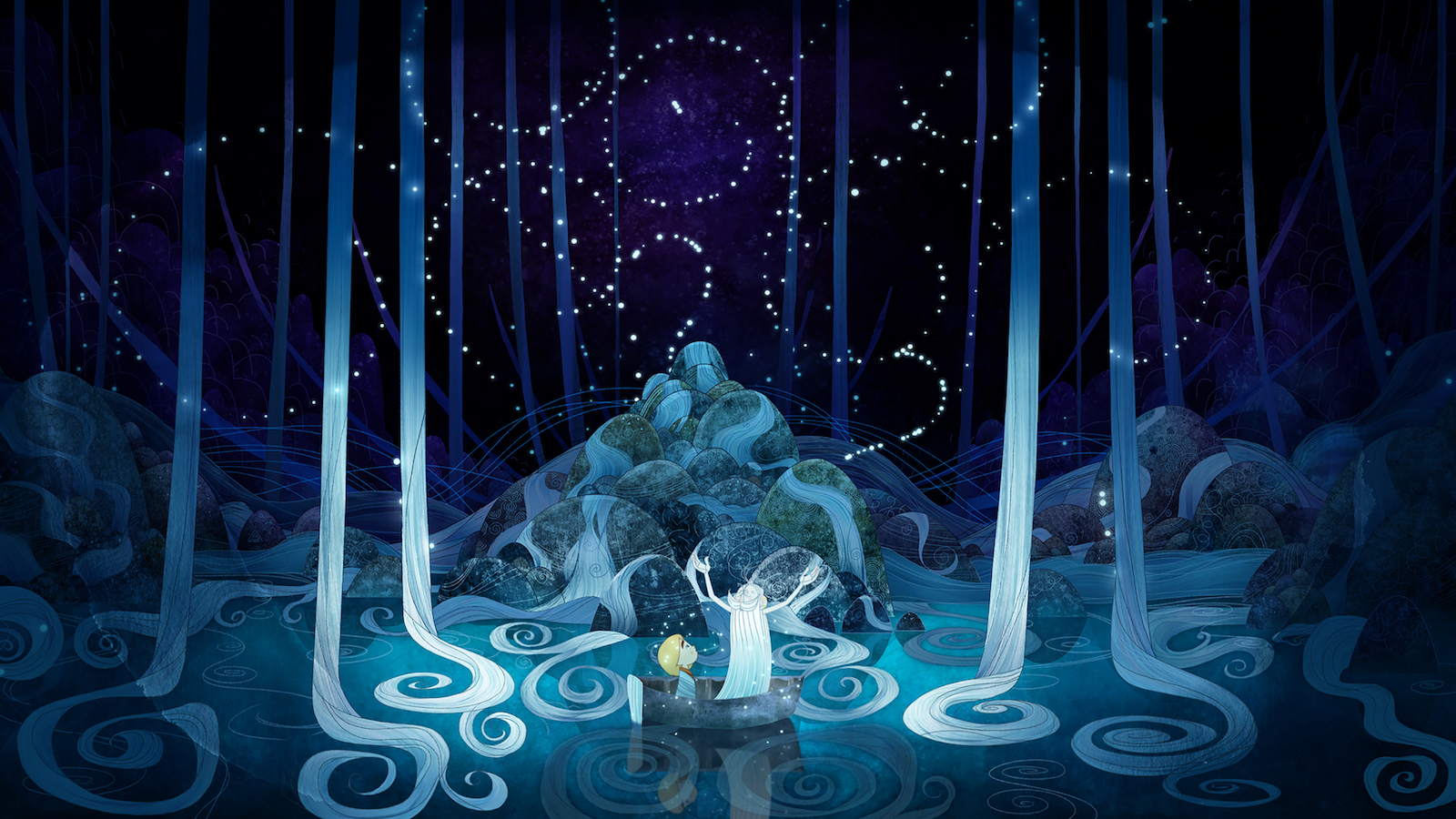
Just as The Secret of Kells came out of nowhere when it was nominated for Best Animated Feature in 2009, director Tomm Moore’s second film Song of the Sea was released with little fanfare (at least here in the U.S.) but luckily received another Oscar nod to lend it some added exposure. I very much enjoyed Kells, but this follow-up is even better, with deeper themes and more relatable characters. Like its predecessor, Song of the Sea boasts meticulously hand-drawn animation designed to resemble medieval Celtic art, a haunting Gaelic-infused lullaby sung by a magical child, and an intriguing mix of Christian motifs and Irish mythology. Five years in the making, the animation truly is a wonder; every frame has a beauty and balance, replete with gentle curves, jagged spikes, serene curlicues, and other geometric phenomena. Like Kells, nearly every scene could be a work of art, but here the animation connecting them is smoother and the plot more involving. Even modern sights absent from Kells are opportunities for entrancing symmetry, such as roundabouts and power lines. The character designs are more appealing as well, particularly little Saoirse, one of the cutest animated children since Boo in Monsters, Inc. (It also provides a reliable pronunciation for the Irish word for “freedom,” [SEER-sha]. Who hasn’t wondered how to say it ever since they first saw Saoirse Ronan’s name?)

Song of the Sea | Coolidge Corner Theater

After the loss of their mother, Ben is bitter toward his mute little sister, who discovers her mystical roots as a selkie, the seal equivalent of a mermaid. When their grief-stricken father (Brendan Gleeson, who was also in The Secret of Kells) finally agrees to send them to the city with their grandmother (Lost alert: Fionnula Flannigan), the children journey cross-country to reunite Saoirse with her selkie coat, encountering various members of the Deenashee, or faerie folk, along the way. This main plot could have been enough for the typical filmmaker, but Moore invests special symbolism in the mythological backstory of the giant Mac Lir, who suffered a great tragedy, and Macha the Owl Witch, his mother who turned him to stone. The story can be taken at face value, but it carries certain parallels to Ben’s family (made explicit in the voice acting) to provide unexpected depth for those looking for it.

Both of Moore’s films have attracted comparisons with the works of Hayao Miyazaki, with their relaxed pacing and earnest natural beauty. Ben’s efforts to reverse the transformative curse of a large-headed witch may remind some of Spirited Away, but Song of the Sea is a far more emotional journey than most of Miyazaki’s films. Through magical intervention, Ben becomes more responsible and aware of his brotherly role, and a maternal moment toward the end could either confuse or extract a few tears. For me, it almost did the latter. The accents and the music clearly mark the film as a product of Ireland, and it fits in well with my personal attraction to everything Celtic (including the actual “Song of the Sea,” which wins a spot in my End Credits Song Hall of Fame). It’s the very definition of an animated gem, the kind of lovingly crafted project that may never attract a vast audience but certainly deserves one.

Best line: (Bronach, the selkie/mother) “My son, remember me in your stories and in your songs. Know that I will always love you, always.”

 
Rank: List-Worthy
 

© 2015 S. G. Liput

302 Followers and Counting!

The Ultimate Life (2013)

19 Sunday Apr 2015

Posted by sgliput in Movies, NaPoWriMo, Poetry, Reviews, Writing

≈ 2 Comments

Tags

Drama, Family


A man is sadly at his least wise
When he prefers work above his own loveliest prize.
 
Wisdom can spring from pain or the past;
How you and I choose is our generation’s contrast.
 
Journals and annals have much to tell:
Listen and look to find in them what lessons may dwell.
 
Dreams are perhaps best when advertised:
Speaking them may render them more potent when realized.
 
Regret grows when foolish sleepers wake;
Contentment grows from dodging someone else’s mistake.
___________________
 

(Today’s NaPoWriMo prompt is for a landay, a 22-syllable couplet that exists as an oral poetic form among women in Afghanistan. Above, I strung several together to be taken individually or together as lessons drawn from the film.)

I’ve always loved the 2006 film The Ultimate Gift, a clean-cut drama that plays like a high-quality Hallmark film but won me over with its moral wake-up call and some fine performances from Abigail Breslin and James Garner. I had heard it had been given a television sequel, but just now got around to seeing it. Directed by Michael Landon, Jr., The Ultimate Life is a less-publicized tale of the continuing struggles of Jason Stevens, the reformed playboy who was given twelve gifts from his dead grandfather Red Stevens (Garner), which changed his world view, won him a girlfriend, and prepared him to take over Red’s billion-dollar corporation. It picks up where the first left off, proving that his spoiled relatives wouldn’t so easily accept his sudden turnaround and happy ending, yet it doesn’t take long for his story to be supplanted by an extended flashback involving Red’s youth and rise to fame and fortune.

I’ll come right out and say it: this film is not nearly as good as the original, but it’s not all bad either. Drew Fuller has been replaced as Jason Stevens by Logan Bartholomew and Garner is absent save for a single recording, but at least most of the actors from the first film return, including Bill Cobbs, Lee Meriwether, and Ali Hillis as Drew’s sweetheart Alexia. Sadly, the chemistry between Jason and Alexia is lost for the most part by the recasting, and their early tension is awkward and unconvincing. The film thankfully doesn’t dwell on Drew’s still misplaced priorities, for Red’s faithful lawyer friend Hamilton supplies him with Red’s personal journal, which will undoubtedly hold whatever lesson Jason needs to learn.

The story of young Red’s endeavors to become a billionaire ranges from corny to inspiring, but the film’s greatest enjoyment comes from recognition of known characters’ younger selves and the depiction of events only mentioned in The Ultimate Gift. There’s romance and labor, success and obsession, and the film does show how a man as seemingly wise as Red Stevens could have such rotten ungrateful offspring. (Basically, when a tree isn’t tended and grows crooked, it’s hard to straighten it after the fact.)

Unfortunately, The Ultimate Life falters toward the end of Red’s story. His loss of priorities leads him to make a self-serving choice, which is never really admonished, and after doing something kind and noble, he suddenly realizes the error of his ways and comes up with his famous twelve gifts seemingly out of nowhere. The film should have been more explicit about what inspired this list. It suggests the interesting forerunner of a golden list (a morning habit of listing ten things for which to be grateful), but that’s ten items, not twelve, and any comparison is never made clear.

Ultimately (hee hee), it’s a worthy companion piece for The Ultimate Gift but a far cry from the original’s power and appeal. It extols family and hard work and offers a generic but sweet confession of love that may tug someone’s heartstrings (like my dad’s). Whereas the first was slightly higher than usual Hallmark fare, The Ultimate Life fits comfortably into that less-than-favored mold.

Best line: (young Hamilton) “Your family is your legacy.”

 
Rank: Honorable Mention
 

© 2015 S. G. Liput

295 Followers and Counting

Ernest and Celestine (2012)

09 Thursday Apr 2015

Posted by sgliput in Movies, NaPoWriMo, Poetry, Reviews, Writing

≈ 1 Comment

Tags

Animation, Comedy, Family, Fantasy

   A mouse and a bear                                      could never be friends
 Or could they?                   Well, maybe,                   but that all depends.
On whether                                                                               the bear
Would dare                                                                                to share
  And not                                                                                        ingest
 The cute                                                                                   young pest
(Who lives                                                                                   beneath
And steals                                                                                  bear teeth),
  And if                                                                                        the mouse
Could stay in                                                                             his house
 And share                                                                                   her art
 And melt                                                                                   his heart,
   And if                             the couple                               could convince
The mice and             bears                 to leave                    such pairs
 And not                   insist                      they not                  persist,
 For most               hate this                     in prej-                 -udice.
The mouse         and bear                       with fond         -ness rare
 Might prove     their point                        on what’s          unfair
    And form a sweet                                             unlikely pair.
________________


(Today’s NaPoWriMo prompt is a calligram, a poem written in the shape of its subject, so I decided to go with reviewing Ernest and Celestine, in which teeth play an important role.)

Say what you will for the Academy’s Oscar choices, but every now and then they bring to light a rare gem. People scanning the nominees for Best Animated Feature in 2013 most likely read the name Ernest and Celestine and wondered where the heck that came from (not unlike The Secret of Kells in 2009 and A Cat in Paris or Chico and Rita in 2011). Though Frozen won that year, and The Wind Rises should have won, Ernest and Celestine was a worthy nomination, as cute and charming a tale as viewers are likely to find on either side of the Atlantic. Based on a series of Belgian children’s books by Gabrielle Vincent (pseudonym of Monique Martin), this French-language film follows the misadventures of the orphan mouse Celestine and the vagrant bear Ernest.

Celestine has always been taught to fear “the big bad bear” (not unlike the mice in The Tale of Despereaux) and to steal their teeth in order to support the mice’s incisor-centric society (a play on the Tooth Fairy, who is often a mouse in Europe). Likewise, Ernest is only interested in his next meal and agrees with all other bears that mice are mere pests who must stay below ground where they belong. Yet when the two meet and alternately have pity on the other, the subsequent budding friendship is undeniably heartwarming.

Adding to the charm of the story and its gentle humor is the lovely art style. This isn’t just a cartoon; it’s an illustration come to life. Certain scenes are gradually sketched from nothing, and, as detailed as much of the film is, at times the outer edges of a scene blur and fade into a blank margin, like the impressionistic pictures of a children’s book. (My VC and I had a debate over the quality of the different animation; she seems to pre-judge anything of non-Disney-style animation to be inferior, while I recognize the skill and beauty of different kinds of artwork, to a point. The fluidity of the animation is the biggest factor for me in judging its quality.) Though the film was originally in French, the English dub is excellent, with Forest Whitaker as gruff Ernest and a perfectly cast Mackenzie Foy (Interstellar) as cute and persuasive Celestine. It was also one of Lauren Bacall’s last film roles.

One note for families, though:  Both Ernest and Celestine partake in burglary, and though they are punished somewhat, they never show any remorse, like Remy did in Ratatouille. Thus, neither is necessarily a good moral role model, which might prompt some discussion between parents and children. Even so, the film lends hope that the two have moved on from their crimes and are happier for it. Ernest and Celestine is utterly sweet and a guaranteed children’s classic for those families lucky enough to discover it.

 
Rank: List-Worthy
 

© 2015 S. G. Liput

291 Followers and Counting

← Older posts
Newer posts →

Recent Posts

  • We Didn’t Start 2025 (Recap)
  • NaPoWriMo 2025 Recap (Finally)
  • Sonic the Hedgehog 3 (2024)
  • It Happened One Night (1934)
  • Spellbound (2024)

Recent Comments

associatesofshellymann's avatarassociatesofshellyma… on My Top Twelve La La La So…
Kit's avatarKit Nichols on Bonnie and Clyde (1967)
lifelessons's avatarlifelessons on Look Back (2024)
Carol Jackson's avatarCarol Jackson on The Thief of Bagdad (1940…
Stephen's avatarStephen on Love Story (1970)

Archives

  • January 2026
  • December 2025
  • May 2025
  • April 2025
  • March 2025
  • February 2025
  • January 2025
  • December 2024
  • May 2024
  • April 2024
  • March 2024
  • February 2024
  • January 2024
  • December 2023
  • November 2023
  • October 2023
  • September 2023
  • July 2023
  • June 2023
  • May 2023
  • April 2023
  • March 2023
  • February 2023
  • January 2023
  • December 2022
  • November 2022
  • October 2022
  • September 2022
  • August 2022
  • July 2022
  • June 2022
  • May 2022
  • April 2022
  • March 2022
  • February 2022
  • January 2022
  • December 2021
  • November 2021
  • October 2021
  • September 2021
  • August 2021
  • July 2021
  • June 2021
  • May 2021
  • April 2021
  • March 2021
  • February 2021
  • January 2021
  • December 2020
  • November 2020
  • October 2020
  • September 2020
  • August 2020
  • July 2020
  • June 2020
  • May 2020
  • April 2020
  • March 2020
  • February 2020
  • January 2020
  • December 2019
  • November 2019
  • October 2019
  • September 2019
  • August 2019
  • July 2019
  • June 2019
  • May 2019
  • April 2019
  • March 2019
  • February 2019
  • January 2019
  • December 2018
  • November 2018
  • October 2018
  • September 2018
  • August 2018
  • July 2018
  • June 2018
  • May 2018
  • April 2018
  • March 2018
  • February 2018
  • January 2018
  • December 2017
  • November 2017
  • October 2017
  • September 2017
  • August 2017
  • July 2017
  • June 2017
  • May 2017
  • April 2017
  • March 2017
  • February 2017
  • January 2017
  • December 2016
  • November 2016
  • October 2016
  • September 2016
  • August 2016
  • July 2016
  • June 2016
  • May 2016
  • April 2016
  • March 2016
  • February 2016
  • January 2016
  • December 2015
  • November 2015
  • October 2015
  • September 2015
  • August 2015
  • July 2015
  • June 2015
  • May 2015
  • April 2015
  • March 2015
  • February 2015
  • January 2015
  • December 2014
  • November 2014
  • October 2014
  • September 2014
  • August 2014
  • July 2014
  • June 2014
  • May 2014
  • April 2014
  • March 2014
  • February 2014
  • January 2014
  • December 2013

Categories

  • Blindspot
  • Blogathon
  • Christian
  • Movies
  • Music
  • NaPoWriMo
  • Poetry
  • Reviews
  • TV
  • Writing

Meta

  • Create account
  • Log in
  • Entries feed
  • Comments feed
  • WordPress.com

Recent Posts

  • We Didn’t Start 2025 (Recap)
  • NaPoWriMo 2025 Recap (Finally)
  • Sonic the Hedgehog 3 (2024)
  • It Happened One Night (1934)
  • Spellbound (2024)

Recent Comments

associatesofshellymann's avatarassociatesofshellyma… on My Top Twelve La La La So…
Kit's avatarKit Nichols on Bonnie and Clyde (1967)
lifelessons's avatarlifelessons on Look Back (2024)
Carol Jackson's avatarCarol Jackson on The Thief of Bagdad (1940…
Stephen's avatarStephen on Love Story (1970)

Archives

  • January 2026
  • December 2025
  • May 2025
  • April 2025
  • March 2025
  • February 2025
  • January 2025
  • December 2024
  • May 2024
  • April 2024
  • March 2024
  • February 2024
  • January 2024
  • December 2023
  • November 2023
  • October 2023
  • September 2023
  • July 2023
  • June 2023
  • May 2023
  • April 2023
  • March 2023
  • February 2023
  • January 2023
  • December 2022
  • November 2022
  • October 2022
  • September 2022
  • August 2022
  • July 2022
  • June 2022
  • May 2022
  • April 2022
  • March 2022
  • February 2022
  • January 2022
  • December 2021
  • November 2021
  • October 2021
  • September 2021
  • August 2021
  • July 2021
  • June 2021
  • May 2021
  • April 2021
  • March 2021
  • February 2021
  • January 2021
  • December 2020
  • November 2020
  • October 2020
  • September 2020
  • August 2020
  • July 2020
  • June 2020
  • May 2020
  • April 2020
  • March 2020
  • February 2020
  • January 2020
  • December 2019
  • November 2019
  • October 2019
  • September 2019
  • August 2019
  • July 2019
  • June 2019
  • May 2019
  • April 2019
  • March 2019
  • February 2019
  • January 2019
  • December 2018
  • November 2018
  • October 2018
  • September 2018
  • August 2018
  • July 2018
  • June 2018
  • May 2018
  • April 2018
  • March 2018
  • February 2018
  • January 2018
  • December 2017
  • November 2017
  • October 2017
  • September 2017
  • August 2017
  • July 2017
  • June 2017
  • May 2017
  • April 2017
  • March 2017
  • February 2017
  • January 2017
  • December 2016
  • November 2016
  • October 2016
  • September 2016
  • August 2016
  • July 2016
  • June 2016
  • May 2016
  • April 2016
  • March 2016
  • February 2016
  • January 2016
  • December 2015
  • November 2015
  • October 2015
  • September 2015
  • August 2015
  • July 2015
  • June 2015
  • May 2015
  • April 2015
  • March 2015
  • February 2015
  • January 2015
  • December 2014
  • November 2014
  • October 2014
  • September 2014
  • August 2014
  • July 2014
  • June 2014
  • May 2014
  • April 2014
  • March 2014
  • February 2014
  • January 2014
  • December 2013

Categories

  • Blindspot
  • Blogathon
  • Christian
  • Movies
  • Music
  • NaPoWriMo
  • Poetry
  • Reviews
  • TV
  • Writing

Meta

  • Create account
  • Log in
  • Entries feed
  • Comments feed
  • WordPress.com

Blog at WordPress.com.

  • Subscribe Subscribed
    • Rhyme and Reason
    • Join 814 other subscribers
    • Already have a WordPress.com account? Log in now.
    • Rhyme and Reason
    • Subscribe Subscribed
    • Sign up
    • Log in
    • Report this content
    • View site in Reader
    • Manage subscriptions
    • Collapse this bar