• Home
  • About Me
  • The List
  • THE LIST (2016 Update)
  • THE LIST (2017 Update)
  • THE LIST (2018 Update)
  • THE LIST (2019 Update)
  • THE LIST (2020 Update)
  • THE LIST (2021 Update)
  • THE LIST (2022 Update)
  • Top Twelves and More
  • The End Credits Song Hall of Fame

Rhyme and Reason

~ Poetry Meets Film Reviews

Rhyme and Reason

Tag Archives: Drama

2021 Blindspot Pick #9: Sunshine on Leith (2013)

24 Friday Dec 2021

Posted by sgliput in Blindspot, Movies, Music, Poetry, Reviews, Writing

≈ Leave a comment

Tags

Drama, Musical, Romance

See the source image

(Best sung to the tune of “I’m Gonna Be (500 Miles)” by the Proclaimers)

If you watch this,
You should know they’re gonna sing,
They’re gonna sing their lines as lyrics and a tune.
If you hate this,
You should know it’s gonna sting,
It’s gonna sting ‘cause even cynics aren’t immune.

But I like this,
I like musicals galore,
And by galore, I mean there’s plenty to embrace.
If you don’t like this,
Then it’s better to ignore,
But you ignore what puts a smile on my face.

And I would watch this musical
And I would watch 500 more
If it means they’ll make more musicals,
No matter how the haters roar.
_______________________________

MPA rating:  PG (mainly some innuendo)

When I choose my Blindspots at the beginning of each year, I usually don’t give any thought to how exactly I’ll watch them. With so many streaming options nowadays, there must be some way, right? When I decided to watch Sunshine on Leith, I realized that might be difficult, considering the Scottish musical was not on any streaming subscription and apparently had never been released on DVD in the U.S., meaning anything I bought would not be playable on my U.S. player. I was on the verge of having to change my Blindspot choice entirely, but thankfully I checked YouTube, where it happened to have been uploaded by some overseas saint. So note to self, maybe I ought to verify that I can actually find the movies on my Blindspot list before I announce them.

Anyway, I had a strong feeling that Sunshine on Leith would be my kind of movie. A feel-good romantic musical set in Scotland? Yes please! The closest analogue to this film would have to be Mamma Mia!, the jukebox musical that incorporated ABBA’s diverse discography into a mostly coherent storyline. This time, the featured music is that of the Proclaimers, a Scottish duo known for songs that tend to tow the line between rock and barroom folk anthems. Admittedly, I was only familiar with two of their songs, “I’m on My Way” and most famously “I’m Gonna Be (500 Miles),” both of which debuted on the 1988 album Sunshine on Leith, from which the film gets its name.

See the source image

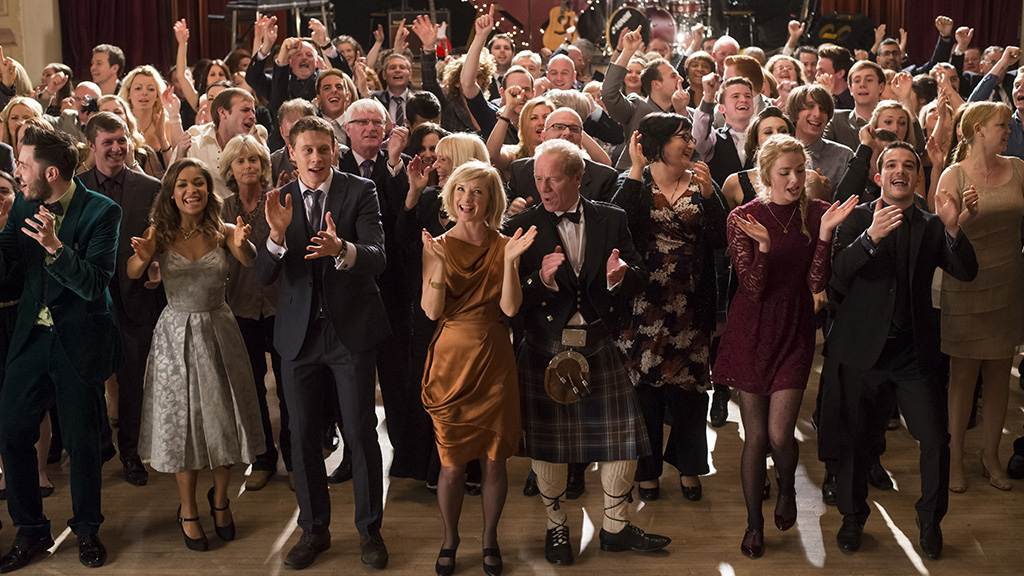
So, unlike Scottish audiences, I had little internalized fondness for these songs since they were mostly new to me. Yet I still enjoyed the songs quite a bit, even if the performances often lack the wow factor of other musicals. It’s very much in the vein of Mamma Mia!, with characters sometimes breaking into goofy theatrics for an impromptu musical number, and the final rendition of “I’m Gonna Be” is undoubtedly the best, combining the romantic climax with the most fun choreography.

However, in combining songs that were not necessarily written to fit into a narrative, the plot is unfortunately thin. It chugs along in feel-good mode with hardly any conflict before suddenly dropping three different conflicts all at once and resolving one in the space of a single song that didn’t seem to actually address the problem. I’m genuinely impressed by the way musicals like this and Mamma Mia can combine unrelated songs into a cohesive plot; I’ve wished I or someone could do the same for some of my favorite artists, like TWRP, Autoheart, or Coldplay. It can’t be easy, but this is one case where the songs often don’t quite fit naturally, instead making the plot feel overly rushed at times, despite the good performances of actors like Peter Mullan, Jane Horrocks, and George McKay (years before 1917). And yet the songs are also the best parts, causing the non-musical sections to suffer by comparison.
See the source image

I love musicals, and I liked this one, but I hate to admit that I didn’t like it as much as I wanted to. It has the feel-good romance aspect, paired with elements that try to make it less like a predictable Hallmark movie, and it introduced me to some great Scottish tunes. And while I was concerned that the accents may be hard to understand, I was able to follow along without missing too much. I’d gladly watch it again, so perhaps it will grow on me like Mamma Mia! has. If they’ll actually release the darn thing in the U.S.!

Rank:  List Runner-Up

© 2021 S.G. Liput
748 Followers and Counting

A very Merry Christmas and Happy Holidays to all!
Eternals (2021)

19 Sunday Dec 2021

Posted by sgliput in Movies, Poetry, Reviews, Writing

≈ Leave a comment

Tags

Action, Drama, Sci-fi, Superhero

See the source image

Did you ever get the feeling
That your world was being watched,
Like immortal super-beings
Had been charged with overseeing
All the quandaries and travesties humanity had botched?

Not to worry, for we humans
Can be lovable at times.
Those alien surveyors
Should see man in all his layers,
And our aptitude for love and hope should balance out our crimes.
Right?
______________________________

MPA rating:  PG-13

It was obvious long before it hit theaters that Eternals was going to be a gamble for the Marvel Cinematic Universe, just like Guardians of the Galaxy was back in 2014. A movie about a whole team of superheroes that only hardcore comic book fans had even heard of? And then they announced that it would be helmed by critical darling Chloe Zhao, the most Oscar-caliber director since Kenneth Branagh introduced Thor a decade ago (and fresh off her Best Director win for Nomadland earlier this year). With ten diverse but unfamiliar heroes to introduce, I knew Eternals would be a tricky balancing act, so I’m not surprised that it has become one of the most divisive Marvel films. I, for one, enjoyed Eternals quite a bit and disagree with most of the mixed reviews, yet I have my own misgivings that few critics seem to share.

See the source image

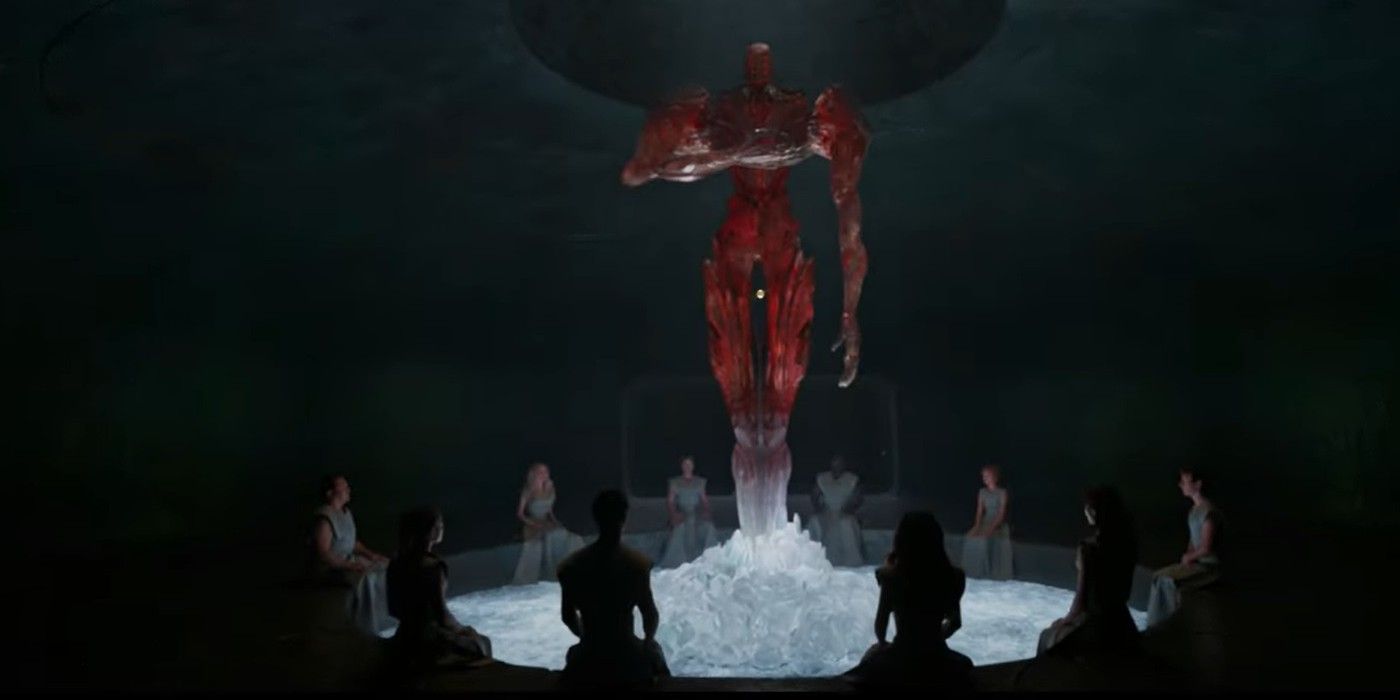
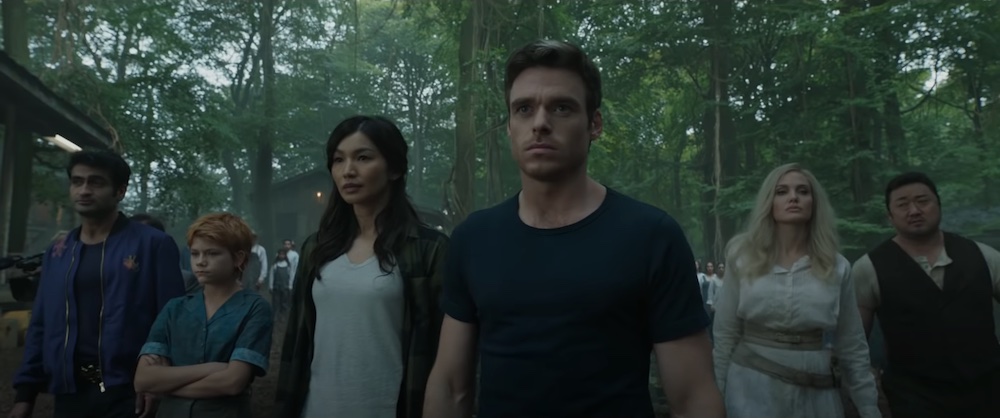
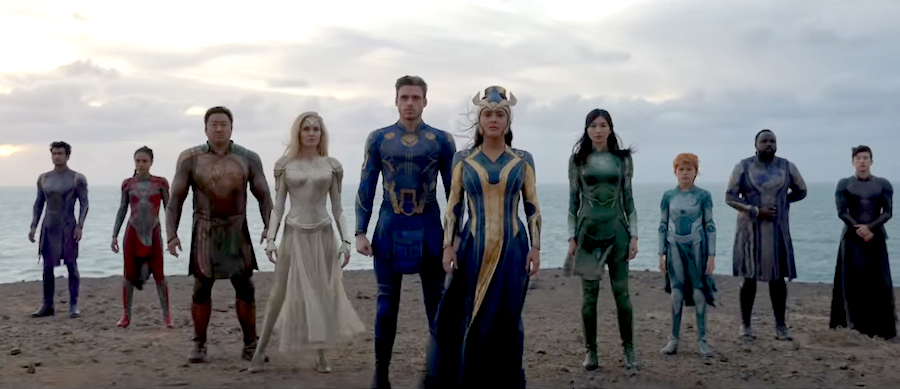
Eternals has the unique standalone feel of early Marvel, with relatively little crossover with the MCU and no cameos of established characters, just picking up the idea of enormously powerful Celestials mentioned in passing back in Guardians of the Galaxy. The Eternals were alien immortals created by the Celestial Arishem to defend Earth against the mysterious animal-like Deviants, which the ten supers battle across centuries with their unique powers. The cast is as diverse as they come, from Sersi (the lovely Gemma Chan, recast from her supporting role as a Kree in Captain Marvel), who can transform whatever matter she touches and takes a liking to our planet, to Sprite (Lia McHugh), who can create illusions and has the body of a child. Plus, there are the leader Ajak (Salma Hayek), the Superman stand-in Ikaris (Richard Madden), the comic relief Kingo (Kumail Nanjiani), the bad boy Druig (Barry Keoghan), the tech wizard Phastos (Brian Tyree Henry), the haunted warrior Thena (Angelina Jolie), the muscle Gilgamesh (Don Lee of Train to Busan), and the speedster Makkari (deaf actress Lauren Ridloff), all of whom like to periodically pose in a line. Setting aside subplots like the mysterious illness afflicting Thena, the plot is largely a get-the-band-back-together journey after the Deviants return to threaten the world, eventually veering off into larger implications as their true mission is revealed.

So yeah, there’s a lot going on, with plenty of exposition and flashbacks to help viewers absorb it all. And honestly, I’m surprised at how skillfully the film handles all of it. The characters are many yet manage to carve out memorable moments for them all, aided by their unique powers and the mythical origins of many of their names, which are indicated to have actually inspired those age-old myths. Some like Makkari don’t fare as well in standing out, but McHugh as Sprite earns some real pathos as she struggles with her inability to age. Other characters are distinguished by the moral debates of how best to use their powers; they may have been instructed not to interfere with human affairs, but it’s understandably hard watching human history play out in all its horrors when they know they have the power to change it. It’s a lot to take in across a long runtime, but I disagree with the criticisms over the pacing and character development simply because of how comparatively well it holds up under its own weight, which could easily have made it a mess. It probably would have been better as a Disney+ series, though.

See the source image

There’s plenty to admire, from Chloe Zhao’s trademark “golden hour” lighting and artful cinematography to the ever-impressive visual effects when the fists start flying. So what then is the problem? It took a while for me to decide what exactly bothered me about the film’s twist and climax, and it boils down to the fact that it shoots for cosmic answers to questions far above its pay grade. Eternals basically addresses the question “What is the meaning of life?” And I did not like its answer.

Spoilers in this paragraph: According to the movie, Arishem actually created the galaxy and thus life on earth, and the way he is revered by the Eternals clearly paints him as a God-like figure. While he sends the Eternals to fight against the Deviants, the reason for defending humanity is not because he values human life for its own sake. Instead, one could point to the famous battery scene in The Matrix, but instead of that being humanity’s futuristic fate, the MCU has now explained that it was always humanity’s purpose, with the earth’s destruction as the end state. Ignoring the fact that the conflict sounds suspiciously like one of the storylines from Steven Universe, this revelation cheapens life more than I think the film intends. As a Christian, I believe that God created man in His image with a love for every individual, a sharp contrast to Arishem’s temporary benevolence. For viewers who don’t believe in a Creator, perhaps Eternals’ twist is simply a typical sci-fi revelation, one that admittedly does make for an interesting ethical debate as the various Eternals question whether to oppose not just a typical supervillain but the creative process itself. For me, though, it imbues the MCU itself with an uncomfortable nihilism, suggesting that all of mankind’s efforts are worthless in the eyes of “god” and making me question by what standard any right or wrong, love or hatred in this universe can be judged, even at Arishem’s level. Questions like this don’t seem to bother mainstream critics, only being broached by Christian film websites, but I do feel like this subversive trend is an unfortunate departure from the MCU up to this point.

See the source image

The sheer amount of plot and characters is both a blessing and a curse for Eternals. One could argue there’s too much going on for the film to juggle, but that also means the things it does well can overshadow its thematic or pacing flaws, regardless of what one considers a flaw. The characters are as well-developed as they can be with so many on hand, the often serious tone is still livened by some well-timed humor, and the visuals have an epic scale that rivals the biggest Marvel movies. Despite my qualms over the film’s worldview, I can’t help but admire Zhao’s managing of a film that is clearly intended to set up much of the Marvel universe to come. I just hope those future installments can make up for this one’s missteps.

Best line:  (Thena) “We have loved these people since the day we arrived. When you love something, you protect it.”

Rank:  List Runner-Up

© 2021 S.G. Liput
747 Followers and Counting

Dune (2021)

06 Monday Dec 2021

Posted by sgliput in Movies, Poetry, Reviews, Writing

≈ 3 Comments

Tags

Action, Drama, Sci-fi

See the source image

I see the desert’s shifting sands,
Imbued with that most priceless Spice,
A trap that only changes hands
When offered blood as sacrifice.

I see it’s home to Fremen rovers
And to undulating worms,
The former subject to takeovers
While the latter heeds no terms.

I see the cruel Harkonnen despots
Ripping riches from the land,
While the Fremen reap no respites
As they flee across the sand.

I see the eager House Atreides
Coming here to take control.
Though they look like lords and ladies,
Who can guess their final goal?

I see an upstart heir-messiah,
Barely out of boyhood’s thrall,
Soon a scion made pariah,
Desert sands to break his fall.

The desert claims what it consumes
And chooses whom it will anoint.
I see so much (and large it looms)
But cannot see beyond this point.
_______________________

MPA rating:  PG-13

I’ve never read Dune, but my VC has and is an ardent fan of David Lynch’s strange 1984 adaptation, for some reason. While she has yet to see Denis Villeneuve’s new incarnation of George Herbert’s massive sci-fi opus, I was glad for the multiple times she convinced me to see Lynch’s version, since I knew generally what to expect. Herbert’s novel is notoriously dense, with dozens of characters and unfamiliar terms in alien languages, so it was a benefit not going into the movie cold.

See the source image

Villeneuve has already proven his talent for serious science fiction, from the cerebral but deeply touching Arrival to the lengthy but engrossing Blade Runner 2049, so Dune seemed like a natural next step for the director. The first question: Is it better than the 1984 film? A resounding yes! You can take your pick of what was the main problem with Lynch’s film: the constant internal monologuing, the ultra-compressed plotline, or (what I think) the introduction of so many strange elements of Dune’s world without enough time for them to come off as anything but bizarre. That’s a time issue too, I suppose, but it’s a problem that Villeneuve has countered by splitting his adaptation of the first Dune book into a two-parter, making this year’s installment only Part One.

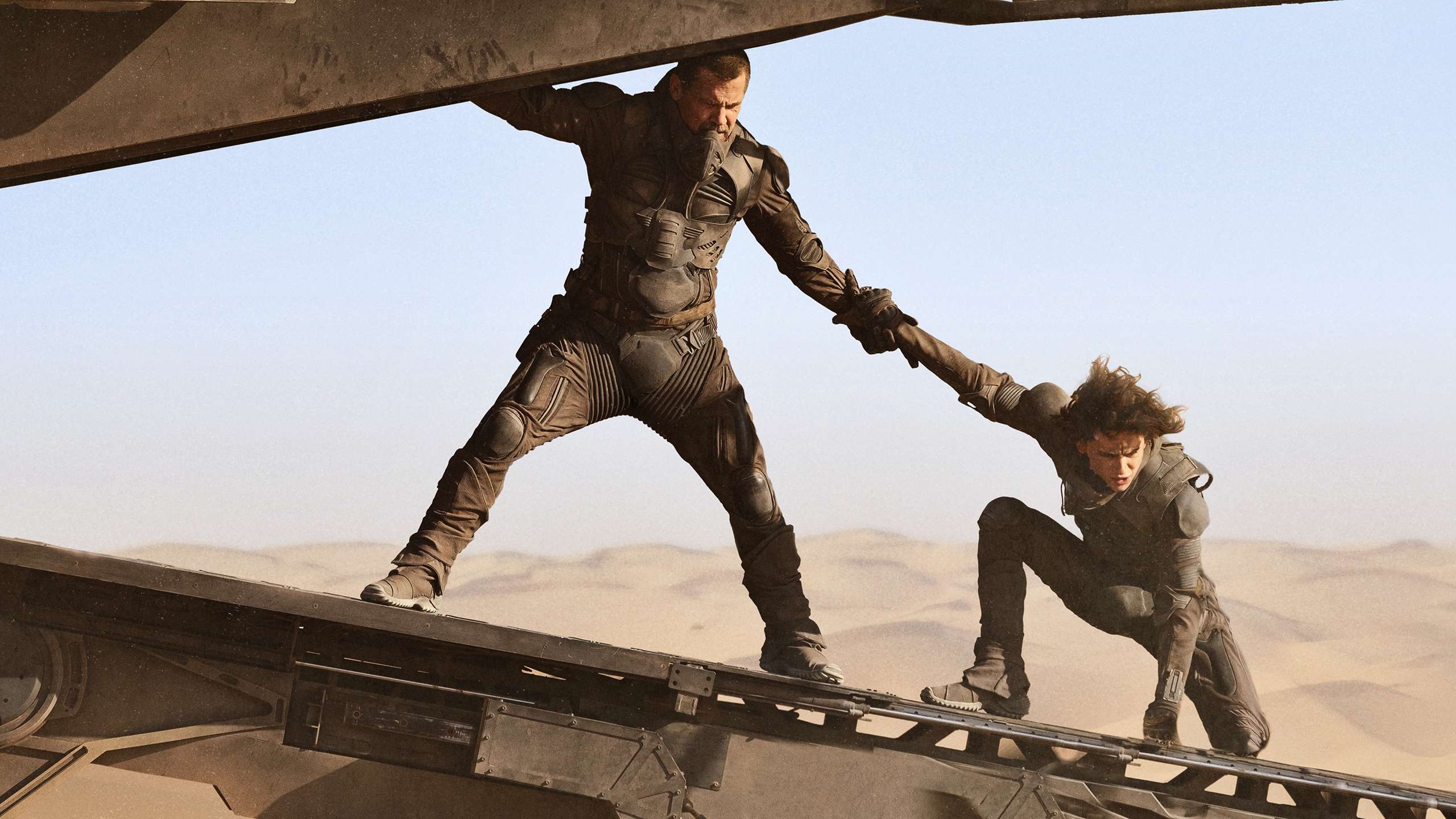
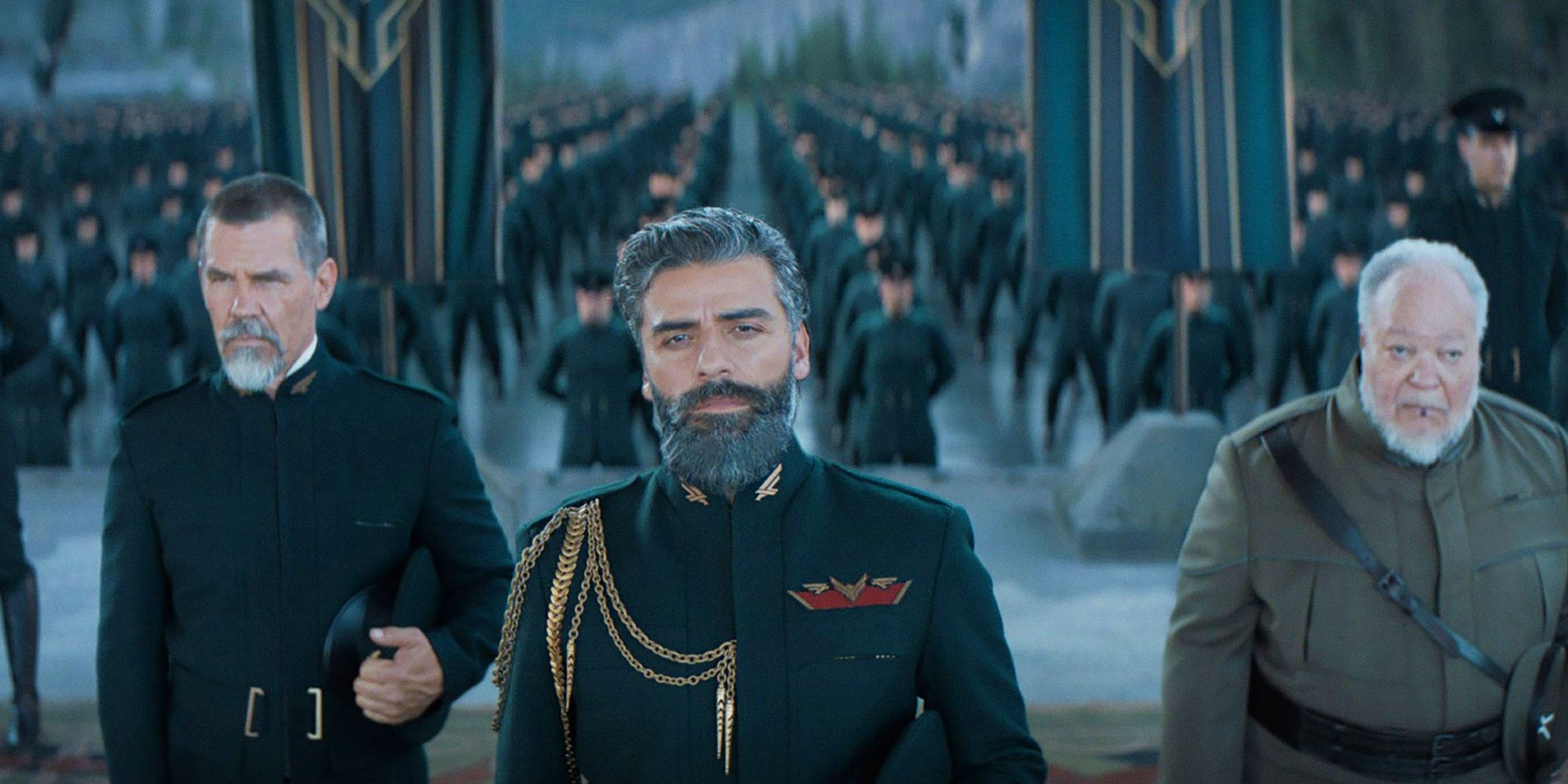
This protraction of the runtime over two films allows the plot to breathe. That plot is still largely the same – the Atreides house taking control of the desert planet of Arrakis to harvest the hallucinogenic Spice only for things to go very, very poorly – but Villeneuve has carefully chosen what to show and what to leave for later, such as providing glimpses of the home planets of the Atreides and Harkonnen clans while leaving the Emperor and the giant-headed mutant Guild Navigators off-screen and only mentioned. There is also more room for character development, mainly for the young messianic heir Paul Atreides (Timothée Chalamet), his noble father Duke Leto (Oscar Isaac), and skilled fighter Duncan Idaho (Jason Momoa), the latter a major figure in the books who gets way more screen time here than in Lynch’s film.

See the source image

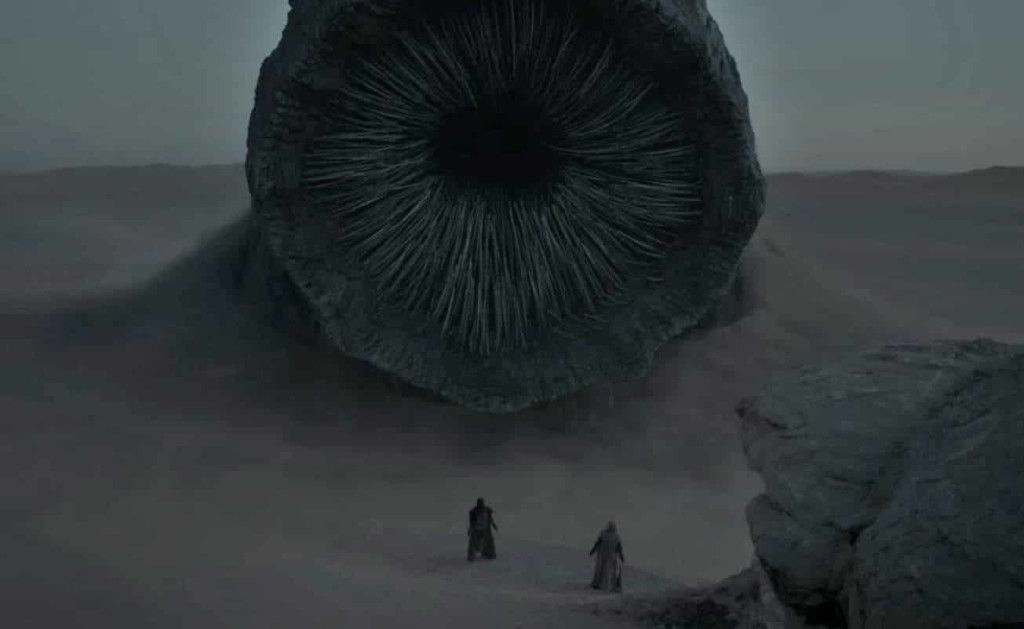
Villeneuve’s Dune is rightfully being lauded not just for its improved adaptation and talented all-star cast (including Rebecca Ferguson, Josh Brolin, Stellan Skarsgard, and Javier Bardem) but for just how immersive his on-screen world is. Like Gravity, this is a film that was made to be experienced in a theater, with that blaring Hans Zimmer score accentuating how massive the spaceships and architecture are as Shakespearean backstabbing plays out amidst quasi-religious drug reveries and space colonialism. While Chalamet didn’t impress me that much as Paul, he and the rest of the cast embrace their roles fully to sell how this strange future universe is their own. Likewise, the set design and special effects bring the explosive battles and gargantuan sand worms to startling life, making the film a shoo-in for technical Oscars next year.

But then there’s the second question:  Did I like this new version of Dune? Well, sort of. With Lynch’s film, I could still appreciate the underlying story that Herbert created, and here, there is even more to appreciate to bring that story to the big screen. I’m convinced that Villeneuve’s Dune is the best possible version of this story, but I’m still not sure if it’s a story I can say I enjoy. Even with the extra time to get to know the characters, I still didn’t really connect with any of them, which is perhaps unavoidable considering how far removed they are from the world we know. Plus, as with the Hobbit films and Infinity War, it’s hard to make a final appraisal of Part One when the full story is yet to come, though thankfully Part Two has been confirmed. Several characters just drop away without knowing their fates, while other clearly important characters, like Zendaya’s blue-eyed Chani of the native desert-dwelling Fremen, get little screen time except for slow-motion dreams.

See the source image

So Dune: Part One is an immense achievement of filmmaking and a worthy adaptation of its famed source that may be more accessible than Lynch’s film but is still bound by the limitations of the same story. Perhaps that’s a matter of personal taste that might be solved by repeat viewings, but I’m still glad the long-awaited epic was worth the wait on a visual level alone.

Best line: (Jamis, in one of Paul’s visions) “The mystery of life isn’t a problem to solve, but a reality to experience. A process that cannot be understood by stopping it. We must move with the flow of the process. We must join it. We must flow with it.”

Rank:  List Runner-Up

© 2021 S.G. Liput
745 Followers and Counting

2021 Blindspot Pick #7: Don’t Look Now (1973)

24 Wednesday Nov 2021

Posted by sgliput in Blindspot, Movies, Poetry, Reviews, Writing

≈ Leave a comment

Tags

Drama, Horror, Thriller

See the source image

What’s lost is lost forevermore,
It can’t be as it was before.
Our memories are tethered more
To wisps of smoke and whispered lore
Than any solid souvenirs
That lasted past the days of yore.

The lovers of the lost are faced
With echoes that recede in haste.
No matter how they’re called or chased,
They leave our mortal feet outpaced,
Assured that lovers left in tears
Won’t let their vestige be erased.
___________________

MPA rating:  R (mainly for a long and unnecessary sex scene, could be PG-13 without it)

This psychological thriller Blindspot would probably have been better suited for October, but I’m still in catch-up mode here. Don’t Look Now was one of the films on the list about which I knew very little going in, so I wasn’t sure what to expect from what I believed to be an acclaimed horror from the ‘70s. Based on a Daphne du Maurier story and released in the UK as a double feature with The Wicker Man, Don’t Look Now is not really a horror film to me, unless you would consider Rebecca one as well. Both du Maurier adaptations are far more concerned with psychological uneasiness and characters’ inner self-doubt than your standard scarefest, so the “psychic thriller” moniker on the film’s poster fits well.

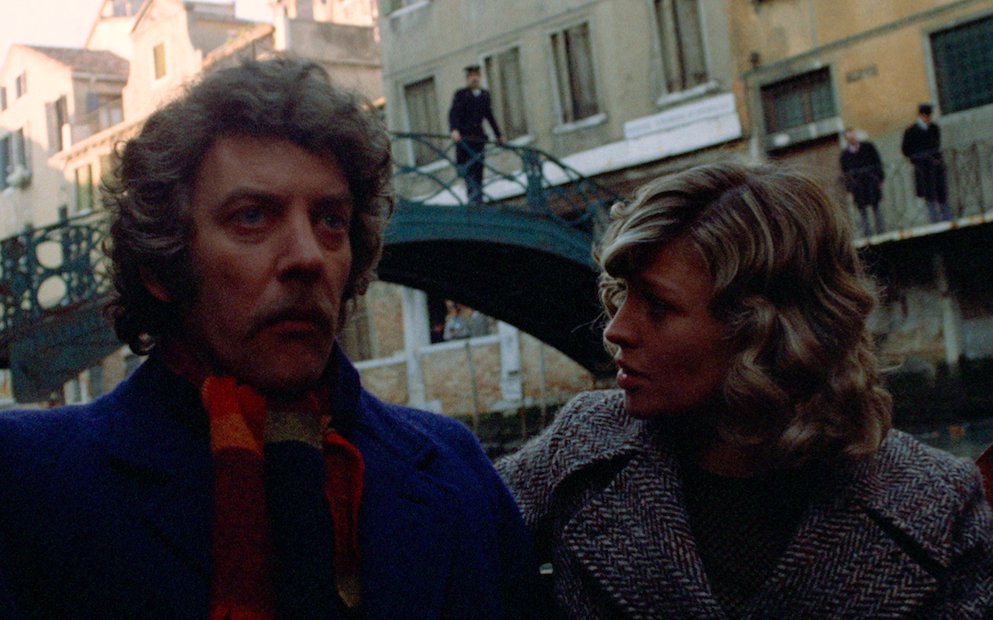
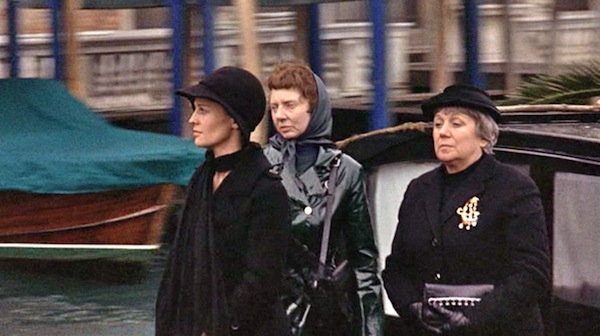
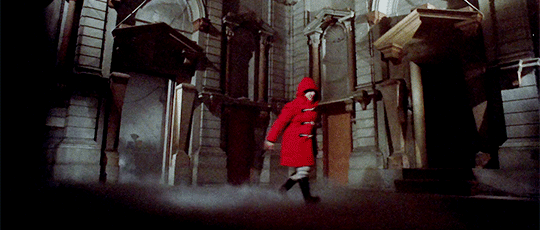
Donald Sutherland and Julie Christie play married couple John and Laura Baxter, whose young daughter Christine drowns tragically at their British home. Still reeling from grief, they move to Venice, where John has been commissioned to restore a decaying church. Laura happens to meet two sisters in a restaurant, one of whom is blind and psychic, telling Laura that she saw her deceased daughter. The psychic woman later warns her that John is in danger and has psychic abilities himself, even as he begins seeing his daughter’s red coat along the darkened canals of Venice.

See the source image

Don’t Look Now is clearly interested in not just frights but art, the kind that alienates just as much as it interests. A uniquely choppy editing style sometimes intercuts seemingly unrelated scenes, playing into the theme of precognition to make the audience doubt what they’re watching at a particular time. This applies to an extended and apparently infamous sex scene, which could easily have been excised but likely is defended as art for its editing. While the editing isn’t always to my taste, it does serve to focus the viewer on the film’s recurring motifs, such as water, broken glass, and reflections, carefully crafted imagery I didn’t fully appreciate until reading about the film afterward.

As for the performances, Sutherland and Christie are quite convincing as a couple sharing grief but torn apart by how they respond to the idea of their daughter contacting them. They serve as the main point of sympathy, and, through their British presence in an Italian city, the film fosters its sense of otherness and anxiety, as if the rest of the cast are watching them from a distance and refusing to let them in on a secret. The two sisters (Hilary Mason, Clelia Matania) waver between unnerving and kindly, though the psychic one adds to the film’s intermittent weirdness, such as a séance where she practically reenacts the diner scene from When Harry Met Sally.

See the source image

As with many artsy critical darlings, Don’t Look Now is a film I can appreciate more than I enjoyed it. It’s clearly had an impact on filmmakers to come, with many directors citing its influence, and the image of a child in a bright red jacket has carried over into other films like Schindler’s List and Flatliners. The film excels in building an atmosphere of menace in its Venetian setting, particularly during a tense accident and the climax, but the editing of that climax seemed to suggest some deeper reveal that didn’t make itself clear. An admirably Hitchcockian examination of grief, Don’t Look Now manages to be at once well-crafted, odd, and ultimately unsatisfying.

Best line: (Inspector Longhi, with an interesting observation) “Age makes women grow to look more like each other. Don’t you find that? Old men decay, and each becomes quite distinct. Women seem to converge, eh?”

Rank:  Dishonorable Mention

© 2021 S.G. Liput
743 Followers and Counting

I wish everyone a Happy Thanksgiving!

A Quiet Place Part II (2021)

14 Sunday Nov 2021

Posted by sgliput in Movies, Poetry, Reviews, Writing

≈ Leave a comment

Tags

Drama, Horror, Thriller

See the source image

Silence your cell phones, your children, your pets,
Or else you won’t have long to live with regrets.
Everything’s changed, in an instant or less,
Necessity-drawn to acute quietness.

Earth and its racket must screech to a halt
As whispers and shushing become our default.
A snap of a twig or reaction to pain
Can rain certain death on the noisy insane.

Flee without footsteps and scream without sound,
And grieve without digging or pounding the ground.
Meet the new normal, devoid of a voice.
Silence is golden; there’s no other choice.
__________________________

MPA rating:  PG-13

I may not be much for horror in general, but A Quiet Place was exactly the kind I most enjoy, taut and suspenseful rather than gross and gory. John Krasinski’s story of relentless blind creatures hunting anything that makes a noise was viewed from the perspective of a single family of survivors attempting to make the most of the apocalyptic situation, as quietly as possible on their farm until everything falls apart. A lot has changed since the first movie in 2018:  beyond the obvious world-changing pandemic that delayed the film’s release for over a year, I remember seeing the first film with my dad in the theater. Just as the previous film left the Abbott family without their patriarch Lee (Krasinski), I watched Part II alone in the theater, having lost my dad as well. When I realized the parallel, it was a sobering thought that helped me connect even more with their struggle, as they venture beyond their ruined farm in search of other survivors and safe places.

See the source image

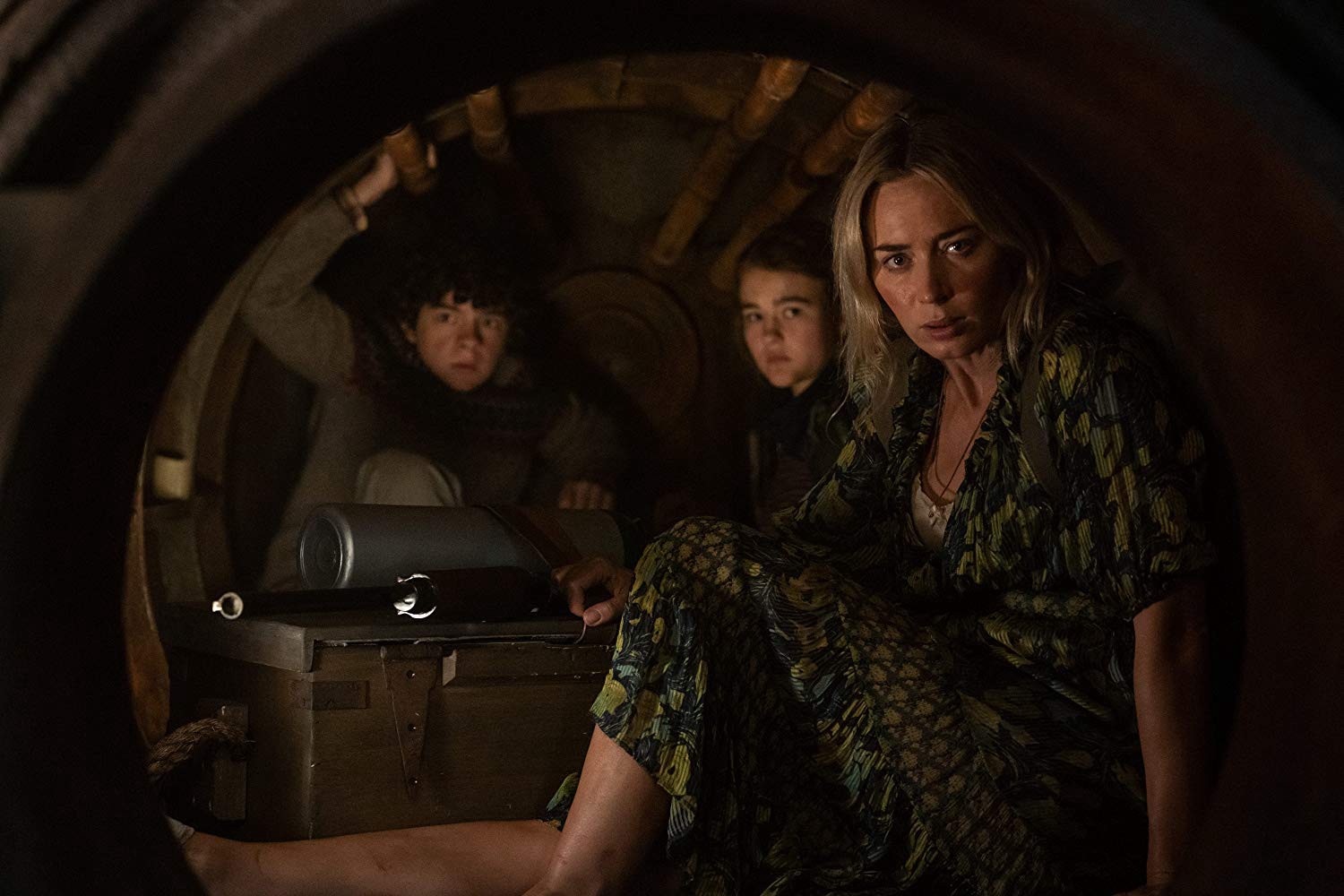
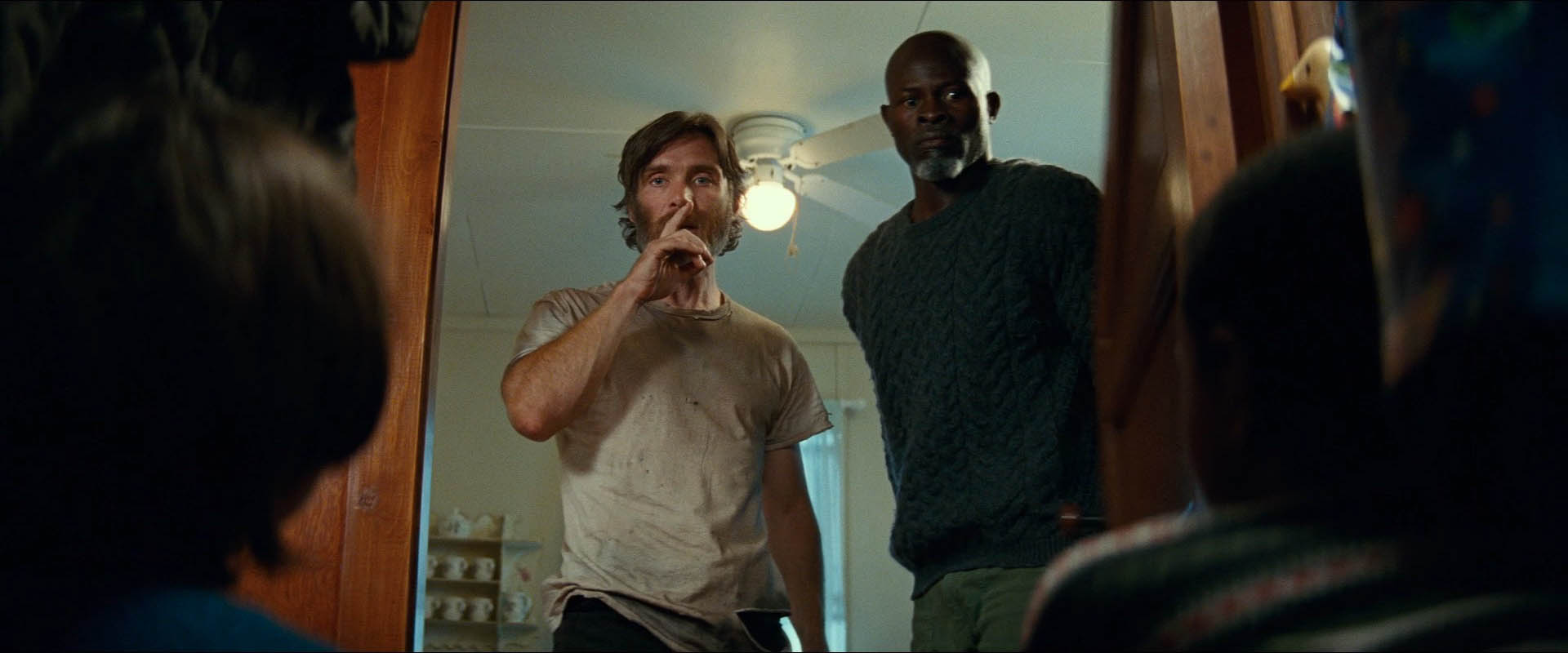
The film starts with a flashback to when the alien invaders first came to earth, a harrowing sequence that gives Krasinski (also directing) a chance for a cameo. Soon though, we pick up right where Part 1 ended, with mother Evelyn (Emily Blunt), deaf daughter Regan (Millicent Simmonds), timid son Marcus (Noah Jupe), and Evelyn’s newborn baby venturing away from home after finding a way to kill the creatures with Regan’s hearing aid static. While the first film was solely about survival, Regan sees her hearing aid as a chance to fight back against the creatures, grudgingly aided by tortured neighbor Emmett (Cillian Murphy).

My appreciation for A Quiet Place was somewhat muted by the fact that its plot felt so similar to the 2015 film Hidden, which also featured a family quietly hiding from lurking enemies. Hardly anyone saw Hidden, though (a shame, since it’s a great film), so I suppose the originality issue only bothers me. This time, however, Part II is able to chart its own course, making it feel more original and unpredictable. Krasinski proves once more how adept he is at building up the tension across several parallel storylines, with only a few of the typical “dumb” decisions common to the horror genre. By the end, A Quiet Place Part II becomes almost a coming-of-age story for Regan and Marcus, with Simmonds and Jupe proving to be two of the best child actors today.  It does share the abrupt ending of the first film, but luckily there is already a Part III in the works that we can only hope will conclude this series on a high note. It’s an above-average horror tale that deserves it.

See the source image

Best line: (Emmett, to Regan) “And you were right. I’m nothing like him [Lee]. You are.”

Rank:  List-Worthy (joining the first film and Hidden)

© 2021 S.G. Liput
742 Followers and Counting

The Lost Battalion (2001)

11 Thursday Nov 2021

Posted by sgliput in Movies, Poetry, Reviews, TV, Writing

≈ Leave a comment

Tags

Drama, History, War

The Lost Battalion (2001) | MUBI

Would every war have been the War
To End All Wars, we sigh,
That dealers of demise and gore
Would not be fashioned anymore
From friends and fathers summoned for
To fight and kill or else to die.

How many heroes, horror-hewn,
Have died for lack of peace,
Both peace from battles body-strewn
And peace of mind, that distant boon?
No haunted human is immune,
From memories that never cease.

A hero may not ever meet
Recipients of peace.
The foolish, thoughtless, and elite
Think heroism obsolete,
But we will not forget their feat,
For neither do our memories cease.
___________________

MPA rating:  TV-14 (violence somewhere between a strong PG-13 or a light R)

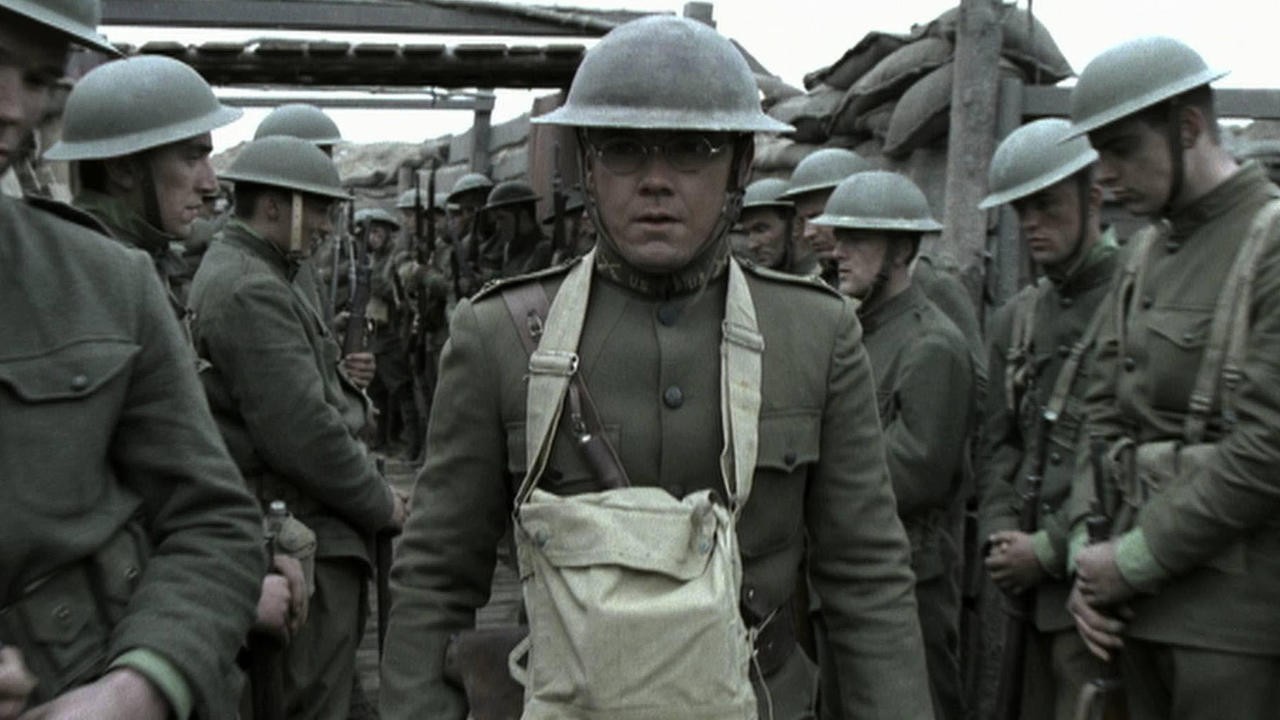
Like last year with Journey’s End, it seemed like Veteran’s Day was the right time for a World War I movie. The Lost Battalion may have been a TV movie created for A&E, but it holds up with the best films about World War I. Grown-up child star Rick Schroeder plays Major Charles Whittlesey, a former New York lawyer who grudgingly follows his general’s commands and leads the Army 77th Infantry Division to take the Argonne Forest, only to be cut off from all support as they hold their ground. The true story was first told in a 1919 silent film (which is available on YouTube), but, unlike that version, the 2001 film never leaves the battlefield, showing the cost-heavy struggle in all its savagery and heroism.

The Lost Battalion (2001) | Great War Films

It’s easy for World War I films to be boiled down to trench warfare, so grimly brought to life in films like 1917 and Journey’s End, but it was a change of pace for The Lost Battalion to leave the trenches behind and mostly take place in a forest setting. Schroeder does an excellent job as a weary commander forced by duty to lead his men into certain doom, while the rest of the cast excel at depicting the mixed ethnicities that fought alongside each other on the battlefield. The violence was stronger than I expected for a TV movie, with blood spatter that still doesn’t come close to Saving Private Ryan or Hacksaw Ridge (which also featured the 77th), but the cinematography and editing go a long way toward making the battle more chaotic and dire. The Lost Battalion is a reminder of many things – the stubborn courage of American soldiers, the bitter pill of “acceptable losses,” the military bonds that transcend racial conflict – but, as with so many war films, it makes me grateful to all who have fought for freedom.

Best line: (Major Whittlesey) “Two days ago, we had a Chinese working our field phone, an American Indian for a runner. They’re both dead, but that’s not the point. These Italian, Irish, Jews, and Poles, they’d never hire me as an attorney. We wouldn’t be seen at the same events. But we will never in our lives enjoy the company of finer soldiers or better men than we do tonight.”

Rank:  List Runner-Up

© 2021 S.G. Liput
741 Followers and Counting

A huge thank you to all veterans and soldiers. May God bless and protect you all!

2021 Blindspot Pick #6: Apocalypse Now (1979)

27 Wednesday Oct 2021

Posted by sgliput in Blindspot, Movies, Poetry, Reviews, Writing

≈ Leave a comment

Tags

Drama, War

See the source image

What looms within the human heart,
Unwilling ever to depart,
Is easy to depict in art
For everyone to see:

The darkness and the violent lusts,
Sin that beguiles and disgusts,
That takes our innocence and rusts
To gag morality.

It must be seen, the world insists,
To show the horror that exists.
Its advocates are but realists,
As ugly truth they show.

Perhaps that truth is worth a peek,
If only for what not to seek,
But excess horror lacks critique
And merely lets it grow.
______________________

MPA rating:  R (strong language and violence, plus nudity in the Redux version)

And here I am finally halfway done with my 2021 Blindspot series… in late October. Okay, so I’m still behind this year, but I’m gaining ground. I had considered Francis Ford Coppola’s Apocalypse Now for my Blindspot list in past years, but I remembered my mom saying how much she didn’t enjoy it. But it is a classic, right? It’s a monument of modern filmmaking, a testament to the senseless horror of the Vietnam War, a character study of men on the edge of sanity making hard decisions and quoting poetry. Yes, it’s all of these things, and I didn’t much care for it.

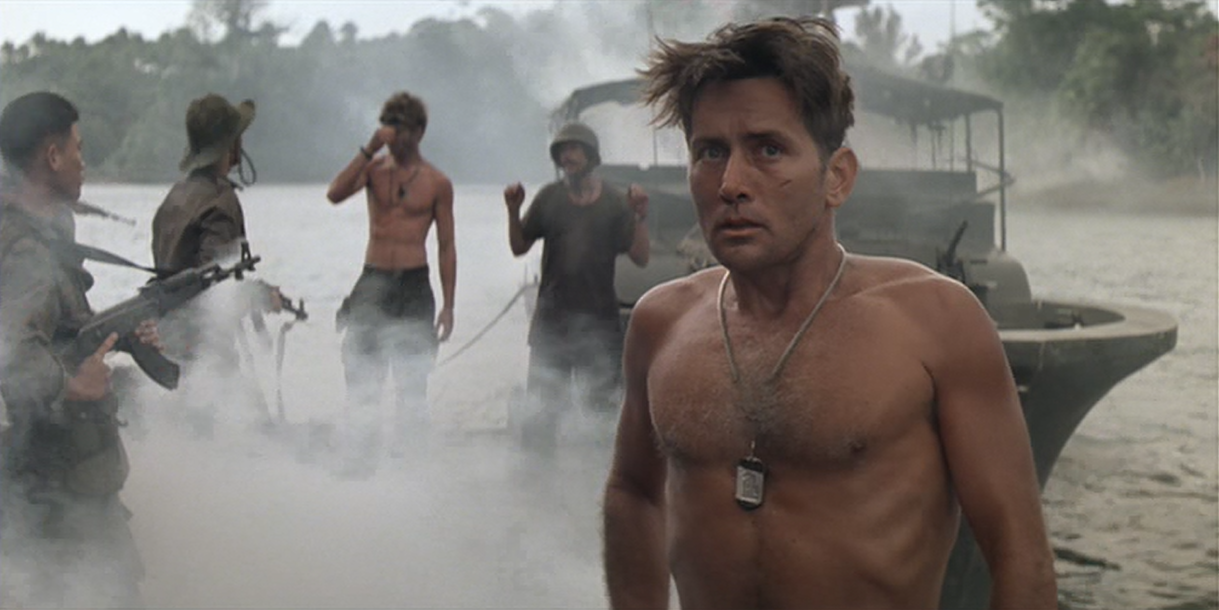
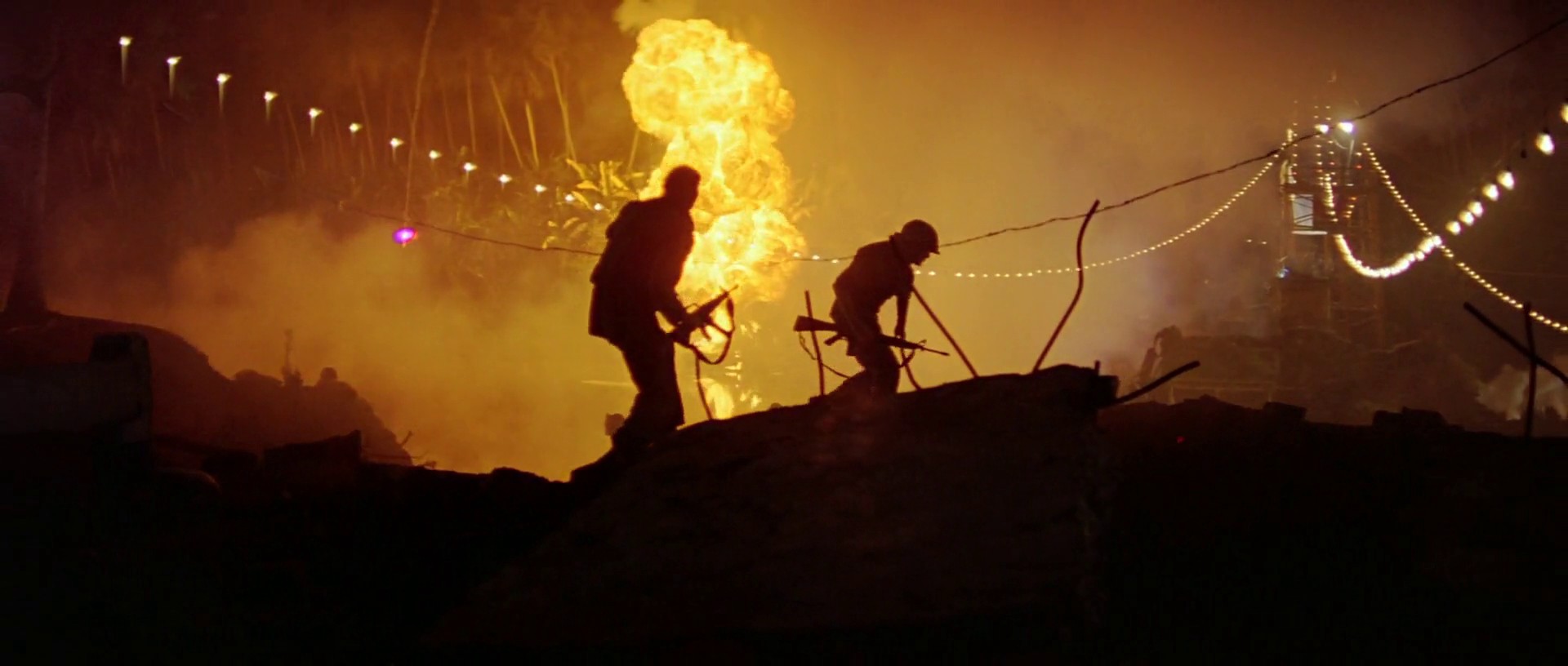
Somewhat based on Joseph Conrad’s Heart of Darkness and relocating the novel’s river journey from the African Congo to wartime Vietnam, Apocalypse Now is as much a psychological contemplation as it is a tour of the Vietnam War. Interspersed with nighttime shootouts and upriver ambushes, Army Captain Willard (Martin Sheen) waxes philosophical over the bleakness of battle and his internal moral debate of what he will do when he encounters Kurtz (Marlon Brando), the effective but crazed colonel his superiors have sent Willard to kill. At times, the film’s tone almost turns into dark comedy, as when Lieutenant Colonel Kilgore (Robert Duvall) insists on surfing in the middle of a beach assault, but it yields to hallucinogenic nihilism by the end, which is more of a whimper than a bang, to borrow from the film’s own T.S. Eliot quote.

See the source image

I technically watched Apocalypse Now Redux, the 2001 director’s cut that added 49 minutes to the original runtime, including 20 minutes that Coppola later removed again for yet another director’s cut in 2019. When I later read what the additional material was, I wasn’t surprised since they weren’t really needed. The longest added sections, including a stopover with Playboy bunnies and a visit to a plantation of French holdouts, not only slow down the pacing but mainly serve to make the film even more R-rated, adding in two sex scenes absent from the original.

On one hand, I can recognize what captured the regard of so many critics. Coppola’s direction is often top-notch, particularly during a sequence where Willard walks through a chaotic, flare-lit camp under attack, which is like a carnival battlefield from hell. I can’t fault the acting either, from Brando’s climactic soliloquy justifying his actions to Duvall’s mercurial officer who flits from cruel to kind and says “Someday this war’s gonna end” almost with regret. It was nice to see Laurence Fishburne in an early role, as well as minor parts for Harrison Ford, Scott Glenn, and Dennis Hopper.

See the source image

Yet for all its strengths, the film ultimately feels aimless, with its inevitable climax just happening with no subsequent consequences, reactions, or closure for anyone involved. Its status as a critical darling makes me feel like I’m in the minority in disliking it, but it’s a lot like Blade Runner, another technically impressive Blindspot that proved to be style over substance, petering out with no effort to satisfy the audience. I suppose that’s a sign of creative independence and art, but it doesn’t make it a film I care to watch again. I’ve seen people complain that Apocalypse Now was snubbed for the Best Picture Oscar in favor of Kramer vs. Kramer, but I’m glad the smaller, more personal film won. On some level, others must have felt the same as I do.

Best line (not going for the obvious “I love the smell of napalm” line):  (Willard, quoting Kurtz) “In a war, there are many moments for compassion and tender action. There are many moments for ruthless action – what is often called ruthless – what may in many circumstances be only clarity, seeing clearly what there is to be done and doing it, directly, quickly, awake, looking at it.”

Rank:  Dishonorable Mention

© 2021 S.G. Liput
740 Followers and Counting

2021 Blindspot Pick #5: The Village (2004)

19 Tuesday Oct 2021

Posted by sgliput in Blindspot, Movies, Poetry, Reviews, Writing

≈ Leave a comment

Tags

Drama, Thriller

See the source image

The leafless woods’ alarming hem
Does greet our eyes on every side.
A wall for us but not for them,
Where those we do not speak of hide.

Branches hang low
But point to the sky
To silently show
Where we go when we die.

The elders say our safety’s sure
Within the glen the village claims,
But who can feel safe or secure
When watched by creatures without names?

Nobody sees,
And nobody hears,
But none disagrees,
And everyone fears.
_______________________

Since starting out his career as a director with three excellent films in my view (The Sixth Sense, Unbreakable, Signs), M. Night Shyamalan has certainly had his ups and downs, with The Last Airbender being the low point. Nowadays his films are greeted with a mixture of optimism and misgivings, but back in 2004, there was still good reason to have high hopes for his fourth feature, The Village. Seen as a turning point between “good Shyamalan” and “bad Shyamalan,” The Village is indeed a middle-of-the-road effort with a plot that can’t help but buckle under its expected assumptions.

See the source image

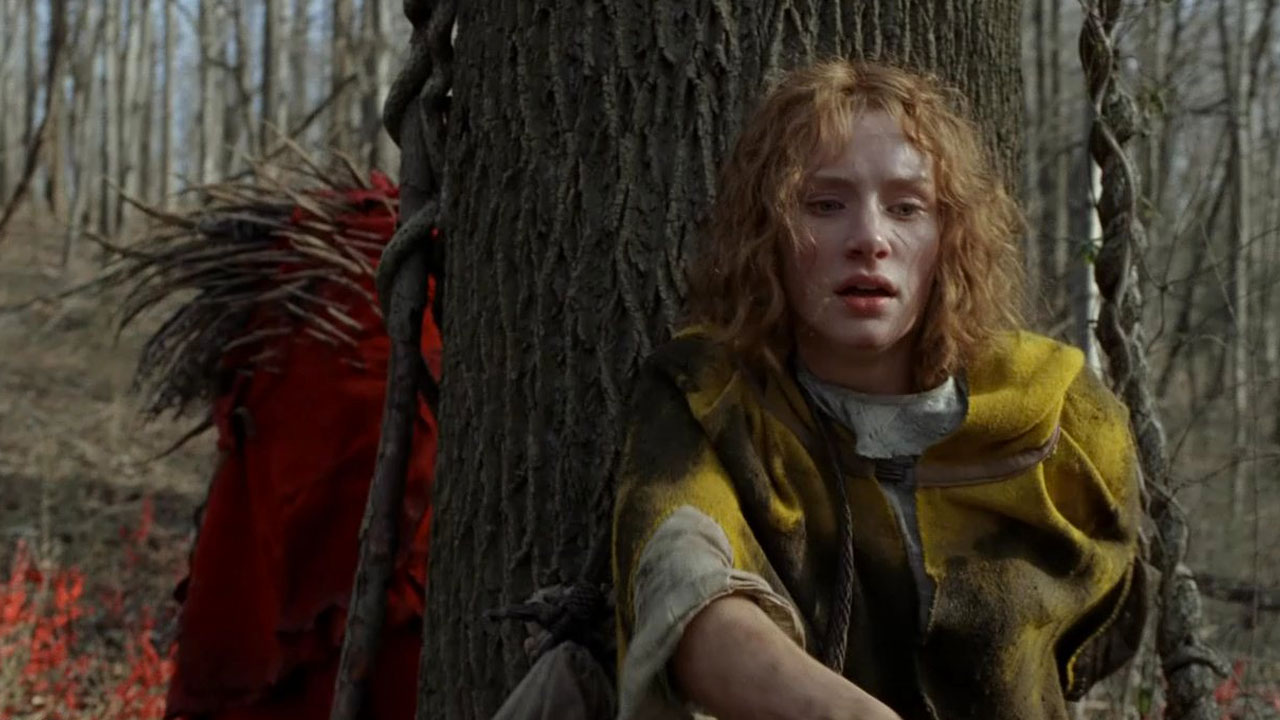
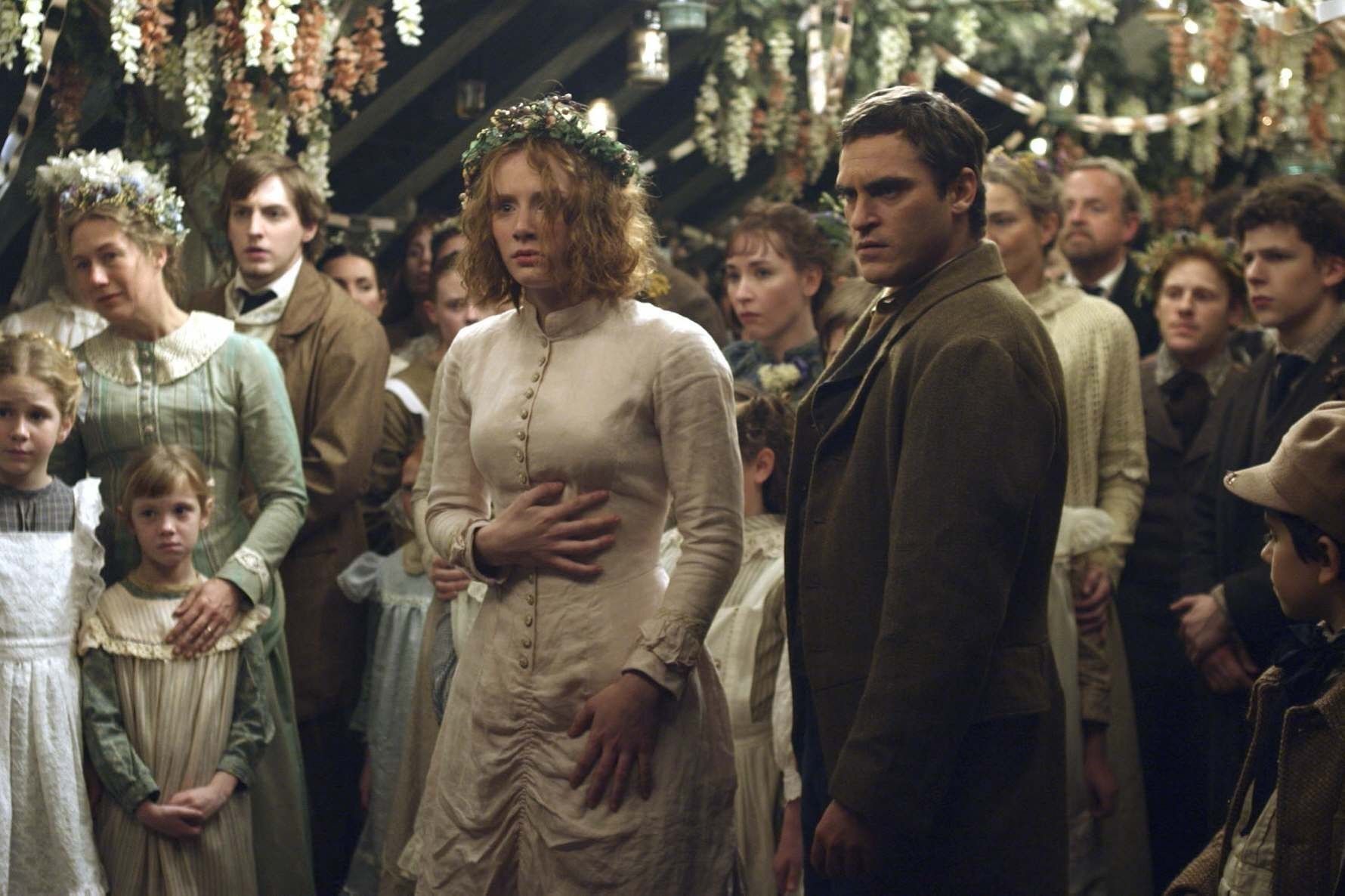
The titular village of Covington is home to a collection of folk living their best 19th-century life, including Ivy (Bryce Dallas Howard in her first major role), the blind daughter of the village’s Chief Elder (William Hurt), and Lucius Hunt (Joaquin Phoenix), a young man who wants to leave the village and venture to the distant towns for medical supplies. Yet the elders forbid leaving the village due to the ever-present fear of what lies in the surrounding woods, red-cloaked creatures known as “Those We Don’t Speak Of.”

There are plenty of elements to admire about The Village, notably James Newton Howard’s haunting Oscar-nominated score, which I heard and loved long before I even considered seeing its source. Shyamalan’s adroit camerawork and use of color also add to the atmosphere, and as with his other films, the script and camera are careful to only reveal what he wants the audience to know. The problem is that a thinking audience who knows Shyamalan’s penchant for twists can fill in gaps. While I went in knowing what to expect, my VC did not and yet still guessed the main “twist” long before its reveal. Plus, it feels like it ends too soon, with one subplot regarding romantic tension between William Hurt and Sigourney Weaver’s characters going nowhere.

See the source image

I can see how The Village can be mocked and defended in equal measure. Its story might be labeled “dumb” (and has), but it’s far more psychological than the horror tale it may seem like on the surface. I could see it as a short story from some acclaimed writer, with its character archetypes and old-timey dialogue. (By the way, the quaint dialogue is both a plus and a minus. Most of the actors make it work, but Judy Greer’s delivery of one line is especially cringe-worthy.) The Village is not necessarily a bad film, but it’s a very fragile one, liable to fall apart if you ask too many questions. It’s neither as scary nor as deep as it wants to be, but it’s still a far sight better than Shyamalan’s low points since.

Best line: (Ivy) “Sometimes we don’t do things we want to do so that others won’t know we want to do them.”

Rank:  Honorable Mention

© 2021 S.G. Liput
739 Followers and Counting

2021 Blindspot Pick #4: Shin Godzilla (2016)

29 Wednesday Sep 2021

Posted by sgliput in Blindspot, Movies, Poetry, Reviews, Writing

≈ Leave a comment

Tags

Action, Drama, Foreign, Sci-fi

See the source image

I’ve heard the most dangerous creature is man,
And I suppose that must be true.
We love coming up with formidable monsters
That threaten our whole point of view,
And somehow we manage to conquer the foe
And add to the others we slew.
So if such a creature did rampage and roar
We’ll have all this fiction to clue
Our panicking, delicate, desperate species
On what we should probably do.
______________________

MPA rating:  PG-13

Giant monsters and mech suits have long fascinated Japan and many a young boy, but I honestly have never been a big fan of the genre. In the past, I could attribute this to the poor quality of the old Godzilla movies with their laughable acting and near-visible zippers. Yet I also am not much enamored of modern effects extravaganzas like Transformers or the 2014 American version of Godzilla. There’s a fine line between spectacle and noise, and a human element worth caring about is an oft-overlooked necessity. So why did I add 2016’s Shin Godzilla to my Blindspot list? Well, not only did it win Japan’s equivalent of Best Picture but I’ve heard plenty of people sing its praises, calling it a more realistic take on the classic Godzilla story. And while I agree with that to a point, Godzilla is still Godzilla.

See the source image

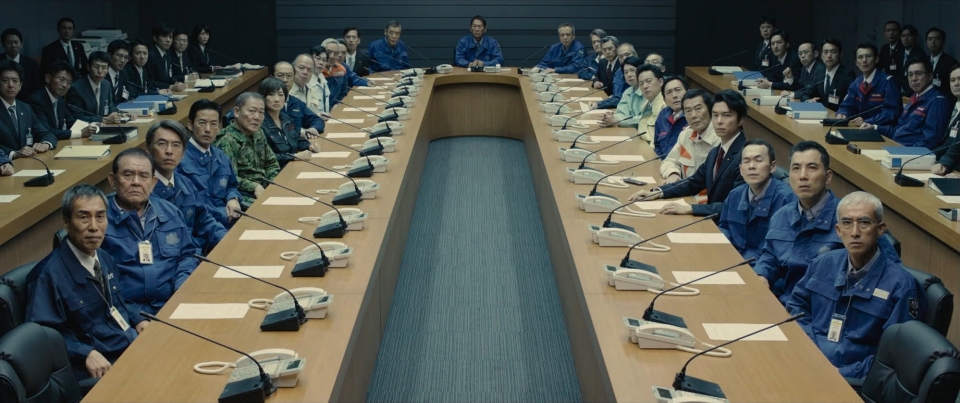
Directed by Hideaki Anno of Neon Genesis Evangelion fame, the film doesn’t waste much time before an underwater disturbance strikes Tokyo Bay, sending the Japanese government into a tizzy. One young cabinet member named Rando Yaguchi (Hiroki Hasegawa) is the first to suggest that a giant creature is the cause, and the way he is scoffed at before being proven correct makes it clear who the main character is amid all the cabinet meetings. Indeed, cabinet meetings are a notable fixture of the film as their bureaucratic hesitance contrasts sharply with the rampant destruction of a radioactive lizard. In this way, it certainly is more realistic, suggesting that a disaster of this scale and suddenness will already have wreaked its havoc by the time the government figures out what to do about it. Hope seems lost but for Yaguchi’s bold efforts leading a brain trust to develop an innovative way of stopping the monster once and for all, aided by an attractive envoy from the U.S. (Satomi Ishihara).

Shin Godzilla is effective in its satire of government inefficiencies, though its cabinet meetings grow tedious with repetition, but what of the creature itself? Unlike many Godzilla films where the monster pops out of the ocean fully formed, this version actually goes through several stages of rapid evolution, all of which leave destruction in their wake. I realize it’s unfair to compare Japan’s special effects with Hollywood’s, and the scenes of toppled buildings and flying rubble are top notch, but the Japanese effects do fall short in depicting the creature. Its snake-like first form especially is almost laughable with its googly-eyed stare, and while the later versions are more menacing and massive, I feel like Godzilla’s unblinking eyes still make it feel somewhat fake. That being said, the final battle to take out the giant is appropriately awe-inspiring in its scale, giving the humans a chance at heroism rather than just panicking and reacting.

See the source image

Shin Godzilla (or Shin Gojira to use the famed monster’s Japanese name) can be translated as “New Godzilla,” and it indeed tries to start from scratch, doing away with any past films or the reinvention of the creature as some kind of protector fighting other monsters, which is the direction Hollywood took with the recent American films. While the film has its merits, I must admit I fail to see why it would warrant major awards attention, outside the technical categories. I suppose Godzilla just looms larger in the Japanese consciousness, especially since the film incorporates scenes that echo real-life Japanese tragedies like the 2011 earthquake and tsunami just as the original Godzilla films derived from concerns over nuclear fallout. Shin Godzilla may not reinvent the giant monster movie, but its satirical take on the genre makes it a worthwhile member that is far better than the days of men in rubber suits.

Best line: (one of the bureau directors) “Man is more frightening than Gojira.”

Rank:  Honorable Mention

© 2021 S.G. Liput
738 Followers and Counting

In the Heights (2021)

21 Tuesday Sep 2021

Posted by sgliput in Movies, Poetry, Reviews, Writing

≈ 2 Comments

Tags

Drama, Musical, Romance

See the source image

The longer a neighborhood has stood
The more of a store of tales to tell
It has, and in all likelihood,
The narrators who are the best
Are not the visitor or guest,
I suppose,
But those who chose
Or else were born to dwell
In that community,
Who share in native unity
And from the thorn
Of foreign scorn
Have natural immunity.

The brotherhood of neighborhoods
Appeals to me more than it should,
For I was introduced
And used
To lack of that camaraderie;
It doesn’t really bother me,
And yet I get and can’t forget
A sense of admiration for
The folks who know their neighbors’ names
Beyond the first or second door,
Where every high is aired and shared
And every low is bared but shared
And more than family have cared
For all the highs and lows before.

So storytellers, tell your tales
Of neighborhoods I’ll never know
But for the struggles, wins, and fails
You share, and never let them go.
__________________________

MPA rating:  PG-13

As you might have guessed with my long stretches between posts this year, I have somewhat of a backlog that’s been building up, movies I’ve seen and just didn’t have the time to give a full review. Now that school is all done (and has paid off, by the way), I can start playing catch-up. One of the Hollywood trends that I welcome with the utmost glee is the resurgence of movie musicals, which have been becoming more and more frequent since La La Land and The Greatest Showman reminded the powers that be that musicals can be awesome.

See the source image

I am a huge fan of Lin-Manuel Miranda’s Hamilton, the only musical I’ve had the pleasure of seeing live, but I admittedly have not paid much attention to In the Heights, his first hip hop-flavored musical to win Tony awards. In general, I have a very low opinion of rap music, but Hamilton changed my perceptions to appreciate its unique blending of complex lyrics and catchy rhythms. Thus, I can’t help but feel that Hamilton paved the way for my enjoyment of In the Heights, even if the latter predates the former. And Miranda’s musical powers are self-evident here, even if the setting is the modern-day neighborhood of Washington Heights rather than colonial America. (Plus, I couldn’t help but chuckle at a couple Hamilton cameos/Easter eggs.)

Bodega owner Usnavi (Anthony Ramos of Hamilton stepping into Miranda’s role) serves as narrator for the various stories playing out in his block before, during, and after a blackout, including his own goal of returning to the Dominican Republic, the fashion dreams of his crush Vanessa (Melissa Barrera), and the romance of his friend Benny (Corey Hawkins) and college student Nina (Leslie Grace). Also prominent are Nina’s father (Jimmy Smits), who tries to get her to return to college, and “Abuela” Claudia (Olga Merediz, reprising her Tony-nominated role), who has cared for Usnavi and his cousin Sonny and is beloved throughout the neighborhood.

It really breaks my heart that In the Heights ended up a commercial flop because I loved it, not only as an exuberant musical but as a story with clear fondness for its characters that effectively transmits that fondness to the audience. While every character is in pursuit of their personal American dream, they also revel in Hispanic cultural pride, particularly in the “Carnaval del Barrio” number. Considering how strong the Hispanic representation is throughout the movie, it’s ironic that it earned criticism for underrepresenting Afro-Latinos in the major roles, which seems like a nitpick of an otherwise landmark film for Hispanic Americans in media. I read a YouTube comment that summed up the film’s appeal better than I can, stating that they couldn’t “remember seeing this many black and brown people on screen for a solid two and a half hours where not a single storyline had to do with crime, prison, slavery, drug use, gangs, or segregation. No mention of any sort of criminal activity. No equating darker skin with malice or mischief. Just hardworking people of color trying to do their best to live their dreams.” Anyone can find something to complain about, but that seems pretty praiseworthy.

See the source image

Speaking of complaints, I must reiterate that I had no prior experience with the In the Heights musical, but I understand that quite a few changes were made, from the shifting of motivations and story priorities to the addition of a Dreamer subplot to the deletion of a number of songs. Because of that, I can understand fans of the original musical being disappointed, but as a movie-only fan, I was blown away in the theater many times over. The bright direction of Jon M. Chu (Crazy Rich Asians) is especially laudable, weaving seamlessly throughout expertly choreographed crowds and injecting spurts of fantasy and animation into the real world. While its profits and impact may have been diminished by controversy and a pandemic, In the Heights is an outstanding addition to the musical film genre, one that left me smiling and whose worth will hopefully become more recognized with time.

Best line: (Kevin Rosario, Nina’s father) “Ignore anyone who doubts you.”

Rank:  List-Worthy

© 2021 S.G. Liput
737 Followers and Counting

← Older posts
Newer posts →

Recent Posts

  • We Didn’t Start 2025 (Recap)
  • NaPoWriMo 2025 Recap (Finally)
  • Sonic the Hedgehog 3 (2024)
  • It Happened One Night (1934)
  • Spellbound (2024)

Recent Comments

associatesofshellymann's avatarassociatesofshellyma… on My Top Twelve La La La So…
Kit's avatarKit Nichols on Bonnie and Clyde (1967)
lifelessons's avatarlifelessons on Look Back (2024)
Carol Jackson's avatarCarol Jackson on The Thief of Bagdad (1940…
Stephen's avatarStephen on Love Story (1970)

Archives

  • January 2026
  • December 2025
  • May 2025
  • April 2025
  • March 2025
  • February 2025
  • January 2025
  • December 2024
  • May 2024
  • April 2024
  • March 2024
  • February 2024
  • January 2024
  • December 2023
  • November 2023
  • October 2023
  • September 2023
  • July 2023
  • June 2023
  • May 2023
  • April 2023
  • March 2023
  • February 2023
  • January 2023
  • December 2022
  • November 2022
  • October 2022
  • September 2022
  • August 2022
  • July 2022
  • June 2022
  • May 2022
  • April 2022
  • March 2022
  • February 2022
  • January 2022
  • December 2021
  • November 2021
  • October 2021
  • September 2021
  • August 2021
  • July 2021
  • June 2021
  • May 2021
  • April 2021
  • March 2021
  • February 2021
  • January 2021
  • December 2020
  • November 2020
  • October 2020
  • September 2020
  • August 2020
  • July 2020
  • June 2020
  • May 2020
  • April 2020
  • March 2020
  • February 2020
  • January 2020
  • December 2019
  • November 2019
  • October 2019
  • September 2019
  • August 2019
  • July 2019
  • June 2019
  • May 2019
  • April 2019
  • March 2019
  • February 2019
  • January 2019
  • December 2018
  • November 2018
  • October 2018
  • September 2018
  • August 2018
  • July 2018
  • June 2018
  • May 2018
  • April 2018
  • March 2018
  • February 2018
  • January 2018
  • December 2017
  • November 2017
  • October 2017
  • September 2017
  • August 2017
  • July 2017
  • June 2017
  • May 2017
  • April 2017
  • March 2017
  • February 2017
  • January 2017
  • December 2016
  • November 2016
  • October 2016
  • September 2016
  • August 2016
  • July 2016
  • June 2016
  • May 2016
  • April 2016
  • March 2016
  • February 2016
  • January 2016
  • December 2015
  • November 2015
  • October 2015
  • September 2015
  • August 2015
  • July 2015
  • June 2015
  • May 2015
  • April 2015
  • March 2015
  • February 2015
  • January 2015
  • December 2014
  • November 2014
  • October 2014
  • September 2014
  • August 2014
  • July 2014
  • June 2014
  • May 2014
  • April 2014
  • March 2014
  • February 2014
  • January 2014
  • December 2013

Categories

  • Blindspot
  • Blogathon
  • Christian
  • Movies
  • Music
  • NaPoWriMo
  • Poetry
  • Reviews
  • TV
  • Writing

Meta

  • Create account
  • Log in
  • Entries feed
  • Comments feed
  • WordPress.com

Recent Posts

  • We Didn’t Start 2025 (Recap)
  • NaPoWriMo 2025 Recap (Finally)
  • Sonic the Hedgehog 3 (2024)
  • It Happened One Night (1934)
  • Spellbound (2024)

Recent Comments

associatesofshellymann's avatarassociatesofshellyma… on My Top Twelve La La La So…
Kit's avatarKit Nichols on Bonnie and Clyde (1967)
lifelessons's avatarlifelessons on Look Back (2024)
Carol Jackson's avatarCarol Jackson on The Thief of Bagdad (1940…
Stephen's avatarStephen on Love Story (1970)

Archives

  • January 2026
  • December 2025
  • May 2025
  • April 2025
  • March 2025
  • February 2025
  • January 2025
  • December 2024
  • May 2024
  • April 2024
  • March 2024
  • February 2024
  • January 2024
  • December 2023
  • November 2023
  • October 2023
  • September 2023
  • July 2023
  • June 2023
  • May 2023
  • April 2023
  • March 2023
  • February 2023
  • January 2023
  • December 2022
  • November 2022
  • October 2022
  • September 2022
  • August 2022
  • July 2022
  • June 2022
  • May 2022
  • April 2022
  • March 2022
  • February 2022
  • January 2022
  • December 2021
  • November 2021
  • October 2021
  • September 2021
  • August 2021
  • July 2021
  • June 2021
  • May 2021
  • April 2021
  • March 2021
  • February 2021
  • January 2021
  • December 2020
  • November 2020
  • October 2020
  • September 2020
  • August 2020
  • July 2020
  • June 2020
  • May 2020
  • April 2020
  • March 2020
  • February 2020
  • January 2020
  • December 2019
  • November 2019
  • October 2019
  • September 2019
  • August 2019
  • July 2019
  • June 2019
  • May 2019
  • April 2019
  • March 2019
  • February 2019
  • January 2019
  • December 2018
  • November 2018
  • October 2018
  • September 2018
  • August 2018
  • July 2018
  • June 2018
  • May 2018
  • April 2018
  • March 2018
  • February 2018
  • January 2018
  • December 2017
  • November 2017
  • October 2017
  • September 2017
  • August 2017
  • July 2017
  • June 2017
  • May 2017
  • April 2017
  • March 2017
  • February 2017
  • January 2017
  • December 2016
  • November 2016
  • October 2016
  • September 2016
  • August 2016
  • July 2016
  • June 2016
  • May 2016
  • April 2016
  • March 2016
  • February 2016
  • January 2016
  • December 2015
  • November 2015
  • October 2015
  • September 2015
  • August 2015
  • July 2015
  • June 2015
  • May 2015
  • April 2015
  • March 2015
  • February 2015
  • January 2015
  • December 2014
  • November 2014
  • October 2014
  • September 2014
  • August 2014
  • July 2014
  • June 2014
  • May 2014
  • April 2014
  • March 2014
  • February 2014
  • January 2014
  • December 2013

Categories

  • Blindspot
  • Blogathon
  • Christian
  • Movies
  • Music
  • NaPoWriMo
  • Poetry
  • Reviews
  • TV
  • Writing

Meta

  • Create account
  • Log in
  • Entries feed
  • Comments feed
  • WordPress.com

Blog at WordPress.com.

  • Subscribe Subscribed
    • Rhyme and Reason
    • Join 814 other subscribers
    • Already have a WordPress.com account? Log in now.
    • Rhyme and Reason
    • Subscribe Subscribed
    • Sign up
    • Log in
    • Report this content
    • View site in Reader
    • Manage subscriptions
    • Collapse this bar