(Today’s NaPoWriMo prompt was for a poem detailing an alter ego, so a superhero seemed like a prime subject.)
My alter ego you may know; His fame surpasses mine, And yet for all our differences, Our points of view align. Where I avoid hostility, My shadow boasts a spine.
Where I will yield at pressure’s grip, He clings to his ideals. The fear that dogs me in the day, The night for him conceals. And those who propagate that fear, He follows on their heels.
The scars that scare the rest away, My counterpart will earn. And what he does for you and me It’s best that we don’t learn. Since bad for bad is good for good, A blind eye I will turn. _________________________
MPA rating: PG-13 (though R for the director’s cut I saw)
I went into Daredevil fully expecting it to be bad since it has gained a reputation as one of the several lame Marvel adaptations that floundered before the MCU found its stride. I wasn’t aware that the director’s cut had a better reputation than the original, so it was just luck that I opted to see the more complete version of the story, before thirty minutes were unwisely cut for theaters. And I was pleasantly surprised by a comic book tale that may be imperfect but not nearly as dismal as I’d heard.
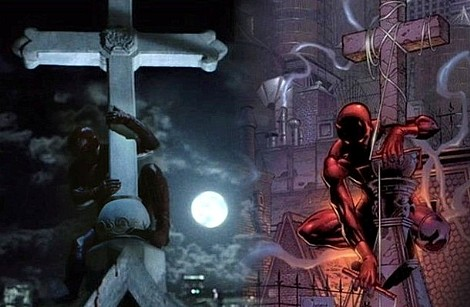
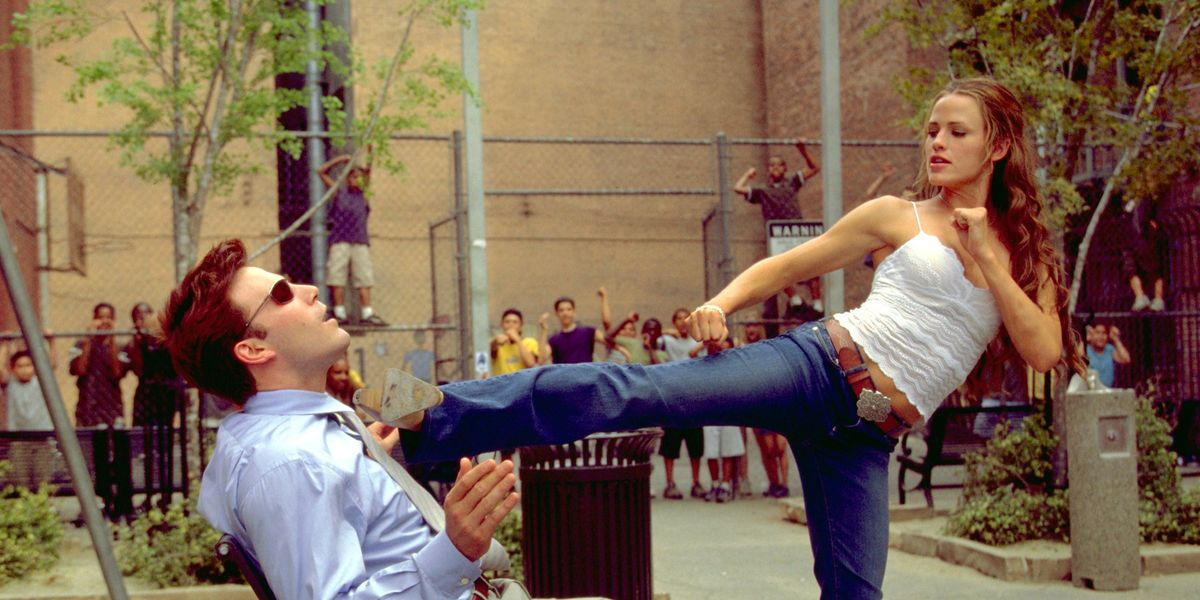
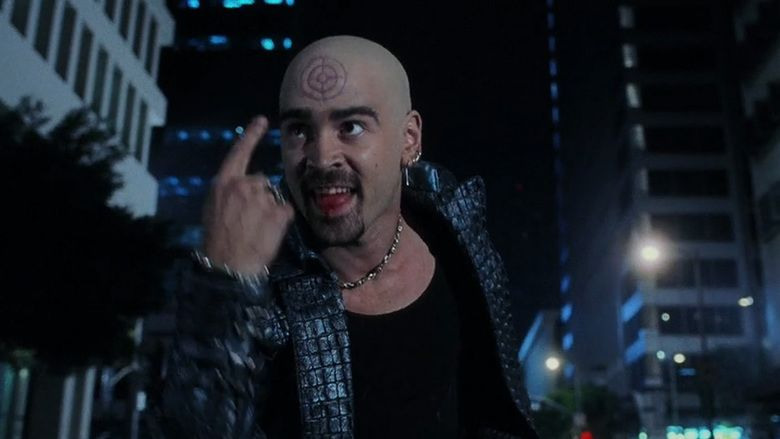
None of the actors are at the top of their game, but it’s still an impressive cast, including a pre-Batman Ben Affleck as “the man without fear” Matt Murdock, a pre-Happy Jon Favreau as his lawyer friend, and a pre-Penguin Colin Farrell as the ruthless assassin Bullseye. Jennifer Garner is decent as love interest and fellow fighter Elektra, while Michael Clarke Duncan steals every scene as the hulking Kingpin, putting his massive height and strength to good use as the imposing criminal mastermind. There are clear echoes of Daredevil’s comic book origins, such as the opening scene of the blind vigilante clinging to a church’s rooftop cross, and even though it plays itself straight with a dark and brooding tone to rival Batman (and minus the aversion to killing), there’s also definite cheesiness on display, with Farrell the worst offender, taking every opportunity to show how irredeemably evil he is.
With its obvious CGI moments and choppy fight editing, Daredevil doesn’t have the special effects polish we’ve come to expect of modern superhero films, so it’s a product of its time, when the first Spider-Man was the best template for a comic book film but was hard to replicate right. I was also surprised to hear the Grammy-winning “Bring Me to Life” by Evanescence, which was part of the soundtrack before the song had even been released. There are genuinely good elements in the mix, from Murdock’s movingly tragic childhood to the Catholic subtext to the brutal face-off between Daredevil and Kingpin. So Daredevil may have been a misfire at the time, but it simply paved the way for other Marvel films to be better. (I really ought to see the Netflix series now that the character seems to be entering the MCU in earnest.)
Best line: (Father Everett, to Matt as Daredevil) “Look, a man without fear is a man without hope. May God have mercy on you for your sins and grant you Everlasting Life, Amen. …I’m not too crazy about the outfit, either.”
(Today’s NaPoWriMo prompt was to depict a mythical or fictional person/creature doing something unusual, so I took a cue from the watered-down depictions in video games.)
We are the fierce and mighty ones, the villains and the threats, Who thrive on crime and murder with no sorrow or regrets. We’ve kept you up at night and made our way into your dreams, And broken laws with teeth and claws, with swords and laser beams. We feed our greed and hunger as our few defining truths, Our sanity is doubtful, and we haven’t any ruths. We are the Terminator and the Alien and Joker (The versions that are threatening and not the mediocre), The Predator and Dracula and all the heroes’ foes, Who’d burn the world to ashes if we’d no one to oppose. Designed to be disturbing and created to be hated, We nonetheless admit to being thoroughly frustrated. What do we have in common, we the kings of scourge and glutton? We’re forced to pose and dance around when gamers hit a button. ______________________________
MPA rating: PG-13
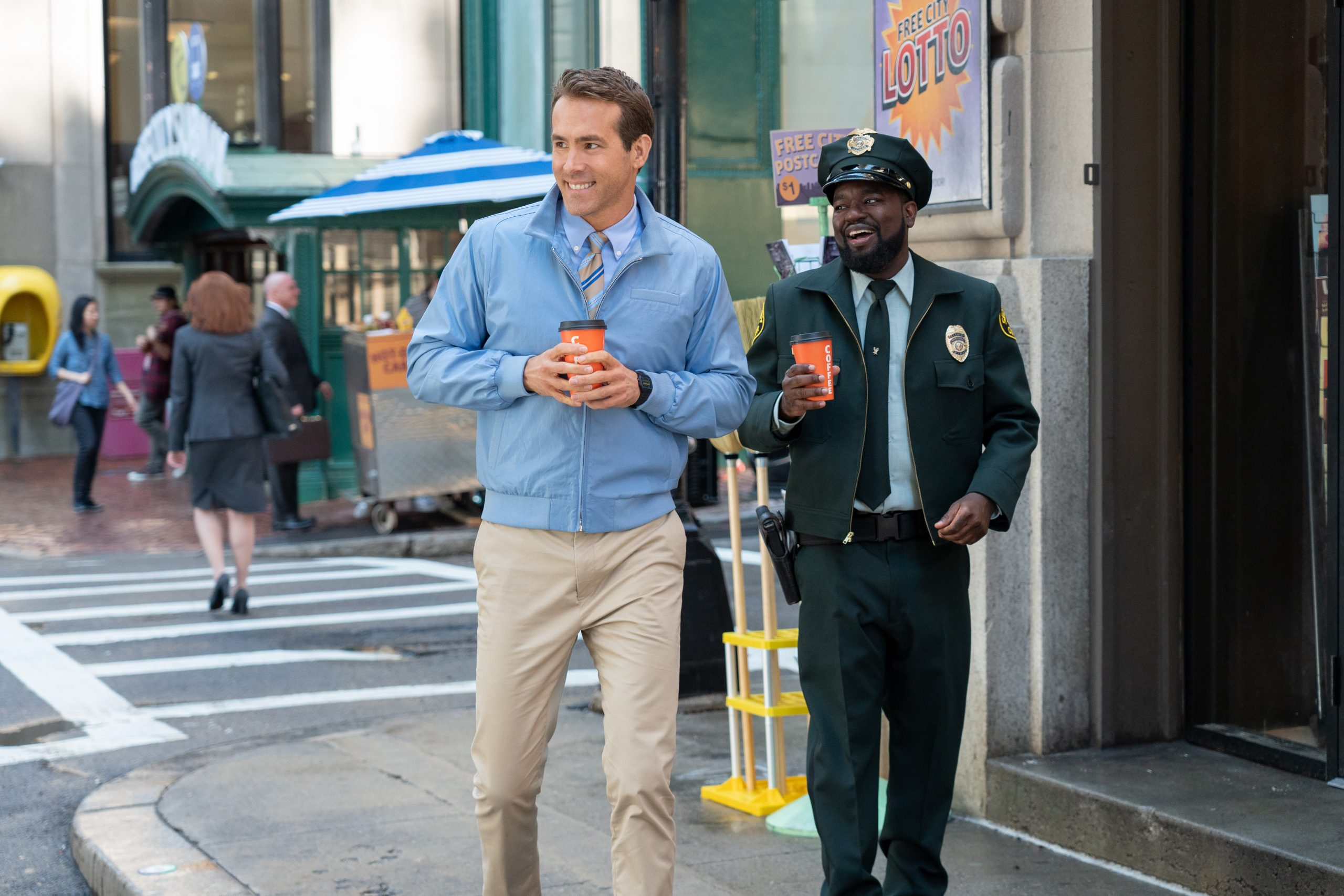
I’ll just start out by acknowledging that I am not a gamer in any way. I fell away from my Game Boy Advance over a decade ago, and while I wouldn’t mind playing games, I just can’t seem to find the time for it. So I am not exactly the target demographic for Free Guy, Ryan Reynolds’ good-natured riff on open-world games like Fortnite and Grand Theft Auto, complete with cameos from real Twitch streamers I barely recognize. Still, there’s great fun to be had in what is essentially a digital reimagining of The Truman Show.
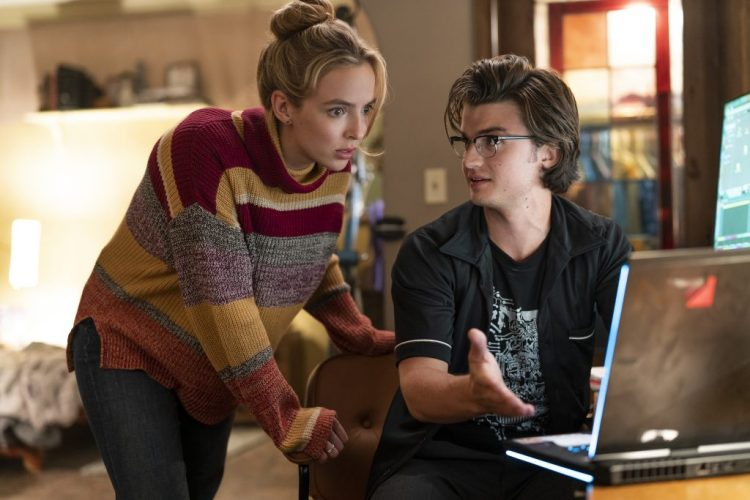
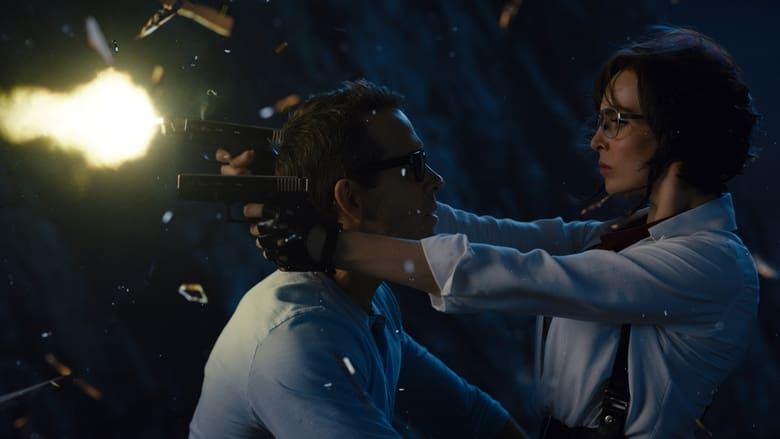
Reynolds plays the optimistic Guy, a bank teller in Free City whose status as a non-player character (NPC) ensures he obliviously enjoys day after day of violence as players wreak havoc around him. When he notices an avatar called Molotov Girl (Jodie Comer), he achieves unexpected sentience as he falls in love, unaware that she is controlled in the real world by a game designer named Millie (also Comer). Millie is searching Free City for evidence of wrongdoing on the part of the game studio’s CEO Antwan (Taika Waititi, acting oddly like a jerkier version of Tom Haverford from Parks and Recreation), and soon she and Guy must risk it all to save his digital world.
My VC has a hang-up with video game-themed films like this or Wreck-It Ralph, simply finding it hard to care at all about characters in a game. I can understand that view to a point, but Free Guy does well in balancing the stakes in both the real world and Guy’s computer-generated sphere. Guy himself questions his own meaning when he learns the truth of his existence, and his buddy… um, Buddy (Lil Rel Howery) provides an answer that puts their purpose on an individual level that is hard to argue with. Of course, Free Guy is full-on comedy action, but I liked little moments like that, as well as an underlying theme challenging the wanton violence in games like GTA in favor of decency.
Not every joke lands among Ryan Reynolds’ mountain of quips, but enough do to still make Free Guy a fun watch. I also liked seeing Joe Keery from Stranger Things as Millie’s programmer friend who works for Antwan, not to mention the loads of cameos, ranging from another Stranger Things alum to a Marvel nod that easily earned the biggest laugh. I especially loved a brief clip of the late great Alex Trebek giving a mock Jeopardy clue, which reflected how long Free Guy had been delayed by the pandemic. Buoyed by impressive effects and an infectious spirit of optimism, Free Guy may be a new skin on familiar ingredients, but it certainly knows how to entertain.
Best line: (Guy) “Life doesn’t have to be something that just happens to us.”
(Today’s NaPoWriMo prompt was to write a poem inspired by a tweet from Haggard Hawks, an account that posts obscure English vocabulary. I liked this post on déjà vu and its variants, like déjà entendu (“the feeling you’ve heard something before”), so I used it for Hollywood’s incessant habit of churning out remakes and reboots.)
An alien far out in space was lounging in his ship, Content to intercept the many signals from the earth. He loved the so-called “movies” on his decades-spanning trip, And though the words were Greek to him, he theorized their worth.
The stories held his fancy, stoking joy and shock and awe, For nothing from his planet was original like these. But gradually he noticed creativity withdraw, With déjà vu and entendu in cyclical reprise.
“Now wait a zeptosecond,” he protested to his screen. “The earthlings may be different, but I’ve seen this tale before. That killer in the mask is one I’ve definitely seen. That RoboCop got two at least; that star who’s born got four.
“That ship that’s flipped and upside down, that planet full of apes, That ‘alien’ that made me laugh at how wrong humans are, And all these superheroes with their uniforms and capes; That spider guy especially must be quite popular.
“I fear that human beings must have reached their mental limit If they’ve taken to recycling what dazzled in the past. For any globe, there’s only so much innovation in it. Perhaps I’ll find some younger planet’s budding telecast.” ______________________________
MPA rating: PG-13
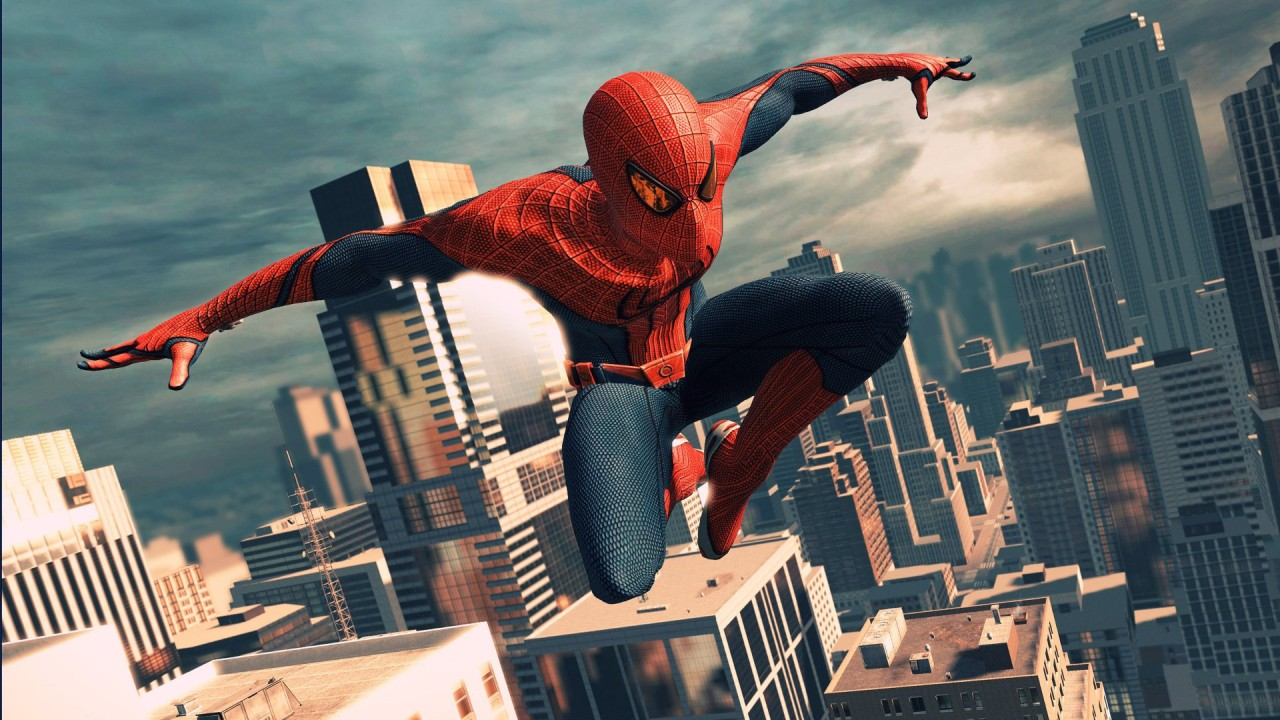
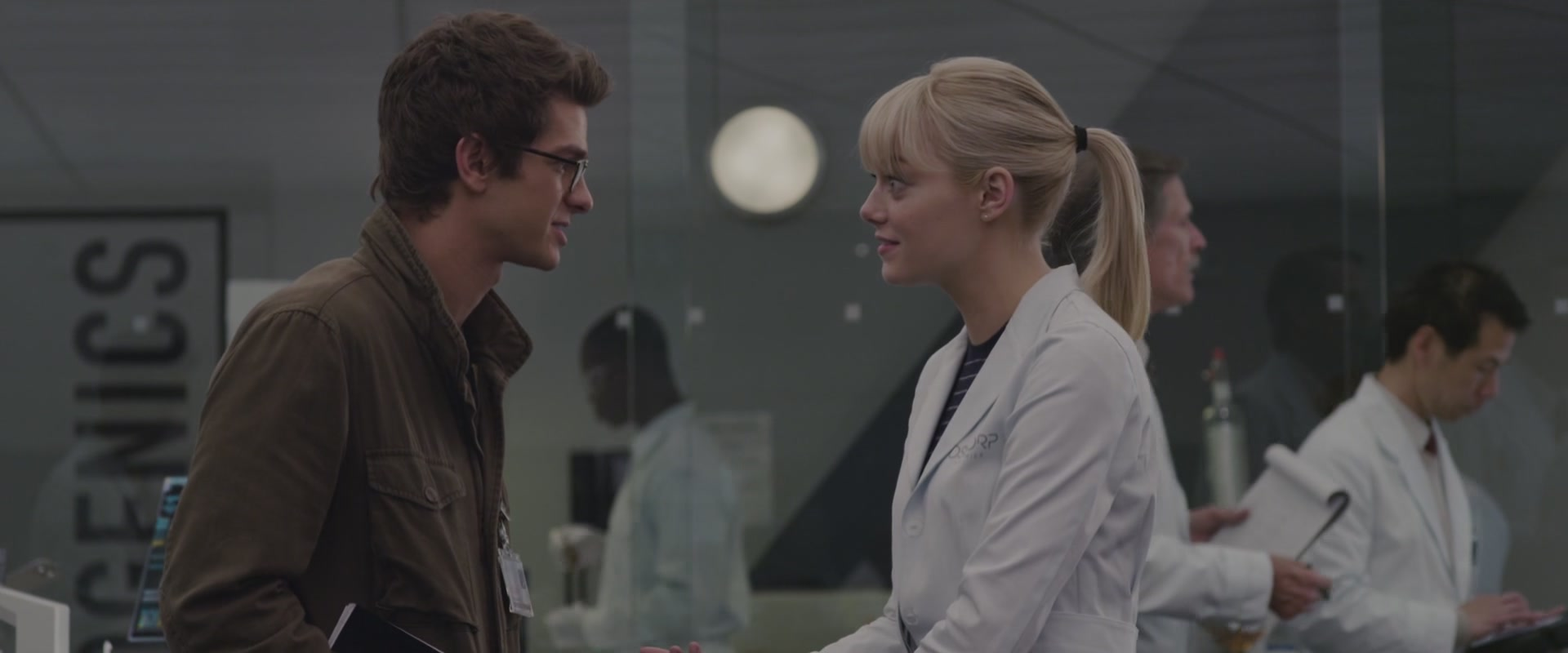
It’s difficult to appraise Sony’s Amazing Spider-Man films in retrospect the same as when they first came out. Five years after Spider-Man 3 seemed too soon for a reboot (never mind that Tom Holland’s Spidey would come just two years after Andrew Garfield’s second film), and Andrew Garfield was a largely unknown actor inevitably compared with the beloved Tobey Maguire. (All three Maguire films are beloved in my house anyway.) Now that No Way Home has been able to play on our short-term nostalgia for Garfield’s films, it’s hard to look at them the same way, but I’ll try to appraise them fairly since I did rewatch them in preparation for No Way Home.
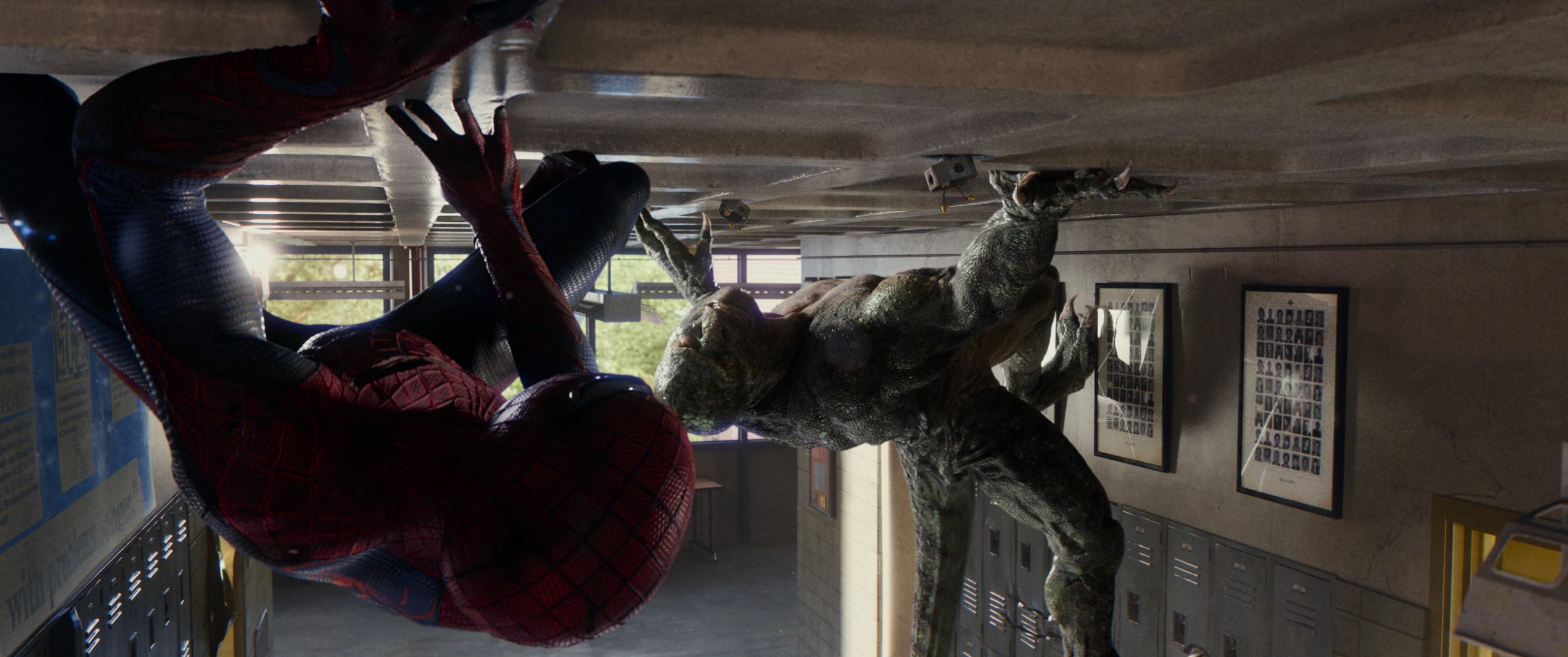
The first Amazing Spider-Man is not a bad film, just a largely forgettable one that treads some of the same ground that the original Spider-Man did better. (It’s no wonder Holland’s films decided to forgo the origin setup entirely.) Garfield’s Peter Parker is a loner geek who still displays a backbone, pining for high school overachiever Gwen Stacy (the always lovely Emma Stone) and bristling at the guidance of his Uncle Ben (Martin Sheen) and Aunt May (Sally Field). I still wish that a fourth Maguire Spider-Man film could have turned the old Dr. Curt Connors (Dylan Baker) into the villainous Lizard since there would have been more history with his character, but Rhys Ifans is serviceable in the role here, sort of a generic alpha predator bent on “curing” humanity.
The Amazing Spider-Man feels like a film that’s desperately trying to set itself apart from its predecessor, including a more realistic tone and lots of peripheral subplots around the all-too-familiar ingredients of the Spider-Man origin story. What happened with Peter’s disappearing parents? What’s up with the unseen Norman Osborne supposedly on his deathbed? Who’s that man in the shadows? It all feels like it should be more interesting, but it comes off as rather prosaic and extraneous. In lieu of an MJ, perhaps the best new addition is Peter and Gwen’s budding romance in the shadow of her stern policeman father (Denis Leary), who proves to Peter how dangerous the hero gig is for those around him. The couple’s awkward banter feels realistic for a pair of high-school students, though it also highlights that the script is generally rather weak on dialogue.
As I said before, The Amazing Spider-Man is a decent superhero film with good performances, an excellent James Horner score, an instantly classic Stan Lee cameo, and the expected impressive, high-flying visuals; it simply pales in comparison with Sam Raimi’s films, as well as the MCU ones. I hate to label Garfield as third-best Spider-Man when his future outings have improved his character and I’ve come to really like him as an actor. This first film simply shows that he and Emma Stone had a bright career ahead of them, considering they were both nominated for Oscars just a few years later. Every Spidey has to start somewhere.
Best line: (Uncle Ben’s voicemail) “If anyone’s destined for greatness, it’s you, son. You owe the world your gifts. You just have to figure out how to use them and know that wherever they take you, we’ll always be here. So, come on home, Peter. You’re my hero… and I love you!”
When the world is opaque, Every day within walls, With nothing worthwhile behind or ahead, There’s just the dull ache In your heart’s empty halls To prove to your mind you’re not already dead.
In times such as these, We require a pillar, An anchoring star we can navigate by. One person, one dream Can make life more than filler And topple the walls that obstructed the sky. _______________________
MPA rating: R (mainly for a couple scenes that seemed more violent than the previous films)
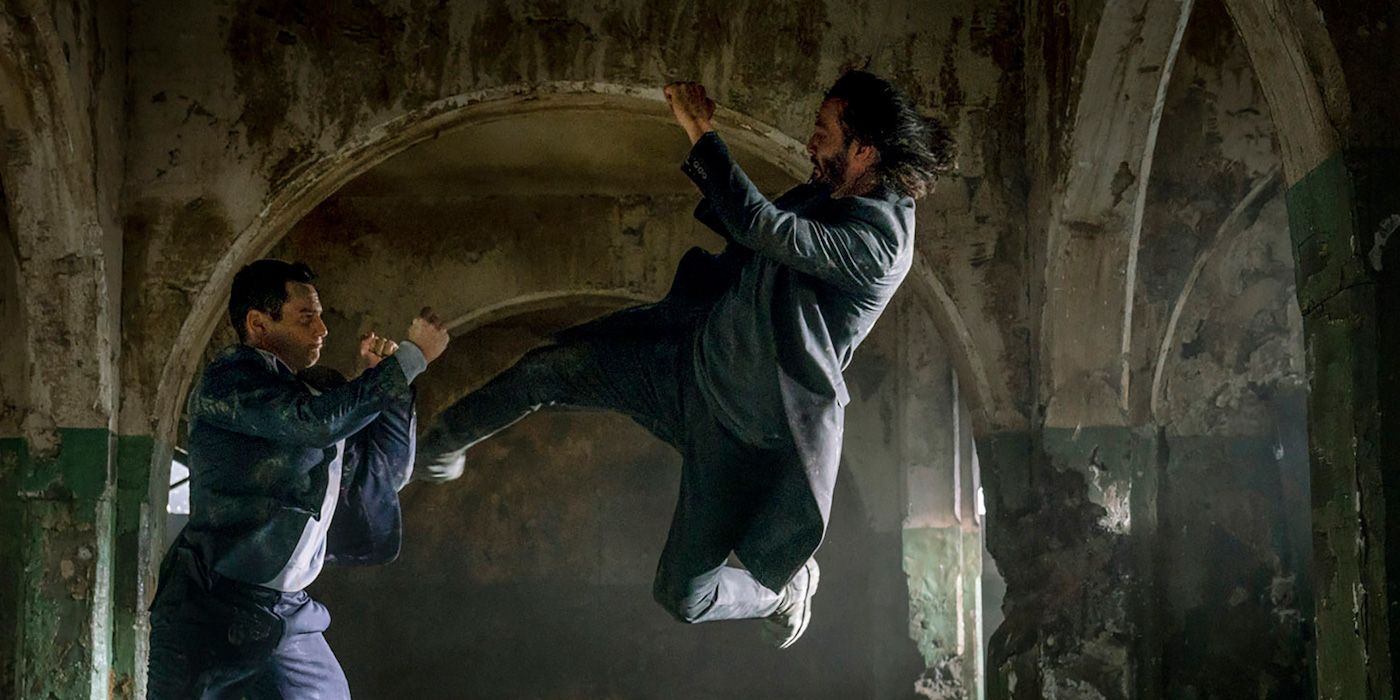
It wasn’t that long ago that the idea of a fourth Matrix film seemed utterly unlikely and rumors of a new entry going into production were the stuff of excited gossip among my friends. It’s certainly a case of hype overshadowing the final product, since I have yet to meet anyone who has embraced The Matrix Resurrections without heavy reservations. Disdain is the more common reaction (including among my friends), but I’ve found myself defending the film’s good aspects among the waves of contempt. It almost goes without saying that a Matrix sequel will end up flawed, but one’s personal mindset can heighten those flaws to make them worse than they are.
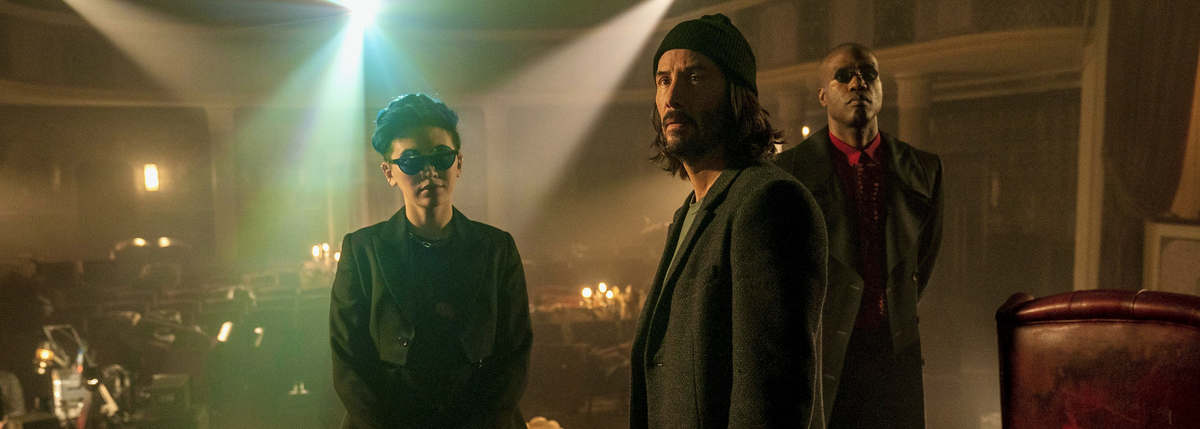
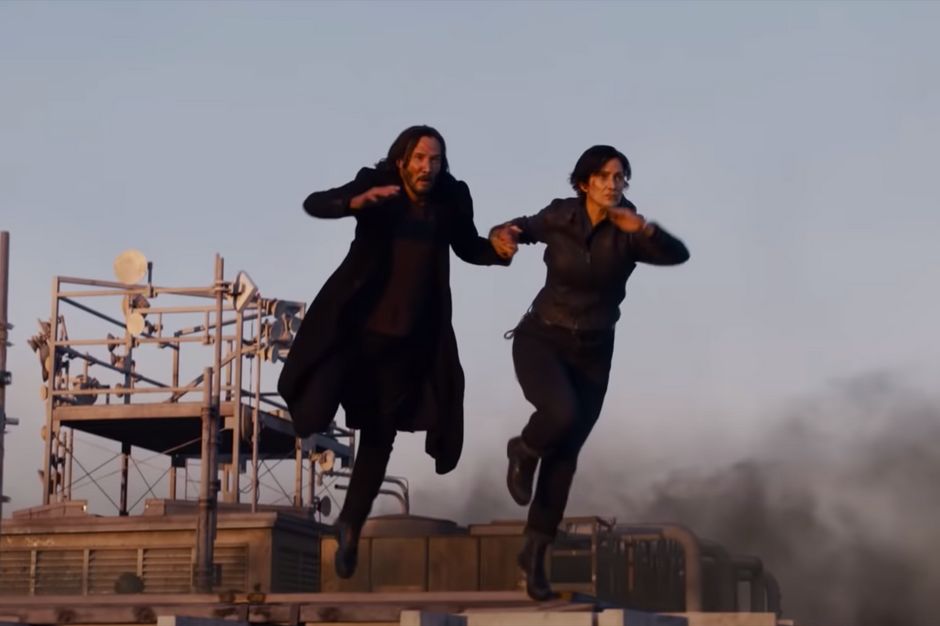
This may be a spoiler (no one should watch this who hasn’t seen the original trilogy), but the original Matrix trilogy ended on a rather downbeat note, with both Neo and Trinity giving their lives to bring peace to both the Matrix and the real world. So how could returning director/co-writer Lana Wachowski, going solo this time, resurrect both of them, fulfilling Neo’s Christological parallels even further, for a new entry of the cyber-dystopian series? That mystery fuels the first half, as Neo (Keanu Reeves) is now famous game developer Thomas Anderson, who achieved acclaim for his hit video game series called… The Matrix. While Neo is clearly blue-pilled into believing this illusory life, thanks to his smarmy therapist (Neil Patrick Harris), the film has great meta fun referencing its own franchise, poking fun at what The Matrix is as a series amid plenty of Easter eggs and callbacks to the previous films. After being freed by young captain Bugs (Jessica Henwick) and some version of Morpheus (Yahya Abdul-Mateen II), Neo learns that much has changed since his climactic sacrifice, and he might need to make another to save Trinity (Carrie-Anne Moss).
Early on in the film’s meta phase, an alternate version of Smith (now played by Jonathan Groff) tells game developer Neo that Warner Brothers wants to develop another sequel to The Matrix with or without him, and it’s hard to fight the feeling that this film is the result of the same kind of ultimatum aimed at the Wachowskis. With only one of them deciding it was worth revisiting the franchise, we can only wonder whether that was the right move or if some other director/writer might have added a bit more freshness to a fourth entry. Yet I think there’s something to be said for the original director having a say in where their story goes, even if not every fan is pleased, and I can’t help but feel like much of the negativity surrounding The Matrix Resurrections is the result of overly high or predetermined expectations from uber-fans, not unlike the flurry of opinion surrounding every Star Wars sequel.
It’s true that Resurrections is downright messy in a lot of what it attempts, shoehorning in new versions of characters that probably would have been better off left out. I liked the self-awareness, but others have found it smug or overdone while also complaining that Neo’s superpowers have laughably devolved into a mere force field. The convoluted plot often adheres too closely to that of the first film, and a climactic heist strangely skates by on the fact that the machines apparently don’t have any cameras guarding their hostage.
So yes, it’s messy as all get-out, but there are still entertaining action and good, if underdeveloped, ideas to enjoy. For one, the humans after the end of the Machine War have developed a new society with surprising cooperation from some programs, allies against the control of the Matrix, and I found the method for these programs to manifest in the real world very cool. And, even as the philosophizing about choice and control remains constant, this new version of the Matrix has some intriguingly different rules, such as dispensing with Agents in favor of mobs of undercover programs posing as humans that can be activated at any moment, which leads to one of the franchise’s nastier action set pieces. Plus, it was nice seeing familiar faces again, with Reeves and Moss easily stepping into their old roles despite the nearly twenty-year gap and turning their love story into the driving force of the movie (a decision one of my friends didn’t like either, but I think still works well). While the absence of Laurence Fishburne and Hugo Weaving is unmistakable, the new players like Bugs are solid additions, and some other character cameos were quite welcome, as were visits to the hall of doors from Reloaded and whole scenes from the first film.
I can understand dissatisfaction with The Matrix Resurrections, especially if you’ve spent the last eighteen years fantasizing about what a new Matrix story could be, since it is almost certainly not what you might have hoped. But I can’t bring myself to outright hate it like others have, though that’s true of most films; indifference or a desire to look for the good among the bad is far more common for me than hate. I just remember being dissatisfied with the ending of Revolutions, and the ending of Resurrections is a far happier conclusion than the original trilogy. Like the other sequels, it still can’t hope to compare with the game-changing original, but it’s a film that seems fine with basking in the strength of what came before and having a bit of fun with it. That may not be enough for some fans, but it was for me.
Best line: (Smith) “I know you said the story was over for you, but that’s the thing about stories… they never really end, do they? We’re still telling the same stories we’ve always told, just with different names… faces… and… I have to say I’m kind of excited.”
One rule do franchises live by: What makes a profit must not die. If it did well the first time round, Then more will make it more renowned. If it filled seats, there’s clearly steam To push through sequels, it would seem, And even decades afterward, Do not discount a loyal nerd. If it should fumble with a bomb, We must not panic, must stay calm. What makes a profit can rebound; We’ll just do better next time round. _______________________
MPA rating for both: R
With the recent new installment in the Matrix series, it seemed like a good time to revisit the two parts of the initial trilogy that I never reviewed. There’s a reason that the first Matrix is the only one on my Top 365 movie list (currently #125 to be exact). The Matrix Reloaded and Revolutions, both released within months of each other in 2003, were an ambitious follow-up to the huge success of the original, and I certainly credit the Wachowskis for expanding their universe so imaginatively. Yet both films are also hopelessly flawed when explaining their own mythology, even as they both remain entertaining in their own way.
The first film stands on its own well and could have done without a sequel, but it’s also easy to see why the story of Neo (Keanu Reeves), Trinity (Carrie Anne Moss), and Morpheus (Laurence Fishburne) warranted a continuation, with details about the machines left vague and the human stronghold of Zion only mentioned. With The Matrix Reloaded, we finally get to see Zion, and although it’s an engineering marvel with its gritty steampunk design, it becomes rather laughable when a stirring speech from Morpheus about humanity’s resilience is followed up by a giant orgiastic rave in a cave. Likewise, between the Oracle’s circular counseling and the Merovingian’s smug pontificating about choice, the dialogue ranges from intriguing to insufferable depending on one’s capacity for philosophy.
However, when people stop talking and start fighting, Reloaded proves to be an action thrill ride, upping the ante of the first film with wilder stunts and cleverly imagined powers, the freeway chase being the heart-pounding high point. Although the first film established Neo’s supremacy over the Matrix, Reloaded manages to create worthy threats to his Superman-like status. With the machines closing in on Zion, Neo is told by the Oracle to seek out the Source of the Matrix, with plenty of agents, self-serving programs, and clones of rogue Agent Smith (still excellent Hugo Weaving) in his way. As for the cast, some of the supporting players stand out more than others, like Lambert Wilson’s Merovingian or Randall Duk Kim’s Keymaker, and it was nice to see a pre-Lost Harold Perrineau stepping in for the absent Tank as the new Operator for Morpheus’ ship.
While Reloaded has its flaws, including an expository info dump toward the end that I doubt most people fully understood on the first viewing, it set the stage for what promised to be a potentially amazing finale, only for that potential to peter out in Revolutions. I don’t hate Revolutions the way some people decry the Star Wars prequels, but it does rank as one of the most disappointing threequels out there. For one thing, the padding is unmistakable, with Neo trapped for a while in a limbo train station for no plot-relevant reason. Yet I still must give Revolutions major props for its action; the defense of Zion remains one of the biggest, most epic battle scenes of all time, up there with Lord of the Rings and Avatar, while the final fight between Neo and Smith basically goes full Dragon Ball Z. By the end, though, it’s hard to look at this end of the trilogy as anything but a bummer; in one sense, Neo lives up to the many Christ-like parallels of his status as the One, but the intended bittersweetness is more bitter than sweet.
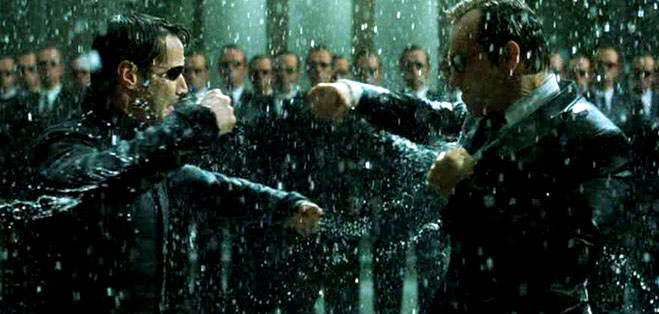
You could say The Matrix Reloaded and The Matrix Revolutions were ahead of their time. It wasn’t yet common for sequels to be filmed back-to-back, and CGI was still in its development stage. One astounding sequence from Reloaded with Neo being overrun by a growing horde of Agent Smith clones is audacious and exciting, yet it’s easy to spot the point when the real actors are replaced with video-game-quality doubles. Likewise, one just has to take in stride details like the absence of Tank (Marcus Chong) or the recasting of the Oracle (the late Gloria Foster reprising her original role for Reloaded, then replaced by Mary Alice in Revolutions).
How hard is it to forgive ambition falling short? I must find it rather easy, considering I love the Star Wars prequels, but I can see why others might have more objections. The Wachowskis didn’t need to give the world more Matrix films, with their convoluted storyline, excess of supporting characters, and philosophical pretention, but what they delivered is still pretty impressive in what it does well. Even a little more so when you factor in supplementary works like The Animatrix. They’re certainly not without merit; it’s just unavoidable for Reloaded and Revolutions that any Matrix follow-up is flawed compared with the original film’s now-classic reputation.
Best line from Reloaded: (Commander Lock) “Not everyone believes what you believe.” (Morpheus) “My beliefs do not require them to.”
Best line from Revolutions: (the Merovingian) “It is remarkable how similar the pattern of love is to the pattern of insanity.”
Two worlds diverged in a multiverse, And neither could know a single choice Had split their fates to so disperse, One to grieve, the other rejoice, But which was better, which was worse?
The first was practical and straight, Made sense for me and claimed its spoils. My life it did not complicate But ruined others’ mortal coils, Which one could easily blame on fate.
The second took a rougher course, With heartache sighing “them’s the breaks.” Others prospered, while remorse Reminded me of those mistakes That all accept but none endorse.
If I could see the consequence From some perspective few attain, The world that thrived at my expense Is the only choice I’d entertain, If I could make all the difference. _________________________________
MPA rating: PG-13
I think it’s safe to say that Spider-Man: No Way Home is the biggest movie since Avengers: Endgame, in both box office totals and audience enthusiasm. After months of speculation and leaks (which I did my best to avoid), the third entry in Tom Holland’s MCU trilogy promised the franchise’s first real exploration of the multiverse and its infinite possibilities, and it thankfully delivered on the Christmas hopes and dreams of countless fans, me included.
Picking up right where Far from Home left off, with Mysterio posthumously revealing Spider-Man’s true identity, Peter Parker’s life is turned upside down with haters, fans, and consequences ruining his and his friends’ chances at a normal future. When he seeks the help of Dr. Strange (Benedict Cumberbatch), their attempt to overwrite the collective memory of Spider-Man’s identity instead tears a hole in the multiverse, allowing in familiar characters from past Spider-Man films. It becomes apparent to Peter that the interloping baddies, including Doc Ock (Alfred Molina), Green Goblin (Willem Dafoe), and Electro (Jamie Foxx) among others, are equally in need of saving as the people they threaten, and he must make some hard decisions to help everyone he can.
With the walls of the multiverse being punched through, Spider-Man: No Way Home is also the biggest all-out geek-fest since Endgame while also being similarly engrossing but easier to absorb than the multiversal mashup of Into the Spider-Verse. I’ve read critical complaints over the rowdiness of audience members, but I thoroughly enjoyed my theater experience, with fanboys periodically whooping or cheering when awaited characters appeared or knowing references were dropped. Huge credit is due to the cast members returning from past movies, particularly Molina and Dafoe, who effortlessly channel their villainous personas as if it hasn’t been over fifteen years. And while I won’t outright spoil what is perhaps Hollywood’s best-kept open secret, I’ll just say that the film manages to grant closure to the two prior Spider-Man series in a satisfying way that only made me want even more.
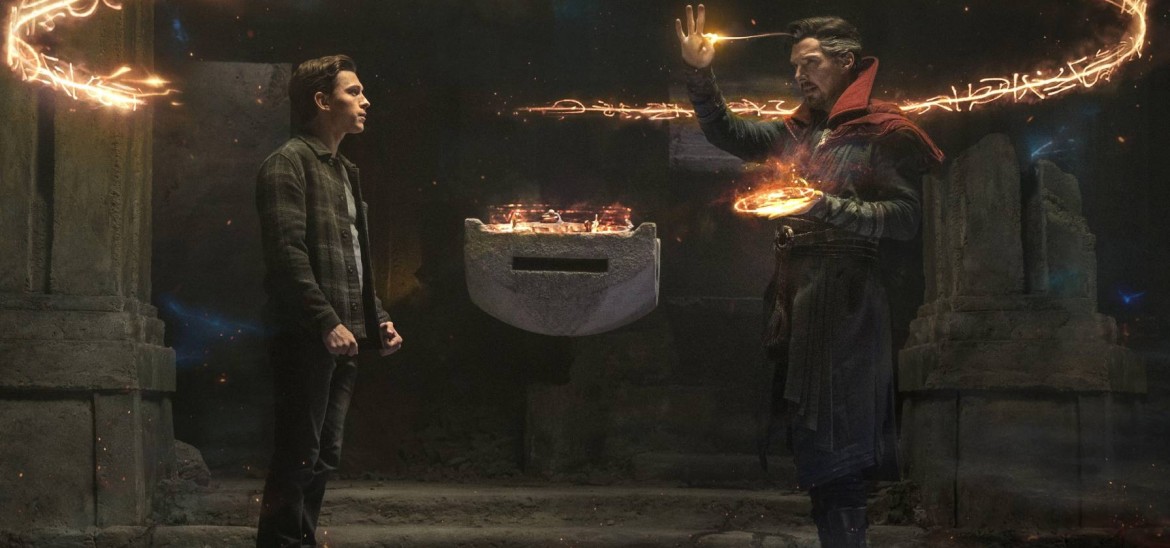
One thing that No Way Home has in common with its Spider-predecessors is how its superhero must grapple with the weight of his own mistakes, and this film easily has the biggest stakes of Holland’s solo tenure in the MCU. Over the years, Spider-Man has had his fair share of tragedy, and I feel like the way he responds to it is a key part of what makes him such a universally appealing character. Here, Holland proves his selflessness in trying to assist villains who seemed beyond help in their prior appearances, his belief in second chances being tested to its limit. And through it all, Holland continues to be a wholly endearing Peter Parker with Zendaya’s MJ and Jacob Batalon’s Ned forming a tight group that I hope to see again in future movies. And anyone who wanted to see a Spider-Man/Dr. Strange fight will undoubtedly be satisfied.
If I had to come up with a negative or two, I suppose my expectations were so high that I perhaps wish there had been even more multiverse-enabled cameos, like a glimpse into the aftermath of the other universes. Plus, as much as the film is concerned with handing out happy endings, it was a shame that one character ended up with the short end of the stick, for now at least. Even so, Spider-Man: No Way Home is a comic book movie nerd’s fantasy-come-true. It clearly depends on knowledge of the previous five Spider-Man films for full appreciation (and the mid-credits scene feels a bit shoehorned in), but No Way Home ranks among the best installments of the Marvel Cinematic Universe, an enjoyable ride twenty years in the making.
Best line: (classic in every way) “With great power, there must also come great responsibility.”
Rank: List-Worthy (joining the previous Holland Spidey films)
Did you ever get the feeling That your world was being watched, Like immortal super-beings Had been charged with overseeing All the quandaries and travesties humanity had botched?
Not to worry, for we humans Can be lovable at times. Those alien surveyors Should see man in all his layers, And our aptitude for love and hope should balance out our crimes. Right? ______________________________
MPA rating: PG-13
It was obvious long before it hit theaters that Eternals was going to be a gamble for the Marvel Cinematic Universe, just like Guardians of the Galaxy was back in 2014. A movie about a whole team of superheroes that only hardcore comic book fans had even heard of? And then they announced that it would be helmed by critical darling Chloe Zhao, the most Oscar-caliber director since Kenneth Branagh introduced Thor a decade ago (and fresh off her Best Director win for Nomadland earlier this year). With ten diverse but unfamiliar heroes to introduce, I knew Eternals would be a tricky balancing act, so I’m not surprised that it has become one of the most divisive Marvel films. I, for one, enjoyed Eternals quite a bit and disagree with most of the mixed reviews, yet I have my own misgivings that few critics seem to share.
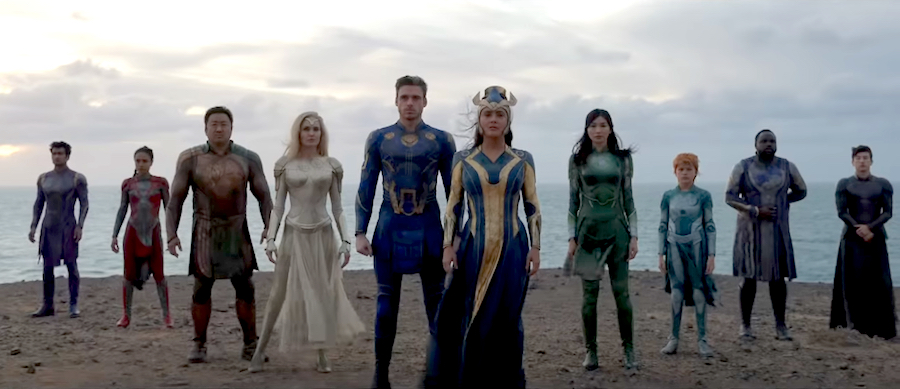
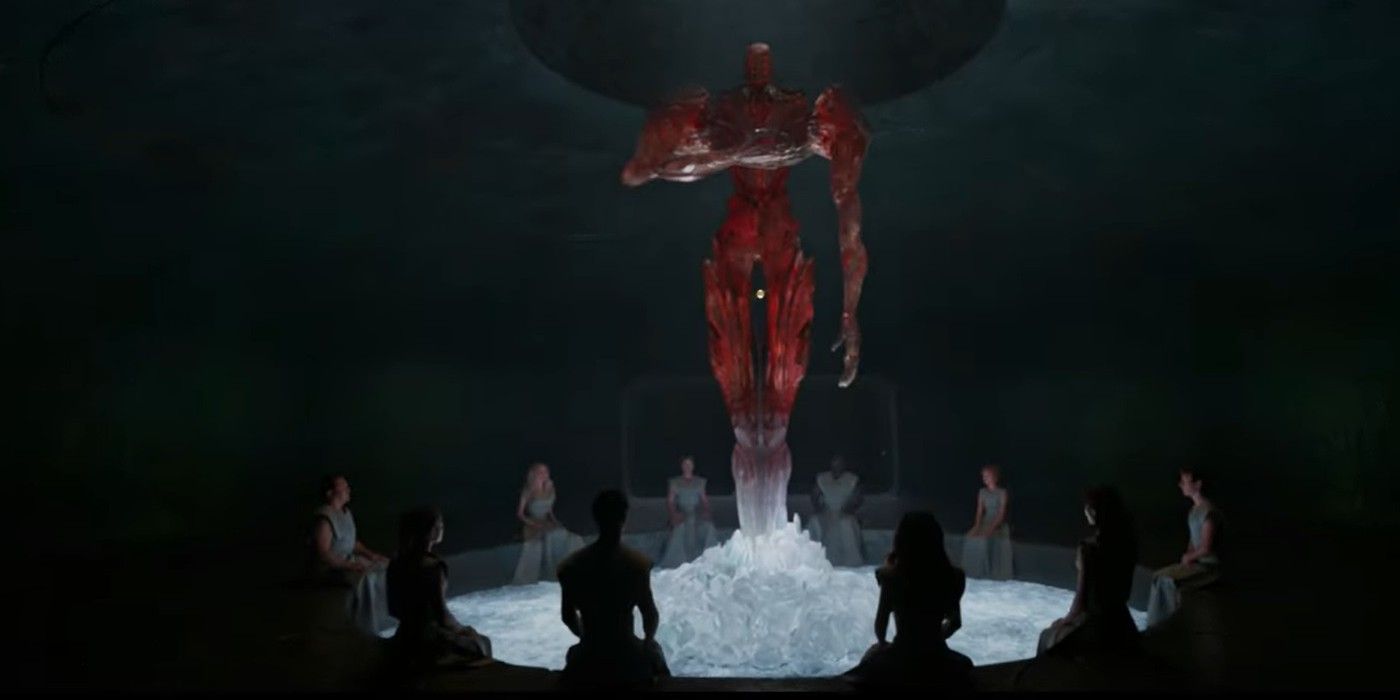
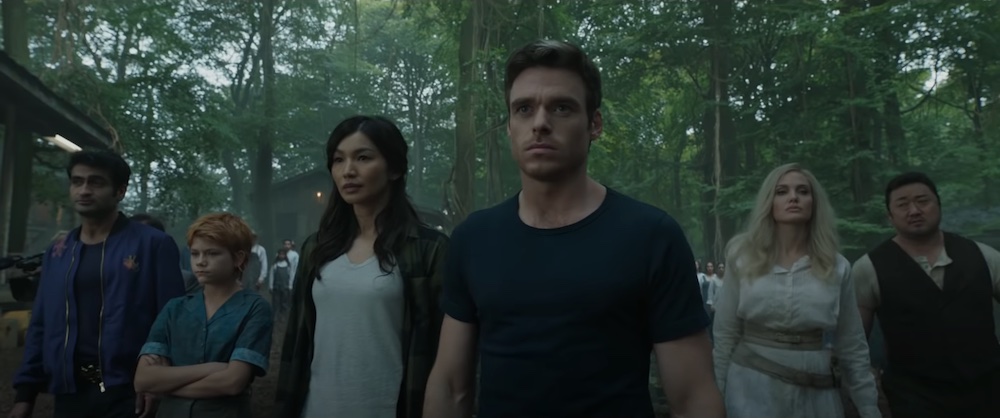
Eternals has the unique standalone feel of early Marvel, with relatively little crossover with the MCU and no cameos of established characters, just picking up the idea of enormously powerful Celestials mentioned in passing back in Guardians of the Galaxy. The Eternals were alien immortals created by the Celestial Arishem to defend Earth against the mysterious animal-like Deviants, which the ten supers battle across centuries with their unique powers. The cast is as diverse as they come, from Sersi (the lovely Gemma Chan, recast from her supporting role as a Kree in Captain Marvel), who can transform whatever matter she touches and takes a liking to our planet, to Sprite (Lia McHugh), who can create illusions and has the body of a child. Plus, there are the leader Ajak (Salma Hayek), the Superman stand-in Ikaris (Richard Madden), the comic relief Kingo (Kumail Nanjiani), the bad boy Druig (Barry Keoghan), the tech wizard Phastos (Brian Tyree Henry), the haunted warrior Thena (Angelina Jolie), the muscle Gilgamesh (Don Lee of Train to Busan), and the speedster Makkari (deaf actress Lauren Ridloff), all of whom like to periodically pose in a line. Setting aside subplots like the mysterious illness afflicting Thena, the plot is largely a get-the-band-back-together journey after the Deviants return to threaten the world, eventually veering off into larger implications as their true mission is revealed.
So yeah, there’s a lot going on, with plenty of exposition and flashbacks to help viewers absorb it all. And honestly, I’m surprised at how skillfully the film handles all of it. The characters are many yet manage to carve out memorable moments for them all, aided by their unique powers and the mythical origins of many of their names, which are indicated to have actually inspired those age-old myths. Some like Makkari don’t fare as well in standing out, but McHugh as Sprite earns some real pathos as she struggles with her inability to age. Other characters are distinguished by the moral debates of how best to use their powers; they may have been instructed not to interfere with human affairs, but it’s understandably hard watching human history play out in all its horrors when they know they have the power to change it. It’s a lot to take in across a long runtime, but I disagree with the criticisms over the pacing and character development simply because of how comparatively well it holds up under its own weight, which could easily have made it a mess. It probably would have been better as a Disney+ series, though.
There’s plenty to admire, from Chloe Zhao’s trademark “golden hour” lighting and artful cinematography to the ever-impressive visual effects when the fists start flying. So what then is the problem? It took a while for me to decide what exactly bothered me about the film’s twist and climax, and it boils down to the fact that it shoots for cosmic answers to questions far above its pay grade. Eternals basically addresses the question “What is the meaning of life?” And I did not like its answer.
Spoilers in this paragraph: According to the movie, Arishem actually created the galaxy and thus life on earth, and the way he is revered by the Eternals clearly paints him as a God-like figure. While he sends the Eternals to fight against the Deviants, the reason for defending humanity is not because he values human life for its own sake. Instead, one could point to the famous battery scene in The Matrix, but instead of that being humanity’s futuristic fate, the MCU has now explained that it was always humanity’s purpose, with the earth’s destruction as the end state. Ignoring the fact that the conflict sounds suspiciously like one of the storylines from Steven Universe, this revelation cheapens life more than I think the film intends. As a Christian, I believe that God created man in His image with a love for every individual, a sharp contrast to Arishem’s temporary benevolence. For viewers who don’t believe in a Creator, perhaps Eternals’ twist is simply a typical sci-fi revelation, one that admittedly does make for an interesting ethical debate as the various Eternals question whether to oppose not just a typical supervillain but the creative process itself. For me, though, it imbues the MCU itself with an uncomfortable nihilism, suggesting that all of mankind’s efforts are worthless in the eyes of “god” and making me question by what standard any right or wrong, love or hatred in this universe can be judged, even at Arishem’s level. Questions like this don’t seem to bother mainstream critics, only being broached by Christian film websites, but I do feel like this subversive trend is an unfortunate departure from the MCU up to this point.
The sheer amount of plot and characters is both a blessing and a curse for Eternals. One could argue there’s too much going on for the film to juggle, but that also means the things it does well can overshadow its thematic or pacing flaws, regardless of what one considers a flaw. The characters are as well-developed as they can be with so many on hand, the often serious tone is still livened by some well-timed humor, and the visuals have an epic scale that rivals the biggest Marvel movies. Despite my qualms over the film’s worldview, I can’t help but admire Zhao’s managing of a film that is clearly intended to set up much of the Marvel universe to come. I just hope those future installments can make up for this one’s missteps.
Best line: (Thena) “We have loved these people since the day we arrived. When you love something, you protect it.”
I see the desert’s shifting sands, Imbued with that most priceless Spice, A trap that only changes hands When offered blood as sacrifice.
I see it’s home to Fremen rovers And to undulating worms, The former subject to takeovers While the latter heeds no terms.
I see the cruel Harkonnen despots Ripping riches from the land, While the Fremen reap no respites As they flee across the sand.
I see the eager House Atreides Coming here to take control. Though they look like lords and ladies, Who can guess their final goal?
I see an upstart heir-messiah, Barely out of boyhood’s thrall, Soon a scion made pariah, Desert sands to break his fall.
The desert claims what it consumes And chooses whom it will anoint. I see so much (and large it looms) But cannot see beyond this point. _______________________
MPA rating: PG-13
I’ve never read Dune, but my VC has and is an ardent fan of David Lynch’s strange 1984 adaptation, for some reason. While she has yet to see Denis Villeneuve’s new incarnation of George Herbert’s massive sci-fi opus, I was glad for the multiple times she convinced me to see Lynch’s version, since I knew generally what to expect. Herbert’s novel is notoriously dense, with dozens of characters and unfamiliar terms in alien languages, so it was a benefit not going into the movie cold.
Villeneuve has already proven his talent for serious science fiction, from the cerebral but deeply touching Arrival to the lengthy but engrossing Blade Runner 2049, so Dune seemed like a natural next step for the director. The first question: Is it better than the 1984 film? A resounding yes! You can take your pick of what was the main problem with Lynch’s film: the constant internal monologuing, the ultra-compressed plotline, or (what I think) the introduction of so many strange elements of Dune’s world without enough time for them to come off as anything but bizarre. That’s a time issue too, I suppose, but it’s a problem that Villeneuve has countered by splitting his adaptation of the first Dune book into a two-parter, making this year’s installment only Part One.
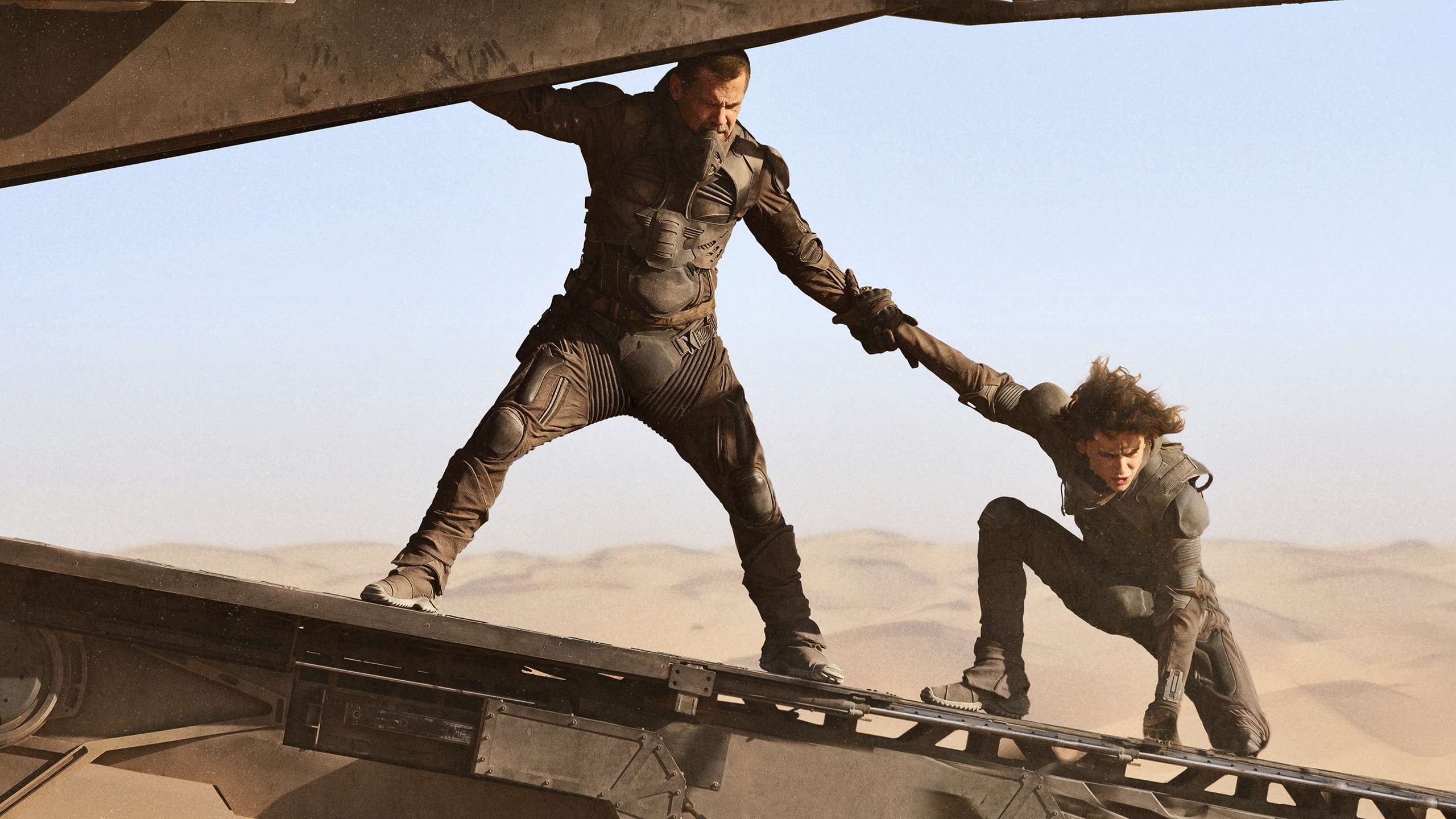
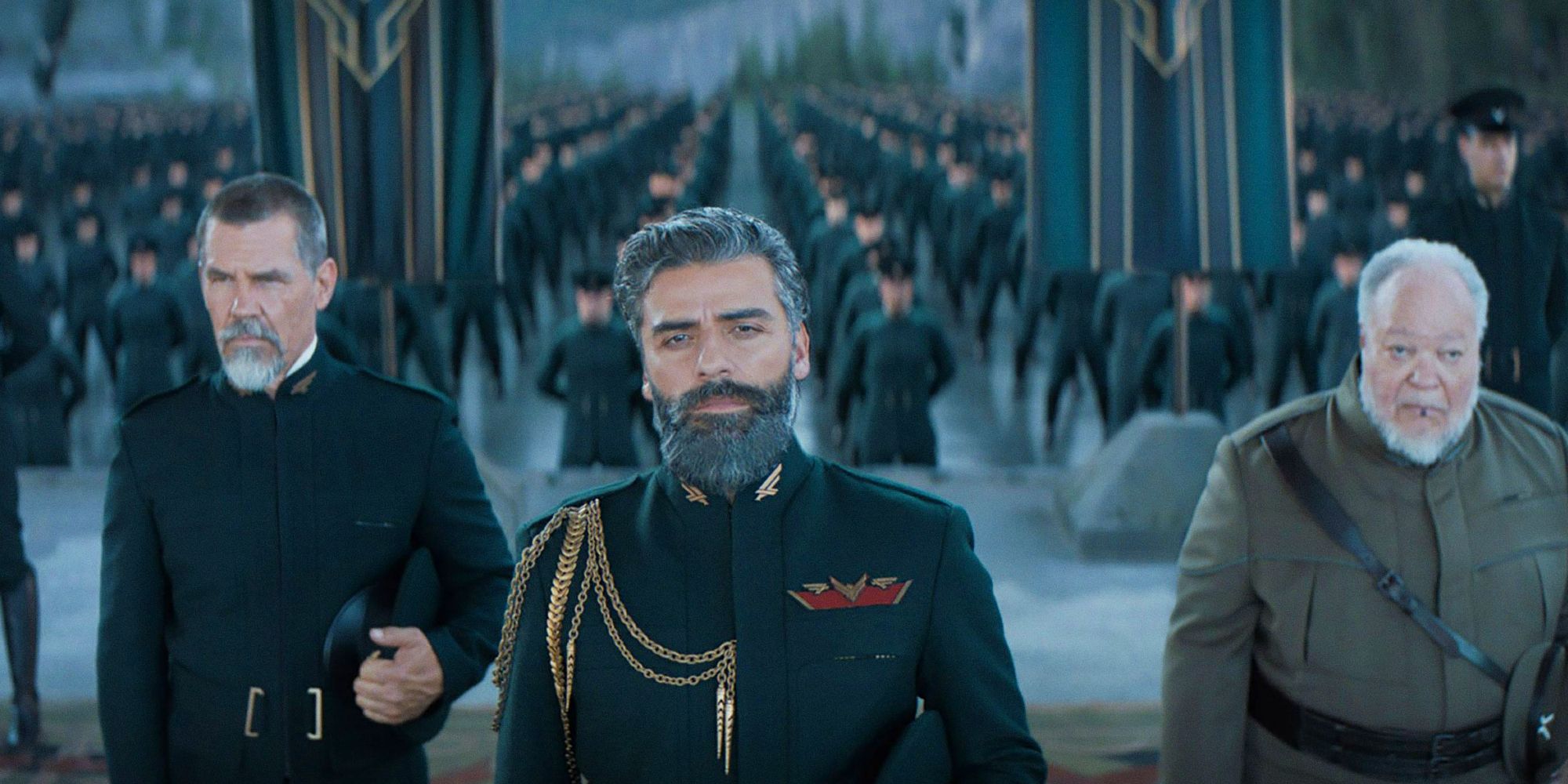
This protraction of the runtime over two films allows the plot to breathe. That plot is still largely the same – the Atreides house taking control of the desert planet of Arrakis to harvest the hallucinogenic Spice only for things to go very, very poorly – but Villeneuve has carefully chosen what to show and what to leave for later, such as providing glimpses of the home planets of the Atreides and Harkonnen clans while leaving the Emperor and the giant-headed mutant Guild Navigators off-screen and only mentioned. There is also more room for character development, mainly for the young messianic heir Paul Atreides (Timothée Chalamet), his noble father Duke Leto (Oscar Isaac), and skilled fighter Duncan Idaho (Jason Momoa), the latter a major figure in the books who gets way more screen time here than in Lynch’s film.
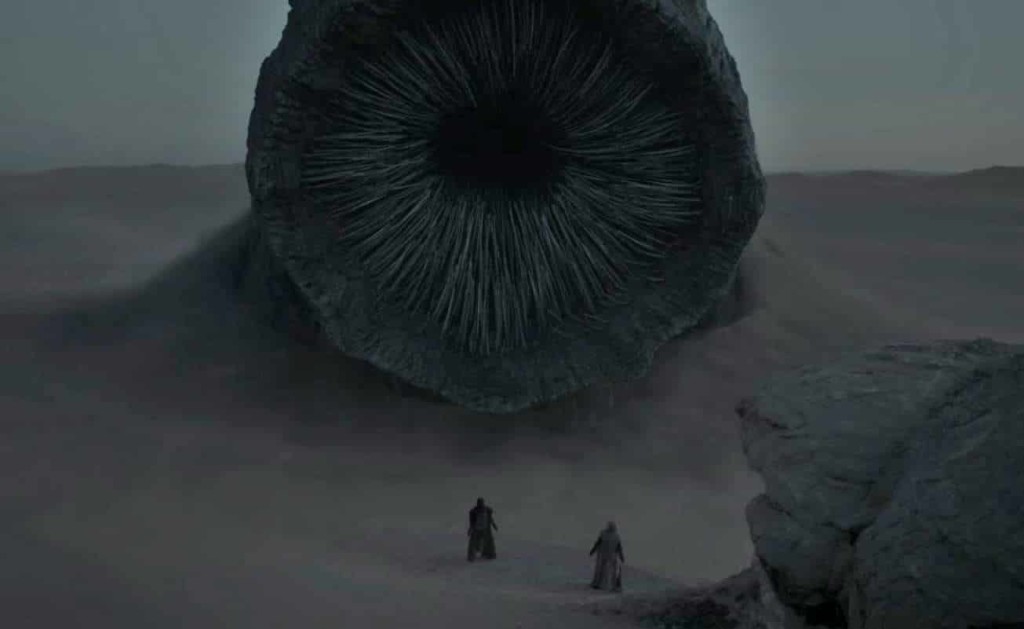
Villeneuve’s Dune is rightfully being lauded not just for its improved adaptation and talented all-star cast (including Rebecca Ferguson, Josh Brolin, Stellan Skarsgard, and Javier Bardem) but for just how immersive his on-screen world is. Like Gravity, this is a film that was made to be experienced in a theater, with that blaring Hans Zimmer score accentuating how massive the spaceships and architecture are as Shakespearean backstabbing plays out amidst quasi-religious drug reveries and space colonialism. While Chalamet didn’t impress me that much as Paul, he and the rest of the cast embrace their roles fully to sell how this strange future universe is their own. Likewise, the set design and special effects bring the explosive battles and gargantuan sand worms to startling life, making the film a shoo-in for technical Oscars next year.
But then there’s the second question: Did I like this new version of Dune? Well, sort of. With Lynch’s film, I could still appreciate the underlying story that Herbert created, and here, there is even more to appreciate to bring that story to the big screen. I’m convinced that Villeneuve’s Dune is the best possible version of this story, but I’m still not sure if it’s a story I can say I enjoy. Even with the extra time to get to know the characters, I still didn’t really connect with any of them, which is perhaps unavoidable considering how far removed they are from the world we know. Plus, as with the Hobbit films and Infinity War, it’s hard to make a final appraisal of Part One when the full story is yet to come, though thankfully Part Two has been confirmed. Several characters just drop away without knowing their fates, while other clearly important characters, like Zendaya’s blue-eyed Chani of the native desert-dwelling Fremen, get little screen time except for slow-motion dreams.
So Dune: Part One is an immense achievement of filmmaking and a worthy adaptation of its famed source that may be more accessible than Lynch’s film but is still bound by the limitations of the same story. Perhaps that’s a matter of personal taste that might be solved by repeat viewings, but I’m still glad the long-awaited epic was worth the wait on a visual level alone.
Best line: (Jamis, in one of Paul’s visions) “The mystery of life isn’t a problem to solve, but a reality to experience. A process that cannot be understood by stopping it. We must move with the flow of the process. We must join it. We must flow with it.”
“The first Asian hero!” the headlines declare, A landmark of cinema, and you were there. It’s representation I’m glad to endorse, And long overdue as a matter of course. Yet somewhere I feel Wong is crying a river And can’t help but feel quite a bit like chopped liver. And Hogun, Thor’s buddy so fleetingly brought in, Somewhere in Valhalla is feeling forgotten. And ol’ Jim Morita, a Howling Commando, Had no superpowers but still made his stand, though. So yes, it’s important, the first Asian lead, But let’s not forget someone had to precede. _______________________
MPA rating: PG-13
In contrast to 2020, I’ve been lucky enough to see all of Marvel’s releases this year in the theater, but whereas I was alone for Black Widow in an empty theater, I got to see Shang-Chi with friends. It really felt like the movie theater experience was truly back. It also helped that it was a kick-butt blockbuster and one of the best origin movies of the recent MCU.
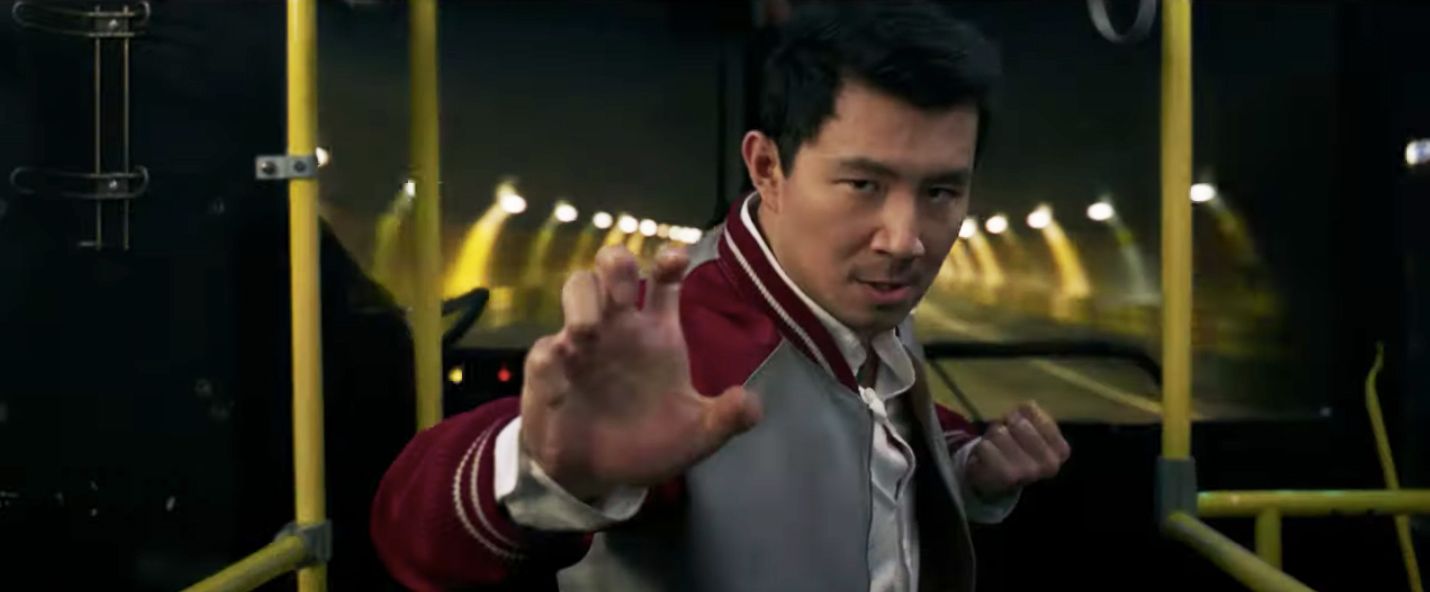
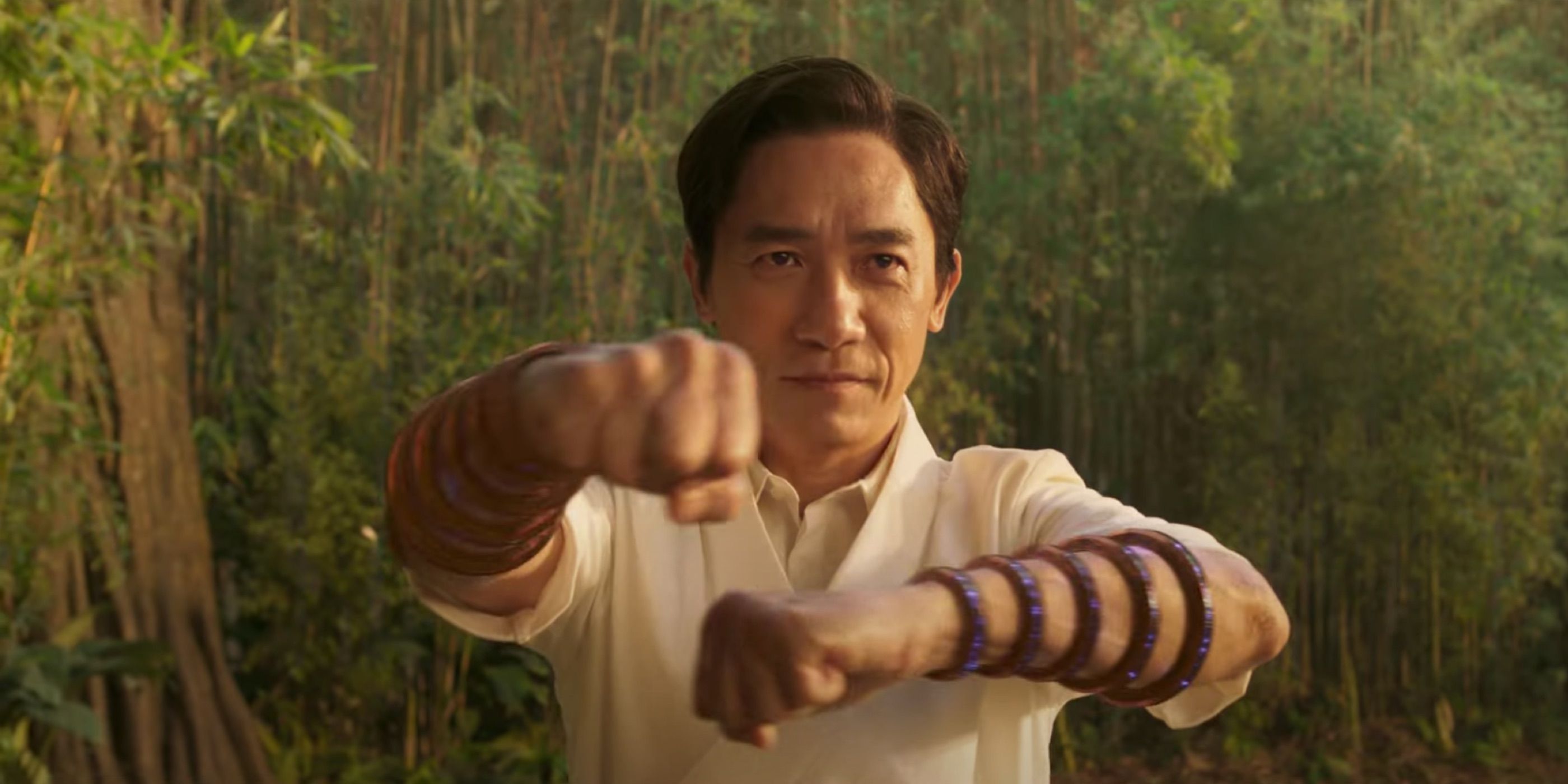
I consider myself at least somewhat hip to comic book lore, and I had never heard of Shang-Chi before his own solo film was announced. Although the character dates back to the ‘70s when he was introduced as the son of Fu Manchu and modeled off Bruce Lee, the public unfamiliarity with the character allowed Marvel Studios to craft their own synthesis of story elements, from the ten rings of the Mandarin (previously impersonated in Iron Man 3) to a cosmic monster that ranks as one of the more obscure villains in Marvel history. Here, Shang-Chi’s father is Wenwu (Chinese superstar Tony Leung), an ancient warlord granted immortality and great power by ten arm rings, or bracelets if you get right down to it. Trained from childhood to be a master of martial arts, Shang-Chi or “Sean” (Simu Liu) escapes to live a normal life as a valet in San Francisco, only to be dragged back into the world of lethal assassins and mystical secrets, along with his friend Katy (Awkwafina) and sister Xialing (Meng’er Zhang, in her mainstream film debut).
Just as Crazy Rich Asians revitalized the rom com with its all-Asian cast, Shang-Chi succeeds in satisfying Marvel’s efforts at diversity with a superhero film that is good in its own right (and reunites Awkwafina and Michelle Yeoh too; now I wonder if they’ll ever run into Gemma Chan of Eternals). I haven’t seen Simu Liu in the Canadian sitcom Kim’s Convenience, but Marvel once more excels at casting likable heroes, both on- and off-camera. His camaraderie with Katy and his tortured past with his father paint him as a would-be assassin just trying to live a normal life, and Liu’s charisma opposite Awkwafina and Leung really sells the character, even if the other two outshine him at times. Katy becomes one of the most endearing and actively involved Marvel love interests, and Wenwu is the best kind of villain, the type whose motivations are not only misguided but understandable and sympathetic even.
No Marvel movie is perfect, of course, and Shang-Chi and the Legend of the Ten Rings is no different. The final battle is both an awesome spectacle and a CGI mish-mash, and one training sequence results in some unrealistically fast skill growth. Perhaps there is an overreliance on flashbacks too. Yet Shang-Chi is also Marvel’s first big-screen foray into stunt-heavy martial arts, which never disappoint, from a thrilling free-for-all on the side of a skyscraper to an artful wuxia-style fight/dance reminiscent of Crouching Tiger, Hidden Dragon (hello, Michelle Yeoh again). Shang-Chi may not break any molds and may not be the funniest or most powerful of Marvel properties, but it’s still an outstanding debut for Marvel’s first Asian lead, with just a few welcome cameos to introduce him to the larger MCU. It’s my favorite Marvel release of the year so far, and I look forward to seeing how they’ll use this new corner of Marvel mythos.
Best line: (Shang-Chi’s aunt, played by Yeoh) “You are a product of all who came before you, the legacy of your family. You are your mother. And whether you like it or not, you are also your father.”
I’ve heard the most dangerous creature is man, And I suppose that must be true. We love coming up with formidable monsters That threaten our whole point of view, And somehow we manage to conquer the foe And add to the others we slew. So if such a creature did rampage and roar We’ll have all this fiction to clue Our panicking, delicate, desperate species On what we should probably do. ______________________
MPA rating: PG-13
Giant monsters and mech suits have long fascinated Japan and many a young boy, but I honestly have never been a big fan of the genre. In the past, I could attribute this to the poor quality of the old Godzilla movies with their laughable acting and near-visible zippers. Yet I also am not much enamored of modern effects extravaganzas like Transformers or the 2014 American version of Godzilla. There’s a fine line between spectacle and noise, and a human element worth caring about is an oft-overlooked necessity. So why did I add 2016’s Shin Godzilla to my Blindspot list? Well, not only did it win Japan’s equivalent of Best Picture but I’ve heard plenty of people sing its praises, calling it a more realistic take on the classic Godzilla story. And while I agree with that to a point, Godzilla is still Godzilla.
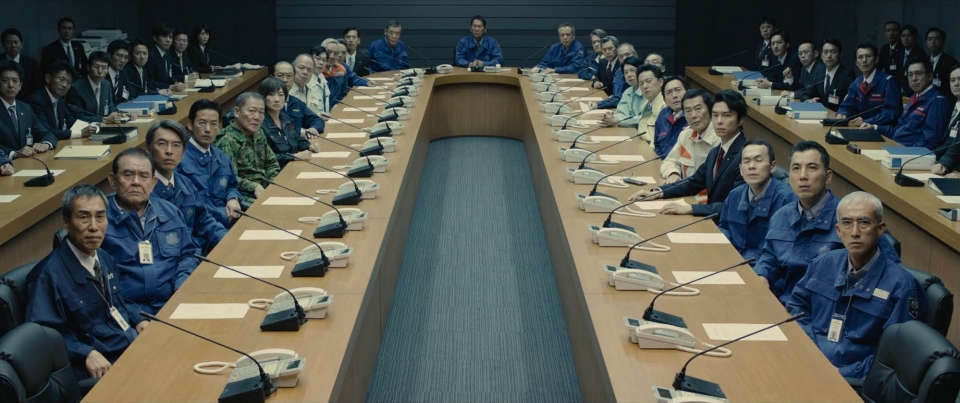
Directed by Hideaki Anno of Neon Genesis Evangelion fame, the film doesn’t waste much time before an underwater disturbance strikes Tokyo Bay, sending the Japanese government into a tizzy. One young cabinet member named Rando Yaguchi (Hiroki Hasegawa) is the first to suggest that a giant creature is the cause, and the way he is scoffed at before being proven correct makes it clear who the main character is amid all the cabinet meetings. Indeed, cabinet meetings are a notable fixture of the film as their bureaucratic hesitance contrasts sharply with the rampant destruction of a radioactive lizard. In this way, it certainly is more realistic, suggesting that a disaster of this scale and suddenness will already have wreaked its havoc by the time the government figures out what to do about it. Hope seems lost but for Yaguchi’s bold efforts leading a brain trust to develop an innovative way of stopping the monster once and for all, aided by an attractive envoy from the U.S. (Satomi Ishihara).
Shin Godzilla is effective in its satire of government inefficiencies, though its cabinet meetings grow tedious with repetition, but what of the creature itself? Unlike many Godzilla films where the monster pops out of the ocean fully formed, this version actually goes through several stages of rapid evolution, all of which leave destruction in their wake. I realize it’s unfair to compare Japan’s special effects with Hollywood’s, and the scenes of toppled buildings and flying rubble are top notch, but the Japanese effects do fall short in depicting the creature. Its snake-like first form especially is almost laughable with its googly-eyed stare, and while the later versions are more menacing and massive, I feel like Godzilla’s unblinking eyes still make it feel somewhat fake. That being said, the final battle to take out the giant is appropriately awe-inspiring in its scale, giving the humans a chance at heroism rather than just panicking and reacting.
Shin Godzilla (or Shin Gojira to use the famed monster’s Japanese name) can be translated as “New Godzilla,” and it indeed tries to start from scratch, doing away with any past films or the reinvention of the creature as some kind of protector fighting other monsters, which is the direction Hollywood took with the recent American films. While the film has its merits, I must admit I fail to see why it would warrant major awards attention, outside the technical categories. I suppose Godzilla just looms larger in the Japanese consciousness, especially since the film incorporates scenes that echo real-life Japanese tragedies like the 2011 earthquake and tsunami just as the original Godzilla films derived from concerns over nuclear fallout. Shin Godzilla may not reinvent the giant monster movie, but its satirical take on the genre makes it a worthwhile member that is far better than the days of men in rubber suits.
Best line: (one of the bureau directors) “Man is more frightening than Gojira.”