For Round 9 of Opinion Battles, we all picked the best adapted novels. My choice was the classic Shawshank Redemption, a choice so good that two others picked it too. Lots of great picks, though, so vote for your favorite!
When it comes to adaptation from classic books or novels we get a huge number coming out each year, some a great others are terrible. We are going to look at the ones we think are the best, which ones do you enjoy?
If you want to take in the next round of Opinion Battles we will be doing best Animé email moviereviews101@yahoo.co.uk The deadline will be September 6th 2015.
Darren – Movie Reviews 101
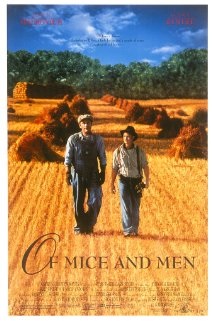
Of Mice and Men (1992)
When it comes to books too movies we have had many classic films come from source material, Shawhank Redemption, The Shining, Harry Potter series the list goes on but I don’t read too many books in fact I think I have only read about 6 books since school and I watch to pick my favourite of the film that read. The list includes World War Z…
Ryan and I would like to once again welcome you to another review for our Argumentative August Blogathon.
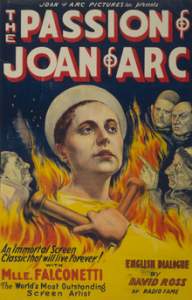
This next film, The Passion of Joan of Arc (1928) is being reviewed by SG of Rhyme and Reason
Let’s see what SG thought of this movie….
_________________________
Undeterred by voices heard
By quiet, cautious captive Joan,
Rival judges bearing grudges
Fret and threaten from their throne.
Each complaint against the saint
Is useless as they menace harder.
Self-control and strength of soul
Prevail to mark her as a martyr.
______________
Rating: Not Rated (could be PG-13, mainly for the end)
As the oldest film for this Argumentative August blogathon, The Passion of Joan of Arc takes some effort to watch. I haven’t seen many silent films, but the film’s lack of sound or Chaplinesque antics made it somewhat of a chore to sit through. Considering that silent films often rely on…
After counting down a list of 365 movies and a catalog of 50 film scores, I’ve decided to find a nice round number for my future lists – 12! Top tens are everywhere so I’ll go two steps better and make every list a dozen. Lots of good things come in twelves: eggs, doughnuts, apostles, months, Gilbreths (look it up).
For my first Top Twelve, I’ll keep to the musical theme of my last list and recount my top musical numbers from musical films. This is not to say that these are necessarily the best songs, though some are. Rather, I consider a musical number to be the full package of a song: the vocals, the choreography, the cinematography, the physicality of the actors, the overall spectacle of the performance. All of these factors add up to pure entertainment, scenes I could watch anytime. (No animated songs this time; that’s another list and shall be told another time.) It does help that I love musicals in general, and of course this list is the product of personal preference, keeping everything to one song per musical. Let me know what you think, whether you agree or not so much. Let the listing commence!
_________________
“America” – West Side Story (1961)
As popular as it is, West Side Story has never really grabbed me as one of the great musicals. It’s not that I dislike it; I just find it overrated. Nevertheless, I love the song “America,” sung by Oscar winner Rita Moreno and her Puerto Rican compadres. “America” turns a domestic argument over the pros and cons of a new home into an ingenious, toe-tapping debate. Full of witty rhyming come-backs and Latin flair, this is the highlight of the whole film.
As the centerpiece of Disney’s enchanting crossover into live action, “That’s How You Know” puts Amy Adams in the spotlight, while spanning the whole of Central Park. Despite this being the supposed real world, plenty of performers and pedestrians join her like in an animated musical, proving Giselle’s infectious appeal and musical joie de vivre. Patrick Dempsey’s stern confusion is the perfect counterpoint to all the sincerity around him.
I may be in the minority, but I really love the High School Musical films, perhaps because they came out when I was in the perfect tween age demographic. The musical numbers are their key strength, thanks to director/choreographer Kenny Ortega, and I had plenty to choose from. This over-the-top theme, in which Sharpay and Ryan dream big, blows them all away and includes visual cues from other Broadway musicals. While I like the second film best overall, this is proof that HSM reached its big-screen potential with the third film.
Dick Van Dyke probably wasn’t going to find any film to compare with Mary Poppins, but I think he came close with Chitty Chitty Bang Bang, at least in the music department. The film overall isn’t nearly as good, but the musical numbers (written by the Sherman Brothers) have the same energy Van Dyke brought to Poppins (and without the fake accent). When his Professor Potts stumbles into a carnival show, he tries at first just to keep up, but eventually leads the whole troupe in some lively choreography while singing the catchiest song about sticks you ever heard.
Simon the Zealot has always been depicted as one of the lesser apostles, but Andrew Lloyd Webber and Tim Rice’s Jesus Christ Superstar put him in the spotlight for one exuberant song. The zeal of Larry Marshall’s Simon is unmistakable as he goes nuts with a collection of worshipping dancers. Even if he thinks Christ has come to fight Rome, his ballyhoo becomes a genuine song of praise sure to get stuck in your head, while it brings out the head-banging side of my VC.
“Singin’ in the Rain” – Singin’ in the Rain (1952)
A tie here may make this list a baker’s dozen, but in a film full of memorable song-and-dance scenes, these two both rise to the top. “Make ‘em Laugh” is enough to lighten the heaviest moods, and Donald O’Connor’s manic energy is exhaustively entertaining. I’ve heard he had to go to the hospital after filming the scene, and I believe it. On the other hand, Gene Kelly is the star, and the title number is just too iconic to ignore. Classic to the last puddle.
Dick Van Dyke once more takes the stage in the most vigorous number from Mary Poppins. Bert and his crew of chimney sweeps take to the roofs of London to prove their superior choreography. There’s no real reason for all the rooftop hullabaloo, but it’s impressive to watch, and no matter what P.L. Travers said in Saving Mr. Banks, it cemented Van Dyke as “one of the greats.”
Sorry, I couldn’t find a video with the full number, but it’s my favorite part of Barbra Streisand’s inimitable Hello, Dolly! The vibrant dance steps and chipper ensemble wind through the streets of Yonkers as all the main players head to New York to fulfill their dreams. Even robots in 2805 will be humming this tune, according to WALL-E, and I’m glad that Pixar reintroduced this classic number to a new generation. Don’t take my word for it; go enjoy the movie for yourself.
“Barn Dance” – Seven Brides for Seven Brothers (1954)
While I don’t remember much of the film itself, it’s hard to forget this centerpiece of Seven Brides for Seven Brothers. No lyrics necessary, just a country dance with some of the best gymnastics in any musical, as the Pontipee brothers in their colorful shirts fight for their chosen women in an epic dance-off.
When young Oliver Twist (an adorable Mark Lester) wakes up in a fancy home after knowing only hardships in his life, everything takes on a magical zest. The enticing cries of the street vendors overlap brilliantly, and everyone cavorts with the joy of a new day, from frilly schoolchildren to maids and handymen. It’s hard to top “Consider Yourself” earlier on, but “Who Will Buy?” carries the real wow of the film.
Silence, all you Les Mis haters! “One Day More” acts as the culmination of all the exceptional music that came before. Every character’s theme is fused into a rousing ensemble piece to prelude the next day’s battle. Any vocal weaknesses are covered by the power and quality of the group performance (including Russell Crowe), and even the irritating Thenardiers’ tune adds to the overall impact of this magnificent song.
Nothing could beat the greatest song from the greatest musical ever (just follow the link below). Julie Andrews as governess Maria teaches the von Trapp children how to sing and awakens their dormant musical talent. The streets of Salzburg are an ideal setting for their romp, and the backdrop of the Alps is glorious. Topped like a cherry with that unparalleled high note at the end, this classic scene is easily the king of all musical numbers.
Schools have plenty, I suppose,
Of classmates easy to befriend,
The kind that never give you cause to fret,
But schools are also home to those
Who like to bully and pretend
That they’re the toughest kids they ever met.
If you are having troubled days
With greedy bullies on the prowl,
Get yourself a bodyguard to sturdily defend,
But difficulties still can faze
The biggest bodyguards that scowl,
And even they could use a caring friend.
___________________
Rating: PG
My VC has a habit of recommending films from the 70s and 80s I’ve never heard of, and this is only the most recent. My Bodyguard is a respectable high school film, sometimes cute and sometimes hard to watch.
After starting at a new school and antagonizing the local bully Moody (Matt Dillon), young Clifford (Chris Makepeace) sees a way out of this abuse by enlisting the local scary kid Ricky Linderman (Adam Baldwin) as his bodyguard. While Linderman is the subject of murderous gossip and does the least he possibly can for Cliff, Cliff recognizes him as a boy deeply in need of a friend and reaches out when no one will. Throughout the film, I kept thinking how much this reminded me of a feature length episode of Hey, Arnold!, the Nickelodeon show about a good city-dwelling kid who helps people. The movie shares certain similarities with the show such as the boy’s eccentric grandmother (Ruth Gordon in the film), his family’s business (a hotel in the film vs. a boarding house in the show), and a plot about bullies and misunderstood potential friends that easily could have been shortened to episode length. This comparison isn’t a complaint since I’ve always liked Hey, Arnold!, and it’s interesting to think how films like this might have influenced it.
Having had a little experience with them in the past, I personally can’t stand bullies, the kind who lord their toughness over the weak and ambush the helpless. My Bodyguard doesn’t show bullying at its worst, but there are still several scenes that made me angry at cruel intimidators whom no one will stop. Of course, this is meant to make their just desserts sweet for everyone else, and though the comeuppance was slow in coming, it was realistic enough to be satisfying and encourage viewers to fight their own battles.
My Bodyguard isn’t quite a high school classic, but it incorporates some realistic darker elements to make the friendship between Clifford and Linderman difficult but rewarding. It also serves as one of those before-they-were-famous films, with recognizable young faces like Dillon and Joan Cusack, as well as the debut for Jennifer Beals (in a very small role) and Adam Baldwin (known as Jayne Cobb to us Firefly fans). Baldwin is perhaps the best here, turning in a quietly damaged performance that anticipated good things to come.
Best line: (Moody) “You broke my nose!” (Linderman) “It looks better that way!”
You think this story’s like the rest,
Like all the books you’ve read before?
It holds a secret none have guessed,
Real quests and dangers to explore.
Can any book draw you inside,
Where wonders wait on every page?
Can characters that there reside
Become dear friends at any age?
Perhaps, yes, any good book can,
But this is no mere written tale.
Just read wherever it began
And lift the word-begotten veil.
______________
Rating: PG
Anyone who’s looked closely at my Gravatar might have noticed that I’m holding Michael Ende’s The Neverending Story, one of my favorite books. I’ve loved this German-to-English fantasy since the first time I read it. I love how each of the twenty-six chapters begins with a different letter of the alphabet, how Uyulala the Oracle speaks only in rhyme, how the lines of fantasy and reality are blurred to draw Bastian and the reader into the land of Fantastica, how it questions the little things of adventure epics like why bathroom breaks are never mentioned, how extraordinary creatures and characters come and go, friends and foes. And of course, I adore how every minor character is given his own untold tale and dismissed with one of my favorite lines of this or any book: “But that is another story and shall be told another time.” No doubt, you’ll be seeing that line elsewhere on this blog.
So then, if I love the book so much, why has it taken me so long to write about the film adaptation from 1984? It’s hard to say; I grew up watching the movie version long before I had read the book, but once I’d been introduced to the novel, the film simply paled by comparison and dropped off my favorites list. It’s not that I dislike it; it captures some of the magic of the book and generally follows the book’s plot, though only the first half of it. Bastian (Barrett Oliver) is a dreamer, a lover of books who is compelled to steal a very special book and follow the adventures of Atreyu the warrior (Noah Hathaway) and Falkor the luckdragon and the Childlike Empress, even as he himself is drawn into the story to battle the Nothing. As a child’s film, it’s a bit darker than the usual fare, akin to Labyrinth or The Dark Crystal. Like those films, it utilizes detailed puppetry to bring many of the book’s characters to life, such as Falkor and Gmork the fearsome wolf and Morla the Aged One. I also like to think the gnomes Engywook and Urgl might have influenced the characters of Miracle Max and his wife in 1987’s The Princess Bride.
Yet while the similarities to the source material are recognizable, there are so many details that are changed. Some are understandable due to the limits of special effects at the time, such as leaving out Ygramul the spider or not making Cairon (Moses Gunn) a centaur, but others just beg the question “Why?” Why did the filmmakers change the name of the magical land from Fantastica to Fantasia (and why did Disney allow it)? Why did they call Atreyu’s necklace the AURYN when the book specifically leaves out the the? Why did they not let the Southern Oracle speak in rhyme? Why did they throw in nudity with the Sphinx gate, knowing this is supposed to be a kid’s tale? Why did they so poorly dub Deep Roy’s voice in the early scene and call him Teeny Weeny as opposed to a “tiny”? They even left out part of that favorite line of mine! All these differences do add up, making for a very inconsistent adaptation, one which displeased the author and prompted him to file an unsuccessful lawsuit.
The visual effects, like the adaptation, are hit-and-miss; while I’m sure they were astounding for the time, some hold up better than others. The Rock Biter (rock chewer in the book), Morla, and the destruction at the end are incredibly well-realized, considering the lack of computer assistance, but many of the puppets and blue-screen shots are very obvious by today’s standards. Likewise, the acting is satisfactory, even though some of it carries a hefty amount of 1980s/child actor cheesiness.
All in all, The Neverending Story is a film I’d recommend to any child who loves books and anyone who loves fantasy. It’s a childhood darling that halfway holds up with its message of imagination and hope, and I do still admire the score for the American version by Klaus Doldinger and Giorgio Moroder. Even so, to anyone who likes this film, I recommend you read the book and see the full scope of The Neverending Story (and ignore the film sequels). The novel is a classic that may someday get a more faithful adaptation, though I ought to check out the HBO miniseries, “but that is another story and shall be told [hopefully] another time.”
Best line: (since my line wasn’t included in its entirety, this is a decent runner-up) (Falkor) “Never give up, and good luck will find you.”
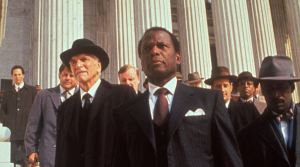
Winner of the Emmy for Outstanding Miniseries, Separate but Equal is one of those historically significant miniseries that have nearly been forgotten by modern audiences. It follows the timeline of the historic court case Brown vs. Board of Education of Topeka from its unassuming…
Now that I’ve counted down my top 50 film scores over ten weeks, here’s the full list for easy reference, counting down from #50 to #1. Each one has a link to the video used in the earlier posts. As prolific as film composers are, there will no doubt be additions to this list somewhere in the future; plus, the more films I see, the more exposure I’ll have to great movie music. If anyone has a recommendation, feel free to comment!
Being the list maniac I am, this is only the first (or technically, second) of many. As much as I love music and movies, a good countdown is inevitable, but that is another list and shall be told another time.
A Beautiful Mind (James Horner)
The Assassination of Jesse James by the Coward Robert Ford (Nick Cave/Warren Ellis)
Avatar (James Horner)
Braveheart (James Horner)
Chicken Run (John Powell/Harry Gregson-Williams)
The Cider House Rules (Rachel Portman)
Dances with Wolves (John Barry)
Doctor Zhivago (Maurice Jarre)
Gone with the Wind (Max Steiner)
The Great Escape (Elmer Bernstein)
Hook (John Williams)
The Horse Whisperer (Thomas Newman)
The Hours (Philip Glass)
The Hunger Games (James Newton Howard)
Like Crazy (Dustin O’Halloran)
The Neverending Story (Klaus Doldinger/Giorgio Moroder)
The Shawshank Redemption (Thomas Newman)
The Thin Red Line (Hans Zimmer)
Thor: The Dark World (Brian Tyler)
The Truman Show (Philip Glass)
The Village (James Newton Howard) (The more I listen to this one, the more I think it probably should have been #50.)
Up (Michael Giacchino)
As the hours tick away,
Can you find
A peace of mind?
Ere the debt that all men pay,
Will you stress
For happiness?
Will you leave this earth too soon,
Slack to strive
And stay alive?
From life’s grief, none are immune,
And some begin
To give in.
I, for one, refuse, however,
To relent
To discontent.
Ties weren’t made for me to sever;
Life will grow,
Despite the woe.
_______________
Rating: PG-13
The Hours profoundly embodies that famous quote from Henry David Thoreau, asserting that “Most men lead lives of quiet desperation and go to the grave with the song still in them.” In the case of this film, that quiet desperation is the realm of women, whether it be an unstable author in 1923, a depressed housewife in 1951, or an overwhelmed hostess in 2001. There is little relief from this oppressive despair, yet the film has artistry to spare, with a superb score from Philip Glass, vivid cinematography from Seamus McGarvey, and poignant performances from three Oscar-winning actresses and Ed Harris.
On a purely superficial level, The Hours has a haunting allure as it eloquently jumps between timelines and slowly reveals their connections, but as I delve deeper into its messages, I find them more and more dubious, even appalling. Let’s start with the three storylines. In Plot 1, Virginia Woolf (Oscar winner Nicole Kidman in a false, uglifying nose) begins her novel Mrs. Dalloway, preparing for visitors and mourning her unsatisfying country existence. In Plot 2, Laura Brown (Julianne Moore) stumbles through the simplest activities and mourns her unsatisfying suburban existence. In Plot 3, bisexual Clarissa Vaughan (Meryl Streep) plans a party for her dying writer friend Richard (Ed Harris) and buckles under the weight of her unsatisfying urban existence. Obviously this is not a “happy” film, but even tearjerkers can offer some hope or peace or gratification in the midst of trials. Based on its three paragons of sorrow, The Hours seems to imply that life and society are inherently unsatisfying and can only be improved by abandonment of society, of responsibility, of life itself.
Setting aside moral qualms about the characters, I find Meryl Streep’s Plot 3 to be the only one that doesn’t deeply vex me, since it at least captures the sorrow and emptiness that this abandonment causes. Plots 1 and 2 are a different story. Both feature their heroines in clear social anguish, yet I find it hard to sympathize with either one since both of them share a galling selfishness. Mrs. Woolf goes out of her way to annoy the servants and complains about protective measures her husband did out of love, though her history of mental illness at least explains her behavior. Mrs. Brown of Plot 2 is the most perplexing of the three, since she acts as if daily life is an unbearable torture when there’s nothing particularly torturous going on. She doesn’t have a mental illness; she doesn’t have a friend dying. I kept asking, “What is your problem?” and as she decided on different forms of “escape,” I wanted her to just look at her little son and recognize that he alone, a gift of God and the envy of her neighbors, ought to be reason enough for her to bear whatever emotional constipation she was enduring.
I see why The Hours was so acclaimed. Between the acting, the haunting music, and the overall artistry, it’s a film to be studied rather than enjoyed. In particular, I liked the writer details, such as how Virginia Woolf decides to write her book based on the first sentence she develops or how she explains why a character must die. There is good, but as the film nears its end, there is an intellectual, venomous bad as well. The abandonment I mentioned earlier takes center-stage, and instead of being rebuked, it is sympathized and even admired. This mirrors the novel Mrs. Dalloway as well, and Woolf’s ideas in it have clearly affected the scholastic view of her own life and suicide. In watching a behind-the-scenes feature on the DVD, I was shocked at how critics and academics used words like “bold” and “courageous” in describing how she took her own life. I’m sorry, but I find nothing courageous or admirable about the tragedy of suicide nor the actions of several sufferers in The Hours. When one character attempts to explain those actions and comments that she had “no choice,” my feelings toward the movie were clinched. Woolf in the film mentions how we should “love [life] for what it is” but then “put it away”; I disagree. One doesn’t put life away; I could counter with one of the film’s own quotes: “You cannot find peace by avoiding life.”
Best line: (Woolf’s sister Vanessa, to her own daughter) “Your aunt is a very lucky woman, Angelica. She has two lives: the life she is living, and the book she is writing.”
Check out Round 8 of Opinion Battles over at Movie Reviews 101, where everyone has suggested their favorite remakes. Mine is the classic Hanks/Ryan pairing in You’ve Got Mail. For every ten bad remakes, there’s a true success, so vote for your favorite (but show the humble rom com some love).
We have seen Hollywood run out of ideas over the years which has lead to many remakes, some are good because they bring technology unavailable at the time into the picture, while others are just terrible, today we are looking at the best.
If you want to take part in the next round of Opinion Battles which will be Adapted Novels email moviereviews101@yahoo.co.uk by 23rd August 2015.
Darren – Movie Reviews 101
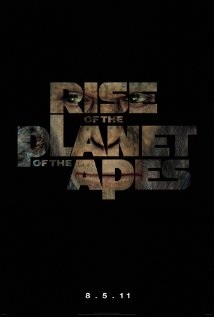
Rise of the Planet of the Apes (2011)
When this film get released it was after one of the biggest disasters in remake when Tim Burton got his hands on the franchise. The final product left us breathless with the stunning performances with Andy Serkis as Caesar the ape. We get to see how the saga started with small references to the very original start of the franchise. I have picked this because it surprised…
Here’s my second review for the Argumentative August Blogathon, celebrating the best in courtroom dramas (for the most part). This time, the courtroom-less Absence of Malice.
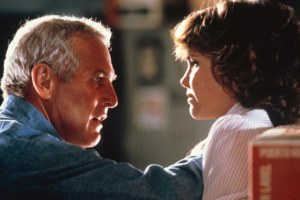
Absence of Malice is a film that I expected to like, simply because of its two leads. Casting Sally Field and Paul Newman together seems like a dream come true…