My Top Twelve Anime Films

Tags

, , ,

After last week’s Opinion Battle, I noticed that many movie reviewers perhaps have not had much exposure to anime beyond the few Studio Ghibli films that have gained acclaim outside Japan. Thus, I thought my next list would cover my favorite anime (which is just another word for a Japanese cartoon. Cue debate.)

I myself have had a varied history with anime. I grew up with the usual kids’ stuff like Pokémon and Yu-Gi-Oh! and Dragon Ball Z, but it just blended into all the animated TV shows I watched and never stood out to me as something different. Then came Spirited Away, and when it won the Oscar for Best Animated Feature in 2002, my parents and I decided to watch it pay-per-view. Nothing had prepared us for just how bizarre and, well, foreign it was (seriously, green decapitated heads rolling around?), and though I don’t recall my exact reaction other than “it was weird,” my parents totally turned their backs on anime overall. They still haven’t fully recovered.

It wasn’t until years later that a review of Grave of the Fireflies prompted me to give anime another try, and its moving and realistic story contrasted so greatly with Spirited Away that it gave me a new respect for what this genre could accomplish. A marathon of Ghibli films followed, and now I have enough favorite anime to make up a list like this. I don’t know how many like me there are, but I’m one of those people who would sooner watch an animated movie than a live-action one, and anime fits into that category. While it’s not my favorite genre, it’s among my most watchable.

I will say that I’m rather particular about my anime, and the kind I watched as a kid with all the yelling and exaggerated faces and reactions no longer appeals to me. None of the films below nor any Ghibli film I’ve seen carry these clichés, and I think they are better for it. Thus, here are my top twelve anime, and I hope that someone adventurous out there will give them a try as I did. You might find a new favorite too.

#13/Runner-Up: Princess Mononoke (1997), Studio Ghibli, directed by Hayao Miyazaki
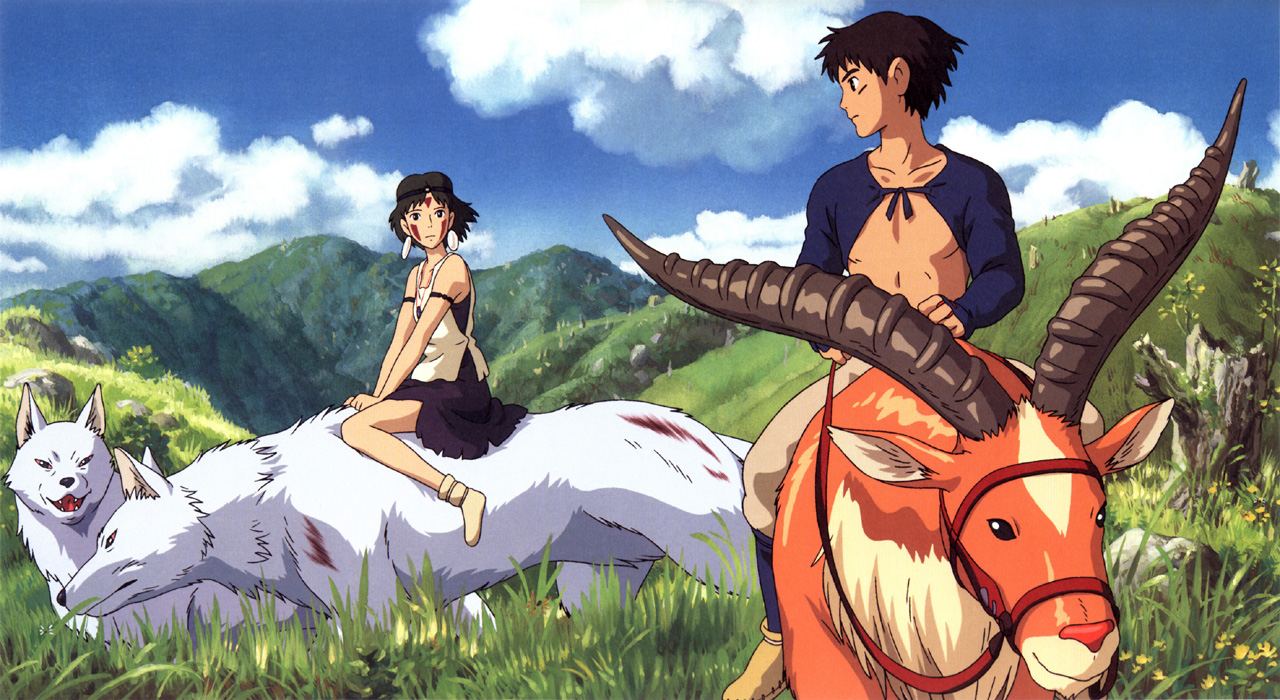
This is another film that I was not prepared for, in particular the violence. No other Ghibli film is like it and very few reviews mention how violent it is so I was shocked when heads and limbs started flying. However, when I eventually looked past this graphic element, I saw the story and artwork are amazing, and that the actual violence is a small part of the long running time. I cannot think of another animated film that I could easily call an epic, but Princess Mononoke fits that mold, as it follows Prince Ashitaka on a quest to cure a demon’s curse and restore peace to warring humans and forest gods. The pagan mythology is heavy, but the engrossing action and ambiguous characterization are exactly what made Miyazaki so famous. If only he’d left out the unnecessary violence…. (The English dub includes Claire Danes and Billy Bob Thornton.)

#12: Time of Eve (2010), Studio Rikka, directed by Yasuhiro Yoshiura

A more recent watch that displaced by previous #12, Time of Eve is a six-part web series that was combined into a thought-provoking movie about androids in the near-future. A high school student named Rikuo has always taken robots for granted as nothing more than appliances, but when he discovers a café where robots and humans are treated the same, this legal and moral gray area and its diverse patrons make him question his preconceptions about androids. Episodic and subtle, with much of the bigger picture left to the imagination, this sensitive drama will keep viewers pondering its themes long after the credits roll.

#11: Patema Inverted (2013), Purple Cow Studio, directed by Yasuhiro Yoshiura

While its premise may seem similar to the 2012 live-action film Upside Down, Patema Inverted is still a dazzling piece of work. After an experiment with the earth’s gravity goes awry and sends much of the world’s people falling into the sky, a colony of survivors live underground, despised as “inverts” by the “normal” people above…I mean, below…I mean…you know what I mean. The uncertainty of what’s up and what’s down is part of its appeal. Incredible shifting perspective shots give the viewer an idea of what different characters are seeing, and the core romance between two oppositely gravitated kids provides the heart of this sci-fi. Even if certain aspects are hard to understand, thinking about them exercises the mind (or at least it did mine). I haven’t seen Upside Down, but I’ve heard it didn’t fulfill its potential; Patema Inverted does.

#10: The Wind Rises (2013), Studio Ghibli, directed by Hayao Miyazaki

While Miyazaki’s work has been universally praised, it’s all much more appealing to the eyes and imagination than to the heart. He changed that with his final film, The Wind Rises. More down-to-earth than his fantasy films, it nonetheless flies high as it depicts the life and dreams of Jiro Horikoshi, the real-life designer of the Japanese Zero plane. The film carries some real emotional weight as Jiro falls in love and is forced to balance his engineering goals with the inevitable tragedy of loss. It’s one of the sweetest anime romances I’ve seen and an example of how creativity can lead to destruction. (The English dub includes Joseph Gordon-Levitt and Emily Blunt.)

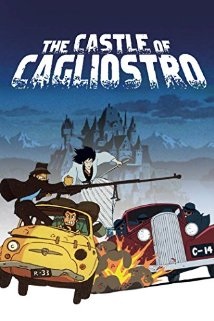
#9: The Castle of Cagliostro (1979), Tokyo Movie Shinsha, directed by Hayao Miyazaki

Here we jump from Miyazaki’s last film to his first. The Castle of Cagliostro may seem dated compared with other more popular anime, but its entertainment value outweighs much of the competition. The James-Bond-style adventure follows the exploits of gentleman thief Lupin III as he infiltrates a European castle and crosses a dangerous count to rescue a princess and uncover a counterfeiting operation. Just one among many Lupin films, Cagliostro stands out thanks to Miyazaki, who made the main characters more likable and exhibited his early craftsmanship.

#8: Cowboy Bebop: The Movie (2001), Bandai Visual Company/Sunrise/Bones/Destination Films, directed by Shinichiro Watanabe


Cowboy Bebop is hailed as one of the greatest anime shows ever, and its follow-up movie delivered more of the same awesomeness. Set between episodes 22 and 23 of the show (right before plot threads started wrapping up), the film fits into the episodic nature of the show as just one more adventure for the futuristic bounty hunters aboard their ship, the Bebop. Thus, it’s fairly accessible to newcomers and doesn’t require prior knowledge of the characters. When a terrorist releases a biological weapon on heavily populated Mars, the astronomical bounty on his head attracts Spike, Jet, and Faye to follow his trail. With elements of film noir and crime thrillers, this film boasts stylish action and music, despite its intermittent frank violence. Just watch the opening scene to get an idea of the coolness that is Spike Spiegel.

#7: The Girl Who Leapt through Time (2006), Madhouse, directed by Mamoru Hosoda

A favorite among viewers branching out from Studio Ghibli, The Girl Who Leapt through Time is a sensitive coming-of-age tale mixed with the perks of time travel. When Makoto Konno has the worst day of her life, including being hit by a train (a reeeally bad day!), she awakes to find she has the ability to leap back and forth through time. Juvenile antics give way to unfortunate consequences, and even if plot holes abound, the film excels in both its romance and sci-fi aspects. The end of this film always leaves me with a happy feeling.

#6: Wolf Children (2012), Studio Chizu/Madhouse, directed by Mamoru Hosoda

A darling among many anime reviewers, Wolf Children is an undeniably sweet family drama, one that balances cuteness with the pains of growing up. Combining the joys and trials of parenthood with werewolves may not have been an obvious mix, but Hosoda did an excellent job here. Despite the werewolves, the story is in no way a horror; after a college student named Hana falls in love with a mysterious man, and even after she learns he is half wolf, they share a brief but touching romance reminiscent of the beginning of Up. Most of the film, though, is about how Hana raises their two children Ame and Yuki, trying to hide their wolf side while wishing only the best for them. The ending may be rather disappointing, but the majority of Wolf Children is beautiful.

#5: Children Who Chase Lost Voices (2011), CoMix Wave Films, directed by Makoto Shinkai

I don’t care for much of Shinkai’s past work (e.g. 5 Centimeters Per Second), but once he stopped focusing on abstract feelings and actually told a worthwhile story, he hit this one out of the park. Also known as Journey to Agartha, this movie combines all the best elements of Studio Ghibli’s films into an exciting and occasionally moving adventure. After young Asuna meets an enigmatic boy named Shun, she embarks on a quest to a fantasy world deep under the earth, led by her progressively obsessed teacher in search of lost love. The whole film is about saying goodbye in different ways, and it features subtle morals, thrilling action, and some of the most gorgeously detailed animation I’ve come across.

#4: Nausicaä of the Valley of the Wind (1984), Topcraft/Tokuma Shoten/Nibariki/Hakuhodo, directed by Hayao Miyazaki

This is the film that skyrocketed Miyazaki’s career and directly led to the formation of Studio Ghibli. Nausicaä is both a slightly preachy cautionary tale about pollution and an intriguing post-apocalyptic adventure. Nausicaä herself is a princess, whose peaceful valley is threatened by rival kingdoms vying for both power and a way to halt the spreading of a poisonous forest and its humongous insectoid inhabitants. A lot happens and a lot isn’t fully explained because the story is just part of Miyazaki’s much longer manga (Japanese comic), which he wrote specifically so he could convince producers to finance this film. It was a hit and remains an anime classic with one of my favorite movie scores. (The English dub includes Uma Thurman and Patrick Stewart.)

#3: Laputa: Castle in the Sky (1986), Studio Ghibli, directed by Hayao Miyazaki

Miyazaki’s very next film manages to edge out its more acclaimed forerunner. Laputa: Castle in the Sky (or just Castle in the Sky) was the first film after Studio Ghibli’s formation and my favorite of Miyazaki’s. Set in a high-flying steampunk landscape, it joins likable engineer’s assistant Pazu with young Sheeta, who floats down from the sky with a glowing crystal. Fleeing from air pirates and government agents intent on obtaining her crystal, they race to the ancient floating island of Laputa and the secret power it contains. The score is phenomenal, the characters endearing, and the setting and action stunning. Even my anime-despising mom said it was “pretty good”; Castle in the Sky is a perfect introduction for Studio Ghibli newbies. (The English dub includes Anna Paquin and Mark Hamill.)

#2: Grave of the Fireflies (1988), Studio Ghibli, directed by Isao Takahata

Though other 1988 films like My Neighbor Totoro and Akira seem to get more attention, Grave of the Fireflies is the standout anime of the year and the decade. It’s strange to rank it among my favorites since it’s a deeply depressing tragedy that tears me up inside every time. I used to cry at the drop of a hat when I was younger, but Fireflies is the only film that still makes me sob bitterly. It tells the story of siblings Seita and Setsuko, orphaned after a World War II bombing, who must survive on their own and ultimately fail. It’s not a spoiler since the first scene reveals this fact, but the recounting of how it happened is utterly heartbreaking. Grave of the Fireflies is an emotional powerhouse about the loss of innocence and the cost of war.

#1: Whisper of the Heart (1995), Studio Ghibli, directed by Yoshifumi Kondō

My #1 is probably no surprise for anyone who saw my choice for last week’s Opinion Battle, and I highly doubt that many others would rank it as I would. This is a strictly personal choice (my parents didn’t see its appeal); certainly everyone has a film that speaks to them, even if it’s to them alone, and this one spoke to me. It’s simple and a bit slow, without the fantasy of other Ghiblis, but its realism is part of its appeal. Schoolgirl Shizuku develops a gradual relationship with Seiji, and the two of them encourage each other to follow their dreams and talents. Shizuku wishes to be a writer, and the inspiration she receives has encouraged me as well. Between the creative use of “Country Roads, Take Me Home” (one of my favorite songs) and the gentle, youthful drama, Whisper of the Heart is one of my go-to films for inspiration. (The English dub includes Brittany Snow and Cary Elwes.)

Runners-Up:

Akira (1988), directed by Katsuhiro Otomo – Definitely not for kids and a bit weak on characters, but the influential animation is still amazing all these years later.

Brave Story (2007), directed by Koichi Chigira – Not a lot of explanations, but this likable video-game-style quest features elements of Spirited Away and Children Who Chase Lost Voices.

The Boy Who Saw the Wind (2000), directed by Kazuki Omori – Clearly drawing inspiration from Mizazaki’s films, this adventure fantasy also seems like an influence on Avatar: The Last Airbender.

The Cat Returns (2002), directed by Hiroyuki Morita (Ghibli) – Somewhat of a follow-up to Whisper of the Heart, like a story that Shizuku would write; I’d like it even more if the connection had been made plainer.

Colorful (2010), directed by Keiichi Hara – Like Ordinary People meets Quantum Leap.

From Up on Poppy Hill (2011), directed by Goro Miyazaki (Ghibli) – Young romance mingles with a defense of knowledge and the past in this period piece.

Howl’s Moving Castle (2004), directed by Hayao Miyazaki (Ghibli) – Imaginative fantasy about a cursed girl and a self-centered wizard with a great voice cast (Christian Bale, Billy Crystal) and the best Ghibli animation yet IMO

Interstella 5555: The 5tory of the 5ecret 5tar 5ystem (2003), directed by Kazuhisa Takenouchi – An extended Daft Punk music video that wears thin over time but will easily please Daft Punk fans

Kiki’s Delivery Service (1989), directed by Hayao Miyazaki (Ghibli) – Sweet and simple tale of a young witch coming of age

Millennium Actress (2001), directed by Satoshi Kon – A slightly confusing journey through Japanese cinema and the search for the unattainable; so-so animation but a beautifully evocative ending

Ponyo (2008), directed by Hayao Miyazaki (Ghibli) – Inspired by The Little Mermaid; a cute fantasy for the younger set

Porco Rosso (1992), directed by Hayao Miyazaki (Ghibli) – An old-school story of a hard-boiled pilot in the 1920s cursed with the head of a pig

Paprika (2006), directed by Satoshi Kon – Imaginatively surreal and moderately disturbing, this was a clear forerunner of Inception, and at least one elevator scene seems to have been directly borrowed from this mature sci-fi

The Secret World of Arrietty (2010), directed by Hiromasa Yonebayashi (Ghibli) – Simple but endearing tale based on The Borrowers

Spirited Away (2001), directed by Hayao Miyazaki (Ghibli) – Yes, I saw it again and liked it more, but it’s still very weird and not for anime newcomers

Steamboy (2004), directed by Katsuhiro Otomo – Weak on story but spectacular with the detailed steampunk visuals and much more family friendly than Akira

Summer Wars (2009), directed by Mamoru Hosoda – An entertaining balance between extended family drama, digital smackdowns, and social commentary on our Internet culture

Also, a special mention for My Neighbor Totoro, a family film that has many fans, though I’m not one of them. Its lack of plot just isn’t for me, but anyone exploring anime should still give it a try.

Now that I’ve gotten this list out, I can get off my recent anime kick, but I hope that someone out there finds a new favorite here.
Ordinary People (1980) / Colorful (2010)

Tags

, , ,

So many reasons to throw in the towel,
To give up the ghost or abandon all hope.
Most are ignored with a tear or a scowl,
But some pile up on the few who can’t cope.
Life can be cruel, like the people who fill it,
But there are more ways to improve it than death.
Life can be bright for the people who will it,
Who see all the reasons to take their next breath.
_______________

Ordinary People’s Rating: R (for language)
Colorful’s Rating: PG-13 (for thematic material)

I haven’t done a double review since my comparison of I Am Legend and World War Z, and I thought it was about time for another, especially because I’ve found two similar films of late. It may seem odd to compare an Oscar-winner from 1980 with a recent anime film that few outside of Japan have heard of, but both movies share a particularly moving brand of family drama, depicted through the experiences of a suicidal boy.

Ordinary People marked the directorial debut of Robert Redford and also confirmed that Mary Tyler Moore could handle much more dramatic roles than her comedic TV persona. A favorite of my VC’s and what I term a AAA movie (because it’s All About the Acting), the Best Picture winner of 1980 features Timothy Hutton as Conrad Jarrett, a troubled boy who seems perfectly ordinary on the outside, as does his encouraging father (Donald Sutherland) and distant mother (Moore). He’s part of the choir, he’s on the swim team, and his parents go to dinner parties. Yet behind this ordinary façade lie demons that led him to try to take his own life. Through the insight of a psychiatrist (Oscar nominee Judd Hirsch), feelings of guilt and love are exposed like a raw nerve, and his relationships are both strengthened and strained by his coming to terms with the past. The powerful scenes between Conrad and Dr. Berger won Hutton a Best Supporting Actor Oscar and foreshadowed similar psychiatric purging in films like Good Will Hunting. In addition, the tension between Conrad and his glacial mother is both pitiable and realistic, especially for those who have endured similar indifference from a parent. While trauma endures and relationships are not all wrapped up cleanly with a bow by the end, there is hope that happiness and recovery are attainable for those who can let go of the past. (It was also interesting seeing early roles for Adam Baldwin and [Lost alert] Fredric Lehne.)

Colorful, which was nominated as an Excellent Animation of the Year at the 2010 Japanese Academy Awards, begins with an unnamed sinful soul in the afterlife being given a second chance. He is to be placed in the body of a boy named Makoto who committed suicide and will be given a limited time to make amends for his own past sins while learning why Makoto killed himself. This Quantum Leap-inspired premise is consistently intriguing as the new Makoto struggles to adapt to his new environment while being somewhat guided by an invisible “angel” of sorts (similar to the hologram Al). He learns that his mother had an affair and that his middle school crush is no better morally, and bullying played a role as well. Whereas Ordinary People pits the mother against the son, here it is “Makoto” who will not forgive his mother, always believing the worst of her and of most people, until he begins to look past himself.

Unlike Ordinary People, though, Colorful has some very apparent flaws, mainly in the character interactions. While the rotoscoped backgrounds are quite realistic, many conversations are strangely stilted in ways that go beyond the average English dub, particularly in scenes with an awkward girl who won’t leave Makoto alone. Yet, while I was considering writing the film off for its weaknesses, its poignant strength sneaked up on me. The pacing is slow and sometimes dragged out, but tension often emerges in quiet ways, in contrast to the emotional fireworks of Ordinary People. Characters that initially seem odd or distant turn out to have much more depth, and the eventual familial catharsis was disarmingly powerful. Despite its faults, Colorful boasts the kind of emotions that would probably earn acting Oscars if adapted properly to live action.

While these two films may seem very different visually, both Ordinary People and Colorful feature ultimately life-affirming messages in the wake of attempted suicide. While the former explores survivor guilt and loveless parents, the latter depicts the difficulty of forgiveness and the cost of infidelity. Both are beautiful films in their own way as they highlight how ordinary families cope with tragedy and how a single friend can make an enormous difference in one’s life.

Best line (from Ordinary People): (Dr. Berger) “A little advice about feelings, kiddo: don’t expect it always to tickle.”

Rank for Ordinary People: List-Worthy
Rank for Colorful: List Runner-Up

© 2015 S. G. Liput

338 Followers and Counting

Opinion Battles Round 10 Best Anime

Check out Round 10 of Opinion Battles on Movie Reviews 101. This time, it’s anime. I went with Whisper of the Heart, a personal favorite, but everyone has some great picks (even MovieRob). Vote for your favorite!

Unknown's avatarMovie Reviews 101

opinion battles

Best Animé

When it comes to animé we have had some of the most beautiful animated movies of all time, usually coming Japan we have decided to pick the our favourites from the amazing cinema that just doesn’t get the praise or chance in mainstream cinema.

So far we have only ever done Best of films but for the next Opinion battles we are going to pick Worst Sequel, if you want to take part email moviereviews101@yahoo.co.uk by 20th September 2015

Darren – Movie Reviews 101

The Castle of Cagliostro (1979)castle

I have to pick this one because even though I do feel certain films could be more complete films but this one could easily be the most fun I have had watching an animated movie. The action adventure side is so perfect for animation while the comedy is nailed down brilliantly. To further my case for this…

View original post 1,399 more words

The Creative Blogger Award…in Verse!

Tags


To James Haseltine back at Back to the Viewer,
I must extend thanks in accord
With the fact that he’s offered to little ole me
My first ever blogging award!

When I first began this here film review site,
I thought that my summary rhymes
Would set it apart from the bloggers who write
On films they’ve seen hundreds of times.

I may not be Longfellow or Dr. Seuss,
But I thought it only made sense
For me to accept this award as excuse
To rhyme at my readers’ expense!

 
The Rules:

From what I have heard and what I understand,
The rules are suggestions and not a demand,
But I am to offer five facts about me
And nominate five other bloggers (you’ll see),
Who then can accept with no need to explain
Or else can continue the nominee chain,
Until every blog with creative creators
Can show off this prize to the infrequent haters.

 
Stuff about Me:

 
1.  Besides the facts that all can see
(Did you know I write poetry?),
I’ll mention that I’m now attending college, going slow.
One class a season takes a while,
But slowly goes the measured mile.
A job in Web Design is calling once there’s more I know.

2.  I used to run a hot dog cart
And worked at it with eager start.
At Hot Dog University, Chicago taught me lots.
A shame it didn’t last for long,
Two months since business wasn’t strong,
But still it gave me insight into mobile food hotspots.
I do still get a kick at parts
Of films that feature hot dog carts.
Most films in New York City have one somewhere in the plot,
Like once in The Avengers where a Sabrett comes to naught.

3.  My favorite film that always sings
Is Peter Jackson’s Lord of the Rings.
I’m fairly good at imitating Gollum’s raspy sneer.
In his first scene, he croaks a threat,
“They’re thieves! They’re thieves!”, and you can bet
That I’ll be sneering out his lines whenever I am near.

4.  I’m known for, on a frequent basis,
Fitting things in tiny places;
Dishwashers and puzzles never stand a chance with me.
Some may think this talent banal,
Or perhaps I’m simply anal.
I prefer to think I’m thorough, wouldn’t you agree?

5.  Of dogs, I’m not the biggest fan;
To me, a better friend of man
Is cats, who never need a walk or slobber, growl, or bark.
I’ve got a sweet feline instead,
The cutest little quadruped
Who can be slightly less cute when her eyes glow in the dark.

My nominees:

These are the bloggers that I nominate;
I’d not be surprised if the five that I state
Already possessed this award, or had eight!

1.  A movie connoisseur to rival any blogger you can find,
MovieRob’s most likely seen more films than you and I combined.
While anime and horror movies aren’t his chosen cup of tea,
It seems there is no limit to the movies (good and bad) he’ll see.
From blogathons to genre highs to yearly retrospective tens,
Rob is always staying active with his movie-blogging friends.

2.  Cinema Parrot Disco is the site where one can be impressed
At all the many musings of a Table 9 Mutant, self-professed.
Beyond reviews, Miss Mutant loves to love her 1980s roots
And dreams up lists of movie rugs and greatest cinematic fruits.

3.  Who doesn’t like red-headed Drew who operates Drew’s Movie Reviews?
From write-ups of films old and new to movie quotes that still amuse
To Fave Five lists all worth a view, Drew’s site was obvious to choose.

 
4.  If you have ever thought that the Academy just got it wrong,
Then head on to A Fistful of Films, where you may end up staying long.
There Andrew’s covering each year, both films you love or maybe missed; he’s
Listing, ranking, and presenting his own film awards, the Fistis.

 
5.  Movie Reviews 101 has genres as its backdrop, so
That maybe gives you some idea of just how many films he’ll know.
Reviews by Darren focus on each actor and component part,
Which helps to understand a film when good and bad are a la carte.
Opinion Battles bring together bloggers with their movie picks,
And countless other features help you satisfy your movie fix.

 
My thanks again to James for nominating me for this award.
(His own reviews are excellent so visit if you’re ever bored.)
I hope to keep appreciating film and poetry for years.
May all of you continue being you and stay creative! Cheers!


Argumentative August Supplement #2 – The Judge (2014)

It may be September, but here’s my last review for Argumentative August, the courtroom drama blogathon hosted by MovieRob and Ryan of Ten Stars or Less. This is the most recent movie on their list, 2014’s The Judge, an underrated film to be sure. Big thanks to Rob and Ryan for hosting this dramatically fun blogathon!

tenstarsorless's avatarTen Stars or Less

image

Argumentative August Supplement #2 – The Judge (2014) 

Rob and I would like to once again welcome you to another review for our Argumentative August Blogathon. This next film, one of the supplement reviews, The Judge is being reviewed by S. G. Liput. Let’s see what he thought of this movie…

The Judge (2014) 

Hank Palmer didn’t want to represent his dad, the Judge,

A man devoid of sympathy, a rock that wouldn’t budge.

With pain as fresh as years ago, they craved their separate ways,

But when a charge of murder strikes, reluctantly Hank stays.

As past mistakes converge with new and justice vies with right,

A family quick to come apart grows closer in their plight.

________________

Rating: R (solely for language)

Since I reviewed the oldest film on Argumentative August’s list, I thought I should do the most recent as well. The Judge brings together two phenomenal actors and…

View original post 596 more words

In the Heat of the Night (1967)

Tags

, ,

In the heat of the night, there is murder;
In the heat of the night, there is crime.
There is prejudice pointing the critical finger
And a murderer biding his time.

One must see where his biases blind him;
One must see where his aptitudes end.
If another can help, shouldn’t one get behind him,
Even if he’s more ally than friend?

There are many who won’t understand it;
There are many who’ll say it’s not right,
But stretching convention may help to expand it,
And pay off in the heat of the night.
__________________

Rating: G (perhaps PG would be better)

Here’s another Oscar winner I can cross off my list of classics yet unseen. In a strong year with films like Guess Who’s Coming to Dinner and Cool Hand Luke, I was interested to see what made this mystery drama so much more worthy of Best Picture and Best Actor (for Rod Steiger). While the film itself is an excellent police drama, it’s clear that it was the right film released at the right time, and even if it ruffled some contemporaries’ feathers, it made history by doing so.

For starters, a police patrol car winds through the small Southern town of Sparta, passing some of the key players, only to stumble upon the dead body of the richest man in town. While Steiger’s Chief Bill Gillespie chews his bubblegum vehemently, a black man waiting for a train is arrested on a groundless suspicion and reveals himself to be Officer Virgil Tibbs from Philadelphia (Sidney Poitier). Now Tibbs and Gillespie must collaborate to solve the crime.

While the setup seems simple enough and many films since have forced black and white characters to work together, not many carry the tension of these two men who clearly hate their present situation. Gillespie wants only to get Tibbs out of town, but he knows this case is beyond him and that he needs the other’s expertise as a forensics specialist. Tibbs likewise cooperates only under orders, but eventually his sense of pride and responsibility drives him to uncover the truth. Gillespie would gladly condemn the first suspect, and Tibbs isn’t infallible either, but the two of them complement each other in ways they don’t fully recognize at the time.

The period and place turn out to be the most challenging aspects, since Tibbs’s race angers nearly everyone in town as he pokes around for the truth. He earns some respect for his deductions, but whenever someone acts hostile or refuses to cooperate, we’re never sure if they’re acting guilty or simply expressing their racism. The film’s greatest and most famous scene is the infamous slap, in which Tibbs gives as well as he gets and leaves everyone shocked. To be honest, I wasn’t aware of the scene and was equally surprised, considering the when and where the film is set. Considering this was the time of Martin Luther King, Jr., who was killed less than a year after its release, this scene really is a brilliant microcosm of the civil rights movement; Tibbs remains calm as he questions the suspect, but when he is struck, he returns in kind, as any equal man would. I doubt anyone could have pulled it off as effectively as Sidney Poitier, and I thought he deserved the Oscar more than Steiger. (Seriously, Poitier had this role, Guess Who’s Coming to Dinner, and To Sir, with Love [my favorite of the three] all in the same year, but didn’t get one Oscar nomination?)

As a mystery, In the Heat of the Night takes its time with the reveal, employing subtle foreshadowing, though the timeline of events on the fateful night could have been better explained. Ultimately, this is a film about respect, hard-won respect between two outsiders who shouldn’t have judged each other too quickly. For a film tackling difficult issues like race and abortion, In the Heat of the Night is both a hard-hitting product of its time and a dual character study that is still relevant today.

Best line: (Virgil) “They call me MISTER Tibbs!”

Rank: List-Worthy

© 2015 S. G. Liput

337 Followers and Counting

Genre Grandeur – Seven Samurai (1954) – Rhyme and Reason

Here’s my review for MovieRob’s August Genre Grandeur, this time black-and-white films. I tried something different with the Japanese epic Seven Samurai and found an enduring classic.

movierob's avatarMovieRob

B&WFor this month’s next review for Genre Grandeur – Black & White Movies, here’s a review of Seven Samurai (1954) by SG of Rhyme and Reason

Thanks again to Steven of Past Present Future TV and Film. for choosing this month’s genre.

Next month’s Genre has been chosen by Sherise of The Girl That Loved to Review.  We will be reviewing our favorite movies from the 1970’s. Please get me your submissions by the 25th of September by sending them to 70sfilms@movierob.net  Try to think out of the box! Great choice Sherise!

Let’s see what SG thought of this movie:

_____________________________________

1When raiders pillage every village,

How are farmers to get by?

They will expire unless they hire

Sympathetic samurai.

Not one, not two, not three will do,

And four could not hope to defend.

While five or six might win with tricks,

It’s seven, experts recommend.

The…

View original post 741 more words

My Top 12 Time Travel Movies

Tags

,

The intricacies of time may never be cracked by actual science, but in the fictional world, possibilities run rampant. Ever since I was a kid reading Frank Peretti’s book The Legend of Annie Murphy (a western mystery with a cool time-bending climax), I’ve loved a good time travel story. Sometimes, it’s simply a device to propel a non-sci-fi plot; other times, it’s the catalyst for some fish-out-of-water humor or a geeky escalation that hurts the head if you think too hard about it. While there are plenty of examples out there, including some that are still on my to-watch list (like The Butterfly Effect and 12 Monkeys), these are my top twelve time travel films thus far. Let me know if you have other favorites, and I may go back in time to update it.

  1. Time after Time (1979)

Starting off much like H. G. Wells’s The Time Machine, Time after Time sends Wells himself (Malcolm McDowall) from Victorian England to the present day, I mean 1979, as he searches for a time-hopping Jack the Ripper (David Warner). Not only does this film have fun with its setting and astute social commentary, it united McDowall and Mary Steenburgen, who married the next year.

  1. The Time Traveler’s Wife (2009)

While reviews for the big-screen adaptation of Audrey Niffenegger’s novel were so-so, this is one romance that enthralled me with its time-skipping premise. Eric Bana’s Henry DeTamble is unlikely to forge any lasting relationship, considering his mysterious genetic disorder that randomly displaces him in time, but Rachel McAdams’ Clare falls in love with him. They build a marriage as he jumps in and out of her life, and the result is touching and bittersweet. That fading handprint gets me every time.

  1. Meet the Robinsons (2007)

While not one of Disney’s biggest successes, Meet the Robinsons balances colorful silliness with deeper themes of belonging. When whiz-kid Lewis is whisked into the future by Wilbur Robinson, he meets Wilbur’s wacky family and faces past and future mistakes that threaten to destroy him. Based on William Joyce’s non-time-travel-related A Day with Wilbur Robinson, the film features plenty of laughs (and tears from my VC) and an admirable message that would make Walt Disney proud: “Keep Moving Forward.”

  1. The Girl Who Leapt through Time (2006)

Mirroring the quiet tone of another favorite anime film of mine, Whisper of the Heart, The Girl Who Leapt through Time has plenty of plot holes that often plague time travel movies, but its sensitive teen drama overshadows any faults. When Makoto mysteriously develops time-jumping abilities after falling into the path of a train, she uses them for fun and realizes too late the negative impact her temporal meddling has on others.

  1. Source Code (2010)

Though Jeffrey Wright specifically explains that his source code is “time reassignment” rather than time travel, the differentiation between the two is minor enough to still earn this a spot on the list. Starting off much like Groundhog Day, Jake Gyllenhaal is tasked with finding a bomber by reliving his last strike on a passenger train. Twists and moral concerns abound, and the finale takes a brilliant detour to an unexpectedly satisfying end.

  1. X-Men: Days of Future Past (2014)

I didn’t think it was possible for the X-Men franchise to recover from the despicable blow that was The Last Stand, but director Bryan Singer delivered in spades. When Wolverine’s consciousness is sent back to the 1970s to stop events that lead to the mass extermination of mutants, he must deal with the seeds of disaster and unwilling allies with plans of their own. Not only does this latest installment build on the rebooted team with James McAvoy and Michael Fassbender, but it ties up the earlier trilogy to grant the older characters the happy ending they deserved.

  1. TIE: The Terminator (1984) and Terminator 2: Judgment Day (1991)

These two classics from James Cameron only employ time travel to bring the killer cyborg/rescuer from the future, but their mission has always been to change the past. Schwarzenegger’s Terminator in the first aims to murder John Connor’s mother before the resistance leader is born, while Arnie becomes a hero in T2 protecting young John from an even more advanced killing machine. Judgment Day is the best and coolest for me, with groundbreaking special effects that still hold up well, but both deserve placement here.

  1. Bill and Ted’s Excellent Adventure (1989)

Now from a violent android actioner to a ridiculous dimwit duo! Dumb humor rarely strikes me as smartly as it does in this ‘80s cult classic. Bill (Alex Winter) and Ted (Keanu Reeves) may seem like the biggest slackers of San Dimas, but they’re destined for greatness, as long as George Carlin helps them with a history presentation. With a century-vaulting phone booth (which is obviously not the TARDIS), the two valley dudes collect historical figures left and right, only to lose them hysterically. Excellent!

  1. TIE:   Star Trek IV: The Voyage Home (1986) and Star Trek: First Contact (1996)

Both the original series of Star Trek and The Next Generation had some great time travel stories (such as The City on the Edge of Forever or Time’s Arrow), but they outdid themselves when they applied this classic sci-fi device to a full-length feature. The Voyage Home isn’t quite on par with Wrath of Khan or The Undiscovered Country, but it’s fun to watch Kirk and the gang in the 1980s as they search for humpback whales to save the planet. Hello, Computer! And First Contact went a far darker route, pitting Captain Picard against the Borg’s preemptive temporal attack and his own demons. It’s easily the best Next Gen film. I suppose the 2009 Star Trek reboot also features time travel, but these two always come to mind first.

  1. Somewhere in Time (1980)

One of my original cryfests, Somewhere in Time is a tragedy of star-crossed lovers separated by decades (and a penny). Christopher Reeve hypnotizes himself into traveling to 1912 in order to connect with an intriguing actress (the beautiful Jane Seymour). Coping with her uncooperative manager (Christopher Plummer) and the caprice of time, the two unite for a true tearjerker.

  1. Groundhog Day (1993)

Bill Murray found his greatest role in prickly weatherman Phil Connors, doomed to relive the same maddening Groundhog Day over and over. His responses to this unforeseen phenomenon are priceless as he enjoys, exploits, grows weary, and finally learns from all the repetition. His exchanges with the townspeople and lovely Rita (Andie McDowall) grow comfortably familiar over time, and as often as he relives February 2nd, I never get tired of watching Groundhog Day all over again.

  1. Back to the Future Trilogy (1985, 1989, 1990)

For many, Back to the Future was their first introduction to the idiosyncrasies of time travel, of ripple effects that could change the future, alternate time lines, and overlapping temporal corollaries. The trilogy also delivered all this timey-wimey mumbo jumbo with cool DeLoreans, flux capacitors, classic quotability, and the endearing odd couple team of Marty McFly (Michael J. Fox) and Doc Brown (Christopher Lloyd). The first Back to the Future may be Robert Zemeckis’s most beloved film, but I’ve always been partial to Part II, which tied in brilliantly with the first, even if its version of 2015 wasn’t quite accurate. Time travel may be “heavy” at times, but Back to the Future kept it just light enough to be endlessly fun.

_______________

In addition to the alphabetical honorable mentions below, I should also name-drop some great time-hopping TV series, like Quantum Leap, Lost, and several episodes of Star Trek: Voyager (Future’s End and The Year of Hell, for example). I still need to check out more Doctor Who eventually, but I’m sure I have plenty of time.

13 Going on 30 (2004) – A cute rip-off of Big that was better than I expected.

A Christmas Carol (1951, 2009) – This would be much higher on a Christmas movie list. There are lots of good versions out there, but I usually go with the Alastair Sim classic or the Jim Carrey animation.

Escape from the Planet of the Apes (1971) – What would happen if talking apes landed in 1970s America? Good question for a good film, sort of like the Star Trek IV of this franchise.

Field of Dreams (1989) – I’m not enamored of this film like many out there, but it’s still enjoyable with a small time-travel fantasy thrown in.

Flight of the Navigator (1986) – This light sci-fi film enthralled me when I was younger with its intriguing alien abduction plot.

Interstellar (2014) – I saw the twist coming, but Nolan’s latest movie gave him a chance to play with an interdimensional tesseract.

Men in Black 3 (2012) – Time travel breathed some new life into the franchise’s last entry, especially set against the 1969 moon launch.

Predestination (2014) – A mind-bending puzzle as only Robert Heinlein could conceive.

The Shining (1980) – This one may not seem like time travel, but the final scene does make one wonder.

The Time Machine (1960) – A favorite of my dad’s, George Pal’s adaptation of H. G. Wells’s novel still holds up all these years later.

A Shine of Rainbows (2009)

Tags

,

Where’er a rainbow touches earth or dives into the sea,
There our share of pain we bear in love most happily.
For as the bow that spans the sky but briefly holds earth’s hand,
So our connections slip away and often end unplanned.
Yet we don’t mourn the rainbow when its brilliant colors fade;
We find those colors elsewhere and remember them arrayed.
When grief and love remind us how the rainbow calmed our fears,
We wait through heaven’s tears for when another one appears.
__________________

Rating: PG

Based on Lillian Beckwith’s novel, A Shine of Rainbows may seem on the same level as a predictable Hallmark film, but it’s endearing enough to give you that warm satisfaction that only a good Hallmark film can.

Early on, young Tomas (John Bell) is adopted by the kindhearted Maire (Connie Nielsen), who ushers him out of the drab, unfriendly orphanage to her Irish island home. While the technique isn’t used again, this beginning mirrors other films like Pleasantville or The Wizard of Oz in emphasizing the contrast of Tomas’s near-black-and-white dejection thus far with the bright and happy colors of his new parent. The rest of the film is full of lush greens and reds and blues that carry an intentional magical quality, making the setting of this Celtic paradise the film’s greatest strength.

I was surprised to learn that John Bell, the little boy who plays Tomas, went on to play Bain, the son of Bard the Bowman in the latter two Hobbit films. Here, he is a shy and sensitive lad, coaxed to happiness by Maire and scared to silence by her husband Alec (Aidan Quinn). Tomas’s intimidation every time he sees Alec grows tiresome after a while, but Maire makes up for Alec’s coldness with warm lessons and stories. After Tomas’s initial introduction to this new family life, there’s the familiar storyline of an indifferent father figure needing to open his heart, and while I could see where the plot was going, it still carried enough heartbreak and warm fuzzies to be engaging.

To be honest, what this film most reminded me of was 2014’s animated Song of the Sea, another Irish family film with Gaelic myths of a stone giant, a distant father, and a climax involving helpful seals. Song of the Sea is much more fanciful, but the Irish accents and some of the themes kept bringing it to mind. Winsome subplots fill out the story, such as Tomas’s friendships with local kids and his care for a cute, obviously animatronic seal. While I enjoyed Song of the Sea more, A Shine of Rainbows is an appealing family drama that should please any lover of Irish scenery.

Rank: List Runner-Up

© 2015 S. G. Liput

337 Followers and Counting

Opinion Battles Round 9 Best Adapted Novel/Book

For Round 9 of Opinion Battles, we all picked the best adapted novels. My choice was the classic Shawshank Redemption, a choice so good that two others picked it too. Lots of great picks, though, so vote for your favorite!

Unknown's avatarMovie Reviews 101

opinion battles

Best Adapted Novel/Book

When it comes to adaptation from classic books or novels we get a huge number coming out each year, some a great others are terrible. We are going to look at the ones we think are the best, which ones do you enjoy?

If you want to take in the next round of Opinion Battles we will be doing best Animé email moviereviews101@yahoo.co.uk The deadline will be September 6th 2015.

Darren – Movie Reviews 101

Of Mice and Men (1992)mice

When it comes to books too movies we have had many classic films come from source material, Shawhank Redemption, The Shining, Harry Potter series the list goes on but I don’t read too many books in fact I think I have only read about 6 books since school and I watch to pick my favourite of the film that read. The list includes World War Z…

View original post 1,913 more words