Be sure to vote for your favorite young adult movie in the latest Opinion Battle at Movie Reviews 101! I picked the beloved ’80s comedy Ferris Bueller’s Day Off, but there are good choices aplenty.
Opinion Battles Round 6 Favourite Young Adult Movie
With Divergent: Allegiant hitting the cinemas I think it would be a great choice to look at our favourite Young Adult movies because let’s face it we get as many of these as we do superhero movies. The films are usually designed to be a series from a set of books. So what is the most popular Young Adult film?
If you want to take part in Opinion Battles we will be looking at Worst Remake, the closing date for choices will be Sunday 3rd April 2016 you can send you choice to moviereviews101@yahoo.co.uk
Darren – Movie Reviews 101
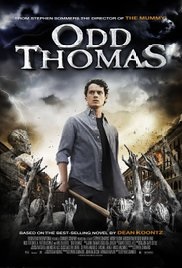
Odd Thomas
Odd Thomas is from a series of books by Dean Koontz which follows Odd Thomas as he tries to help the recently deceased pass over, he also has to deal with the demons of the afterlife. Odd works with his girlfriend…
I’ve not beheld a parted sea
Or outlived an emergency.
I’ve never seen a patient healed
Or glimpsed divine eternity.
I’ve never viewed a battlefield
With some celestial might revealed.
I wish I had, for maybe then
My faith in God would be more sealed.
Despite the things beyond my ken,
I’ve seen the warmth and faith of men,
And maybe that’s a miracle
Worth noticing time and again.
______________________
MPAA rating: PG
I had considered watching Risen or The Young Messiah for Easter, but the only faith-based film with a good show time (and an A+ CinemaScore) was Miracles from Heaven, which I’m rather glad I ended up seeing. I wasn’t won over by Heaven Is For Real, the previous film from producers T.D. Jakes and Joe Roth; it was an intriguing story but not one to sustain a full-length film, and the conflict felt forced coming from supposed people of faith. While that film showed a child’s heavenly vision early on and focused on people’s reactions, Miracles from Heaven does better in leaving it for the climax and focusing on a more relatable crisis of faith, with a far better chance for both smiles and tears.
Based on the true story of the Beam family from Burleson, Texas, the film depicts the family of five as real people whose faith is just one part of their lives. The parents flirt with each other; one daughter is obsessed with Taylor Swift; and another has a passion for soccer championships. Tragedy is the last thing they expect or deserve. Jennifer Garner outdoes herself as Christy Beam, who lives every parent’s worst nightmare when her daughter Anna (Kylie Rogers) is diagnosed with a severe and incurable gastrointestinal disease. Already stressed financially, she must endure constant worry, hospital waiting lists, incompetent doctors who won’t do more, competent doctors who can’t do more, and a host of unanswered prayers. Skeptics aren’t the only ones who question the goodness of God when bad things happen, and Christy’s faith becomes buried in feelings of grief and abandonment. Why did this have to happen to a sweet little girl? No one can offer her answers.
Obviously, the title indicates that something miraculous happens, but it’s more than that. In following this mother and daughter to their darkest point, moments of light shine out the brighter. Queen Latifah plays a kind waitress who befriends them while away from home and offers needed comic relief, and Eugenio Derbez is splendid as a Patch Adams-style child specialist who balances cheerful encouragement with inner knowledge that most of his patients will die. In these and many more side characters, the film reminds us that big miracles come from God, but small ones can originate in those random acts of kindness of which anyone is capable.
Doubt is everyone’s first reaction to miracles, and the film doesn’t forget that, nor does it try to explain why some people are so blessed while others are not. Miracles are rare but no less extraordinary, and for those willing, the unexplainable can remind people of hope when they have none. Miracles from Heaven has a few moments of familiar Christian themes that might get atheists rolling their eyes, but it’s an inspiring, well-acted, and emotional tale with which anyone who believes or hopes in miracles can identify.
Best line: (Christy) “Miracles are God’s way of telling us He’s here.”
I know this list will probably have less wide appeal than my usual lists and reviews, but I am a Christian and wanted to do something in honor of Lent and Holy Week. At first, I thought I’d do a list of Christian movies, but the sad truth is that most Christian films just don’t compare with “regular” cinema as far as quality and are often written off as preachy. (For the record, that list would have been topped by The Passion of the Christ, The Nativity Story, and Sheffey.)
So, upon second thought, I decided to count down my favorites of the Christian music scene, which surpasses movies in actually matching its secular counterpart. While many Christian songs rely on inspiring lyrics over a rather bland sound, my choices below feature unique instrumentation and catchy rhythms that can stand toe to toe with much of what’s on the radio nowadays, IMO. In fact, if not for the religious lyrics, these songs would probably be much bigger hits, and some of the artists actually have enjoyed crossover appeal. These are songs that I would gladly listen to whether they’re Christian or not, but the fact that they feature uplifting lyrics is icing on the cake. I’m only including one placement per band, and I’m not counting superficially Christian songs like ”Spirit in the Sky” or songs from musicals like Jesus Christ Superstar, Godspell, or The Prince of Egypt(though I love those too). Whether you’re a Christian or not, I have no doubt that there’s a song here for everyone to enjoy.
“Hallelujah” from The Call (2016) – Joy Enriquez
Joy Enriquez jumped from a backup singer to a solo artist over a decade ago, and one of her most recent digital releases is now a personal favorite of mine. With some background violin courtesy of Lindsey Stirling, “Hallelujah” is an instant modern classic of praise, and the homey music video is just plain sweet.
“Beat the System” from Beat the System (1985) – Petra
Just as many recent Christian rock songs don’t appear much different from the usual radio fare, the Christian songs of the ‘80s had the same ‘80s sound. Petra was the shining example of a hit Christian band back then and a favorite of my mom’s. While their style has evolved over the years, my favorite is the Journey-like “Beat the System,” boasting a video replete with early MTV imagery. “The Battle Belongs to the Lord” is also another great song of theirs.
TIE:
“Believe” from One (2004) – Andy Chrisman
“Can’t Keep a Good Man Down” from Pictures on Mantles (2004) – Russ Lee
I got both of these albums as gifts around the same time and played them to death while doing my homework. These two songs (probably the most evangelical on the list) are the standouts. “Believe” is one of those uplifting professions of faith that gets people testifying and just barely edged out “Complete” from the same album.
Not to be confused with the Alabama hit, “Can’t Keep a Good Man Down” is also a Christian single from Russ Lee, who left the band Newsong to go solo. Before returning as their lead singer, his solo efforts delivered underrated beauties like “Pictures on Mantles” and “Living Life Upside Down.” “Can’t Keep a Good Man Down” is the best, though, with its blend of acoustic and electric guitar and country-ish beat. Sadly, I couldn’t find his solo version of the song, but the slightly altered version from when he rejoined Newsong is still great.
“Call My Name” from Revelation (2004) – Third Day
Third Day is one of the biggest bands in contemporary Christian music, thanks in part to the husky voice of lead singer Mac Powell. “Call My Name” is their masterpiece with an encouraging message second to none.
“My Last Amen” from Ending Is Beginning (2008) – downhere
Having a completely different, almost quirky vibe compared with most of these songs, “My Last Amen” from Canadian band downhere is just a fun song worth singing along to. It also has drawn some comparisons to the music of Queen.
“Beating My Heart” from OK Now (2008) – Jon McLaughlin
This energizing hit may not be an exclusively Christian song, since it climbed through both Christian and secular Billboard charts, but it’s a good example of how lyrics can be written to appeal to both audiences. The words might refer to God or to a romance, and McLaughlin’s high voice lends “Beating My Heart” a Coldplay-style quality.
“Give It All to You” from Yellow Cavalier (2009) – Yellow Cavalier (now Anthem Lights)
Why this song isn’t more well-known I don’t know, except that Yellow Cavalier promptly changed their name to Anthem Lights after this one EP. “Give It All to You” has a swelling, dance-worthy rhythm with some fantastic background trumpets at the end.
“Alive Again” from Alive Again (2009) – Matt Maher
As far as straight, rousing inspiration that could get hands raised in praise, few can compare with “Alive Again.” The Canadian Catholic Matt Maher won the Dove Award for Songwriter of the Year last year, and it’s clear that his musical talents are still going strong.
“Galaxies” from All Things Bright and Beautiful (2011) – Owl City
The best example of a Christian artist with crossover appeal would have to be Owl City, aka Adam Young. His electronic stylings have graced films like Wreck-It Ralph and Legend of the Guardians (I knew I could work in some movie references!), and songs like “Good Time” and “Fireflies” are still played semi-regularly on pop stations. One of his best songs looks upward to the galaxies and the glory of God, with Young’s uniquely offbeat lyrics and strong synthesizer at play.
“Dive” from Speechless (1999) – Steven Curtis Chapman
“Dive” is the kind of energetic earworm that gets a crowd excited, starting slow and then bopping along with increasing buoyancy. I remember being scared stiff on a high diving board at camp as a kid, but this song could have had me leaping for joy.
“Hard to Believe” from VOTA (2008) – VOTA
After changing their name from Casting Pearls, VOTA gave the world this awesome track along with one of my favorite music videos ever. This song is meant to be sung along with and deserves so much more air time than it’s gotten. The groovy syncopation matches the kaleidoscopic video, and I never get tired of it.
TIE:
“Way Beyond Myself” from Born Again (2010) and
“Stay Strong” from The Greatest Hits (2007) – Newsboys
I confidently assert that the Newsboys are the greatest Christian rock band. Since their formation in Australia in the 1980s, they’ve supplied so many hits that I could probably do a top twelve list of just their songs (“Shine,” “Take Me to Your Leader,” “The Way We Roll,” “In the Hands of God,” “In the Belly of the Whale,” and “Escape,” for example). Their style is so varied and distinctive that it’s too bad that their song “God’s Not Dead” got its own movie instead of their greater work. It’s a good song (and so-so movie) but far from their best.
My top spot is shared by two different but equally deserving tracks. “Stay Strong” has the best lyrics, inspiring and devout while its melody matches perfectly, especially the synthesizer bridge proclaiming “This race can be won!” On the other hand, “Way Beyond Myself” places the fast-paced beat as the star, the kind that gets a huge crowd undoubtedly pumped. One is a heart-winner, and the other’s a head-banger. Together, these two songs exemplify the greatest strengths of contemporary Christian music.
Runners-Up (quite a few, in alphabetical order by artist):
“My Savior My God” – Aaron Shust
“Breath of Heaven” – Amy Grant
“Kings and Queens” – Audio Adrenaline
“What Life Would Be Like” – Big Daddy Weave
“Give Me Your Eyes” – Brandon Heath
“Where I Belong” – Building 429
“Jesus, Take the Wheel” and “Something in the Water” – Carrie Underwood (another good example of crossover with country music)
“More of You” – Colton Dixon
“Shine” – David Crowder Band (really beautiful and unique stop-motion video)
“Dear X (You Don’t Own Me)” – Disciple (the hardest rock song in the list)
“Oh Happy Day” – Edwin Hawkins Singers
“It’s Not Over Yet” – for KING & COUNTRY
“Christmas with a Capital C” – Go Fish
“Alive” – Hillsong Young and Free
“The River” – Jordan Feliz
“He Is with You” – Mandisa
“The Motions” – Matthew West
“Move” and “You Reign” – MercyMe
“Lay ‘em Down” – NEEDTOBREATHE
“Remember” – Passion
“Be Still, My Soul” – The Imperials
“Therapy” – Relient K
“Forgiven” – Sanctus Real
“The Words I Would Say” and “Live Like That” – Sidewalk Prophets
“Something Holy” – Stellar Kart
“Stand in the Rain” – Superchick
“You Are More” – Tenth Avenue North
“City on Our Knees” – TobyMac
With Easter around the corner, I think the best way to end this post is with the ultimate uplifting Gospel song, “He’s Alive” by the Gaither Vocal Band with David Phelps. Hallelujah and Amen!
Up and up they build the tower;
Up and up ambition leads.
Further down, foundations sour
As equality recedes.
Bitter grows the patient base
And richer grows the wealthy crest.
Neither’s happy with their place,
And both believe that they know best.
Social dangers of the past
Are pains mankind will not outgrow.
In the future, race and caste
Are rifts we still must overthrow.
____________________
MPAA rating for 1927 Metropolis: Not Rated (should be PG)
MPAA rating for 2001 Metropolis: PG-13
This will be the beginning of a new feature called Cartoon Comparisons, in which I will compare and contrast a live-action and animated film that share plot elements or source material. I didn’t realize it at the time, but my first stab at this was my double review of Ordinary People and Colorful, after which I discovered several other pairs of films to consider. For this Cartoon Comparison, I’ll be tackling the silent-era German classic Metropolis and the 2001 anime adaptation, also called Metropolis.
I haven’t seen a great many silent films, but most seem to be relatively short so as not to overstay their welcome. Fritz Lang’s Metropolis, at least in its most restored version, clocks in at nearly 2½ hours, a daunting runtime that’s long by talkie standards. Until recently, my only exposure to Metropolis was in Queen’s music video for “Radio Ga Ga,” which shows many of the film’s most impressive special effects, expansive skylines with tiny moving vehicles and floating ships that still beg the question “How did they do that in the 1920s?!” The art deco set design is consistently impressive so that even if some viewers start getting bored, architectural enthusiasts shouldn’t. Being familiar with only the film’s visual style, I was surprised at the high-minded plot, which includes a despotic industrialist, his sympathetic son Freder, a peace-urging love interest named Maria, and a mad scientist who creates a robot to become Maria’s evil doppelganger.
The film clearly owes its classic status to its interesting story and memorable imagery, but the usual complaints and conventions of black-and-white silent pictures apply, even more than usual due to its length. When characters are in love or shock, they hold their hands over their heart; when they’re tired, they conspicuously wipe their brow; when they’re scared, they practically have a seizure. Brigitte Helm does double duty as both the demure, angelic Maria and her wicked robot copy, who indulges in weirdly reptilian movements and is over-literally equated with the Whore of Babylon.
Despite the silent-era excesses (like most of the men wearing lipstick), many elements still hold resonance. Some are visually striking, such as Maria being chased by a flashlight’s glow, the flooding of the worker city, and the climactic fight with shades of The Hunchback of Notre Dame. One of the most notable social aspects was the tension between the poor working class and the wealthy elite, led by Freder’s father. The evil Maria takes advantage of the oppressed workers to incite riots and impulsive fury, which cause more problems and grief than they fix. Even in 1927, before Hitler’s Germany or more recent threats of rioting, Metropolis served as a warning against blind proletarian rage in favor of understanding on both sides. It’s a drawn-out, melodramatic test of one’s patience but one ultimately worthy of all the critical appreciation.
Now for the 2001 anime film of the same name. This Metropolis is based on the 1927 film but has its roots in a 1949 manga of the same name, which has little-to-no connection with Fritz Lang’s story. There’s still a bustling metropolis, parallels to the Tower of Babel, a mad scientist, societal turmoil, and a robotic girl, but despite some set design toward the end that pays homage to the original film, the story is its own. Other similarities are owed to the film’s production team. Many of the cartoonish character designs with big eyes and bigger noses seem as if they had been plucked from Astro Boy, due to the involvement of Tezuka Productions, which was founded by Astro Boy’s creator. In addition, the script was written by Katsuhiro Otomo, which explains traces of his cult favorite Akira, such as the distinct character motivations, political uprising amid catastrophic danger, and runaway power resulting in eye-popping destruction.
The Metropolis anime still has the social tension between classes, but this becomes secondary to the tension between humans and machines. It is robots who are relegated to the lowest levels of Metropolis, and distrust of machines runs rampant. Instead of a robotic harlot to sow dissent, the central android is a young girl named Tima, commissioned by a power-hungry duke but found first by a detective’s nephew who believes her to be human. The duke’s adopted son vows to hunt her down even as she questions her own identity.
This version of Metropolis is unlikely to leave anyone bored, and the animation is as polished and spectacular as any anime I’ve seen, albeit with a more sci-fi sheen than the films of Studio Ghibli. As a fan of futuristic cityscapes, Roger Ebert even called it “one of the best animated films [he’d] ever seen.” Like the original Metropolis, much of its power lies in the visuals: enormous fish swimming through the transparent wall of a high-rise office, a threatening stand-off as snow begins to fall, and especially the explosive climax set to a bizarrely fitting Ray Charles song.
Like Akira, Metropolis was meant to be a game-changer for anime, and the skill on display does not disappoint. What it lacks is a bit more focus on characters. The villain’s machinations are left rather vague, while the key relationship between the boy and the robot girl could have used more depth. I liked how their bond was tested, but by the end, the closing scenes don’t seem quite as optimistic as they try to be. These complaints are still quibbles, since the characters are still more engaging than in Akira.
It’s no surprise that a film with so much more action, color, and sound is far more entertaining than a silent picture from 1927. Lang’s Metropolis was the forerunner, the seed of so many other futuristic films since, while the animated Metropolis is like the vibrant blooming of its influence on animation worldwide. Both are must-sees for fans of science fiction cinema.
Best line from the 1927 Metropolis: (the closing title card, echoing Maria) “The mediator between head and hands must be the heart!”
Best line from the 2001 Metropolis: (Atlas) “It’s our emotions. They vibrate, and all we can do is move forward within that amplitude. But without affirming them, we can’t survive.”
There once was a couple steadfast
Who danced on the floor unsurpassed,
Till, thrilled by the groove,
The man busted a move,
And every last judge was aghast.
They groaned and bemoaned the upstart.
They claimed he disgraced their whole art.
Yet those like the pair
Who were willing to dare
Realized they didn’t care
About outlawing flair
And let them keep dancing their heart.
________________
MPAA rating: PG
Have you ever started watching a movie and knew from the first ten minutes that you didn’t care for it, and then, by unexpected degrees, warmed up to it until you realized that you did actually like it? I can’t think of another time when that was the case, but that was my experience with Strictly Ballroom, the first film from Australian director Baz Luhrmann. I’ve only seen his rather forgettable version of The Great Gatsby (the second half of which was better than the first), but Strictly Ballroom is his most critically acclaimed film, with a Rotten Tomatoes score of 95%.
Centered on Australian competitive ballroom dancing long before Dancing with the Stars, the movie starts out as a garish mockumentary, detailing the unconventional style of dancing favorite Scott Hastings (Paul Mercurio) and trying to paint his haughty mother and the judges as unbearably pretentious. The gaudy close-ups and quirky editing were probably meant to be comedic and cater to Luhrmann’s penchant for flashiness, but it just comes off as bad acting and direction.
I was about ready to write it off as not for me, but I stayed with it. I watched as Scott was approached by the ugly duckling of the dance academy Fran (Tara Morice). I watched as their unlikely partnership bloomed into romance and Fran’s Spanish family showed their dancing chops. (There are Spanish people in Australia. Who knew?) I watched as Scott was torn between winning a competition for his sheepish father’s sake or dancing for himself and Fran. The whole movie just kept improving until I was left pleased and cheered by the finished product. The choreography was excellent, and certain scenes with Scott and Fran seemed to have a memorable quality, as if they should be much more famous and iconic.
Why did it have to start so poorly? I’ve read that the film plays with stereotypes, but the beginning employed a stylistic choice that fell flat, in my opinion, and persisted in the insufferable authority figures who refused to allow Scott’s personal dance choices. While they were consistently grating, I did appreciate how his foe’s stance was explained as both uncertainty at what would be acceptable or able to win and cutthroat greed to protect a “sport” that had become an industry.
Either way, I wouldn’t watch Strictly Ballroom for the antagonists. Scott and Fran and their dancing are the core of the film and an endearing cinematic example of the whole “follow your heart” cliché. My ranking it as List Runner-Up rather than List-Worthy lies mainly in the beginning’s shortcomings and the fact that it wasn’t very funny for a comedy, but another viewing could easily raise my opinion. Strictly Ballroom is a prime example of why you should finish what you start; it just might surprise you.
Best line: (Fran, with a quote that seems like it should be more famous too) “A life lived in fear is a life half lived.”
Loneliness can end in death
And one forlorn and final breath,
If a person in despair
Is not aware that others care.
A lonely man can yield to fears
That he’s alone among the spheres,
And many have assessed such thoughts,
From wealthy men to astronauts.
It’s true that lonely men can fret,
But loneliness can also set
A man’s commitment to restore
His life and courage from before.
__________________
MPAA rating: PG-13 (mainly for language)
I’m so very glad I finally saw this movie. Based on the same-titled book by Andy Weir, who published it serially on a blog before a big publishing deal arrived, The Martian is a combination of Cast Away and Apollo 13, borrowing and in some cases heightening their strengths.
When a storm hits NASA’s Mars base and the six astronauts are forced to evacuate, Mark Watney (Matt Damon) is left behind and forced to survive and wait for rescue. I was surprised that most of that synopsis happened in the first ten minutes, with the rest of the film dedicated to the survival. There was no real establishing of characters, least of all Mark, not even the cursory introduction of Gravity’s opening scene, before the action and disaster kicked in. Actually, the rest of the film isn’t much different in its absence of backstory, yet the central plot and struggle compensate for the fact that such potential shallowness would normally earn criticism. Weir in writing the story and Ridley Scott in directing it have fashioned a film full of characters, wordless activity, calculations, and halfway understandable science that is still somehow riveting, entertaining, and never boring. That’s no mean feat.
I don’t mind Matt Damon, but my VC actively dislikes him. In fact, the only role she’s liked of his (aside from Spirit since that was just his voice) was in Interstellar because he got blown out an air lock. Against all odds, she too enjoyed The Martian. She might have enjoyed it more with a different actor, but at least she was rooting for Damon not to get blown out an air lock. Damon’s performance isn’t quite on the level of Tom Hanks in Cast Away, but he deftly carries his alone time on Mars with humor and resolve while occasionally letting his inner distress peek through. At least he didn’t have to deal with aliens, right? The rest of the ensemble trying to rescue Mark fill their roles well, with Chiwetel Ejiofor and Jessica Chastain standing out. Jeff Daniels as the Director of NASA comes off at first as a soulless administrator, but his steely commitment to making hard choices covers some genuine concern for his astronauts that isn’t obvious.
What makes The Martian special spans both the minute details and the big picture. Aside from the amazing special effects and expansive Martian vistas (and the characters floating through the rotating Hermes shuttle was pretty darn cool), there is much to enjoy. The ’70s disco soundtrack is supposed to get on Mark’s nerves, but it heightens the overall enjoyment for us, with self-referential choices like Thelma Houston’s “Don’t Leave Me This Way” and Gloria Gaynor’s “I Will Survive.” David Bowie’s “Starman” especially complements its montage and got stuck in my head afterward. Other little geeky moments include Sean Bean’s explanation of the Council of Elrond, as well as Sebastian Stan (The Winter Soldier) and Michael Peña (Ant-Man) as shipmates and cheering for “Iron Man.” I can’t wait to see if Bucky and Luis meet in the MCU. “Hey, weren’t you in The Martian?”
In addition to the little personal touches, the entire film serves as an encouraging repudiation of the famous declaration of logic from Spock (and Dickens): “The needs of the many outweigh the needs of the few, or the one.” While NASA’s director holds to that theory, far more people see Mark’s rescue as a duty to his individual value. Putting “no man left behind” over the more utilitarian view, many people sacrifice their time, their safety, and their personal interests to bring him home.
The Martian definitely vies with True Grit for my favorite of Matt Damon’s films, and it’s a shame it didn’t win any Oscars due to stiff competition. I suppose that’s why it was made into a “musical or comedy” to get some traction at the Golden Globes, but it’s much more dramatic than comedic. It’s a satisfying testament to the danger and unifying potential of space travel, the power of duct tape, and the worth of even one life.
Best line: (Mark Watney) “I don’t want to come off as arrogant here, but I’m the greatest botanist on this planet.”
Be sure to vote for your favorite action hero (superheroes excluded) in Round 5 of Opinion Battles. Good picks abound, but I picked the one and only Indiana Jones!
To celebrate the release of London Has Fallen and the good old school action movie, we are going to look at our favourite action heroes in film, we have excluded superhero as we want to have a human hero. We have had years of action movies which have all offered some of the wildest sequences in movie history, out fought the odds to save the day and often the world.
If you want to take part in the next round of Opinion Battles we are asking Favourite Young Adult Film, email moviereviews101@yahoo.co.ukwith your choices by Sunday 20th March 2016.
Movie Reviews 101
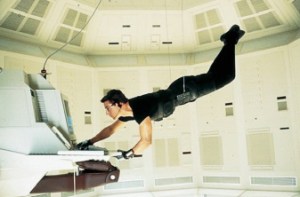
Ethan Hunt – Mission Impossible Franchise
Ethan Hunt is the agent that has saved the world five times so far, he has the everyday normal look about him. He uses his brains and his skills to…
Some have their goals and their futures all mapped, People who know where their aptitudes lie, but Endless potential is often untapped, Loath to step out and wholeheartedly try, but Longing one day to catch somebody’s eye.
You may have dreams that remain in your head Only to wither away over time. Useless are hopes overlooked and unsaid, and Rare is the victor unwilling to climb.
Hear not the people who doubt every rung, Echoing doubts they themselves have received. Attend to the words of the more fruitful tongue, Ready and willing, no thoughts preconceived, To trust and to see what great deeds are achieved.
Open your notions of what you can do; Utter a cheer for still others like you, and Try, for indeed that is how dreams come true.
____________________
MPAA rating: PG
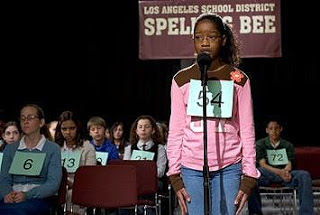
I’ve often enjoyed watching the Scripps National Spelling Bee, a contest that mainly serves as an outlet for everyone to marvel at how kids can do what so many adults can’t. While it’s heartbreaking to watch the loser’s hopes dashed with the ding of a bell after words like ptyalagogue and apparatchik, the winning moment is a well-deserved shot of feel-good triumph, for the winner and those watching. Such is the appeal of Akeelah and the Bee, a story of hard work rewarded.
Keke Palmer is excellent as Akeelah Anderson, a young black girl who tries to merely blend in at her inner-city school. What makes her different, though, is her uncommon interest in spelling, which is little more than a hobby, but when she is urged to take part in the school’s spelling bee, it becomes more than that. Suddenly, her principal (Curtis Armstrong) has high hopes for her and encourages her to train with Dr. Larabee (Laurence Fishburne), who himself participated in the National Spelling Bee as a child. Though her own confidence is fragile, she commits to the effort of studying and preparing for the National Bee.
Akeelah and the Bee could easily have been a ho-hum inspirational tale, but its nuance and heart win the day. Akeelah is almost trapped by a system that expects the least of her, while others see her potential. Fishburne is especially admirable as her spelling coach, acting not unlike Sydney Poitier in To Sir, with Love, patient with his pupil’s progress but adamant that she not become complacent or “talk ghetto” when their focus is the English language. He enshrines a quote by Marianne Williamson as his cogent argument against self-doubt, and even as he feels himself getting more invested in Akeelah than he had planned, he provides an example for her and an implicit call for her to be a role model for others.
The Scripps National Spelling Bee itself is recreated perfectly, right down to the same moderator whose recognizably uninflected voice reads out those difficult terms that no one would really use in a sentence. The pressure on the contestants is also very real and not just for Akeelah. Her rival Dylan Chiu (Sean Michael Afable) is constantly pressured by his father to win, and some scenes made me question the merit of putting kids under so much strain for the sake of an unlikely win. Yet Akeelah also makes friends through her newfound ambition, and even wins the encouragement of her mother (Angela Bassett) and her entire community. One seemingly shady punk named Derrick briefly reveals a softer side that seems to have been quashed by his environment, and his backing of Akeelah’s goals is like a chance to lend the support he never gave his own.
Akeelah and the Bee occasionally drifts into predictable territory, but by the end, the plot and characters take the unexpected high road to a happy ending well-earned. It’s hard to find fault when a film’s message of self-confidence and accomplishment is so earnestly and realistically presented (for the most part), and Akeelah and the Bee is a perfect example of an inspirational story done right.
Best line: (Derrick) “Kick his butt, Akeelah! B-U-T-T, butt!”
Just another normal day,
Just keeping normal cares at bay,
But then to everyone’s dismay,
The ground begins to shake.
The rocks and hills begin to play,
The soundest structures start to sway,
Entire buildings fall away
Amid the sudden quake.
If you make it through the scare,
You wonder how your loved ones fare.
Do they live and how and where?
You worry more for them.
The worst disasters we must bear
At best encourage us to dare
To save the ones for whom we care,
Whom danger might condemn.
__________________
MPAA rating for Earthquake: PG
MPAA rating for San Andreas: PG-13
There’s something strangely entertaining about a disaster. Whether it be the dated survival tales of the 1970s or the modern effects-heavy world-wreckers, it seems clear that it’s not just the Joker who likes to watch the world burn. Of course, this doesn’t apply to real-life disasters. Films like The Impossible and World Trade Center are serious and painful reminders of tragedies, but others like San Andreas are enjoyed as popcorn fun simply because they’re not real. This seems like a puzzling dichotomy, but it’s no less true.
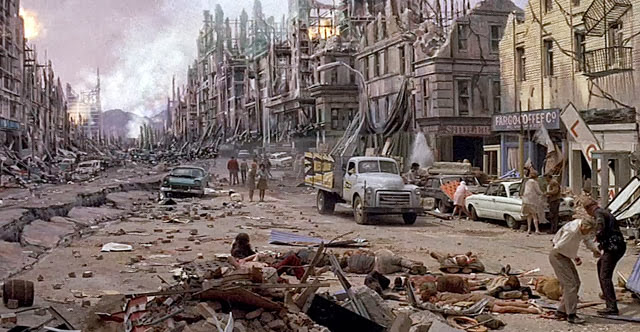
I thought I’d do a comparison of two similar films from different eras that exploit people’s fondness for destruction: 1974’s Earthquake and last year’s San Andreas. Both revolve around earthquakes blind-siding California and people’s struggles to survive. Both include experts who saw the quake coming but didn’t act fast enough, crumbling cityscapes, characters getting trapped in a parking garage, and a dam’s destruction and subsequent deluge (one at the beginning, one at the climax). While a few of the shaking scenes are even similar (both show a glimpse of a cook suffering at the hands of his stove), the two films are on entirely different levels. Earthquake was groundbreaking at the time and even won an uncontested Oscar for Best Visual Effects, but it seems quaint next to the comprehensive devastation of San Andreas, which is ironic since the quake in Earthquake is a 9.9 on the Richter scale while those in San Andreas only reach 9.6. (Yeah, only.)
I was curious to see Earthquake because of its tie-in to an episode of Quantum Leap, in which Sam leaps into a stuntman who features in a famous scene from this movie, complete with a clip showing Lorne Greene. It’s clear now as it surely was then that Earthquake is a gimmick film. Released at the height of the ‘70s disaster craze and the same year as The Towering Inferno, it seemed to be the result of producers saying to themselves, “Let’s see, we know of movies with a plane disaster, a ship disaster, a hurricane disaster, a fire disaster…What’s left? I know! An earthquake!” Plus, the film was accompanied by a new speaker system called Sensurround, which was meant to heighten the feeling of experiencing an earthquake and which was shorter-lived than the early 3-D craze. With so much effort put into accentuating the quake itself, everything else about the movie seems secondary, even though the actual shaking is relatively short.
Like other disaster films of the era, Earthquake is jam-packed with stars: Charlton Heston as a businessman unhappy with his marriage, Ava Gardner as his sullen wife, Genevieve Bujold as his lover, Lorne Greene as his boss, George Kennedy as a policeman, Richard Roundtree as a stuntman, Walter Matthau (under a pseudonym) as a drunk, and Marjoe Gortner as a psychopathic National Guardsman who uses the disaster for his own empowerment. And that’s not even half of the ensemble. It’s clear what the filmmakers were trying to do, focusing on a large swath of the population dealing with a huge disaster in different ways, yet only five or so characters really matter and even the film seems to forget about many secondaries by the end. Certain scenes are impressive for their time, and several are tense as characters try to escape the aftermath of the quake. I just wish that the cast and the narrative overall had been streamlined, perhaps with a less downbeat ending.
San Andreas, on the other hand, is everything a disaster movie should be, with all the unmitigated damage you could want. We see dams bursting, cars crashing, helicopters crashing, buildings toppled or chipped apart, and entire cities reduced to a flooded, smoking ruin, and it’s cool! Of course, it would be horrific if this actually happened (and I suppose it could), but it’s a feast for the eyes boasting an astronomical body count with no actual bodies. While I don’t really buy the causes for disasters like The Day after Tomorrowor 2012, an earthquake is more plausible and thus more alarming, though I was confused by the inclusion of a tsunami. (Seriously, wouldn’t a tsunami go out toward the sea and hit Hawaii instead of doubling back toward the source of the quake?)
Dwayne Johnson (whom everyone still calls the Rock) isn’t what most would consider a consummate actor, but he certainly knows how to play a tough, capable lead such as air rescue pilot Ray Gaines. Returning as his co-star from Race to Witch Mountain, Carla Gugino plays his soon-to-be ex-wife, whom Ray must save from certain death, along with their daughter Blake (Alexandra Daddario of the Percy Jackson films). There’s also Paul Giamatti’s worried seismologist and Ioan Gruffudd’s architect/home-wrecker, whose character is tested by stress and easily written off as selfish. While there are still many minor players, Ray’s family is the focus, which proves to be far more entertaining than the scattered attention of Earthquake. Screenwriter Carlton Cuse gives just enough emotional baggage and stress-kindled romance to be relatable, while throwing in a few moments that seemed directly drawn from his experience with Lost.
Neither film is what I’d call great cinema, but as a disaster movie, San Andreas is easily the better movie and one of the more exciting entries in the genre. I enjoyed watching it a second time even more because I got to watch my easily excitable dad jump out of his seat with two dozen “OMG” moments. Watching the two films side-by-side did emphasize one of the differences between the old wave and the new wave of disaster movies. While the likes of The Poseidon Adventure and Earthquake weren’t afraid to kill off main roles and leave the audience sharing some grief with the characters, more recent films are more concerned with keeping the protagonists together and finding a silver lining. It’s hard to say which is a better method, but one thing is for sure: movies like San Andreas and Earthquake are why I will never move to California!
Best line from Earthquake (which ties in to my elevator list): (dam caretaker, when told things seem fine after an elevator incident) “Right. People drown in elevators every damn day of the week!”
Best line from San Andreas: (young Ollie, after getting Blake’s phone number for his older brother) “I can’t wait to be twenty.”


 Opinion Battles Round 6 Favourite Young Adult Movie