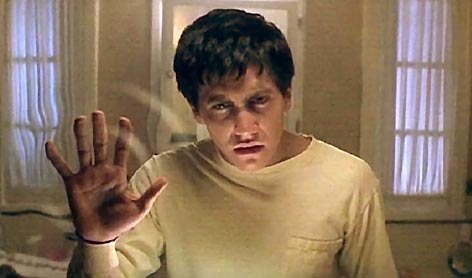
Opinion Battles Round 21 Favourite Ghost Movie

Don’t forget to vote for your favorite ghost movie in Round 21 of Opinion Battles! Ghost movies aren’t just for Halloween, and one that I can watch anytime is Ghostbusters 2, the slightly funnier sequel to the classic original. That’s just my opinion, but be sure to vote for yours as well.

Unknown's avatarMovie Reviews 101

Opinion Battles Round 21

Favourite Ghost Movie

Halloween is here and that means time for a couple of horror rounds, the first we are looking at our favourite film involving ghosts, we have some of the most frightening or comical films but what will everyone pick?

If you want to join the next round of Opinion Battles we will be take on What is your First-Choice Halloween Horror Marathon, to enter email your choice to moviereviews101@yahoo.co.ukby Saturday 28th October 2017.

Darren – Movie Reviews 101

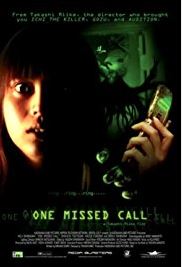
One Missed Call

I personally love ghost film, I find something in all of them but One Missed Call bought into horror something I never thought would be scary, an asthma inhaler. I know that doesn’t sound like the most threatening but trust me it is, the ghost side of this film comes from ghost haunting the students who need to figure out why.

View original post 707 more words

The Dirty Dozen (1967)

Tags

, ,

When Nazis are doing what Nazis will do,
And you’re busy planning for D-Day’s debut,
Too busy to spare a commando or two
To send on a raid that could likely get you
Fired if it were to fail or fall through,
Who wouldn’t think, “I’ve an idea to pursue!
I’ll gather a murderous felon or two
Or twelve and I’ll line them all up in a queue
And train them to do what I want them to do.
Who cares if they misbehave out of my view
Or turn psycho, causing a hullabaloo?
It’s not my fault if something bad should ensue.
I know it’s a risk, and it’s dangerous too,
As my bosses would tell me if they only knew,
But expendability has its value.”
Who would think that? That’s right, very few.
___________________

MPAA rating: Not Rated (should be PG-13)

Considering I only saw it once years and years ago, I thought it was about time I reminded myself why The Dirty Dozen is so popular. After all, its memory brought Tom Hanks and Victor Garber to tears in Sleepless in Seattle. While it didn’t quite leave me choked up like them, I must admit it’s a unique classic of the war genre, full of surly machismo and a highly talented cast. And despite having practically the same basic premise, it’s way better than Suicide Squad.

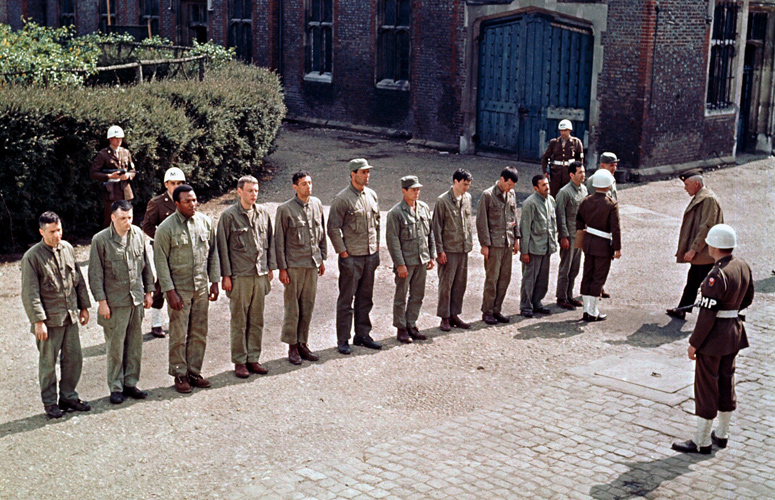
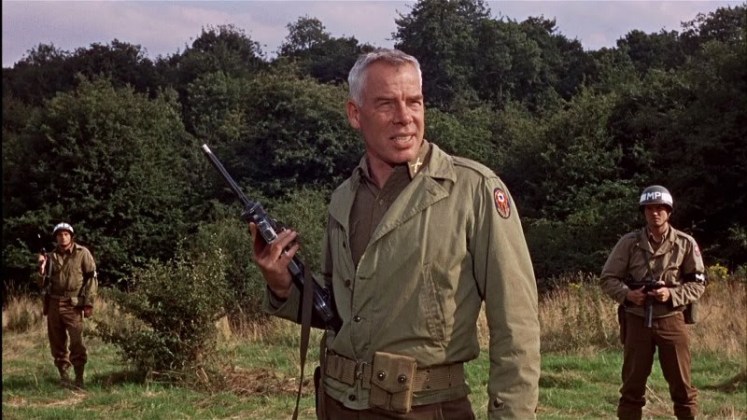
In the months leading up to D-Day, Lee Marvin’s Major Reisman is put in command of an experimental unit of twelve convicted prisoners, who are to be trained and sent on a probable suicide mission for the Allied cause.  Half of them plucked from death row, this “Dirty Dozen,” as they’re later explicitly called, is full of murderers and rebels, and despite being offered amnesty if they survive, they aren’t about to become model soldiers overnight. Thus, the no-nonsense Reisman pulls no punches in whipping them into shape and encouraging them to work together for their own (and the army’s) best interest.

The main thing I recalled from my first viewing was that I had trouble telling the men apart. Obviously, I could recognize Jim Brown as the only black member, but the others all blended together to the point that the deaths toward the end didn’t mean much to me since they were all interchangeable. While not everyone stood out this time either, I was better able to distinguish the actors I’d seen elsewhere, such as Donald Sutherland as Pinkley, Charles Bronson as Wladislaw, and John Cassavetes as Franko, plus Ernest Borgnine and George Kennedy as officers. Others stood out for their distinct personalities, such as Clint Walker’s shy Posey and Telly Savalas’s psycho Maggott. That’s still only half of the Dozen that I could pick out of a lineup from memory, but at least it’s better than my first go-round.

When I ignored trying to tell the other six apart, I was able to just enjoy the movie, which starts out slow but gets better with time. Periodic humor keeps the tone relatively light, such as Pinkley impersonating a general, and although the Dozen are labeled as bad men, there were levels to their “dirtiness.” Some like Maggott with his religious zealotry were downright crazy, but others were simply high-strung and bitter in their defiance. A few even had mitigating circumstances to their crimes that made them more sympathetic than others. This was something that Suicide Squad didn’t do well in making all the villains psychopaths, along with some of the “good guys” too. There has to be someone the audience can sympathize with, and at least a few of the men in The Dirty Dozen were worth caring about.

While the training and the war games scenes were rather fun to watch, the best part is the actual mission against the Nazis to which everything else builds. With the high body count and higher bullet count, this is war action at its best, even if I’m still not sure where and when everyone who died bit the dust. The film got a fair amount of criticism at the time for its violence, and I was a bit shocked too by the ruthlessness of killing both Nazi officers and their potentially innocent escorts, though I suppose such is war and the mission at hand. The Dirty Dozen lives up to its reputation as a “man’s movie,” but my VC enjoyed it too. Even with its large cast, it wrings plenty of excitement from the risk of its somewhat implausible but entertaining premise.

Best line: (Reisman, leaving the room after a racist comment starts a brawl) “Oh, the gentleman from the South had a question about the dining arrangements. He and his comrades are discussing place settings now.”


Rank: List Runner-Up


© 2017 S.G. Liput
517 Followers and Counting


Cartoon Comparison: Ghost in the Shell (1995, 2017)

Tags

, , , , , ,

Image result for ghost in the shell 1995

Machine and man will merge one day,
Inevitably, some would say,
And what that day will look like
It is hard to visualize:

Computers in our brains perhaps,
Robotic limbs that won’t collapse,
And access to the Net unlike
The world can now surmise.

Yet as the world drives faster still
Our cybernetic dreams to fill,
Did any on this Progress Pike
Doubt whether this is wise?
__________________

MPAA rating for 1995 version: Not Rated (should undoubtedly be R for violence and nudity)
MPAA rating for 2017 version: PG-13

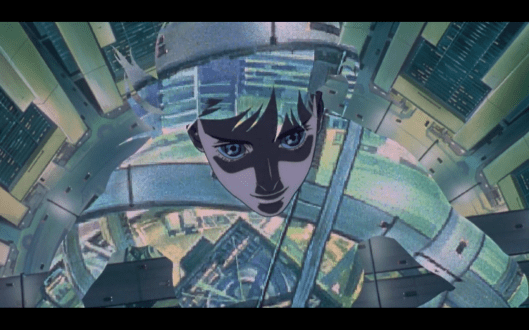
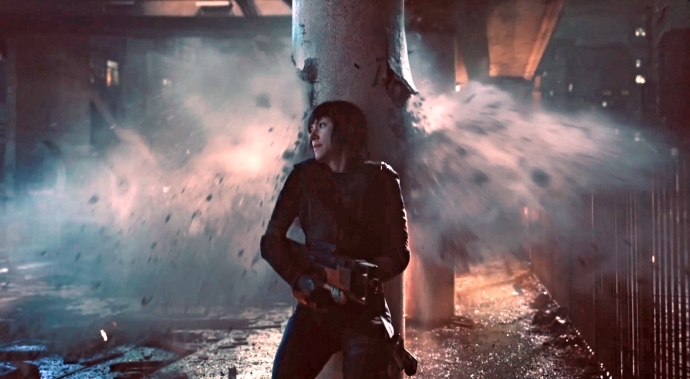
Ghost in the Shell is widely considered a classic, a game-changer for anime and the cyberpunk genre, and its growing niche popularity was bound to get Hollywood’s attention sooner or later. I, however, had little desire to see it due to its prominent violence and nudity, and it was only when the live-action adaptation with Scarlett Johansson was released that I felt I had to see it for comparison’s sake. And to be quite honest, I’m not much of a fan of the original or its remake, though that doesn’t mean they weren’t worth watching, and I found different things to appreciate in both versions.

Image result for ghost in the shell 1995

The original 1995 film has plenty of ardent fans, but I’d be lying if I didn’t admit that it’s a tad overrated. I can’t deny its influence on the cyberpunk subgenre, particularly The Matrix, which borrowed its falling lines of green data and the characters’ neck interfaces to plug into the Net. After seeing it, the Wachowskis even reportedly told producer Joel Silver that they wanted to “do that for real,” though at least they had the imagination to come up with an original story rather than a straight adaptation. Ghost in the Shell was also a forerunner for other dark cyberpunk anime like Ergo Proxy and Psycho-Pass, but I guess I just don’t find such soulless, cyberized dystopias very appealing.

Yet it’s not the world it creates that falls short, since the terrifically detailed animation doesn’t disappoint, but the story itself does. After an assassination mission that establishes Section 9 as a no-nonsense branch of the future Japanese police force, we get a convoluted tale of a rogue hacker called the Puppet Master, which has more twists than substance and culminates by the end with very little resolution. The main character named Major Makoto Kusanagi, a cyborg officer who works best without clothes, delivers sober monologues about identity and technology but doesn’t really have much personality. The side characters are actually more interesting than her, like her lens-eyed partner Batou or non-cyberized member Togusa.

Image result for ghost in the shell 1995

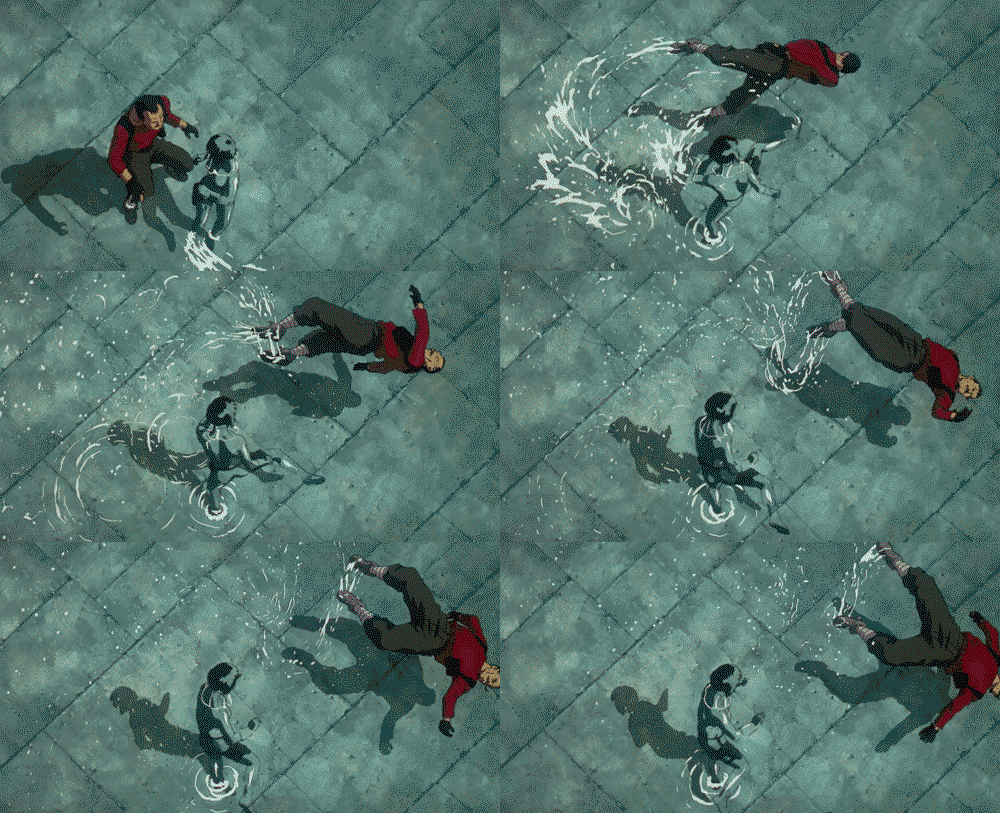
I suppose it’s easy for Ghost in the Shell to coast on its visuals and supposed depth; it does have some thrillingly iconic scenes, like an invisible smackdown on a fleeing thug, and some worthwhile themes about the necessity for variety and growth do manage to counter the moments of ponderous introspection. I will say the nudity is gratuitous. You could argue that Kusanagi’s thermoptic camouflage is built into her skin so she has to be naked for it to work, but other Ghost in the Shell installments show that there are entire uniforms that can go invisible. Critics have delved into deep themes like posthuman femininity, but I’m convinced it’s just fan service.

The 1995 Ghost in the Shell film is the franchise’s most famous incarnation, but it’s not the best. Even if the film left me cold, I was impressed by its two-season spinoff series called Ghost in the Shell: Stand Alone Complex. It’s got some of the same hard-to-follow philosophizing and excessive violence, but the overarching stories carry more depth when developed over a season’s length, which also allows far better characterization for Kusanagi and everyone else too, like the other members of Section 9 that are barely acknowledged in the movie. After seeing the two films that summarize Stand Alone Complex (and a follow-up film called Solid State Society), I find that the 1995 film’s story is even less impressive by comparison. I can’t bash the original Ghost in the Shell too much since it does appeal to some people more than me, but I would suggest that its fans check out the series for some much better storylines. (On a side note, Stand Alone Complex might also have had some influence in the West. For fans of The Dark Knight, remember when the Joker threatens a hospital to convince random civilians to try to kill Coleman Reese? I now see that it’s suspiciously similar to a scene from SAC’s season 1, in which a super-hacker takes over the minds of random citizens to carry out an assassination attempt. Interesting….)

Image result for ghost in the shell 1995 beatup

Now what about America’s take on Ghost in the Shell, which didn’t do much to improve people’s poor opinions of live-action anime adaptations? It’s actually not that bad an adaptation in my opinion because I consider many of its flaws to be flaws the first film had. I, for one, don’t mind Scarlett Johansson’s casting, regardless of the inevitable whitewashing accusations, since others have pointed out that the cast is still plenty diverse and needed a bankable star. Even if her character is renamed Major Mira Killian, her status as a cyborg with only her brain remaining human makes her appearance relative and changeable, and the film even works in a way to contrast her current appearance with her original identity. I’ve seen critics complain about potentially deep themes that aren’t fleshed out enough, a lack of personality for Johansson’s character, and a generally lackluster story, but I felt that was the case for the original too.

Image result for ghost in the shell 1995

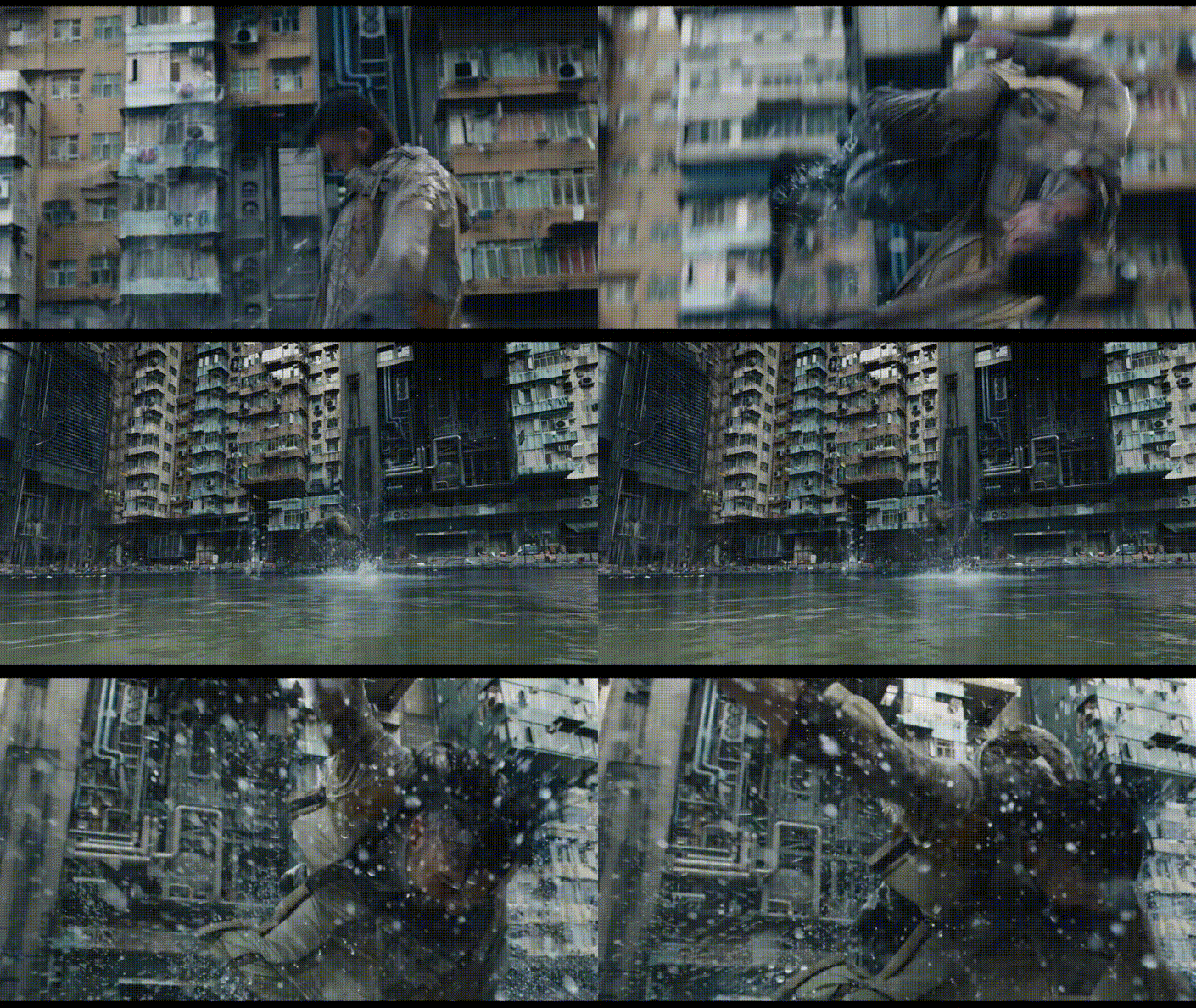
The strangest thing for me was something that I haven’t seen any other reviews point out, namely that 2017’s Ghost in the Shell isn’t just a straight remake of the 1995 one, but an odd amalgamation of several Ghost in the Shell incarnations, including the Stand Alone Complex series. There are numerous scenes lifted shot for shot from the 1995 film, like the invisible beat-up, the spider tank fight, and the opening montage of creating the Major’s body, but they are all placed in a completely different context. The first action scene with the robotic geishas is straight from the first episode of SAC. There’s also a scheme to pick off Section 9’s members (like SAC’s first season about the Laughing Man), the incorporation of Major’s antagonist/counterpart Kuze (from SAC’s second season), and a secret government kidnapping plot (from the Solid State Society movie). It was seeing all these disparate elements combined with a totally new story of Major questioning her identity that felt strange to me, like I wasn’t sure which story they would try integrating next.

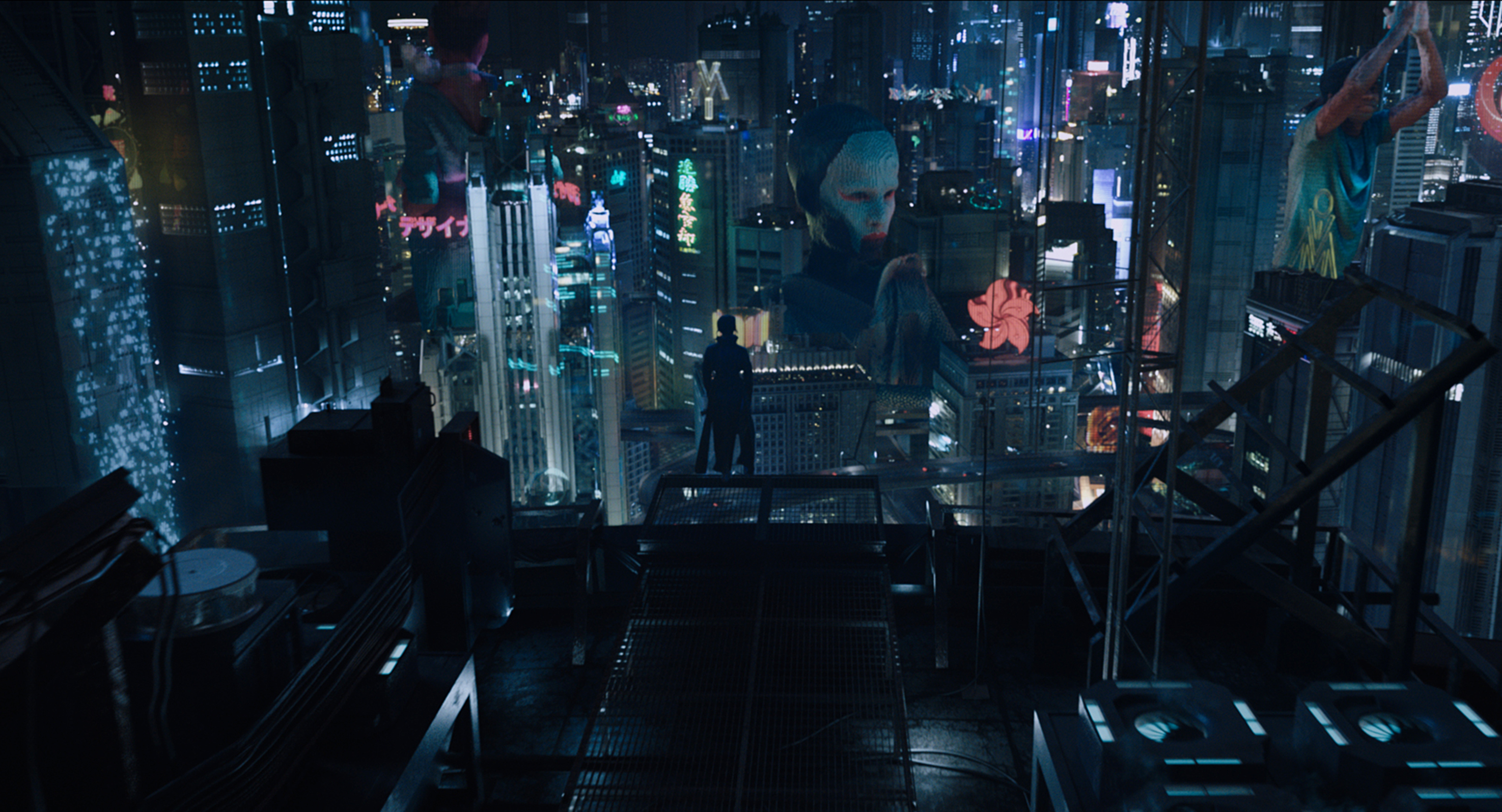
One aspect of remakes that Hollywood can be expected to get right more often than not is the impressive visuals, and like the anime, the world of seedy, hologram-laden skyscrapers it creates is far more intriguing than the characters in it. That’s not to say it’s a place I’d want to visit, but its visuals at least honor the original and its predecessors, like Blade Runner, even if it’s also alienating.

Image result for ghost in the shell 2017 batou

With its obvious nudity, I never would have thought a live-action Ghost in the Shell would receive a PG-13 rating, but that reflects the fact that the 2017 film tries to soften the harder edges of an anime that is definitely not for all tastes. Johansson’s robot body is more like a skin-color body suit, like the blue Mystique from the X-Men movies, and its intentionally manufactured appearance makes it less flagrant than the original. The same goes for the violence: the film does its best to make itself gritty and unpleasantly ruthless, but at least there aren’t any of the graphic head shots from the film and series. Even Major’s characterization is less stone-faced than her animated version (though I’ve heard every version of her is somehow different from the manga). In contrast to the emotionless ambiguity of the 1995 film’s ending, the search of Johansson’s Major for her past offers a shred of poignancy to hold onto, something I actually felt was an improvement.

Neither Ghost in the Shell is perfect or even close to perfect, in my opinion, but they have enough atmosphere and intrigue to be worth discussing. Both do have the repeated Ghost in the Shell plotline, which the TV series helped me recognize, that being “Super-hacker seems like bad guy until it turns out to be an evil government/corporate conspiracy.” I suppose the 1995 film could be seen as a philosophical sci-fi film with some action, while the remake is an action film with some philosophy. Although the 2017 version is considered a flop, it might be the best anime-to-live-action adaptation so far (I’m hesitant to see the widely panned Death Note), at least nailing the original’s distinct visual merit. With more anime adaptations on the way, including Your Name (please don’t ruin it, J.J. Abrams!), there might be hope for future efforts to do better with more appealing source material.

Image result for ghost in the shell 2017 water scene

Best line from 1995 film: (Kusanagi) “You talk about redefining my identity. I want a guarantee that I can still be myself.”  (Puppet Master) “There isn’t one. Why would you wish to? All things change in a dynamic environment. Your effort to remain what you are is what limits you.”

Best line from 2017 film: (Dr. Ouelet) “We cling to memories as if they define us, but they really don’t. What we do is what defines us.”


Rank for both: Honorable Mention


© 2017 S.G. Liput
517 Followers and Counting


Genre Grandeur – The Book of Eli (2010) – Rhyme and Reason

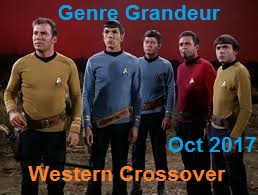
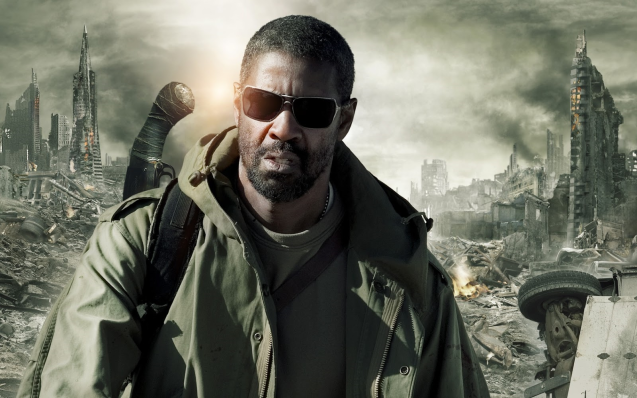
Here’s my review of The Book of Eli for MovieRob’s October Genre Grandeur for Western Crossover movies. Mixing violent dystopia with sincere faith may be an odd combination, but somehow it makes for a uniquely compelling actioner.

movierob's avatarMovieRob

For this month’s next review for Genre Grandeur – Western CrossoverMovies, here’s a review of The Book of Eli (2010) by SG of Rhyme and Reason

Thanks again to Kira of Film and TV 101  for choosing this month’s genre.

Next month’s Genre has been chosen by Ashleigh of The Movie Oracle and it is Spoof/ParodyMovies.

Please get me your submissions by the 25th of November by sending them to spoofashleigh@movierob.net

Try to think out of the box! Great choice Ashleigh!

Let’s see what SG thought of this movie:

_________________________________

The Book of Eli (2010)

The world is violent, evil, silent

Toward offenses once taboo,

And those who see are quick to flee

From lies that most consider true.

To change this underworld, I wonder

What is best for us to do,

Intervene and die unseen

Or kill our qualms and hide from view?

The world…

View original post 578 more words

Lights Out (2016)

Tags

, ,

When the lights go out,
I see it standing there.
When the lights turn on,
It’s gone yet still I stare.

When the lights go out,
It’s back again, I swear.
When the lights turn on,
It isn’t anywhere.

As the lights stay on,
I waver and beware.
When the lights go out,
It’s next to me to scare.
_______________________

MPAA rating: PG-13

For my final Halloween-themed review for the big day itself, I went with a recent horror offering that I could tell from the trailers alone would be of the dread-and-atmosphere type that I prefer, not unlike yesterday’s The Ring. At the same time, Lights Out does what I like about horror a bit too well, preying on one of the most primal fears, the fear of darkness, and giving me something far scarier than all the vampires and monsters I know aren’t real. It’s based on director David Sandberg‘s short film, which encapsulated the concept in less than three minutes, three minutes that will haunt me and keep me looking over my shoulder for years to come. Thanks for that, David.

Sandberg cleverly expands his simple idea of a creature that only appears in darkness and can be seen by silhouette alone, connecting the frightful bogeywoman to a story of a family strained by mental illness. Teresa Palmer plays Rebecca, the loner daughter of clinically depressed Sophie (Maria Bello), who isn’t happy when Rebecca steps in to care for her young brother Martin (Gabriel Bateman). Martin’s having trouble sleeping, which is no surprise when his mother talks to a menacing, long-fingered phantom as if they’re old friends. This phantom seems to thrive on Sophie’s disturbed mental state and begins targeting the kids where darkness allows.

I was one of those kids who always slept with a nightlight or hall light on, so darkness has always been a source of unease for me. I remember even being scared stiff just from a description I heard at camp of some movie called Darkness Falls, and I’m still too nervous to check if it’s as terrifying as I envisioned. Lights Out has a similar concept for its villain Diana, keeping her always out of sight, a creature of darkness banished by light yet always there when it goes out. Maybe those calloused by countless horror films won’t find it all that scary, but Lights Out and its vicious shade scared me more than anything since The Babadook.

I also appreciated the effort put into providing a relatable family story alongside the scares, balancing Rebecca’s resentment of her mother with the acknowledgment that no one in distress should be abandoned. Everyone remains sympathetic, particularly Rebecca’s devoted boyfriend (Alexander DiPersia). I especially liked how the finale employed some inventive light sources to ward the specter away, sort of reminding me of the end of Wait until Dark. While she has a separate spooky origin, Diana is like an embodiment of the mother’s mental disorder, lashing out in an effort to keep her from getting better, which is a great metaphor for her struggle but also disconcerting in how it’s ultimately resolved.

Lights Out is a great example of the minimalist, bloodless frights that I think are harder to pull off than cheap gore, but its plentiful jump scares spooked me a bit more than I typically like. Heck, the three-minute short film is even more terrifying. You can watch it here, but I warn you: it’s concentrated nightmare fuel. (It’s also cool that Lotta Losten, the woman in the short film, reprised her role as the first person to see Diana.) Vampires and werewolves and zombies may populate more movies, but Lights Out proves that darkness itself is far scarier because its disquiet hits much closer to home.

Happy Halloween to everyone out there!

Rank: List Runner-Up


© 2017 S.G. Liput
517 Followers and Counting


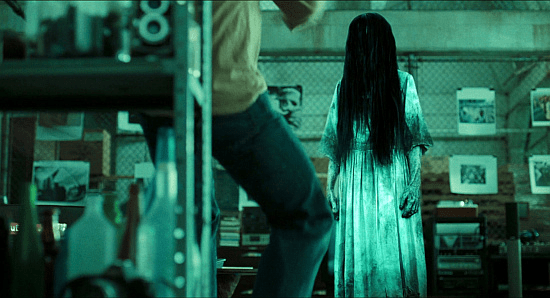
The Ring (2002)

Tags

, , ,

You were warned, were you not?
You were warned, and yet you thought,
“What harm could come from silly things
Like some old tape?”  The phone then rings,
And on the other end, you hear
A voice that whispers low and clear,
“Seven days.”
You look about
And start perhaps to have some doubt,
Unsure if you were dumb or brave
To laugh at legends, shrug and cave,
And possibly dig your own grave.
__________________

MPAA rating: PG-13

Urban legends are perfect subjects for horror because there’s always that one rumor or curse or half-serious tale of a crazed murderer that happens to be true, if only the protagonist can figure it out before they bite the dust. The Ring fits that mold well while adhering to the style of haunting, suggestive horror that I enjoy most.

Based on the Japanese book and film Ringu, The Ring is about a cursed video tape that kills its viewers seven days later, as illustrated by the familiar but tense opening with two teenage girls at home alone. When one dies, journalist Rachel Keller (Naomi Watts) decides to investigate the mysterious circumstances and watches the cursed tape herself, unwittingly exposing herself and her son Aidan (David Dorfman) to the evil unleashed by the bizarre images onscreen.

As I said, The Ring is “my kind of horror,” in that there’s far more effort on creating dread and atmosphere than on blood and guts, which I suppose is ironic considering it was directed by Gore Verbinski of Pirates of the Caribbean fame. Although it’s taken me this long to actually see it, its mop-headed villain girl (named Samara here, Sadako in the Japanese original) has become rather iconic, and I already knew of the film’s most famous scenes, such as the phone call whisper of “seven days” or the memorable television scene toward the end. (I guess there are several television scenes, but you probably know which one I mean.) Going in with such knowledge perhaps dampened the effectiveness of the scares, but I still appreciated the occasionally misleading tension and the gradually uncovered mystery.

It does fit my preferred style of horror, as did The Others and The Babadook, but there was something lacking in The Ring. Naomi Watts’ performance is fairly strong alongside costars Dorfman and Martin Henderson as her skeptical ex-husband, but there wasn’t as much of an emotional core to the story as there was in the other two films I mentioned. Plus, as the layers of the mystery were peeled back, it became a bit too convoluted, with too many puzzling twists that could only be explained by the argument that “there’s something supernatural afoot.”

The Ring didn’t quite have the dramatic oomph or shocking twist (it does try for both) that would elevate it to join my favorites, but it’s a potent horror flick nonetheless, with several evocative potential meanings for its title. The video tape plot device will immediately date it in years to come, but that isn’t automatically a negative since it doesn’t diminish the scares. I haven’t heard many good things about its two sequels, the most recent being Rings from this past year, so I think I’ll stick with this original for now, or if I’m feeling bold, maybe I’ll try the Japanese original original. One thing’s for sure, though: I definitely won’t be sitting anywhere near the screen!

Best line: (Richard Morgan, Samara’s father, to Rachel) “What is it with reporters? You take one person’s tragedy and force the world to experience it… spread it like sickness.”


Rank: List Runner-Up


© 2017 S.G. Liput
517 Followers and Counting
 

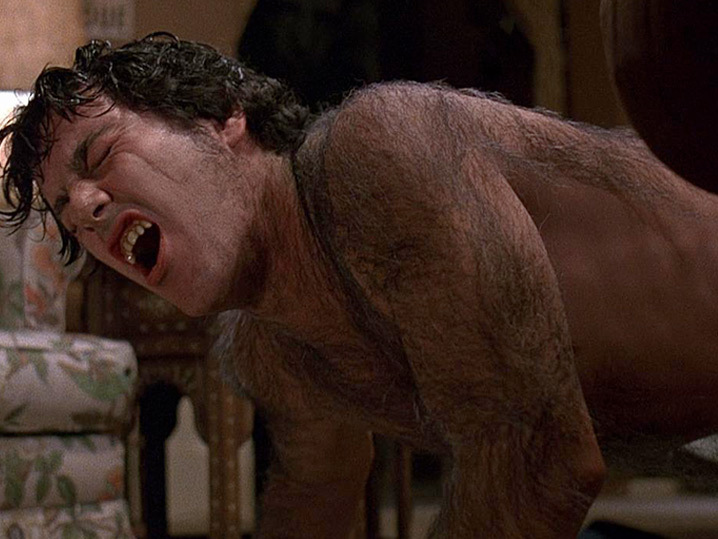
An American Werewolf in London (1981)

Tags

, ,

It’s tough to be a werewolf.
It quickly does get old.
It’s sore and strange
To feel the change
And watch your bones all rearrange
And you’re more apt to catch the mange,
Although you’re rarely cold.

It’s tough to be a werewolf.
The lupine life is lone.
If you have friends,
It all depends,
But likely they’ll meet grisly ends
And then it’s tough to make amends,
For corpses tend to groan.

So when you hear “Stay off the moors,
Keep to the roads, don’t take detours,”
Pay heed to those who stay indoors,
Or you will see when on all fours,
It’s tough to be a werewolf.
_____________________

MPAA rating: R

After yesterday’s vampires, for my second Halloween-themed review, I watched the cult classic An American Werewolf in London, which is mainly known for winning the very first Academy Award for Best Makeup for Rick Baker’s werewolf effects. I’ll just say up front that this film had all the things I usually try to avoid in horror and movies in general—bloody violence, sex and nudity, profanity—but I will try to put that aside and appraise the film itself.

The set-up is a classic one: two unwise American visitors to the English countryside wander where they shouldn’t and are attacked by a vicious creature. Jack (Griffin Dunne) is killed by the beast, but David (David Naughton, who lost his Dr. Pepper deal after this movie) survives, only to be told by Jack’s ghost that David is now a werewolf. Obviously, no one would believe the decaying apparition of a dead friend, so David ignores him and goes home with a lovely nurse (Jenny Agutter). But wait! He’s changing…he is a werewolf! And now he will prowl London in search of helpless escalator-riding victims.

Okay, maybe that was too dramatic, but to be honest, I expected a little bit more from what is billed as a horror-comedy. True, there’s some humor to Jack and David’s early banter, the wry moon-related soundtrack, and particularly in Jack’s undead suicide advice, but this isn’t quite what I would consider a comedy. It’s like the opposite of Ghostbusters: I consider that a comedy with some horror while this is a horror with some comedic lines, but neither quite fits the horror-comedy label. The horror elements are fairly straightforward (creepy locals, foolish victims, full moon; check, check, check), but director John Landis fills the werewolf attacks with looming terror, especially with first-person views as David chases a man through the London subway.

It was a decent horror film overall, but ultimately it’s really memorable for two things, one good, one bad. The good is that Rick Baker absolutely deserved that Oscar, since David’s transformation, anomalously set to Sam Cooke’s version of “Blue Moon,” still holds up as an impressive feat of makeup effects, one that predated everything computers could do today. It’s interesting to note that wolf men seem to attract makeup awards, since 2010’s The Wolfman also won the Best Makeup Oscar. As for the bad, what was with that ending? Perhaps the abruptness of the final scene was also intended for comedy, but for me, it was a bit too jarring a conclusion, though I’m sure it gets a chuckle from cult fans on their hundredth rewatch. For a true horror comedy, though, I’ll side with the vampires and stick with The Lost Boys. At least the ending doesn’t suck.

Best line: (a boy at the zoo) “A naked American man stole my balloons.”


Rank: Honorable Mention


© 2017 S.G. Liput
517 Followers and Counting
 

Salem’s Lot (1979)

Tags

, ,

Image result for salem's lot 1979

Sometimes old houses are just empty shells,
Still mourning their past occupier’s farewells,
But sometimes you feel something sinister dwells
In ramshackle relics and haunted hotels.
The dust and mistrust of these dark citadels
We try to ignore, but their menace compels.
Who knows what nightmares and nefarious spells
Can lurk in old homes with their own private hells?
__________________

MPAA rating: PG

Halloween is almost upon us yet again, and since I don’t really celebrate it (except with more candy than usual), I haven’t done much this month in honor of everyone’s favorite scary holiday. However, I think I’ll change that and do what I did last year, four horror reviews in a row leading up to the big day, when I will no doubt contribute to the great November candy shortage of 2017. As with last year (when I reviewed Abbott and Costello Meet Frankenstein, The House That Dripped Blood, Poltergeist, and The Babadook), each of my picks will fit roughly into a different era of horror and will try to buck my wussy aversion to the genre.

Image result for salem's lot 1979 james mason

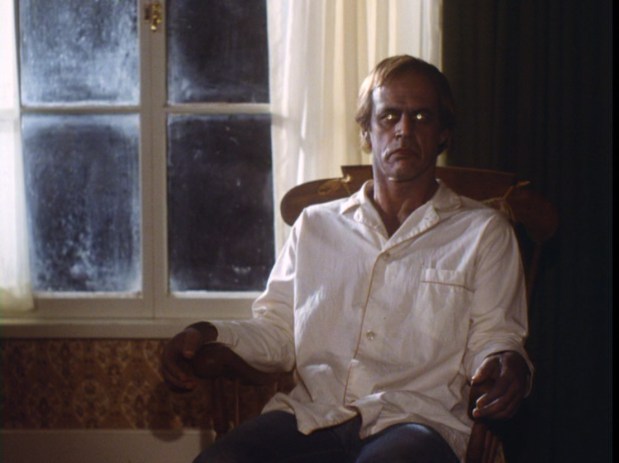
First off is the 1979 television adaptation of Stephen King’s Salem’s Lot, something my VC urged me not to see because she recalls it with such terror (probably like me and that clown scene in Poltergeist). I still did, of course, and found it to be quite the credible frightfest, although in a dated way. There are scenes that I could see causing nightmares, but compared with modern horrors like The Babadook, I don’t expect Salem’s Lot to keep me up at night. Still, as far as vampire flicks go, this one hits all the right beats, and I could see how it has influenced the genre since, particularly the glowing eyes and the antler scene in The Lost Boys.

Salem’s Lot is set in Maine and the main character Ben Mears (David Soul) is a writer, which is so unlike Stephen King’s work that I don’t know where to begin! In all seriousness, though, Salem’s Lot is very King-y, from those trademarks of his I mentioned to the idea of a dark evil lurking in a sleepy small town. In fact, it’s very much like It, with Pennywise being replaced by incoming vampires as the protagonists wise up to what’s going on and set out to stop it.

Image result for salem's lot 1979

Directed by Tobe Hooper of Poltergeist and The Texas Chain Saw Massacre, the three-hour miniseries does a fine job at establishing its large cast of suckable characters: the visiting writer who used to live in Salem’s Lot, the girl who falls for him after one date (Bonnie Bedelia), her doctor father (Ed Flanders), the sinister old man who just bought the local mansion of evil (James Mason), the realtor (Fred Willard), his mistress (Julie Cobb), her jealous husband (George Dzundza), the boy who loves scary stuff (Lance Kerwin), the cemetery keeper (Geoffrey Lewis), and quite a few more besides. It was rather fun playing “Spot the Familiar Face” as I watched, such as recognizing the constable as Kenneth McMillan, who played the gross Harkonnen villain in Dune. It was also good to see Ed Flanders from St. Elsewhere, and his co-star Bonnie Bartlett playing his wife, though she was William Daniels’ wife on the show. James Mason is particularly well-cast as Straker, the forboding newcomer to Salem’s Lot, who you just know has a vampire tucked away somewhere, like maybe in that moving box.

As I said, the horror is a bit dated but still effective, pervaded by a nicely creepy atmosphere and punctuated by periodic jump scares. As with horror in general, it also has its fair share of supernatural foolishness, like allowing inside a fanged loved one floating outside your window or waiting till late afternoon to storm a vampire’s fortress. I thought too that there would be more to Mears’ backstory and his distrust of the Marston house, but that’s never elucidated. There were also a few lapses in the storytelling, or at least questions. Some excellent early tension is wrung from the cheating realtor’s subplot, but when one character is killed, the other two just drop out of the story entirely. The fates of several other characters are left vague as well, as are the circumstances behind the love story’s “resolution.” I’m sure these details are probably better explained in the book, but the miniseries could have clarified them better. I also don’t think it should have started with a flash-forward because that immediately let me know which characters would survive.

Image result for salem's lot 1979

Even so, Salem’s Lot is a compelling King story that may not have a lot of story surprises but still spooks with its vampire mythos and general creepiness. The appearance of the main vampire is particularly menacing, clearly inspired by Nosferatu, though I understand that’s a departure from King’s book. I’m by no means an expert on Stephen King adaptations, but Salem’s Lot seemed to do him justice.

Best line:  (Straker) “You’ll enjoy Mr. Barlow. And he’ll enjoy you.”


Rank: List Runner-Up


© 2017 S.G. Liput
517 Followers and Counting
 

Opinion Battles Round 20 Favourite TV Show to Movie

Don’t forget to vote for your favorite movie based on a TV show in Round 20 of Opinion Battles! Not all TV shows make the jump to the big screen gracefully, but when they do, the results can be utterly entertaining. While others chose comedy, I had to side with Serenity, the blockbuster finale for Joss Whedon’s canceled sci-fi series Firefly. What’s your favorite?

Unknown's avatarMovie Reviews 101

Opinion Battles Round 20

Favourite TV Show to Movie

Once again we dive into searching through Hollywood’s lack of ideas as they return to old television shows to make a movie, this does offer a show cancelled too soon to say goodbye to the hugely loved characters.

If you want to join the next round of Opinion Battles we will be take on What is your Favourite Ghost Film, to enter email your choice to moviereviews101@yahoo.co.ukby Saturday 14th October 2017.

Darren – Movie Reviews 101

Serenity

Firefly was one of the most loved sci-fi shows that got cancelled too soon, we only got 13 episodes but Serenity gives us a chance to see our character one more time, they are bigger and better with a story that gives you everything you wanted for our characters.

Cinema Parrot Disco

Wayne’s World


I struggled with this one until I…

View original post 653 more words

Dawn of the Planet of the Apes (2014)

Tags

, , , ,

Image result for dawn of the planet of the apes

They said no bridge could cross the divide,
Too far and different were each side,
And yet two chose
To still propose
A bridge to span the gap so wide.

They slowly worked with cautious hope
To lay foundations, tighten rope,
And earn the trust
That is a must
For silencing the misanthrope.

Naysayers had their efforts spurned,
Yet look what trust can build when earned!
Then fast as fire,
The doubters’ ire
Had lit the bridge and down it burned.
_____________________

MPAA rating: PG-13

Wow! If Rise of the Planet of the Apes was a prime reboot, Dawn of the Planet of the Apes is an exemplary sequel. It continues the storyline of its predecessor while establishing a new yet complementary scenario with far more depth than the simple “rise of the apes” concept could have had in the hands of lesser writers.

Image result for dawn of the planet of the apes

Set ten years after Rise, Dawn sees Caesar (Andy Serkis) and his band of intelligent esc-ape-ees having built their own mini-civilization, hidden in a dense redwood forest, while humanity has been decimated by the same virus that gave the apes their heightened intelligence. When a band of immune human survivors stumbles upon the apes, tensions immediately flare, especially because the humans’ energy needs won’t allow them the logical course of keeping their distance. Yet the human leader Malcolm (Jason Clarke) actually tries to reach out to Caesar and his apes and work toward mutual trust, something of which apes and humans alike disapprove, especially Caesar’s second-in-command Koba (Toby Kebbell).

The roles of both Caesar and Malcolm are very much representative of Rudyard Kipling’s poem “If—” as they try to “keep [their] head when all about [them] are losing theirs and blaming it on [them].” They both want what’s best for their respective groups, and they know that that includes peace between   them. We as level-headed viewers recognize the wisdom of their actions, and yet so many of their subordinates carry far too much baggage and resentment to trust that wisdom. Whether it be humans who automatically associate the word “ape” with the virus epidemic or surly Koba, who still hates humans for using him as a research guinea pig, they question their leader’s judgment and even his loyalties without questioning if he might be right. It’s frustrating and yet all too believable, considering humanity’s known weakness and intolerance.

Image result for dawn of the planet of the apes

Another major theme is that the apes and humans are not as different as either side would think. That weakness and intolerance are common to both, as is the tendency to view such opponents as a group rather than individuals who don’t necessarily all believe the same thing. The act of a rogue can quickly spiral into “us versus them” violence that makes such perceptions harder to undo. What’s astounding about Dawn is how it gets these complex messages across with minimal dialogue, utilizing the apes’ broken English and hand motions to their fullest. The motion-capture CGI is also even more impressive than in Rise, wowing with the action battle scenes, as well as benefiting the story in less flashy ways, like the clearly recognizable emotions that play out on Caesar’s face, courtesy of the talented Andy Serkis.

In addition to the Oscar-nominated visuals, all the performances are outstanding, especially Clarke, Serkis, Keri Russell as Malcolm’s wife, and Gary Oldman as Malcolm’s less trusting counterpart. James Franco is sadly departed from the story, but there are affecting reminders of him and Caesar’s past. Caesar’s ape friends who do carry over from Rise don’t stand out that much, making me glad I still remembered them from having just seen the first film, but Koba’s role is greatly expanded as an antagonist, with the ending directly mirroring one of his actions in Rise. Also, as a fan of tracking shots, I must point out a scene I loved in which the camera follows Malcolm as he stumbles through a maze of hallways trying to avoid invading apes. It made me think that a tracking shot could be a running element for the series, since Rise had the scene with young Caesar swinging throughout Will’s house.

Image result for dawn of the planet of the apes

Dawn is a sober movie that views the ape versus human struggle with far more nuance and regret than any earlier installment, precisely because the film shows it didn’t have to turn out the way it did. An action blockbuster is expected to have awesome visuals, but it’s a rare and pleasant surprise when there’s this much depth too. With so much tension between various groups nowadays, the film remains as timely as ever, a potent reminder to not let the worst parts of our nature carry us to destruction.

Best line: (Caesar) “I always think… ape better than human. I see now… how much like them we are.”


Rank: List-Worthy (joining Rise)


© 2017 S.G. Liput
516 Followers and Counting