VC Pick: Nighthawks (1981)

Tags

, ,

See the source image


There once was a cop in a dress
Who left criminals in a mess.
One terrorist came
With destruction his aim.
Who won? Well, I think you can guess.
___________________

MPAA rating: R (mainly for language and some violence)

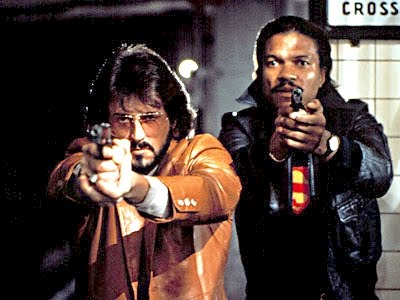
I waited too long to review one of my VC’s movies last time, so I thought I’d squeeze a little one in before another month went by.  Nighthawks happens to be one of her favorite Sylvester Stallone films, and while that mainly has to do with Stallone’s rugged beard and mustache, it really is a well-made urban thriller with a great villain played by Rutger Hauer in his American debut.

See the source image

I wasn’t entirely surprised when I read that Nighthawks was originally intended for Gene Hackman’s Popeye Doyle but ultimately retooled for Stallone. His character of NYPD Detective Deke DaSilva is similarly gruff and uncompromising toward criminals, though he’s more reluctant to kill and more eager to dress in drag. (Where else are you going to see Stallone in a dress while beating up thieves?) He’s less than thrilled to be pulled from active duty to join a counter-terrorism unit, but he finds a worthy adversary when international terrorist Wulfgar (Hauer, in stellar psychotic killer mode) arrives to make his mark on New York City.

It’s interesting to note that Nighthawks’ focus on the ruthlessness of terrorism was a bit ahead of its time. The U.S. wasn’t used to the idea of terrorist attacks on American soil in 1981, so the plot was seen as vaguely implausible, though certainly not so now. Wulfgar’s motivations aren’t particularly specific, but he makes for a coldly calculating monster, especially in how Hauer manages to feign normal nice-guy behavior at times.

See the source image

Nighthawks isn’t the most memorable thriller, even among those from the ‘80s, but Hauer’s villainy and Stallone’s beard do help distinguish it. Due to aggressive editing, subplots like DaSilva’s estranged ex-wife fall by the wayside, but the plot still retains focus; and the ending boasts one of the great “gotcha” moments of the genre. The title may sound like one of those totally undescriptive names that was picked to sound cool (it’s actually a nickname for nighttime patrol cops), but I can see why my VC is fond of Nighthawks.

Best line:  (Pam, a woman Wulfgar is seducing) “Yes. What do you do for a living?”   (Wulfgar, sarcastically) “I’m an international terrorist wanted by the police in half the countries in Europe. And I am currently laying low for the moment.”   (Pam) “Oh, sure!”


Rank: List Runner-Up


© 2018 S.G. Liput
592 Followers and Counting


2018 Blindspot Pick #9: Hush (2016)

Tags

,


See the source image

I can see you through the window.
I can see you through the door.
I could speak and mark my presence
As I’ve often done before,
Yet you’d heedlessly ignore.

I could detail all the lurid
Games I plan to play with you,
But my words would all be wasted
While you never had a clue,
While I linger out of view.

I could hover right behind you,
So amused you cannot hear,
But if I proceed too quickly,
It would be a waste of fear.
Never do I waste, my dear.

So enjoy your ignorance,
The bliss of danger still concealed.
Soon I’ll get to see it shatter
When my secret is revealed.
Then you’ll know your fate is sealed.
_________________________

MPAA rating:  R (for violence and brief language)

I haven’t been able to watch many movies specifically for Halloween this year, but I always intended this Blindspot for October. Among my Blindspots, Hush represents not only the horror genre but a subgenre I’ve intentionally avoided for the most part: the slasher. I’m honestly not sure if I’ve ever seen a true slasher film. (I’m not counting something like Alien or The Terminator, which might technically fit some of the requirements but have additional science fiction elements that set them apart). Actually, I might take that back, since I just thought of Psycho and Audrey Hepburn’s Wait Until Dark, though I’m not sure those fully qualify. Yet, just as Wait Until Dark was unique in pitting its killers against a blind woman, Hush does the same in making the target a deaf woman and using that important detail to its advantage.

See the source image

Hush has a brilliance of economy to it, with a minimum of dialogue and only five speaking roles. Kate Siegel (the wife of the director Mike Flanagan) plays Maddie Young, a reclusive novelist in true Stephen King fashion (one of King’s books can be spotted early on), and her attempts at cooking provide a brief glimpse into what it’s like in a world with no sound. While it feels odd to not hear a frying pan sizzling, it’s much more alarming to not hear a masked psycho outside your window. Before this killer (John Gallagher, Jr.) makes his presence known, his stalking is utterly creepy considering how oblivious Maddie is, but the tension still remains high even after she becomes aware of the threat.

Hush is very much a game of cat and mouse, with Maddie testing how best to escape while the killer cuts off every chance with only his sadism keeping him from simply breaking into the house. He intentionally toys with her, boasting every advantage, including sound, and it was a genuine thrill to see how she turns the tables on him while never veering into unrealistic territory. What I most appreciated was how well the plot played out visually. Since Maddie is deaf and mute, most of her confrontations with the killer are wordless, made more intense by the absence of screaming you’d expect from a horror movie.

See the source image

Unfortunately, Hush was rather bloodier than I typically like, with one little twisty shock and several bloody injuries being exchanged, but it was an enjoyable horror-thriller, even if it may adhere to some typical slasher conventions, as far as I know them. There were no hateful characters (aside from the killer) or annoyingly dumb decisions, and the acting was strong and entirely believable. Though he doesn’t wear it that long, even the killer’s mask is effective, resembling Michael Myers’ visage but with a slight smile that reflects the playful malevolence of the psycho behind it.

Since I’m not counting Psycho, it probably doesn’t mean much to say this is the best true slasher film I’ve seen (#1 of 1!), but it’s a good Halloween find all the same. Aside from disliking the gruesomeness, I suppose I’ve avoided the genre due to how many bad movies it seems to churn out, but I’m glad my first sampling was a high-quality breath-catcher like Hush. Now, if you’ll excuse me, some of us have to stay silent and hide from those trick-or-treaters lurking outside.

Best line:  (Maddie) “….”

(I love how that’s actually listed as a quote on iMDB!)


Rank: List Runner-Up


© 2018 S.G. Liput
592 Followers and Counting


2018 Blindspot Pick #8: Dear Zachary: A Letter to a Son About His Father (2008)

Tags

,


See the source image

A normal day, no thought of death—
Till one call makes me catch my breath,
And all at once, the world I knew
Is marred by news that can’t be true.

It seems just yesterday we spoke,
And just this morning both awoke,
And now before the day’s complete,
It’s only one whose heart can beat.

“Why?” is foremost in my mind,
Which can’t be answered by mankind.
We only know one evildoer
Dared to make good people fewer.

Once anger, blame, and heartache fade,
And all my searchings have been prayed,
My memories of you remain,
And love of them must keep me sane.
_______________________

MPAA Rating:  Not Rated (a few F words, but most of the content is PG-13 level)

I haven’t had much time for anything other than school lately, but I don’t want to forget about my Blindspot picks this year. Some of them, and quite a few others I’ve seen since starting this blog, I owe to MovieRob. His seemingly non-stop movie-watching/reviewing has introduced me to plenty of hidden gems (many of which I’ve still yet to see), but when he ranked a documentary called Dear Zachary among his favorite films of all time, I knew I had to check it out. Plus, I loved director Kurt Kuenne’s time-hopping Shuffle, another MovieRob recommendation and my favorite Blindspot from last year, so I was curious to explore his previous work.

As some may know, I’m not the biggest fan of documentaries in general, since they’re often well-executed and informative but never have as much entertainment value as a normal movie. Even if it was the best doco ever made, I’d pick a feature film every time if I had the choice (which is why I grade them as a simple “Thumbs Up” or “Thumbs Down”). That being said, Dear Zachary is probably the best documentary I’ve seen, simply because of how engaging it is. This is not a true-life story to watch casually, vaguely absorbing facts as they’re doled out. No, this film strikes deeper because of what a personal project it was for its director and how its focus evolved during filming.

See the source image

Handling everything from music to editing, Kurt Kuenne originally wanted to memorialize his lifelong friend Andrew Bagby, who was murdered after breaking up with the clearly unstable Shirley Turner. Once in custody, Turner announced she was pregnant with Andrew’s son Zachary. To eventually introduce Zachary to the father he’d never know, Kuenne traveled the country to gather interviews with Andrew’s friends and extended family, all of whom attest to what a special and loving man he was. If the story had ended there, it might never have been released to the public, probably remaining a personal collection of bittersweet video recollections.

Yet, as I said, the film’s focus deftly shifts from Andrew to Zachary to Andrew’s long-suffering parents, who face a lengthy legal battle with Shirley, the details of which I won’t spoil. Through it all, Kuenne’s narration manages to be both objective in stating the facts and deeply impassioned about the loss of his friend. His editing sometimes borders on too frantic, spitting out details a bit too fast to keep up, but it imbues the account with an urgency that never lets the viewer’s attention lag. Between his commentary and the heartbreaking interviews with Andrew’s parents, it’s easy to share their heartache at how things turned out and their anger at the miscarriages of justice they endured.

See the source image

Watching Kuenne’s meticulous recap of this tragedy, I couldn’t help but admire his devotion to his departed friend, who I felt I knew well by the end. If I were to suffer the same fate as Andrew Bagby, I’m not sure there would be the same outpouring of grief from friends and relatives, close and distant, but Andrew clearly left behind a legacy that Kuenne captured beautifully. Yet Dear Zachary is as much a love letter to Andrew’s parents as to Andrew himself, representing their Job-like patience and resolve with clear affection. Between the drama of the unfolding crime story and the profoundly personal heartache it leaves, I certainly see why MovieRob is so fond of it. It’s criminal that the Academy didn’t even deign to give it a nomination for Best Documentary. Even if documentaries aren’t my preferred cup of tea, this one is too good to miss.


Rank: Thumbs Way Up


© 2018 S.G. Liput
592 Followers and Counting


Mission: Impossible – Rogue Nation (2015)

Tags

, ,

See the source image

There once was a spy on the front
Who could save the whole world with a stunt.
He often was hunted
But did as he wanted,
For no one could match Ethan Hunt.
___________________

MPAA rating: PG-13

At this point, I’m not surprised that Mission: Impossible – Rogue Nation is yet another great addition to this series. What distinguishes it, though, is how it finally recognizes the value of continuity, something I put great value on in both TV show and film franchise. From the very first scene, we get Luther Stickell (Ving Rhames) bantering with Benji Dunn (Simon Pegg) and William Brandt (Jeremy Renner) in three different locations, only for all three to be dumbfounded at Tom Cruise/Ethan Hunt’s latest death-defying stunt to save the day. It’s a perfect combination of this series’ strengths, and for once, the audience already knows everyone involved, like catching up with old friends.

See the source image

That only continues when Brandt is called by the FBI director (Alec Baldwin) to answer for the IMF’s riskier plays in Ghost Protocol, followed by Ethan being ambushed by the mysterious organization known as the Syndicate (namedropped at the end of the previous movie). Beyond the refreshing continuity, it’s also nice to make new friends, and the film quickly charts its own course with the introduction of Rebecca Ferguson as a mysterious agent undercover in the Syndicate. With Ethan wanted by both the Syndicate and the FBI, he must rely on his usual daring and teamwork to outsmart the Syndicate’s Moriarty-like mastermind (Sean Harris).

Rogue Nation really shines through its stars. Cruise is as cleverly fearless as ever, while Ferguson maintains an arm’s-length chemistry with him as her allegiances constantly seem to shift. Meanwhile, Pegg, Rhames, and Renner are ideal companions for Cruise, particularly Renner’s second guessing of one of Cruise’s risky decisions (which seemed ripped right out of the second National Treasure, by the way). When they cite their loyalty and friendship, it means something since we’ve gotten to see it develop over two-plus movies, and Christopher McQuarrie’s script and direction highlight how well they all work together.

See the source image

My VC liked Rogue Nation better than Ghost Protocol, placing it just shy of the third film, while I tend to view the last three movies as tied, just for different reasons. The third film had the best villain and the most emotional stakes, the fourth film had the best plot and some of the coolest action scenes, and Rogue Nation has the best mixture of everything this series does well and possibly the best script, including some outstanding “gotcha” moments that felt so good.

That being said, I do feel that this one is just a little more generic than the others. The best and most original action scene is Tom Cruise’s minutes-long foray into an underwater data tank, but much of the rest consists of foot chases, car chases, motorcycle chases, and fistfights, which are all executed masterfully but can’t quite escape that feeling of déjà vu. Likewise, a tense scene in an opera kept me guessing all the way through, but also reminded me of a similar scene in Quantum of Solace.  Writing this review a couple weeks after watching it, I already feel like this will be the entry that remains in my memory the least.

See the source image

I hate to sound so negative, because Rogue Nation is still a great movie. It’s just that, with three great entries in a row now, I’m starting to have to nitpick to figure out where they rank in this series. I’m happy to group it in with its two predecessors, and I’m more excited than ever to finally see Fallout, now that I’ve completed my catch-up marathon of prior films. I’m especially glad to see that the villain’s open ending in Rogue Nation will get a continuation in Fallout, but I’m also rather disappointed that Jeremy Renner is nowhere to be found in the cast list. Based on its glowing reviews, though, I still hope that Fallout will be the finale to this marathon for which I’ve been hoping.

Best line: (Benji, sarcastically) “Join the IMF! See the world! On a monitor. In a closet.”


Rank: List-Worthy (joining the previous two)


© 2018 S.G. Liput
591 Followers and Counting


Next Gen (2018)

Tags

, , , ,


See the source image

The world’s an easy place to hate,
For it hates all too frequently.
And anger tends to escalate
The more it’s met with enmity.

One pain of heart
Can sow and start
A seed of hate
To germinate
And grow until
There’s no goodwill
For world or friend.
They all offend!
Life’s all about
The lashing out,
For no one cares
Or answers prayers;
Of that, they do not have a doubt.

But wait…
And hesitate to hate,
Just long enough to listen clear.
The world itself is quite the weight,
But others bearing it stand near
To show you how to persevere.
___________________

MPAA rating:  PG

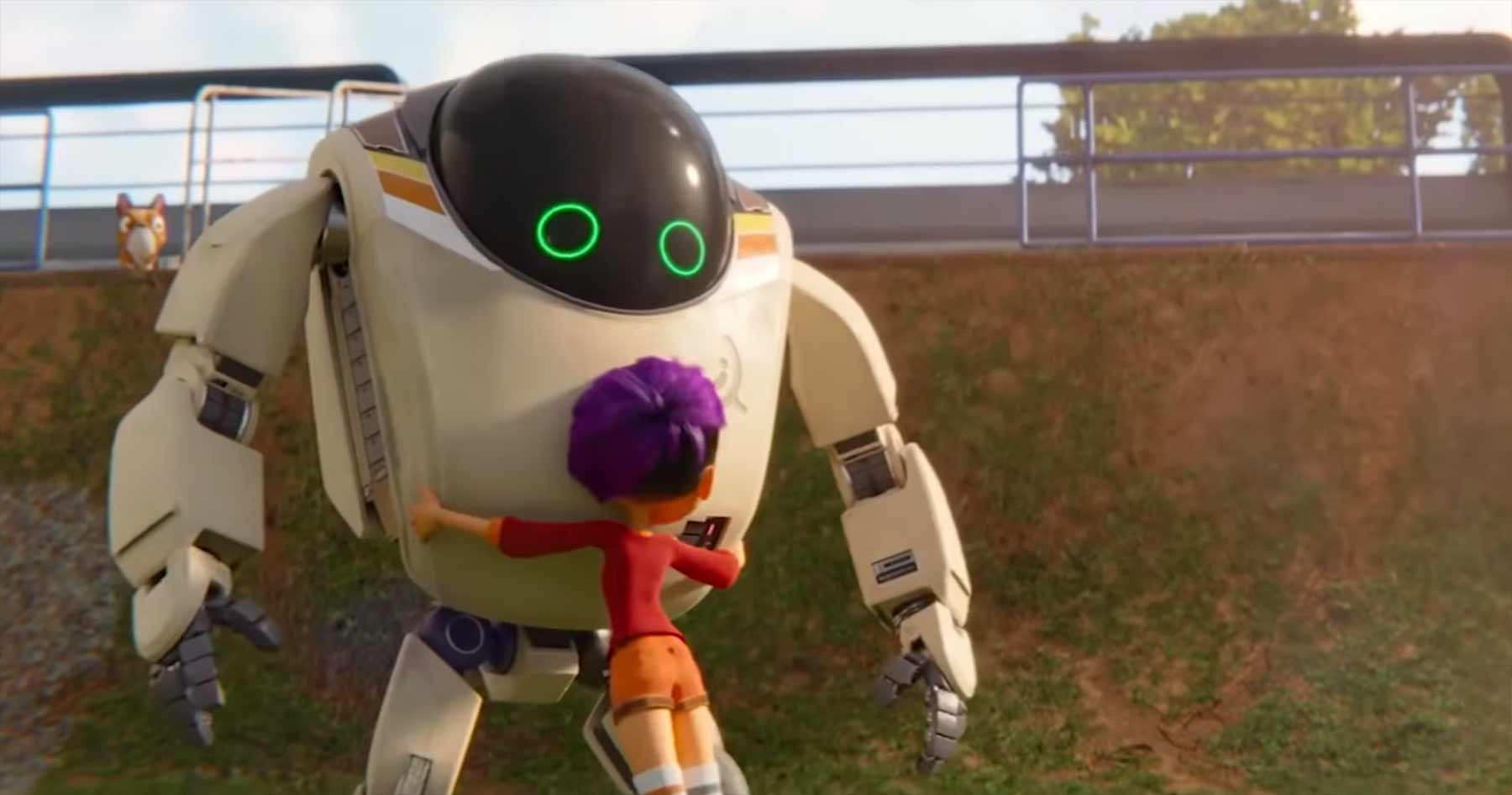
It might be easy to write off a film that borrows plot elements from other stories as freely as Next Gen does, but this Chinese-American cartoon based on a graphic novel and delivered by Netflix manages to be more than the sum of its parts. Set in a futuristic world where personable robots are a ubiquitous household accessory, young robot-hating loner Mai (Charlyne Yi) becomes unlikely friends with an experimental droid called 7723 (John Krasinski) that might be able to save both her from herself and the world from a robot takeover. That description alone will probably conjure memories of The Iron Giant, Big Hero 6, and I, Robot, and Next Gen wears those similarities on its sleeve. Yet there’s more to appreciate beyond the familiar “boy and his robot” storyline (or “girl and her robot,” in this case).

See the source image

As I said, Next Gen’s biggest touchstone would have to be Big Hero 6, not only with its big friendly robot mascot but also its urban setting of Asian-Western fusion, with Chinese characters instead of Japanese. But this Netflix film has some intriguing differences as well. One of them is the extent of robot normalization, which goes beyond that of I, Robot. Almost every device in this world is semi-sentient, and while a lot of potential questions surrounding that aren’t even broached, it’s an intriguing setup. Mai’s mother (Constance Wu) is obsessed with her Q-Bot companions and their developer, the Steve Jobs-esque Justin Pin (Jason Sudeikis), and it’s not a coincidence that the robot fascination mirrors the distraction of smartphone use. It’s also worth noting that Isaac Asimov’s three laws of robotics apparently don’t apply, specifically the one about robots not harming humans, since a group of bullies order their robots to beat up on Mai for them.

Beyond the setting, there are some deeper than normal themes at play as well. Mai is resentful of her father’s abandonment of her and the way her mother uses robots to cope, and when she meets 7723, it’s only his weapons and the destruction they create that catch her interest. She’s quite angry and cynical for a cartoon protagonist, and interestingly, it’s 7723 that has to remind her to not lose her humanity when lashing out at the world.  7723 also has a struggle of his own; he values every minute spent with Mai, yet his memory cache is limited, forcing him to choose which memory files and systems to delete and make room for more. It’s not every cartoon that tackles existential questions reminiscent of Eternal Sunshine of the Spotless Mind, so Next Gen’s themes are definitely a step above the usual “follow your heart” storyline we’ve seen all too often.

See the source image

On top of that, it’s a quality production, with fluid animation and some pretty awesome action sequences. One explosive scene in particular is one continuous tracking shot with no cuts. I already love those kinds of scenes in live-action, and, although it probably doesn’t require quite as much effort to pull off, I like that the technique is being used more and more in animation. (I could also cite the opening scene of The Secret Life of Pets or Diamond’s big fight scene in the anime Land of the Lustrous.)

As self-aware as it often is, it’s a shame that Next Gen feels obligated to conform to a few clichés, like the bully inevitably deciding “Hey, sorry I beat you up. Let’s be friends.” Likewise, Mai’s mother is pushed into a “you were right, I was wrong” confession that is so fast, it felt like the screenwriter checking off a plot requirement.

I will also say that Next Gen is probably better for older kids, and not just because of its deeper themes or a sudden death scene. There’s a funny running joke where 7723 can translate the barks of Mai’s excitable dog (Michael Pena), bleeping out his more profane words. I guess it’s on the level of any number of reality shows these days, but I don’t exactly welcome it when a kids’ cartoon features even the mouthing of the F-bomb.

See the source image

Next Gen isn’t perfect, but it comes closer to Big Hero 6 than I would have thought possible from a Chinese production company I’d never heard of. There’s a lot to love about it and how it addresses moving beyond tragedy and anger while remaining a fun and sweet adventure, and I certainly hope that this and other animation houses outside the mainstream can continue the high quality displayed here.


Rank: List Runner-Up


© 2018 S.G. Liput
590 Followers and Counting


Mission: Impossible – Ghost Protocol

Tags

, ,

See the source image

Doing the impossible
(Repeatedly, if possible)
Is so much easier to pull
When backs are braced and funds are full,
For then a hero dutiful
Can fight for right as usual
And put up with a villain’s bull.

It’s harder when support is gone,
Blindsided, chased, and set upon,
A dangerous phenomenon,
For then the evildoers spawn
While tempting good to stay withdrawn.
It’s then that heroes’ brains and brawn
Are specially depended on.
_______________________

MPAA rating:  PG-13

I’m so glad I finally decided to catch up on this series. The Mission: Impossible films may have gotten off to a rocky start, but J.J. Abrams’ third installment breathed new life into the franchise, which Brad Bird’s Ghost Protocol builds on even further. Every review I’ve seen has proclaimed Ghost Protocol the best installment of the series, but I think it’s more of a tie with its predecessor, though for different reasons (and of course I withhold judgment until I see the next two as well).

See the source image

Ghost Protocol may have seemed like an odd choice for Brad Bird’s first foray into live-action, but he did nail the super-spy vibe in The Incredibles and does the same here. Delivering a similar brilliant eye for action, he puts Ethan Hunt and the Impossible Mission Force through the ringer as they endeavor to stop a Russian madman (Michael Nyqvist) from initiating a nuclear war. From infiltrations gone wrong to the extended foot chases from which Tom Cruise must get most of his exercise, the fast-paced thrills are as good as they’ve ever been, with the crown jewel being that famous high-hanging sequence with Cruise actually clinging to the outside of Dubai’s Burj Khalifa skyscraper. The whole caper surrounding that scene is the film’s “high” point (see what I did there?), but other sequences also impress, like the spies employing some fascinating new toys or the high-stakes struggle for a briefcase in one of the coolest parking garages I’ve ever seen.

My VC thought Ghost Protocol had more lulls than its immediate predecessor, and perhaps that’s true, especially with some early undercover scenes and elements that require patience to be explained, but that’s minor quibble. What Ghost Protocol has over any of its brethren is the team it assembled. Ving Rhames may be sadly missing for most of the runtime, but never has Ethan had such strong supporting players.  As a new field agent promoted from his tech job in M:i:III, Simon Pegg is more than welcome in a larger comic relief role, while Paula Patton and Jeremy Renner deliver actual motivation and personality as circumstances fling them onto Ethan’s team, offering more than just the competence of the interchangeable teammates in the past (Maggie Q, John Polson, etc.; you might be asking “Who were they again?”). It was nice seeing Josh Holloway as well (Lost alert!), even if it was a disappointingly brief appearance.

See the source image

So, while I’m not raving as much as some critics, I still found Ghost Protocol to be a darn entertaining entry in the series. (And it came out in 2011? How am I just now getting to this?) The villain wasn’t as memorable as Philip Seymour Hoffman, and it didn’t quite nail the satisfying conclusion of the third film, its ever-increasing stakes being not as personal as Ethan’s struggle for his wife, but Ghost Protocol matched or exceeded it in just about every other respect. The plot had plenty of the twists I’ve come to expect from these films, and the way gadgets repeatedly malfunctioned or were unavailable kept the IMF team guessing and the suspense high. It’s not often that the fourth film in a series can still leave viewers eager for the next installment, but now I’m looking forward to Rogue Nation even more.

Best line: (Benji Dunn, complaining about their code names) “Why am I Pluto? It’s not even a planet anymore!”   (William Brandt) “Well, Uranus is still available.”


Rank: List-Worthy (joining Mission: Impossible III)


© 2018 S.G. Liput
589 Followers and Counting


VC Pick: Running on Empty (1988)

Tags

, ,

See the source image

I did nothing wrong, and yet
Here I bear another’s debt.
I flee because they feel they must,
And I must follow, share their sweat,
And leave my future in their dust.

Still I love them dearly. How
Can I think to leave them now?
I’ll stay as long as they may need me,
Wait until our lives allow
Dreams my patience guaranteed me.
________________________

MPAA rating: PG-13 (mainly for a few F-bombs)

Since my schoolwork and home life haven’t given me an abundance of time for watching movies of my own choice (or reviewing them), that limitation has also applied to my dear Viewing Companion (VC), who hasn’t gotten to choose a movie for well over a month now. In trying to fix that, she introduced me to Running on Empty, the kind of former Oscar contender that you only discover either by accident or from some obscure recommendation. It’s a surprisingly effective drama in all respects, especially highlighting the squandered potential of young star River Phoenix, who received a Best Supporting Actor nomination from the Academy five years before his death.

Phoenix plays a teenage boy named Danny who can never be known as Danny. With his younger brother, he lives a life on the run, following his parents Arthur and Annie Pope (Judd Hirsch, Christine Lahti), a pair of former revolutionaries fleeing the FBI for an anti-war bombing back in 1971 (based on real-life radicals Bill Ayres and Bernardine Dohrn). He’s earnest and well-meaning, the kind of kid who may come off as a punk based on how little he says but becomes more endearing the longer you spend with him. Taking on his latest persona of “Michael,” he clearly loves his parents but is torn between wanting to protect and help them and desiring a life of his own, including a promising musical career and young love (with an acerbic Martha Plimpton of The Goonies). Likewise, his parents are conflicted as well, his father insistent on staying ahead of the law and his mother wondering when and how to let her son move on from their mistakes.

See the source image

Directed by Sidney Lumet, Running on Empty has no shortage of strong acting, and though Phoenix got most of the praise at the time, Lahti’s Golden Globe-nominated role plays the heartstrings even more. The film doesn’t offer any easy answers. Danny wants to be free of the burden of his parents’ crimes, but doing so would mean either exposing them or never seeing them again after their next move. His mother is willing to turn herself in for his sake, but that would mean leaving her other young son parentless if she and Arthur are jailed. Everyone in this sweet and tight-knit family wishes for normalcy, but there’s no simple way to reach it. Add in the danger of Annie and Arthur being lumped in with other Communists who have not mellowed their violence as the Popes have, and it’s clear that no resolution will satisfy everyone.

The performances are what really distinguish Running on Empty as an engaging and realistic drama, and for some reason, its empathy and sincerity made me think of Dominick and Eugene, another Oscar-worthy film from 1988 that is oft-overlooked. However, while my VC loves it and is no doubt irked by my reservations, Running on Empty doesn’t quite make my list. Perhaps it’s simply my underlying annoyance at Arthur and Annie’s actions, claiming that they’ve accepted the consequences of their actions when they really haven’t. True, they’ve suffered by constantly running, but accepting jail time would have freed their children from that kind of life as well. Then again, Danny would have grown up without his parents, but maybe the Popes should have thought of that before carrying out bombings while he was two years old!

See the source image

See what I mean? The moral questions at play here are hard to answer. And while I can be irritated by the Popes’ mistakes, those mistakes were made, and the ongoing fallout from them makes for a unique ethical quandary that remains surprisingly relatable and somehow manages a satisfying conclusion. Running on Empty may be a footnote in someone’s forgotten ‘80s collection, but it’s a hidden gem worth revisiting, as much for the reminder of River Phoenix’s talent as for the poignant questions of conscience.

Best line: (Lorna, Danny/Michael’s girlfriend) “Why do you have to carry the burden of someone else’s life?”


Rank: List Runner-Up


© 2018 S.G. Liput
589 Followers and Counting


Blindspot Pick #7: Eternal Sunshine of the Spotless Mind (2004)

Tags

, ,

See the source image

Memories are funny things,
Immortal in some form at least,
For though they twist,
They still exist
And lie in wait to be released.

I cannot say if what’s recalled
Is how it was or how I felt.
For how I feel
Can shape what’s real
Within the memories I’m dealt.
_________________

MPAA rating: R (mainly for language, as well as sexual content)

Despite my falling behind on it, this Blindspot series has been a good opportunity for some firsts. Last time, I reviewed my first Marilyn Monroe film with Some Like It Hot, and now it’s my first exposure to Charlie Kaufman’s existential surrealism. Eternal Sunshine of the Spotless Mind is sort of like Donnie Darko was for last year’s Blindspots, a film so audacious in its subtlety that I couldn’t help but enjoy its unusual narrative, whether I fully comprehended it or not.

See the source image

On its surface, Eternal Sunshine is a tale of love gone wrong. Introverted Joel Barish (Jim Carrey) has his life jump-started by the effervescent and capricious Clementine (Kate Winslet), not once but twice. We see them meet on a train from Montauk, only to learn that they’ve already been in a relationship, which ended when Clementine had her memories of Joel erased by the enigmatic Lacuna corporation. In retaliation, Joel commissions the same procedure for himself, and as the irresponsible technicians (Elijah Wood, Mark Ruffalo) slack off while doing their sci-fi work over the course of a single night, Joel revisits his memories and finds more worth saving than he remembered.

In many ways, Eternal Sunshine is structured as a puzzle that gradually allows itself to be solved, and I love those kinds of movies. Hints are dropped early, with many left till the end to be fully explained, and since Joel’s memories are peeled back from the most recent to the oldest, a lot of the plot is told literally in reverse, which is still easier to follow than anything in Memento. It’s watching these unraveled story threads come together that makes the film even more compelling, beyond the often relatable romance elements. (I’ll admit I saw some of myself in Joel’s self-conscious outlook.)

See the source image

Since so much of the story takes place inside Joel’s head, it takes numerous surreal turns along the way as it visualizes abstract concepts. Trying to prevent the erasure, Joel tries revisiting previously redacted memories, where faces and lighting are distorted, and later mixes his mental version of Clementine with unrelated childhood memories. It can get weird, or “warped” as Clementine puts it, but even its odder elements remain understandable in the abstract realm of Joel’s mind. Couple that with juggling two Clementines (one in Joel’s head as a representation of his memories of her, the other the real one struggling with her own deleted memories) and a couple ethics-challenging subplots surrounding the Lacuna staff, and Eternal Sunshine clearly boasts an intellectual complexity unique to most Hollywood fare. No wonder Kaufman won Best Original Screenplay at the Oscars that year, and I wish I’d known of the name’s poetic origin when I compiled my Top Twelve Poems in Movies list.

The actors also rise to the challenge, with Jim Carrey standing out even more than Kate Winslet’s manic girlfriend. Even in past dramatic roles like The Truman Show, there were traces of his trademark goofiness, but here he deftly subdues himself to fit the often somber tone of the script. There’s an elegiac urgency to scenes where memories are being erased, people snuffed out of existence and buildings torn apart on a metaphorical, metaphysical level. The effects used are simple but impressive in setting the scene for a series of inescapable dreams.

See the source image

So often people say they wish they could forget something, but the sci-fi premise of Eternal Sunshine of the Spotless Mind challenges them to rethink what might be lost along the way if such a wish were granted. In some ways, the core relationship of Eternal Sunshine isn’t much different from (500) Days of Summer, which also shows the gradual souring of a once-so-sweet romance, albeit in a somewhat more linear fashion. (It’s funny when a film like (500) Days of Summer can be considered “linear” by comparison.) Eternal Sunshine asks whether the memory of such a soul-crushing break-up is worth retaining, especially if we as human beings might end up repeating the same mistakes consciously or not. As Captain Kirk said in one of the few good parts of Star Trek V, “You know that pain and guilt can’t be taken away with a wave of a magic wand. They’re the things we carry with us, the things that make us who we are. If we lose them, we lose ourselves. I don’t want my pain taken away! I need my pain!” Perhaps not everyone would agree that they need it, but that doesn’t mean they can’t be better for it.


Best line:  (Mary, played by Kirsten Dunst) “’Blessed are the forgetful, for they get the better even of their blunders.’  Nietzsche. Beyond Good and Evil. Found it in my Bartlett’s.”


Rank: List Runner-Up (a darn close one)


© 2018 S.G. Liput
589 Followers and Counting


Mission: Impossible III (2006)

Tags

, ,

See the source image

The thrill of a life that is lived on the edge
Lasts only as long as one’s love for the ledge.
Eventually, danger
Is no more a stranger,
And those once so thrilled
Can be left unfulfilled.

And yet who can blame them for normalcy’s dream,
For craving some quiet when life’s been a scream?
While risk has its place
In its white-knuckle pace,
Who wouldn’t wish for
Just a little bit more?
______________________

MPAA rating: PG-13

Now that I’ve gotten around to watching the third Mission: Impossible film, I finally see the unlikely trend that this series seems to have pulled off. Unlike most franchises, its sequels are getting better. Perhaps it was too early to tell that when J.J. Abrams’ third entry hit theaters in 2006, but Mission: Impossible III is easily the best MI so far.

Having shed his long-hair phase and Thandie Newton as his girlfriend-of-the-week, the Ethan Hunt in this threequel is far from the confident flirt in M:i-2; he’s now happily engaged to Julia (Michelle Monaghan) and content to train new agents rather than risk his life in the field, all while keeping Julia and her friends in the dark as to his top-secret career. However, he is soon drawn back to the field to rescue his captured protégé (Keri Russell) and stop a highly dangerous arms dealer (Philip Seymour Hoffman).

See the source image

Leave it to J.J. Abrams to once again reignite a series’ potential, and I bet it was this franchise stint that made him desirable to direct the Star Trek reboot three years later, aided by his frequent co-writers Alex Kurtzman and Roberto Orci. From the very first intense scene, he sets the stakes high before flashing back to show how events led there, which isn’t the only Abrams trademark you may notice. (Who else revives characters by pounding on their chest?) Eschewing the over-emphasized slow-motion of its predecessor, this feels like the Mission: Impossible movie I’ve been waiting for. The first two had their defining moments, but M:i:III  has all the twists and turns you’d expect from a spy thriller while building to a surprisingly satisfying conclusion.

Ethan’s desire for a normal relationship and life makes him far more personable than his past appearances, and you can feel his desperation when that life is threatened. Likewise, the villain makes more of an impression, with Hoffman relishing and making the most of his coldly murderous role as black marketeer Owen Davian. One detail I especially liked was the revelation of how those famous face masks are made, including the spy trickery of copying someone’s voice, which is revealed to not be as fast and easy as the second film made it seem.

See the source image

As I said, this is a Mission: Impossible film done right. Despite the overly-complex plot and the occasional line of hackneyed dialogue, the twists and fast-paced action kept me entertained from start to finish. My VC even pronounced it as (probably) her favorite Tom Cruise movie. If the other films in the series are supposed to be better than this one, I can’t wait for more. Ghost Protocol, here I come!

Best line: (IMF leader Brassel) “Mr. Musgrave, please don’t interrupt me when I’m asking rhetorical questions.” (Although Ethan’s “I’m gonna die unless you kill me” comes close too.)


Rank: List-Worthy


© 2018 S.G. Liput
589 Followers and Counting
 

Slowing Down

As some might have noticed, I’ve slowed down on blogging considerably. Between a family medical issue and my starting a new college class, it’s been hard to keep up with my usual schedule of movie-watching and writing.

Nevertheless, I just wanted to let everyone know that I’m still around and will post when I have time.  This slower schedule will probably last into January, but I at least want to finish up my Mission: Impossible marathon and my Blindspot series, which I’m behind on but making progress.

I hope everyone has a good Labor Day! Stay tuned; I’m far from done with this blog.