Spider-Man: No Way Home (2021)

Tags

, , , , ,

See the source image

Two worlds diverged in a multiverse,
And neither could know a single choice
Had split their fates to so disperse,
One to grieve, the other rejoice,
But which was better, which was worse?

The first was practical and straight,
Made sense for me and claimed its spoils.
My life it did not complicate
But ruined others’ mortal coils,
Which one could easily blame on fate.

The second took a rougher course,
With heartache sighing “them’s the breaks.”
Others prospered, while remorse
Reminded me of those mistakes
That all accept but none endorse.

If I could see the consequence
From some perspective few attain,
The world that thrived at my expense
Is the only choice I’d entertain,
If I could make all the difference.
_________________________________

MPA rating: PG-13

I think it’s safe to say that Spider-Man: No Way Home is the biggest movie since Avengers: Endgame, in both box office totals and audience enthusiasm. After months of speculation and leaks (which I did my best to avoid), the third entry in Tom Holland’s MCU trilogy promised the franchise’s first real exploration of the multiverse and its infinite possibilities, and it thankfully delivered on the Christmas hopes and dreams of countless fans, me included.

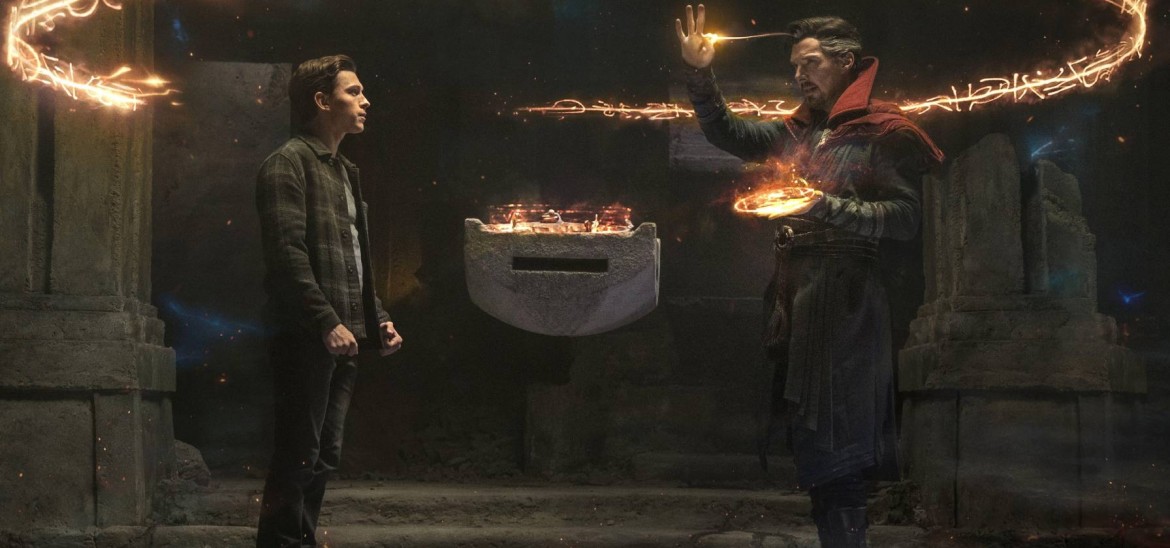
Picking up right where Far from Home left off, with Mysterio posthumously revealing Spider-Man’s true identity, Peter Parker’s life is turned upside down with haters, fans, and consequences ruining his and his friends’ chances at a normal future. When he seeks the help of Dr. Strange (Benedict Cumberbatch), their attempt to overwrite the collective memory of Spider-Man’s identity instead tears a hole in the multiverse, allowing in familiar characters from past Spider-Man films. It becomes apparent to Peter that the interloping baddies, including Doc Ock (Alfred Molina), Green Goblin (Willem Dafoe), and Electro (Jamie Foxx) among others, are equally in need of saving as the people they threaten, and he must make some hard decisions to help everyone he can.

See the source image

With the walls of the multiverse being punched through, Spider-Man: No Way Home is also the biggest all-out geek-fest since Endgame while also being similarly engrossing but easier to absorb than the multiversal mashup of Into the Spider-Verse. I’ve read critical complaints over the rowdiness of audience members, but I thoroughly enjoyed my theater experience, with fanboys periodically whooping or cheering when awaited characters appeared or knowing references were dropped. Huge credit is due to the cast members returning from past movies, particularly Molina and Dafoe, who effortlessly channel their villainous personas as if it hasn’t been over fifteen years. And while I won’t outright spoil what is perhaps Hollywood’s best-kept open secret, I’ll just say that the film manages to grant closure to the two prior Spider-Man series in a satisfying way that only made me want even more.

One thing that No Way Home has in common with its Spider-predecessors is how its superhero must grapple with the weight of his own mistakes, and this film easily has the biggest stakes of Holland’s solo tenure in the MCU. Over the years, Spider-Man has had his fair share of tragedy, and I feel like the way he responds to it is a key part of what makes him such a universally appealing character. Here, Holland proves his selflessness in trying to assist villains who seemed beyond help in their prior appearances, his belief in second chances being tested to its limit. And through it all, Holland continues to be a wholly endearing Peter Parker with Zendaya’s MJ and Jacob Batalon’s Ned forming a tight group that I hope to see again in future movies. And anyone who wanted to see a Spider-Man/Dr. Strange fight will undoubtedly be satisfied.

See the source image

If I had to come up with a negative or two, I suppose my expectations were so high that I perhaps wish there had been even more multiverse-enabled cameos, like a glimpse into the aftermath of the other universes. Plus, as much as the film is concerned with handing out happy endings, it was a shame that one character ended up with the short end of the stick, for now at least. Even so, Spider-Man: No Way Home is a comic book movie nerd’s fantasy-come-true. It clearly depends on knowledge of the previous five Spider-Man films for full appreciation (and the mid-credits scene feels a bit shoehorned in), but No Way Home ranks among the best installments of the Marvel Cinematic Universe, an enjoyable ride twenty years in the making.

Best line: (classic in every way) “With great power, there must also come great responsibility.”

Rank:  List-Worthy (joining the previous Holland Spidey films)

© 2021 S.G. Liput
748 Followers and Counting

2021 Blindspot Pick #9: Sunshine on Leith (2013)

Tags

, ,

See the source image

(Best sung to the tune of “I’m Gonna Be (500 Miles)” by the Proclaimers)

If you watch this,
You should know they’re gonna sing,
They’re gonna sing their lines as lyrics and a tune.
If you hate this,
You should know it’s gonna sting,
It’s gonna sting ‘cause even cynics aren’t immune.

But I like this,
I like musicals galore,
And by galore, I mean there’s plenty to embrace.
If you don’t like this,
Then it’s better to ignore,
But you ignore what puts a smile on my face.

And I would watch this musical
And I would watch 500 more
If it means they’ll make more musicals,
No matter how the haters roar.
_______________________________

MPA rating:  PG (mainly some innuendo)

When I choose my Blindspots at the beginning of each year, I usually don’t give any thought to how exactly I’ll watch them. With so many streaming options nowadays, there must be some way, right? When I decided to watch Sunshine on Leith, I realized that might be difficult, considering the Scottish musical was not on any streaming subscription and apparently had never been released on DVD in the U.S., meaning anything I bought would not be playable on my U.S. player. I was on the verge of having to change my Blindspot choice entirely, but thankfully I checked YouTube, where it happened to have been uploaded by some overseas saint. So note to self, maybe I ought to verify that I can actually find the movies on my Blindspot list before I announce them.

Anyway, I had a strong feeling that Sunshine on Leith would be my kind of movie. A feel-good romantic musical set in Scotland? Yes please! The closest analogue to this film would have to be Mamma Mia!, the jukebox musical that incorporated ABBA’s diverse discography into a mostly coherent storyline. This time, the featured music is that of the Proclaimers, a Scottish duo known for songs that tend to tow the line between rock and barroom folk anthems. Admittedly, I was only familiar with two of their songs, “I’m on My Way” and most famously “I’m Gonna Be (500 Miles),” both of which debuted on the 1988 album Sunshine on Leith, from which the film gets its name.

See the source image

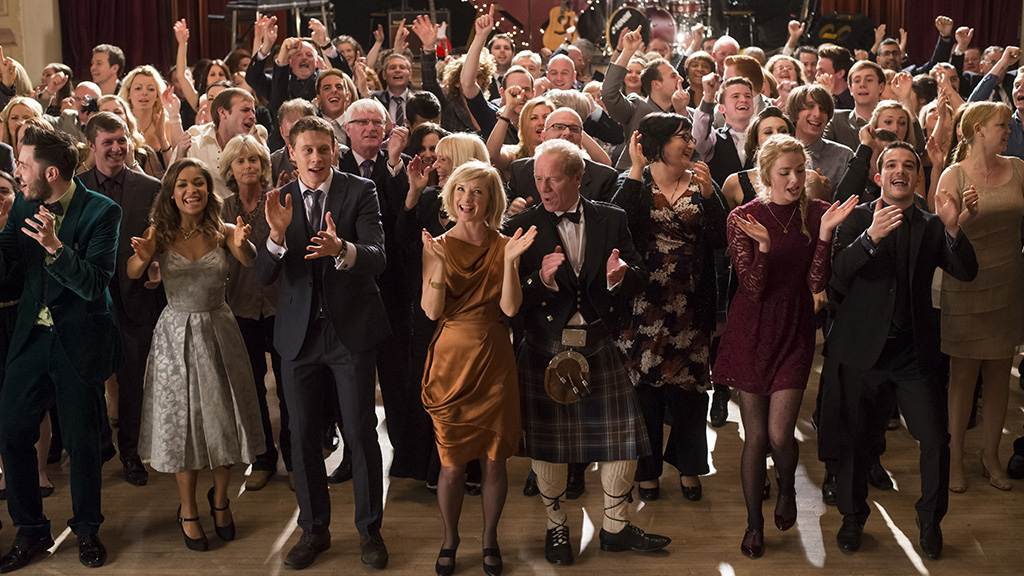
So, unlike Scottish audiences, I had little internalized fondness for these songs since they were mostly new to me. Yet I still enjoyed the songs quite a bit, even if the performances often lack the wow factor of other musicals. It’s very much in the vein of Mamma Mia!, with characters sometimes breaking into goofy theatrics for an impromptu musical number, and the final rendition of “I’m Gonna Be” is undoubtedly the best, combining the romantic climax with the most fun choreography.

However, in combining songs that were not necessarily written to fit into a narrative, the plot is unfortunately thin. It chugs along in feel-good mode with hardly any conflict before suddenly dropping three different conflicts all at once and resolving one in the space of a single song that didn’t seem to actually address the problem. I’m genuinely impressed by the way musicals like this and Mamma Mia can combine unrelated songs into a cohesive plot; I’ve wished I or someone could do the same for some of my favorite artists, like TWRP, Autoheart, or Coldplay. It can’t be easy, but this is one case where the songs often don’t quite fit naturally, instead making the plot feel overly rushed at times, despite the good performances of actors like Peter Mullan, Jane Horrocks, and George McKay (years before 1917). And yet the songs are also the best parts, causing the non-musical sections to suffer by comparison.

See the source image

I love musicals, and I liked this one, but I hate to admit that I didn’t like it as much as I wanted to. It has the feel-good romance aspect, paired with elements that try to make it less like a predictable Hallmark movie, and it introduced me to some great Scottish tunes. And while I was concerned that the accents may be hard to understand, I was able to follow along without missing too much. I’d gladly watch it again, so perhaps it will grow on me like Mamma Mia! has. If they’ll actually release the darn thing in the U.S.!

Rank:  List Runner-Up

© 2021 S.G. Liput
748 Followers and Counting

A very Merry Christmas and Happy Holidays to all!

Eternals (2021)

Tags

, , ,

See the source image

Did you ever get the feeling
That your world was being watched,
Like immortal super-beings
Had been charged with overseeing
All the quandaries and travesties humanity had botched?

Not to worry, for we humans
Can be lovable at times.
Those alien surveyors
Should see man in all his layers,
And our aptitude for love and hope should balance out our crimes.
Right?
______________________________

MPA rating:  PG-13

It was obvious long before it hit theaters that Eternals was going to be a gamble for the Marvel Cinematic Universe, just like Guardians of the Galaxy was back in 2014. A movie about a whole team of superheroes that only hardcore comic book fans had even heard of? And then they announced that it would be helmed by critical darling Chloe Zhao, the most Oscar-caliber director since Kenneth Branagh introduced Thor a decade ago (and fresh off her Best Director win for Nomadland earlier this year). With ten diverse but unfamiliar heroes to introduce, I knew Eternals would be a tricky balancing act, so I’m not surprised that it has become one of the most divisive Marvel films. I, for one, enjoyed Eternals quite a bit and disagree with most of the mixed reviews, yet I have my own misgivings that few critics seem to share.

See the source image

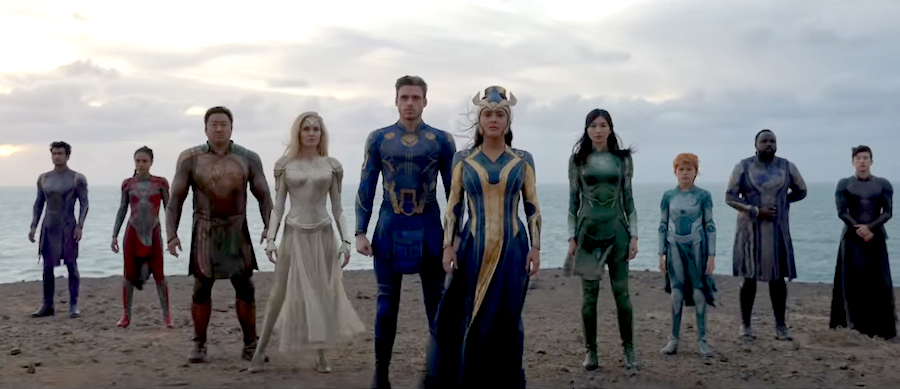
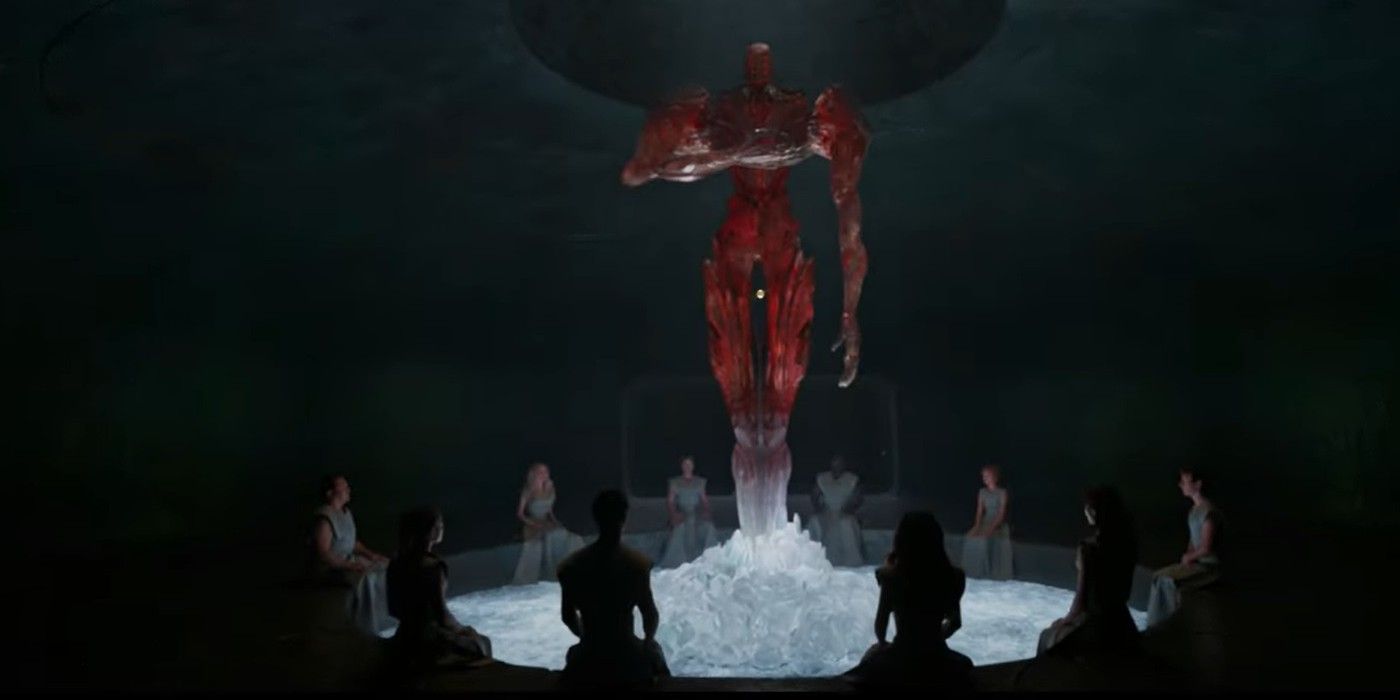
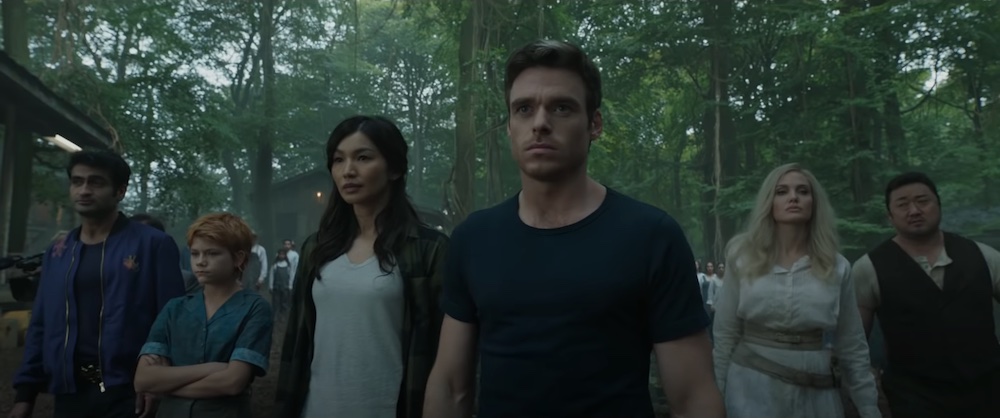
Eternals has the unique standalone feel of early Marvel, with relatively little crossover with the MCU and no cameos of established characters, just picking up the idea of enormously powerful Celestials mentioned in passing back in Guardians of the Galaxy. The Eternals were alien immortals created by the Celestial Arishem to defend Earth against the mysterious animal-like Deviants, which the ten supers battle across centuries with their unique powers. The cast is as diverse as they come, from Sersi (the lovely Gemma Chan, recast from her supporting role as a Kree in Captain Marvel), who can transform whatever matter she touches and takes a liking to our planet, to Sprite (Lia McHugh), who can create illusions and has the body of a child. Plus, there are the leader Ajak (Salma Hayek), the Superman stand-in Ikaris (Richard Madden), the comic relief Kingo (Kumail Nanjiani), the bad boy Druig (Barry Keoghan), the tech wizard Phastos (Brian Tyree Henry), the haunted warrior Thena (Angelina Jolie), the muscle Gilgamesh (Don Lee of Train to Busan), and the speedster Makkari (deaf actress Lauren Ridloff), all of whom like to periodically pose in a line. Setting aside subplots like the mysterious illness afflicting Thena, the plot is largely a get-the-band-back-together journey after the Deviants return to threaten the world, eventually veering off into larger implications as their true mission is revealed.

So yeah, there’s a lot going on, with plenty of exposition and flashbacks to help viewers absorb it all. And honestly, I’m surprised at how skillfully the film handles all of it. The characters are many yet manage to carve out memorable moments for them all, aided by their unique powers and the mythical origins of many of their names, which are indicated to have actually inspired those age-old myths. Some like Makkari don’t fare as well in standing out, but McHugh as Sprite earns some real pathos as she struggles with her inability to age. Other characters are distinguished by the moral debates of how best to use their powers; they may have been instructed not to interfere with human affairs, but it’s understandably hard watching human history play out in all its horrors when they know they have the power to change it. It’s a lot to take in across a long runtime, but I disagree with the criticisms over the pacing and character development simply because of how comparatively well it holds up under its own weight, which could easily have made it a mess. It probably would have been better as a Disney+ series, though.

See the source image

There’s plenty to admire, from Chloe Zhao’s trademark “golden hour” lighting and artful cinematography to the ever-impressive visual effects when the fists start flying. So what then is the problem? It took a while for me to decide what exactly bothered me about the film’s twist and climax, and it boils down to the fact that it shoots for cosmic answers to questions far above its pay grade. Eternals basically addresses the question “What is the meaning of life?” And I did not like its answer.

Spoilers in this paragraph: According to the movie, Arishem actually created the galaxy and thus life on earth, and the way he is revered by the Eternals clearly paints him as a God-like figure. While he sends the Eternals to fight against the Deviants, the reason for defending humanity is not because he values human life for its own sake. Instead, one could point to the famous battery scene in The Matrix, but instead of that being humanity’s futuristic fate, the MCU has now explained that it was always humanity’s purpose, with the earth’s destruction as the end state. Ignoring the fact that the conflict sounds suspiciously like one of the storylines from Steven Universe, this revelation cheapens life more than I think the film intends. As a Christian, I believe that God created man in His image with a love for every individual, a sharp contrast to Arishem’s temporary benevolence. For viewers who don’t believe in a Creator, perhaps Eternals’ twist is simply a typical sci-fi revelation, one that admittedly does make for an interesting ethical debate as the various Eternals question whether to oppose not just a typical supervillain but the creative process itself. For me, though, it imbues the MCU itself with an uncomfortable nihilism, suggesting that all of mankind’s efforts are worthless in the eyes of “god” and making me question by what standard any right or wrong, love or hatred in this universe can be judged, even at Arishem’s level. Questions like this don’t seem to bother mainstream critics, only being broached by Christian film websites, but I do feel like this subversive trend is an unfortunate departure from the MCU up to this point.

See the source image

The sheer amount of plot and characters is both a blessing and a curse for Eternals. One could argue there’s too much going on for the film to juggle, but that also means the things it does well can overshadow its thematic or pacing flaws, regardless of what one considers a flaw. The characters are as well-developed as they can be with so many on hand, the often serious tone is still livened by some well-timed humor, and the visuals have an epic scale that rivals the biggest Marvel movies. Despite my qualms over the film’s worldview, I can’t help but admire Zhao’s managing of a film that is clearly intended to set up much of the Marvel universe to come. I just hope those future installments can make up for this one’s missteps.

Best line:  (Thena) “We have loved these people since the day we arrived. When you love something, you protect it.”

Rank:  List Runner-Up

© 2021 S.G. Liput
747 Followers and Counting

2021 Blindspot Pick #8: Coming to America (1988)

Tags

,

See the source image

The grass is always greener
If you have the right demeanor
To view negatives as novel
And see good in every hovel,
If you welcome every nuisance
And embrace the sad but true, since
You can meet the world sincerely
If you understand it clearly,
For “greener” is subjective
And dependent on perspective.
____________________

MPA rating:  R (mainly for language)

With the end of the year fast approaching and my backlog continuing to grow, I’m thinking I’ll need to shorten my reviews to churn them out a bit faster. And my Blindspots are especially in need of catching up. I had hoped to see Coming to America before its long-awaited sequel came out earlier this year, but life had other plans, as life so often does. Silly life…. Anyway, this is one of those ‘80s comedy classics that I’m somewhat surprised that I never watched sooner, simply because of a vague recollection that my mom once said it wasn’t that funny. While I can agree it’s not quite Eddie Murphy’s finest hour, I still found it to be a winning star vehicle for him.

See the source image

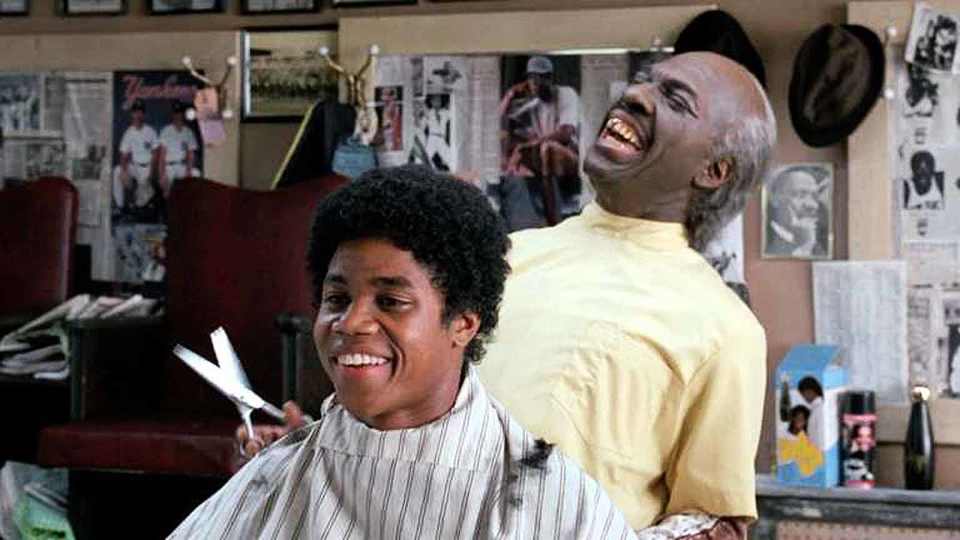
Murphy plays Prince Akeem Joffer, the heir of the fictional African nation of Zamunda, who is tired of having his every need supplied by overly attentive servants. After meeting his yes-woman of a bride-to-be (Vanessa Bell), Akeem decides to go on a trip with his friend Semmi (Arsenio Hall) to find a bride of his own in New York City, whether his traditional parents (James Earl Jones, Madge Sinclair) approve or not. Murphy gets comedic mileage out of the fish-out-of-water scenario, especially because he isn’t offended by NYC’s seedier aspects but embraces them wholeheartedly as a wonderful contrast to his life back home. Even so, several scenes go on too long, such as a tribal dance that would probably be labeled racist if Eddie Murphy wasn’t behind it. Plus, Murphy and Hall both relish in playing multiple colorful side characters, who aren’t particularly funny beyond the impressive makeup and the realization of who’s playing them.

Yet I found myself sold more on the romance than the comedy, as Akeem begins courting Lisa (Shari Headly), the daughter of his boss (John Amos) at a local fast-food restaurant. Their chemistry works especially well, and the humor of his trying to keep his true identity a secret gives way to a heart-meltingly sweet confession of love. I might have liked a little more context around a climactic “reveal,” but Coming to America was a satisfying and fun rom com and a who’s who of African American actors, from the early roles of Samuel L. Jackson and Cuba Gooding, Jr. to the reunion of Roots veterans Amos and Sinclair (not to mention an entirely unexpected cameo from another Murphy film that was worth the price of admission). I also love how Jones and Sinclair were later cast as another African royal couple in The Lion King. As with other Blindspots from that era, I feel like I might have a greater fondness for this film if I’d seen it years ago, but I’m still looking forward to revisiting the characters in the sequel now.

See the source image

Best line:  (Queen Aoleon, to Akeem) “When I first met your father, I was terrified.”
(King Jaffe) “I must admit, I was frightened too.”
(the Queen) “I was so nervous, I became nauseous. But over the years, I have grown to love your father very much.”
(the King) “So you see, my son, there is a very fine line between love and nausea.”

Rank:  List Runner-Up

© 2021 S.G. Liput
746 Followers and Counting

Dune (2021)

Tags

, ,

See the source image

I see the desert’s shifting sands,
Imbued with that most priceless Spice,
A trap that only changes hands
When offered blood as sacrifice.

I see it’s home to Fremen rovers
And to undulating worms,
The former subject to takeovers
While the latter heeds no terms.

I see the cruel Harkonnen despots
Ripping riches from the land,
While the Fremen reap no respites
As they flee across the sand.

I see the eager House Atreides
Coming here to take control.
Though they look like lords and ladies,
Who can guess their final goal?

I see an upstart heir-messiah,
Barely out of boyhood’s thrall,
Soon a scion made pariah,
Desert sands to break his fall.

The desert claims what it consumes
And chooses whom it will anoint.
I see so much (and large it looms)
But cannot see beyond this point.
_______________________

MPA rating:  PG-13

I’ve never read Dune, but my VC has and is an ardent fan of David Lynch’s strange 1984 adaptation, for some reason. While she has yet to see Denis Villeneuve’s new incarnation of George Herbert’s massive sci-fi opus, I was glad for the multiple times she convinced me to see Lynch’s version, since I knew generally what to expect. Herbert’s novel is notoriously dense, with dozens of characters and unfamiliar terms in alien languages, so it was a benefit not going into the movie cold.

See the source image

Villeneuve has already proven his talent for serious science fiction, from the cerebral but deeply touching Arrival to the lengthy but engrossing Blade Runner 2049, so Dune seemed like a natural next step for the director. The first question: Is it better than the 1984 film? A resounding yes! You can take your pick of what was the main problem with Lynch’s film: the constant internal monologuing, the ultra-compressed plotline, or (what I think) the introduction of so many strange elements of Dune’s world without enough time for them to come off as anything but bizarre. That’s a time issue too, I suppose, but it’s a problem that Villeneuve has countered by splitting his adaptation of the first Dune book into a two-parter, making this year’s installment only Part One.

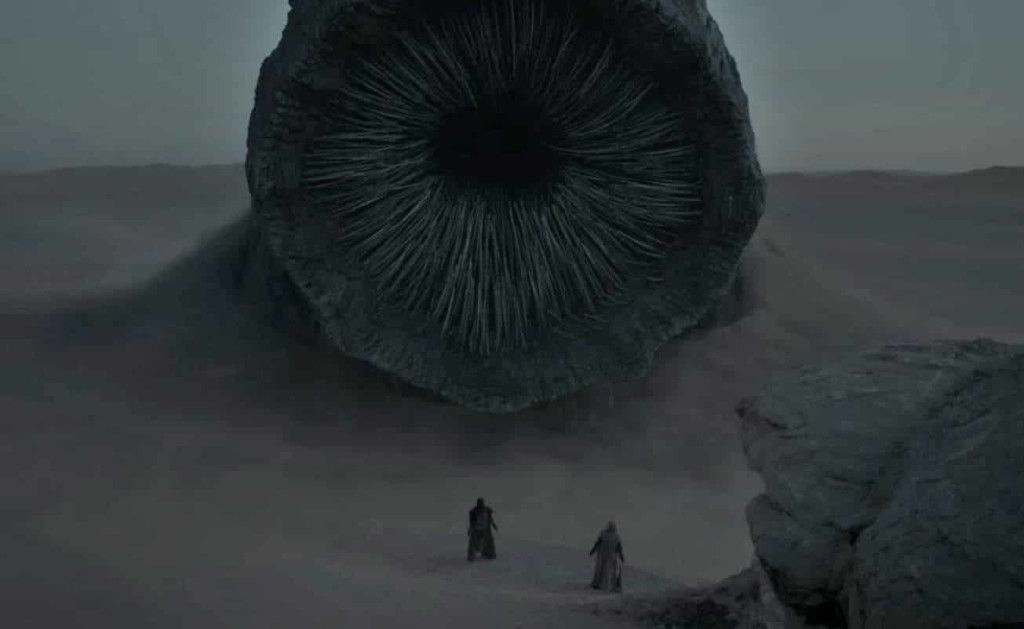
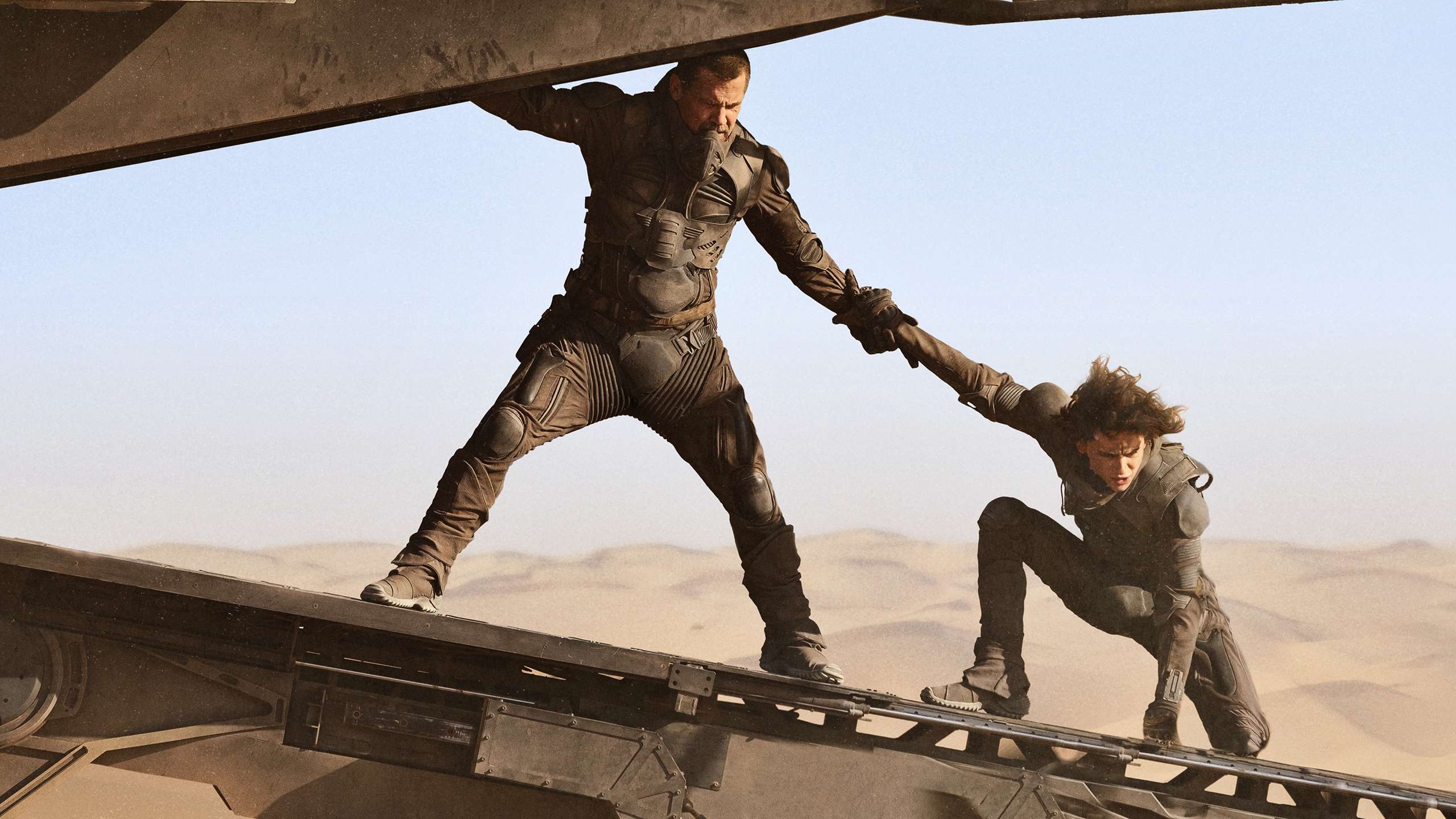
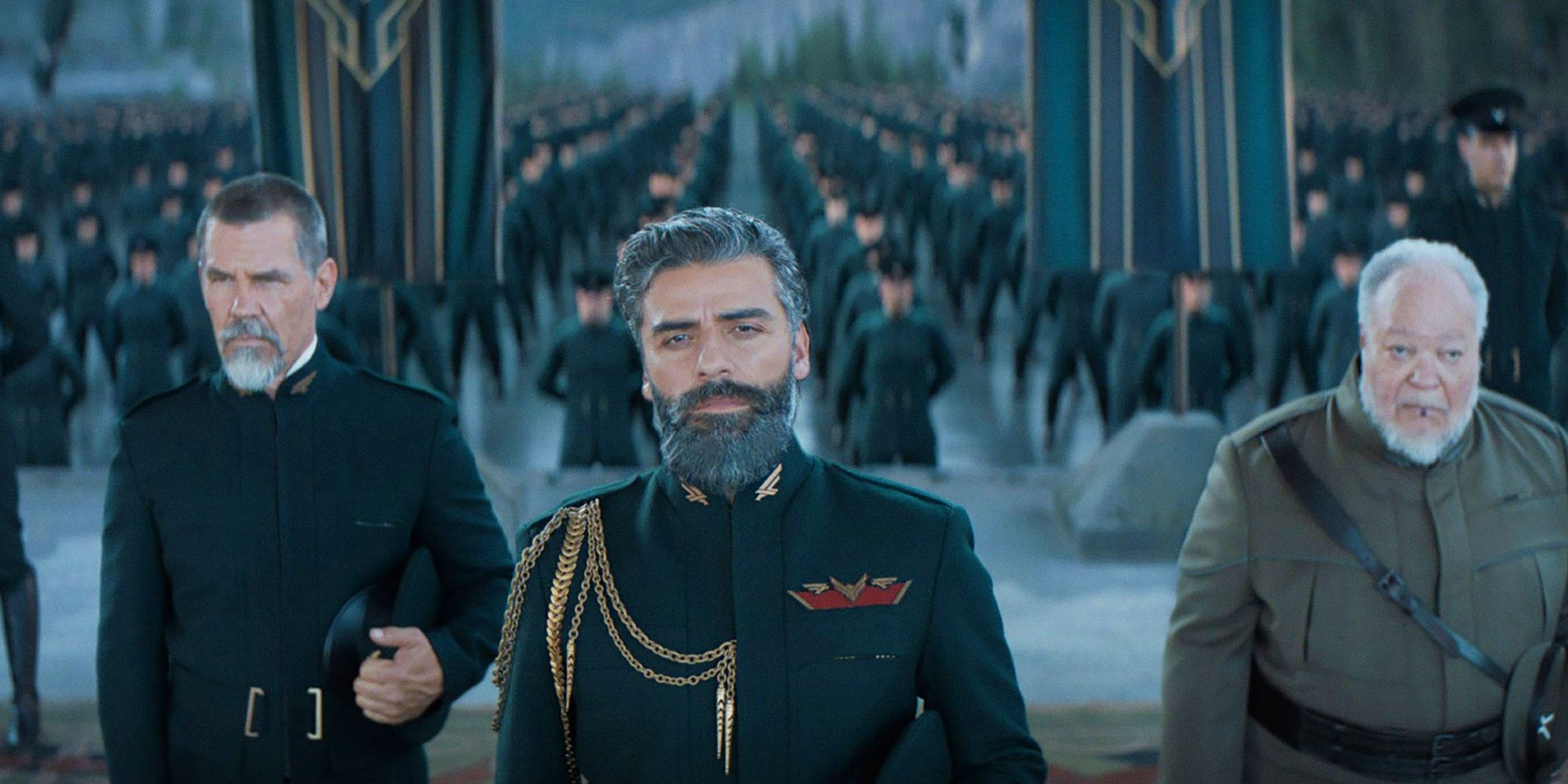
This protraction of the runtime over two films allows the plot to breathe. That plot is still largely the same – the Atreides house taking control of the desert planet of Arrakis to harvest the hallucinogenic Spice only for things to go very, very poorly – but Villeneuve has carefully chosen what to show and what to leave for later, such as providing glimpses of the home planets of the Atreides and Harkonnen clans while leaving the Emperor and the giant-headed mutant Guild Navigators off-screen and only mentioned. There is also more room for character development, mainly for the young messianic heir Paul Atreides (Timothée Chalamet), his noble father Duke Leto (Oscar Isaac), and skilled fighter Duncan Idaho (Jason Momoa), the latter a major figure in the books who gets way more screen time here than in Lynch’s film.

See the source image

Villeneuve’s Dune is rightfully being lauded not just for its improved adaptation and talented all-star cast (including Rebecca Ferguson, Josh Brolin, Stellan Skarsgard, and Javier Bardem) but for just how immersive his on-screen world is. Like Gravity, this is a film that was made to be experienced in a theater, with that blaring Hans Zimmer score accentuating how massive the spaceships and architecture are as Shakespearean backstabbing plays out amidst quasi-religious drug reveries and space colonialism. While Chalamet didn’t impress me that much as Paul, he and the rest of the cast embrace their roles fully to sell how this strange future universe is their own. Likewise, the set design and special effects bring the explosive battles and gargantuan sand worms to startling life, making the film a shoo-in for technical Oscars next year.

But then there’s the second question:  Did I like this new version of Dune? Well, sort of. With Lynch’s film, I could still appreciate the underlying story that Herbert created, and here, there is even more to appreciate to bring that story to the big screen. I’m convinced that Villeneuve’s Dune is the best possible version of this story, but I’m still not sure if it’s a story I can say I enjoy. Even with the extra time to get to know the characters, I still didn’t really connect with any of them, which is perhaps unavoidable considering how far removed they are from the world we know. Plus, as with the Hobbit films and Infinity War, it’s hard to make a final appraisal of Part One when the full story is yet to come, though thankfully Part Two has been confirmed. Several characters just drop away without knowing their fates, while other clearly important characters, like Zendaya’s blue-eyed Chani of the native desert-dwelling Fremen, get little screen time except for slow-motion dreams.

See the source image

So Dune: Part One is an immense achievement of filmmaking and a worthy adaptation of its famed source that may be more accessible than Lynch’s film but is still bound by the limitations of the same story. Perhaps that’s a matter of personal taste that might be solved by repeat viewings, but I’m still glad the long-awaited epic was worth the wait on a visual level alone.

Best line: (Jamis, in one of Paul’s visions) “The mystery of life isn’t a problem to solve, but a reality to experience. A process that cannot be understood by stopping it. We must move with the flow of the process. We must join it. We must flow with it.”

Rank:  List Runner-Up

© 2021 S.G. Liput
745 Followers and Counting

Shang-Chi and the Legend of the Ten Rings (2021)
Tags

, , ,

See the source image

“The first Asian hero!” the headlines declare,
A landmark of cinema, and you were there.
It’s representation I’m glad to endorse,
And long overdue as a matter of course.
Yet somewhere I feel Wong is crying a river
And can’t help but feel quite a bit like chopped liver.
And Hogun, Thor’s buddy so fleetingly brought in,
Somewhere in Valhalla is feeling forgotten.
And ol’ Jim Morita, a Howling Commando,
Had no superpowers but still made his stand, though.
So yes, it’s important, the first Asian lead,
But let’s not forget someone had to precede.
_______________________

MPA rating:  PG-13

In contrast to 2020, I’ve been lucky enough to see all of Marvel’s releases this year in the theater, but whereas I was alone for Black Widow in an empty theater, I got to see Shang-Chi with friends. It really felt like the movie theater experience was truly back. It also helped that it was a kick-butt blockbuster and one of the best origin movies of the recent MCU.

See the source image

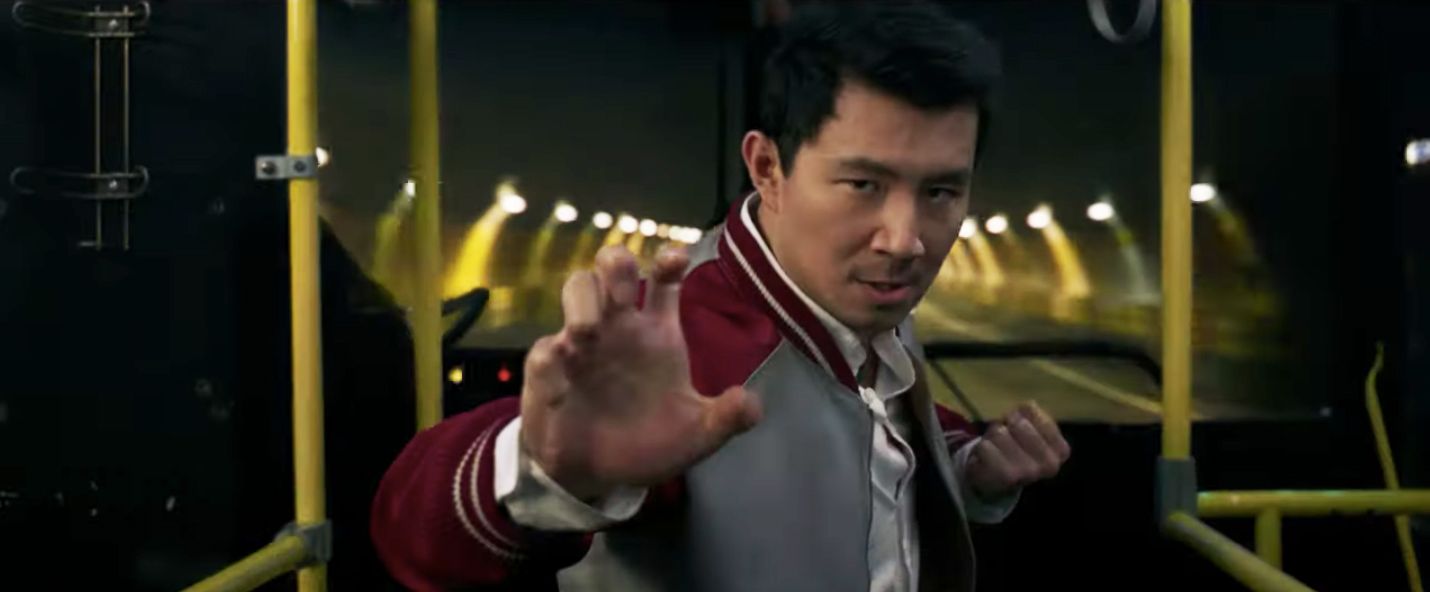
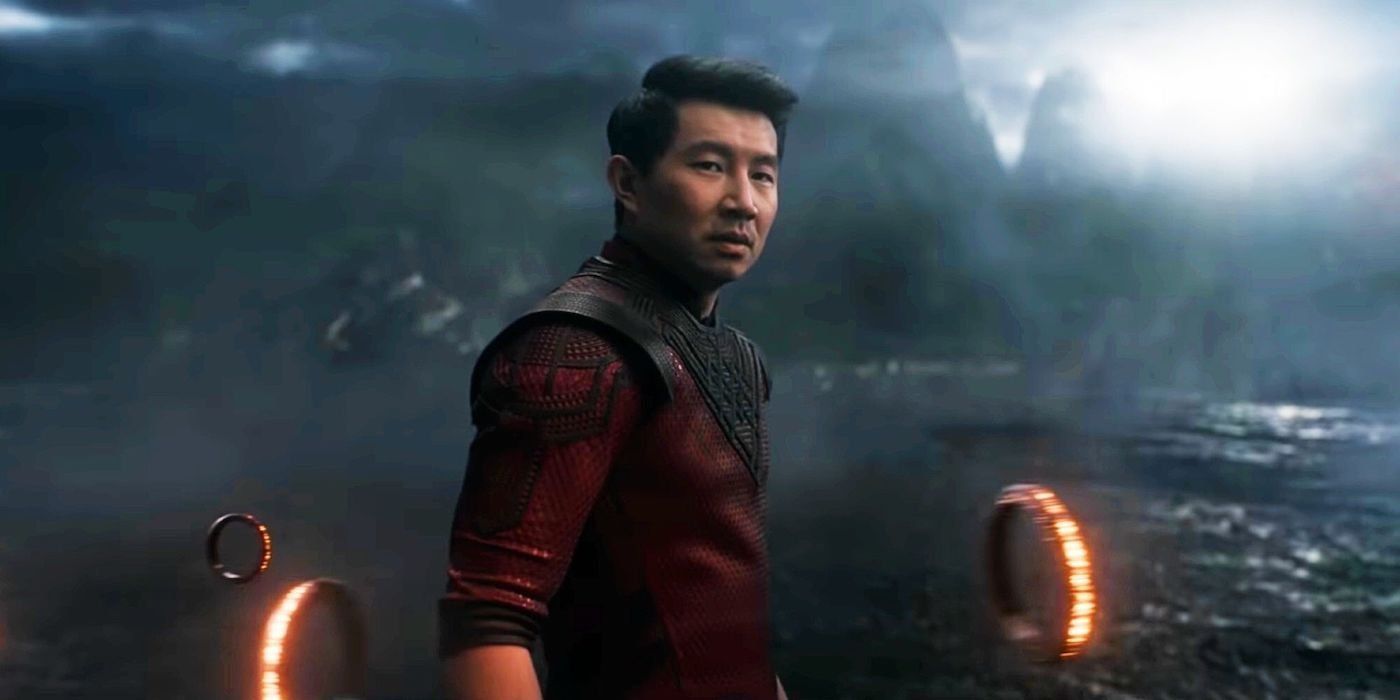
I consider myself at least somewhat hip to comic book lore, and I had never heard of Shang-Chi before his own solo film was announced. Although the character dates back to the ‘70s when he was introduced as the son of Fu Manchu and modeled off Bruce Lee, the public unfamiliarity with the character allowed Marvel Studios to craft their own synthesis of story elements, from the ten rings of the Mandarin (previously impersonated in Iron Man 3) to a cosmic monster that ranks as one of the more obscure villains in Marvel history. Here, Shang-Chi’s father is Wenwu (Chinese superstar Tony Leung), an ancient warlord granted immortality and great power by ten arm rings, or bracelets if you get right down to it. Trained from childhood to be a master of martial arts, Shang-Chi or “Sean” (Simu Liu) escapes to live a normal life as a valet in San Francisco, only to be dragged back into the world of lethal assassins and mystical secrets, along with his friend Katy (Awkwafina) and sister Xialing (Meng’er Zhang, in her mainstream film debut).

Just as Crazy Rich Asians revitalized the rom com with its all-Asian cast, Shang-Chi succeeds in satisfying Marvel’s efforts at diversity with a superhero film that is good in its own right (and reunites Awkwafina and Michelle Yeoh too; now I wonder if they’ll ever run into Gemma Chan of Eternals). I haven’t seen Simu Liu in the Canadian sitcom Kim’s Convenience, but Marvel once more excels at casting likable heroes, both on- and off-camera. His camaraderie with Katy and his tortured past with his father paint him as a would-be assassin just trying to live a normal life, and Liu’s charisma opposite Awkwafina and Leung really sells the character, even if the other two outshine him at times. Katy becomes one of the most endearing and actively involved Marvel love interests, and Wenwu is the best kind of villain, the type whose motivations are not only misguided but understandable and sympathetic even.

See the source image

No Marvel movie is perfect, of course, and Shang-Chi and the Legend of the Ten Rings is no different. The final battle is both an awesome spectacle and a CGI mish-mash, and one training sequence results in some unrealistically fast skill growth. Perhaps there is an overreliance on flashbacks too. Yet Shang-Chi is also Marvel’s first big-screen foray into stunt-heavy martial arts, which never disappoint, from a thrilling free-for-all on the side of a skyscraper to an artful wuxia-style fight/dance reminiscent of Crouching Tiger, Hidden Dragon (hello, Michelle Yeoh again). Shang-Chi may not break any molds and may not be the funniest or most powerful of Marvel properties, but it’s still an outstanding debut for Marvel’s first Asian lead, with just a few welcome cameos to introduce him to the larger MCU. It’s my favorite Marvel release of the year so far, and I look forward to seeing how they’ll use this new corner of Marvel mythos.

Best line: (Shang-Chi’s aunt, played by Yeoh) “You are a product of all who came before you, the legacy of your family. You are your mother. And whether you like it or not, you are also your father.”

Rank: List-Worthy

© 2021 S.G. Liput
745 Followers and Counting

2021 Blindspot Pick #7: Don’t Look Now (1973)

Tags

, ,

See the source image

What’s lost is lost forevermore,
It can’t be as it was before.
Our memories are tethered more
To wisps of smoke and whispered lore
Than any solid souvenirs
That lasted past the days of yore.

The lovers of the lost are faced
With echoes that recede in haste.
No matter how they’re called or chased,
They leave our mortal feet outpaced,
Assured that lovers left in tears
Won’t let their vestige be erased.
___________________

MPA rating:  R (mainly for a long and unnecessary sex scene, could be PG-13 without it)

This psychological thriller Blindspot would probably have been better suited for October, but I’m still in catch-up mode here. Don’t Look Now was one of the films on the list about which I knew very little going in, so I wasn’t sure what to expect from what I believed to be an acclaimed horror from the ‘70s. Based on a Daphne du Maurier story and released in the UK as a double feature with The Wicker Man, Don’t Look Now is not really a horror film to me, unless you would consider Rebecca one as well. Both du Maurier adaptations are far more concerned with psychological uneasiness and characters’ inner self-doubt than your standard scarefest, so the “psychic thriller” moniker on the film’s poster fits well.

Donald Sutherland and Julie Christie play married couple John and Laura Baxter, whose young daughter Christine drowns tragically at their British home. Still reeling from grief, they move to Venice, where John has been commissioned to restore a decaying church. Laura happens to meet two sisters in a restaurant, one of whom is blind and psychic, telling Laura that she saw her deceased daughter. The psychic woman later warns her that John is in danger and has psychic abilities himself, even as he begins seeing his daughter’s red coat along the darkened canals of Venice.

See the source image

Don’t Look Now is clearly interested in not just frights but art, the kind that alienates just as much as it interests. A uniquely choppy editing style sometimes intercuts seemingly unrelated scenes, playing into the theme of precognition to make the audience doubt what they’re watching at a particular time. This applies to an extended and apparently infamous sex scene, which could easily have been excised but likely is defended as art for its editing. While the editing isn’t always to my taste, it does serve to focus the viewer on the film’s recurring motifs, such as water, broken glass, and reflections, carefully crafted imagery I didn’t fully appreciate until reading about the film afterward.

As for the performances, Sutherland and Christie are quite convincing as a couple sharing grief but torn apart by how they respond to the idea of their daughter contacting them. They serve as the main point of sympathy, and, through their British presence in an Italian city, the film fosters its sense of otherness and anxiety, as if the rest of the cast are watching them from a distance and refusing to let them in on a secret. The two sisters (Hilary Mason, Clelia Matania) waver between unnerving and kindly, though the psychic one adds to the film’s intermittent weirdness, such as a séance where she practically reenacts the diner scene from When Harry Met Sally.

See the source image

As with many artsy critical darlings, Don’t Look Now is a film I can appreciate more than I enjoyed it. It’s clearly had an impact on filmmakers to come, with many directors citing its influence, and the image of a child in a bright red jacket has carried over into other films like Schindler’s List and Flatliners. The film excels in building an atmosphere of menace in its Venetian setting, particularly during a tense accident and the climax, but the editing of that climax seemed to suggest some deeper reveal that didn’t make itself clear. An admirably Hitchcockian examination of grief, Don’t Look Now manages to be at once well-crafted, odd, and ultimately unsatisfying.

Best line: (Inspector Longhi, with an interesting observation) “Age makes women grow to look more like each other. Don’t you find that? Old men decay, and each becomes quite distinct. Women seem to converge, eh?”

Rank:  Dishonorable Mention

© 2021 S.G. Liput
743 Followers and Counting

I wish everyone a Happy Thanksgiving!

A Quiet Place Part II (2021)

Tags

, ,

See the source image

Silence your cell phones, your children, your pets,
Or else you won’t have long to live with regrets.
Everything’s changed, in an instant or less,
Necessity-drawn to acute quietness.

Earth and its racket must screech to a halt
As whispers and shushing become our default.
A snap of a twig or reaction to pain
Can rain certain death on the noisy insane.

Flee without footsteps and scream without sound,
And grieve without digging or pounding the ground.
Meet the new normal, devoid of a voice.
Silence is golden; there’s no other choice.
__________________________

MPA rating:  PG-13

I may not be much for horror in general, but A Quiet Place was exactly the kind I most enjoy, taut and suspenseful rather than gross and gory. John Krasinski’s story of relentless blind creatures hunting anything that makes a noise was viewed from the perspective of a single family of survivors attempting to make the most of the apocalyptic situation, as quietly as possible on their farm until everything falls apart. A lot has changed since the first movie in 2018:  beyond the obvious world-changing pandemic that delayed the film’s release for over a year, I remember seeing the first film with my dad in the theater. Just as the previous film left the Abbott family without their patriarch Lee (Krasinski), I watched Part II alone in the theater, having lost my dad as well. When I realized the parallel, it was a sobering thought that helped me connect even more with their struggle, as they venture beyond their ruined farm in search of other survivors and safe places.

See the source image

The film starts with a flashback to when the alien invaders first came to earth, a harrowing sequence that gives Krasinski (also directing) a chance for a cameo. Soon though, we pick up right where Part 1 ended, with mother Evelyn (Emily Blunt), deaf daughter Regan (Millicent Simmonds), timid son Marcus (Noah Jupe), and Evelyn’s newborn baby venturing away from home after finding a way to kill the creatures with Regan’s hearing aid static. While the first film was solely about survival, Regan sees her hearing aid as a chance to fight back against the creatures, grudgingly aided by tortured neighbor Emmett (Cillian Murphy).

My appreciation for A Quiet Place was somewhat muted by the fact that its plot felt so similar to the 2015 film Hidden, which also featured a family quietly hiding from lurking enemies. Hardly anyone saw Hidden, though (a shame, since it’s a great film), so I suppose the originality issue only bothers me. This time, however, Part II is able to chart its own course, making it feel more original and unpredictable. Krasinski proves once more how adept he is at building up the tension across several parallel storylines, with only a few of the typical “dumb” decisions common to the horror genre. By the end, A Quiet Place Part II becomes almost a coming-of-age story for Regan and Marcus, with Simmonds and Jupe proving to be two of the best child actors today.  It does share the abrupt ending of the first film, but luckily there is already a Part III in the works that we can only hope will conclude this series on a high note. It’s an above-average horror tale that deserves it.

See the source image

Best line: (Emmett, to Regan) “And you were right. I’m nothing like him [Lee]. You are.”

Rank:  List-Worthy (joining the first film and Hidden)

© 2021 S.G. Liput
742 Followers and Counting

The Lost Battalion (2001)

Tags

, ,

The Lost Battalion (2001) | MUBI

Would every war have been the War
To End All Wars, we sigh,
That dealers of demise and gore
Would not be fashioned anymore
From friends and fathers summoned for
To fight and kill or else to die.

How many heroes, horror-hewn,
Have died for lack of peace,
Both peace from battles body-strewn
And peace of mind, that distant boon?
No haunted human is immune,
From memories that never cease.

A hero may not ever meet
Recipients of peace.
The foolish, thoughtless, and elite
Think heroism obsolete,
But we will not forget their feat,
For neither do our memories cease.
___________________

MPA rating:  TV-14 (violence somewhere between a strong PG-13 or a light R)

Like last year with Journey’s End, it seemed like Veteran’s Day was the right time for a World War I movie. The Lost Battalion may have been a TV movie created for A&E, but it holds up with the best films about World War I. Grown-up child star Rick Schroeder plays Major Charles Whittlesey, a former New York lawyer who grudgingly follows his general’s commands and leads the Army 77th Infantry Division to take the Argonne Forest, only to be cut off from all support as they hold their ground. The true story was first told in a 1919 silent film (which is available on YouTube), but, unlike that version, the 2001 film never leaves the battlefield, showing the cost-heavy struggle in all its savagery and heroism.

The Lost Battalion (2001) | Great War Films

It’s easy for World War I films to be boiled down to trench warfare, so grimly brought to life in films like 1917 and Journey’s End, but it was a change of pace for The Lost Battalion to leave the trenches behind and mostly take place in a forest setting. Schroeder does an excellent job as a weary commander forced by duty to lead his men into certain doom, while the rest of the cast excel at depicting the mixed ethnicities that fought alongside each other on the battlefield. The violence was stronger than I expected for a TV movie, with blood spatter that still doesn’t come close to Saving Private Ryan or Hacksaw Ridge (which also featured the 77th), but the cinematography and editing go a long way toward making the battle more chaotic and dire. The Lost Battalion is a reminder of many things – the stubborn courage of American soldiers, the bitter pill of “acceptable losses,” the military bonds that transcend racial conflict – but, as with so many war films, it makes me grateful to all who have fought for freedom.

Best line: (Major Whittlesey) “Two days ago, we had a Chinese working our field phone, an American Indian for a runner. They’re both dead, but that’s not the point. These Italian, Irish, Jews, and Poles, they’d never hire me as an attorney. We wouldn’t be seen at the same events. But we will never in our lives enjoy the company of finer soldiers or better men than we do tonight.”

Rank:  List Runner-Up

© 2021 S.G. Liput
741 Followers and Counting

A huge thank you to all veterans and soldiers. May God bless and protect you all!

Arachnophobia (1990)

Tags

,

Arachnophobia: When PG Horror Works - Den of Geek

There once was a spider I hated,
A creature that God had created.
It helped to cull pests,
The most useful of guests,
But I didn’t care so I slayed it.
________________________

MPA rating:  PG-13

I may not be a fan of the horror genre in general, but Halloween is a good excuse to seek out some new scary movies I might actually like. Supernatural horror is usually my preferred cup of tea, with a greater focus on tension over gore, but there’s one subgenre that often gets overshadowed by all the zombies and vampires out there – the nature creature feature.

When I was a kid, two things truly terrified me: the clown from Poltergeist and spiders. And unfortunately, I could only reassure myself that one of those wasn’t real. I would freak out at the mere sight of a spider on the playground, and I used to paper-clip notecards over the spider pictures in my biology book. So it’s no surprise at all that I never expected to see a film titled Arachnophobia in my life. I don’t know if this is common, but my once-severe antipathy toward spiders eased over time. I’ll still kill any that dare cross my threshold, but I can at least look at them without cringing. Maybe I just got used to Shelob and Charlotte.

Five Fast Facts About ARACHNOPHOBIA - Warped Factor - Words in the Key of  Geek.

The debut of director Frank Marshall, Arachnophobia is basically Jaws for spiders, taking an intimidating but largely non-threatening animal and turning them into a bloodthirsty monster seemingly targeting humans. An unfortunate American photographer (Mark L. Taylor) goes with a British spider expert (Julian Sands) to investigate new species in the Amazon rain forest before being bitten and killed by an unusually aggressive and resilient specimen. When his body is sent back to small-town California, the spider hitches a ride, beginning a series of unexplained deaths for new arachnophobic doctor Ross Jennings (Jeff Daniels) to figure out.

I was prepared for Arachnophobia to bring back my discomfort with arachnids, and certain scenes with large numbers of the crawlies emerging from throughout a house did give me the willies. The fact that much of the lurking and eventual confrontations with the spiders take place in everyday home locations add to the squirm factor, since you never know what could be prowling just out of sight in the places you feel safest.

James Wan Is Producing an Arachnophobia Remake - Paste

Yet I found myself more entertained than scared, thanks to the unrealistic lethality of the spiders and the slight camp of the plot. John Goodman plays a scene-stealing pest control expert, whose arrogance belies an unusual competence for someone in this kind of movie, and there’s an undercurrent of dark irony as Dr. Jennings’ patients keep getting killed right after he examines them. The film never fully embraces its comedy label, but somehow it totally sells a face-off between Jeff Daniels and a tarantula. With Amblin Entertainment as one of its production companies, Arachnophobia has a Spielbergian vibe to it that feels more like E.T. than Jaws. I might have been able to handle it as a kid too, but then again it might have just made me even more skittish. At least now I know I’m over my fear of those eight-legged freaks… I mean, friends. See, no repressed spider hatred around here….

Best line: (Ross, after killing a spider) “Therapy.”

Rank:  List Runner-Up

© 2021 S.G. Liput
741 Followers and Counting