• Home
  • About Me
  • THE LIST Through the Years
  • Top Twelves and More
  • The End Credits Song Hall of Fame

Rhyme and Reason

~ Poetry Meets Film Reviews

Rhyme and Reason

Category Archives: Writing

My Top Twelve TV Series

13 Friday Nov 2015

Posted by sgliput in Reviews, TV, Writing

≈ 7 Comments

Tags

Lists

I love good television, whether it be a comedy, a drama, science fiction, or even a cartoon, and any movie lover is bound to have numerous favorite shows. That being said, I will mention up front that I have not seen nearly as many as the pop culture experts, mainly because of how time-consuming catching up on a show can be. I’ve never seen Buffy or Breaking Bad or Bonanza, and my aversion to violence has prevented me from checking out acclaimed but notorious shows like Game of Thrones or The Walking Dead. Still, when I find a show I like, I enjoy watching and rewatching it and tend to know it inside and out. I can thank my parents for introducing me to many of the older shows on this list, while others I stumbled upon as a pleasant surprise. I may not be the most well-versed TV viewer, but I can say for a fact that all of these are great television.


  1. TIE: Little House on the Prairie (1974-1983)/ The Waltons (1972-1981)

I’m probably one of the only guys my age who can see the merit in these two old-fashioned shows. I grew up with reruns of both of them on Hallmark Channel, and even as more modern and edgy shows have replaced them, I still carry a special fondness for rural family dramas.

Little House on the Prairie is based off of the book series by Laura Ingalls Wilder and similarly paints a lovable picture of frontier life from the viewpoint of young Laura (Melissa Gilbert). Michael Landon as her wise Pa is one of the quintessential TV fathers, and while the show grew stale in its later seasons, most of its run was deeply endearing, whether it be Laura’s quarrels with mean Nellie Oleson or the sad season where sister Mary went blind.


The Waltons is also based on the youth and work of an author, producer Earl Hamner, Jr., replaced by John-Boy Walton (Richard Thomas). Growing up in Depression-era Virginia with his parents, grandparents, and six siblings, John-Boy faces moral questions and personal challenges as he becomes a writer, goes to college, and also depends on the wisdom of his father (Ralph Waite). Again, later seasons degraded in quality, but The Waltons built an enduring family and community that faced financial difficulty and still came out happy. Both of these shows may seem boring and saccharine by today’s standards, but they serve as reminders to me of the simple comfort of the simple past. The first notes of both opening themes make me feel like I’m going home to visit old family and friends.


  1. TIE: Phineas and Ferb (2007-2015) / Gravity Falls (2012-present)

Recent shows like these have confirmed that cartoons can be enjoyed by adults just as much as by kids. Both of these are Disney Channel shows (probably the best in its history), which take place over one very eventful summer. Both have attracted adult fan bases and many talented voice actors.

Phineas and Ferb is very formulaic. Stepbrothers Phineas (Vincent Martella) and Ferb (Thomas Sangster) and their friends go to crazily fun lengths to make the most of the summer, while their sister Candace (Ashley Tisdale) tries to “bust” them to their mother, while their pet platypus escapes to fight an evil scientist. First, it’s odd; then it’s utterly familiar. Yet the showrunners find every opportunity to alter expectations and make it fresh with consistent humor and surprisingly impressive songs in every single episode. You know what to expect, but you never know what will change. The show sadly ended just this year, but even in the final episode, they were toying with the space-time continuum and making one of the funniest spoon jokes ever. Am I a fan of this show? Yes, yes, I am. Here’s one of the best musical numbers:


Gravity Falls was another surprise, as it’s quickly surpassed my expectations with its addictive mystery. Twins Dipper (Jason Ritter) and Mabel (Kristen Schaal) are sent to Gravity Falls, Oregon, to stay for the summer with their con artist Great Uncle Stan (show creator Alex Hirsch). Small, silly mysteries give way to huge ones, with cleverly hidden clues and hints sprinkled throughout each episode via background details and encoded backwards messages. (That whispering at the end of the theme song below is a backwards message for how to decode another message during the end credits.) Gravity Falls has some of that modern cartoon weirdness (anyone who’s seen Cartoon Network’s current lineup knows what I mean), but it works, with spoofs of movies like The Thing, The Exorcist, or those horror anthologies. Think, childish antics one minute and possessed mounted heads bleeding from the mouth the next. Yeah, on a supposed kid’s show (not so much). The early episodes don’t fully prepare you for how epic Gravity Falls becomes. It’s also hilariously written, and recent cliffhanger episodes have left me craving more.


  1. St. Elsewhere (1982-1988)

Predating the more recent hospital dramas like ER or Grey’s Anatomy, St. Elsewhere was one of the best dramas of the 1980s. Doctors and nurses at Boston’s unprestigious teaching hospital St. Eligius dealt with all kinds of current issues, from bombers and rapists and missing children to cancer and organ transplants. It also featured an amazingly talented ensemble cast, including many actors in before-they-were-famous roles, such as Denzel Washington, Howie Mandel, Ed Begley, Jr., David Morse, Alfre Woodard, Bruce Greenwood, and Helen Hunt, not to mention two-time Emmy winner and five-time nominee William Daniels as irascible Dr. Mark Craig. Full of memorable, often heartbreaking episodes, this show is one not to be forgotten.


  1. Gilligan’s Island (1964-1967)

From an acclaimed drama to a silly favorite, I could not not put Gilligan’s Island on this list. Again, I grew up watching reruns, and the slapstick interactions of those seven people trapped on an island (without polar bears, hatches, or smoke monsters) never cease to be entertaining. Anyone who’s anyone has to know the easily singable theme song. From the odd couple antics of Gilligan and the Skipper to the pompous vanity of the Howells to the ridiculously inventive contraptions made by the Professor, Gilligan’s Island has a timeless quality, and I expect to be laughing at it with my grandchildren many years hence.


  1. Sherlock (2010-present)

I hesitated to include Sherlock since it is essentially a series of TV movies, but it qualifies well enough. Benedict Cumberbatch and Martin Freeman are terrifically watchable actors on their own, but putting them together in a modern-day take on the famous detective was downright genius. The writing, humor, and editing are phenomenal, but it all comes down to their chemistry and delivery. Cumberbatch nails the self-assured, single-minded intensity of everyone’s favorite high-functioning sociopath, while Freeman’s down-to-earth Watson offers the perfect contrast with his quick wit and muted reactions. The show continues to deliver constant inventiveness and intrigue. Like Sherlock himself, it’s clever, and it knows it’s clever, and it relishes being clever in all the best ways. Can’t wait for the Christmas special!


  1. TIE: Firefly (2002) / Cowboy Bebop (1998)

I’m not the first to compare these two shows, and I just couldn’t resist combining them here due to their many similarities. Both are about thirteen hours long and feature believable, occasionally violent, space-faring settings with a mixed Western vibe; the crew of a rundown spaceship seeking their next job; an awesome lead character who can shoot hostage takers in the head; a young girl genius who acts weird and adds little to individual episodes; and a spinoff movie to satisfy fans’ demands for more.

In truth, Firefly is the better of the two shows. Joss Whedon’s retroactively popular science fiction deserved a much longer lifespan than just half a season. With impressive special effects for the time and Whedon’s shrewd dialogue, which can only be described as “shiny,” Captain Mal Reynolds and the crew of the Serenity turned Firefly into more than just another canceled show. They became a ragtag family aboard that ship, while the combination of futuristic technology and old-fashioned shootouts clinched Firefly as something truly unique.


As unique as it is, though, there were forerunners. I’ve heard that another anime show called Outlaw Star had a frozen girl in a box a few years before Whedon did. Cowboy Bebop may not have directly influenced it, but it’s still an excellent show with fantastic music. Hailed as one of the best anime shows ever, Cowboy Bebop follows the small crew of the Bebop, bounty hunters (not the Jubal Early kind) who catch bad guys while coming to terms with their pasts. Spike Spiegel is as cool as they come, and his kick-butt adventures with ship owner Jet Black, amnesiac femme fatale Faye Valentine, and a girl named Edward typically start slow and build to an action-packed finale. Whereas Firefly has a more explicitly Western tone, Cowboy Bebop incorporates more crime drama, jazz, and film noir, with subtle characterization and artsy editing. Each episode is distinct (one episode is like space-age Midnight Run, while another is a serio-comic version of Alien), but major plot threads tie together (for the most part) for an exceptionally sad conclusion. The worst thing I can say about the show is that each 30-minute episode is so full of plot that it easily could have warranted an hour runtime to avoid feeling rushed. Still, Cowboy Bebop is concise storytelling at its best.


  1. Quantum Leap (1989-1993)

Time travel is a concept full of possibility, and Quantum Leap was the first show to do it justice. Amnesiac Sam Beckett (Scott Bakula) “leaps” into other people’s bodies throughout modern history, solving problems and righting wrongs with the indirect aid of his friend Al (Dean Stockwell), who appears to him as a hologram. Sam gets to know the family or acquaintances of his host body and resolve the minor setbacks of history, and though he typically only bumps into famous people, sometimes he leaps right into them, whether for awkward humor (Dr. Ruth) or drama (Lee Harvey Oswald). Right when you think the writers have run out of ideas, they come up with some brilliant or silly variation of the main concept, and the result was always entertaining. Oh, boy.


  1. M*A*S*H (1972-1983)

TV dramedy doesn’t get any better than M*A*S*H, a show that garnered eleven seasons, eight Golden Globes, fourteen Emmys, and more than one hundred Emmy nominations. Through the motley bunch of surgeons and soldiers at the 4077th Mobile Army Surgical Hospital, viewers got an eleven-year look at the three-year Korean War, which perhaps seemed just as long to those who fought in it. M*A*S*H was at the forefront of innovative television, whether it be an episode filmed in real time or one from the first-person view of a patient. For such a long-running show, it surprisingly got better with time. The first couple of seasons were more generally comedic, while later seasons cranked up the drama, even killing a main character offscreen. From Alan Alda’s likable joker Hawkeye to Harry Morgan’s stoic but soft-hearted Colonel Potter, viewers truly got to know and love these characters, making the historic finale a genuine tearjerker.


  1. Avatar: The Last Airbender (2005-2008) / The Legend of Korra (2012-2014)

Predating James Cameron’s similarly named blockbuster, Avatar: The Last Airbender was quite a surprise. Nickelodeon up to that point was known for pure silliness like SpongeBob or The Fairly OddParents, yet Avatar mingled its comedy with a startlingly awesome world with elemental superpowers called bending and an ongoing storyline that became more serious with each season. The last surviving airbender is discovered as the lost peace-bringing Avatar, and with Katara and Sokka of the Water Tribe, he sets out to master Water, Earth, and Fire and defeat the evil, warmongering Fire Lord. I’ve heard Avatar compared with Star Wars, another franchise with a young protagonist learning to master mystical powers to topple a dark tyrant. The characters are lovable and surprisingly deep, while the action and elemental showdowns are all levels of cool. Despite some mysticism, I consider Avatar the best animated show ever. (I’m also including The Legend of Korra here since it continues the story and world of Avatar seventy years later. It’s not quite as good, but it has a similar blend of fantasy and excitement while tackling more mature themes.)


  1. Star Trek: The Next Generation (1987-1994)

Star Trek is a staple in my house. From television to movies, it has been a consistent source of thought-provoking science fiction for nearly fifty years now. While I still very much enjoy the original Star Trek with Kirk and Spock and McCoy, it’s a bit dated, and The Next Generation helped to reinvigorate the Trek universe for yes, the next generation of fans. Next Gen started slow and had its cheesy moments too, but it’s a prime example of a show’s actors and writers finding their groove over time. As much as I like Kirk and Spock, I learned to love Captain Picard (Patrick Stewart), Data (Brent Spiner), Dr. Crusher (Gates McFadden), Geordi Laforge (LeVar Burton), and the rest of the new Enterprise crew even more. Now that another Star Trek show is in the works, I can only hope it will have a similar effect on another “next generation” of fans.


  1. Star Trek: Voyager (1995-2001)

I may be in the minority (and I haven’t fully explored Deep Space Nine and Enterprise), but I am convinced that Voyager is the best Star Trek series of them all, breaking ground with its strong female captain and exploring questions of identity, truth, and principles. It follows something of the same exploration theme as the three Enterprise shows but hurls the titular ship to the Delta Quadrant, allowing the entire show to be a sci-fi Odyssey, a mission to get home. Again, the actors take time adjusting to their roles, but once they do, they become almost like family. From the contrast between logical Tuvok (Tim Russ) and gregarious Neelix (Ethan Phillips) to the warm rapport between Captain Janeway (Kate Mulgrew) and Chakotay (Robert Beltran) to the endearing ego of the holographic Doctor (Robert Picardo), the characters grow on their journey, amid all manner of alien attacks and ethical quandaries. Science fiction provides an opportunity to ask moral questions that aren’t as feasible in real-life scenarios, and Voyager (and Star Trek in general) excels at just that. This is probably the show I’ve seen the most frequently since I never get tired of it.


  1. Lost (2004-2010)

J.J. Abrams, you’re my hero. This ranking should come as no surprise to anyone who’s read more than a few of my posts. I’m grateful for the words “in my opinion,” because with them I can gush to my heart’s content. In my opinion, Lost is the greatest show ever made. IMO, no other show can compare with the level of character development reached through all the flashbacks and flash-forwards. IMO, Lost is an addictive drug of a show right from the explosive opening, with ongoing mysteries and intense emergencies and character deaths both unexpected and heart-rending. I know J.J. Abrams and the writers did not preplan Lost in its entirety, but that only makes the end product an even more incredible feat of storytelling. Characters pop up in others’ flashbacks, details nearly forgotten reassert their importance, and no other show has made me and my family cry because we became so attached to this diverse ensemble of beloved characters. Even if many did not like or understand the final season, it wrapped everything up well enough to leave the perfect bittersweet glow that the end of a great show should. Now I have to go rewatch it. J


Runners-Up


Arrow (2012-present) – Further proof that Marvel rules the box office, but DC excels with TV.

The Bugs Bunny Show (1960-2000) – My VC insisted I included her favorite cartoon, even if it was a collection of shorts rather than a typical TV show.

The Cosby Show (1984-1992) – Despite all the Bill Cosby scandals, I still enjoy the original show that made him a household name.

Everybody Loves Raymond (1996-2005) – Ray Romano’s dysfunctional family still puts a smile on my face.

Full House (1987-1995) – It seems overly sweet now, but it was one of my favorite sitcoms growing up.

Good Eats (1999-2012) – Alton Brown’s quirky cooking show with many movie references. I’ll never make coq au vin, but it’s fun watching him do it.

Hey, Arnold! (1996-2004) – A likable and down-to-earth cartoon with admirable morals.

Jeopardy! (1964-present) – Everyone’s favorite game show is mine too. I’m still insisting I’ll be a contestant one of these days.

Marvel’s Agents of S.H.I.E.L.D. (2013-present) – Proof that Marvel can excel at TV too, especially with Joss Whedon’s involvement.

The Mary Tyler Moore Show (1970-1977) – There’s something about Mary and her TV station coworkers that still wins hearts all these years later.

Star Trek: The Original Series (1966-1969) – Dated yet classic, this is the Trek show that started it all.

Star Wars: Clone Wars (2003) – Not to be confused with the less appealing CGI show, this short-form series added just the right action and background information in between Episodes II and III.

Taxi (1978-1983) – A classic comedy with Judd Hirsch and Danny DeVito.

Teen Titans (2003-2006) – A fun anime-influenced superhero show that could get surprisingly dark.

The Twilight Zone (1959-1964) – Rod Serling’s classic anthology series ranged from chilling horror to memorable what-if science fiction.


Shows I’ve been meaning to check out:

Alias

Bones

Breaking Bad

Doctor Who

Falling Skies

Fringe

Gotham

Heroes

Once upon a Time

Warehouse 13

The X-Files


The Hundred-Foot Journey (2014)

08 Sunday Nov 2015

Posted by sgliput in Movies, Poetry, Reviews, Writing

≈ 5 Comments

Tags

Comedy, Drama, Family

One hundred feet can be a wall if those on either side of it
Insist the other is a foe too slow or stubborn to submit.

One hundred feet can be a window hewn by wisdom through the wall,
To let the foes perhaps perceive a new perspective to it all.

One hundred feet can be a door where friends once foes come face to face,
Where worlds combine to mix and dine, and fresh potential finds a place.

One hundred feet can be a line between suspicion and respect;
One hundred feet can separate or help two cultures to connect.
_________________

Rating: PG

There aren’t too many food-centric movies that get special advertising on the Food Network (Julie and Julia was the last I can recall), but The Hundred-Foot Journey warranted it. Produced by Steven Spielberg and Oprah Winfrey, this story of Indian restaurateurs immigrating to the world of French cuisine hits all the right flavor notes of a cinematic feast, more low-key than some blockbuster or awards contender but no less satisfying.

Not unlike Life of Pi, the film starts in India, where a food-loving family is forced to flee from civil unrest, and instead of cruising to Canada, they voyage to the lovely French highlands. Led by the unflappable Papa Kadam (Om Puri), they renovate and open their own Indian restaurant, just one hundred feet from an esteemed haute cuisine establishment with a coveted Michelin star. The transplants are immediately seen as a threat by the French restaurant’s owner Madame Mallory (Golden Globe nominee Helen Mirren), and a series of sneaky skirmishes between her and Kadam make them seemingly permanent enemies. Yet when racism rears its ugly head and Kadam’s cook son Hassan (Manish Dayal) displays his culinary talent, both Kadam and Mallory reconsider their biases for the sake of this budding star, food, and friendship.

Hassan’s development in French cuisine brought to mind Remy’s parallel journey in Pixar’s Ratatouille, another story of a culinary superstar “from the gutter,” as it were, who achieves success despite the antagonism between French cooking and his hesitant family. Like Ratatouille, the food is gorgeously rendered and treated as a silent character, whether it be the Indian dishes with curry and garam masala, the petite and elegant portions of Mallory’s Le Saule Pleureur, or the chic molecular gastronomy of Paris. All of the actors evoke a passion for food, and Puri, Dayal, and especially Mirren provide enjoyable performances that grow more endearing with time.

My VC and I both agreed that The Hundred-Foot Journey was among the best films we’ve seen lately, leading to my frustration that it didn’t receive more exposure. It thankfully earned money and reasonably favorable reviews, yet I believe it deserves far more attention. Lasse Hallström’s direction, paired with cleverly subtle special effects and succulent cinematography, made for a delightful culture-spanning watch, though it was wholly snubbed by the awards (except for Mirren’s Globe nomination). The worst thing critics could complain about was that it was predictable, but sometimes the familiar can be just as surprisingly fresh and gratifying as the food with which you grew up. So what if the awards judges can’t seem to recognize a clean, feel-good family drama? It won some stars in my book.

Best line: (Hassan, reminiscing) “Food is memories.”

Rank: List-Worthy

© 2015 S. G. Liput

342 Followers and Counting

Almost Famous (2000)

30 Friday Oct 2015

Posted by sgliput in Blogathon, Movies, Poetry, Reviews, Writing

≈ Leave a comment

Tags

Comedy, Drama

Rock and roll was on a roll,
Exciting body, heart, and soul.
They played it loud to please the crowd,
Sublimely out of all control.

These kings of cool were glad to rule,
And much too groovy to be cruel.
Their fame would rise amid the highs
And make it wise to play the fool.

Each touring band that spanned the land
Had rabid fans at their command.
The highs and lies were some disguise
From what they did not understand:
The value of what’s close at hand.
_________________

MPAA rating: R (for much language and brief nudity)

This review is a last-minute addition to Rocktober, hosted by Carly Hearts Movies, celebrating the best (or worst) in rock-and-roll cinema. Being a big fan of Cameron Crowe’s Elizabethtown, I thought it was about time to explore one of his earlier films, and Rocktober helped decide which one it would be.

Rock and roll is a hard thing to quantify. Some love any reason to bang their heads and party; some are excessively picky about how they discern good music from populist trash; and some turn their noses up at its very nature of sex and drugs. Almost Famous captures all three viewpoints and so much else that makes rock both diverting and dangerous, all through the eyes of a fifteen-year-old fan based on Crowe himself.

Young William Miller (Patrick Fugit) loves rock music to the dread of his high-strung mother, whose overprotective opinions already drove away his rebellious older sister. Though teased for being the youngest in his grade, he listens and writes and eventually gets noticed, first by Creem Magazine (thanks to music critic Lester Bangs, played by Philip Seymour Hoffman), then by Rolling Stone, and William is whisked into the radical world of the backstage rock scene. His ticket in is the up-and-coming quartet Stillwater, led by Russell Hammond (Billy Crudup) and Jeff Bebe (Jason Lee), whom he accompanies on a cross-country tour.

Though William knows and admires the music, he is still an outsider and a journalist, “the enemy” as the band nicknames him, and he is able to objectively watch the world of rock music unfold before him, much like an uninitiated viewer. In addition to his trusty notepad, he is always “taking notes with his eyes,” as Russell says, observing the inner squabbling among the bandmates, the wild lives they lead while on tour, the frequent drug-induced stupidity, and the inner workings of these “swill merchants,” who talk frankly about the chicks and then wax philosophical about the brain vs. instinct.

Yet for all the talk of the music and the fans being everything, he also experiences firsthand the dark, false side of this world, in which not even William can remain clean. Everyone seems to be pretending they’re something better than they are. Stillwater grows to enjoy William’s tagging along, but they trust that he’ll clean up their messy shenanigans when it comes time to actually write the article about them. An entourage of dedicated fangirls called the Band Aids accompany the band everywhere they go, and despite their focus on sex and drugs rather than the music, they insist they’re not just ordinary groupies. One in particular known as Penny Lane (Oscar nominee Kate Hudson) puts much effort into her enigmatic persona, sure to be the life of the party. While William sees through most of these facades, even he pretends in order to be taken seriously by Rolling Stone. As much as everyone wants to be loved, too often people are used for the sake of “lifestyle maintenance.”

All this may make Almost Famous sound overly heavy, and while its dramatic moments are perceptive, there is just as much appealing comedy, from the eccentricities of William’s backstage acquaintances to the seriocomic emergency that prompts some unexpected honesty. I especially got a kick out of William’s mother (Frances McDormand), whose increasingly worried phone calls to check up on him are priceless.

Cameron Crowe obviously knows the ins and outs of the rock scene, and despite its dark side, he found the right balance of honesty and feel-good drama, along with a classic rock soundtrack that includes five original songs by Crowe, then-wife Nancy Wilson, and Peter Frampton. With his insightful, Oscar-winning screenplay, Crowe brings to life a world of “drunken buffoons” and making something “poetic” out of it. I still prefer Elizabethtown, but Almost Famous is an entertaining inside look at “the industry of cool.”

Best line: (Russell and a hotel clerk, to William) “Your mom kind of freaked me out.”

Rank: List-Worthy

© 2015 S. G. Liput

342 Followers and Counting

The Conjuring (2013)

29 Thursday Oct 2015

Posted by sgliput in Movies, Poetry, Reviews, Writing

≈ 2 Comments

Tags

Horror

Can you see it? Can you hear it?
Can you bear an evil spirit,
Claiming your home as its own
And wishing ill on all who near it?

Darkness deepens; who can light it?
Wrong runs rampant; who can right it?
One can’t stop a ghost alone
For only higher help can fight it.
________________

MPAA rating: R (only because it’s intense; the actual content is more like PG-13)

Since I don’t really celebrate Halloween anymore, I was tempted to avoid reviewing horror movies this month and leave them to the more experienced horror aficionados. (You know who you are.) Yet with my latest list of scary movies and that general Halloween “spirit”, I couldn’t stay away from such films entirely.

Upon release, The Conjuring was just one more horror movie, a genre I typically ignore nowadays. Putting director James Wan’s name on it may have excited Saw fans, but it only convinced me that it wasn’t for me. But then, I read some reviews, reviews that mentioned how this new movie recalls a time when horror didn’t mean inventing new ways to kill people, but rather focused on atmosphere and that creepy look-over-your-shoulder feeling. What’s more, I heard that religion was positively depicted as a weapon against evil, which seems to be more and more uncommon lately. So I gave The Conjuring a chance…alone…at night, which probably wasn’t the wisest thing to do.

The beginning starts out like an episode of The Twilight Zone or The Outer Limits, with some stupid twenty-somethings describing how they invited a presence to live in a doll, at which point this Annabelle becomes the kind of possessive plaything they can’t throw away. (The doll even got its own poorly received spinoff movie.) They get help from Ed and Lorraine Warren (Patrick Wilson and Vera Farmiga), a Catholic couple who are described as demonologists, ghost hunters, or wackos but generally take these kinds of stories seriously when others won’t. They act as paranormal investigators, laymen who refer priests when an exorcism is needed and keep their own private Warehouse 13 of cursed items in a room in their house, which probably ought to be locked.

Cut then to the Perron family (led by Ron Livingston and Lili Taylor), who are moving into a nice, spacious, diabolical house, with no idea that a witch used to live there. Even with the few horror movies I’ve seen, I could tell that The Conjuring borrows from so many other movies that one might be tempted to call it derivative. Like Poltergeist, there’s a possessed doll, a don’t-look-under-the-bed scene, experts setting up surveillance technology, and a snowy television set (a brief but obvious reference). Like The Sixth Sense, the Perrons complain about the cold whenever spirits are about, and one scene is blatantly borrowed (hint: “Look what you made me do!”). Perhaps the closest similarity is with the original Amityville Horror. Both are based on true stories, creepy things happen at the same time every night, the family discovers a sealed room/basement, the dog reacts badly, the youngest daughter befriends an invisible playmate, and one parent is compelled to follow in another’s murderous footsteps. At the end, the Amityville story is even referenced as the Warrens’ next case, which they did indeed investigate.

Yet for all its appropriations from past horror, The Conjuring is arguably scarier than its predecessors, thanks to an overall atmosphere of dread. While there are some jump scares, more often the scary moments are drawn out, making you think something will happen and often going with a subtler but spookier option. The moody lighting and resourceful camerawork add to the film’s quality, making it no surprise that it became one of the most successful horror films ever. Ultimately, The Conjuring proves that filmmakers don’t need buckets of blood to frighten their audience; sometimes a pair of hands or a rocking chair or a door moving on its own will do the trick. Often the simpler scares are the more potent.

In addition, religion is positively portrayed, in contrast to The Amityville Horror, where the evil presence chases a priest away and later blinds him. As Ed Warren states, placing crucifixes around the house “pisses off” evil spirits, and though the Catholic bureaucracy is slow in responding to the Warrens’ pleas for an exorcism, the actual rite gets quite a reaction from the ghost and proves dominant when paired with the power of familial love. I personally found this to be refreshing and one of the film’s greatest strengths. Filmmakers are free to scare the crap out of moviegoers, but it’s less common for them to follow up the chills with a religious message and some assurance that good can still conquer evil. Bravo for that!

Best line: (closing note from the real Ed Warren) “Diabolical forces are formidable. These forces are eternal, and they exist today. The fairy tale is true. The devil exists. God exists. And for us, as people, our very destiny hinges upon which one we elect to follow.”

Rank: List-Worthy

© 2015 S. G. Liput

342 Followers and Counting

My Top Twelve Scary Movies

25 Sunday Oct 2015

Posted by sgliput in Movies, Reviews, Writing

≈ 2 Comments

Tags

Horror, Lists

I’ve made no secret about the fact that I don’t really enjoy horror movies, and this is why I simply haven’t seen very many. I’m a stranger to zombies and body horror and slashers, and I don’t have much desire to change that. I suppose my aversion to the genre has three main reasons behind it.

First of all, though horror is among the most prolific of film categories, much of it is of low quality. I’ve read many more reviews of horror films than I’ve actually seen, and so many are described as stupid, boring, ridiculous, exploitative, and other less-than-appealing descriptors. I try to avoid bad films as a rule, so these kinds of reviews haven’t made me eager to broaden my horror palate. Secondly, the majority of horror focuses on evil and violence, often existing for no other reason than to dream up new ways of killing people (Saw, Final Destination, etc.). I believe that demons and dark forces are real, and I want to give depictions of them as little of my time as possible, particularly since the latest trend seems to be allowing evil to prevail in the end.

The third and final reason is the simple fact that I am a wuss. I can’t stand gore in regular movies, let alone scary ones, and I tend to have an active and easily troubled imagination. I mean, I remember being almost traumatized by an episode of the cartoon Courage the Cowardly Dog, which had this creepy mummy just standing there in the distance.

I just don’t think I can handle most of the disturbing content out there.

I can’t say that I don’t like all horror movies, since I have enough to make a list like this, but all this is to say that I’m very picky about my scary movies. I don’t mind being scared as long as it doesn’t cross my personal threshold and as long as there is some redeeming factor, such as artistry, great acting, or overall entertainment. For this list, I’m also avoiding any genre debates about what constitutes “horror” by making this a list of scary films, films that scared me but that I still found to be worthwhile. One good thing I can say for horror is that it can be educational, often showing viewers what not to do in a dangerous situation, so I’ll include lessons I learned along the way. If anyone knows of films like the ones below that I may enjoy, feel free to recommend others!

  1. Twilight Zone: The Movie (1983)

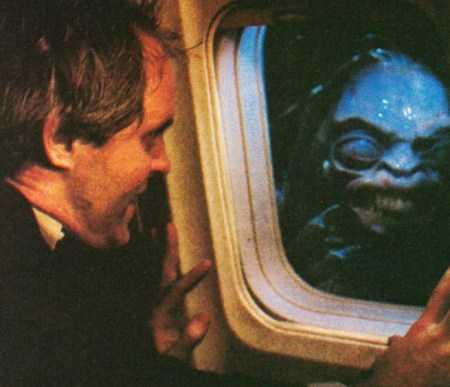
One of the most obviously chilling aspects of this movie is that three people died during its production, actor Vic Morrow and two children, who were killed in an accident during the “Time Out” segment of this anthology. Oddly, this one and “Kick the Can” are the least scary, but there are plenty of unsettling moments, from the hitchhiker prologue (“You wanna see something really scary?”) to the remake of the classic episode “Nightmare at 20,000 Feet,” where John Lithgow really comes unhinged. It was the third segment, though, that frightened me the first time, in which Kathleen Quinlan witnesses the cartoonish yet hellish imagination of a reality-warping child. Cartoons aren’t supposed to be scary, right?

Worst scares: The TV demon, and Lithgow opening the plane window

Lesson learned: Don’t pick up hitchhikers that look like Dan Aykroyd.

  1. I Am Legend (2007)

This may not seem like an obvious choice, but the abandoned New York in this Will Smith zombie-ish thriller is certainly unnerving, empty yet full of anticipation that something is out there. When Robert Neville is forced to follow his dog Sam into a dark building full of “Darkseeker” mutants, his first-person-shooter exploration is among the most intense scenes I’ve encountered. The final cut would have benefited from the happier alternate ending, but I Am Legend manages to be unexpectedly emotional in addition to tense. I might also include the only zombie film I’ve seen, World War Z, which is more action-oriented (and not gory) yet still manages some taut moments.

Worst scare: Exploring the pitch-black building

Lesson learned: If someone creates a cure for cancer, test it first! (Also, don’t yell at mannequins.)

  1. Jurassic Park (1993)

This is the main reason I went with “scary” movies instead of “horror” movies. I’m fully aware that this isn’t horror, but who wasn’t scared by those raptors? My VC has mentioned how she was practically kicking the seat in front of her when Lex almost falls out of the air vent. Sometimes a thriller like Jurassic Park can keep you more on the edge of your seat than genuine horror and keep it a lot more fun. This also happens to be one of only two films at which I’ve caught myself nearly hyperventilating (the other was Oliver! Weird, I know, but I was a kid.)

Worst scare: Raptors in the kitchen

Lesson learned: Don’t spend millions to bring ancient predators back from the dead and then put ultimate power in an unreliable slob that looks like Wayne Knight!

  1. Stephen King’s It (1990)

Based on the book by horror-meister Stephen King, the miniseries It features one of the most frightening characters around. Tim Curry as Pennywise the Dancing Clown has a vicious zeal that contrasts with his jolly appearance as he toys with and preys on the children of Derry, Maine. It isn’t as scary as a lot of other movies (and the ending may leave something to be desired), but after seeing It, it’s hard to look at clowns and storm drains the same way.

Worst scare: Holding hands in the sewer

Lesson learned: If you’re lucky enough to survive a child-eating monster and move away from it, don’t move back!

  1. The Amityville Horror (1979)

One of the original famed haunted house movies, The Amityville Horror became popular largely due to its status as a “true story.” With so many uncomfortable events coinciding, it’s a convincingly eerie tale, with Josh Brolin and Margot Kidder playing a happily married couple threatened by a malicious house. The instances of horror are almost like a checklist of warning signs to watch out for when dealing with a haunted property, and the sinister finale goes all out, though I don’t typically like films where evil seems stronger than religion.

Worst scares: Babysitter in the closet, and “Get out!”

Lesson learned: If your new house attracts swarms of flies and if you discover a secret evil room and if your daughter befriends a pig demon, maybe you ought to MOVE before the walls start bleeding!

  1. Signs (2002)

Despite M. Night Shyamalan’s declining reputation, I still consider his first three films outstanding. Signs is his take on the alien invasion but stays on a much more intimate level, focusing only on Mel Gibson’s rural family rather than the world at large. Despite light touches of humor, Signs has its fair share of frightening moments, both before and after Gibson’s Graham Hess tries to rationalize the strange events afoot. It’s an instance of what you don’t see being scarier than what you do, which happens to be what I prefer.

Worst scares: The corn field, and the TV reflection

Lesson learned: I don’t care if you are convinced it’s vandals; don’t go out in a corn field at night!

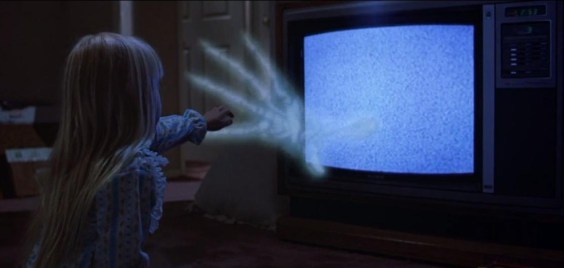
  1. Poltergeist (1982)

Poltergeist was one of the first horror films I saw, and I still consider it somewhat of the gold standard of classic scares. It might have been higher on the list if I had fonder memories of it. I think I saw it too young, and that clown scene especially scared the you-know-what out of me. At the time, I was already nervous about what may be under the bed, and that jump scare was too much for me. Oh, and the rest, of course, was terrifying too: closets that suck you in, trees that suck you in, corpse-filled swimming pools that suck you in, ceilings that do the opposite. Not to mention, there’s the whole curse of actors dying afterward because the filmmakers used real skeletons. *Shiver* I’m so glad they did away with that snowy TV screen after midnight.

Worst scare: That clown!

Lesson learned: Don’t sleep with the TV on!

  1. The Others (2001)

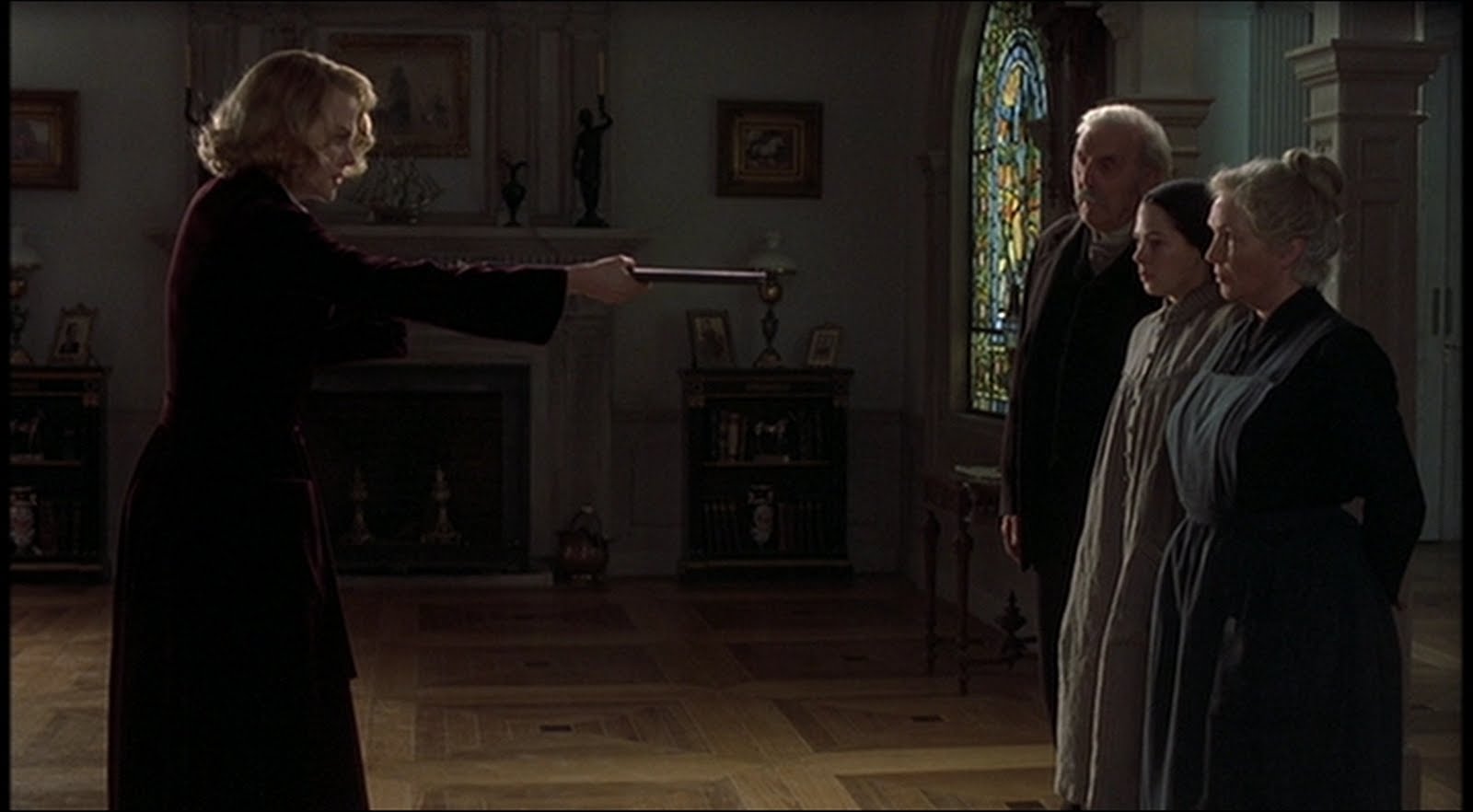
Everything seems creepier when it’s dark, and this Nicole Kidman ghost story has plenty of darkness. Kidman plays a mid-19th century mother with two photosensitive children (the light can kill them), whom she shuts away in her large mansion for their own safety. The arrival of new servants brings much to light, so to speak, and the ultimate twist seems like something Shyamalan would have come up with. I often keep my doors shut to keep the cat out of certain rooms, and I’d be lying if I said those closed doors didn’t make me a tad nervous after seeing The Others.

Worst scare: The room of covered furniture

Lesson learned: Don’t get too isolated; the dead may be your only visitors. (Also, keep a shotgun handy. It’s comforting, if not effective.)

  1. The Conjuring (2013)

One of the few modern horror films I’ve seen, The Conjuring lured me in thanks to positive reviews that mentioned potent scares and little gore. That’s exactly what it delivered, but I was also impressed at the level of director James Wan’s technical finesse and the Christian strength in the battle against a malevolent spirit infesting a Connecticut family’s house. There are many callbacks to films like Amityville and Poltergeist, but the chilling atmosphere surpasses them, making this possibly the scariest film I’ve seen. (I just like others more.) Nevertheless, the film ended with the right balance of dread and satisfaction and proved the profitability of well-done horror.

Worst scares: Anytime someone falls into the basement

Lesson learned: Never ever teach your children hide-and-clap!

  1. The Shining (1980)

Not being a fan of Dr. Strangelove or 2001, I wasn’t convinced of Stanley Kubrick’s status as a master filmmaker until I saw his stab at horror. The Shining may have displeased Stephen King with all the changes to his book, but never has a hotel been scarier. Emptiness seems to be inherently frightening, especially when it drives Jack Nicholson psychotic as he works on his novel with only his wife and psychic son as company. Intriguingly ambiguous about whether there are ghosts or time travel at work, The Shining is technically and terrifyingly superb.

Worst scare: “Heeere’s Johnny!”

Lesson learned: “All work and no play makes Jack a dull boy.”

  1. Alien (1979) and Aliens (1986)

I realize there is a debate over whether science fiction can truly constitute horror, but Alien seems like the perfect affirmation that yes, it can. Described as a “haunted house in space,” Ridley Scott’s first film in the variable franchise has more frights than many straight-up horrors, from the approaching beeps when tracking the creature to its unforgettable first appearance. Aliens is arguably even better, shifting to a more shoot-‘em-up style that amps up the action without sacrificing the shocks. Both films also cemented Sigourney Weaver’s standing as a leading heroine, and even if they’re probably the most violent films on this list, I find both watchably suspenseful in the best way.

Worst scares: Dallas in the tunnels, and Newt in the sewer

Lesson learned: Never trust the Company!

  1. The Sixth Sense (1999)

Is The Sixth Sense the scariest film ever? No, but it’s a prime example of horror surpassing its own genre to become something thought-provoking, bittersweet, and still nail-biting. As M. Night Shyamalan’s first mainstream film, it also made him a household name. While it may be easy to dismiss it as a one-time twist film, the twist alone begs additional viewings, which then reveal the layers of emotion under the surface. The paranormal aspect impedes the human connections, between Bruce Willis and his wife and Cole and his mother, yet as both are resolved, a supernatural thriller becomes unusually satisfying. I hope Willis’s next collaboration with Shyamalan will be a return to this kind of film for both of them.

Worst scare: The tent ripping open

Lesson learned: Touch someone every now and then, just to be sure. (Also, keep your thermostat up.)

Runners-Up:

The Birds (1963) – Alfred Hitchcock’s avian revolution is a little too dated to be scary overall, but there is the jungle gym scene and the house siege that anticipated other home invasion movies.

Gremlins (1984) – This unconventional Christmas movie trades cute for scary with some dark comedy thrown in for good measure.

The Lost Boys (1987) – More violent than the other films here, yet I still enjoy it, mainly because this vampire flick doesn’t take itself too seriously.

Monster House (2006) – One of the few animated horrors, this somewhat intense film about a haunted house come to life becomes scarier when not even the grown-ups can stop it.

The Mummy (1999) and The Mummy Returns (2001) – I love these films, but the action has always superseded the horror aspect in my eyes, though the first especially has its alarming moments.

Prometheus (2012) – It may have disappointed a lot of people, but Prometheus served as a sufficiently taut prequel to the Alien franchise.

Psycho (1960) – The original and only slasher film I’ve seen, Psycho is buoyed by Hitchcock’s disorienting camerawork and Anthony Perkins’ sincere fiendishness.

Wait until Dark (1967) – Though most of this movie is more boring than thrilling, the ending really picks up, with one scare that even made my VC scream.

War of the Worlds (2005) – Another sci-fi film, Spielberg-style, with both action and some horrific sequences of mass murder.

Like I said, these films may seem pretty tame to the hard-core horror fans out there, but they take me to the edge of my comfort zone while allowing me to still enjoy the genre, which is exactly what scary films are supposed to do.

VC Pick: Cousins (1989)

21 Wednesday Oct 2015

Posted by sgliput in Movies, Poetry, Reviews, Writing

≈ Leave a comment

Tags

Comedy, Drama, Romance, VC Pick

Her husband cheated with his wife,
The ruiners of married life,
So Larry and Maria planned
To let them suffer doubt firsthand.

A walk and talk or two or three
Let friendship flourish fluently,
And is not romance at its best
When friendship fully has progressed?

A marriage undermined by lies
Will likely lead to compromise,
But truer love is worth a chance
To lose the doubt and share a dance.
______________________

MPAA rating: PG-13

This is a film my VC adores so I couldn’t put it off any longer. Seriously, it’s in her top 50, and while I’m not as much of a fan, I do agree that Joel Schumacher’s Cousins deserves more recognition. Based on the 1975 French film Cousin Cousine, this growing romance seems to both condemn and embrace marital infidelity while balancing the heavy stuff with playful interactions among an extended Polish-French family.

At Phil and Edie Kozinski’s middle-aged wedding, all manner of quirky relatives pour in, from a pair of overly critical slobs to an old lady who thinks Edie killed her last husband by feeding him too much butter. Among the extended kith are two couples, Larry and Tish (Ted Danson and Sean Young) and Tom and Maria (William Peterson and Isabella Rossellini). Larry and Maria happen to meet while looking for their respective spouses, and what could have remained familial rapport is strengthened by the mutual belief that their spouses are cheating with each other. Hoping to “get back” at Tish and Tom, Larry and Maria take walks, break fish, and revel in the knowledge that their spouses must be seething with jealousy. Nothing happens, but that’s not to say they don’t want it to. When their marriages are further strained, propriety finally takes a back seat, and a romance born from conversation and a personal connection is able to blossom.

Marriage is very much at the forefront. The progression of Larry and Maria’s relationship plays out against the diverse spectrum of their large family, from wedding to funeral to wedding. Charming subplots provide detached vignettes that still hold an air of romance, such as Larry’s father (Lloyd Bridges) in search of love with the help of his weird grandson (Keith Coogan). Ultimately, though, Larry and Maria must face the fact that they love each other and weigh that love against the strained marriages they already have.

My VC finds this film entirely romantic and enjoys the different kinds of marriages depicted, from the wedded bliss of the older couples to Larry and Tish, who share a bohemian spirit, to Tom and Maria, whose uneasy awareness of infidelity doesn’t foster the most loving home for their daughter. My VC also loves the lesson that you’re never too old to fall in love and get married, and she admires the fact that the protagonists actually care enough about their marriage to hesitate, unlike their unfaithful spouses.

As much as I wanted to love, love, love Cousins as much as my VC, it never rose above charming in my estimation. Thanks to a clever script and their unmistakable chemistry, Danson and Rossellini do make an appealing couple, and I had no problem with their initial plan against their unfaithful spouses. It all seemed rather innocent at first, but as much as I believed they were better off with each other, it’s hard for me to fully agree with cheating on cheaters, especially when their marriages might have stabilized without the added doubt. Even so, in the end, this is a film in which we recognize who is meant for whom, and we might as well enjoy watching the characters figure it out. If you don’t focus too hard on the failed marriages, the successful romances will leave you smiling.

Best line: (Aunt Sofia, who has been talking with Larry’s strange son Mitch throughout the film) “You still want to kill people?”   (Mitch) “Nah, they’re too stupid.”

Rank: List Runner-Up

© 2015 S. G. Liput

342 Followers and Counting

Being There (1979)

18 Sunday Oct 2015

Posted by sgliput in Movies, Poetry, Reviews, Writing

≈ 3 Comments

Tags

Comedy, Drama

Being there is everything,
To look and listen silently,
Even if you may not understand or feel the need to ponder.
Whether poor or richest king,
No good came from an absentee,
And though the wise may disagree, mere presence makes the heart grow fonder.
_________________

MPAA Rating: PG (PG-13 would be better)

Some actors trade in great early roles for lackluster later ones, but Peter Sellers went out on a high note in his last film released during his lifetime, Being There. A heavy mix of absurdist comedy and social drama, Being There seems to foreshadow Forrest Gump fifteen years later in placing an apparent moron in ever more unlikely and beneficial positions, even meeting the President. Whereas Forrest, though, was self-aware and achieved his status through action in addition to luck, Sellers as Chance the gardener goes literally from rags to riches through a series of ridiculous yet effective coincidences.

Kept in seclusion within a large townhouse, Chance knows nothing about the world except gardening and what he sees on television. He’s been cared for his entire life and is as helpless as he is oblivious. The reasons for his isolation and care by the wealthy “old man” are never made clear, but Chance is an afterthought when his benefactor dies. Thrust into the wilds of Washington, D.C., one would expect him to be either beaten up by punks as a weirdo or ignored to the point of death. (He can’t even prepare his own meals.) Yet against all probability, he ends up the guest of aging businessman Ben Rand (Oscar winner Melvyn Douglas), who sees unexpected wisdom in Chance’s clueless silences and vague gardening tips. With his passive demeanor and assumed sophistication, Chance captures the attention of the nation and of Rand’s wife Eve (Shirley MacLaine).

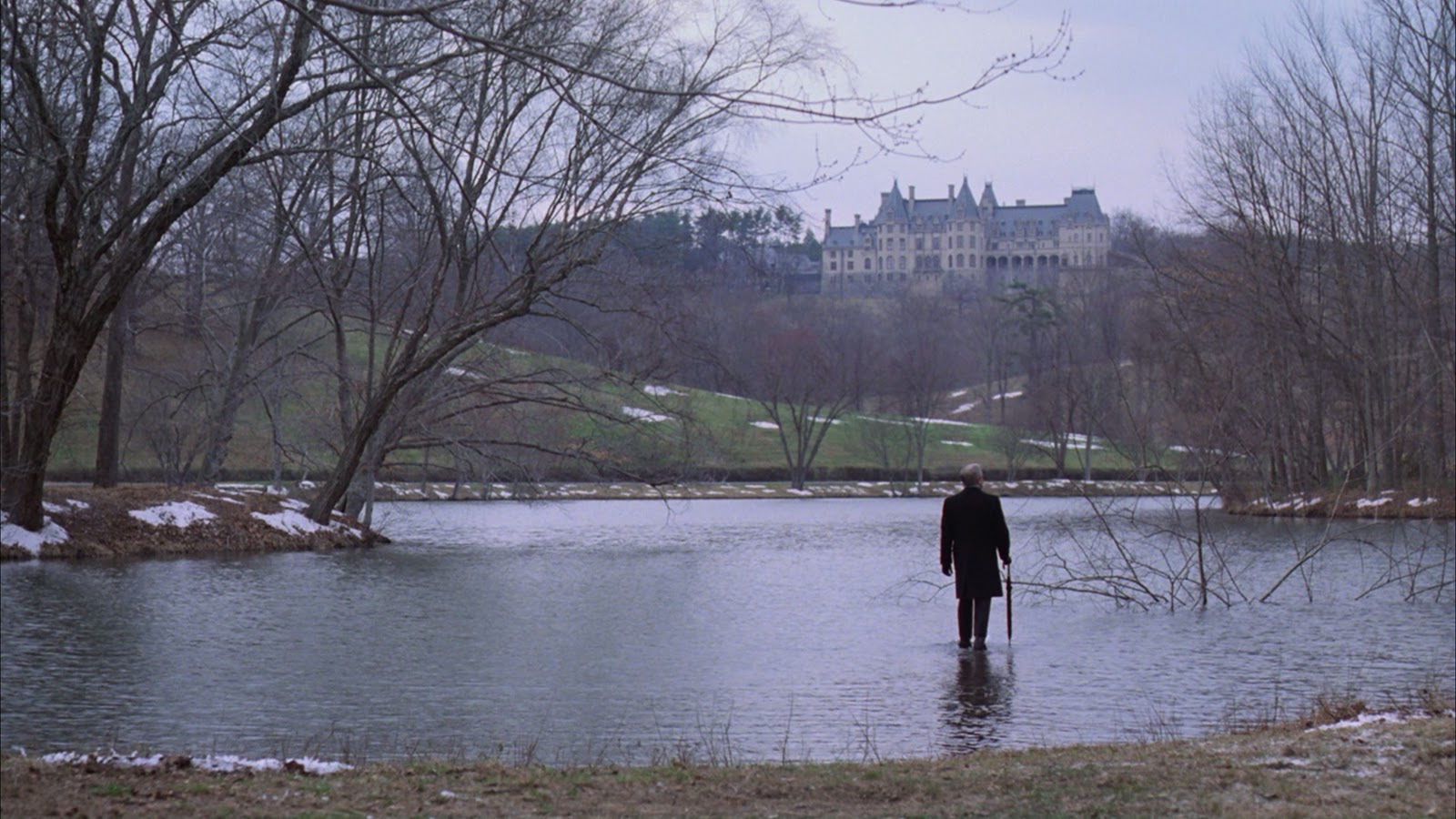
While the Oscar went to Douglas for his thoughtful performance as a dying millionaire, this is Sellers’ film. His presence is uncanny in its earnest simplicity. He smiles, he nods, he provides basic responses, and he remains entirely unmoved by his effect on others. While people are praising him or reminiscing to him or throwing themselves passionately at him, he stays placid and blank. Of course, this is where much of the humor comes from. Probably the funniest scene is a series of outtakes that play over the end credits, in which not even Sellers could utter his droll lines with a straight face. (He supposedly blamed this scene for his failure to win Best Actor, but I think Dustin Hoffman in Kramer vs. Kramer deserved to edge him out.) Indeed, Douglas and MacLaine turn in excellent performances as well, the latter offering a semi-explicit sex scene that is both awkward and hilarious. The film also stands out for its location shooting at the lavish Biltmore Estate in Asheville, North Carolina, which I recognized from my own visit to the grand property.

Being There becomes something a bit deeper in its final scenes, in which Chance begins to take on almost messianic qualities. With this, the filmmakers seem to be encouraging debate over the meaning of it all. Is it that the most important people achieve their status by their mere presence rather than their actions? Is it that simplicity and gentle innocence are so refreshing that they can get you further in life than the opposite? Shakespeare’s Macbeth said that life “is a tale told by an idiot,” so is Being There implying that only a complete idiot can effectively traverse it? Does the film mean to expose the inanity of business and power by comparing politics with nonsense? Yes to one or all, the film remains ripe for whatever interpretation you please. Films with this kind of ambiguity are rare and rarely as good as Being There.

Best line: (Chance, who is naturally misunderstood) “I like to watch.”

Rank: List-Worthy

© 2015 S. G. Liput

340 Followers and Counting

Quiz Show (1994)

11 Sunday Oct 2015

Posted by sgliput in Movies, Poetry, Reviews, Writing

≈ 2 Comments

Tags

Drama, History

Can you be sure of where you stand
And how you’ll keep your footing when
A bit of guile gets out of hand,
And lies are needed once again?

They say the truth can set you free,
But when has someone crossed the line
Of giving up on honesty
Because to err is not divine?

When baby steps grow up too fast
And liars find them ill-advised,
They see the slope that cannot last
Began when first they compromised.
________________

Rating: PG-13 (solely for language)

For a year like 1994 that had acclaimed films like Forrest Gump, The Shawshank Redemption, and Pulp Fiction, it’s not surprising that a good but lesser film would be swept under the rug, so to speak. With so many good films that year, Quiz Show remained an afterthought, both during the awards season and for my own to-watch list, even if it was directed by Robert Redford. This really is a shame because this is a potent exploration of intellectual and personal honesty and might have performed much better in a less competitive year (1996 perhaps).

Quiz Show is based on the memoir of Richard Goodwin, an investigator for the Legislative Oversight Committee of the House of Representatives back in the 1950s. Rob Morrow plays Goodwin in the film, a lawyer who notices some peculiarities on a popular quiz show called Twenty One and follows a hunch to investigate. Apparent genius and champion Herb Stempel (John Turturro) is told to take a dive by the show’s producers (David Paymer and Hank Azaria) and loses on an easy question to allow the advent of Charles Van Doren (Ralph Fiennes). As likable Van Doren’s star rises, Stempel is ignored as he alleges corruption on the supposedly upstanding quiz show. As the investigation progresses, ethics are stretched, and new information comes to light that blurs the lines of right and wrong.

Thanks to excellent casting, Turturro and Fiennes really steal the show here. The missing teeth and, shall we say, homely appearance of the former ideally casts him as the ugly step-contestant, while the verbal grace and perfect hair of the latter offer a striking contrast to his predecessor. It leaves no doubt as to the reasoning of the showrunners. To them, Stempel should be the pitiful reject who can’t cope with losing, and Van Doren should be the shining example of virtue and erudition. In the hands of a lesser filmmaker, Stempel might have become the browbeaten underdog and Van Doren the haughty record holder. Yet while these characterizations are somewhat true, there are many more nuances and complex motivations behind them.

Van Doren, in particular, is depicted as a right decent chap, one who values honesty and intelligence but edges down a slippery slope. Fame can be quite the drug. Why else do so many people do such stupid stunts and post them on the internet? Why else would a successful college professor risk his career for a game show? One might take comfort in the “no one will ever know” mentality, but Van Doren seemed from the start as someone to respond with the “I would know” answer and refuse. Yet the web is woven. He revels in his newfound popularity but buckles under the weight of his own complicity, all while remaining entirely likable, both to us and to Mr. Goodwin. Though liberties are said to have been taken with the details, the ethical conflict rings true for this true story. After all, game shows are still watched as a matter of trust that they aren’t rigged. (I remember when Ken Jennings lost shockingly to a one-night wonder on Jeopardy! several years back. He claims that he simply didn’t know the final question, but I still have my doubts, though I tend to think he might have gotten tired of it all and “taken a dive” on his own without any behind-the-scenes intervention.)

Redford paints the moral dilemmas with a steady hand and, like some statements during the Congressional hearings near the end, offers sympathy when proper and reproof when needed. Quiz Show’s strength is that it is far from black and white. Like other films such as The Prestige or Rashomon, there is no clear-cut good guy to root for, just many victims and varying levels of blame. In the end, justice may be said to be done, but not perfectly. Corporate string-pulling proves too persuasive, but Quiz Show isn’t just about an official scandal or the innate duplicity of show business. It’s about honesty, whether tested, lost, or regained.

Best line: (Herb Stempel, offering rugalach to Goodwin) “Come on, they’re a Jewish delicacy. Before Toby eats it.” (Toby Stempel, his wife) “I’m retaining water, for your information.”   (Herb) “You and the Grand Coulee Dam.”

Rank: List-Worthy

© 2015 S. G. Liput

341 Followers and Counting

My Top Twelve Na Na Na Songs

08 Thursday Oct 2015

Posted by sgliput in Music, Reviews, Writing

≈ 8 Comments

Tags

Lists

If anyone hasn’t realized it yet, I really enjoy lists, whether I agree with them or not, and I’ve found a lot of entertaining lists from Miss Mutant of Cinema Parrot Disco. While she focuses on “mainly movies,” she also has plenty of musical posts and song lists. Well, I like music too, so why can’t I join in? Movies and poetry will still be first and foremost for me, but favorite songs may pop up now and then. I’ll still try to find some way to tie it in with movies.

For my first such list, I went with that easiest and perhaps laziest of song lyrics, the “Na na na.” If you don’t know the lyrics, it’s natural to just follow along with this syllabic stand-in, but sometimes songwriters just dispense with further choruses and let the na nas roll. Not only is this easy to remember, it often fits the tune splendidly and makes it stick in the mind…endlessly. Good luck getting these songs out of your head.

Whether the na nas be short or whether the na nas be long,
I’m singing these na nas and bringing these na nas, song by indelible song.


  1. “What Makes You Beautiful” by One Direction


As their debut single, “What Makes You Beautiful” put One Direction on the map of pop music. It’s modern; it’s catchy; it’s got that boy-band glossiness; and as far as mainstream teen music goes, I like it more than most. The actual “na na na” portion is much too short, but it underscores the catchiness of the hook.


  1. “F Games” from the Phineas and Ferb episode “Got Game?”, written by Dan Povenmire, Jeff “Swampy” Marsh, Martin Olson, and Michael Culross


Almost every episode of Disney Channel’s Phineas and Ferb had an original song, many of which are outstanding. This one, from the obligatory boys-vs.-girls episode, has all the intensity of a major sporting event, and I can easily picture fans epically chanting this from the stands.


  1. “I’ll Be Your Shelter” by Diane Warren, sung by Taylor Dayne


Soulful and with some distinctively Tina Turner-ish vocals, this Taylor Dayne single creates an aura of romantic strength, and the na nas bridging each chorus only heighten its appeal. I wonder if this would sound much different if Tina Turner did a cover?


  1. “We Are Young” by fun.


I like fun. That being said, I love “Some Nights” way more than this song, and I don’t think “We Are Young” is all that great until the na na part. Then, as with most na na lyrics, it becomes a rousing earworm worthy of a swaying singalong. I wonder how lead singer Nate Ruess will feel singing this in forty years.


  1. “All the Small Things” by Blink-182


Surprisingly pop-ish for a punk band, “All the Small Things” is utterly catchy, and the more I hear it, the more I like it. The “na na na” portion is upbeat and repetitive enough to leave one out of breath by the end.


  1. “You Are the Music in Me” from High School Musical 2, written by Jamie Houston


I knew I could make a movie connection. High School Musical 2 is easily the best of the HSM films, and this duet is just one among many great songs. This one is also unique in that it has two versions, a sincere love song between Troy and Gabriella and a forced but faster rock version between Sharpay and a hilariously intimidated Troy. I prefer the sincere first one, but my VC actually likes the second version better. Which one do you like?


  1. “Na Na Hey Hey Kiss Him Goodbye” by Paul Leka, Gary DeCarlo and Dale Frashuer, attributed to the band “Steam”


Dripping with 1960s/70s-ness, this head-bopper was a number-one hit and is a natural favorite for “in-your-face” rivalries at sporting events. Plus (another movie mention!), it was used to tear-jerking effect in Remember the Titans.


  1. “Lovin’, Touchin’, Squeezin’” by Journey


This song used to act as an introduction to Journey’s “City of the Angels,” but it’s still tender and romantic (if a little less rocking) by itself. During the “na na na” part, I always picture a huge stadium of fans all waving their lighters in the air.


  1. “Hush,” written by Joe South for Billy Joe Royal, better known version by Deep Purple


There are many covers of this song, but I’m personally only familiar with Deep Purple’s version. This early hit was groovy enough for 1968, while setting the stage for heavier rock to come. The instruments go all over the place, but the na nas are there from the very beginning. Plus, it has apparently been in several movies, including Apollo 13.


  1. “Hey, Jude,” by the Beatles


“Hey, Jude” is one of the biggest songs ever produced by the Beatles and a special favorite of my dad’s. A more gentle form of rock, its strength still builds and lingers in the memory, thanks especially to the extended “na na” fadeout. This particular video show the universal appeal of both this song and the “na na,” both easily understood in any language.


  1. “The Look” by Roxette


What do you do if you want to break your music out of Sweden and introduce it to the world? You write a song as awesome as “The Look.” That’s what the duo Roxette did, and the “na na na” section alone bumps it this high on the list. Not enough na nas for you? It has la las too!


  1. “Centerfold” by The J. Geils Band


I’m the last person to be checking out centerfolds, but I looooooove this song! IMO, this is easily the catchiest song on the list and the one to which I most enjoy rocking out in the car. Na nas don’t get much better than this.


Runners-Up:


“12lb Toothbrush” – Madder Lake

“A Horse with No Name” – America

“Comeback Kid (That’s My Dog)” – Brett Dennen

“Come Back Song” – Darius Rucker

“Crash” – The Primitives

“Gettin’ Jiggy wit It” – Will Smith

“How Do You Do” – Mouth & MacNeal

“Kick in the Teeth” – Papa Roach

“Na Na Na (Na Na Na Na Na Na Na Na Na)” – My Chemical Romance

“Na Na” – Superchick

“P.Y.T. (Pretty Young Thing)” – Michael Jackso

“So What?” – Pink

“Tell the World” – Eric Hutchinson

“Tonight, Tonight” – Hot Chelle Rae

“Undo It” – Carrie Underwood

“Welcome to the Jungle” – Guns N’ Roses (I barely remember the na na part, but my VC insisted on mentioning this one.)


I’m sure there are plenty of other good na na songs out there, but these are the ones I’ve heard and liked. Feel free to recommend other potential favorites!


Frozen River (2008)

04 Sunday Oct 2015

Posted by sgliput in Movies, Poetry, Reviews, Writing

≈ 1 Comment

Tags

Drama, Thriller

Who would cross a frozen river,
Doubtful of its permanence,
And brave the temperature extremes?
One lacking lawful common sense
Or thawing frozen hopes and dreams?

Who would risk the little had
To aim for better plans ahead?
Perhaps one with a choice to face,
Where desperation dims the dread
And needed greed can turn to grace.
__________________

MPAA rating: R (solely for language)

When you hear stories on the news about illegal activities like smuggling, it’s easy to imagine that the perpetrators are wicked scum-of-the-earth types. While there are undoubtedly plenty of this sort out there, sometimes it takes a movie like Frozen River to put people’s actions in context.

Melissa Leo plays Ray Eddy, a woman just trying to get by on her dollar store paycheck while raising two sons. Intent on leasing a larger mobile home, her plans are devastated by her husband after he disappears with the money to satisfy his gambling addiction. Set against the freezing temperatures of upstate New York, the situation immediately gives the viewer reason to pity Ray’s predicament. From there, her gradual introduction into one leg of a smuggling operation is entirely believable, even as the movie earns its thriller classification with the tension of her potentially being caught. Ray isn’t alone in being sympathetic. Lila Littlewolf (the late Misty Upham), the Mohawk woman who persuades her to help transport illegal immigrants across the Canadian border, has problems of her own with her health, family, and job prospects. While she knows the ins and outs of the smuggling process, she’s no hardened criminal, and the two women form a tenuous but profitable bond.

With all of the debates about illegal immigration in this country, Frozen River thankfully doesn’t have an agenda. Like the Italian film Bicycle Thieves, it doesn’t try to justify the actions of its characters but rather helps us comprehend their motivations. Those scum-of-the-earth types are certainly part of the operation, but Ray and Lila are simply putting their family above the law, which is understandable if not altogether right. Moments of selfishness and concern give way to compassion and maternal solidarity, and though the ending could have benefited from an extra scene of closure, the moral climax plays out as it should. I certainly see why Leo earned a Best Actress nomination (and went on to win for The Fighter), and director Courtney Hunt also received an Oscar nod for her screenplay, which clarifies that not all who break the law have bad intentions.

Rank: List Runner-Up

© 2015 S. G. Liput

341 Followers and Counting

← Older posts
Newer posts →

Recent Posts

  • Hope (2026)
  • Superman (2025)
  • THE LIST (2026 Update)
  • My Overdue 12th Blogiversary and 2025 List Additions
  • We Didn’t Start 2025 (Recap)

Recent Comments

Hope (2026) | Rhyme… on Predator (1987)
Superman (2025) | Rh… on Guardians of the Galaxy (…
Superman (2025) | Rh… on Shazam! (2019)
Superman (2025) | Rh… on Wonder Woman (2017)
Superman (2025) | Rh… on My Overdue 12th Blogiversary a…

Archives

  • September 2026
  • June 2026
  • May 2026
  • January 2026
  • December 2025
  • May 2025
  • April 2025
  • March 2025
  • February 2025
  • January 2025
  • December 2024
  • May 2024
  • April 2024
  • March 2024
  • February 2024
  • January 2024
  • December 2023
  • November 2023
  • October 2023
  • September 2023
  • July 2023
  • June 2023
  • May 2023
  • April 2023
  • March 2023
  • February 2023
  • January 2023
  • December 2022
  • November 2022
  • October 2022
  • September 2022
  • August 2022
  • July 2022
  • June 2022
  • May 2022
  • April 2022
  • March 2022
  • February 2022
  • January 2022
  • December 2021
  • November 2021
  • October 2021
  • September 2021
  • August 2021
  • July 2021
  • June 2021
  • May 2021
  • April 2021
  • March 2021
  • February 2021
  • January 2021
  • December 2020
  • November 2020
  • October 2020
  • September 2020
  • August 2020
  • July 2020
  • June 2020
  • May 2020
  • April 2020
  • March 2020
  • February 2020
  • January 2020
  • December 2019
  • November 2019
  • October 2019
  • September 2019
  • August 2019
  • July 2019
  • June 2019
  • May 2019
  • April 2019
  • March 2019
  • February 2019
  • January 2019
  • December 2018
  • November 2018
  • October 2018
  • September 2018
  • August 2018
  • July 2018
  • June 2018
  • May 2018
  • April 2018
  • March 2018
  • February 2018
  • January 2018
  • December 2017
  • November 2017
  • October 2017
  • September 2017
  • August 2017
  • July 2017
  • June 2017
  • May 2017
  • April 2017
  • March 2017
  • February 2017
  • January 2017
  • December 2016
  • November 2016
  • October 2016
  • September 2016
  • August 2016
  • July 2016
  • June 2016
  • May 2016
  • April 2016
  • March 2016
  • February 2016
  • January 2016
  • December 2015
  • November 2015
  • October 2015
  • September 2015
  • August 2015
  • July 2015
  • June 2015
  • May 2015
  • April 2015
  • March 2015
  • February 2015
  • January 2015
  • December 2014
  • November 2014
  • October 2014
  • September 2014
  • August 2014
  • July 2014
  • June 2014
  • May 2014
  • April 2014
  • March 2014
  • February 2014
  • January 2014
  • December 2013

Categories

  • Blindspot
  • Blogathon
  • Christian
  • Movies
  • Music
  • NaPoWriMo
  • Poetry
  • Reviews
  • TV
  • Writing

Meta

  • Create account
  • Log in
  • Entries feed
  • Comments feed
  • WordPress.com

Recent Posts

  • Hope (2026)
  • Superman (2025)
  • THE LIST (2026 Update)
  • My Overdue 12th Blogiversary and 2025 List Additions
  • We Didn’t Start 2025 (Recap)

Recent Comments

Hope (2026) | Rhyme… on Predator (1987)
Superman (2025) | Rh… on Guardians of the Galaxy (…
Superman (2025) | Rh… on Shazam! (2019)
Superman (2025) | Rh… on Wonder Woman (2017)
Superman (2025) | Rh… on My Overdue 12th Blogiversary a…

Archives

  • September 2026
  • June 2026
  • May 2026
  • January 2026
  • December 2025
  • May 2025
  • April 2025
  • March 2025
  • February 2025
  • January 2025
  • December 2024
  • May 2024
  • April 2024
  • March 2024
  • February 2024
  • January 2024
  • December 2023
  • November 2023
  • October 2023
  • September 2023
  • July 2023
  • June 2023
  • May 2023
  • April 2023
  • March 2023
  • February 2023
  • January 2023
  • December 2022
  • November 2022
  • October 2022
  • September 2022
  • August 2022
  • July 2022
  • June 2022
  • May 2022
  • April 2022
  • March 2022
  • February 2022
  • January 2022
  • December 2021
  • November 2021
  • October 2021
  • September 2021
  • August 2021
  • July 2021
  • June 2021
  • May 2021
  • April 2021
  • March 2021
  • February 2021
  • January 2021
  • December 2020
  • November 2020
  • October 2020
  • September 2020
  • August 2020
  • July 2020
  • June 2020
  • May 2020
  • April 2020
  • March 2020
  • February 2020
  • January 2020
  • December 2019
  • November 2019
  • October 2019
  • September 2019
  • August 2019
  • July 2019
  • June 2019
  • May 2019
  • April 2019
  • March 2019
  • February 2019
  • January 2019
  • December 2018
  • November 2018
  • October 2018
  • September 2018
  • August 2018
  • July 2018
  • June 2018
  • May 2018
  • April 2018
  • March 2018
  • February 2018
  • January 2018
  • December 2017
  • November 2017
  • October 2017
  • September 2017
  • August 2017
  • July 2017
  • June 2017
  • May 2017
  • April 2017
  • March 2017
  • February 2017
  • January 2017
  • December 2016
  • November 2016
  • October 2016
  • September 2016
  • August 2016
  • July 2016
  • June 2016
  • May 2016
  • April 2016
  • March 2016
  • February 2016
  • January 2016
  • December 2015
  • November 2015
  • October 2015
  • September 2015
  • August 2015
  • July 2015
  • June 2015
  • May 2015
  • April 2015
  • March 2015
  • February 2015
  • January 2015
  • December 2014
  • November 2014
  • October 2014
  • September 2014
  • August 2014
  • July 2014
  • June 2014
  • May 2014
  • April 2014
  • March 2014
  • February 2014
  • January 2014
  • December 2013

Categories

  • Blindspot
  • Blogathon
  • Christian
  • Movies
  • Music
  • NaPoWriMo
  • Poetry
  • Reviews
  • TV
  • Writing

Meta

  • Create account
  • Log in
  • Entries feed
  • Comments feed
  • WordPress.com

Blog at WordPress.com.

  • Subscribe Subscribed
    Rhyme and Reason
    Join 791 other subscribers

    Have a WordPress.com account? Log in now.

  • Rhyme and Reason
    View site in Reader
    Manage subscriptionsSign upLog in
    Report this content
    Collapse this bar