• Home
  • About Me
  • The List
  • THE LIST (2016 Update)
  • THE LIST (2017 Update)
  • THE LIST (2018 Update)
  • THE LIST (2019 Update)
  • THE LIST (2020 Update)
  • THE LIST (2021 Update)
  • THE LIST (2022 Update)
  • Top Twelves and More
  • The End Credits Song Hall of Fame

Rhyme and Reason

~ Poetry Meets Film Reviews

Rhyme and Reason

Category Archives: Poetry

NaPoWriMo 2017 is Here!

31 Friday Mar 2017

Posted by sgliput in Movies, NaPoWriMo, Poetry

≈ Leave a comment

It’s that time of the year again when all the poets of the world rejoice! That’s right, April is National Poetry Writing Month, or NaPoWriMo, and that means writing a poem a day, or in my case a poem and movie review a day. I’ll admit that some of my recent poems have been rather perfunctory, but this month should lend me some added inspiration. Thus, the reviews will be shorter and the poems (hopefully) better. I’ll be drawing from the NaPoWriMo website for daily prompts and inspiration, and while I may fall behind, I’ll do my best to keep up with the daily pace. Here’s to an exciting month of poetry ahead!

2017 Blindspot Pick #3: An American in Paris (1951)

26 Sunday Mar 2017

Posted by sgliput in Blindspot, Movies, Poetry, Reviews, Writing

≈ 6 Comments

Tags

Comedy, Drama, Musical, Romance

Image result for an american in paris film

It’s magical in Paris,
At least in film and book,
Where painters dance
And find romance
And anyone can cook.

Real Paris may be different;
But skyline stars still shine,
Where love can stir
And dreams occur;
That Paris can be mine.
____________

MPAA rating:  All (easily a G)

I do have a soft spot for musicals, but for some reason, I’d never gotten around to watching what many consider one of the pinnacles of classic musical cinema. Luckily, it’s one of my Blindspots. An American in Paris combines some of the best aspects of the genre, particularly Gene Kelly’s dancing and George Gershwin’s music, but there’s something lacking too.

I’d only ever seen the famous dance scene that serves as the film’s centerpiece, and since that is largely symbolic, I wasn’t sure what to expect as far as a plot. Kelly plays struggling artist and American expat Jerry Mulligan, who lives contentedly in Paris while periodically displaying his paintings on the street. Much to his surprise, he attracts the attention of wealthy socialite Milo Roberts (Nina Foch), who volunteers to sponsor his talent, even if Jerry’s not sure she’s doing so solely out of the goodness of her heart. After a bit of love at first sight, he seeks to woo a young Parisian (Leslie Caron), who is torn between love and loyalty. It’s a good thing Kelly is so darn likable because his character is a bit of a jerk at times, such as how he pursues his love interest without a thought to the other woman accompanying him, but for the most part, Kelly’s natural charisma engages wonderfully with his costars.

Image result for an american in paris film

While the plot works well enough, the musical numbers overshadow the story connecting them, and the fact that most of the Gershwin songs were previously written and don’t have much bearing on what’s going on makes them feel a bit disjointed. They shouldn’t feel like this, but the songs are padding for an uninspired plot, even if they’re the best aspects of the film. I honestly could have skipped the storyline and simply watched the musical numbers, which would make for a great montage but not exactly a great film.

There’s still some superlative style to this Vincente Minnelli-directed lark, from the personable introduction to the three main male characters to the show-stopping pageantry of the songs. One dream sequence with Oscar Levant as Jerry’s unemployed pianist friend may be one of those filler numbers, but it employs some visual trickery that was likely very innovative at the time. And, having heard a good deal of Gershwin in Mr. Holland’s Opus, it was nice to see one of its original visual accompaniments.

Image result for an american in paris film

An American in Paris may be a beloved classic, but it’s nowhere near the level of Kelly’s Singin’ in the Rain. The plot is a charming but average romance that completely ignores and offers no closure to the side characters, and even the grand 17-minute tap dance/ballet climax set to Gershwin’s title music ran too long and threatened to lose my interest at times. I don’t want to knock it too hard, but there are much better musicals than the Best Picture of 1951. Still, the musical scenes should easily put a smile on anyone’s face, and I can watch Gene Kelly’s effortless talent any day.

Best line: (Jerry) “Back home, everyone said I didn’t have any talent. They might be saying the same thing over here, but it sounds better in French.”


Rank: List Runner-Up


© 2017 S.G. Liput
457 Followers and Counting


Hacksaw Ridge (2016)

19 Sunday Mar 2017

Posted by sgliput in Movies, Poetry, Reviews, Writing

≈ 8 Comments

Tags

Drama, Thriller, War

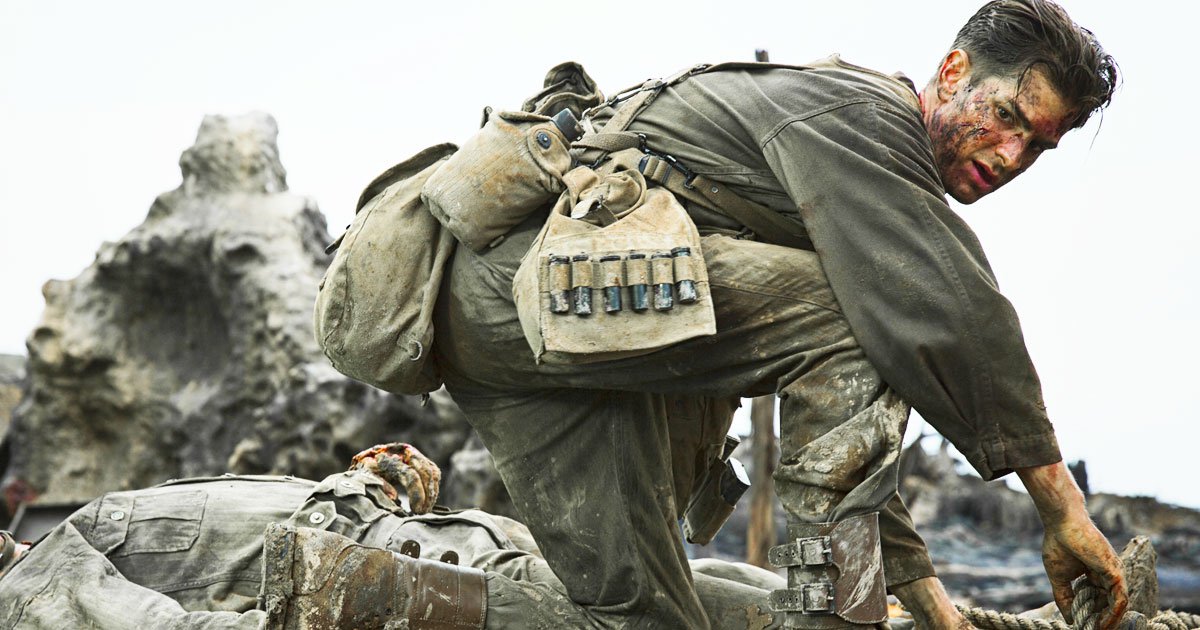
Image result for hacksaw ridge film

Though shots ring out both far and near,
And men engage in hate and fear,
I will not.
I’ll do my duty, honorbound,
But for my faith, I’ll stand my ground,
As I ought.

Though every man insist that I
Should join their wish that others die,
I cannot.
And when war’s done, my heart’s belief
Will hold more worth and bear less grief
Than they thought.
___________________

MPAA rating: R (solely for violence)

Perhaps appropriately considering its subject matter, Hacksaw Ridge caused me a bit of a crisis of conscience. I don’t typically watch extremely violent movies, which is why I’ve avoided films like Braveheart and anything Tarantino, and I was very hesitant to see Hacksaw Ridge after hearing of the intensity of its battle sequences. My VC, who is of the same mind, urged me not to, but there were enough positive elements inherent in the story of conscientious objector and war hero Desmond Doss that I decided to risk it. That actually made Hacksaw Ridge the first R-rated film I’d seen in the theater, and by the end, I was glad I did.

Image result for hacksaw ridge film

Mel Gibson may have shot his reputation in the foot years ago, but his talent as a filmmaker is undeniable, and it’s surprising and inspiring that he’s been somewhat forgiven by Hollywood, based on the number of Oscar nominations and wins Hacksaw Ridge received. His latest film has a lot in common with The Passion of the Christ; both carry deep religious meaning for Christians especially and also indulge in some gut-wrenching bloodshed that mark them as clearly not for everyone. It took me a while to work up the nerve for Passion of the Christ, but now I watch it every Good Friday; Hacksaw Ridge, likewise, requires a strong stomach in parts, but the overall story makes it worth it.

Andrew Garfield hardly seemed like an obvious choice for the potential Oscar-magnet role of Doss, but he was a massive surprise; he’s no longer that second-rate Spider-Man. As Desmond, he’s folksy but determined, earnest but firm, kind but tenacious, a man who wants to help others at any cost to himself, in short a true hero. Other casting examples were also less-than-obvious choices, such as Vince Vaughn as Desmond’s drill sergeant with a deadpan sense of humor or Hugo Weaving as his war-haunted father. Everyone involved does a phenomenal job, particularly Weaving, and even if the collection of fellow soldiers Desmond meets in boot camp don’t all register at first viewing, the quality of the acting never lapses.

The film is basically broken into two parts: the first half sees Desmond enlist as a medic and deal with the consequences and persecution from his refusal to carry a gun, while the second focuses on the decisive battle at Hacksaw Ridge and proves this supposed coward as anything but. I’ve seen some reviews criticize the beginning as preachy and heavy-handed, but I feel that one’s opinion of Desmond and his father waxing eloquent about freedom of religion and the Constitution depends on how dearly one holds such conservative values. I found it refreshing for a mainstream film to extol the First Amendment and the right of someone to serve his country as his faith allows. Desmond may be a Seventh Day Adventist with views that not every Christian holds, but his right to uphold his own principles is the same.

Image result for hacksaw ridge film

Even those rolling their eyes at the first half have praised the second for its realistic war scenes, and they are indeed intense and visceral. The explosions are constant, the body count is high, the headshots are many, and I may have spent most of those scenes with my eyes off to the side, watching in my peripheral vision. With superb editing, Gibson certainly nails the visualization of war as hell, but I don’t quite agree with those who say that it’s not gratuitous if it’s realistic; the gruesome double headshot that kicks off the carnage is a prime example. I still insist that films like Gettysburg and most of Glory are proof that war scenes don’t have to be gory to be effective, but the hell Desmond endures does make his courage in the face of it even more incredible. The violence may be an extreme, but at least here it serves as a counterpoint and contrast to the main character’s grace and perseverance, not unlike Passion of the Christ. I will say that, now that I’ve seen this, I do feel a bit less anxious about seeing Saving Private Ryan as a Blindspot pick later this year.

Though the worst moments of battle were extreme, it luckily wasn’t constant. It’s when the shooting stops that Desmond’s role as a medic and hero kicks in. As he recovers the wounded of Hacksaw Ridge and prays to save just “one more,” the tension never lets up, and Desmond demonstrates the valor and backbone his fellow soldiers assumed he lacked. I loved how the one time he does touch a gun, it’s for a wholly practical purpose in one of the most exciting scenes.

Image result for hacksaw ridge film

There’s little doubt in my mind that Hacksaw Ridge is one of the best war films I’ve seen, made even better by concluding with interviews with the real Desmond Doss. Some may consider it cheesy but appreciate the war scenes, while I tolerated the bloody battles and embraced everything else. Gibson seems to excel at making religious themes accessible, and what some call preachy, I call laudable. Even if some scenes are hard to watch, few films can match the selfless courage on display in Hacksaw Ridge.

Best line: (Desmond) “It isn’t right that other men should fight and die, that I would just be sitting at home safe. I need to serve. I got the energy and the passion to serve as a medic, right in the middle with the other guys. No less danger, just… while everybody else is taking life, I’m going to be saving it. With the world so set on tearing itself apart, it doesn’t seem like such a bad thing to me to wanna put a little bit of it back together.”
 

Rank: List-Worthy

2017 S.G. Liput
454 Followers and Counting


Lion (2016)

15 Wednesday Mar 2017

Posted by sgliput in Movies, Poetry, Reviews, Writing

≈ Leave a comment

Tags

Biopic, Drama, Meet 'em and Move on

I saw a young boy among beggars,
A large metal spoon in his fist.
He’d found it somewhere
In a state of despair,
Too terribly lost to be missed.

I sipped at my soup in the window,
Entranced by his curious stare.
With a ravenous look,
Every mouthful I took
He mimicked and sipped at the air.

I could have just smiled and left then,
Averted my eyes toward the door,
But I gazed at this boy
With a spoon for a toy
As if he’d never used one before.

While others passed by the poor beggars,
I crossed the street, frenzied and thronged.
Soon at the boy’s side
At the turn of his tide,
I helped him find where he belonged.
__________________

MPAA rating: PG-13

So this is why one of the first things my parents taught me to memorize was our home address! Lion may have been overshadowed by the more prestigious Best Picture nominees, but it’s an outstanding film and one likely to leave viewers reaching for the tissues by the end. Directed by debuting director Garth Davis, it is based on the true-life story of Saroo Brierley, following him from a lost boy in India to his adoptive home in Australia and back.

Young Sunny Pawar portrays Saroo as a five-year-old, who resides in a small town in India, where his mother, sister, and elder brother Guddu (Abhishek Bharate) eke out a poor but happy life. When Guddu unwisely brings Saroo along for a job near a train station, Saroo accidentally ends up trapped on a train, hurtling away from home for miles before arriving at a foreign place where he can’t even speak the local dialect. It’s utterly upsetting for the boy and similarly disorienting for the audience as Saroo calls pitifully for help that never comes. From then on, his life becomes a series of rude awakenings; every time he falls asleep, he awakes to some new danger or peculiarity, and only the kindness of strangers leads him to a chance at happiness with the Brierleys (Nicole Kidman and David Wenham) in Australia.

Once Saroo grows up into Oscar nominee Dev Patel, the film loses some steam, focusing on his self-destructive relationship with his girlfriend (Rooney Mara) and his online pursuit of his original family. It’s hard to make a Google Earth search compelling, but the film does its best, and the end result of Saroo’s quest is undoubtedly worth it. As good as Patel is, the brightest point of the second half, aside from the ending, is Nicole Kidman as his adoptive mother Sue, the kind of patient and loving parent every lost child deserves. It’s understandable that Saroo initially feels guilty about searching for his first home, afraid to seem ungrateful for Sue’s affections, but their scenes together capture the sensitive and unconstrained bond between mother and son.

There’s more than just the acting to praise, though. For example, the score by Dustin O’Halloran and Hauschka is gorgeous and perfectly enhances the emotion of the film. The artistry also extends to the cinematography, which is lush and vivid, especially the overhead landscape shots that show off the natural beauty of both India and Australia.

While I did get a bit misty-eyed, the end didn’t quite bring me to tears, though that’s more on me than the film since I heard a few sniffles in the theater. My VC hasn’t seen it yet, but I suspect she’ll have a stronger reaction than I, especially since she always bawls at the end of tearjerkers like The Color Purple. Perhaps one reason I particularly enjoyed Lion is that it fits into my beloved, self-titled genre of the “Meet-‘Em-and-Move-On movie,” which follows a character through various acquaintances and ends with a reunion. (For further clarification, I compiled a list of my favorites.) It’s this kind of film that packs the strongest emotional punch for me, and it’s been a while since such a film was made to Oscar caliber. The source of its title may not be apparent at first, but Lion is a tribute to the transformative power of adoption and a poignant journey of a film not to be overlooked.

Best line: (Sue Brierley, to Saroo) “Because we both felt as if… the world has enough people in it. Have a child, couldn’t guarantee it will make anything better. But to take a child that’s suffering like you boys were. Give you a chance in the world. That’s something.”

Rank: List-Worthy

© 2017 S.G. Liput
453 Followers and Counting

Fences (2016)

12 Sunday Mar 2017

Posted by sgliput in Movies, Poetry, Reviews, Writing

≈ 2 Comments

Tags

Drama, Triple A

Image result for fences film


The role of a father’s not easy to fill;
The best of intentions can leave a bad taste,
And efforts that some might consider a waste
Can trouble their progeny still.

A father can favor or ruin a child,
Although they may try to resist.
A fine line exists between slaps on the wrist
And a rift to stay unreconciled.

Though not every father will coddle or kiss,
They impact the lives they create.
A father may foster affection or hate
But later is easy to miss.
_________________

MPAA rating: PG-13

Movies have so many different elements to catch one’s attention—the score, the direction, the locations—that the acting can sometimes be an afterthought, important but not the be-all-end-all for a success. When it comes to a play, with its limited sets and reliance on dialogue, the acting is everything, and the same applies for films based on a play, at least those that remain faithful to the source material. Fences is a Triple A movie if ever I saw one (that’s All About the Acting for those who don’t know) and features some of the best acting performances I’ve ever seen, especially the slam-dunk pairing of Denzel Washington and Viola Davis, reprising their roles from the Broadway revival.

Washington is both the director and star, playing Troy Maxson, a garbage collector who is easygoing while chewing the fat with his friend Bono (Stephen Henderson, who also appeared in Manchester By the Sea, by the way) but has a stubborn, controlling streak when it comes to his sons, whether it be the dissatisfaction with older son Lyons and his unrealistic musical aspirations or the hard-hearted opinion that young Cory has no chance at professional football. Viola Davis is his long-suffering wife Rose who balances Troy’s harder edges with sympathy and straightens him out when necessary. Both Washington and Davis give intense and incredibly nuanced performances, as does Jovan Adepo as Cory, and their interactions carry affection at first but also a high capacity for tension and verbal fireworks. While I was disappointed that Washington lost Best Actor, it’s about time Viola Davis won a well-deserved Oscar, considering she’s stood out even in small roles for years. It’s also the same role for which she won a Tony in 2010, and she’s now the only black actor to have an Emmy, Tony, and Oscar for acting categories.

Image result for fences film

While I’m not very familiar with playwright August Wilson’s Pittsburgh Cycle, a series of ten plays about African-American families throughout the 20th century, Fences isn’t my first exposure to his work. The Hallmark movie The Piano Lesson had a similar dialogue-driven narrative and style, but while that focused on matters of heritage and had a strangely supernatural ending, Fences is wholly realistic and tackles themes of fatherhood and responsibility with some truly complex characters. Troy, in particular, is both imperfect and admirable in his staunch adherence to personal responsibility; one of his first exchanges with Cory (the main one seen in all the trailers) sums him up perfectly, extolling his devotion to duty but putting that tough love ahead of anything like a caring familial relationship. When he admits to a reputation-shattering mistake on his part, he owns up to it but tries to defend his actions all the same, submitting to his responsibility with cold impartiality but not quite recognizing his own selfishness. He’s a proud man and a bitter one, thanks to racial prejudice and his own half-admitted past foibles that put his treatment of his sons in context.

Fences is a character study of flawed fatherhood, the kind that can mess up one’s childhood while shaping the person one becomes, for better or worse. Like its characters, it’s not perfect: the introduction of Troy’s mentally damaged brother (Mykelti Williamson) doesn’t flow as well as the rest, and I’m not sure it has the rewatch value of other play adaptations I love, such as Driving Miss Daisy. For the first half-hour, as Troy delivers folksy soliloquies that establish who he is, I wasn’t sold, but the emotional turns that follow confirm Fences as one of the great films of the year.

Image result for fences film viola davis

I never thought the whole #OscarsSoWhite controversy of the last two years was that egregious, but it might have seemed that the Academy overcompensated with the number of black nominees in 2016. Yet, with films like Fences, Hidden Figures, and Moonlight, it’s encouraging that these movies with and about African Americans are genuinely deserving rather than some token nominations to fill a societal quota. With its confined setting and focus on dialogue, Fences honors its roots as a play, and the exceptional acting distinguishes it as a first-class adaptation.

Best line: (Rose, to Cory about his father) “You can’t be nobody but who you are, Cory. That shadow wasn’t nothing but you growing into yourself. You either got to grow into it or cut it down to fit you. But that’s all you got to make life with. That’s all you got to measure yourself against that world out there. Your daddy wanted you to be everything he wasn’t…and at the same time he tried to make you into everything he was. I don’t know if he was right or wrong, but I do know he meant to do more good than he meant to do harm.”

Rank: List Runner-Up

2017 S.G. Liput
453 Followers and Counting

Hell or High Water (2016)

10 Friday Mar 2017

Posted by sgliput in Movies, Poetry, Reviews, Writing

≈ 2 Comments

Tags

Drama, Thriller, Western

Image result for hell or high water film

Now, justice out West could be spotty at best,
From the stories of outlaws I’ve heard,
Where the reach of the law often wound to a draw
With the lines of what’s ethical blurred.

The days of the lone desperados have gone
Into textbook and legend and grave,
But their daring unrest still lives on in the West
In the folks who just barely behave.
___________________

MPAA rating: R

If not for its Oscar nominations, it’s doubtful I’d ever have watched Hell or High Water, since a modern heist western with an R rating isn’t the kind of film that would normally catch my interest. Yet this film turned out to be a pleasant surprise, and even if it had zero chance of winning Best Picture, I see why it was counted among the best films of 2016.

Chris Pine and Ben Foster play two brothers, Toby and Tanner Howard, who embark on a robbery spree of Texas Midlands Bank branches, taking only small scores early in the morning. While Foster’s Tanner is the wild card who enjoys the criminal undertaking a bit too much, Pine’s Toby is the level head behind it all, revealing much more clever planning than Tanner’s improvised antics might indicate. Opposite these masked outlaws are Jeff Bridges as Texas Ranger Marcus Hamilton and Gil Birmingham as his half-Indian deputy Alberto, trying to track down the robbers and figure out their motives. While the Howard brothers are ostensibly the bad guys, the conflict isn’t good versus evil; it’s the law against the desperate. Toby and Tanner sticking it to the banks is part revenge but also done with selfless intentions, and Pine’s natural Captain Kirk likability ensures that the robbers never lose our sympathy, despite his criminal brother’s recklessness.

Image result for hell or high water film

While the whole cast are in top form, with Bridges especially fitting his grizzled lawman role like a glove, the true star to me is the screenplay. There’s an evident bitterness toward the financial crash and predatory banks, as seen in building after building being foreclosed, and a perceptive commentary of the state of the classic West: cowboys coexist with neon green sports cars, and Alberto comments on the karmic irony of the land once again being taken away from its former owners. As for characterization, the relationships and conversations between characters seem to share a kind of grudging respect. The brothers bicker and cuss at each other but are still loving brothers at the end of the day, while Bridges’ Ranger enjoys teasing Alberto with all manner of Indian insults, but they know each other well enough to recognize the fondness behind the traded barbs. Even in the final scene, after things hardly turn out as any of them hoped, there’s a hint of respect behind the antagonism.

In addition, the film captures the down-to-earth attitude of Texas in general. As Ranger Hamilton says, “I love West Texas,” where the waitresses tell you what to order and the populace isn’t afraid to fight back. I loved when the patrons of one of the robbed banks actually peppered Toby’s car with gunfire and gave chase to the bandits; I doubt you’d see that kind of reaction anywhere else.

Image result for hell or high water robbery

Hell or High Water still had too much language for my taste and a few violent moments, but overall it’s proof positive that Westerns are far from dead, even the familiar cops-and-robbers story. With a script that should have won the Oscar and an ending at once sad and fitting, it’s got all the grit and heart of a potential modern classic.

Best line: (Alberto) “I’m starving.”
(Hamilton) “I doubt they serve pemmican.”
(Alberto) “You know I’m part Mexican, too.”
(Hamilton) “Yeah, well, I’m gonna get to that when I’m through with the Indian insults, but it’s gonna be a while.”
(Bank manager) “You rangers are an odd bunch.”
(Alberto) “No, just him.”

Rank: List Runner-Up

© 2017 S.G. Liput
453 Followers and Counting


VC Pick: Excalibur (1981)

07 Tuesday Mar 2017

Posted by sgliput in Movies, Poetry, Reviews, Writing

≈ 3 Comments

Tags

Drama, Fantasy

Image result for excalibur 1981


The land was grand when Arthur reigned,
The fields no longer scarlet-stained,
The crown no longer coveted
By lesser men who ruled the dead,
And all who saw their shining king
Would prize the sight till their deathbed.

The sword he wore pronounced him king,
Announcing it with every swing,
And even though it left his keep,
It waited till he woke from sleep.
Though Arthur’s glory now has waned,
His reputation yet runs deep.
___________________

MPAA rating: PG or R, depending on the version

For the last of my VC’s birthday picks, she chose a film very different from the others (all romances: The Lake House, The Goodbye Girl, and A Star Is Born), instead delving into the Arthurian legend brought to life in Excalibur. As is often the case, I didn’t care for this film at first but appreciated it far more upon a second viewing.

The story of King Arthur has been presented in countless different ways, from Disney’s kid-friendly The Sword in the Stone to Guy Ritchie’s action-packed King Arthur: Legend of the Sword, to be released later this year. Yet with all the partial retellings of this classic British myth, shouldn’t there always be one definitive version that others copy or draw from? Excalibur tries to be just that, and while it takes license with historical details (plate armor wasn’t used in the Dark Ages), it still comes off as the most faithful to the traditional source material, Sir Thomas Malory’s Le Morte d’Arthur and various other accounts. There’s obviously far too much for any two-hour movie to cover comprehensively, but all the most familiar elements are here: young Arthur (Nigel Terry) pulling the sword from the stone, his gathering of the Knights of the Round Table (which looks suspiciously like a giant DVD), his betrayal by Lancelot and Guenevere, and his family issues with his half-sister and their son Mordred (Robert Addie). Terry is an especially convincing Arthur, playing him both as a scrawny squire and an aging monarch, and Nicol Williamson’s Merlin brings some much-needed wit to the proceedings.

Image result for excalibur 1981 round table

It may seem strange, but the film that Excalibur kept reminding me of was David Lynch’s Dune (another VC pick), mainly due to the serious quality of the acting and palpable adherence to source material. Plus, both served as prime outlets for many actors before they were famous: Patrick Stewart is in both films, but Excalibur also features a young Helen Mirren as Morgana Le Fay, Liam Neeson as Sir Gawain, Gabriel Byrne as Arthur’s father Uther Pendragon, and Ciarán Hinds as King Lot. In addition to the cavalcade of stars to be, Excalibur also boasts some exceptional cinematic moments, particularly when it employs the classical opera of Wagner and Orff; anytime I hear Orff’s “O Fortuna,” it brings me back to the gloried sight of Arthur and his knights riding out to battle.

For all its strengths, however, there’s a reason Excalibur didn’t appeal to me on my first watch. For one, the characters have all the depth of a children’s book of myths, and the actors play them with such Shakespearean solemnity that no one but Merlin actually has a personality. Another comparison to Dune might be warranted too, when the search for the Holy Grail verges into a Lynchian dream sequence, which manages to both be meaningful to the plot and make no sense. Not to mention, the latter half of the Arthur story is quite the downer, as Arthur degrades into a ruler not unlike King Théoden when we first meet him in The Two Towers. In addition, the R-rated cut doesn’t shy away from certain scenes of nudity and battlefield violence; the worst love/rape scene toward the beginning is made worse by the fact that the woman involved was the director’s own daughter.

Image result for excalibur 1981

Excalibur may be an inconsistent iteration of the tales of Merlin, King Arthur, and his knights, but for the most part, the lavish production design, shiny costumes, noble music, and mostly solid acting come together in grand fashion. It brings to life the glory of medieval myth and the destructive danger of men following lust and greed, and though it has its flaws, it’s the most definitive version of King Arthur I’ve seen so far.

Best line: (Merlin, upon Arthur’s final conquest as king) “Remember it well, then… this night, this great victory. So that in the years ahead, you can say, ‘I was there that night, with Arthur, the King!’ For it is the doom of men that they forget.”

VC’s best line: (Arthur) “Which is the greatest quality of knighthood? Courage? Compassion? Loyalty? Humility? What do you say, Merlin?”
(Merlin) “Hmm? Ah. Ah. Ah, the greatest. Uh, well, they blend, like the metals we mix to make a good sword.”
(Arthur) “No poetry. Just a straight answer. Which is it?”
(Merlin) “All right, then. Truth. That’s it. Yes. It must be truth above all. When a man lies, he murders some part of the world. You should know that.”


Rank: List Runner-Up


© 2017 S.G. Liput
453 Followers and Counting


Manchester By the Sea (2016)

05 Sunday Mar 2017

Posted by sgliput in Movies, Poetry, Reviews, Writing

≈ 8 Comments

Tags

Drama

Image result for manchester by the sea film


Ordeals that do not kill you make you stronger, so they say,
But in the meantime, on the way,
Your life can fall to disarray,
And till you’re looking back one day,
Its grueling getting through.

The grief that haunts your footsteps won’t allow you to forget.
Harassed by sorrow and regret,
You know you haven’t moved on yet,
If you but give the grief you get.
Is that not up to you?
___________________

MPAA rating: R (for frequent language)

Of all the Best Picture nominees of 2016, Manchester By the Sea was the least for me—the least engaging, the least enjoyable, the least satisfying—which isn’t to say it’s out-and-out bad, but its style and pervasive melancholy did not appeal to me. Perhaps the film it most reminded me of was 1980’s Ordinary People, another film about fraternal tragedy with understatedly emotional performances and a montage of artsy stills backed by classical music. I much prefer Ordinary People, but Manchester had its good points all the same.

The film’s strongest point is its acting, which treads water as good most of the time and bubbles into great at emotional high spots. Casey Affleck plays Lee Chandler, a divorcee living alone who receives word that his brother has died of a heart condition, leaving his teenage nephew Patrick (Lucas Hedges) in need of a guardian. Due to a past trauma that ruined his marriage and embittered him to the Manchester area, Lee refuses to move back for Patrick but remains and bonds with him while figuring out how to handle the situation. While I would have preferred Denzel Washington to win Best Actor for Fences, Affleck does give a powerful performance, just an inconsistent one, sometimes revealing profound grief, other times merely stoic and bored-looking. He’s not always the likable sort, moping and initiating bar fights, but thanks to sudden flashbacks that get more powerful with time, he’s certainly sympathetic. Lucas Hedges is just as good, though, especially in certain scenes, like the frozen chicken breakdown, as is Michelle Williams as Lee’s ex-wife. Kenneth Lonergan’s direction is also masterful, whether it be in the placid seaside scenery resembling a Thomas Kinkade painting or the delicate practice of letting us see rather than hear a difficult conversation from a distance.

Image result for manchester by the sea film

One aspect that I keep seeing praise for is how realistic the film is, a fly-on-the-wall portrayal of what can and does happen to broken people. Yet, there were many times that the realism seemed forced or stilted, and mundane imperfections felt thrown in solely for the sake of “realism.” For instance, when someone on a gurney is being placed into an ambulance, ten seconds are spent struggling to lift the gurney’s wheels into the vehicle. Why? Was that a mistake they just kept in or some attempt at weak black humor? There are many moments like that, scenes that other movies would skip over for good reason. I suppose I can see others viewing it as compellingly realistic, but I found it unnecessary and odd.

Part and parcel with such observations is the dialogue between characters. Due to Lee’s aversion to small talk, many of the conversations end with awkward silences, as if the editor waited too long to cut to another scene. I was a bit baffled that Manchester won Best Original Screenplay since there are only a few bits of dialogue that were even memorable, and in my opinion, a great screenplay shouldn’t need stretches where the F-bomb is every other word. (Well, I guess Good Will Hunting proves it happens, but this isn’t in the same league.) Hell or High Water had much more insight and characterization in its screenplay, so that would have been my choice.

Image result for manchester by the sea film

I can understand why Manchester By the Sea has earned its praise and awards, but it wasn’t for me. (It didn’t help that the theater I was in made the sound tinny for some reason.) By the time Lee comes to his decision, I was expecting something more to happen, and when the credits rolled, I said, “Oh, I guess that’s it.” Manchester By the Sea works as the basis for some fine performances, but overall, it left me wanting, even if it is an emotional testament to one family’s grief.

Best line, or the one that got a laugh anyway: (Patrick, when Lee is overreacting) “Uncle Lee, are you fundamentally unsound?”


Rank: Honorable Mention


© 2017 S.G. Liput
453 Followers and Counting


La La Land (2016)

01 Wednesday Mar 2017

Posted by sgliput in Movies, Poetry, Reviews, Writing

≈ 12 Comments

Tags

Comedy, Drama, Musical, Romance

Image result for la la land film


[Can be sung to “Audition (Fools Who Dream)”]

Many will scoff at
The goals that are not yet fulfilled.
Dreams without backers
Are subject to slackers
And thoughts that they’re too hard to build.

“No” to the doubts that press,
Weathered by hopefulness.
Those that will roll their eyes
Are in for a grand surprise.

A lone aspiration
Is ripe for frustration,
As all true successes know.
The chances we fumble
May help keep us humble
With more than one right way to go.

Hard is the road our dreams set,
Bumpy and lined with regret.
Still, where they lead we must go,
Only one outcome to know.
_______________

MPAA rating: PG-13 (for a lone F-word, that’s it)

In the past, I’ve never given Oscar nominees the attention many bloggers do (I still haven’t seen half the nominees from 2015), but this year I had the unique pleasure of watching all but one of the Best Picture nominees in the theater, thanks to a great special with Regal. You can’t beat nine movies for $35! Thus, with the benefit of hindsight, I’ll be reviewing all of them in the days ahead, except for Moonlight, which I skipped only for it to end up winning, and I’ve already posted my thoughts on Arrival and Hidden Figures.

For my first post-Oscars review, I’ll cover the very last film I watched, which was actually during the Oscar ceremony. La La Land rose so quickly as a critical darling that many have pushed back or at least rolled their eyes at it, and reading so many such opinions, I had already given in to the consensus that it’s overrated. And yet…I loved it. I enjoyed all of the nominees this year, but rarely have I walked out of the theater as satisfied as I did with La La Land. Unfortunately, as soon as I came to the decision that it deserved Best Picture, that infamous mix-up gave the honor to Moonlight, for what could have been politically motivated reasons (I do still have yet to see it). While I was angry at the time and had to remind myself it doesn’t matter in the grand scheme of things, I’m glad at least that La La Land won other awards it deserved and that I got to enjoy it on the big screen.

Image result for la la land film

I should state that I love musicals. While many were trashing Les Misérables, I was singing its praises, and La La Land hearkens back to the classic MGM musicals for which I recently found greater appreciation from the documentary That’s Entertainment! It’s true that La La Land isn’t a Broadway musical with constant showstoppers, though the very first scene should impress any music lover and I enjoyed the modern style of a concert headlined by John Legend. Even if it’s not a typical musical toward the end, Justin Hurwitz’s Oscar-winning music, the jazz in particular, is a constant presence and almost a character unto itself. Often, it’s without words, like the classic dance numbers of yesteryear.

The story itself centers on two aspiring creatives: Emma Stone’s Mia came to Hollywood to be an actress but endures a barista job on the studio lot, while Ryan Gosling’s Sebastian is obsessed with classic jazz, wishing to preserve its purity in his own nightclub one day. Their initially cold run-ins with each other melt into romance as they both share their unique passions and encourage each other toward their dreams. The plot may seem familiar, owing much to the likes of A Star Is Born and Roman Holiday, but it’s made vibrant by the charm and chemistry of the two leads and the nostalgia they wear on their sleeves. The screenplay is actually rather self-aware of its Hollywood setting (“They worship everything, and they value nothing”), and themes that apply to creative types abound: How far should one go in sacrificing what they love in service of present needs? How much rejection are we willing to take before throwing in the towel? Is a dying art worth saving if even one devout advocate remains? As Mia insists, “People love what other people are passionate about,” and there’s passion here to spare, even if you don’t think you’re a fan of jazz or musicals in general.

Damien Chazelle’s Oscar-winning direction and camerawork are truly phenomenal as well. I’m a sucker for long, uninterrupted shots, and the fluidity of the camera helps one feel in the moment, whether it’s singers cavorting on a freeway or a disgruntled couple tap-dancing together on an L.A. overlook. Ryan Gosling and the ever-lovely Emma Stone may not be professional singers or dancers, but they show great commitment to their roles. Stone’s emotional scenes leave no doubt as to her Best Actress win, and the fact that Gosling learned how to play jazz piano for this film is astounding, considering how often and skillfully he tickles the ivories.

Image result for la la land film

As corny or clichéd as it sounds, La La Land is a true reminder of the magic of movies. Several scenes left me awed and enchanted, especially Mia’s one-take audition song, which deserved the Best Song Oscar much more than “City of Stars.” (I no longer blame La La Land for keeping Sing Street from a song nomination. That’s on “The Empty Chair.”) Yet it’s not all joy and magic; there’s struggle too and, like Arrival, that beautiful emotion called bittersweet. La La Land is honest enough to admit that life is rarely like a movie, but wouldn’t it be grand if it were?

In my opinion, 2016 bore one of the strongest batches of Oscar nominees in recent memory, and there was no single film that was clearly best. Some extolled the deep sci-fi of Arrival; others disliked it but preferred the power of Hacksaw Ridge; still others loved the sad realism of Manchester By the Sea or the emotion of Moonlight or Lion. In my case, I loved La La Land, and while I may be temporarily flying high only for my initial admiration to lapse eventually, I suspect it will continue to be a fond favorite of mine. As Mia’s audition song states, this film is for “the ones who dream,” and I’m one of them.

Best line: (Sebastian, explaining his lack of progress) “I’m letting life hit me until it gets tired. Then I’ll hit back.”


Rank: Top 100-Worthy


© 2017 S.G. Liput
451 Followers and Counting


Version Variations / VC Pick: A Star Is Born (1937, 1954, 1976)

27 Monday Feb 2017

Posted by sgliput in Movies, Poetry, Reviews, Writing

≈ 9 Comments

Tags

Drama, Musical, Romance, VC Pick, Version Variations

Image result for a star is born 1937

Image result for a star is born norman maine oscar

Image result for a star is born 1976 grammy


For every star to glory born
And lifted from obscurity,
Another sinks to dark and scorn,
An endless cycle now well-worn
But no less pitifully.

Some seek, some flee the weight of fame,
For which so many mourn.
They love the players, hate the game,
Who lose the lights around their name
That more stars may be born.
_________________

MPAA rating for 1937 version: Not Rated (should be PG)
MPAA rating for 1954 version: PG
MPAA rating for 1976 version: R (mainly for language)

My VC has been urging me to review the 1976 version of A Star Is Born, one of her favorites with Barbra Streisand, and I saw it as an opportunity to compare all three movies of the same name in a long overdue Version Variation review. It’s a Hollywood story that has become well-known through repetition, earning a remake every twenty years or so. The original was in 1937 with Janet Gaynor and Fredric March; the second retooled the tale as an epic musical with Judy Garland and James Mason; and the third is my VC’s favorite, another musical with Streisand and Kris Kristofferson. Ironically, I believe I was exposed to each of them in backwards order and enjoyed the story more the further back I went. And to anyone who thinks this story is too old to be relevant over forty years after the last version, there is yet another remake in the works for next year, starring Bradley Cooper and Lady Gaga. Time will tell how that compares with the others, but let’s take a look at the similarities and differences between the past versions.

What every incarnation of A Star Is Born has in common is the central story of an ambitious female newcomer who catches the eye and support of a celebrity with a reputation for being difficult, and as her star rises, his fades with heartbreaking results. While the necessity for the existence of a remake is always questioned, A Star Is Born is one case where every new version updated it for the times in completely understandable ways. The 1937 film had Hollywood as its setting, with Janet Gaynor’s Esther Blodgett dreaming of rising from a country girl to a starlet of its Golden Age. Judy Garland’s version is also about Hollywood but at the height of its musical phase; Garland’s Blodgett is already an established singer, and it’s her voice that prompts Mason’s Norman Maine to help her to shoot for something bigger through the studio system. By 1976, Streisand’s version ignores Hollywood in favor of the rock-and-roll scene of the ‘70s; the voice of her renamed Esther Hoffman catches the ear of not a movie star but rock star John Norman Howard (Kristofferson). All three films see Esther and her self-destructive benefactor share wedded bliss that is sadly short-lived, and the final scenes, while handled in different ways, are essentially the same.

Image result for a star is born 1937

Let’s start with the original 1937 film. It was the last one I saw, and knowing how unimpressed I usually am with dated movies of its era, I watched it more for the sake of comparison than for personal interest. Yet, surprisingly, I found it to be the best version of them all, which I suppose should be expected of the original work. The first A Star Is Born has no music like the other two, and thus the story is more boiled down to the basics of its plot, without the often unnecessary window-dressing of a musical number. In doing so, it also includes important details left out in the 1954 version, such as the origin of Esther’s screen name Vicki Lester.

Above all, the original’s greatest asset that the other two can’t match is its script, pointed and eloquent in just the right measure. While it received seven Oscar nominations, including the honor of being the first color film to be nominated for Best Picture, it’s no surprise that its one win was for Best Writing (plus an honorary award for its color photography). One important character that is totally absent from later versions is Esther’s Grandmother Lettie, played with witty spunk by May Robson. It’s her grandmother that gives Esther the initial encouragement to become a star, and her shrewd counsel at both the movie’s beginning and end may be my favorite bit of grandmotherly wisdom on film. All of the other performances are outstanding, with not one devolving into overacting, and Gaynor and March deserved their acting nominations, even if they didn’t win. (On a side note, I thought it interesting that Lionel Stander, who plays the studio’s unsympathetic publicity manager, sounded exactly like Harvey Fierstein’s raspy voice. I doubt there’s any relation, but it would be funny if Fierstein played the same role in the next remake.) Dated or not, the original A Star Is Born is the best, as its 100% Rotten Tomatoes score attests, and it has somewhat changed my views on prejudging a film based on its age.

Image result for a star is born 1937 lettie

As for the 1954 version with Judy Garland, Esther is presented not as an aspiring nobody but as the lead singer of a musical ensemble, whose performance at a gala is interrupted by Norman Maine’s drunken antics. (Danny McGuire, her friend from the original, becomes her bandmate in this version.) Won over by her voice, Norman invites her to stay in Hollywood for a screen test, and after some bumps in the road, she becomes a star of musical cinema. Many scenes, especially in the second half, are recreated from the first film, often word for word, such as the studio head’s visit to Maine in a sanitarium or Esther’s intervention when her husband is about to be sent to jail. What the remake adds is a surfeit of musical numbers, ranging from small personal songs to lavish song-and-dance routines. One sketch detailing Esther’s supposed rise to stardom plays out like Judy Garland’s version of Gene Kelly’s “Broadway Melody” number in Singin’ in the Rain.

All the additional music helps the remake stand apart from its predecessor, but with essentially the same story, it’s hard not to feel that the extended scenes of choreography are merely padding to warrant its somewhat tiresome three-hour runtime. Like Janet Gaynor before her, Judy Garland was nominated for Best Actress but lost to Grace Kelly that year, a snub that was widely criticized, but I can understand. As marvelous as she was as a singer, Garland never struck me as a great actress, and I found her most emotional scenes rather forced, the kind of dated acting that Gaynor actually avoided in the earlier version. Another odd discrepancy is that the original film is still intact, but portions of the 1954 film have been lost and recreated with still photographs. Even if Garland’s incarnation has some drawbacks, it’s still entertaining in the musical department, and, nailing the suave but broken sides of the character, James Mason plays probably the best Norman Maine role of all three films.

Image result for a star is born 1954

And now the moment my VC has been waiting for, Barbra Streisand and the oh so handsome Kris Kristofferson in the 1976 retelling of A Star Is Born! Since this is the greatest departure from the original film, I’ll start with what my VC loves about it, particularly the music. She’s always loved Streisand’s voice, if not her personally, and like Judy Garland before her, Streisand was the premier singer/actress of the time. (Whether Lady Gaga is for our generation has yet to be seen.) The whole soundtrack is updated to excellent classic rock standards, and unlike the previous version, Streisand’s film won an Oscar for Best Song, the theme “Evergreen,” which rather pales in comparison with the more dynamic showstoppers, like “The Woman in the Moon.” Both she and Kristofferson are also quite good in their acting roles, though not in any award-worthy way, an opinion on which my VC vehemently disagrees with me.

I do wish I could like this version as much as she does, but it has even more problems than the ’54 film. For one, the great script of the original is nowhere to be found, despite clear echoes of the earlier films’ events, like Norman interrupting Esther’s award ceremony (here the Grammys rather than the Oscars). Perhaps the most frustrating aspect for me is Kristofferson’s character of John Norman Howard. Like the previous Norman Maines, he’s a drunken, self-destructive jerk at times, whose behavior is harder to understand here. He frequently makes terrible decisions, even when not drunk; for instance, this is the only version where he cheats on Esther, and while my VC insists there’s a deep motive behind it of self-resentment on his part, I’m afraid I just don’t see it. His final act of the film is also perplexing; in the other versions, it is because Norman fears Esther will throw everything away on him, while here, he has a chance at a comeback but refuses to take it for supposedly the same reason.

Image result for a star is born 1976

All three versions of A Star Is Born have their strengths: the shrewd dialogue of the original, the sprawling musical numbers of Garland’s incarnation, the bittersweet and passionate ending of Streisand’s (the only one to actually end with a performance). While my VC’s favorite is not mine, it did give me a reason to check out the others, the first of which is now among my favorite films from the 1930s. This story of Hollywood success, love, and loss has proven its staying power, and although I’m always dubious about remakes, this is one tale that can support further retellings.

Best serious line (from the 1937 version): (Grandmother Lettie) “Tragedy is a test of courage. If you can meet it bravely, it will leave you bigger than it found you. If not, then you will have to live all your life as a coward, because no matter where you may run, you can never run away from yourself.”

Best funny line (from the 1937 version): (Esther’s aunt) “Of course, no one ever listens to me!”   (Grandmother Lettie) “They do if they’re within ten miles of ya.”


Rank for the 1937 version: List-Worthy
Rank for the 1954 version: List Runner-Up
Rank for the 1976 version: Honorable Mention


© 2017 S.G. Liput
451 Followers and Counting


← Older posts
Newer posts →

Recent Posts

  • We Didn’t Start 2025 (Recap)
  • NaPoWriMo 2025 Recap (Finally)
  • Sonic the Hedgehog 3 (2024)
  • It Happened One Night (1934)
  • Spellbound (2024)

Recent Comments

associatesofshellymann's avatarassociatesofshellyma… on My Top Twelve La La La So…
Kit's avatarKit Nichols on Bonnie and Clyde (1967)
lifelessons's avatarlifelessons on Look Back (2024)
Carol Jackson's avatarCarol Jackson on The Thief of Bagdad (1940…
Stephen's avatarStephen on Love Story (1970)

Archives

  • January 2026
  • December 2025
  • May 2025
  • April 2025
  • March 2025
  • February 2025
  • January 2025
  • December 2024
  • May 2024
  • April 2024
  • March 2024
  • February 2024
  • January 2024
  • December 2023
  • November 2023
  • October 2023
  • September 2023
  • July 2023
  • June 2023
  • May 2023
  • April 2023
  • March 2023
  • February 2023
  • January 2023
  • December 2022
  • November 2022
  • October 2022
  • September 2022
  • August 2022
  • July 2022
  • June 2022
  • May 2022
  • April 2022
  • March 2022
  • February 2022
  • January 2022
  • December 2021
  • November 2021
  • October 2021
  • September 2021
  • August 2021
  • July 2021
  • June 2021
  • May 2021
  • April 2021
  • March 2021
  • February 2021
  • January 2021
  • December 2020
  • November 2020
  • October 2020
  • September 2020
  • August 2020
  • July 2020
  • June 2020
  • May 2020
  • April 2020
  • March 2020
  • February 2020
  • January 2020
  • December 2019
  • November 2019
  • October 2019
  • September 2019
  • August 2019
  • July 2019
  • June 2019
  • May 2019
  • April 2019
  • March 2019
  • February 2019
  • January 2019
  • December 2018
  • November 2018
  • October 2018
  • September 2018
  • August 2018
  • July 2018
  • June 2018
  • May 2018
  • April 2018
  • March 2018
  • February 2018
  • January 2018
  • December 2017
  • November 2017
  • October 2017
  • September 2017
  • August 2017
  • July 2017
  • June 2017
  • May 2017
  • April 2017
  • March 2017
  • February 2017
  • January 2017
  • December 2016
  • November 2016
  • October 2016
  • September 2016
  • August 2016
  • July 2016
  • June 2016
  • May 2016
  • April 2016
  • March 2016
  • February 2016
  • January 2016
  • December 2015
  • November 2015
  • October 2015
  • September 2015
  • August 2015
  • July 2015
  • June 2015
  • May 2015
  • April 2015
  • March 2015
  • February 2015
  • January 2015
  • December 2014
  • November 2014
  • October 2014
  • September 2014
  • August 2014
  • July 2014
  • June 2014
  • May 2014
  • April 2014
  • March 2014
  • February 2014
  • January 2014
  • December 2013

Categories

  • Blindspot
  • Blogathon
  • Christian
  • Movies
  • Music
  • NaPoWriMo
  • Poetry
  • Reviews
  • TV
  • Writing

Meta

  • Create account
  • Log in
  • Entries feed
  • Comments feed
  • WordPress.com

Recent Posts

  • We Didn’t Start 2025 (Recap)
  • NaPoWriMo 2025 Recap (Finally)
  • Sonic the Hedgehog 3 (2024)
  • It Happened One Night (1934)
  • Spellbound (2024)

Recent Comments

associatesofshellymann's avatarassociatesofshellyma… on My Top Twelve La La La So…
Kit's avatarKit Nichols on Bonnie and Clyde (1967)
lifelessons's avatarlifelessons on Look Back (2024)
Carol Jackson's avatarCarol Jackson on The Thief of Bagdad (1940…
Stephen's avatarStephen on Love Story (1970)

Archives

  • January 2026
  • December 2025
  • May 2025
  • April 2025
  • March 2025
  • February 2025
  • January 2025
  • December 2024
  • May 2024
  • April 2024
  • March 2024
  • February 2024
  • January 2024
  • December 2023
  • November 2023
  • October 2023
  • September 2023
  • July 2023
  • June 2023
  • May 2023
  • April 2023
  • March 2023
  • February 2023
  • January 2023
  • December 2022
  • November 2022
  • October 2022
  • September 2022
  • August 2022
  • July 2022
  • June 2022
  • May 2022
  • April 2022
  • March 2022
  • February 2022
  • January 2022
  • December 2021
  • November 2021
  • October 2021
  • September 2021
  • August 2021
  • July 2021
  • June 2021
  • May 2021
  • April 2021
  • March 2021
  • February 2021
  • January 2021
  • December 2020
  • November 2020
  • October 2020
  • September 2020
  • August 2020
  • July 2020
  • June 2020
  • May 2020
  • April 2020
  • March 2020
  • February 2020
  • January 2020
  • December 2019
  • November 2019
  • October 2019
  • September 2019
  • August 2019
  • July 2019
  • June 2019
  • May 2019
  • April 2019
  • March 2019
  • February 2019
  • January 2019
  • December 2018
  • November 2018
  • October 2018
  • September 2018
  • August 2018
  • July 2018
  • June 2018
  • May 2018
  • April 2018
  • March 2018
  • February 2018
  • January 2018
  • December 2017
  • November 2017
  • October 2017
  • September 2017
  • August 2017
  • July 2017
  • June 2017
  • May 2017
  • April 2017
  • March 2017
  • February 2017
  • January 2017
  • December 2016
  • November 2016
  • October 2016
  • September 2016
  • August 2016
  • July 2016
  • June 2016
  • May 2016
  • April 2016
  • March 2016
  • February 2016
  • January 2016
  • December 2015
  • November 2015
  • October 2015
  • September 2015
  • August 2015
  • July 2015
  • June 2015
  • May 2015
  • April 2015
  • March 2015
  • February 2015
  • January 2015
  • December 2014
  • November 2014
  • October 2014
  • September 2014
  • August 2014
  • July 2014
  • June 2014
  • May 2014
  • April 2014
  • March 2014
  • February 2014
  • January 2014
  • December 2013

Categories

  • Blindspot
  • Blogathon
  • Christian
  • Movies
  • Music
  • NaPoWriMo
  • Poetry
  • Reviews
  • TV
  • Writing

Meta

  • Create account
  • Log in
  • Entries feed
  • Comments feed
  • WordPress.com

Blog at WordPress.com.

  • Subscribe Subscribed
    • Rhyme and Reason
    • Join 814 other subscribers
    • Already have a WordPress.com account? Log in now.
    • Rhyme and Reason
    • Subscribe Subscribed
    • Sign up
    • Log in
    • Report this content
    • View site in Reader
    • Manage subscriptions
    • Collapse this bar