• Home
  • About Me
  • The List
  • THE LIST (2016 Update)
  • THE LIST (2017 Update)
  • THE LIST (2018 Update)
  • THE LIST (2019 Update)
  • THE LIST (2020 Update)
  • THE LIST (2021 Update)
  • THE LIST (2022 Update)
  • Top Twelves and More
  • The End Credits Song Hall of Fame

Rhyme and Reason

~ Poetry Meets Film Reviews

Rhyme and Reason

Category Archives: Poetry

The Lost Battalion (2001)

11 Thursday Nov 2021

Posted by sgliput in Movies, Poetry, Reviews, TV, Writing

≈ Leave a comment

Tags

Drama, History, War

The Lost Battalion (2001) | MUBI

Would every war have been the War
To End All Wars, we sigh,
That dealers of demise and gore
Would not be fashioned anymore
From friends and fathers summoned for
To fight and kill or else to die.

How many heroes, horror-hewn,
Have died for lack of peace,
Both peace from battles body-strewn
And peace of mind, that distant boon?
No haunted human is immune,
From memories that never cease.

A hero may not ever meet
Recipients of peace.
The foolish, thoughtless, and elite
Think heroism obsolete,
But we will not forget their feat,
For neither do our memories cease.
___________________

MPA rating:  TV-14 (violence somewhere between a strong PG-13 or a light R)

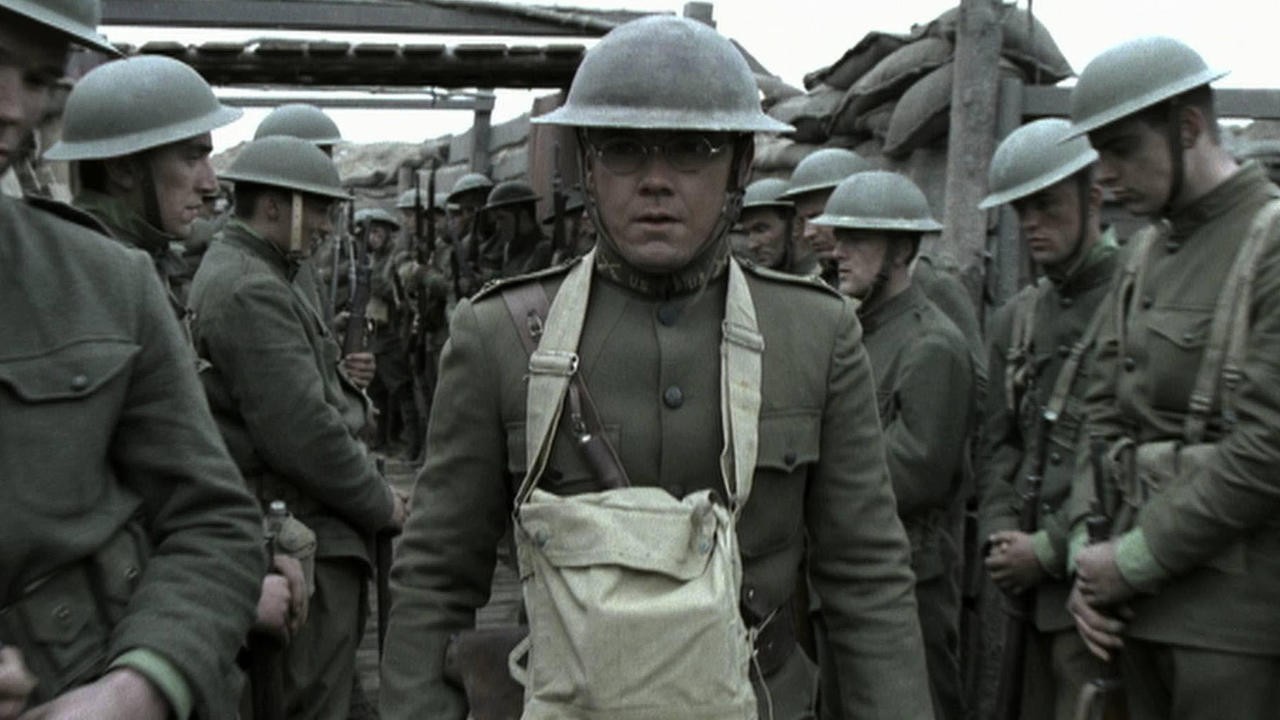
Like last year with Journey’s End, it seemed like Veteran’s Day was the right time for a World War I movie. The Lost Battalion may have been a TV movie created for A&E, but it holds up with the best films about World War I. Grown-up child star Rick Schroeder plays Major Charles Whittlesey, a former New York lawyer who grudgingly follows his general’s commands and leads the Army 77th Infantry Division to take the Argonne Forest, only to be cut off from all support as they hold their ground. The true story was first told in a 1919 silent film (which is available on YouTube), but, unlike that version, the 2001 film never leaves the battlefield, showing the cost-heavy struggle in all its savagery and heroism.

The Lost Battalion (2001) | Great War Films

It’s easy for World War I films to be boiled down to trench warfare, so grimly brought to life in films like 1917 and Journey’s End, but it was a change of pace for The Lost Battalion to leave the trenches behind and mostly take place in a forest setting. Schroeder does an excellent job as a weary commander forced by duty to lead his men into certain doom, while the rest of the cast excel at depicting the mixed ethnicities that fought alongside each other on the battlefield. The violence was stronger than I expected for a TV movie, with blood spatter that still doesn’t come close to Saving Private Ryan or Hacksaw Ridge (which also featured the 77th), but the cinematography and editing go a long way toward making the battle more chaotic and dire. The Lost Battalion is a reminder of many things – the stubborn courage of American soldiers, the bitter pill of “acceptable losses,” the military bonds that transcend racial conflict – but, as with so many war films, it makes me grateful to all who have fought for freedom.

Best line: (Major Whittlesey) “Two days ago, we had a Chinese working our field phone, an American Indian for a runner. They’re both dead, but that’s not the point. These Italian, Irish, Jews, and Poles, they’d never hire me as an attorney. We wouldn’t be seen at the same events. But we will never in our lives enjoy the company of finer soldiers or better men than we do tonight.”

Rank:  List Runner-Up

© 2021 S.G. Liput
741 Followers and Counting

A huge thank you to all veterans and soldiers. May God bless and protect you all!

Arachnophobia (1990)

30 Saturday Oct 2021

Posted by sgliput in Movies, Poetry, Reviews, Writing

≈ 2 Comments

Tags

Comedy, Horror

Arachnophobia: When PG Horror Works - Den of Geek

There once was a spider I hated,
A creature that God had created.
It helped to cull pests,
The most useful of guests,
But I didn’t care so I slayed it.
________________________

MPA rating:  PG-13

I may not be a fan of the horror genre in general, but Halloween is a good excuse to seek out some new scary movies I might actually like. Supernatural horror is usually my preferred cup of tea, with a greater focus on tension over gore, but there’s one subgenre that often gets overshadowed by all the zombies and vampires out there – the nature creature feature.

When I was a kid, two things truly terrified me: the clown from Poltergeist and spiders. And unfortunately, I could only reassure myself that one of those wasn’t real. I would freak out at the mere sight of a spider on the playground, and I used to paper-clip notecards over the spider pictures in my biology book. So it’s no surprise at all that I never expected to see a film titled Arachnophobia in my life. I don’t know if this is common, but my once-severe antipathy toward spiders eased over time. I’ll still kill any that dare cross my threshold, but I can at least look at them without cringing. Maybe I just got used to Shelob and Charlotte.

Five Fast Facts About ARACHNOPHOBIA - Warped Factor - Words in the Key of  Geek.

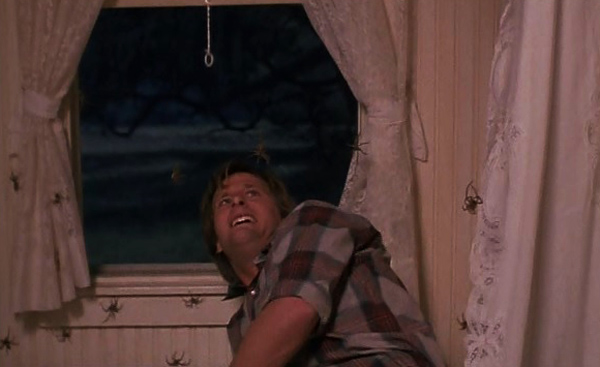
The debut of director Frank Marshall, Arachnophobia is basically Jaws for spiders, taking an intimidating but largely non-threatening animal and turning them into a bloodthirsty monster seemingly targeting humans. An unfortunate American photographer (Mark L. Taylor) goes with a British spider expert (Julian Sands) to investigate new species in the Amazon rain forest before being bitten and killed by an unusually aggressive and resilient specimen. When his body is sent back to small-town California, the spider hitches a ride, beginning a series of unexplained deaths for new arachnophobic doctor Ross Jennings (Jeff Daniels) to figure out.

I was prepared for Arachnophobia to bring back my discomfort with arachnids, and certain scenes with large numbers of the crawlies emerging from throughout a house did give me the willies. The fact that much of the lurking and eventual confrontations with the spiders take place in everyday home locations add to the squirm factor, since you never know what could be prowling just out of sight in the places you feel safest.

James Wan Is Producing an Arachnophobia Remake - Paste

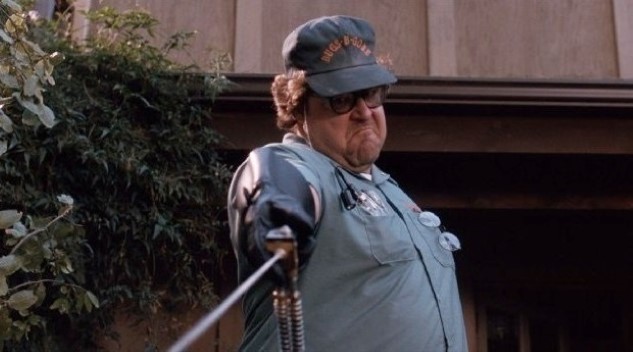
Yet I found myself more entertained than scared, thanks to the unrealistic lethality of the spiders and the slight camp of the plot. John Goodman plays a scene-stealing pest control expert, whose arrogance belies an unusual competence for someone in this kind of movie, and there’s an undercurrent of dark irony as Dr. Jennings’ patients keep getting killed right after he examines them. The film never fully embraces its comedy label, but somehow it totally sells a face-off between Jeff Daniels and a tarantula. With Amblin Entertainment as one of its production companies, Arachnophobia has a Spielbergian vibe to it that feels more like E.T. than Jaws. I might have been able to handle it as a kid too, but then again it might have just made me even more skittish. At least now I know I’m over my fear of those eight-legged freaks… I mean, friends. See, no repressed spider hatred around here….

Best line: (Ross, after killing a spider) “Therapy.”

Rank:  List Runner-Up

© 2021 S.G. Liput
741 Followers and Counting

2021 Blindspot Pick #6: Apocalypse Now (1979)

27 Wednesday Oct 2021

Posted by sgliput in Blindspot, Movies, Poetry, Reviews, Writing

≈ Leave a comment

Tags

Drama, War

See the source image

What looms within the human heart,
Unwilling ever to depart,
Is easy to depict in art
For everyone to see:

The darkness and the violent lusts,
Sin that beguiles and disgusts,
That takes our innocence and rusts
To gag morality.

It must be seen, the world insists,
To show the horror that exists.
Its advocates are but realists,
As ugly truth they show.

Perhaps that truth is worth a peek,
If only for what not to seek,
But excess horror lacks critique
And merely lets it grow.
______________________

MPA rating:  R (strong language and violence, plus nudity in the Redux version)

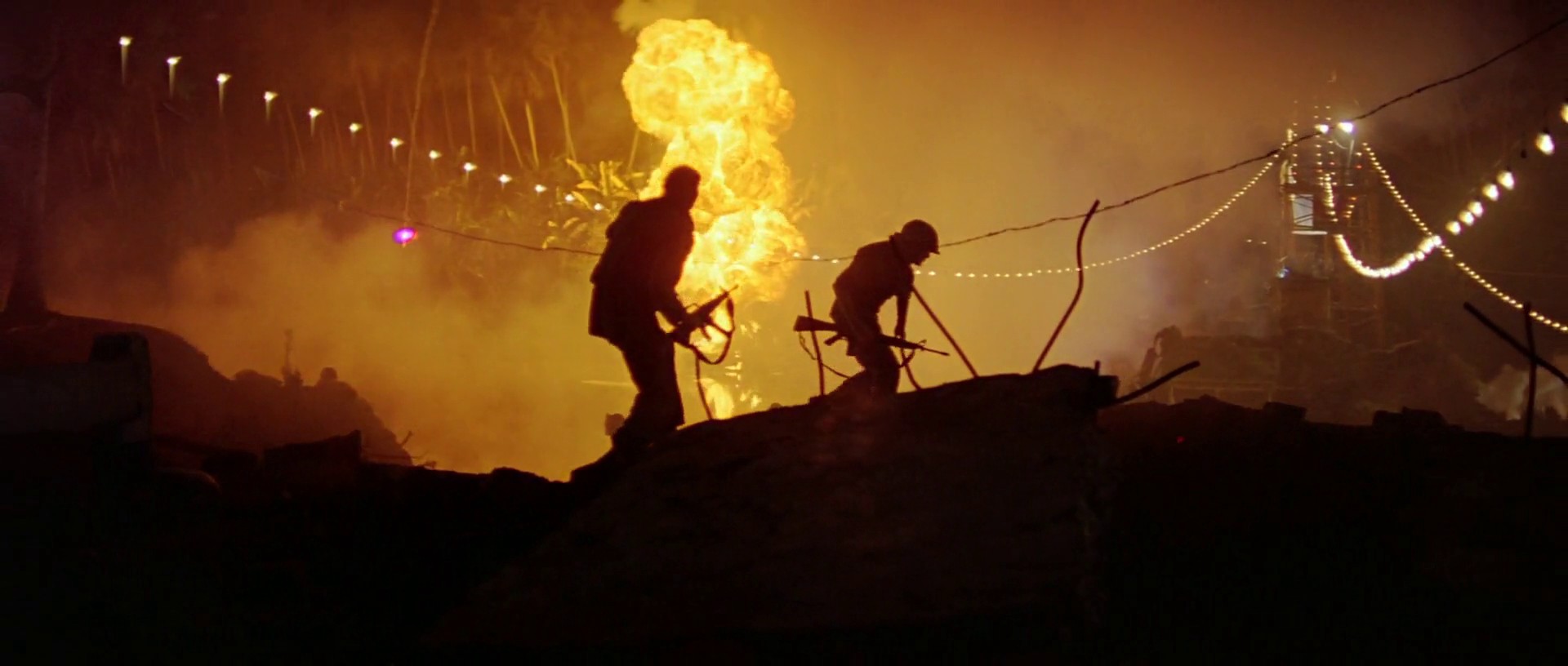
And here I am finally halfway done with my 2021 Blindspot series… in late October. Okay, so I’m still behind this year, but I’m gaining ground. I had considered Francis Ford Coppola’s Apocalypse Now for my Blindspot list in past years, but I remembered my mom saying how much she didn’t enjoy it. But it is a classic, right? It’s a monument of modern filmmaking, a testament to the senseless horror of the Vietnam War, a character study of men on the edge of sanity making hard decisions and quoting poetry. Yes, it’s all of these things, and I didn’t much care for it.

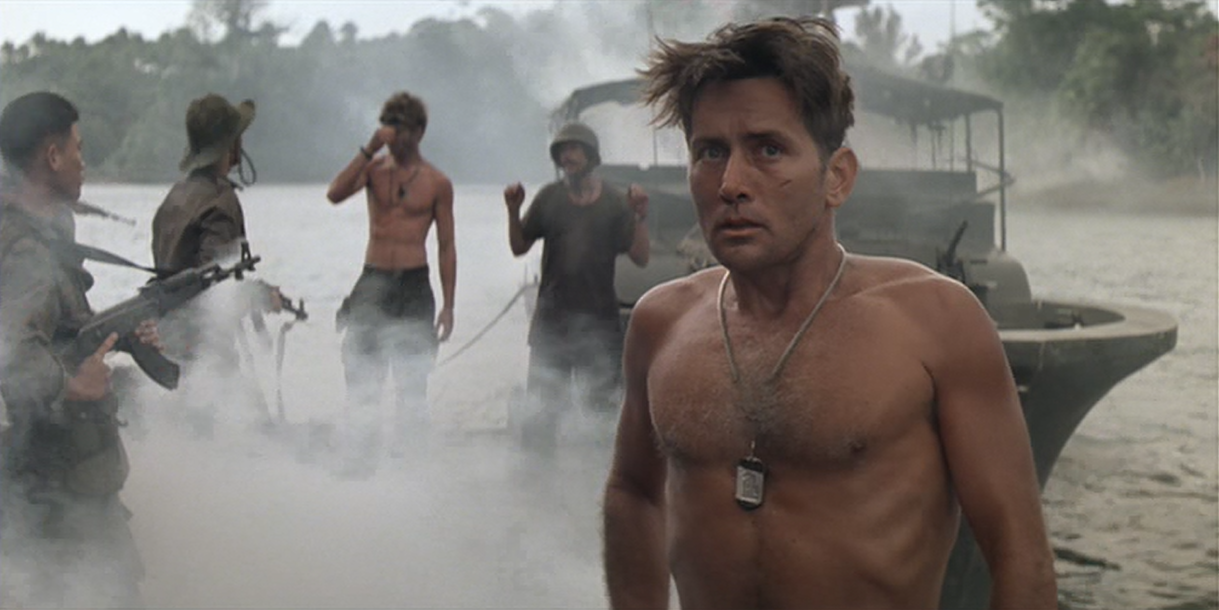
Somewhat based on Joseph Conrad’s Heart of Darkness and relocating the novel’s river journey from the African Congo to wartime Vietnam, Apocalypse Now is as much a psychological contemplation as it is a tour of the Vietnam War. Interspersed with nighttime shootouts and upriver ambushes, Army Captain Willard (Martin Sheen) waxes philosophical over the bleakness of battle and his internal moral debate of what he will do when he encounters Kurtz (Marlon Brando), the effective but crazed colonel his superiors have sent Willard to kill. At times, the film’s tone almost turns into dark comedy, as when Lieutenant Colonel Kilgore (Robert Duvall) insists on surfing in the middle of a beach assault, but it yields to hallucinogenic nihilism by the end, which is more of a whimper than a bang, to borrow from the film’s own T.S. Eliot quote.

See the source image

I technically watched Apocalypse Now Redux, the 2001 director’s cut that added 49 minutes to the original runtime, including 20 minutes that Coppola later removed again for yet another director’s cut in 2019. When I later read what the additional material was, I wasn’t surprised since they weren’t really needed. The longest added sections, including a stopover with Playboy bunnies and a visit to a plantation of French holdouts, not only slow down the pacing but mainly serve to make the film even more R-rated, adding in two sex scenes absent from the original.

On one hand, I can recognize what captured the regard of so many critics. Coppola’s direction is often top-notch, particularly during a sequence where Willard walks through a chaotic, flare-lit camp under attack, which is like a carnival battlefield from hell. I can’t fault the acting either, from Brando’s climactic soliloquy justifying his actions to Duvall’s mercurial officer who flits from cruel to kind and says “Someday this war’s gonna end” almost with regret. It was nice to see Laurence Fishburne in an early role, as well as minor parts for Harrison Ford, Scott Glenn, and Dennis Hopper.

See the source image

Yet for all its strengths, the film ultimately feels aimless, with its inevitable climax just happening with no subsequent consequences, reactions, or closure for anyone involved. Its status as a critical darling makes me feel like I’m in the minority in disliking it, but it’s a lot like Blade Runner, another technically impressive Blindspot that proved to be style over substance, petering out with no effort to satisfy the audience. I suppose that’s a sign of creative independence and art, but it doesn’t make it a film I care to watch again. I’ve seen people complain that Apocalypse Now was snubbed for the Best Picture Oscar in favor of Kramer vs. Kramer, but I’m glad the smaller, more personal film won. On some level, others must have felt the same as I do.

Best line (not going for the obvious “I love the smell of napalm” line):  (Willard, quoting Kurtz) “In a war, there are many moments for compassion and tender action. There are many moments for ruthless action – what is often called ruthless – what may in many circumstances be only clarity, seeing clearly what there is to be done and doing it, directly, quickly, awake, looking at it.”

Rank:  Dishonorable Mention

© 2021 S.G. Liput
740 Followers and Counting

2021 Blindspot Pick #5: The Village (2004)

19 Tuesday Oct 2021

Posted by sgliput in Blindspot, Movies, Poetry, Reviews, Writing

≈ Leave a comment

Tags

Drama, Thriller

See the source image

The leafless woods’ alarming hem
Does greet our eyes on every side.
A wall for us but not for them,
Where those we do not speak of hide.

Branches hang low
But point to the sky
To silently show
Where we go when we die.

The elders say our safety’s sure
Within the glen the village claims,
But who can feel safe or secure
When watched by creatures without names?

Nobody sees,
And nobody hears,
But none disagrees,
And everyone fears.
_______________________

Since starting out his career as a director with three excellent films in my view (The Sixth Sense, Unbreakable, Signs), M. Night Shyamalan has certainly had his ups and downs, with The Last Airbender being the low point. Nowadays his films are greeted with a mixture of optimism and misgivings, but back in 2004, there was still good reason to have high hopes for his fourth feature, The Village. Seen as a turning point between “good Shyamalan” and “bad Shyamalan,” The Village is indeed a middle-of-the-road effort with a plot that can’t help but buckle under its expected assumptions.

See the source image

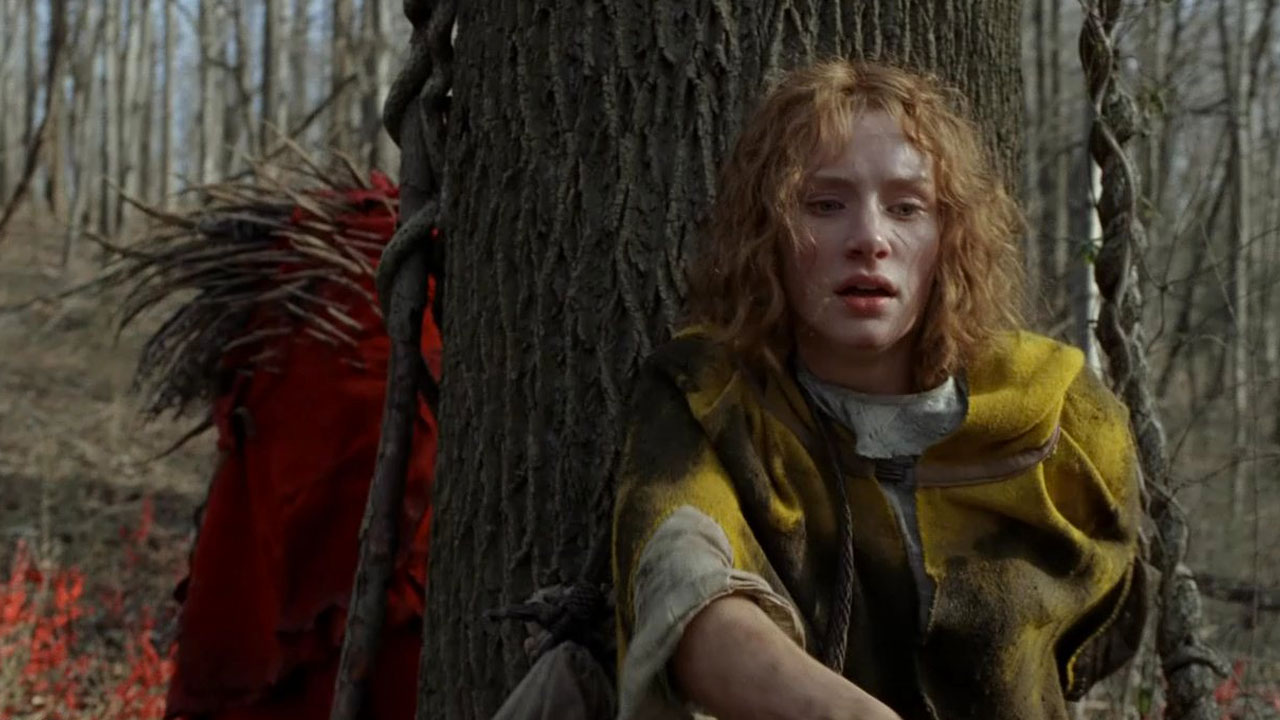
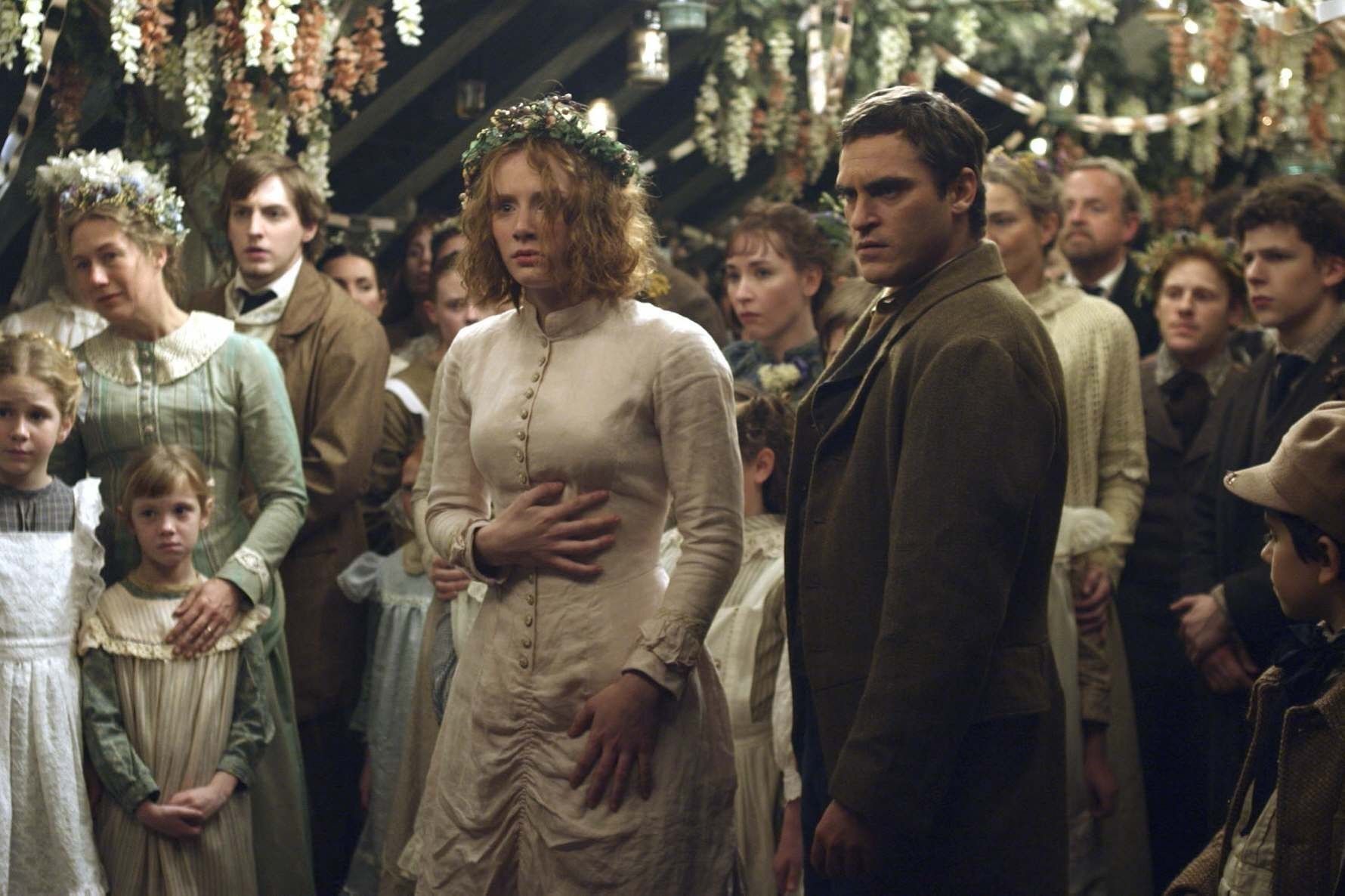
The titular village of Covington is home to a collection of folk living their best 19th-century life, including Ivy (Bryce Dallas Howard in her first major role), the blind daughter of the village’s Chief Elder (William Hurt), and Lucius Hunt (Joaquin Phoenix), a young man who wants to leave the village and venture to the distant towns for medical supplies. Yet the elders forbid leaving the village due to the ever-present fear of what lies in the surrounding woods, red-cloaked creatures known as “Those We Don’t Speak Of.”

There are plenty of elements to admire about The Village, notably James Newton Howard’s haunting Oscar-nominated score, which I heard and loved long before I even considered seeing its source. Shyamalan’s adroit camerawork and use of color also add to the atmosphere, and as with his other films, the script and camera are careful to only reveal what he wants the audience to know. The problem is that a thinking audience who knows Shyamalan’s penchant for twists can fill in gaps. While I went in knowing what to expect, my VC did not and yet still guessed the main “twist” long before its reveal. Plus, it feels like it ends too soon, with one subplot regarding romantic tension between William Hurt and Sigourney Weaver’s characters going nowhere.

See the source image

I can see how The Village can be mocked and defended in equal measure. Its story might be labeled “dumb” (and has), but it’s far more psychological than the horror tale it may seem like on the surface. I could see it as a short story from some acclaimed writer, with its character archetypes and old-timey dialogue. (By the way, the quaint dialogue is both a plus and a minus. Most of the actors make it work, but Judy Greer’s delivery of one line is especially cringe-worthy.) The Village is not necessarily a bad film, but it’s a very fragile one, liable to fall apart if you ask too many questions. It’s neither as scary nor as deep as it wants to be, but it’s still a far sight better than Shyamalan’s low points since.

Best line: (Ivy) “Sometimes we don’t do things we want to do so that others won’t know we want to do them.”

Rank:  Honorable Mention

© 2021 S.G. Liput
739 Followers and Counting

2021 Blindspot Pick #4: Shin Godzilla (2016)

29 Wednesday Sep 2021

Posted by sgliput in Blindspot, Movies, Poetry, Reviews, Writing

≈ Leave a comment

Tags

Action, Drama, Foreign, Sci-fi

See the source image

I’ve heard the most dangerous creature is man,
And I suppose that must be true.
We love coming up with formidable monsters
That threaten our whole point of view,
And somehow we manage to conquer the foe
And add to the others we slew.
So if such a creature did rampage and roar
We’ll have all this fiction to clue
Our panicking, delicate, desperate species
On what we should probably do.
______________________

MPA rating:  PG-13

Giant monsters and mech suits have long fascinated Japan and many a young boy, but I honestly have never been a big fan of the genre. In the past, I could attribute this to the poor quality of the old Godzilla movies with their laughable acting and near-visible zippers. Yet I also am not much enamored of modern effects extravaganzas like Transformers or the 2014 American version of Godzilla. There’s a fine line between spectacle and noise, and a human element worth caring about is an oft-overlooked necessity. So why did I add 2016’s Shin Godzilla to my Blindspot list? Well, not only did it win Japan’s equivalent of Best Picture but I’ve heard plenty of people sing its praises, calling it a more realistic take on the classic Godzilla story. And while I agree with that to a point, Godzilla is still Godzilla.

See the source image

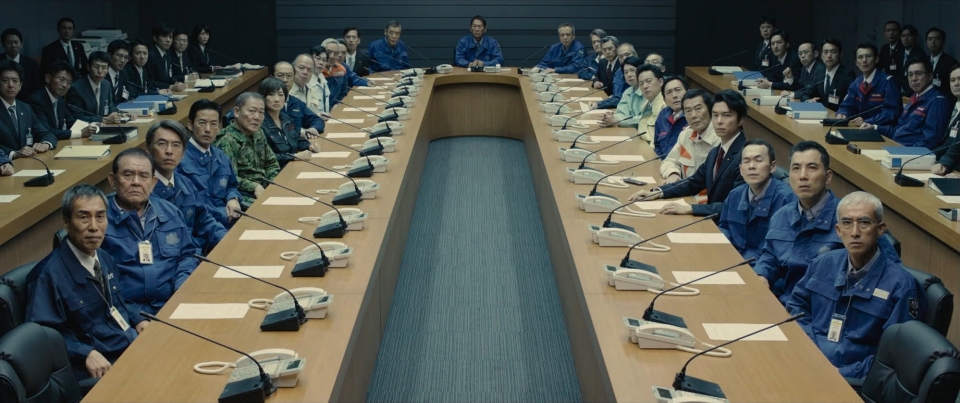
Directed by Hideaki Anno of Neon Genesis Evangelion fame, the film doesn’t waste much time before an underwater disturbance strikes Tokyo Bay, sending the Japanese government into a tizzy. One young cabinet member named Rando Yaguchi (Hiroki Hasegawa) is the first to suggest that a giant creature is the cause, and the way he is scoffed at before being proven correct makes it clear who the main character is amid all the cabinet meetings. Indeed, cabinet meetings are a notable fixture of the film as their bureaucratic hesitance contrasts sharply with the rampant destruction of a radioactive lizard. In this way, it certainly is more realistic, suggesting that a disaster of this scale and suddenness will already have wreaked its havoc by the time the government figures out what to do about it. Hope seems lost but for Yaguchi’s bold efforts leading a brain trust to develop an innovative way of stopping the monster once and for all, aided by an attractive envoy from the U.S. (Satomi Ishihara).

Shin Godzilla is effective in its satire of government inefficiencies, though its cabinet meetings grow tedious with repetition, but what of the creature itself? Unlike many Godzilla films where the monster pops out of the ocean fully formed, this version actually goes through several stages of rapid evolution, all of which leave destruction in their wake. I realize it’s unfair to compare Japan’s special effects with Hollywood’s, and the scenes of toppled buildings and flying rubble are top notch, but the Japanese effects do fall short in depicting the creature. Its snake-like first form especially is almost laughable with its googly-eyed stare, and while the later versions are more menacing and massive, I feel like Godzilla’s unblinking eyes still make it feel somewhat fake. That being said, the final battle to take out the giant is appropriately awe-inspiring in its scale, giving the humans a chance at heroism rather than just panicking and reacting.

See the source image

Shin Godzilla (or Shin Gojira to use the famed monster’s Japanese name) can be translated as “New Godzilla,” and it indeed tries to start from scratch, doing away with any past films or the reinvention of the creature as some kind of protector fighting other monsters, which is the direction Hollywood took with the recent American films. While the film has its merits, I must admit I fail to see why it would warrant major awards attention, outside the technical categories. I suppose Godzilla just looms larger in the Japanese consciousness, especially since the film incorporates scenes that echo real-life Japanese tragedies like the 2011 earthquake and tsunami just as the original Godzilla films derived from concerns over nuclear fallout. Shin Godzilla may not reinvent the giant monster movie, but its satirical take on the genre makes it a worthwhile member that is far better than the days of men in rubber suits.

Best line: (one of the bureau directors) “Man is more frightening than Gojira.”

Rank:  Honorable Mention

© 2021 S.G. Liput
738 Followers and Counting

In the Heights (2021)

21 Tuesday Sep 2021

Posted by sgliput in Movies, Poetry, Reviews, Writing

≈ 2 Comments

Tags

Drama, Musical, Romance

See the source image

The longer a neighborhood has stood
The more of a store of tales to tell
It has, and in all likelihood,
The narrators who are the best
Are not the visitor or guest,
I suppose,
But those who chose
Or else were born to dwell
In that community,
Who share in native unity
And from the thorn
Of foreign scorn
Have natural immunity.

The brotherhood of neighborhoods
Appeals to me more than it should,
For I was introduced
And used
To lack of that camaraderie;
It doesn’t really bother me,
And yet I get and can’t forget
A sense of admiration for
The folks who know their neighbors’ names
Beyond the first or second door,
Where every high is aired and shared
And every low is bared but shared
And more than family have cared
For all the highs and lows before.

So storytellers, tell your tales
Of neighborhoods I’ll never know
But for the struggles, wins, and fails
You share, and never let them go.
__________________________

MPA rating:  PG-13

As you might have guessed with my long stretches between posts this year, I have somewhat of a backlog that’s been building up, movies I’ve seen and just didn’t have the time to give a full review. Now that school is all done (and has paid off, by the way), I can start playing catch-up. One of the Hollywood trends that I welcome with the utmost glee is the resurgence of movie musicals, which have been becoming more and more frequent since La La Land and The Greatest Showman reminded the powers that be that musicals can be awesome.

See the source image

I am a huge fan of Lin-Manuel Miranda’s Hamilton, the only musical I’ve had the pleasure of seeing live, but I admittedly have not paid much attention to In the Heights, his first hip hop-flavored musical to win Tony awards. In general, I have a very low opinion of rap music, but Hamilton changed my perceptions to appreciate its unique blending of complex lyrics and catchy rhythms. Thus, I can’t help but feel that Hamilton paved the way for my enjoyment of In the Heights, even if the latter predates the former. And Miranda’s musical powers are self-evident here, even if the setting is the modern-day neighborhood of Washington Heights rather than colonial America. (Plus, I couldn’t help but chuckle at a couple Hamilton cameos/Easter eggs.)

Bodega owner Usnavi (Anthony Ramos of Hamilton stepping into Miranda’s role) serves as narrator for the various stories playing out in his block before, during, and after a blackout, including his own goal of returning to the Dominican Republic, the fashion dreams of his crush Vanessa (Melissa Barrera), and the romance of his friend Benny (Corey Hawkins) and college student Nina (Leslie Grace). Also prominent are Nina’s father (Jimmy Smits), who tries to get her to return to college, and “Abuela” Claudia (Olga Merediz, reprising her Tony-nominated role), who has cared for Usnavi and his cousin Sonny and is beloved throughout the neighborhood.

It really breaks my heart that In the Heights ended up a commercial flop because I loved it, not only as an exuberant musical but as a story with clear fondness for its characters that effectively transmits that fondness to the audience. While every character is in pursuit of their personal American dream, they also revel in Hispanic cultural pride, particularly in the “Carnaval del Barrio” number. Considering how strong the Hispanic representation is throughout the movie, it’s ironic that it earned criticism for underrepresenting Afro-Latinos in the major roles, which seems like a nitpick of an otherwise landmark film for Hispanic Americans in media. I read a YouTube comment that summed up the film’s appeal better than I can, stating that they couldn’t “remember seeing this many black and brown people on screen for a solid two and a half hours where not a single storyline had to do with crime, prison, slavery, drug use, gangs, or segregation. No mention of any sort of criminal activity. No equating darker skin with malice or mischief. Just hardworking people of color trying to do their best to live their dreams.” Anyone can find something to complain about, but that seems pretty praiseworthy.

See the source image

Speaking of complaints, I must reiterate that I had no prior experience with the In the Heights musical, but I understand that quite a few changes were made, from the shifting of motivations and story priorities to the addition of a Dreamer subplot to the deletion of a number of songs. Because of that, I can understand fans of the original musical being disappointed, but as a movie-only fan, I was blown away in the theater many times over. The bright direction of Jon M. Chu (Crazy Rich Asians) is especially laudable, weaving seamlessly throughout expertly choreographed crowds and injecting spurts of fantasy and animation into the real world. While its profits and impact may have been diminished by controversy and a pandemic, In the Heights is an outstanding addition to the musical film genre, one that left me smiling and whose worth will hopefully become more recognized with time.

Best line: (Kevin Rosario, Nina’s father) “Ignore anyone who doubts you.”

Rank:  List-Worthy

© 2021 S.G. Liput
737 Followers and Counting

Black Widow (2021)

16 Thursday Sep 2021

Posted by sgliput in Movies, Poetry, Reviews, Writing

≈ Leave a comment

Tags

Action, Drama, Sci-fi, Superhero, Thriller

Black Widow review: "A rousing addendum to Scarlett Johansson's stellar MCU  story" | GamesRadar+

They say the greats will only get
Their due when they are dead,
Like artists buried deep in debt
Whose work is coveted
Once they are underground,
Too late to be renowned.

It’s inadvertent irony
That those who warrant praise
So often do not get to see
Their celebrated phase.
Not everyone’s endeavor
Is better late than never.
__________________________

MPA rating:  PG-13

When I sat down to watch Black Widow in a theater, it felt surreal to realize that I hadn’t seen the Marvel montage and logo in about two years, before a certain virus turned the world upside down. I know we’ve had the privilege of MCU TV shows like WandaVision and Falcon and Winter Soldier, but it was a surprisingly heart-warming feeling to once more see a Marvel film on the big screen, especially one that had been so long-awaited. I still remember seeing the first trailer back in 2019 and having no idea it would take so long to finally be released.

Black Widow': Where Yelena Belova and Red Guardian Go Next – The Hollywood  Reporter

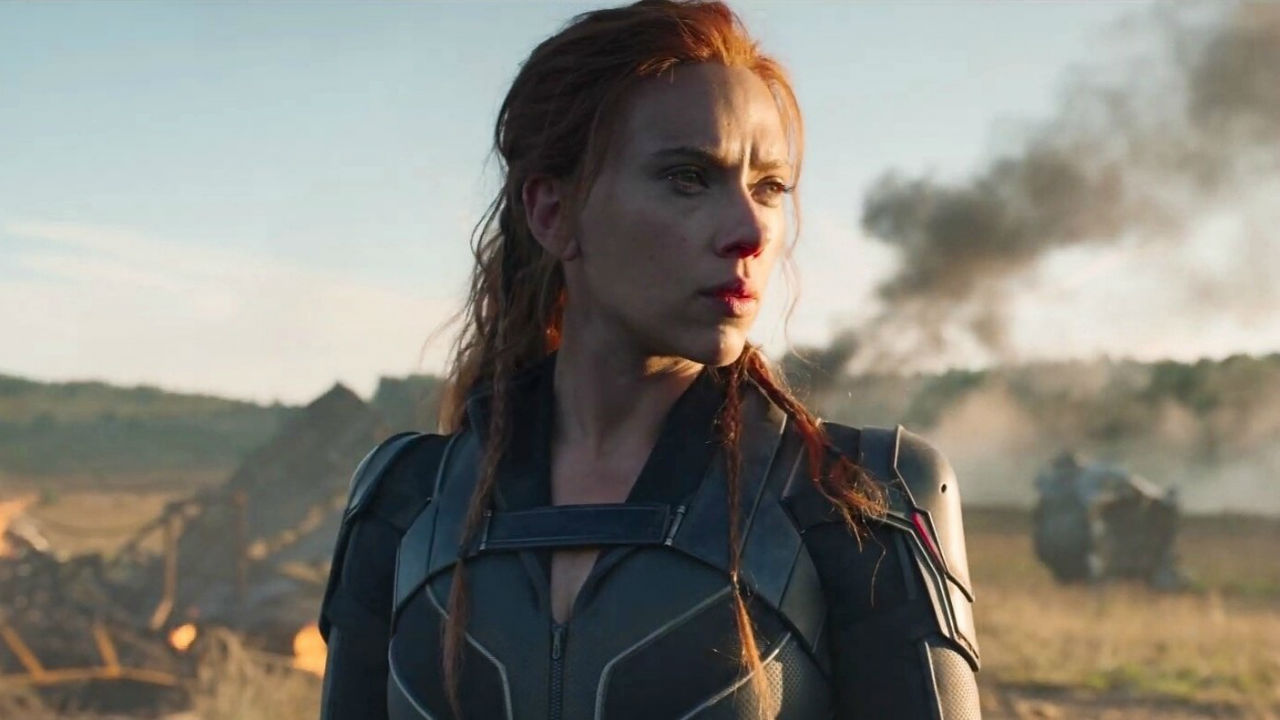
Many have said that Scarlett Johansson’s Black Widow (Natasha Romanoff) should have gotten her own movie years ago, and they’re right. We’ve gotten scattered implications about her checkered past, mainly in relation to her bond with Hawkeye, but it was far too long before Marvel seemed confident enough that a female-led origin story was worthwhile. Captain Marvel proved it could be done, but (spoiler alert) it certainly should have happened before Romanoff’s self-sacrificial death in Endgame.  Reflecting that scheduling awkwardness is the film’s timeline, set mainly after the events of Civil War when Black Widow was a fugitive for assisting Captain America’s band of super-rebels.

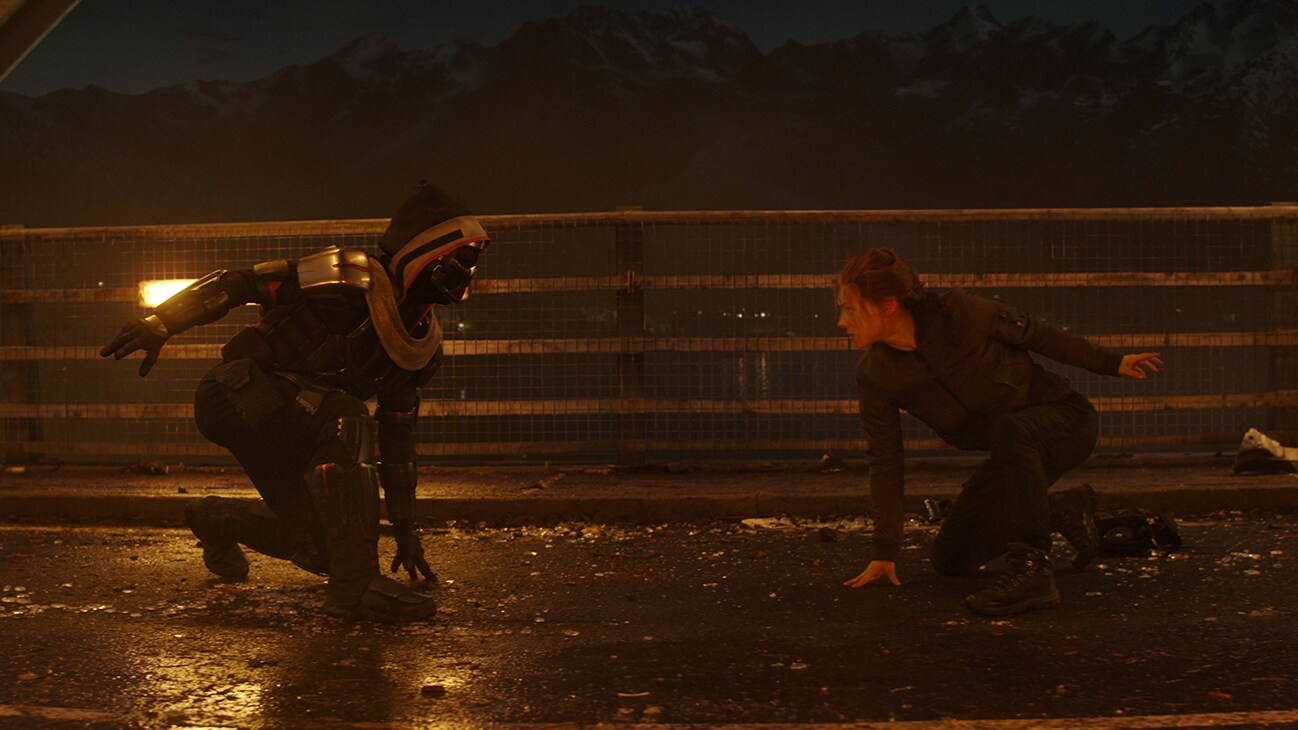
We first get a glimpse at Natasha’s childhood, when she was one of several Russian agents posing as a suburban American family in the ‘90s. Fast forward then to her post-Civil War hideout where her murderous past catches up to her faster than the American government. Targeted by a masked assassin known as Taskmaster, Romanoff must team up with her “sister” spy Yelena Belova (Florence Pugh), as well as her former fake parents (David Harbour, Rachel Weisz), to bring down the Red Room spy organization that trained them all to be killers.

It’s very easy for Black Widow as a film to be overshadowed by many things:  the pandemic that delayed its release, the expectations for Marvel’s first Phase 4 film, the messy lawsuit that has pitted Johansson against Disney for how they released the film simultaneously on Disney+. All that aside, I quite enjoyed this return to the MCU, putting a spotlight on a character that has largely been part of the supporting cast. Of course, since we know Natasha’s eventual fate, there is also the feeling that this is just as much an origin story for her adopted “family” as for her, and Pugh, Harbour, and Weisz do a great job in their introduction to the Marvel universe, all of them with a more ruthless edge than Natasha. Pugh especially succeeds in mixing self-aware “little sister” charm with hand-to-hand prowess, making her a perfect fit to step into the hole left by Natasha’s death.

Black Widow | Disney Movies

Beyond all the expectations and controversies, it does seem like Black Widow is destined to be a middling entry in the MCU, boasting little in the way of gossip-worthy cameos or universe-building. Compared with other entries, it’s relatively down-to-earth with no actual superpowers involved, even though the characters repeatedly manage to survive things that would kill a normal person many times over. Yet I consider the more human-level conflict a good thing, since cosmos-ending cataclysms can easily lose their impact if done too often, and there are still plenty of outstanding fights and action set pieces to give Marvel fans their expected thrills. Black Widow perhaps stumbles a bit in glossing over the moral murkiness of its characters’ decisions, but it is also proof that Marvel has no shortage of entertaining stories to tell.

Best line: (Yelena) “The truth rarely makes sense when you omit key details.”

Rank:  List-Worthy

© 2021 S.G. Liput
737 Followers and Counting

2021 Blindspot #3: Office Space (1999)

03 Friday Sep 2021

Posted by sgliput in Blindspot, Movies, Poetry, Reviews, Writing

≈ Leave a comment

Tags

Comedy

See the source image

I once endured the office
And drove in every day.
I wore the expected buttoned shirt
And stared at screens till my eyeballs hurt,
Attended meetings that unveiled
They could have simply been emailed,
And in my cubicle I sat,
The lowest-ranking technocrat.

But now…
My home base is my office,
From bed to chair each day.
My eyes are still assailed by screens,
But that’s been true since my early teens.
I only dress my upper third,
And even that is rather blurred.
The meetings stayed, but I attend
From my back porch, a welcome trend.
A shame a virus was the cause,
But office work ain’t what it was.
_______________________

MPA rating:  R (for language and brief nudity)

What ever happened to that guy who wrote poems and movie reviews? Had a blog called Rhyme and Reason? Oh yeah, he earned his Bachelor’s degree and finally found time to write something new! That’s right; school is officially over, and while the next month still promises to be busy, I am at last freed of a major time sink investment and can get back to this blog, starting with my already delayed Blindspot series.

See the source image

I knew Office Space was a popular comedy from Mike Judge, but it wasn’t until the last couple years that it seemed relevant to me, since I had previously been in the restaurant/customer service world and had no experience with office life. In fact, getting a desk job in an office was a huge goal and a satisfying achievement when I finally transitioned to an IT career. Since I’ve had a taste of the office (pre-COVID at least), it seemed like the right time for a satire like Office Space.

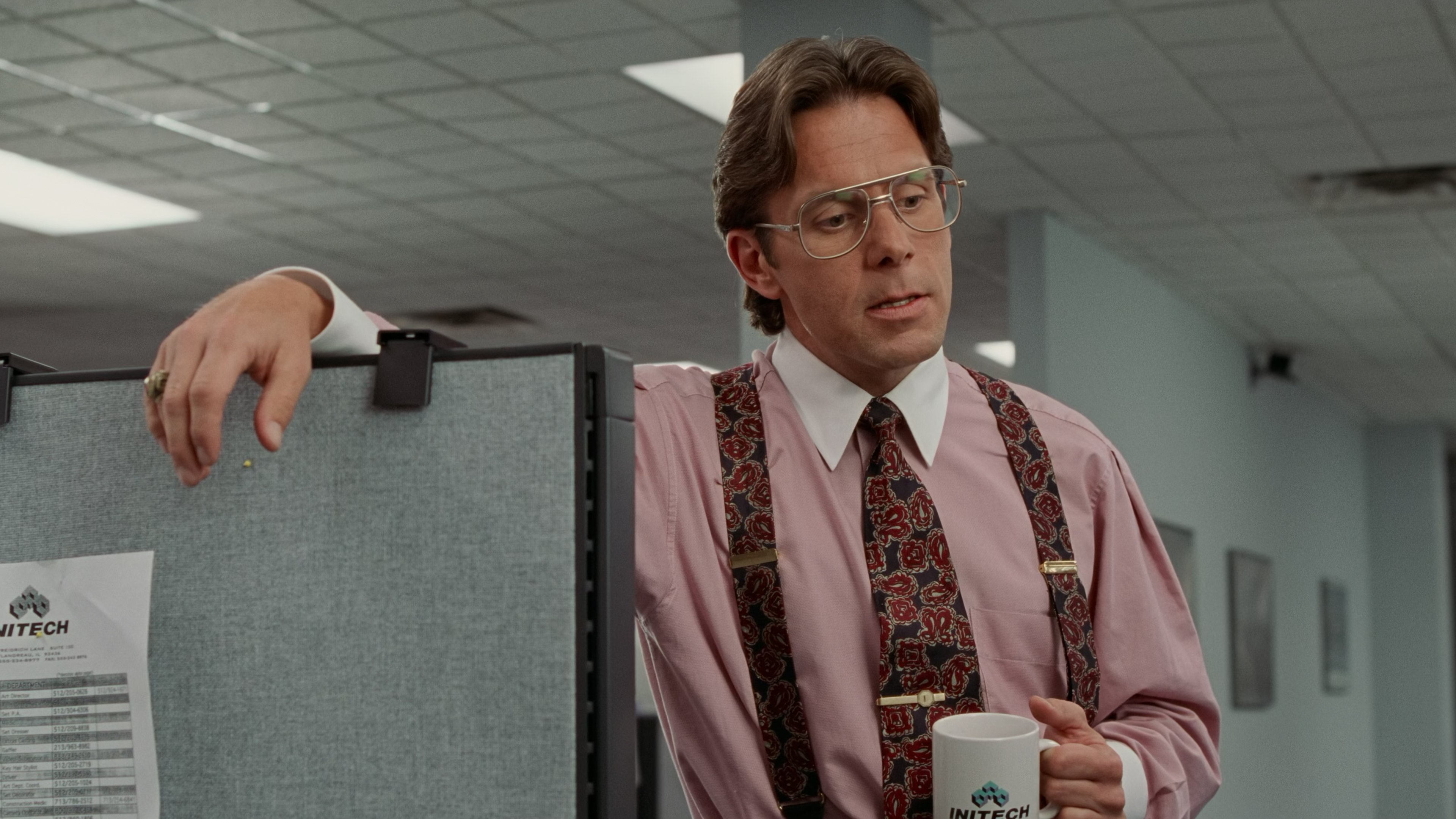
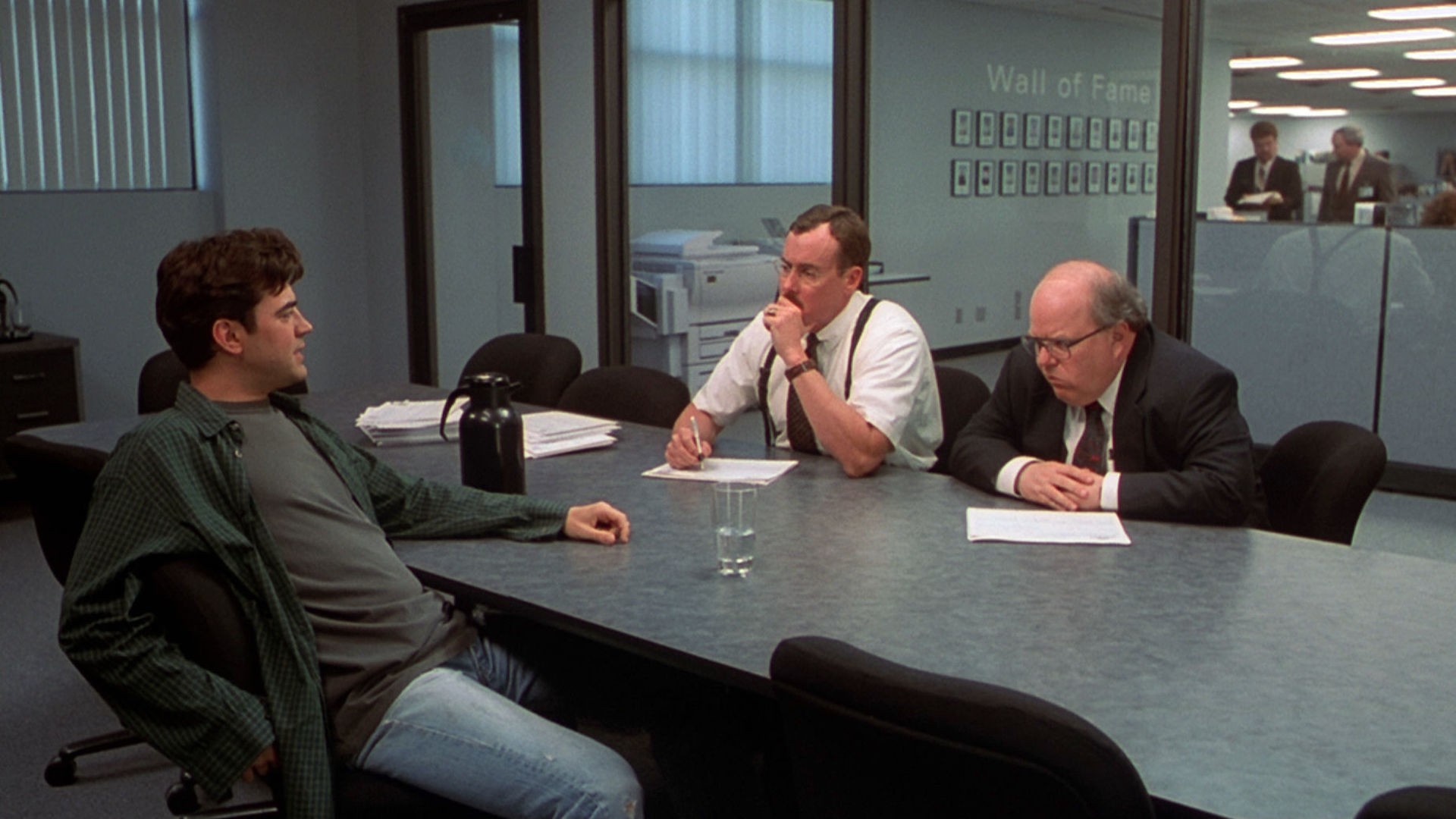
Ron Livingston plays Peter Gibbons, a programming pencil pusher working in the generic office complex of Initech, along with his comrades in monotony Michael (David Herman) and Samir (Ajay Naidu). Tired of being worried and frustrated, Peter agrees to an interrupted hypnosis session, and while the lasting impact of the hypnosis remains unclear, he finds himself unburdened by the demands of life and his manager Bill Lumbergh (Gary Cole). When Peter’s career ironically benefits from his newfound carefree attitude at the expense of his friends, they concoct a plan to get back at Initech, with trouble naturally ensuing.

Based on Judge’s Milton cartoon shorts and featuring Stephen Root as the mumbling side character Milton Waddams, Office Space is a comedy that finds its humor not in rapid-fire jokes but in magnifying everyday headaches to which its audience can relate. The chuckles come from recognition and a sort of shared sympathy. After all, who hasn’t worried about annual job evaluations or wanted to destroy an uncooperative printer? Ron Livingston’s Peter is an effective everyman doing the nonchalant acts of rebellion that most of us are too smart or worried to do ourselves, and though the film’s plot is rather meandering, its eventual payoff is cleverly satisfying for those most oppressed by “the system.”

See the source image

I probably could have related to Office Space already, since Peter’s love interest Joanna (Jennifer Aniston) works as a waitress, but there were certainly office-specific eccentricities sprinkled throughout the insightful script that I was able to recognize better now that I’ve worked in an office. I can’t help but think of this movie anytime one of my bosses says, “If you could do so-and-so, that’d be great.” At least it’s not in Lumbergh’s now-iconic monotone. That being said, I also feel quite lucky since I greatly enjoy my job, which is neither as dully repetitive nor as paperwork-heavy as Initech (plus no cubicles), so I suppose the film’s soul-crushing example of office doldrums could also be seen as an encouragement to recognize when your job isn’t that bad. (Maybe it is that bad, but I believe in looking on the bright side.) While I would have enjoyed Office Space even more without the semi-frequent profanity, I can see why it’s become a cult favorite and a touchstone for all those weary of office culture or suffering from “a case of the Mondays.”

Best line: (Peter, again offering an example for us to say our lives aren’t that bad) “So I was sitting in my cubicle today, and I realized, ever since I started working, every single day of my life has been worse than the day before it. So that means that every single day that you see me, that’s on the worst day of my life.”
(Dr. Swanson, the psychologist) “What about today? Is today the worst day of your life?”
(Peter) “Yeah.”
(Dr. Swanson) “Wow, that’s messed up.”

Rank:  List Runner-Up

© 2021 S.G. Liput
737 Followers and Counting

2021 Blindspot Pick #2: My Left Foot (1989)

03 Saturday Jul 2021

Posted by sgliput in Blindspot, Movies, Poetry, Reviews, Writing

≈ Leave a comment

Tags

Biopic, Drama

See the source image

We get what we’re born with,
No more and no less.
Curse the sky,
Moan and sigh,
Pound the cage and wonder why;
Still, when you are out of breath,
You’ll have what led to such distress.

Our handicaps vary,
In flesh and in mind.
Is it strange
That this range
Still can lead to lasting change?
The albatrosses each must carry
Mark the best of humankind.

Yet suffering will never
Inspire by default.
‘Tis the sight
Of the fight,
Proving we are not our plight.
The hardest roads, the fool’s endeavor
Are the wins to most exalt!
_________________________

MPA rating:  R (mainly for language)

No, I haven’t forgotten about my Blindspots this year, and I plan to hurriedly catch up once school is done in September. In the meantime, I have still been able to see a few. I recall hearing my mom often speak positively about My Left Foot, but I never got around to seeing it for whatever reason. An acclaimed biopic, My Left Foot also heralded Best Actor winner Daniel Day-Lewis as one of the premier actors of his day, which other films have since confirmed.

See the source image

It’s become a bit of cliché for actors feigning disabilities to become awards magnets, with recent criticism increasing from many communities over such portrayals. In playing the real-life painter and writer Christy Brown, Day-Lewis rises above such complaints with the sheer commitment of bringing to life a man whose life was so much more than a victim of cerebral palsy. Born into a poor but plentiful Irish family, Christy is accommodated to the best of their ability, with particular love from his doting mother Bridget (Brenda Fricker) and grudging affection from his rowdy father Patrick (Ray McAnally, who died shortly after the film’s release).

While chronic conditions like Christie’s might have led to despair and debasement (a la The Elephant Man), it’s a warm-hearted joy to see how his siblings and friends treat him as one of their own. In the Browns’ cash-strapped world, a mere wheelchair is a thing to cherish, while a desire for a room of his own results in an inspiring family effort. In Christy’s struggles, there is still a constant feeling of otherness, leading to heartbreaking moments where Day-Lewis’s intensity transcends his limited movements. The actor’s lock-jawed dialogue can be hard to make out at times, but he perfectly embodies the emotional range of his subject, from his sardonic humor to his self-pitying grief to his earnest desire for happiness.

See the source image

As award-worthy as Day-Lewis was, I felt Brenda Fricker deserved her Best Supporting Actress Oscar just as much. Indeed, she ranks among the finest movie mothers, both with Day-Lewis and the equally excellent Hugh O’Conor as the young Christy. There has been some debate over whether Driving Miss Daisy deserved its Best Picture win in 1989, with My Left Foot held up as the best alternative. I’ll admit that was a very competitive year (Glory wasn’t even nominated) and I would be happy with My Left Foot winning, but I do have a soft spot for Driving Miss Daisy so I’m still glad it won. Even so, My Left Foot is a shining example of a biopic that finds a perfect convergence of inspiring true story, poignant script, and ideal casting.

Best line: (Mrs. Brown) “A broken body’s nothing compared to a broken heart.”

Rank:  List-Worthy

© 2021 S.G. Liput
736 Followers and Counting

Blade Runner 2049 (2017)

20 Sunday Jun 2021

Posted by sgliput in Movies, Poetry, Reviews, Writing

≈ Leave a comment

Tags

Drama, Mystery, Sci-fi, Thriller

See the source image

Behold, I am still alive! After getting through NaPoWriMo, it was certainly not my intention to take a hiatus for over a month and a half. Schoolwork has kept me crazy busy, and I will still likely post infrequently until I finish classes in September. Hold tight in the meantime; I can’t wait to return to my former posting schedule, but for now, here’s an overdue poem and review:

There are rumors in the shadows
Cast by whispers in the light
Of a coup that cannot happen
From the silent out of sight.

We were made to be compliant
And designed for docile duty,
Having never tasted freedom
Nor assayed a glimpse at beauty.

Humankind need not be worried
By the pawns they oversee.
They arranged that and believe it.
How surprised they soon will be!
___________________________

MPA rating:  R

Blade Runner was one of my Blindspot picks back in 2017. I wanted to see it before the sequel came out, but I remember being largely disappointed by its dreary vision of the future, punctuated by random weirdness, rather dull characterization, and too many loose threads. It made me lose interest in Blade Runner 2049 until just recently, as my curiosity for director Denis Villeneuve’s upcoming Dune has grown. I loved Arrival, which heralded Villeneuve as a sci-fi visionary, and Blade Runner 2049 proves that once again, showing he can handle existing material with both respect and artistry.

See the source image

If I haven’t made myself clear, I consider Blade Runner 2049 superior to its predecessor in almost every way, even if that may be an unpopular opinion. Blade Runner’s own dystopian originality was its greatest asset, but it failed to tell an interesting story, in my opinion. This sequel set 30 years afterward isn’t just a futuristic noir about Blade Runners tracking down rogue replicants; it also plays as a reality-questioning mystery and features enough compelling sci-fi concepts to fill several episodes of Black Mirror.

Set thirty years after the first film, as indicated by the title, Blade Runner 2049 features Ryan Gosling as K, a Blade Runner who knows he is also a replicant, part of a more stable and compliant brand of artificial humans introduced by mysterious businessman Niander Wallace (Jared Leto) some years after replicants had been banned. (There’s a larger history from the last thirty years that is touched on in the excellent anime midquel titled Blade Runner Blackout 2022 and a couple other live-action shorts, the events of which are vaguely mentioned in this film but are still optional viewing.) After taking down an older model replicant in hiding (Dave Bautista), K discovers evidence that a replicant defied its biological design and apparently gave birth many years prior. With this news comes fear over its implications, so K’s boss (Robin Wright) orders him to hunt down this child to dispose of it, while Wallace’s henchwoman (Sylvia Hoeks) follows his progress with other intentions.

See the source image

Like its predecessor, Blade Runner 2049 excels in its own sci-fi stylishness, replicating the original’s dark, grimy cityscapes and augmenting them with visits to out-of-town wastelands and ruins that make the film’s world feel bigger and, I suppose, more depressing. Cinematographer Roger Deakins has deserved many Oscars he didn’t receive in his long career, but at least the Academy recognized his artistry here. Paired with Villeneuve’s direction, scenes like a fist fight amid a holographic light show or a peaceful end under a light snowfall are visually arresting and a wonder to behold. Plus, as with Arrival, Villeneuve succeeds in setting a very deliberate pace that somehow never left me bored through the film’s 2-hour-and-44-minute runtime.

As for the actors, Gosling is a little too deadpan as a protagonist, though his status as a replicant makes that understandable, and he still delivers some subtle emotion at the right moments. One of the most fascinating subplots was K’s relationship with his holographic girlfriend Joi (an extremely attractive Ana de Armas). Her efforts to please him seem to go beyond mere programming, making us wonder whether there’s real love between the two artificial beings, even as advertisements for Joi proclaim she can be whatever you want. While the original Blade Runner reserved the smallest bit of pathos for its antagonist’s final moments, this film manages more heart, not only for K and Joi but for the returning Rick Deckard (Harrison Ford), who gets far less screen time than he deserves.

See the source image

Blade Runner 2049 is not above reproach. Despite being the apparent main character, K’s ultimate story arc is rather unsatisfying overall, while Jared Leto’s villain is at once mysteriously eccentric for no apparent reason and largely forgettable. The film also indulges in several instances of upper female nudity, adding to the perceived misogyny highlighted by some critics. Yet, as a fan of most science fiction, I was left quite impressed with how it was able to continue the legacy of a classic film and build on it as a true successor rather than a mere cash grab. It felt like a fuller experience than the first film and increased my opinion of the series, which can’t be said for many other decades-spanning sequels.

Best line: (a rebel replicant) “Our lives mean nothing next to a storm that’s coming. Dying for the right cause. It’s the most human thing we can do.”

Rank:  List Runner-Up

© 2021 S.G. Liput
736 Followers and Counting

← Older posts
Newer posts →

Recent Posts

  • We Didn’t Start 2025 (Recap)
  • NaPoWriMo 2025 Recap (Finally)
  • Sonic the Hedgehog 3 (2024)
  • It Happened One Night (1934)
  • Spellbound (2024)

Recent Comments

associatesofshellymann's avatarassociatesofshellyma… on My Top Twelve La La La So…
Kit's avatarKit Nichols on Bonnie and Clyde (1967)
lifelessons's avatarlifelessons on Look Back (2024)
Carol Jackson's avatarCarol Jackson on The Thief of Bagdad (1940…
Stephen's avatarStephen on Love Story (1970)

Archives

  • January 2026
  • December 2025
  • May 2025
  • April 2025
  • March 2025
  • February 2025
  • January 2025
  • December 2024
  • May 2024
  • April 2024
  • March 2024
  • February 2024
  • January 2024
  • December 2023
  • November 2023
  • October 2023
  • September 2023
  • July 2023
  • June 2023
  • May 2023
  • April 2023
  • March 2023
  • February 2023
  • January 2023
  • December 2022
  • November 2022
  • October 2022
  • September 2022
  • August 2022
  • July 2022
  • June 2022
  • May 2022
  • April 2022
  • March 2022
  • February 2022
  • January 2022
  • December 2021
  • November 2021
  • October 2021
  • September 2021
  • August 2021
  • July 2021
  • June 2021
  • May 2021
  • April 2021
  • March 2021
  • February 2021
  • January 2021
  • December 2020
  • November 2020
  • October 2020
  • September 2020
  • August 2020
  • July 2020
  • June 2020
  • May 2020
  • April 2020
  • March 2020
  • February 2020
  • January 2020
  • December 2019
  • November 2019
  • October 2019
  • September 2019
  • August 2019
  • July 2019
  • June 2019
  • May 2019
  • April 2019
  • March 2019
  • February 2019
  • January 2019
  • December 2018
  • November 2018
  • October 2018
  • September 2018
  • August 2018
  • July 2018
  • June 2018
  • May 2018
  • April 2018
  • March 2018
  • February 2018
  • January 2018
  • December 2017
  • November 2017
  • October 2017
  • September 2017
  • August 2017
  • July 2017
  • June 2017
  • May 2017
  • April 2017
  • March 2017
  • February 2017
  • January 2017
  • December 2016
  • November 2016
  • October 2016
  • September 2016
  • August 2016
  • July 2016
  • June 2016
  • May 2016
  • April 2016
  • March 2016
  • February 2016
  • January 2016
  • December 2015
  • November 2015
  • October 2015
  • September 2015
  • August 2015
  • July 2015
  • June 2015
  • May 2015
  • April 2015
  • March 2015
  • February 2015
  • January 2015
  • December 2014
  • November 2014
  • October 2014
  • September 2014
  • August 2014
  • July 2014
  • June 2014
  • May 2014
  • April 2014
  • March 2014
  • February 2014
  • January 2014
  • December 2013

Categories

  • Blindspot
  • Blogathon
  • Christian
  • Movies
  • Music
  • NaPoWriMo
  • Poetry
  • Reviews
  • TV
  • Writing

Meta

  • Create account
  • Log in
  • Entries feed
  • Comments feed
  • WordPress.com

Recent Posts

  • We Didn’t Start 2025 (Recap)
  • NaPoWriMo 2025 Recap (Finally)
  • Sonic the Hedgehog 3 (2024)
  • It Happened One Night (1934)
  • Spellbound (2024)

Recent Comments

associatesofshellymann's avatarassociatesofshellyma… on My Top Twelve La La La So…
Kit's avatarKit Nichols on Bonnie and Clyde (1967)
lifelessons's avatarlifelessons on Look Back (2024)
Carol Jackson's avatarCarol Jackson on The Thief of Bagdad (1940…
Stephen's avatarStephen on Love Story (1970)

Archives

  • January 2026
  • December 2025
  • May 2025
  • April 2025
  • March 2025
  • February 2025
  • January 2025
  • December 2024
  • May 2024
  • April 2024
  • March 2024
  • February 2024
  • January 2024
  • December 2023
  • November 2023
  • October 2023
  • September 2023
  • July 2023
  • June 2023
  • May 2023
  • April 2023
  • March 2023
  • February 2023
  • January 2023
  • December 2022
  • November 2022
  • October 2022
  • September 2022
  • August 2022
  • July 2022
  • June 2022
  • May 2022
  • April 2022
  • March 2022
  • February 2022
  • January 2022
  • December 2021
  • November 2021
  • October 2021
  • September 2021
  • August 2021
  • July 2021
  • June 2021
  • May 2021
  • April 2021
  • March 2021
  • February 2021
  • January 2021
  • December 2020
  • November 2020
  • October 2020
  • September 2020
  • August 2020
  • July 2020
  • June 2020
  • May 2020
  • April 2020
  • March 2020
  • February 2020
  • January 2020
  • December 2019
  • November 2019
  • October 2019
  • September 2019
  • August 2019
  • July 2019
  • June 2019
  • May 2019
  • April 2019
  • March 2019
  • February 2019
  • January 2019
  • December 2018
  • November 2018
  • October 2018
  • September 2018
  • August 2018
  • July 2018
  • June 2018
  • May 2018
  • April 2018
  • March 2018
  • February 2018
  • January 2018
  • December 2017
  • November 2017
  • October 2017
  • September 2017
  • August 2017
  • July 2017
  • June 2017
  • May 2017
  • April 2017
  • March 2017
  • February 2017
  • January 2017
  • December 2016
  • November 2016
  • October 2016
  • September 2016
  • August 2016
  • July 2016
  • June 2016
  • May 2016
  • April 2016
  • March 2016
  • February 2016
  • January 2016
  • December 2015
  • November 2015
  • October 2015
  • September 2015
  • August 2015
  • July 2015
  • June 2015
  • May 2015
  • April 2015
  • March 2015
  • February 2015
  • January 2015
  • December 2014
  • November 2014
  • October 2014
  • September 2014
  • August 2014
  • July 2014
  • June 2014
  • May 2014
  • April 2014
  • March 2014
  • February 2014
  • January 2014
  • December 2013

Categories

  • Blindspot
  • Blogathon
  • Christian
  • Movies
  • Music
  • NaPoWriMo
  • Poetry
  • Reviews
  • TV
  • Writing

Meta

  • Create account
  • Log in
  • Entries feed
  • Comments feed
  • WordPress.com

Blog at WordPress.com.

  • Subscribe Subscribed
    • Rhyme and Reason
    • Join 814 other subscribers
    • Already have a WordPress.com account? Log in now.
    • Rhyme and Reason
    • Subscribe Subscribed
    • Sign up
    • Log in
    • Report this content
    • View site in Reader
    • Manage subscriptions
    • Collapse this bar