Be sure to vote for your favorite Asian-Language film in Round 10 of Opinion Battles. From anime to martial arts, there’s a great selection, but I had to pick Crouching Tiger, Hidden Dragon for its superbly artistic approach to kung fu. Pick your favorite as well!
Asia has given us plenty of brilliant films many have given the Western world some of the most popular films in film history. We have Studio Ghibli which can battle Disney for stunning animated movies, we have also had horror films which have redefined the genre. There is also Bollywood which is easily just as profitable as Hollywood.
If you want to join the next round of Opinion Battles we will be take on Which Film Should Never Have Had a Sequel, to enter email your choice to moviereviews101@yahoo.co.ukby Saturday 27th May 2017.
Darren – Movie Reviews 101
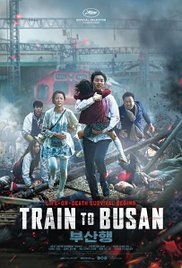
Train to Busan
Train to Busan from South Korea is my pick for this because I was simply blown away by the non-stop action horror going on throughout the film. We get a zombie horror that could be put in the same…
In the spirit of my list of movie corn (one of my favorites to compile), I’ve decided now to turn my sights on another vegetable that has found its way onto movie screens: the humble potato. That’s right, we’re going full spud here, and all manner of cinematic uses for this tuber qualify. Cue the Bubba voice— you got potato chips, potato salad, potato casserole, French fries, hash browns, latkes, knishes, potatoes au gratin, mashed potatoes, boiled potatoes, baked potatoes, tater tots, potato bread, potato soup, potato pancakes, twice-baked potatoes, and…that’s about it.
In truth, most of these picks actually feature whole potatoes rather than anything made from them, but there are notable exceptions. I have tried to compile this list with all diligence, even leaving off a few tenuous choices. For instance, I found that the root that Scarlett O’Hara digs up in the “I’ll never be hungry again” scene of Gone with the Wind is actually a radish, not a potato. Likewise, I’ve never seen many films that actually have potato in the name, such as Mashed Potatoes; Hot Potato (several movies by that name); One Potato, Two Potato; Who Made the Potatoe Salad?; and Sex Lives of the Potato Men, some of which apparently don’t even have anything to do with actual potatoes.
Plus, I’m ignoring certain vulgar potato scenes I know of, as in Soul Plane and Sausage Party. In addition, I haven’t forgotten significant potatoes in other media, such as the potato girl from Attack on Titan, the A.I. GLaDOS as a potato battery in Portal 2 (see top picture), and that ridiculously epic potato chip scene from the anime Death Note. (I wonder if they’ll keep that scene in the live-action movie this year.)
So without further ado, here are my top twelve instances of potatoes in movies. I hope you like potatoes.
A Fish Called Wanda
There’s something I deeply despise about this scene. Oh, yeah, it’s Kevin Kline as the most charmingly despicable jerk imaginable. I honestly can’t stand this movie, but it’s certainly a memorable scene. And yes, thank you, England, for the culinary contribution that is the chip.
While Ralphie’s little brother Randy complains about meatloaf, he apparently loves mashed potatoes, as long as he can eat like a piggy. I’m glad I was never a finicky eater.
Animal House
Ah, the famous zit scene in the cafeteria, featuring a grown-up version of Ralphie’s brother. This is one I debated for a while, mainly because I still can’t verify that it’s actually mashed potatoes that John Belushi blows out of his mouth. It’s some scoop of white food, but is it potatoes, cottage cheese, a hard-boiled egg, or something else entirely? It looks like mashed potatoes to me, though, and until I learn otherwise, it counts.
Ladies in Lavender
In this lesser-known drama about two elderly English sisters (Judi Dench, Maggie Smith) who care for a young Pole (Daniel Bruhl) who washes up on the beach, peeling potatoes transcends the language barrier.
Everything Is Illuminated
This quirky but deceptively serious tale is about a Jewish-American (Elijah Wood) traveling to Ukraine to investigate his family history from the Holocaust, and a lonely potato serves to illustrate both his compulsive collecting habits and the cultural divide between himself and his guides.
How the mighty have fallen when once-affluent Englishmen crave a mere potato! Young Christian Bale’s Jim experiences this fall to desperation firsthand after the Japanese occupy Shanghai. “People will do anything for a potato.”
Close Encounters of the Third Kind
I’m not enamored of this Spielberg sci-fi staple, but you’ve got to love Richard Dreyfuss’s obsessive molding of his mashed potatoes into a tiny model of Devil’s Tower.
I am enamored of this beautifully charming anime film about a single mother raising her half-wolf kids. When she moves out to the country, her inexperience at farming shows, but a gruff neighbor provides her a crash course in growing plenty of potatoes.
Say it with me now. “Po-ta-toes! Boil ‘em, mash ‘em, stick ‘em in a stew!” As Sam could tell you, there’s only one way to eat a brace of coneys, and ideally it’s with taters.
Most of you probably saw this one coming, since it’s a more recent movie. After being stranded on Mars, Mark Watney (Matt Damon) uses his incredible botany powers to grow potatoes in his own dung and stretch his food supply. I’m sure they taste much better with ketchup than with Vicodin.
Faith Like Potatoes
At least I have one movie that actually has potatoes in the name. This Christian film about a real-life South African farmer and speaker makes a stirring comparison between faith and potatoes, both of which remain hidden beneath the surface until harvest time, with inspiring results. Some may find it preachy, but it’s one of the better faith-based films out there.
And the number one spot goes to none other than Mr. Potato Head, plus his Missus. Don Rickles and Pixar made a lovably irritable character out of the old Hasbro toy, which originated as an actual potato with removable body parts. Thanks to Toy Story, Mr. Potato Head is still popular and even has his own Macy’s Thanksgiving Day Parade balloon. Now that’s a famous spud.
And here are a few runners-up, albeit not many, since there weren’t nearly as many movie potatoes to choose from as there were corn scenes.
The Benchwarmers – Explains that hot potatoes are actually hot.
Barefoot Gen – Two brothers fight over a sweet potato in this disturbing anime film a la Grave of the Fireflies.
Frenzy – This Hitchcock thriller has a killer rummaging through sacks of potatoes for something his latest victim took from him.
Men at Work – Don’t ever mess with a man’s fries.
My Big Fat Greek Wedding – There are no small gatherings when the potato peeling starts.
Napoleon Dynamite – “Give me some of your tots.”
Sling Blade – “I like them French fried potaters.”
Steamboat Willie – The first cartoon with synchronized sound ends with Mickey Mouse peeling potatoes for his musical antics.
The Terminal – A bag of potato chips serves as a messy metaphor for a foreign coup.
Maybe I’ll continue this food theme for future lists, but my top twelve cauliflower in movies may take some time. Thanks to everyone who reads this list, and perhaps now you’ll keep in mind the star power of that tater the next time you peel or eat one. Remember, the spuds have eyes.
I wonder what wonders the world has beheld:
More than seven, no doubt,
More than those learned about,
But must they be spectacles unparalleled,
Gloried feats unsurpassed,
Or more simply contrast?
A light among shadows, a gem among stones,
An unshakable stand
Against failure’s demand,
A rare certainty in a world of unknowns,
An encouraging word
That despair hasn’t heard,
A dream among cynics, a float in rough water,
Shooting stars overhead
When all hope was thought dead,
A lamb among wolves with no worry of slaughter—
The world’s wonders don’t last,
But the weak and steadfast
Can find hope in contrast.
_______________________
MPAA rating: PG-13
I honestly never thought I’d see a DC movie on its opening weekend, but a half-planned trip to the theater left Wonder Woman as the most convenient show time available, and the positive reviews I’d heard convinced my VC and me to give it a try. I had come to the conclusion that the DC Extended Universe (DCEU) is a lost cause, with Man of Steel, Batman v. Superman, and Suicide Squad being either unwieldy, joyless, or overblown. Yet here at last is Wonder Woman, helmed by Patty Jenkins, the first female director of a major superhero film, and DC finally gets a movie that can hold its own against Marvel.
I’ll admit I don’t know much about Wonder Woman from the comics and only ever saw her as a member of the animated Justice League on TV, as well as her animated origin film from 2009. The latest live-action movie begins much like its cartoon counterpart, with the Princess Diana (Gal Gadot) of the Amazons residing on the hidden island of Themyscira, training to be a great warrior, until the crash-landing of American pilot Steve Trevor (Chris Pine) awakens her sense of duty and interest in the outside world. Unlike the animated version set in the modern day, 2017’s Wonder Woman has the key difference of taking place during World War I, making its retro setting more than a little reminiscent of Captain America: The First Avenger. (Her origin apparently took place during World War II in the comics, so I guess the change was intended to avoid being too similar to Cap’s first outing.) There are plenty of parallels, from an evil German antagonist (Danny Huston) with a diabolical scientist (Elena Anaya) under him to a climactic sacrifice involving a death-carrying plane, but there’s enough originality here that the similarities never detract from the story.
The best thing Wonder Woman has in its favor is Gal Gadot. Neither an overly familiar face nor a struggling newbie, she’s an effortlessly perfect fit for the role, her slight Israeli accent giving her an exotic touch while she nails the assertive and noble appeal of the character. She’s also attractive no matter what she does, whether in secretarial incognito or in the heat of battle. And speaking of battle, her first moment of truth fighting against the German army is spectacular, taking ownership of “No Man’s Land” with feats that Lynda Carter could only dream of. Alongside her, Chris Pine is his usual likable self, and while he can’t compare with Diana’s abilities, I liked that he was still an active and valiant match for her rather than a weakling to make her look better. Plus, in contrast to Batman and Superman of late, there’s actually some humor, perhaps not at Marvel’s levels, but it’s refreshing that DC seems to have learned something from the competition. (Suicide Squad may have had more jokes, but it’s a barely connected oddity as far as I’m concerned.)
As much as I enjoyed what is clearly DC’s best film to date, it’s not above a few nitpicks, such as stereotypical villains and one scene with some cynically feminist jabs as Steve and Diana awkwardly discuss sex and marriage. Most of the climactic battle has the same excessive bombast as the end of Batman v. Superman, which I guess is only a negative if you disliked it then. The strongest criticism for me is the muddy mythology that comes to a head toward the end. Wonder Woman has always drawn freely from Greek mythology, which works for the loose backstory at the beginning, and Diana understands Zeus to be man’s creator and Ares to be the corrupting god of war, roles that here distinctly echo the Christian God and devil. She’s convinced with apparent naiveté that Ares is controlling mankind to wage this Great War, and while her understanding is challenged and widened, it’s left in doubt by the end just how right she was and what that implies for history and religion in general.
If you don’t think about that too hard, though, Wonder Woman absolutely fulfills its potential as the first superheroine blockbuster, and my VC quite enjoyed it as well, even without having seen the previous DC entries. (Coincidentally, the very day I saw it, I came home to find the old 1970s TV show with Lynda Carter on, and compared with that cheese, the film is a masterpiece.) Aside from Gadot herself, I most appreciated the fact that this is a genuinely heroic tale of a warrior discerning why she defends mankind. Not many superhero movies tackle that topic so directly, and especially considering how DC has loused up even the most iconic of heroes, Superman, Wonder Woman’s experiences of both the evil and the noble that man is capable of provide her with a persuasive reason for her defense of the world, beyond the idealistic zeal that she and Captain America had from the start. Her gallantry and girl-power status as a role model are a far cry from the broody skepticism of Batman v. Superman or the psychopathic half-villainy of Suicide Squad, and this “light among shadows” seems to indicate that there might actually be hope for the DCEU yet, though I undoubtedly still prefer Marvel. Wonder Woman may not quite be an unqualified success, but it’s a welcome success nonetheless.
Best line: (Hippolyta, as Diana leaves the island, echoing many parents, I’m sure) “You are my greatest love. Today, you are my greatest sorrow.”
From way up here, my view is clear,
And all the world extends below.
They wait to see if this wannabe
Deserves this chance and vertigo.
Yet no one thought this soaring spot
Could be achieved by such as me.
They patronized and minimized
My every try and cut me free.
But not this time, this chance sublime,
Unmarred by how they’ve criticized;
I’m flying higher than critics desire
And won’t the scolders be surprised!
I don’t compare in skill or flair
With medalists, but I aspire.
That goal sincere has brought me here.
Now just to land, and I’ll retire.
___________________
MPAA rating: PG-13 (could almost be PG)
One of the most pleasant surprises from last year was how the story of an apparent goofball from the 1988 Winter Olympics exceeded its by-the-numbers genre to become one of the most uplifting films of the year. Inspirational sports dramas are a dime-a-dozen, but I wouldn’t hesitate to call Eddie the Eagle the best underdog story since the 1993 classic Rudy.
That comparison extends to the plucky protagonist whose dogged refusal to give up overshadows his relative lack of athletic ability. Eddie Edwards (Taron Egerton) has dreamed since childhood of going to the Olympics, despite the repeated failures of his clumsy practice runs. All the familiar ingredients are here: a father (Keith Allen) who thinks Eddie’s dreams are a waste of time, an authority figure (Tim McInnerny) who disparages Eddie and does all he can to block the irrepressible upstart, an embittered coach (Hugh Jackman) who grudgingly agrees to mentor the young dreamer. It’s all so potentially cliché, and yet it’s all done so well, thanks in large part to the unironic exuberance of Egerton as Eddie himself.
Eddie’s journey is a constant struggle that never seems to faze him, or at least doesn’t keep him down for long. In many ways, he glides along on unrealistic goals and loopholes, choosing to compete as an Olympic ski jumper when he discovers that Great Britain hasn’t had one since the 1920s. If it gets him to the Olympics, it doesn’t matter if he’s completely inexperienced. Yet it’s his unabashed spirit that earns some much-needed sympathy along his way and convinces disgraced former competitor Bronson Peary to coach and support him. Ordinarily, the coach would be the one encouraging his protégé, but Eddie needs no outside encouragement and instead lightens the drunken cynicism of his trainer.
It’s an important development toward the end that Eddie recognizes that his jubilation in the face of apparent failure can be seen as the antics of a fool and addresses those concerns head-on. Ultimately, as the film and a quote from the founder of the Olympics state, it doesn’t matter that Eddie’s best efforts still come up short, just as it didn’t matter that Rudy’s moment of truth was only a single touchdown: the very act of participating and doing one’s best is admirable, and it’s no wonder that Eddie’s tenacious joy and determination captured the hearts of spectators.
It helps too that the film is designed to be as crowd-pleasing as possible, with a good deal of humor and a deliciously ‘80s soundtrack with well-placed song staples from the time, like Van Halen’s “Jump.” Egerton and Jackman imbue their familiar character types with likable personalities, Egerton lovably nerdy and Jackman ruggedly cool, and are easy to root for. By the film’s breath-holding climax (which surely looks ridiculous to those not in the moment), I was cheering alongside the characters with the biggest smile a movie has given me in some time. Plus, except for some brief sexual dialogue, the film is refreshingly family-friendly and free of profanity.
It’s true that the core story of Eddie the Eagle is far from original and ends on Eddie’s most positive moment with no mention of the fact that his next three attempts to reach the Olympics failed due to eligibility changes. Thus, its inspirational bias may seem contrived to some, but when a film is this uplifting and joyous, who cares? Eddie the Eagle takes its genre and flies high with it.
Best line: (quoting Pierre de Coubertin, the founder of the Olympics) “The most important thing is not the victory but the struggle.”
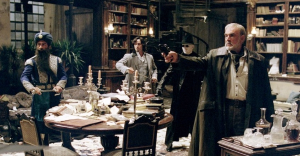
Here’s my review of The League of Extraordinary Gentlemen for MovieRob’s May Genre Grandeur of films adapted from graphic novels. It may not be the most popular of superhero movies, but it paved the way for future team-ups and is far more entertaining than its negative reviews might make you think.
For this month’s next review for Genre Grandeur – Graphic Novel Film Adaptations, here’s a review of The League of Extraordinary Gentlemen (2003) by SG of Rhyme & Reason
Don’t forget to vote for your favorite talking animal in Round 9 of Opinion Battles! While there are plenty of wonderful animated animals to converse with, I had to pick my childhood favorite among talking parakeets, the lovable chatterbox named Paulie.
Over the years we have found ourselves cheering for animals in movies, be it animated or live action this has grown our love for these animals over time. We have seen our fair share of good but we have also seen our fair share of sinister villains. Today we will be picking our favourite Talking Animals, but which one made the most sense?
If you want to join the next round of Opinion Battles we will be take on our Favourite Asian Language Film, to enter email your choice to moviereviews101@yahoo.co.ukby 14th May 2017.
Darren – Movie Reviews 101
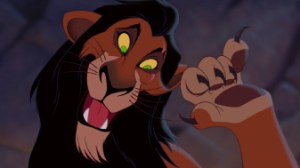
Scar – The Lion King
I have picked Scar from Lion King because when you watch this all singing and all dancing movie it is the character of Scar that makes everything unfold in the story, be it trying to trick Simba…
Darkly do the raindrops fall
Upon society’s withdrawal,
No innocence on which to land,
A wet and distant reprimand
On social rust and moral dusk and nobody who cares to feel.
Remember purer days of light?
They pale to darkness’ appetite,
For dark is omnipresent here
And only dreams escape the drear,
Mere memories that spark unease when we mistrust if they are real.
__________________
MPAA rating: R
There’s always bound to be movies out there that others hail as classics and you just don’t see the appeal. That’s Blade Runner for me. I picked it as one of my Blindspots this year because it’s been hailed as one of the greatest science fiction films of all time and its sequel Blade Runner 2049 is due out this October, returning Harrison Ford to one of his many iconic roles. Yet I found the story of Rick Deckard’s hunt for human-like replicants immensely lacking in both pacing and human interest, even as I recognized why it has become so well-respected.
Based off a Philip K. Dick novel and directed by Ridley Scott following his hit with Alien, Blade Runner is often cited as a touchstone and forerunner for the cyberpunk and neo-noir genres, thanks to its grimy rain-soaked visuals of a future Los Angeles. With flying police cars traversing the neon-lit cityscape, I could clearly see this film’s influence on the likes of Minority Report, Ghost in the Shell, and The Matrix. Ghost in the Shell is perhaps the clearest borrower, also boasting a cerebral plot about man-made androids questioning their humanity, so there’s no denying Blade Runner’s impact on the style of much modern sci-fi. The non-digital effects hold up remarkably well, and the cinematography really heightens the bleak otherness of this particular dystopia.
If only this adeptly stylized world were worth spending time in. For all its technical finesse and shadowy cinematography, the strangeness of this future was a turn-off for me, with some of the surreal posturing of its characters reminding me of Dune from two years later. Whereas Dune was dragged down by a surplus of exposition, though, Blade Runner could have benefited from more, with far too many drawn-out scenes left in tedious silence. (I saw Ridley Scott’s Final Cut, but I understand the original theatrical version has a noir-style narration. Honestly, my curiosity about that difference is probably the only thing that would get me to watch Blade Runner again.) It’s a highly visual film, but the visuals weren’t enough to overcome a lackluster story.
The actors are all decent for the most part, with Harrison Ford playing a good tenacious policeman but never making much of an impression. Likewise, Sean Young as the femme-fatale love interest fills her role in the noir plot, but there’s not much to her thinly written character or to anyone else’s for that matter. Rutger Hauer is perhaps the most memorable as the main villain, Roy Batty, a murderous replicant who seeks to lengthen the programmed four-year lifespan for himself and his fellow rogues (Brion James, Joanna Cassidy, Daryl Hannah). Yet we never get to know the replicants any more than the human characters, and their plight is only half-felt with any sympathy by the end. Batty’s final scenes are also bizarrely anticlimactic after he chases Deckard like Hannibal Lecter on crack.
I recognize a lot of potential depth to the story, with themes of what makes us human, the unreliability of memories, the moral questioning of doing one’s job, and the despair and anger toward the arrogance of a creator (which Scott also incorporated into Prometheus). Yet none of these themes are compelling or explored with any depth, and the intentional ambiguity of several scenes only heightened their underdeveloped potential. Blade Runner is a film such that I can see how critics could watch it repeatedly and wring profound merit from its narrative, but its reputation as a masterful classic is more merit than this slow story deserves, in my opinion.
Owing its R rating to only two scenes (one with nudity, one uncomfortably violent), Blade Runner was quite the disappointment, especially because I typically love science fiction. (I’m not alone too; my equally sci-fi-loving VC was bored and uninterested by the halfway point.) I just don’t understand how a style-over-substance film like this is labeled a masterpiece, when far more entertaining tales, like In Time or Surrogates, are written off as sci-fi hack jobs. The letdown has also spoiled much of my interest in the upcoming sequel, though I’m still curious to see Denis Villeneuve’s take on this world, after the intellectual emotion of last year’s Arrival. Blade Runner is a grittily surreal blending of future and noir, with admirable effects and cinematography and an unmistakable impact on science fiction to come, but it’s also proof that just because something shapes a genre doesn’t necessarily make it a masterpiece.
Best line: (Tyrell, Roy’s designer) “The light that burns twice as bright burns half as long, and you have burned so very, very brightly, Roy.”
(Best sung to “Moon River” because, as Bond says at the end, “Why not?”)
Moonraker,
Where did you go wrong?
You started off so strong, and yet….
Your sense of humor
Became a tumor
When Jaws in his folly
And Dolly first met.
Filmmakers
Learned from your mistake:
Don’t go, for humor’s sake, too far.
It’s just not the same James Bond style,
Veering juvenile.
Still you make me smile,
Moonraker,
Low bar.
___________________
MPAA rating: PG
I certainly hope it’s mere coincidence that Sir Roger Moore died not long after I watched Moonraker, especially considering that I saw Rogue One the day Carrie Fisher passed. This had better not be a trend for me. Moonraker is easily Moore’s weakest outing as Bond (though also his highest-grossing), but my VC enjoys it and I thought it appropriate after seeing his name in the headlines for the last time recently.
Like most other entries in the franchise, Moonraker follows all the familiar story beats of Bond surviving enemies, confronting a clearly shady industrialist with an accent, seducing beautiful fellow agents, and narrowly saving the world. This installment, though, was clearly meant to capitalize on the growing public interest in space and science fiction, since Moonraker was released just two years after Star Wars and incorporated space shuttles into the plot, predating actual shuttle flights by a couple of years.
Moonraker benefits from the natural charm of Moore, who remains my and my VC’s favorite incarnation of Bond himself, and the explosive escapes and elitist villain played by Michael Lonsdale are perfect fits for this kind of movie. There’s even a nice bit of continuity in the return of the seemingly unkillable henchman-for-hire Jaws (Richard Kiel), who previously appeared in The Spy Who Loved Me. For most of its runtime, Moonraker is an all-around solid Bond flick and then…oh, where to begin?
I never minded the campier elements of Moore’s Bond and always thought he found the right balance of humor to match the debonair action, like when he and Jaws merely smile at each other every time they face off. Yet Moonraker takes it too far, extending beyond good fun into unabashed parody. Whose idea was it to give Jaws a random pig-tailed girlfriend named Dolly and back their love-at-first-sight gaze with the theme from Romeo and Juliet? Likewise, I was willing to stomach the villain’s Noah’s Ark-style space station, but I was left speechless when the U.S. sends a shuttle to investigate and a host of space-suited astronauts quickly engage in a laser battle. Really??? Sure it looks impressive for the time and even earned an Oscar nomination for Visual Effects, and I realize Star Wars was popular, but this is just ridiculous!
I’m not alone in rolling my eyes at the absurdity of Moonraker’s second half, and mixed reviews at the time thankfully led future writers to reel in their overactive imaginations to more reasonable levels of silliness. Even so, Moonraker remains as entertaining as its Bond brethren in most other respects with some impressive stunts and an excellent score by John Barry, and its outlandishness somewhat works as a so-bad-it’s-good advantage. As long as you aren’t looking for Bond to be grounded in reality, it’s a campily fun episode, and Moore, as always, looks like he enjoyed himself as Bond. Even in his weaker efforts, he’ll always be the best Bond for me. RIP, Roger Moore.
Best line: (Drax, with typical Bond villain panache) “Mr. Bond, you defy all my attempts to plan an amusing death for you.”
To some, a forest holds mere trees,
With empty air between,
While one who knows to notice sees
A firmament of green,
Of life and lives and rarities
That few have ever seen.
What wonderments may hide out there
I cannot dare to guess,
But those who speak of creatures rare,
Withdrawn from man’s progress,
Perhaps perceive that empty air
Cannot be magicless.
_________________
MPAA rating for 1977 version: G (maybe PG)
MPAA rating for 2016 version: PG
With Disney so dedicated now to translating its past canon of animated classics into live-action films, it’s rather disconcerting that their attempts thus far have been fan favorites, like Sleeping Beauty or Beauty and the Beast, but not the lesser entries in Disney’s catalog. While remakes of The Black Cauldron and The Sword in the Stone are supposedly in the works and would be welcome, Pete’s Dragon is the first recent remake that actually had a chance of surpassing the original simply because the original is fairly lame. Yet, even though a simple updating of the tale could have sufficed, writer-director David Lowery took the essentials of the first story and transformed them into something closer in spirit to E.T. than to their source, providing an example of improvement for future Disney remakes to follow.
Let’s take a look at the original, a film whose “classic” status is more reliant on its age than anything else. The first Pete’s Dragon sees young Pete and his sometimes invisible dragon Elliott escape from a wicked foster family and seek a home in the seaside town of Passamaquoddy, where kind lighthouse keepers (Mickey Rooney, Helen Reddy) take him in and sneaky snake-oil salesmen (Jim Dale, Red Buttons) plot to capture Elliott. It’s a family-friendly musical in the vein of Mary Poppins, Bedknobs and Broomsticks, and Chitty Chitty Bang Bang, the key difference being that it came out in 1977, a less innocent time when ultra-sincere stories like this began tasting too saccharine.
The silly musical numbers and childish wish fulfillment simply don’t work as well here, thanks to some dreadfully gee-whiz acting from young Sean Marshall as Pete. There’s a notable lack of Disney magic, perhaps due to a new generation of animators (including Don Bluth) taking the reins at the time, and some elements are downright unpleasant, like the abusive backwoods Gogans, headed by Shelley Winters, who want Pete as their personal slave. The songs range from forgettable to embarrassing, but Helen Reddy’s “Candle on the Water” is a beautiful exception and even earned an Oscar nomination.
I suppose I shouldn’t be too hard on the original Pete’s Dragon. If I’d seen it as a kid, maybe I’d consider it a classic, as I do Chitty Chitty Bang Bang. The merging of animation and live-action is actually done quite well, and there are some fun moments sprinkled throughout the tiresome ones, like Mickey Rooney’s panic over seeing Elliott or the visiting mountebank who can’t pronounce the name of the town he claims to love. It was also neat seeing Jim Backus of Gilligan’s Island appearing as the town’s mayor. By the overly heartwarming ending, I even was able to recognize why others might find this as charming as Elliott himself. Yet my adult sensibilities couldn’t let me overlook its glaring flaws and often laughable excesses, like the soap opera twist at the end that explains away a character’s year-long absence with amnesia. With these earnest family films, it’s a fine line between delightful and cloying, and Pete’s Dragon is one member of the Disney canon that could have certainly benefited from a remake done right.
Thankfully, almost forty years later, that remake arrived. I debated on whether to call this review a Cartoon Comparison or a Version Variation since the original’s dragon was animated and the latest Elliot was CGI, but since CGI is still animation, I opted for a Version Variation. (Did anyone else notice that the 1977 dragon was named Elliott with two t’s, while the more recent one was Elliot with one t?) Yes, in the 2016 version of Pete’s Dragon, there’s still a boy named Pete and a giant invisible green dragon, but that’s really all this film has in common with the original. Gone are the brutish hillbillies. Gone is Dr. Terminus, the greedy charlatan. Gone are the musical numbers and the silly tone. Whereas established fairy tale films are expected to follow the same beats as their predecessors, Pete’s Dragon took the bare minimum of inspiration from the 1977 movie and made something new yet affectionate out of it.
Young Pete (Oakes Fegley) is still an orphan, but the beginning actually shows the loss of his parents and how his first encounter with Elliot saves him, after which the boy grows up as a wild child with his protective dragon friend in the remote woods of the Pacific Northwest. In place of Helen Reddy’s beer cask-skipping lighthouse keeper, Bryce Dallas Howard is pleasantly down-to-earth as Forest Ranger Grace Meacham, and her father (Robert Redford) still tells tall tales of spotting an enormous dragon out in the woods. When Pete is discovered and falls into Grace’s charge, the same familial bonds and adoptive hopes develop as in the first film, only done better and with more subtlety. In lieu of the covetous swindler who wants Elliott for elixir ingredients, the villain role goes to Karl Urban as Gavin, the brother of Grace’s lumberjack boyfriend. His desire to capture a fantastical creature isn’t the most original element, but he’s more like Peter Coyote’s man with the keys from E.T. than an outright villain, and a good moment toward the end reaffirms that he does care more for his family than about fame and fortune.
The latest Pete’s Dragon is perhaps a bit too slow in spots, but it’s an appealing contrast to the frantic comedy of most family fare these days. Unlike the 1977 film, all of the human performances are natural and endearing, and Elliot himself is masterfully brought to life in all his fluffy green dragon glory, behaving like a giant dog at times, which is perhaps different from the whistling original but not at all in a negative way. And as a huge Lindsey Stirling fan, I have to mention her lovely and wistful song “Something Wild” that easily makes my End Credits Song Hall of Fame and was my #4 song of last year.
Of all the live-action remakes Disney has created and planned, Pete’s Dragon seemed an unlikely contender, with a lackluster original with limited appeal. Yet even if it’s not the most entertaining entry, Pete’s Dragon may be the best live-action translation yet. While Cinderella and The Jungle Book did their sources justice, 2016’s Pete’s Dragon blows its predecessor out of the water, from the much more intimate change in tone to the uplifting final scene that offers a happy ending to Elliot as well as Pete. Notably distinct without the need to be edgy or revisionist, it’s a gentle remake that Disney would do well to learn from.
Best line from 1977 version: (Merle Gogan) “Say, have you seen anything of a mean, fresh kid, about yea big? Answers to the name of Pete.” (Hoagy) “Half of the kids here in this town answer to Pete. Other half don’t answer.”
Best line from 2016 version: (Mr. Meacham) “There’s magic in the woods, if you know where to look for it.”
Rank for the 1977 version: Dishonorable Mention
Rank for the 2016 version: List Runner-Up
Last call to vote for your favorite movie car chase in Round 8 of Opinion Battles. There have been many great ones over the years, but I had to go with the deadpan mayhem of The Blues Brothers. Pick your favorite too!
Each year we seem to see an action film go out of its way to make sure we get a more jaw-dropping car chase scene. These will often become the most iconic scenes in what can be average action films but every time we sit at the edge of our seat filled with tension to what will be happening next. Today we will pick our favourite car chase scenes.
If you want to join in the next round of Opinion Battles we will be looking at our Favourite Talking Animals. If you want to take part email your choices to moviereviews101@yahoo.co.ukby 30th April 2017
Darren – Movie Reviews 101
Car Chase Including Fight – The Raid 2
The Raid 2 is easily one of the best action movies ever put to film and where the film built on the first…