Well, it’s a bit later than planned, but I’ve finally finished my Blindspot series from last year, so with great satisfaction, it’s time to rank them before starting anew. While my 2017 Blindspots resulted in at least three films added to my Top 365 List, this year had some truly great films that didn’t quite make the cut to be List-Worthy, though that’s largely because I don’t include documentaries like #1. I did actually count #2 as List-Worthy at first, but on further thought decided it lacked the rewatchability factor. Even so, I thoroughly enjoyed watching these former Blindspots, especially #9 and up and can’t wait to begin this year’s picks.
The world can be cruel and compromising,
Goodness crumbling, evil rising.
Such a fact isn’t at all surprising;
Simply look around to see.
But harder to view is where the fantastic,
Magic subtle and not bombastic,
Turns the desolate and the drastic
Into beauty’s final fee.
And when the fee is finally paid,
The horrors that happen when humans degrade
Are quickly forgotten, and when they fade,
We welcome sweet reality.
______________________
MPAA rating: R (mainly for violence)
Sorry for the longer-than-expected hiatus lately. I’ve been in the midst of the busiest time of my class project, and just graduated from the program, so now I’m job hunting but also have a little more extra time to post again. I hate that my 2018 Blindspots have run so late into 2019, but I just have this one last review to finish off what I began a year ago! So before I announce the Blindspots for 2019, it’s time to cover Pan’s Labyrinth, Guillermo del Toro’s acclaimed Spanish fantasy.
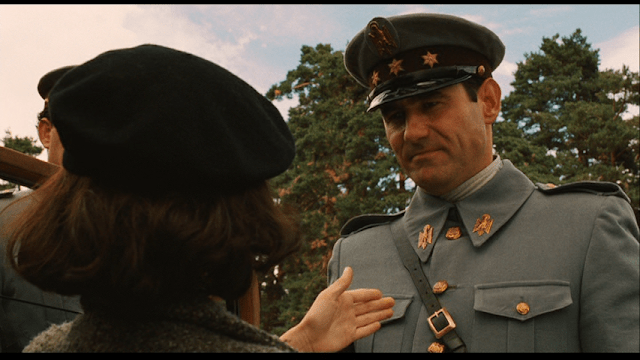
I didn’t realize when I picked them, but my 2018 Blindspots have introduced me to some directors that I only knew by reputation. I’d never seen a Charlie Kaufman-written movie before Eternal Sunshine of the Spotless Mind, and I’d only seen one other Billy Wilder film before Some Like It Hot. Surprisingly, I’d also never seen a Guillermo del Toro-directed movie either, so Pan’s Labyrinth was like a fresh initiation into the Oscar-winning director’s style. And what a style! Pan’s Labyrinth is as skillfully directed a film as I’ve ever seen, and it’s mind-boggling to me that del Toro wasn’t nominated for a directing Oscar that year, though it did win deservingly for Cinematography, Production Design, and Makeup. The movements of the camera, often changing scenes as it passes behind an object, lends the film a lucid fairy tale quality, despite the contrast of its more true-to-life content.
The storyline is also engaging, split between the realistic and the magical. Young Ofelia (Ivana Baquero) is taken by her pregnant mother (Ariadna Gil) to a military base in the woods in 1944 Francoist Spain. There, Ofelia’s merciless new stepfather, Captain Vidal (Sergi López) is hunting down armed rebels and eagerly waiting like Henry VIII for his wife to bear him a son. Meanwhile, Ofelia discovers a mysterious faun (Doug Jones) in a nearby labyrinth, who gives her three tasks in order to supposedly claim her rightful place as princess of the underworld.
At times, the juxtaposition of truth and myth don’t quite mix. When rebels are fighting and dying on the battlefield, it’s a bit hard to care about Ofelia’s forays into fantasy, which may or may not be real themselves. Yet these fantasy sections remain the most memorable, offering the film’s most lasting creature creations, and even these flights of imagination remain somewhat grounded in life-and-death stakes, harkening back to the grimness of the original fairy tales. You know it’s a fantasy when there are giant toads and transforming fairies; you know it’s a dark fantasy when a monster with eyes on its hands bites the heads off those fairies!
Personally, I thought the film as a whole was much more graphic than it needed to be, whether it be some unflinchingly brutal battlefield violence or a firsthand look at how the Joker got his scars. Even so, Pan’s Labyrinth has craft to spare, particularly in its enchanting score and the ornate production design and makeup work of its fantasy elements, laudably brought to life with a bare minimum of CGI. The ending is especially moving, combining the climax of its real-life and fantasy stories into a bittersweet conclusion that artfully leaves its interpretation up to the viewer. It left me haunted in a way great cinema should, and even if not everything melded perfectly, Pan’s Labyrinth proved to be a very worthwhile Blindspot pick.
Best line: (Captain Vidal) “You could have obeyed me!” (Doctor) “But Captain, to obey – just like that – for obedience’s sake… without questioning… That’s something only people like you do.”
The universe is vast and grand
And larger than we can explore,
Yet what if there were more than one
With possibilities galore.
In one dimension, you might be
Reclining underneath a tree.
In one, you’re driving;
One, in bed;
In one, surviving;
One, you’re dead.
In one, you may be ten feet tall
Or climbing up a building wall.
In one, your hair is blond or red;
Another, you have none at all.
You might be human or a fish
Or living in a Petri dish,
Or made of metal, made of wood;
You might be evil, might be good;
You might be famous or obscure,
Or wearing tentacles or fur.
Who knows what new alternative
Beyond dimension walls might live?
____________________
MPAA rating: PG (probably the most family-friendly big-screen version of Spider-Man to date)
Many out there who are experiencing superhero fatigue might roll their eyes at the prospect of yet another Spider-Man movie. After all, they’ve already covered this Marvel character with an excellent trilogy with Tobey McGuire, two lesser reboot films with Andrew Garfield, and an MCU incarnation with Tom Holland, so how else could another film retread the same material? A better question after actually watching Into the Spider-Verse is “How can a film with so much prior history turn out to be possibly the most original and innovative movie of the year?”
I remembered the Spider-Man cartoon from the ‘90s had multiple versions of Peter Parker teaming up at times, but I never expected that kind of universe-spanning storyline to make it to the big screen, considering that the spider-mantle keeps getting handed off every few years. Animation was clearly the best medium for it, especially with the involvement of producers Christopher Miller and Phil Lord (Cloudy with a Chance of Meatballs, The Lego Movie), the latter of whom also co-wrote the screenplay.
The story is quite simply everything we know and love about Spider-Man mixed, mutated, and amalgamated in ways I never thought I’d see. By diving into the multiverse, full of different incarnations of the wall-crawler, it combines the familiar with the new to create something fun and unexpected. For one thing, there are at least seven spider-people total, along with alternate versions of Spider-Man’s rogues gallery, and while the story focuses on Miles Morales (Shameik Moore), a black teen bitten by a universe-hopping spider, there is so much going on in Into the Spider-Verse that I won’t even try describing it all, which is best anyway since I don’t do outright spoilers anymore.
Miles himself is an authentic and relatable kid, street-savvy but smart, who is pulled in way over his head when the hulking Kingpin (Liev Schreiber) opens up a portal to other dimensions, summoning varied Spider-people, from a spider-powered Gwen Stacy (Hailee Steinfeld) to an over-the-hill Peter Parker (Jake Johnson) to a talking pig from a universe of funny animals (John Mulaney). While it gets as crazy as it sounds, the characters are marvelously written, each one with their own in-jokes, histories, and personal arcs, most notably the older version of Peter Parker, who is forced to mentor Miles in order to get back to his own universe.
The character dynamics are great, yet I feel like I’ve barely scratched everything to love about this movie. I never knew much about Miles Morales’ origin story in the comics, but it’s hard to imagine it being better than this film version. There are touchstones to the familiar Spider-Man origin, but it plays out with clever and unique differences, which, along with the multitude of jokes and gags, especially reward the geeky knowledge of fan nerds like me. I don’t usually like familiar characters being reimagined for the sake of diversity, as Hollywood so often does, but the multiverse concept is the perfect way to handle it, introducing new versions of characters, whether it be a black Spider-Man or an anime-style girl and robot team, while leaving the familiar intact.
And let’s not forget the animation; it’s quite literally unlike anything we’ve seen before, a mixture of 2D and 3D with images that feel ripped from the panels of a comic book while also boasting amazingly fluid action scenes. Somehow, the mixing of animation styles (anime, exaggerated cartoon) merges with the main style seamlessly, which fascinates me to no end. Comics are an unmistakable visual influence, such as the dotted background texture of many scenes, and I liked how thought bubbles and such became more pronounced when Miles began experiencing the heightened senses of his spider-powers.
Speaking of heightened senses, the animation in Into the Spider-Verse is likely to yield sensory overload, not unlike Lord and Miller’s earlier film The Lego Movie. The pace and visuals are similarly frenetic, though more sophisticated and not as hard to follow, especially during the eye-popping, reality-warping finale, which might be as close as I ever get to an LSD trip. Every scene is full of such life and detail that I honestly cannot wait to see it again.
While I loved everything –characters, animation, action, story, the touching Stan Lee cameo/tribute—I will say one thing didn’t thrill me, namely the soundtrack. Befitting the urban setting of Miles’ world, it’s largely hip hop and rap, the value of which still eludes me. (Seriously, what’s catchy about someone talking to a beat?) Post Malone’s “Sunflower” was the only song I halfway liked, but that’s likely a personal gripe, since I’ve heard other people laud the soundtrack. One brief scene featured a great little snippet of John Parr’s “St. Elmo’s Fire (Man in Motion),” which only made me wish the soundtrack had less rap and more ‘80s rock.
My VC enjoyed the movie overall and agreed the visuals were amazing and Oscar-worthy, yet, though she recognized the trippy style as something outstanding, it simply wasn’t for her. Then again, she also tends to discount the value of animation, viewing it generally as lesser than live-action, to which I quote the talking pig: “You got a problem with cartoons?” I certainly don’t. This film just keeps getting better in my head the more I think about it, and I’m actually looking forward to the inevitable spin-offs and sequels it will spawn. If you have any fondness for the character of Spider-Man, I suspect there is something or many things you will love about this movie. Spider-Man may be a well-worn franchise by now, but Into the Spider-Verse just reinvented it in a way no one saw coming.
Best line: (Miles, buying a Spider-Man costume) “Can I return it if it doesn’t fit?” (Stan Lee) “It always fits, eventually.”
Danger after danger,
And mission after mission,
Facing constant opposition,
Can exact a taxing toll
On the few who fight for strangers
Who know nothing of their role.
Mission after mission
Must depend on these defenders
Who know nothing of surrenders.
They are safety’s heart and soul,
Keeping evil in remission
And the world under control.
_____________________
MPAA rating: PG-13
Well, it took a little longer than I was expecting, but here at last is the final installment of my Mission: Impossible marathon, a chance to catch up with this franchise that started way back in August. I had intended to see Fallout at a second-run theater after watching Rogue Nation, but sadly I missed it and had to wait for the DVD. Hearing all the praise for this latest film only raised my hopes that it would match its predecessors, and, at least in the action department, it didn’t disappoint.
One thing I’ve enjoyed about M:I films since J.J. Abrams got involved back with Mission: Impossible III is the greater focus on continuity. They each had their own storylines and their own characters that were mysteriously never seen again, but there were carryovers beyond Tom Cruise/Ethan Hunt alone. Ving Rhames is still around since the first film, and Fallout sees the welcome return of other characters too, like Simon Pegg’s Benji Dunn, Alec Baldwin’s IMF Secretary, Michelle Monaghan as Hunt’s wife Julia, Rebecca Ferguson’s British agent Ilsa Faust, and Sean Harris’s hissable villain Solomon Lane from Rogue Nation. As the only villain to not be outright killed by movie’s end, it made sense to bring Lane back for another round, though I really wish they could have gotten Jeremy Renner back again. While the constant action depends on the characterization established in past films, the IMF crew have their team dynamic down to a science, and they bounce off each other splendidly, with Ferguson fitting in well in her second outing as Hunt’s female equivalent.
Of course, there are new faces too, most notably Henry Cavill’s FBI agent ordered to accompany the IMF team on their latest mission to recover three nuclear cores they neglectfully lost before a group of terrorists can use them. Honestly, Cavill is a passable Superman, but his muscles and deep voice are better served in this kind of role (plus, he’s got a beard and mustache, much to my VC’s delight), and his stoic delivery leaves his loyalties in doubt from the start. Yet it’s still the familiar faces that make M:I better than your typical action movie, particularly Cruise, whose character is faced with several moral tests along the way, making him question the value of one life over many.
So what about the claims that Fallout is the best film of the franchise and even one of the best action films of all time? I’d say that’s debatable, the former assertion more than the latter. I would agree that this is the most action-packed movie of the series, culminating in one of the most intense climaxes of them all. Cruise continues to dazzle with his absurdly ambitious stunts (watching him break his leg during the shoot is still painful), and the chases and fistfights are as good as they’ve ever been. There’s a one-take skydive that is particularly awe-inspiring and nail-biting. As far as action, it delivers in spades, but the plot takes a little while to settle in. This series is known for its twists, but the story gets a little muddled changing directions in the first half before we get to the villain goals and what must be done to stop them. At one point, there are three double-crosses in quick succession so it takes some effort to keep up.
As far as rankings, I just can’t quite decide. I’ve said before that I like M:I:iii, Ghost Protocol, and Rogue Nation about equally, but for different reasons. M:I:iii has the most personal stakes and best ending, while Ghost Protocol has the best plot and team dynamic, and Rogue Nation has the best script and mixture of everything the series does well. I have no problem adding Fallout to the grouping, since it has the best climax, though I was a bit disappointed with how it backtracked on the happy ending of the third film. Fallout is once again a credit to the series and could act as a good conclusion if they decide to stop here. I don’t know if Cruise and company will continue churning out these action hits, but if they do, I’m game for whatever comes next.
Best line: (Walker, frustrated with the lack of a plan) “Hope is not a strategy.” (Ilsa) “Oh, you’re new!”
Rank: List-Worthy (joining the last three sequels)
Behold, the fifth iteration of my own private compulsion, THE LIST, featuring my top 365 favorite films. My 5th blogiversary post yesterday detailed the latest additions and drop-outs, but I’ve put the newest insertions in bold so they’ll stand out more.
Last year’s additions didn’t leave much of an impression on the top 200, instead clustering in the bottom third, but it seems to me that the higher rankings of the most recent films added should give you an idea of just how much I loved them. Even so, the Top 100 remains pretty solid, with only four additions, three of which are being grouped with films that were already there. (Again, Dead Men Tell No Tales is mainly on here because it continues the original Pirates trilogy).
Perhaps because I haven’t had a lot of time to revise, the rankings of existing films haven’t been touched much (Your Name went up; Out of Africa went down, but no major shakeups). Seven additions are being grouped with their respective franchises, and I’ll admit to cheating with a tie here and there when faced with two very similar and closely ranked films (e.g., A Quiet Place with Hidden, April and the Extraordinary World with Sky Captain and the World of Tomorrow). And once again, I just couldn’t bring myself to knock off Psycho, even though it’s been at #365 for the last two years, so I moved it up a little for good measure.
Without further ado, I present my Top 365 Movie List, all of them true favorites. The rankings are all based on my personal tastes and opinions and could easily change with time. I’d love to hear your thoughts, opinions, and/or recommendations! After finding new favorites in unlikely places in 2018, who knows what might find its way on here a year from now? A very happy 2019 to all!
It’s hard to believe, but a whole other year has passed, and I find myself once again celebrating a Blogiversary. Has it really been five years since I started my original top 365 movie countdown?! It doesn’t feel like that long, but perhaps that just means I’m having fun. That must be it, because 2018 has been an especially good year for movie-watching, and as with every blogiversary before, it’s time to recap all the high points of the past year with (what else?) a Top Twelve List of the movies worthy of joining my Top 365 List!
Yet, while last year’s 35 additions were mainly in the latter half of the list, this year’s favorites climb a little higher. I, of course, liked my Top Twelve from last year, but this year’s additions have some new films I truly loved. As usual, several of them are from me playing catch-up on 2017’s releases, but even more are from 2018, and I couldn’t help but notice that none of the additions are from the 20th century. Hmm, I’ve got to fix that next year and see more older films.
As always, this is my personal opinion, and everyone is free to agree or disagree. I welcome any comments or recommendations, and I look forward to finding more movies worth loving next year.
Anyhoo, let’s get to the list itself and reminisce on the cinematic rollercoaster that was 2018.
As much as I enjoyed this second Ant-Man movie, I’m surprised it ended up as low as #12. After Infinity War’s epic doom and gloom, the MCU needed a little levity, and Ant-Man and the Wasp delivered an all-around fun thrill ride with one of the more satisfying endings in the franchise, at least until the after-credits scene. Luis saying “Whazzup!” still cracks me up.
This is only the first awesome animated film you’ll see on this list. Animation lovers mainly get their jollies from American or Japanese properties, so it’s nice to be reminded that Europe’s got game too. A steampunk adventure out of France that would make Miyazaki proud, April and the Extraordinary World offers an exciting blend of genres that feels fresher than the vast majority of recent animated fare.
Pixar hit it out of the park yet again with Coco, a fantasy tale of a Mexican boy visiting the Land of the Dead on Dia de Muertos. Boasting astounding new heights of CGI detail and a surprising amount of heart, Coco is proof that Pixar’s storytellers still know what they’re doing.
Last year, I caught up on the excellent Planet of the Apes remakes and this year decided to again tackle a series I’ve been unconsciously avoiding, the increasingly acclaimed Mission: Impossible franchise. To my surprise, they were even better than anticipated, and all of them from the third on (after J.J. Abrams got involved) are outstanding actioners. I think M:i:III is still my favorite for having the most personal stakes and the most satisfying ending.
Ah, the tearjerker makes its way onto the stage. As a fan of both fantasy and anime, as well as movies that earn the viewer’s tears, I was bound to love this film, and indeed its ending hit me harder than expected. Easily the most poignant film I saw all year.
Spider-Man: Into the Spider-Verse (2018)
I may have seen this animated Spider-Man extravaganza for the first time only a couple days ago, but it keeps getting better in my head. The rap music wasn’t my favorite, but everything else about this trippy cross-over adventure was so well-done that I can’t wait to see it again.
Darkest Hour isn’t great just for having one of the most transformative performances on film, courtesy of Oscar winner Gary Oldman. It’s also among the best biopics I’ve seen, giving a well-rounded view of Winston Churchill, sometimes as a demanding bully but more often as a persevering patriot, as well as a vulnerable human being in his most dire period. Especially as a companion piece to Dunkirk, it’s a fascinating piece of history eloquently told.
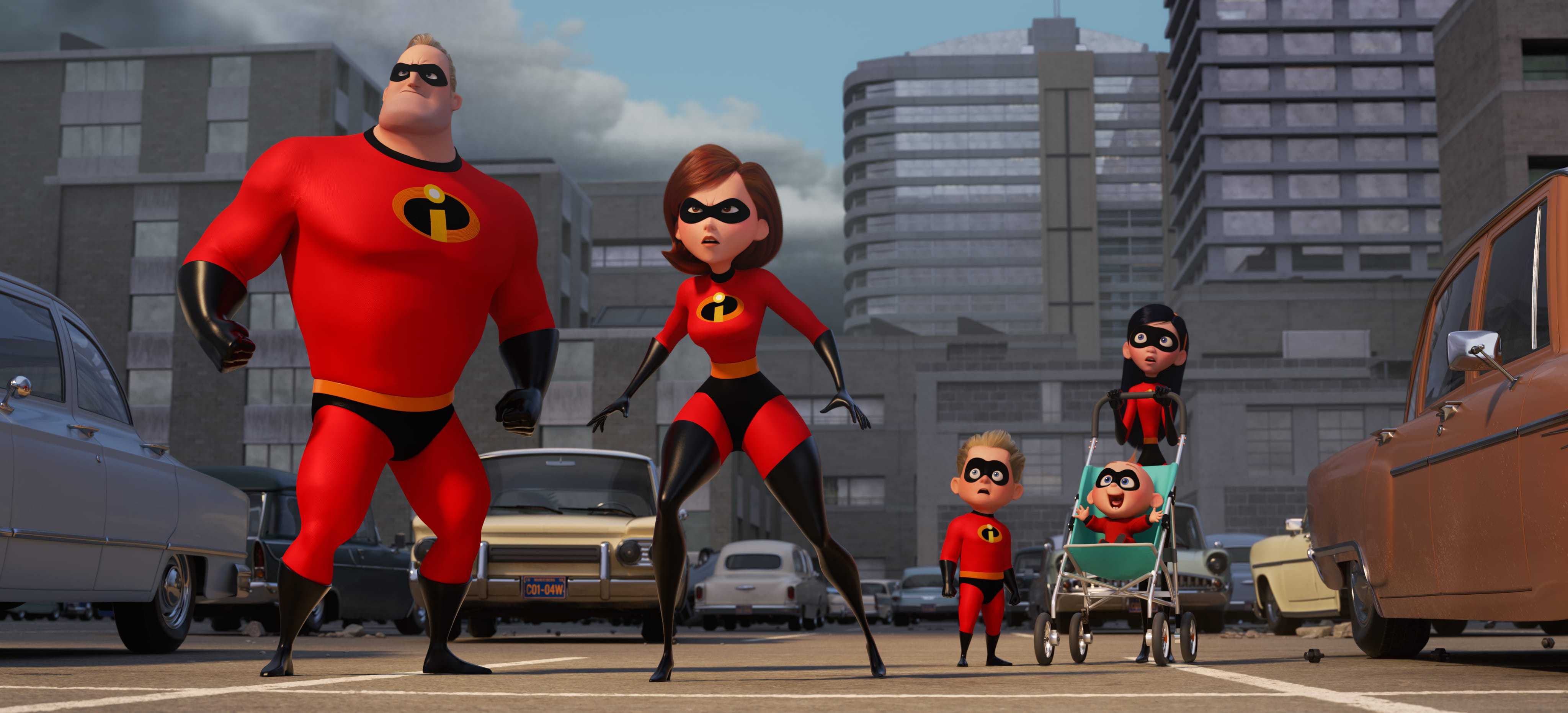
This year, Pixar once again pulled off the unlikely, offering a worthy sequel to one of their best films. Continuing the story of the Parr/Incredible family as they try to make superheroes legal again and face a mind-controlling threat, this is a great family film and ranks among Pixar’s best sequels.
This dystopian virtual-reality pop-culture treasure hunt was #1 on my list of films I hoped would be good at the beginning of 2018, and, thanks to Steven Spielberg and company, it was. True, it doesn’t quite measure up to the book, but the changes made sense as it offered up one geeky thrill after another.
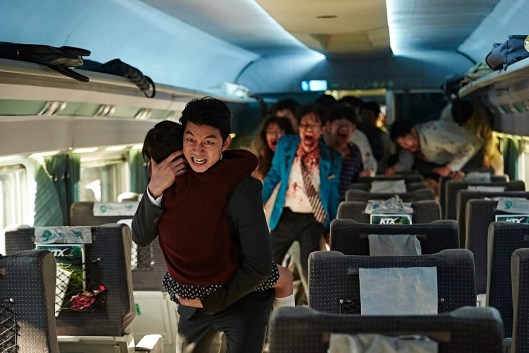
If you had told me a year ago that I would be putting a zombie film on my list, I would never have believed it. I am by no means a typical fan of the genre, but no film kept me on the edge of my seat like this South Korean thriller. It’s an adrenaline-pumping fight for survival where things repeatedly go from bad to worse, but it’s paired with an affecting tale of a father trying to live up to his daughter’s expectations while saving her life.
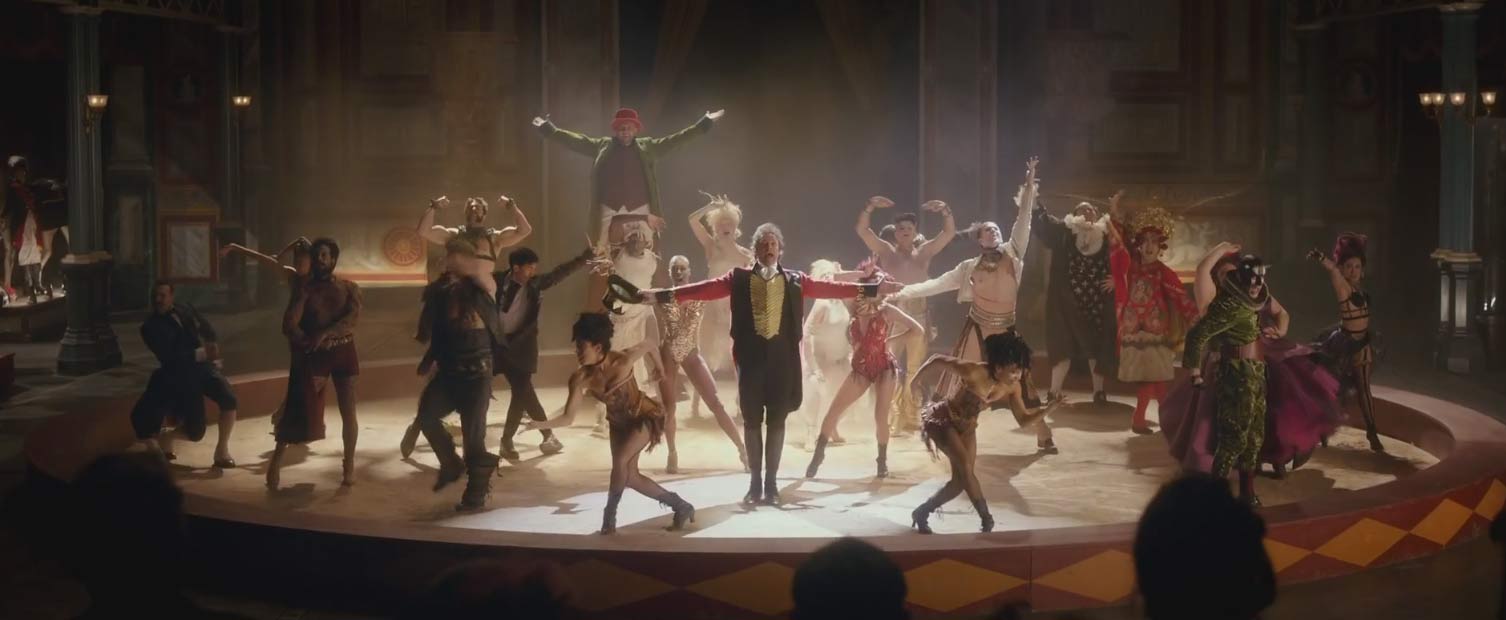
I love musicals, and I insist that we need more original ones like The Greatest Showman. Not subtle or historically accurate enough perhaps to be considered Oscar material, it’s nonetheless a joyous film from start to finish, full of misfit empowerment, spectacular show tunes, and an undercurrent of family values. It leaves me smiling every time.
Well, Marvel pulled it off, the crowning glory of the MCU thus far. Infinity War is staggering in its ambition, juggling so many characters that it so easily could have turned into a jumbled mess in less skilled hands (ahem, DC), yet I’ve little doubt that the Russos surpassed everyone’s expectations. The ending still stings, and my continued appreciation of this movie will likely depend on how well Endgame completes it in the coming year, but for now Infinity War still amazes. I’ve heard it called this generation’s Empire Strikes Back, and I don’t disagree.
So that’s the Top Twelve, but here are the other films that made it onto my Top 365 Movie List this time around. Keep in mind that I do group most franchises together, which is the only reason I made Pirates of the Caribbean: Dead Men Tell No Tales List-Worthy, since it continued the original trilogy. I also group certain similar films together, so Sky Captain and the World of Tomorrow will be paired with April and the Extraordinary World, while A Quiet Place will pair with Hidden.
And last comes the difficult part, figuring out which entries on my current List will have to be displaced by these new additions. This always hurts since I still love all these movies, but it’s a necessary evil for me as a list nerd. The following are the (still great) films that sadly bit the dust:
I’ll be posting the updated List tomorrow. Again, I wish to thank everyone who has taken the time to read my poetry or film ramblings and leave a like, follow, or comment in the past year (and especially anyone who is still reading this long post)! I can’t wait to see what the year ahead holds. A very Happy New Year to all!
P.S. And here’s a little montage video I found to sum up 2018 in film:
Mother of mine,
What a trial you bore
When I, in my infancy, cried more and more!
Mother of mine,
How obliviously
Did I take for granted your keeping of me!
Mother of mine,
What a fool you held near,
No thought for a thank you, no room to revere!
Mother of mine,
How ungrateful was I
When I was at last old enough to defy!
Mother of mine,
What regret I now feel
For waiting so long for my thanks to be real,
That love all too often I tried to conceal,
That raising me had to be such an ordeal.
Mother of mine,
How I wish you to know
The love that I should have returned long ago!
_____________________
MPAA rating: Not Rated (should be PG-13 for some violence and mature themes, though nothing too explicit)
From early in 2018, I thought that Mirai would surely be the anime film of the year, but no, it’s not. That title goes to Maquia: When the Promised Flower Blooms, a film I had no idea had already come out until I heard about it from Rachel of Reviewing All 56 Disney Animated Films and More! The description alone had me desperate to see it: a high fantasy tale of an immortal girl adopting a human baby. I tried to avoid spoilers at all cost, but everything I read about this cross between Lord of the Rings and The Age of Adaline, including its growing reputation as an all-out tearjerker, only heightened my excitement. With its 100% on Rotten Tomatoes, it looked like a film I was destined to love.
Finally, I got to see it, and though my expectations were high, Maquia met them. This may be writer/director Mari Okada’s debut film, but her first movie is a humdinger in both its emotional impact and its fantasy world-building. The titular Maquia is an orphan of the lorph clan, a small race of people who live for centuries with no aging and record their lives and histories by weaving cloth called Hibiol. A neighboring kingdom invades, taking most of the lorph captive, but Maquia escapes in despair, only to stumble upon an orphaned baby boy she names Ariel. Although she is alone, knows nothing of motherhood, and was expressly warned never to love a mortal lest she endure true loneliness, Maquia raises the child as her own, and…sniff… you’ll just have to watch it for yourself.
Anime has some amazing mothers to its credit, from Hana in Wolf Children to the mom in the tenth episode of Violet Evergarden (another tearjerker of 2018), but there’s something special about Maquia. She shares no blood or background with Ariel, not even fully understanding the physical realities of motherhood, and yet in her efforts to be a good mother, she shines as few parents do in any medium. She struggles with the task, especially as Ariel grows older while she remains the same, becoming a constant reminder that he was adopted, but she takes to heart the lessons taught by others that moms will do anything for their children and that “moms don’t cry.”
As much as I wish I could call it a faultless film, Maquia is not without some weaknesses. There’s an extended subplot concerning two of Maquia’s lorph friends, whose paths in life are far more oppressive than hers; enduring rape and imprisonment, they serve as a contrast to the love that Maquia finds, and while their struggles remained interesting and sympathetic, I wouldn’t say they were resolved in an entirely satisfying way. Plus, one jump in time left me unsure what was going on, dropping some uncomfortable implications and keeping its full context vague.
Despite these gripes, Maquia is a beautiful film on multiple levels, from its tender moments to its exceptional animation to its affecting soundtrack. Its rich fantasy world of warring nations and dying dragons offers several striking settings reminiscent of Middle-Earth, and its themes of love and parenthood go straight to the heart, demonstrating how children can have just as much of an impact on their parents as the other way around. Plus, there’s hardly any of the stylistic exaggeration typical of anime, making it a film that fantasy lovers who may not be into anime should be able to enjoy as well.
I don’t cry easily these days. Only two anime have left me sobbing before, and Maquia makes it three. I’ve mentioned that some sad films like The Wind Rises seem to almost pull back from full-on tearjerker mode for whatever reason; Maquia does not. I wept bitterly, though for different reasons than something like Grave of the Fireflies. There’s a scene at the end that mercilessly kicks your heartstrings while kissing them tenderly, and it still haunts me. I said yesterday that Mirai made me want to hug my mom; Maquia did the same times eleven. That’s why, for me, this is the anime of the year. The film itself represents its theme of pain being an integral part of love, a bitterness made sweet by all that came before.
When a child asks, quizzically,
“Where did I come from?”
Who knows what the most fitting answer may be?
The truth of it, physically,
May create someone,
But ‘tis but a branch of the whole family tree.
For what you’re aware of,
Your path and your parents,
Are products of precursors we’ll never know,
Dependent on their love,
Their choice and forbearance,
The roots they put down that their children may grow.
_____________________
MPAA rating: PG
Back when I reviewed Netflix’s Flavors of Youth, I mentioned there were two new anime films I was dying to see before the end of the year, and now that I have, I also wanted to squeeze in a review for each of them. Thus, I’ll do one today and one tomorrow, starting with the one I’ve been expecting longer.
I’ve enjoyed the works of anime director Mamoru Hosoda for years (The Girl Who Leapt through Time and Wolf Children are still in my top 365 Movie List), and Mirai was one of my most anticipated movies this year. With every new feature, Hosoda has carved out a niche for animation fans, putting his own stamp on imaginative half-Ghibli-like fantasies mixed with real-world drama. In Mirai, his latest acclaimed feature, he does the same with a highly minimalist plot and a younger-than-normal protagonist.
At its core, Mirai’s story is deceptively simple, that of a four-year-old boy named Kun accepting the presence of his newborn sister Mirai (which also means “future”). Yet the lessons he learns about jealousy, relationships, and family have surprising depth and are often taught through extended visual metaphors. I was a little surprised that any explanation for the time travel aspect was basically an afterthought. Thanks to the dad, the family’s house is an architectural curiosity with three levels, one of which is roofless with an interior yard, and anytime Kun passes the family tree, it’s as if his imagination conjures up another realm.
Sometimes, it’s the family dog transformed into a grouchy human, or his teenage sister arriving from the future, or his great-grandfather showing him how to ride a bike, and certain moments of the fantastical affecting the real world make you wonder whether it’s all in Kun’s head or not. These elements are a tad random and he sometimes tends to relearn the same lesson over again (be more patient with your parents/sister, for instance), but there’s an ingenious visual nuance to how Kun learns about his family and factoring his new role as a big brother into his identity.
I said earlier that Hosoda excels at mixing the magical with the mundane, but it doesn’t work quite as well here as it did with, say, Wolf Children. Some of the transitions between real life and fantasy were rather weird for my taste, and I would have liked a definitive answer of what was actually going on beyond “it’s a visual metaphor.” To be honest, I found myself more interested in the day-to-day activities and struggles of Kun and Mirai’s parents. Let’s face it: Whiny kids can be annoying, especially kids in anime, so I felt more of a connection with the harried father and the long-suffering mother than with the often bratty Kun.
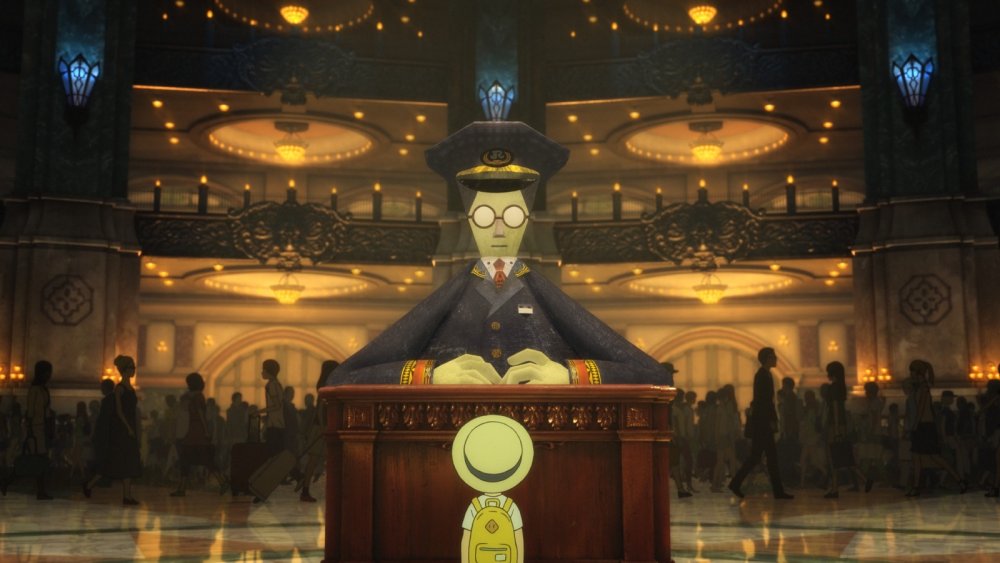
There’s a lot to love about Mirai, not least of which is the beautiful hand-drawn animation. (One scene in a train station is breathtaking in the amount of detail and motion on display.) Plus, it’s funny and relatable on multiple levels. I especially admired how many of the individual stories were brought together near the end to show Kun how a complex web of lives and choices combined to give him the life he had. It was profound and visually striking and helped make up for some of the plot’s earlier weaknesses.
It’s worth noting that Mirai surprisingly received a nomination for Best Animated Feature at the Golden Globes this year, making it the first anime to be nominated. It’s certainly worthy and a sign of improvement in what gets recognized, but it irks me that they didn’t give that honor to even more deserving contenders in the past, like Your Name, Wolf Children, or A Silent Voice. But I digress…. Mirai may not be Hosoda’s best work, but it’s another laudable credit to his name. And it made me appreciate my parents a little more, so that I just had to give my mom a hug. Any film that gives me another reason to do that deserves praise.
When I was a child,
I spake as a child,
And acted as foolish as children will do.
Yet now that I’m older
And ought to be wiser,
I find there’s more worry than wisdom in view.
That’s why I, like many, now crave what we lack,
Some innocent childhood foolishness back.
_______________________
MPAA rating: PG
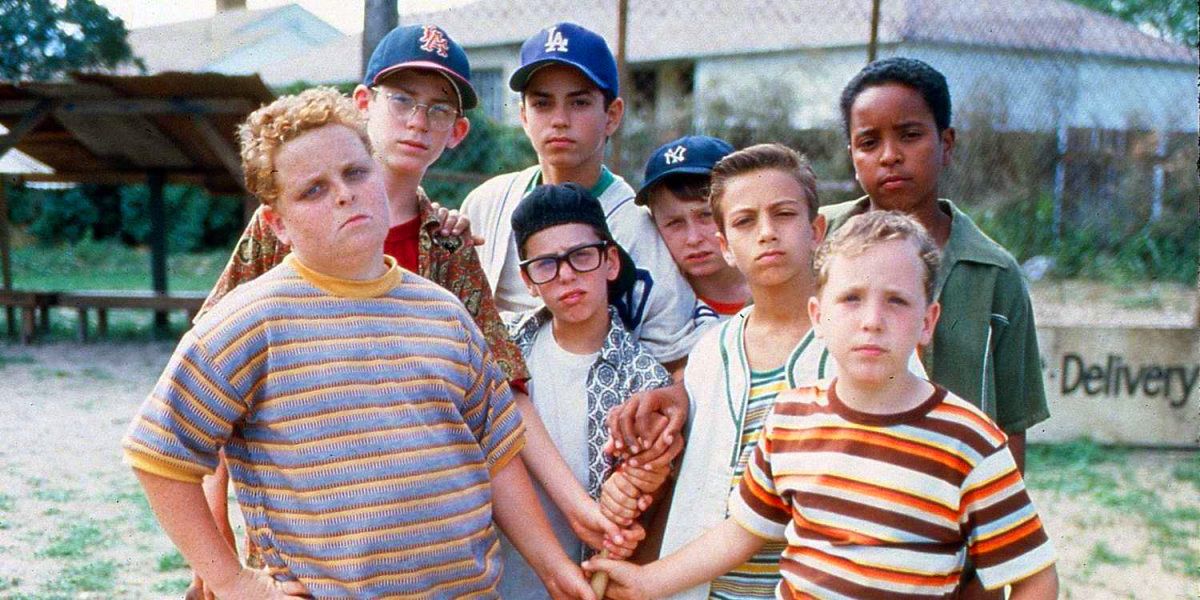
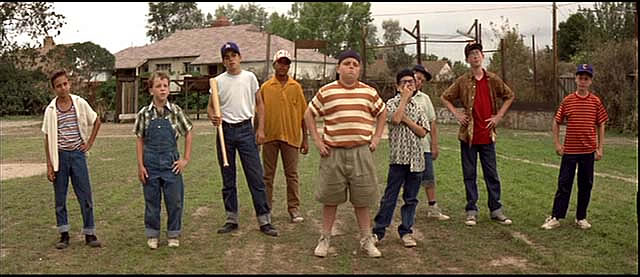
It looks like I won’t be able to quite finish my Blindspot series before the end of the year, but I’ll at least get as close as possible with eleven. (That just leaves Pan’s Labyrinth, which should be first thing next year.) Growing up, I always skipped The Sandlot when I saw it in the kid’s section of Blockbuster – is it weird that this makes me feel old when it wasn’t that long ago? – mainly because I’ve never been a fan of baseball. Then, fairly recently but all of a sudden, I heard people at work saying it’s “the best movie ever,” and I started hearing people say “You’re killin’ me, Smalls,” as if it were some classic line I’d never heard before. That’s when I decided I had to see what was so great about this little ‘90s family film that has somehow amassed a cult following.
The Sandlot is a healthy dose of juvenile nostalgia, one which most viewers should be able to relate to their childhood, even if it’s set back in the summer of 1962. Scotty Smalls (Tom Guiry) is the new kid in town, awkward and wimpy as he tries to join a local group of kids on their baseball field. While most of them have no patience for a kid who can’t even throw a ball, Benny Rodriguez (Mike Vitar) reaches out to him and allows him to enjoy the summer as part of the team, which includes various misadventures and a giant terrifying beast on the far side of the fence.
Like The Goonies or Clue, it’s the kind of film that I wish I’d seen when I was younger, because it might well have been a cherished classic by now for me as well. The vignettes of childhood camaraderie and conflict and what matters to an acceptance-seeking tween reminded me at times of Disney’s Recess series and A ChristmasStory, thanks also to the nostalgic narration of a grown-up Scotty. There were also echoes of Stand By Me, but thankfully the amusingly juvenile insults lobbed among the kids are kept far more PG-rated. There are no instantly recognizable child stars here (though it was nice to see James Earl Jones), but that only helped each of the young cast feel like real kids, trading taunts, having fun, and exaggerating danger.
There are scenes that go on a bit too long, but overall The Sandlot was a fun film that didn’t require a love of baseball to enjoy. The friendship between Scotty and Benny is also a laudable example for other kids to follow; inviting an outsider into the group and having the patience to help them fit in are not common behaviors for most kids, so I hope this movie helped make some playgrounds friendlier out there. I’m not sure why “You’re killing me, Smalls” has become such a repeated line, since it was only used twice and not that prominently, but at least I’ll get the reference from now on. It’s certainly a film I’d watch with my own kids some day.
Best line: (Babe Ruth, in a dream) “Remember, kid, there’s heroes and there’s legends. Heroes get remembered, but legends never die. Follow your heart, kid, and you’ll never go wrong.”
I know Christmas is upon us, but I wanted to send out a little post to celebrate yet another milestone. Against all expectations, this blog of mine has reached a new high of 600 followers! Of course, I enjoy watching movies and writing about them for their own sake, but it always lends me some extra satisfaction to see that others share my enjoyment. Every like and follow is worth a thank you, which all too often goes unspoken, so to all who have made my day with the click of a button, I wish to say thank you and a Merry Christmas!
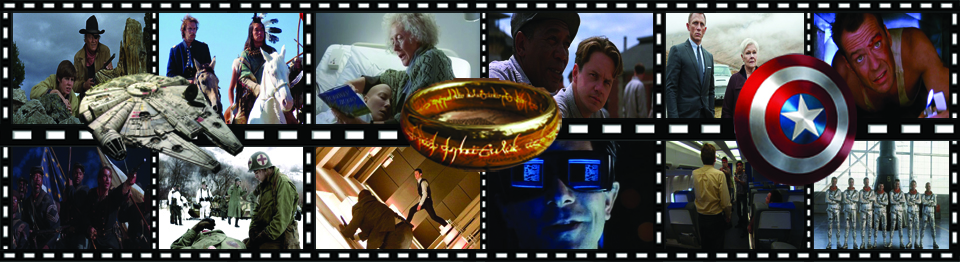
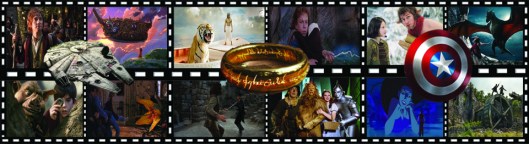
Now, typically there’s some special extra for this kind of milestone (like my list of Overrated and Underrated Movies when I hit 500 followers). Due to my school schedule and the immediate holiday, that will have to wait, but I do have some special lists in mind. In the meantime, though, I thought I would share some additional banners I’ve fashioned for the top of each page, which should generate at random from now on. While the banner I’ve had is full of films I love (and will stick around), these new banners focus on specific genres, such as
Comedy,
Science Fiction,
Fantasy,
Animation,
Romance,
Foreign Films,
Musicals,
Horror,
And a miscellaneous one including the Western, Action, War, Drama, Heist, and Historical genres.
All of the films represented are excellent and highly recommended, so feel free to ask if you want to know where any of the images came from.
Again, I wish to thank everyone who reads, likes, follows, and cares even a little bit about my poetry or my humble opinion. May God bless you all, and have a wonderful Christmas!