• Home
  • About Me
  • The List
  • THE LIST (2016 Update)
  • THE LIST (2017 Update)
  • THE LIST (2018 Update)
  • THE LIST (2019 Update)
  • THE LIST (2020 Update)
  • THE LIST (2021 Update)
  • THE LIST (2022 Update)
  • Top Twelves and More
  • The End Credits Song Hall of Fame

Rhyme and Reason

~ Poetry Meets Film Reviews

Rhyme and Reason

Tag Archives: Sports

Cars 3 (2017)

24 Sunday Sep 2017

Posted by sgliput in Movies, Poetry, Reviews, Writing

≈ Leave a comment

Tags

Animation, Comedy, Drama, Family, Pixar, Sports

Image result for cars 3

The world will see you as they choose,
No matter how they may deny.
They see exteriors so well
It takes hard work to break that shell,
To prove you’re more than meets the eye
And pay the greater dues.

The world’s opinions can infect
And sap the will to prove them wrong.
You balk on whether to begin,
But those who don’t will never win.
To everyone such doubts belong,
So prove them incorrect.
_________________

MPAA rating: G

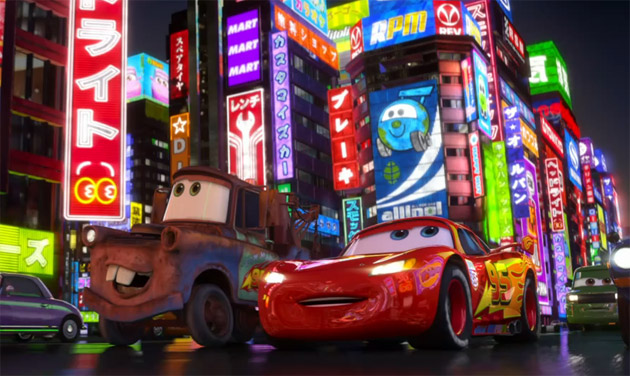
I’m sure many, like me, approached Pixar’s third Cars movie with some hesitance, unsure if it was being made as a more fitting end for the series than Cars 2 or because Disney and Pixar were just trying to cash in on one of their most profitable (and least loved) franchises. While I still wasn’t sure through the first half of the movie, I’m glad to say it’s the former. Cars 3 is far more like the original than the over-the-top sequel, returning its sights to Lightning McQueen and the racing world and totally ignoring all the spy stuff of its immediate predecessor. Thankfully, Mater is once again a mere side character too.

Early on, we’re treated to a montage of Lightning’s time in the sun as a racing champ. After years on top, though, he’s suddenly outclassed by newcomer Jackson Storm (Armie Hammer), and much as Lightning overshadowed the King in the first film, analysts and fans are suddenly enamored with Storm’s ascent and scientifically proven training. After pushing himself too far, Lightning faces a career crisis when his contract is sold to a new owner named Sterling (Nathan Fillion, who I’m glad is still finding work), and his future in racing comes down to raw performance and perhaps a new way to train with motivational coach Cruz Ramirez (Cristela Alonzo).

Image result for cars 3 cruz

I will say this felt like one of Pixar’s more uneven films, making me wonder at times whether it was more like the first or the second Cars in terms of story quality and character interactions. There were times in the first half when things just felt “off” for a Pixar film, like when Bonnie Hunt’s Sally encourages Lightning in highly generic fashion, and some of the new characters take some time to get used to them.

Yet as the story develops, Cars 3 grows into a worthy conclusion for the series. It’s also a fitting farewell to two members of the original voice cast who have since died, Paul Newman as Doc Hudson and Tom Magliozzi of “Car Talk” fame as one of Lightning’s Rust-eze sponsors, both of whom are sort of resurrected via pre-recorded audio, which is underused but still touching. All of the other cast members (save for George Carlin) return as well, except for Michael Keaton as Chick Hicks, replaced by the very different-sounding Bob Peterson.

Lightning’s story is all about whether he’ll give up and ride on his fame or risk damaging his reputation by striving further than he is able, a strong yet subtle conflict with real-world parallels, such as tennis player Roger Federer for example. (My VC and I love him and have debated whether he should quit while he’s ahead, yet he keeps on eking out wins.) Lightning’s main goal is to be able to choose when he quits rather than being forced out of the game as Doc was. Yet by being constantly called a “legend,” he sees that everyone considers him past his prime, and Cruz makes it very clear that she considers him old as dirt.

Despite her initial presumptions, though, Cruz becomes something that Lightning has never had before, a protégé, one who has offered so much support to others through training that she’s never kept any of that confidence for herself. The fact that she is played by a Latina woman is no coincidence either, and she becomes a fine example for minority underdogs daring to be taken seriously. The dynamic between Lightning and Cruz isn’t without its bumps, but how it plays out by the end is a clever realization of both of their goals and a perfect way of bringing Lightning’s character full circle.

Image result for cars 3

As I said, except for maybe a couple racers, Cars 3 essentially ignores Cars 2 altogether, with not a single mention of the spy plot and even casting off key details. For instance, Cars 2 mentioned that the Piston Cup had been renamed in Doc’s honor, but here it’s the Piston Cup again. Plus, I noticed a scene in my recent viewing of Cars 2 where Lightning had product endorsements and plenty of merchandise, making me wonder why he is now so reluctant to “cash in” as a brand. Personally, I think Cars 2 was all a dream or one of Mater’s tall tales because Cars 3 stays as relatively grounded as the first film and thus is a far better continuation of its story. Despite a rocky start, Cars 3 turns out to be a superior sequel than the cash grab it might have been, raising Pixar’s animation quality even higher and providing a satisfying end to the trilogy. At least until they come up with a Cars 4. Please, Pixar, this franchise is one case where you should quit while you’re ahead.

Best line: (Smokey, Doc’s former crew chief) “You’ll never be the racer you once were. You can’t turn back the clock, kid. But you can wind it up again.”


Rank: List-Worthy (joining the first Cars)


© 2017 S.G. Liput
511 Followers and Counting
 

Cars 2 (2011)

20 Wednesday Sep 2017

Posted by sgliput in Movies, Poetry, Reviews, Writing

≈ Leave a comment

Tags

Action, Animation, Comedy, Family, Pixar, Sports, Thriller

Image result for cars 2 film

Imagine a world of living cars,
With windshields for eyes and mouths in their grills.
Now picture that some are elite racing stars,
And some are so junky, they’re fit for landfills.

Okay, so you got it? That’s good. Picture now
One racecar is cocky and needs a good lesson.
He’s stuck in a small town, which helps him somehow
Find more happiness than what he had success in.

You with me? All right, after that, visualize
A worldwide grand prix and an evil car plot,
And British car spies to take on the bad guys
And a tow truck that helps doing what he ought not
And maybe explosions and one car that flies.
The racecar’s there too, as a mere afterthought.

Wait, where are you going? No need to be cruel.
It may not be perfect, but it will look cool!
___________________

MPAA rating: G (PG would probably be better, since cars are actually killed in this one)

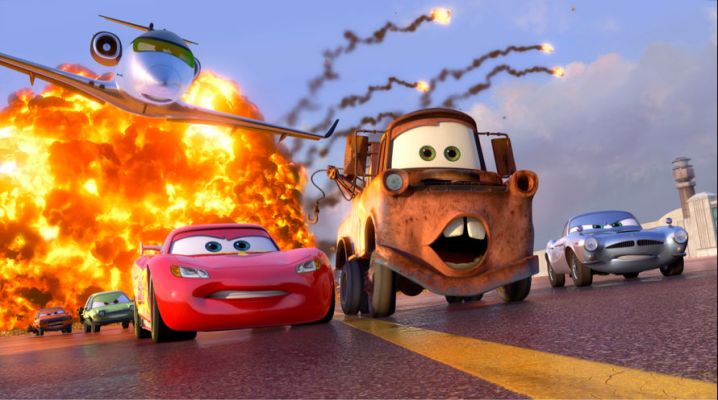
Before I review Cars 3, I thought I should get to the one Pixar film I haven’t covered yet, the black sheep of the Cars franchise and Pixar in general, Cars 2. Up until 2011, it seemed that Pixar could do no wrong, which I can say as someone who still greatly enjoys the first Cars, even if it is a rip-off of Doc Hollywood. Yet the first non-Toy Story sequel in Pixar’s lineup proved to be quite the mixed bag; it remains the only Pixar movie to have a “Rotten” score of 39% on Rotten Tomatoes. It follows Lightning McQueen on a worldwide racing grand prix, which is threatened (and overshadowed) by an evil cabal of lemon cars that only British secret agents and Mater can prevent from fulfilling their heinous plot. Whereas other Pixar films utilize inspiration to tell charming and relatable stories, Cars 2 is inspiration run amok and not really in a good way.

Cars established the world of sentient automobiles that has become Pixar’s biggest cash cow, and despite the outlandishness of its surface concept, the actual events of the plot were fairly down-to-earth, urging racing hotshot Lightning McQueen to slow down and enjoy the ride. By incorporating international espionage and globe-hopping plots into its world, Cars 2 is like director John Lasseter’s personal fan fiction, saying instead to speed up and enjoy the ride. The world of living cars takes a certain amount of suspension of disbelief to not ask questions like “Who builds the cars?” or “How do they do things that require hands and manual dexterity?” I was able to put such issues aside for the first film, but with James Bond-style gadgets and visits to different countries and car ethnicities, the suspension of disbelief is seriously strained here.

Image result for cars 2 film

And that’s on top of its other issues. While Lightning and all the other characters from the first film are still present (minus Paul Newman’s Doc Hudson, who is implied to have passed away), Cars 2 puts Mater front and center. I enjoyed Larry the Cable Guy’s bumpkin tow truck in the first film as another humorous member of Radiator Springs, all of whose inhabitants served as a good-natured contrast to Lightning and his crowd. Yet there’s such a thing as too much Mater, and his oblivious ineptitude grows grating when it becomes the main course, particularly as moments of mistaken identity pile up to make the British spies assume Mater is an American secret agent. I could tell Mater’s character here would be overbearing early on, when he spends the whole day with Lightning and then acts all sullen and gloomy when Lightning wants to spend some alone time with his girlfriend.

Worse still is how Mater’s character is tied into the film’s message of not condemning one’s friends for who they are or wishing them to change. Such a moral could be good and worthwhile, but it just doesn’t work when applied to Mater, who consistently acts like a fool in public and causes Lightning to lose a race. When Lightning gets upset, he’s justified in being upset, yet he’s the one who eventually apologizes. The film doesn’t seem to recognize the difference between changing who you are and behaving properly in different circumstances. Mater even comes to realize how he looks to other people, but despite his feeling bad, it doesn’t really lead to any insight or change on his part.

Add to all that smaller problems, like the light political jab of making “big oil” the bad guys and hailing alternative fuel as the greatest of breakthroughs. Plus, there are numerous scenes that just feel rushed and poorly written, especially toward the end, like the sudden confirmation of Mater having a “girlfriend” or Lightning totally misconstruing Mater’s warnings while simultaneously forgetting that he’s right in the middle of a race.

Image result for cars 2 film

So much negativity, but I don’t mean to bash Cars 2 like some low-rent DreamWorks movie. There’s still fantastic animation and ample imagination and humor on display, even if a lot of it consists of car-related puns. I may object to the secret agent plotline on a logical level, but it still offers some genuinely fun action sequences and eye-candy explosions. Michael Caine and Emily Mortimer are perfectly cast as the British spy cars who manage to mistake Mater for an undercover agent, and there’s cartoony amusement to be had, though the James Bond-ish elements make me hope that The Incredibles 2 works better than Cars 2 since they at least fit well into that superhero world. In conclusion, Cars 2 may not be good Pixar, but it still entertains if you don’t think about it too much. In fact, it’s probably more entertaining the less you think about it.

Best line: (Finn, played by Caine) “I never properly introduced myself: Finn McMissile, British Intelligence.”   (Mater) “Tow Mater, average intelligence.”


Rank: Honorable Mention


© 2017 S.G. Liput
509 Followers and Counting


VC Pick: Over the Top (1987)

19 Wednesday Jul 2017

Posted by sgliput in Movies, Poetry, Reviews, Writing

≈ 2 Comments

Tags

Drama, Family, Sports, VC Pick

Image result for over the top 1987

If I had rippling muscles
And a huge right arm to lend,
I’d enter contests proving
What a beast I am at moving
Other people’s arms at angles
That they were not meant to bend.

I suppose my strength would let me
Find more meaningful success,
But when limbs become this hefty,
Whether right-handed or lefty,
There are few things quite as tempting
As to prove one’s manliness.
__________________

MPAA rating: PG

Many of Sylvester Stallone’s films are designed to reinforce his manliness, the kind of machismo that automatically raises the ambient testosterone level. If there’s any doubt about who the toughest guy in the room is, just wait, and he’ll prove his muscular superiority.

That’s the kind of movie I assumed Over the Top would be based on the fact that it’s about an armwrestling competition, and that’s what it is, but not all it is. It’s also, surprisingly, a family film, in contrast to Stallone’s many R-rated actioners. He plays Lincoln Hawk (now that’s a cool ‘80s name if I ever heard one), a trucker who attempts to bond with his estranged son Michael (David Mendenhall) via a road trip, much to the chagrin of the boy’s rich, Hawk-hating grandfather Jason Cutler (Robert Loggia). As Michael’s chilly treatment of his absentee father melts in the wake of cross-country bonding, we get to see Stallone show off his armwrestling expertise. Can he use that underdog prowess to earn back his son from the intrusive grandfather? Can he defeat all the trash-talking he-men at the World Armwrestling Championship? Can he? Can he?!

Image result for over the top 1987

You probably know the answer so, yes, Over the Top is entirely predictable, but it still manages to be enjoyably so. The first half especially engenders the same tough-guy sympathy that Stallone had in Rocky, as he tries to break down Michael’s walls and prove he’s more than the irresponsible Neanderthal Cutler considers him, with some stunning western scenery to back their father-son journey. The latter half is more typical sports stuff, with Hawk’s future, fatherhood, and everything else depending on his strong right arm. As he trains hard and progresses through the championship with accompanying encouragement and theme music, it’s hard not to feel like you’re watching an obvious variant of Rocky and The Karate Kid, but it’s still aggressively macho fun. I just didn’t understand how winning the championship would legally get Hawk’s son back or why Cutler was intent on stopping him, when I thought Hawk had already signed over his parental rights.

Even if the details are left vague, Over the Top is decent fun backed by rousing rock songs, and it’s not nearly as bad as its reputation as a bomb would indicate. By the way, the title refers to conquering the middle arm position during an armwrestling match, though I suppose it also applies to the bravado of the championship itself. Over the Top may not stand out next to most of its ‘80s brethren, but it’s worth a watch if you’re in the mood for macho.

Best line: (Hawk) “The world meets nobody halfway. When you want something, you gotta take it.”


Rank: List Runner-Up


© 2017 S.G. Liput
497 Followers and Counting


Eddie the Eagle (2016)

05 Monday Jun 2017

Posted by sgliput in Movies, Poetry, Reviews, Writing

≈ 2 Comments

Tags

Biopic, Drama, History, Sports

Image result for eddie the eagle film

From way up here, my view is clear,
And all the world extends below.
They wait to see if this wannabe
Deserves this chance and vertigo.

Yet no one thought this soaring spot
Could be achieved by such as me.
They patronized and minimized
My every try and cut me free.

But not this time, this chance sublime,
Unmarred by how they’ve criticized;
I’m flying higher than critics desire
And won’t the scolders be surprised!

I don’t compare in skill or flair
With medalists, but I aspire.
That goal sincere has brought me here.
Now just to land, and I’ll retire.
___________________

MPAA rating: PG-13 (could almost be PG)

One of the most pleasant surprises from last year was how the story of an apparent goofball from the 1988 Winter Olympics exceeded its by-the-numbers genre to become one of the most uplifting films of the year. Inspirational sports dramas are a dime-a-dozen, but I wouldn’t hesitate to call Eddie the Eagle the best underdog story since the 1993 classic Rudy.

That comparison extends to the plucky protagonist whose dogged refusal to give up overshadows his relative lack of athletic ability. Eddie Edwards (Taron Egerton) has dreamed since childhood of going to the Olympics, despite the repeated failures of his clumsy practice runs. All the familiar ingredients are here: a father (Keith Allen) who thinks Eddie’s dreams are a waste of time, an authority figure (Tim McInnerny) who disparages Eddie and does all he can to block the irrepressible upstart,  an embittered coach (Hugh Jackman) who grudgingly agrees to mentor the young dreamer. It’s all so potentially cliché, and yet it’s all done so well, thanks in large part to the unironic exuberance of Egerton as Eddie himself.

Image result for eddie the eagle film

Eddie’s journey is a constant struggle that never seems to faze him, or at least doesn’t keep him down for long. In many ways, he glides along on unrealistic goals and loopholes, choosing to compete as an Olympic ski jumper when he discovers that Great Britain hasn’t had one since the 1920s. If it gets him to the Olympics, it doesn’t matter if he’s completely inexperienced. Yet it’s his unabashed spirit that earns some much-needed sympathy along his way and convinces disgraced former competitor Bronson Peary to coach and support him. Ordinarily, the coach would be the one encouraging his protégé, but Eddie needs no outside encouragement and instead lightens the drunken cynicism of his trainer.

It’s an important development toward the end that Eddie recognizes that his jubilation in the face of apparent failure can be seen as the antics of a fool and addresses those concerns head-on. Ultimately, as the film and a quote from the founder of the Olympics state, it doesn’t matter that Eddie’s best efforts still come up short, just as it didn’t matter that Rudy’s moment of truth was only a single touchdown: the very act of participating and doing one’s best is admirable, and it’s no wonder that Eddie’s tenacious joy and determination captured the hearts of spectators.

Image result for eddie the eagle film

It helps too that the film is designed to be as crowd-pleasing as possible, with a good deal of humor and a deliciously ‘80s soundtrack with well-placed song staples from the time, like Van Halen’s “Jump.” Egerton and Jackman imbue their familiar character types with likable personalities, Egerton lovably nerdy and Jackman ruggedly cool, and are easy to root for. By the film’s breath-holding climax (which surely looks ridiculous to those not in the moment), I was cheering alongside the characters with the biggest smile a movie has given me in some time. Plus, except for some brief sexual dialogue, the film is refreshingly family-friendly and free of profanity.

It’s true that the core story of Eddie the Eagle is far from original and ends on Eddie’s most positive moment with no mention of the fact that his next three attempts to reach the Olympics failed due to eligibility changes. Thus, its inspirational bias may seem contrived to some, but when a film is this uplifting and joyous, who cares? Eddie the Eagle takes its genre and flies high with it.

Best line: (quoting Pierre de Coubertin, the founder of the Olympics) “The most important thing is not the victory but the struggle.”


Rank: List-Worthy


© 2017 S.G. Liput
487 Followers and Counting


Queen of Katwe (2016)

20 Thursday Apr 2017

Posted by sgliput in Movies, NaPoWriMo, Poetry, Reviews, Writing

≈ 2 Comments

Tags

Biopic, Drama, Family, Sports

Image result for queen of katwe film

(Today’s NaPoWriMo prompt was for a poem that incorporates the terminology of sports or games, and this film was the first to come to mind.)


Who showed the grandmasters to break and blockade?
Who taught the young hotshots before they were paid?
Somebody who saw that this amateur played
With potential to rival the greats.

No pro cut his teeth in the big leagues to start;
No novice knew every play tactic by heart.
The champions once were unversed in their art,
Like those whose achievement awaits.

To round the bases,
To win the races
Or marathon,
To queen the pawn,
To reach for fame upon your name,
To spike the ball,
Slam dunk them all,
To hit a home run,
To say you’ve won,
You first must dare to play the game.
_________________

MPAA rating: PG

This inspirational sports drama (yes, apparently chess can be considered a sport) didn’t make many waves when Disney quietly released it last September, but it’s a finely crafted member of a genre that often falls into feel-good clichés. In 2009, 10-year-old Phiona Mutesi (Madina Nalwanga) had little expectation for her life other than selling maize for her mother (Lupita Nyong’o) to prolong their dirt-floor subsistence living in Uganda, but the encouragement of sports coach Robert Katende (David Oyelowo) awakens in her not only a surprising talent for chess but a hope for a better life.

Image result for queen of katwe film

Queen of Katwe sidesteps the “white savior” accusations that similar films often bear (Finding Forrester, The Blind Side) by possessing an almost exclusively black cast, with Nyong’o and Oyelowo excelling as loving mentors who sometimes clash over how best to nurture Phiona’s potential. The film includes quite a bit that other underdog stories have, but it does it well, following the various stages of Phiona’s competitive development, from not believing herself worthy of attention to obsession and success to overconfidence to despair to rewarded effort. Again, whereas an American version of this true story might have stressed a racial divide between Phiona and the chess-playing elites, her struggle is instead against the class divide between her native slums of Katwe and the more educated and comfortable social status that seems out of reach for people like her.

Perhaps the film of which Queen of Katwe most reminded me was Akeelah and the Bee, another inspirational tale of an encouraging coach fostering in a young black girl an intellectual talent that might have gone unnoticed without his intervention. Akeelah and the Bee is a better and more entertaining film, in my opinion, but Queen of Katwe has the advantage of having real events and people behind its story, who we actually get to see during the obligatory where-are-they-now segment before the end credits. Plus, the presence of Christianity is refreshingly forthright in the faith of many characters with Katende’s coaching being a part of a Christian ministry, but it never becomes evangelistic or preachy. As admirable as Queen of Katwe is, it’s a bit too drawn-out and overlong in places; one sequence of Phiona’s mother buying paraffin for her late-night studying could have been cut down to half the number of scenes, for example. Even so, Phiona’s journey is worth rooting for, punctuated by some brilliant words of wisdom from her coach and a constant hope that dedication can lead to triumph and self-improvement.

Best line: (Robert Katende, to Phiona) “Sometimes the place you are used to is not the place where you belong.”


Rank:  List Runner-Up


© 2017 S.G. Liput
473 Followers and Counting


#38: Chariots of Fire (1981)

17 Wednesday Dec 2014

Posted by sgliput in Movies, Poetry, Reviews, Writing

≈ 1 Comment

Tags

Drama, History, Sports

‘Twere many fine names
In the Olympic games,
The runners and sprinters who dashed for their fames.
With wings on their feet
That few others could beat,
They strove in 1924 to compete.
 
At Cambridge, a Jew
Who did not run but flew,
One Abrahams trained to be best in each queue.
He ran to resist
Those who were prejudiced,
And friends thought no faster young man could exist.
 
In Scotland, however,
One man would endeavor
To run to please God, but on Sundays, he’d never.
This brave Eric Liddell,
Whom none could belittle,
Held faith and resolve which a king could not whittle.
 
They all took their place
In the glorious race,
The high point of lives, formed by training and grace.
Each swift Englishman
Did their utmost and ran,
For medals, for country, for God, or for clan.
______________________
 

The Best Picture of 1981, Chariots of Fire captures not only two moving stories of talent and trial but also the thrill at the core of a race. The true accounts of Harold Abrahams and Eric Liddell reveal their similar skills as athletes and disparate purposes in employing them.

Ian Charleson is eminently devout Eric Liddell, who balances his desire to run by dedicating his victories to God’s service. I love his assertion that he feels God’s pleasure as he utilizes his talents; I sometimes feel the same when writing. Whereas his sister in the film insists he focus solely on God, anything can be used to give our Creator glory, whether it be peeling a potato or running a foot race. As Liddell runs, flailing his arms about in a wholly unorthodox manner, at times it is as if the Lord takes hold of him, pushing him faster than any contender would expect. Even so, he remained solid in his convictions concerning his Sunday heat. Beyond running for God, his refusal to compromise was disseminated to the world as a faithful stand that was ultimately rewarded. Abrahams, on the other hand, played by Ben Cross, runs with all the determination of a man who dares never lose. His desire is not to please God, fans, or even himself, but to prove his merit in the face of discrete anti-Semitism. When he sees Liddell run firsthand, he strives even harder, unable to cope with not being the best. Yet even when he wins his victorious Olympic medal, he’s just as overwhelmed by the weight of victory as by the weight of defeat. Ian Holm is likewise outstanding as his trainer Sam Mussabini, looking considerably older than in Alien just two years prior. By depicting both of these runners, as well as their comrades who run more or less for the fun of it, the film serves as a well-rounded view of this promising generation of young athletes.

Chariots of Fire is exceptional in its Oscar-winning electronic score by Vangelis and its painterly cinematography. The film abounds with scenes worthy of being hung on the wall, not least of which is the opening jog along the beach with the man and boy watching from a distance. Though the film is rather slow overall, its artistry is wondrous to behold. Speaking of slow, it also is notable for the frequent use of slow motion, which realizes the suspension of time during a race and how a contest lasting mere seconds can become a deep-seated memory of joy or grief. In the case of Liddell, the protracted running seems to portray a miracle in progress, especially with the transcendent accompanying music.

A film that well-deserved its four Academy Awards, Chariots of Fire is the greatest film about track and one of the finest sports films ever made, choosing the contemplative furor of a race over the energetic action of a ball game. Also, for Star Trek fans, Ben Cross’s appearance with Alice Krige (as his fiancée Sybil) affords the unlikely sight of Sarek dating the Borg Queen. Implacable values like those of Eric Liddell are sadly harder to come by now than they were in 1924, but his stand for his beliefs continues to serve as an example to all who are called to compromise too far.

Best line: (Liddell, when accused of arrogance) “My arrogance, sir, extends just as far as my conscience demands.”

VC’s best lines: (Eric, to his sister) “I believe God made me for a purpose, but he also made me fast. And when I run I feel His pleasure.”

(Lord Cadogan, fed up with his decision not to run) “Don’t be impertinent, Liddell!”  (Eric) “The impertinence lies, sir, with those who seek to influence a man to deny his beliefs!”

 
Rank: 58 out of 60
 

© 2014 S. G. Liput

269 Followers and Counting

#39: The Blind Side (2009)

16 Tuesday Dec 2014

Posted by sgliput in Movies, Poetry, Reviews, Writing

≈ 7 Comments

Tags

Drama, Family, Sports

The young behemoth Michael Oher
Has led a life of silent woe.
For years he has been dumb and poor
With nowhere comforting to go.
 
But then one night, to his surprise,
A kind white woman lets him in,
Despite his color and his size,
And treats him like a next of kin.
 
He doesn’t know how to react
But still enjoys the change begun,
While Leigh Anne Tuohy can’t retract
The ever-growing kindness done.
 
Adopting Michael gradually,
She urges him to be a shield,
Protecting threatened family
And players on the football field.
 
Encouraged to perform defense,
Oher proves his talent with a block,
And soon the college heads commence
The offers that he join their flock.
 
He’s pushed by Leigh Anne toward Ole Miss,
Which raises questions of intentions.
Though Mike’s troubled by all this,
His trust in her subdues contentions.
 
Charity gave Michael Oher
A chance to play, prove, and protect.
When one looked harder than before,
There came a grace none would expect.
__________________
 

The Blind Side is the account of one “random act of kindness” that changed a life and a family forever. It’s also a film that seems to be loved or hated for different reasons.

I personally very much enjoy the uplifting true rags-to-riches tale, but others see what they want to see. Some view the narrative as a white savior story, an indictment on black communities which supposedly cannot rise from poverty without the intercession of benevolent white people. They see strong but mute Michael (played by Quentin Aaron) as an example of the pitiable street kid who can do nothing for himself until some altruistic white benefactor comes to his rescue. Others like me don’t interpret the film’s message as such. In addition to the main crux of the film, some can’t agree on the details too. Sandra Bullock’s performance as Leigh Anne Tuohy was lauded by most critics and earned her a Best Actress Academy Award, but my VC, who likes the rest of the movie, is irritated by her pushiness, audacity, and occasionally provocative attire, a personality type she finds abrasive.

As far as the first assertion, my opinion is as follows: Yes, Michael Oher’s story is conceivably a white savior tale, but those who see it as such are ignoring his contributions to the Tuohy family. As Leigh Anne says in the film, she’s not just changing his life; he’s changing hers, reminding her of what’s important and how blessings are meant to be shared. The film depicts the dangerous, gang-infused neighborhoods that claim so many youths, and as unfortunate as it is, such places do exist, hard-to-escape places that might have consumed Oher as well but for the kindness of strangers. While the Tuohys are shown as overall noble sponsors, their well-to-do world of Christian schools and over-priced restaurants does not escape some criticism for hypocrisy and discrimination. Rather, Leigh Anne’s contributions to Michael’s life open up her own views; she visits areas of town she’d never gone and feels unforeseen guilt at taking for granted the simple things that Michael has never possessed. The film even calls into question her potentially selfish reasoning for committing such a selfless act; like Dr. Treves in The Elephant Man, she wonders how good she truly is when she is clearly benefiting from her own charity. Though she is vindicated, it’s a fair point that other films might have glossed over.

For a film that endorses Christian charity, the acting and production values are top-notch, including cameos from multiple real-life university football coaches like Nick Saban and Lou Holtz. I admire Bullock’s brash, bold, and bossy performance as Mrs. Tuohy, even if it rubs my VC the wrong way. Tim McGraw impresses as a likable Mr. Tuohy, proving that not all singers are doomed to be poor actors, and Kathy Bates is excellent as always, playing Michael’s tutor Miss Sue. Quentin Aaron is perfect as Michael, though his one-note glumness makes me doubt his versatility in future roles. Also (Lost alert!), Kim Dickens, who played Sawyer’s girlfriend Cassidy on my favorite show, portrays Michael’s sympathetic teacher, who is nearly as admirable as Mrs. Tuohy in looking beyond her student’s apparent apathy to help him learn in his own way.

It may err on the controversial side, but The Blind Side is an inspirational family film that doesn’t skimp on the humor and sports action as well. (It wasn’t entirely clear to me, though, why Bullock’s narration connected Michael’s story to Lawrence Taylor; did anyone else understand that?) It’s also one of the few films with a heartwarming familial Thanksgiving scene that makes it ideal viewing for the last Thursday in November. Viewers often see what they want to see in certain films, and what I see in The Blind Side is a motivating challenge to assist and not give up on the underprivileged.

Best line: (Michael, in his end-of-school paper about “The Charge of the Light Brigade”) “But honor, that’s the real reason you either do something or you don’t. It’s who you are and maybe who you want to be. If you die trying for something important, then you have both honor and courage, and that’s pretty good. I think that’s what the writer was saying, that you should hope for courage and try for honor. And maybe even pray that the people telling you what to do have some, too.”

 
Rank: 58 out of 60
 

© 2014 S. G. Liput

268 Followers and Counting

Rocky (1976)

31 Sunday Aug 2014

Posted by sgliput in Movies, Poetry, Reviews, Writing

≈ Leave a comment

Tags

Drama, Sports

Rocky Balboa’s a bum,
Who thinks himself brutish and dumb.
Some nights he spends fighting,
Which proves unexciting
And leaves him all sore in his slum.
 
He tries to cajole and impress
His friend Paulie’s sis, with success,
But no one, you see,
Takes him seriously
Or thinks he will ever progress.
 
But then the world champ has a need
For someone to box him with speed.
Some fame he will loan
To a total unknown,
Who’ll have a chance battling Creed.
 
But Rocky is shocked at the chance
When he is hand-picked in advance,
And Mick at the gym
Then requests to train him
And no longer eyes him askance.
 
Rock trains, jogging down every street,
And spends his days pounding on meat.
He swallows eggs raw,
And the dogged southpaw
Soon is ready to fight the elite.
 
Though no one expects Rock to win,
Apollo Creed loses his grin,
When he stands, toe to toe,
In a fight, not a show,
And frets at the bell’s every din.
 
The punchy pair pummels and pounds,
And when the concluding bell sounds,
Though Apollo has won,
Philly’s new favorite son
Is proud he went all fifteen rounds.
___________________
 

With all the entertaining but formulaic sequels that threatened to caricaturize the familiar setup, it’s easy to forget the singularity of the original underdog tale Rocky. After a few minor film roles, Sylvester Stallone essentially made his own success by conceiving the story of Rocky Balboa and insisting he play the role himself. Stallone has an unusual face that may seem blank and expressionless to some and to others expresses subtle emotion that the viewer imagines Rocky is feeling. Either way, Rocky is the closest Stallone ever got to an Oscar-worthy performance.

Compared to Stallone’s more dynamic direction of the next three sequels, director John G. Avildsen takes a much slower pace with several long scenes lacking music, which is sometimes boring and sometimes perfectly utilized, such as in the famous raw egg scene. Rewatching the film again, after seeing the sequels so often, I was reminded of just how low Rocky was before fortune smiled on him and how he essentially owed everything to Apollo, who chose him specifically based on his rhyming moniker, the Italian Stallion. Indeed, Rocky probably would have remained a bum had it not been for a random gift of Providence.

Compared with later entries in the series, the fight scenes aren’t the best, and sometimes the soundless punches are clearly not landing, but the film is about more than the sport. It’s a story of a dream come true, at once realistic, romantic, and improbable, and at the end of the original training montage with that memorable “Gonna Fly Now” anthem, Rocky stands at the top of those stairs, imagining all the possibilities that success could bring, such as the crowd of cheering kids that would join him by the same point in the second film. Though they ignored Rocky’s and Apollo’s declaration that there would be no rematch, the sequels fill a purpose in showing how far Rocky succeeds (except for the depressing fifth one, also directed by Avildsen), but the original Best Picture winner packs just the right emotional punch.

Best line: (Mickey, during the final fight) “Your nose is broken.”
(Rocky) “How does it look?”
(Mickey) “Ah, it’s an improvement.”


Artistry: 9
Characters/Actors: 9
Entertainment: 7
Visual Effects: N/A
Originality: 9
Watchability: 8
Other (iconic theme song; the beginning of a winning series): +7
 
TOTAL: 49 out of 60
 

Next: #133 – Sleepless in Seattle

© 2014 S. G. Liput

194 Followers and Counting


A League of Their Own (1992)

09 Saturday Aug 2014

Posted by sgliput in Movies, Poetry, Reviews, Writing

≈ Leave a comment

Tags

Comedy, Drama, Sports

Back when baseball was a sport
Belonging just to men,
It took the likes of World War II
To widen people’s ken.
 
Since men were scarce, a chocolate “nut”
Financed a women’s league
To keep ball-lovers entertained
And battle war fatigue.
 
The scouts were out, collecting girls,
From south and north and west.
In Oregon, two rival sisters
Played ball and impressed.
 
The lovely Dottie always caused
Resentment in young Kit,
Who didn’t share the looks and skills
That made her sis a hit.
 
The sixteen girls that earned their way
To be a Rockford Peach
Competed well, despite some boors,
And fame was in their reach.
 
Their manager named Jimmy Dugan,
Once a home-run great,
At first spent all the innings drunk
And slept from state to state.
 
Yet as the Peaches won more games
And garnered crowds of fans,
He took more of an interest
And made signals with his hands.
 
He coached them rather harshly
As they earned themselves a name,
But Kit continued to desire
Dottie’s easy fame.
 
When Dottie thought of leaving
After Kit had had enough,
The younger girl was traded,
And she stormed off in a huff.
 
The women’s league world series
Brought a thrill to all involved,
And as the Peaches played well,
Kit’s concerns were far from solved.
 
But Dottie helped her sister out,
As well as her new team,
When she appeared to drop the ball
To boost Kit’s self-esteem.
 
Although the Peaches failed to win,
They served to represent
That playing like a girl perhaps
Was just a compliment.
 
Years later, they were honored
In the Baseball Hall of Fame,
And most were reunited
For a sentimental game.
___________________
 

Laverne and Shirley’s Penny Marshall had directed some pretty darn good films, including Jumpin’ Jack Flash and Big, and A League of Their Own continued her streak. With an all-star cast of actors who hadn’t quite reached their full stardom yet, it shone a funny spotlight on a subject few had considered for decades, a women’s baseball league that ran from 1943 to 1954. Not trying to be too historically accurate, it allows the humor and humanity to flow in a surprisingly entertaining way.

Lori Petty and Geena Davis were in their prime as Kit Keller and Dottie Hinson, and, though Kit’s jealousy seems juvenile, their competitive sisterly relationship is still realistic and paints both of them sympathetically. Madonna also makes a memorable appearance as Mae and, in one scene, dances well enough to win Dancing with the Stars. I’m not a big fan of Rosie O’Donnell, but her distinctively loud voice works well on the ball field and she gets some hilarious one-liners, like “Let’s make like a bread truck and haul buns” or “I’m so depressed, I could eat a cow.” Other up-and-coming players like Megan Cavanaugh, Anne Ramsay, Renée Coleman, and Tea Leoni also have smaller roles, as do Jon Lovitz and David Strathairn. The best role, of course, goes to Tom Hanks as Jimmy Dugan, and, though he’s an utter jerk for the first half of his performance, his comedy is so effortless that Jimmy is still somehow endearing, even as he screams the famous line “There’s no crying in baseball!”

A League of Their Own isn’t really a “meet ‘em and move on” movie in the traditional sense, but it does have a number of memorable characters and a similar kind of ending that brings back most of them in a nostalgic, heart-tugging way. Revisiting all the older versions of the girls gives greater depth to the plot, by making this baseball interlude a defining time in their lives. Whoever cast the older versions of the actors did an excellent job in finding aged look-alikes; Lynn Cartwright as the older Dottie and Kathleen Butler as the older Kit share an amazing resemblance with their younger counterparts.

Overall, A League of Their Own presents how girls broke down barriers simply by enjoying a ball game. (A brief scene of a black woman throwing the ball to them and nodding knowingly brought home that point.) Whether you love baseball or not, this film is a funny and dramatic look at a lesser-known bit of sports history. Who wouldn’t want to see Mrs. Little, Tank Girl, Evita, Turk from Tarzan, the Evil Leaper, and that lady from “Mad About You” all playing ball together, with Forrest Gump cheering from the sidelines?

Best line: (Dottie, considering leaving baseball) “It just got too hard.”   (Jimmy) “It’s supposed to be hard. If it wasn’t hard, everyone would do it. The hard… is what makes it great. “

 
Artistry: 8
Characters/Actors: 9
Entertainment: 9
Visual Effects: N/A
Originality: 9
Watchability: 9
Other (touching, meet-‘em-and-move-on-style end): +4
Other (language): -1
 
TOTAL: 47 out of 60
 

Next: #152 – Les Miserables (1998)

© 2014 S. G. Liput

179 Followers and Counting


Cars (2006)

25 Friday Jul 2014

Posted by sgliput in Movies, Poetry, Reviews, Writing

≈ Leave a comment

Tags

Animation, Comedy, Drama, Pixar, Sports

(Can be sung to “Life Is a Highway”)
 
A world of anthropomorphic cars
Is home to a cadre of racing stars.
Lightning McQueen is a young hotshot,
Who loves himself more than he ought.
 
For the Piston Cup, there’s a three-way tie,
And a rematch sends McQueen’s hopes awry.
A new west coast race will next week begin
For the world to see, of the three, who’ll win.
 
On his trip out west, McQueen somehow strays
Off the interstate to less traveled ways.
He ends up locked up in a town offbeat
For the damage done to the downtown street.
 
He is sentenced by the eccentric folk
To repair the road that he clearly broke,
And he cannot leave this abandoned place,
Though his whole career depends on that race.
 
Though he thinks it’s hell, he begins to grow
A few friendships here in this town so slow,
From Sally, a Porsche, who left speed behind,
To a sweet tow truck, who is unrefined.
 
There’s a car in town with a secret past;
Doc Hudson once was a racer fast.
When he crashed, he broke from the shallow sport
And has since been here in this dead resort.
 
In a race, he proves to the proud McQueen
That the young upstart is still plenty green.
On a trip nearby, Sally tells him too
Of Route 66 and the highway new.
 
Though the Interstate was a helpful deed,
All the tourists left for the sake of speed.
The forgotten town Radiator Springs
Just became one more of those bygone things.
 
When McQueen is done with the rebuilt road,
He feels more at home in this quaint abode,
But the paparazzi find him at last,
And he’s back to living his life so fast.
 
For the Piston Cup, the three racers race,
But his heart and mind’s in another place.
When his friends show up as his new pit crew,
They encourage him to know what to do.
 
An opponent races a bit too rough,
And McQueen then sees winning’s not enough.
With a sacrifice he’d have passed before,
He impresses all and earns so much more.
 
Though he did not win the desired crown,
More exposure helps to revive the town.
As a humbler, kinder, and wiser car,
It is clear McQueen’s happier by far.
_____________________
 

I hate to say it, but Cars is a rip-off. It plagiarizes the plot of Doc Hollywood so obviously that it’s a wonder lawsuits weren’t begun. (There actually was a lawsuit against the Cars franchise, but it had nothing to do with Doc Hollywood and was dismissed.) The story of a cool guy in the fast lane, who is stranded in a backwards town full of kooky characters, including a city girl who prefers the slower life, and who ends up choosing rural happiness over urban success, is undeniably familiar. Yet Cars has enough original ideas, such as its core concept of living vehicles, to still be worthy of the Pixar name, and with its great animation and lack of anything objectionable, I actually like it a little better than Doc Hollywood.

However retreaded the plot may be, it’s still an excellent one. After all, who doesn’t like to see an arrogant jerk shown the error of his ways? Owen Wilson is perfectly cast as the cool-and-he-knows-it Lightning McQueen, and Larry the Cable Guy is Mater. More than any other character, Mater has become the Cars franchise, for better or worse, and because his later appearances have been less than stellar, it’s easy to forget how entertaining his country bumpkin persona was in the original film. Paul Newman brings some very real experience to both the cast and the film overall, and Bonnie Hunt as Sally again proves that she has a voice meant for voice acting. All of the other citizens of Radiator Springs have just the right amount of characterization, from George Carlin as the hippie VW bus Fillmore to Tony Shalhoub as the Ferrari-loving Fiat Luigi. The rest of the voice cast includes Michael Keaton, Paul Dooley, Cheech Marin, and NASCAR champ Richard Petty. Plus, you’ve got to love the cameo from Click and Clack, the Tappet Brothers.

In addition to the ever-outstanding animation, the film also has that trademark Pixar heart. As intended from the start by director John Lasseter, Cars is like a love letter to the nostalgia of Route 66 and to all of the small towns that indeed were overlooked by the public’s desire for speed and convenience. Considering that it made me care for anthropomorphic automobiles, I’d say the film got its point across beautifully. While I continue to think that Lightning could have easily won the race and then gone back to help the King (he was only inches away after all), the lesson about winning isn’t everything is taught here better than any other film I’ve seen.

Cars may not be Pixar’s most popular film, and it spawned their only bad film to date, but it’s got enjoyable characters, a great soundtrack, plenty of car and animation in-jokes, and all the humor and heart of a classic.

Best line: (Sally, describing Route 66) “Well, the road didn’t cut through the land like that Interstate. It moved with the land, it rose, it fell, it curved. Cars didn’t drive on it to make great time. They drove on it to have a great time.”

 
Artistry: 7
Characters/Actors: 9
Entertainment: 8
Visual Effects: 10
Originality: 4
Watchability: 8
 
TOTAL: 46 out of 60
 

Next: #167 – Extremely Loud and Incredibly Close

© 2014 S. G. Liput

164 Followers and Counting


← Older posts
Newer posts →

Recent Posts

  • We Didn’t Start 2025 (Recap)
  • NaPoWriMo 2025 Recap (Finally)
  • Sonic the Hedgehog 3 (2024)
  • It Happened One Night (1934)
  • Spellbound (2024)

Recent Comments

associatesofshellymann's avatarassociatesofshellyma… on My Top Twelve La La La So…
Kit's avatarKit Nichols on Bonnie and Clyde (1967)
lifelessons's avatarlifelessons on Look Back (2024)
Carol Jackson's avatarCarol Jackson on The Thief of Bagdad (1940…
Stephen's avatarStephen on Love Story (1970)

Archives

  • January 2026
  • December 2025
  • May 2025
  • April 2025
  • March 2025
  • February 2025
  • January 2025
  • December 2024
  • May 2024
  • April 2024
  • March 2024
  • February 2024
  • January 2024
  • December 2023
  • November 2023
  • October 2023
  • September 2023
  • July 2023
  • June 2023
  • May 2023
  • April 2023
  • March 2023
  • February 2023
  • January 2023
  • December 2022
  • November 2022
  • October 2022
  • September 2022
  • August 2022
  • July 2022
  • June 2022
  • May 2022
  • April 2022
  • March 2022
  • February 2022
  • January 2022
  • December 2021
  • November 2021
  • October 2021
  • September 2021
  • August 2021
  • July 2021
  • June 2021
  • May 2021
  • April 2021
  • March 2021
  • February 2021
  • January 2021
  • December 2020
  • November 2020
  • October 2020
  • September 2020
  • August 2020
  • July 2020
  • June 2020
  • May 2020
  • April 2020
  • March 2020
  • February 2020
  • January 2020
  • December 2019
  • November 2019
  • October 2019
  • September 2019
  • August 2019
  • July 2019
  • June 2019
  • May 2019
  • April 2019
  • March 2019
  • February 2019
  • January 2019
  • December 2018
  • November 2018
  • October 2018
  • September 2018
  • August 2018
  • July 2018
  • June 2018
  • May 2018
  • April 2018
  • March 2018
  • February 2018
  • January 2018
  • December 2017
  • November 2017
  • October 2017
  • September 2017
  • August 2017
  • July 2017
  • June 2017
  • May 2017
  • April 2017
  • March 2017
  • February 2017
  • January 2017
  • December 2016
  • November 2016
  • October 2016
  • September 2016
  • August 2016
  • July 2016
  • June 2016
  • May 2016
  • April 2016
  • March 2016
  • February 2016
  • January 2016
  • December 2015
  • November 2015
  • October 2015
  • September 2015
  • August 2015
  • July 2015
  • June 2015
  • May 2015
  • April 2015
  • March 2015
  • February 2015
  • January 2015
  • December 2014
  • November 2014
  • October 2014
  • September 2014
  • August 2014
  • July 2014
  • June 2014
  • May 2014
  • April 2014
  • March 2014
  • February 2014
  • January 2014
  • December 2013

Categories

  • Blindspot
  • Blogathon
  • Christian
  • Movies
  • Music
  • NaPoWriMo
  • Poetry
  • Reviews
  • TV
  • Writing

Meta

  • Create account
  • Log in
  • Entries feed
  • Comments feed
  • WordPress.com

Recent Posts

  • We Didn’t Start 2025 (Recap)
  • NaPoWriMo 2025 Recap (Finally)
  • Sonic the Hedgehog 3 (2024)
  • It Happened One Night (1934)
  • Spellbound (2024)

Recent Comments

associatesofshellymann's avatarassociatesofshellyma… on My Top Twelve La La La So…
Kit's avatarKit Nichols on Bonnie and Clyde (1967)
lifelessons's avatarlifelessons on Look Back (2024)
Carol Jackson's avatarCarol Jackson on The Thief of Bagdad (1940…
Stephen's avatarStephen on Love Story (1970)

Archives

  • January 2026
  • December 2025
  • May 2025
  • April 2025
  • March 2025
  • February 2025
  • January 2025
  • December 2024
  • May 2024
  • April 2024
  • March 2024
  • February 2024
  • January 2024
  • December 2023
  • November 2023
  • October 2023
  • September 2023
  • July 2023
  • June 2023
  • May 2023
  • April 2023
  • March 2023
  • February 2023
  • January 2023
  • December 2022
  • November 2022
  • October 2022
  • September 2022
  • August 2022
  • July 2022
  • June 2022
  • May 2022
  • April 2022
  • March 2022
  • February 2022
  • January 2022
  • December 2021
  • November 2021
  • October 2021
  • September 2021
  • August 2021
  • July 2021
  • June 2021
  • May 2021
  • April 2021
  • March 2021
  • February 2021
  • January 2021
  • December 2020
  • November 2020
  • October 2020
  • September 2020
  • August 2020
  • July 2020
  • June 2020
  • May 2020
  • April 2020
  • March 2020
  • February 2020
  • January 2020
  • December 2019
  • November 2019
  • October 2019
  • September 2019
  • August 2019
  • July 2019
  • June 2019
  • May 2019
  • April 2019
  • March 2019
  • February 2019
  • January 2019
  • December 2018
  • November 2018
  • October 2018
  • September 2018
  • August 2018
  • July 2018
  • June 2018
  • May 2018
  • April 2018
  • March 2018
  • February 2018
  • January 2018
  • December 2017
  • November 2017
  • October 2017
  • September 2017
  • August 2017
  • July 2017
  • June 2017
  • May 2017
  • April 2017
  • March 2017
  • February 2017
  • January 2017
  • December 2016
  • November 2016
  • October 2016
  • September 2016
  • August 2016
  • July 2016
  • June 2016
  • May 2016
  • April 2016
  • March 2016
  • February 2016
  • January 2016
  • December 2015
  • November 2015
  • October 2015
  • September 2015
  • August 2015
  • July 2015
  • June 2015
  • May 2015
  • April 2015
  • March 2015
  • February 2015
  • January 2015
  • December 2014
  • November 2014
  • October 2014
  • September 2014
  • August 2014
  • July 2014
  • June 2014
  • May 2014
  • April 2014
  • March 2014
  • February 2014
  • January 2014
  • December 2013

Categories

  • Blindspot
  • Blogathon
  • Christian
  • Movies
  • Music
  • NaPoWriMo
  • Poetry
  • Reviews
  • TV
  • Writing

Meta

  • Create account
  • Log in
  • Entries feed
  • Comments feed
  • WordPress.com

Blog at WordPress.com.

Is this your new site? Log in to activate admin features and dismiss this message
Log In
  • Subscribe Subscribed
    • Rhyme and Reason
    • Join 814 other subscribers
    • Already have a WordPress.com account? Log in now.
    • Rhyme and Reason
    • Subscribe Subscribed
    • Sign up
    • Log in
    • Report this content
    • View site in Reader
    • Manage subscriptions
    • Collapse this bar