• Home
  • About Me
  • The List
  • THE LIST (2016 Update)
  • THE LIST (2017 Update)
  • THE LIST (2018 Update)
  • THE LIST (2019 Update)
  • THE LIST (2020 Update)
  • THE LIST (2021 Update)
  • THE LIST (2022 Update)
  • Top Twelves and More
  • The End Credits Song Hall of Fame

Rhyme and Reason

~ Poetry Meets Film Reviews

Rhyme and Reason

Tag Archives: Sci-fi

Annihilation (2018)

13 Saturday Apr 2019

Posted by sgliput in Movies, NaPoWriMo, Poetry, Reviews, Writing

≈ Leave a comment

Tags

Drama, Horror, Mystery, Sci-fi, Thriller

(Today’s NaPoWriMo prompt was for a spooky and mysterious poem. Of course, I could have used either of the movies from the last two days, but this one works too, with its theme of unchecked change hopefully providing the chill factor I was going for.)
See the source image

The world is changing before my eyes,
And what a surprise
To notice mutations that God never tried
That eons would normally cover and hide.

That tree over there was not always a tree.
Nor was that creature that lurks in its shade.
Should I be afraid?
For I know what they are,
But what kind of people did they use to be?

Betrayed by their cells, too minute to resist,
They changed and exchanged what had made them exist.
What monsters are born from a change so extreme,
A mutable dream
Where men were not always the beasts that they seem?

Are questions of sanity signs that you’re sane?
Just being here mixes unease in my brain.
For I’m not immune;
My own skin’s a cocoon.
When it hatches, how much of myself will remain?
____________________

MPAA Rating: R (for some language and gruesome violence)

From the trailers, Annihilation looked like the kind of movie to follow in the footsteps of Arrival with its slow-burn, high-concept science fiction. Or maybe that’s just what I wished it was. It’s actually closer in spirit to 2001: A Space Odyssey, and while most critics considered that a point in Annihilation’s favor, it’s not for me.

See the source image

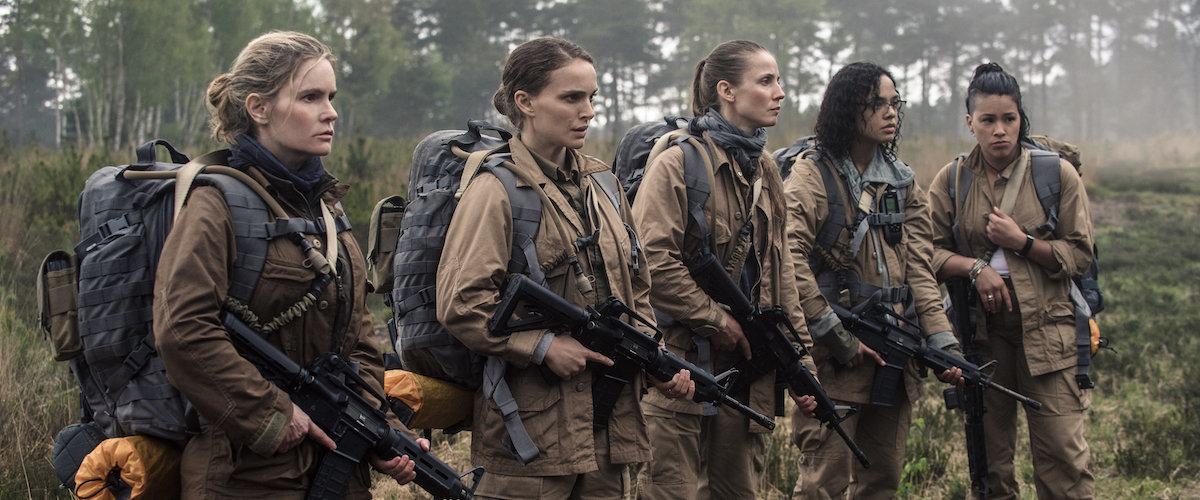
Natalie Portman plays a cellular biologist and ex-soldier named Lena, who recounts her story to a hazmat-suit-wearing Benedict Wong. After her soldier husband Kane (Oscar Isaac) disappears on a mission, he returns a year later changed and distant, and Lena soon learns where he has been: a forested region of Florida, where a shimmering, expanding wall has puzzled scientists and swallowed any team sent to investigate it. Along with a head psychologist (Jennifer Jason Leigh), a paramedic (Gina Rodriguez), a physicist (Tessa Thompson), and a geomorphologist (Tuva Novotny), Lena enters “the Shimmer” in an effort to unravel its mysteries.

I’ll admit writer-director Alex Garland’s Annihilation has the high acting and production standards that modern sci-fi deserves, and it’s a home run at least on a visual level. The set-up is superbly intriguing, and Lena’s journey into the Shimmer is buoyed by the allure of the unknown. Signals and light are unexplainably altered. Monsters and strange species lurk out of sight. The evidence they find of Kane’s mission challenges their sanity.

It’s Alien-level tension and uncertainty (or at least Prometheus-level), but all this mystery has to lead somewhere for it to be worthwhile, and Annihilation’s ending is just too ambiguous for its own good. That’s where the comparisons to 2001 ring true, with the largely wordless climax playing out like a fever dream of compelling but nebulous menace. In the end, though, its unanswered questions just left me puzzled by its enigmatic lack of resolution.

See the source image

It’s odd that this would be my gripe when I commended the ambiguity of The Endless just a couple days ago. I guess The Endless was open to interpretation in a way that suggested a complexity that was justifiably out of reach (and at least the main plot got some resolution), whereas Annihilation seemed more intentionally esoteric, like a puzzle where the writer was hiding pieces from you and chuckling at his own shrewdness. Maybe that makes no sense, and maybe others will enjoy the film’s mind-twisting, but Annihilation left me unsatisfied, just as my VC was left unsatisfied by the novel on which it was based (and by all the changes made by the filmmakers). I enjoyed the set-up, but not where it led. With its middling box office returns, they may or may not adapt the other books in the series, but either way, I’m not sure the resolution is worth caring about.

Best line: (Dr. Ventress) “Then, as a psychologist, I think you’re confusing suicide with self-destruction. Almost none of us commit suicide, and almost all of us self-destruct. In some way, in some part of our lives. We drink, or we smoke, we destabilize the good job… and a happy marriage. But these aren’t decisions, they’re… they’re impulses. In fact, you’re probably better equipped to explain this than I am.”
(Lena) “What does that mean?”
(Ventress) “You’re a biologist. Isn’t the self-destruction coded into us? Programmed into each cell?”


Rank: Dishonorable Mention


© 2019 S.G. Liput
625 Followers and Counting
 

The Endless (2018)

11 Thursday Apr 2019

Posted by sgliput in Movies, NaPoWriMo, Poetry, Reviews, Writing

≈ Leave a comment

Tags

Drama, Horror, Mystery, Sci-fi

(Today’s NaPoWriMo prompt was for a poem of origin, so, inspired by the time loops in this film, I focused on how where we’re going might mirror where we’ve been.)

See the source image

Is darkness our friend?
They say we came from darkness.

We’ve grown up searching for the light
From friends both fickle and contrite,
From dogs that lick and dogs that bite,
And lies that distance and unite.

It feels as though our life’s a loop,
A track so many have run before,
From more to less and less to more,
And ere our ship returns to shore,
Our time is short, but we explore.

The light’s the loop,
The dark’s the end,
They say we’re headed for darkness.
Is darkness still our friend?
____________________

MPAA rating:  Not Rated (R for the language and some violence, though there’s much worse out there)

Not being a huge fan of horror, I’ll admit I’m not very familiar with the works of H.P. Lovecraft, a name I’ve noticed becoming more and more popular lately. What constitutes Lovecraftian horror is new to me, but from what I understand, it deals with terrifying cosmic powers beyond the scope of human understanding, or basically fear of the unknowable. If that’s right, The Endless might be the best example I’ve seen, a fascinating and slow-burning mystery with an undercurrent of paranoia and weirdness.

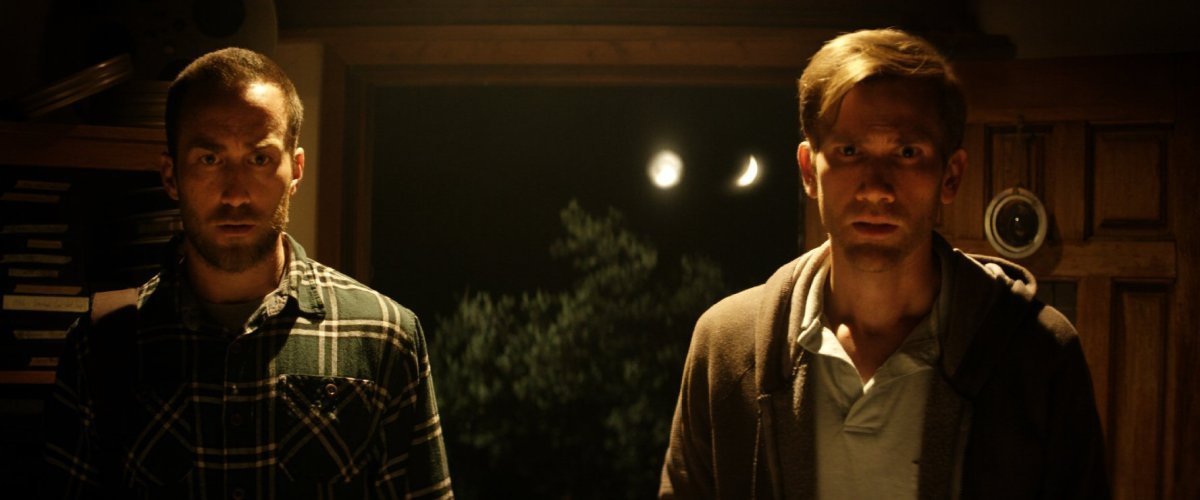
Two brothers Justin and Aaron (played by Justin Benson and Aaron Moorhead, who also directed and split work on writing, editing, and cinematography) are struggling with normal life some years after escaping from a so-called “UFO death cult” out in the desert. Aaron remembers their time there as one of stability and plenty and wishes to return, and, though Justin is dead-set against it, he agrees to briefly visit their former home after a mysterious video arrives. Strangely, very little seems to have changed, but the longer the brothers stay, the more uncanny events seem to happen, portending a great danger that might be inescapable.

See the source image

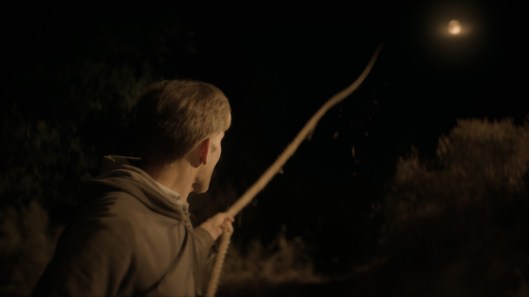
I won’t pretend to claim that I completely understood the film’s plot, but The Endless is well-acted and has intrigue to spare, with mysteries and fear piling on top of each other and most of the questions left largely unanswered by the end. Yet it’s very much a case of what you don’t see being scarier than what you do; there’s not really any nightmarish imagery, more foreboding and unease. A prime example is when the brothers are invited to pull on a rope as one of the community’s confidence exercises. The rope stretches off into the darkness as each person plays tug-of-war with something, with the chill factor coming from the lack of knowing what that something is.

As the film goes on, it enters a wilder side of science fiction, with time loops and fractured dimensions that challenge the mind and don’t provide easy answers, if any, but through it all, the brotherly bond between Justin and Aaron proves to be a strong human element to ground the craziness. I’m curious now to check out one of Benson and Moorhead’s previous films called Resolution, which apparently expands on one of the subplots from this movie, or vice versa. (Fans of theirs were no doubt happy to spot the connection.)

See the source image

Like Chronesthesia, The Endless is an example of multitasking filmmakers making the most of a limited budget and delivering a surprisingly solid product; the special effects are especially well-done for an independent film. It’s also one of those movies worth rewatching and discussing with others, if only to understand it better, though perhaps that lack of full comprehension is both the point and the appeal.

Best line: (an anonymous quote displayed at the beginning) “Friends tell each other how they feel with relative frequency. Siblings wait for a more convenient time, like their deathbeds.”


Rank: List Runner-Up


© 2019 S.G. Liput
622 Followers and Counting


Snowpiercer (2013)

06 Saturday Apr 2019

Posted by sgliput in Movies, NaPoWriMo, Poetry, Reviews, Writing

≈ 4 Comments

Tags

Action, Drama, Sci-fi, Thriller

(Today’s NaPoWriMo prompt was for a poem about the possible, so I tackled the improbability/possibility of sci-fi dystopias.)

See the source image

What would you call an improbable threat
For the future that no one has witnessed as yet?
Dystopian visions are dozens per dime,
Propped up by the volatile nature of time.

Who knows if we might be supplanted by apes,
Or drive over ruined, deserted landscapes?
Who knows if we might be beset by undead,
Or banned from free thought by a Big Brother head?
Perhaps we might battle an alien foe
That strikes from above or attacks from below.
The sun may desert us or scorch us to ash,
Or robots may kill us or clean up our trash,
Or humans may live in a virtual setting
That no one recalls since it’s built on forgetting.
Or maybe, just maybe, mankind may well learn
From all its mistakes that so often return
And set up a world of the peaceful and wise,
Not built on the backs of control and dark lies.

But with all of the ifs that end nightmarishly,
I think that’s unlikely, but hey, it might be.
_____________________

MPAA rating: R

It’s hard to know how I feel about Snowpiercer. On the one hand, I can appreciate the ambition that went into this epic dystopian vision, and on the other, I’m confounded by the bizarrely unrealistic concept that remains straight-faced throughout all its weirdness and violence. It’s a film I’m glad to have seen once, but I’m not sure I want to see it again.

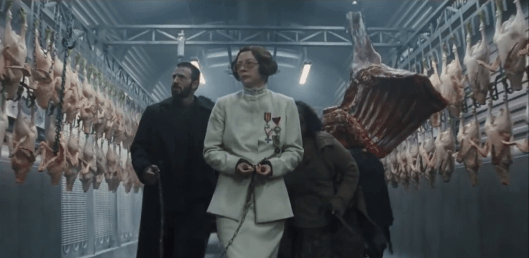
After a half-baked attempt to stop global warming sends the planet into a deep freeze, the only remaining humans are those aboard the Snowpiercer, a high-speed train looping endlessly across the globe. The wealthy live in luxury in the front of the train, while those in the back scrape by in squalor and authoritarian suppression, personified by the loathsome Minister Mason (Tilda Swinton with false teeth). After seventeen years, the have-nots make their final push for change as their leader Curtis (Chris Evans) aims to take the engine.

See the source image

The biggest problem with Snowpiercer is buying into its unlikely dystopia without being distracted by just how unlikely it is. So much science fiction is dedicated to conjuring future worlds where vices are taken to extremes or improbable outcomes challenge our perceptions, so in some ways, Snowpiercer is in good company. But then again (and my views may be tainted by a semi-famous and extremely negative review I read a while back), there is such a thing as too many plot holes. Why is one Korean girl psychic? How is it that the wealthy of the front section have perfectly maintained amenities and clean clothes with no visible manufacturing or service areas? It’s a train after all; there’s only so much room in the cars, all of which Curtis passes through to get to the front, often with random themes, like an aquarium or a rave. Surely this train isn’t as self-sustainable as it appears with no outside resources. Considering the body count and how pyrrhic the battle becomes, how can the ending be viewed as anything but a total downer waving a shred of false hope?

It’s a lot to overlook, yet, if you can, there’s much to appreciate as well. The set design and limited CGI effects (mainly any exterior shots) have a convincing world-building flair, and the fight scenes, while unnecessarily bloody, are tense and shocking, with a strange preoccupation with limb amputations. The film does excel as an action movie and has moments of pointed social commentary about the breakdown of society, though its almost cartoonish class struggle themes were done far better in The Hunger Games series.

See the source image

Snowpiercer seems to be divisive, and all in all, I can’t completely agree with either end of the spectrum. It’s not a total train wreck (pun intended) as some faultfinders have derided it, but neither does it seem worthy of its effusive critical praise and 95% on Rotten Tomatoes. I’m somewhere in the middle, dubiously positive you might say. If you can manage to take its grim craziness in stride, Snowpiercer may be the dystopia for you.

Best line: (Wilford, the creator of the train) “Curtis, everyone has their preordained position, and everyone is in their place except you.”  (Curtis) “That’s what people in the best place say to the people in the worst place.”


Rank: Honorable Mention


© 2019 S.G. Liput
620 Followers and Counting


Captain Marvel (2019)

24 Sunday Mar 2019

Posted by sgliput in Movies, Poetry, Reviews, Writing

≈ Leave a comment

Tags

Action, Sci-fi, Superhero

See the source image

What makes a hero, I ask you, my friend?
Some inhuman power defending good ends?
Some courage or virtue beyond normal means
Or blasting the bad guys to small smithereens?
Perhaps perseverance, refusing to yield,
Or wielding a weapon, a sword or a shield?
No, heroes are simple yet more than all these,
And those they inspire can spot them with ease.
_____________________

MPAA rating:  PG-13

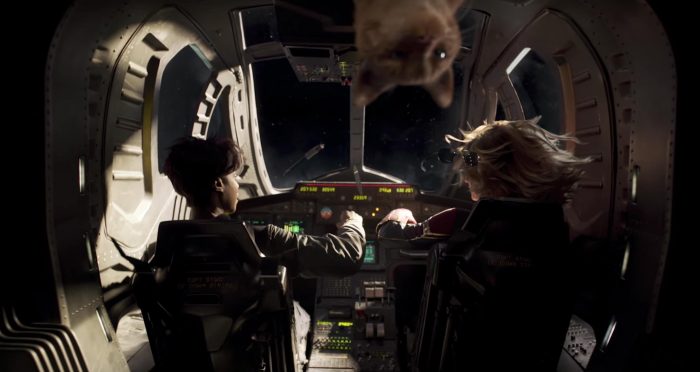
Well, I’d say the Marvel Cinematic Universe has a new MVP. No, not Captain Marvel, although she’s pretty cool too. I’m talking about a scene-stealing cat named Goose (which is a Top Gun reference since Carol Danvers was an Air Force pilot). There are still endless possibilities in the MCU, many of which are opened by this very movie, but I’d be happy if every movie from now on had a cameo from Goose.

See the source image

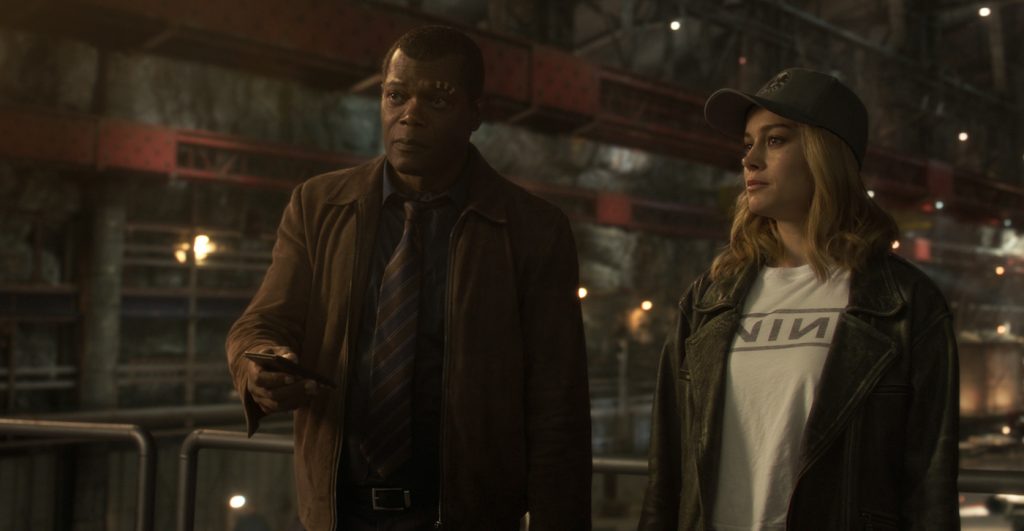
As for the rest of the movie, widely touted as Marvel’s first film with a main female protagonist, Captain Marvel is a success beyond the cultural box it ticks. I had some reservations about Brie Larson playing Carol Danvers, just because of how serious she is in most of the trailers, but she is a welcome addition to the MCU, finding a healthy balance between self-assured power and typical Marvel humor. It does help that she usually has someone to play off of, sometimes Jude Law as her Kree trainer Yon-Rogg but mostly that someone being Samuel L. Jackson’s Nick Fury, who has two eyes and is digitally de-aged (incredibly well, by the way) since this is set back in 1995. Having already starred together in Kong: Skull Island and Unicorn Store, the two have great buddy-movie rapport as they take on the war between the shape-shifting Skrulls and the Kree Empire.

See the source image

A word to the uninitiated: Captain Marvel doesn’t try to give many concessions to the casual Marvel viewer. There are moments in the first quarter or so that are bound to leave people confused, but it picks up when events (and Captain Marvel herself) get more down to earth. The alien Skrulls, who can impersonate anyone, make for an intriguing foe, especially with Ben Mendelsohn as their leader, and the makeup work for them is much more effective than if they had been created solely with CGI. And as usual with Marvel, the effects and action are top-notch, especially when Danvers reaches her maximum power (the “Whoo!”s she makes while destroying alien ships really add to the fun).

My VC wasn’t all that excited for Captain Marvel. Not being much of a feminist, she didn’t like the gender switch, since she associated the name Captain Marvel with the male hero Mar-Vell from the comics (never mind that the name originally belonged to the DC character now known as Shazam). While it didn’t remove all her reservations, the film managed to win her over to accept this version of the character. I think this was not only due to the fun ‘90s setting but also its message of perseverance that is universally human, not being limited to male or female. Whether Carol Danvers is known as Ms. Marvel or Captain Marvel (neither name is actually used in the movie), she’s a welcome heroine for the MCU for reasons beyond the fact that she’s a she.

See the source image

Captain Marvel is a well-made origin story that sits squarely in the middle of the MCU rankings and, like last year’s Black Panther, doesn’t seem to have much bearing on the next Avengers movie following in its wake, aside from providing background for a major character. Nevertheless, it has lots of well-planned ties into the larger MCU (loved Stan Lee’s tribute, and I’ll never look at Fury and his scar the same way again!) and still whets the appetite of us Marvel nerds; the first thing I said when the credits rolled was, “At least we only have another month to wait,” to which my VC replied, “Thank God!” Now, in addition to all the hopes and fears I had for Endgame, I can add the hope that Goose will make an appearance. Fingers crossed!

Best line: (Carol Danvers) “What does your mother call you then?”
(Nick Fury) “Fury.”
(Carol) “What do your friends call you?”
(Fury) “Fury.”
(Carol) “Kids?”
(Fury) “If I ever have them? Fury.”


Rank: List-Worthy


© 2019 S.G. Liput
613 Followers and Counting


Jurassic World: Fallen Kingdom (2018)

16 Sunday Dec 2018

Posted by sgliput in Movies, Poetry, Reviews, Writing

≈ 1 Comment

Tags

Action, Sci-fi, Thriller

See the source image

History repeats itself more often than it should,
For man is vain and foolish even after childhood.

The same mistakes will plague mankind until at last we learn,
Though when that may or may not come is cause for some concern.

Self-destruction is a right we mastered long ago;
We’re just too curious to see, this time, how it will go,
And so we do not slow.
__________________________

MPAA rating: PG-13

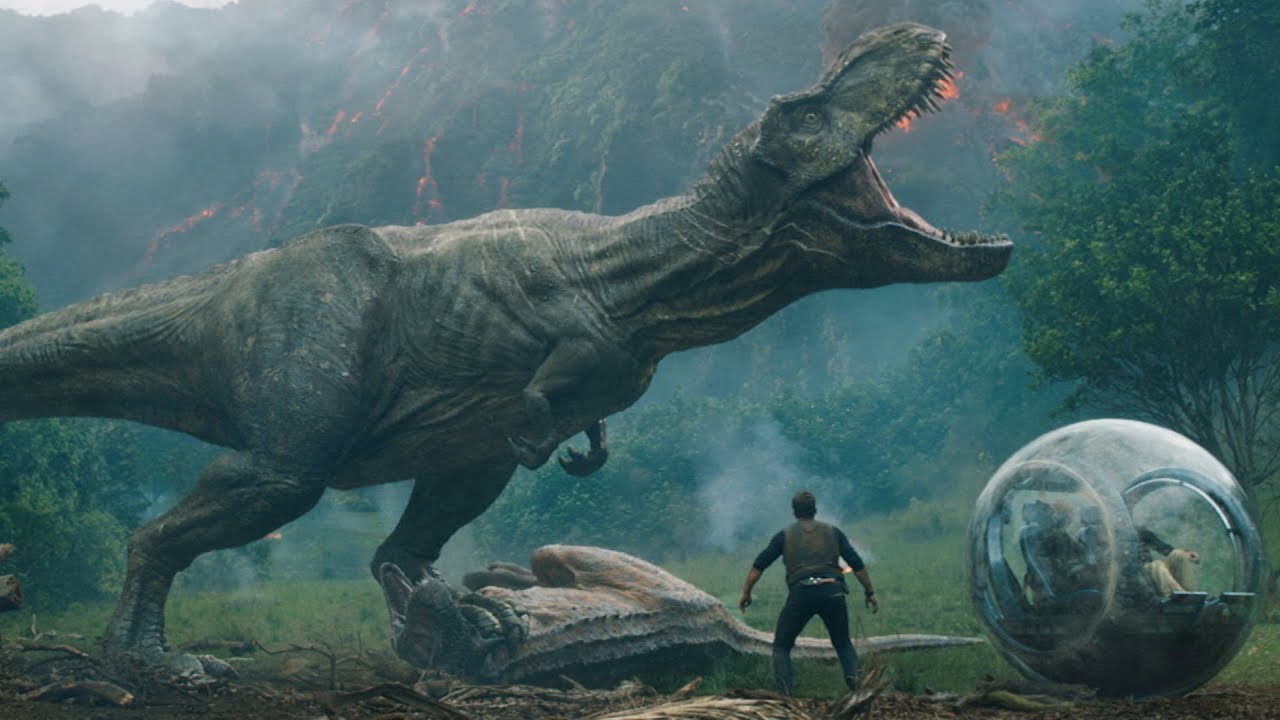
For starters, Jurassic World: Fallen Kingdom was never very high on my list of highly anticipated movies this year. The first Jurassic World was good and I like anything with Chris Pratt, but the law of diminishing returns definitely applies here. Some years after the incidents of Jurassic World, Claire (Bryce Dallas Howard) and Owen (Pratt) are called back to the island of dinosaurs to rescue as many as possible before the volcano erupts, and naturally the sponsor of the expedition has some ulterior motives.

See the source image

It wasn’t until I actually saw the movie that I realized why my excitement for it was so low: the trailers. The entire first half of the movie on the island was spoiled in the trailers, making even scary or spectacular scenes carry zero tension for me. I’m sure future viewers who didn’t see the trailers beforehand might not have this problem, but I wish the trailer editors wouldn’t divulge so much, even the ending itself. Granted, the second half, mostly set in an expansive mansion on a dark and stormy night, carries a great deal more anxiety, shock value, and stylish horror flourishes, but skilled director J.A Bayona can’t completely reinvent the wheel.  Arrogant characters still make dumb decisions, and despite efforts to stay inventive, it feels like this series doesn’t have much new to offer.

There’s an ongoing argument of whether the dinosaurs should be allowed to die out again or not, a question about which my VC felt strongly. She didn’t see why everyone was insisting on saving the dinos, and while I lean more toward the conservationist viewpoint of keeping them alive but contained, I do think the film’s message is left muddled. (Plus, why Claire is suddenly so protective of the dinos, I don’t know.) By the end, one character sides with saving the deadly animals above all other concerns, putting their lives above human ones, which is a thoroughly wrong-headed sentiment that left a sour taste none of the other sequels have. My VC and I agreed that “because they’re alive” isn’t a good enough reason to put human lives in danger when it comes down to either us or them.

See the source image

Oh, and one other thing. Everyone was talking about the dinosaurs becoming extinct again after the volcanic eruption on Isla Nublar. What about Site B on Isla Sorna, which has never been mentioned since Jurassic Park III? There should still be dinosaurs on that island, right? Anyway, I don’t mean to sound like I hated it, since it still had many of the ingredients that made the first Jurassic Park and Jurassic World enjoyable, just watered down and overly spoiled by trailers. Time will tell if the next sequel can redeem this one’s weaknesses.

Best line: (Ian Malcolm, in a welcome but all-too-brief cameo) “Change is like death. You don’t know what it looks like till you’re standing at the gates.”


Rank: Honorable Mention


© 2018 S.G. Liput
599 Followers and Counting
 

Justice League (2017)

12 Wednesday Dec 2018

Posted by sgliput in Movies, Poetry, Reviews, Writing

≈ Leave a comment

Tags

Action, Sci-fi, Superhero

See the source image

With planet Earth facing its worst danger yet,
Six heroes emerged to contend with the threat.
One swam,
And one ran,
And one wasn’t a man,
One dressed like a bat,
One was half a tin can,
And one may have died,
But he’ll come if he can,
So never fear, Earth, for your heroes are here!
No, not the Avengers; they’ll just disappear,
Until they beat Thanos in Endgame next year.
Wait, what was I saying? Oh, the DCEU…
While waiting for Marvel, this team ought to do.
___________________

MPAA rating: PG-13

It says a lot that I had to see Avengers: Infinity War on opening weekend, while I only just got around to watching Justice League a year after its release. Justice League isn’t necessarily a bad movie nor one as mockable as Batman v. Superman, but its aspirations overstep its ability, making DC’s superhero team-up come up short in every comparison with Marvel.

See the source image

In this not-quite-culmination of the DC Extended Universe, Batman (Ben Affleck) and Wonder Woman (Gal Gadot) seek to recruit a collection of disparate superhumans (Jason Momoa’s buff Aquaman, Ezra Miller’s geeky Flash, and Ray Fisher’s conflicted Cyborg) to ward off an alien invasion following the death of Superman (Henry Cavill), who is still praised as a beacon of hope despite the fact everyone seemed afraid and distrustful of him in the previous films. The battle scenes are epic, the effects impressive, and the casting not half bad (Miller’s a tad annoying, and I’m still getting used to Affleck), yet the echoes of MCU plot points are just too obvious to ignore. The villain Steppenwolf (all CGI voiced by Ciaran Hinds) arrives like Loki through a space portal and starts collecting three powerful Mother Boxes, generic Infinity Stone equivalents that can destroy the world and have a mythic history blatantly torn from The Lord of the Rings.

Justice League has some prime ingredients in its recipe, if only it was baked more gradually. I continue to be baffled by DC’s story strategy, combining all these heroes in (for half of them) their first appearance and then providing them stand-alone features. It’s one more way that Marvel has the edge, because when everyone met each in the first Avengers, at least the audience knew of their history. Here, the backstories of Aquaman, Cyborg, and Flash are only hinted at, offering backstories we neither care about nor fully understand. Plus, being thrust together by world-ending danger, there’s little sense of camaraderie or chemistry as a team, or at least not as much as with the Avengers; only Wonder Woman (still the best part of the DCEU) has any weight to her history or her rapport with Batman. And I still question why Cyborg is even here, when I’ve always associated him with the Teen Titans, despite recent revisions in the comics.

See the source image

There are always questions of who copied who between DC and Marvel, but in this case, it feels like DC is still playing catch-up to something Marvel undoubtedly did better years before. With Joss Whedon’s tweaks to director Zack Snyder (who will hopefully step away from controlling this franchise), Justice League is at least better and more fun than Man of Steel or Batman v. Superman. Individual parts just work much better than the whole at this point. Aquaman looks pretty darn cool from the trailers, though, so perhaps there’s still some hope for DC.

Best line: (Lois Lane) “There are heroes among us. Not to make us feel smaller, but to remind us of what makes us great.”


Rank: Honorable Mention


© 2018 S.G. Liput
596 Followers and Counting
 

Ant-Man and the Wasp (2018)

13 Tuesday Nov 2018

Posted by sgliput in Movies, Poetry, Reviews, Writing

≈ 2 Comments

Tags

Action, Comedy, Sci-fi, Superhero

See the source image

When deadly traps and finger snaps can bring the universe to dust,
And most heroics boil down to saving life itself or bust,
It’s effortless becoming numb to world-annihilating threats
And yawning while you wait until the pall of doom and gloom resets.

And that is why you sometimes want some slightly more light-hearted fun,
Reminding you not every story has to be a cosmic one.
A chase, a smile, a smaller trial, when carried out with proper style,
Has enough unique appeal to satisfy this cinephile.
____________________

MPAA rating: PG-13

It’s simply a coincidence that I planned to review a Marvel movie the day after the great Stan Lee’s death. While I’m still deeply saddened at the loss of a comic book icon, I’m also grateful for his cultural contributions, which have not only taken over the 21st-century box office but have provided countless hours of entertainment, a prime example of which is Ant-Man and the Wasp.  The first Ant-Man was an unlikely success that surprised more than a few skeptical viewers, and I’m just as surprised that its follow-up is even better.

See the source image

A light-hearted caper like Ant-Man and the Wasp was bound to leave one of two impressions, coming on the heels of a huge, stuffed, sobering juggernaut like Avengers: Infinity War. Either it would be seen as fluff filler that felt out of place after Infinity War’s cliffhanger, or it would be a refreshingly light change of pace from the end-of-the-world exploits we’ve come to expect from the MCU, not unlike the first Ant-Man. Though some critics have voiced the former view, I favor the latter. While Marvel excels at balancing its doom and gloom with humor, sometimes you need a superhero movie where the stakes stay relatably small, and what better vehicle for those “small” stakes than Ant-Man himself?

Of course, the key to ensuring that such a small-stakes story still matters is letting the stakes matter to the characters. After the public debacle in Captain America: Civil War, Scott Lang (Paul Rudd) is nearing the end of his house arrest and remains a lovably earnest father to his daughter Cassie. Meanwhile, original Ant-Man Hank Pym (Michael Douglas) and daughter Hope (Evangeline Lilly) are on the run from the government while seeking Hank’s long-lost wife (Michelle Pfeiffer) somewhere in the infinitesimal Quantum Realm. Chasing both clues and tech to make that possible, they recruit Scott into their risky size-altering mission.

See the source image

Ant-Man was a heist film at its core, and while Ant-Man and the Wasp retains a lot of its predecessor’s style, it transmogrifies it into a twisty nonstop chase, freewheeling from one fight or set piece to the next with gleeful abandon. It’s essentially a MacGuffin hunt, with the MacGuffin usually being Pym’s tech-filled lab shrunk to the size of a breadbox. (The way it’s tossed around, he must have everything in the building bolted down!) Of course, Pym and Hope need it to save the original Wasp, but it’s also desired by a greedy small-time gangster (Walton Goggins) and by the semi-intangible Ghost (Hannah John-Kamen), whose intentions are more sympathetic than most Marvel antagonists.

Rudd and Lilly continue to strengthen their tag team chemistry, and while it’s significant that Lilly’s Wasp is the first title superheroine of the MCU (and the last of the original Avengers roster from the comics to join), she owns the role in a way that makes a kick-butt female with wings seem only natural as Ant-Man’s partner. (By the way, can she use the wings when she’s normal-sized or just when shrunk? I know I’d be using them all the time.) Also returning is Michael Peña’s Luis, who is still possibly the best comic relief sidekick of the MCU, and Randall Park makes a fun appearance as Scott’s parole officer trying to catch him in the act of breaking his house arrest.

See the source image

Ant-Man and the Wasp may not have the star power or all-around epicness of Infinity War, but I can honestly say that I enjoyed it just as much for different reasons (and minus the soul-crushing deaths). It’s a smaller affair than others of its MCU brethren, but it’s purely fun entertainment with no shortage of thrills and laughs. Plus, it’s probably the most family-friendly Marvel film yet and feels nicely self-contained, with a conclusion that’s more heartwarming than usual while leaving enough room for future stories. One of my older coworkers saw it with her grandkids and loved it, even though she’d never even seen the first Ant-Man. You’d think that Marvel would be showing signs of fatigue after twenty films, but I certainly can’t tell based on #20.

Best line: (Hank, speaking of his wife Janet and Scott’s brief time in the quantum realm) “We think when you went down there, you may have entangled with her.”   (Scott) “Hank, I would never do that. I respect you too much.”   (Hank) “Quantum entanglement, Scott.”


Rank: List-Worthy (joining Ant-Man)


© 2018 S.G. Liput
594 Followers and Counting


Next Gen (2018)

16 Tuesday Oct 2018

Posted by sgliput in Movies, Poetry, Reviews, TV, Writing

≈ Leave a comment

Tags

Action, Animation, Comedy, Family, Sci-fi


See the source image

The world’s an easy place to hate,
For it hates all too frequently.
And anger tends to escalate
The more it’s met with enmity.

One pain of heart
Can sow and start
A seed of hate
To germinate
And grow until
There’s no goodwill
For world or friend.
They all offend!
Life’s all about
The lashing out,
For no one cares
Or answers prayers;
Of that, they do not have a doubt.

But wait…
And hesitate to hate,
Just long enough to listen clear.
The world itself is quite the weight,
But others bearing it stand near
To show you how to persevere.
___________________

MPAA rating:  PG

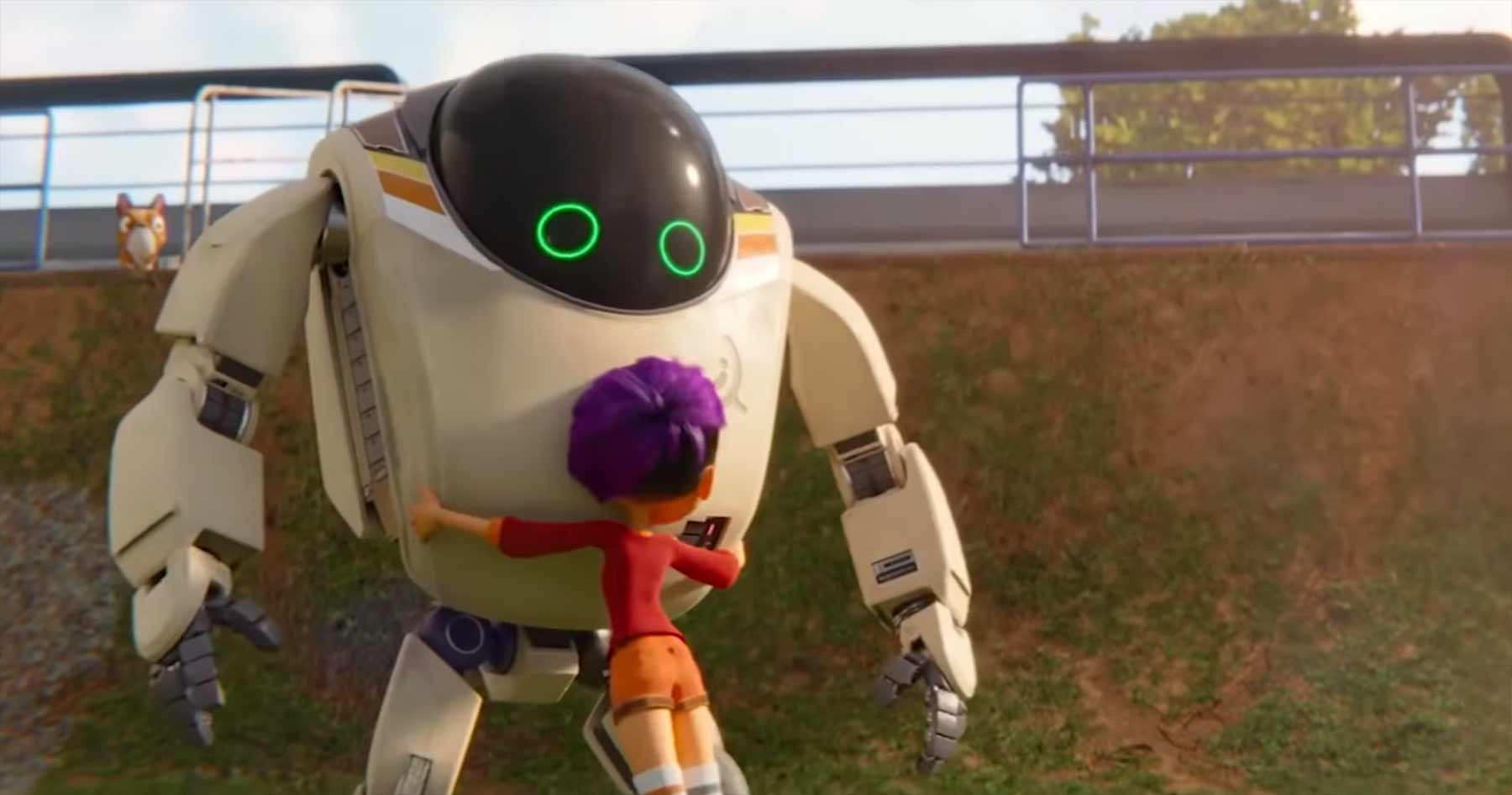
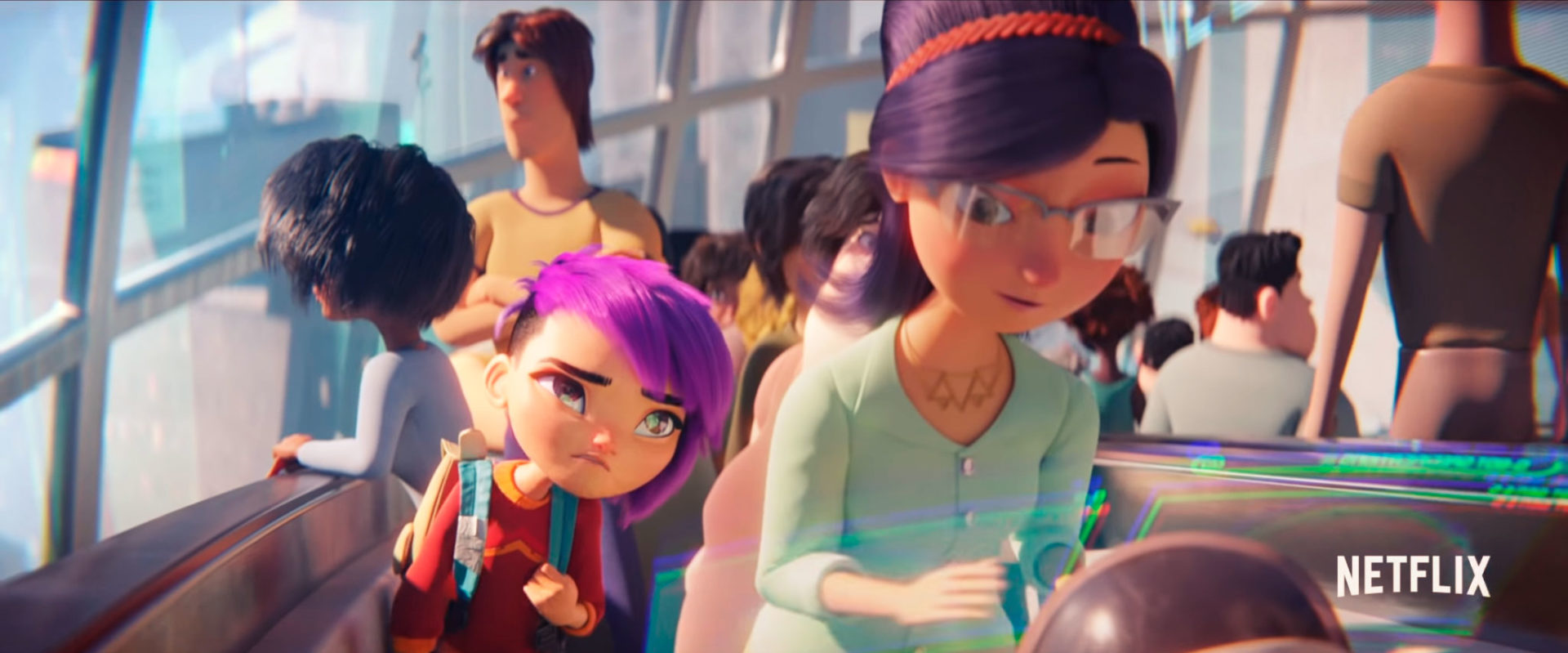
It might be easy to write off a film that borrows plot elements from other stories as freely as Next Gen does, but this Chinese-American cartoon based on a graphic novel and delivered by Netflix manages to be more than the sum of its parts. Set in a futuristic world where personable robots are a ubiquitous household accessory, young robot-hating loner Mai (Charlyne Yi) becomes unlikely friends with an experimental droid called 7723 (John Krasinski) that might be able to save both her from herself and the world from a robot takeover. That description alone will probably conjure memories of The Iron Giant, Big Hero 6, and I, Robot, and Next Gen wears those similarities on its sleeve. Yet there’s more to appreciate beyond the familiar “boy and his robot” storyline (or “girl and her robot,” in this case).

See the source image

As I said, Next Gen’s biggest touchstone would have to be Big Hero 6, not only with its big friendly robot mascot but also its urban setting of Asian-Western fusion, with Chinese characters instead of Japanese. But this Netflix film has some intriguing differences as well. One of them is the extent of robot normalization, which goes beyond that of I, Robot. Almost every device in this world is semi-sentient, and while a lot of potential questions surrounding that aren’t even broached, it’s an intriguing setup. Mai’s mother (Constance Wu) is obsessed with her Q-Bot companions and their developer, the Steve Jobs-esque Justin Pin (Jason Sudeikis), and it’s not a coincidence that the robot fascination mirrors the distraction of smartphone use. It’s also worth noting that Isaac Asimov’s three laws of robotics apparently don’t apply, specifically the one about robots not harming humans, since a group of bullies order their robots to beat up on Mai for them.

Beyond the setting, there are some deeper than normal themes at play as well. Mai is resentful of her father’s abandonment of her and the way her mother uses robots to cope, and when she meets 7723, it’s only his weapons and the destruction they create that catch her interest. She’s quite angry and cynical for a cartoon protagonist, and interestingly, it’s 7723 that has to remind her to not lose her humanity when lashing out at the world.  7723 also has a struggle of his own; he values every minute spent with Mai, yet his memory cache is limited, forcing him to choose which memory files and systems to delete and make room for more. It’s not every cartoon that tackles existential questions reminiscent of Eternal Sunshine of the Spotless Mind, so Next Gen’s themes are definitely a step above the usual “follow your heart” storyline we’ve seen all too often.

See the source image

On top of that, it’s a quality production, with fluid animation and some pretty awesome action sequences. One explosive scene in particular is one continuous tracking shot with no cuts. I already love those kinds of scenes in live-action, and, although it probably doesn’t require quite as much effort to pull off, I like that the technique is being used more and more in animation. (I could also cite the opening scene of The Secret Life of Pets or Diamond’s big fight scene in the anime Land of the Lustrous.)

As self-aware as it often is, it’s a shame that Next Gen feels obligated to conform to a few clichés, like the bully inevitably deciding “Hey, sorry I beat you up. Let’s be friends.” Likewise, Mai’s mother is pushed into a “you were right, I was wrong” confession that is so fast, it felt like the screenwriter checking off a plot requirement.

I will also say that Next Gen is probably better for older kids, and not just because of its deeper themes or a sudden death scene. There’s a funny running joke where 7723 can translate the barks of Mai’s excitable dog (Michael Pena), bleeping out his more profane words. I guess it’s on the level of any number of reality shows these days, but I don’t exactly welcome it when a kids’ cartoon features even the mouthing of the F-bomb.

See the source image

Next Gen isn’t perfect, but it comes closer to Big Hero 6 than I would have thought possible from a Chinese production company I’d never heard of. There’s a lot to love about it and how it addresses moving beyond tragedy and anger while remaining a fun and sweet adventure, and I certainly hope that this and other animation houses outside the mainstream can continue the high quality displayed here.


Rank: List Runner-Up


© 2018 S.G. Liput
590 Followers and Counting


Blindspot Pick #7: Eternal Sunshine of the Spotless Mind (2004)

18 Tuesday Sep 2018

Posted by sgliput in Blindspot, Movies, Poetry, Reviews, Writing

≈ 2 Comments

Tags

Drama, Romance, Sci-fi

See the source image

Memories are funny things,
Immortal in some form at least,
For though they twist,
They still exist
And lie in wait to be released.

I cannot say if what’s recalled
Is how it was or how I felt.
For how I feel
Can shape what’s real
Within the memories I’m dealt.
_________________

MPAA rating: R (mainly for language, as well as sexual content)

Despite my falling behind on it, this Blindspot series has been a good opportunity for some firsts. Last time, I reviewed my first Marilyn Monroe film with Some Like It Hot, and now it’s my first exposure to Charlie Kaufman’s existential surrealism. Eternal Sunshine of the Spotless Mind is sort of like Donnie Darko was for last year’s Blindspots, a film so audacious in its subtlety that I couldn’t help but enjoy its unusual narrative, whether I fully comprehended it or not.

See the source image

On its surface, Eternal Sunshine is a tale of love gone wrong. Introverted Joel Barish (Jim Carrey) has his life jump-started by the effervescent and capricious Clementine (Kate Winslet), not once but twice. We see them meet on a train from Montauk, only to learn that they’ve already been in a relationship, which ended when Clementine had her memories of Joel erased by the enigmatic Lacuna corporation. In retaliation, Joel commissions the same procedure for himself, and as the irresponsible technicians (Elijah Wood, Mark Ruffalo) slack off while doing their sci-fi work over the course of a single night, Joel revisits his memories and finds more worth saving than he remembered.

In many ways, Eternal Sunshine is structured as a puzzle that gradually allows itself to be solved, and I love those kinds of movies. Hints are dropped early, with many left till the end to be fully explained, and since Joel’s memories are peeled back from the most recent to the oldest, a lot of the plot is told literally in reverse, which is still easier to follow than anything in Memento. It’s watching these unraveled story threads come together that makes the film even more compelling, beyond the often relatable romance elements. (I’ll admit I saw some of myself in Joel’s self-conscious outlook.)

See the source image

Since so much of the story takes place inside Joel’s head, it takes numerous surreal turns along the way as it visualizes abstract concepts. Trying to prevent the erasure, Joel tries revisiting previously redacted memories, where faces and lighting are distorted, and later mixes his mental version of Clementine with unrelated childhood memories. It can get weird, or “warped” as Clementine puts it, but even its odder elements remain understandable in the abstract realm of Joel’s mind. Couple that with juggling two Clementines (one in Joel’s head as a representation of his memories of her, the other the real one struggling with her own deleted memories) and a couple ethics-challenging subplots surrounding the Lacuna staff, and Eternal Sunshine clearly boasts an intellectual complexity unique to most Hollywood fare. No wonder Kaufman won Best Original Screenplay at the Oscars that year, and I wish I’d known of the name’s poetic origin when I compiled my Top Twelve Poems in Movies list.

The actors also rise to the challenge, with Jim Carrey standing out even more than Kate Winslet’s manic girlfriend. Even in past dramatic roles like The Truman Show, there were traces of his trademark goofiness, but here he deftly subdues himself to fit the often somber tone of the script. There’s an elegiac urgency to scenes where memories are being erased, people snuffed out of existence and buildings torn apart on a metaphorical, metaphysical level. The effects used are simple but impressive in setting the scene for a series of inescapable dreams.

See the source image

So often people say they wish they could forget something, but the sci-fi premise of Eternal Sunshine of the Spotless Mind challenges them to rethink what might be lost along the way if such a wish were granted. In some ways, the core relationship of Eternal Sunshine isn’t much different from (500) Days of Summer, which also shows the gradual souring of a once-so-sweet romance, albeit in a somewhat more linear fashion. (It’s funny when a film like (500) Days of Summer can be considered “linear” by comparison.) Eternal Sunshine asks whether the memory of such a soul-crushing break-up is worth retaining, especially if we as human beings might end up repeating the same mistakes consciously or not. As Captain Kirk said in one of the few good parts of Star Trek V, “You know that pain and guilt can’t be taken away with a wave of a magic wand. They’re the things we carry with us, the things that make us who we are. If we lose them, we lose ourselves. I don’t want my pain taken away! I need my pain!” Perhaps not everyone would agree that they need it, but that doesn’t mean they can’t be better for it.


Best line:  (Mary, played by Kirsten Dunst) “’Blessed are the forgetful, for they get the better even of their blunders.’  Nietzsche. Beyond Good and Evil. Found it in my Bartlett’s.”


Rank: List Runner-Up (a darn close one)


© 2018 S.G. Liput
589 Followers and Counting


Star Trek V: The Final Frontier (1989)

16 Monday Jul 2018

Posted by sgliput in Movies, Poetry, Reviews, Writing

≈ 2 Comments

Tags

Action, Drama, Sci-fi

See the source image

The final frontier’s waiting.
It waits for those who dare.
For each frontier
That man draws near,
A new one grows elsewhere.

We often think that warnings
Were made to be ignored,
Yet some frontiers
Deserve their fears
And should be unexplored.

But human beings being
What human beings are,
We will not see
Our fallacy
Until we’ve dared too far.
_____________________

MPAA rating: PG

Before recently, I could say that I’d seen all the Star Trek films, from the original series cast to Next Gen to the J.J. Abrams reboots…all of them except Star Trek V: The Final Frontier. Why? Well, I suppose I just assumed it wasn’t worth seeing. My parents always said it was one of the bad ones and never had any desire to see it more than once, so I never did while growing up. But then I thought, “Why should I take their word for it? I ought to find out for myself how to view a Star Trek film!” So I watched The Final Frontier, and you know what? They were RIGHT!

See the source image

There’s a commonly held notion that all the even-numbered Trek films are good and the odd-numbered ones are bad. I personally don’t think that holds true for later films, since I didn’t much like Insurrection or Nemesis but love all three reboots, yet it’s films like The Final Frontier that give that kind of theory credence. It’s not unwatchable; it’s not utterly boring like Star Trek: The Motion Picture was, but like that first movie, its story is both ill-advised and far more fitting a small-screen episode rather than a feature-length film. It’s the only Trek film written and directed by William Shatner, and no offense to him, but that’s likely for the best.

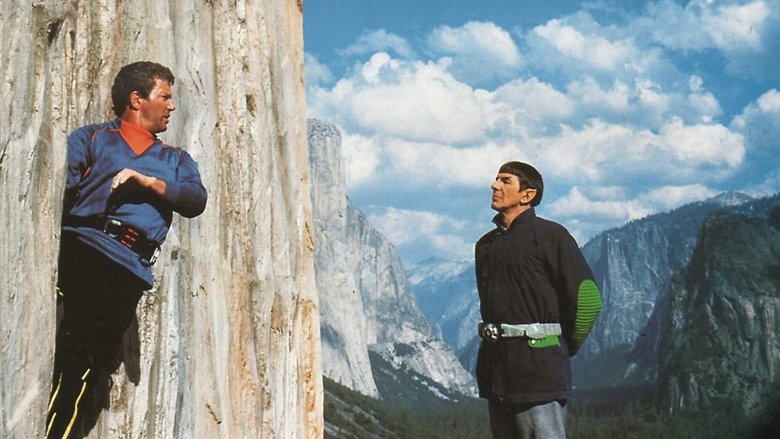
After an introduction to the film’s unusually empathetic Vulcan antagonist Sybok (Laurence Luckinbill), we catch up with Kirk, Spock, and Bones on shore leave in Yosemite National Park, which very quickly reveals the problems that will plague this film. The banter is far more forced than in other films, relying more heavily on the proven chemistry of the actors rather than actual wit or humor. A scene with Kirk falling off a cliff and Spock rescuing him features some atrociously obvious green screen and hints that the effects won’t be nearly as polished as in prior films. (ILM was busy with Indiana Jones and the Last Crusade and Ghostbusters II, so a less prestigious effects house was commissioned instead, and it shows.) Plus, a scene with the three amigos sitting around a campfire just felt rather pathetic, Kirk and McCoy trying to teach “Row, Row, Row Your Boat” to Spock. I think my mom once said it was a reminder of how old these actors/characters had gotten, keeping each other company for lack of any families of their own.

See the source image

The middle of the film does bounce back a bit, as the malfunction-ridden Enterprise is sent to Sybok’s desert planet to rescue some consuls he has taken captive, only for him to seize Kirk and his ship. It allows for some decent action and even a glimpse into a private trauma in McCoy’s past, thanks to Sybok’s patented form of therapeutic brainwashing. Yet there’s always a sense of this being a second-rate production, from bewildering creative choices (a three-boobed cat woman? Uhura doing a fan dance to distract some guards?) to unavoidable plot holes. Here’s a prime example: Starfleet sends Kirk on this mission, despite his ship’s handicaps, solely due to his experience because hopefully he won’t have to resort to violence to rescue the hostages. However, he opts for an infiltration plan that immediately turns to violence because his transporter wasn’t working. If Starfleet had sent another fully functional ship, they could have just beamed up the hostages, and Kirk’s unparalleled leadership wouldn’t have even been necessary!

By the end, the film nearly falls apart as the Sybok-led Enterprise navigates to a planet at the center of the galaxy where Eden and God supposedly await them. The “dangerous” barrier surrounding it is nothing but a bunch of swirly colors, and when they beam down to the planet, they wander yet another desert landscape while the music swells like we’re supposed to be awestruck by its grandeur. The god they encounter is visualized as a big glowing face that shoots lasers out of its eyes, and…now that I’m describing it, I realize how stupid that sounds. Yeah, it is, and even with the attempt at deep religious questions that might have made a worthwhile episode, the end product just isn’t a very worthwhile film.

See the source image

Although I’d easily consider it the second-worst film in the series, Star Trek V has moments where you can see why the filmmakers and actors kept running with it rather than throwing their hands up and starting over. Luckinbill has a great screen presence as the villain, if only he had a better film to antagonize, and it’s hard to hate Shatner, Nimoy, and Kelley in these iconic roles. The film was reportedly plagued by multiple budget problems during filming and post-production, and while some movies can hide such issues, here the end result suffers. The plot is unfocused (a potential romance is teased between Uhura and Scotty but goes nowhere); the humor is largely unfunny; certain elements are introduced, never to be seen again in the franchise, as far as I remember (Spock’s rocket boots, an observation deck with a literal ship’s wheel); and I found it unfortunately easy to mock while watching it, MST3K-style. The plot of Star Trek IV can also sound stupid when you describe it, but it’s all in the execution. There, it worked; with The Final Frontier, it didn’t.

Best line: (McCoy, to Spock) “I liked you better before you died.”


Rank: Dishonorable Mention


© 2018 S.G. Liput
586 Followers and Counting


← Older posts
Newer posts →

Recent Posts

  • We Didn’t Start 2025 (Recap)
  • NaPoWriMo 2025 Recap (Finally)
  • Sonic the Hedgehog 3 (2024)
  • It Happened One Night (1934)
  • Spellbound (2024)

Recent Comments

associatesofshellymann's avatarassociatesofshellyma… on My Top Twelve La La La So…
Kit's avatarKit Nichols on Bonnie and Clyde (1967)
lifelessons's avatarlifelessons on Look Back (2024)
Carol Jackson's avatarCarol Jackson on The Thief of Bagdad (1940…
Stephen's avatarStephen on Love Story (1970)

Archives

  • January 2026
  • December 2025
  • May 2025
  • April 2025
  • March 2025
  • February 2025
  • January 2025
  • December 2024
  • May 2024
  • April 2024
  • March 2024
  • February 2024
  • January 2024
  • December 2023
  • November 2023
  • October 2023
  • September 2023
  • July 2023
  • June 2023
  • May 2023
  • April 2023
  • March 2023
  • February 2023
  • January 2023
  • December 2022
  • November 2022
  • October 2022
  • September 2022
  • August 2022
  • July 2022
  • June 2022
  • May 2022
  • April 2022
  • March 2022
  • February 2022
  • January 2022
  • December 2021
  • November 2021
  • October 2021
  • September 2021
  • August 2021
  • July 2021
  • June 2021
  • May 2021
  • April 2021
  • March 2021
  • February 2021
  • January 2021
  • December 2020
  • November 2020
  • October 2020
  • September 2020
  • August 2020
  • July 2020
  • June 2020
  • May 2020
  • April 2020
  • March 2020
  • February 2020
  • January 2020
  • December 2019
  • November 2019
  • October 2019
  • September 2019
  • August 2019
  • July 2019
  • June 2019
  • May 2019
  • April 2019
  • March 2019
  • February 2019
  • January 2019
  • December 2018
  • November 2018
  • October 2018
  • September 2018
  • August 2018
  • July 2018
  • June 2018
  • May 2018
  • April 2018
  • March 2018
  • February 2018
  • January 2018
  • December 2017
  • November 2017
  • October 2017
  • September 2017
  • August 2017
  • July 2017
  • June 2017
  • May 2017
  • April 2017
  • March 2017
  • February 2017
  • January 2017
  • December 2016
  • November 2016
  • October 2016
  • September 2016
  • August 2016
  • July 2016
  • June 2016
  • May 2016
  • April 2016
  • March 2016
  • February 2016
  • January 2016
  • December 2015
  • November 2015
  • October 2015
  • September 2015
  • August 2015
  • July 2015
  • June 2015
  • May 2015
  • April 2015
  • March 2015
  • February 2015
  • January 2015
  • December 2014
  • November 2014
  • October 2014
  • September 2014
  • August 2014
  • July 2014
  • June 2014
  • May 2014
  • April 2014
  • March 2014
  • February 2014
  • January 2014
  • December 2013

Categories

  • Blindspot
  • Blogathon
  • Christian
  • Movies
  • Music
  • NaPoWriMo
  • Poetry
  • Reviews
  • TV
  • Writing

Meta

  • Create account
  • Log in
  • Entries feed
  • Comments feed
  • WordPress.com

Recent Posts

  • We Didn’t Start 2025 (Recap)
  • NaPoWriMo 2025 Recap (Finally)
  • Sonic the Hedgehog 3 (2024)
  • It Happened One Night (1934)
  • Spellbound (2024)

Recent Comments

associatesofshellymann's avatarassociatesofshellyma… on My Top Twelve La La La So…
Kit's avatarKit Nichols on Bonnie and Clyde (1967)
lifelessons's avatarlifelessons on Look Back (2024)
Carol Jackson's avatarCarol Jackson on The Thief of Bagdad (1940…
Stephen's avatarStephen on Love Story (1970)

Archives

  • January 2026
  • December 2025
  • May 2025
  • April 2025
  • March 2025
  • February 2025
  • January 2025
  • December 2024
  • May 2024
  • April 2024
  • March 2024
  • February 2024
  • January 2024
  • December 2023
  • November 2023
  • October 2023
  • September 2023
  • July 2023
  • June 2023
  • May 2023
  • April 2023
  • March 2023
  • February 2023
  • January 2023
  • December 2022
  • November 2022
  • October 2022
  • September 2022
  • August 2022
  • July 2022
  • June 2022
  • May 2022
  • April 2022
  • March 2022
  • February 2022
  • January 2022
  • December 2021
  • November 2021
  • October 2021
  • September 2021
  • August 2021
  • July 2021
  • June 2021
  • May 2021
  • April 2021
  • March 2021
  • February 2021
  • January 2021
  • December 2020
  • November 2020
  • October 2020
  • September 2020
  • August 2020
  • July 2020
  • June 2020
  • May 2020
  • April 2020
  • March 2020
  • February 2020
  • January 2020
  • December 2019
  • November 2019
  • October 2019
  • September 2019
  • August 2019
  • July 2019
  • June 2019
  • May 2019
  • April 2019
  • March 2019
  • February 2019
  • January 2019
  • December 2018
  • November 2018
  • October 2018
  • September 2018
  • August 2018
  • July 2018
  • June 2018
  • May 2018
  • April 2018
  • March 2018
  • February 2018
  • January 2018
  • December 2017
  • November 2017
  • October 2017
  • September 2017
  • August 2017
  • July 2017
  • June 2017
  • May 2017
  • April 2017
  • March 2017
  • February 2017
  • January 2017
  • December 2016
  • November 2016
  • October 2016
  • September 2016
  • August 2016
  • July 2016
  • June 2016
  • May 2016
  • April 2016
  • March 2016
  • February 2016
  • January 2016
  • December 2015
  • November 2015
  • October 2015
  • September 2015
  • August 2015
  • July 2015
  • June 2015
  • May 2015
  • April 2015
  • March 2015
  • February 2015
  • January 2015
  • December 2014
  • November 2014
  • October 2014
  • September 2014
  • August 2014
  • July 2014
  • June 2014
  • May 2014
  • April 2014
  • March 2014
  • February 2014
  • January 2014
  • December 2013

Categories

  • Blindspot
  • Blogathon
  • Christian
  • Movies
  • Music
  • NaPoWriMo
  • Poetry
  • Reviews
  • TV
  • Writing

Meta

  • Create account
  • Log in
  • Entries feed
  • Comments feed
  • WordPress.com

Blog at WordPress.com.

Is this your new site? Log in to activate admin features and dismiss this message
Log In
  • Subscribe Subscribed
    • Rhyme and Reason
    • Join 814 other subscribers
    • Already have a WordPress.com account? Log in now.
    • Rhyme and Reason
    • Subscribe Subscribed
    • Sign up
    • Log in
    • Report this content
    • View site in Reader
    • Manage subscriptions
    • Collapse this bar