• Home
  • About Me
  • The List
  • THE LIST (2016 Update)
  • THE LIST (2017 Update)
  • THE LIST (2018 Update)
  • THE LIST (2019 Update)
  • THE LIST (2020 Update)
  • THE LIST (2021 Update)
  • THE LIST (2022 Update)
  • Top Twelves and More
  • The End Credits Song Hall of Fame

Rhyme and Reason

~ Poetry Meets Film Reviews

Rhyme and Reason

Tag Archives: Sci-fi

Maze Runner: The Scorch Trials (2015)

15 Friday Apr 2016

Posted by sgliput in Movies, NaPoWriMo, Poetry, Reviews, Writing

≈ 2 Comments

Tags

Action, Drama, Sci-fi, Thriller


(Today’s NaPoWriMo prompt, inspired by this month’s halfway point, is to write a poem incorporating doubles. Thus, I chose to write in couplets and picked a sequel to review.)


Run, run, run, through glade and through maze;
Run and trust not this new world set ablaze.

Run from the torchbearers firm in their cause,
So sure of its virtues, no thought for its flaws.

Run from the dangers that line every path;
The world is less suited to kindness than wrath.

Run from the greedy, who serve themselves first,
And those who do wrong, by good reasons coerced.

Run till you realize your flight is in vain;
When all the world’s crazy, you stand and be sane.
____________________

MPAA rating: PG-13

I very much enjoyed the first Maze Runner film and was looking forward to continuing the intriguing mystery set before the characters. It was a darker installment in the YA dystopian genre and a bit more intense than others of its ilk. The Scorch Trials both strengthens and weakens the series, which is to say it both entertained and disappointed me, which is to say it’s good but could have been better, which is to say . . . oh, I’ll just explain.

After escaping from the maze, Thomas and his Glade buddies are whisked away to a locked-down compound where they find other rescued inhabitants from other mazes and a great many secrets. One common complaint about the first film is the lack of answers, and The Scorch Trials does supply some, such as why the young people are so important and why Thomas joined the Gladers. We still don’t know what exactly the Maze was for, but there’s still another film yet to come. While the first film was almost completely confined, this one has a much wider scope as Thomas and the gang are introduced to the scorched wasteland and a zombie-like plague that has caused a breakdown in society.

I wasn’t expecting this to turn into a zombie apocalypse movie since we’ve had even more of those than YA dystopias, but it works quite well. In lieu of the first film’s Grievers, those infected with the Flare virus offer the same awesome, edge-of-your-seat action and lots and lots of running. A key part of zombie scenarios is how people deal with them, and the film includes a believable variety of responses, from ruthless science to mercenary self-interest. One reason I avoid zombie movies is my aversion to gore, and I did appreciate this film’s restraint, proving (like World War Z) that it can be done effectively.

Sadly, with so much eventfulness, the characters are little more than placeholders. Thomas (Dylan O’Brien) is the leader making things up as he goes along, and he connects with a couple new characters, but everyone from the first film is just following along. This film so relies on the first one to establish its “main” characters that my VC didn’t even remember one of the expendables along for the ride.

Another gripe is that The Maze Runner was fascinatingly original while this one seems content to borrow plot elements and even specific scenes from other sources. Watching the film, I kept pointing out what such-and-such reminded me of. The zombie setup and search for a cure brought to mind I Am Legend and World War Z. Zombies in a mall seemed like a Dawn of the Dead reference. Oh, that scene is like the beginning of Mad Max: Fury Road. Oh, that’s like Coma, and Aliens, and The Way Back, and Fallout, and The Lost World: Jurassic Park. When a film constantly brings other franchises to mind, more than its originality suffers.

Thus, The Scorch Trials furthers the plot and little else, but that’s luckily still enough to keep me interested and entertained. The stage is set for the final chapter, and I’m glad the characters have something to run toward instead of always away. Time will tell if this trilogy can end on the high note with which it began.

Best line: (Thomas, at a pivotal scene) “I’m tired of running.”


Rank: List-Worthy (joining the first film)


© 2016 S. G. Liput

380 Followers and Counting


Cartoon Comparisons: Metropolis (1927) / Metropolis (2001)

20 Sunday Mar 2016

Posted by sgliput in Movies, Poetry, Reviews, Writing

≈ 2 Comments

Tags

Animation, Anime, Drama, Sci-fi


Up and up they build the tower;
Up and up ambition leads.
Further down, foundations sour
As equality recedes.

Bitter grows the patient base
And richer grows the wealthy crest.
Neither’s happy with their place,
And both believe that they know best.

Social dangers of the past
Are pains mankind will not outgrow.
In the future, race and caste
Are rifts we still must overthrow.
____________________

MPAA rating for 1927 Metropolis: Not Rated (should be PG)
MPAA rating for 2001 Metropolis: PG-13

This will be the beginning of a new feature called Cartoon Comparisons, in which I will compare and contrast a live-action and animated film that share plot elements or source material. I didn’t realize it at the time, but my first stab at this was my double review of Ordinary People and Colorful, after which I discovered several other pairs of films to consider. For this Cartoon Comparison, I’ll be tackling the silent-era German classic Metropolis and the 2001 anime adaptation, also called Metropolis.

I haven’t seen a great many silent films, but most seem to be relatively short so as not to overstay their welcome. Fritz Lang’s Metropolis, at least in its most restored version, clocks in at nearly 2½ hours, a daunting runtime that’s long by talkie standards. Until recently, my only exposure to Metropolis was in Queen’s music video for “Radio Ga Ga,” which shows many of the film’s most impressive special effects, expansive skylines with tiny moving vehicles and floating ships that still beg the question “How did they do that in the 1920s?!” The art deco set design is consistently impressive so that even if some viewers start getting bored, architectural enthusiasts shouldn’t. Being familiar with only the film’s visual style, I was surprised at the high-minded plot, which includes a despotic industrialist, his sympathetic son Freder, a peace-urging love interest named Maria, and a mad scientist who creates a robot to become Maria’s evil doppelganger.

The film clearly owes its classic status to its interesting story and memorable imagery, but the usual complaints and conventions of black-and-white silent pictures apply, even more than usual due to its length. When characters are in love or shock, they hold their hands over their heart; when they’re tired, they conspicuously wipe their brow; when they’re scared, they practically have a seizure. Brigitte Helm does double duty as both the demure, angelic Maria and her wicked robot copy, who indulges in weirdly reptilian movements and is over-literally equated with the Whore of Babylon.

Despite the silent-era excesses (like most of the men wearing lipstick), many elements still hold resonance. Some are visually striking, such as Maria being chased by a flashlight’s glow, the flooding of the worker city, and the climactic fight with shades of The Hunchback of Notre Dame. One of the most notable social aspects was the tension between the poor working class and the wealthy elite, led by Freder’s father. The evil Maria takes advantage of the oppressed workers to incite riots and impulsive fury, which cause more problems and grief than they fix. Even in 1927, before Hitler’s Germany or more recent threats of rioting, Metropolis served as a warning against blind proletarian rage in favor of understanding on both sides. It’s a drawn-out, melodramatic test of one’s patience but one ultimately worthy of all the critical appreciation.

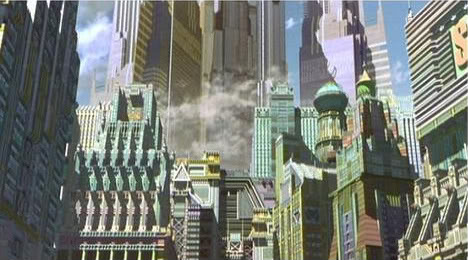
Now for the 2001 anime film of the same name. This Metropolis is based on the 1927 film but has its roots in a 1949 manga of the same name, which has little-to-no connection with Fritz Lang’s story. There’s still a bustling metropolis, parallels to the Tower of Babel, a mad scientist, societal turmoil, and a robotic girl, but despite some set design toward the end that pays homage to the original film, the story is its own. Other similarities are owed to the film’s production team. Many of the cartoonish character designs with big eyes and bigger noses seem as if they had been plucked from Astro Boy, due to the involvement of Tezuka Productions, which was founded by Astro Boy’s creator. In addition, the script was written by Katsuhiro Otomo, which explains traces of his cult favorite Akira, such as the distinct character motivations, political uprising amid catastrophic danger, and runaway power resulting in eye-popping destruction.

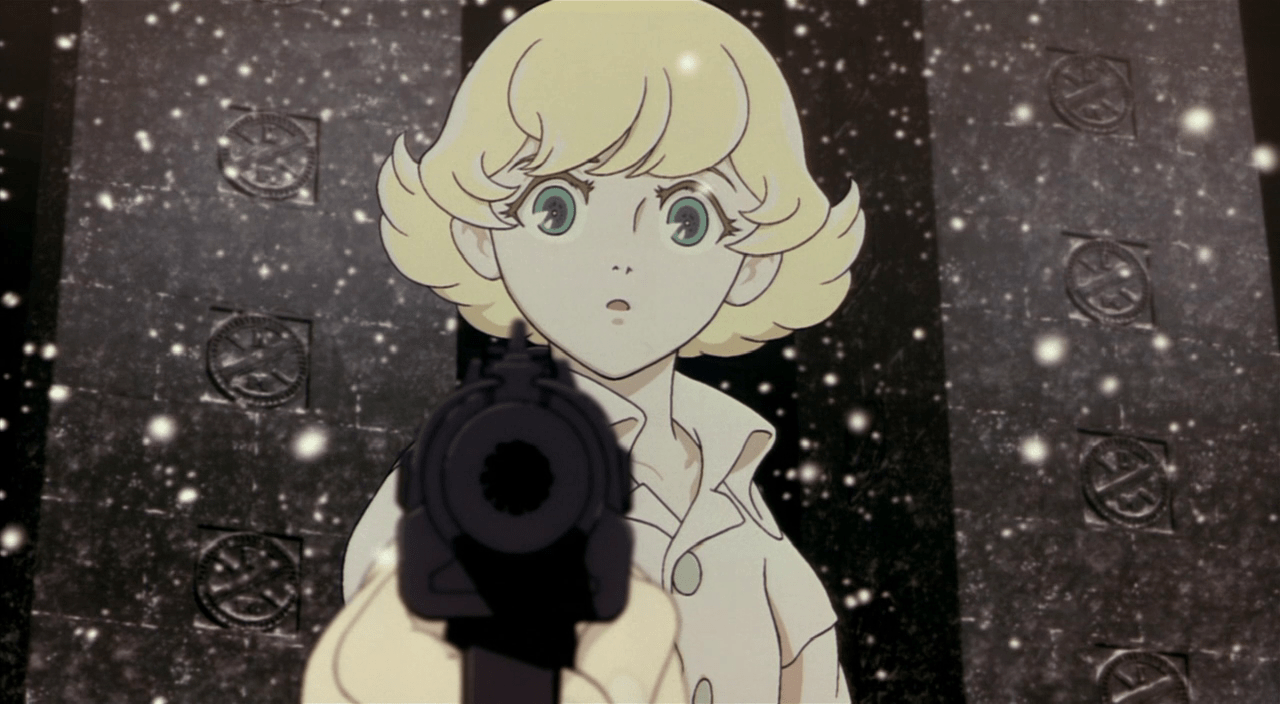
The Metropolis anime still has the social tension between classes, but this becomes secondary to the tension between humans and machines. It is robots who are relegated to the lowest levels of Metropolis, and distrust of machines runs rampant. Instead of a robotic harlot to sow dissent, the central android is a young girl named Tima, commissioned by a power-hungry duke but found first by a detective’s nephew who believes her to be human. The duke’s adopted son vows to hunt her down even as she questions her own identity.

This version of Metropolis is unlikely to leave anyone bored, and the animation is as polished and spectacular as any anime I’ve seen, albeit with a more sci-fi sheen than the films of Studio Ghibli. As a fan of futuristic cityscapes, Roger Ebert even called it “one of the best animated films [he’d] ever seen.” Like the original Metropolis, much of its power lies in the visuals: enormous fish swimming through the transparent wall of a high-rise office, a threatening stand-off as snow begins to fall, and especially the explosive climax set to a bizarrely fitting Ray Charles song.

Like Akira, Metropolis was meant to be a game-changer for anime, and the skill on display does not disappoint. What it lacks is a bit more focus on characters. The villain’s machinations are left rather vague, while the key relationship between the boy and the robot girl could have used more depth. I liked how their bond was tested, but by the end, the closing scenes don’t seem quite as optimistic as they try to be. These complaints are still quibbles, since the characters are still more engaging than in Akira.

It’s no surprise that a film with so much more action, color, and sound is far more entertaining than a silent picture from 1927. Lang’s Metropolis was the forerunner, the seed of so many other futuristic films since, while the animated Metropolis is like the vibrant blooming of its influence on animation worldwide. Both are must-sees for fans of science fiction cinema.

Best line from the 1927 Metropolis: (the closing title card, echoing Maria) “The mediator between head and hands must be the heart!”

Best line from the 2001 Metropolis: (Atlas) “It’s our emotions. They vibrate, and all we can do is move forward within that amplitude. But without affirming them, we can’t survive.”


Rank: Both List Runners-Up


© 2016 S. G. Liput

369 Followers and Counting


The Martian (2015)

13 Sunday Mar 2016

Posted by sgliput in Movies, Poetry, Reviews, Writing

≈ 5 Comments

Tags

Drama, Sci-fi


Loneliness can end in death
And one forlorn and final breath,
If a person in despair
Is not aware that others care.

A lonely man can yield to fears
That he’s alone among the spheres,
And many have assessed such thoughts,
From wealthy men to astronauts.

It’s true that lonely men can fret,
But loneliness can also set
A man’s commitment to restore
His life and courage from before.
__________________

MPAA rating: PG-13 (mainly for language)

I’m so very glad I finally saw this movie. Based on the same-titled book by Andy Weir, who published it serially on a blog before a big publishing deal arrived, The Martian is a combination of Cast Away and Apollo 13, borrowing and in some cases heightening their strengths.

When a storm hits NASA’s Mars base and the six astronauts are forced to evacuate, Mark Watney (Matt Damon) is left behind and forced to survive and wait for rescue. I was surprised that most of that synopsis happened in the first ten minutes, with the rest of the film dedicated to the survival. There was no real establishing of characters, least of all Mark, not even the cursory introduction of Gravity’s opening scene, before the action and disaster kicked in. Actually, the rest of the film isn’t much different in its absence of backstory, yet the central plot and struggle compensate for the fact that such potential shallowness would normally earn criticism. Weir in writing the story and Ridley Scott in directing it have fashioned a film full of characters, wordless activity, calculations, and halfway understandable science that is still somehow riveting, entertaining, and never boring. That’s no mean feat.

I don’t mind Matt Damon, but my VC actively dislikes him. In fact, the only role she’s liked of his (aside from Spirit since that was just his voice) was in Interstellar because he got blown out an air lock. Against all odds, she too enjoyed The Martian. She might have enjoyed it more with a different actor, but at least she was rooting for Damon not to get blown out an air lock. Damon’s performance isn’t quite on the level of Tom Hanks in Cast Away, but he deftly carries his alone time on Mars with humor and resolve while occasionally letting his inner distress peek through. At least he didn’t have to deal with aliens, right? The rest of the ensemble trying to rescue Mark fill their roles well, with Chiwetel Ejiofor and Jessica Chastain standing out. Jeff Daniels as the Director of NASA comes off at first as a soulless administrator, but his steely commitment to making hard choices covers some genuine concern for his astronauts that isn’t obvious.

What makes The Martian special spans both the minute details and the big picture. Aside from the amazing special effects and expansive Martian vistas (and the characters floating through the rotating Hermes shuttle was pretty darn cool), there is much to enjoy. The ’70s disco soundtrack is supposed to get on Mark’s nerves, but it heightens the overall enjoyment for us, with self-referential choices like Thelma Houston’s “Don’t Leave Me This Way” and Gloria Gaynor’s “I Will Survive.” David Bowie’s “Starman” especially complements its montage and got stuck in my head afterward. Other little geeky moments include Sean Bean’s explanation of the Council of Elrond, as well as Sebastian Stan (The Winter Soldier) and Michael Peña (Ant-Man) as shipmates and cheering for “Iron Man.” I can’t wait to see if Bucky and Luis meet in the MCU. “Hey, weren’t you in The Martian?”

In addition to the little personal touches, the entire film serves as an encouraging repudiation of the famous declaration of logic from Spock (and Dickens): “The needs of the many outweigh the needs of the few, or the one.” While NASA’s director holds to that theory, far more people see Mark’s rescue as a duty to his individual value. Putting “no man left behind” over the more utilitarian view, many people sacrifice their time, their safety, and their personal interests to bring him home.

The Martian definitely vies with True Grit for my favorite of Matt Damon’s films, and it’s a shame it didn’t win any Oscars due to stiff competition. I suppose that’s why it was made into a “musical or comedy” to get some traction at the Golden Globes, but it’s much more dramatic than comedic. It’s a satisfying testament to the danger and unifying potential of space travel, the power of duct tape, and the worth of even one life.

Best line: (Mark Watney) “I don’t want to come off as arrogant here, but I’m the greatest botanist on this planet.”


Rank: List-Worthy


© 2016 S. G. Liput

367 Followers and Counting


Mad Max: Fury Road (2015)

25 Thursday Feb 2016

Posted by sgliput in Movies, Poetry, Reviews, Writing

≈ Leave a comment

Tags

Action, Sci-fi


Grab the wheel and rev the motor;
Shift the gear for overload;
Brace yourself and lock and load her;
Hit the gas and hit the road!

Don’t look back at what has been;
Drive for lives and don’t delay.
High on pure adrenaline,
Floor it through a lovely day!
_____________


MPAA rating: R


After reading almost nothing but great things about this movie, I finally decided to check out Mad Max: Fury Road, and I can’t say that I was disappointed. I haven’t seen any of the original Mad Max trilogy, but since each one seems to be its own adventure with one constant character, what’s there to know? The world has been reduced by war to a barren wasteland, with mankind relying on jacked-up vehicles to survive amid ruthless gangs and dangers. While I consider this automotive dystopia entirely unbelievable, Fury Road is a movie meant to be experienced, not watched or analyzed or taken overly seriously, though you’re welcome to do that too once the adrenaline dies down. Directed by George Miller, the 70-year-old director who surprisingly also gave us Babe and Happy Feet, it’s an assault on the senses, and you’re just along for the ride.

I tried watching this with my very hesitant VC, who has seen some of the first three movies and considers them weird. “Weird” still applies. The costumes, makeup, characters, vehicles, and overall package are bizarre, superfluous, and often grotesque but certainly imaginative and oddly cool (seriously, a whole rig dedicated to a background guitar solo?). The central baddies are a fanatical cult led by Immortan Joe (Hugh Keays-Byrne, the first Mad Max’s villain), who rules the mountainous Citadel by controlling his War Boys’ religious fervor and the people’s access to the life-giving fluids of water, milk, gasoline, and blood. When one of his right hands, Imperator Furiosa (Charlize Theron), escapes for freedom with Joe’s scantily clad harem, his entire army takes off in hot pursuit. Oh, yeah, and there’s a guy named Max (Tom Hardy) along for the ride.

I was dubious about many critics considering Fury Road one of the greatest action movies ever, but it kind of is, if only because the entire story relies on action. Details like the War Boys’ method of suicide or Furiosa’s robotic forearm are never explained. They’re just presented while the thin plot and explosions roll along, letting action take the place of any in-depth characterization.

We don’t even get much in the way of character bonding or motivation until about two-thirds of the way through, but somehow it’s forgiven because we’ve already seen everyone in action, from Joe’s five wives with names like Toast and Capable to the dedicated War Boy Nux (Nicholas Hoult). My VC was a bit turned off by the frantic, sometimes sped-up editing, but it did make it hard to look away. The explosions are amazing, and all the more amazing for relying on practical effects and stunts, though one obviously CGI scene at the climax almost spoiled the effect. I also liked how it managed a happy ending that served as an inverse of the beginning, even if the final scene seemed needlessly set up for a sequel.

One aspect that I’ve seen mentioned over and over is how violent the film is, and while it’s certainly R-rated action, I wasn’t that bothered by it. I was fearing something really graphic, but the truth is that Fury Road is nowhere near as gory as things like The Walking Dead or the Deadpool trailer (both of which I’ve seen once and won’t again). There are shootings and stabbings and people being thrown off of fast-moving vehicles, but save for a couple of scenes, the R is really owed to the film’s overall intensity, and even the violent scenes are so brief in the kinetic editing that they didn’t detract for me. The bloodiest scene actually serves a latent purpose in punishing the very weird excesses I mentioned earlier, sort of like the cape critique in The Incredibles. You want to wear over-the-top costumes? Well, you may regret it. In addition, I was pleased that, for once, a gritty actioner was almost entirely free of foul language. Granted, there’s not a lot of dialogue in the first place, but think about it. Was it really missed?

Whether you watch for Hardy’s and Theron’s strong laconic leads or for the girl power thrill of women with guns or for the nonstop epic action, this is one nitro-fueled bandwagon I can’t help but jump aboard, despite its innate strangeness. While I agree on its awesome status among action films, when was the last pure action movie to be nominated for Best Picture? I rather wish Inside Out had been nominated instead. But that’s me. Brilliant at best and entertaining at worst, Mad Max: Fury Road is an unexpectedly great sequel that viewers didn’t know they wanted.

Best line: (Nux, in a line that could be even more iconic if it had been repeated; after all, it’s a lot better than “Witness me”) “Oh, what a day! What a lovely day!”


Rank: List-Worthy


© 2016 S. G. Liput

365 Followers and Counting


Jurassic World (2015)

24 Sunday Jan 2016

Posted by sgliput in Movies, Poetry, Reviews, Writing

≈ 3 Comments

Tags

Action, Sci-fi, Thriller


“What have we learned?” they knowingly say.
“Life has evolved to show us the way.
Dangerous creatures and habits have filled
The past, and on them the near-future will build.”

“What have we learned?” they foolishly ask.
“Our forerunners clearly weren’t up to the task.
What they could not do we will better complete.
Mistakes of the past we will never repeat.”

“What have we learned?” they say, sure of their touch.
Those who see clearly say “Clearly, not much.”
________________

MPAA rating: PG-13


In many ways, 2015 was the year of the unexpected sequel/reboot. I’d bet that not too many people wanted or expected Hollywood to resurrect franchises like Jurassic Park, Mad Max, The Terminator, or Fantastic Four. (Lots of fans wanted another Star Wars so that doesn’t count.) Some of those turned out better than others, but the mammoth hit of the summer was Jurassic World.

The film starts out with two brothers, older punk Gray and younger whiz kid Zach, as their parents send them off to a theme park on none other than Isla Nublar. The audience’s nostalgia is tapped early on as we enter the famous giant gates and behold Jurassic World in all its glory. There’s a baby dinosaur petting zoo and a big glass hamster ball for safaris and a SeaWorld-style splash show with something a little bigger than a killer whale. Tourists and merchandise are everywhere, and there’s a certain satisfaction to seeing John Hammond’s dream so triumphantly realized.

By the looks of things, the creators of the park seem to have worked out all the bugs, with financing from owner Simon Masrani (Irrfan Khan) and scientific guidance from Dr. Henry Wu (B. D. Wong, the only returning cast member from the original film). But as Ian Malcolm said in The Lost World, they’re not making the same mistakes twice, they’re “making all new ones.” Just as the whole frog DNA idea backfired for Hammond, the park runners do a little too much genetic manipulation to create an uber-dinosaur, the Indominus Rex. As the park’s operational manager, Zach and Gray’s Aunt Claire (Bryce Dallas Howard) seems coldly confident that there’s nothing wrong with toying with nature. You can guess what happens next.

Like Star Wars: The Force Awakens, Jurassic World seems to directly parallel the original film in order to balance the new with the familiar. There’s the gate entrance, a hands-on scene involving a sick/dying dinosaur, an intense glass scene that lets kids in danger look directly into a predator’s maw, a flare scene involving a T. Rex, and a vehicle being chased by a rogue dino. While I like The Force Awakens more, I have to admit that Jurassic World better differentiates those scenes from their original counterparts. It also nails the most important element of an effects-driven movie like this, the dinosaurs. Some creatures may be more obviously CGI than others, but the life-and-death action and dino duels are exhilarating to behold, if rather vicious in their body count.

Jurassic World is quite an improvement over the last two Jurassic Park sequels, but it’s a Procompsognathus next to Spielberg’s original. Its greatest weakness is its characters, who lack the appealing personalities of the first gang of ill-fated visitors. After Guardians of the Galaxy, Chris Pratt was the hot actor and the obvious choice for the hero in the latest addition to the Jurassic Park series. His role as Owen Grady is the most persuasive, acting as the practical conscience for the shocked park leaders and the personable trainer for the park’s four semi-trained Velociraptors. Pratt can’t carry the whole movie, though, and everyone else is rather interchangeable. Howard is your typical half-empowered damsel; the kids are your typical kids in danger, with a troubled home life that is left unresolved; and Vincent D’Onofrio is your typical dense, single-minded fool of a villain, who is convinced that the raptors can be used as weapons even after that very plan blows up in his face.

By the end, the human characters become almost irrelevant during a big dino brawl, dumbly running parallel to the fight and trying to just stay out of the way. The end almost reminded me of 2014’s Godzilla, in transforming a former monster into something of a hero who battles whatever rival to its superiority but leaves man alone since he’s too trivial to matter much. These last two paragraphs sound perhaps more critical than I mean to be. Jurassic World is an entertaining summer movie that revitalized the franchise; I just don’t know why it nearly became the highest grossing film of the year. Hopefully, the next installment will put a little more focus on the characters. I love a good dino flick; it just helps when I connect more to the people in danger.

Best line: (Masrani) “You created a monster!”   (Dr. Wu) “Monster is a relative term. To a canary, a cat is a monster. We’re just used to being the cat.”


Rank: List Runner-Up


© 2016 S. G. Liput

356 Followers and Counting


Ant-Man (2015)

10 Sunday Jan 2016

Posted by sgliput in Movies, Poetry, Reviews, Writing

≈ Leave a comment

Tags

Action, Comedy, Sci-fi, Superhero


Smaller, better, faster, stronger—
Now the world must wait no longer.
Here comes Ant-Man, skilled at shrinking;
Watch and try to keep from blinking.

Armed with ants and talents stranger,
He won’t shrink from wicked danger.
Shrink or grow for each endeavor,
Tiny minds can still be clever.

Though the Ant-Man may seem minor,
No insect-sized man is finer.
Maximizing, minimizing,
Heroes don’t depend on sizing,
________________

MPAA rating: PG-13


While Ant-Man was given an understandably smaller reception upon release last year, my dad helped make it a bigger film for us. For some reason, he connected to Ant-Man on some deep cosmic level, having read the old Ant-Man comics with Hank Pym back in the day. He was singing the praises of both the character and the film long before we finally got to see it, and while this might have raised my expectations too high (like with Guardians of the Galaxy), it instead piqued my interest and enjoyment for one of the silliest Avengers yet.

It starts off in 1989, upholding the always cool Marvel continuity by mixing some familiar faces from past films with the latest S.H.I.E.L.D.-connected supergenius, Hank Pym (Michael Douglas), a master of physics and entomology (since atoms and bugs just go together). Jump ahead to the present, and we find Scott Lang (Paul Rudd) getting out of jail and meeting up with his Latino ex-cellmate Luis (Michael Peña). However, Scott faces an uphill battle toward normalcy since his criminal record mars job opportunities, even as his ex-wife bars him from seeing his young daughter. Little does he know that he’s a potential pawn in the cold war between Pym and his former protégé, the power-hungry CEO Darren Cross (Corey Stoll), who has grown ruthless from years of turning life forms into tiny piles of goo in an effort to replicate Pym’s fabled shrinking technology. Got all that?

Ant-Man isn’t as jam-packed as Guardians, but its convoluted plotline does require attention and may not entirely make sense. Yet, according to Marvel’s prized strategy, it doesn’t take itself too seriously. Hank and his estranged daughter Hope (Evangeline Lilly of Lost fame) may be wholly familiar with the concepts of quantum realms and communicating with ant armies, but Scott and Luis offer hilarious reactions to it all even as they embrace the role of hero over crook. Despite his history with raunchy comedies, Rudd manages to combine self-deprecating humor with relatable sincerity as he works to be with his daughter and, you know, save the world.

While on one level, Ant-Man may seem like just another brick in Marvel’s multimillion-dollar wall, it stands out in unexpected ways. For one thing, the origin story is more reminiscent of the early days of the Marvel Cinematic Universe, the Phase 1 films like Iron Man, and features more of a Mission: Impossible-style heist tone, aided by Christophe Beck’s bombastic score. While the Avengers are present and even referenced, their involvement in Ant-Man’s covert operation isn’t as starkly missed as in The Winter Soldier or Thor 2, in which only one main Avenger seemed to care about the end of the world as we know it. Here, the fate of the world is at stake, since the propagation of Cross’s shrinking suits would change the balance of power and “the texture of reality,” but it’s on a much more personal level than just stopping the latest baddie from blowing up the world. These characters have history with each other, whether it be Cross’s resentment toward Hank or Hope’s need for reconciliation with her father, not to mention Scott’s concern for his daughter who becomes plot-relevant in the finale. Even Scott’s ex-con accomplices are different from the professional agents or warriors we’ve become used to; they’re his beer-and-waffle buddies who have useful skills but are still down-to-earth, like how Luis remembers to save the guy he just knocked out before the building is destroyed.

Another unique aspect is how Scott becomes Ant-Man. Rather than self-experimenting with newfound powers or tapping into latent heroism, he is actually trained by the previous wearer of the Ant-Man suit. I can’t recall seeing this different dynamic of passing the mantle from one generation of hero to the next since an aged Bruce Wayne did so in the futuristic Batman Beyond (and before that, The Mask of Zorro). It’s an advantage that most superheroes don’t get, and shows onscreen what the comic books have done for years in letting more than one character inhabit the super persona. I wouldn’t mind learning more about Hank Pym’s missions back in the ‘80s.

Technically, Ant-Man should have been in Marvel’s Phase 1, since Ant-Man and the Wasp were founding members of the original Avengers in the comics (along with Iron Man, Thor, and the Hulk). Yet I suppose it’s hard to take seriously a tiny guy in a mask who controls bugs. Like Guardians of the Galaxy, Ant-Man was a gamble that I think paid off. It offers a new hero, new history, new technology, and a new way of looking at things from an ant’s perspective, from a bathtub to a toy train set. The incredible special effects help to sell both the shrinking concept and the almost cute ants, and are just one strength in Marvel’s latest hit. I enjoyed Ant-Man. On a more muted level, my VC and my mom liked it too. But my dad loved it.

Best line: (Luis, about his girlfriend, in a line that my dad has made his own for anytime bad things pile up) “Ah, she left me. And my mom died too. And my dad got deported…. But I got the van!”


Rank: List-Worthy


© 2015 S. G. Liput

354 Followers and Counting


Star Wars: The Force Awakens (2015)

27 Sunday Dec 2015

Posted by sgliput in Movies, Poetry, Reviews, Writing

≈ 4 Comments

Tags

Action, Drama, Sci-fi


I recall the feeling still,
The fascination and the thrill
Of seeing something fresh and new,
Of satisfaction sown with skill.
I remember it; don’t you?

Over time, the feeling’s stayed.
The prize is praised; the piper’s paid,
And yet I wait for even more,
For further fun that will not fade,
Another epic to explore.

Waiting is rewarded, yes,
And yet I feel I must confess
I doubt if ever it will be
That future favorites and success
Will bear the same delight for me.
________________________

MPAA rating: PG-13


At last, I’ve seen the biggest movie of the year, combining two of my favorite things, Star Wars and J.J. Abrams’ directorial talent. Ever since I heard Abrams would direct the next entry in the Star Wars canon, I knew he was the right guy for the job. Lost is phenomenal, his Star Trek reboots were sheer fun, and he has a special talent for both visual storytelling and character-building. Here, he brings it all to George Lucas’s beloved space opera franchise, the continuation of the story last visited on film in 1983’s Return of the Jedi, the film that has been endlessly marketed and hyped for over a year now, and…I’m left divided.

Some spoiler-free reviews I’ve read have been the “oh-my-gosh-this-movie-is-just-so-great-and-wonderful-I-could-burst” type, but most seem to be the “this-is-a-really-good-movie-but…” kind of opinions. I wanted it to be the former, but sure enough, it’s the latter for me. Time to think it over has only deepened my ambivalence. On the other hand, my mom (with whom I saw it) has grown more displeased with it. She saw the original Star Wars in the theater eight-and-a-half times and, based on the reviews, had high hopes, which weren’t exactly dashed but at least unfulfilled.

Let me try to explain my feelings about Star Wars: Episode VII. I won’t get into specifics, but I’ll probably go into more detail than some reviews, so a warning for those like me who have tried to remain spoiler-free. First, the Light Side. Like so many critics have said, The Force Awakens does feel like the original trilogy, a little less polished than the prequels and with far more humor and natural dialogue. Abrams’ talent with ensembles comes through, balancing both the new characters and old with fresh concepts and proper nostalgia. Harrison Ford as Han Solo, Carrie Fisher as Leia, Peter Mayhew as the apparently ageless Chewbacca, and (barely) Mark Hamill as Luke Skywalker all make triumphant returns, and despite the thirty-two-year hiatus, it feels as if they never left. Of the new cast, Daisy Ridley’s heartfelt Rey and John Boyega’s excitable Finn are the standouts, dropping hints at guessable but unconfirmed backstories that will surely play a larger part in the inevitable sequels. The backstory we do get is that of Kylo Ren, the Darth Vader wannabe whose conflicted allegiance to the Dark Side keeps him interesting, even as the other villains are given little to do. While many have complained about the underuse of various actors, the most overlooked to me seemed to be Gwendoline Christie as Stormtrooper Captain Phasma; like in Mockingjay – Part 2, Christie oddly lands a role in a big-budget blockbuster and then has hardly any screen time. Those secondary players who do get screen time make the most of it, including Oscar Isaac’s daring pilot Poe Dameron and, of course, the cute beachball droid BB-8. I also enjoyed seeing Ken Leung (Miles from Lost) as a Resistance admiral, a token actor from Abrams’ past work.

There, I liked it, right? But then, the Dark Side makes itself felt. For one thing, it’s sad that, within thirty years, the galaxy is right back in the middle of tyrant-battling war, with the Republic barely present. In addition, with the exception of Episode III, which everyone knew would be dark and tragic, all the Star Wars movies end with a thrill, whether it be a smile of success or an urge to learn what’s next. While both types of thrill are attempted, they are overshadowed by a climactic blow to the childhood that hit my mom especially hard. When the credits had finished, we didn’t leave the theater reveling in the glow of a great movie; we left in silence, trying to digest what J.J. Abrams had done. It makes for potent drama, but it stings nonetheless.

In addition, the story itself becomes weak in its attempt to pay homage to the original Star Wars. Plot elements are recycled a bit too often, and the originality suffers. There’s a wanted droid with important hidden information; there’s a cantina full of exotic aliens; there’s a desert planet (Jakku, not Tatooine); there’s a planet-destroying weapon; there’s a black-masked villain reporting to a holographic uber-villain (head of the First Order, not the Empire); there’s a Jedi apprentice turning against his master; there’s a close shave with a tentacled creature; there’s the difficult scene I mentioned that recalls Darth Vader’s run-in with Ben Kenobi; and there’s a mission to blow up the enemy base, which is even cooler and less simple than the Death Star’s destruction. There’s also a deleted star system, a la Attack of the Clones. For all their faults, the prequels always presented something new, even if the new didn’t please fans. In trying to appeal to everyone’s nostalgia for the original trilogy, the writers made the story far too similar. I wonder if Episode VIII will feel like The Empire Strikes Back.

At this point, I can’t tell if I’m trying to be honest or overly critical. It’s still a fantastic action-packed movie, the one we’ve been waiting for for decades. Despite the overly familiar plot points, I love everything original in The Force Awakens, from the new protagonists to the impeccable visual effects and awesome action. I still can’t decide where it ranks next to the prequels (I like them; sue me), but it’s certainly worthy of the Star Wars name. My mom and I will still see it many more times, and our admiration will surely improve. (She didn’t like Forrest Gump the first time either, and now it’s a family favorite.) I doubt The Force Awakens will ever have the same appeal as the original trilogy, but just as I grew up with the prequels, this is the Star Wars of the next generation.

Best line: (Han, about the enemy weapon) “How do we blow it up? There’s always a way to do that.”


Rank: List-Worthy


© 2015 S. G. Liput

352 Followers and Counting


Serenity (2005)

20 Sunday Dec 2015

Posted by sgliput in Movies, Poetry, Reviews, Writing

≈ 4 Comments

Tags

Action, Drama, Sci-fi


When we reach the distant future,
Full of ships traversing space,
What if life were not that different
With the same self-seeking race,
Governments with dark agendas,
And the sins we can’t replace?

How could anyone continue
In ideals that aren’t esteemed?
Only with a firm believing,
Truer than it ever seemed,
Can a world of lies and secrets
Be perhaps in part redeemed.
__________________

MPAA rating: PG-13


After my introduction to Joss Whedon’s cult classic TV show Firefly (and its inclusion on my Top Twelve TV Series list), I had to check out its big-screen conclusion Serenity, and it was a home run! In the same way that Firefly was criminally underrated when aired and was canceled after merely eleven episodes, I’ve seen Serenity in the bargain DVD bin for $3.99 when it deserves so much better. Putting all of Whedon’s considerable talent on display, Serenity offers an equally entertaining alternative to Star Wars and Star Trek.

Luckily, all of the main cast of the show returned to reprise their roles, a winning ensemble of mostly lesser-known TV actors, with the villain played by then-lesser-known Chiwetel Ejiofor. The crew of the Firefly-class spaceship Serenity aren’t freedom fighters against the imperialistic Alliance nor noble voyagers exploring the ‘verse; instead, they are simply in search of their next job, which typically entails smuggling or some other less-than-legal enterprise. Captained by hard-nosed Malcolm Reynolds (Nathan Fillion, who continues to reference the show in other roles since), Serenity includes his old war comrade Zoe (Gina Torres), her pilot husband Wash (Alan Tudyk), amusing cutthroat Jayne (Adam Baldwin), cute engineer Kaylee (Jewel Staite), and the Tam siblings Simon (Sean Maher) and River (Summer Glau), who are fugitives from the Alliance and grudgingly welcome guests aboard the ship. Also included are those who have left the ship, peaceful but secretive Shepherd Book (Ron Glass) and Mal’s unacknowledged love interest Inara (Morena Baccarin), a Companion or respectable prostitute.

With all that information and more previously established in the show, Serenity is an impressive balancing act, offering a conclusive episode for the fans hungry for more and a surprisingly accessible adventure that can still appeal to newbies. Such is Whedon’s talent with ensembles, whether it be his cult TV series or movies like The Avengers. In some ways, I might compare Serenity with Guardians of the Galaxy, another fast-paced space tale with an ensemble of potential unknowns. Like Guardians, Serenity throws out all the information viewers need to know along with ample humor and characterization and doesn’t waste time ensuring that the audience is keeping up. Instead of the pop culture references of Guardians, though, Serenity combines its sci-fi trappings with a western desperado style to craft a unique blend of East, West, and future.

Serenity also proved to be an outlet for Whedon’s creativity. Within the first fifteen minutes, there’s a dream within a holographic log and an ingenious four-and-a-half minute tracking shot that introduces us to the entire ship and crew. Likewise, the dialogue is another Whedon trademark, full of clever colloquialisms, Chinese exclamations, and so much breakneck wit that I wonder why it wasn’t nominated for Best Original Screenplay. I also admire that, despite his atheism, Whedon emphasized the presence of religion and belief in this space-faring future, something Star Trek only did with alien cultures. (No aliens here.) In the first few minutes, I even recognized a knockout gadget that Whedon reused in his Agents of S.H.I.E.L.D. series.

All this fawning over it, and I’ve hardly said anything about the actual plot. Throughout the series, River had acted consistently weird due to the government’s experiments on her, and brother Simon acted as her rescuer and advocate, though there were hints that she could take care of herself. While the actual explanation and solution for her behavior don’t make total sense, the film offers insights and resolutions for many elements that the show didn’t have time to conclude: River’s actual rescue, Kaylee’s crush on Simon, the Alliance’s reasons for wanting River back so adamantly, River’s untapped talents, and the nightmarish Reavers, the bands of space maniacs as mindless as zombies and ten times as ferocious. Mal is not only caught between the Alliance’s coolly murderous Operative (Ejiofor) and an unrecognized threat on board his ship; he’s also caught in a web of right and wrong, heroism and disillusionment, cynicism and belief. This futuristic world is unforgiving and sometimes painfully harsh, but Whedon keeps a masterful balance among the dramatic, comedic, and jaw-droppingly awesome. One scene toward the end is especially stunning and practically gave me goosebumps.

If you haven’t seen Firefly and happen to have fourteen hours to burn, watch it first, but there’s so much excellence evident in Serenity that I recommend everyone see it regardless. A few aspects of the end may not be ideal, but the film as a whole is an exciting success as both a standalone film and the finale Firefly never got. Like Firefly, it’s an underrated science fiction treat.

Best line: (Mal) “Half of writing history is hiding the truth.”


Rank: Top 100-Worthy


© 2015 S. G. Liput

350 Followers and Counting


The Hunger Games: Mockingjay – Part 2 (2015)

17 Thursday Dec 2015

Posted by sgliput in Movies, Poetry, Reviews, Writing

≈ 2 Comments

Tags

Action, Drama, Sci-fi, Thriller


Children fought within the Games,
As posh patricians praised their names,
And through the safety of TV,
Let death abound for all to see.

Now death has bounded through the screen,
And at the urging of a teen,
The poor plebeians meant to lack
Have gained the courage to fight back.

When tyrannies use violent means
And worship death on TV screens,
It then should come as no surprise
In violence do the people rise.
For freedom, violence intervenes,
For can mankind learn otherwise?
________________

MPAA rating: PG-13


After watching the final Hunger Games film and contemplating whether I liked it or Catching Fire best, I’ve come to the conclusion that Mockingjay – Part 2 is the best installment of the series. The final chapter of any franchise is typically meant to be the grandest and most important, a rare but desirable feat that is indeed met by this last portion of Katniss Everdeen’s story.

Though I’m one of the few people not to have read the books, I’m well aware that Mockingjay is the least favored of Suzanne Collins’s trilogy, and some reviews for Mockingjay’s two film adaptations have been similarly blasé, since they say the book is better and its predecessors are better still. Yet Part 2 delivers on the setup of Part 1, trading in the previous film’s relative lack of thrills for the fast-paced intensity of the Maze Runner series.

I’ll try to be general to avoid spoilers: Katniss (ever-outstanding Jennifer Lawrence) and President Coin’s rebels aim for President Snow and the Capitol, even as the archer struggles with her split affections and Peeta’s recent brainwashing. Considering how Part 1 used Peeta’s sudden indoctrination as its climax, I was glad that it wasn’t swept away as a minor setback; instead, it becomes an ongoing risk, as well as a satisfying method of ironing out the reality among all the lies. The actual mission grows in importance as they continue, and the Hunger Games-style dangers encountered make Mockingjay – Part 2 the most intense film of the franchise, with one sequence that seemed fit for a horror movie.

Considering everything that has come before, it should be no surprise that there are many deaths along the characters’ difficult journey, and I suspect this is part of what many fans disliked. Killing off characters is most painful when it seems unfair, and such displeasing deaths can cause fans to be angrier at the storyteller than the characters responsible. (A recent example I disliked was in How to Train Your Dragon 2). Mockingjay – Part 2 has twists that aren’t exactly what fans would want or expect, but the story makes the best of them and ends up sadder but wiser, yet still fulfilling.

While the biggest complaint about Mockingjay is how it has been split into two parts for the sake of money, Part 2 actually served to vindicate that decision for me on the narrative level, at least somewhat. One hope I had for the Hobbit trilogy was that, by stretching the dwarves’ screen time, their characters would grow more familiar and not just be thirteen interchangeable companions. While Jackson failed in that regard, I felt Mockingjay succeeds. With so many new characters introduced between Parts 1 and 2, it made sense to establish some earlier on to distinguish them from the redshirts who don’t have enough screen time to leave an impression. (To use a Marvel comparison, whose death had more impact, that of Coulson, who was seen in multiple films, or that of Quicksilver, who had one?) While the decision did Part 1 no favors, it works to Part 2’s advantage.

As the capstone of The Hunger Games franchise, Mockingjay – Part 2 is both an exciting blockbuster and a dark climax for a dark series. While some elements may not satisfy, such as the resolution to the whole love-triangle friction, the majority do. The expansive cast perhaps aren’t fully utilized, but plot progression is more important than characterization at this point, since we’ve already gotten to know the important players over three films. (I was glad that Philip Seymour Hoffman’s role as Plutarch Heavensbee wasn’t much affected by his death earlier this year; his absence was only felt in one scene and was well sidestepped.) Most importantly, amid the chaotic action and sci-fi spectacle, the film reaffirms the franchise’s ultimate message. As Katniss has grown from fighting for survival to fighting for freedom or revenge, the struggle has not simply been against monosyllabic presidents but against anyone with contempt for life. It’s a theme still very much relevant today and one I hope will be ever in our favor.

Best line: (Katniss) “There are much worse games to play.”


Rank: List-Worthy (joining the other three in the series)


© 2015 S. G. Liput

349 Followers and Counting


Guardians of the Galaxy (2014)

19 Thursday Nov 2015

Posted by sgliput in Movies, Poetry, Reviews, Writing

≈ 1 Comment

Tags

Action, Comedy, Sci-fi, Superhero


While Iron Man, Thor, and the heroes we know
Are saving the planet from many a foe,
Way out in the cosmos, a misfit or five
Are trying to stay on their toes and survive.

One’s seeking revenge, two are out for the loot,
One’s plotting betrayal, and the last’s in pursuit
Of a powerful stone that is death’s guarantee
If it falls in the hands of a villainous Kree.

Five mavericks not fitting the hero-type mold,
Five pasts black as sin and five hearts made of gold,
May find that a battle alongside a friend
Can give them a reason to bond and defend.
_______________

MPAA Rating: PG-13


Everyone seems to love Guardians of the Galaxy. Coworkers, friends, critics, and random bloggers were singing its praises last year, and I was eager to see it in the theater. Unfortunately, I knocked a sideview mirror off my dad’s car, and the movie money went elsewhere. So when I finally got to see it on DVD, I was ready to be impressed, and though I wanted it to be the best Marvel movie yet, well, it wasn’t.

Don’t get me wrong. It’s an enjoyable space ride of an origin story, yet perhaps my expectations were a bit too high. I had hoped for constant laughs, but the script seemed to be trying too hard at times (the fake laugh, for example). I can’t help but wonder if my appreciation might have been heightened by seeing it in the theater, where I could have shared in that unique experience of an entire audience laughing out loud (like how my mom has described her 8-½ screenings of Star Wars back in 1977). The story was also so crammed full of unfamiliar information with Xandarians and Ravagers and varied motivations that I couldn’t completely keep up, and my VC was totally lost at times. I know we’re supposed to just roll with it and enjoy it and let future viewings show how layered and intricate it is, but being confused can detract from a film’s enjoyment.

Okay, complaints aside, I’m glad to say that I saw it again, and my opinion has improved. I still don’t believe it’s Marvel’s best film, but it is up there. For some reason, the humor was much more appealing this time, and I was able to follow the plot more fully, and I can admit that Guardians of the Galaxy is a small miracle. Iron Man was never as popular as Batman or Superman, but at least people had heard of him. When Marvel gambled on an entire film dedicated to a rebooted superhero team from as recent as 2008, most non-comic experts went “Who?,” a joke the film itself toys with right from the start. Without widespread knowledge of these characters, the filmmakers were able to flesh them out in their own way, with lots of quick-mouthed humor along the way.

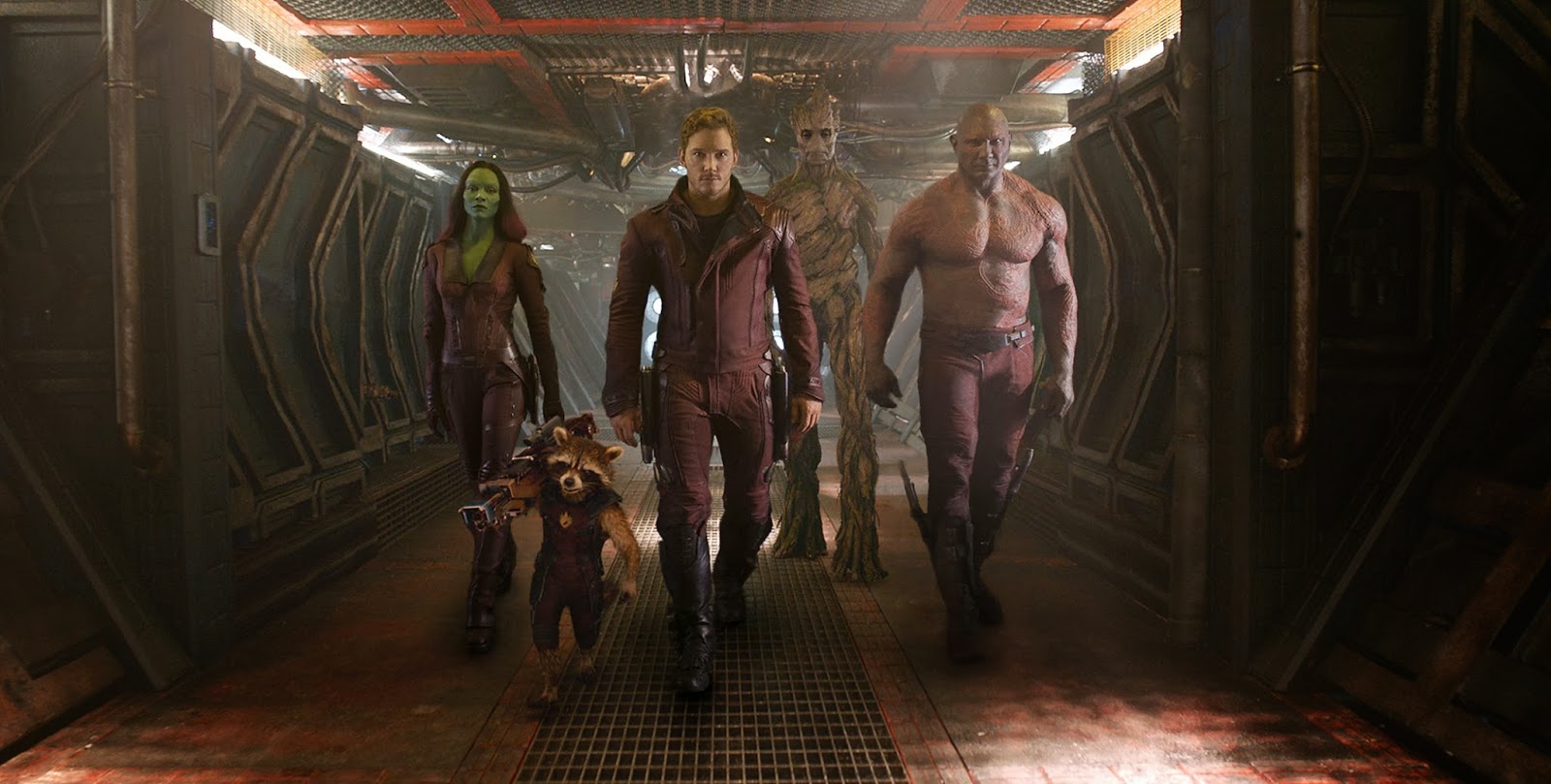
The film is full of strengths, from the nostalgic, retro-cool soundtrack of 1970s tunes to spot-on performances from the main cast: heroic rogue Peter Quill (Chris Pratt), assassin with a heart Gamora (Zoe Saldana, continuing her apparent attempt to star in every major franchise), literal-minded avenger Drax the Destroyer (wrestler Dave Bautista), experimental raccoon Rocket (Bradley Cooper), and lovable living tree Groot (Vin Diesel, who could probably have been replaced by anyone who could say three words in a deep voice). The special effects are phenomenal, particularly the final battle and the CGI creation of Rocket and Groot, who are both surprisingly endearing. As I said, there is a lot, and I mean A LOT going on, but my second viewing allowed me to recognize the impressive balance between nonstop action, spitfire wit, and sweet character moments, like Groot’s flower gift or Drax’s comforting of Rocket. (Who didn’t want to pet him after all?) I also noticed a potential recurring gag when Quill states he has 12% of a plan; remember the beginning of The Avengers, when Tony offers 12% of the credit for Stark Tower to Pepper? Hmm.

It’s true that it’s not perfect. The villains Ronan and Nebula (Lee Pace and Karen Gillan) are generic baddies, people can somehow survive exposure to space, the bigger names like Benicio del Toro as the Collector (also Glenn Close and John C. Reilly) are vastly underused, and it might have been more kid-friendly considering it’s gotten its own animated spin-off series. Yet these gripes matter little amidst the fun of escaping a weightless prison or dive-bombing an attacking spaceship. Guardians of the Galaxy throws a lot at the screen, and most of it sticks to provide a fun space adventure that’s part Star Wars, part Marvel, but mostly its own unique adventure.

Best line: (Gamora) “I’m a warrior, an assassin. I don’t dance.” (Peter) “Really? Well, on my planet, we have a legend about people like you. It’s called Footloose. And in it, a great hero named Kevin Bacon teaches an entire city full of people with sticks up their butts that dancing, well, is the greatest thing there is.”  (Gamora) “Who put the sticks up their butts? That is cruel.”


Rank: List-Worthy


© 2015 S. G. Liput

344 Followers and Counting


← Older posts
Newer posts →

Recent Posts

  • We Didn’t Start 2025 (Recap)
  • NaPoWriMo 2025 Recap (Finally)
  • Sonic the Hedgehog 3 (2024)
  • It Happened One Night (1934)
  • Spellbound (2024)

Recent Comments

associatesofshellymann's avatarassociatesofshellyma… on My Top Twelve La La La So…
Kit's avatarKit Nichols on Bonnie and Clyde (1967)
lifelessons's avatarlifelessons on Look Back (2024)
Carol Jackson's avatarCarol Jackson on The Thief of Bagdad (1940…
Stephen's avatarStephen on Love Story (1970)

Archives

  • January 2026
  • December 2025
  • May 2025
  • April 2025
  • March 2025
  • February 2025
  • January 2025
  • December 2024
  • May 2024
  • April 2024
  • March 2024
  • February 2024
  • January 2024
  • December 2023
  • November 2023
  • October 2023
  • September 2023
  • July 2023
  • June 2023
  • May 2023
  • April 2023
  • March 2023
  • February 2023
  • January 2023
  • December 2022
  • November 2022
  • October 2022
  • September 2022
  • August 2022
  • July 2022
  • June 2022
  • May 2022
  • April 2022
  • March 2022
  • February 2022
  • January 2022
  • December 2021
  • November 2021
  • October 2021
  • September 2021
  • August 2021
  • July 2021
  • June 2021
  • May 2021
  • April 2021
  • March 2021
  • February 2021
  • January 2021
  • December 2020
  • November 2020
  • October 2020
  • September 2020
  • August 2020
  • July 2020
  • June 2020
  • May 2020
  • April 2020
  • March 2020
  • February 2020
  • January 2020
  • December 2019
  • November 2019
  • October 2019
  • September 2019
  • August 2019
  • July 2019
  • June 2019
  • May 2019
  • April 2019
  • March 2019
  • February 2019
  • January 2019
  • December 2018
  • November 2018
  • October 2018
  • September 2018
  • August 2018
  • July 2018
  • June 2018
  • May 2018
  • April 2018
  • March 2018
  • February 2018
  • January 2018
  • December 2017
  • November 2017
  • October 2017
  • September 2017
  • August 2017
  • July 2017
  • June 2017
  • May 2017
  • April 2017
  • March 2017
  • February 2017
  • January 2017
  • December 2016
  • November 2016
  • October 2016
  • September 2016
  • August 2016
  • July 2016
  • June 2016
  • May 2016
  • April 2016
  • March 2016
  • February 2016
  • January 2016
  • December 2015
  • November 2015
  • October 2015
  • September 2015
  • August 2015
  • July 2015
  • June 2015
  • May 2015
  • April 2015
  • March 2015
  • February 2015
  • January 2015
  • December 2014
  • November 2014
  • October 2014
  • September 2014
  • August 2014
  • July 2014
  • June 2014
  • May 2014
  • April 2014
  • March 2014
  • February 2014
  • January 2014
  • December 2013

Categories

  • Blindspot
  • Blogathon
  • Christian
  • Movies
  • Music
  • NaPoWriMo
  • Poetry
  • Reviews
  • TV
  • Writing

Meta

  • Create account
  • Log in
  • Entries feed
  • Comments feed
  • WordPress.com

Recent Posts

  • We Didn’t Start 2025 (Recap)
  • NaPoWriMo 2025 Recap (Finally)
  • Sonic the Hedgehog 3 (2024)
  • It Happened One Night (1934)
  • Spellbound (2024)

Recent Comments

associatesofshellymann's avatarassociatesofshellyma… on My Top Twelve La La La So…
Kit's avatarKit Nichols on Bonnie and Clyde (1967)
lifelessons's avatarlifelessons on Look Back (2024)
Carol Jackson's avatarCarol Jackson on The Thief of Bagdad (1940…
Stephen's avatarStephen on Love Story (1970)

Archives

  • January 2026
  • December 2025
  • May 2025
  • April 2025
  • March 2025
  • February 2025
  • January 2025
  • December 2024
  • May 2024
  • April 2024
  • March 2024
  • February 2024
  • January 2024
  • December 2023
  • November 2023
  • October 2023
  • September 2023
  • July 2023
  • June 2023
  • May 2023
  • April 2023
  • March 2023
  • February 2023
  • January 2023
  • December 2022
  • November 2022
  • October 2022
  • September 2022
  • August 2022
  • July 2022
  • June 2022
  • May 2022
  • April 2022
  • March 2022
  • February 2022
  • January 2022
  • December 2021
  • November 2021
  • October 2021
  • September 2021
  • August 2021
  • July 2021
  • June 2021
  • May 2021
  • April 2021
  • March 2021
  • February 2021
  • January 2021
  • December 2020
  • November 2020
  • October 2020
  • September 2020
  • August 2020
  • July 2020
  • June 2020
  • May 2020
  • April 2020
  • March 2020
  • February 2020
  • January 2020
  • December 2019
  • November 2019
  • October 2019
  • September 2019
  • August 2019
  • July 2019
  • June 2019
  • May 2019
  • April 2019
  • March 2019
  • February 2019
  • January 2019
  • December 2018
  • November 2018
  • October 2018
  • September 2018
  • August 2018
  • July 2018
  • June 2018
  • May 2018
  • April 2018
  • March 2018
  • February 2018
  • January 2018
  • December 2017
  • November 2017
  • October 2017
  • September 2017
  • August 2017
  • July 2017
  • June 2017
  • May 2017
  • April 2017
  • March 2017
  • February 2017
  • January 2017
  • December 2016
  • November 2016
  • October 2016
  • September 2016
  • August 2016
  • July 2016
  • June 2016
  • May 2016
  • April 2016
  • March 2016
  • February 2016
  • January 2016
  • December 2015
  • November 2015
  • October 2015
  • September 2015
  • August 2015
  • July 2015
  • June 2015
  • May 2015
  • April 2015
  • March 2015
  • February 2015
  • January 2015
  • December 2014
  • November 2014
  • October 2014
  • September 2014
  • August 2014
  • July 2014
  • June 2014
  • May 2014
  • April 2014
  • March 2014
  • February 2014
  • January 2014
  • December 2013

Categories

  • Blindspot
  • Blogathon
  • Christian
  • Movies
  • Music
  • NaPoWriMo
  • Poetry
  • Reviews
  • TV
  • Writing

Meta

  • Create account
  • Log in
  • Entries feed
  • Comments feed
  • WordPress.com

Blog at WordPress.com.

  • Subscribe Subscribed
    • Rhyme and Reason
    • Join 814 other subscribers
    • Already have a WordPress.com account? Log in now.
    • Rhyme and Reason
    • Subscribe Subscribed
    • Sign up
    • Log in
    • Report this content
    • View site in Reader
    • Manage subscriptions
    • Collapse this bar