• Home
  • About Me
  • The List
  • THE LIST (2016 Update)
  • THE LIST (2017 Update)
  • THE LIST (2018 Update)
  • THE LIST (2019 Update)
  • THE LIST (2020 Update)
  • THE LIST (2021 Update)
  • THE LIST (2022 Update)
  • Top Twelves and More
  • The End Credits Song Hall of Fame

Rhyme and Reason

~ Poetry Meets Film Reviews

Rhyme and Reason

Tag Archives: Comedy

VC Pick: Funny Farm (1988)

29 Wednesday Jul 2015

Posted by sgliput in Movies, Poetry, Reviews, Writing

≈ 3 Comments

Tags

Comedy, VC Pick

Well, come on up to Redbud;
We would love to have you here.
A life out in the country’s good
For those who persevere.

Just look at Andy Farmer,
Why, when he moved here at first,
He very nearly went insane
Before things got their worst.

If he can handle country life,
Then anybody can.
Just know that moves here rarely go
According to the plan.
_______________

Rating: PG (for some language and slapstick)
Another film beloved of my VC and liked by me, Funny Farm features Chevy Chase doing what Chevy Chase does best: getting in over his head. In this case, he’s Andy Farmer, a writer planning his first novel and wishing to get away from it all in the country with his wife Elizabeth (Madolyn Smith). With similarities to Baby Boom and Newhart, the film upholds the view that Vermont must be full of eccentrics, though in this case some are a bit more mean-spirited and vindictive.

While Andy and his wife desperately try to relax and squeeze enjoyment from small-town life, everything—literally everything—goes wrong. Furniture moving, fishing, gardening, placing a phone call, writing his ingenious novel, even getting mail—everything has unfortunate, humorous outcomes, the kind of mishaps that make you laugh even as you feel sorry for the poor saps being tormented. All these problems naturally take a toll on their marriage, particularly when Andy’s wife reads his masterpiece. One of the greatest fears of all authors is being told that their work stinks, and as much as Andy overreacts, I can say from personal experience that he’s at least somewhat believable. (I love how his wife complains that his manuscript has too many flashbacks, flash forwards, and even a flash sideways. He could have written Lost!) By the time they’ve had enough of Vermont, they’re ready to do anything to escape, and the plot they hatch with the entire town is hilarious.

I wouldn’t say Funny Farm is one of the greatest comedies, but it has its fair share of visual humor and crack-up moments, which get funnier as they pile onto each other. Some actually manage to be educational. For instance, if you move to Vermont, never buy an untrained dog. Never chop down road signs. Never write books inspired by real people and then kill them off. If you don’t know what a menu item is, ask first, especially for something as enigmatic as Lamb Fries. Never gild the lily. In fact, according to this and other movies, perhaps it would be best to just not move to Vermont at all, if you value your sanity.

Best line: (a young vandal, after cutting down an important traffic sign) “Think we should put this back?”   (another boy) “What are you, nuts? This sign is mint. There’s not a bullet hole in it!”

Rank: List Runner-Up

© 2015 S. G. Liput

328 Followers and Counting

VC Pick: Cannery Row (1982)

17 Friday Jul 2015

Posted by sgliput in Movies, Poetry, Reviews, Writing

≈ Leave a comment

Tags

Comedy, Drama, Romance, VC Pick

Some funny folk know
Where to go,
Even though
There aren’t any canners on Cannery Row.

‘Tis not a disgrace
To embrace
Such a place.
You’ll see when you meet these new friends face to face.

In this blithe domain,
It is vain
To be sane.
Just mix with the locals, and they’ll entertain.
____________
Rating: PG (would probably be PG-13 nowadays, due to profanity)

My VC has often mentioned how much she enjoys this film and how she likes it more with every viewing, but somehow I had never gotten around to seeing it for myself…until now. Adapted from John Steinbeck’s book Cannery Row and (to a greater extent) its sequel Sweet Thursday, this Depression-era charmer has all the quirk of a cult classic, though it isn’t one to my knowledge. The actual storyline, set on the California coastline, is rather thin, and instead the film relies on humorous vignettes, establishing its cast of lovably screwed-up characters and letting them interact as only amiable neighbors can.

There’s Doc (Nick Nolte in one of the few roles I’ve seen of his before his “grizzled old man” makeover), the benevolent marine biologist who has special plans for some captured octopi. There’s Mack (M. Emmet Walsh), the leader of a quintet of goodhearted bums, and Hazel (Frank McRae), the anxious dimwit fated to become President of the United States but who may be wiser than even he knows. There’s Joseph and Mary, owner of the local grocery who happens to accept frogs as currency (and yes, that’s the name of one man). There’s Fauna, proprietress of Cannery Row’s friendly neighborhood brothel, and the Seer, a homeless codger who has visions and plays his trumpet to the rising sun. And then there’s Suzy (Debra Winger, possibly at her prettiest), the newcomer in need of a roof, a job, and maybe a little love.

All these colorful personalities bounce off each other perfectly, aided by the droll narration of John Huston himself (known to me as Gandalf in the Rankin/Bass version of The Hobbit) Thus, they do have quite a bit of waggish fun: party fiascoes, unprecedented frog hunts, dance challenges, beer milkshakes, rattlesnake conversations, and so on. Where else are you going to hear a line like “A man sentenced to be President of the United States could not go to a party as a dwarf”? In addition, Cannery Row itself happens to be an ideal backdrop for these amusing misadventures, a huge set (which is clearly a set) of dirty inlets beneath salt-encrusted boardwalks and nocturnal serenades of bluesy jazz, although there’s a good deal of classical and swing music too.

By the end, the jocularity gives way to some buried guilt and dark possibilities, yet the story’s irresistible charm still wins out. Both my VC and I were left smiling as the credits rolled, satisfied that this endearing microcosm of friendliness and romance had found its “greased grooves.”

Best line: (Hazel) “I love Doc! He was a character witness for me, and I ain’t got no character.”

VC’s best line: (Suzy, to Doc) “Look, every time I talk to you, I get more confused. I like you just fine when you’re not around.”

Rank: List-Worthy

© 2015 S. G. Liput

327 Followers and Counting

Roman Holiday (1953)

11 Saturday Jul 2015

Posted by sgliput in Movies, Poetry, Reviews, Writing

≈ 3 Comments

Tags

Comedy, Drama, Romance

For visiting tourists, there’s no place like Rome;
For young Princess Ann, it’s too much like home
And all of the cities in which she’s a slave,
Condemned to repeat boring answers and wave.

Escaping outside for a chance to be free,
She’s found by a grudging reporter, and he
Will grant all her wishes for leisure and fun,
As long as an interview comes, one on one.

But Rome is a place where romances pervade,
And many big plans yield to memories made.
___________________

Rating: Not Rated (might as well be G)

One of those acclaimed older movies I’ve never seen before now, Roman Holiday is a renowned classic, and unlike The Philadelphia Story, it deserves that hallowed status. Audrey Hepburn’s original Oscar-winning role, at only about 24 years old, impressed Gregory Peck enough to earn her top billing, even though she was just being introduced. While she deserved it, Peck’s actions also indicate his generosity, and watching two earnest, utterly likable actors of Hollywood’s Golden Age remains a treat, thanks also to a shrewdly written screenplay.

It’s a plot that has been reused many times over in TV shows since: a discontented royal sneaks away for a day of fun and escape. Hepburn looks as regal as the reformed Eliza Doolittle, thanks to her natural beauty and the Oscar-winning costume design, and she performs certain scenes of immaturity splendidly, scenes that could have been ridiculous with a less talented Princess Ann. How she meets reporter Joe Bradley (Peck) is far from ideal, but it sets up quite a few laughs. Once the two of them start touring Rome, though, accompanied by photographer Irving (chuckle-worthy Eddie Albert), the on-location film becomes cinematic sightseeing at its best, despite being in black and white. Piazzas and landmarks like the Spanish Steps and the Mouth of Truth serve as a romantic backdrop for the trio’s jaunt; the famed Mouth of Truth scene made me feel rather ignorant, since I had no idea where its central gag originated (I only knew it from National Treasure: Book of Secrets).

(Some spoilers ahead.) While Bradley’s motivations in escorting Ann around town seem selfish at first, his plans evolve imperceptibly over the course of the day. I kept waiting for him to broach the subject of his demanding an interview, but by the time that opportunity passes, we’re left to wonder what it was that changed his mind. For Bradley and the princess, duty and affection take opposite paths, but loyalty remains their common bond and a common separation. As a romantic comedy, Roman Holiday elicits plenty of smiles but chooses the less predictably rosey path, a bittersweet sendoff that chooses nostalgia over love.

Best line: (Princess Ann) “What do you sell?”   (Joe, the newspaper writer) “Er, fertilizer.”

Rank: List-Worthy

© 2015 S. G. Liput
327 Followers and Counting

Silver Linings Playbook (2012)

08 Wednesday Jul 2015

Posted by sgliput in Movies, Poetry, Reviews, Writing

≈ 7 Comments

Tags

Comedy, Drama, Romance

When the dark is at its worst,
Some people may despair,
But some, refusing to be cursed,
See silver linings there.

Those linings may be hard to hold,
But promise they contain,
And when life’s strains are uncontrolled,
Think not they are in vain.

In bearing aches of head and heart,
Nobody is alone,
And silver linings may impart
New chances never known.
_________________

Rating: R

What do you get when you combine a talented writer/director with a uniformly Oscar-worthy cast of actors? Most of the time, you get a hit, and most of the time, that’s what David O. Russell’s Silver Linings Playbook is. As the first film since Reds to earn all four acting nominations at the Academy Awards, it features four excellent actors who know what they’re doing, even if it’s more the stuff of Oscar nominations rather than wins, though Jennifer Lawrence still won Best Actress.

This is the kind of romantic comedy that makes you feel better about yourself, because at least your life (hopefully) isn’t as messed-up as these people’s. Bipolar Pat Solitano, Jr. (Bradley Cooper), is lucky to have two loving and understanding parents like Robert De Niro and Jacki Weaver, who allow him to stay with them after his release from a psychiatric hospital. While he hopes to pick up with his wife, whose cheating caused his initial mental breakdown, he meets grieving widow Tiffany (Jennifer Lawrence), who’s also lucky to have two loving and understanding parents. At first glance, they might seem perfect for each other, two mentally unstable people who might be able to support each other, but between Pat’s obsession with his unfaithful wife and their tendency to pity the other, things are as complicated as real life or more so. (I admire Pat’s commitment to his wife, but it’s one-sided and delusional.) Throw in a dance competition, financial risks, and a Stevie Wonder phobia, and who knows if new love may bloom?

The relatable drama balances the headaches of mental illness with comedic touches that seem like ideas drawn from real life rather than spawned in a writer’s head. I’ve personally felt Pat’s dissatisfaction with an unhappy ending, though I wouldn’t go as far as he does, except in the blogosphere. While not everyone approved of the depiction of mental illness, the Oscar-nominated screenplay by Russell fosters this sense of realism in being unafraid to allow the “sloppy and dirty,” imperfections and natural flaws in both the characters and their actions. Nothing is idealized, not even the climactic dance number, but it’s all good enough to be satisfying and win over an audience.

My one complaint would have to be the crudity of the language. I know it doesn’t bother most people, but why must F-bombs be thrown around so casually in “great” movies? I’m not one to condemn a film only for foul language, but it just seems so unnecessary, making it less watchable for those sensitive to it. Robert De Niro, in particular, has an upset scene in which every other word begins with F. I suppose that’s realistic too, and I know this film is far from the worst offender, but without the language, you’d still have the outstanding performances and direction and miss nothing. Maybe it’s just me….

Nevertheless, Silver Linings Playbook is one of the better modern romantic dramedies, urging everyone to find their silver lining and illustrating love as a complex mix of empathy, madness, chance, and bribery. And it makes me want to try some “crabby snacks and homemades.”

Best line: (Tiffany) “You let me lie to you for a week?”   (Pat) “I was trying to be romantic.”

Rank: List Runner-Up
© 2015 S. G. Liput
325 Followers and Counting

Inside Out (2015)

01 Wednesday Jul 2015

Posted by sgliput in Movies, Poetry, Reviews, Writing

≈ 4 Comments

Tags

Animation, Comedy, Drama, Family, Pixar

Every girl and every boy
Has Sadness, Anger, Fear, and Joy
(Disgust as well) within their minds
To guide them through their days.
They form and file memories,
And inside Riley, all of these
Are touched by Joy, who always finds
The silver lining’s rays.

Though Joy insists on keeping her
As happy as they always were,
A touch of Sadness now in spots
May not be such a shame.
When Riley moves against her will,
And Sadness starts her off downhill,
The world of Riley’s inner thoughts
Will never be the same.
_____________________
While other people have been eagerly awaiting adult fare like Jurassic World, Mad Max: Fury Road, and Batman vs. Superman, I’ve been looking forward to Inside Out, hoping that it would be a return to the Pixar excellence to which moviegoers had become accustomed. I’m happy to say, it is. I’m trying to not let other critics’ positive reviews color my opinion, but I really am thrilled that Pixar has bounced back from the good-not-great status of Brave and the disappointment of Cars 2.

A movie about personified emotions in the control center of the mind—as original as it sounds, there have been similar concepts before, like the nearly forgotten ‘90s sitcom Herman’s Head, but whereas such ideas are usually reserved for comedy, Inside Out delves deeper, putting the emotion in emotional. Within the head of 12-year-old Riley Anderson, all her emotions work together most of the time—Joy (Amy Poehler), Sadness (Phyllis Smith), Anger (Lewis Black), Disgust (Mindy Kaling), and Fear (Bill Hader, in full Flint Lockwood mode)—and everyone but Sadness has a clearly defined role to play in guiding Riley’s actions. While this cast could have been one-note, epitomizing singular, often negative feelings, they all contribute to Riley’s personality and work well as characters due to their concern for her overall well-being (despite some poor decisions), not to mention the wisely chosen voice cast (many of which hail from Saturday Night Live or The Office).

While Riley’s external world involves a tempestuous move from Minnesota to San Francisco, her inner world endures even more distressing changes, worsened by the separation of leader Joy and downer Sadness from their psychological Headquarters. Having included too many spoilers in my past reviews, I want to tread lightly with this one and leave the film’s full impact for the fresh viewer. Suffice to say, Inside Out is a journey through the psyche that casual viewers can enjoy on the surface and analysts can pick apart to find ever more engaging layers of nuance and symbolism underneath.

When I first heard the film’s concept, I was a bit perplexed by the choice of five emotions because not every experience or feeling is so clear-cut. Yet children’s emotions are far simpler and more distinct than those of adults; the filmmakers know this well and use this very fact as the driving conflict in the film (there is no villain), since Riley is in the formative years of young adulthood. What is the cause of children suddenly needing “alone time” or deriving more frustration than enjoyment from past pleasures? How would mood swings, depression, dreams, or sarcasm be visualized in this uniquely Pixar mindscape? The film’s explanations for questions like these are eye-opening, as is the role of multiple emotions in shaping our deepest memories and impressions, yet much of it is metaphorical, implicit, and never heavy-handed in its interpretation. Here’s an example of one of the many questions prompted by the film’s themes: While certain crises seem cataclysmic at the time, perhaps these tragedies are merely an inevitable step toward maturity, though they’re no less regrettable. You’ll understand when you see it.

Compared with Pixar’s other classics, Inside Out can hold its ground with favorites like Ratatouille, Up, and Monsters, Inc. (the latter two also directed by Pete Docter), and even if the film doesn’t quite reach the heights of The Incredibles or Finding Nemo, it has the potential to grow in stature with further viewing. I already love it more now than right after I saw it. The animation is a modern marvel, such as the energy-infused substance of the emotions’ bodies and the orb-filled labyrinth of Long-Term Memory. One random danger in particular seemed like an excuse for the animators to indulge in some visual fun, despite the fact that no kid will understand its cerebral implications. (I’m not sure I do.) Inside Out may not be Pixar’s funniest adventure, but there are still quite a few laugh-out-loud moments and imaginative silliness, such as a few unexpected movie references and the way that seemingly random gags come together ingeniously during the climax. It’s a stunning balance of humor, head, and heart.

As many critics have stated, there’s also a good deal of poignancy, particularly for parents recalling their children’s childhoods. While I don’t fit that category, I admire the presence of a close nuclear family and was still touched deeply by a certain selfless act toward the end. I have a long and storied history of crying at animated movies, from Tarzan to Brother Bear, but few films can extract a tear from me anymore. Inside Out did, and that made it a special experience for me. After watching the film, I was left with the pensive, bittersweet glow of a film worth seeing many more times. My Joy and Sadness must have been holding hands. Thank you, Pixar. It’s good to have you back in force.

Best line: (Fear) “We didn’t die today; I call that an unqualified success!”

Rank: List-Worthy

© 2015 S. G. Liput
323 Followers and Counting

Big Hero 6 (2014)

19 Friday Jun 2015

Posted by sgliput in Movies, Poetry, Reviews, Writing

≈ 3 Comments

Tags

Action, Animation, Comedy, Drama, Family, Sci-fi, Superhero

Though Hiro Hamada has bots on the brain
And uses his genius for fun and for gain,
His brother impresses
That cooler successes
Result from hard work to assist those in pain.

The huggable Baymax, Tadashi’s creation,
Is there for young Hiro through grief and temptation.
When evil arises,
His crew improvises,
Inventing a tech-fitted team transformation.

Revenge and respect struggle in good and bad,
And heroes are born from the hopes of a lad.
To overcome grief
And a merciless thief,
New bonds must be forged to replace what he had.
_______________

Rating: PG

After so-so CGI attempts like Bolt and The Wild and vastly improved near-classics like Tangled and Wreck-It Ralph, it’s now safe to say that Disney animation has found its stride. As an animated superhero film, Big Hero 6 doesn’t just copy The Incredibles but succeeds as a unique and entertaining fusion, of Disney storytelling and Marvel action, of Californian and Japanese culture, of soft-bellied caretakers and hard-edged vigilantes.

Too often lately, animated films give so little away in the trailers that it’s hard to get excited about a film we know little about. Thus, while I was tempted to see Big Hero 6 in the theater, I opted to wait for the DVD, a decision I now regret. It has everything you could want in an animated superhero tale. The animation is crisp and detailed, and the characterization of Hiro and his friends is smooth and effortless, elements that serve to heighten the tension and appeal of the action sequences. It’s rare nowadays, but I found it refreshing that every character (aside from the villain) was smart and likable, with the stand-out being the film’s mascot Baymax, that marshmallow man whose endearing innocence and literalness manage to keep the superhero team grounded. Again, I was pleased at how fond I became of this lovable sidekick, sort of like how I was surprised that Olaf was one of the best aspects of Frozen. The character designs and voice acting are perfect, especially for Hiro, Go Go, and hilarious Aunt Cass, and once the fully powered team assembles, the action occasionally approaches an Avengers level of awesomeness, offering new angles and even the unwritten rules of car chases. In addition, the film passed my personal test for animated films, in that I immediately wanted to see it again.

With mind-controlled microbots, experimental wormholes, and unexplained kite turbine things floating above the city (seriously, what were those things? Wind power?), this is obviously not the real world, if the culture-clash of San Fransokyo wasn’t a clear enough hint. Yet the film’s moral speaks to very real emotions of grief, anger, bitterness, and letting go. Hiro’s relationship with his brother Tadashi defines his goals for the future, and despite the holes in his heart, it is encouraging and touching how Baymax manages to fill them. While the film overall is refreshingly original, the core bond between Hiro and Baymax has recognizable resonances with The Iron Giant, and anyone who enjoyed one will most likely love the other. (At one point, I almost expected to hear “You go; I stay,” but that would have been too obvious a connection.) Big Hero 6 also completes an unexpected trilogy of films in which James Cromwell plays the father of some great advancement in robotics, the other two being I, Robot and Surrogates.

While the film’s science is clearly comic-bookishly advanced, certain up-and-coming real-world technologies were included as goals to strive for, such as the idea of a soft care robot or the 3D printer that Hiro uses to create everything from robot parts to costumes. It’s been said that the “geeks” and “nerds” are the ones who change the world, and this film is part of a growing trend to put animated nerds in the heroic spotlight (like Hiccup’s reading in How to Train Your Dragon or Flint’s inventing in Cloudy with a Chance of Meatballs). Big Hero 6 is a home-run for Disney animation, which has now firmly planted itself above DreamWorks and just short of Pixar. From the funny and sweet short film Feast before it to the unexpected after-credits scene that cements this as a Marvel movie, Big Hero 6 is a super hit from start to finish and deserved its Oscar win.

Best line: (Aunt Cass, having prepared hot wings) “All right, get ready to have your face melted! We are gonna feel these things tomorrow, you know what I’m saying?”

VC’s best line: (Baymax, referring to the cat) “Hairy baby, hairy baaaby!”


Rank: List-Worthy

© 2015 S. G. Liput

319 Followers and Counting

VC Pick: Soapdish (1991)

17 Wednesday Jun 2015

Posted by sgliput in Movies, Poetry, Reviews, Writing

≈ 2 Comments

Tags

Comedy


The Sun Also Sets
has the drama we crave,
The soap with the stars that all smile and wave,
But drama onscreen isn’t nearly as juicy
As backstage commotions the cast and the crew see.

The overwrought diva, the starving new star,
The beau with a grudge who is sick of the bar,
The boss who wants ratings, the nag who wants fame,
The desperate producer in need of a dame—
With all these nutcases who ravish and rage,
Forget the soap opera; just peek at backstage.
_______________

Rating: PG-13

My VC wants me to review some films from the ‘90s so she insisted upon this star-studded comedy, and while I had seen it before, I forgot just how funny it is. As a send-up of the histrionics of soap operas, Soapdish pokes fun at all the right places: back-room machinations, intentional overacting, absurd plot points, desperate stars, praise-needy stars, guilt-ridden stars, has-been stars, stars who climb on rocks.

The film also brings together some considerable star power, led by three extremely watchable actors—Sally Field, Kevin Kline, and the lovely Elizabeth Shue—and a host of supporting characters played by Whoopi Goldberg, Cathy Moriarty, Robert Downey, Jr., Kathy Najimy, and other pleasant surprises, whose lives imitate art imitating life. While no one involved delivers their best work, everyone involved has at least one chuckle-worthy moment, and often several laugh-out-loud ones. Field, in particular, is manic, catty, and generally amusing as Celeste Talbert, reminding everyone that she can handle comedy just as well as drama.

While the majority of the film is entertaining, with plots to get rid of Celeste, pointed squabbles between Field and Kline, and ludicrous family drama, the climax is easily the best part. Similar to the end of Tootsie, an impromptu live broadcast puts everyone on their worst behavior, and their improvised antics are comedy gold (“a rare case of brake fluid?!”). Soapdish may not rank among the best comedies, but it certainly has its moments of witty fun.

Best line: (Montana Moorhead, playing Nurse Nan) “Sudden speech, the last sign of brain fever. She could blow at any moment!”
Rank: List-Worthy

© 2015 S. G. Liput

319 Followers and Counting

Ruby Sparks (2012)

12 Friday Jun 2015

Posted by sgliput in Movies, Poetry, Reviews, Writing

≈ 2 Comments

Tags

Comedy, Drama, Fantasy, Romance

A genius brought a dream to life
And dared to call her all his own,
But dreams aren’t what they seem in life
And oft grow past where they are sown.

Attempts to keep a dream confined
Will leave both love and lover stale,
For dreams cannot be hid behind
Possessive fears that they may fail.
____________________
After someone at work mentioned that I bore a resemblance to Paul Dano in Ruby Sparks, I knew I had to see this movie. (Incidentally, I don’t see the similarity.) The brainchild of star Zoe Kazan, who wrote the lead roles with herself and boyfriend Dano in mind, Ruby Sparks begins with a great idea and, despite some stumbles along the way, ultimately fulfills its potential. Paul Dano is much like a young Woody Allen as the rather neurotic young novelist Calvin Weir-Fields, who finds himself unable to match his early success. He’s a loner, whose past relationships haven’t ended well and whose friends include only his dog Scotty and his brother and sister-in-law. It’s not until his shrink suggests a writing exercise that he feels inspired and spits out a description of a girl he’s seen in his dreams. When Ruby actually appears as his very real girlfriend, drama, humor, romance, conflict, and hard relationship lessons ensue.

While the idea may feel a bit similar to The Odd Life of Timothy Green (released just a month later), and other films like Inkheart and Stranger than Fiction have toyed with the concept of writing becoming reality, the moral elements help to set Ruby Sparks apart. Though Calvin discovers that he can change Ruby with a few words on his typewriter, he resolves never to take advantage of this authorial privilege, but he reconsiders when his girlfriend deviates from his expectations. As Kazan has stated, Ruby isn’t just a “manic pixie dream girl,” eager to please Calvin with no faults whatsoever. Though he balks at the title of genius, Calvin’s too good a writer to create some one-dimensional character; whatever her origins, she ends up being a human being, wild and eccentric at times, but also moody and much more outgoing than her beau. He finds that he’s in love with the idea of her rather than the real McCoy. The nuances and challenges of love are sadly lost on Calvin, since after all, why must he change when Ruby is so changeable? I tend to sympathize with him since, being more of an introvert, I’d rather read a book at home than smoke weed with a free-spirited sort-of relative (a surprising Antonio Banderas), but Calvin’s still clearly in a rut he’s unwilling to escape.

While the potential was there for Ruby Sparks to become a rom-com classic, it aims a bit too wide of that mark. A few too many F-bombs and loose morals are thrown in (plus a brief but rather shocking scene from some zombie Z movie), perhaps to give it a more respectable(?) rating of R, and these elements only drag it down for me. Even so, I enjoy movies about writing, and Kazan’s often witty dialogue is one of the film’s strengths, along with stellar acting from all involved, including Elliott Gould, Annette Bening, and Chris Messina.

While Calvin’s changes to Ruby are sometimes hilarious, the fact that he’s exploiting the dignity of his “brainchild” is never lost and comes to a head in a bizarre climax that threatens to rob him of all sympathy. Nevertheless, considering everything before, what follows might be considered one of the most perfect endings I’ve seen in some time, allowing everyone the change and growth they need. On top of that, the film’s score by Nick Urata grabbed my attention and has become a new favorite of mine to listen to while I write. Despite its flaws, Ruby Sparks left me with a positive impression; with work like this, I’d say Kazan and Dano have bright futures ahead of them.

Best line: (movie producer, interested in adapting Calvin’s first novel into a film) “Now, Adam and Mandi come in with a wealth of experience from documentary films. Everything they touch is authentic. They make it real.”
(Adam) “Grounded in reality and—”
(Mandi) “We treat narrative the exact same way.”
(producer) “You saw the baby documentary they did.”
(Calvin’s publicist) “Yes. Made me want to have a kid.”

Rank: Honorable Mention

© 2015 S. G. Liput

315 Followers and Counting

VC Pick: Same Time, Next Year (1978)

27 Wednesday May 2015

Posted by sgliput in Movies, Poetry, Reviews, Writing

≈ 9 Comments

Tags

Comedy, Drama, Romance


Love begins across a room
With eyes that lock and smiles that bloom
But will not leave the stricken pair
When time to end the brief affair,
 
For love endures a year apart,
And patient is the waiting heart.
They love their spouses too in spite
Of seeking yearly to unite.
 
For love endures for decades too,
The changes they must suffer through,
And even when it nears its end,
It will not leave a lifelong friend.
_________________
 

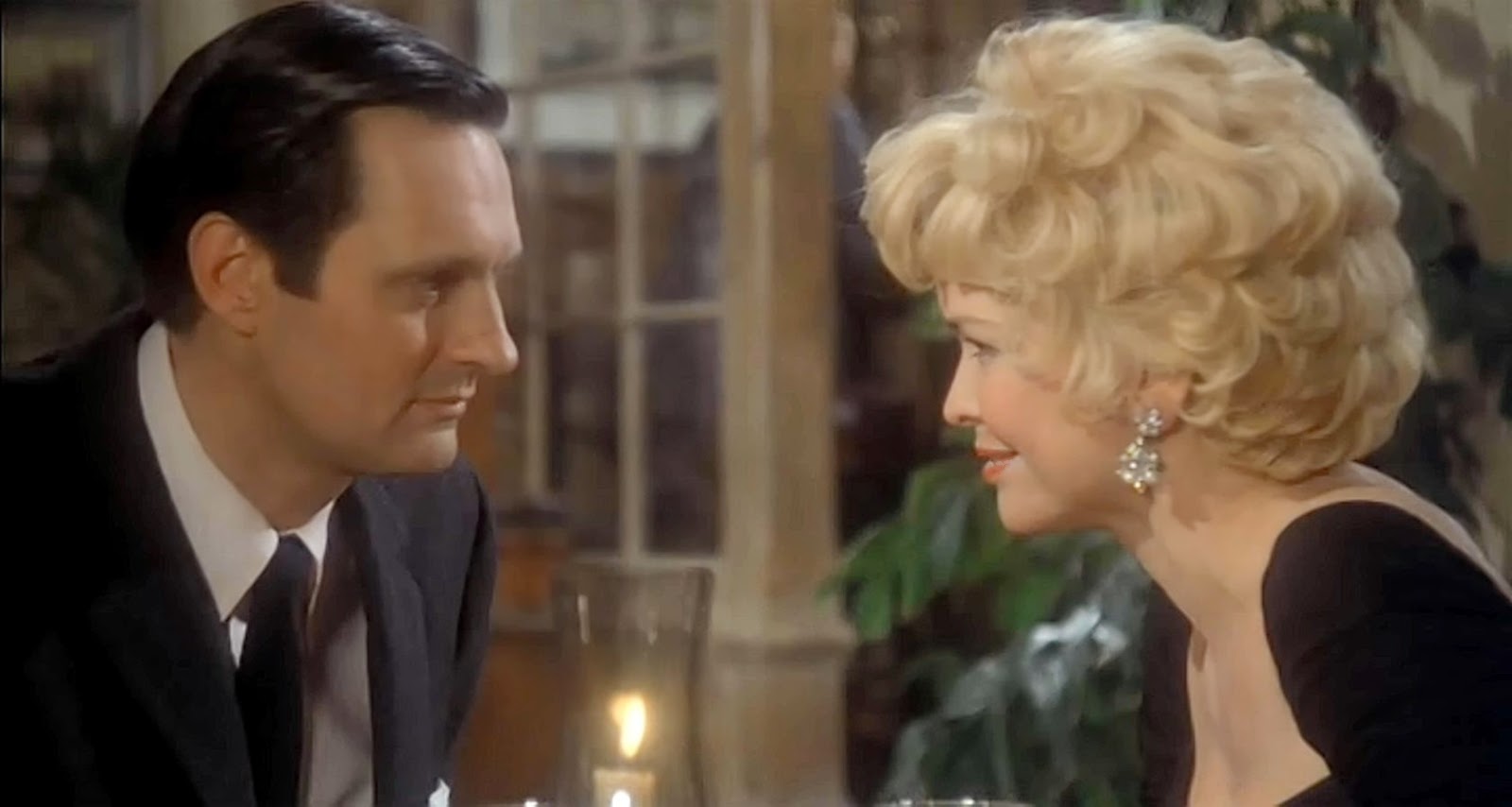
Released at the height of Alan Alda’s M*A*S*H fame, Same Time, Next Year brought to life both Bernard Slade’s 1975 play and a romance for the ages. As she’s a big fan of Alan Alda’s charm and humor, it’s no surprise that my VC loves this film so much and insisted on my reviewing it.

George (Alda) and Doris (Ellen Burstyn) happen to meet at a seaside hotel in 1951 while on solo retreats and immediately fall for each other, with the romantic mood set perfectly by the Oscar-nominated song “The Last Time I Felt Like This” (the kind of lovey-dovey theme that gets my VC tearing up with just the first few notes; it also concludes the film to earn a place in my End Credits Song Hall of Fame). After falling into bed as well, the two can’t abide never seeing each other again and, since their respective retreats coincide at the same time every year, they plan to meet annually, with the audience checking in every five years or so. The set-up and plot are simple and potentially corny, but Same Time, Next Year is a good example of a film that is elevated by some outstanding performances and dialogue.

Burstyn played Doris on stage as well opposite Charles Grodin, winning a Tony (she also garnered an Oscar nomination), and feels perfectly at ease with the role, even as she metamorphoses over the years from naïve housewife to hippie to confident businesswoman. Conversely, Alda changes in much more subtle ways, yet both remain recognizable and endearingly flawed through the decades. (It’s interesting to note that Alda’s M*A*S*H co-star Loretta Swit also played Doris on Broadway; that would have been a reunion of a different type.) They chat about their lives and families and children and politics, about George’s accountant quirks and Doris’s uncle with a metal plate in his head. As they continue to meet, it becomes clear that much can happen in a year’s time, and their relationship must grow and adapt to the sometimes painful changes they aren’t together to face. And of course, with Alda on hand, there’s a good deal of humor in the conversations too, such as George’s insistence on absolute openness despite habitually lying.

I do endorse this film with reservations, though, since one’s enjoyment from it depends on how well they can suspend their morality. I, for one, believe in faithfulness and monogamy, ideas that may seem foreign in a film about a decades-long affair. Yet as much as George and Doris love each other, they both love their own spouses too and speak affectionately of Helen and Harry. It isn’t all about sex; while most affairs aren’t like this, there is a degree of faithfulness to all the relationships, bonds that are clearly much deeper than a broken marriage or a one-night stand. Whether this is enough to justify the breach of trust is left to the audience, but it’s not enough to spoil my enjoyment of the film.

While my VC’s affection for Same Time, Next Year far surpasses mine, it’s still a romantic dramedy to remember. She claims that the viewer gets to know these characters, even those only mentioned like Harry and Helen, better than almost any other film. While I wouldn’t go that far, George and Doris are indeed the likable sort that I wouldn’t mind reuniting with, maybe, around this time next year.

Best line: (George, often enough for it to almost be his catchphrase) “All right, I didn’t think it through.”

VC’s best line: (George, recounting when they first met) “We had instant rapport. Did you notice that too?   (Doris) “No. But I know we really hit it off.”


Rank: List Runner-Up
 

© 2015 S. G. Liput

312 Followers and Counting

The Truman Show (1998)

20 Monday Apr 2015

Posted by sgliput in Movies, NaPoWriMo, Poetry, Reviews, Writing

≈ 2 Comments

Tags

Comedy, Drama, Sci-fi


Did you ever feel that you were being watched,
That someone saw each time you won or botched?
No one’s watching; don’t despair
(At least as far as I’m aware),
Yet Truman Burbank’s on TV,
Living life for all to see,
Quite contented in his dome,
Which he doesn’t know is home.
 
He has fans around the world who watch him daily
As he greets Seahaven every morning gaily.
No reality show’s greater,
Thanks to Christoff, its creator.
Due to Christoff’s shrewd promotion,
Truman’s frightened of the ocean,
So he never leaves his isle,
Though he’s tempted for a while.
 
Truman’s been content with blinders since his youth,
But he starts to have an inkling of the truth.
From a star that might be fake
To a radio mistake
To endorsements from his wife,
Things revolve around his life,
Such that he begins to wonder
What conspiracy he’s under.
 
He attempts to leave his quaint, idyllic course
But is urged to linger, even if by force.
When at last he gets away,
Sailing off across the bay,
Christoff tries to be his guide
From the unknown world outside.
Truman doesn’t want ideal;
He would rather have what’s real.
________________
 

(I had fully intended for The Truman Show to be part of my original list, and I even wrote the review last year. Yet, in looking over my archives, I found that I apparently never posted it. I don’t know how I could have missed it, but it’s time to correct that oversight. Better late than never, right?)

Who would have thought from films like Ace Ventura: Pet Detective, The Mask, and Dumb and Dumber that Jim Carrey could muster such a subtle, earnest performance? The Truman Show is without a doubt his finest film. I want to call it one of the most original stories of the last twenty years, but a little research revealed that it did have some forerunners, particularly a similar 1989 Twilight Zone episode entitled “Special Service.” While that episode had some perceptive themes, such as how some people are famous just because they’re on television (Snooki, Housewives, etc.), the movie improved on those themes, creating a film that both entertains and challenges our sense of paranoia and privacy. It’s also funny and pleasantly intelligent, shrewdly depicting certain rules of Truman’s world before they’re even fully explained.

Jim Carrey gets a chance to intermittently employ his trademark goofy grin and mannerisms, but he proves he can handle weightier material as he slowly discovers all is not right in his world. One of his best scenes occurs when his suspicions are first aroused, and accompanied by a mood-setting score, he wordlessly changes up his routine just to witness what will happen. Oscar nominee Ed Harris as show creator Christoff isn’t wholly unlikable as the overlord of Truman’s life, and his few scenes make it clear that he does care for Truman in a twisted way and believes that this charade is somehow in his subject’s best interest. Of the other actors, Noah Emmerich offers the most convincing deception, effortlessly earning Truman’s trust while giving little indication that he’s just an actor.

As a Christian, I might have taken issue with The Truman Show’s symbolic renunciation of its God stand-in, except that Christoff is just a stand-in. He’s a pretender, believing himself benevolent while using Truman for ratings and engaging often ridiculously obvious methods to keep him from discovering the truth. It’s a thought-provoking notion that all of our situations are pre-ordained and many groups have latched onto such concepts, but I believe God allows the multitude of human beings on this planet to choose their actions. Though He knows what will happen, He doesn’t interfere in the ways Christoff does but lets us choose, sometimes to our detriment. In addition, there’s no sacrifice on Christoff’s part, no desire for a real relationship, as God desires. While the filmmakers most likely intended Truman’s rejection of Christoff to mirror a rejection of Christ, Christoff’s actions are ultimately not God-like enough to warrant the comparison, unless you count watching from the sky. The film does challenge one’s view of God but not in an insulting or dogmatic way. I choose to perceive it as a critique, not of God, but of authoritarian frauds, posers, and maybe even governmental control freaks.

The Truman Show continues to be insightful and socially relevant in our fake reality-obsessed world and stands as Jim Carrey’s most Oscar-worthy performance. It continues to have an influence on modern films like Bolt and The Hunger Games and reinstated fears of surveillance to a post-1984 world. If only Jim Carrey would seek out more roles like this….

Best line: (Truman, as a kid in school) “I’d like to be an explorer, like the great Magellan.”  (his teacher, trying to convince him to not want to leave) “Oh, you’re too late. There’s really nothing left to explore.”

 
Rank: List-Worthy (should have been #100)
 

© 2015 S. G. Liput

296 Followers and Counting

← Older posts
Newer posts →

Recent Posts

  • We Didn’t Start 2025 (Recap)
  • NaPoWriMo 2025 Recap (Finally)
  • Sonic the Hedgehog 3 (2024)
  • It Happened One Night (1934)
  • Spellbound (2024)

Recent Comments

associatesofshellymann's avatarassociatesofshellyma… on My Top Twelve La La La So…
Kit's avatarKit Nichols on Bonnie and Clyde (1967)
lifelessons's avatarlifelessons on Look Back (2024)
Carol Jackson's avatarCarol Jackson on The Thief of Bagdad (1940…
Stephen's avatarStephen on Love Story (1970)

Archives

  • January 2026
  • December 2025
  • May 2025
  • April 2025
  • March 2025
  • February 2025
  • January 2025
  • December 2024
  • May 2024
  • April 2024
  • March 2024
  • February 2024
  • January 2024
  • December 2023
  • November 2023
  • October 2023
  • September 2023
  • July 2023
  • June 2023
  • May 2023
  • April 2023
  • March 2023
  • February 2023
  • January 2023
  • December 2022
  • November 2022
  • October 2022
  • September 2022
  • August 2022
  • July 2022
  • June 2022
  • May 2022
  • April 2022
  • March 2022
  • February 2022
  • January 2022
  • December 2021
  • November 2021
  • October 2021
  • September 2021
  • August 2021
  • July 2021
  • June 2021
  • May 2021
  • April 2021
  • March 2021
  • February 2021
  • January 2021
  • December 2020
  • November 2020
  • October 2020
  • September 2020
  • August 2020
  • July 2020
  • June 2020
  • May 2020
  • April 2020
  • March 2020
  • February 2020
  • January 2020
  • December 2019
  • November 2019
  • October 2019
  • September 2019
  • August 2019
  • July 2019
  • June 2019
  • May 2019
  • April 2019
  • March 2019
  • February 2019
  • January 2019
  • December 2018
  • November 2018
  • October 2018
  • September 2018
  • August 2018
  • July 2018
  • June 2018
  • May 2018
  • April 2018
  • March 2018
  • February 2018
  • January 2018
  • December 2017
  • November 2017
  • October 2017
  • September 2017
  • August 2017
  • July 2017
  • June 2017
  • May 2017
  • April 2017
  • March 2017
  • February 2017
  • January 2017
  • December 2016
  • November 2016
  • October 2016
  • September 2016
  • August 2016
  • July 2016
  • June 2016
  • May 2016
  • April 2016
  • March 2016
  • February 2016
  • January 2016
  • December 2015
  • November 2015
  • October 2015
  • September 2015
  • August 2015
  • July 2015
  • June 2015
  • May 2015
  • April 2015
  • March 2015
  • February 2015
  • January 2015
  • December 2014
  • November 2014
  • October 2014
  • September 2014
  • August 2014
  • July 2014
  • June 2014
  • May 2014
  • April 2014
  • March 2014
  • February 2014
  • January 2014
  • December 2013

Categories

  • Blindspot
  • Blogathon
  • Christian
  • Movies
  • Music
  • NaPoWriMo
  • Poetry
  • Reviews
  • TV
  • Writing

Meta

  • Create account
  • Log in
  • Entries feed
  • Comments feed
  • WordPress.com

Recent Posts

  • We Didn’t Start 2025 (Recap)
  • NaPoWriMo 2025 Recap (Finally)
  • Sonic the Hedgehog 3 (2024)
  • It Happened One Night (1934)
  • Spellbound (2024)

Recent Comments

associatesofshellymann's avatarassociatesofshellyma… on My Top Twelve La La La So…
Kit's avatarKit Nichols on Bonnie and Clyde (1967)
lifelessons's avatarlifelessons on Look Back (2024)
Carol Jackson's avatarCarol Jackson on The Thief of Bagdad (1940…
Stephen's avatarStephen on Love Story (1970)

Archives

  • January 2026
  • December 2025
  • May 2025
  • April 2025
  • March 2025
  • February 2025
  • January 2025
  • December 2024
  • May 2024
  • April 2024
  • March 2024
  • February 2024
  • January 2024
  • December 2023
  • November 2023
  • October 2023
  • September 2023
  • July 2023
  • June 2023
  • May 2023
  • April 2023
  • March 2023
  • February 2023
  • January 2023
  • December 2022
  • November 2022
  • October 2022
  • September 2022
  • August 2022
  • July 2022
  • June 2022
  • May 2022
  • April 2022
  • March 2022
  • February 2022
  • January 2022
  • December 2021
  • November 2021
  • October 2021
  • September 2021
  • August 2021
  • July 2021
  • June 2021
  • May 2021
  • April 2021
  • March 2021
  • February 2021
  • January 2021
  • December 2020
  • November 2020
  • October 2020
  • September 2020
  • August 2020
  • July 2020
  • June 2020
  • May 2020
  • April 2020
  • March 2020
  • February 2020
  • January 2020
  • December 2019
  • November 2019
  • October 2019
  • September 2019
  • August 2019
  • July 2019
  • June 2019
  • May 2019
  • April 2019
  • March 2019
  • February 2019
  • January 2019
  • December 2018
  • November 2018
  • October 2018
  • September 2018
  • August 2018
  • July 2018
  • June 2018
  • May 2018
  • April 2018
  • March 2018
  • February 2018
  • January 2018
  • December 2017
  • November 2017
  • October 2017
  • September 2017
  • August 2017
  • July 2017
  • June 2017
  • May 2017
  • April 2017
  • March 2017
  • February 2017
  • January 2017
  • December 2016
  • November 2016
  • October 2016
  • September 2016
  • August 2016
  • July 2016
  • June 2016
  • May 2016
  • April 2016
  • March 2016
  • February 2016
  • January 2016
  • December 2015
  • November 2015
  • October 2015
  • September 2015
  • August 2015
  • July 2015
  • June 2015
  • May 2015
  • April 2015
  • March 2015
  • February 2015
  • January 2015
  • December 2014
  • November 2014
  • October 2014
  • September 2014
  • August 2014
  • July 2014
  • June 2014
  • May 2014
  • April 2014
  • March 2014
  • February 2014
  • January 2014
  • December 2013

Categories

  • Blindspot
  • Blogathon
  • Christian
  • Movies
  • Music
  • NaPoWriMo
  • Poetry
  • Reviews
  • TV
  • Writing

Meta

  • Create account
  • Log in
  • Entries feed
  • Comments feed
  • WordPress.com

Blog at WordPress.com.

  • Subscribe Subscribed
    • Rhyme and Reason
    • Join 814 other subscribers
    • Already have a WordPress.com account? Log in now.
    • Rhyme and Reason
    • Subscribe Subscribed
    • Sign up
    • Log in
    • Report this content
    • View site in Reader
    • Manage subscriptions
    • Collapse this bar