VC Pick: The Christmas Card (2006)

Tags

, , ,


You speak a word or you write a card,
And think perhaps that they have no effect,
The same clichés by triteness marred
That lead to an “Aww,” then most likely neglect.

But none can know where their kindness ends
And where a larger design can begin,
Where welcomed strangers grow into friends
And holiday spirit makes room at the inn.

You might send a hundred clichés someone’s way.
A heartfelt word may brighten more than their day.
____________________

MPAA rating: Not Rated (definitely G)


I’m sorry I’m getting into the Christmas spirit a little late this year. I thought about compiling a top Christmas movie list, but it would be the same old popular favorites for the most part (A Christmas Story, Home Alone, etc.). Instead, I decided to turn over the holiday reins to my VC, who is fond of this little Hallmark movie that I gave her as a Christmas gift a couple years back.

While it’s perfect for the holidays, The Christmas Card is far from the best Hallmark has to offer. It starts out in Afghanistan, where Sgt. Cody Cullen (John Newton) receives an encouraging Christmas card from a woman out west. When a comrade is killed in action and Cody visits his widow on leave, it turns out that she lives conveniently in the same town as the woman who sent him the card. That would be Faith Spelman (Alice Evans), who conveniently has the same tastes as he does and attends the same church he visits. Conveniently, she has a father (Ed Asner) who takes an instant liking to the handsome soldier and would like nothing more than to fix him up with his daughter. Then, of course, there’s her jealous fiancé and split affections and, well, you see where this is going. While the plot is wholly predictable romantic novel stuff, it’s still rather sweet and enjoyable, though that’s largely due to the scenery.

The Christmas Card always fills my VC with drooling envy, thanks to its setting. The Spelmans live in the quaint mountain town of Nevada City, California, a beautiful hamlet brimming with holiday spirit and warm small-town hospitality. Not only is it the kind of town that could lure my earthquake-phobic VC to California, but the Spelman’s home looks like an HGTV dream house, a palatial but cozy log cabin with a roaring fireplace and a Christmas tree that stands above the rafters. Just looking at this snug residence is enough to put us in the Christmas spirit, perhaps to wrap in a blanket and sip hot chocolate. While the environment keeps my VC’s attention, Alice Evans keeps mine, with her sweatered loveliness and charm holding the affections of two jealous men, though I’m surprised half the town isn’t after her. It’s also cool to recognize her as the younger Eloise Hawking on Lost.

The Christmas Card is nothing deep. John Newton is particularly wooden as the stoic veteran, and neither the acting nor the script is great, though Ed Asner did get an Emmy nomination for his role as the buoyant matchmaker father. While its technical merit is low, it nevertheless rings with Christmas warmth and generosity and brings attention to the soldiers who are away from their families during the holidays. There are better Christmas movies out there, but we keep coming back to The Christmas Card. Merry Christmas to all!

Best line: (Cody, upon meeting Faith’s father Luke) “It’s a real honor to meet you, sir.”   (Luke Spelman) “Honor? I guess you haven’t caught wind of my reputation.”


Rank: List Runner-Up


© 2015 S. G. Liput

352 Followers and Counting


Serenity (2005)

Tags

, ,


When we reach the distant future,
Full of ships traversing space,
What if life were not that different
With the same self-seeking race,
Governments with dark agendas,
And the sins we can’t replace?

How could anyone continue
In ideals that aren’t esteemed?
Only with a firm believing,
Truer than it ever seemed,
Can a world of lies and secrets
Be perhaps in part redeemed.
__________________

MPAA rating: PG-13


After my introduction to Joss Whedon’s cult classic TV show Firefly (and its inclusion on my Top Twelve TV Series list), I had to check out its big-screen conclusion Serenity, and it was a home run! In the same way that Firefly was criminally underrated when aired and was canceled after merely eleven episodes, I’ve seen Serenity in the bargain DVD bin for $3.99 when it deserves so much better. Putting all of Whedon’s considerable talent on display, Serenity offers an equally entertaining alternative to Star Wars and Star Trek.

Luckily, all of the main cast of the show returned to reprise their roles, a winning ensemble of mostly lesser-known TV actors, with the villain played by then-lesser-known Chiwetel Ejiofor. The crew of the Firefly-class spaceship Serenity aren’t freedom fighters against the imperialistic Alliance nor noble voyagers exploring the ‘verse; instead, they are simply in search of their next job, which typically entails smuggling or some other less-than-legal enterprise. Captained by hard-nosed Malcolm Reynolds (Nathan Fillion, who continues to reference the show in other roles since), Serenity includes his old war comrade Zoe (Gina Torres), her pilot husband Wash (Alan Tudyk), amusing cutthroat Jayne (Adam Baldwin), cute engineer Kaylee (Jewel Staite), and the Tam siblings Simon (Sean Maher) and River (Summer Glau), who are fugitives from the Alliance and grudgingly welcome guests aboard the ship. Also included are those who have left the ship, peaceful but secretive Shepherd Book (Ron Glass) and Mal’s unacknowledged love interest Inara (Morena Baccarin), a Companion or respectable prostitute.

With all that information and more previously established in the show, Serenity is an impressive balancing act, offering a conclusive episode for the fans hungry for more and a surprisingly accessible adventure that can still appeal to newbies. Such is Whedon’s talent with ensembles, whether it be his cult TV series or movies like The Avengers. In some ways, I might compare Serenity with Guardians of the Galaxy, another fast-paced space tale with an ensemble of potential unknowns. Like Guardians, Serenity throws out all the information viewers need to know along with ample humor and characterization and doesn’t waste time ensuring that the audience is keeping up. Instead of the pop culture references of Guardians, though, Serenity combines its sci-fi trappings with a western desperado style to craft a unique blend of East, West, and future.

Serenity also proved to be an outlet for Whedon’s creativity. Within the first fifteen minutes, there’s a dream within a holographic log and an ingenious four-and-a-half minute tracking shot that introduces us to the entire ship and crew. Likewise, the dialogue is another Whedon trademark, full of clever colloquialisms, Chinese exclamations, and so much breakneck wit that I wonder why it wasn’t nominated for Best Original Screenplay. I also admire that, despite his atheism, Whedon emphasized the presence of religion and belief in this space-faring future, something Star Trek only did with alien cultures. (No aliens here.) In the first few minutes, I even recognized a knockout gadget that Whedon reused in his Agents of S.H.I.E.L.D. series.

All this fawning over it, and I’ve hardly said anything about the actual plot. Throughout the series, River had acted consistently weird due to the government’s experiments on her, and brother Simon acted as her rescuer and advocate, though there were hints that she could take care of herself. While the actual explanation and solution for her behavior don’t make total sense, the film offers insights and resolutions for many elements that the show didn’t have time to conclude: River’s actual rescue, Kaylee’s crush on Simon, the Alliance’s reasons for wanting River back so adamantly, River’s untapped talents, and the nightmarish Reavers, the bands of space maniacs as mindless as zombies and ten times as ferocious. Mal is not only caught between the Alliance’s coolly murderous Operative (Ejiofor) and an unrecognized threat on board his ship; he’s also caught in a web of right and wrong, heroism and disillusionment, cynicism and belief. This futuristic world is unforgiving and sometimes painfully harsh, but Whedon keeps a masterful balance among the dramatic, comedic, and jaw-droppingly awesome. One scene toward the end is especially stunning and practically gave me goosebumps.

If you haven’t seen Firefly and happen to have fourteen hours to burn, watch it first, but there’s so much excellence evident in Serenity that I recommend everyone see it regardless. A few aspects of the end may not be ideal, but the film as a whole is an exciting success as both a standalone film and the finale Firefly never got. Like Firefly, it’s an underrated science fiction treat.

Best line: (Mal) “Half of writing history is hiding the truth.”


Rank: Top 100-Worthy


© 2015 S. G. Liput

350 Followers and Counting


The Hunger Games: Mockingjay – Part 2 (2015)

Tags

, , ,


Children fought within the Games,
As posh patricians praised their names,
And through the safety of TV,
Let death abound for all to see.

Now death has bounded through the screen,
And at the urging of a teen,
The poor plebeians meant to lack
Have gained the courage to fight back.

When tyrannies use violent means
And worship death on TV screens,
It then should come as no surprise
In violence do the people rise.
For freedom, violence intervenes,
For can mankind learn otherwise?
________________

MPAA rating: PG-13


After watching the final Hunger Games film and contemplating whether I liked it or Catching Fire best, I’ve come to the conclusion that Mockingjay – Part 2 is the best installment of the series. The final chapter of any franchise is typically meant to be the grandest and most important, a rare but desirable feat that is indeed met by this last portion of Katniss Everdeen’s story.

Though I’m one of the few people not to have read the books, I’m well aware that Mockingjay is the least favored of Suzanne Collins’s trilogy, and some reviews for Mockingjay’s two film adaptations have been similarly blasé, since they say the book is better and its predecessors are better still. Yet Part 2 delivers on the setup of Part 1, trading in the previous film’s relative lack of thrills for the fast-paced intensity of the Maze Runner series.

I’ll try to be general to avoid spoilers: Katniss (ever-outstanding Jennifer Lawrence) and President Coin’s rebels aim for President Snow and the Capitol, even as the archer struggles with her split affections and Peeta’s recent brainwashing. Considering how Part 1 used Peeta’s sudden indoctrination as its climax, I was glad that it wasn’t swept away as a minor setback; instead, it becomes an ongoing risk, as well as a satisfying method of ironing out the reality among all the lies. The actual mission grows in importance as they continue, and the Hunger Games-style dangers encountered make Mockingjay – Part 2 the most intense film of the franchise, with one sequence that seemed fit for a horror movie.

Considering everything that has come before, it should be no surprise that there are many deaths along the characters’ difficult journey, and I suspect this is part of what many fans disliked. Killing off characters is most painful when it seems unfair, and such displeasing deaths can cause fans to be angrier at the storyteller than the characters responsible. (A recent example I disliked was in How to Train Your Dragon 2). Mockingjay – Part 2 has twists that aren’t exactly what fans would want or expect, but the story makes the best of them and ends up sadder but wiser, yet still fulfilling.

While the biggest complaint about Mockingjay is how it has been split into two parts for the sake of money, Part 2 actually served to vindicate that decision for me on the narrative level, at least somewhat. One hope I had for the Hobbit trilogy was that, by stretching the dwarves’ screen time, their characters would grow more familiar and not just be thirteen interchangeable companions. While Jackson failed in that regard, I felt Mockingjay succeeds. With so many new characters introduced between Parts 1 and 2, it made sense to establish some earlier on to distinguish them from the redshirts who don’t have enough screen time to leave an impression. (To use a Marvel comparison, whose death had more impact, that of Coulson, who was seen in multiple films, or that of Quicksilver, who had one?) While the decision did Part 1 no favors, it works to Part 2’s advantage.

As the capstone of The Hunger Games franchise, Mockingjay – Part 2 is both an exciting blockbuster and a dark climax for a dark series. While some elements may not satisfy, such as the resolution to the whole love-triangle friction, the majority do. The expansive cast perhaps aren’t fully utilized, but plot progression is more important than characterization at this point, since we’ve already gotten to know the important players over three films. (I was glad that Philip Seymour Hoffman’s role as Plutarch Heavensbee wasn’t much affected by his death earlier this year; his absence was only felt in one scene and was well sidestepped.) Most importantly, amid the chaotic action and sci-fi spectacle, the film reaffirms the franchise’s ultimate message. As Katniss has grown from fighting for survival to fighting for freedom or revenge, the struggle has not simply been against monosyllabic presidents but against anyone with contempt for life. It’s a theme still very much relevant today and one I hope will be ever in our favor.

Best line: (Katniss) “There are much worse games to play.”


Rank: List-Worthy (joining the other three in the series)


© 2015 S. G. Liput

349 Followers and Counting


The Silence of the Lambs (1991)

Tags

, ,


Evil comes in many forms,
In the loner and the swarms,
In the wielder of the knife,
In the prober of your life.
Though it hides or means to try,
It draws your interest and your eye.

Dark are deeds we’d never do,
Yet they still are dared by few.
Justice runs to halt the spread,
But if it wins, there’s still the dread.
Evil loves to carve its notch,
But why do any choose to watch?
_________________

MPAA rating: R
After years of hearing how great it is and seeing most of Anthony Hopkins’s performance through clips, I decided to finally watch the Best Picture of 1991. The Silence of the Lambs is everything critics have praised over the years: a dark mystery, a dramatic powerhouse, a compelling character study of two opposing forces, one seeking justice and the other too demented to be fully understood. It is both Hopkins’s and Jodie Foster’s finest hours, winning both of them Academy Awards, as well as Oscars for Best Director and Best Screenplay. And it is a great film which I have little desire to see again. The Silence of the Lambs is one of those movies that I can admire without being able to fully embrace as a favorite, more due to my personal sensitivities than to any flaws on the film’s part.

It’s an ingenious setup, pitting an eager but untested FBI agent-in-training (Foster) against the memorably evil serial killer Buffalo Bill (Ted Levine) with the aid of the even more memorably evil killer Hannibal Lecter (Hopkins). Clarice Starling is a woman trying to prove herself to her superior Jack Crawford (Scott Glenn) and to save other women, who are being killed and skinned by Bill across the Midwest. Jonathan Demme’s directorial tactic of filming actors as they look directly into the camera is even more effective than in his next film Philadelphia (which perhaps served to compensate for the allegedly homophobic aspects of Silence). As Crawford or Lecter or various men stare at Clarice and by extension the audience, it feels as if she is being sized up, measured, evaluated as an asset, a threat, or a toy. It’s an uncomfortable sensation but unique and intriguing enough to constantly hold our attention and keep us and Clarice on our toes.

Of course, the most remarkable element of the film is Anthony Hopkins, who amazingly won Best Actor for only sixteen minutes of screen time. He’s unflinchingly malevolent yet unsettlingly polite, a performance so captivating that it nearly dwarfs the rest of the film (hence, Best Actor rather than Best Supporting Actor). As diabolical and conniving as Lecter is, it’s Levine’s performance as Buffalo Bill that I found deeply disturbing. While Demme used much restraint in depicting the violence, Bill’s perverse cruelty doesn’t leave the mind easily, and I’ll probably just skip his scenes whenever I attempt a rewatch. It’s a wonder Levine has been able to move on from such a vile role.

Beyond Bill’s foul obsessions, I suppose my tepid appreciation stems from the fact that The Silence of the Lambs made me consider why serial killers are so popular. I don’t mean the supernatural types like Freddy Krueger (though I don’t like them either), but the modern focus on potentially real people who commit horrendous acts. Real-life killers like Ed Gein and Ted Bundy have inspired films like Psycho and Silence of the Lambs, and serial killers are still trendy in TV shows like Dexter and Hannibal. What is it that is so compelling about these experts of violence? Most people would never dream of committing such acts, and yet we watch them or hear about them; we study their modus operandi and are fascinated.

The Silence of the Lambs offers some insight into its killers, whether it be the deductive clue-chasing of the FBI agents tracking Bill down or the dehumanizing way Bill refers to his victims as “it.” Lecter represents the enthralling, psychological aspect of these butchers, while Bill epitomizes the disgust. It’s fascinating, yet I can’t help but feel guilty and repulsed by my own fascination. The Silence of the Lambs is a masterfully disturbing thriller, but I don’t often like being disturbed. I don’t want Hannibal Lecter inside my head.

Best line: (Hannibal Lecter, with his most iconic line) “A census taker once tried to test me. I ate his liver with some fava beans and a nice Chianti. Sssffff.”


Rank: List Runner-Up


© 2015 S. G. Liput

348 Followers and Counting


VC Pick: Soul Man (1986)

Tags


Being black and being white
Can form opinions, wrong and right,
Attitudes and points of view
Based solely on another’s hue.

Most get only one perspective,
Rarely totally objective.
Maybe, though, we’d change our views
If we were in another’s shoes.

Although we may be still behind
On growing fully colorblind,
Insight instead of reprimand
Might help us further understand.
_____________________

MPAA rating: PG-13

When I watched Soul Man at my VC’s suggestion, I had no idea it was considered a controversial movie. After I’d seen it, I was surprised at the number of sites that listed it as shamelessly racist alongside films like The Birth of a Nation and Song of the South. It also seemed to impede C. Thomas Howell’s rise to stardom, since he’s mostly been resigned to TV and low-quality roles ever since. And yet, I liked Soul Man, which may be surprising too since I’m not a racist. I suppose, as a precaution, I should say up front that I am not black, and I apologize for anyone that this movie or my appreciation of it might offend. But I liked Soul Man.

In addition to Red Dawn and Gettysburg, I would even go so far as to call it one of C. Thomas Howell’s best movies. In it, he plays Mark Watson, a spoiled white guy whose father seeks to teach him a lesson by cutting off his funds right on the eve of his freshman year at Harvard Law School. Faced with giving up his college plans, Mark applies for and gets a scholarship…an African American scholarship. He does so by overdosing on tanning pills, an improbable and inadvisable method which doesn’t make sense, is never further explained, and serves merely as a superficial reason for Mark passing himself off as black.

With just his one friend Gordon in the know (Arye Gross), he goes in with several presumptuous, perhaps racist ideas of what being black is all about, such as assuming a black professor (James Earl Jones) will give him special treatment. “This is the Cosby decade,” he says. “America loves black people.” It doesn’t take long, though, for him to get a taste of other people’s racism, whether it be the prejudiced jokes of the local school bigots or the overly suspicious eye of a policeman (and those kinds of reports are still in the news). Over time, his perspective changes, based on both his own experience and his gradual relationship with fellow classmate Sarah (Rae Dawn Chong, whom Howell later married…for a year). Of course, this is a comedy, so the drama usually gives way to Mark’s hilarious attempts to avoid detection as his ill-conceived plan spirals out of control, and I must say that Soul Man had me laughing harder than I have in a long time, particularly when Mark does his Stevie Wonder impression.

So beyond whether I enjoyed it or not, I suppose the main question is this: is Soul Man racist? No, I don’t believe it is. Yes, there are racist stereotypes present, such as when Mark visits a girlfriend’s family (including an underused Leslie Nielsen), who all have ridiculously prejudiced views of Mark just because he appears black. Yes, most of the white characters have biased opinions of African Americans, from assuming they must all be good at basketball to automatically expecting to be robbed by them. Yes, the N word is uttered, though not nearly as much as in other movies. And yes, C. Thomas Howell wears black face to pretend to be black. If that in and of itself offends you, then steer clear of Soul Man.

Yet I have to believe that a film can present negative elements without endorsing them. The film could be compared to Arye Gross’s rather overblown legal argument toward the film’s end, offensive and derogatory if taken at face value but actually with the opposite meaning for those willing to see it. Viewing racism through a comedic lens may not carry universal appeal, but Soul Man is not meant to be a comprehensive critique of the subject, and even Mark admits that he couldn’t possibly understand what it means to be black. Characters and their viewpoints can be absurdly racist, but the movie intends for us to laugh at them and perhaps consider our own views and assumptions about others at the same time. Some jokes also happen to be funnier in retrospect, such as Mark’s white girlfriend suggesting an erotic novel called Shades of Gray. Very interesting…. Soul Man may be anathema to the politically correct, but if not for the controversy, I bet it would be an ‘80s classic by now.

Best line: (Gordon to his roommate, with impeccable timing) “We should get an ocelot!”


Rank: List-Worthy


© 2015 S. G. Liput

347 Followers and Counting


Opinion Battles Round 16 Favourite Film Set in Space

Be sure to vote on the last Opinion Battle of 2015 and pick your favorite film set in space! I chose Gravity, a film that truly gives you an idea of the immense beauty and danger of space itself. I’m looking forward to the new round of Opinion Battles beginning next year!

Unknown's avatarMovie Reviews 101

opinion battles

Best Film Set in Space

For the final round on year one we are looking at the best film set in space, mainly to celebrate the upcoming release of Star War Episode 7. We have plenty of films that have been released through nearly all genres that are st in space but what is our favourites?

If you would like to join in next year’s Opinion Battles send an email to moviereviews101@yahoo.co.uk for more details.

Darren – Movie Reviews 101

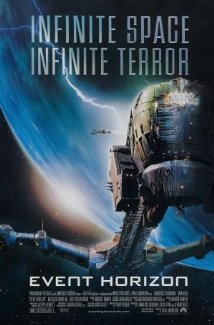
Event Horizonevent

I have selected Event Horizon because I feel it could easily be one of the most underrated horror films that built on what films like Alien created, it offers a new enemy in space rather than the easy option of aliens giving us a manmade terror. I will like to point out this is one horror film that could easily be missed but the pure levels of gore…

View original post 1,427 more words

Genre Grandeur – The One I Love (2014) – Rhyme & Reason

Here’s my final review for MovieRob’s November Genre Grandeur of alternative romances, this time for the Twilight Zone-ish The One I Love.

movierob's avatarMovieRob

altloveFor this month’s next review for Genre Grandeur – Alternate Love Story Movies, here’s a review of The One I Love (2014) by SG Liput of Rhyme & Reason

Thanks again to Abbi of Abbiosbiston.com for choosing this month’s genre.

Next month’s Genre has been chosen by Tim of FilmFunkel  We will be reviewing our favorite Found Footage movies.  In order to get a better idea as to what this genre might include, check out this post by Tim.

Please get me your submissions by the 25th of December by sending them to TisTheFFSeason@movierob.net  Try to think out of the box! Great choice Tim!

Let’s see what SG thought of this movie:

_____________________________________

3The One I Love (2014)

The one I love and I fall short

Of perfect pairs with shared support.

We disagree repeatedly,

And yet my love will always be

The only one I love.

Though…

View original post 538 more words

Genre Grandeur – (500) Days of Summer (2009) – Rhyme & Reason

Here’s my second review for November’s Genre Grandeur of alternative romances, hosted by MovieRob, this time the non-love story of (500) Days of Summer.

movierob's avatarMovieRob

altloveFor this month’s next review for Genre Grandeur – Alternate Love Story Movies, here’s a review of (500) Days of Summer (2009) by S.G. Liput of Rhyme and Reason

Thanks again to Abbi of Abbiosbiston.com for choosing this month’s genre.

Next month’s Genre has been chosen by Tim of FilmFunkel  We will be reviewing our favorite Found Footage movies.  In order to get a better idea as to what this genre might include, check out this post by Tim.

Please get me your submissions by the 25th of December by sending them to TisTheFFSeason@movierob.net  Try to think out of the box! Great choice Tim!

Let’s see what S.G. thought of this movie:

_____________________________________

2

(500) Days of Summer (2009)

Boy meets girl; they feel the pull

That makes all love predictable;

Their dates are fun; their hearts are full

Until reality sets in.

The happy times of blithe romance,

View original post 695 more words

Genre Grandeur – Mannequin (1987) – Rhyme & Reason

Here’s my first review for MovieRob’s November Genre Grandeur of alternative romances, the both hated and loved Mannequin.

movierob's avatarMovieRob

altloveFor this month’s next review for Genre Grandeur – Alternate Love Story Movies, here’s a review of Mannequin (1987) by S.G. Liput of Rhyme and Reason

Thanks again to Abbi of Abbiosbiston.com for choosing this month’s genre.

Next month’s Genre has been chosen by Tim of FilmFunkel  We will be reviewing our favorite Found Footage movies.  In order to get a better idea as to what this genre might include, check out this post by Tim.

Please get me your submissions by the 25th of December by sending them to TisTheFFSeason@movierob.net  Try to think out of the box! Great choice Tim!

Let’s see what S.G. thought of this movie:

_____________________________________

1Mannequin (1987)

Look in the window and what do you see?

A mannequin posing and staring at thee,

Standing there motionless, waiting for night,

Waiting for you to get out of her sight.

Then when you’re gone, who’s…

View original post 527 more words

My Top Twelve Meet-‘Em-and-Move-On Movies

Tags

,

Not sure what a Meet-‘Em-and-Move-On movie is? That’s not surprising since it’s a label I invented, but you’ve surely seen many such films. It’s an unofficial subgenre that I am always deeply moved by and includes many of my favorite movies. In fact, this list may mirror my top movie list overall due to my personal connection with many of these examples.

I call them Meet-‘Em-and-Move-On movies (MEAMOs) because they follow a single character or group throughout a journey of some kind, sometimes a quest, sometimes a personal mission, sometimes the key events of life itself. Throughout said journey, they meet various, often quirky characters who somehow affect them or vice versa and move on, sometimes meeting the same characters later. Usually (though not always) there is some climactic reunion or a look back at all those met along the way, and it is this element that especially tugs at my heartstrings with powerful themes of friendship, love, or forgiveness.

It took me a while to realize the commonalities among these movies and why I enjoy most of them so much. My earliest encounter with the Meet-‘Em-and-Move-On, which helped solidify my admiration for such stories, was Kate DiCamillo’s picture book The Miraculous Journey of Edward Tulane, one of my favorite children’s books since it brought me and my mom to tears. Stories like this especially rely on how well they are told, building character in the diverse travelers on the road of life and suffusing increasing meaning and interest into the trip and its destination. Most of these films I count among my favorites, though I’m ranking them on both my personal preference and on how well they fit the criteria of a Meet-‘Em-and-Move-On. I’m always on the lookout for new examples of this personal genre, so feel free to comment! On to the list!


  1. The Way Back (2010)


Not to be confused with The Way or The Way, Way Back, The Way Back tells the supposedly true story of a group of prisoners, who escape from a Russian gulag in Siberia. They then proceed to walk all the way to India. The journey is incredibly harsh, ranging from frigid taigas to scorching deserts, yet they carry on, supporting each other along the dangerous road. Jim Sturgess, Ed Harris, Colin Farrell, and Saoirse Ronan are all in top form, and the reunion at the end touched me deeply.


  1. The Way (2010)


When Thomas Avery (Martin Sheen) must travel to France to claim the body of his dead son (director and Sheen’s real son Emilio Estevez), he’s not planning a journey, but he decides to take up his son’s unfinished pilgrimage along the Camino de Santiago de Compostela in Spain. Carrying his son’s ashes, he encounters an overweight Dutchman (Yorick van Wageningen), a snide Canadian (Deborah Kara Unger), and an Irish writer (James Nesbitt), all walking for different reasons, along with various other travelers and locals. While Avery first sees the hike as a self-imposed obligation, he transforms over the journey from cynic to pilgrim, and everyone finds realistic catharsis, even if it’s not what they expected.


  1. The Curious Case of Benjamin Button (2008)


While this fantastical Brad Pitt opus is a prime example of a meet-‘em-and-move-on film, there are others that I just enjoy more. Adapted by Eric Roth (who also wrote #3 on this list) from an F. Scott Fitzgerald story, The Curious Case of Benjamin Button follows the titular character throughout a backwards life. Born as an old man, Benjamin grows younger over the years as he meets and learns from his adopted mother (Taraji P. Henson), a brief lover (Tilda Swinton), his first employer (Jared Harris), and of course his true love Daisy (Cate Blanchett). I love how some of the unique characters he meets pop up later in the story, and the final scenes add an epic and magical sweep to all those who touched Benjamin’s uncommon life.


  1. Taking Chance (2009)


While I was only recently introduced to this underappreciated modern classic from HBO (thanks again to MovieRob), I realized after seeing it that part of its power stems from its MEAMO trappings. Kevin Bacon won an Emmy playing Lt. Colonel Michael Strobl, who escorted the body of slain soldier Chance Phelps back home. During the trip, he briefly connects with fellow Americans, who render due reverence and small but meaningful offerings of respect to the deceased and his escort. As Strobl meets and moves on, he experiences the gratitude and grief of a nation.


  1. Paulie (1998)


A favorite of mine since childhood, Paulie is a film that I like to call a mix of Forrest Gump and Lassie but with a parrot. Many MEAMOs are actually recollections of a main character, and in this case the caged Paulie (voiced by Jay Mohr) recounts his life to a Russian janitor (Tony Shalhoub). Beginning with his first dear owner Marie, who taught him to speak, Paulie describes his separation from her and his ongoing quest to reunite. Gena Rowlands, Cheech Marin, and Mohr himself play his varied owners along the way, who teach him everything from manners to burglary, but Marie is always his goal. This was a personal tearjerker of mine for a long time.


  1. War Horse (2011)


Further proof that a MEAMO can also follow an animal, even one less anthropomorphized than Paulie, War Horse is modern Spielberg at his best. The bond between English farm boy Albert Narracott (Jeremy Irvine) and his horse Joey is established early, and when Joey is sent to serve as a steed in World War I, that bond serves as strength to sustain them through the horrors of war. As he survives where other don’t, Joey journeys between owners, from a British captain (Tom Hiddleston) to two German brothers to a French farmer and his granddaughter. While Joey himself may be seen as a blank slate, he acts as witness to the stresses, reliefs, and camaraderie of battle.


  1. The Shawshank Redemption (1994)


It may not seem like an obvious fit, but Shawshank is an example of how a Meet-‘Em-and-Move-On can focus on a static character as others drift through his life rather than the other way around. Tim Robbins is Andy Dufresne, a wrongfully convicted prisoner of Shawshank State Penitentiary. While his friendships are mainly with a small group of jailbirds, particularly Red (Morgan Freeman), he also endures cruel inmates, placates hostile guards, and connects with more sympathetic prisoners, whose moving on can be sharply tragic. It does end with a reunion too, so it counts.


  1. The Five People You Meet in Heaven (2004)


Mitch Albom’s ingenious novel deserved a good adaptation, and this Hallmark film delivered it in a truly affecting style. After Eddie (Jon Voight), an aged amusement park maintenance man, dies from an accident, he meets five key people from his life, which is unveiled through flashbacks of his childhood, his service in World War II, and his seemingly worthless life afterward. These five people serve to emphasize the theme of many MEAMOs, that people leave unexpected influences on those they meet and one cannot fully know in life how they have affected others for good or ill. Seeing this made clear to Eddie is both heartwarming and heartbreaking, and the reunion at film’s end is one of the few things that can still bring me to tears.


  1. Finding Nemo (2003)


While not the only animated MEAMO, Finding Nemo is the best, following the familiar but unparalleled formula of separation, journey, and reconciliation. Marlin the clownfish (Albert Brooks) loses his son to human divers and must brave the entire ocean to save him. Accompanied by lovable Dory (Ellen DeGeneres), he encounters a multitude of marine acquaintances, from sharks to sea turtles to jellyfish to whales. By the end, the journey has transformed his relationship with Nemo in all the best ways. I can only hope that next year’s Finding Dory can even come close to this Pixar classic.


  1. Forrest Gump (1993)


The quintessential example of a Meet-‘Em-and-Move-On film, Oscar winner Forrest Gump follows Tom Hanks’s devoted dimwit from rural Alabama to the jungles of Vietnam to the shrimping waters of Louisiana. All the MEAMO elements are here: a key protagonist, quirky adventures, acquaintances who pop up again later on, and a longed-for reunion (though that part isn’t as prominent as in other films). In addition to the fictional characters Forrest meets and moves on from, he also bumps into various historical figures during his life, leaving an impact on them and vice versa. This is the film that helped me to define what it is I love about this kind of movie, and it’s one to which I keep returning time after time.


  1. Mr. Holland’s Opus (1995)


As much as I love Forrest Gump, Mr. Holland’s Opus still edges it out. Another example of a stationary protagonist, this is the story of a music teacher (Richard Dreyfuss), who inspires class after class of high school students while struggling with his deaf son and personal lack of fulfillment. The teacher-student relationship is a perfect example of how one’s actions can have a far-reaching influence on another’s life. When Mr. Holland’s full impact is revealed to him along with the culmination of his musical aspirations, it’s one of the most satisfying lump-in-the-throat scenes ever.


  1. The Lord of the Rings Trilogy (2001, 2002, 2003)


Imagine my delight when I realized that my favorite movie trilogy fits into my favorite genre. Since the MEAMO might simply be considered a quest movie, Frodo’s quest to destroy the one Ring definitely qualifies. He and fellow hobbit Sam meet dwarves, elves, men, monsters, Gollum, more men, a giant spider, and more orcs, and in true MEAMO fashion, these comrades and enemies tend to fall away and resurface as the quest continues. Once the Fellowship breaks up, there are actually three intertwining “quests,” and though there are separations and returns aplenty, the final reunion is nobly poignant, enhancing the sense of just how far these characters have come on their journey, which is what Meet-‘Em-and-Move-On movies are all about.


Here are some other examples of the MEAMO style, in alphabetical order. I don’t particularly like a few of these, and some barely qualify, but thanks to the power of the genre, they all have their potent moments.


A League of Their Own (1992) – This dramedy about women’s baseball is a rather tenuous example, but the reunion at the end seems to make it fit the mold.

The Autobiography of Miss Jane Pittman (1974) – The inspiring life of an African-American woman is traced from slavery to the Civil Rights Movement.

Big Fish (2003) – Tim Burton’s take on the genre is a little too out there for me but still good.

Brave Story (2006) – This anime quest gains depth as it continues, though it’s somewhat reminiscent of a video game.

Children Who Chase Lost Voices (2011) – Another anime quest with beautiful animation and emotion.

The Color Purple (1985) – This adaptation of Alice Walker’s novel features one of the most touching reunions ever filmed.

Extremely Loud and Incredibly Close (2011) – This affecting drama follows a boy who scours New York City and interviews many citizens for any clue about a key left by his father, who died on 9/11.

Homeward Bound: The Incredible Journey (1993) – Two dogs and a cat travel over mountains in search of their owners.

The Killing Fields (1984) – This real-life drama about Communist Cambodia isn’t exclusively a MEAMO, but the latter half has elements of it.

Life of Pi (2012) – Again, the lifeboat scenes don’t quite fit the mold, but the colorful lead-up stories do.

Little Big Man (1970) – Something of a Western precursor to Forrest Gump, with an age-spanning performance from Dustin Hoffman.

The Odd Life of Timothy Green (2012) – A sentimental tale of a perfect son with leaves.

Over the Garden Wall (2014) – An Emmy-winning animated miniseries with a basis in fairy tales; overly weird in spots but with a unique style.

The Power of One (1992) – An occasionally cruel but touching drama set in South Africa.

Secondhand Lions (2003) – A sweet and quirky tale of a boy sent to live with his two grumpy great-uncles with colorful pasts.

Slumdog Millionaire (2008) – Best Picture winner with a feel-good ending, even if the rest doesn’t always feel good; another good example of minor interactions influencing the main character’s journey.

The Straight Story (1999) – A rather boring but pleasant tale of a man’s cross-country trek on a riding lawn mower.

Watership Down (1978) – Another animated example with rabbits in search of a new home.

The Wizard of Oz (1939) – Dorothy’s journey through Oz is as classic as classic can be.