(Today’s NaPoWriMo prompt was to incorporate an “enigma” or something hidden into the poem, so I thought a movie about solving Enigma would be perfect. For my own secret message, try stringing together the underlined letters.)
The German Codes in safety rode Upon the winds of radio,
And passed with ease their strategies
To Mystify the Allied foe.
Bright minds were scratched and Egos matched,
The Riddle daily taxing Brains
Who knew their best At this math Test Could still Harm lives and Squander gains.
Unraveling this Risky thing
Was not for one man to Explain.
What Cracked And tamed the Numbers game? A mind Combined To break the chain.
________________
MPAA rating: PG-13
Benedict Cumberbatch seems most comfortable playing the smartest guy in the room, even if he only thinks he’s the smartest guy in the room. Sherlock, Doctor Strange, etc. exemplify this, and The Imitation Game allowed him to apply that proven characterization to a real-life figure, Alan Turing, a mathematical computer pioneer who helped crack the German Enigma code during World War II.
Cumberbatch is the film’s strongest asset, channeling the same troubled-genius mentality as Russell Crowe in A Beautiful Mind, not so much in the mental health aspects as in his blinding self-confidence and difficulty working with others. His acting, as always, is beyond reproach and distinguishes Turing as a man of vision frustrated by the inflexibility of his superior (Charles Dance) but too single-minded himself to recognize the need for collaboration with the rest of his team of genius mathematicians. Keira Knightley’s Joan Clarke serves as an attractive reminder that a talent for numbers is not Turing’s alone, and it’s an insightful pleasure watching Cumberbatch engage with her and his fellow teammates to perfect his decoding machine. The espionage angle involving a major general from MI6 (Mark Strong) is also peppered with intrigue.
The performances, Alexandre Desplat’s score, and the period-piece re-creations are top-notch, but the film’s historical accuracy leaves much to be desired. Many “based-on-a-true-story” movies take artistic license, but learning after the fact that most of the events of the film occurred completely differently is rather disappointing. Likewise, the film’s ultimate transition from code breaking and war strategies to a social tragedy centered on the treatment of Turing’s homosexuality lost my interest. This aspect of Turing’s life was clearly important and lamentable, but it felt tacked on and even a tad manipulative when paired with the historical liberties. The Imitation Game is handsome and well-acted and even consummate in its first half, but the dual intentions of the filmmakers to merge two kinds of stories, one about war decoders and one about social injustice, feel like a forced fit that doesn’t live up to its early promise.
Best line: (Turing’s childhood friend Christopher, and later Joan) “Sometimes it’s the very people who no one imagines anything of who do the things no one can imagine.”
(Today’s NaPoWriMo prompt was for an elegy with some kind of unorthodox focus. I don’t know about unusual, but a film about loss seemed a good fit for a mournful elegy.)
The boy who died filled a hole, you know,
Before he lost his chance to grow,
Before the accident defined
And left the hole behind.
Where he’d have been, there’s no one there
To fill his kindergarten chair,
To chase the dog or yet annoy
His parents with a toy.
Where he’d have been, his parents frame
And argue who is more to blame.
The empty frame can comfort bring
Or aggravate the sting.
His loss unravels and unrolls
A family into separate souls,
Two wondering if they can fill
The name of parent still.
While life goes on, the hole will stay,
Though cloaked in time till Judgment Day.
To build from it is not a sin,
The hole where he’d have been.
__________________
MPAA rating: PG-13
Based on a play by David Lindsay-Abaire, Rabbit Hole is a deeply affecting portrait of realistic familial grief, much in the vein of Ordinary People and Manchester By the Sea, though closer in appeal to the former. It’s not so much about tragedy as how people cope with it and tackles the subject in an intimate way that draws phenomenal performances from its main actors, most notably Aaron Eckhart and Oscar nominee Nicole Kidman as parents grieving the death of their little boy.
Months after their son Danny is killed by a car, Becca (Kidman) and Howie Corbett (Eckhart) attend group therapy sessions and go about life as normal, but life is not the same. With every reminder of Danny, the two react in opposite ways: Howie values every smudge and picture made by his son, while Becca wants to give away his clothes and even sell the house to escape his ever-present memory. Likewise, they seek out comfort in different people, whether a sympathetic acquaintance who understands grief (Sandra Oh) or the very person responsible for Danny’s death (Miles Teller). Through it all, the Corbetts’ everyday life is like a scab covering the wound, quick to be torn off at any mention of Danny, which leads to some uncomfortable and heart-rending emotional fireworks. Nicole Kidman received the lion’s share of the praise, including an Oscar nomination, but I thought Eckhart was just as good, matching the high quality of all the performances.
Rabbit Hole brings home how elusive comfort can be in the wake of an unspeakable grief and how it may be found in unexpected places, perhaps a comic book, a dog, or a conversation that once provoked resentment. I would have liked Becca to see the value in the religious solace she denounces at first, but her mother Nat (Dianne Wiest) mentions the support of her church, and it’s something of an irony that Becca does find some comfort in a different perception of the supernatural. Eckhart and Kidman deliver nuance and pain in their award-worthy roles and, with the rest of the excellent cast, evoke so many facets of the grieving process, making Rabbit Hole a heartbreaking watch that nevertheless doesn’t lose sight of the light at the end of the tunnel.
Best line: (Becca) “Does it ever go away?”
(Nat) “No, I don’t think it does. Not for me, it hasn’t – has gone on for eleven years. But it changes, though.”
(Becca) “How?”
(Nat) “I don’t know… the weight of it, I guess. At some point, it becomes bearable. It turns into something that you can crawl out from under and… carry around like a brick in your pocket. And you… you even forget it, for a while. But then you reach in for whatever reason, and – there it is. Oh, right, that. Which could be awful – not all the time. It’s kinda… not that you like it exactly, but it’s what you’ve got instead of your son. So, you carry it around. And uh… it doesn’t go away. Which is…”
(Becca) “Which is what?”
(Nat) “Fine, actually.”
(For today’s NaPoWriMo prompt, the poem was to be a recipe of some kind, so I rhymed up a recipe for a James Bond movie.)
You start with a superspy so debonair
That an icon is born with one slick, sultry stare.
Pour gunplay and danger and mix them in well,
Then throw in some girls, every one a bombshell.
It’s fine if they’re strong,
Since they won’t be for long.
When entendres are doubled, add one evil villain,
The badder the better, though others may spill in,
And make sure a henchman or two is included
And some evil scheme, even if convoluted.
Betrayal and suspicions
Are classic additions.
To this basic Bond batter, add extras to taste,
Like diamonds or lasers or nuclear waste
Or blimps, satellites, or a Fabergé egg.
Go silly, unless it contains Daniel Craig.
Now savor each thrill.
If half-baked, enjoy still.
_______________
MPAA rating: PG (maybe PG-13 nowadays)
Until I was thoroughly impressed by Daniel Craig’s turn as the famous superspy, A View to a Kill was my favorite James Bond film, and it still sits on top of the massive tie where all the non-Craig Bond films reside in my esteem. And even if Craig’s films are the best, he still doesn’t compare with Roger Moore, who was the first actor I saw in the role and has always had the perfect blend of suavity and charm, in my opinion anyway.
A View to a Kill isn’t necessarily brilliant or different next to its franchise brethren, but it’s a perfect example of the James Bond formula and an entertaining one at that. In tracking an EMP-proof microchip, Bond investigates wealthy industrialist Max Zorin (Christopher Walken), who naturally has an evil plan to make a lot of money by killing a lot of people. Moore’s films are always on the campier side, but this one, which was his last, is a little more serious than Moonraker or Octopussy (remember the Tarzan yell?). There are still some absurd moments, of course, like how no one seems to look in their backseat for killers, but they keep things fun.
Perhaps it’s because this was among the first Bond stories I saw, but there are so many fondly memorable scenes that exemplify the franchise for me: the Eiffel Tower chase, the elevator escape, the fire engine car chase, the mine flood, and especially the blimp climax over the Golden Gate Bridge. Christopher Walken is also a classic Bond psychopath with his taunting superiority, and while his villainy doesn’t stand out at first, he personally carries out one of the most despicable acts of betrayal in the franchise. His sidekick May Day (Grace Jones) is also a unique henchman, an unnervingly strong black woman who is more of an equal to Bond than his usual swooning conquests. Plus, there’s the now-classic title song by Duran Duran that is up there with “Live and Let Die” when it comes to Bond themes.
A View to a Kill may not be the most unique or thrilling of entries, but its entertaining variations on the usual tropes and my own nostalgia make it an old standby among James Bond outings. For me, it’s the best film starring the best Bond.
Best line: (Bond) “Hello. I thought you might like to join the party. By the way, the name is James St. John Smythe. I’m English.” (Stacy Sutton) “I never would have guessed.”
(For Day 1 of NaPoWriMo, the prompt was to write a poem in the style of former U.S. Poet Laureate Kay Ryan, which might be summed up as short lines, tight rhymes, and deep thoughts.)
The urge to run,
To risk and dare
With the nerve to splurge
Is a powerful one.
Why stay put
With an itchy foot
When fun is
To be had out there?
A still life is fine,
Nothing bad, no offense,
But I swear
Between me
And life checked by design,
The difference
Is the same
Between watching a film
And a frame.
___________________
MPAA rating: PG-13
Back when Leonardo DiCaprio still had his Jack Dawson boyishness about him, he starred in Catch Me If You Can, Steven Spielberg’s con artist lark based on real life forger Frank Abagnale. This story of a man who impersonated an airline pilot, a doctor, and a lawyer and stole millions of dollars back in the 1960s isn’t nearly as heavy as the actual consequences of those actions, but Spielberg hits a good mix of tone and style.
The trickiest part of this kind of story was making Frank likable enough for the audience to sympathize with him, despite the wanton fraud he commits, and it’s done rather effortlessly by DiCaprio’s natural appeal and a look into his childhood. Following the example of his cajoling father (Christopher Walken), Frank enjoys misrepresenting himself and pushes to see how far his fibs can go, especially after his family is torn apart by financial trouble and divorce. Once he runs away, he becomes a master of forging checks and bluffing his way through any obstruction; his schemes soon catch the notice of FBI agent Carl Hanratty (Tom Hanks, less likable than usual), and the chase is on.
Catch Me If You Can presents its subject with some subtle skill. On the one hand, there’s the risky romance of Frank pushing every boundary he can, fueled by the thrill of the chase and an unwillingness to give up. Plus, it’s just fascinating to watch feats of duplicity from the ‘60s that I doubt anyone could get away with nowadays. Yet at the same time, Frank is something of a tragic figure as well, deprived of a normal family or love life. His early failed fraud attempts show he’s a fallible kid who simply got better with practice, and at the end of the day, he can’t escape the loneliness of his rootless impostor existence, especially when the only person you have to call on Christmas Eve is the FBI agent hunting you.
As well as it handles its subject matter, the film can’t quite escape the fact that its protagonist is a criminal, an objection that is probably personal on my part since I’ve never been a fan of heist films. It’s entertaining to watch his devil-may-care adventures, but it’s still wrong, especially how he dumps a would-be fiancée (very young Amy Adams) for the sake of escape, an offense the film never revisits. Thankfully, the final ten minutes or so vastly improve and redeem the true-crime narrative by utilizing Frank’s experience and attention to detail and bringing some constructive good out of it all.
Spielberg’s version of events apparently changes some aspects of the history, but the real Abagnale didn’t mind the embellishments (which isn’t surprising) and approved of the finished film. Catch Me If You Can serves as an entertaining outlet for Spielberg, Hanks, and especially DiCaprio and Walken, and while it proves crime can pay in the end, the life of a fraud can be deeper than it looks.
Best line: (Frank, finally telling the truth) “Brenda, I don’t want to lie to you anymore. All right? I’m not a doctor. I never went to medical school. I’m not a lawyer, or a Harvard graduate, or a Lutheran. Brenda, I ran away from home a year and a half ago when I was 16.” (Brenda) “Frank? Frank? You’re not a Lutheran?”
It’s that time of the year again when all the poets of the world rejoice! That’s right, April is National Poetry Writing Month, or NaPoWriMo, and that means writing a poem a day, or in my case a poem and movie review a day. I’ll admit that some of my recent poems have been rather perfunctory, but this month should lend me some added inspiration. Thus, the reviews will be shorter and the poems (hopefully) better. I’ll be drawing from the NaPoWriMo website for daily prompts and inspiration, and while I may fall behind, I’ll do my best to keep up with the daily pace. Here’s to an exciting month of poetry ahead!
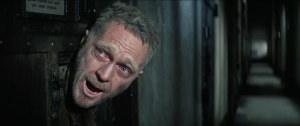
Here’s my review of Papillon for MovieRob’s March Genre Grandeur of Prison films. Steve McQueen shines in this good, not great, memoir of one man’s escape attempts from a French prison in South America. Check out the other prison film reviews for this month too!
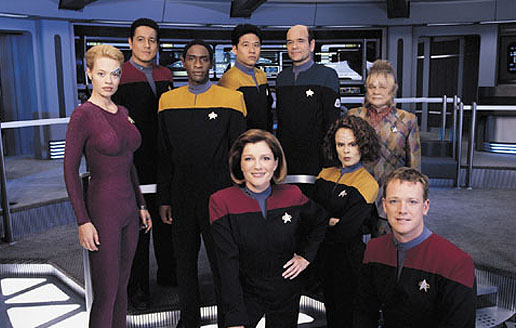
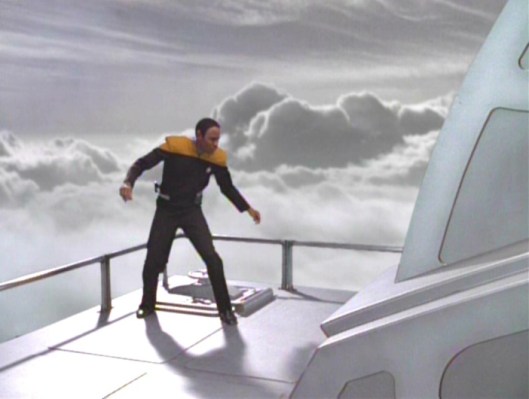
Of all the Star Trek series I’ve seen, my favorite is undoubtedly Voyager, a classic example of a show that started with promise and kept getting better as it went. I wavered on whether or not to make a list of my top episodes, unsure if anyone would even care, but after learning of other fans, namely the lovely ladies of Violet’s Veg*n E-Comics, I couldn’t resist any longer. I’ll likely do a favorites list for all my favorite shows at some point.
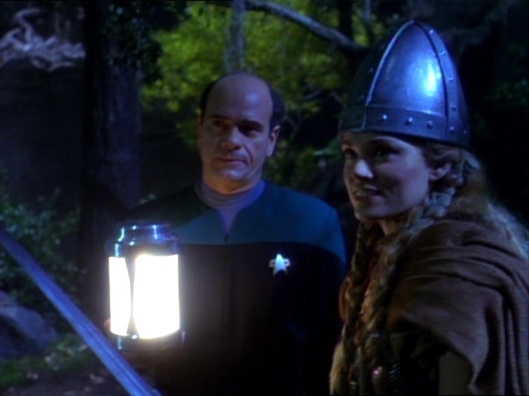
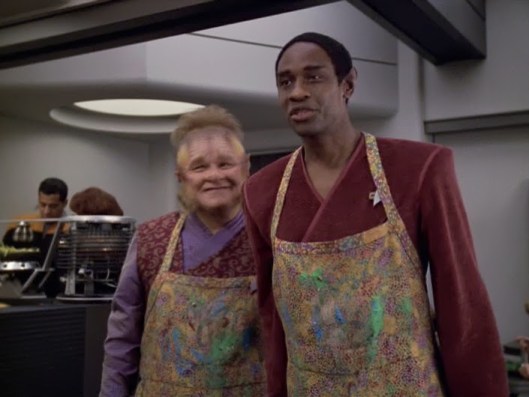
For those who don’t know, Voyager is in the same universe as all the other Star Trek series and is the last to occur chronologically. It’s basically a space-faring version of The Odyssey, with the title ship (and a rebel Maquis ship) being blasted into the Delta Quadrant 70,000 light years from Earth, and the two crews must combine to begin the 75-year journey home, with quite a few adventures along the way. The best part of Voyager is its characters, all of whom feel like a family by the end, from Kate Mulgrew’s first female Trek series Captain Kathryn Janeway to Robert Picardo’s egotistical holographic Doctor (“I’m a doctor, not a tricorder.”) to Ethan Phillips’ ever lovable Talaxian cook Neelix. With its far-flung setting, it also explores planets, aliens, and themes unseen in other Trek series and features some of the best time travel episodes of the franchise.
Of course, no series is immune to some duds, and I don’t want anyone’s first exposure to Voyager to be “Threshold” or “The Fight” or “Barge of the Dead.” Thus, for fans and not-yet-fans alike, here are my top twelve episodes of Star Trek: Voyager. I say “not-yet-fans” because I would hope seeing the show at its best would win over any potential viewer. Because Voyager rules! And so the countdown begins….
“11:59” – Season 5
Oddly enough, the first episode here doesn’t even take place on Voyager. When Captain Janeway recounts the story of one of her forebears, we’re treated to an endearing flashback of her ancestor (also played by Mulgrew) falling in love with a nostalgic bookstore owner (Kevin Tighe of Lost) on New Year’s Eve of 2001.
“Before and After” – Season 3
The episodes with Kes (Jennifer Lien) weren’t always the best, despite the uniqueness of a budding telepath with a nine-year lifespan, but “Before and After” was easily her best episode. She begins to live her life backwards, starting as an old woman and trying to figure out what’s happening before she jumps further back in time.
“Shattered” – Season 7
Every series likes to have some kind of recap episode for the more nostalgic fans, and “Shattered” again uses time travel for that very purpose. After a warp core accident, first officer Chakotay finds himself the only one unaffected when the ship is broken up into different sections of its own history. Kudos for all the references to past episodes!
“Nemesis” – Season 4
Another Chakotay episode, this time he crash-lands in the middle of an alien war and becomes a pawn in the struggle. There’s a potent message about how both sides of war encourage hate for the enemy, and I love the unique alien vocabulary used (“glimpses” in place of eyes, “trunks” in place of trees). Seriously, this episode should have won an Emmy for its writing.
“Rise” – Season 3
There was always a great odd-couple dynamic between gregarious Neelix and logical Vulcan Tuvok, and the tension finally bubbled to the surface in “Rise,” where they must work together with some disaster survivors to escape a planet’s atmosphere via a literal ground-to-space elevator. The concept alone is cool!
“Equinox, Parts 1 and 2” – Seasons 5/6
Yes, I’m counting two-parters together. Guest-starring John Savage and Titus Welliver (aka “the Man in Black” from Lost), this double-header that segued from season 5 to season 6 provided an excellent contrast between the straight-laced Starfleet ideals of Voyager and the more ruthless tactics of another stranded ship, the Equinox. Ghost-like aliens and an evil Doctor made this a memorable season finale/opener.
“Year of Hell, Parts 1 and 2” – Season 4
Fleshing out a future time period seen in “Before and After,” “Year of Hell” pit Voyager against Kurtwood Smith’s Annorax, a man with a time-altering ship trying to erase other species to restore his own people’s former glory. This episode shows Janeway and her crew at their most desperate, proving why she’s such a resilient leader.
“Blink of an Eye” – Season 6
With subtly transcendent themes, “Blink of an Eye” has one of the more unique set-ups for a Trek episode, a planet that revolves so rapidly that years and centuries on its surface pass within hours outside its atmosphere. When Voyager is caught in its gravity, the crew watches an entire civilization develop before their eyes, and the viewers get to see a closer perspective from the ground. Lost alert for Daniel Dae Kim as one of the planet’s inhabitants.
“Timeless” – Season 5
It’s always a big deal when a series reaches its 100th episode, and Voyager marked the milestone with a fantastic time travel tale. When the ship is destroyed during an attempt to get home sooner, two survivors risk everything to undo the doomed mission.
“Future’s End, Parts 1 and 2” – Season 3
Wow, there sure were a lot of time travel episodes, and all great ones. In this two-parter, a timeship captain from the future tries to destroy Voyager to prevent an eventual disaster, and a mishap sends both ships back to the 21st century. With shades of Star Trek IV: The Voyage Home, it also boasts an unlikely villain in Ed Begley, Jr., and introduces an important plot device for the Doctor that would prove invaluable in future episodes. Oh, and early Sarah Silverman is in it too.
“Deadlock” – Season 2
While it doesn’t seem to get much attention compared with, say, the two-parters, “Deadlock” is science fiction at its best. When the ship is attacked (which happens a lot, now that I think about it), a spatial anomaly divides the ship in two in a most unique way.
“Scorpion, Parts 1 and 2” – Seasons 3/4
To compare it to a classic Next Generation episode, “Scorpion” is Voyager’s “Best of Both Worlds.” With a story set in the Delta Quadrant, it was only a matter of time before their journey ran into the home turf of the Borg. A turning point for the series between seasons three and four, it pits Janeway and company against not only the Borg but a new species unlike any seen before, which threatens even the Borg collective. A tense and rather scary tone, a great new background score, and the introduction of Jeri Ryan’s Seven of Nine make this one of the high points of the series.
And here are the runners-up, which were not easy to whittle down, considering how fantastic all of them are. My VC likes most of my picks but also has a few episodes I didn’t choose that she is fond of and wanted to highlight. In the order they aired:
Season 1:
“Caretaker” – Series premiere
“Faces” – First major development for B’Elanna Torres
VC Picks: “Time and Again” and “Heroes and Demons”
Season 2:
“Resistance” – Sad episode for Janeway with a great guest role for Joel Grey
“Meld” – Tuvok tries to help a psychopath on board (Brad Dourif)
“Tuvix” – Tuvok and Neelix fuse in a transporter accident; silly concept exploring serious sci-fi themes
“Resolutions” – Janeway and Chakotay: what could have been….
“Basics, Parts 1 and 2” – Season 2 finale with the crew forced onto a primitive planet
VC Picks: “The 37s” and “Lifesigns”
Season 3:
“Flashback” – A cool revisiting of the events of Star Trek VI, complete with George Takei and Grace Lee Whitney
“Real Life” – Possibly the show’s biggest tearjerker with the Doctor
“Displaced” – The crew is slowly replaced by aliens.
VC Picks: “Remember” and “Blood Fever”
Season 4:
“Scientific Method” – Do you ever feel like a headache is torture? There could be a scary reason why.
“The Killing Game, Parts 1 and 2” – A race of hunters brainwash the crew for holographic sport. It’s the only place you’ll see Nazis and Klingons side by side.
“Living Witness” – An amazing what-if episode questioning the accuracy of history.
VC Picks: “Day of Honor,” “Hunters,” “Prey,” “Unforgettable,” and “Demon”
Season 5:
“Night” – Season 5 premiere with Janeway at her most self-doubting.
“Nothing Human” – Deep ethical questions, guest-starring David Clennon as a Cardassian
“Counterpoint” – Music, romance, and mistrust abound
“Macrocosm” – Attack of the giant killer germs! The new movie Life might have drawn some inspiration from this.
“Bride of Chaotica!” – Just a fun, silly homage to old-fashioned cheesy sci-fi
“Gravity” – Tuvok and Tom Paris stranded on an invisible desert planet, guest-starring Lori Petty
“Course: Oblivion” – Deeply sad what-if episode
“Think Tank” – Alien geniuses make an offer Voyager can’t refuse, guest-starring Jason Alexander
“Juggernaut” – Awesome horror-thriller episode on a deserted(?) toxic waste vessel
“Someone to Watch Over Me” – Poor Doctor!
“Relativity” – Voyager does it again with an amazing use of time travel.
VC Picks: “In the Flesh,” “Thirty Days,” and “The Disease”
Season 6:
“Riddles” – Tuvok and Neelix bond when Tuvok is mentally impaired.
“One Small Step” – A testament to the importance of “early” space travel
“Fair Haven” – The crew enjoy a holographic Irish village.
“Life Line” – The Doctor gets to meet the scientist who designed him after himself.
“Unimatrix Zero, Parts 1 and 2” – Season finale and a game-changer for the Borg collective.
VC Picks: “Pathfinder,” “Memorial,” “Ashes to Ashes”, “Live Fast and Prosper,” and “Muse”
Season 7:
“Flesh and Blood, Parts 1 and 2” – The Doctor must choose between his crew and renegade holograms.
“Lineage” – Big character development for B’Elanna
“Workforce, Parts 1 and 2” – The crew is once again brainwashed as workers on an industrial planet.
“Homestead” – Oh, Neelix. *sniff*
“Endgame, Parts 1 and 2” – Not perfect, but satisfying series finale
VC Picks: “Body and Soul,” “Author, Author,” and “Friendship One”
And to wrap it all up, here’s the beautiful opening theme and credits, which I also included in my post of Voyager musical highlights. Now I want to watch this show again!
Be sure to vote for the best video-game movie adaptation in Round 5 of Opinion Battles! Sure, video game movies usually stink, but there’s some fun to be had even in this genre. Though I’m not much of a video-game player, I picked the flawed but visually interesting Final Fantasy: The Spirits Within. Check out what others chose and vote for your favorite!
Over the past 25 odd years videos games have become a new stream of entertainment, so naturally Hollywood has decided to jump on the bandwagon and turn these lengthy stories into one of films, a lot get highly criticised but for the fans of film that never played the games we get certain stories that work on film. With the final chapter of the Resident Evil franchise coming to the cinema it is now time for us to pick our favourite video game adaptations.
If you want to take part in the next round of Opinion Battles we will be picking our Favourite Film from 1987, email your choices to moviereviews101@yahoo.co.ukby 19h March 2017.
Darren – Movie Reviews 101
Silent Hill
When Silent Hill first hit the cinema I want to see the film, I never played the game as I…
It’s magical in Paris,
At least in film and book,
Where painters dance
And find romance
And anyone can cook.
Real Paris may be different;
But skyline stars still shine,
Where love can stir
And dreams occur;
That Paris can be mine.
____________
MPAA rating: All (easily a G)
I do have a soft spot for musicals, but for some reason, I’d never gotten around to watching what many consider one of the pinnacles of classic musical cinema. Luckily, it’s one of my Blindspots. An American in Paris combines some of the best aspects of the genre, particularly Gene Kelly’s dancing and George Gershwin’s music, but there’s something lacking too.
I’d only ever seen the famous dance scene that serves as the film’s centerpiece, and since that is largely symbolic, I wasn’t sure what to expect as far as a plot. Kelly plays struggling artist and American expat Jerry Mulligan, who lives contentedly in Paris while periodically displaying his paintings on the street. Much to his surprise, he attracts the attention of wealthy socialite Milo Roberts (Nina Foch), who volunteers to sponsor his talent, even if Jerry’s not sure she’s doing so solely out of the goodness of her heart. After a bit of love at first sight, he seeks to woo a young Parisian (Leslie Caron), who is torn between love and loyalty. It’s a good thing Kelly is so darn likable because his character is a bit of a jerk at times, such as how he pursues his love interest without a thought to the other woman accompanying him, but for the most part, Kelly’s natural charisma engages wonderfully with his costars.
While the plot works well enough, the musical numbers overshadow the story connecting them, and the fact that most of the Gershwin songs were previously written and don’t have much bearing on what’s going on makes them feel a bit disjointed. They shouldn’t feel like this, but the songs are padding for an uninspired plot, even if they’re the best aspects of the film. I honestly could have skipped the storyline and simply watched the musical numbers, which would make for a great montage but not exactly a great film.
There’s still some superlative style to this Vincente Minnelli-directed lark, from the personable introduction to the three main male characters to the show-stopping pageantry of the songs. One dream sequence with Oscar Levant as Jerry’s unemployed pianist friend may be one of those filler numbers, but it employs some visual trickery that was likely very innovative at the time. And, having heard a good deal of Gershwin in Mr. Holland’s Opus, it was nice to see one of its original visual accompaniments.
An American in Paris may be a beloved classic, but it’s nowhere near the level of Kelly’s Singin’ in the Rain. The plot is a charming but average romance that completely ignores and offers no closure to the side characters, and even the grand 17-minute tap dance/ballet climax set to Gershwin’s title music ran too long and threatened to lose my interest at times. I don’t want to knock it too hard, but there are much better musicals than the Best Picture of 1951. Still, the musical scenes should easily put a smile on anyone’s face, and I can watch Gene Kelly’s effortless talent any day.
Best line: (Jerry) “Back home, everyone said I didn’t have any talent. They might be saying the same thing over here, but it sounds better in French.”
Now that I’ve reviewed all the Best Picture nominees, with the exception of Moonlight, I thought I’d rank them to give a clearer picture of my regard for each of them. As I said in my La La Land post, 2016 has produced one of the best crops of awards contenders in a while, most of which have earned a spot on my Top 365 list. While I haven’t seen the actual Best Picture winner, I’m still convinced that La La Land should have won, even though most of the others would have been worthy of winning in a weaker year. So here they are again in order:
And although my third blogiversary post listed my favorite newly watched films last year, here’s also a Top Twelve list of my favorite films of 2016 overall, just to put the previous ranking in perspective. I still haven’t seen nearly as many as a lot of bloggers, including ones of interest like Passengers, Moana, The Red Turtle, Queen of Katwe, and A Monster Calls, but this is the first year that I feel I’ve seen enough to warrant a list like this. I don’t think I’ve seen anyone else with this particular ranking, so at least I know this list is all my own. Thus, here’s my countdown of all the films I enjoyed or would recommend from 2016, from least to best. I hope 2017 will be just as good or better!