• Home
  • About Me
  • The List
  • THE LIST (2016 Update)
  • THE LIST (2017 Update)
  • THE LIST (2018 Update)
  • THE LIST (2019 Update)
  • THE LIST (2020 Update)
  • THE LIST (2021 Update)
  • THE LIST (2022 Update)
  • Top Twelves and More
  • The End Credits Song Hall of Fame

Rhyme and Reason

~ Poetry Meets Film Reviews

Rhyme and Reason

Yearly Archives: 2016

Life, Animated (2016)

10 Monday Oct 2016

Posted by sgliput in Movies, Poetry, Reviews, Writing

≈ 3 Comments

Tags

Documentary


“Life as we know it” – a strange thing to say,
As if we all share every daily cliché,
As if you and I, in our habits and cares,
The views she retains and the burdens he bears,
All somehow add up to the same.

Life outside yours cannot fully be known;
Though we walk together, our paths are our own.
When other lives deviate, some may presume
Their paths are less worthy where tragedies loom,
And some may regard it a shame.

Life can have weakness without being weak.
Life can have sorrow without being bleak.
Support can be found where we least would suspect,
In plans that are clear only in retrospect,
In paths that are never the same.

Life in its innocence, life in its trials,
Life in its mirth and its merciless miles
Is something we each have the privilege to face,
Each life its own story and none a disgrace,
“Life as I know it,” by name.
_______________________

MPAA rating: PG

One genre that I’ve barely scratched the surface of is documentaries. I’ve always thought of them as interesting and informative, but lacking in entertainment value. Seriously, would you rather watch a Disney movie or a documentary? (I know; depends on which one, right?) Not to mention, I’m always suspect of many “true” stories if there seems to be an agenda behind them. The few documentaries I’ve seen have been quite good (In the Shadow of the Moon, The Drop Box), but they haven’t whet my appetite to seek out others of their kind. Life, Animated has.

I actually had a unique opportunity with this film. It was being shown at a local theater that usually shows second-run movies for $2, but they were showing Life, Animated for free, presented by a local autism organization complete with a Q & A with Ron Suskind, the father of the film’s subject. That subject is Owen Suskind, who seemed like a normal child until he stopped talking at the age of three and was diagnosed with regressive autism. After years of silence, he found his voice again through the inspiration of Disney’s animated films. Donning a hand puppet of Iago from Aladdin, his father discovered that Owen would converse with him through the puppet. Over time, they were able to share conversations with dialogue memorized from Disney films, and Owen even learned to read using the names in the credits.

Life, Animated features a pleasantly non-linear style, jumping between 23-year-old Owen in the present day as he learns to be more independent and flashbacks to young Owen, often told through semi-animated drawings. Owen himself is winsome and naïve, still somewhat of a child who has come a long way and has far yet to go. My earlier suspicion of documentaries being potentially manufactured doesn’t apply to him, since he is inherently earnest and open whether a camera is there or not. Ron called this sincerity a “compensatory strength” to offset Owen’s social weaknesses and mentioned that the cameraman called him one of the best subjects he’d filmed.

Interspersed with Owen and Ron’s narration are a multitude of film clips from Disney classics and even an unexpected cameo from some voice actors. Honestly, I can’t imagine any bigger compliment to Disney filmmakers than this movie, a tribute to how their work literally helped to change Owen’s life, which might explain why they allowed the use of their fiercely guarded films for a reasonable price. As much as we all love Disney movies, they are mere entertainment to most of us, while to Owen, they were a lens through which he could understand daily life. In a world that was suddenly hard to make sense of, he latched onto this “scripted constant” that provided accessible insights, which the film’s editors managed to translate to the screen. When Owen and his brother regret having to grow up, they reference the likes of Mowgli and Peter Pan. When Owen talks about enduring bullying in school, we see Quasimodo’s flogging in The Hunchback of Notre Dame. When Owen suffers his first taste of romantic pain, we remember Ariel’s despair over Eric in The Little Mermaid. During Owen’s first night on his own, he watches Bambi.

Image result for life, animated 2016

The film’s most fascinating visual touch is two extended animated sequences of a story Owen wrote called The Land of the Lost Sidekicks, brought to life by the French animation studio Mac Guff. In a swirling, painterly style, Owen imagines himself as the protector of various Disney side characters, battling despair and darkness. It’s simple yet profound, like so much of Owen’s story. Owen was encouraged that Life, Animated showed him to be, not a sidekick, but on a hero’s journey, and the struggles and joys he goes through depict him as a person, rather than a collection of tics as autism may seem at first glance. As Owen relates during a climactic speech, those with autism can latch onto any number of fixations, and Disney films allowed him to comprehend a constantly changing world. During the Q & A afterward, Ron confirmed autism’s similar patterns when he and a young man in the front row, much like Owen, shared a few back-and-forth lines of dialogue from The Lion King. (I was also interested to learn from Ron that Owen has branched out into live-action films and enjoys the Dark Knight trilogy as well.)

It may not be saying much, but Life, Animated is one of the best documentaries I’ve seen, and despite its independent status, I do hope it gets some notice for a Best Documentary nomination during Oscar season. Not only does it ennoble the Disney canon as “human sagas of struggle and triumph,” but it provides an endearing look at how they helped shape one boy’s inspiring development. Owen’s family is a constant encouragement for him, worrying and helping him however they can, and one question his parents asked was particularly resonant: “Who decides what a meaningful life is?” Ron said his wife and he asked it many times, but Owen finally answered it. “I do.”

Best line: (see above)


Rank: No documentary has made me reconsider my opinion of them like this one, but I still can’t help but put them in a different category from “regular” movies. Thus, any documentary reviews won’t be eligible for my List but will just use a simple Five Star system, and this one is definitely worth Five Stars!


© 2016 S. G. Liput
413 Followers and Counting


My Top Twelve Movie Final Scenes

07 Friday Oct 2016

Posted by sgliput in Movies, Writing

≈ 6 Comments

Image result for somewhere in time film


How a movie ends forms a large part of my opinion of it. Amazing films can be ruined by a bogus ending, while lackluster bores can be redeemed by a worthwhile finale. When a movie’s final scene stays with you long after the credits roll, you know the filmmakers have done their jobs well.

Here, I’ve decided to list my absolute favorite conclusions, not necessarily a film’s general ending but the very last scene before (or after) the credits. You’ll notice that I’m a sucker for the reunion or “together forever” kind of ending, which touches me on a personal level, especially with a powerful musical score behind it. The top three often bring me close to tears even.

To avoid spoilers, I won’t include a description of any of them (except #9), and obviously I recommend that everyone watch these films before seeing their conclusions. I count all of these films among my favorites, especially the endings.


  1. The Color Purple (1985)


  1. Millennium Actress (2001) (Sorry I couldn’t find a video with subtitles, but this video’s YouTube source does have the translation in its description; the emotion transcends the words, though.)


  1. Glory (1989)


  1. 1776 (1972) (Couldn’t find a video of this at all, but the signing of the Declaration of Independence always makes me feel as if I’m watching history itself.)
    Image result for 1776 film signing


  1. Places in the Heart (1984)


  1. The Shawshank Redemption (1994) (brief language warning for this one)


  1. The Way Back (2010)


  1. It’s a Wonderful Life (1946)


  1. Inception (2010)


  1. Mr. Holland’s Opus (1995)


  1. Titanic (1997)


  1. The Five People You Meet in Heaven (2004) (Again, no video of the ending, but this trailer gives a hint of the feels behind the best Hallmark movie ever made.)


And since there are so many amazing movie endings out there, I’ve included a host of runners-up that fit into different categories. What final scenes touch or encourage or thrill you the most? Feel free to let me know your favorites!


Funny:

The Avengers (2012)
Ella Enchanted
Ferris Bueller’s Day Off
Image result for ferris bueller's day off ending


Epically cool:

Back to the Future
The Breakfast Club
Casablanca
Casino Royale (2006)
Escape from New York
Indiana Jones and the Last Crusade
Iron Man
Men in Black
No Way Out (1987)
Raiders of the Lost Ark
Image result for the breakfast club ending

Tearjerking:

All Quiet on the Western Front
Bright Star
The Curious Case of Benjamin Button
Driving Miss Daisy
The Ghost and Mrs. Muir
Les Miserables (2012)
Philadelphia
Room
Somewhere in Time
Toy Story 3
Wit
Image result for toy story 3 ending
Satisfying:

(500) Days of Summer
“Crocodile” Dundee
The Dark Knight Rises
The Great Escape
The Iron Giant
The Lord of the Rings: The Return of the King
The Music Man
The Passion of the Christ
The Princess Bride
Ruby Sparks
Sleepless in Seattle
The Truman Show
Whisper of the Heart

Willy Wonka and the Chocolate Factory
Yentl
You’ve Got Mail
Image result for the dark knight rises ending
Haunting:

Being There
The Boy in the Striped Pajamas
Captain Phillips
Cast Away
Harold and Maude
The One I Love
Psycho
The Shining
Wuthering Heights
United 93
The Usual Suspects
Image result for being there ending

Pitch Perfect 2 (2015)

05 Wednesday Oct 2016

Posted by sgliput in Movies, Poetry, Reviews, Writing

≈ 2 Comments

Tags

Comedy, Musical

https://i0.wp.com/www.billboard.com/files/styles/promo_650/public/media/pitch-perfect-2-anna-kendrick-group-performance-billboard-650.jpg

(Again, best sung to “Cups”)

When competition leads to victory,
One slip can worsen failure’s sting.
To erase disgrace and reclaim the first place,
Out of many, your harmony must sing.

Sing along, sing along,
Perhaps a right can fix a wrong.
You’re gonna meet the future soon
And you will meet it still in tune,
If you sing now and then all your life long.
_____________________

MPAA rating: PG-13

Rarely has there been a sequel I so clearly enjoyed more than the original. Despite the fact that both Pitch Perfects were written by Kay Cannon, the screenwriter manages to overcome one of my main complaints about the first film –the lack of humor—with some greatly improved comedy.

The plot is essentially the same: a performance fiasco ruins the reputation of the Barden Bellas, which leads to training, a rivalry, tempers flaring, bonding, and a big musical face-off for which no one could possibly guess the outcome. Likewise, the characters haven’t changed much: Brittany Snow’s Chloe is now the obsessive Bella leader in place of Aubrey (who’s graduated but still gets some screen time), Hana Mae Lee’s Lilly still spouts bizarre non sequiturs, Ester Dean’s Cynthia-Rose still acts tough and gay, and Rebel Wilson’s “Fat Amy” is still her crude but fearless self. Yet when the stories and characters are so similar, the comedic differences shine all the brighter. I laughed more in the first twenty minutes of Pitch Perfect 2 than during the whole of the first film. Perhaps the characters simply grew on me with exposure, but they were all far more likable this time around. Some new characters were also welcome, such as Hailee Steinfeld as the amateur songwriter Emily and Chrissie Fit as a Latina constantly contrasting Chloe’s panicking with her own extreme Third World experiences. Again, the two a cappella commentators, played by Elizabeth Banks (who also directed this sequel) and John Michael Higgins, remain the most hilarious piece of the ensemble, especially when they throw political correctness out the window.

The one place that Pitch Perfect 2 may fall a bit short of the first is the music; the a cappella song-sampling is still full of catchy mixed beats from every era, but I was less familiar with the soundtrack as a whole (though I loved that the very first song was “Timber”). Even so, the sequel does try to outdo its predecessor, making the Bellas’ rivals a massive German collective who understand spectacle and turning the first film’s Riff-Off into a higher-stakes competition, even featuring the Green Bay Packers for some reason. Even if the main plot was identical, I did like the direction the subplots took. Aside from Fat Amy being paired with the man who threw a burrito at her in the first film, Beca had to realize that her experience with a cappella and mash-ups did not a music career make. Often hobbies we enjoy or even find success at don’t always translate into a practical vocation, and how Beca responded to that inconvenient truth felt like a real and worthwhile lesson for an otherwise silly movie.

Pitch Perfect 2 still isn’t quite the kind of film I gravitate toward, but it’s one I’d gladly see again. I wasn’t expecting much after the first film, but my low expectations allowed me to enjoy its sequel far more than I anticipated. With a third film on the way next year, I’m more optimistic for it now, and I hope they can conclude this trilogy in pitch perfect fashion.

Best line: (John, the commentator, during a Bellas performance) “An overweight girl dangling from the ceiling. Who hasn’t had that dream?”
(Gail) “Lots of us!”

Rank: List Runner-Up

© S.G. Liput 2016
413 Followers and Counting

Pitch Perfect (2012)

02 Sunday Oct 2016

Posted by sgliput in Movies, Poetry

≈ Leave a comment

Tags

Comedy, Musical

Image result for pitch perfect


(Best sung to “Cups”)

A cappella singers need a team.
It doesn’t work when on your own.
Voices merge, converge, and to new heights they surge
As a chorus of perfect pitch and tone.

Sing along, sing along,
It doesn’t matter what’s the song.
You’re gonna be the coolest nerds
If you remember all the words,
And you sing one for all, just sing along.
__________________

MPAA rating: PG-13

Yep, there’s a competition for everything, even a cappella singing, so it was only a matter of time before Hollywood found a way to make a movie out of it. I for one enjoy a cappella, especially modern groups like Pentatonix, and I was actually well familiar with this film’s soundtrack long before I saw it, in particular Anna Kendrick’s rendition of the “Cups” song. I had hoped that Pitch Perfect‘s comedy could match the quality of its music, but that was obviously too high a bar. I came for the music, and ultimately I stayed for the music since Pitch Perfect had little else going for it.

After the Barden Bellas are humiliated at the highest collegiate competition, only Aubrey (Anna Camp) and Chloe (Brittany Snow, whose voice I know from Whisper of the Heart) carry on the mantle of the disgraced singing club and must recruit a winning new team. Enter the rest of the cast through auditions both chuckle-worthy and cringe-worthy. While jokes are made at the few members who fail to stand out, the key characters are well-distinguished, most notably the unabashed “Fat Amy” (Rebel Wilson), who introduces herself as such, and the quietly weird Lilly (Hana Mae Lee), whose barely audible voice makes one wonder why she was even recruited at all. And then there’s Anna Kendrick as Beca, the sensible outsider with musical career aspirations and a good ear for mash-ups. Unsurprisingly, the disparate group must all work together to overcome Aubrey’s control-freak tendencies and Beca’s independence and beat out their favored rivals, the Treblemakers, who aren’t necessarily better, just more exuberant.

There’s not much in the plot that hasn’t been seen before; in fact, the sequence of events in the competition is almost identical to another musical film from the same year, Joyful Noise. The characters are what should set Pitch Perfect apart, and they only half succeed. Quirks and characterization abound, but when the word b*tch is thrown around so much, it’s unfortunate that it fits most of the cast at one point or another. Plus, I found it odd that, instead of the biggest jerk of the film being brought down a peg as is usual, he was actually rewarded and sent away. In addition, I have yet to see an instance in any film where a vomit gag is anything but gross; when will screenwriters realize that throwing up just isn’t funny? That goes for many of the other jokes too, with the key exception of Elizabeth Banks and John Michael Higgins as the barb-trading a cappella commentators. They were a hoot, even if their criticism of the Bellas didn’t always seem deserved.

I don’t mean to sound totally negative since it’s not as if Pitch Perfect tries to be more than dumb fun; that’s what it is for the most part and excels mainly on the musical side of things, which is the reason the film exists in the first place. Every musical number was entertaining with several being sensational, and it was enjoyable to hear well-blended mash-ups of songs I hear often on the radio and my own iPod. Besides the music, I also loved the movie plugs of Skylar Astin as Jesse, Beca’s Treblemaker would-be boyfriend, who had the most charm of any character and introduced Beca (and maybe a teenage viewer or two) to The Breakfast Club.

As I said before, I watched Pitch Perfect for the music, and that’s the main reason to see it, along with the pretty (but crass) girls singing it. The sometimes quotable dialogue, both sharp and blunt at the same time, may not carry as much humor for me as I’d like, but the film at least did justice to the ear-pleasing appeal of “organized nerd singing.”

Best line: (Gail, one of the commentators) “The Barden Bellas went deep into the archive for that song, John. I remember singing it with my own a cappella group.”
(John) “And what group was that, Gail?”
(Gail) “The Minstrel Cycles, John.”
(John) “Well, that’s an unfortunate name.”


Rank: Honorable Mention


© 2016 S. G. Liput
413 Followers and Counting

And here’s the music video for “Cups” or “When I’m Gone,” directed by Pitch Perfect‘s director Jason Moore; I love long, complex takes, so this is one of my favorite music videos.

Genre Grandeur – Captain Phillips (2013) – Rhyme and Reason

30 Friday Sep 2016

Posted by sgliput in Movies

≈ 2 Comments

Here’s my contribution to MovieRob’s September Genre Grandeur of Realistic Movies. I reviewed Captain Phillips, a docudrama that feels powerfully in-the-moment.

movierob's avatarMovieRob

gg-sepFor this month’s next review for Genre Grandeur – Realistic Films, here’s a review of Captain Phillips (2013) by SG of Rhyme and Reason

Thanks again to Prime Six for choosing this month’s interesting and unique genre.

Next month’s Genre has been chosen by Diego of Lazy Sunday Movies. We will be reviewing our favorite Psychological thrillers.

Please get me your submissions by the 25th of Oct by sending them to psychodiego@movierob.net  Try to think out of the box! Great choice Diego!

Let’s see what SG thought of this movie:

_________________________________

1

Captain Phillips (2013)

They talk of risk in every field, for no job is without it,

But rarely do we fear the threat, although we do not doubt it.

Routines mundane increase our sense of safety, and it shows;

We’re not paid for, or so we think, worst-case scenarios.

Surprised then by inevitable danger or a crisis,

Our fortitude…

View original post 519 more words

Opinion Battles Round 19 – Favourite Romantic Comedy

28 Wednesday Sep 2016

Posted by sgliput in Movies

≈ Leave a comment

Who doesn’t love a good romantic comedy? And there’s a whole host of great ones to choose from in the latest Opinion Battle at Movie Reviews 101. I had to go with the classic The Princess Bride, which has everything you could want in a movie, including romance and comedy!

Unknown's avatarMovie Reviews 101

Opinion Battles Round 19

Favourite Romantic Comedy

Romantic Comedies have become the go to date movie where we get to see how people go about getting into relationships. We have had some of the most iconic storylines in recent years and decades with people being able to relate to certain characters involved in the films and this is why they are so popular. Today we are going to be picking our favourites out there, so let’s see what we got.

If you want to take part in the next round of Opinion Battles the subject will be Favourite Clive Owen role which I know is a very small selection but we could get some strange choices. The deadline for this choice is 1st October 2016 and email your choices to moviereviews101@yahoo.co.uk.

Darren – Movie Reviews 101

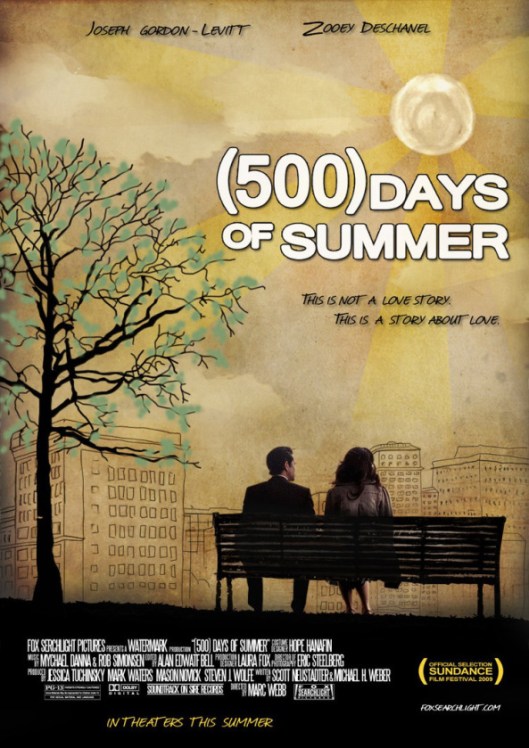
500 Days of Summersummer

500 Days of Summer is not a love story…

View original post 1,617 more words

Star Trek: Voyager Musical Highlights

25 Sunday Sep 2016

Posted by sgliput in Blogathon, Music, Reviews, TV, Writing

≈ 3 Comments

Tags

Lists

Image result for star trek voyager cast

This post is part of the Music of Star Trek Blogathon hosted by Film Music Central so check out the amazing music posts that others have already contributed. When I first heard about the blogathon, I wasn’t sure that there was much I could add to the discussion, since most people seemed to be focusing on the original Star Trek series, The Next Generation, and their movies. However, I decided to shine a spotlight on the musical moments in my favorite series in the franchise: Voyager.

For those who don’t know, Voyager is Star Trek‘s incarnation of the Odyssey. Two crews are hurled into the unexplored Delta Quadrant, 70,000 light-years from home: the Federation starship Voyager led by Captain Kathryn Janeway (Kate Mulgrew) and a Maquis ship of rebel freedom fighters, led by Chakotay (Robert Beltran). After their initial encounters with the native aliens leave them stranded, the two crews band together to make the long journey home. Like Next Gen, the somewhat stiff early episodes yield to better and better seasons, and it’s truly gratifying to see all the characters grow into a family. Many episodes rival the very best that Star Trek has to offer, but we’re not here to discuss every little thing I love about this series; let’s talk about the music.

One of the most obvious musical achievements is the opening theme song. While Next Gen recycled Jerry Goldsmith’s incredible score from Star Trek: The Motion Picture for its opening theme, Goldsmith provided an original theme for Voyager, which won an Emmy for Outstanding Individual Achievement in Main Title Theme Music. The soft trumpet and drums immediately set a mood of spacey grandeur, and the brass and strings mingle together as the essence of audible majesty, complemented by lofty shots of the title ship swooping through stellar phenomena. Between the music and the visuals, I firmly consider it the best opening of all the Trek series.

So, that’s the theme. What about the music in the series itself? All of it is excellent, but the most memorable new theme was introduced in the season 3 finale Scorpion, which was a turning point in the series and could be considered Voyager‘s “Best of Both Worlds.” The Voyager crew find themselves in the middle of the Borg’s losing war against an unbeatable super-race known as Species 8472. The music by Jay Chattaway is loaded with bombast, reminding the ear of the high stakes, and the seven forceful notes mix with the background music for a terrific small-screen action piece. You can hear it for yourselves here.

In addition to the instrumental scores, music played a special role in several episodes, particularly for the holographic Doctor (Robert Picardo), who developed a passion for opera. In addition, both Jeri Ryan as Seven of Nine and Tim Russ as Tuvok showed their singing chops on occasion, and Garrett Wang as Ensign Harry Kim periodically played the clarinet. Here are some of the most notable musical highlights:

  • In the season 2 episode “The Thaw,” Harry Kim and Tom Paris debate where Harry should practice his clarinet without disturbing his neighbor.
  • In the season 2 episode “Innocence,” Tuvok is stranded on a moon with three alien children and soothes them to sleep with a Vulcan “lullaby” of sorts called Falor’s Journey.
  • In the season 3 episode “Remember,” Janeway is telepathically taught to play an ethereal-sounding new instrument.
  • In the season 4 two-parter “The Killing Game,” a hunter race called the Hirogen brainwash the Voyager crew and make them take part in historical holographic violence. One holodeck is set in Nazi-occupied France, and Seven of Nine is a crooning serenader in a French bar.
  • In the season 5 premiere “Night,” Voyager travels through a vast area of starless space, and in his boredom, Harry performs his own concerto called “Echoes of the Void” while on the bridge.
  • In the season 5 episode “Counterpoint,” a paranoid, anti-telepath race repeatedly boards and searches Voyager, and its charismatic inspector flirts with Captain Janeway while blaring Mahler’s First Symphony during every inspection.
  • In the season 5 episode “Bride of Chaotica!,” the show indulges in the classic cheesiness of the old Flash-Gordon-style science fiction and the exaggerated score reflects the over-the-top histrionics.
  • In the season 5 episode “Someone to Watch over Me,” the Doctor tries to teach Seven of Nine social skills and seems to realize his attraction to her while they sing “You Are My Sunshine” together. During the poignant final scene, the Doctor also sings “Someone to Watch over Me,” alone.
  • In the season 6 premiere “Equinox Part II,” a reprogrammed evil Doctor performs surgery on Seven of Nine, sadistically making her sing “My Darling Clementine” with him.
  • In the season 6 episode “Barge of the Dead” (probably the worst episode of the series), we get to hear a traditional Klingon drinking song.
  • In the season 6 episode “Riddles,” Tuvok becomes mentally damaged, and Neelix plays him a Vulcan funeral dirge, as well as jazz, which Tuvok surprisingly enjoys.
  • In the season 6 episodes “Fair Haven” and “Spirit Folk,” the crew enjoy a holodeck program of a quaint Irish village, with accompanying Celtic background music.
  • In the season 6 episode “Virtuoso,” the Doctor becomes a celebrity when he introduces music to a race that has never heard it before. Lots of opera in this one.
  • In the season 7 episode “Homestead,” Neelix dances to some classic rock ‘n’ roll, and eventually Tuvok indulges him with a parting dance step.
  • The series finale “Endgame” also won Jay Chattaway an Emmy for Outstanding Music Composition For A Series. Here‘s a taste of the underscore from both the pilot and the final episode.


There you have it. Star Trek: Voyager excelled at utilizing music both in the score and the storylines, continuing the musical legacy of The Original Series and Next Gen. I leave you now with the funniest musical moment from the series in which the Doctor’s operatic daydreams take a comical turn in Season 6’s “Tinker, Tenor, Doctor, Spy.”

VC Pick: Shallow Hal (2001)

23 Friday Sep 2016

Posted by sgliput in Movies, Poetry, Reviews, Writing

≈ 2 Comments

Tags

Comedy, Romance, VC Pick

Image result for shallow hal film


When searching for the perfect mate,
We aim at the exterior.
With lesser looks, we hesitate
And seek a different him or her.

We never mean to judge them wrong,
For shouldn’t passion please the eye?
And yet how often do we long
For just the person we pass by?

We’ve heard it all, from school to camp,
Of books and covers, and ’tis true.
True love needs not perfection’s stamp
To be the perfect one for you.
______________________

MPAA rating: PG-13

I can never fully predict what kind of movies my VC will like. I wouldn’t have guessed that the Farrelly brothers’ Shallow Hal would be her kind of movie, yet, while it’s not among her favorites, it holds an odd appeal for her, perhaps because of star Jack Black. I do rather understand, though. For me, it’s a lot like 1987’s Mannequin, a film that I recognize as not very good or even funny, yet remains entertaining and milks its unique concept for all it’s worth.

After some bad deathbed advice from his father, Hal Larson (Black) grows up looking only on the outside, choosing his dates solely on their hotness. When the real-life Tony Robbins takes notice of his shallow ways, he gives Hal some positive-thinking hypnosis that causes him to recognize someone’s inner beauty in their outward appearance. Ergo, ugly people with hearts of gold look gorgeous while beautiful jerks look repulsive, though it apparently doesn’t affect people he’s already met. After some unwitting encounters with “attractive” girls, Hal meets Rosemary, who looks like the thin and lovely Gwyneth Paltrow we all know but is really morbidly obese. She finds his unbiased treatment of her refreshing, yet inevitable misunderstandings and the eventual truth threaten their unconventional bond.

What Shallow Hal could use the most is more humor. It’s one of the many comedies that settles for amusing with little chance at laughing out loud, and it confirms that Jack Black is hit-and-miss with his awkward brand of bumptiousness. Jason Alexander as Hal’s buddy is arguably even more shallow than Hal and earns a few chuckles with his unrealistic standards, but much of the humor consists of fat jokes aimed at Rosemary, along with Hal’s oblivious reactions that make her fall for him in the first place. It never verges into tasteless territory, but the comedy only hits its mark half the time.

Yet Shallow Hal has its moments, particularly when it leans toward the dramatic. Hal’s “gift” really does improve his perceptions and offers Rosemary a sorely needed self-esteem boost; as naturally attractive as she is, Paltrow expresses a self-deprecating diffidence both in and out of her fat-suit prosthetics. Hal’s rose-colored vision also provides some eye-opening revelations, a couple of which touchingly hit home.

I can see how Shallow Hal could be mildly controversial but not for the obvious reason. The fat jokes may bother some (though not my VC, who herself is “weight-challenged,” as she says), but as with the much maligned Soul Man, viewers need to look beyond the surface to see the film’s message, which is encouragingly respectful of the overweight and their sensitivities. On the other hand, the film’s message has its own negative. Hal’s “gift” seems to confirm the generality that kind people with great personalities are ugly and vice versa, and the attractive ones are probably nasty deep down. The truth is that personality has little to do with looks, but the film doesn’t go that far.

In Shallow Hal, it’s the humor that’s shallow and the themes that at least try to be deep. My VC does have a soft spot for it, likely due to the ending lesson to love regardless of appearances. Though it could have been much better, its caricatured heart is in the right place.

Best line: (Hal) “You know, there are a few times in a guy’s life – and I mean two or three, tops – when he comes to a crossroads, and he’s gotta decide. If he goes one way, he can keep doing what he’s been doing and be with any woman who’ll have him. And if he goes the other way, he gets to be with only one woman, maybe, maybe for the rest of his life. Now it seems that by taking the other road, he’s missing out on a lot. But the truth is, he gets much more in return. He gets to be happy.”


Rank: Honorable Mention


© 2016 S. G. Liput
411 Followers and Counting
 

High Plains Drifter (1973)

21 Wednesday Sep 2016

Posted by sgliput in Movies, Poetry, Reviews, Writing

≈ 3 Comments

Tags

Drama, Western

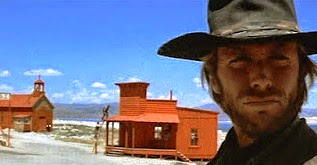
Image result for high plains drifter


Into town the stranger rode,
No history or name.
Revenge was due, a debt was owed,
And yet no other came.
All in town their worry showed
But covered up their shame,
Remembering the episode
For which they were to blame.
The still and sullen streets forebode
A secret, savage aim.
Into town the stranger rode,
And justice did the same.
________________

MPAA rating: R

For someone who loves movies, I do seem to have some glaring blind spots when it comes to expanding my repertoire. I’m a stranger to Tarantino and zombie films (though I don’t really care to be acquainted), and I’ve just recently begun exploring the most recent James Bond, Oliver Stone, and classic Hitchcock. One actor/director I know more by reputation than experience is Clint Eastwood. High Plains Drifter is actually the first western I’ve seen of his, and it confirmed why he is such a commanding screen presence.

Drawing from Eastwood’s experience with spaghetti westerns, High Plains Drifter also borrows certain elements from the likes of Seven Samurai and High Noon. Like Seven Samurai and its American remake The Magnificent Seven, the small desert town of Lago, named for the oddly located lake bordering it, lives in fear of the return of vengeful bandits and looks to a skilled stranger for salvation. Like High Noon, the film builds to the inevitable showdown between the lone defender and the encroaching enemy. A key question that sets High Plains Drifter apart, though, is “Is the town worth saving?” The townspeople in Seven Samurai and High Noon were prone to ingratitude and fear, but the settlers of Lago sit upon a cruel secret that takes much of the sympathy out of their plight.

Eastwood has played many a tough guy for the ages, not least of which is the nameless Stranger who rides into town without a word, backed by Dee Barton’s spookily atmospheric score. When the Stranger proves his grit and his aim by killing Lago’s supposed defenders, the sheriff begs him to protect them, promising him anything he wants in return. Despite his distaste for the town, the Stranger agrees and proceeds to take full advantage of the open-ended offer, ordering free drinks, the entire hotel to himself, and other unreasonable demands that seem meant to punish the town as a whole. The film walks a fine line between the Stranger’s abuse and how deserving the town may be of it, crossing the line on occasion when he freely rapes two women, who unrealistically don’t seem to mind too much after the fact. Except for that needless exploitation, Eastwood’s Stranger proves to be a compellingly mysterious anti-hero, whose intentions for the town itself remain uncertain right to the end. When asked what comes after the showdown, he defiantly replies, “Then you live with it.”

Far from Eastwood’s first rodeo, High Plains Drifter is a brazen western that questions the decency of frontier folk. Aside from Eastwood, Billy Curtis plays his closest ally, the diminutive Mordecai who has also felt the town’s malice, and Richard Bull appears as a shopkeeper, a year before he played the owner of Oleson’s Mercantile on Little House on the Prairie. I can’t say how High Plains Drifter compares with Eastwood’s other westerns (yet), but it’s a somewhat haunting entry in the western genre that gives a whole new meaning to “painting the town red.”

Best line: (the Stranger, after an overdue assault from his rape victim) “Wonder what took her so long to get mad?”


Rank: List Runner-Up


© 2016 S. G. Liput
411 Followers and Counting


Experimenter (2015)

18 Sunday Sep 2016

Posted by sgliput in Movies, Poetry, Reviews, Writing

≈ 2 Comments

Tags

Drama, History

Image result for experimenter film


Our human nature is a lake
Where most content themselves to take
A shallow view for comfort’s sake,
But few will dare the deep.
The poets plumb it with their verse,
And nihilists would make it worse
While sages study to reverse
Its ever-waning creep.

When someone dives and brings to light
A bit of psyche to indict
That questions what is wrong and right,
How often do we balk!
We point the finger, hide from view,
Insist that it cannot be true,
And say we’re wiser than the few
Who failed temptation’s knock.

To fear a truth and disregard
Depravities that perish hard
Will leave us only further marred
By lessons left unlearned.
The depths we’d rather not explore
Are those we most should not ignore,
For by the schemer who knows more
Is human nature turned.
________________

MPAA rating: PG-13 (for one lone obscenity and some subject matter, could even be PG)

I had never heard of the Milgram experiment before Experimenter, but its social impact is considerable. While hearing of the shock-based college study brought to mind Venkman’s similar parody at the beginning of Ghostbusters, the actual experiment touched upon serious questions ranging from the compliance of Nazi subordinates to social engineering and people’s natural reluctance to rebel against authority. It’s thought-provoking research, which inspired an equally provocative film.

While Experimenter is a scrutiny of Stanley Milgram himself as well as a restaging of his most famous work, it begins where his fame did: the shock experiment. As Milgram (Peter Sarsgaard) watches from behind a one-way mirror, his assistant brings in two volunteers, one to answer questions and receive electric shocks for wrong answers and one to administer the questions and shocks. The shock-ee is actually part of the ruse and re-creates sounds of pain from a closed room, while the shocker is urged to continue increasing the voltage no matter what. A majority of participants lacked the will to resist and yielded to pressure to deliver supposedly life-threatening shocks, simply because they were told to. Only 35% refused.

The orchestrated scenario forms the beginning of the film but is also intercut with Milgram’s life, including meeting his eventual wife (Winona Ryder). During all this, Sarsgaard speaks directly to the audience, discussing the experiment and his findings like a purveyor of mental provocation. Indeed, that’s how he sees himself and his job as a social psychologist; he’s merely presenting facts for academia and the public to discern as they will and is surprised at the controversy he attracts. More people seem critical of how he tricked his participants than of their actual responses. Later, Milgram tries to diversify his reputation with different social experiments, like confirming the “Six Degrees of Separation” principle that applies to more than just Kevin Bacon, but he’s always pulled back to his original shock experiment, both by colleagues and in the public eye.

Throughout the film are examples of how Milgram’s work was viewed. He’s forced to conduct followup interviews to test the emotional “damage” done to participants. Uninformed strangers complain about how he shocks people, not even understanding the details of the experiment. When Milgram informs his class that President Kennedy’s been shot, no one believes him, thinking it’s just a hoax to elicit a reaction. In addition, the filmmakers employ some curious creative choices, such as changing some backgrounds into stage-like painted backdrops. At certain points during Milgram’s fourth-wall-breaking narration, an elephant appears behind him, suggesting that he is always followed by “the elephant in the room.”

Sarsgaard does an outstandingly muted job in the role of Milgram, as does Ryder as his wife, though their marital struggles are a bit too generic to compare with the social questions presented. I was surprised at some of the minor supporting players: Jim Gaffigan ventures away from comedy as one of Milgram’s accomplices, while Dennis Haysbert plays Ossie Davis, who appeared with William Shatner in a 1976 TV movie about the Milgram experiment called The Tenth Level. Even the late Anton Yelchin appears in a barely noticeable role as an aide to the experiment.

Experimenter‘s deliberate pace doesn’t make it the most entertaining of biopics, but it’s a psychologically stimulating study that, like Milgram, asks difficult questions for the viewer to consider. As one of Milgram’s colleagues posits about atrocities, “The techniques change, the victims change, but it’s still a question. How do these things happen? How are they institutionalized?” The answers may be disturbing, but they are better off acknowledged than scorned. We as humans hate to think of what any one of us could be capable of under the worst conditions, but the worst parts of human nature are not all-inclusive. Thirty-five percent refused to continue the experiment. Would that include you?

Best line: (Milgram) “Human nature can be studied but not escaped, especially your own.”


Rank: List Runner-Up


© 2016 S. G. Liput
410 Followers and Counting

← Older posts
Newer posts →

Recent Posts

  • We Didn’t Start 2025 (Recap)
  • NaPoWriMo 2025 Recap (Finally)
  • Sonic the Hedgehog 3 (2024)
  • It Happened One Night (1934)
  • Spellbound (2024)

Recent Comments

associatesofshellymann's avatarassociatesofshellyma… on My Top Twelve La La La So…
Kit's avatarKit Nichols on Bonnie and Clyde (1967)
lifelessons's avatarlifelessons on Look Back (2024)
Carol Jackson's avatarCarol Jackson on The Thief of Bagdad (1940…
Stephen's avatarStephen on Love Story (1970)

Archives

  • January 2026
  • December 2025
  • May 2025
  • April 2025
  • March 2025
  • February 2025
  • January 2025
  • December 2024
  • May 2024
  • April 2024
  • March 2024
  • February 2024
  • January 2024
  • December 2023
  • November 2023
  • October 2023
  • September 2023
  • July 2023
  • June 2023
  • May 2023
  • April 2023
  • March 2023
  • February 2023
  • January 2023
  • December 2022
  • November 2022
  • October 2022
  • September 2022
  • August 2022
  • July 2022
  • June 2022
  • May 2022
  • April 2022
  • March 2022
  • February 2022
  • January 2022
  • December 2021
  • November 2021
  • October 2021
  • September 2021
  • August 2021
  • July 2021
  • June 2021
  • May 2021
  • April 2021
  • March 2021
  • February 2021
  • January 2021
  • December 2020
  • November 2020
  • October 2020
  • September 2020
  • August 2020
  • July 2020
  • June 2020
  • May 2020
  • April 2020
  • March 2020
  • February 2020
  • January 2020
  • December 2019
  • November 2019
  • October 2019
  • September 2019
  • August 2019
  • July 2019
  • June 2019
  • May 2019
  • April 2019
  • March 2019
  • February 2019
  • January 2019
  • December 2018
  • November 2018
  • October 2018
  • September 2018
  • August 2018
  • July 2018
  • June 2018
  • May 2018
  • April 2018
  • March 2018
  • February 2018
  • January 2018
  • December 2017
  • November 2017
  • October 2017
  • September 2017
  • August 2017
  • July 2017
  • June 2017
  • May 2017
  • April 2017
  • March 2017
  • February 2017
  • January 2017
  • December 2016
  • November 2016
  • October 2016
  • September 2016
  • August 2016
  • July 2016
  • June 2016
  • May 2016
  • April 2016
  • March 2016
  • February 2016
  • January 2016
  • December 2015
  • November 2015
  • October 2015
  • September 2015
  • August 2015
  • July 2015
  • June 2015
  • May 2015
  • April 2015
  • March 2015
  • February 2015
  • January 2015
  • December 2014
  • November 2014
  • October 2014
  • September 2014
  • August 2014
  • July 2014
  • June 2014
  • May 2014
  • April 2014
  • March 2014
  • February 2014
  • January 2014
  • December 2013

Categories

  • Blindspot
  • Blogathon
  • Christian
  • Movies
  • Music
  • NaPoWriMo
  • Poetry
  • Reviews
  • TV
  • Writing

Meta

  • Create account
  • Log in
  • Entries feed
  • Comments feed
  • WordPress.com

Recent Posts

  • We Didn’t Start 2025 (Recap)
  • NaPoWriMo 2025 Recap (Finally)
  • Sonic the Hedgehog 3 (2024)
  • It Happened One Night (1934)
  • Spellbound (2024)

Recent Comments

associatesofshellymann's avatarassociatesofshellyma… on My Top Twelve La La La So…
Kit's avatarKit Nichols on Bonnie and Clyde (1967)
lifelessons's avatarlifelessons on Look Back (2024)
Carol Jackson's avatarCarol Jackson on The Thief of Bagdad (1940…
Stephen's avatarStephen on Love Story (1970)

Archives

  • January 2026
  • December 2025
  • May 2025
  • April 2025
  • March 2025
  • February 2025
  • January 2025
  • December 2024
  • May 2024
  • April 2024
  • March 2024
  • February 2024
  • January 2024
  • December 2023
  • November 2023
  • October 2023
  • September 2023
  • July 2023
  • June 2023
  • May 2023
  • April 2023
  • March 2023
  • February 2023
  • January 2023
  • December 2022
  • November 2022
  • October 2022
  • September 2022
  • August 2022
  • July 2022
  • June 2022
  • May 2022
  • April 2022
  • March 2022
  • February 2022
  • January 2022
  • December 2021
  • November 2021
  • October 2021
  • September 2021
  • August 2021
  • July 2021
  • June 2021
  • May 2021
  • April 2021
  • March 2021
  • February 2021
  • January 2021
  • December 2020
  • November 2020
  • October 2020
  • September 2020
  • August 2020
  • July 2020
  • June 2020
  • May 2020
  • April 2020
  • March 2020
  • February 2020
  • January 2020
  • December 2019
  • November 2019
  • October 2019
  • September 2019
  • August 2019
  • July 2019
  • June 2019
  • May 2019
  • April 2019
  • March 2019
  • February 2019
  • January 2019
  • December 2018
  • November 2018
  • October 2018
  • September 2018
  • August 2018
  • July 2018
  • June 2018
  • May 2018
  • April 2018
  • March 2018
  • February 2018
  • January 2018
  • December 2017
  • November 2017
  • October 2017
  • September 2017
  • August 2017
  • July 2017
  • June 2017
  • May 2017
  • April 2017
  • March 2017
  • February 2017
  • January 2017
  • December 2016
  • November 2016
  • October 2016
  • September 2016
  • August 2016
  • July 2016
  • June 2016
  • May 2016
  • April 2016
  • March 2016
  • February 2016
  • January 2016
  • December 2015
  • November 2015
  • October 2015
  • September 2015
  • August 2015
  • July 2015
  • June 2015
  • May 2015
  • April 2015
  • March 2015
  • February 2015
  • January 2015
  • December 2014
  • November 2014
  • October 2014
  • September 2014
  • August 2014
  • July 2014
  • June 2014
  • May 2014
  • April 2014
  • March 2014
  • February 2014
  • January 2014
  • December 2013

Categories

  • Blindspot
  • Blogathon
  • Christian
  • Movies
  • Music
  • NaPoWriMo
  • Poetry
  • Reviews
  • TV
  • Writing

Meta

  • Create account
  • Log in
  • Entries feed
  • Comments feed
  • WordPress.com

Blog at WordPress.com.

  • Subscribe Subscribed
    • Rhyme and Reason
    • Join 814 other subscribers
    • Already have a WordPress.com account? Log in now.
    • Rhyme and Reason
    • Subscribe Subscribed
    • Sign up
    • Log in
    • Report this content
    • View site in Reader
    • Manage subscriptions
    • Collapse this bar