• Home
  • About Me
  • The List
  • THE LIST (2016 Update)
  • THE LIST (2017 Update)
  • THE LIST (2018 Update)
  • THE LIST (2019 Update)
  • THE LIST (2020 Update)
  • THE LIST (2021 Update)
  • THE LIST (2022 Update)
  • Top Twelves and More
  • The End Credits Song Hall of Fame

Rhyme and Reason

~ Poetry Meets Film Reviews

Rhyme and Reason

Tag Archives: Biopic

2021 Blindspot Pick #2: My Left Foot (1989)

03 Saturday Jul 2021

Posted by sgliput in Blindspot, Movies, Poetry, Reviews, Writing

≈ Leave a comment

Tags

Biopic, Drama

See the source image

We get what we’re born with,
No more and no less.
Curse the sky,
Moan and sigh,
Pound the cage and wonder why;
Still, when you are out of breath,
You’ll have what led to such distress.

Our handicaps vary,
In flesh and in mind.
Is it strange
That this range
Still can lead to lasting change?
The albatrosses each must carry
Mark the best of humankind.

Yet suffering will never
Inspire by default.
‘Tis the sight
Of the fight,
Proving we are not our plight.
The hardest roads, the fool’s endeavor
Are the wins to most exalt!
_________________________

MPA rating:  R (mainly for language)

No, I haven’t forgotten about my Blindspots this year, and I plan to hurriedly catch up once school is done in September. In the meantime, I have still been able to see a few. I recall hearing my mom often speak positively about My Left Foot, but I never got around to seeing it for whatever reason. An acclaimed biopic, My Left Foot also heralded Best Actor winner Daniel Day-Lewis as one of the premier actors of his day, which other films have since confirmed.
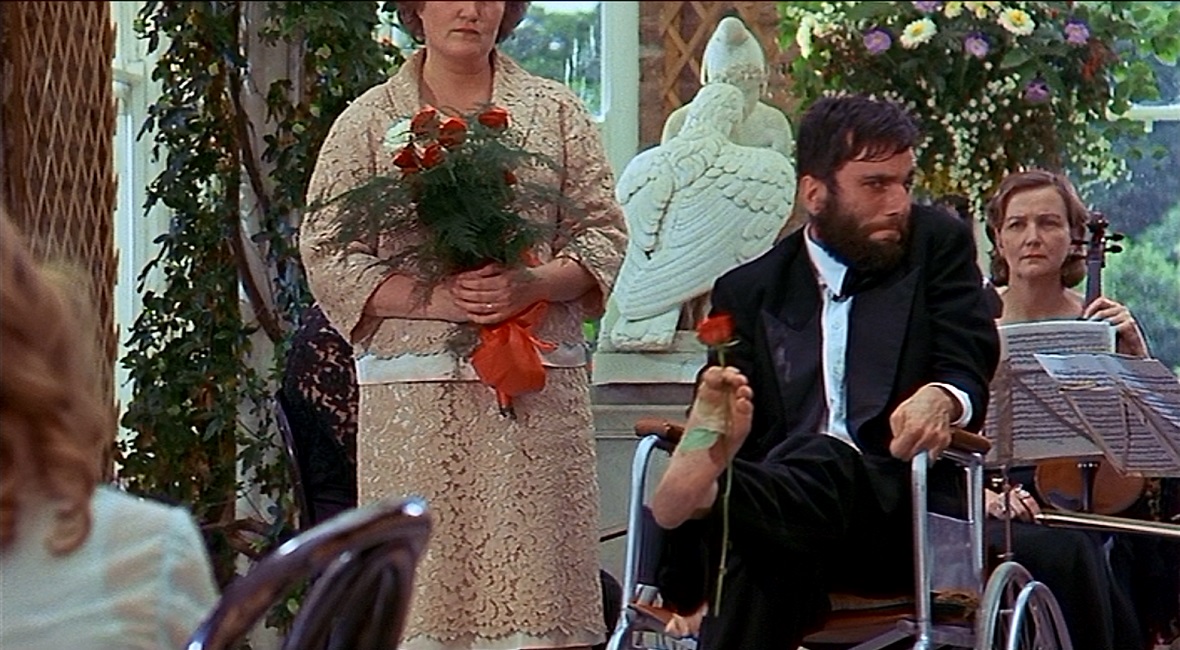
See the source image

It’s become a bit of cliché for actors feigning disabilities to become awards magnets, with recent criticism increasing from many communities over such portrayals. In playing the real-life painter and writer Christy Brown, Day-Lewis rises above such complaints with the sheer commitment of bringing to life a man whose life was so much more than a victim of cerebral palsy. Born into a poor but plentiful Irish family, Christy is accommodated to the best of their ability, with particular love from his doting mother Bridget (Brenda Fricker) and grudging affection from his rowdy father Patrick (Ray McAnally, who died shortly after the film’s release).

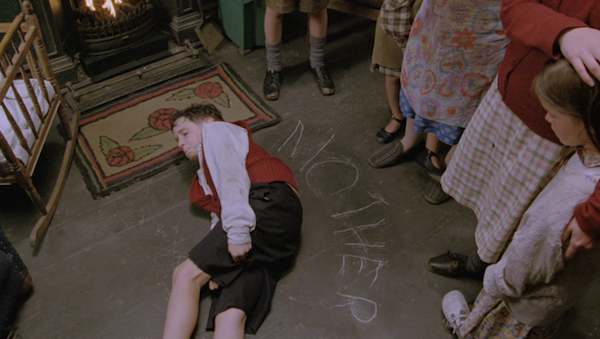
While chronic conditions like Christie’s might have led to despair and debasement (a la The Elephant Man), it’s a warm-hearted joy to see how his siblings and friends treat him as one of their own. In the Browns’ cash-strapped world, a mere wheelchair is a thing to cherish, while a desire for a room of his own results in an inspiring family effort. In Christy’s struggles, there is still a constant feeling of otherness, leading to heartbreaking moments where Day-Lewis’s intensity transcends his limited movements. The actor’s lock-jawed dialogue can be hard to make out at times, but he perfectly embodies the emotional range of his subject, from his sardonic humor to his self-pitying grief to his earnest desire for happiness.
See the source image

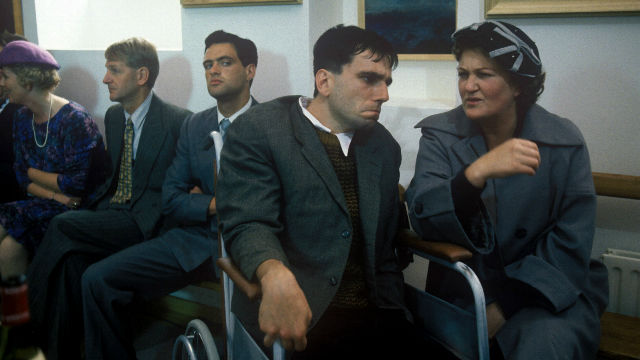
As award-worthy as Day-Lewis was, I felt Brenda Fricker deserved her Best Supporting Actress Oscar just as much. Indeed, she ranks among the finest movie mothers, both with Day-Lewis and the equally excellent Hugh O’Conor as the young Christy. There has been some debate over whether Driving Miss Daisy deserved its Best Picture win in 1989, with My Left Foot held up as the best alternative. I’ll admit that was a very competitive year (Glory wasn’t even nominated) and I would be happy with My Left Foot winning, but I do have a soft spot for Driving Miss Daisy so I’m still glad it won. Even so, My Left Foot is a shining example of a biopic that finds a perfect convergence of inspiring true story, poignant script, and ideal casting.

Best line: (Mrs. Brown) “A broken body’s nothing compared to a broken heart.”

Rank:  List-Worthy

© 2021 S.G. Liput
736 Followers and Counting

Resistance (2020)

18 Sunday Apr 2021

Posted by sgliput in Movies, NaPoWriMo, Poetry, Reviews, Writing

≈ Leave a comment

Tags

Biopic, Drama, History

See the source image

(For Day 18 of NaPoWriMo, the prompt was to write a poem inspired by one of the chapter titles in Susan G. Wooldridge’s Poemcrazy: Freeing Your Life with Words, and the heading “Controlled Abandon” caught my eye, associating it with any kind of innovation or risk-taking, which can be simply unusual or truly dangerous.)

Upon the walls of cultured art, the few who make the rules
Can mock the fewer down below and designate them fools.
For who but madmen with abandon would attempt to flout
The well-established orthodoxy, confident in clout?
But down below, the darer knows what’s needed to invent,
And every tiny movement made is careful with intent.
The price of forging something new may well survive disdain,
For “madmen” such as these know there is nothing done in vain.

Upon the walls of tyranny, the few who make the rules
Can mock the vulgar down below and designate them fools.
For who but madmen with abandon would resist the State,
Which has the power to enforce its whims without debate?
But down below, the darer knows what’s needed to dissent,
And every tiny movement made is careful with intent.
The price of saving someone else may well result in pain,
But “madmen” such as these know there is nothing done in vain.
_______________________________________

MPA rating:  R (can be intense, but what is actually shown is closer to PG-13)

There are already so many films set in World War II, whether it be on the battlefield or in the Nazi-occupied cities where Jews were threatened, but they never seem to get old. Resistance may fall into the middle pack of such films, but it’s still an excellent period piece/biopic about the early life of Marcel Marceau, who went on to become the world’s most famous mime.

See the source image

Jesse Eisenberg might not have been my first choice for the role, but he proves to be a compelling figure as a misunderstood artist moved to action by the plight of displaced Jewish children in France. Likewise, Clémence Poésy and Bella Ramsey deliver affecting performances as Marcel’s love interest and a girl he rescues, respectively, while Matthias Schweighöfer is a terror as notorious Nazi Klaus Barbie. The plotline is not especially original but still packs emotional power and occasional menace, and the way that Marceau’s budding talent as a mime is employed to cheer the children is well executed by Eisenberg.

Mime itself has never been of much interest to me, and the film’s final moments may be underwhelming for luddites like me, but its sincerity and historical basis are nonetheless impressive. Resistance may have underperformed due to its release at the start of the pandemic last March, but it deserves more appreciation.

Rank:  List Runner-Up

© 2021 S.G. Liput
728 Followers and Counting

A Song to Remember (1945)

10 Saturday Apr 2021

Posted by sgliput in Movies, Music, Poetry, Reviews, Writing

≈ Leave a comment

Tags

Biopic, Drama, History

See the source image

(For Day 10 of NaPoWriMo, the prompt suggested a “Junk Drawer Song,” but I decided on something different and went back to Day 7 to try the shadorma, a 26-syllable poem with a syllable count of 3, 5, 3, 3, 7, and 5.)

As I die,
I hear the music
Of living,
Of loving,
Of knowing what outlives me
Will keep me alive.
________________________

MPA rating:  Not Rated (G would work, maybe PG)

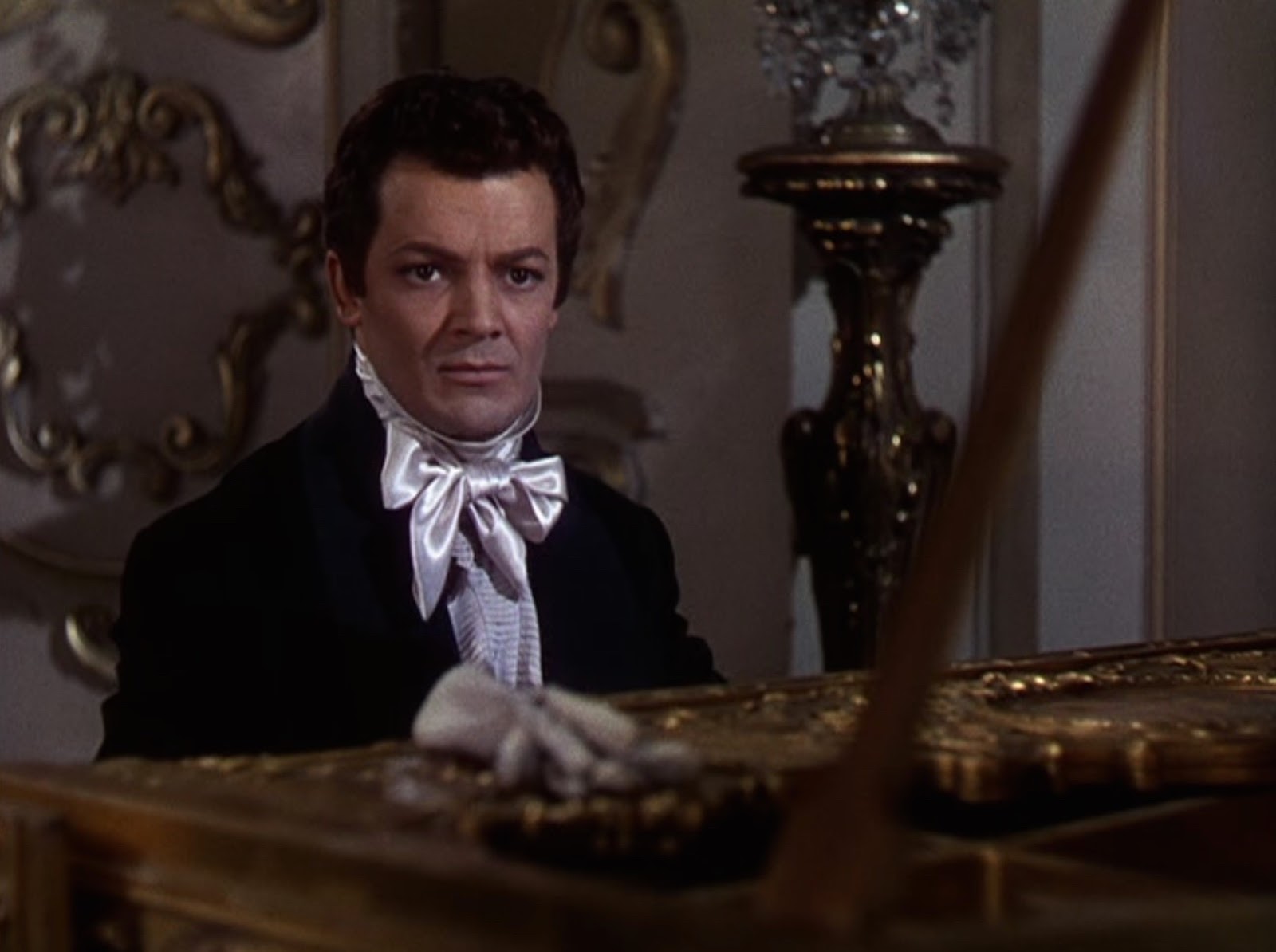
You know those musical biopics that have practically become their own genre by now? The kind where a young, naïve talent gets caught up in the thrill of success, is fooled by unscrupulous exploiters as their relationships and health deteriorate, and then ends up either reclaiming a piece of their former passion or else dying tragically? Think Coal Miner’s Daughter to Ray to Teen Spirit and beyond. Well, such films are hardly a new invention, since A Song to Remember used such a plot way back in 1945, earning itself seven Oscar nominations. This story of Polish pianist extraordinaire Fredric Chopin (Best Actor nominee Cornel Wilde) may play fast and loose with the actual history, but it’s still an elegant period piece that highlights the life and greatest works of a giant of classical music.

See the source image

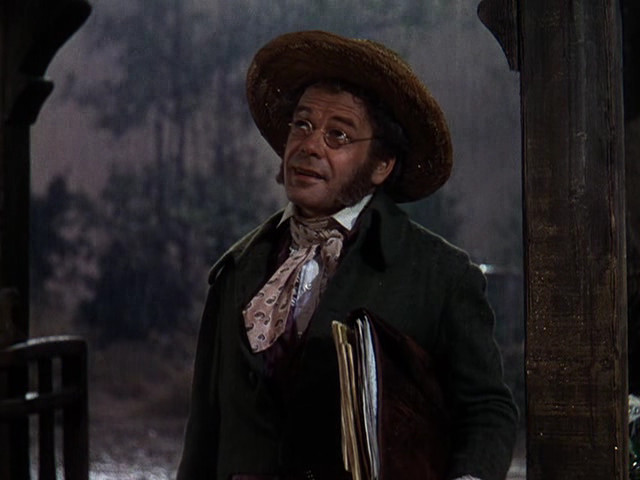
A child prodigy in both playing and composing, the film’s version of Chopin had his greatest advocate in his teacher Joseph Elsner, played by the endearingly gregarious Paul Muni, who is easily the best character, reminiscent of Thomas Mitchell’s Uncle Billy in It’s a Wonderful Life the next year. The pro-Poland patriotism of Chopin and Elsner comes into conflict with the high-minded George Sand, who convinces Chopin to focus on composing to the exclusion of all else. Sand’s characterization is one of the film’s larger changes to history, since she was an advocate for Poland as well, and Ayn Rand notably objected to her being painted as a villain. Still, I thought the treatment of the conflict was relatively balanced, certainly leaning toward Elsner being in the right overall, but Sand makes some good points along the way that are never really refuted. For any lover of classical music unfamiliar with it, A Song to Remember is an underrated classic waiting to be discovered, even if it follows story beats that have only gotten more familiar with repetition.

Best line: (George Sand) “Are you satisfied, monsieur? Do you know anything that could replace a life as great as his?”   (Elsner) “Yes. The spirit that he leaves behind in a million hearts, madam.”

Rank:  List Runner-Up

© 2021 S.G. Liput
727 Followers and Counting

At Eternity’s Gate (2018)

08 Thursday Apr 2021

Posted by sgliput in Movies, NaPoWriMo, Poetry, Reviews, Writing

≈ Leave a comment

Tags

Biopic, Drama, History

See the source image

(For Day 8 of NaPoWriMo, the prompt suggested writing a monologue from a dead person’s perspective, in the style of the Spoon River Anthology by Edgar Lee Masters. I chose Vincent van Gogh.)

I painted what I saw, which is somehow not what others saw,
Though they recognized its canvas version.
The colors mattered more than details,
For the colors are the details in my mind,
Glazed over every surface and landscape
And fired in my mind’s kiln to a minor masterpiece,
If only everyone could share my eye.
They said I had my demons, but I had angels too,
Perched on each shoulder, left and right.
With my one good ear, I like to think
The worse of the two had trouble being heard.
But hearing is overrated while sight
And hue can bewitch so splendidly.
_____________________________

MPA rating:  PG-13 (for mature themes, nothing objectionable shown)

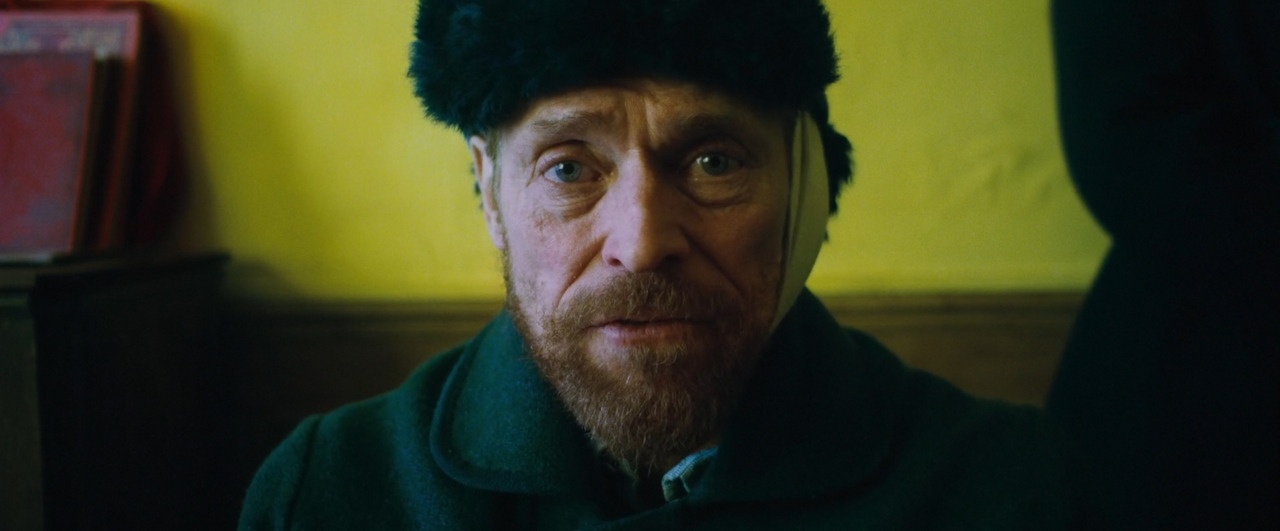
The only Oscar attention given to 2018’s At Eternity’s Gate may have been a Best Actor nod for Willem Dafoe, but his performance really is the film’s greatest strength. As misunderstood painter Vincent van Gogh, Dafoe proves to be a mercurial presence, given to bouts of obsession and anger while treasuring art above all. His relationship with fellow artist Paul Gauguin (Oscar Isaac) seems to be a friendly outlet, but the Dutchman’s apparent mental struggles only get worse in the last years of his life.

See the source image

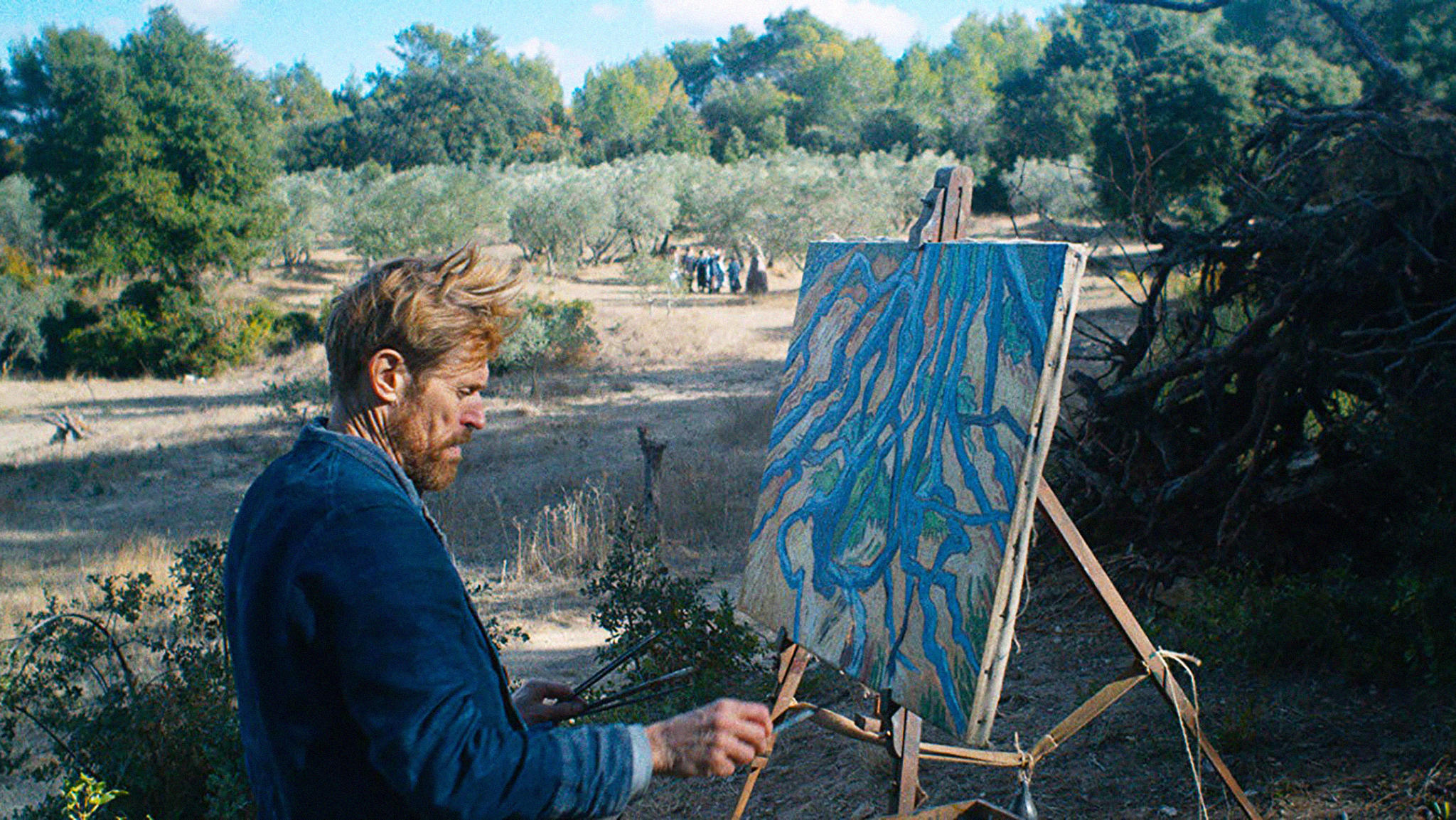
I can’t fault the acting, but director Julian Schnabel of The Diving Bell and the Butterfly makes a few jarring creative choices with his direction and editing, which highlights the otherness of van Gogh’s perceptions but also comes off as overly artsy and surreal. Still, I wasn’t familiar with many of the details of van Gogh’s life, and my subsequent research made me recognize the many references to his most famous works throughout the film, heightening my appreciation of it. At Eternity’s Gate is a contemplative showcase of Dafoe’s talent portraying a tortured genius, and its final moments are especially evocative in representing the precious but overlooked.

Best line: (van Gogh) “Maybe God made me a painter for people who aren’t born yet. It is said, ‘Life is for sowing. The harvest is not here.’”

Rank:  Honorable Mention

© 2021 S.G. Liput
723 Followers and Counting

42 (2013)

07 Monday Sep 2020

Posted by sgliput in Movies, Poetry, Reviews, Writing

≈ Leave a comment

Tags

Biopic, Drama, History

See the source image

Hate has a sound, neither quiet nor calm.
It’s harsh as a screaming match, loud as a bomb.
It hides where it can, but when called to resist,
It bursts on the scene, and it cannot be missed.

By fruits, you shall know it, by fire and fear,
By people too busy condemning to hear,
By pointing of fingers and counting of sins,
And seeing, not people, but labels and skins.

But how does one fight it? More fire and fear?
More yelling in hopes that bystanders will hear?
No mind has been changed meeting rancor with wrath,
But by the more difficult, opposite path.
_______________________

MPA rating:  PG-13 (mainly for multiple racial slurs and a few profanities)

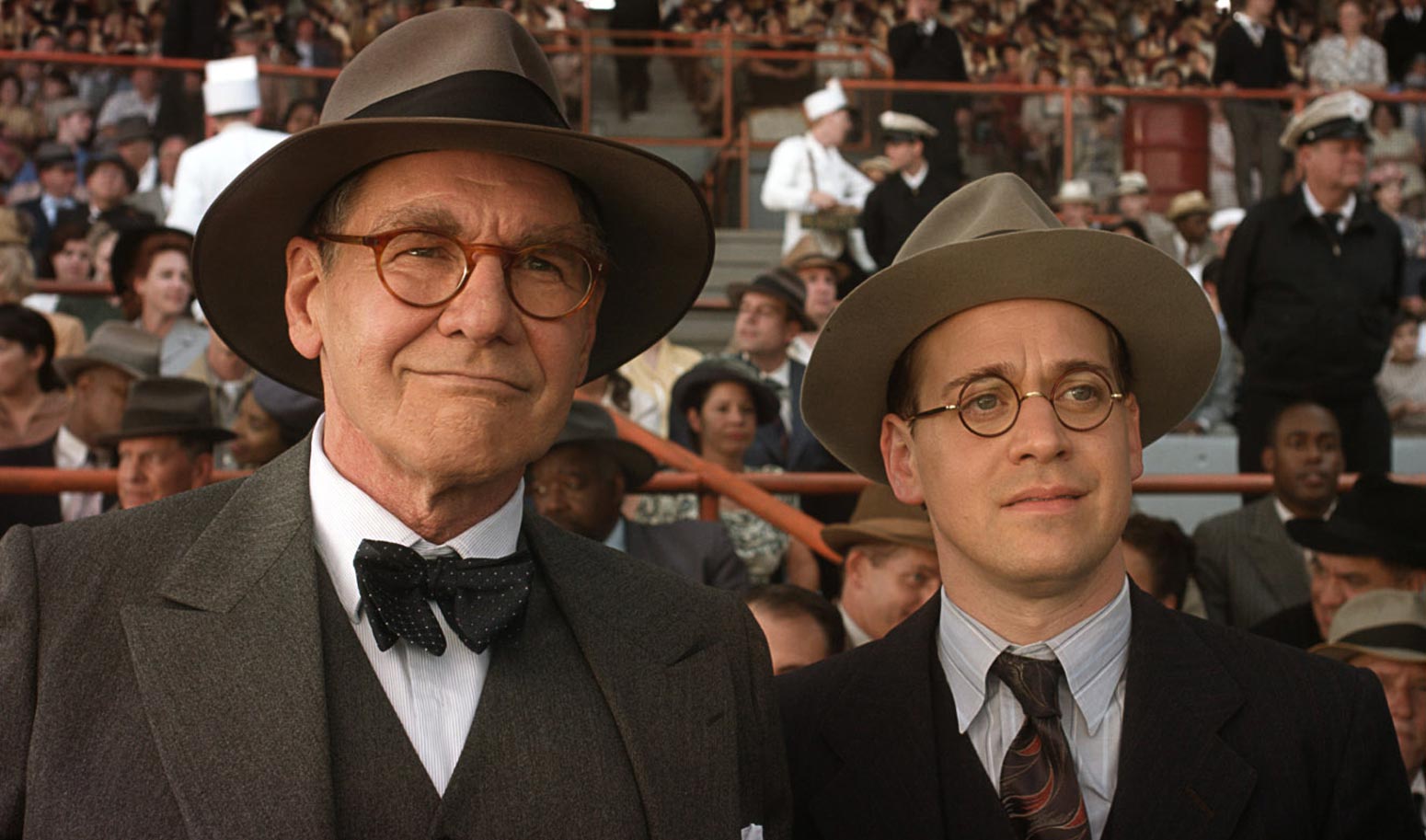
Like so many others, I was heartbroken at the news of Chadwick Boseman’s passing on August 28, the very day that MLB was celebrating a belated Jackie Robinson Day, since it’s the day Robinson and Branch Rickey first met. The premature loss of a talented actor who played so many African-American icons has prompted a resurgence of regard for his past work, and it seemed only right to revisit 42, the story of baseball trailblazer Jackie Robinson. I had seen it years ago and, not being a baseball fan, vaguely logged it in the “good, not great” category, but I recall my dad really liking it and watching it several times. Now rewatching it with my mom, I enjoyed even more this true story that has become timelier with age.

See the source image

Aside from his history book summary, I wasn’t very familiar with Jackie Robinson’s story, but I was pleased when some further reading revealed how historically accurate much of 42 is, from individual lines of dialogue to the shared Methodist faith of Robinson (Boseman) and Dodgers owner Branch Rickey (Harrison Ford). It would have been so easy to turn the colorful Rickey into a mere caricature or lose the nuance of Robinson’s restraint. Yet both Ford and Boseman do outstanding work here, filling both characters with a realistic dynamism, Ford trying to disappear behind facial prosthetics and a Southern growl and Boseman embodying Christ-like nobility. The film itself might have been too pedestrian to be an awards contender, but I rather wish that the two of them could have gotten a nomination or two for their performances. In light of Boseman’s death, lines like “He was made to last” have also taken on a more bittersweet tone than before.

Perhaps the film’s themes are a bit on-the-nose at times, such as one mocked scene where a hesitant white boy starts yelling slurs at Jackie when he sees his father do the same. Yet I don’t doubt that such interactions do serve to perpetuate prejudices. That same boy is later shown looking regretful when he sees Jackie’s teammate Pee Wee Reese (Lucas Black, grown up since Tokyo Drift) put an arm around Jackie on the field. I know it feels a little manufactured since the kid probably would have been raised to be used to such language, but it still serves as an example of how children can be shaped by what they see and hear. Bigotry or its opposite don’t come from society as a whole, at least not anymore, but from individual interactions that shape how we view each other, so the film’s message still rings true.

See the source image

At a time when racial disparities and injustices have come to the forefront of national debate, 42 feels like a shining example of how to combat racism on a one-on-one level. While Robinson later assisted Martin Luther King, Jr. in the civil rights movement, he epitomized King’s principle of nonviolence on the field, having “the guts not to fight back”, as Rickey tells him, even while being lobbed by blatant abuse. I loved the perceptive line “Echo a curse with a curse, and they’ll hear only yours,” while the alternative plays out beautifully when Robinson’s hesitant teammates take his side over the sneering vitriol of an opposing team’s manager (Alan Tudyk). Turning the other cheek has gone out of fashion in our modern society, but the stronger the contrast between offender and victim, the more support there will be from good people to address such indignities. In every new or daring pursuit, there must always be a first, and, as the first, Jackie Robinson did untold good in moving the sport of baseball and the country closer to its ideals.

Best line: (Jackie Robinson) “You want a player who doesn’t have the guts to fight back?”
(Branch Rickey) “No. No. I want a player who’s got the guts not to fight back. People aren’t gonna like this. They’re gonna do anything to get you to react. Echo a curse with a curse, and they’ll hear only yours. Follow a blow with a blow, and they’ll say, “The Negro lost his temper,” that “The Negro does not belong.” Your enemy will be out in force… and you cannot meet him on his own low ground. We win with hitting, running, fielding, only that. We win if the world is convinced of two things: that you are a fine gentleman and a great baseball player. Like our Savior… you gotta have the guts… to turn the other cheek. Can you do it?”
(Jackie) “You give me a uniform… you give me a, heh, number on my back… and I’ll give you the guts.”

Rank:  List-Worthy

© 2020 S.G. Liput
699 Followers and Counting

Version Variations: The Intouchables (2011) / The Upside (2017)

13 Monday Apr 2020

Posted by sgliput in Movies, NaPoWriMo, Poetry, Reviews, Writing

≈ Comments Off on Version Variations: The Intouchables (2011) / The Upside (2017)

Tags

Biopic, Comedy, Drama, Version Variations

See the source image

See the source image

(Happy Easter, everybody! Today’s NaPoWriMo prompt was for a triolet, an eight-line poem with repeated lines and a very particular rhyme scheme.)

The ruts in which our lives are spent
Seem deeper than they really are.
See only walls, and we lament
The ruts in which our lives are spent,
But thinking we are always meant
To stay will hardly get us far.
The ruts in which our lives are spent
Seem deeper than they really are.
_____________________

MPA rating for The Intouchables: R (really just for a few F words in the subtitles)
MPA rating for The Upside: PG-13

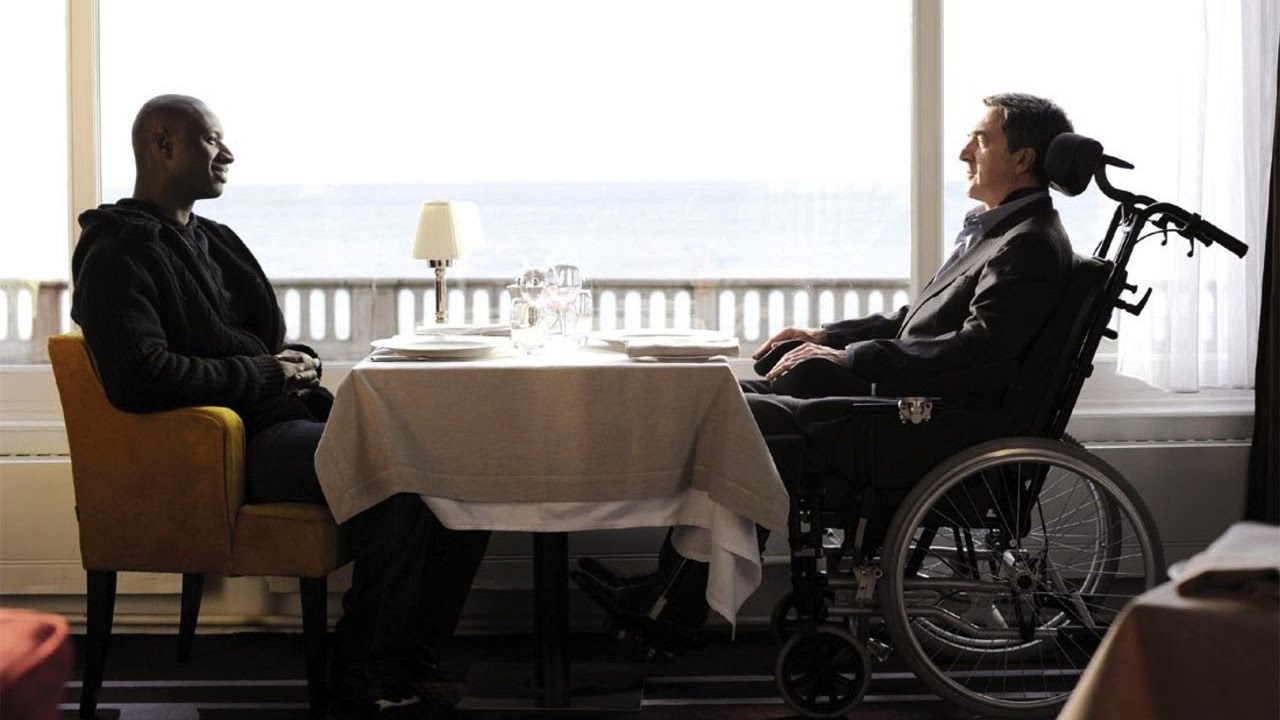
Is there some unofficial rule that says you shouldn’t watch a remake before the original? Because, if there is, I think I broke it… again. I had some curiosity about the popular French film The Intouchables, but I didn’t seek it out until I watched last year’s American version and wanted to compare them. After all, I’m far overdue for a Version Variation post. Based on the true story of Philippe di Borgo and Abdel Sellou, both films are about a poor, street-smart black man finding employment caring for a bitter quadriplegic millionaire and the feel-good friendship that grows between them.

See the source image

I’ll focus on The Upside first, since that was the first one I saw. Kevin Hart plays a deadbeat dad named Dell, who is more interested in barely fulfilling his parole requirements than actually seeking a job. Yet his initial rude interaction with Bryan Cranston’s wealthy Philip Lacasse catches the attention of the joyless businessman, and Dell is offered the job of a “life auxiliary” caretaker, with all the well-paid benefits and uncomfortable tasks that entails. Hart’s comedic experience serves him well during his character’s initial protests against catheters, but he proves himself to be an able dramatic actor as well, with Cranston being both a great foil and partner, despite being physically immobile. They’re a likable odd couple that grows in poignance up to the smile-worthy end.

And as for The Intouchables, well… it’s basically the same exact thing, but in French! With the number of remakes out there that tarnish the spirit of the original, I was surprised at how faithful The Upside was. The French characters are named Driss (Omar Sy) and Philippe (François Cluzet), but I could tell from the very first scene how similar the two films were: the protests against the more awkward forms of care, the sharing of a joint while out on the town, the creative forays into high-end painting, a stressful paragliding excursion, even a series of gags surrounding shaving Philippe’s beard and mustache.

See the source image

Yet there were still a few differences as well. Kevin Hart’s Dell is less of a jerk than the French Driss can be at times, though they still share the lack of pity that attracted their employer. The Intouchables also featured a great little scene where, after enduring Philippe’s love of classical, Driss lets loose to “Boogie Wonderland.” But the most notable difference concerns Philippe’s blind epistolary romance with a woman and Driss’s efforts to get them to meet face-to-face. The Upside features some of the exact same scenes, yet they have a different outcome, one that is perhaps more painfully realistic and leads to a far different role for the rich man’s assistant (Nicole Kidman in the American version, Audrey Fleurot in the French). For my part, I think I prefer the ending of The Intouchables, which is more lump-in-throat-worthy, aided by Ludovico Einaudi’s elegant score.

The Intouchables is clearly the more well-respected film (74% on Rotten Tomatoes versus an undeserved 39%), but The Upside is actually quite a successful remake. Some may bristle at recreating a film just so we English-speakers don’t have to read subtitles, but the filmmakers did a good job with it. Both films thrive off of the chemistry between the two leads, and all four actors are perfectly cast and do credit to the inspiring true story, though I find it odd that both Driss and Dell are black whereas Abdel Sellou was not. From the lows of depression to the highs of paragliding, The Intouchables and The Upside handle their serious subjects of class divides and disability with both pathos and humor and show that even total opposites can become lifelong friends.

See the source image

Best line from The Intouchables: (voice on the phone) “Hello?”   (Philippe) “Eleonore, it’s Philippe. I’m calling because I really wanted to hear the sound of your voice, and with that first hello, I’m fulfilled.”   (voice, apparently not Eleonore) “I’ll put her on.”

Best line from The Upside: (Dell, to Philip) “You can have any girl you want. What about this lady with all the Botox? You’re perfect for each other. You can’t move your body; she can’t move her face.”


Rank for The Intouchables: List Runner-Up
Rank for The Upside: List Runner-Up


© 2020 S.G. Liput
679 Followers and Counting

A Beautiful Day in the Neighborhood (2019)

05 Thursday Mar 2020

Posted by sgliput in Movies, Poetry, Reviews, Writing

≈ 1 Comment

Tags

Biopic, Drama, Family

See the source image

We’re told that, if one can’t be kind,
It’s best if one not speak their mind,
But in our minds, we also need
More gentleness to intercede,
That we may speak them free of shame
And help the world to do the same.
________________

MPA rating: PG

I vaguely recall watching Mr. Rogers’ Neighborhood when I was a kid. I remember the puppet king and the camera zooming in on the educational videos playing on Picture Picture. I think I even read a children’s biography of Fred Rogers for a book report. As I grew older, I thought his style was too tailor-made for kids to appeal to me anymore, yet I still viewed him as an admirable figure. My mom, however, remembers the years when he was practically a laughingstock among cynical adults, so it warms both our hearts that he’s finally getting his due, at least in the movies.

See the source image

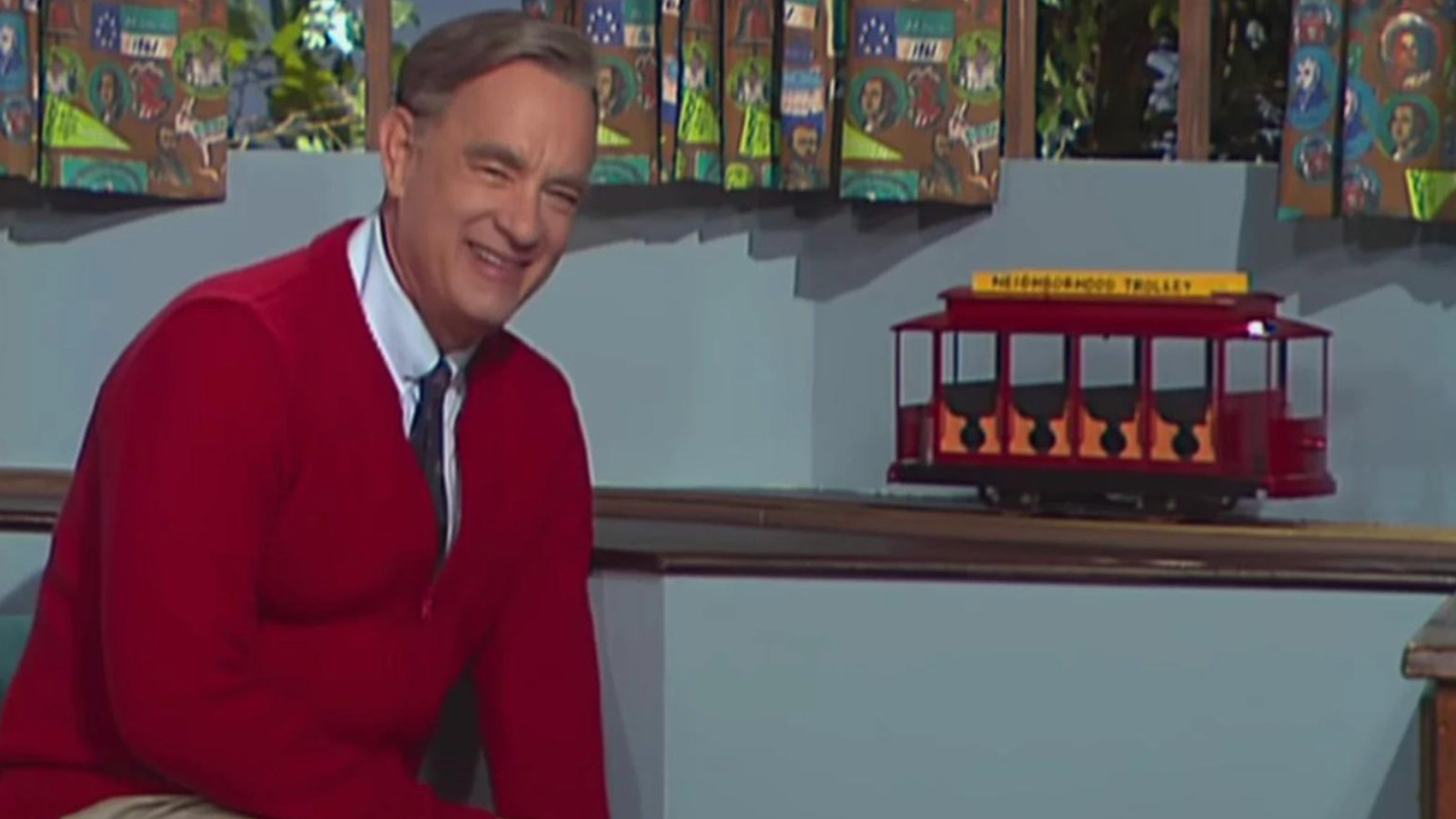
Tom Hanks has made a living playing America’s most trustworthy figures, from Walt Disney to Captain Sully. In both cases, and with Mr. Rogers here, he doesn’t entirely disappear. He still looks like Tom Hanks, yet he manages to wield the audience’s good will so well that it doesn’t matter. He can practically be two people at once. He manages to adopt Fred Rogers’ soft-spoken manner and genteel politeness so well, that it’s no wonder cynical reporter Lloyd Vogel (Matthew Rhys) finds him hard to believe when Vogel is told to profile Rogers for an article about heroes.

A Beautiful Day in the Neighborhood isn’t quite what is advertised, its greater focus being on Lloyd and his troubled relationship with his father (Chris Cooper) rather than Mr. Rogers. Well, there’s a reason Hanks was nominated for Best Supporting Actor. Yet, Lloyd’s story (loosely based on Tom Junod, who also profiled Mr. Rogers in the 1990s) is still meaningful, with Rogers acting as sort of a homespun shoulder angel for him, urging him to rediscover his priorities and even the value of silence. I was surprised at how much I identified with elements of Lloyd’s story, particularly his father’s terminal illness, and it touched me more than I was expecting. I also liked the visual style borrowed from Mr. Rogers’ show, with most outdoor scenes presented as a miniature diorama, though one dream sequence of Lloyd’s threatened to get too silly at times.

See the source image

I think the reason Mr. Rogers is so beloved now is his unsullied brand of kindness, regardless of the person or whatever they’ve done. In a world where nastiness seems to be rewarded all too often, we as a society have begun to crave what once was viewed as quaint and puerile, and he was the paragon of a gentleness we’ve largely lost. A Beautiful Day in the Neighborhood is a lovely tribute to a lovely man, not some subversive exposé but a confirmation that Rogers’ public persona was him. If it makes even one person choose kindness over the alternative, then it will have lived up to the example of Fred Rogers.

Best line: (Mr. Rogers) “There is no normal life that is free from pain.”


Rank: List Runner-Up


© 2020 S.G. Liput
665 Followers and Counting


Tolkien (2019)

18 Sunday Aug 2019

Posted by sgliput in Movies, Poetry, Reviews, Writing

≈ Leave a comment

Tags

Biopic, Drama, History, War

See the source image

A story’s source is not alone
The man who put his pen to page,
But every seed his life had sown
Within that man at every age,
His greatest fear, his cruelest pain,
His deepest love, his darkest stain:
These seeds were sown into his brain,
His heart and soul until they bore
A fruit we’d never seen before.
And so, in turn, that story’s sown
More seeds that yet remain unknown.
______________________

MPAA rating: PG-13

As a devoted fan of The Lord of the Rings, I was eagerly awaiting this biopic of J.R.R. Tolkien (played earnestly by Nicholas Hoult), hoping that it would provide some insight into the source of one of fiction’s greatest stories (and my favorite movie of all time). The acting is on point, the period setting is splendidly polished, the emotions are effectively conveyed, and yet Tolkien doesn’t do more than the minimum of what I expected.

There’s nothing particularly wrong with how Tolkien’s early life is recounted, and it actually enlightened me to quite a bit of his history. It covers his courtship of Edith Bratt (Lily Collins), his long-standing love of languages, and his friendships with three other boys who together formed the T.C.B.S., or Tea Club and Barrovian Society, a creative fraternity that clearly echoes the “Seize the day” mentality of Dead Poets Society. The film goes back and forth between these early years and his horrific time during the Battle of the Somme, where he suffers from trench fever and hallucinates fantasy figures on the battlefield.

See the source image

It’s all a solid, respectable attempt at providing background for Tolkien the great author, but it also feels manufactured in how it tries to provide context for Tolkien’s works. Early scenes of his youth in bucolic Birmingham do well to remind viewers of the Shire without making it overly clear, but other references aren’t as subtle. (Though I agree with the statement from one of his friends about Wagner’s Ring Cycle that it shouldn’t take six hours to tell a story about a magic ring; it actually takes 9+ hours.) It’s only a matter of time before the T.C.B.S. is referred to as a “fellowship,” and the surreal hallucinations Tolkien has amidst the horrors of World War I serve no discernible purpose but as references to his fantasy and excuses to include some special effects. It also stumbles at times in the presentation of events, such as when Tolkien’s mother suddenly dies with no explanation at all.

I also would have liked more references to Tolkien’s Catholic faith and how it shaped his work, something which director Dome Karukoski supposedly filmed but removed due to test audience feedback. There are welcome touches, such as the inclusion of a crucifix in Tolkien’s battlefield visions, but the film definitely prefers its romantic side, as when Tolkien is told by his friend and guardian Father Francis (Colm Meaney) to stop seeing Edith until he was 21. This is true, but the film’s Tolkien later insists it was a mistake, while the real-life Tolkien said he didn’t regret the decision.

See the source image

In its elegant presentation and clear fondness for its subject, Tolkien is a respectable, well-acted biopic that does most of what it sets out to do. Considering the exceptional man and story of its inspiration, though, one would hope it could have been a little more than that.

Best line: (Edith, on Tolkien’s regard for languages) “Things aren’t beautiful because of how they sound. They’re beautiful because of what they mean.”


Rank: List Runner-Up


© 2019 S.G. Liput
644 Followers and Counting


2019 Blindspot Pick #6: Amadeus (1984)

31 Wednesday Jul 2019

Posted by sgliput in Blindspot, Movies, Poetry, Reviews, Writing

≈ Leave a comment

Tags

Biopic, Drama, History, Musical

See the source image

How must it be to be a genius,
Masterpieces to be mined
In the mind,
Unrefined,
And so gradually defined
In an act of new creation
Not unlike how God designed?

Oh, to birth such instant classics,
Such a rare, eternal prize!
Oh, what highs
In human eyes,
We crave as we mythologize,
And what despair we suffer when
Our limits cut us down to size.

Comparisons are no avail
If we’re defined by how we fail.
______________________

MPAA rating: PG for the original, R for the Director’s Cut, due to brief language and nudity

For me, Amadeus is the perfect candidate for a Blindspot pick. I’ve been putting it off for far too long, even getting it from the library a while ago and letting it sit around until I had to return it. On top of that, I kept being reminded of it; the recent anime Steins;Gate 0 had an AI called Amadeus and explicitly referenced the rivalry between Mozart and Salieri, and I also just rediscovered the classic ‘80s tune “Rock Me Amadeus” by Falco, inspired by this film. I even got a recent Final Jeopardy question wrong because I didn’t realize Amadeus was based on a play, making it perfect for MovieRob’s Genre Grandeur this month as well. Thus, at long last, it seemed only right to watch the Best Picture of 1984, since I was clearly being pointed toward it.

See the source image

Winner of eight Oscars, Amadeus is a powerhouse for both acting and music. For his role of Salieri, F. Murray Abraham deservingly won the Oscar for Best Actor, ironically defeating Tom Hulce as his unwitting rival Mozart. Salieri is a tortured soul, deranged and aged far past his prime when the film opens in 1823, and tells a priest of how his classical musical career was overshadowed by the flippant but undeniable talent of Wolfgang Amadeus Mozart. Hulce portrays Mozart as a frivolous man-child, a “creature” as Salieri refers to him, whose high-pitched laugh grows increasingly annoying, yet the elder composer recognizes Mozart’s gift and blames God for leaving Salieri so comparatively untalented. Both performances are brilliantly nuanced, especially by the tragic end, but the Academy chose right that year.

Yet the music is just as much a character as the dueling composers. As Salieri points out early on, everyone recognizes Mozart’s best work, and his best work is put on full display, with even extended stage performances from opera like The Magic Flute and Don Giovanni. (I watched Milos Forman’s Director’s Cut.) Lovers of classical music will revel in the score, but even non-fans will likely appreciate watching the inception of masterpieces that have stood the test of time.

While I recognize the film as a magnum opus for everyone involved, there’s something that bugs me and keeps it from ranking among my favorites. It may seem shallow or unsympathetic, but as I watched Salieri spiral into a tortured wretch of envy, cursing God for giving Mozart the talent he craved for himself, I just wanted to slap him and say “Get over it!” It’s drama, and I know such unbridled jealousy does happen, but I hate when people compare themselves to others because no matter how good you are at anything, there will always be someone better. Salieri had a high-profile position, money, and respect, and instead of viewing Mozart as a colleague, however vulgar he may have been, he made him the source of an inferiority complex, ultimately contributing to his ruin, for which Salieri received nothing but guilt. He may have blamed God, but the fault was his own. It’s a marvelously complicated portrayal of destructive envy that nonetheless frustrated me almost as much as Mozart’s laugh.

See the source image

Looking back, 1984 was undoubtedly one of the big movie years in history, and it says a lot that Amadeus was able to sweep the Oscars that year, winning Best Picture, Actor, Director, Adapted Screenplay, Art Direction, Costume Design, Makeup, and Sound. Impeccably mounted in its 18th/19th-century setting, it’s an overly long but outstanding period piece conveying a historic rivalry that, while fictionalized, still resonates.

Best line: (Salieri) “All I wanted was to sing to God. He gave me that longing… and then made me mute. Why? Tell me that. If He didn’t want me to praise Him with music, why implant the desire, like a lust in my body, and then deny me the talent?”


Rank:  List Runner-Up


© 2019 S.G. Liput
642 Followers and Counting


Green Book (2018)

01 Monday Jul 2019

Posted by sgliput in Movies, Poetry, Reviews, Writing

≈ Leave a comment

Tags

Biopic, Comedy, Drama, History

See the source image

Road trips are an odd affair,
The constant movement far from home,
A different bed come every night,
The landscape shifting out of sight
As cars continuously roam
On quests their occupants must share.

Friends may think they have rapport,
Until the road bares every irk
In ways that cannot be ignored,
And likewise those with no accord
May find that under quarrels lurk
A bond they never knew before.
_________________

MPAA rating:  PG-13

Who doesn’t love a movie about unlikely friendships? From Lethal Weapon to Driving Miss Daisy, there’s something universally appealing about two very different people overcoming those differences in favor of mutual respect, and, as with those two examples and this film, race is often one of those separators. Green Book is the latest crowd-pleasing member of the genre that also dives into that racial divide, and while some have accused it of not diving deeply enough, it hit an amusing and poignant balance that I enjoyed enormously.

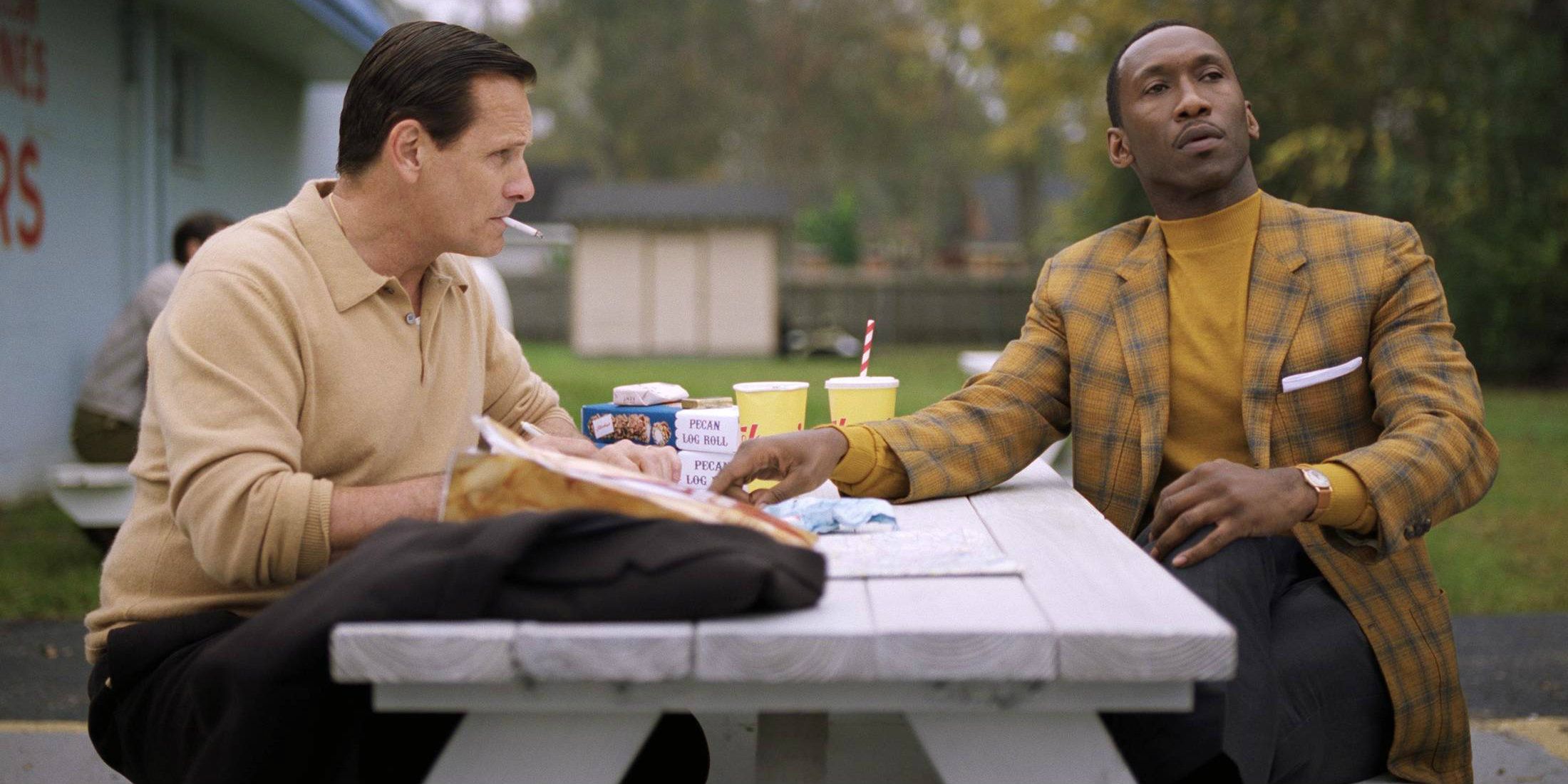
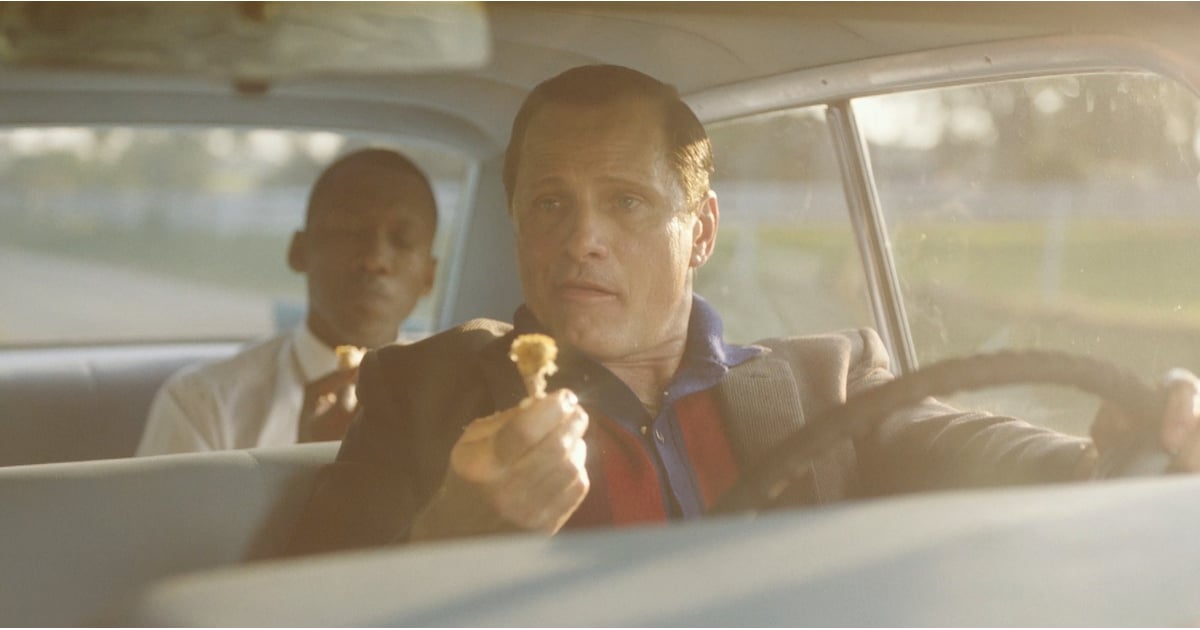
It’s hard to believe that Viggo Mortenson is Danish, much less that he once played Aragorn in Lord of the Rings, considering how perfectly he inhabits the role of an overweight Italian-American bouncer named Tony Vallelonga, a.k.a. Tony Lip. Despite some latent racism, he grudgingly accepts a job as a driver for famed black pianist Dr. Don Shirley (Mahershala Ali), who needs transportation and protection during a two-month concert tour of the South in 1962. Even beyond race, they couldn’t be more different, Tony crude and confrontational, Dr. Shirley sophisticated and haughty; hence, the unlikely friendship. It’s a role reversal of expected stereotypes of the era, and the two actors embrace the dichotomy while forming unexpected bonds through food, music, language, and the recognition of right and wrong.

See the source image

Many have called Green Book a reversal of Driving Miss Daisy, and while the point is not unfounded, Green Book has a more socially conscious goal in mind. It may not dive as deeply as some people may have wanted, but its view of race relations still feels honest and ultimately hopeful. (Incidentally, “some people” also say that Driving Miss Daisy and this film were unworthy Best Picture winners, but, in my opinion, “some people” are wrong.)

I really don’t get a lot of the backlash toward this movie, like the supposedly tone-deaf scene where Tony teaches Dr. Shirley how to eat fried chicken. It’s like critics are trying to filter it through every potential-racism, social justice lens they have at their disposal, while I don’t see it as anything but an example of the different worlds to which these two characters have been exposed. They each share pieces of those worlds with each other during their journey, whether it be Shirley’s eloquence in composing Tony’s letters home for him or Tony’s unwillingness to accept any insult. And while there are shades of the dreaded “white savior” tropes that critics make far too much of, I’d argue that Tony gets more from Dr. Shirley than the other way around, particularly a changed perspective on his former prejudice.

Contrary to the assertions of writer/producer (and Tony’s son) Nick Vallelonga, some of Dr. Shirley’s family have denounced Green Book as untruthful, claiming that his and Tony’s relationship was nothing more than that of employer and employee, while other sources have come out with evidence that they were in fact friends. Either way, Green Book takes its historical inspiration and creates a wholly satisfying road-trip movie, especially for those who don’t try to psychoanalyze its themes too deeply.

See the source image

Though it could have focused more on The Negro Motorist Green Book of its title, I, for one, am glad for its Oscar success, including Best Picture, Best Original Screenplay, and Best Supporting Actor for Ali. The performances and script are full of charm, humor, and empathy, and Green Book fits comfortably among the great unlikely friendship road movies, with an ending that even directly recalls the last scene of Planes, Trains, and Automobiles. Race is a touchy subject these days, and while many may disagree, this movie serves as a welcome reminder that mutual understanding can seem unlikely but is always within reach.

Best lines:  (Tony Lip) “The world’s full of lonely people afraid to make the first move.”

and

(Dr. Shirley, channeling MLK) “You never win with violence. You only win when you maintain your dignity.”


Rank:  List-Worthy


© 2019 S.G. Liput
636 Followers and Counting


← Older posts
Newer posts →

Recent Posts

  • We Didn’t Start 2025 (Recap)
  • NaPoWriMo 2025 Recap (Finally)
  • Sonic the Hedgehog 3 (2024)
  • It Happened One Night (1934)
  • Spellbound (2024)

Recent Comments

associatesofshellymann's avatarassociatesofshellyma… on My Top Twelve La La La So…
Kit's avatarKit Nichols on Bonnie and Clyde (1967)
lifelessons's avatarlifelessons on Look Back (2024)
Carol Jackson's avatarCarol Jackson on The Thief of Bagdad (1940…
Stephen's avatarStephen on Love Story (1970)

Archives

  • January 2026
  • December 2025
  • May 2025
  • April 2025
  • March 2025
  • February 2025
  • January 2025
  • December 2024
  • May 2024
  • April 2024
  • March 2024
  • February 2024
  • January 2024
  • December 2023
  • November 2023
  • October 2023
  • September 2023
  • July 2023
  • June 2023
  • May 2023
  • April 2023
  • March 2023
  • February 2023
  • January 2023
  • December 2022
  • November 2022
  • October 2022
  • September 2022
  • August 2022
  • July 2022
  • June 2022
  • May 2022
  • April 2022
  • March 2022
  • February 2022
  • January 2022
  • December 2021
  • November 2021
  • October 2021
  • September 2021
  • August 2021
  • July 2021
  • June 2021
  • May 2021
  • April 2021
  • March 2021
  • February 2021
  • January 2021
  • December 2020
  • November 2020
  • October 2020
  • September 2020
  • August 2020
  • July 2020
  • June 2020
  • May 2020
  • April 2020
  • March 2020
  • February 2020
  • January 2020
  • December 2019
  • November 2019
  • October 2019
  • September 2019
  • August 2019
  • July 2019
  • June 2019
  • May 2019
  • April 2019
  • March 2019
  • February 2019
  • January 2019
  • December 2018
  • November 2018
  • October 2018
  • September 2018
  • August 2018
  • July 2018
  • June 2018
  • May 2018
  • April 2018
  • March 2018
  • February 2018
  • January 2018
  • December 2017
  • November 2017
  • October 2017
  • September 2017
  • August 2017
  • July 2017
  • June 2017
  • May 2017
  • April 2017
  • March 2017
  • February 2017
  • January 2017
  • December 2016
  • November 2016
  • October 2016
  • September 2016
  • August 2016
  • July 2016
  • June 2016
  • May 2016
  • April 2016
  • March 2016
  • February 2016
  • January 2016
  • December 2015
  • November 2015
  • October 2015
  • September 2015
  • August 2015
  • July 2015
  • June 2015
  • May 2015
  • April 2015
  • March 2015
  • February 2015
  • January 2015
  • December 2014
  • November 2014
  • October 2014
  • September 2014
  • August 2014
  • July 2014
  • June 2014
  • May 2014
  • April 2014
  • March 2014
  • February 2014
  • January 2014
  • December 2013

Categories

  • Blindspot
  • Blogathon
  • Christian
  • Movies
  • Music
  • NaPoWriMo
  • Poetry
  • Reviews
  • TV
  • Writing

Meta

  • Create account
  • Log in
  • Entries feed
  • Comments feed
  • WordPress.com

Recent Posts

  • We Didn’t Start 2025 (Recap)
  • NaPoWriMo 2025 Recap (Finally)
  • Sonic the Hedgehog 3 (2024)
  • It Happened One Night (1934)
  • Spellbound (2024)

Recent Comments

associatesofshellymann's avatarassociatesofshellyma… on My Top Twelve La La La So…
Kit's avatarKit Nichols on Bonnie and Clyde (1967)
lifelessons's avatarlifelessons on Look Back (2024)
Carol Jackson's avatarCarol Jackson on The Thief of Bagdad (1940…
Stephen's avatarStephen on Love Story (1970)

Archives

  • January 2026
  • December 2025
  • May 2025
  • April 2025
  • March 2025
  • February 2025
  • January 2025
  • December 2024
  • May 2024
  • April 2024
  • March 2024
  • February 2024
  • January 2024
  • December 2023
  • November 2023
  • October 2023
  • September 2023
  • July 2023
  • June 2023
  • May 2023
  • April 2023
  • March 2023
  • February 2023
  • January 2023
  • December 2022
  • November 2022
  • October 2022
  • September 2022
  • August 2022
  • July 2022
  • June 2022
  • May 2022
  • April 2022
  • March 2022
  • February 2022
  • January 2022
  • December 2021
  • November 2021
  • October 2021
  • September 2021
  • August 2021
  • July 2021
  • June 2021
  • May 2021
  • April 2021
  • March 2021
  • February 2021
  • January 2021
  • December 2020
  • November 2020
  • October 2020
  • September 2020
  • August 2020
  • July 2020
  • June 2020
  • May 2020
  • April 2020
  • March 2020
  • February 2020
  • January 2020
  • December 2019
  • November 2019
  • October 2019
  • September 2019
  • August 2019
  • July 2019
  • June 2019
  • May 2019
  • April 2019
  • March 2019
  • February 2019
  • January 2019
  • December 2018
  • November 2018
  • October 2018
  • September 2018
  • August 2018
  • July 2018
  • June 2018
  • May 2018
  • April 2018
  • March 2018
  • February 2018
  • January 2018
  • December 2017
  • November 2017
  • October 2017
  • September 2017
  • August 2017
  • July 2017
  • June 2017
  • May 2017
  • April 2017
  • March 2017
  • February 2017
  • January 2017
  • December 2016
  • November 2016
  • October 2016
  • September 2016
  • August 2016
  • July 2016
  • June 2016
  • May 2016
  • April 2016
  • March 2016
  • February 2016
  • January 2016
  • December 2015
  • November 2015
  • October 2015
  • September 2015
  • August 2015
  • July 2015
  • June 2015
  • May 2015
  • April 2015
  • March 2015
  • February 2015
  • January 2015
  • December 2014
  • November 2014
  • October 2014
  • September 2014
  • August 2014
  • July 2014
  • June 2014
  • May 2014
  • April 2014
  • March 2014
  • February 2014
  • January 2014
  • December 2013

Categories

  • Blindspot
  • Blogathon
  • Christian
  • Movies
  • Music
  • NaPoWriMo
  • Poetry
  • Reviews
  • TV
  • Writing

Meta

  • Create account
  • Log in
  • Entries feed
  • Comments feed
  • WordPress.com

Blog at WordPress.com.

Is this your new site? Log in to activate admin features and dismiss this message
Log In
  • Subscribe Subscribed
    • Rhyme and Reason
    • Join 814 other subscribers
    • Already have a WordPress.com account? Log in now.
    • Rhyme and Reason
    • Subscribe Subscribed
    • Sign up
    • Log in
    • Report this content
    • View site in Reader
    • Manage subscriptions
    • Collapse this bar