• Home
  • About Me
  • THE LIST Through the Years
  • Top Twelves and More
  • The End Credits Song Hall of Fame

Rhyme and Reason

~ Poetry Meets Film Reviews

Rhyme and Reason

Tag Archives: Action

Cartoon Comparisons: Alita: Battle Angel (2019) / Gunnm (1993)

29 Monday Apr 2019

Posted by sgliput in Movies, NaPoWriMo, Poetry, Reviews, Writing

≈ Leave a comment

Tags

Action, Animation, Anime, Cartoon Comparisons, Drama, Romance, Sci-fi, Thriller

(Today’s NaPoWriMo prompt was for a poem that meditates on a strong emotion, like disillusionment with the world at large.)

See the source image

See the source image

The world is not the friendly place we once had promised to ourselves
When youthful optimism held some sway within our hearts.
We like to think that’s still the case, and yet the more a person delves,
The more this human-born machine reveals its sordid parts.

It’s tragedy that truly wakes our minds to darkness come to light,
That shows how cruel the world can be, with men its messengers.
We’re ignorant of risk and stakes, and enter honestly the fight,
Too late to learn the world was not designed for amateurs.
___________________

MPAA rating: PG-13 (comes close to R with the violence)

I’ve been looking forward to Alita: Battle Angel for well over a year, ever since I heard James Cameron was planning on bringing the long-running manga Battle Angel Alita (a.k.a. Gunnm) to Hollywood. This movie fascinates me not only for its visually awesome cyberpunk future, but also because it owes its existence to one man’s passion project, bringing an extremely niche franchise to a far wider audience than it otherwise would have enjoyed. It makes me wish something similar would happen with Steins;Gate or Cowboy Bebop.

Adaptations between manga/anime and live-action have historically been more miss than hit, but Alita is finally the hit that fans have been waiting for, faithful to its origins in the best way. I, for one, have not read the manga that so enthralled James Cameron, but I have watched the 1993 OVA (Original Video Animation), which is basically like a direct-to-video anime. At only 55 minutes long, it was an imaginative if brutal sci-fi that I definitely recognized had plenty of potential for the big screen. And now that it has, I’m thrilled that such potential was not wasted.

See the source image

The manga/anime/film tells the story of the cyborg Alita (Rosa Salazar), a girl whose head is discovered in a trash heap by cybernetics expert Dr. Ido (Christoph Waltz). Finding her human brain still active, he rebuilds her body and introduces the amnesiac girl to the cutthroat world of Iron City, a sprawling dystopia patrolled by cyborg bounty hunters and festering in the shadow of the floating city known as Zalem. Trying to regain her memories, Alita becomes a Hunter Warrior herself as she falls in love with young Hugo (Keean Johnson) and navigates the plotting of Ido’s rival Dr. Chiren (Jennifer Connolly), the villainous Vector (Mahershala Ali), and his killer henchmen.

As it is, Alita might bring to mind several other films, such as Elysium with its floating city of higher class exploitation or the cyberpunk aesthetic of Ghost in the Shell, but I can’t help but feel that, if Alita had come out twenty years ago, it would be blowing people’s minds left and right. Yet the manga predates most of what it seems to borrow from, though the sport of Motorball definitely seems inspired by Rollerball.

See the source image

I’m glad, though, that Cameron wasn’t able to make Alita when he first wanted to back in 2003 because the visuals wouldn’t have been this good. Alita: Battle Angel is a sci-fi action treat, with visual effects that have a good shot at an Oscar next year. Alita herself is stunningly realized, with Rosa Salazar providing a strong motion capture performance, augmented by the effects team with those anime-sized eyes that aren’t as hard to get used to as you might think. There are a few hiccups in the animation early on that threaten to be distracting, but by the time Alita starts kicking criminal butt, she’s seamlessly a part of this world.

The live-action Ghost in the Shell was distracting for me because it was a mish-mash of various plot points from the anime film and series; Alita, on the other hand, might be the most faithful adaptation I’ve come across. Nearly everything in the anime is also in the movie, sometimes even shot for shot (like Chiren squishing a bug while telling Ido she’ll claw her way back to Zalem), though the movie’s greater length allows it to expand on many plot elements, such that watching the anime is like a highlight reel of the film. Considering how anime adaptations have flopped so hard over the years, the film’s faithfulness to its source material is laudable and likely credited to the efforts of Cameron himself as a fan of the manga. Interestingly, I understand that some differences from the manga were actually borrowed from the anime; one villainous character is killed in both versions but apparently survives much longer in the manga.

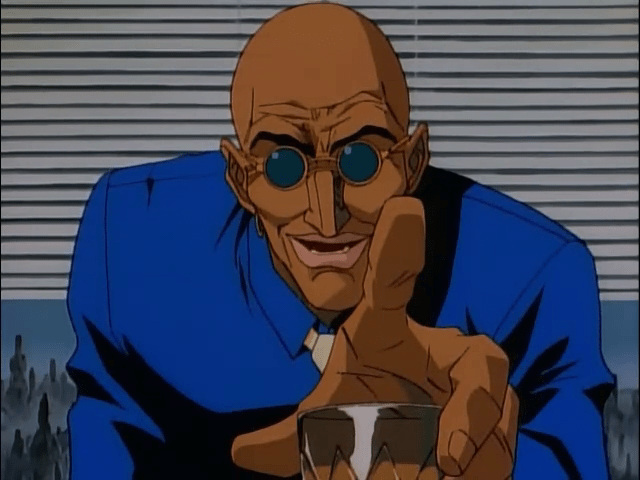
See the source imageSee the source image

That’s not to say there aren’t other differences; the source of Alita’s name and body is given more emotional weight in the film, and Ido’s former relationship with Chiren is explicitly romantic where it wasn’t before. And the film throws in entire sections that I can only assume are drawn from the manga since they weren’t in the anime, like the deadly sport of Motorball and the glimpses of Alita’s forgotten past. For me, these additions only added to the epic dystopian world-building that I so admire.

One thing I was concerned about the adaptation was just how violent it would end up being, and I was relieved that it earned a PG-13 rating and the wider audience that that entails. Don’t get me wrong; Alita: Battle Angel definitely pushes the boundary for a PG-13 film with multiple heads and limbs sent flying, but the anime is certainly more violent and bloody. The movie may have its brutal moments, but I was glad it was largely bloodless, leaving out the anime’s brief nudity and leaving some cruel moments mercifully offscreen.

See the source image

While Alita was a pleasure to watch on the big screen, I find myself struggling with how to rank it. I’m still not a fan of the mostly bitter ending common to both the anime and film, but I’m excited for whatever may come in the (hopefully forthcoming) sequel, which is uncharted territory for me. My ranking could easily change with time, but I’ll err on the side of caution and make it a List Runner-Up. Nevertheless, for the most part, Alita: Battle Angel was pure effects-heavy coolness and as good as I’d hoped it would be, proving that Hollywood can make good films based on manga/anime. Perhaps it simply takes someone like James Cameron to steer them in the right direction.

Best line: (Alita) “I do not stand by in the presence of evil!”


Rank: List Runner-Up


© 2019 S.G. Liput
628 Followers and Counting


Teen Titans Go! to the Movies (2018)

28 Sunday Apr 2019

Posted by sgliput in Movies, NaPoWriMo, Poetry, Reviews, Writing

≈ Leave a comment

Tags

Action, Animation, Comedy, Family, Superhero

(Today’s NaPoWriMo prompt was for a meta-poem, so instead of just a poem about poetry, I tackled the very idea of a work being self-aware or meta, paired with a highly meta movie.)

See the source image

A meta-poem? A meta-poem?
Sure, now they want a meta-poem,
The kind that references itself
And thinks itself a better poem.

I’m not against the whole idea,
And I’ll admit it has potential.
It’s a tricky trail, however,
Getting so self-referential.

Whether it’s for thoughtful musing
Or for entertaining snark,
How can people judge a thing
That knows its own creative spark?

I might look back some years from now
And wish I’d picked a different foot.
Iambic’s fine, and yet this poem
Is analyzing my output.

Should I have used pentameter?
I’ll never be the first to ask
Because this poem is self-aware
Enough to beat me to the task.

And that’s the case with film or verse
That lets its sentience supersede.
It might cause you to roll your eyes,
But still, it’s fun to watch and read.
__________________

MPAA rating:  PG

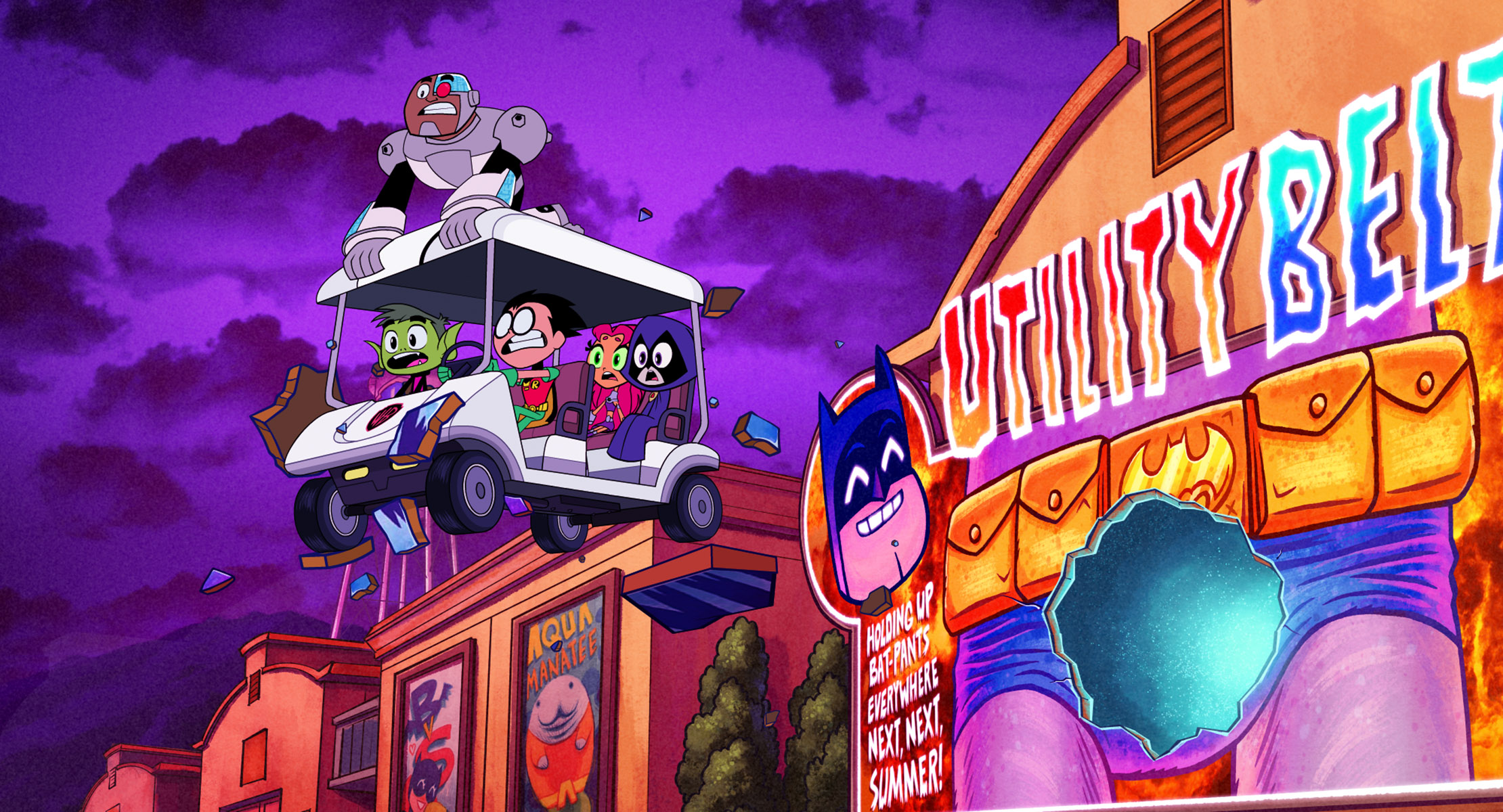
Can a good movie come from a bad show? That’s the question I asked myself when I heard Teen Titans GO! to the Movies was getting positive reviews. I grew up devotedly watching the Teen Titans animated series on Cartoon Network, and I loved its balance its unique anime-like style and balance between lighthearted comedy and dark, high-stakes drama. That’s why I’ve been so disappointed with the more recent Teen Titans Go!, which has jettisoned the drama for all-out silliness rivaling and often surpassing that of SpongeBob.

See the source image

So is the movie version more of the same? Well, yes, but I still managed to have fun with it, as is likely the case with anyone steeped in comic book culture. The Teen Titans, still voiced by the same voice actors from both TV series (Scott Menville as Robin, Hynden Walch as Starfire, Greg Cipes as Beast Boy, Khary Payton as Cyborg, and Tara Strong as Raven), think of themselves as real heroes yet are continually thought of as sidekicks and jokes by the Justice League. Robin, in particular, feels that they need their own movie to be taken seriously and endeavors to be worthy of having their own arch-nemesis in the form of the evil Slade (Will Arnett, more comedic but paling in comparison to Ron Perlman in the original series).

Indeed, Teen Titans Go! to the Movies is admirably nerdy, poking fun at every level of the modern superhero genre. As a fan of superhero movies in general, I found plenty to laugh at, from digs at past DC films to a random time-travel detour to the writer’s obvious comics knowledge, throwing in obscure DC characters and a scene where Slade/Deathstroke is mistaken for Deadpool. (“Look into the camera, and say something inappropriate.”) Sometimes, it doesn’t even have to point out its own jokes, like casting Nicolas Cage as Superman (look it up, if you don’t get it). A few of its gags are even quite insightful, such as when everything about Batman is given its own movie; I couldn’t help but think of this film when I saw there’s an upcoming TV show about Alfred called Pennyworth.

See the source image

My ultimate beef with Teen Titans Go! still remains, namely that it’s sad how the characters are dumbed down to annoying levels for the sake of being kid-friendly. The first series proved that wasn’t necessary, but its successor is content to be all about the jokes. I guess that’s okay when the jokes are at least funny, which is the case here but not always on the show. Beyond the meta-humor, the film also benefits from committed voice actors, including Kristen Bell, and manages a few well-animated action scenes when it tries. If you can look past some weird moments and the juvenile stupidity of its characters, Teen Titans Go! to the Movies should earn more than a few laughs from superhero fans and is worth seeing if only for an incredibly meta cameo from Stan Lee, his only one in a DC movie.

Best line:  Probably the aforementioned line about Deadpool


Rank: List Runner-Up


© 2019 S.G. Liput
627 Followers and Counting
 

Smokey and the Bandit (1977)

25 Thursday Apr 2019

Posted by sgliput in Movies, NaPoWriMo, Poetry, Reviews, Writing

≈ 1 Comment

Tags

Action, Comedy, Romance

(Today’s NaPoWriMo prompt was for a poem about a season, senses, and a rhetorical question, so I tackled the thrill of a summer drive.)

See the source image

How far would you drive in the summer?
How far would the summer drive you?
Every mile, every town,
Every window rolled down
Would herald the motored newcomer,
Before he then passed out of view.

You’re old enough not to be reckless,
But young enough not to pay heed.
So let the wind howl,
Let the slower folk scowl
While you hug the road’s skin like a necklace
And dazzle them all with your speed.

No Internet vies for your vision,
No buzz in your pocket distracts.
The only machine
That you currently preen
Is the engine defined by precision,
The one that leaves all in your tracks.

The smell of the asphalt is heady,
The heat of the sun is your charge,
The wind’s jaunty taste
Bids your wild side make haste.
The world may or may not be ready.
There’s a foolhardy driver at large!
_____________________

MPAA rating: PG (should definitely be PG-13 by today’s standards, for language)

In the wake of Burt Reynolds’ death, it seemed only right to check out the film that really solidified his popularity and brilliantly utilized his natural charisma. Smokey and the Bandit is lightweight and undemanding, but I doubt it could be any more entertaining.

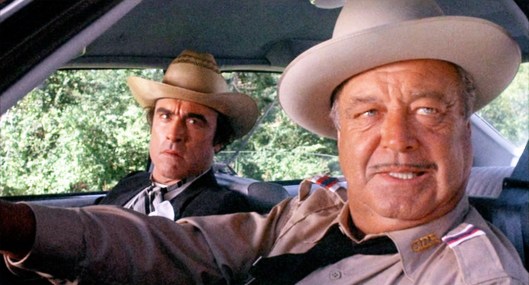
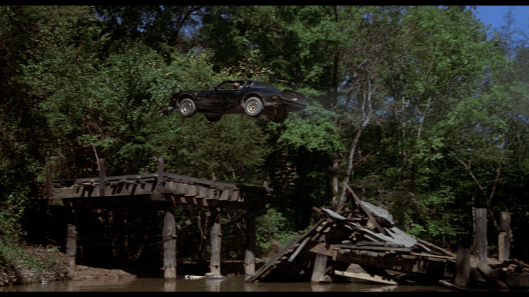
As the titular “Bandit,” Reynolds is a mustachioed force to be reckoned with, cruising along Southern highways and backways in a now iconic Pontiac Trans Am. His Bo Darville accepts the offer of two deep-pocketed Texans (Pat McCormick and Paul Williams) to ferry a truckload of illegal Coors beer from Texarkana to Atlanta in 28 hours. Helped along by his friend “Snowman” (Jerry Reed, who also sings the awesome theme song “East Bound and Down”), Bandit takes on a passenger in a runaway bride (Sally Field) and makes an instant enemy out of tenacious, belligerent Sheriff Buford T. Justice, aka “Smokey” (Jackie Gleason in rare form).

See the source image

Smokey and the Bandit is undoubtedly a product of its time, released at the height of the CB radio craze, and it seems bizarre to me that Coors would be illegal east of Texas even decades after Prohibition. It apparently wasn’t sold in the East due to its lack of preservatives, but I’ve read that the illegality comes more from the amount (400 cases) being shipped illegally over state lines, rather than the brand. I remember my mom mentioning what a big deal it was when Coors was finally available on the east coast, only to discover she thought it tasted terrible.

Even so, the beer fuels the chase of the film, as Bandit uses every rubber-burning trick in his arsenal to elude the cops and keep Snowman off their radar. The film might have benefited from a better method of keeping track of the deadline, since there are moments when the tension of the time limit doesn’t seem all that important, yet it’s still a blast. Gleason, in particular, is a hoot as the quintessential exasperated lawman, made more memorable by his dimwitted son/deputy, a repeatedly mutilated car, and a colorful vocabulary.

See the source image

Smokey and the Bandit is largely unrealistic, and its script is an engaging mix of the clever and lowbrow, but it vrooms along under the sheer likability of Reynolds and Field. While I feel like it owes its classic status more to age/nostalgia than to anything else, it’s a truly fun and easily watchable summer blockbuster that only the ‘70s could have produced.

Best lines: (Big Enos) “You see, son, old legends never die. They just lose weight.”
and
(Sheriff Justice) “What we’re dealing with here is a complete lack of respect for the law.”


Rank: List Runner-Up


© 2019 S.G. Liput
627 Followers and Counting


Pitch Black (2000)

23 Tuesday Apr 2019

Posted by sgliput in Movies, NaPoWriMo, Poetry, Reviews, Writing

≈ Leave a comment

Tags

Action, Horror, Sci-fi, Thriller

(Today’s NaPoWriMo prompt was for a poem about animals, so I tried to be less literal and wrote of how man is the most dangerous animal of all.)

See the source image

Animals, animals!
What an insult
For mankind to level at one of his own!
An absence of conscience,
Deeds unprincipled –
For these, as an animal you will be known!

But animals do not
Take life for mere fun,
Nor yet do they harbor a conscience to lose.
No, those are unique
To the broken human,
The one so-called animal known to abuse.

It’s man that can foster the good and the just
Or evil that leaves animals in the dust.
_____________________

MPAA rating:  R

Science fiction has always been one of my favorite genres, so it was only a matter of time for me to catch up on Vin Diesel’s cult-classic Riddick series, which all started with Pitch Black. Oddly enough, Pitch Black is the highest rated of the trilogy on Rotten Tomatoes, yet still bears a 59% Rotten rating. Yet most films don’t garner a trilogy without doing something right, and Pitch Black does more right than wrong.

See the source image

You know what I considered Pitch Black both before I saw it and while I was watching it? A more R-rated version of Aliens. While its plot is undoubtedly inspired by Aliens, I didn’t realize till afterward that Aliens has more profanity and comparable violence. I guess I’m just so used to seeing it cut when it comes on TV that such things stood out more in Pitch Black. Regardless, though, I love Aliens, and I enjoyed Pitch Black for many of the same reasons.

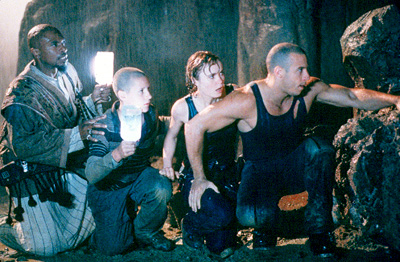
It doesn’t start out as a monster movie. A shipful of passengers in cryostasis are rudely awakened by disaster (not unlike Alien: Covenant) and stranded on a planet of perpetual daylight. Among them is the now-famous Richard B. Riddick (Diesel), a dangerous and shiny-eyed prisoner freed in mid-transport. As the survivors seek a way off the planet, they learn that they’ve arrived just in time for a long eclipse and that deadly swarms of darkness-loving creatures live underground and will soon be free to hunt above it. Good thing Riddick can see in the dark, right?

See the source image

Like Aliens, Pitch Black thrives on the thrill of man vs. alien, with the aliens being either slithery, hammer-headed beasts or smaller pterodactyl-like swarms. Aside from Diesel’s hard-boiled convict, the human characters aren’t as memorable as some in this genre, but they fill their roles well, especially in how they are forced to balance survival with their general distrust of Riddick and the bounty hunter (Cole Hauser) gunning for him. Radha Mitchell even has a stirring character arc concerning the weighing of lives, and Keith David plays a travelling imam, highlighting how unusually diverse it is to see a Muslim in science fiction.

The creatures and visual effects work surprisingly well, considering they’re not as polished as most Hollywood features; in fact, the way writer-director David Twohy shot it sometimes gives scenes an odd TV movie quality. This belies its modest budget yet somehow works to the film’s advantage, keeping some of the more violent parts blurry and contributing to its cult classic status.

See the source image

In many respects, Pitch Black feels like someone wanted to give their own spin to the Aliens formula, but it has enough plot twists and unique action sequences to set it apart as more than a lazy copycat. There are still moments where characters act stupidly and don’t seem to realize that darkness = bad, but it’s also memorably tense, particularly a death scene involving a lighter that ought to be more famous simply for its chilling visual impact. Pitch Black may not rival Aliens for sci-fi horror and doesn’t exactly end as I would have liked, but it’s quite an entertaining member of the genre with perhaps the best antihero I’ve come across, one worthy of a cult classic status.

Best line: (Johns, the bounty hunter) “Battlefield doctors decide who lives and dies. It’s called ‘triage’.”   (Riddick) “They kept calling it ‘murder’ when I did it.”


Rank: List Runner-Up


© 2019 S.G. Liput
627 Followers and Counting


Version Variations: The Magnificent Seven (1960, 2016)

22 Monday Apr 2019

Posted by sgliput in Movies, NaPoWriMo, Poetry, Reviews, Writing

≈ Leave a comment

Tags

Action, Classics, Drama, Thriller, Version Variations, Western

(Today’s NaPoWriMo prompt was for a poem dedicated to some other form of art, so I opted for the film Seven Samurai and its many incarnations.)

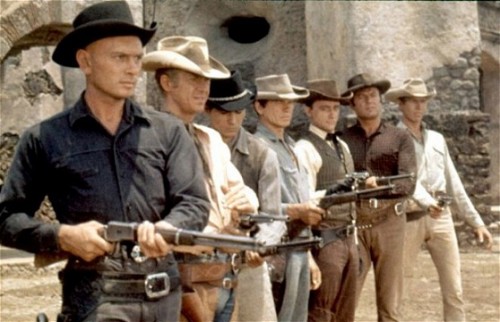
See the source imageSee the source image

In the land of Japan, after warring was done,
An epic and classic of film was begun
By one Kurosawa, director renowned,
Who left cinematic impressions profound.

This film Seven Samurai dazzled the critics
(And still holds a high spot in film analytics)
So Hollywood said, after only six years,
“We’ll do that in English for our Western ears.

“And speaking of western, we’ll re-set the plot
With cowboys and Mexicans. Now that’s a thought!”
So that’s what they did, and it turned out a winner
With quite the ensemble headlined by Yul Brynner.

They didn’t stop there; three more sequels ensued,
But even those westerns were just a prelude.
A Corman sci-fi set the story in space,
Hong Kong made a version with China the place,

And Italy even confused the translators
By making the samurai brave gladiators.
A Bug’s Life was Pixar’s cartoonish conversion,
Then back to Japan for an anime version.

And Hollywood remade the remake it made,
The most recent role that this formula’s played.
Imitation is flattery’s form at its highest,
But would Kurosawa, I wonder, be biased?
_________________________

MPAA rating for the 1960 version:  Approved (basically PG)
MPAA rating for the 2016 version:  PG-13 (pretty strong on the violence)

I haven’t done one of these Version Variation posts in a while, mainly because I haven’t watched an abundance of remakes lately. Yet I stumbled upon the 2016 remake of The Magnificent Seven, and finding it to be an above average western, had to see how it compared to the more celebrated original (not to mention how it compared to the original original, 1954’s Seven Samurai).

See the source image

Of course, Akira Kurosawa started it all with Seven Samurai, the tale of seven disparate but skilled misfits recruited by desperate villagers to fend off invading bandits. The Magnificent Seven is very much the same tale, simply transplanted from feudal Japan to the mythic American West. Certain scenes and plot elements are common to every version, such as the duel that introduces the most deadly of the bunch or the number of the seven who are killed by the end (though which characters die seems to differ).

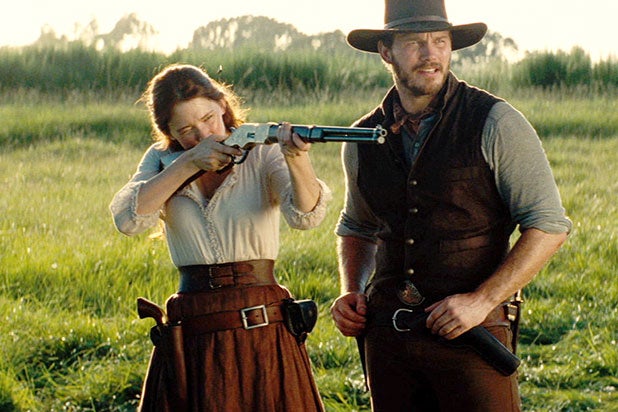
All three also feature extremely talented ensembles, led by an established movie star. In the case of The Magnificent Seven, that would be Yul Brynner (1960) and Denzel Washington (2016), both dressed all in black and oozing enough self-confidence to recruit six others with minimal effort. Watching the different versions, it was interesting to pick out the parallels between the other characters. Horst Buchholz (who went on to appear in Life Is Beautiful) plays a scrappy upstart in the 1960 version, clearly modeled after Toshiro Mifune in Seven Samurai, but there’s not really an equivalent character in the 2016 film. As the second recruit, Chris Pratt seems comparable to Steve McQueen’s drifter, while James Coburn’s knife-thrower is unmistakably akin to Lee Byung-hun in the remake. Other comparisons are a little harder, such as Ethan Hawke’s war-haunted Cajun in the remake having elements of both Robert Vaughn and Brad Dexter’s characters in the original.

See the source image

See the source image

One thing that is self-evident about the 2016 remake is its effort to be more inclusive in its representation. While all of the original seven were white, the new seven include three whites, one black, one Mexican, one Native American, and one South Korean (who I guess is supposed to represent the Chinese? I didn’t know there were Korean immigrants in the Old West).  Another difference is that the characters in the remake are given far more colorful names; after all, aren’t “Goodnight” Robicheaux and Billy Rocks cooler sobriquets than Britt or Chris or Lee?

While it makes the character comparisons a little harder, the racial changes aren’t unwelcome and don’t make much difference storywise, aside from a clash between the Native American member of the Seven (Martin Sensmeier) and his counterpart on the bad guy’s side (Jonathan Joss, who surprisingly also played Chief Hotate on Parks and Recreation). Speaking of bad guys, that’s another major change; whereas the original’s Eli Wallach played the leader of a Mexican outlaw band, the remake’s Peter Sarsgaard plays a ruthless businessman aiming to buy out the townsfolk for the nearby gold mine (which is notably not in the original, much to Brad Dexter’s chagrin).

See the source image

Perhaps it might have been different if I had watched the 1960 version first, as most cinephiles did, but I think I actually prefer the 2016 version. The 1960 film is a classic, no doubt about that, with Yul Brynner’s man in black standing up as one of the quintessential western heroes. Yet even though that film has its fair share of gunfights, the 2016 film plays out much more like an action movie, tossing out the love subplot and apparent defeat of the original in favor of bigger and more explosive battles. The body count is higher, but the thrills don’t disappoint, in contrast to the original film’s excessive length and occasional boring parts.

That being said, cheating though it may be, I don’t have any problem grouping the two together for ranking purposes, or even grouping both with Seven Samurai. Seven Samurai may be the most artistic and the 2016 film the most entertaining, but all three are worthwhile. (I’ll draw the line, though, at grouping them with A Bug’s Life, which is also basically the same story. I did like how Charles Bronson’s bond with some local kids was recycled for Francis the lady bug in Pixar’s film.) Many may scoff at the mere idea of remakes, often rightfully, but, like A Star Is Born, this is one story that has endured the test of time and excelled in multiple incarnations.

See the source image

Best line from the 1960 version: (Vin/Steve McQueen) “It’s like a fellow I once knew in El Paso. One day, he just took all his clothes off and jumped in a mess of cactus. I asked him that same question, ‘Why?’”   (Calvera/bad guy) “And?”   (Vin) “He said, ‘It seemed to be a good idea at the time.’”

Best line from the 2016 version: (Sam Chisholm/Denzel Washington) “What we lost in the fire, we’ll find in the ashes.”


Rank: List-Worthy (both grouped with Seven Samurai)


© 2019 S.G. Liput
627 Followers and Counting
 

The Commuter (2018)

08 Monday Apr 2019

Posted by sgliput in Movies, NaPoWriMo, Poetry, Reviews, Writing

≈ Leave a comment

Tags

Action, Mystery, Thriller

(Today’s NaPoWriMo prompt was to incorporate some kind of business jargon, but my limited time also limited my thought process on this one, so I skipped the prompt. Just a limerick today, with a bit of dark wordplay.)

See the source image

There once was a frazzled commuter
Who spent his whole day on computer.
They say that he snapped
After feeling too trapped
And became an acclaimed troubleshooter.
__________________

MPAA rating: PG-13

Liam Neeson just loves these late-in-life thrillers where a 65-year-old can still kick butt. I haven’t kept up with them all so I can’t rightly tell how The Commuter compares, but I for one enjoyed it a lot.

Neeson plays Michael MacCauley, an insurance agent and ex-cop, who on the day he gets laid off meets a mysterious woman (Vera Farmiga) who offers him $100,000 for him to find someone called “Prynne” on the train who doesn’t belong. It’s a vague task, and as Michael gets pulled in further, he soon finds it to be a life-and-death struggle that’s not about to let him go easily.

See the source image

Despite Neeson’s age, he fits the role like a glove, and the early scenes detailing his daily routine and commute establish him as a likable everyman. Once the action starts, he keeps up admirably, especially during a stand-out one-take fight scene with excellent camera work. The twists and turns offer a few surprises as well, even after what would normally be the final set piece for a film set on a train.

Also starring Elizabeth McGovern, Sam Neill, and Patrick Wilson (shame he had no scenes with fellow Conjuring star Farmiga), The Commuter probably isn’t the kind of movie that is likely to be remembered years from now.  But it’s a fast-paced mystery thriller (albeit with some convolutions and unanswered questions) that proves how watchable Neeson can be.


Rank: List Runner-Up


© 2019 S.G. Liput
621 Followers and Counting


Snowpiercer (2013)

06 Saturday Apr 2019

Posted by sgliput in Movies, NaPoWriMo, Poetry, Reviews, Writing

≈ 4 Comments

Tags

Action, Drama, Sci-fi, Thriller

(Today’s NaPoWriMo prompt was for a poem about the possible, so I tackled the improbability/possibility of sci-fi dystopias.)

See the source image

What would you call an improbable threat
For the future that no one has witnessed as yet?
Dystopian visions are dozens per dime,
Propped up by the volatile nature of time.

Who knows if we might be supplanted by apes,
Or drive over ruined, deserted landscapes?
Who knows if we might be beset by undead,
Or banned from free thought by a Big Brother head?
Perhaps we might battle an alien foe
That strikes from above or attacks from below.
The sun may desert us or scorch us to ash,
Or robots may kill us or clean up our trash,
Or humans may live in a virtual setting
That no one recalls since it’s built on forgetting.
Or maybe, just maybe, mankind may well learn
From all its mistakes that so often return
And set up a world of the peaceful and wise,
Not built on the backs of control and dark lies.

But with all of the ifs that end nightmarishly,
I think that’s unlikely, but hey, it might be.
_____________________

MPAA rating: R

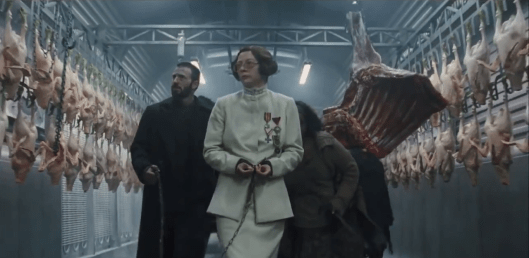
It’s hard to know how I feel about Snowpiercer. On the one hand, I can appreciate the ambition that went into this epic dystopian vision, and on the other, I’m confounded by the bizarrely unrealistic concept that remains straight-faced throughout all its weirdness and violence. It’s a film I’m glad to have seen once, but I’m not sure I want to see it again.

After a half-baked attempt to stop global warming sends the planet into a deep freeze, the only remaining humans are those aboard the Snowpiercer, a high-speed train looping endlessly across the globe. The wealthy live in luxury in the front of the train, while those in the back scrape by in squalor and authoritarian suppression, personified by the loathsome Minister Mason (Tilda Swinton with false teeth). After seventeen years, the have-nots make their final push for change as their leader Curtis (Chris Evans) aims to take the engine.

See the source image

The biggest problem with Snowpiercer is buying into its unlikely dystopia without being distracted by just how unlikely it is. So much science fiction is dedicated to conjuring future worlds where vices are taken to extremes or improbable outcomes challenge our perceptions, so in some ways, Snowpiercer is in good company. But then again (and my views may be tainted by a semi-famous and extremely negative review I read a while back), there is such a thing as too many plot holes. Why is one Korean girl psychic? How is it that the wealthy of the front section have perfectly maintained amenities and clean clothes with no visible manufacturing or service areas? It’s a train after all; there’s only so much room in the cars, all of which Curtis passes through to get to the front, often with random themes, like an aquarium or a rave. Surely this train isn’t as self-sustainable as it appears with no outside resources. Considering the body count and how pyrrhic the battle becomes, how can the ending be viewed as anything but a total downer waving a shred of false hope?

It’s a lot to overlook, yet, if you can, there’s much to appreciate as well. The set design and limited CGI effects (mainly any exterior shots) have a convincing world-building flair, and the fight scenes, while unnecessarily bloody, are tense and shocking, with a strange preoccupation with limb amputations. The film does excel as an action movie and has moments of pointed social commentary about the breakdown of society, though its almost cartoonish class struggle themes were done far better in The Hunger Games series.

See the source image

Snowpiercer seems to be divisive, and all in all, I can’t completely agree with either end of the spectrum. It’s not a total train wreck (pun intended) as some faultfinders have derided it, but neither does it seem worthy of its effusive critical praise and 95% on Rotten Tomatoes. I’m somewhere in the middle, dubiously positive you might say. If you can manage to take its grim craziness in stride, Snowpiercer may be the dystopia for you.

Best line: (Wilford, the creator of the train) “Curtis, everyone has their preordained position, and everyone is in their place except you.”  (Curtis) “That’s what people in the best place say to the people in the worst place.”


Rank: Honorable Mention


© 2019 S.G. Liput
620 Followers and Counting
 

Captain Marvel (2019)

24 Sunday Mar 2019

Posted by sgliput in Movies, Poetry, Reviews, Writing

≈ Leave a comment

Tags

Action, Sci-fi, Superhero

See the source image

What makes a hero, I ask you, my friend?
Some inhuman power defending good ends?
Some courage or virtue beyond normal means
Or blasting the bad guys to small smithereens?
Perhaps perseverance, refusing to yield,
Or wielding a weapon, a sword or a shield?
No, heroes are simple yet more than all these,
And those they inspire can spot them with ease.
_____________________

MPAA rating:  PG-13

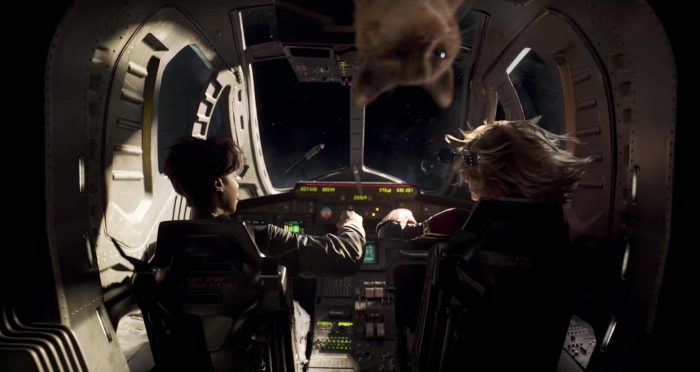
Well, I’d say the Marvel Cinematic Universe has a new MVP. No, not Captain Marvel, although she’s pretty cool too. I’m talking about a scene-stealing cat named Goose (which is a Top Gun reference since Carol Danvers was an Air Force pilot). There are still endless possibilities in the MCU, many of which are opened by this very movie, but I’d be happy if every movie from now on had a cameo from Goose.

See the source image

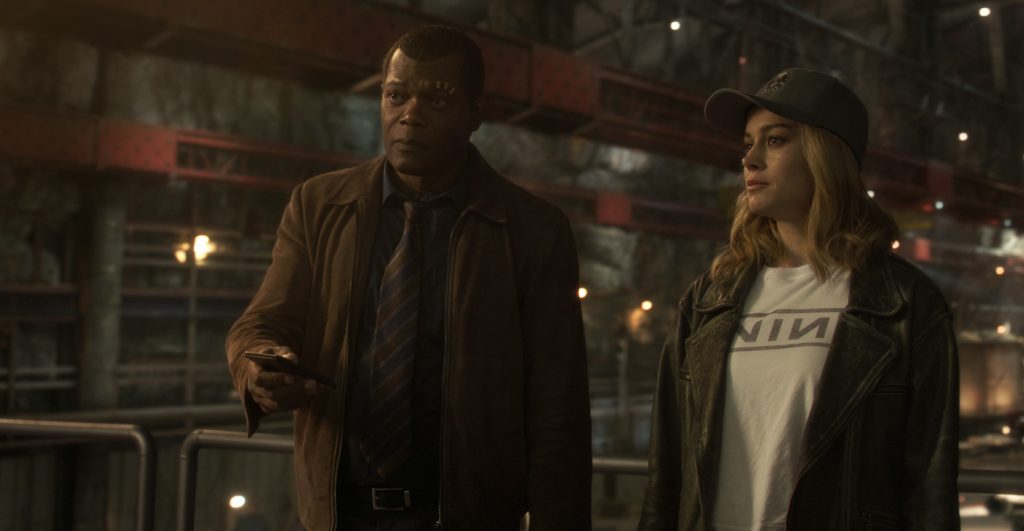
As for the rest of the movie, widely touted as Marvel’s first film with a main female protagonist, Captain Marvel is a success beyond the cultural box it ticks. I had some reservations about Brie Larson playing Carol Danvers, just because of how serious she is in most of the trailers, but she is a welcome addition to the MCU, finding a healthy balance between self-assured power and typical Marvel humor. It does help that she usually has someone to play off of, sometimes Jude Law as her Kree trainer Yon-Rogg but mostly that someone being Samuel L. Jackson’s Nick Fury, who has two eyes and is digitally de-aged (incredibly well, by the way) since this is set back in 1995. Having already starred together in Kong: Skull Island and Unicorn Store, the two have great buddy-movie rapport as they take on the war between the shape-shifting Skrulls and the Kree Empire.

See the source image

A word to the uninitiated: Captain Marvel doesn’t try to give many concessions to the casual Marvel viewer. There are moments in the first quarter or so that are bound to leave people confused, but it picks up when events (and Captain Marvel herself) get more down to earth. The alien Skrulls, who can impersonate anyone, make for an intriguing foe, especially with Ben Mendelsohn as their leader, and the makeup work for them is much more effective than if they had been created solely with CGI. And as usual with Marvel, the effects and action are top-notch, especially when Danvers reaches her maximum power (the “Whoo!”s she makes while destroying alien ships really add to the fun).

My VC wasn’t all that excited for Captain Marvel. Not being much of a feminist, she didn’t like the gender switch, since she associated the name Captain Marvel with the male hero Mar-Vell from the comics (never mind that the name originally belonged to the DC character now known as Shazam). While it didn’t remove all her reservations, the film managed to win her over to accept this version of the character. I think this was not only due to the fun ‘90s setting but also its message of perseverance that is universally human, not being limited to male or female. Whether Carol Danvers is known as Ms. Marvel or Captain Marvel (neither name is actually used in the movie), she’s a welcome heroine for the MCU for reasons beyond the fact that she’s a she.

See the source image

Captain Marvel is a well-made origin story that sits squarely in the middle of the MCU rankings and, like last year’s Black Panther, doesn’t seem to have much bearing on the next Avengers movie following in its wake, aside from providing background for a major character. Nevertheless, it has lots of well-planned ties into the larger MCU (loved Stan Lee’s tribute, and I’ll never look at Fury and his scar the same way again!) and still whets the appetite of us Marvel nerds; the first thing I said when the credits rolled was, “At least we only have another month to wait,” to which my VC replied, “Thank God!” Now, in addition to all the hopes and fears I had for Endgame, I can add the hope that Goose will make an appearance. Fingers crossed!

Best line: (Carol Danvers) “What does your mother call you then?”
(Nick Fury) “Fury.”
(Carol) “What do your friends call you?”
(Fury) “Fury.”
(Carol) “Kids?”
(Fury) “If I ever have them? Fury.”


Rank: List-Worthy


© 2019 S.G. Liput
613 Followers and Counting


Spider-Man: Into the Spider-Verse (2018)

11 Friday Jan 2019

Posted by sgliput in Movies, Poetry, Reviews, Writing

≈ 2 Comments

Tags

Action, Animation, Comedy, Family, Superhero

See the source image

The universe is vast and grand
And larger than we can explore,
Yet what if there were more than one
With possibilities galore.

In one dimension, you might be
Reclining underneath a tree.
In one, you’re driving;
One, in bed;
In one, surviving;
One, you’re dead.
In one, you may be ten feet tall
Or climbing up a building wall.
In one, your hair is blond or red;
Another, you have none at all.

You might be human or a fish
Or living in a Petri dish,
Or made of metal, made of wood;
You might be evil, might be good;
You might be famous or obscure,
Or wearing tentacles or fur.

Who knows what new alternative
Beyond dimension walls might live?
____________________

MPAA rating:  PG (probably the most family-friendly big-screen version of Spider-Man to date)

Many out there who are experiencing superhero fatigue might roll their eyes at the prospect of yet another Spider-Man movie. After all, they’ve already covered this Marvel character with an excellent trilogy with Tobey McGuire, two lesser reboot films with Andrew Garfield, and an MCU incarnation with Tom Holland, so how else could another film retread the same material? A better question after actually watching Into the Spider-Verse is “How can a film with so much prior history turn out to be possibly the most original and innovative movie of the year?”

I remembered the Spider-Man cartoon from the ‘90s had multiple versions of Peter Parker teaming up at times, but I never expected that kind of universe-spanning storyline to make it to the big screen, considering that the spider-mantle keeps getting handed off every few years. Animation was clearly the best medium for it, especially with the involvement of producers Christopher Miller and Phil Lord (Cloudy with a Chance of Meatballs, The Lego Movie), the latter of whom also co-wrote the screenplay.

See the source image

The story is quite simply everything we know and love about Spider-Man mixed, mutated, and amalgamated in ways I never thought I’d see. By diving into the multiverse, full of different incarnations of the wall-crawler, it combines the familiar with the new to create something fun and unexpected. For one thing, there are at least seven spider-people total, along with alternate versions of Spider-Man’s rogues gallery, and while the story focuses on Miles Morales (Shameik Moore), a black teen bitten by a universe-hopping spider, there is so much going on in Into the Spider-Verse that I won’t even try describing it all, which is best anyway since I don’t do outright spoilers anymore.

Miles himself is an authentic and relatable kid, street-savvy but smart, who is pulled in way over his head when the hulking Kingpin (Liev Schreiber) opens up a portal to other dimensions, summoning varied Spider-people, from a spider-powered Gwen Stacy (Hailee Steinfeld) to an over-the-hill Peter Parker (Jake Johnson) to a talking pig from a universe of funny animals (John Mulaney). While it gets as crazy as it sounds, the characters are marvelously written, each one with their own in-jokes, histories, and personal arcs, most notably the older version of Peter Parker, who is forced to mentor Miles in order to get back to his own universe.

See the source image

The character dynamics are great, yet I feel like I’ve barely scratched everything to love about this movie. I never knew much about Miles Morales’ origin story in the comics, but it’s hard to imagine it being better than this film version. There are touchstones to the familiar Spider-Man origin, but it plays out with clever and unique differences, which, along with the multitude of jokes and gags, especially reward the geeky knowledge of fan nerds like me. I don’t usually like familiar characters being reimagined for the sake of diversity, as Hollywood so often does, but the multiverse concept is the perfect way to handle it, introducing new versions of characters, whether it be a black Spider-Man or an anime-style girl and robot team, while leaving the familiar intact.

And let’s not forget the animation; it’s quite literally unlike anything we’ve seen before, a mixture of 2D and 3D with images that feel ripped from the panels of a comic book while also boasting amazingly fluid action scenes. Somehow, the mixing of animation styles (anime, exaggerated cartoon) merges with the main style seamlessly, which fascinates me to no end. Comics are an unmistakable visual influence, such as the dotted background texture of many scenes, and I liked how thought bubbles and such became more pronounced when Miles began experiencing the heightened senses of his spider-powers.

See the source image

Speaking of heightened senses, the animation in Into the Spider-Verse is likely to yield sensory overload, not unlike Lord and Miller’s earlier film The Lego Movie. The pace and visuals are similarly frenetic, though more sophisticated and not as hard to follow, especially during the eye-popping, reality-warping finale, which might be as close as I ever get to an LSD trip. Every scene is full of such life and detail that I honestly cannot wait to see it again.

While I loved everything –characters, animation, action, story, the touching Stan Lee cameo/tribute—I will say one thing didn’t thrill me, namely the soundtrack. Befitting the urban setting of Miles’ world, it’s largely hip hop and rap, the value of which still eludes me. (Seriously, what’s catchy about someone talking to a beat?) Post Malone’s “Sunflower” was the only song I halfway liked, but that’s likely a personal gripe, since I’ve heard other people laud the soundtrack. One brief scene featured a great little snippet of John Parr’s “St. Elmo’s Fire (Man in Motion),” which only made me wish the soundtrack had less rap and more ‘80s rock.

See the source image

My VC enjoyed the movie overall and agreed the visuals were amazing and Oscar-worthy, yet, though she recognized the trippy style as something outstanding, it simply wasn’t for her. Then again, she also tends to discount the value of animation, viewing it generally as lesser than live-action, to which I quote the talking pig: “You got a problem with cartoons?” I certainly don’t. This film just keeps getting better in my head the more I think about it, and I’m actually looking forward to the inevitable spin-offs and sequels it will spawn. If you have any fondness for the character of Spider-Man, I suspect there is something or many things you will love about this movie. Spider-Man may be a well-worn franchise by now, but Into the Spider-Verse just reinvented it in a way no one saw coming.

Best line:  (Miles, buying a Spider-Man costume) “Can I return it if it doesn’t fit?”  (Stan Lee) “It always fits, eventually.”


Rank: List-Worthy


© 2018 S.G. Liput
600 Followers and Counting!


Mission: Impossible – Fallout (2018)

06 Sunday Jan 2019

Posted by sgliput in Movies, Poetry, Reviews, Writing

≈ Leave a comment

Tags

Action, Drama, Thriller

See the source image

Danger after danger,
And mission after mission,
Facing constant opposition,
Can exact a taxing toll
On the few who fight for strangers
Who know nothing of their role.

Mission after mission
Must depend on these defenders
Who know nothing of surrenders.
They are safety’s heart and soul,
Keeping evil in remission
And the world under control.
_____________________

MPAA rating:  PG-13

Well, it took a little longer than I was expecting, but here at last is the final installment of my Mission: Impossible marathon, a chance to catch up with this franchise that started way back in August. I had intended to see Fallout at a second-run theater after watching Rogue Nation, but sadly I missed it and had to wait for the DVD. Hearing all the praise for this latest film only raised my hopes that it would match its predecessors, and, at least in the action department, it didn’t disappoint.

One thing I’ve enjoyed about M:I films since J.J. Abrams got involved back with Mission: Impossible III is the greater focus on continuity. They each had their own storylines and their own characters that were mysteriously never seen again, but there were carryovers beyond Tom Cruise/Ethan Hunt alone. Ving Rhames is still around since the first film, and Fallout sees the welcome return of other characters too, like Simon Pegg’s Benji Dunn, Alec Baldwin’s IMF Secretary, Michelle Monaghan as Hunt’s wife Julia, Rebecca Ferguson’s British agent Ilsa Faust, and Sean Harris’s hissable villain Solomon Lane from Rogue Nation. As the only villain to not be outright killed by movie’s end, it made sense to bring Lane back for another round, though I really wish they could have gotten Jeremy Renner back again. While the constant action depends on the characterization established in past films, the IMF crew have their team dynamic down to a science, and they bounce off each other splendidly, with Ferguson fitting in well in her second outing as Hunt’s female equivalent.

See the source image

Of course, there are new faces too, most notably Henry Cavill’s FBI agent ordered to accompany the IMF team on their latest mission to recover three nuclear cores they neglectfully lost before a group of terrorists can use them. Honestly, Cavill is a passable Superman, but his muscles and deep voice are better served in this kind of role (plus, he’s got a beard and mustache, much to my VC’s delight), and his stoic delivery leaves his loyalties in doubt from the start. Yet it’s still the familiar faces that make M:I better than your typical action movie, particularly Cruise, whose character is faced with several moral tests along the way, making him question the value of one life over many.

So what about the claims that Fallout is the best film of the franchise and even one of the best action films of all time? I’d say that’s debatable, the former assertion more than the latter. I would agree that this is the most action-packed movie of the series, culminating in one of the most intense climaxes of them all. Cruise continues to dazzle with his absurdly ambitious stunts (watching him break his leg during the shoot is still painful), and the chases and fistfights are as good as they’ve ever been. There’s a one-take skydive that is particularly awe-inspiring and nail-biting. As far as action, it delivers in spades, but the plot takes a little while to settle in. This series is known for its twists, but the story gets a little muddled changing directions in the first half before we get to the villain goals and what must be done to stop them. At one point, there are three double-crosses in quick succession so it takes some effort to keep up.

See the source image

As far as rankings, I just can’t quite decide. I’ve said before that I like M:I:iii, Ghost Protocol, and Rogue Nation about equally, but for different reasons. M:I:iii has the most personal stakes and best ending, while Ghost Protocol has the best plot and team dynamic, and Rogue Nation has the best script and mixture of everything the series does well. I have no problem adding Fallout to the grouping, since it has the best climax, though I was a bit disappointed with how it backtracked on the happy ending of the third film. Fallout is once again a credit to the series and could act as a good conclusion if they decide to stop here. I don’t know if Cruise and company will continue churning out these action hits, but if they do, I’m game for whatever comes next.

Best line: (Walker, frustrated with the lack of a plan) “Hope is not a strategy.”   (Ilsa) “Oh, you’re new!”


Rank: List-Worthy (joining the last three sequels)


© 2018 S.G. Liput
600 Followers and Counting!


← Older posts
Newer posts →

Recent Posts

  • Dust Bunny (2025)
  • Don’t Breathe (2016)
  • The Sheep Detectives (2026)
  • The Black Phone (2021)
  • Godzilla Minus Zero (2026)

Recent Comments

The Sheep Detectives… on Wildwood (2026)
The Sheep Detectives… on #40: Babe (1995)…
The Black Phone (202… on Halloween Kingathon – Mi…
Godzilla Minus Zero… on Godzilla Minus One (2023)
If You Were the Last… on The Martian (2015)

Archives

  • November 2026
  • September 2026
  • June 2026
  • May 2026
  • January 2026
  • December 2025
  • May 2025
  • April 2025
  • March 2025
  • February 2025
  • January 2025
  • December 2024
  • May 2024
  • April 2024
  • March 2024
  • February 2024
  • January 2024
  • December 2023
  • November 2023
  • October 2023
  • September 2023
  • July 2023
  • June 2023
  • May 2023
  • April 2023
  • March 2023
  • February 2023
  • January 2023
  • December 2022
  • November 2022
  • October 2022
  • September 2022
  • August 2022
  • July 2022
  • June 2022
  • May 2022
  • April 2022
  • March 2022
  • February 2022
  • January 2022
  • December 2021
  • November 2021
  • October 2021
  • September 2021
  • August 2021
  • July 2021
  • June 2021
  • May 2021
  • April 2021
  • March 2021
  • February 2021
  • January 2021
  • December 2020
  • November 2020
  • October 2020
  • September 2020
  • August 2020
  • July 2020
  • June 2020
  • May 2020
  • April 2020
  • March 2020
  • February 2020
  • January 2020
  • December 2019
  • November 2019
  • October 2019
  • September 2019
  • August 2019
  • July 2019
  • June 2019
  • May 2019
  • April 2019
  • March 2019
  • February 2019
  • January 2019
  • December 2018
  • November 2018
  • October 2018
  • September 2018
  • August 2018
  • July 2018
  • June 2018
  • May 2018
  • April 2018
  • March 2018
  • February 2018
  • January 2018
  • December 2017
  • November 2017
  • October 2017
  • September 2017
  • August 2017
  • July 2017
  • June 2017
  • May 2017
  • April 2017
  • March 2017
  • February 2017
  • January 2017
  • December 2016
  • November 2016
  • October 2016
  • September 2016
  • August 2016
  • July 2016
  • June 2016
  • May 2016
  • April 2016
  • March 2016
  • February 2016
  • January 2016
  • December 2015
  • November 2015
  • October 2015
  • September 2015
  • August 2015
  • July 2015
  • June 2015
  • May 2015
  • April 2015
  • March 2015
  • February 2015
  • January 2015
  • December 2014
  • November 2014
  • October 2014
  • September 2014
  • August 2014
  • July 2014
  • June 2014
  • May 2014
  • April 2014
  • March 2014
  • February 2014
  • January 2014
  • December 2013

Categories

  • Blindspot
  • Blogathon
  • Christian
  • Movies
  • Music
  • NaPoWriMo
  • Poetry
  • Reviews
  • TV
  • Writing

Meta

  • Create account
  • Log in
  • Entries feed
  • Comments feed
  • WordPress.com

Blog at WordPress.com.

  • Subscribe Subscribed
    Rhyme and Reason
    Join 799 other subscribers

    Have a WordPress.com account? Log in now.

  • Rhyme and Reason
    View site in Reader
    Manage subscriptionsSign upLog in
    Report this content
    Collapse this bar